



Short shag haircuts for short hair have a way of looking better the second they stop trying so hard. That’s the magic trick, really. A blunt cut can look polished, sure, but a shag gives you movement, air, and a little edge around the face that makes short hair feel alive instead of sealed in place.
A good short shag is not one thing. It can be soft and French, jagged and wolfy, curly and fluffy, or cropped so close that the nape does most of the talking. The shape changes fast depending on your texture, and that is why the same cut can look expensive on one person and lopsided on another. Layers need a purpose. Bangs need to land in the right spot. The crown needs enough lift to keep the whole thing from collapsing by lunch.
I’ve always liked shag haircuts because they solve a real problem: short hair can go flat or boxy fast. Shag layers break that up. They give fine hair a little lift, cut weight out of thick hair, and make waves and curls look less forced. If you have ever wanted a cut that looks even better when it is slightly messy, you are in the right neighborhood.
1. Soft French Shag
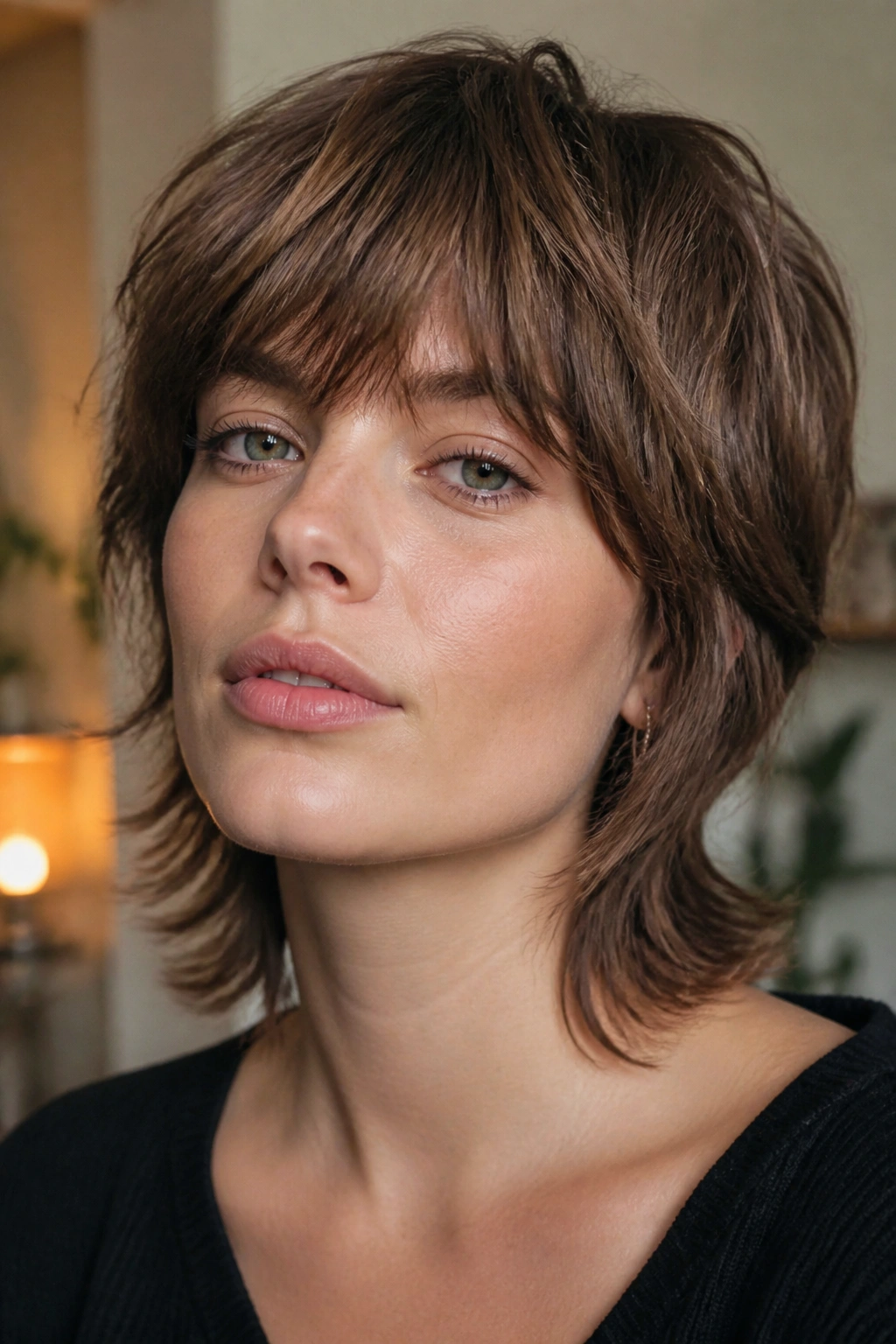
A soft French shag is the easiest way to wear the trend without looking like you tried to make a statement. The layers stay light around the crown, the fringe skims the brows, and the ends feather out instead of sticking straight down like a helmet.
Why it works
This cut keeps the shape close to the head, so it does not overwhelm short hair. It’s especially good on fine to medium strands that need movement more than they need aggressive layering.
- Ask for point-cut ends and soft interior layers.
- Keep the fringe between the brow and cheekbone.
- Style with a pea-size cream on damp hair.
Best move: tuck one side behind the ear and let the rest fall a little uneven.
2. Choppy Pixie Shag
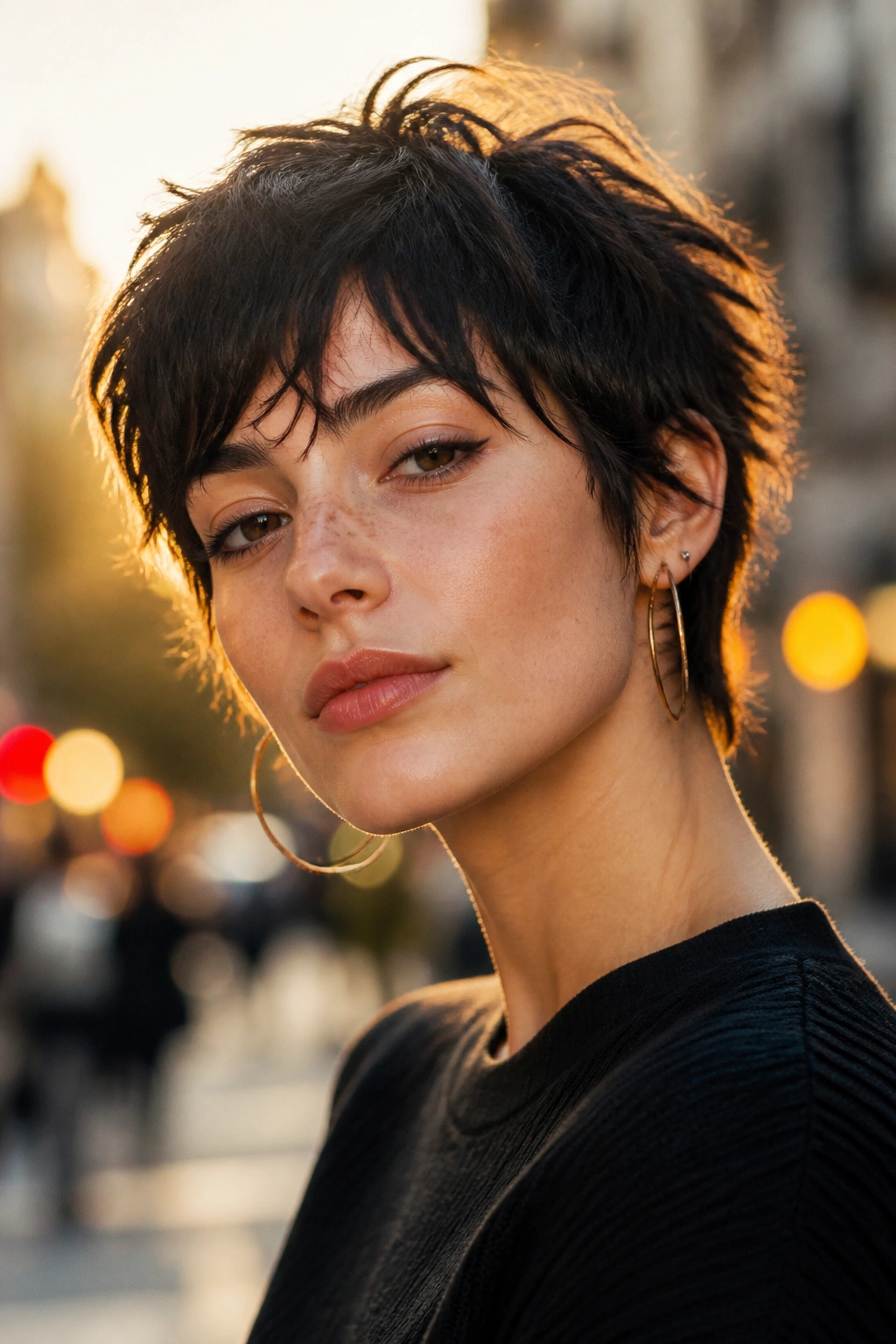
A choppy pixie shag is tiny, sharp, and full of personality. It has the cropped feel of a pixie, but the crown and fringe are left longer so the hair can bend and flick instead of sitting flat.
This is the cut for people who want texture first and polish second. It works best when the top is cut with short, broken layers and the sides are kept softer, not shaved clean.
Run a little matte paste through dry hair, then push the front up and forward with your fingers. No brush. The shape gets better when it is a touch messy.
3. Curly Crop Shag

Why do curls love a short shag? Because the cut gives each curl room to spring instead of stacking into one heavy triangle. A curly crop shag keeps the length compact while leaving enough room for bounce at the crown and around the cheeks.
The key is cutting it with the curl pattern in mind, not against it. Dry cutting works well here, since curls shrink and shift once they dry. Ask for face-framing pieces that land around the cheekbone and a back that does not sit too blunt.
How to wear it
Use curl cream plus a light gel, scrunch, and diffuse on low heat until the hair feels set but not crunchy.
4. Wolf Cut With Tapered Nape
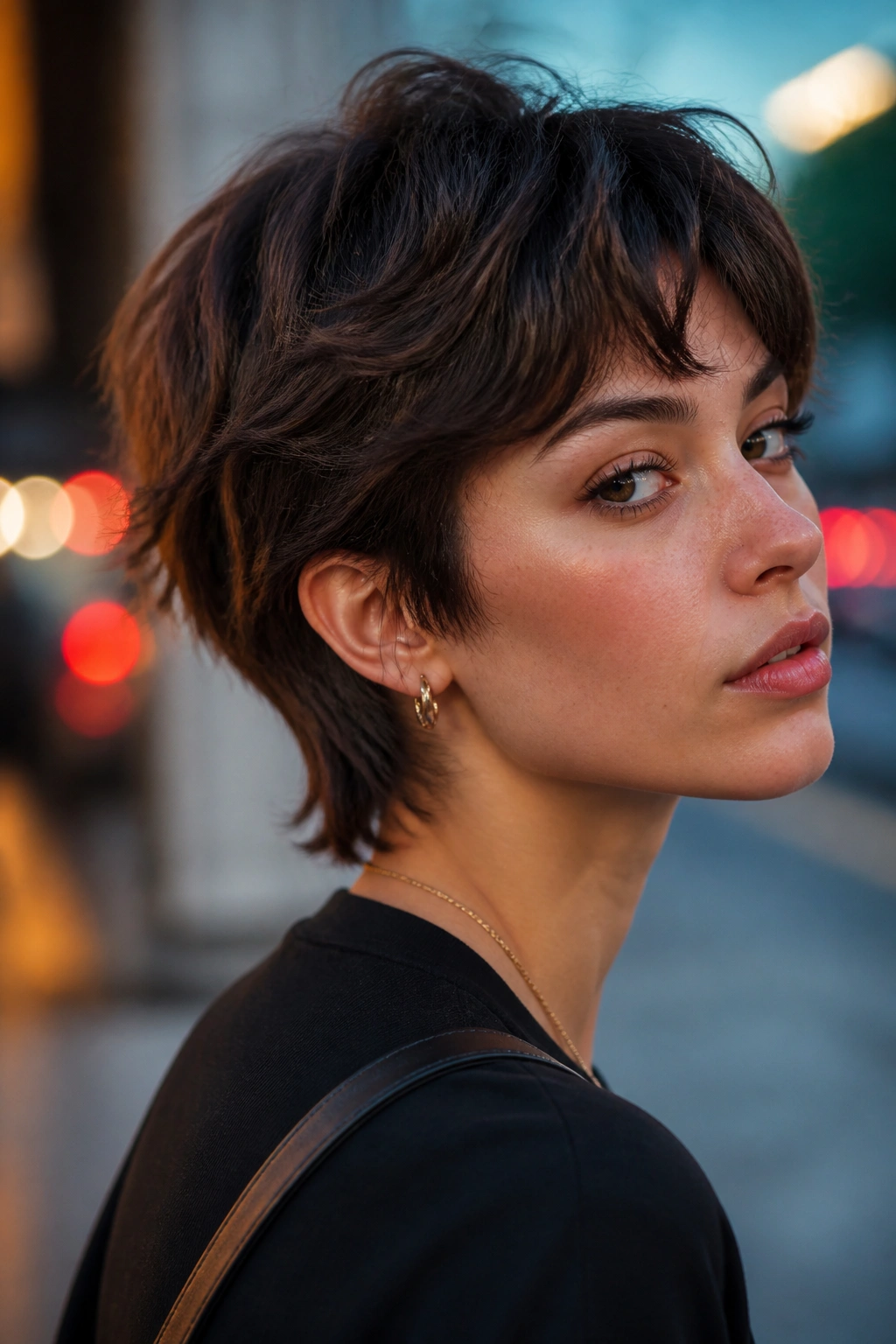
Picture a short wolf cut that has had a little self-control. That’s the tapered nape version. It keeps the rough crown volume and the longer top layers, but the back is tightened so it does not drift into full mullet territory.
The result is sharp, not shaggy in a lazy way. It suits dense hair because the shorter nape removes weight where short cuts often puff out. Ask your stylist for a soft graduation at the back and longer, broken layers through the top. That balance matters.
If you like edge, this one has it. If you want a cut that still tucks under a jacket collar neatly, even better.
5. Razor Shag With Curtain Bangs

Unlike a blunt bob, this cut never looks stiff. The razor work creates wispy ends, and the curtain bangs split around the face so the whole style opens up instead of boxing you in.
It’s a strong choice if your hair already has a little bend. The bangs should start near the bridge of the nose and sweep out toward the cheekbones. Too short, and the shape gets jumpy. Too long, and it loses the point. Use a round brush only on the fringe if you want a smoother finish.
Best for: medium density hair that can handle feathered edges without getting sparse.
6. Rounded Bob Shag
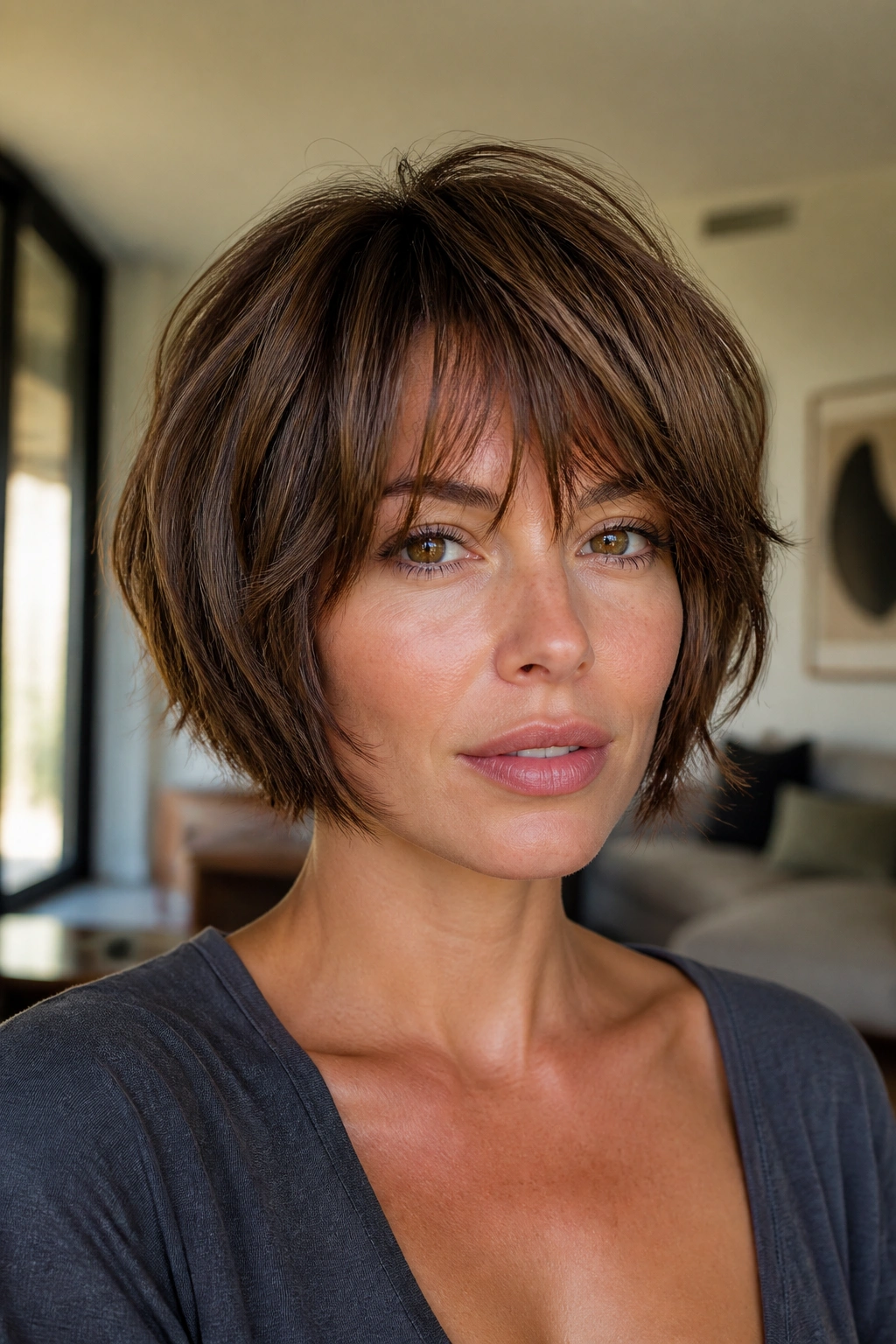
A rounded bob shag is what happens when a bob decides to loosen up. The outline stays curved, but the inside is carved with layers that keep it from feeling too neat or too heavy.
This is one of my favorite short shag haircuts for short hair when someone wants movement without a wild silhouette. The shape flatters the jaw and keeps the sides from sticking out at odd angles. A little mousse at the roots and a quick blast with a diffuser is usually enough.
One nice thing here: it grows out cleanly. Not glamorous. Just useful. And useful haircuts age well.
7. Grown-Out Pixie Shag

A grown-out pixie shag is a lifesaver if you are trying to move away from a strict pixie but do not want to start over from scratch. The top stays long enough to sweep, the sides soften, and the back gets some airy texture so the cut feels intentional instead of awkward.
It is best when the layers are built to fall in different directions. That gives you movement without requiring a curling iron every morning. Use a small round brush on the crown if you want lift, then finger-style the rest.
What to ask for: a pixie base with shaggy interior layers and a soft fringe that can be pushed aside.
8. Heavy Fringe Shag
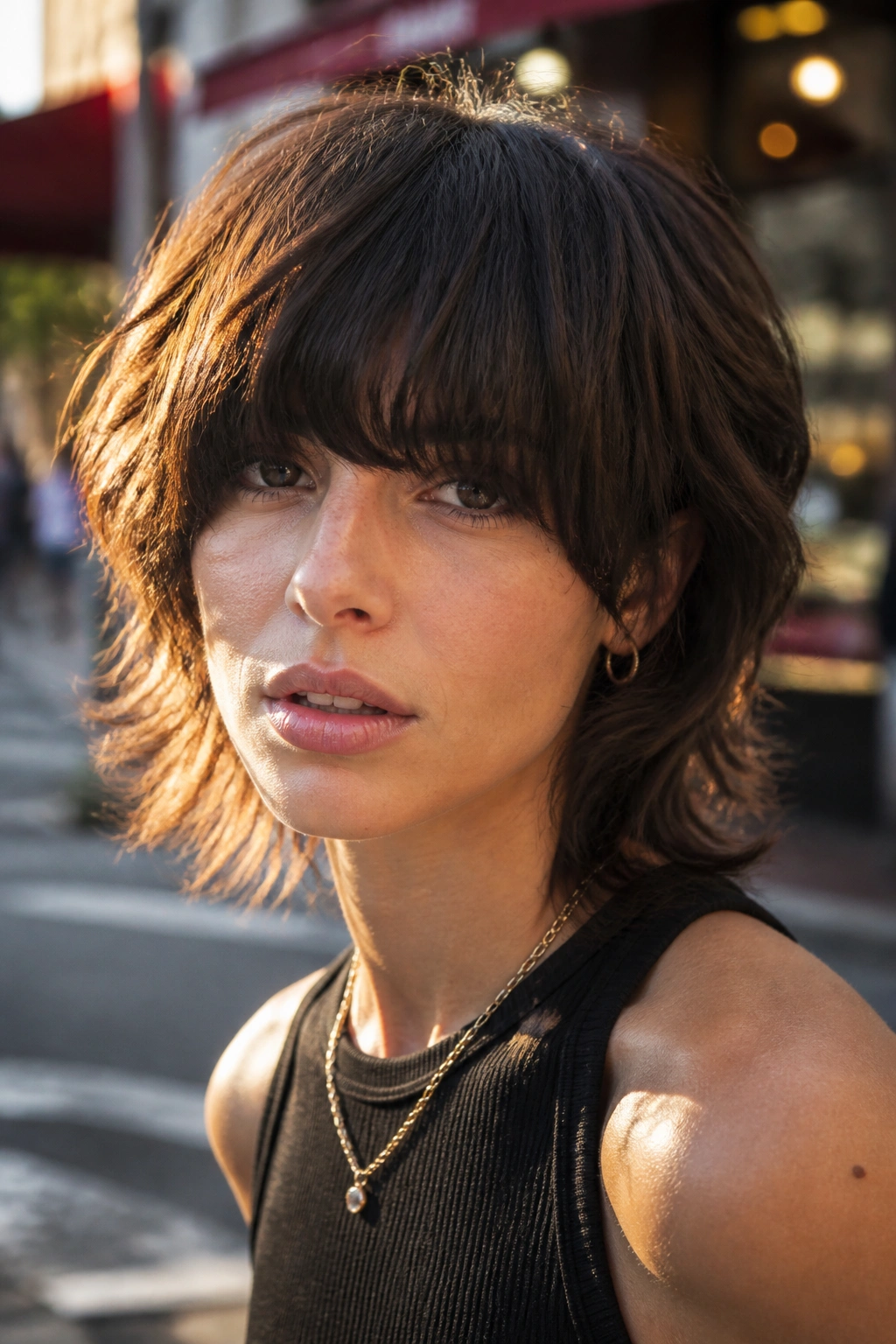
A heavy fringe shag has a little drama in front and a lot of motion everywhere else. The bangs do most of the visual work, so the rest of the cut can stay rougher and more relaxed.
This shape can be excellent on straight hair that tends to fall limp. The weight of the fringe gives the style a center of gravity, while the layers around the ears and neck keep it from getting flat. Be careful with thickness here. If the fringe is too dense, it can sit like a shelf.
A blow dryer and a flat brush are enough. Keep the finish slightly separated, not blown into one smooth sheet.
9. Air-Dried Wavy Shag
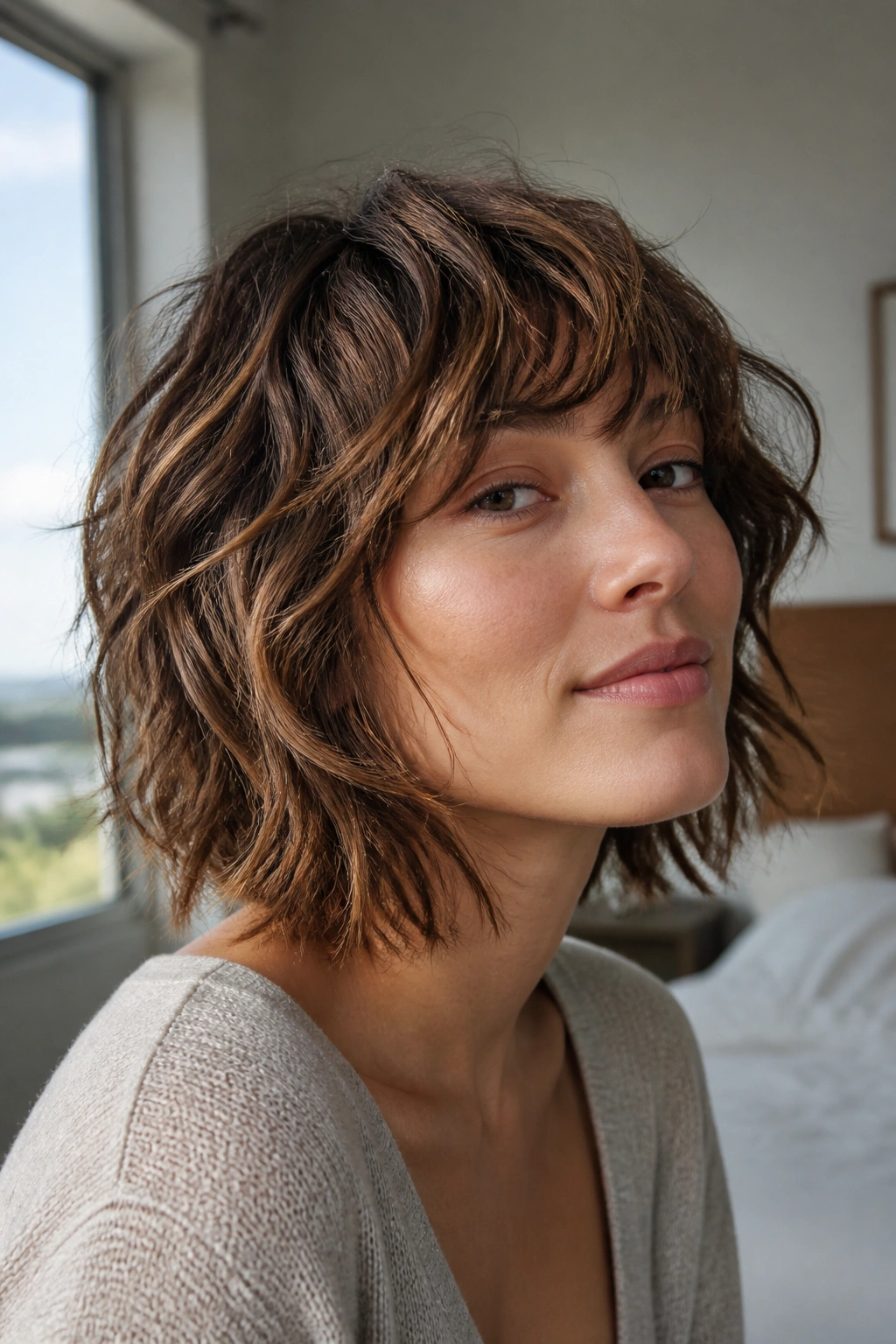
Why does this one work so well? Because it respects the wave instead of forcing it into obedience. An air-dried wavy shag is cut so the bends fall into place on their own, which means less heat and fewer awkward kinks.
The layers should be soft through the crown and cheekbones, with the ends left light enough to curl a little. Use a leave-in mist and scrunch from the bottom up. That is the whole job, more or less. If your hair tends to swell in humidity, keep the layers longer around the perimeter so it has some weight to sit on.
How to wear it
Let the hair dry untouched for the first 20 minutes, then separate the pieces with a dab of cream.
10. Textured Bob Shag
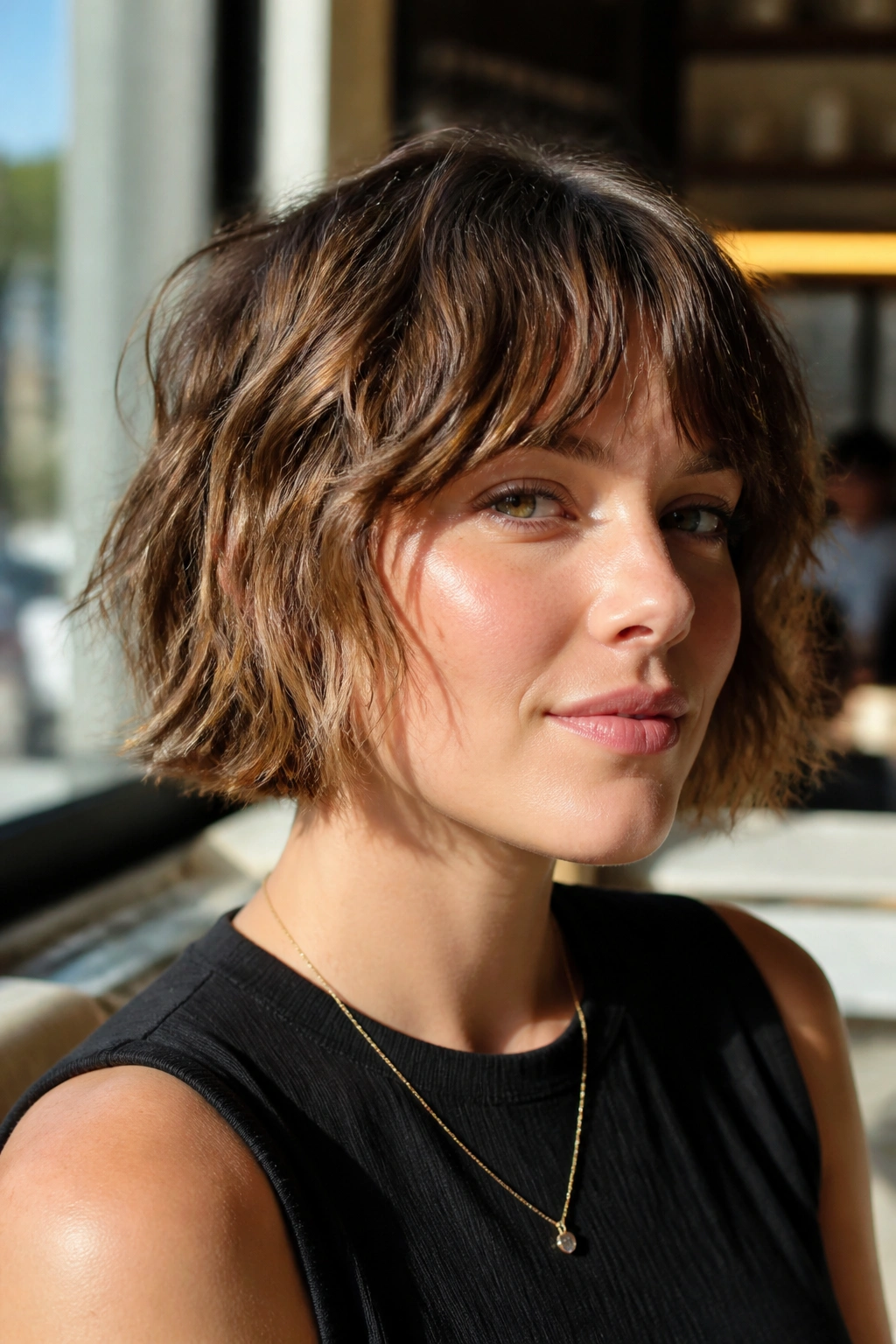
A textured bob shag is the compromise cut for people who like a bob but want more chaos in the best possible way. The length stays around the jaw or just below it, while the layers are broken up enough to stop that crisp bob line from taking over.
This is a smart choice for thick hair that feels too bulky in a classic bob. The texture makes the shape lighter without chopping it to bits. Ask for soft slicing through the interior and a perimeter that still holds enough line to feel deliberate.
It should move, not frizz. That is the difference. Use a light styling foam and a diffuser if your hair bends naturally.
11. Side-Swept Shag
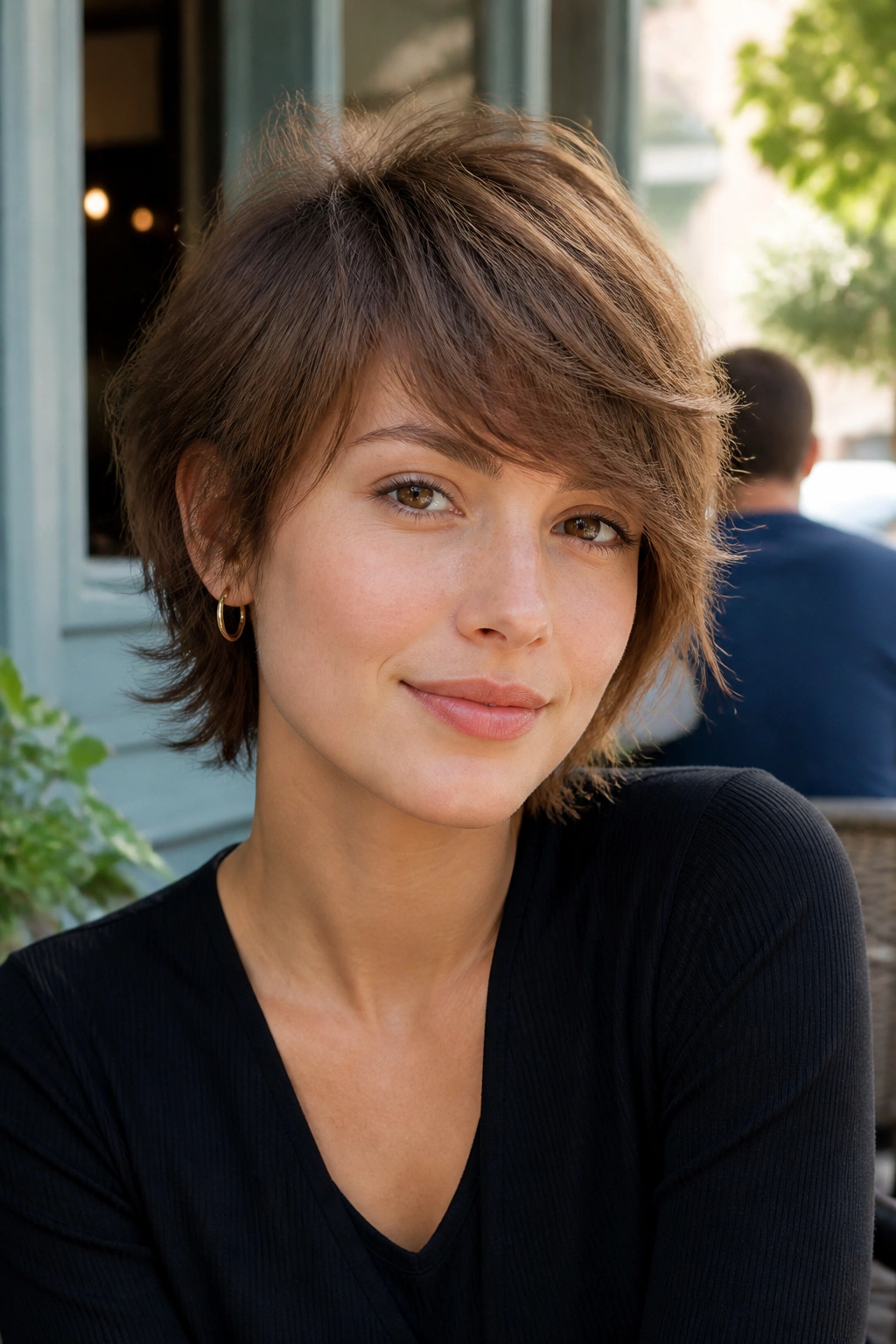
Unlike a center-part shag, the side-swept version puts the weight where it flatters the face most. That shift can be a quiet fix for a strong jaw, a broad forehead, or hair that refuses to sit flat at the front.
The fringe should sweep across the forehead and blend into shorter layers near the temples. It looks especially good when the crown has a little lift, because the side part needs height to avoid collapsing. A quick root spray helps. So does drying the front in the opposite direction first, then flipping it over.
This one feels easy in the mirror. That’s not nothing.
12. Curly Shag Mullet
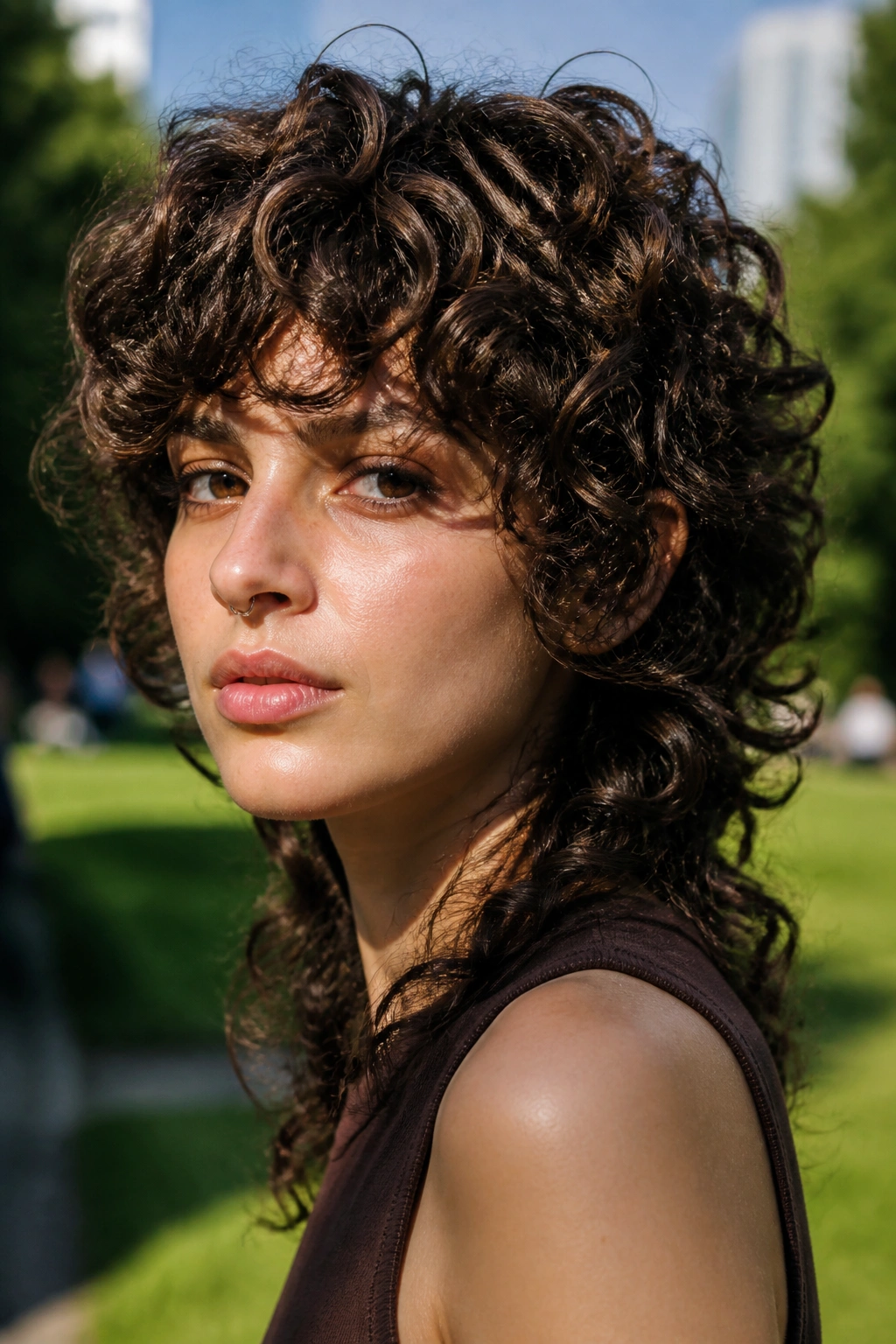
A curly shag mullet is not shy, and it shouldn’t be. The front stays shorter and more face-framing, while the back hangs longer so the curls can stack and bounce without being boxed in.
The trick is shape control. You want the back to feel intentionally longer, not like an accident that happened during a cut gone wrong. Dry cutting helps because curls will shrink differently at the nape than they do at the crown. Use a curl cream with enough slip to keep the pieces clumped, then diffuse just until the roots are dry.
Messy? Yes. Random? No.
13. Micro Fringe Shag
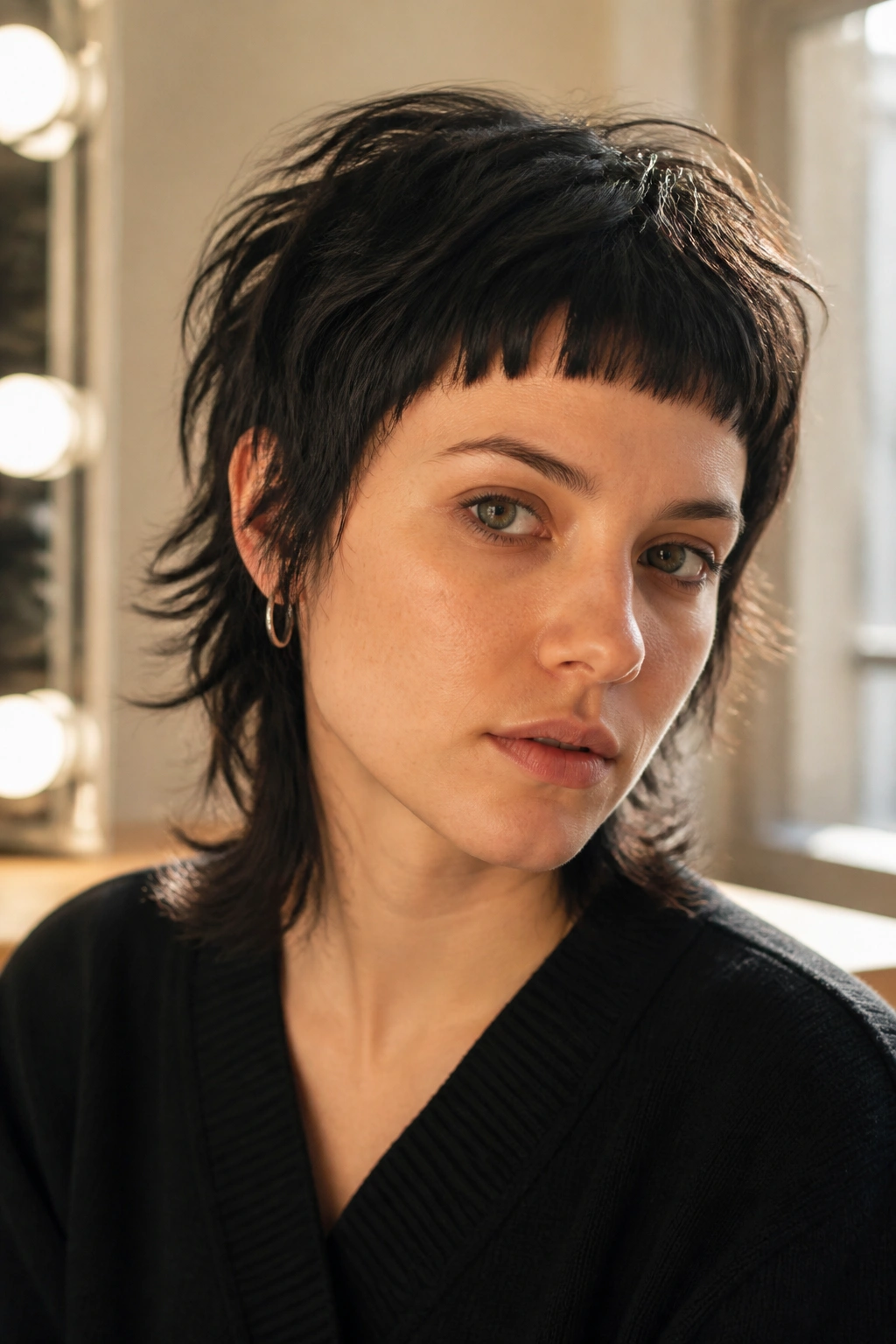
A micro fringe shag is for someone who likes a little bite in the haircut. The bangs are short, straight, and a touch edgy, while the rest of the layers stay shaggy and loose.
Why it works
The tiny fringe creates a strong line at the top, which makes the short layers underneath feel even more textured. It looks best when the crown has movement and the sides are not too heavy.
- Keep the fringe dry-cut and slightly uneven.
- Let the top layers stay feathered, not blunt.
- Use texture spray on the ends, not the roots.
One warning: if your forehead is sensitive about height, this fringe will put it on display.
14. Feathered Shag for Fine Hair
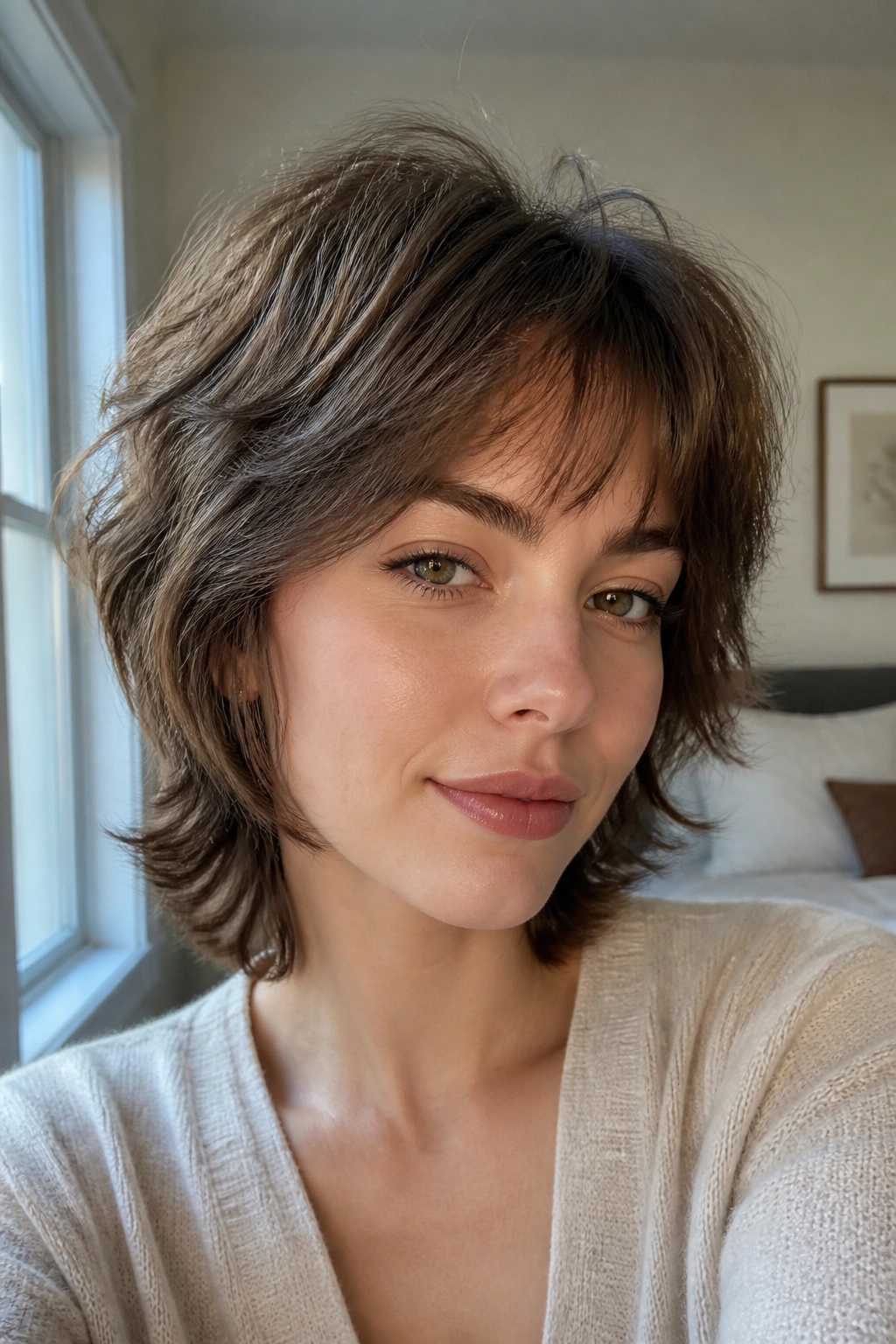
Fine hair needs help, but not too much help. A feathered shag for fine hair keeps the ends soft and airy while preserving enough density that the cut does not look see-through.
This is where feathering matters. The stylist should remove bulk with a gentle hand, not carve deep holes into the shape. Short layers at the crown give lift, and longer pieces around the cheekbones keep the style from floating away. A mousse at the root and a blast of cool air can make a real difference.
Skip heavy oils. They flatten this cut fast.
15. Razor Shag for Thick Hair
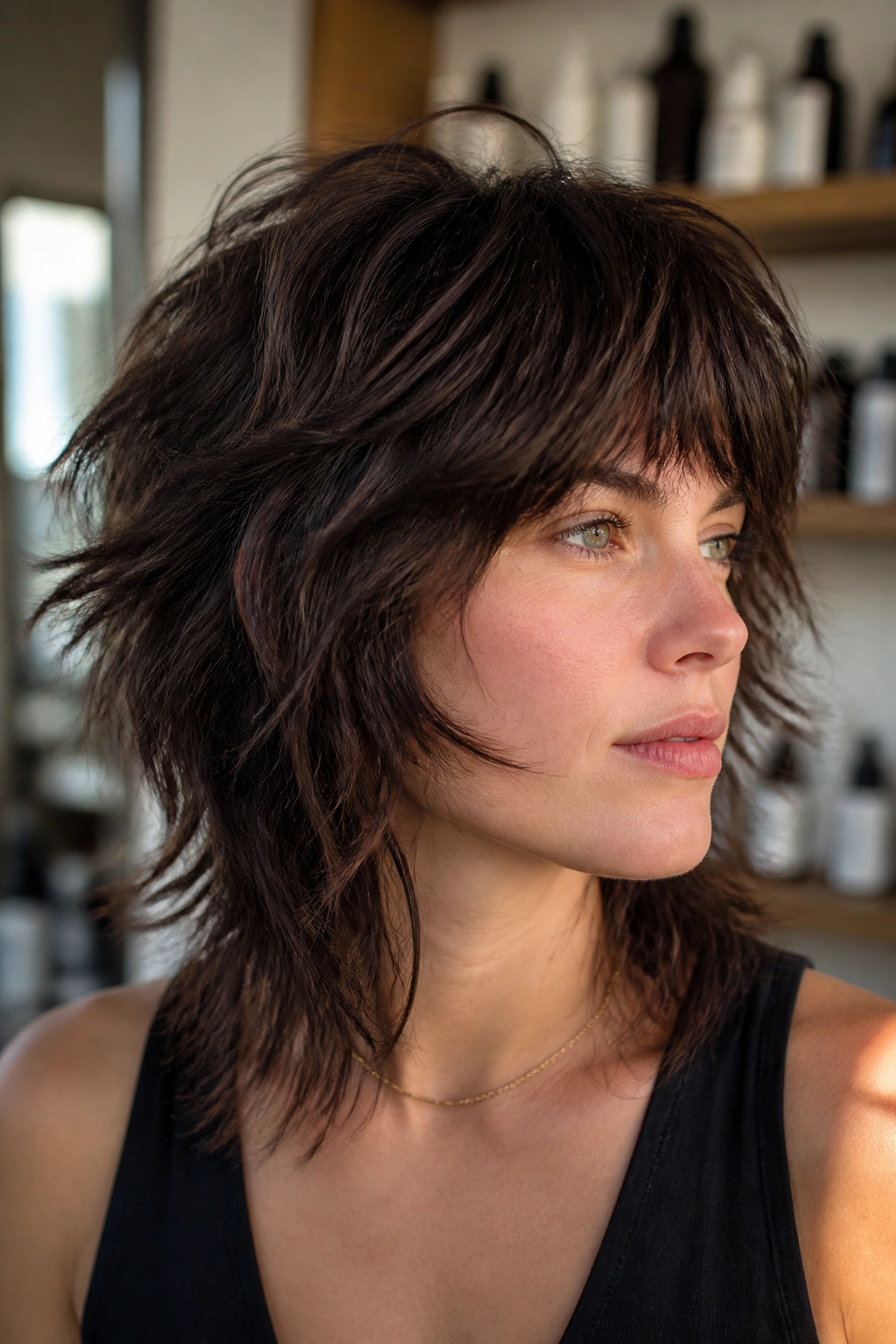
Why do thick-haired people keep coming back to this cut? Because a razor shag can remove weight without making the whole head look chopped apart. The ends get softened, the crown gets room, and the bulk stops sitting like a block.
The best version has sliced layers through the interior and a perimeter that still looks clean from the outside. Thick hair can handle this kind of breakup better than fine hair can. That’s the honest truth. If you want volume control, ask for the layers to be carved with the hair’s natural fall in mind, not against it.
A matte paste or a light wax will keep the pieces separated.
16. Asymmetrical Shag

An asymmetrical shag gives short hair a little tension, and tension is useful. One side stays a touch longer, or the fringe angles in a way that makes the whole cut feel more alive.
This is a good option if you want the shag shape but do not want it to read as soft or retro. The asymmetry brings the eye forward. Keep the longer side around the cheekbone or jaw, not so long that it starts looking accidental. Ask your stylist to balance the length difference with the layers so the cut still moves evenly.
It’s an easy way to look like you meant it.
17. Shag With Undercut
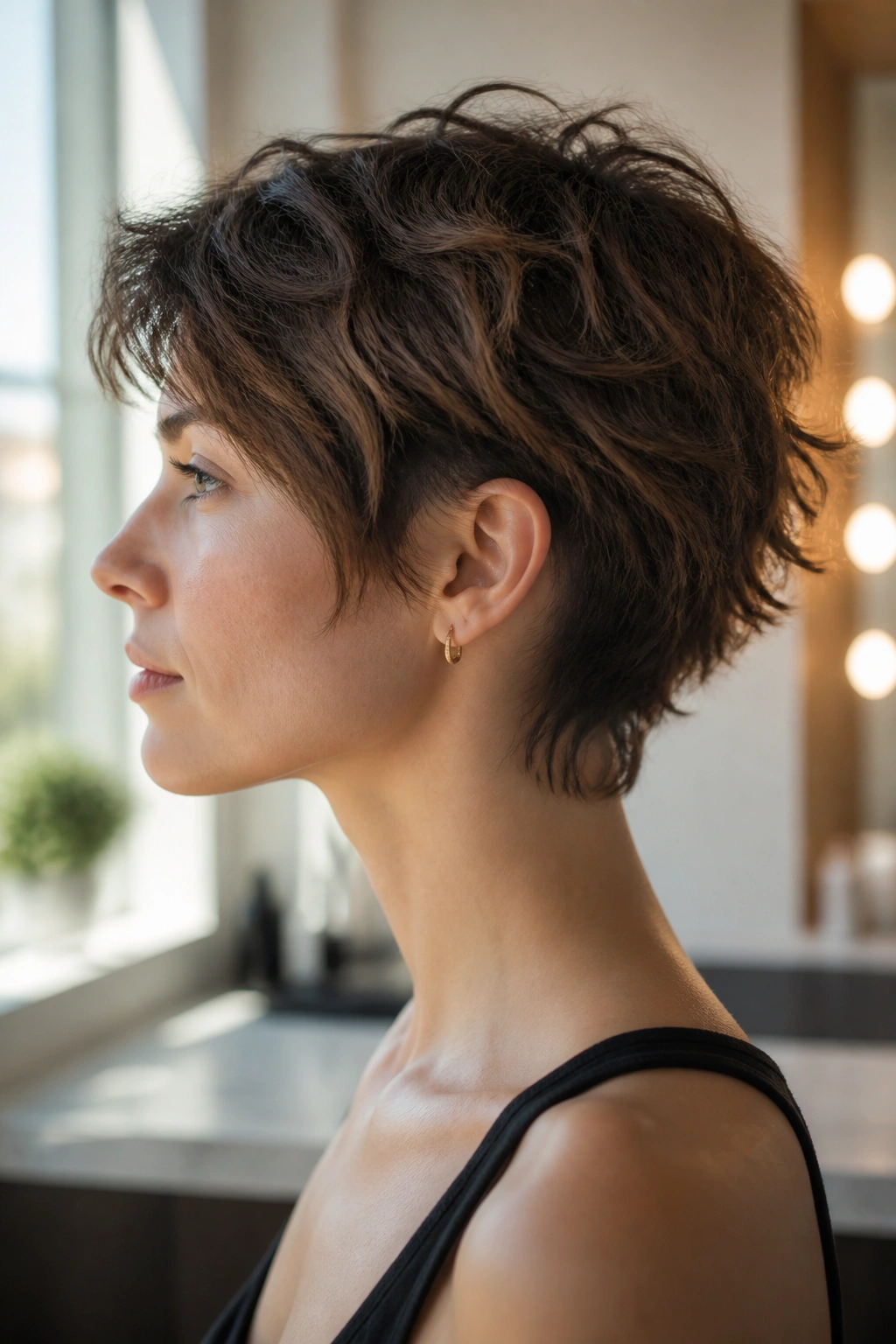
A shag with an undercut is all about hidden control. The top and sides keep their movement, while the undercut takes weight out from the nape or behind the ears.
That makes a big difference on thick or dense hair. Without that release point, a short shag can mushroom out under the surface. With it, the shape sits closer and feels lighter in hot weather or when you wear it tucked behind one ear. You do not need a dramatic shave. Even a subtle undercut can change how the whole cut behaves.
Best for: people who like texture up top but hate bulk at the back.
18. Mini Wolf Cut
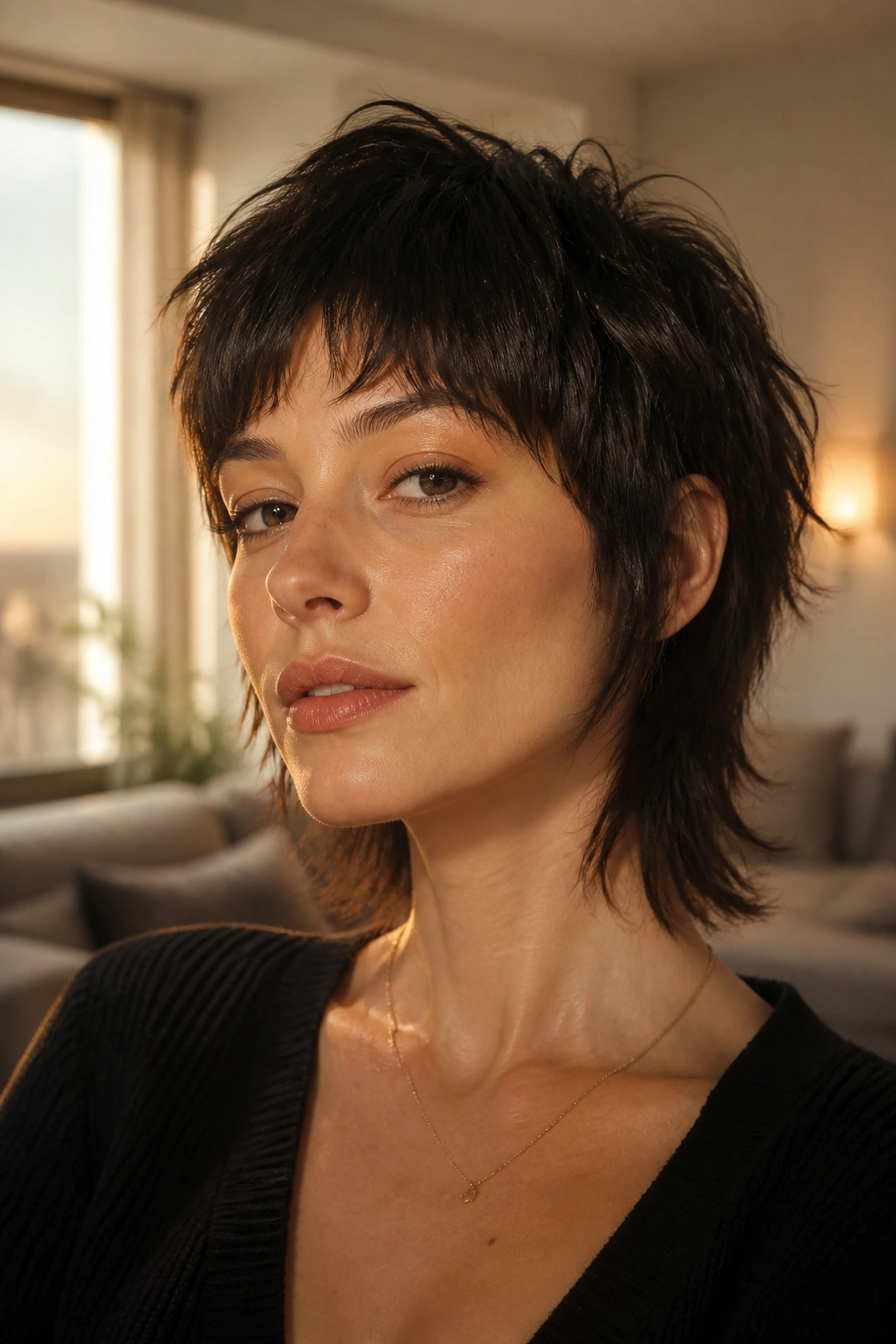
A mini wolf cut is the cropped cousin of the full wolf shape. It keeps the choppy crown, the shorter front layers, and the slightly wild outline, but everything is tightened up for short hair.
This one is excellent if you want attitude without the long, mullet-like tail. The crown needs lift, the sides need breakage, and the bangs should blend rather than sit as one hard curtain. Use a diffuser if you have wave or curl. Straight hair can wear it too, but it needs a texturizing spray and a little finger work.
A little roughness helps. A lot, in fact.
19. Chin-Length Shag
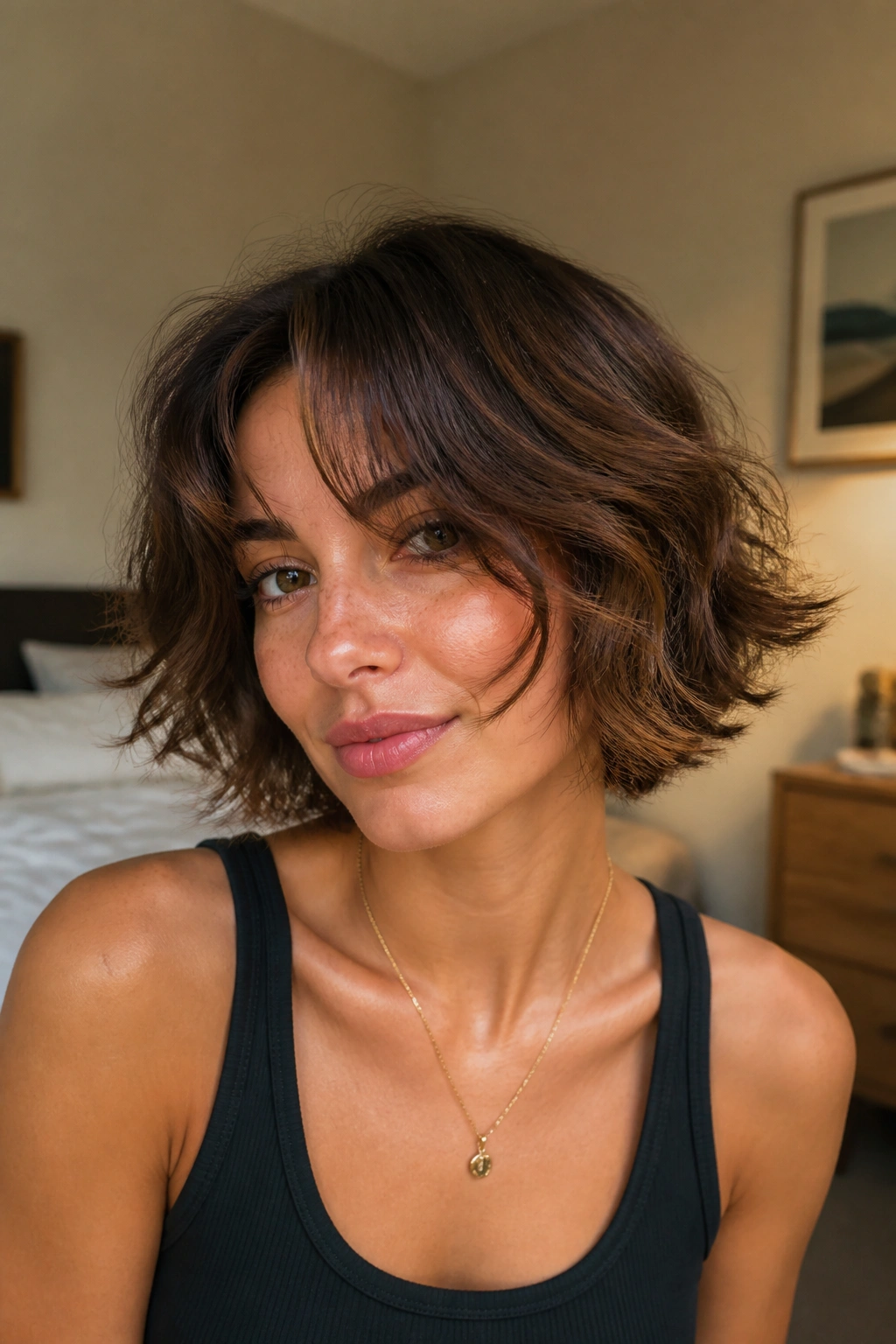
A chin-length shag sits in that sweet spot where the cut still feels short, but you have enough length to swing the ends around. The perimeter lands near the chin, then the layers break it up so it never becomes boxy.
This length works on a lot of textures because it gives just enough room for movement. If your jawline is something you like to show off, this cut does that nicely. If you want the face-framing pieces to soften the edges, ask for the front to graze the cheekbones before it drops to the chin.
What to ask for
- Soft internal layers.
- A broken perimeter, not a blunt one.
- Fringe that can split or sweep.
20. Bottleneck Fringe Shag

A bottleneck fringe shag has one of the most flattering bang shapes around. The fringe starts narrow near the center, then opens a little wider toward the brows and cheekbones, which gives short hair a natural frame.
That shape works well with shag layers because it avoids the blocky feel that heavier bangs can create. It also grows out better than a straight-across fringe. On short hair, that matters. Keep the fringe piecey and the sides a little lighter so the whole cut stays soft around the face.
If your bangs usually fight you, try this one instead.
21. Wispy Bangs Shag

Why does this version feel so easy to wear? Because wispy bangs don’t demand much from the rest of the cut. They give just enough forehead coverage to soften the shape, then let the layers do the rest.
The bangs should be thin enough to move and not sit like a curtain. That means avoiding too much density at the front. The shaggy layers underneath can be more playful, even a little broken up. On short hair, that contrast keeps the haircut from feeling heavy.
How to wear it
Use a round brush only on the fringe, then rough-dry the rest with your fingers.
22. Neck-Length Shag
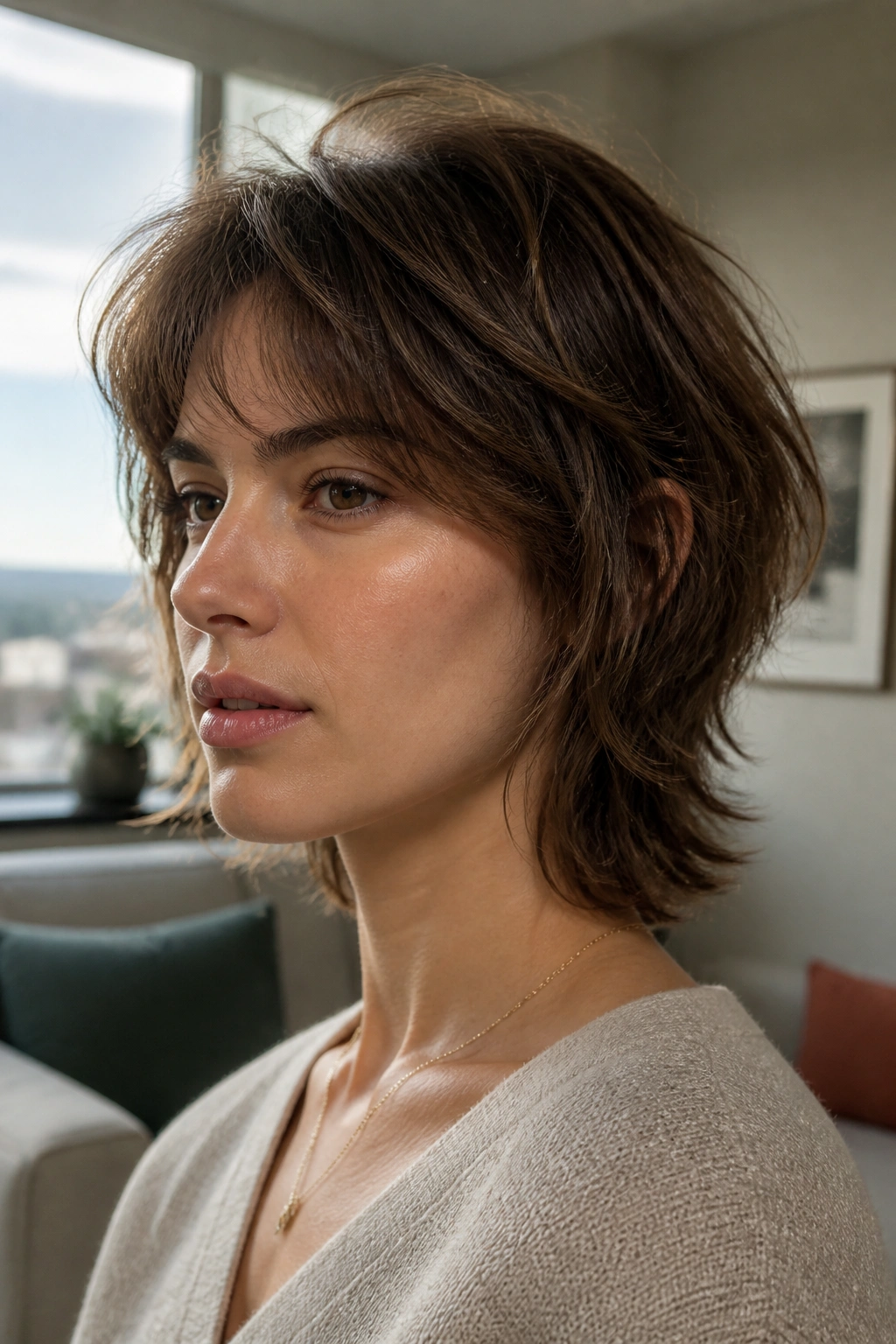
A neck-length shag gives you a little extra swing without falling into medium-length territory. The hair skims the neck, which makes it easy to tuck, flip, or pin back when you want the shape out of your face.
This length is useful if you like short hair but need enough room for styling variety. It also gives thick hair more breathing space than a chin-length bob. Ask for layers that start near the cheekbones and continue through the nape, so the whole outline feels connected. Otherwise the bottom can get heavy.
It’s a practical cut. No shame in that.
23. Sliced Layer Shag
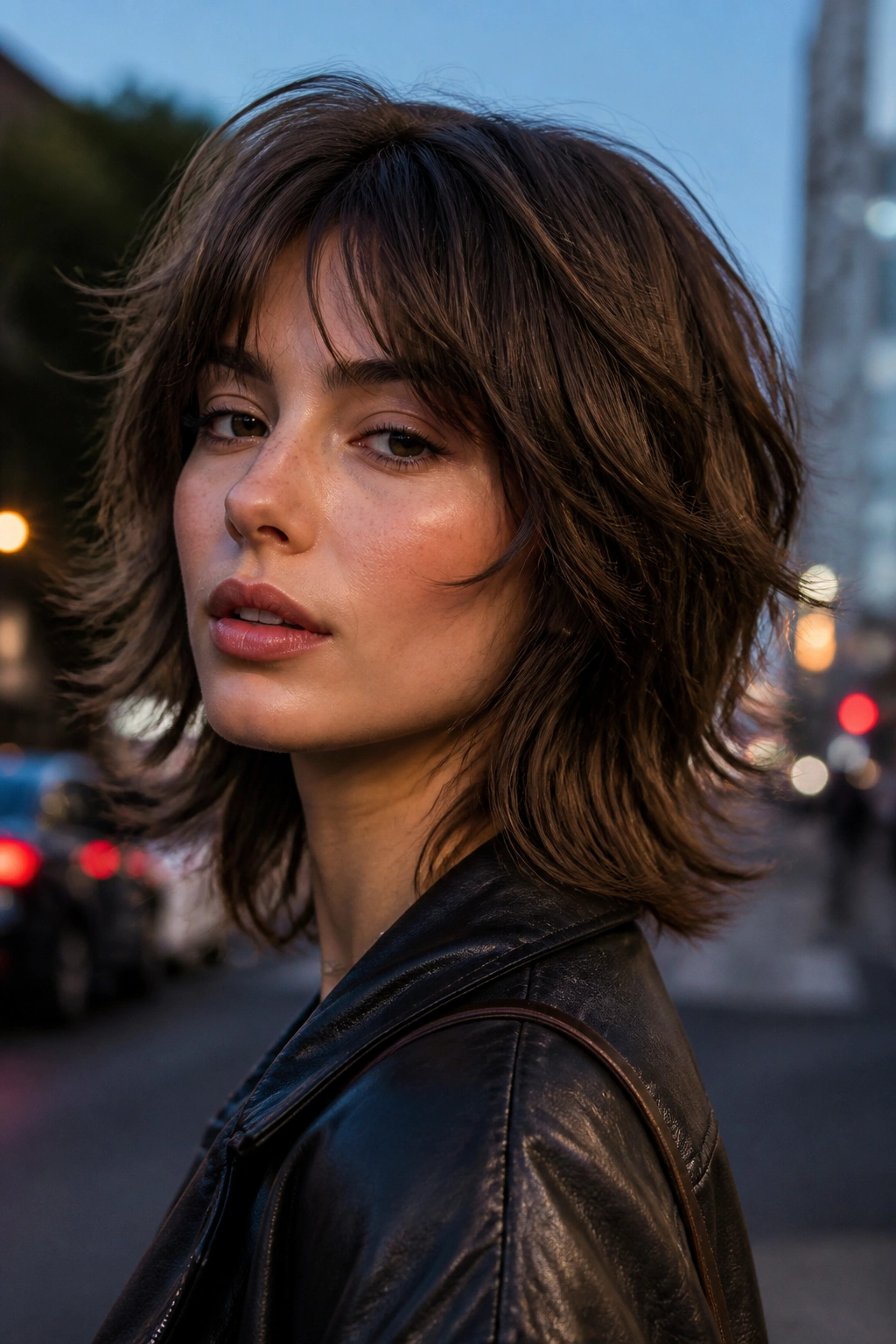
A sliced layer shag feels sharper than a soft feathered version. The layers are cut with a cleaner hand, so the pieces sit apart a little more and show off the movement in the hair.
This is a good choice if you like structure but do not want a neat, polished bob. It works especially well on straight or slightly wavy hair because the sliced ends read clearly. Ask for the stylist to avoid over-thinning the perimeter. That’s where this cut can go wrong. Too much slicing, and it starts to look brittle.
Unlike softer shags, this one has a little edge even when it’s combed into place.
24. Retro Seventies Shag
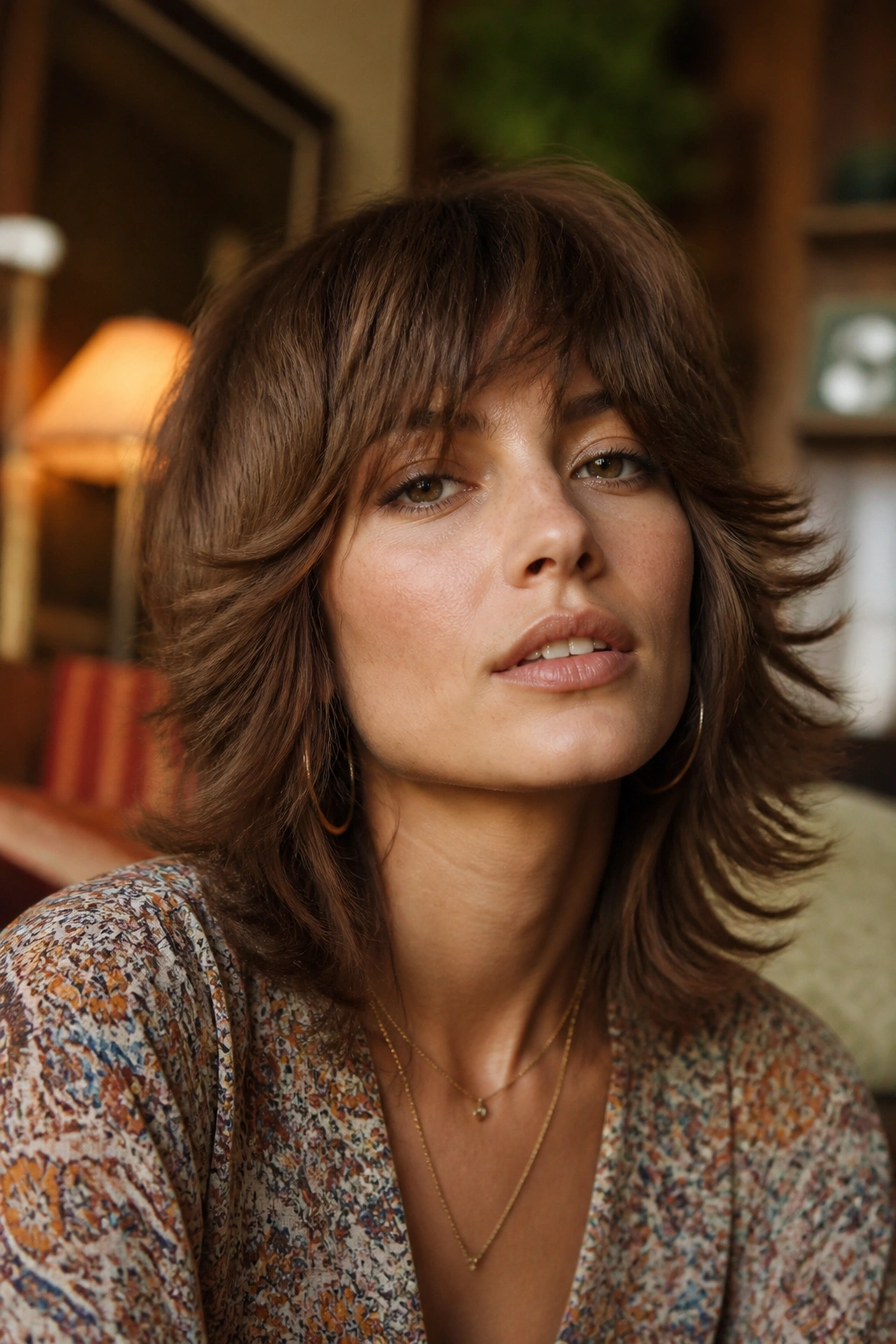
A retro seventies shag should feel lived-in, not costume-like. Think feathered crown, cheekbone-framing layers, and ends that kick out a little when they dry naturally.
The shape is more rounded than a wolf cut and less blunt than a bob. That makes it friendly for short hair because it keeps the silhouette soft. If you want the throwback vibe without going too big, keep the bangs light and the layers close. A round brush at the ends can help, but don’t smooth everything flat. The point is movement.
Some cuts chase perfection. This one does not bother.
25. Platinum Punk Shag
Platinum changes everything. On a short shag, the light color makes every layer and notch more visible, which is why a platinum punk shag feels sharper than the same cut in a darker shade.
The haircut itself should be slightly jagged with a rough fringe and broken texture through the crown. That contrast keeps the pale color from looking washed out. If the bleach has left your hair a little dry, be honest about it and ask for the layers to be softer at the ends. Harsh ends on damaged hair are a bad deal.
Best with: matte paste, root lift spray, and a little attitude.
26. Copper Shag
A copper shag leans warm and lively. The color picks up the layers, especially around the face, and makes short hair look richer than it would in a flat tone.
This is a nice move if you want the haircut to feel less rebellious and more polished. Copper works well with feathered bangs, soft waves, and chin-length shapes. It also makes the ends look fuller, which is handy if your hair is fine. Keep the layers soft enough that the color can do some of the visual work.
You do not need wild styling here. A loose bend is enough.
27. Wash-and-Go Shag
Why keep fighting your hair when the cut can do the work? A wash-and-go shag is built for air drying, which means the layers have to be planned around the way your hair dries on its own.
That sounds simple, and in a good cut, it is. The top should not be too heavy, the fringe should be loose enough to settle, and the ends should stay light. Use leave-in conditioner on damp hair, scrunch once, and walk away. If your hair has any wave at all, this version can look excellent with almost no heat.
How to wear it
Let the roots dry first, then separate the pieces with your fingers once the hair is fully dry.
28. Sleek Shag
A sleek shag is for people who want texture without the full messy finish. The layers are still there, but the surface is smoother and the outline feels more controlled.
This cut suits short hair that needs shape for the office or a dressier setting. It’s also useful if your hair gets frizzy and you would rather work with that than against it. A smoothing cream on damp hair and a quick blow-dry with a nozzle can keep the top tidy while the ends still move. That contrast is the point.
It’s a shag that knows how to behave. Mostly.
29. Boyish Shag
A boyish shag keeps the length short and the energy light. The fringe is often soft and piecey, the sides stay close, and the crown gets just enough texture to avoid that helmet look.
This is one of the more androgynous short shag haircuts, and that is exactly why people love it. It gives shape without fuss. If you want something easy to wear with little styling, ask for short layers that do not over-stack at the top. A little cream or paste is enough. Any more, and you risk weighing it down.
Clean lines, rough texture. Good combination.
30. Feminine Razor Shag
A feminine razor shag is not softer because it is less sharp. It is softer because the sharpness is placed carefully. The razor work opens up the ends, but the overall silhouette still follows the face in a gentle way.
This cut works best when the fringe is broken up and the sides skim the cheekbones. The result feels airy rather than severe. On short hair, that matters because a heavy razor shag can go too edgy fast. Ask for the ends to stay wispy, not shredded, and keep the crown light. A bit of bend through the front finishes it well.
The goal: movement with a soft outline, not a jagged mess.
31. Short Shag for Round Faces
A short shag for round faces needs vertical lift and cheekbone action. The cut should pull the eye upward, not widen the face at the widest point.
That usually means a little height at the crown, longer pieces near the cheeks, and bangs that split or sweep instead of sitting straight across. Keep the sides from ending exactly at the fullest part of the cheeks. That is the trap. A chin-skimming front with soft layers can be much better. It stretches the face just enough without turning the whole haircut into geometry.
Tip: ask for face-framing pieces that start above the jaw, then fall away.
32. Short Shag for Oval Faces
Oval faces can wear almost any short shag, which is annoying and convenient at the same time. The real question is what kind of mood you want.
If you want softness, choose a shag with curtain bangs and light layers around the temples. If you want edge, go for a choppier crown and a tighter nape. Oval faces can handle a micro fringe, a side sweep, or even a mini wolf cut without the proportions getting thrown off. That flexibility is the gift here.
The only thing I would avoid is overbuilding the shape just because you can. Restraint usually looks better.
33. Short Shag for Square Faces
A short shag for square faces should soften the jaw, not compete with it. The layers need movement near the cheekbones and a bit of bend around the temples so the face feels less angular.
A heavy blunt fringe can make the jaw look stronger, which is not always the goal. Better to go with a curtain fringe, a side sweep, or broken bangs that sit a little lighter. Softening the ends matters too. Razor-edged sides can look too hard if the face already has strong lines.
How to use it
Keep the longest face-framing pieces around the mouth or chin, then let the crown stay light and lifted.
34. Short Shag for Heart Faces
Heart-shaped faces often look best when the top is not too wide and the lower half gets a little more presence. That means the shag should balance the forehead with movement near the jaw.
A good version uses fringe that narrows at the center and opens out toward the sides. The layers around the chin can be a touch fuller so the face does not taper too sharply. This is one of those cuts where a small change in bang length makes a big difference. Too short, and the forehead takes over. Too long, and the face loses structure.
It is a balancing act. Not a hard one, but still.
35. Short Shag for Fine Straight Hair
Fine straight hair can wear a shag beautifully when the cut respects its limits. Too many short layers, and the ends go limp. Too little layering, and it turns into a flat sheet.
The best version keeps the interior layers soft and the perimeter a little fuller. You want movement, not holes. Ask for a light fringe and point-cut ends so the hair can separate a little without looking sparse. A root-lifting spray at the crown helps, but the cut does most of the heavy lifting.
What to avoid
- Heavy thinning shears.
- Overly short crown layers.
- Dense bangs that eat up volume.
36. Short Shag for Thick Coils
A short shag for thick coils needs a dry cut, patience, and a stylist who understands shrinkage. Coils rise when they dry, so the shape has to be built around the real length, not the wet length.
The best version keeps the silhouette rounded and the layers intentional, not choppy for the sake of being choppy. Shorter pieces around the crown can help lift, while the sides stay shaped to avoid width at the cheeks. Use a rich curl cream and a little gel for hold. Then leave it alone for a while. Coils look better when they are not fussed over.
Ask for shape, not thinning. There is a difference.
37. Short Shag for Wavy Hair
Wavy hair is almost built for a shag. The bend gives the layers something to catch on, which means the cut can look textured without a lot of heat styling.
The ideal version keeps the crown a touch lighter and the ends broken up so the wave can move through the shape. Too much bluntness kills the effect. Too much thinning makes the hair frizz. Use a salt spray only if your waves like grit; some hair gets crunchy and weird with it. A light mousse often works better.
This cut lives in that sweet spot between casual and styled. That’s why it keeps hanging around.
38. Short Shag for Curly Hair
A short shag for curly hair is all about preserving curl shape while removing bulk where it gets heavy. The cut should follow the natural curl pattern so the layers fall into curls, not between them.
Dry cutting helps the stylist see where each curl wants to sit. The front can be left a little longer if your curls spring hard, and the crown can be shaped so the top does not puff like a cloud. Diffuse on low heat, and stop when the curls are set but still soft. Crunchy curls ruin the point.
If you like volume, this cut gives it. If you hate triangle hair, it can fix that too.
39. Face-Framing Flick Shag
A face-framing flick shag is all about the pieces that turn out around the cheek and jaw. Those flicked ends give short hair a lighter, more animated feel without requiring a lot of length.
The front layers should be cut so they can swing away from the face, not hang straight down. That little turn makes a big difference in how the cut reads. It is especially nice if your hair takes a bend easily or if you use a round brush on just the front sections. Keep the rest rougher so the flicks do not look too styled.
Small detail, big payoff. That is the whole idea.
40. The Custom Shag Built Around Your Face
The best short shag is usually the one that borrows pieces from a few of the cuts above and ignores the rest. A custom shag built around your face can be soft at the fringe, choppy at the crown, and neat enough through the nape to stay wearable every day.
Bring a photo, then point out what you want the haircut to do: open up the cheekbones, trim bulk, show off curls, or make fine hair stand up a little better. That conversation matters more than the trend label. Short shag haircuts for short hair work best when they are tailored, not copied.
If you want one last rule, keep it simple: choose the version that looks good when you have not styled it yet. That’s the one you’ll actually keep wearing.
