



Shaggy haircuts for wavy medium hair work because the cut does half the styling for you. Medium-length waves already have a bend built in; once the layers land in the right places, the shape starts moving on its own.
The bad versions fail fast. Too many short layers can make the ends puff out like a triangle, and too little layering leaves the hair heavy and sleepy around the jaw. I see that mistake all the time: someone asks for “texture” and ends up with shredded ends but no real shape.
Wavy medium hair sits in the sweet spot. It’s long enough to show a layered cut, short enough to keep the movement visible, and forgiving enough that a rough dry or an air-dry can still look good. A light mousse, a diffuser, or even a quick scrunch with leave-in cream can do more here than a perfect blowout.
The 22 looks below cover soft, messy, sharp, grown-out, and a little punk. Some are best for thick hair, some rescue fine waves from drooping, and some are just easier to live with when your morning routine has a hard stop at ten minutes.
1. Shoulder-Grazing Shaggy Haircut for Wavy Medium Hair
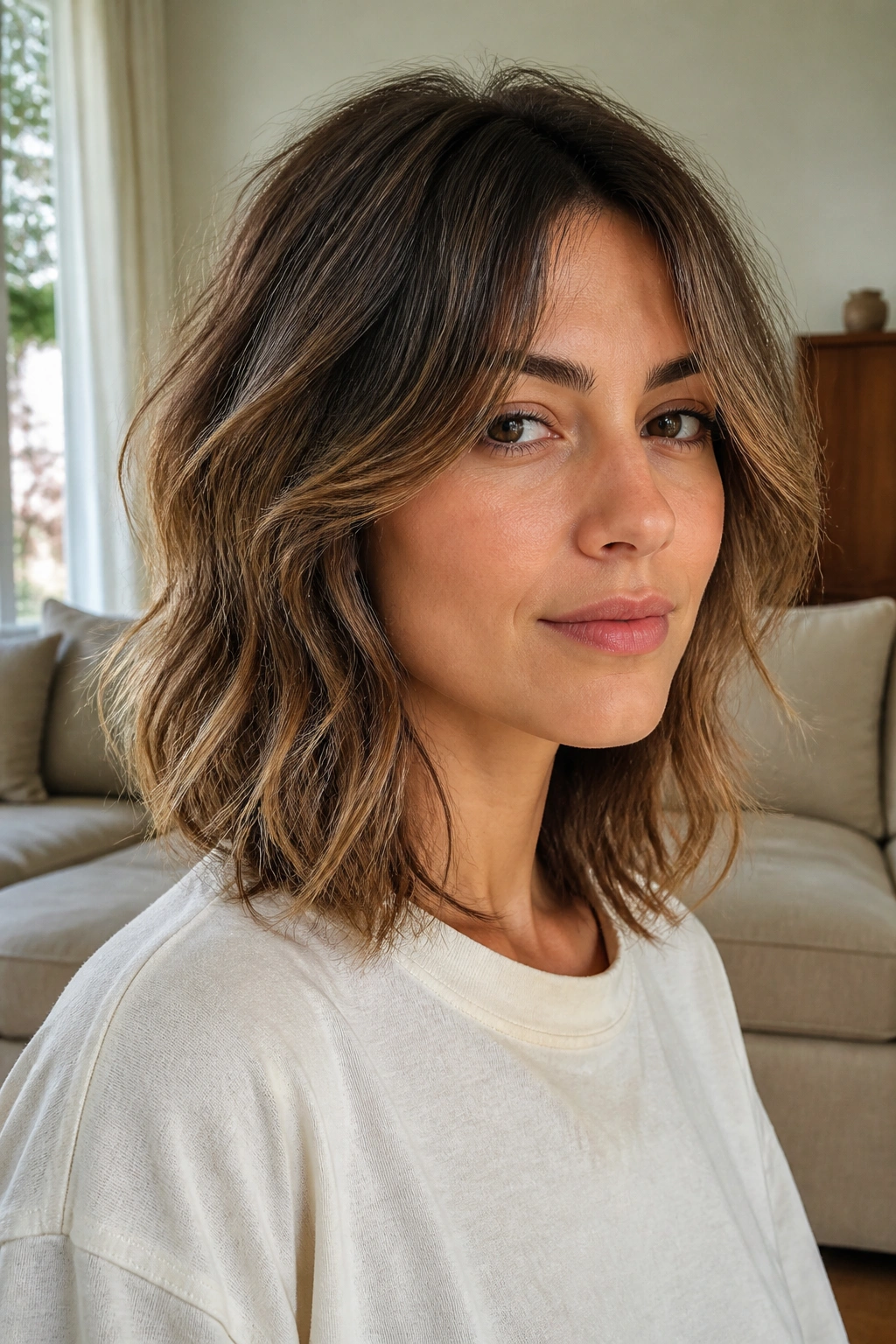
This is the safest shag to ask for if you want movement without a full-on chop. The length sits right at the shoulders, so the waves still bounce, and the layers can take the weight out of the middle without making the ends look thin.
Why it works on medium waves
Wavy hair at this length needs room to bend. The shoulders give the cut a little swing, while soft face layers stop it from turning into a boxy triangle. The result feels easy, not overworked.
- Ask for layers that start around the cheekbone and fade down toward the collarbone.
- Keep the perimeter touching the shoulders or just above them.
- Use a nickel-sized amount of mousse on damp hair.
- Air-dry halfway, then diffuse the roots if they sit flat.
Best for: anyone who wants shape without a sharp, chopped finish.
The nice thing here is that it grows out well. You do not have to race back to the salon every few weeks just to keep it from looking wrong.
2. Curtain-Bang Shag That Lands at the Cheekbones
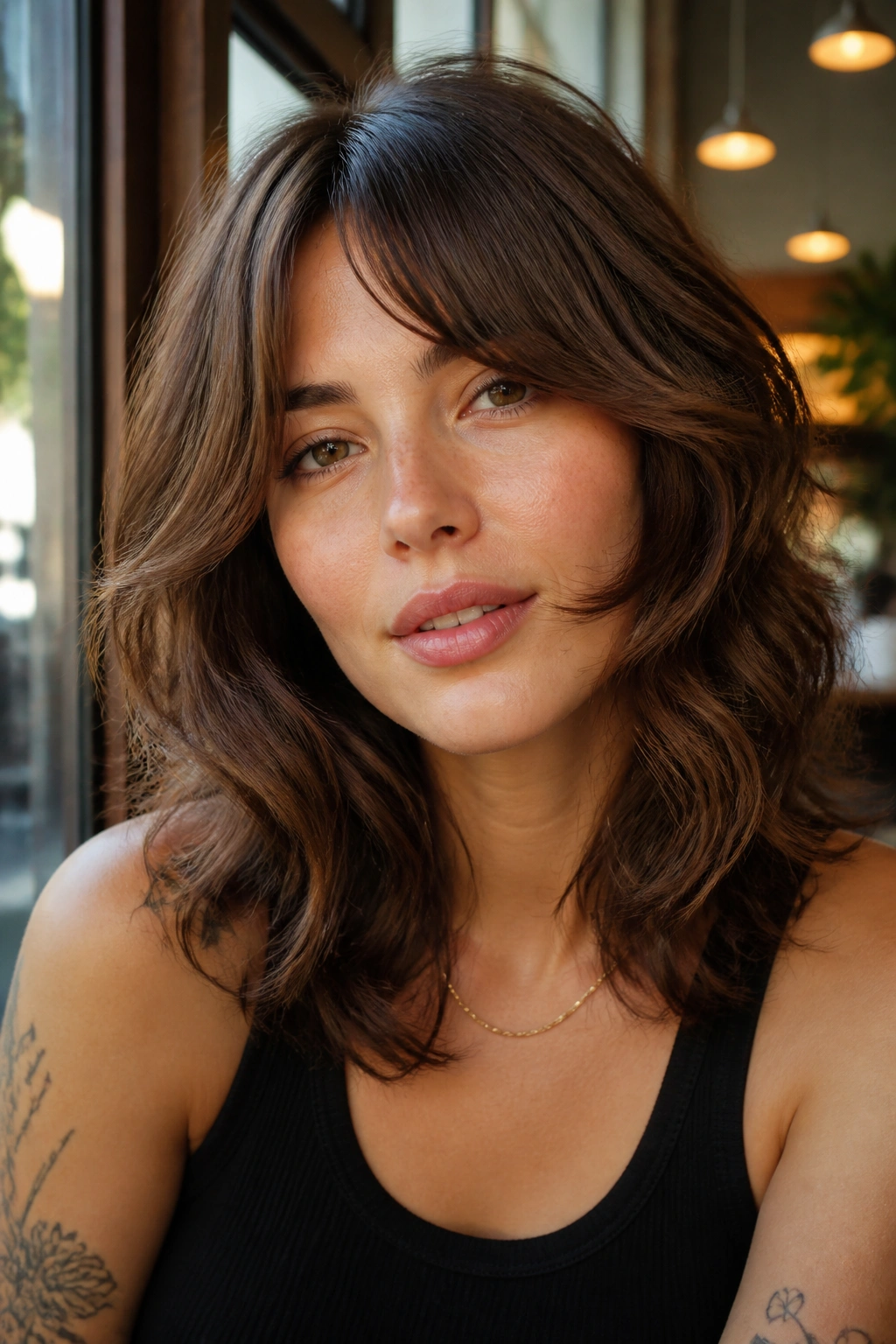
Curtain bangs make a shag look intentional fast. They split the forehead, open the face, and give wavy medium hair that soft frame people keep trying to fake with curling irons.
I like this version because the bangs do not fight the wave pattern. They bend, part, and move with the rest of the hair instead of sitting there like a stiff little curtain. If the bangs are cut too short, the whole thing starts feeling fussy. If they’re long enough to brush the cheekbones, they settle in better.
The trick is in the blend. The front pieces should merge into the first layer, not sit on top of it like an afterthought. That’s what keeps the cut from looking like “bangs plus hair” instead of one clean shape.
If you want this one to work on busy mornings, keep the ends soft and the fringe a touch longer than you think you need. Hair shrinks up when it dries, and waves do their own thing.
3. Wolf Cut Shag With a Tamed Crown
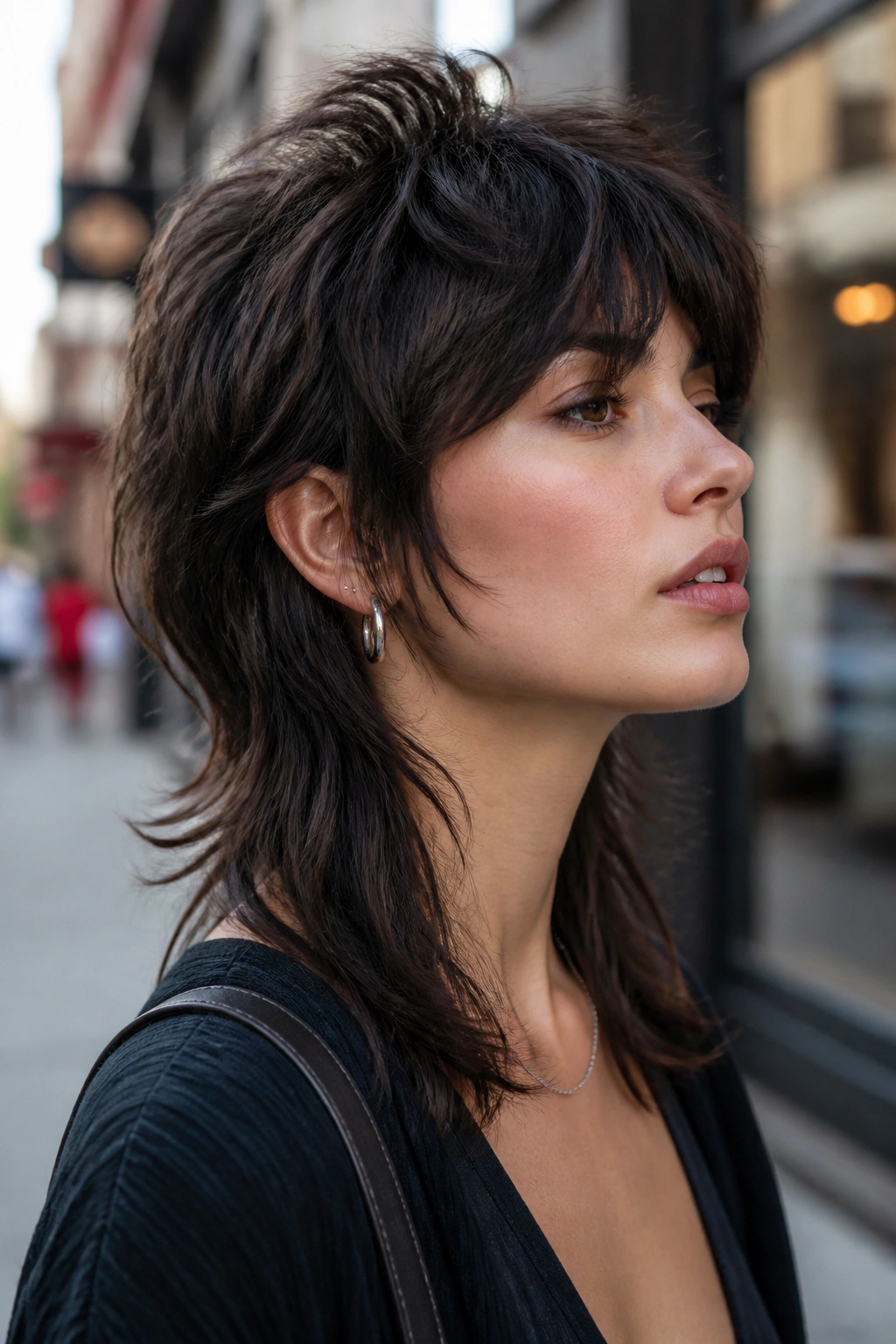
Why do wolf cuts keep showing up on wavy medium hair? Because the shape flatters movement that already exists. The top gets a lift, the bottom keeps some length, and the middle gets carved away enough to stop the hair from hanging like a wet blanket.
How to keep it from looking too extreme
The wolf cut only turns messy in a bad way when the disconnect is too loud. Keep the crown short enough to create lift, but leave the nape long enough that the cut still feels wearable. That balance matters more than people think.
What to ask for
- Shorter layers at the crown for volume.
- Longer, tapered pieces through the sides.
- A soft, not blunt, transition from top to bottom.
- Texture around the face, not just at the back.
A little sea salt spray helps here, but I would not drown the hair in it. Waves already have enough grit. What they usually need is shape, not stiffness.
4. Face-Framing Shag for Wavy Medium Hair
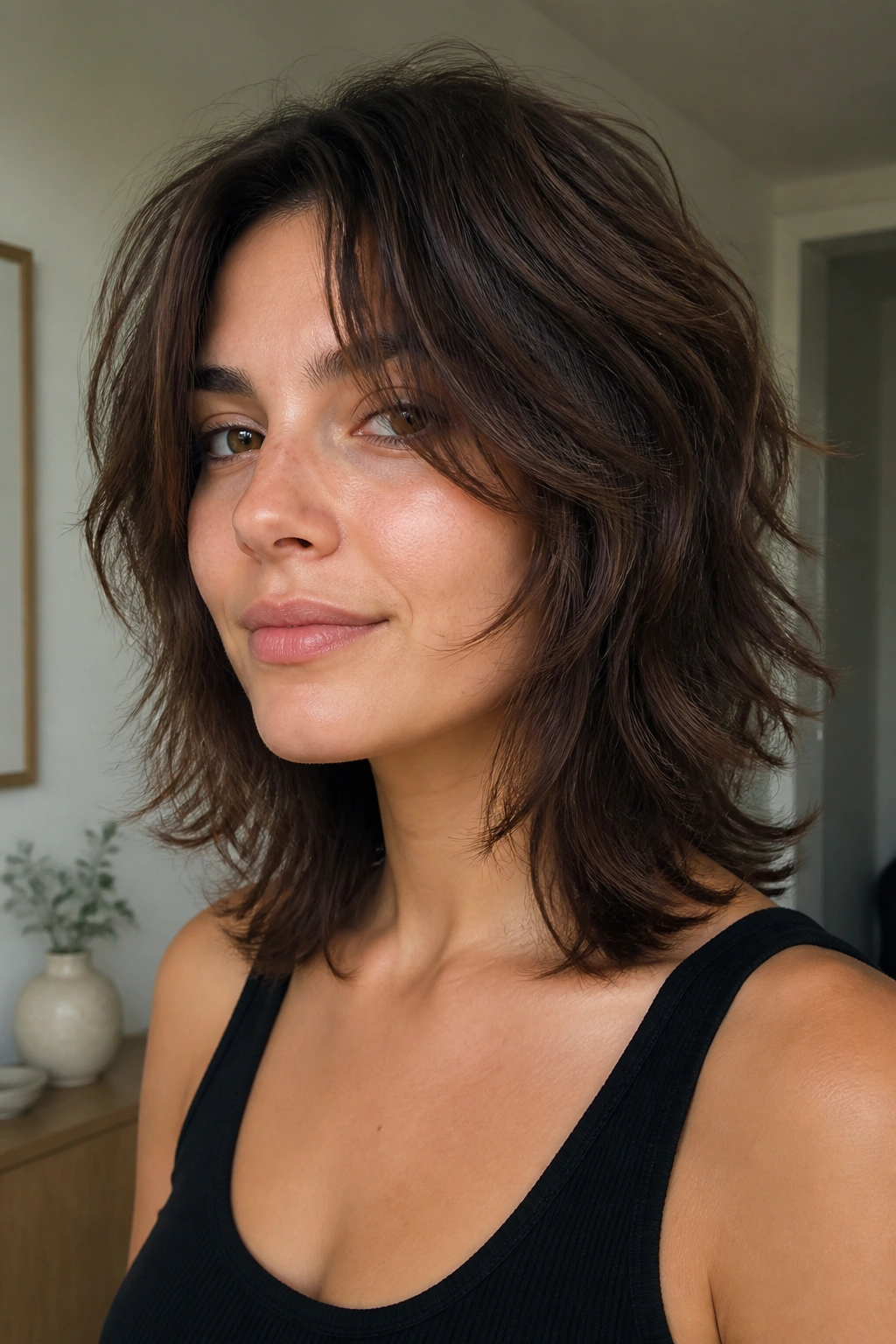
If your waves puff around the cheeks, this cut solves that problem without flattening the rest of the head. The face-framing pieces carve a path around the jaw and cheekbones, which keeps the shape light where medium hair tends to bulk up.
I’ve seen this work especially well on round and square faces. The longest front pieces should hit somewhere between the cheekbone and the chin, then taper softly into the rest of the cut. That gives the face some length without dragging the whole look down.
The back can stay fuller than you’d expect. That’s the quiet part most people miss. A shag does not have to be shredded everywhere to feel airy; it just needs weight removed in the right spots.
A styling cream with a little slip is a good match here. It keeps the front pieces from frizzing out while still letting the wave pattern show.
5. French Shag With Airy Fringe
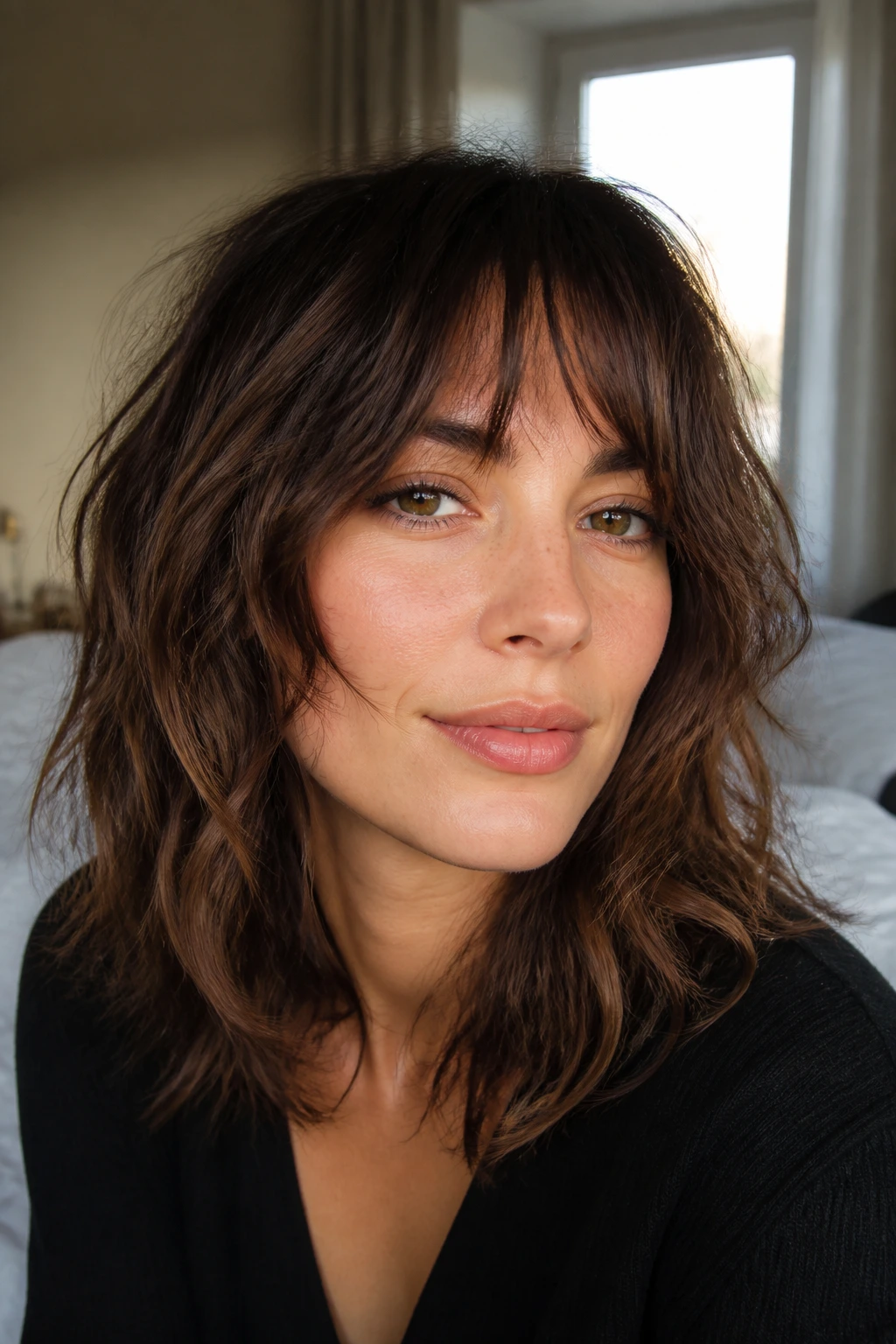
A French shag is what I recommend when someone wants texture but not chaos. It has the softness of a grown-out cut, the movement of a shag, and enough polish that it doesn’t look like you lost a fight with scissors.
This version usually keeps the layers a little more blended than a classic shag. The fringe is airy, the ends are touched lightly, and the whole cut feels relaxed rather than aggressively choppy. On wavy medium hair, that softness matters. Too much slicing can make the ends look frayed instead of piecey.
The best part is how it handles second-day hair. A French shag tends to look better after a day or two, when the waves loosen and the fringe settles into place. A quick mist of water and a dab of curl cream are often enough.
It’s the kind of cut that makes a T-shirt and jeans look deliberate. No extra drama needed.
6. Razor-Cut Shag With Piecey Ends
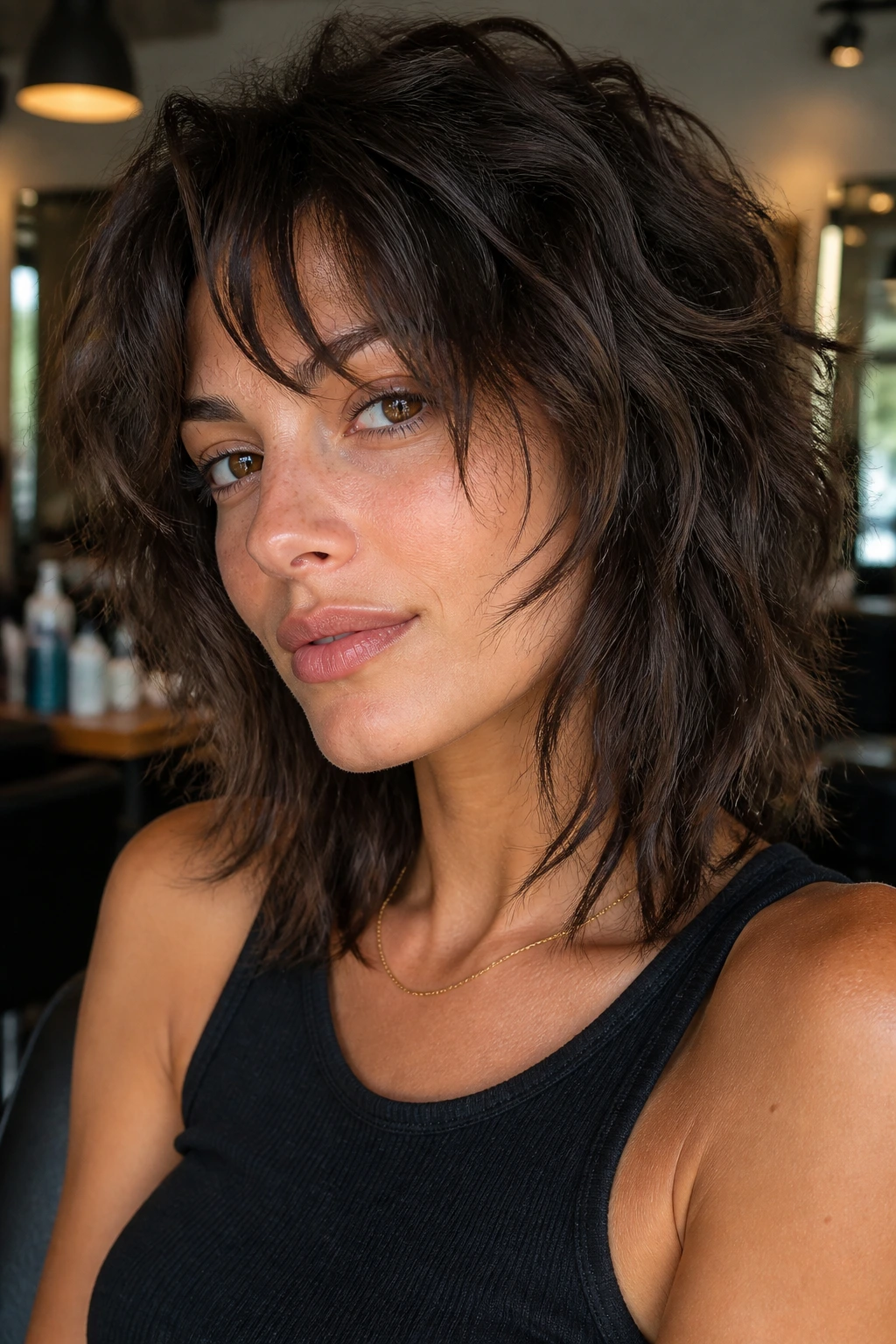
A razor-cut shag can be sharp in a good way, but only if the hair has enough density to support it. On wavy medium hair, the razor gives the ends separation, so each wave looks more defined instead of clumping into one heavy line.
That separation is the point. You get movement, lightness, and a little edge all at once. But there’s a catch: if the hair is already fine, too much razor work can make the ends look wispy and tired. Nobody wants a shag that feels half-finished.
I’d choose this cut for medium hair that leans thick or coarse. The razor removes some bulk, then lets the wave pattern show through without a lot of styling. A bit of curl cream or lightweight gel keeps the pieces from flying away.
If your stylist reaches for a razor, ask them to keep the outline controlled. Messy is good. Chopped to bits is not.
7. Flipped-Out Mid-Length Shag

There’s something fun about a shag that flicks outward at the ends. It has a little retro energy, but it doesn’t look stiff or costume-y when the layering is soft and the flip is gentle.
This version works especially well when the hair sits between the collarbone and the shoulder. That length gives the ends enough weight to curve, but not so much that they drag straight down. A round brush can help, yet you can also get the flip with a quick bend from a flat iron at the last inch of hair.
How to style the flip
- Blow-dry the roots first for lift.
- Bend the ends outward with a round brush or flat iron.
- Use a light mist of texture spray, not a crunchy hairspray.
- Break up the ends with your fingers once the hair cools.
It’s a good choice if you like movement that reads a little more styled than casual. Some mornings it will look polished, other mornings slightly wild. That’s the charm.
8. Bottleneck Bang Shag
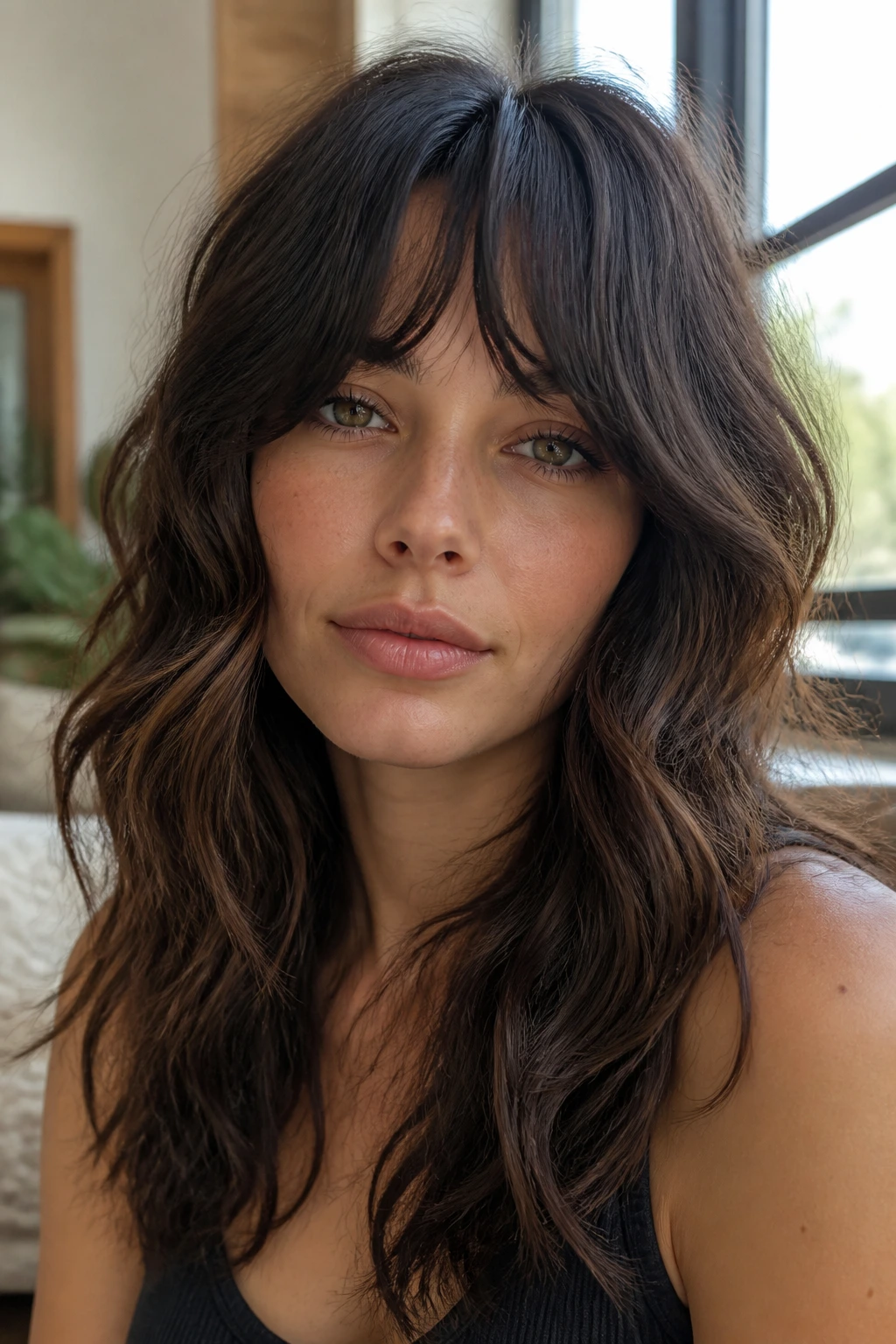
Why do bottleneck bangs work so well with waves? Because they start narrow, open at the center, and fan out toward the cheekbones. That shape keeps the forehead from feeling boxed in while still giving the shag a strong front piece.
The bang itself matters a lot here. If it’s cut too blunt, it fights the wavy texture. If it’s cut too short, it sits above the natural bend and starts looking separate from the rest of the haircut. The sweet spot is usually just below the brows in the center, then longer around the temples.
How to make it work
Bottleneck bangs need a bit of movement, not a full blowout. Let them fall, twist them with your fingers while damp, and then leave them alone more than you think you should. Waves do not like being bullied into place.
This is a smart choice if you want fringe but hate the maintenance of a straight-across bang. It grows out gracefully and still looks like part of the cut two weeks later.
9. Thick-Hair Shag With Heavier Internal Layers

Thick wavy hair needs weight removed inside the cut, not hacked off at the ends. That’s the difference between a shag that moves and a shag that turns into a mushroom.
I prefer this version when the hair feels dense at the back of the head or around the ears. The stylist should leave the outline fairly full, then build internal layers that break up the bulk underneath. That way the top can lift, the sides can breathe, and the ends still look like actual hair.
Good signs to ask for
- Internal layers rather than aggressive thinning.
- A fuller perimeter that keeps the shape from fraying.
- Soft face pieces that connect to the rest of the cut.
- Minimal texturizing near the very ends.
This cut looks best when it’s allowed to settle naturally. Thick waves already carry a lot of movement, so the haircut should support that pattern rather than fight it. A diffuser helps, but the real win is in the cut structure.
10. Air-Dried Shag With Hidden Structure

An air-dried shag sounds lazy, and I mean that in the nicest way. The best ones look effortless because the shape was built into the haircut before you ever touched a styling tool.
The styling trick
The layers should be subtle enough that they do not scream from across the room. Think soft internal shaping, not obvious steps. Once the hair dries, the waves separate into pieces on their own, and you get that loose, lived-in finish people keep chasing.
This cut is a quiet champion for medium hair that frizzes when it’s overhandled. If you rake a brush through it, you lose the pattern. If you scrunch too hard, it gets fluffy. The sweet spot is a leave-in cream, a little mousse, and a hands-off dry.
A center part keeps the cut calm. A slight off-center part gives it more lift. Pick the one that matches your face and your patience. Both work.
11. Choppy Shag With Micro Fringe

Micro fringe is a bold move, and on wavy medium hair it can look sharp in a way that soft bangs never will. That tiny strip of fringe pulls attention straight to the eyes and makes the shag feel a little more graphic.
The catch is obvious: micro fringe is not forgiving. If your forehead is short, or if you hate seeing your bangs sit above the brows, skip it. This cut wants confidence and a willingness to let the rest of the hair do the softening.
The shag underneath should stay loose and broken up. You want the contrast between the tiny fringe and the wavy lengths. That contrast is what gives the cut its punch.
I’d keep the styling simple here. A bit of paste on the fringe, a touch of texture spray through the mid-lengths, and done. If you over-style it, the haircut loses the whole point.
12. Retro Seventies Shag With Big Movement
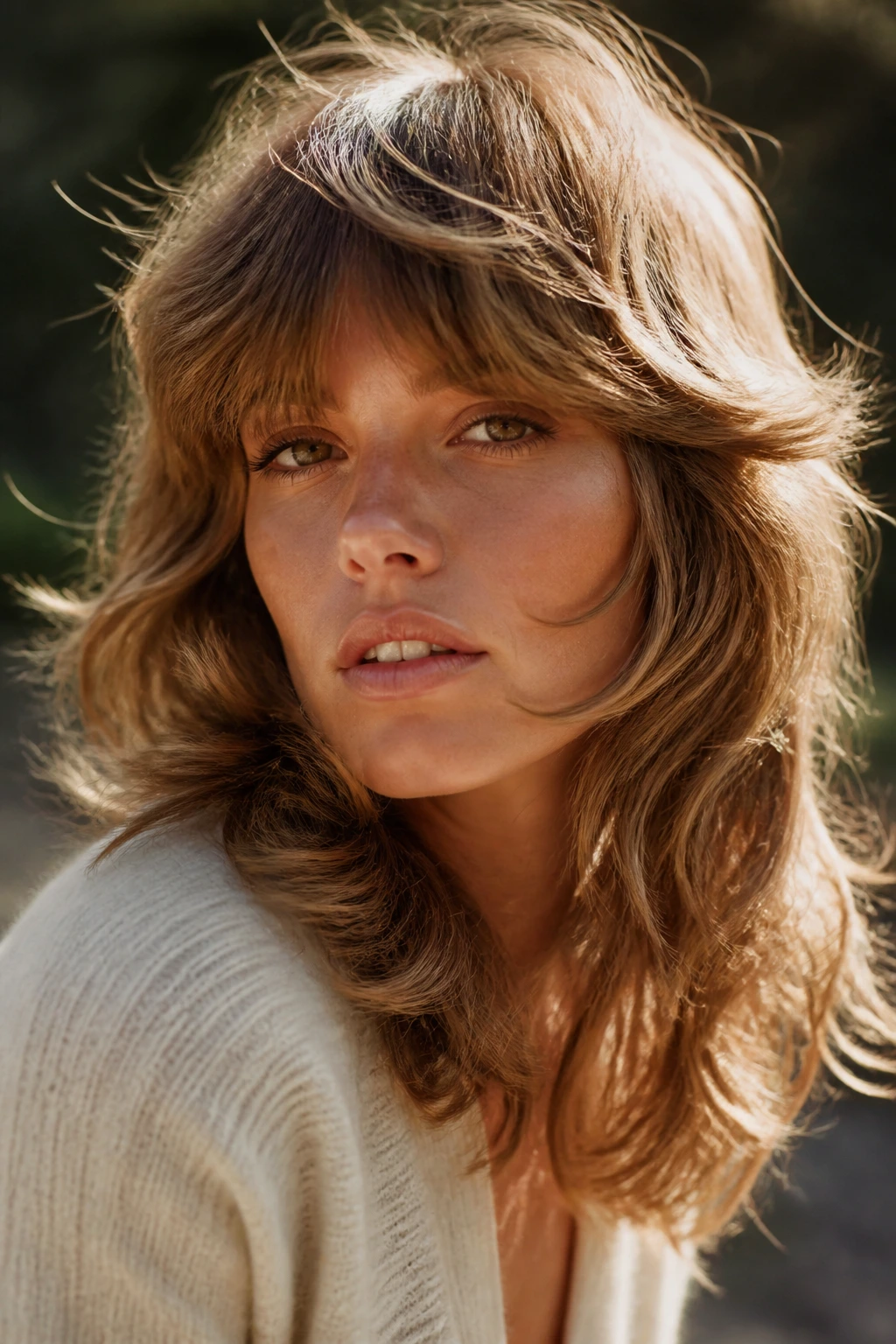
This is the shag for people who like hair with a little swagger. The crown gets lift, the sides move away from the face, and the whole cut looks like it wants to swing when you walk.
The seventies version is not about exact nostalgia. It’s about the feel: feathered layers, a soft fringe, and ends that flick around instead of sitting flat. Wavy medium hair takes to that shape fast because the wave pattern already provides the bend.
What gives it that look
- Layers cut high enough at the crown to build height.
- Soft face pieces that start near the cheekbone.
- A fringe that can be worn split or brushed aside.
- Ends that are textured, not razor-thin.
This one is fun with a round brush, but it does not need a perfect blowout. A little bend at the ends and some root lift can be enough. If you want a shag with personality, this is one of the better bets.
13. Layered Lob Shag With a Clean Edge
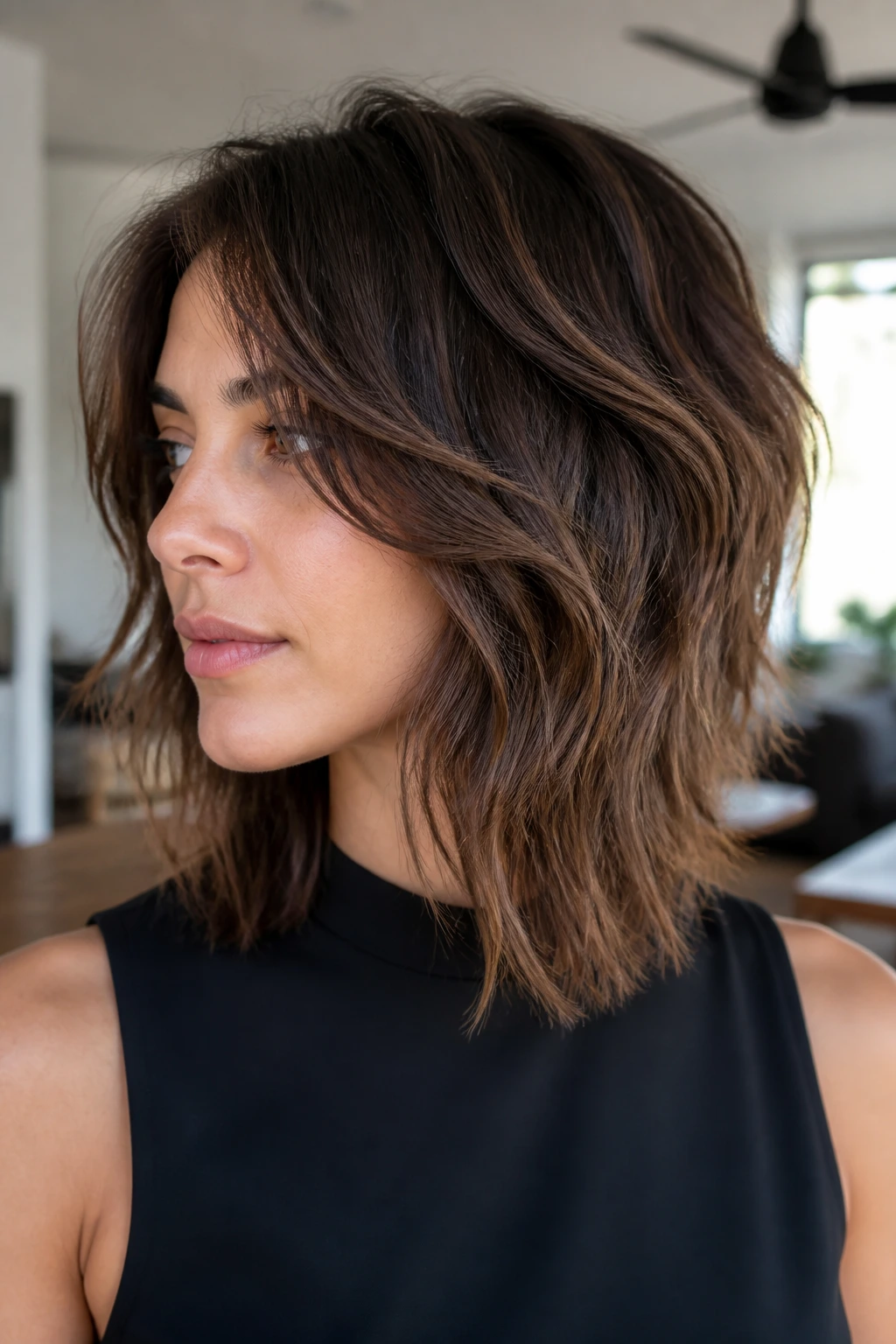
A layered lob shag is the choice for people who want movement but still like to see a line. Unlike a blunt lob, this version gives the waves room to break up and breathe, while the outer shape stays neat enough to feel intentional.
That clean edge matters. Medium waves can go fluffy fast when every part of the haircut is too soft. Leaving a stronger perimeter keeps the style from drifting into “I meant to do something, but I’m not sure what.” The interior layers do the loose work. The outside keeps order.
This cut is especially good if you work in a setting where you want texture without obvious mess. It reads polished in daylight and still looks relaxed at the end of the day.
A smoothing cream through the bottom few inches can help the edge stay crisp. Not slick. Crisp.
14. Side-Swept Bang Shag That Grows Out Gracefully

Can a side-swept bang still feel modern? Absolutely, if the rest of the shag has enough texture to keep it from looking dated. The side sweep softens the forehead, changes the balance of the cut, and works well with waves that fall in one direction anyway.
This is a friendlier option for people who don’t want center-part fringe. It also handles cowlicks better than a blunt bang, which is one of those small but useful details nobody talks about until they’re stuck fighting the hair every morning.
The bangs should travel into the layers instead of stopping at the temple. That blend is what keeps the cut from looking like a side bang from one era and a shag from another.
If you’re nervous about bangs, start here. They’re easier to grow out and easier to pin back on lazy days. That counts for a lot.
15. Crown-Heavy Shag for Flat Roots
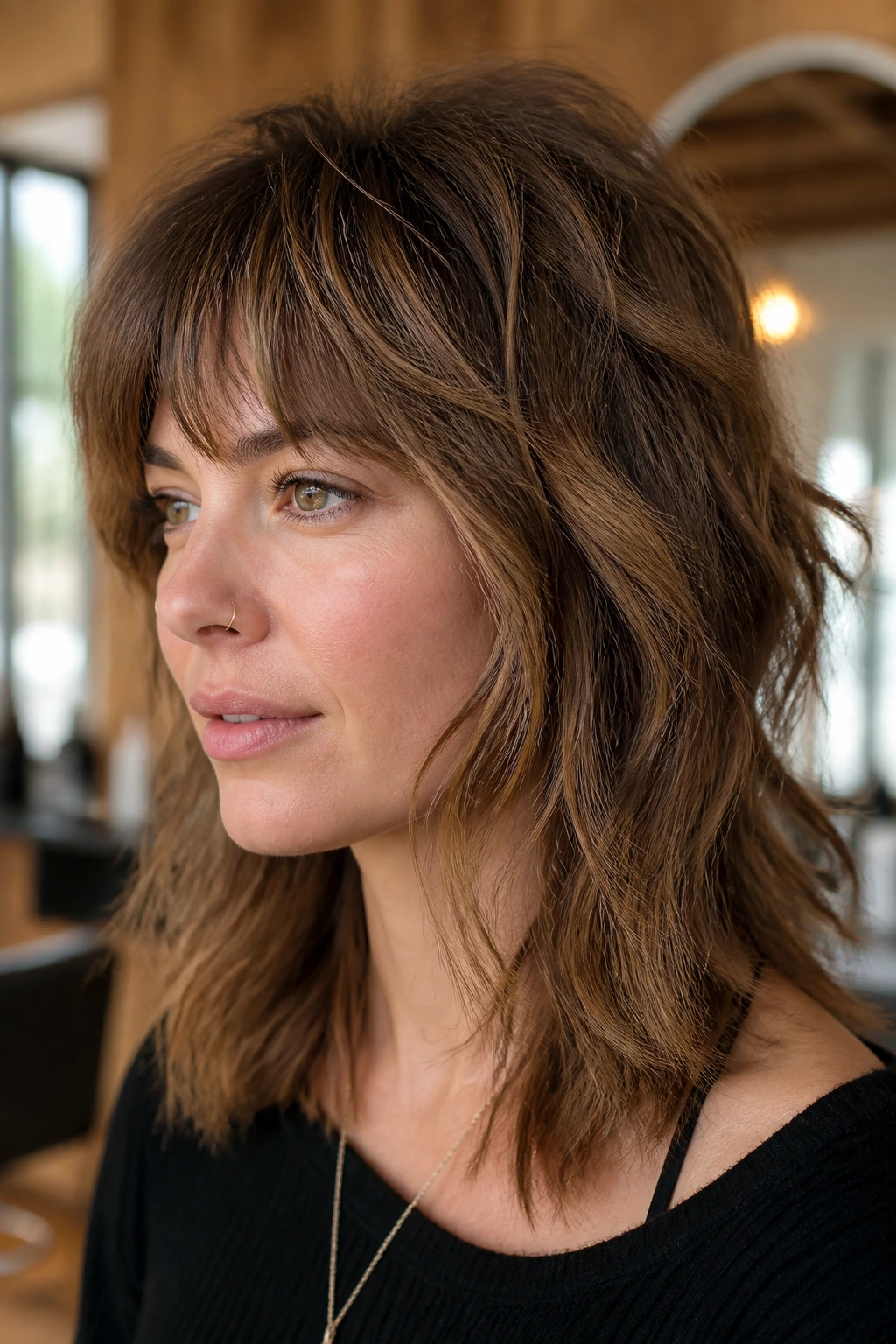
Flat roots need help at the top, not just texture through the ends. A crown-heavy shag builds that lift directly into the cut, so the shape does not collapse the second the hair air-dries.
This version uses shorter layers around the crown and upper sides, then lets the length fall softer below. The effect is subtle from the front, but it changes how the hair sits on the head. Medium waves get more body without needing a lot of teasing or hot tools.
How to ask for it
Ask for the top to be slightly shorter than the perimeter, but not so short that the layers stick up. You want lift, not a helmet. The stylist should keep the transition soft so the cut still moves as one piece.
It’s a smart cut for people whose hair lies flat near the scalp but bends nicely through the mid-lengths. A root spray or mousse can help, but the haircut does most of the work.
16. Long Curtain Fringe Shag
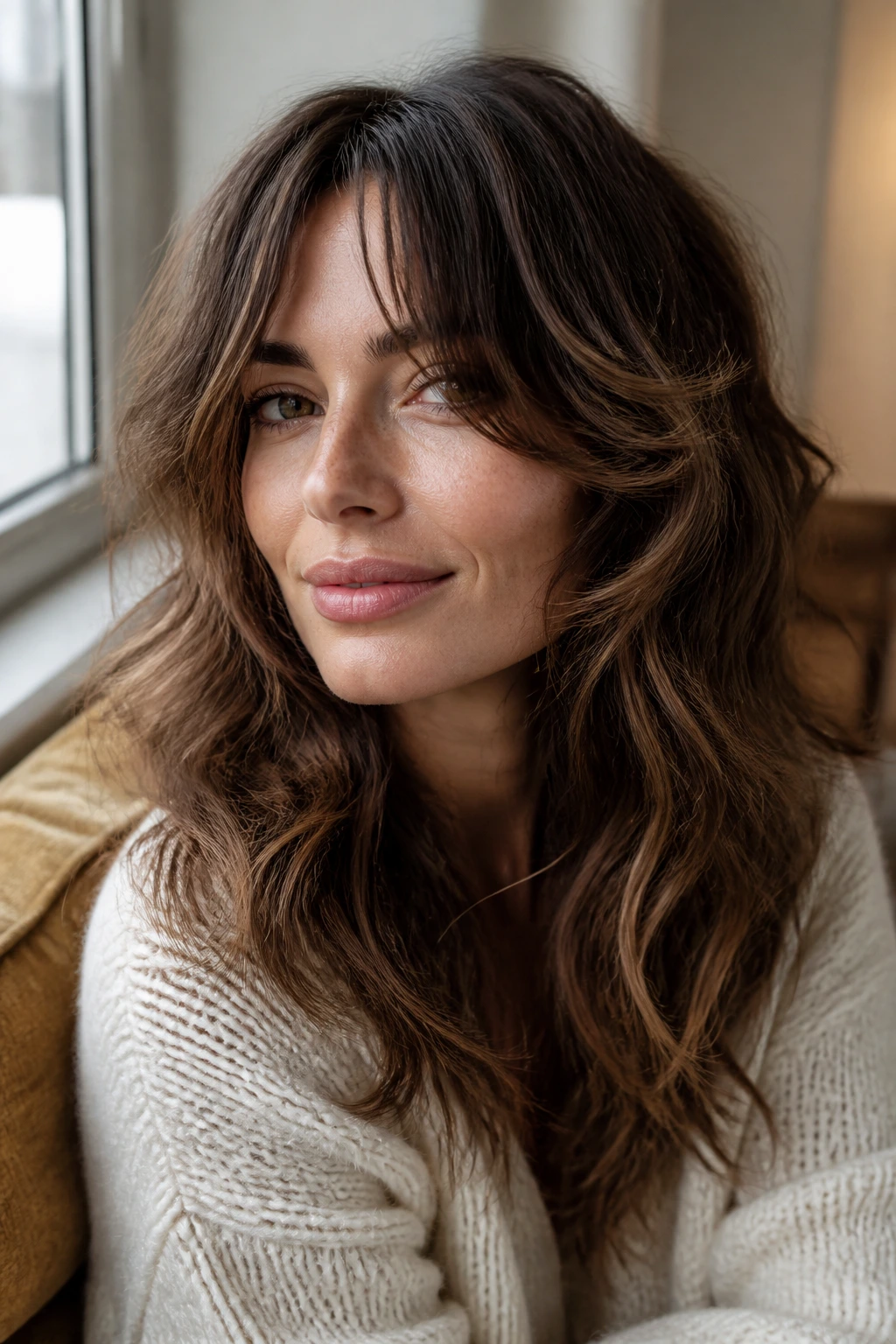
Long curtain fringe is for anyone who wants bangs without feeling trapped by them. The fringe starts near the middle, curves around the face, and blends into the shag so naturally that it almost looks accidental.
That length is useful. It gives you enough room to part the bangs, pin them back, or let them fall forward on days when you want a little extra frame. On wavy medium hair, long curtain fringe tends to settle better than a shorter blunt fringe because it follows the wave instead of standing against it.
Best features of this cut
- Fringe that reaches the cheekbone or just below it.
- Face layers that connect into the fringe.
- A soft, tapered shape through the sides.
- Enough length to tuck behind the ears without wrecking the line.
If you like options, this cut gives you plenty. Wear it parted. Wear it pushed open. Wear it messy. It adapts without looking like a different haircut each time.
17. Fine-Hair Shag With Wispy Layers
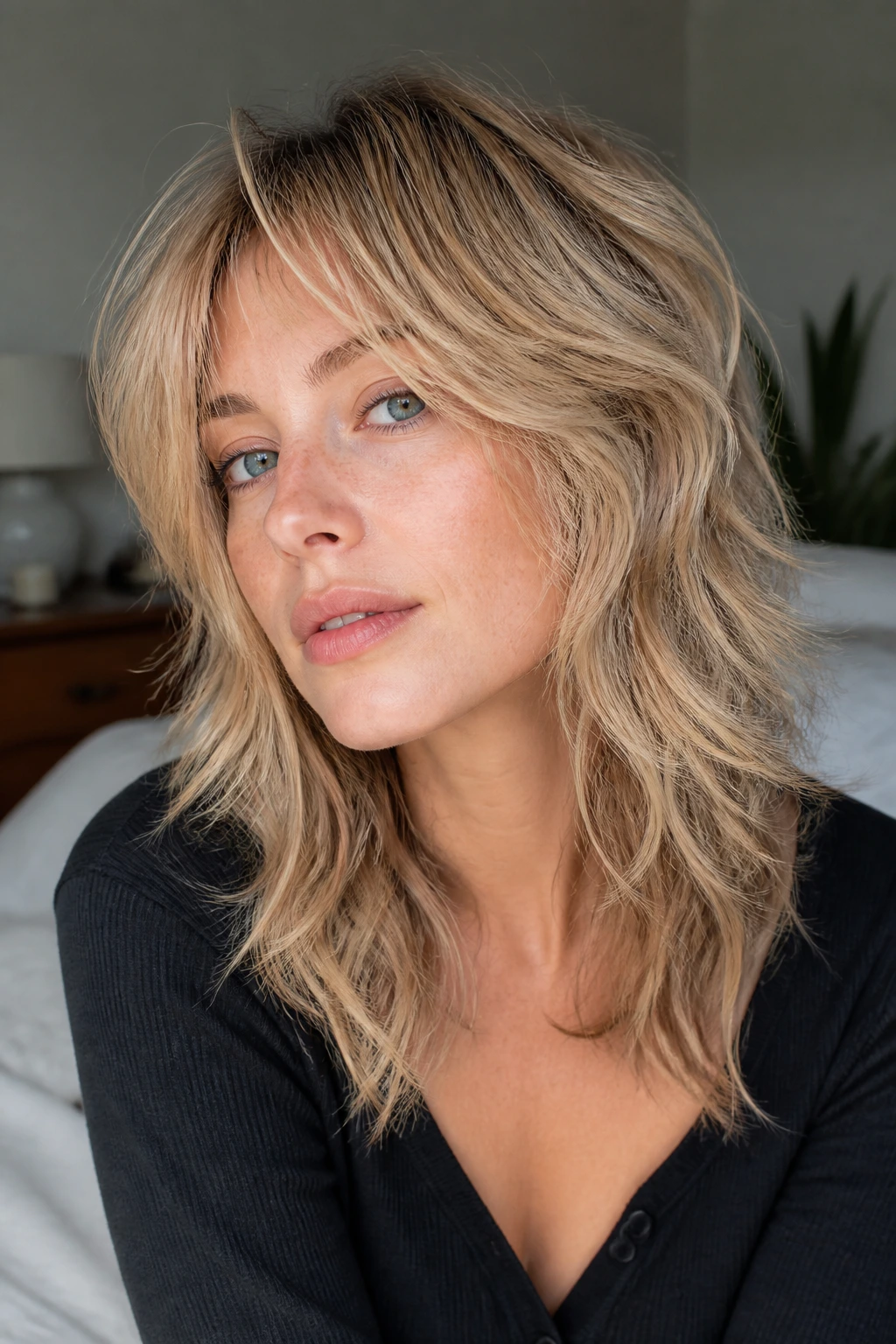
Fine wavy hair needs a gentler hand than most shag photos suggest. Too much slicing can leave the ends see-through, and once that happens, there is no amount of mousse that will make the hair feel fuller again.
The wispy version keeps the layers light but controlled. The goal is movement, not emptiness. I’d keep the longest layer fairly solid and ask for only a few soft pieces around the front and crown. That gives the hair lift without stripping out the body it already has.
A lightweight foam or mousse usually works better than creamy products here. Cream can weigh fine waves down fast, and that deadens the whole cut. Foam gives some grit without making the hair feel sticky.
This is one of those cuts that looks better when the hair is not over-touched. Run your fingers through it once it dries, then stop. Seriously. Stop there.
18. Shaggy Mullet With a Soft Tail
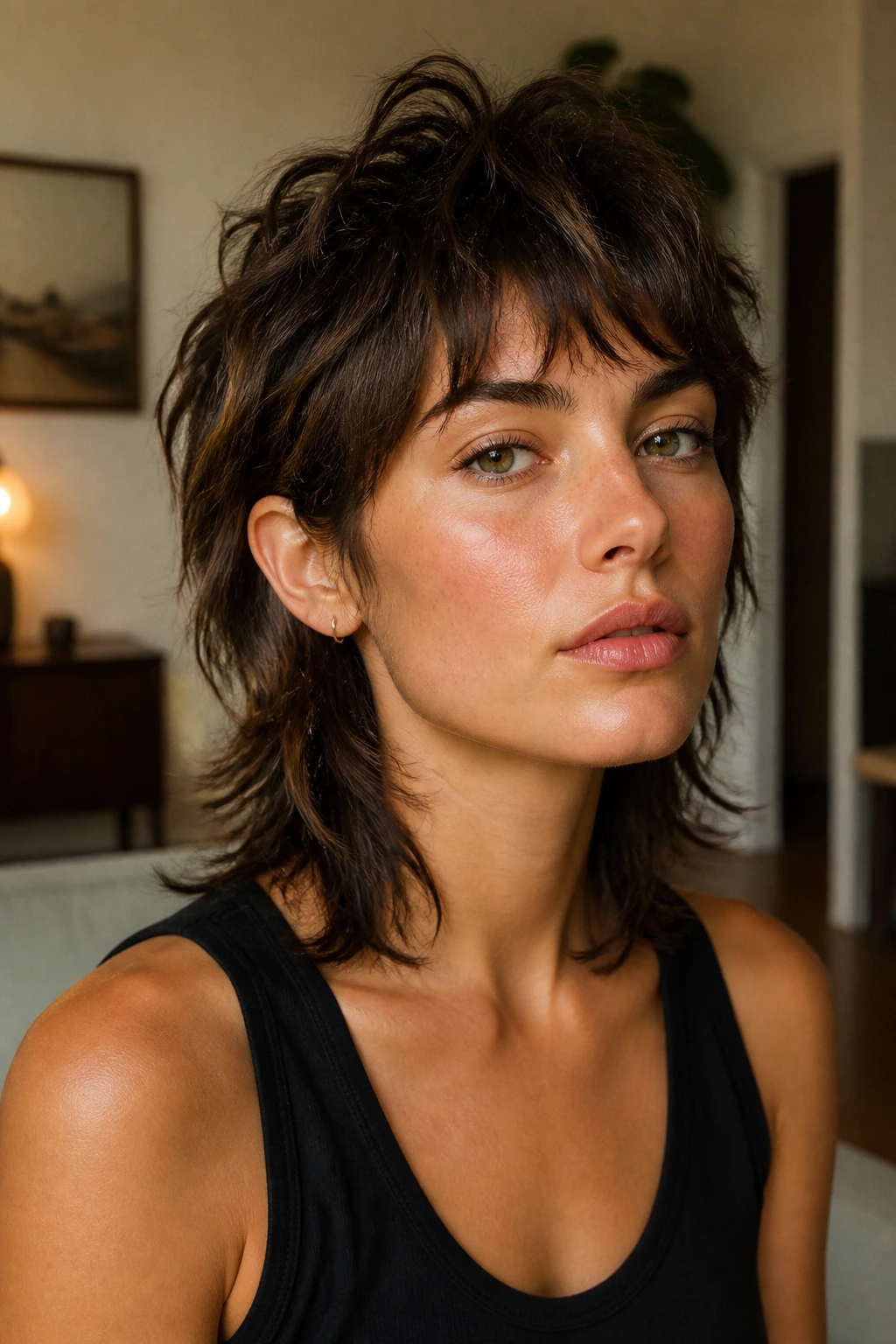
A shaggy mullet sounds bold because it is bold. But the softer versions are easier to wear than people expect, especially on wavy medium hair that already has natural bend and a little attitude.
The trick is in the tail. Keep it soft, not severe. The back can be longer than the front, but the transition should feel blended enough that the cut still reads as one shape. If the disconnect is too hard, the style starts leaning costume-heavy. A gentle tail looks cooler and wears better.
I like this cut on people who want a clear style change without losing movement. The crown gets lift, the sides get texture, and the back keeps enough length to swing.
It pairs well with a matte styling cream. Shine tends to make this shape look dated. A drier finish feels cleaner.
19. Collarbone Shag With a Blunt Perimeter
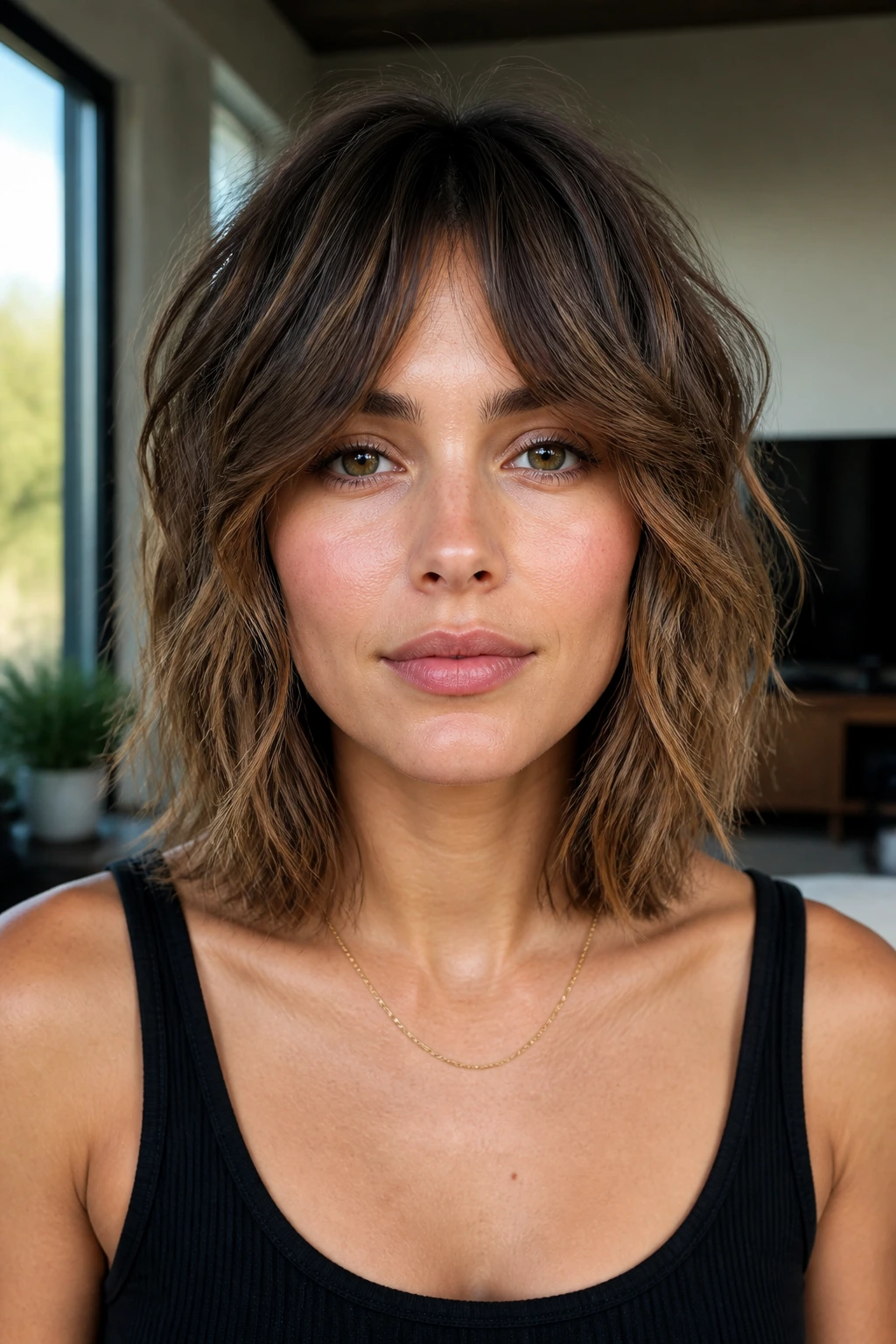
Here’s a cut I trust more than most people realize: a collarbone shag with a blunt-ish edge. The interior has the shag texture, but the outline stays strong enough to keep the whole thing grounded.
That solid perimeter keeps medium waves from spreading out too much. Instead of turning fluffy, the hair drops in a controlled line and then breaks into movement where the layers start. It’s a smart middle ground for anyone who likes shape but not too much air around the face.
This cut is also kind to grow-out. The ends stay decent for a long time because they are not shredded to bits. If your hair tends to get fluffy at the bottom after a few weeks, this is the version I’d point you toward first.
A quick pass with a flat brush or a low-heat blow-dry can keep the edge neat. The layers do the rest.
20. Boho Shag With Long Face Framing
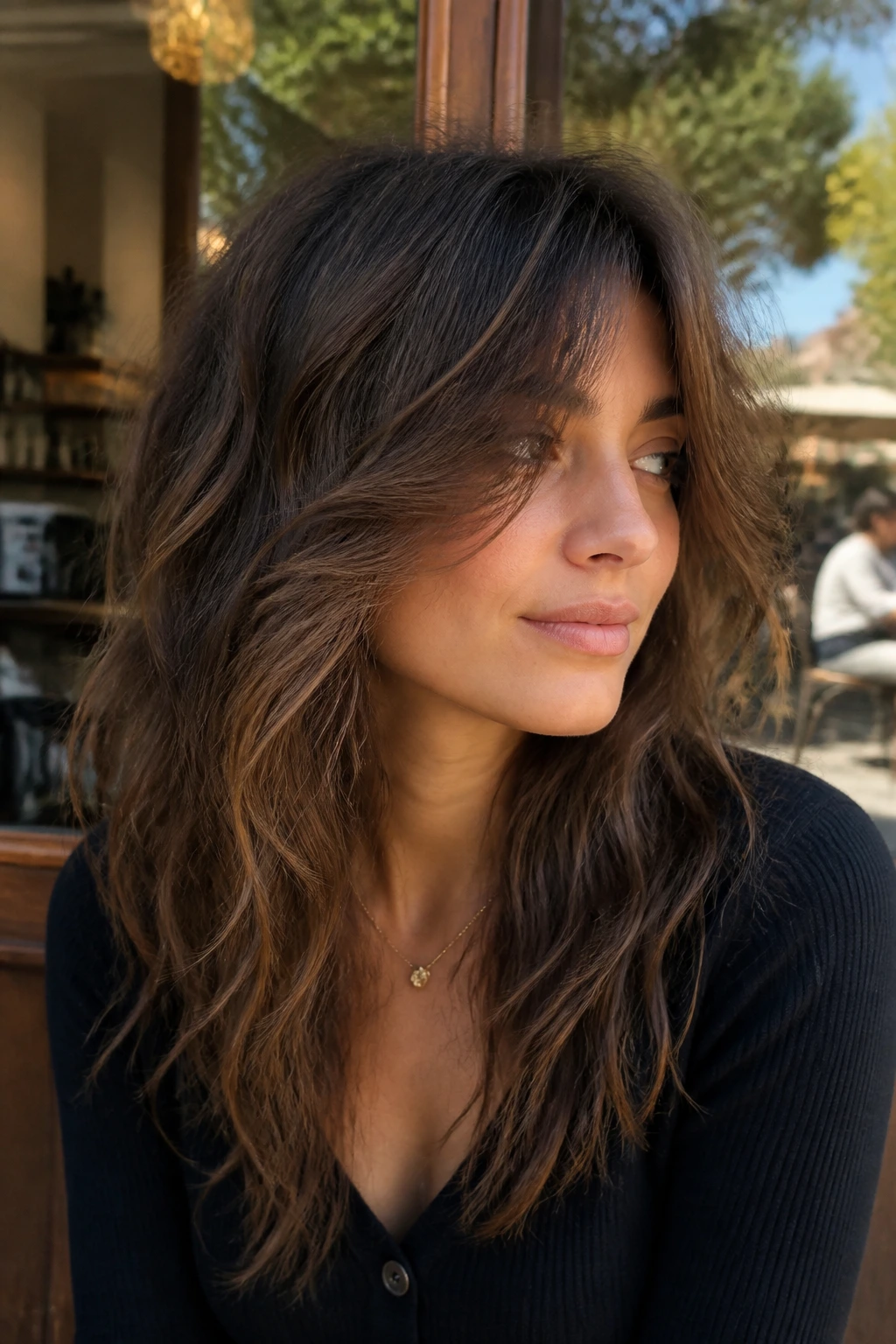
A boho shag should feel loose, soft, and a little undone. Not sloppy. Just relaxed in a way that works with wavy medium hair instead of forcing it into a polished mold.
What makes this version different
The face frame is longer, often starting below the cheekbones and drifting toward the jaw. That keeps the shape gentle and gives the waves a place to curl without bunching up. The layers through the back stay light, but not so short that they jump out from the head.
How to wear it
- Air-dry with a small amount of leave-in cream.
- Scrunch once or twice, then leave it alone.
- Tuck one side behind the ear to show off the frame.
- Use a wide-tooth comb only when the hair is wet.
This is a good pick if you like a softer finish and do not want bangs cutting across the forehead. It has a lived-in feel that works best when it is not fussed over.
21. Disconnected Shag With Edgier Texture

A disconnected shag keeps the layers visibly separated, and that’s what gives it the edge. The top and bottom do not melt into each other the way they do in a softer shag, so the shape feels sharper and more deliberate.
This is not the cut I’d send to someone who wants quiet hair. It has personality. The shorter layers can sit on top of longer lengths, which creates a bit of visual contrast and makes the wave pattern stand out. On wavy medium hair, that contrast can look fantastic, especially if the hair has enough density to support it.
The downside is maintenance. A disconnected shag needs a little more styling to keep the split between layers looking intentional instead of random. A texture spray or light pomade helps define the pieces.
If you like your hair with a little bite, this is a strong choice. If you want softness, skip it and go one section back.
22. Grown-Out Shag for Low-Maintenance Weeks
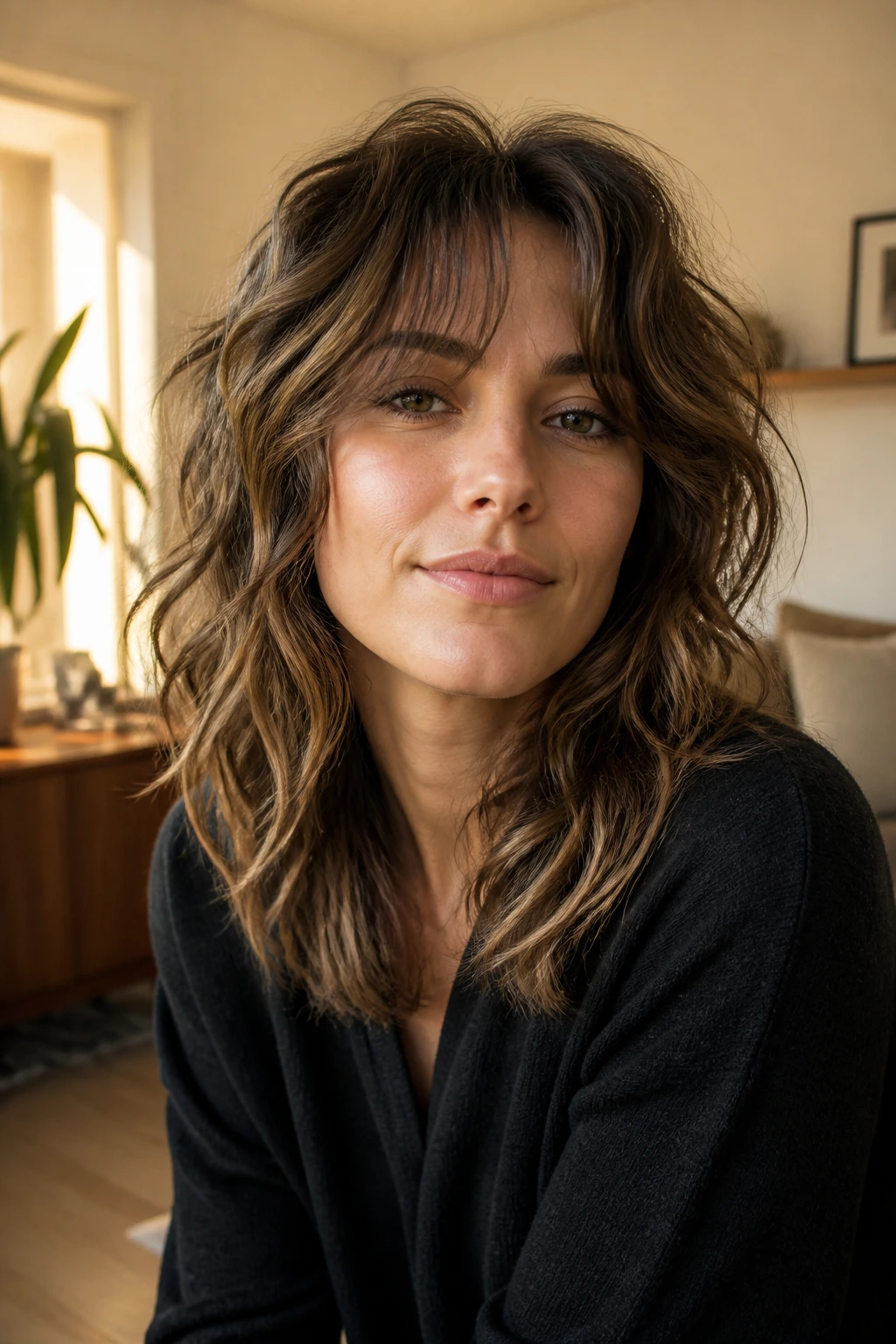
Can a shag still look good once it grows out? Yes — if the cut was built with enough softness from the start. This grown-out version is for people who want a shape that survives months, not weeks.
The key is to keep the layers blended and the fringe longer. Short bangs are the first thing that betray a haircut when they start to grow. Longer curtain pieces, soft crown layers, and a decent perimeter let the hair settle instead of falling apart.
This is also the easiest shag to live with if you only style your hair on certain days. Wavy medium hair has enough natural movement to carry the look when the cut is not freshly trimmed. A little mousse, a scrunch, and air-drying can be enough.
If you hate high-maintenance hair, this may be the smartest version on the list. It does not scream for attention. It just keeps working.
Final Thoughts
The best shag for wavy medium hair is the one that respects the wave pattern instead of fighting it. Layers should create movement, not holes. Fringe should frame the face, not hover above it like an afterthought.
If you want the safest start, go with shoulder-grazing layers, a layered lob, or a French shag. If you want more attitude, the wolf cut, shaggy mullet, or disconnected shag will give you that edge fast.
The mistake I would avoid every time is over-thinning the ends. Medium waves need shape, but they also need enough weight to hold the bend. Keep that in mind, and the haircut does most of the work for you.
