



A wolf cut with bangs works because it doesn’t try to behave. That’s the whole charm. The crown has lift, the layers fall in pieces, and the fringe changes the mood fast — soft, edgy, shaggy, romantic, messy, a little retro, sometimes all at once.
The catch is the bangs. Get them wrong and the cut can look flat at the front or awkward at the grow-out stage. Get them right and the whole haircut suddenly makes sense, even if your hair is fine, thick, straight, wavy, or full of curl.
That’s why this style keeps showing up in salons. It gives shape without feeling stiff, and the fringe does a lot of the heavy lifting. Some versions feel barely there; others have a sharper line and more attitude. The trick is matching the bang shape to your hair texture, your face, and how much styling you’re willing to do on a regular morning.
1. Long Layered Wolf Cut With Curtain Bangs
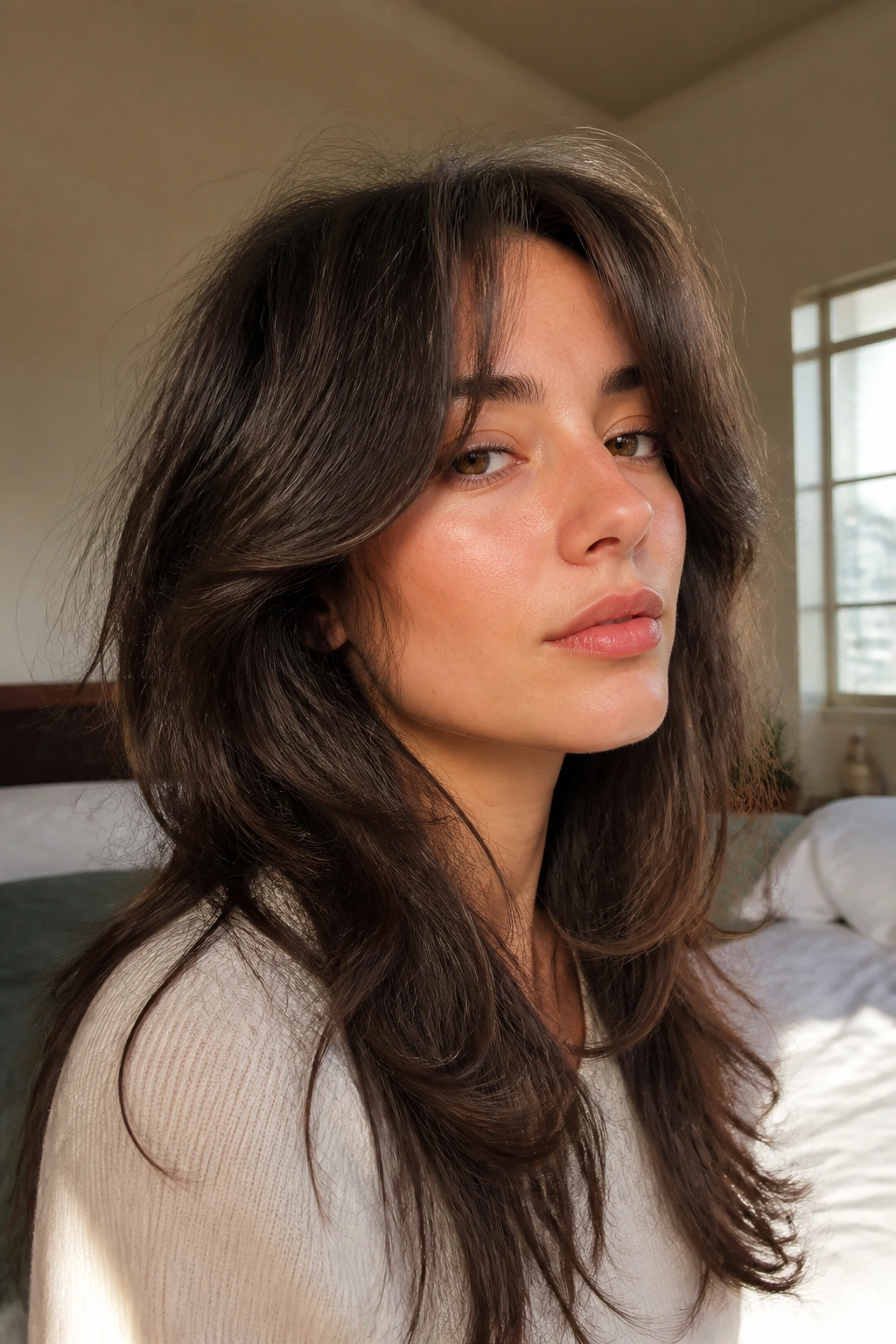
Long layers and curtain bangs are the easiest entry point if you want a wolf cut that still feels wearable. The length keeps the cut soft, while the fringe opens the face instead of boxing it in. I like this version on hair that already has a little wave, but it also works on straight hair that needs some movement.
Why It Flatters Long Hair
Curtain bangs break up all that length around the face, which matters more than people think. Without them, a long wolf cut can start to look like a basic layered cut with a rough finish. With them, the shape feels intentional and a little more lifted at the crown.
Ask for the shortest part of the fringe to hit around the cheekbone, then blend it into layers that fall past the jaw. That keeps the line soft and gives you room to style it two ways: swept open or pushed forward for more fullness.
- Keep the front pieces slightly longer than the cheekbone if you want easier grow-out.
- Ask for point cutting instead of a blunt trim.
- Use a 1.25-inch round brush or a large roller for the fringe.
- Aim for light texture spray, not heavy paste.
Tip: Blow-dry the bangs away from your face first, then bend them inward at the ends. That small move keeps them from splitting in the middle too early.
2. Chin-Length Wolf Cut With Airy Fringe

This is the version that makes short hair feel alive. A chin-length wolf cut with airy bangs gives you volume at the crown and a clean shape at the jaw, which is a nice fix if your hair tends to puff out in the wrong places.
The fringe should stay light, almost feathered, so it doesn’t compete with the layers underneath. If you’ve got thick hair, this cut removes weight fast. If your hair is finer, the shorter shape creates the illusion of density because the ends sit closer together.
It also styles quickly. A small round brush, a bend from the roots, and a little dry shampoo at the crown can be enough.
The one thing I would avoid is letting the bangs get too thick. On a shorter wolf cut, that can turn the whole look blunt. Keep the line broken up, and the haircut stays airy instead of boxy.
3. Curly Wolf Cut With Rounded Bangs
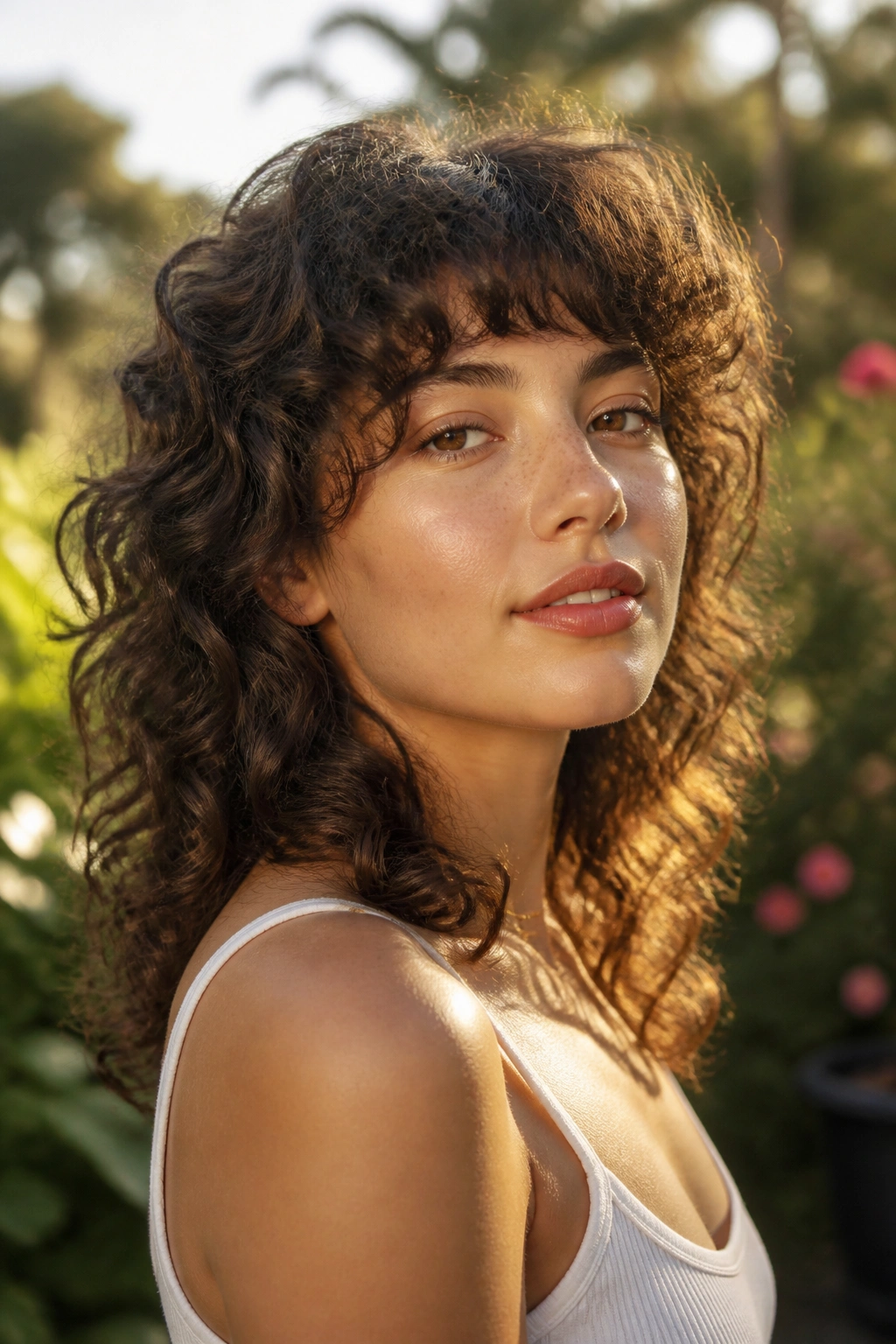
Why does this work so well on curls? Because the bangs follow the shape your hair already wants to make. A curly wolf cut with rounded bangs lets the fringe sit inside the curl pattern instead of fighting it, and that usually makes the haircut look calmer, not more chaotic.
What Makes the Shape Work
The best rounded fringe on curls is cut dry or nearly dry, so the stylist can see where each curl lands. Too much tension while cutting can make the bangs spring up shorter than expected. Nobody wants a surprise gap in the middle of the forehead.
This version thrives when the crown has a little lift and the ends are layered enough to avoid the triangle effect. A curl cream with medium hold is usually enough, though some hair types need a light mousse at the roots.
How to Wear It
- Diffuse the bangs first, not last.
- Scrunch in product while the hair is still damp.
- Let a few face pieces stay longer than the fringe.
- Trim curls less often than straight bangs, because shrinkage is real.
Tip: If your curls swell up fast in humidity, ask for the fringe to be cut a touch longer than you think you need.
4. Micro Bangs on a Shaggy Wolf Cut

Tiny bangs change the whole mood. Fast.
A shaggy wolf cut with micro bangs feels sharper and more graphic than the softer versions on this list. The short fringe pulls attention straight to the eyes, while the chopped layers keep the rest of the hair loose and messy in a good way. It’s a strong look, and it knows it.
The Shape It Creates
Micro bangs work best when the rest of the cut has enough movement to balance them. If the layers are too smooth, the fringe can look pasted on. If the hair has texture, the contrast is the point.
This cut suits people who like a little edge and do not mind seeing their forehead. It can be especially good on oval or longer face shapes, where the short bang helps break up vertical length. Styling is simple, but the fringe needs regular trims to keep it above the brows.
A little matte paste at the ends goes a long way. Too much, and the bangs start to separate into odd little spikes.
5. Heavy Blunt Bangs on a Choppy Wolf Cut
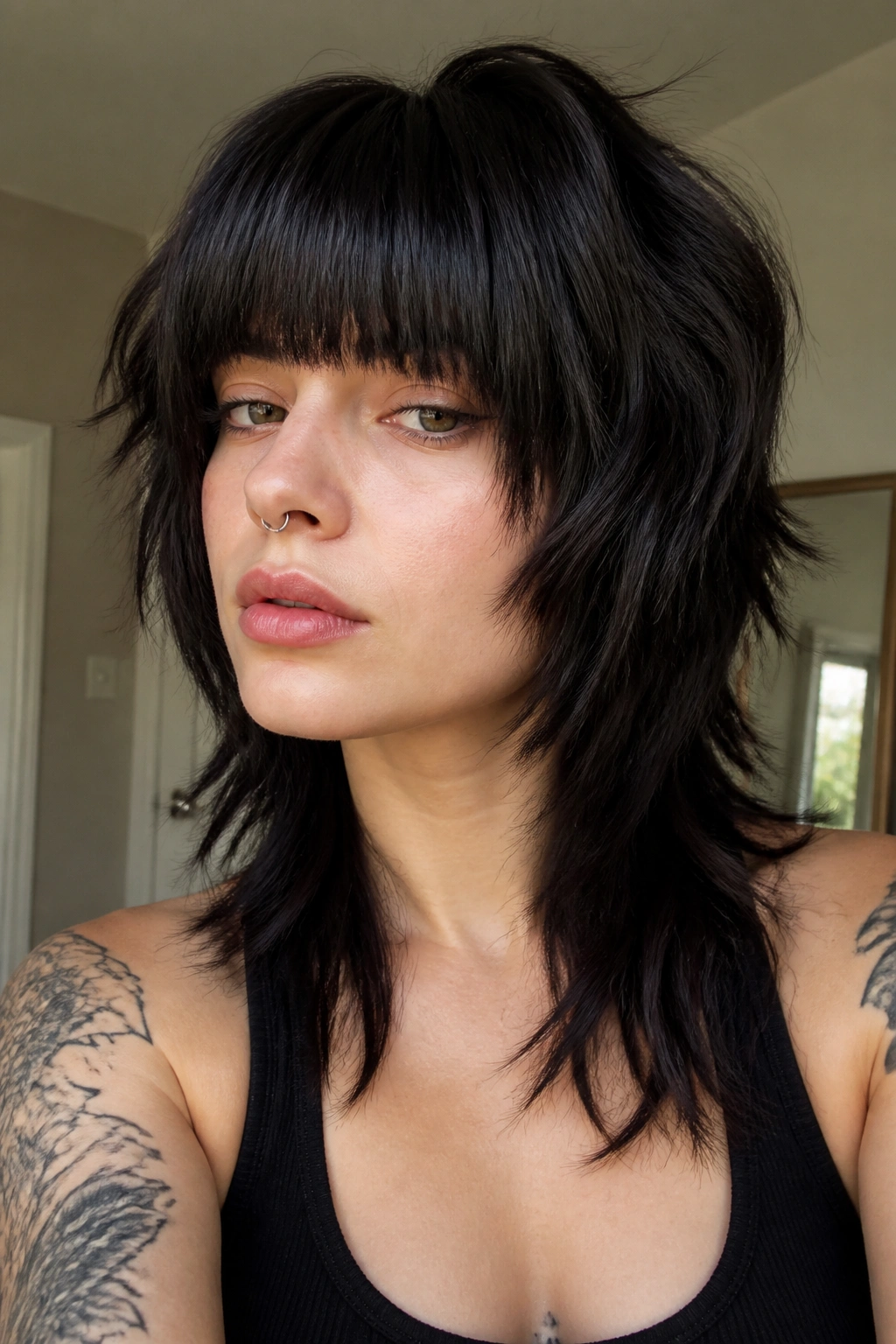
This version has presence. Heavy blunt bangs give the wolf cut a solid front edge, which makes the rest of the choppy layers feel even more intentional. The contrast is the whole point.
The style works best when the bangs are dense enough to sit flat, but not so thick that they steal all the air from the haircut. On medium or thick hair, that’s usually easy to manage. On fine hair, you may need a softer perimeter so the fringe does not look stringy.
The rest of the cut should stay rough around the edges. Think broken layers, not polished curves. That keeps the fringe from looking too formal.
If you want a haircut that can swing between cool and classic, this is a strong pick. It looks especially good with a straight finish and a bit of bend through the ends. Clean line in front, messy movement everywhere else. Very good combo.
6. Shoulder-Grazing Wolf Cut With Side-Swept Bangs

A shoulder-grazing wolf cut with side-swept bangs is the one I point people toward when they want softness without a center part. The bang angle gives the face a diagonal line, which tends to feel gentler than a straight fringe or a hard split in the middle.
It also helps if you have a cowlick at the front. Side-swept bangs can work with that growth pattern instead of fighting it every morning, which saves a lot of frustration. The cut itself should still have feathered layers around the crown and cheekbones, or the whole style can lose its wolf-cut edge.
This one is easy to wear with a side tuck, a loose wave, or a rough blowout. If you like hair that feels touched but not overdone, this is a smart middle ground.
7. Wispy See-Through Bangs on a Soft Wolf Cut
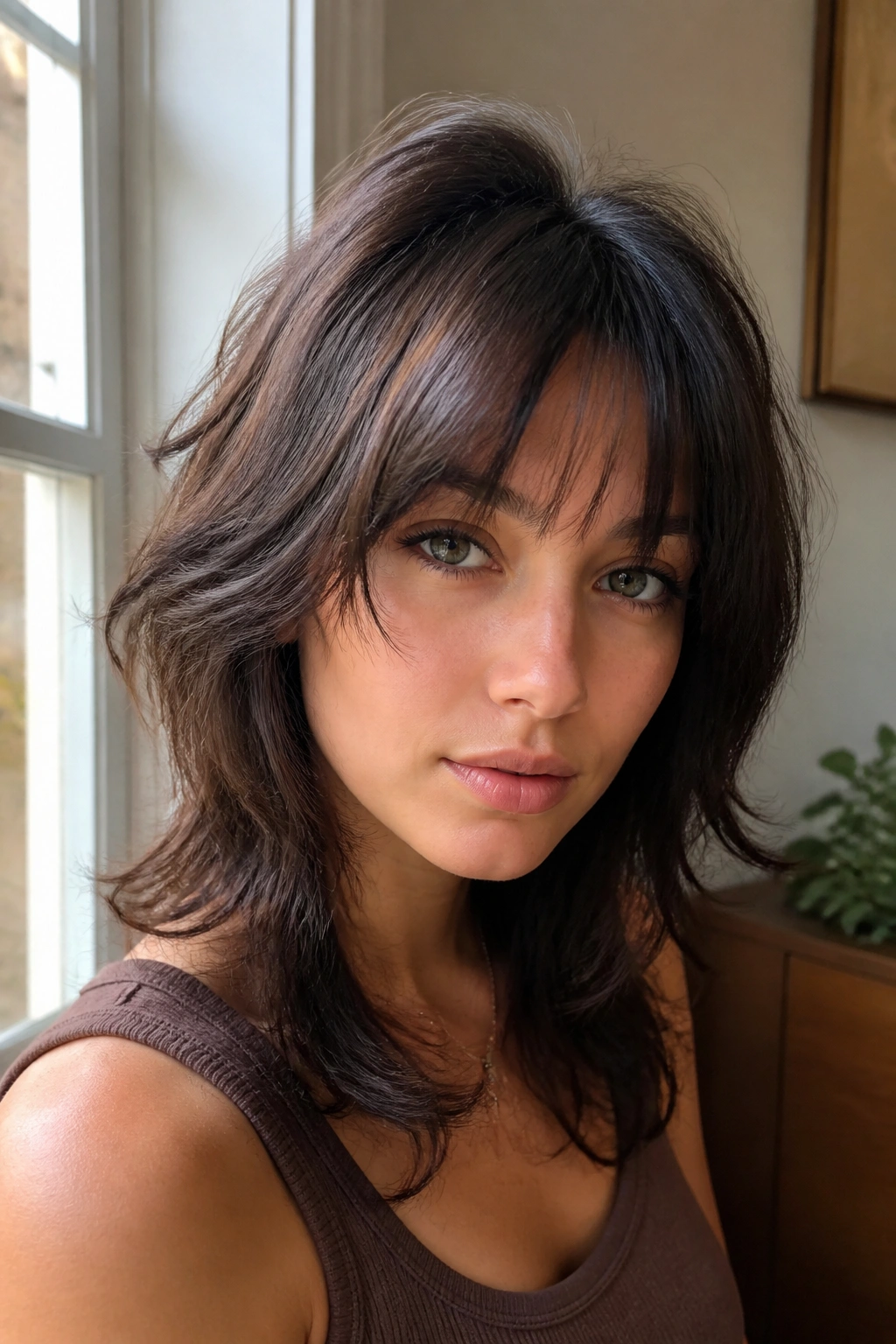
What makes see-through bangs so forgiving? Density. Or more accurately, the lack of it.
A soft wolf cut with wispy bangs gives you just enough fringe to change the face without covering half of it. The effect is lighter, less serious, and easier to grow out than a fuller bang. It works well if your hair is fine or medium and you want movement without a heavy front section.
Why It Stays Easy to Wear
The bangs are cut with space between the pieces, so they never sit like a solid curtain. That makes them especially nice for people who don’t want to commit to daily hot-tool styling. A quick bend with a flat brush or a blast from the dryer is often enough.
This style also handles a little greasiness better than a full fringe, because the gaps keep it from looking flat right away. Still, you’ll want a dry shampoo that doesn’t leave a chalky cast. Fringe shows everything.
The overall vibe is soft, a little airy, and practical. Not fussy. Not boring.
8. Short Wolf Cut With Textured Baby Fringe
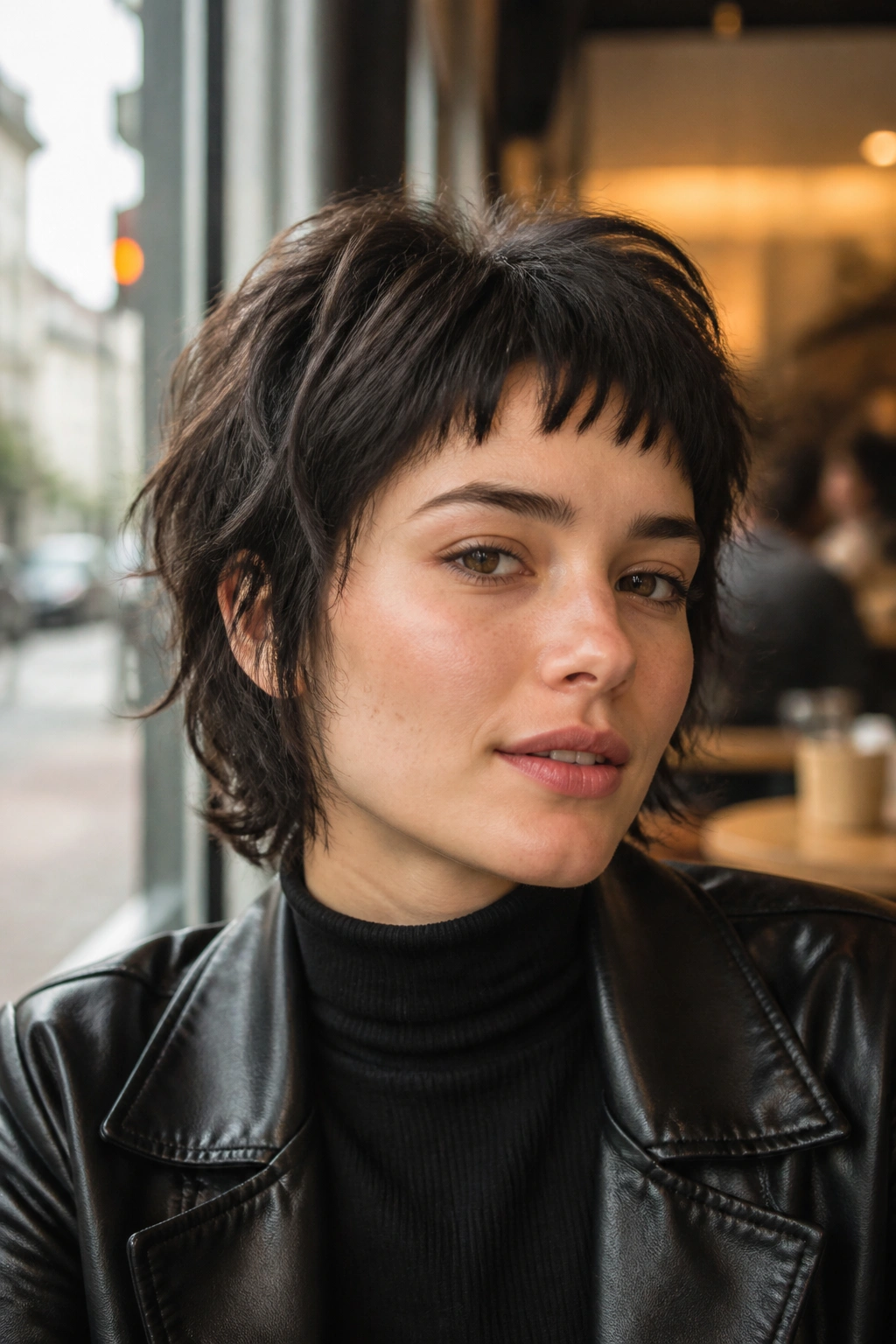
A short wolf cut with baby fringe sits somewhere between a shag and a cropped mullet, and that weird little in-between is exactly why it works. The shorter layers build lift around the crown, while the baby fringe adds a punchy front detail that keeps the cut from looking too cute.
This style is for people who like visible texture. The fringe should be broken up, not sliced into a perfect line. If it’s too neat, it loses the scrappy feel that makes the haircut interesting. A razor or point-cut finish usually helps.
It’s also one of the easiest wolf-cut versions to wake up and wear. A bit of grit spray, finger-drying, and a touch of paste on the ends can be enough. The shorter the cut, the faster the styling, which is one reason people keep coming back to it.
9. Long Wolf Cut With Bottleneck Bangs
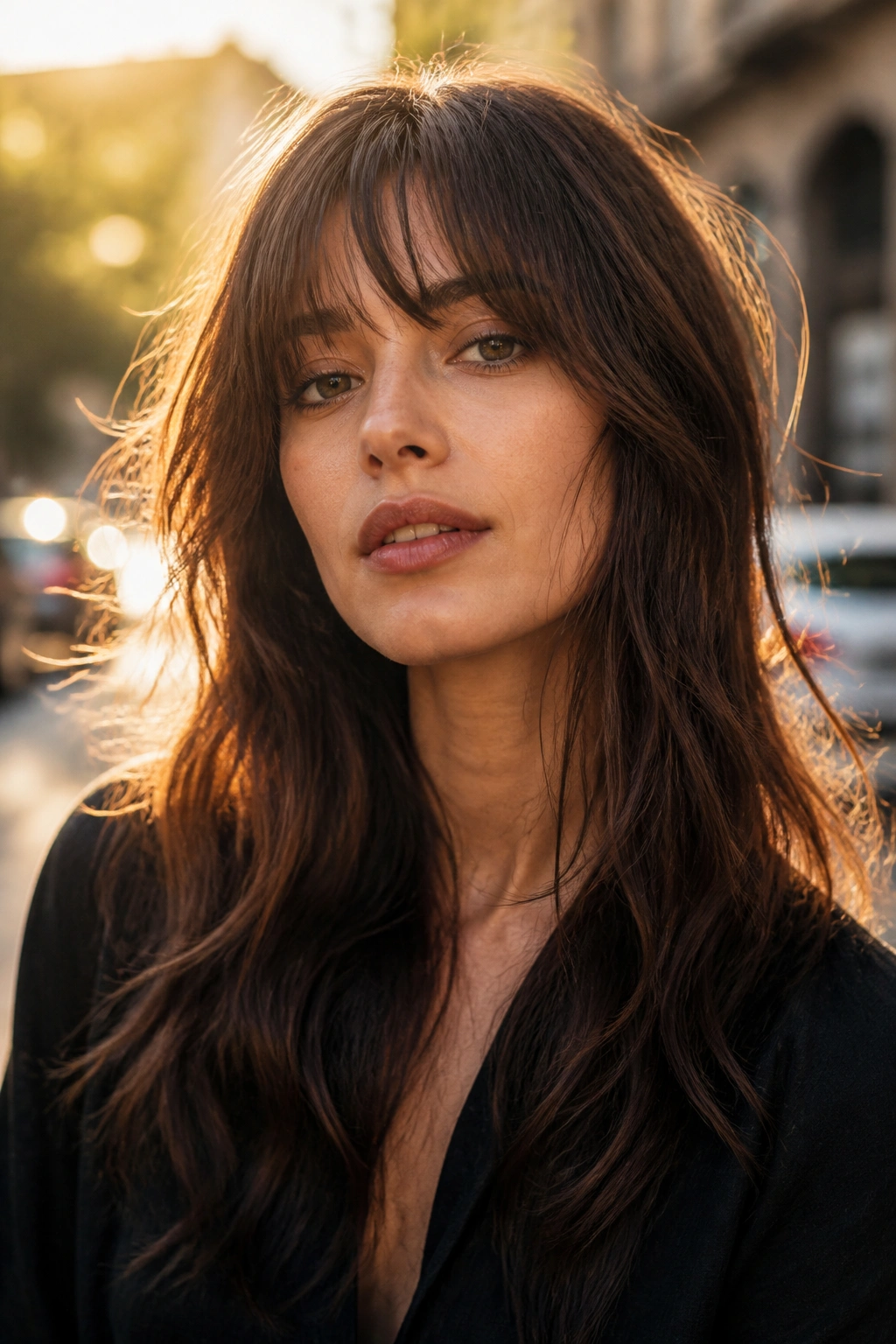
Bottleneck bangs are the clever middle child of the fringe world. They start narrow at the center, then open wider toward the cheekbones, which gives a long wolf cut a softer frame without covering too much of the face.
The shape is flattering because it draws the eye outward instead of straight down. That helps the long layers feel intentional and not merely long. If you’re trying to keep length while still changing the silhouette, this is one of the better options.
The bangs need a little shaping with a round brush or hot brush, especially around the outer corners. That’s the part that makes the cut feel finished. Letting them dry in random directions usually creates a clunky look.
It’s a good choice if you want fringe that can be tucked, split, or worn forward depending on your mood. Flexible, but still styled.
10. Shag-Mullet Wolf Cut With Full Fringe
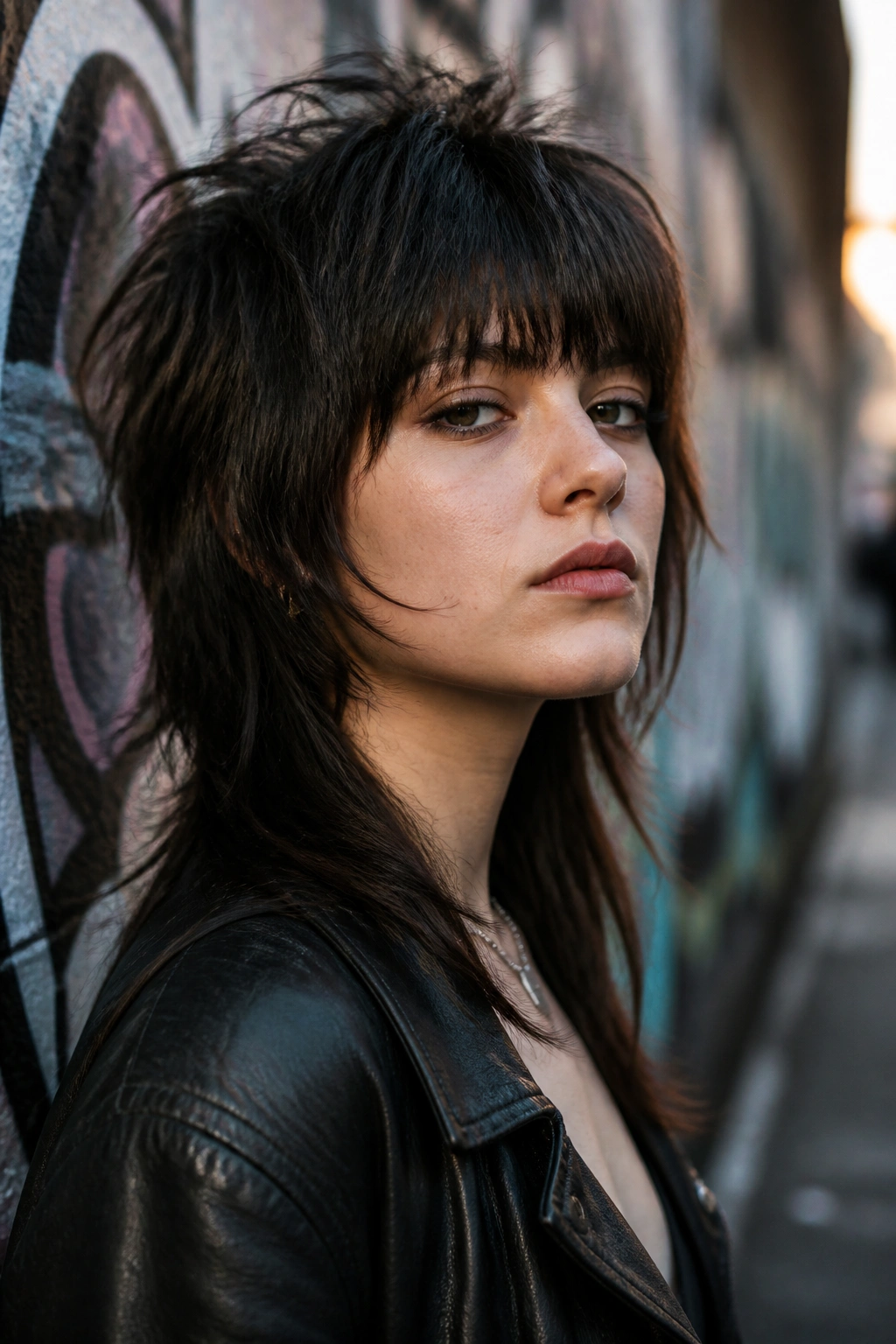
A shag-mullet wolf cut with full fringe has more attitude than the softer versions, and I mean that in the best possible way. The front line gives the style a clear focal point, while the longer back pieces keep the whole haircut relaxed and slightly rebellious.
Best Hair Types for This Shape
Coarser hair and strong waves handle this cut well because they hold the shape without needing constant help. Straight hair can wear it too, but the fringe may need more styling to keep it from falling flat across the forehead.
The key is to keep the fringe full but not helmet-like. A good stylist will soften the corners so the bangs don’t look blocky. The layers should start high enough to create lift but stay broken enough to avoid a heavy pyramid shape.
If you want something that feels a little punk without looking costume-y, this lands in a sweet spot. It looks especially good with textured ends and a matte finish.
11. Wavy Wolf Cut With Parted Curtain Bangs
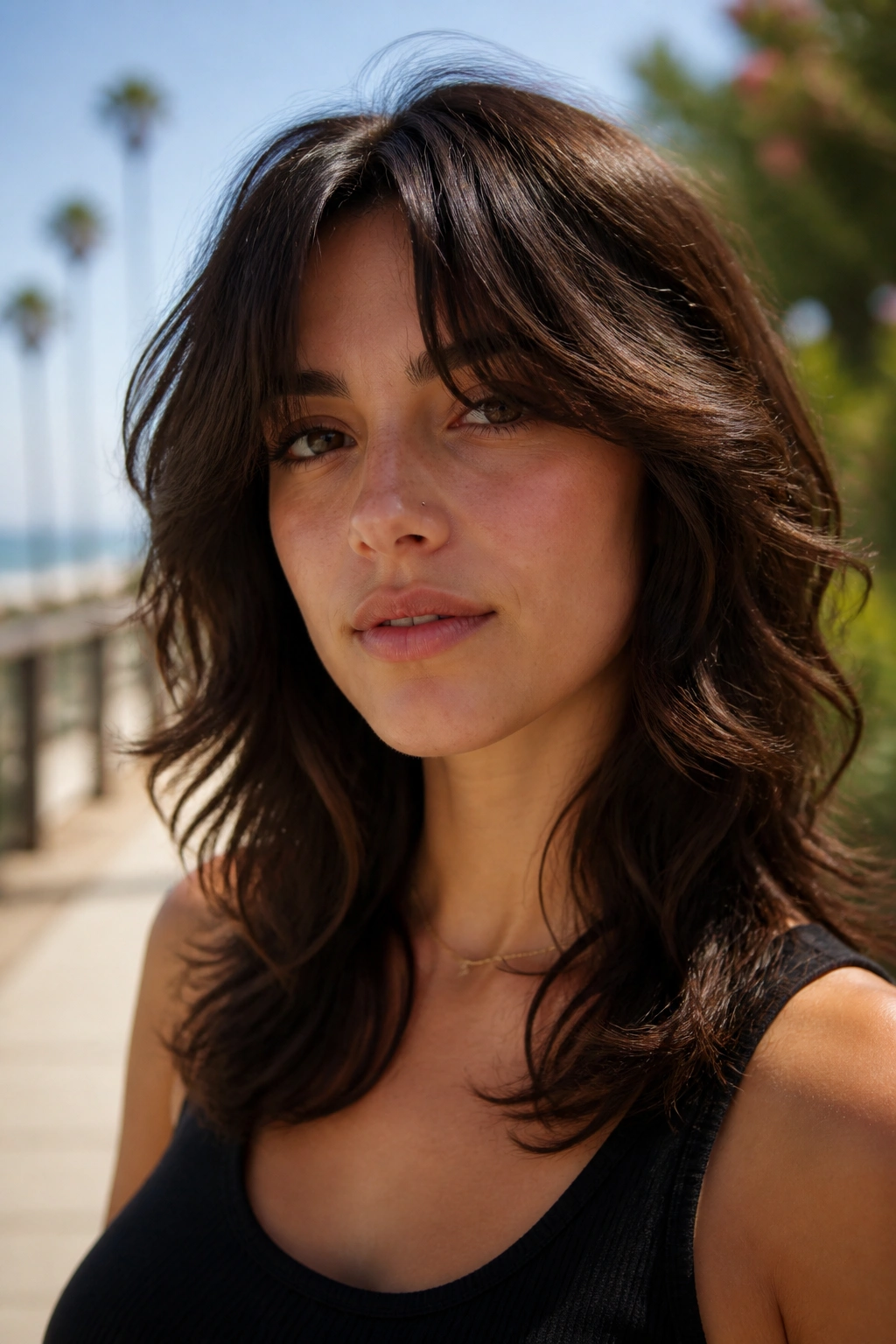
Waves and parted curtain bangs get along because they both like movement. That’s the simple truth.
A wavy wolf cut with parted fringe lets the texture do the work. You don’t need a polished blowout here; a bend through the mid-lengths and a loose split at the front are enough to make the haircut feel alive. The bangs soften the face, and the waves keep the layers from sitting too neatly.
This is one of those styles that looks better when it isn’t overworked. If you scrunch too much product into it, the layers can clump. If you use too little, the front may fall flat. A light mousse or wave spray is usually the middle ground.
It’s a strong pick for anyone who wants shape without spending 30 minutes on styling. Honestly, that matters.
12. Wolf Cut With Arched Brow-Grazing Bangs
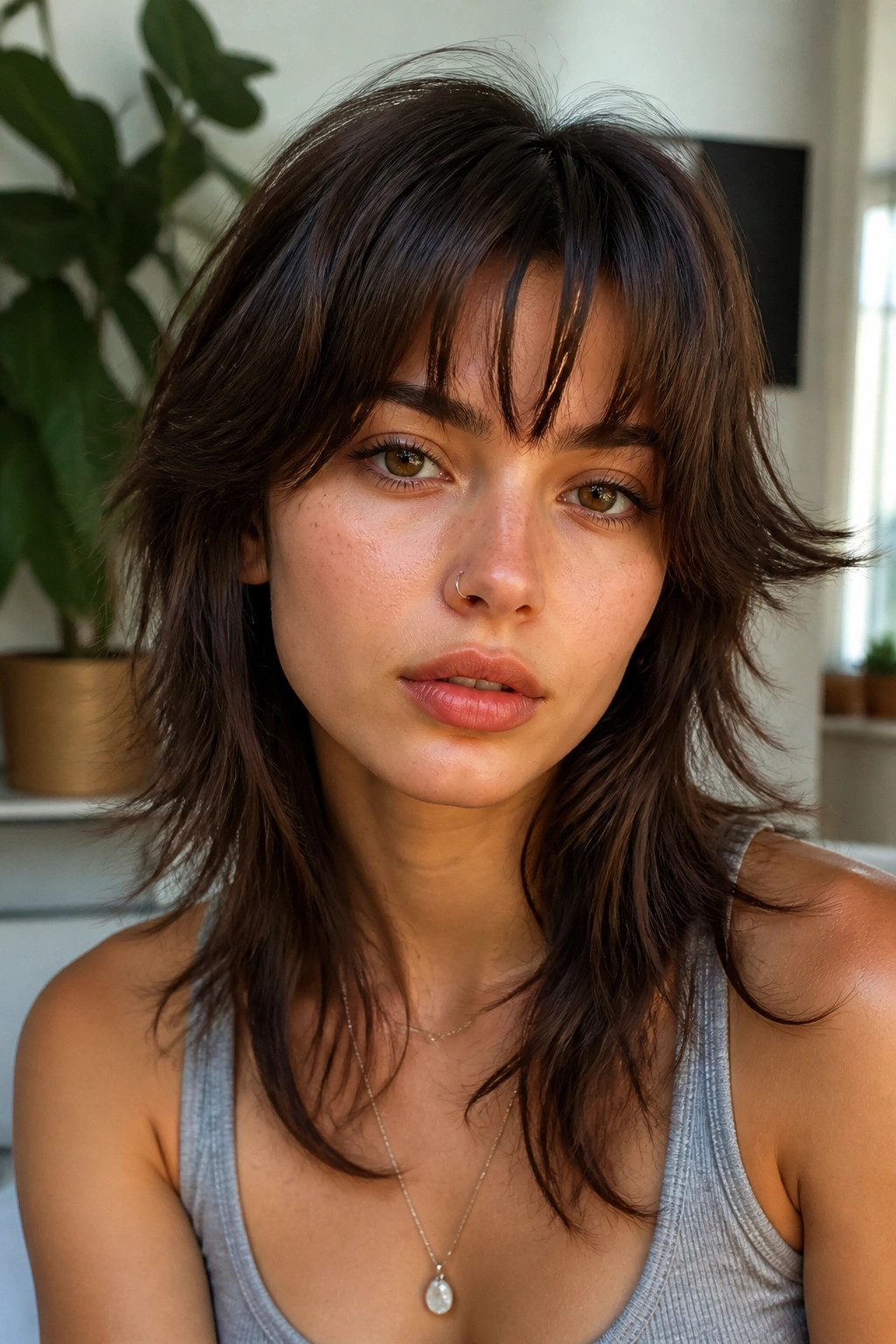
Arched bangs can sound old-fashioned on paper, but on a wolf cut they feel sharp and modern. The curve opens up the center of the face while the sides skim the brows, which creates a nice frame without hard edges.
This shape works especially well if your forehead is on the shorter side or if straight-across bangs tend to feel too heavy on you. The arch gives a little breathing room. It also blends neatly into the layered sides of the wolf cut, so the transition feels smoother than a blunt fringe.
You will probably need a round brush or a small blow-dry brush to keep the curve in place. Let the roots set first, then bend the ends slightly under. If the bangs dry on their own, they can lose the arch and collapse into a flat line.
A polished finish helps here, but only at the front. The rest of the cut can stay loose and imperfect.
13. Piecey Wolf Cut With Razored Bangs
Razored bangs are for people who like a little grit in their haircut. They remove weight quickly, which leaves the fringe feathered, separated, and easier to blend into a piecey wolf cut.
What the Razor Changes
A razor does not just thin hair out. It changes the way the bangs fall. The ends look softer, and the fringe tends to move more when you shake your head or tuck it behind an ear. That gives the haircut a lighter read, especially on medium to thick hair.
This style suits people who do not want a perfect line across the forehead. The break-up in the bangs makes the whole cut look relaxed, almost like it’s been worn in rather than freshly styled. A little texturizing spray brings out that effect without making the ends crunchy.
How to Style It
- Blow-dry the bangs side to side to stop them from splitting too fast.
- Use a pea-sized amount of paste, not more.
- Keep the layers around the cheekbones soft so the fringe blends.
- Trim every 4 to 6 weeks if you want the airy shape to hold.
Tip: If your hair is fine, ask for less razor work than you think. Too much can make the fringe look see-through in a bad way.
14. Face-Framing Wolf Cut With Long Fringe
A long fringe is the safest place to start if you want bangs but fear the grow-out headache. It gives the face-framing wolf cut a softer front edge without cutting the hair so short that every morning becomes a styling project.
The fringe should land somewhere between the cheekbone and the jaw, depending on your face shape and how much opening you want around the eyes. That longer length lets you push the bangs aside on busy days and wear them forward when you want more shape.
This version is especially good for people who are trying bangs for the first time. You get the mood change, but not the full maintenance load of a shorter fringe. And if you keep the layers uneven and textured, the cut still reads as a wolf cut, not just a long shag.
It’s practical. Which, in haircuts, counts for a lot.
15. Soft Mullet Wolf Cut With Fluffy Bangs
Fluffy bangs give a soft mullet wolf cut a warm, lived-in feel. The fringe is full enough to matter, but it stays loose at the ends so the haircut never turns stiff or severe.
This style usually looks best on hair with some natural body. The crown needs lift, the bangs need a little bend, and the back can stay longer and messier. If everything is equally controlled, you lose the easy shape that makes the cut interesting.
The best part is how forgiving it can be on imperfect hair days. A soft bend in the bangs and a bit of texture through the ends can make the haircut look better after a day or two of wear. Some cuts only improve when they stop looking fresh. This is one of them.
If you want softness with a bit of edge, it lands nicely in the middle.
16. Wolf Cut With Choppy French Bangs
Choppy French bangs on a wolf cut feel casual in a way that still looks thought out. The fringe is blunt enough to read as a shape, but the texture keeps it from looking too neat or too heavy.
Why the Choppiness Matters
A clean bang line can fight the rougher parts of a wolf cut. Choppiness solves that. It lets the fringe echo the layers in the rest of the haircut, so everything feels like it belongs in the same family.
This version is nice on straight or slightly wavy hair, especially if you like a bit of movement around the brow. The bangs should not be too long, or they’ll lose their bite. They should also not be cut so thin that they disappear after a single bend with the dryer.
Who Should Try It
- People who like low-effort styling.
- Anyone who wants a fringe that can sit forward or slightly off-center.
- Wavy hair that holds shape but still needs structure.
- Straight hair that feels too flat around the face.
There’s a reason this kind of fringe stays popular. It looks easy, but it still gives the haircut a face.
17. Straight-Hair Wolf Cut With Dense Fringe
Straight hair can make a wolf cut look sleek, which is nice, but sometimes it needs a stronger front piece to stop everything from sliding flat. A dense fringe solves that problem fast.
The bangs should be thick enough to anchor the haircut. Not heavy in a stiff way — just solid. That density gives the face a frame and makes the layers behind it look more deliberate. On pin-straight hair, this is one of the few bang shapes that keeps the cut from feeling too wispy.
Styling usually means a little root lift in the fringe and a bend at the ends of the layers. A flat iron can help, but keep the movement soft. If you iron every section into a ruler-straight line, the wolf-cut texture disappears.
This is the version for people who want structure first and softness second. That order matters.
18. Curly Shag Wolf Cut With Curly Fringe
A curly shag wolf cut with curly fringe can be gorgeous when the shape is cut with the curl pattern in mind. The bangs should not sit like a straight curtain on top of the face. They should curl, bounce, and live inside the rest of the shape.
The fringe often looks best when it follows the natural curl clumps rather than forcing a wide, even line. That means a stylist who understands shrinkage is worth finding. Curly bangs cut too short can spring up into a tight, awkward row, and that is a headache you don’t need.
Diffusing the fringe separately helps a lot. Give the bangs a few extra seconds at the roots, then let the rest of the hair dry with less fuss. The cut does not need to look identical on both sides. In fact, a little unevenness keeps it from feeling overbuilt.
It’s one of my favorite versions of the wolf cut because it feels alive from every angle.
19. Layered Wolf Cut With Feathered Bangs
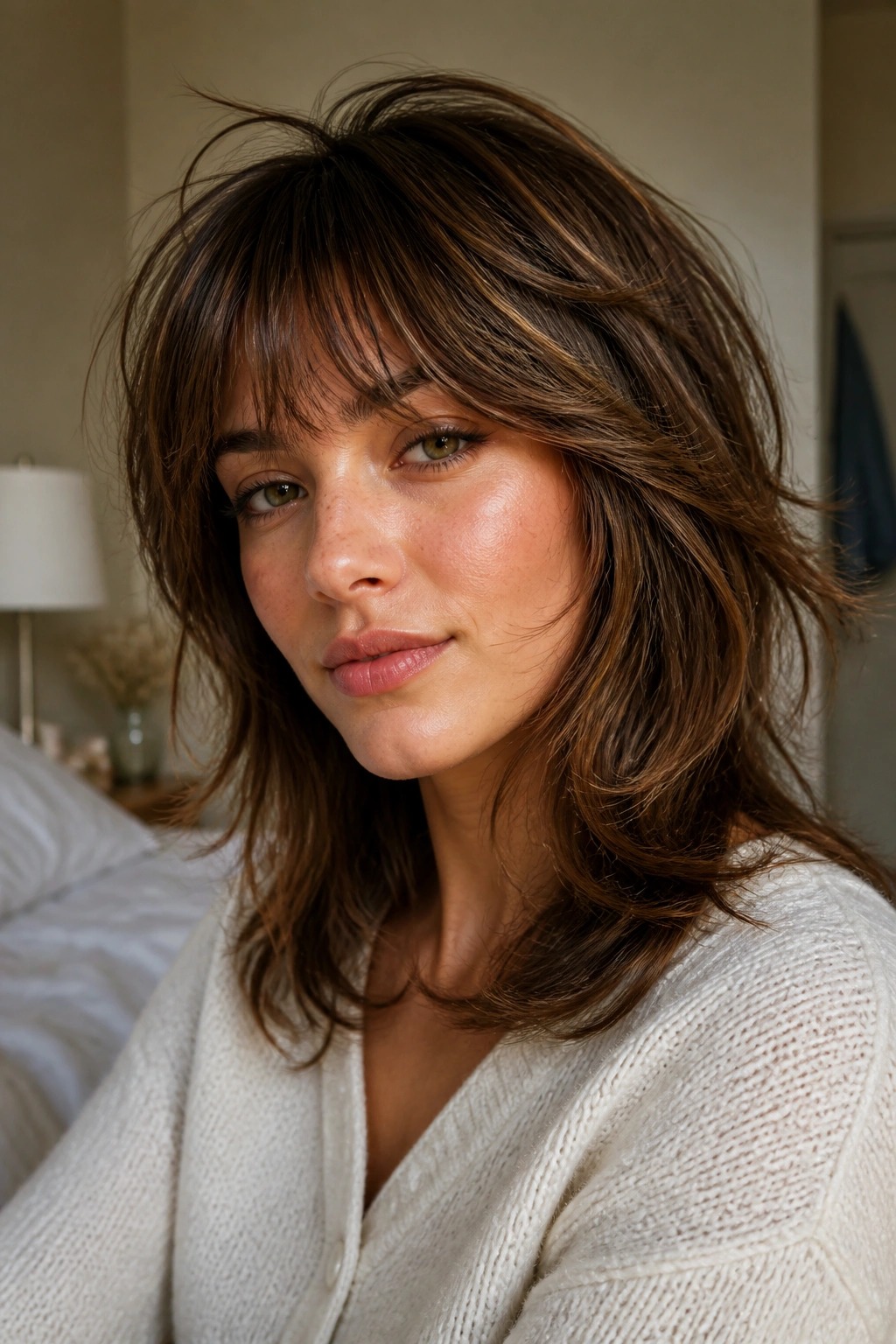
Feathered bangs are the quiet achiever of this whole bunch. They don’t shout, but they make the haircut easier to wear.
The feathering breaks up the fringe so it blends smoothly into the top layers of the wolf cut. That helps if you want bangs but hate the feeling of hair hanging heavily on your forehead. The finish is soft, airy, and a little retro without being stuck in a decade.
The Texture You Want
The bangs should move when you shake your head. That sounds obvious, but a lot of bad fringe cuts sit too still. Feathered bangs need separation, not solid weight. A little round-brush bend and a touch of texturizing spray are usually enough to keep them from collapsing.
This shape is especially kind to fine or medium hair because it creates the impression of fullness without stacking too much density at the front. It also pairs well with medium-length layers, where the movement can spread out instead of bunching up near the face.
Tip: Keep a small comb in your bag. Feathered bangs look best when you can separate them with your fingers instead of rewetting the whole front section.
20. Edgy Wolf Cut With Asymmetrical Bangs

Asymmetrical bangs turn a wolf cut from playful to sharp. One side sits longer, the other side opens the face more, and the off-balance shape gives the haircut a deliberate kind of tension.
This works best when the rest of the cut is already textured. If the layers are too smooth, the asymmetry can look accidental. If the ends are broken up and the crown has volume, the fringe becomes the focal point without stealing the whole haircut.
I like this version on people who want their hair to say something a little louder. It does not need to be dramatic drama. Just enough unevenness to feel fresh. You can tuck the longer side behind one ear, leave the shorter side loose, and let the shape do the work.
The styling is not hard, but it does ask for precision. If you let both sides dry the same way, the asymmetry gets lost.
21. Fine-Hair Wolf Cut With Airy Bangs

Fine hair can wear bangs beautifully if the fringe stays light. The trick is avoiding too much density at the front, because that can pull the whole cut flat and make the ends look thinner than they are.
Airy bangs on a fine-hair wolf cut create shape without heavy weight. The layers should be lifted enough to build volume at the crown, while the bang line stays soft and broken up. That balance gives the illusion of fuller hair without making it look stuffed.
A root spray before blow-drying helps more than people expect. So does drying the bangs in the opposite direction first, then flipping them back. It gives the front a little memory. Skip heavy oils near the fringe. They tend to make fine hair look stringy within hours.
This is the kind of cut that rewards a few small styling steps. Nothing fancy. Just the right ones.
22. Thick-Hair Wolf Cut With Thinned-Out Bangs
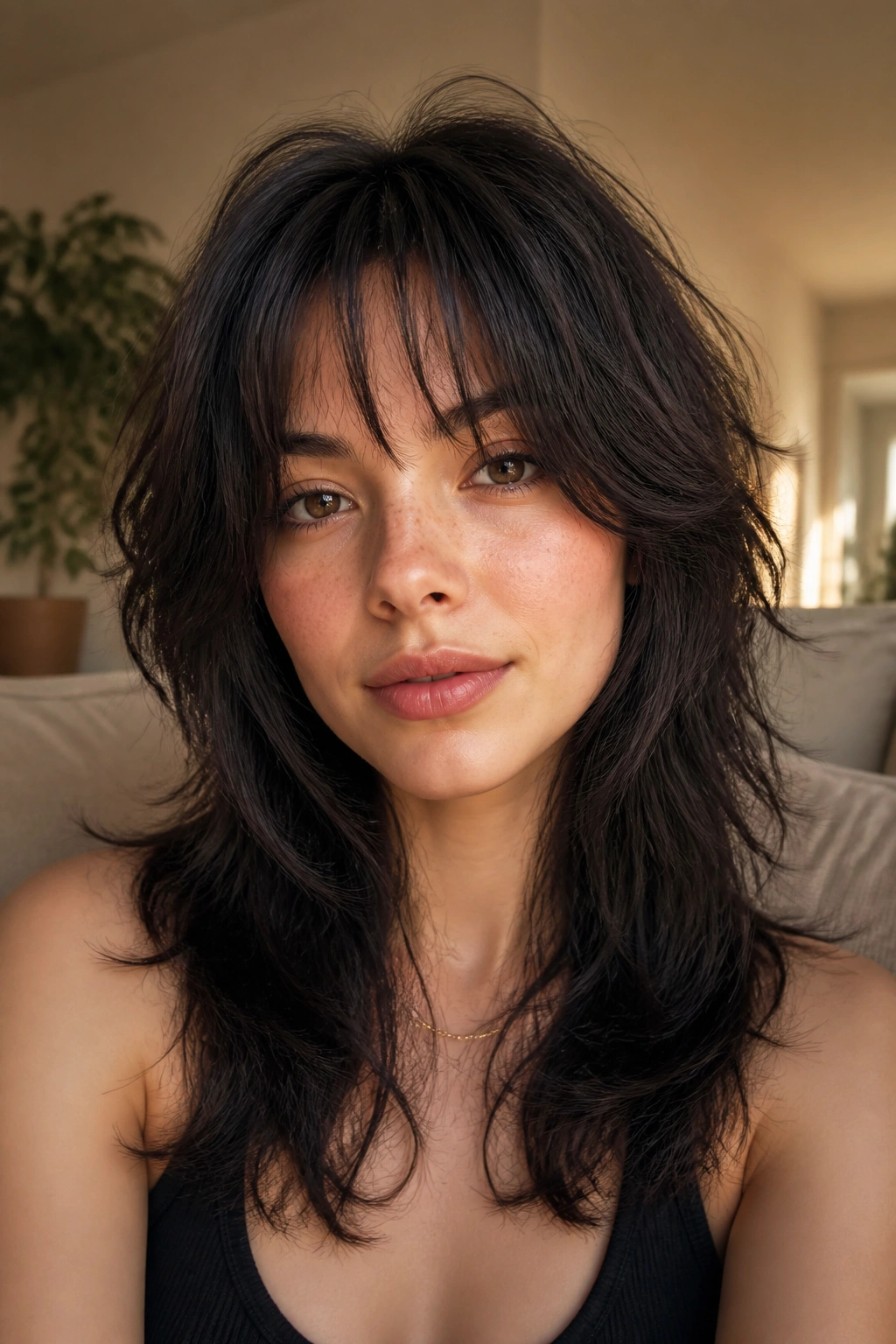
Thick hair needs a different kind of bang strategy. If the fringe is left too full, it can overpower the face and make the cut feel square instead of soft. Thinned-out bangs fix that by removing enough bulk to let the front breathe.
What the Thinning Actually Does
A stylist can use point cutting, internal layering, or selective thinning shears to break up the density. The goal is not to make the bangs sparse. It is to make them move. Thick hair often sits like a wall if it is cut bluntly, and that’s the exact problem this shape avoids.
The rest of the wolf cut should still keep some body. You do not want to thin the fringe and then leave the layers heavy, because that creates a strange mismatch. The front needs to match the texture behind it.
When It Works Best
- When your hair dries with a lot of bulk at the forehead.
- If you want bangs but hate the helmet effect.
- When you prefer air-dried texture over sleek styling.
- If your hair tends to frizz at the edges and needs some release.
The end result feels lighter, and that matters every day you have to live with it.
23. Wolf Cut With Bottleneck Bangs and Flipped Ends

Bottleneck bangs already have shape, but add flipped ends to the wolf cut and the whole thing starts to feel a little retro in the best sense. The fringe narrows at the center, opens at the sides, and the ends turn outward with a soft bend that keeps the cut lively.
This shape is good if you want something polished without losing texture. The flipped ends lift the perimeter, which stops the haircut from hanging straight and heavy. It works especially well on medium-length hair where the ends are visible enough to matter.
A round brush or a curling iron on the outer layers can help create that outward bend. Keep it loose. If the flip is too tight, it starts to look costume-like. You want movement, not a hard curl.
The combination feels balanced: face-framing bangs up top, playful motion at the bottom. Nice and clean, but not boring.
24. Long Textured Wolf Cut With Curtain Bangs and Fringe Pieces
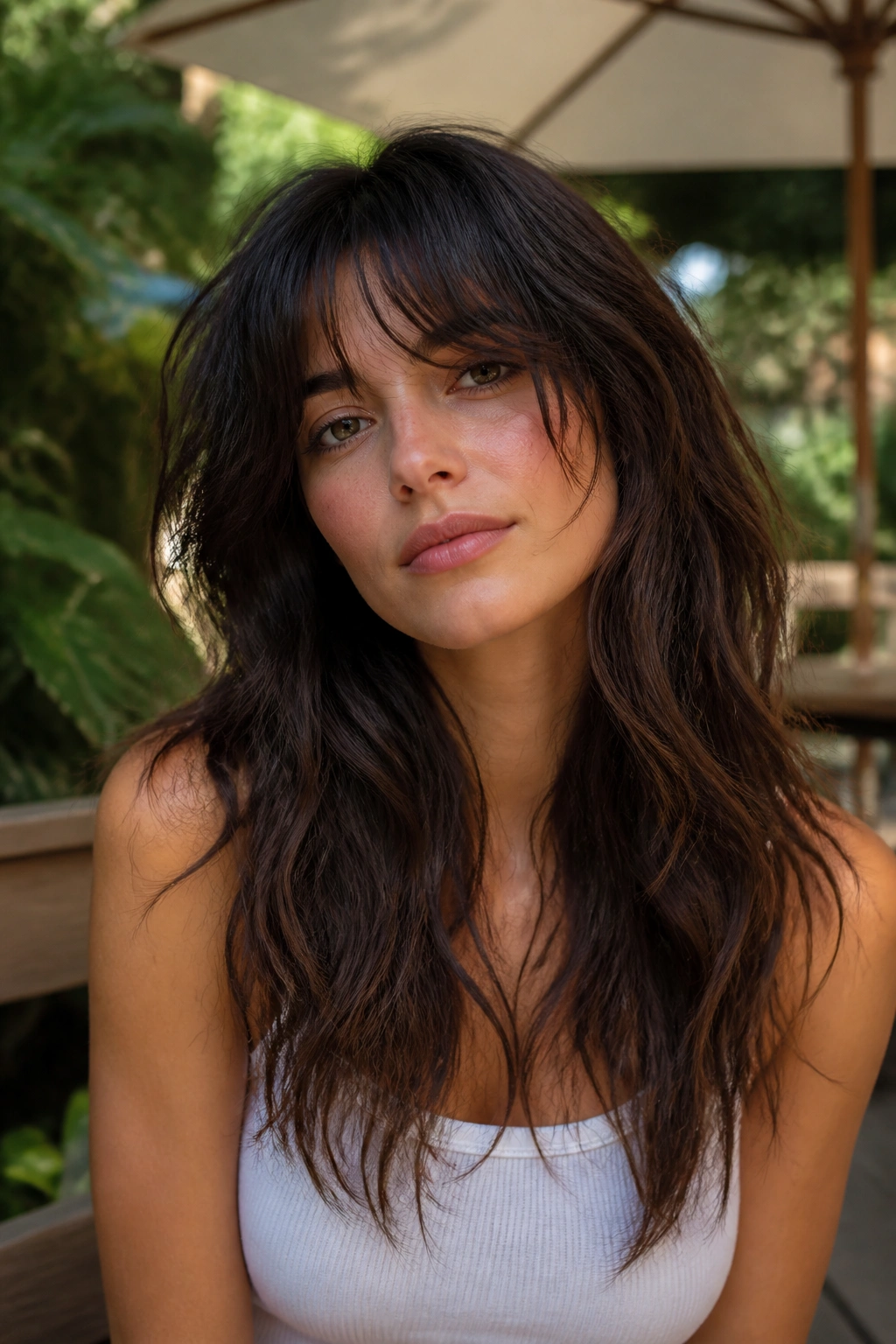
A long textured wolf cut with curtain bangs and extra fringe pieces gives you the softest possible version of the style without losing its shape. The longer length keeps the cut easy to tuck or braid, while the stray face pieces stop the front from looking too tidy.
This is a good pick if you want to grow out bangs or if you never want a full fringe again. The curtain section can part open, and the shorter face pieces around it can live somewhere between bang and layer. That little blur is useful. It makes the haircut flexible on messy days and still interesting on polished ones.
The styling here is light. A blow-dryer, a big brush, and a touch of bend at the ends usually does it. If the pieces around the face are cut too evenly, the look gets dull fast. The broken-up shape keeps it moving.
It feels easy, but it still has shape. That’s the part people usually want.
25. Low-Maintenance Wolf Cut With Grown-Out Bangs
If you want the least fussy version, start here. A low-maintenance wolf cut with grown-out bangs gives you the texture and lift of the style without asking you to babysit a short fringe every morning.
The bangs sit long enough to part naturally, tuck behind the ears, or fall forward when you want more face framing. That flexibility is the point. You still get the wolf-cut layers around the crown and the soft, uneven ends, but the front can live a more relaxed life.
Why It’s So Easy to Wear
Grown-out bangs usually behave better in real life than freshly cut ones. They are less likely to split, less likely to need constant trimming, and less likely to look odd if you skip a styling day. That makes them a smart choice for busy routines or for anyone who gets tired of perfect hair fast.
A little sea salt spray, a quick dry with your fingers, and maybe a round brush on the front pieces is enough for most days. No ceremony. No fuss.
Best For
- People growing out a fringe.
- Hair that hates strict styling.
- Anyone who wants movement more than precision.
- The person who likes a cut that still looks good on day three.
This version is quiet, but it works.
Final Thoughts
The best wolf cut with bangs is the one that fits how your hair actually behaves, not how it looks in a perfect photo. A good fringe can soften the face, sharpen the shape, or make the whole cut easier to wear. A bad one turns the haircut into a chore.
If you’re stuck between two versions, choose the longer one. Bangs can always be shortened later, and that extra length gives you room to learn how the shape sits on your face. That little bit of caution saves a lot of regret.
And if you love hair that feels a little undone, this haircut has plenty to offer. It’s one of those styles that looks better with movement, touch, and a bit of mess. Which, honestly, is a nice thing to ask of your hair.
