



Curly hair and a shag cut can be a brilliant match, but only when the layers respect shrinkage. A bad version turns into a triangle before it dries. A good one looks airy, a little wild, and far more intentional than it sounds on paper.
The big mistake people make is thinking a shag for curls means “more layers” and nothing else. It doesn’t. It means the right layers in the right places, with the curl pattern doing some of the work. A coil that lands at the jaw when wet may sit at the cheekbone once it dries, and that small shift changes the whole balance of the cut.
Most curly-shag problems come from one place: the haircut was planned for straight hair logic. Curly hair has its own rules. Dry cutting, curl-by-curl checking, and a clear plan for the fringe and crown matter more than people admit. Skip those, and you get lopsided volume, stringy ends, or a puff ball at the sides that makes you fight your own mirror every morning.
Some of the looks here are soft and rounded. Others lean shaggy-mullet, short and sharp, or long and face-framing. Pick the shape that fits your curl pattern, your density, and how much styling you’re willing to do before coffee.
1. Soft Rounded Curly Shag
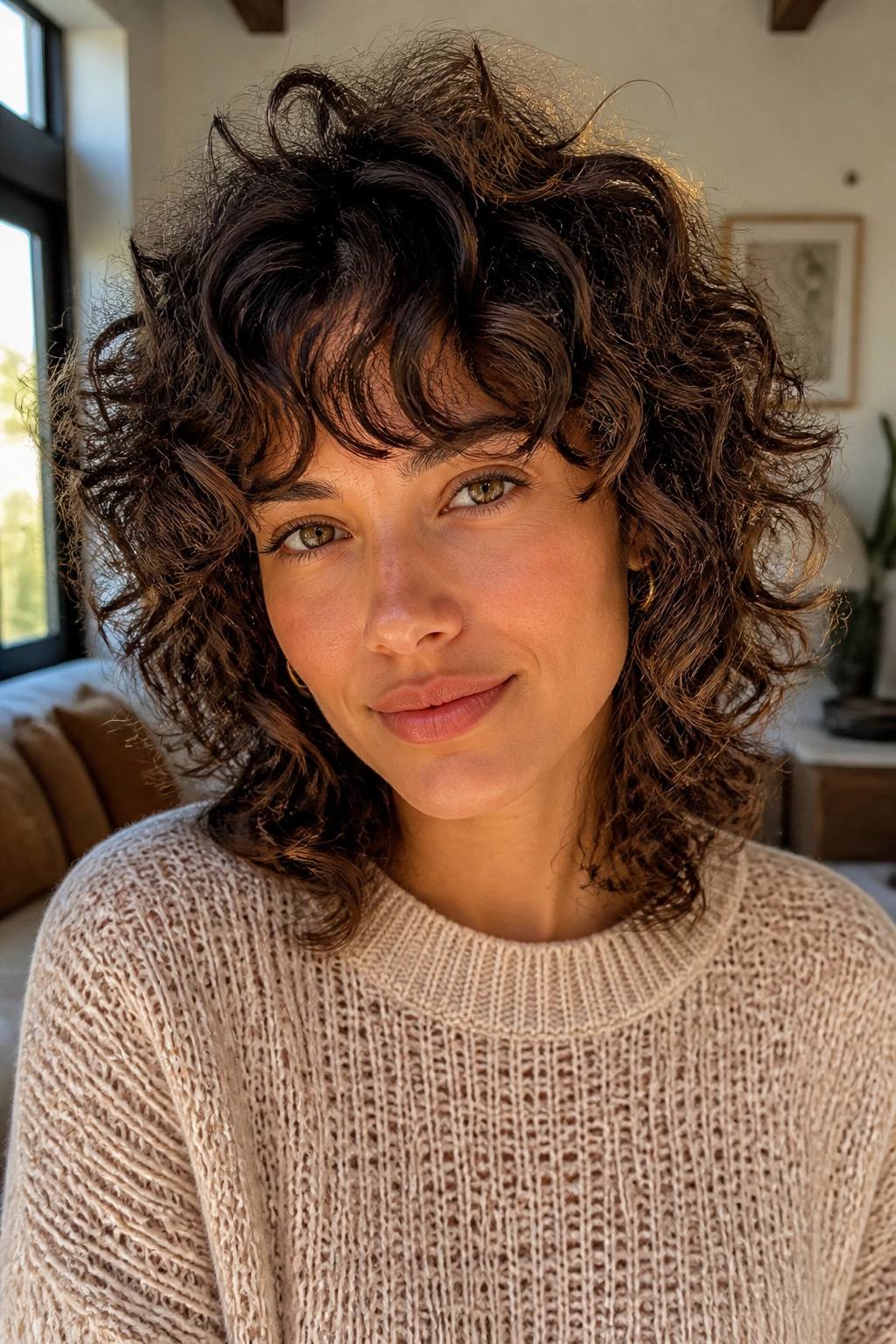
Rounded curls and shag layers get along better than most people think. This version keeps the silhouette soft, almost like a halo, instead of chopping the sides so hard that the whole head starts reading boxy.
What makes it easy to wear is the balance. The shortest layers sit high enough to create lift at the crown, but not so high that the top floats away from the rest of the shape. You get movement without that choppy, over-thinned look that some shag cuts fall into when the stylist gets scissors-happy.
Why it works
A soft rounded shag is usually the safest entry point if you’ve never had a shag haircut for curly hair before. It flatters loose waves, spiral curls, and mixed textures because it keeps the outline gentle.
- Best for: 2C to 3B curls that want shape without losing width.
- Ask for: layers that start below the cheekbones, not at the temples.
- Avoid: razor-heavy thinning near the ends if your hair frizzes easily.
- Style note: a diffuser on low heat keeps the crown from collapsing.
Pro tip: ask your stylist to check the cut dry before they stop. That one step saves a lot of “why does this side sit lower?” moments.
2. Chin-Length Curly Shag with Micro Bangs

Tiny bangs are not the problem. Bad balance is.
A chin-length curly shag with micro bangs works when you want the cut to make a statement the second you walk in. The short fringe puts the eyes front and center, while the chin-length layers keep the rest of the hair from turning into a triangle. It’s sharp, a little punk, and much easier to wear than people expect if the curl pattern is predictable.
The catch is shrinkage. Curly bangs spring up fast, and the shorter the fringe, the more likely it is to bounce higher than the first mirror check suggests. If your curls have a lot of spring, the bang should be cut longer than you think, then rechecked once dry. Otherwise you’ll spend weeks pinning them back.
This cut suits people who like a clean neck line and don’t mind a daily fringe touch-up. If your front hairline has a stubborn cowlick, I’d pass. That’s not a moral failing. It’s just a fight you don’t need.
3. Shoulder-Length Curly Shag with Curtain Bangs
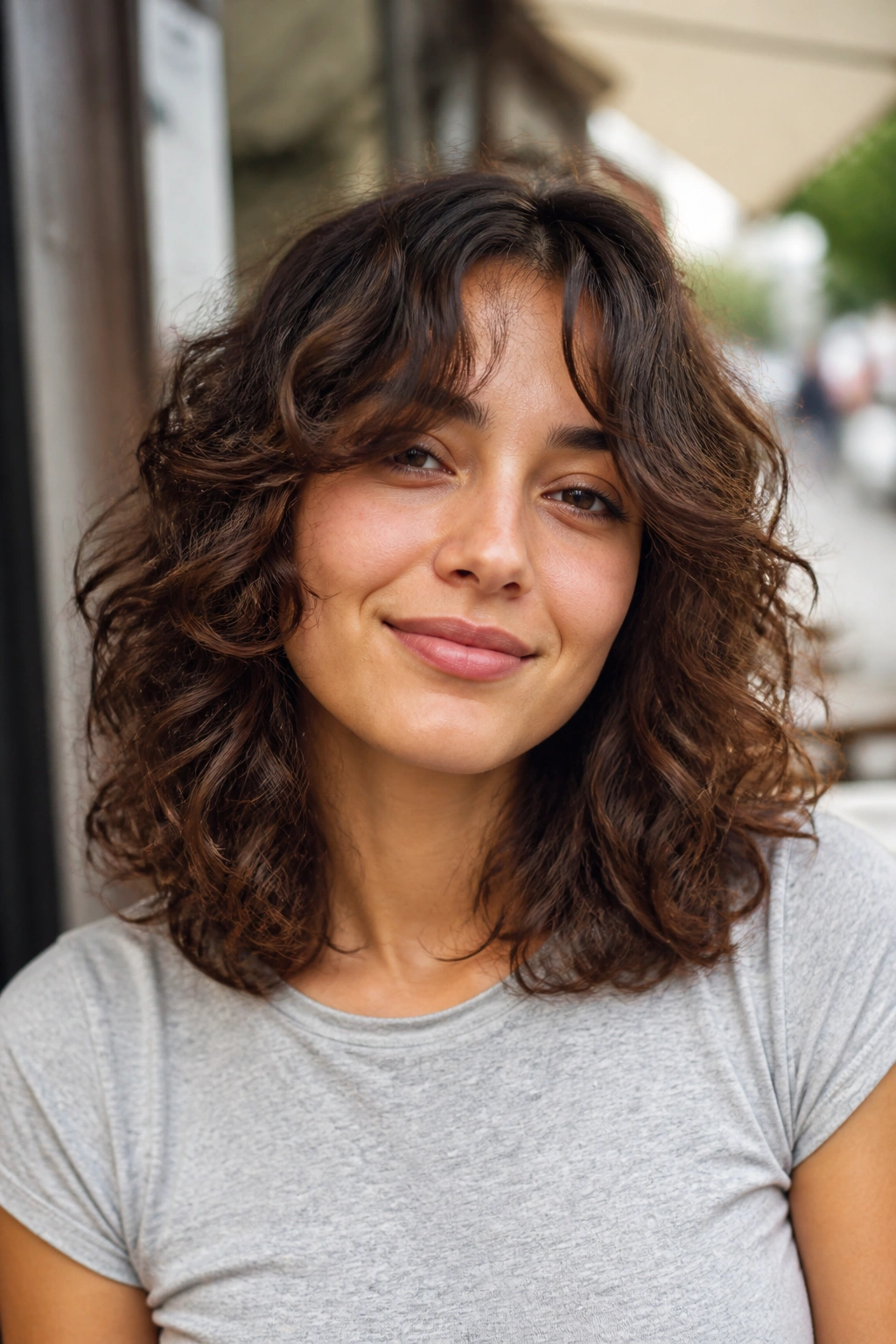
Why do curtain bangs keep showing up with curly shag haircuts? Because they let the fringe blend into the rest of the cut instead of sitting on top like a separate haircut.
At shoulder length, the shape has enough room to breathe. The bangs can part softly at the center and sweep into layers that hit around the cheekbones, which keeps the face open without losing softness. This is one of those cuts that looks casual in the best way, like the hair just decided to cooperate after a good wash.
How to ask for it
If you’re showing this to a stylist, be specific about the shortest bang point and the longest face frame.
- Keep the shortest point around the bridge of the nose.
- Let the outer pieces land near the cheekbones or slightly lower.
- Blend the front into shoulder-length layers so it doesn’t look detached.
- Avoid a hard line across the fringe.
A little curl cream at the front and a gentle finger twist is usually enough. You do not need a lot of product here. Too much, and the bangs clump into a heavy curtain instead of a soft sweep.
4. Long Curly Shag with Face-Framing Layers
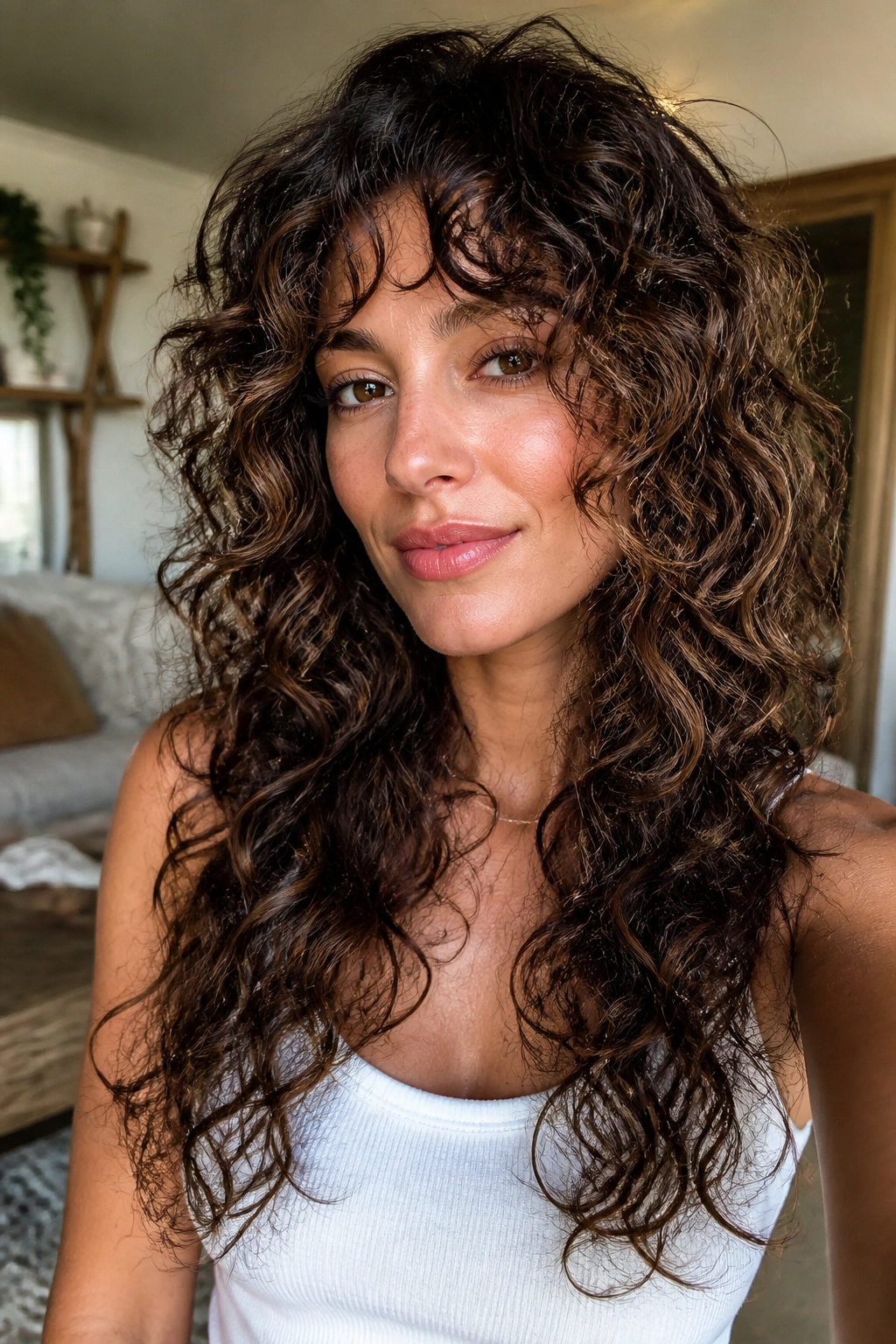
If you keep saying you want to keep the length, this is the cut I’d start with.
A long curly shag with face-framing layers gives you movement without sacrificing the back. The front and sides get the action—layers that open around the cheeks, jaw, and collarbone—while the overall length stays long enough to pull back when you’re annoyed with your hair, which happens to all of us. The shape matters here. If the shortest layers start too high, the cut can get fluffy in the wrong places. If they start too low, the whole thing falls flat.
This version is especially useful for people whose curls look heavy at the bottom. A blunt long shape can drag the face down. Face-framing layers fix that by lifting the eye line and making the hair feel lighter without making it look thin.
- Good choice for: medium to high density curls.
- Best cut zone: layers starting around the chin, with longer pieces at the collarbone.
- Maintenance: reshape every 10 to 12 weeks if you want the front to keep its shape.
- Styling trick: scrunch the front upward first, then leave the rest alone.
The nice part is that it grows out in a pretty forgiving way. That matters more than people think.
5. Wolf Cut Shag for Dense Curls
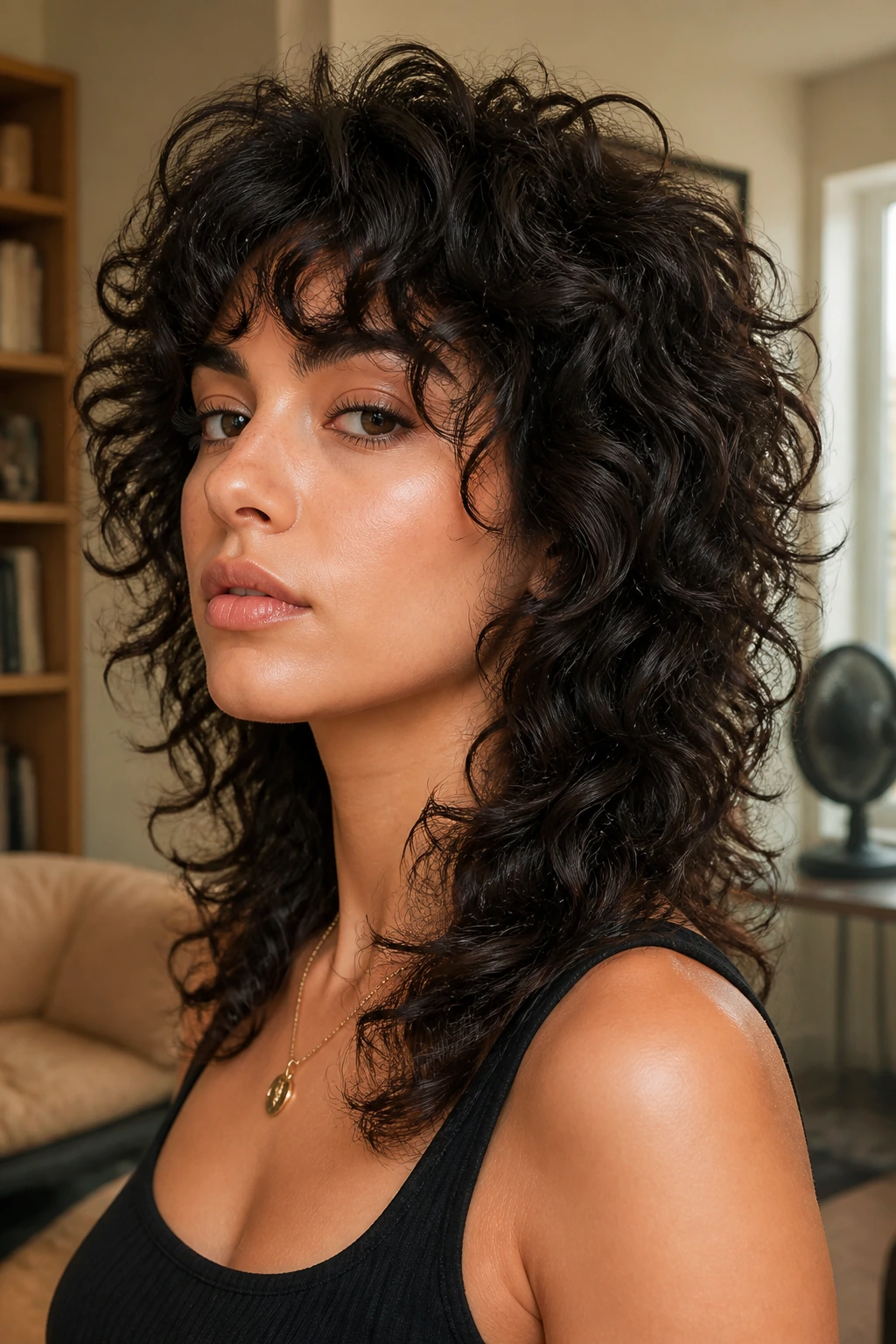
The wolf cut is a shag’s rowdier cousin. It sits higher at the crown, keeps the nape a little longer, and gives dense curls a shape that feels lived-in instead of heavy.
I like this cut most on hair that expands sideways after washing. You know the type: big in the best way, but a little too wide at the temples or around the ears. The wolf-shag shape trims that bulk while leaving enough length for curl definition. It’s not about making the hair smaller. It’s about making the volume land where you want it.
Dense curls need control, not punishment. That means the stylist should remove weight from the inside of the shape, not carve giant holes through the perimeter. If they go in too hard with thinning shears, the ends can puff out and frizz faster than the rest of the head. That’s the haircut equivalent of poking a beehive.
A good wolf-shag also gives you that cool, slightly unkempt edge without forcing the curls into stiff shapes. And yes, it can look a little louder than a soft rounded shag. That’s the point.
6. Tousled Pixie Shag for Tight Curls
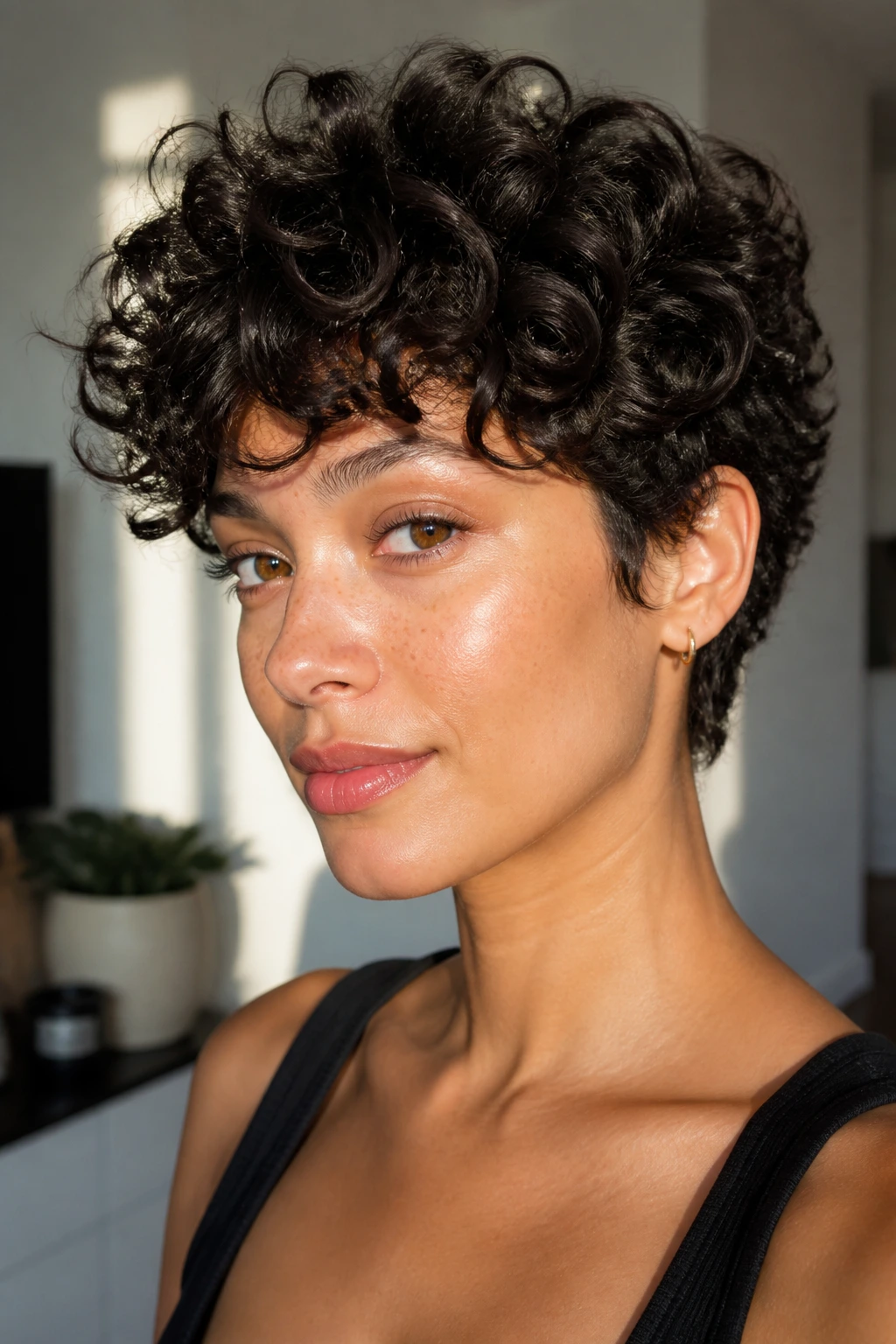
Unlike a classic pixie, this version keeps enough length on top for coils to spring instead of puffing flat.
A tousled pixie shag is short enough to feel fresh, but not so cropped that you lose the curl pattern’s personality. The crown stays layered, the nape stays clean, and the sides are soft enough to tuck behind the ear without looking too severe. On tight curls, that extra bit of length at the top matters a lot. Too short, and the hair can stand away from the head. Too long, and the shape loses its crispness.
This cut works best when you want very little daily fuss but still want movement. A tiny amount of styling cream, a pea-sized touch of gel, and a diffuse-dry is usually enough. If you like to wake up and shake your hair into place, this one is worth a close look.
It is not the best choice for someone who wants a lot of length around the face. The whole point is the cropped, airy shape. Clean, quick, and a little cheeky.
7. Mid-Length Curly Shag with Piecey Ends
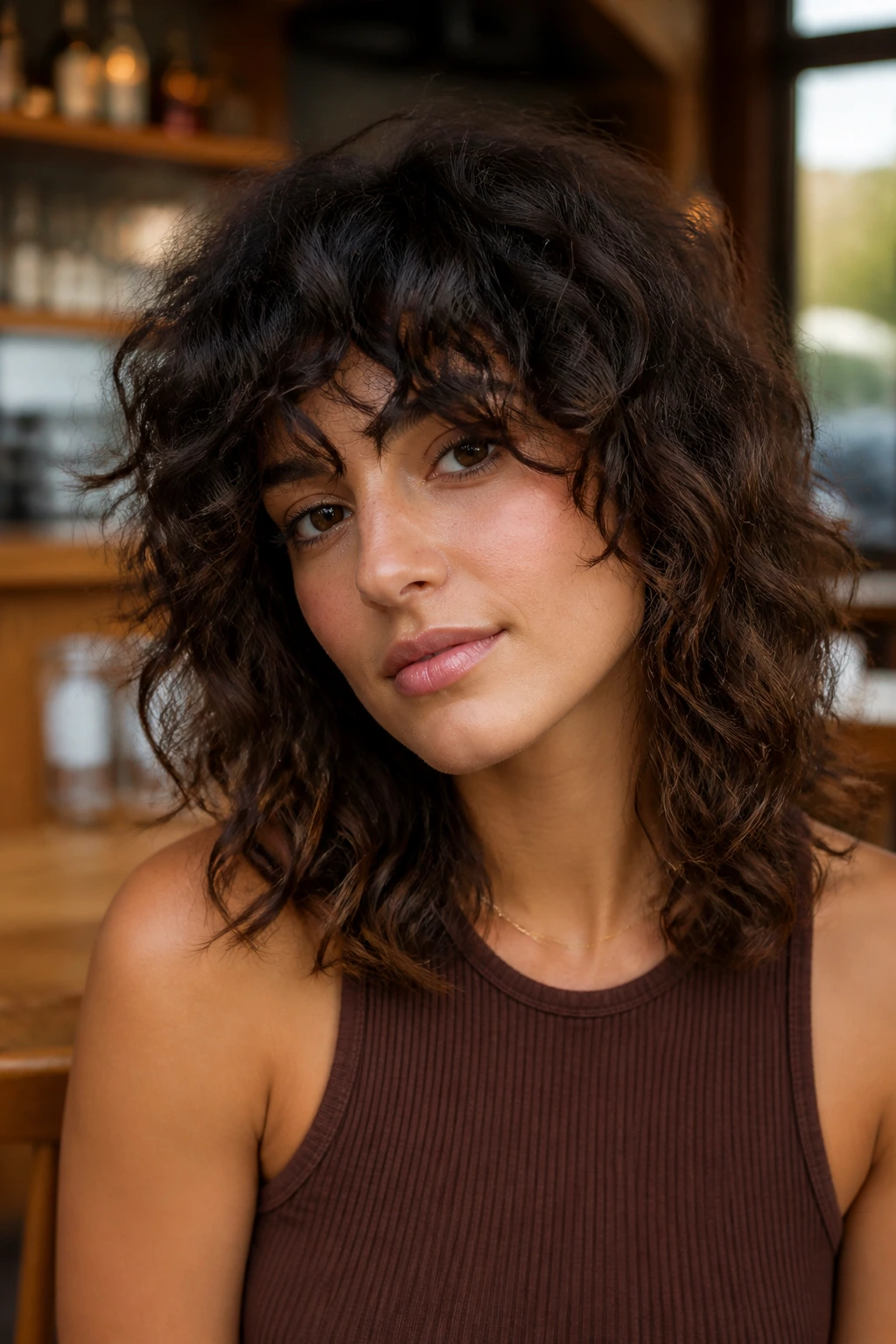
Piecey ends sound simple, but they are doing a lot of work here. They keep the haircut from turning into one heavy block, especially when your curls clump naturally.
A mid-length curly shag like this usually lands somewhere between the jaw and the shoulders, with enough layers to separate the shape without shredding it. The goal is to let some curls stand out as little ribbons while others sit into the body of the haircut. That uneven texture is what gives the style motion.
What to tell your stylist
If you want this shape to read clean instead of frayed, be specific about the finish.
- Keep the perimeter soft, not razor-chopped.
- Let the front pieces land a little longer than the sides.
- Use curl-by-curl shaping if the pattern varies a lot from section to section.
- Leave enough length in the ends so they can still curl together.
A lot of people mistake piecey texture for frizz. It’s not the same thing. Piecey ends look separated on purpose. Frizz looks fuzzy and out of control. A small amount of gel after a leave-in conditioner helps the difference show up clearly.
8. Curly Shag with Bottleneck Bangs
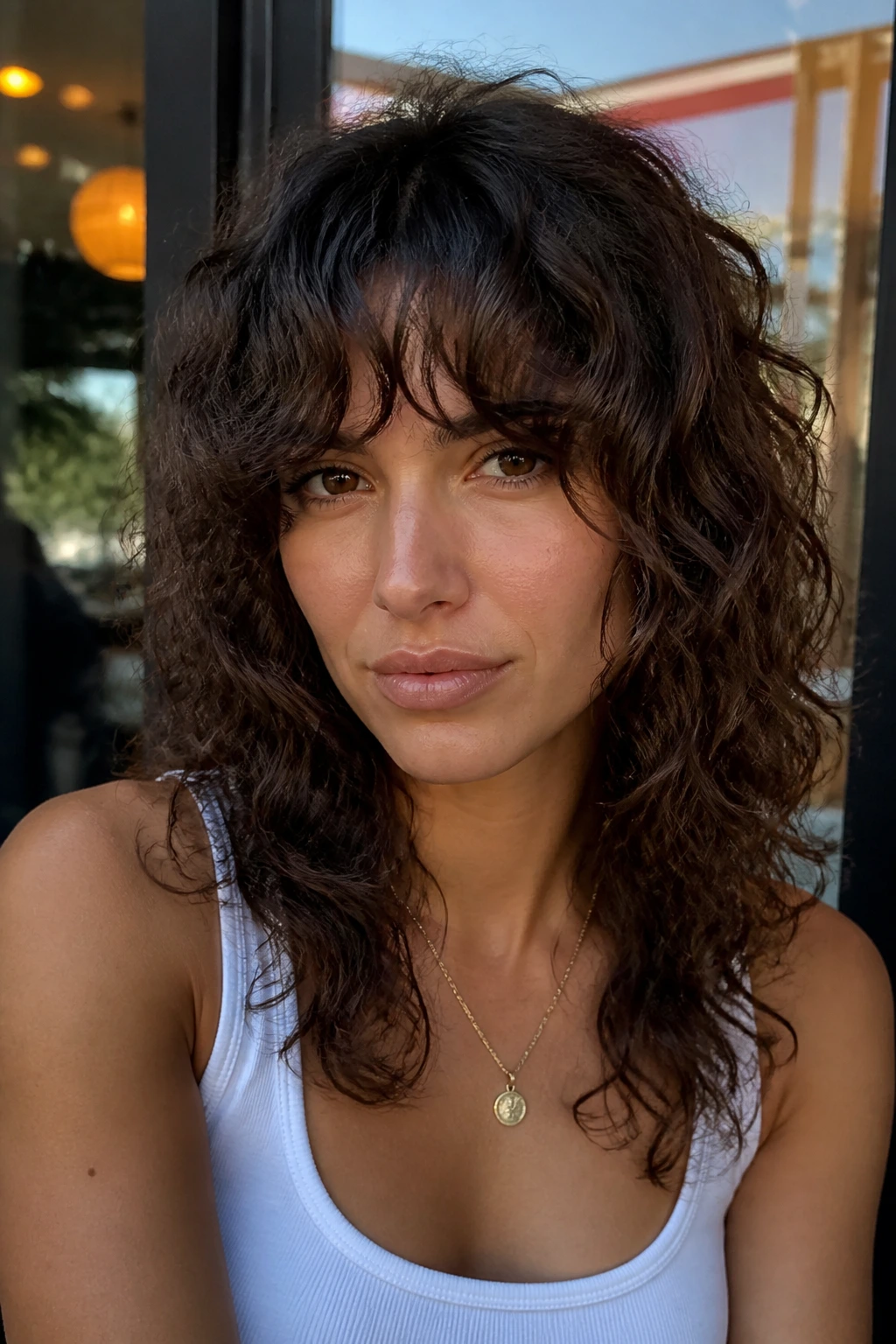
What makes bottleneck bangs so useful on curly hair? They start narrow in the middle, then open out toward the temples, which means the fringe can grow into the cut instead of sitting there like a separate little event.
This shape is a nice middle ground if micro bangs feel too sharp and curtain bangs feel too soft. The center sits shorter, but the sides have room to blend into face-framing pieces. On curls, that matters because the fringe shrinks unevenly. A little extra length in the outer corners keeps the look balanced once the hair dries.
The cut works especially well on oval, heart, and longer faces. It softens the forehead without closing off the face. If your curls are springy, keep the center of the bang longer than your first instinct says. Seriously. Bangs that look a touch too long when wet often land right where they should once dry.
How to style the fringe
- Smooth the roots with a small round brush or your fingers.
- Dry the center first so it does not dry crooked.
- Let the side pieces fall naturally into the front layers.
- Avoid piling product into the bang area; it can make the fringe sit heavy.
It’s a small cut detail, but it changes the whole haircut.
9. Layered Shag for Fine Curls
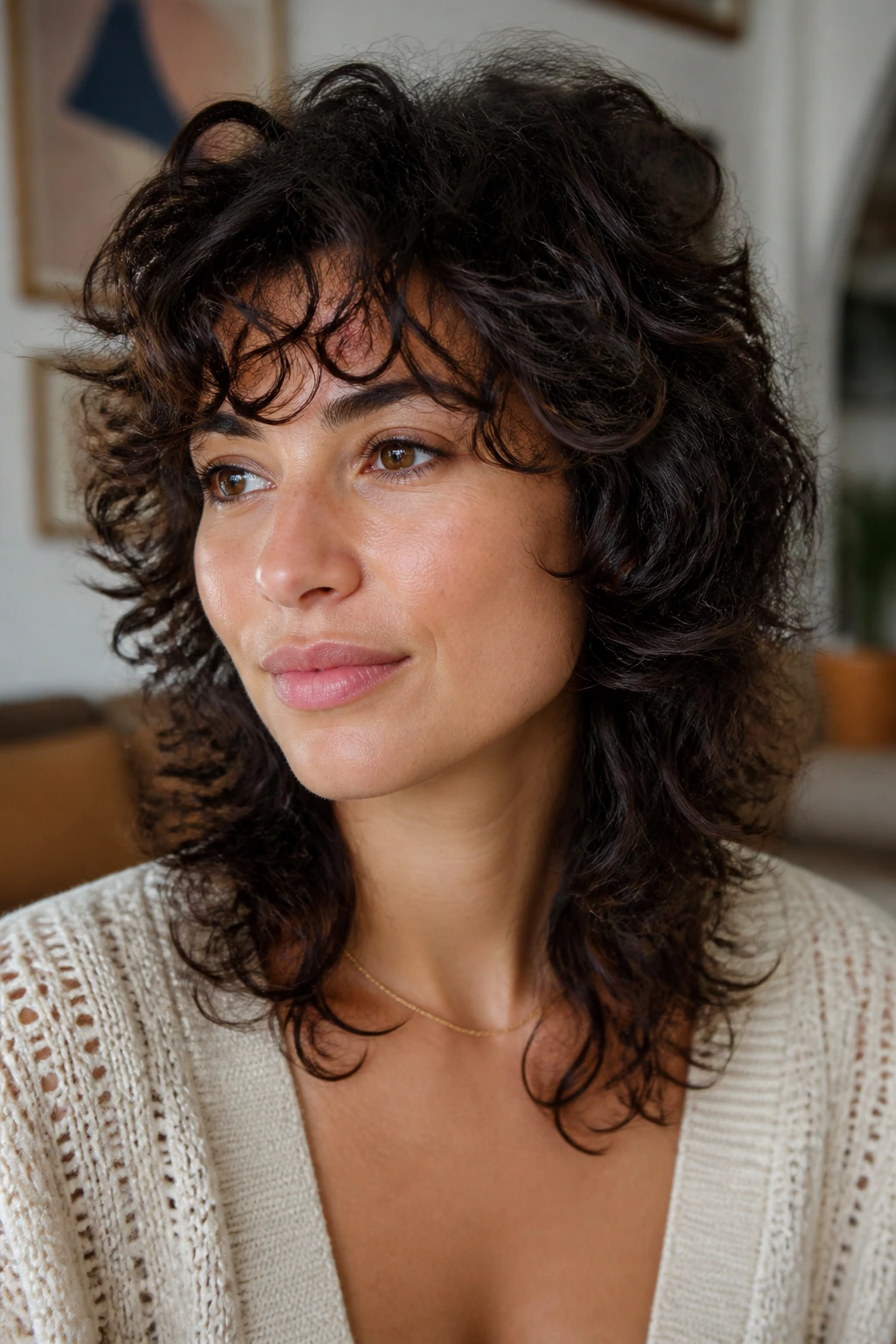
Fine curls need restraint, not more aggression.
That’s the part most people get wrong. When fine hair is cut into too many short layers, the ends lose their weight and the hair starts to look wispy instead of full. A better layered shag keeps the top light but leaves enough length through the bottom so the shape still has body. You want lift, not emptiness.
I’d rather see a few well-placed layers than a dozen tiny ones that disappear as soon as the hair dries. Fine curls already have less density at the scalp, so the crown should be handled gently. A little root volume can come from the cut, but a lot of it comes from the way the hair is dried.
Avoid heavy texturizing near the ends. It sounds tempting, especially if the hair feels flat, but on fine curls it usually makes the outline weaker. Ask for soft internal layers and a perimeter that stays clean. That keeps the curl pattern visible.
If your hair is fine and curly, this is the shag that keeps the hair from looking overcut.
10. Heavy-Texture Shag for Thick Coils
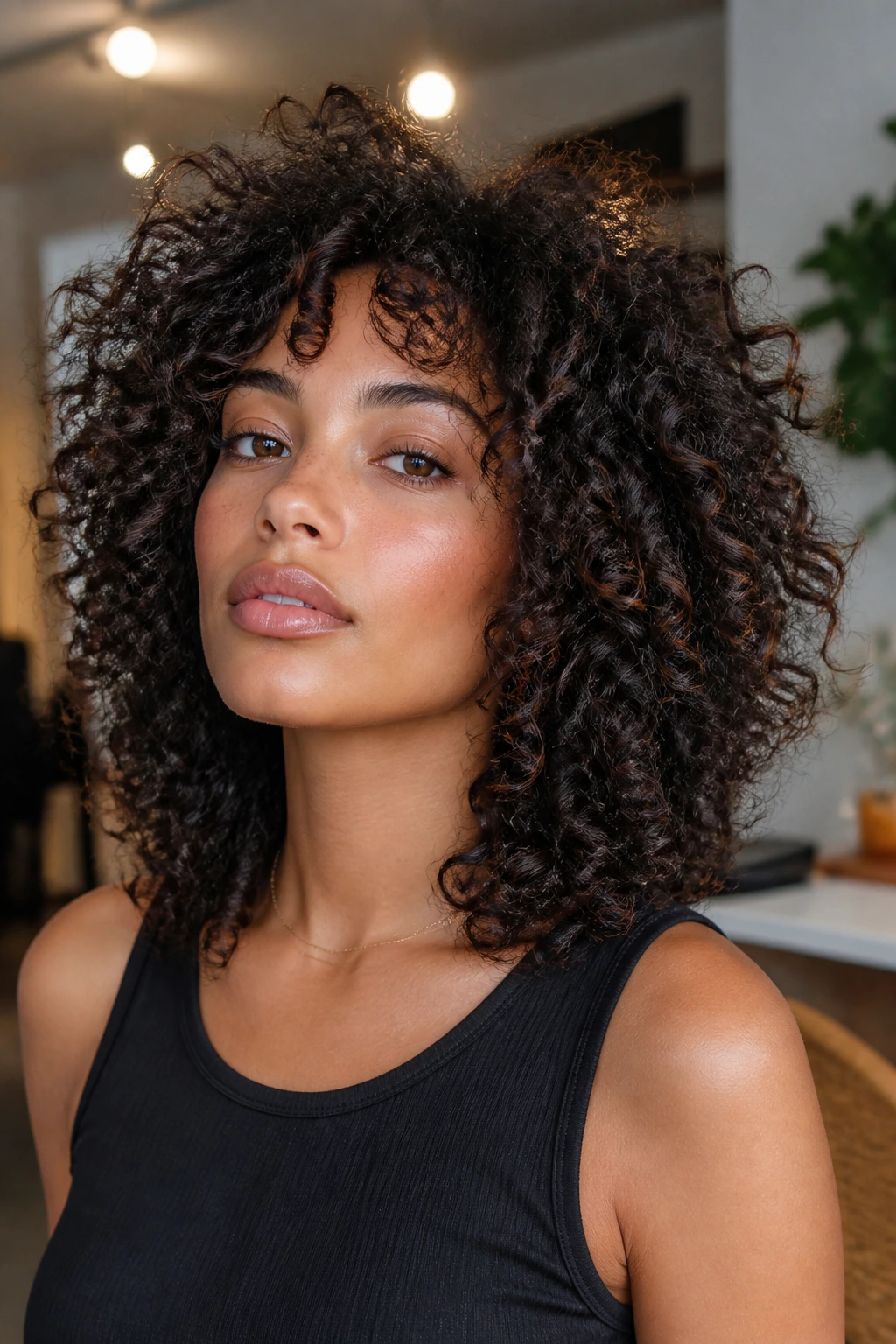
If your hair feels like it doubles in size after a wash, a heavy-texture shag can be a relief.
Thick coils carry their own drama. They don’t need help looking full. What they usually need is shape and weight control. A heavy-texture shag does that by removing bulk from the inside of the haircut while preserving enough outline for the curls to stack nicely. The result is movement through the middle of the hair, not just at the ends.
This cut can be a lifesaver if the back of your hair feels bulky against your neck or if the sides puff out before the top has a chance to settle. The stylist should work section by section, checking how much each curl stretches, because thick coils often hide weight in places that look harmless when wet.
- Best for: dense, springy coils that need more airflow.
- Ask for: internal layering, not aggressive thinning through the outside.
- Good sign: the shape still looks full when it’s dry, just less boxy.
- Watch out: too much removal near the crown can make the top look narrow.
The goal is not to make the hair smaller. It is to make it fall where you want it.
11. Collarbone Shag with Flipped-Out Ends
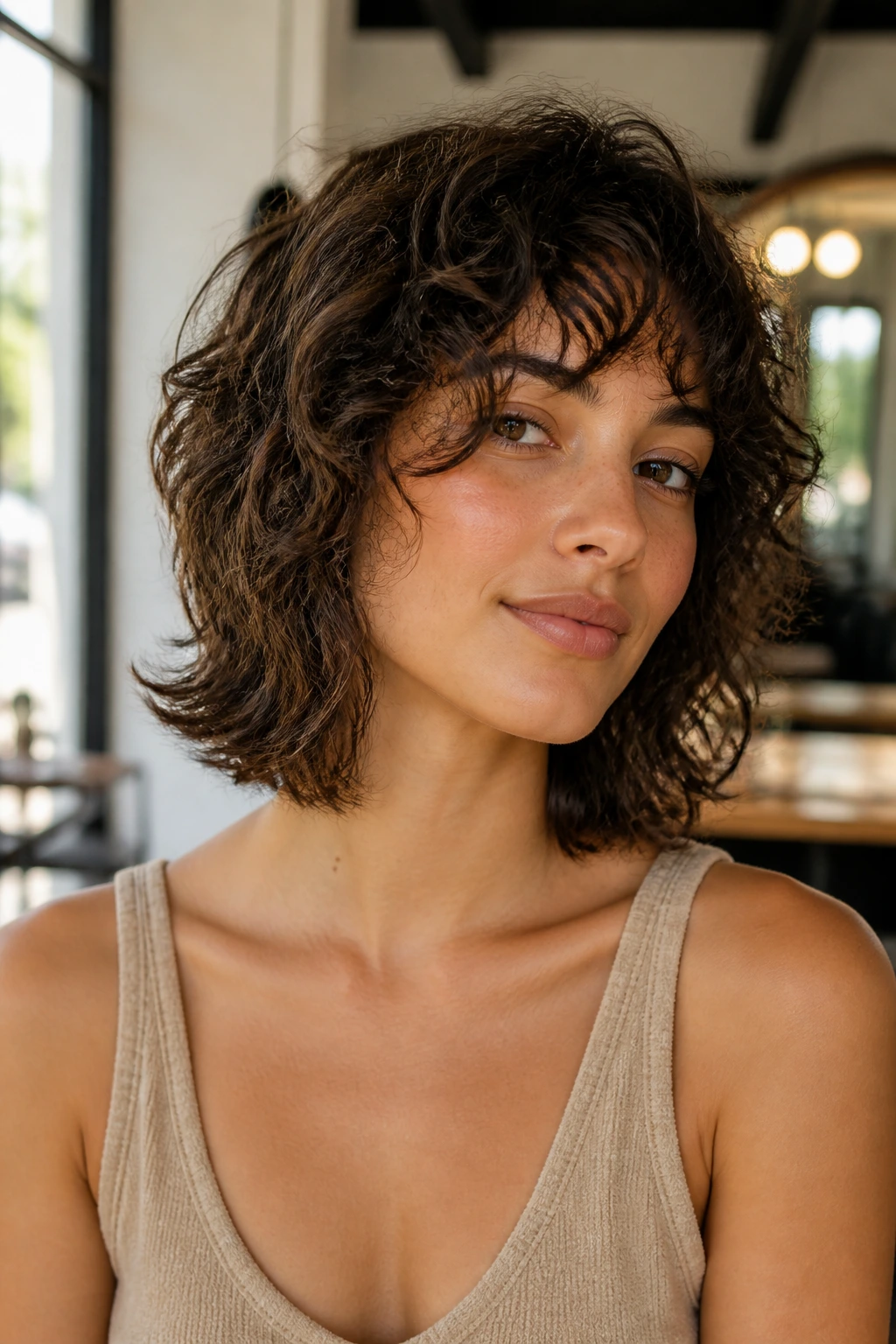
A collarbone-length shag gives curls room to swing, and the flipped-out ends add a little attitude without making the shape feel loud.
This cut sits in that useful middle zone between short and long. It is long enough to pull into a clip or a loose tie, but short enough that the layers show up instead of disappearing under their own weight. The flipped-out finish works especially well on curls that naturally flick outward at the ends. If your hair already wants to do that, don’t fight it. Use it.
I like this shape for people who want movement around the face but do not want a lot of fringe maintenance. The front can open around the cheekbones, then slide down to the collarbone. That gives the whole haircut a sort of easy swing when you turn your head.
A round brush at the roots can help if you want a little extra lift, but you do not need to chase every strand with heat. Air-drying with a bit of mousse at the crown often gives a nicer result. Less polished. Better.
12. Asymmetrical Curly Shag
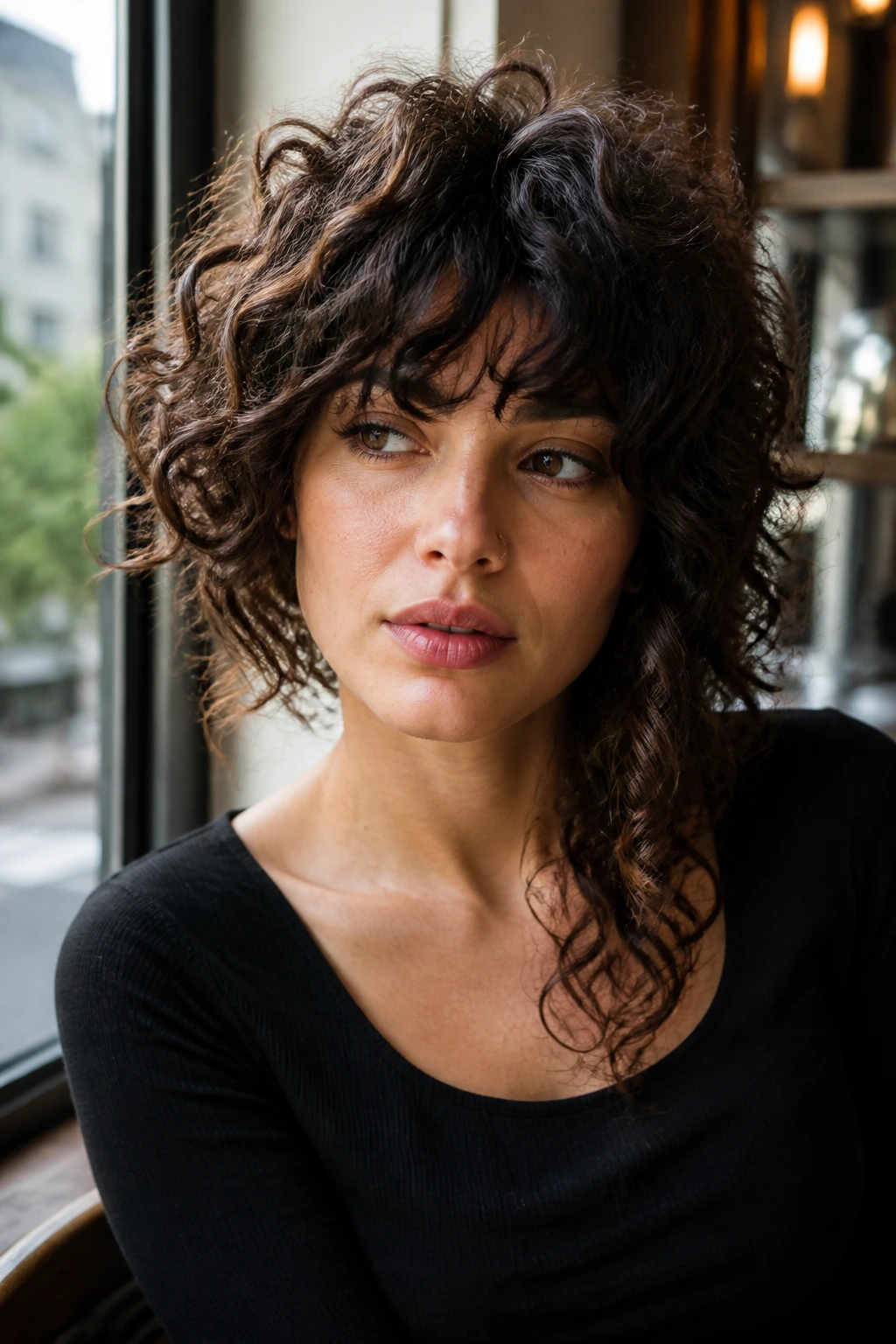
A centered shag feels calm; an asymmetrical one feels a little sharper.
The difference can be tiny. One side might fall a half-inch longer than the other, or the front pieces might sweep harder to one side instead of sitting evenly. On curly hair, that unevenness can look deliberate in a good way because the curls already have their own movement. You are not fighting the texture. You are leaning into it.
This cut is a smart pick if your face has a strong side part, one curl pattern that behaves differently from the other side, or a cowlick that keeps pushing the hair off center. Rather than forcing symmetry, the haircut lets the natural imbalance become part of the design.
Keep the difference subtle. One to one-and-a-half inches is usually enough. Any more and the cut can start to look accidental, especially once the curls shrink. I’d also avoid this shape if you dislike seeing the hair sit differently from day to day, because asymmetry plus curl variation can read a little unpredictable.
For the right person, though, it feels fresh without trying too hard.
13. Modern Mullet-Shag for Curly Hair
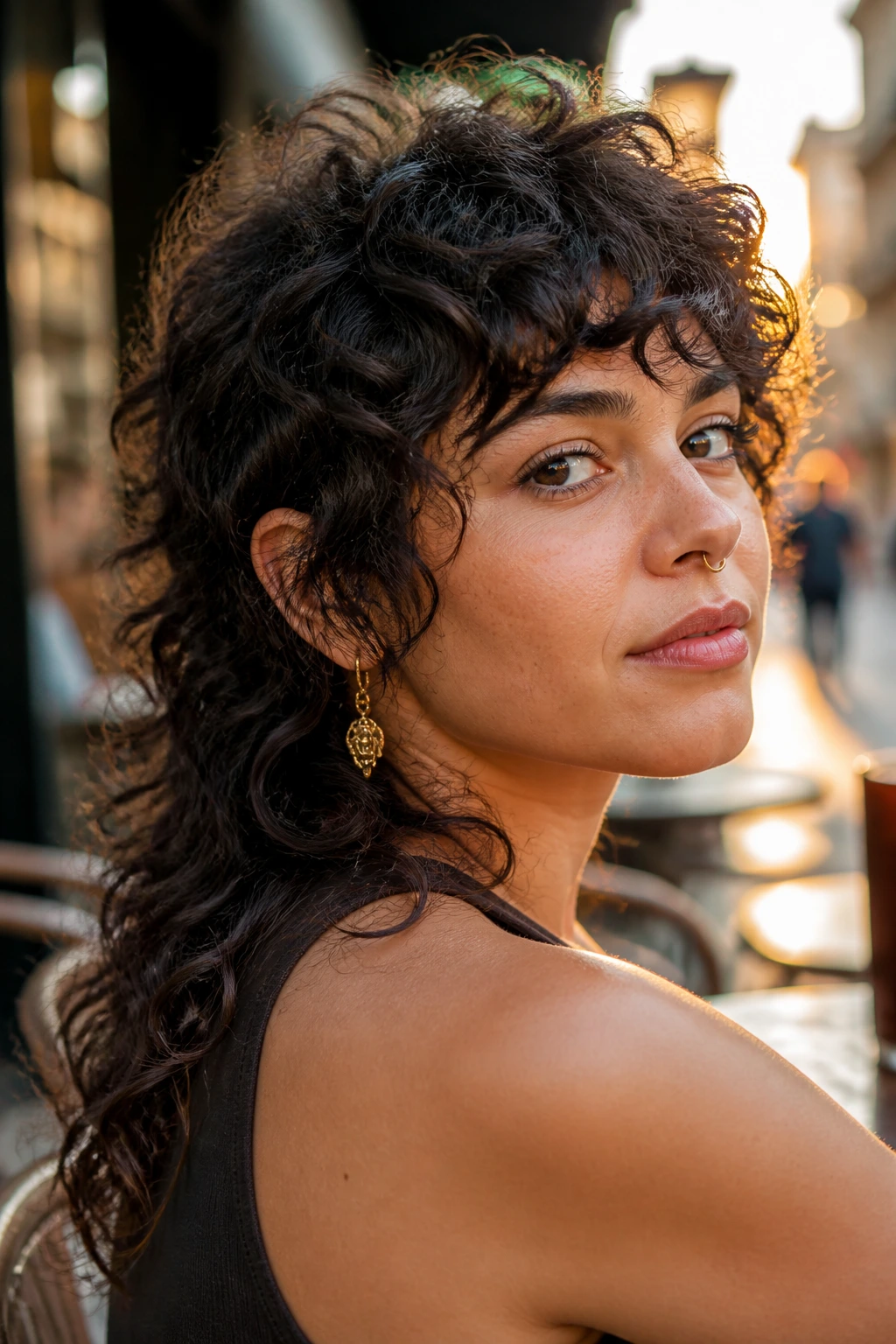
This is the cut for someone who wants edge but not a hard line.
A modern mullet-shag keeps length in the back, shortens the crown, and softens the front enough that it doesn’t feel costume-y. On curly hair, that softer edge matters. The curls blur the transition between short and long sections, so the shape looks more natural than it does on straight hair. You get lift at the top, face framing in the front, and a longer tail in back that moves when you walk.
Why the shape reads softer on curls
Curly texture hides some of the harshness that makes mullets look too literal. The layers blend faster, and the transition from crown to nape feels less abrupt.
- Shorter crown layers create lift.
- Longer back pieces keep the silhouette from puffing out at the sides.
- Soft face-framing layers stop the front from looking severed.
- Curl definition makes the shape feel lived-in, not stiff.
If you want this cut to look modern instead of retro costume, keep the front longer and the back less extreme. You want a whisper of mullet energy, not a costume party. A small amount of styling mousse at the crown helps the top stay lifted while the back keeps its curl pattern.
14. Retro 70s Curly Shag
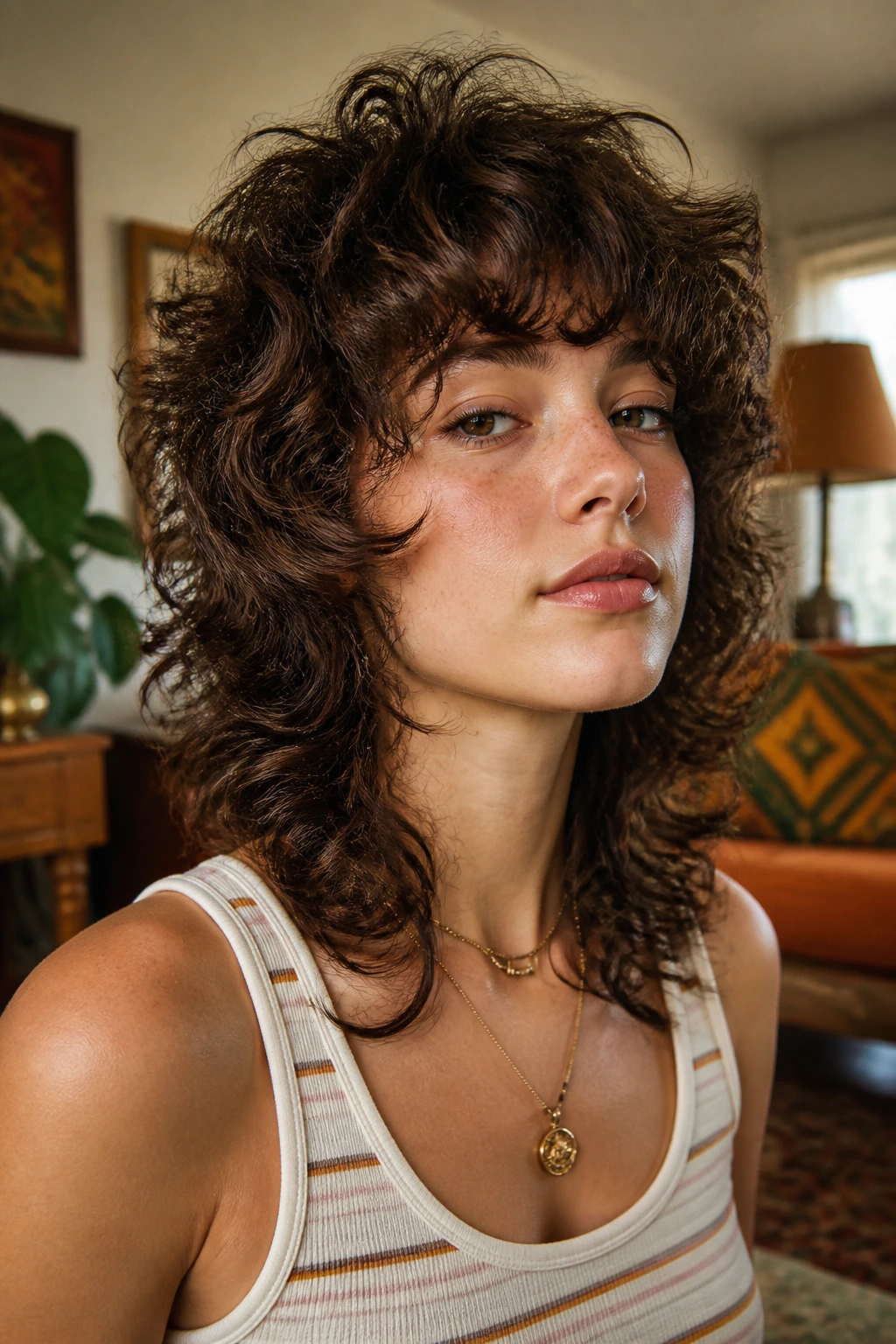
What makes a shag feel retro instead of sloppy? Usually the crown volume and the way the front flips away from the face.
The 70s version leans into softness at the cheeks and a lifted top that gives the whole haircut a little swagger. On curly hair, the shape can be gorgeous because the texture already brings that lived-in movement. The trick is keeping the layers long enough to feather rather than chop. Short, jagged layers can feel too hard here. Feathered layers feel intentional.
This cut likes a center part or a soft off-center part, depending on your face shape. The front should open away from the eyes and skim the cheekbones, not hang in a thick curtain. A round brush can help at the roots if you want a more styled finish, but don’t overdo it. The beauty of this look is that it can still feel soft, even when it’s polished.
Styling the front
- Lift the root with a diffuser or small brush.
- Twist the front pieces away from the face while drying.
- Use a light mousse rather than a heavy cream if the hair gets flat.
- Stop once the layers have bounce; over-shaping kills the mood.
It’s one of the few cuts that looks better when it moves.
15. Dry-Cut Rezo-Inspired Shag for Curly Hair
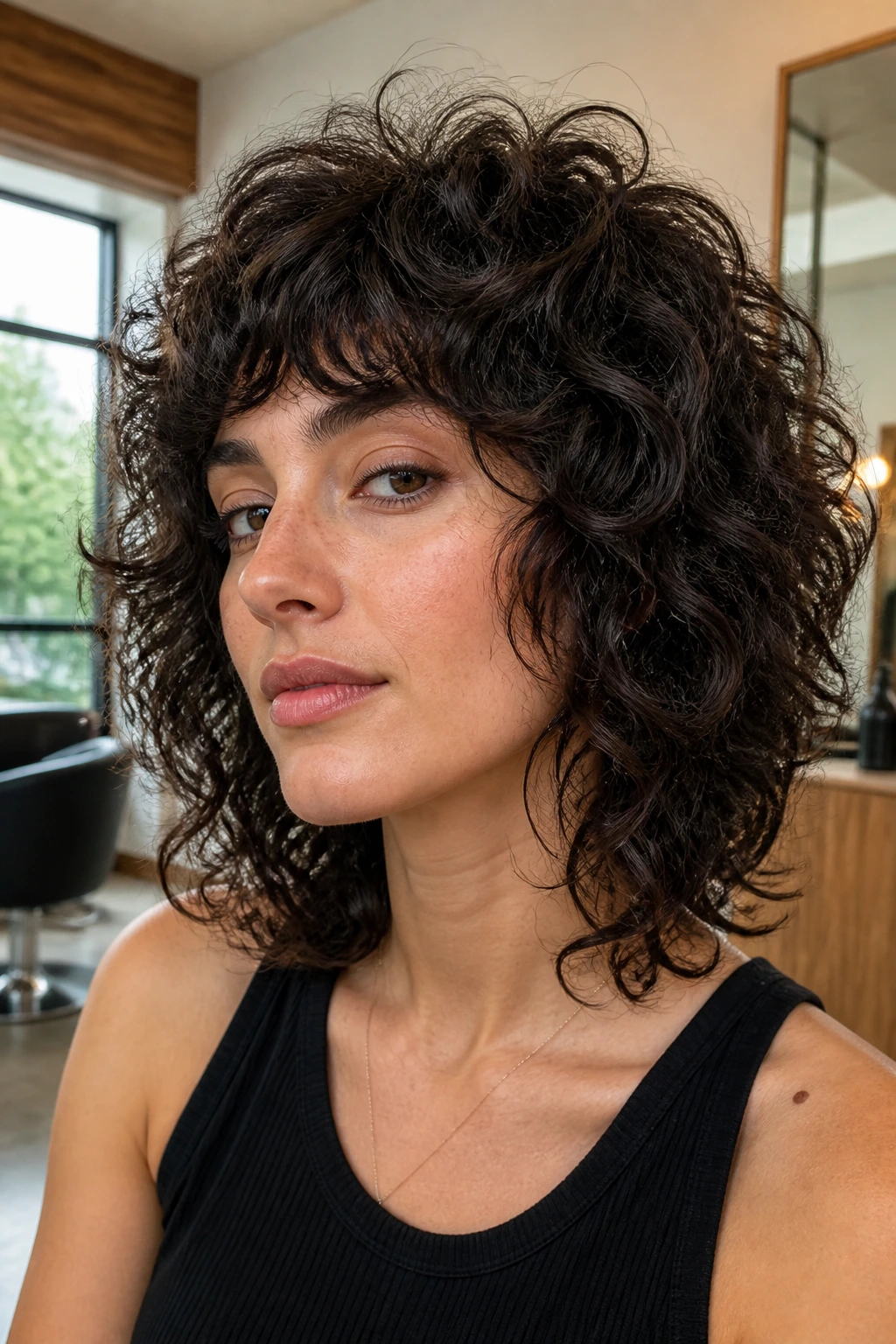
A dry cut can save you from the oldest curly-hair mistake: trusting wet length.
That’s the whole point of a Rezo-inspired shag. The stylist shapes the hair in its natural state, or checks it dry section by section, so the final layers land where the curls actually live. Wet hair lies. Dry curls tell the truth. If you’ve ever watched a curl sit at your chin when wet and bounce up to your cheekbones later, you already know why this matters.
This method is especially useful if your curls have different spring levels across the head. Some people have tighter curls in the back, looser ones at the front, and a crown that behaves like a different person entirely. A dry-cut approach lets the stylist balance all of that instead of guessing.
Among shag haircuts for curly hair, this is the one I trust when the shape has to be precise. It’s not flashy. It’s practical. Bring photos, yes, but also say what parts of your hair bother you most: the crown, the sides, the front, the bulk at the back. That gives the cut a target.
16. Razor-Cut Curly Shag
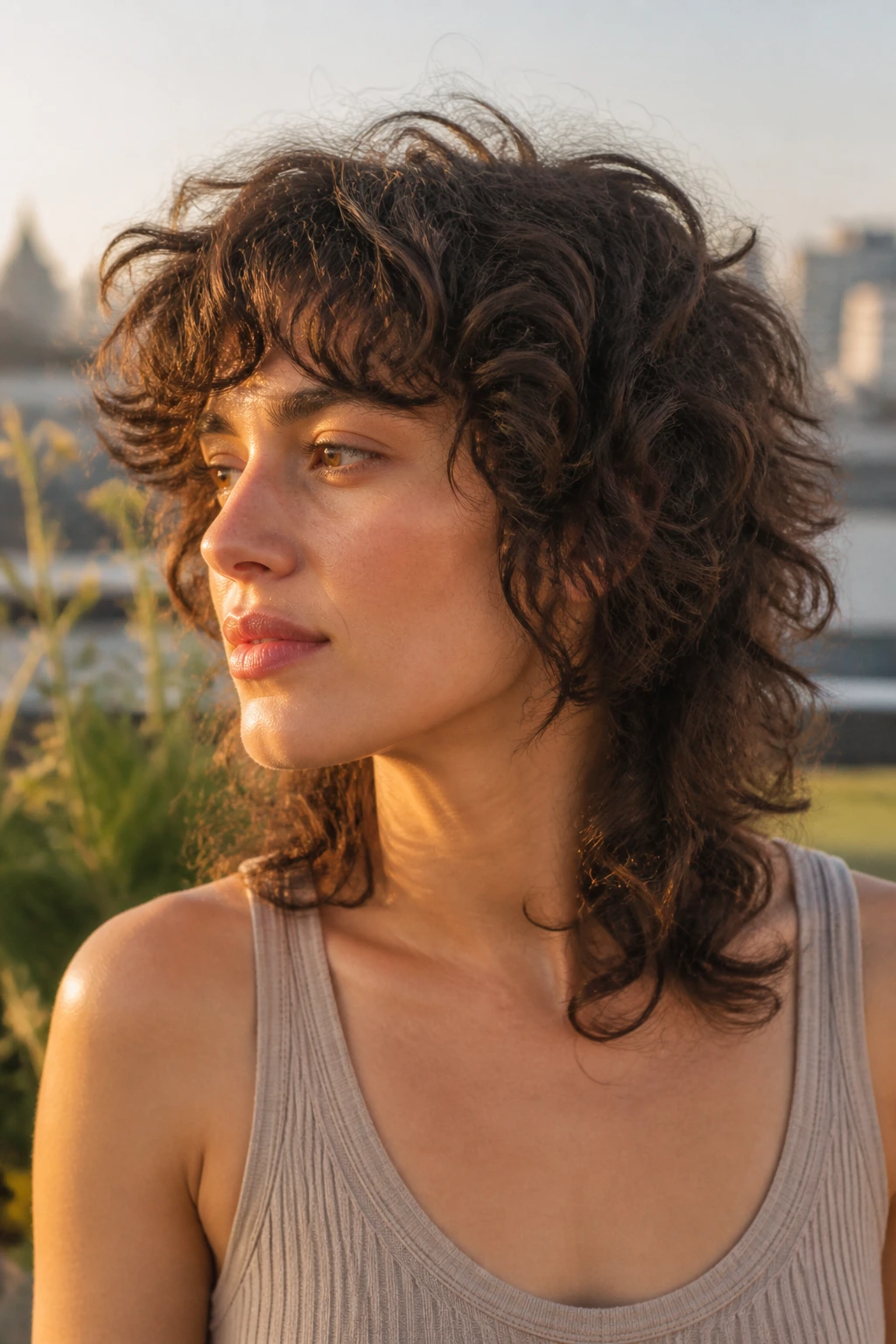
Razor cutting can be beautiful on curls, but it needs a steady hand.
A razor-softened shag gives the edges a looser feel, which can help if your hair is thick, coarse, or a little resistant to movement. The ends look lighter, and the shape can take on a softer, less blocky outline. Done well, it feels almost feathered. Done badly, it turns the ends fuzzy and eats away at definition.
That is why I’m picky about where a razor is used. On looser curls, it can shape the front and soften the interior layers. On fragile, porous, or bleached hair, it can make the cut look thirsty and rough. If the ends already frizz easily, a razor may not be your friend.
- Good match: healthy curls with enough density to hold a soft edge.
- Better use: inside layers or face framing, not the entire perimeter.
- Skip it if: your hair breaks easily or feels gummy when wet.
- Ask for: gentle passes, not aggressive slicing.
A razor-shag can look incredibly natural when the texture wants softness. It just needs limits.
17. Low-Maintenance Air-Dry Shag
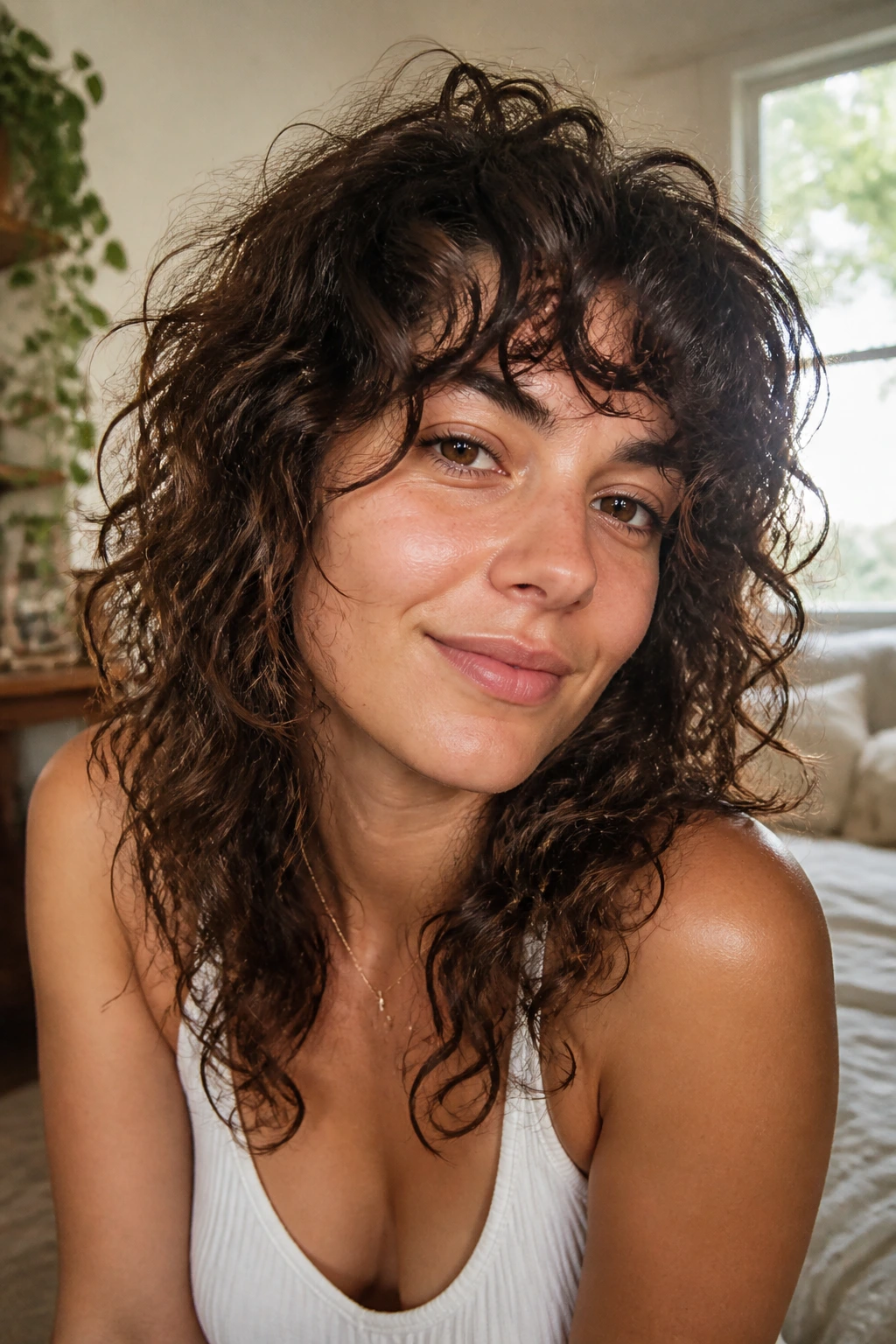
If your mornings are busy and you don’t want to stand near a diffuser for half an hour, this is the curly shag to keep your eye on.
The haircut itself does the heavy lifting. The layers should be placed so the curls fall into shape with minimal coaxing, which means the crown gets a little lift, the sides don’t balloon out, and the ends still hold enough weight to curl together. That’s the sweet spot. Too much layering and the hair needs help every day. Too little and it collapses into one big shape.
For styling, air-drying works best when the product is not too heavy. A leave-in conditioner, a light mousse, or a gel-cream blend can all work, but the key is not loading the hair until it goes limp. Scrunch it, clip the roots if they need lift, then leave it alone. Touching curls while they dry usually creates frizz. It also makes you fussier than you need to be.
A lot of people want low-maintenance hair but choose a cut that needs perfect styling. This one is the opposite. It’s forgiving.
18. Grow-Out Friendly Curly Shag

A good curly shag should still make sense six weeks after the trim. Better yet, it should look even better once the layers soften a bit.
That’s why this grow-out friendly version is such a smart choice if you hate strict salon schedules. The layers stay long enough to keep their shape as they grow, and the front doesn’t need to be razor-precise to work. A soft perimeter, blended face framing, and a crown that is lighter but not chopped to pieces all help the haircut age gracefully between visits.
This is also the cut I’d recommend if you’re nervous about committing to something bold. It has enough style to feel fresh on day one, but it doesn’t trap you in a narrow window of “good hair only.” The best versions let you tuck one side back, pin the fringe away, or wear it fuller when you want more drama. That flexibility matters.
If you take one practical idea from the whole list, make it this: bring photos of your curls at their natural dry length, not only the salon-styled result. That tells the stylist more than a glossy pose ever will. And when the cut grows out a little, you’ll still have shape, which is the whole reason shag haircuts for curly hair work so well in the first place.
