



Long hair can look luxurious and still fall flat the second it loses shape. That’s where shag haircuts for long hair earn their keep: they keep the length, but strip out the heaviness that makes hair hang like a curtain with no life in it.
A good shag gives long hair movement, air, and that little bit of mess that reads as intentional. Not sloppy. Just alive. The trick is that “shag” is not one look; it’s a whole family of cuts, and the difference between a flattering version and a choppy disappointment usually comes down to where the layers start, how much weight gets removed, and whether the stylist understands your texture.
I’ve always thought the smartest long shags are the ones that look better on day three than they do straight out of the chair. They bend, flip, and settle into the face instead of fighting it. A razor can help. So can careful point cutting. But over-thinning the ends? That’s how you get wispy strands with no shape and a style that needs more work than it should.
1. Soft Feathered Long Shag
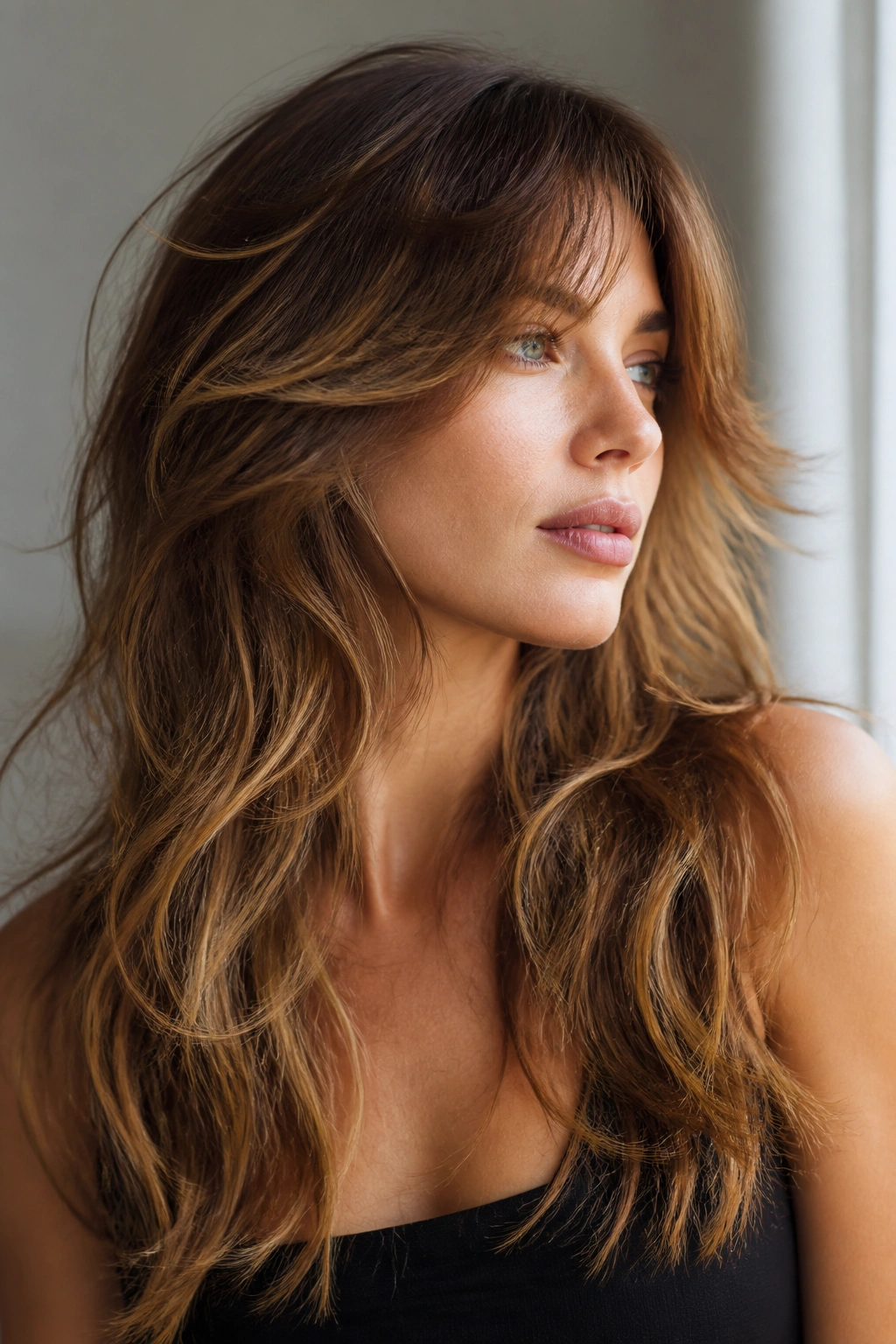
This is the long shag for people who want movement without the full grunge edge. The layers stay soft, the ends stay light, and the whole cut looks like it has been gently brushed by wind rather than attacked with scissors. It’s especially good on hair that falls straight or only bends a little, because the feathering gives shape without stealing too much length.
A feathered version keeps the perimeter looking full, which matters more than people think. If the bottom line gets too thin, long hair starts to feel stringy fast. Here, the layers usually begin around the cheekbone or just below the jaw, then melt down through the mid-lengths so the shape still reads as long and feminine rather than choppy.
Why It Works
The soft ends keep the cut from looking harsh. That matters on long hair, where every extra inch shows.
A little feathering also makes air-drying easier. Hair doesn’t need to be perfectly styled to look finished, which is one reason this shape stays flattering on busy mornings.
- Best for medium-density hair that needs movement
- Works well with a round brush or a quick blow-dry at the roots
- Looks clean even when the ends are not freshly trimmed
Tip: ask for the layers to blend, not jump. You want movement, not shelves.
2. Curtain Bang Long Shag
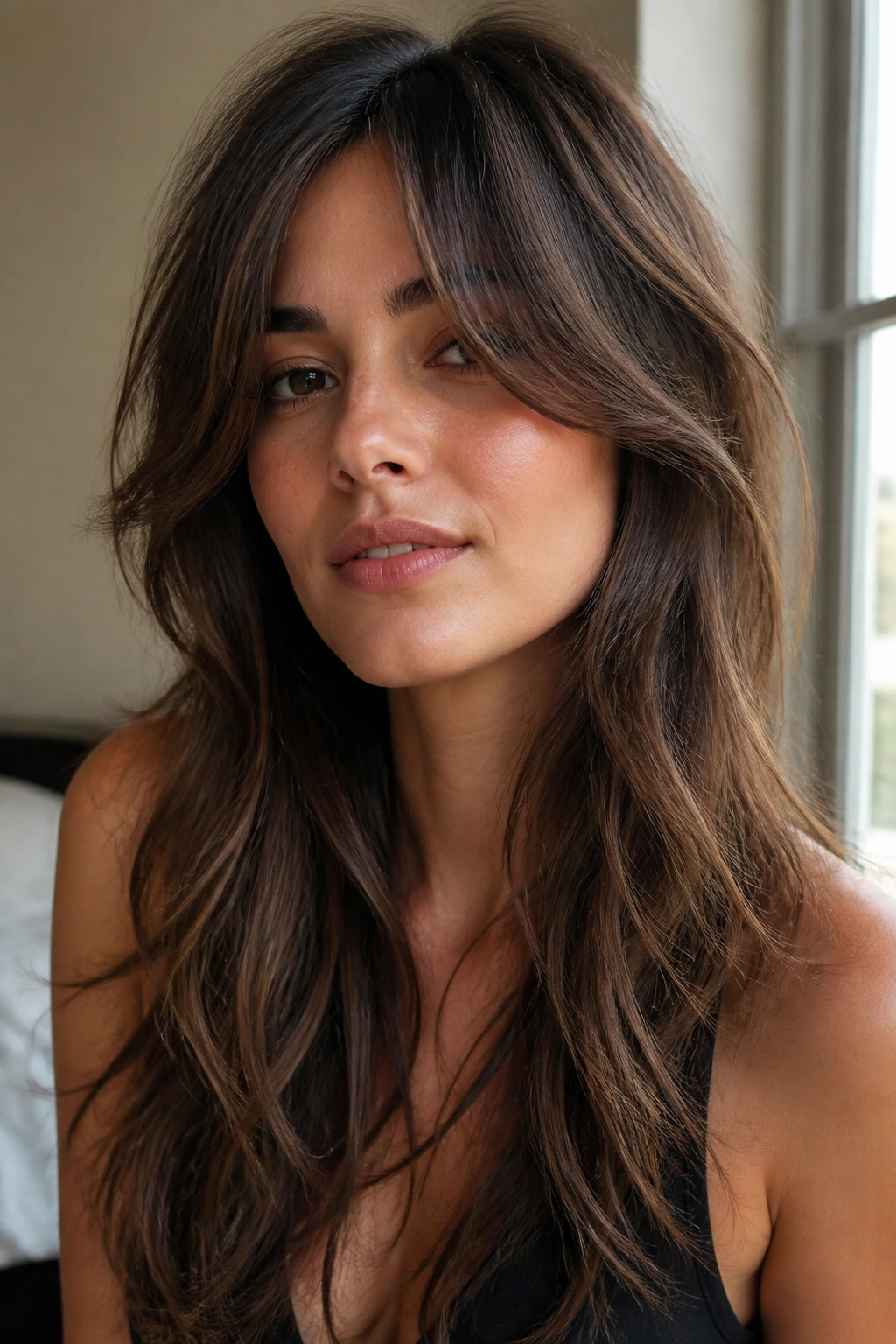
Why do curtain bangs and long shags work so well together? Because both cuts want the face to breathe. The bangs open at the center, the layers flow down the sides, and the whole haircut feels balanced instead of heavy. If your hair tends to sit flat at the crown, this version gives the top section a needed lift.
The best curtain-bang shag does not bury the face in fringe. It starts with a soft middle part, then lets the bangs sweep out toward the cheekbones, where they meet longer face-framing layers. That little connection is what makes the haircut feel expensive in a quiet way. Not loud. Just polished.
What to Ask For
- Curtain bangs that hit around the cheekbone or upper lip
- Long layers that start below the chin
- A soft edge through the bangs, not a blunt line
- Root volume at the crown, especially if your hair lies flat
How to Style It
Blow-dry the bangs first with a small round brush and a side-to-side motion. They should curve away from the face, not sit like a helmet. If the ends kick out a little, that is fine. It usually looks better that way.
3. Heavy ’70s Layered Shag
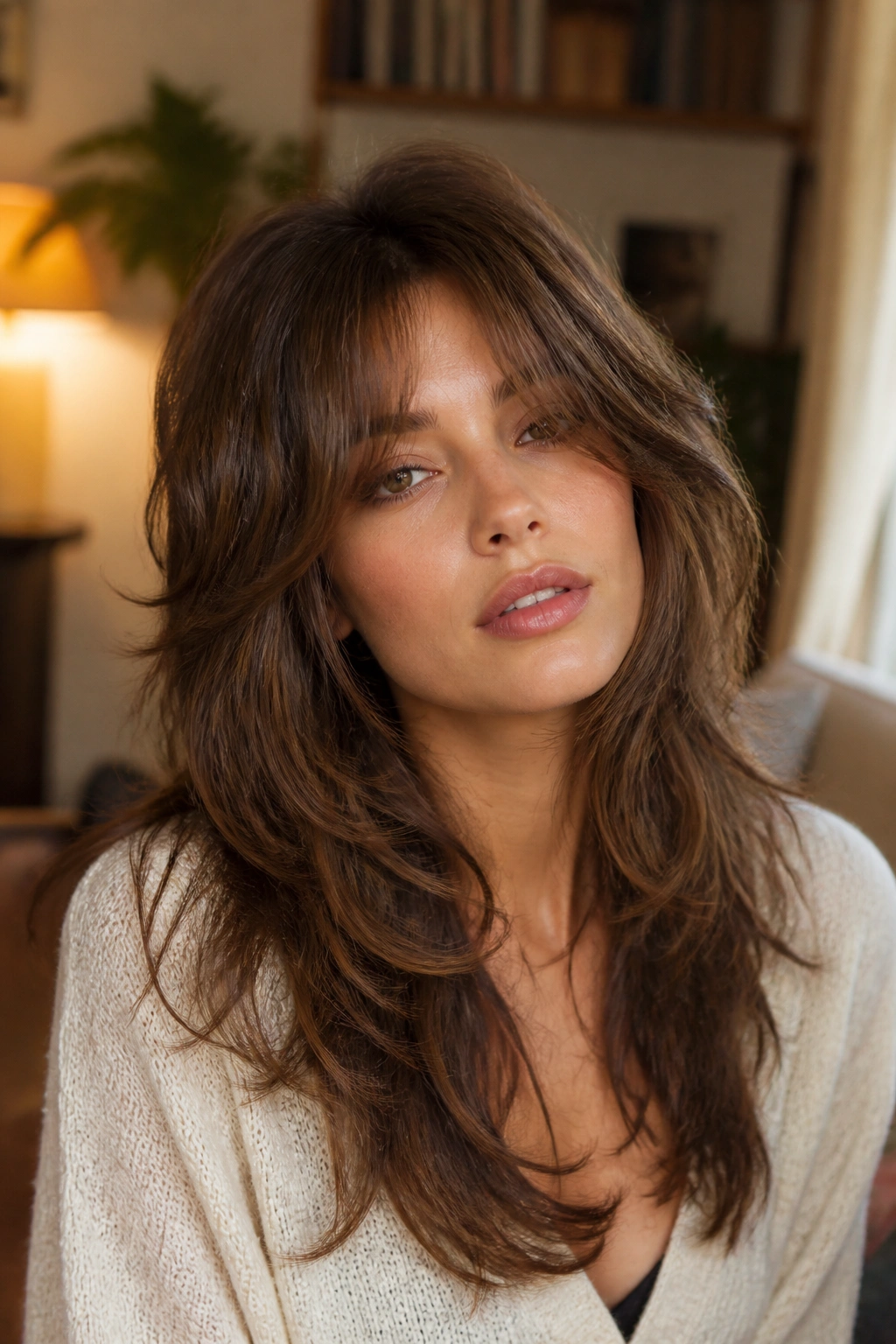
This cut has attitude. The layers are deeper, the shape is broader, and the whole look leans into that classic long shag silhouette with a little drama at the ends. It suits people who like their hair to look full from every angle, not just smooth from the front.
A heavy layered shag works best when the hair has enough density to support the shape. Fine hair can lose too much body here if the cut gets too aggressive, but thick hair tends to love it. The result is a fringe-like frame around the face, with long layers that break up the bulk through the back and sides.
The key is balance. If the top gets too short and the lower layers stay too blunt, the haircut can turn triangular. When it’s done well, though, it has a strong shape that still moves. That’s the sweet spot.
One thing I like about this style: it looks good with a center part or a loose off-center part, and it doesn’t need perfect styling to read correctly.
4. Razor-Cut Long Shag
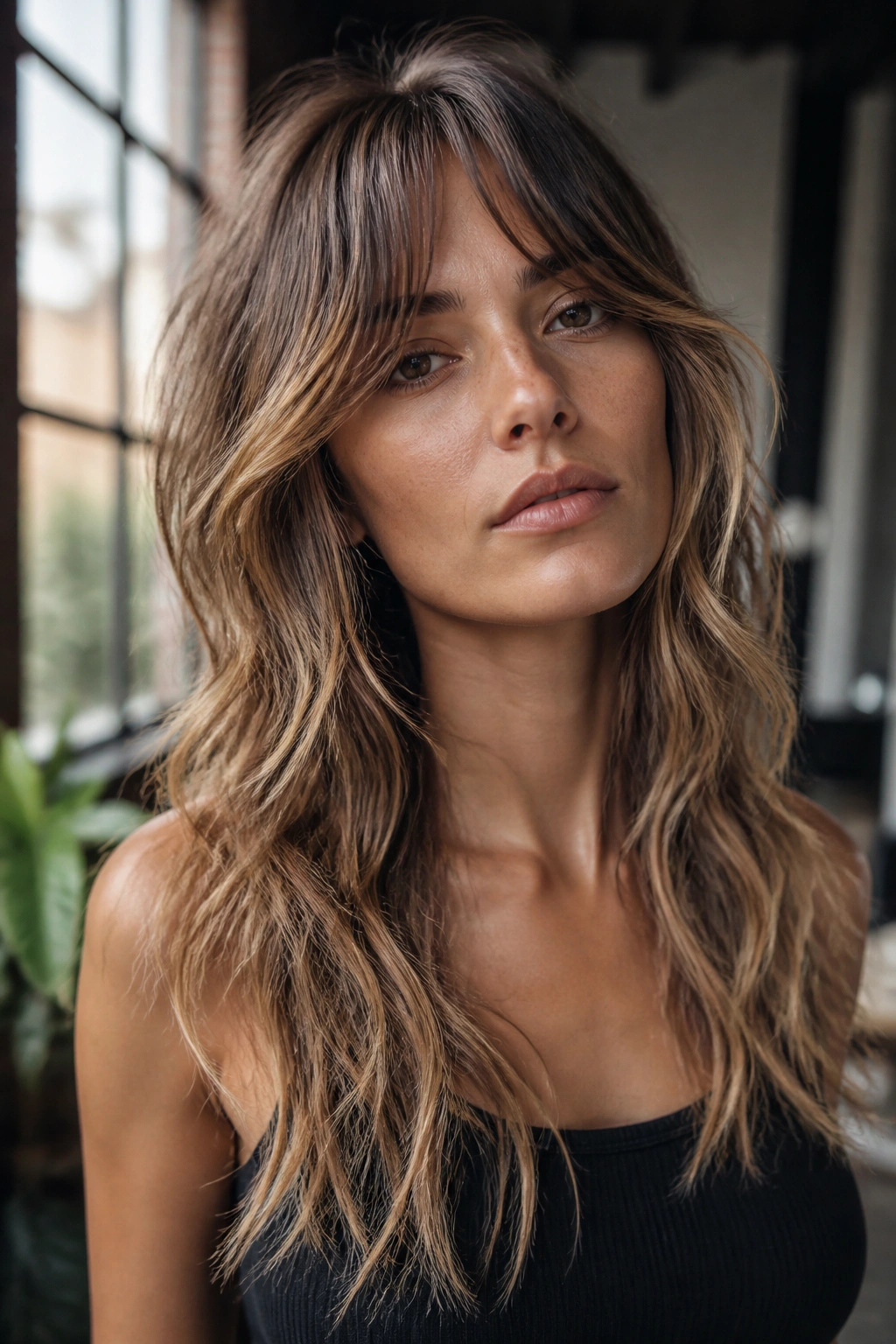
A razor-cut shag has a different mood from a scissor-cut one. The ends feel lighter, the layers look a little more broken up, and the finish has that airy texture people usually want when they ask for “piecey.” It can be gorgeous on thick straight hair, but it needs a steady hand. A heavy razor on fragile hair can make the ends look frayed.
The best razor-cut long shag is built with intention. The stylist should use the razor to remove bulk where the hair holds too much weight, not just to make everything look edgy. That’s a big difference. One gives shape. The other gives a haircut that needs emergency repairs.
Good Fit For
- Straight to wavy hair with natural fullness
- People who want movement at the ends
- Long layers that drop softly instead of sitting in hard steps
What to Watch For
- Split ends can stand out more
- Very fine hair may lose too much density
- The cut needs clean maintenance every 8 to 10 weeks
Use a smoothing cream, not a heavy oil. Razor-cut layers can separate fast if the product drags them down.
5. Long Wolf Cut Shag
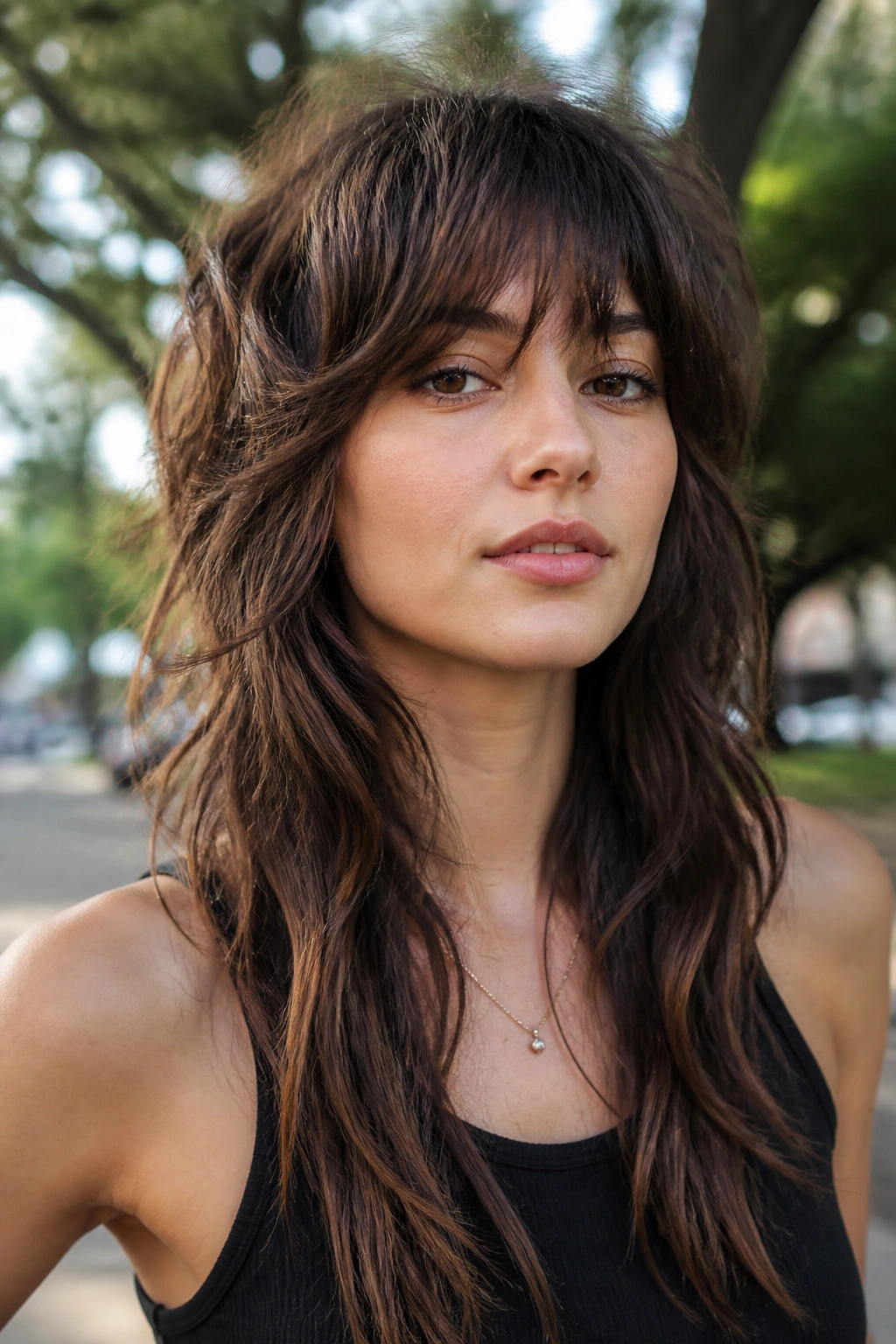
Unlike a classic shag, the long wolf cut pushes more volume to the top and leaves the lower lengths a little wild. That’s the whole point. It keeps the hair long, but the crown gets lift and the lower half gets a rougher, more lived-in edge. If you like a haircut that looks a little undone on purpose, this is the one.
I think of it as the tougher cousin of the layered shag. The shape is more obvious. The top layers are shorter, the face frame is more pronounced, and the back can taper in a way that gives the cut a mullet-like feel without fully going there. Some people love that. Some do not. There’s no middle ground, and honestly, that’s part of the fun.
It works best when the top layers are cut to support texture rather than fight it. If your hair already bends, waves, or curls a bit, the wolf cut shag can look almost effortless. If your hair is pin-straight, you’ll need some heat or texture spray to keep it from falling flat.
This one has real personality. It is not shy.
6. Curly Long Shag
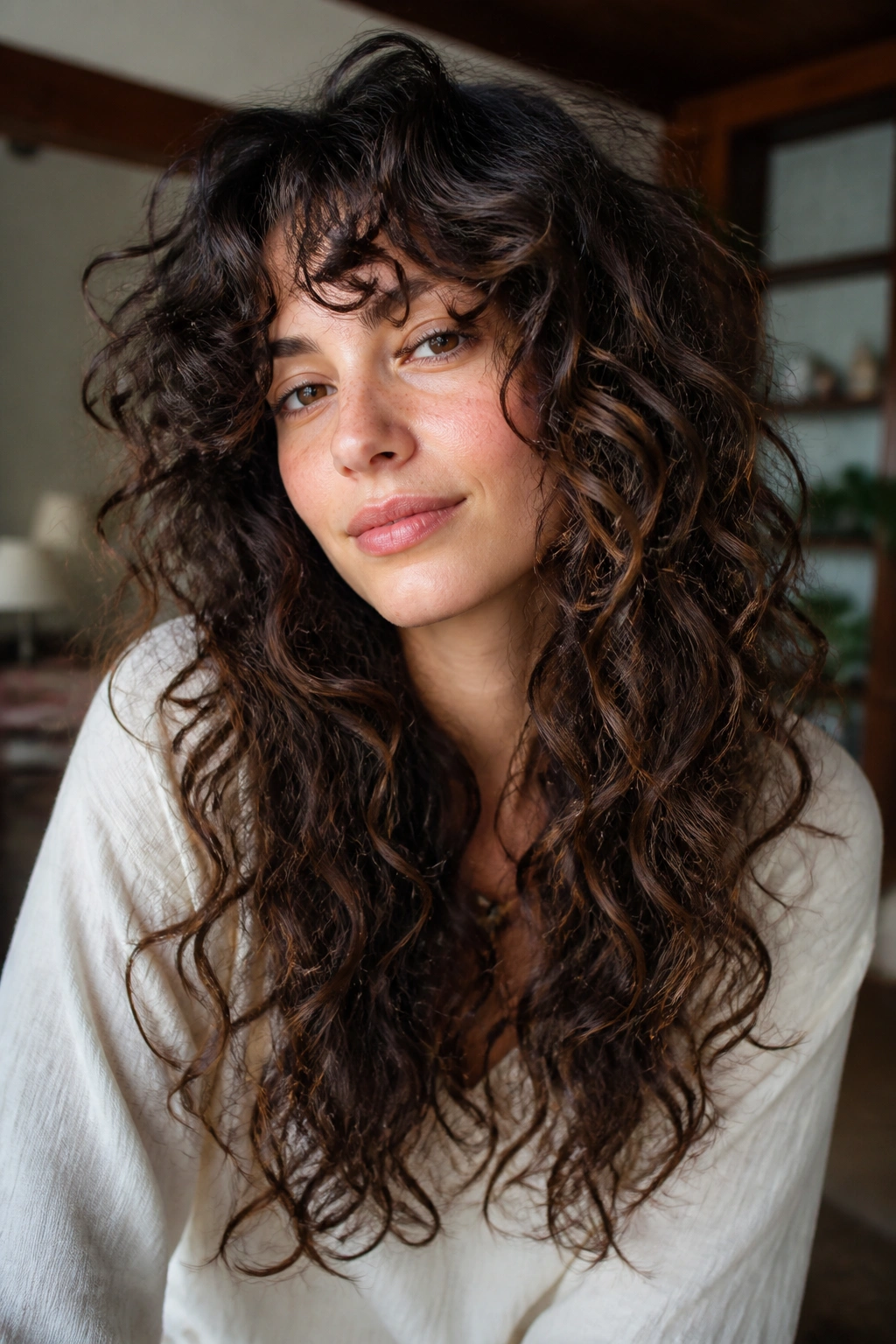
What does a curly shag do that a plain long cut can’t? It gives curls room to spring without turning the bottom into a pyramid. Long curly hair gets heavy fast, and when the weight sits in the wrong place, the curls stretch out and lose shape. A shag fixes that by lifting the interior and freeing the curl pattern.
The best curly long shag respects the curl, not the scissors. Layers should follow the way the curls move when they’re dry, not when they’re pulled straight. That means dry-cutting or cutting with the curl pattern in mind is often the safer move. A curl that sits at chin level when wet can bounce two or three inches higher once it dries.
How to Ask for It
- Keep the perimeter long enough to hold shape
- Start layers where your curls naturally cluster
- Avoid over-texturizing the ends
- Ask for curl-by-curl shaping if the curl pattern is uneven
Diffusing helps. So does a light cream and a touch of gel scrunched through wet hair. Heavy butter products can weigh the top down, which makes the whole cut lose the lift it was meant to have.
7. Wavy Beach Shag

Salt-sprayed, soft around the edges, and a little bit imperfect. That’s the appeal here. A wavy long shag doesn’t need to look polished to look good, which is a relief if your hair never sits in one place for long anyway. The layers help waves separate instead of clumping into one flat sheet.
This version thrives on movement. The front often gets the most attention, with cheekbone-skimming layers and soft ends that break up the shape. The back can stay longer so the haircut keeps its length, but the internal layers keep it from feeling heavy. That matters when waves expand and shrink depending on humidity. Hair does what it wants. This cut just makes that look better.
A good styling cream and a small amount of sea-salt spray can bring the texture forward, but don’t drown it. Too much product and the waves lose their bounce. Too little and the layers can disappear into the length.
The best part is how forgiving it is. If one side dries slightly flatter, the cut still works. That’s real life.
8. Bottleneck Bang Long Shag
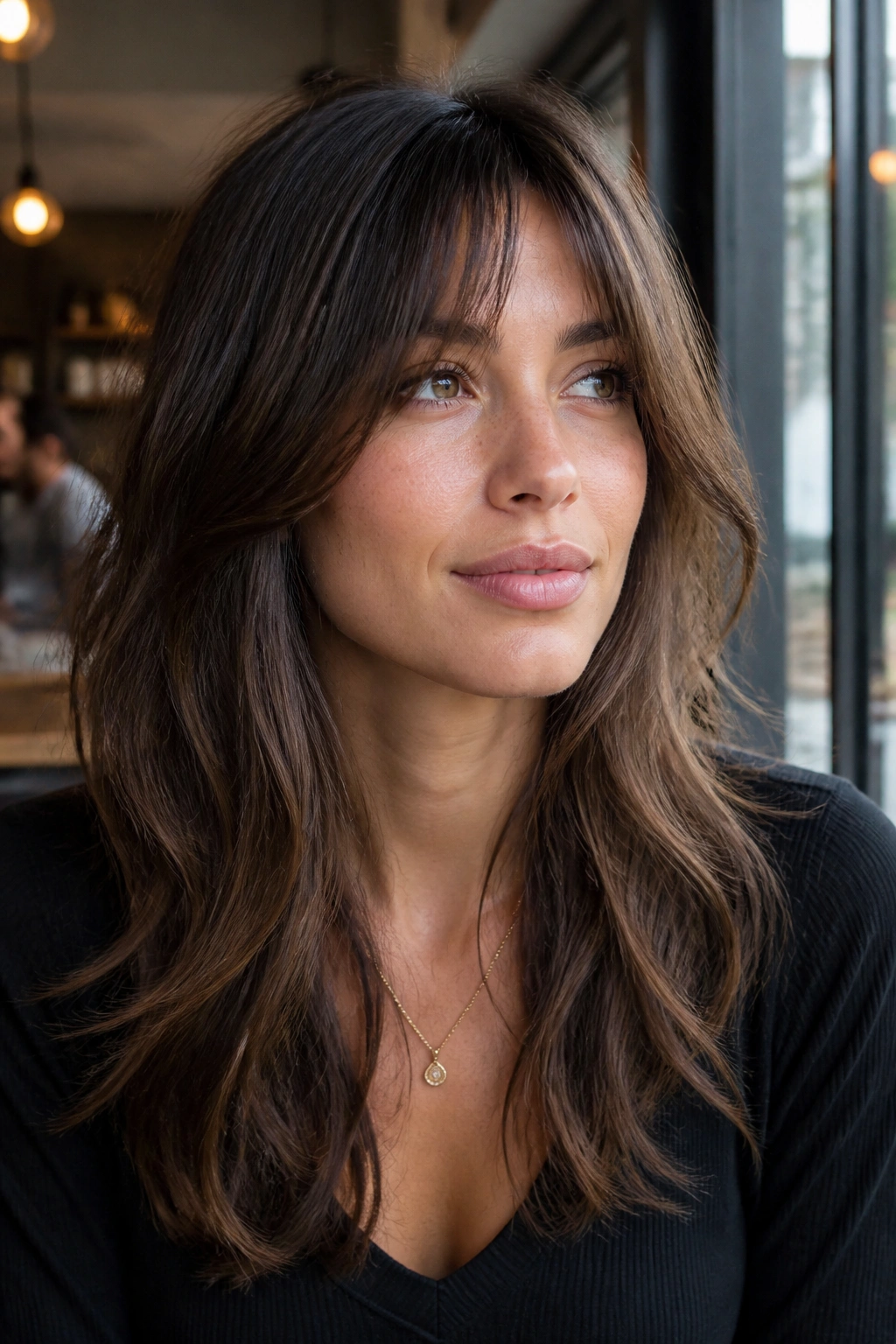
Bottleneck bangs give a long shag a sharper front. They start narrow near the center, open out around the brows, and blend into longer face-framing layers at the sides. The result feels cleaner than curtain bangs and less severe than a blunt fringe.
I like this version on long hair because it gives the face a clear frame without cutting the whole front section short. The bang area stays airy, which helps if your forehead is a little wider or if you want the eyes to stand out. The rest of the shag can stay soft and long, so the haircut has contrast without feeling chopped up.
The bangs need a bit of styling, though. A quick blow-dry with a small round brush or even a hot brush helps them sit in that narrow-to-wide shape. If you let them air-dry without encouragement, they can split in odd places and lose the clean bottleneck effect.
A tiny trim goes a long way here. Half an inch can change the whole mood.
9. Face-Framing Long Shag
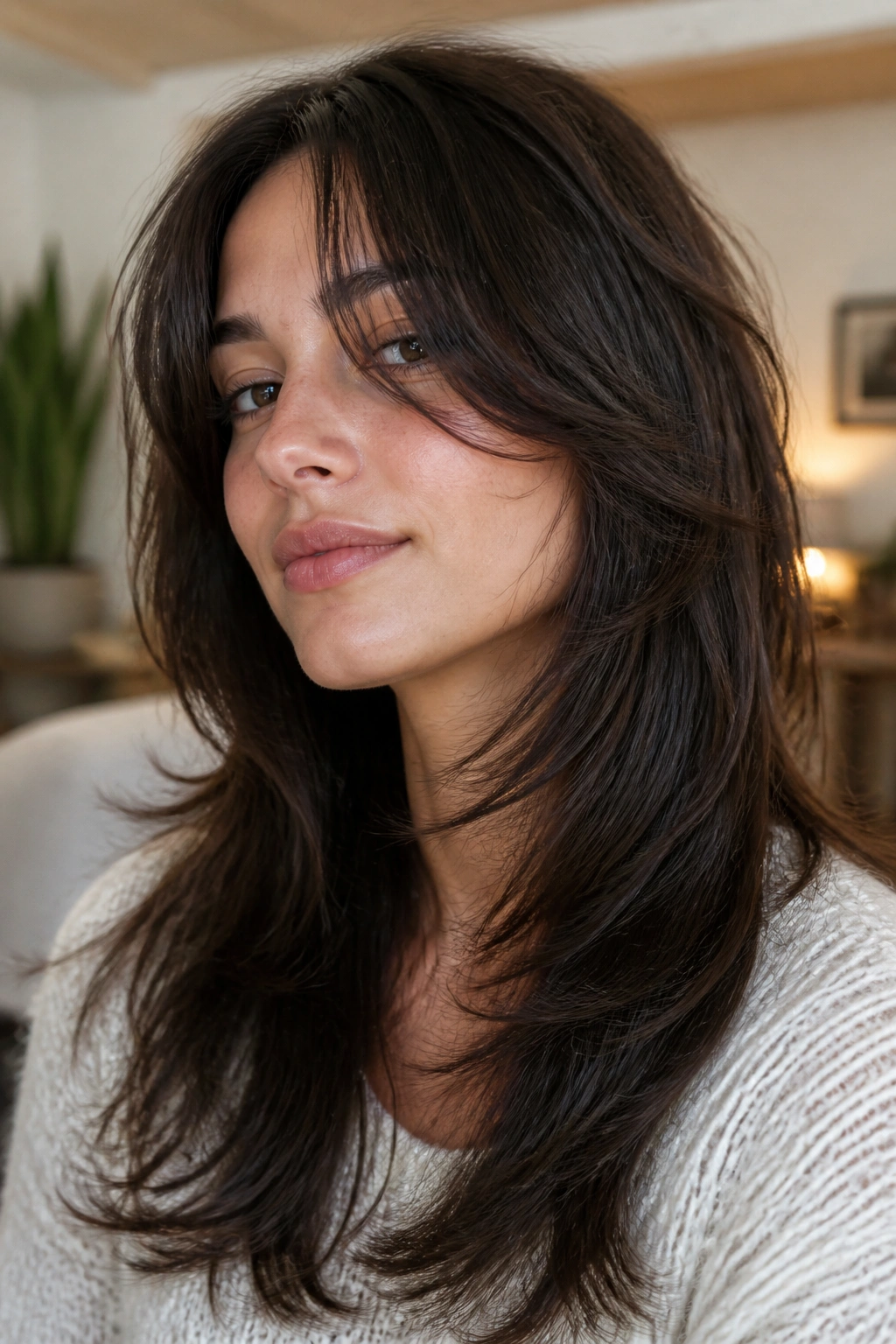
Ever notice how some long cuts feel heavy even when the hair is healthy? That’s usually because the front is doing too little work. A face-framing shag solves that by cutting deliberate movement around the cheeks, jawline, and collarbone, so the shape feels alive before anyone even notices the back.
This is one of the most useful long shag versions if you want softness without a dramatic chop. The front layers can start near the cheekbone, then drift down into longer pieces that meet the rest of the cut. The hair around the face becomes the focus, which can slim a rounder face, soften a strong jaw, or take some weight off very full hair.
A Smart Ask at the Salon
- Keep the longest pieces below the shoulders
- Start the shortest face frame around the cheekbone
- Blend into the lengths rather than stopping abruptly
- Avoid over-thinning the lower half
The style looks especially good when tucked behind one ear. It shows off the difference in lengths and keeps the face frame from feeling too heavy.
10. Invisible Layer Long Shag
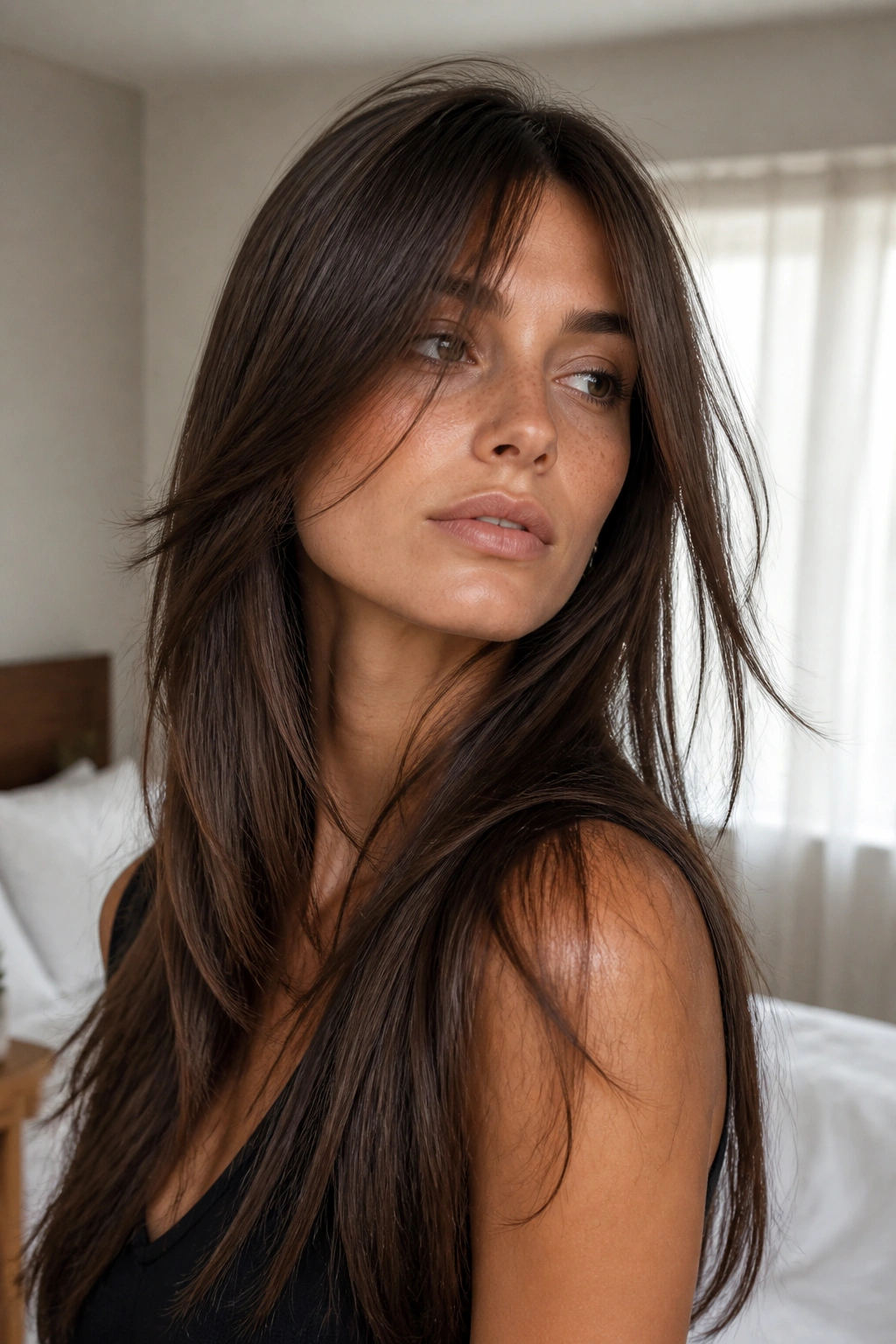
This is the quiet one. The layers are there, but you do not immediately see them, which is why the cut feels sleek instead of choppy. If you like the idea of a shag but hate obvious steps, this is the compromise that usually works.
Invisible layers sit inside the haircut, removing bulk and creating bend without interrupting the outline. That makes long hair swing better when you walk and keeps the ends looking thick. It is a good choice if your hair is naturally straight, if you wear it down most days, or if you want movement without losing that blunt, healthy-looking edge.
Unlike a heavy layered shag, this version does not shout for attention. It behaves more like a support system under the surface. The shape shows up in motion, in a breeze, or when you brush the hair forward.
That subtlety can be a blessing. Or a trap, if the stylist cuts too conservatively. The layers still need enough depth to matter.
11. Micro Bang Long Shag

Micro bangs change the whole personality of a long shag in one shot. The length stays flowing and loose, then the fringe lands short and sharp right above the brows. That contrast is what makes the haircut pop.
This style is not for someone who wants low drama. It’s for someone who likes contrast, a little edge, and a cut that makes people look twice. The long layers keep the overall shape soft enough to wear every day, but the micro bang adds a crisp line that breaks the softness up. It can look very modern, even when the rest of the haircut has an old-school shag shape.
The maintenance is real. Micro bangs grow out fast, and even a quarter inch changes how they sit. If you hate regular fringe trims, this is not the easiest pick. But if you’re fine with that, the payoff is strong.
Pair it with a little texture through the lengths, not too much. The bang should stay the sharpest part of the haircut.
12. Choppy Grunge Long Shag

This one has bite. The layers are more broken up, the ends have more edge, and the overall finish feels a little messy in the best possible way. If you want a long haircut that looks like it belongs in a music venue instead of a salon mirror, this is the lane.
A choppy shag works because the roughness is built in. The stylist usually uses point cutting or slicing to make the ends uneven on purpose, which gives the hair that lived-in separation people try to fake with product later. Here, the haircut does most of the work.
What Makes It Different
The perimeter does not need to be perfectly smooth. In fact, too much polish can make the haircut lose its charm.
- Strong texture spray brings the shape forward
- Air-drying leaves the ends piecey
- A flat iron bend near the mid-lengths can sharpen the silhouette
- Best with wavy or slightly coarse hair
If your style leans dark, casual, or a little rebellious, this cut feels right at home. If you want soft and pretty, skip it.
13. Boho Long Shag
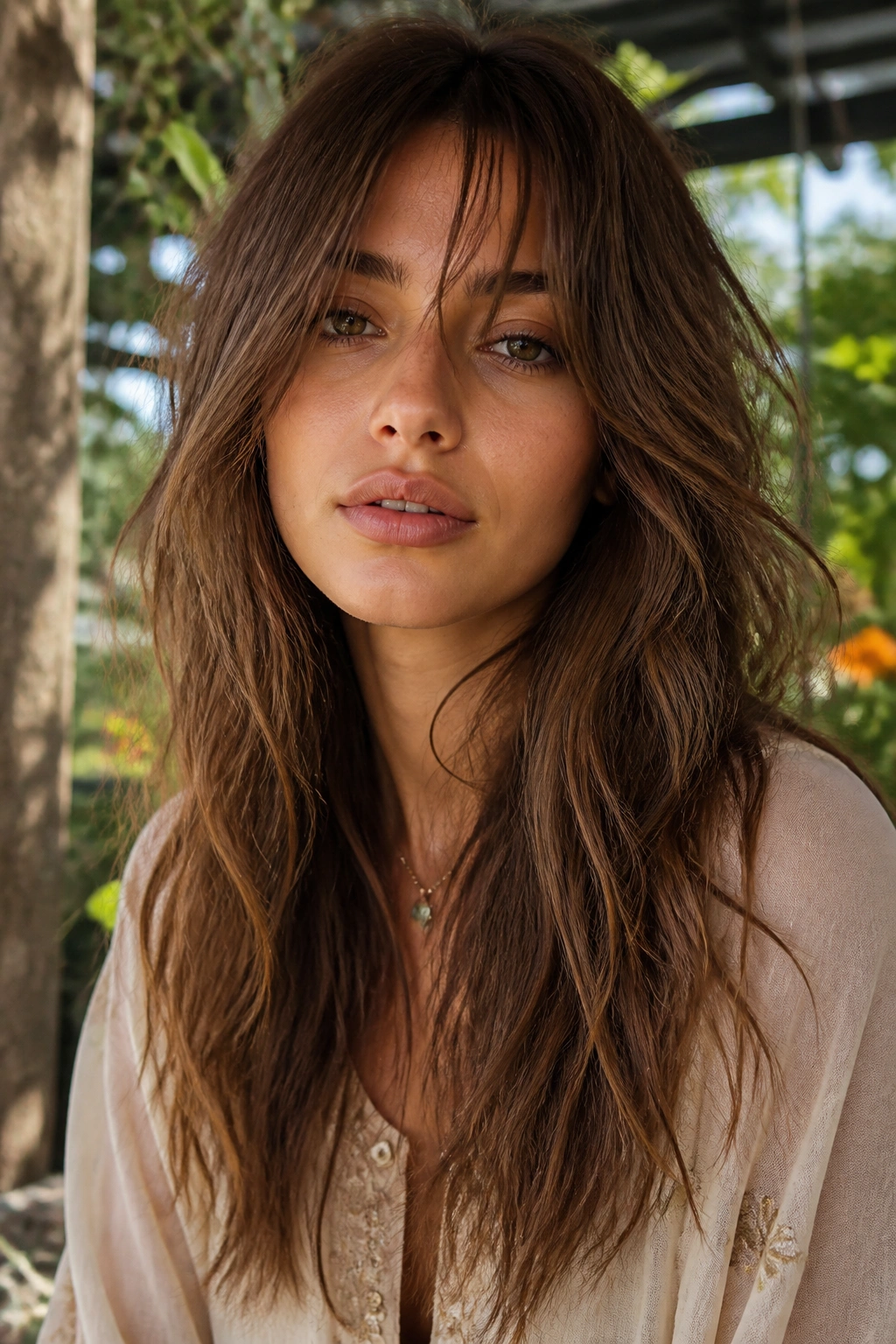
A boho shag feels lighter than a grunge shag and softer than a wolf cut. The layers are loose, the fringe is usually wispy or split, and the whole shape has that easy, romantic feel that works with waves, braids, and half-up styles. It is one of the most wearable long shags if you want movement without a hard edge.
The cut often keeps the front pieces slightly shorter so they can fall around the face, while the back stays long enough to twist into a clip or braid. That makes it useful for people who actually style their hair a few different ways during the week. A lot of long haircuts look good only one way. This one gives you options.
The trick is not cutting it too airy. Boho hair should look soft, but the ends still need enough density to feel healthy. If the texturizing gets too aggressive, the style starts to feel patchy and the magic disappears.
A few loose waves, a little texture cream, and the right fringe shape can take it a long way.
14. Thick-Hair Long Shag with Weight Removal
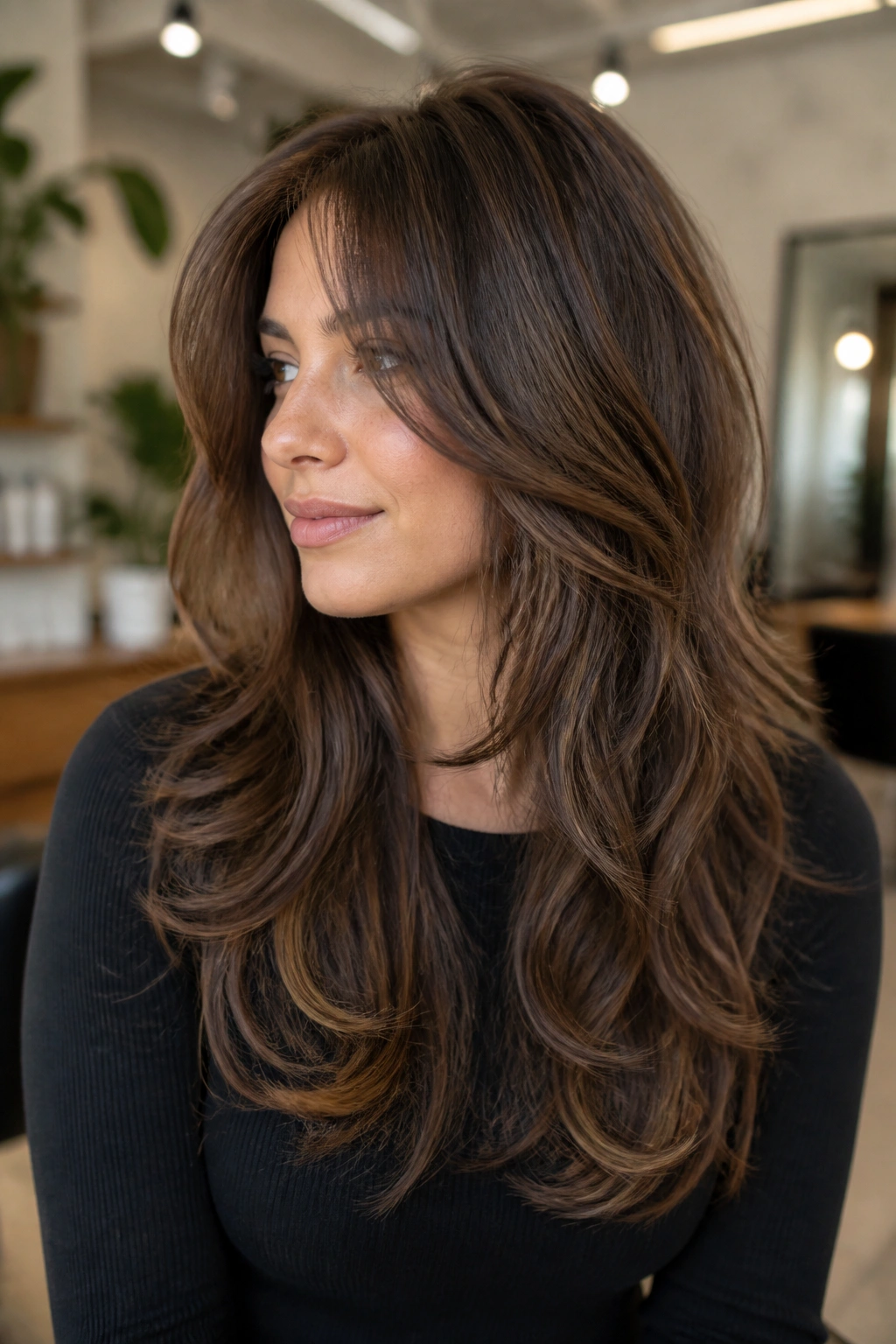
Thick hair can carry a shag beautifully, but only if the bulk is handled with care. If the weight sits in the wrong places, the haircut feels boxy. If too much gets removed, the ends go wispy and the whole thing looks half-finished. The sweet spot is somewhere in the middle, and that is where a good thick-hair shag shines.
Why does this version work so well on dense hair? Because it removes interior bulk without stealing the outline. The layers break up the heaviness, the crown gets a bit of lift, and the lower lengths stay full enough to look rich instead of scraggly. That balance matters. Thick hair has a lot of forgiveness, but it also shows bad layering fast.
A Few Smart Notes
- Ask for internal weight removal, not aggressive thinning at the bottom
- Keep enough length in the perimeter to hold the shape
- Use a medium-hold cream or mousse so the cut doesn’t puff out
- Trim before the ends split, since dense hair hides damage until it gets rough
This is the shag that makes thick hair behave without making it look smaller. Good trade.
15. Fine-Hair Soft Volume Shag
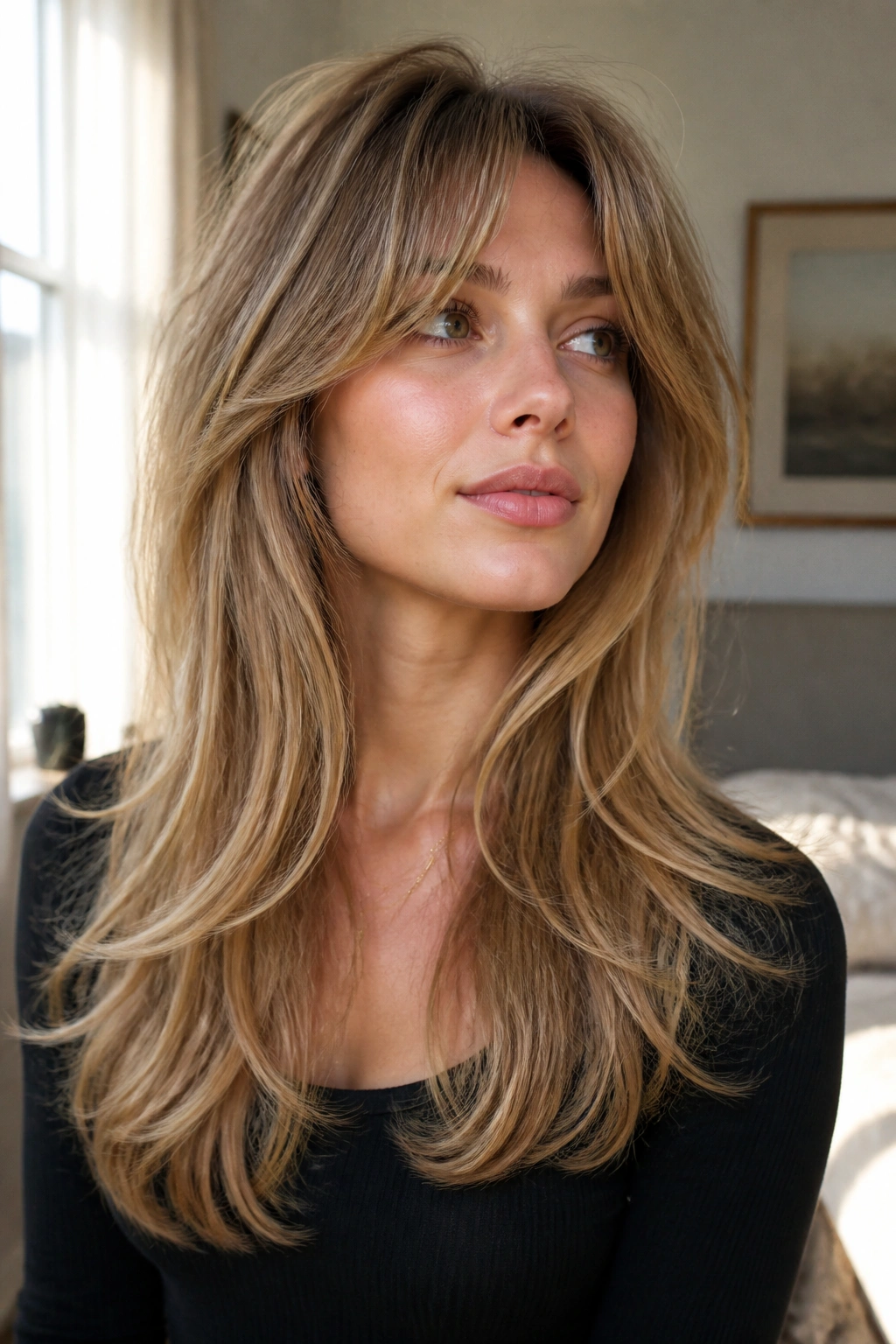
Fine hair needs a gentler hand. A shag can be brilliant on it, but only if the layers are soft and controlled. Too many short pieces, too much razoring, too much texturizing — and the whole cut can lose its body before you’ve even left the salon.
The better approach is to keep the long shape intact and add lift in the right places. Layers should be used to create movement near the crown and around the face, not to strip the ends bare. That gives the hair a little swing without leaving the bottom see-through. It also helps the style look fuller when you tuck one side back or wear it half up.
This version works well with a root-lifting spray at the scalp and a quick round-brush blow-dry. You do not need huge volume. You need a little bend, a little lift, and enough density left in the ends to make the hair look like hair.
A blunt-ish perimeter can help here. It keeps the length from collapsing.
16. Mullet-Leaning Long Shag

If you like the wolf cut but want something even more directional, this is the cut to look at. The front stays shorter, the crown gets built up, and the back tapers in a way that nods to a mullet without going full retro costume. It’s sharp, a little mischievous, and more flattering than people expect when the proportions are done right.
The strength of this style is contrast. The top layers create lift and shape, the face frame pulls focus forward, and the back keeps the length for ponytails and braids. It can be worn sleek, rough, or somewhere in between, which helps if you like to change your styling mood without changing your haircut every time.
Good Signs to Look For
- Shorter layers near the crown
- Noticeable shape around the cheekbones
- A longer back that still feels connected
- Texture that shows movement, not just randomness
The biggest mistake is overcommitting to the mullet part and forgetting the long-shag softness. You still want flow. Otherwise the cut can look severed instead of styled.
17. Blowout-Friendly Long Shag
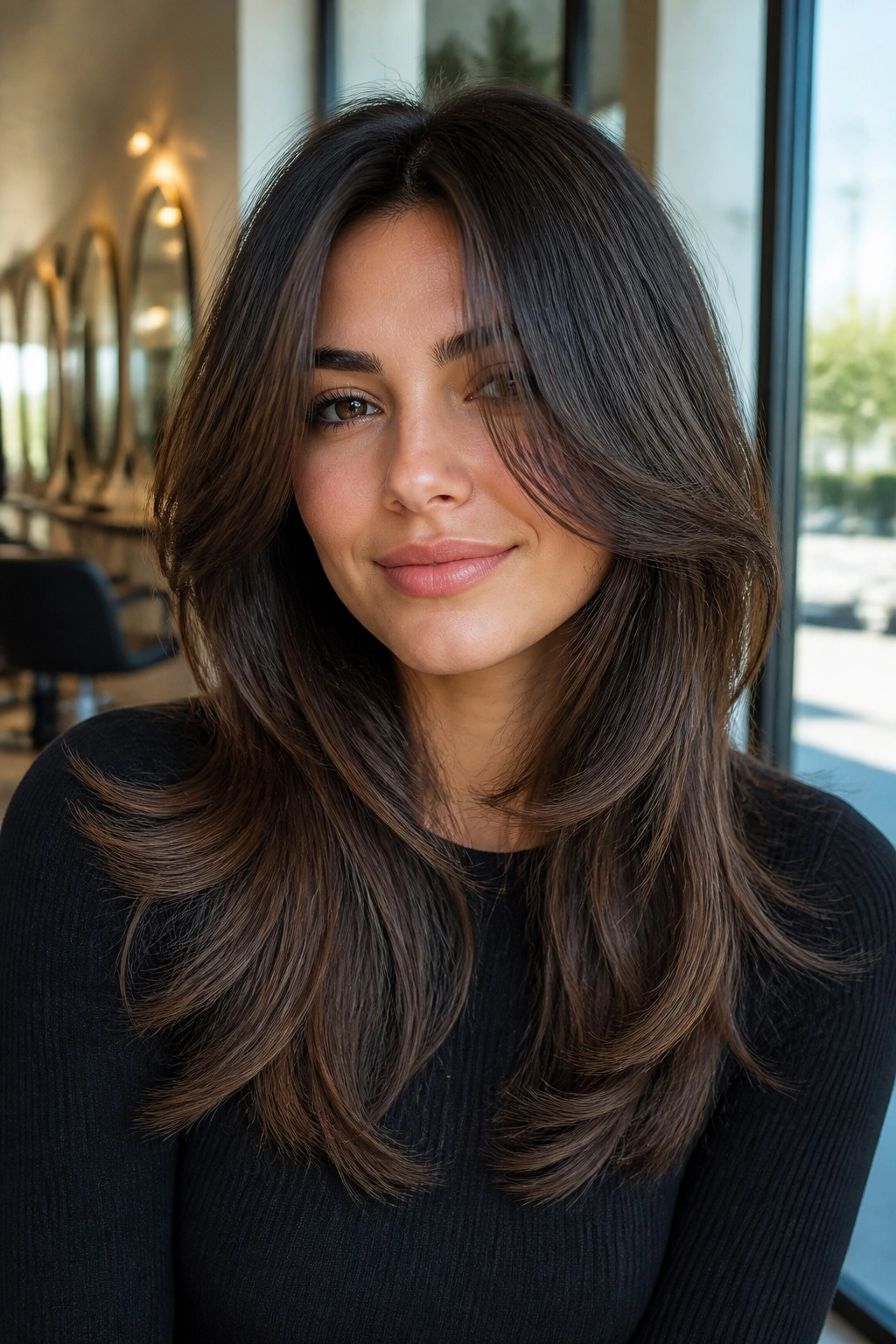
Some shag cuts want a lived-in finish. This one wants a round brush and a little polish. The layers are placed so they flick out and curve with heat, which makes the haircut look bouncy instead of rough. If you love that fresh blowout feeling, this is a smart choice.
The shape usually works best with medium to thick hair, because the layers need enough body to hold the curve. The front pieces can sweep away from the face, the mid-lengths can roll under or out, and the ends can move in a way that feels expensive without looking overdone. That’s the appeal: not stiff, not sloppy.
I’d call this the most salon-friendly long shag on the list. It still has texture, but it looks especially good when it’s styled with a bit of intention. A round brush, a blow-dry cream, and a cool shot at the end go a long way here.
You do not need perfection. You do need direction.
18. Grow-Out-Friendly Long Shag
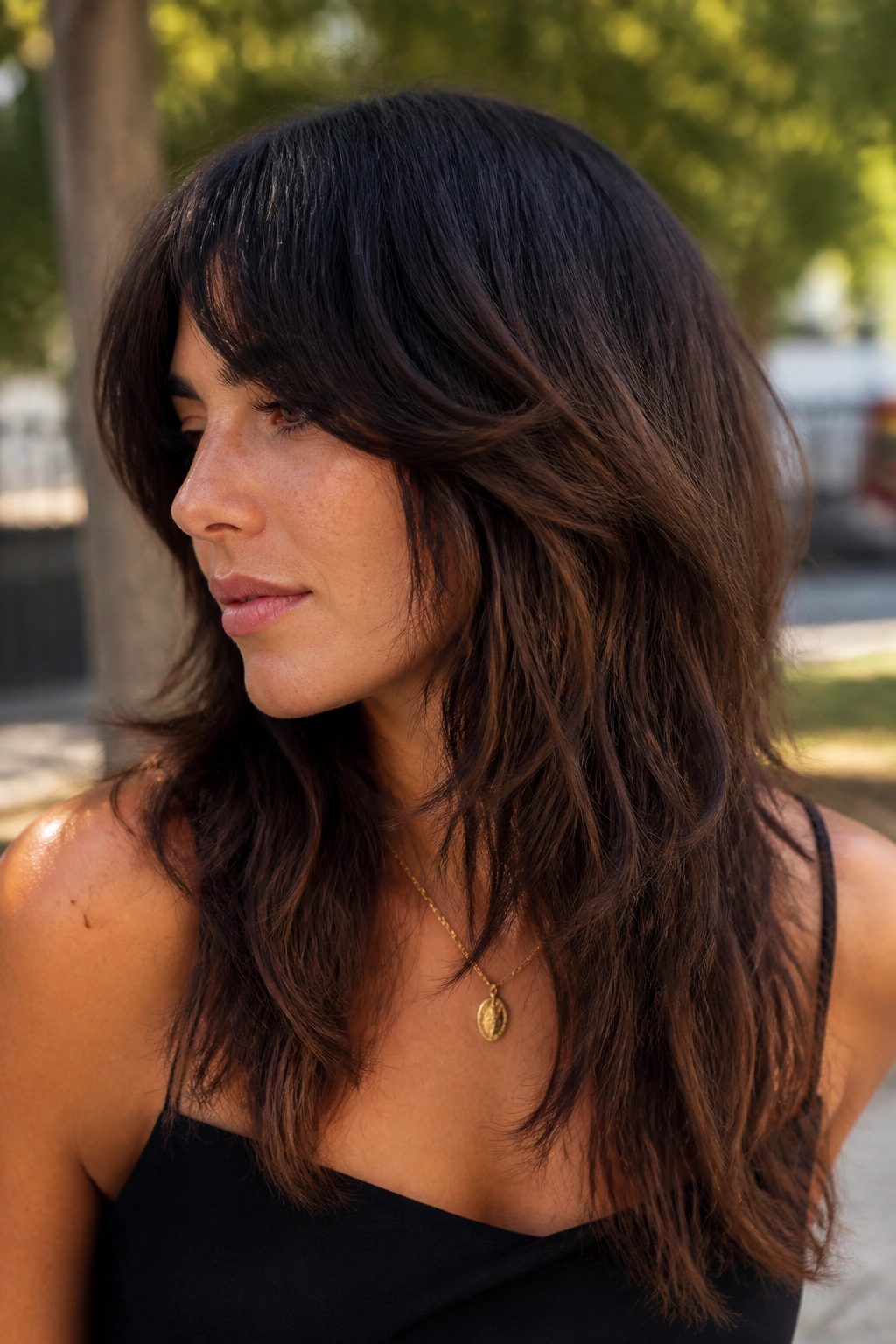
A lot of haircuts look good the day you get them and awkward six weeks later. This one is built to age better. The layers are spaced so they soften as they grow, and the shape keeps its movement even when the fringe loses a little sharpness. That matters if you do not want to live at the salon.
The best grow-out shag usually keeps the shortest pieces just long enough to blend instead of spike. The perimeter stays long, so the haircut still reads as length-heavy even after a few months. That means it can move through different stages without collapsing into one blunt block. Nice when you’re busy. Better when you’re lazy. No judgment.
It is the quiet hero of long shags: easy to wear, easy to refresh, and forgiving when life gets in the way of a trim. A little dry shampoo at the roots, a quick bend with a flat iron, and the shape usually comes back fast.
If you want one long shag that can survive real life, this is the one I’d point to first.
