



Straight hair can make a pixie mullet look sharper than any curl ever could.
That’s the part people miss. On straighter strands, every line shows, every edge reads clean, and the shape either looks crisp or falls apart fast. There’s nowhere to hide, which is exactly why this haircut can look so good when it’s cut with a steady hand and a little attitude.
It can also go wrong in a very obvious way. If the top is too flat, the whole thing turns limp. If the nape is too blunt, it starts to look heavy instead of airy. The sweet spot sits in that strange middle ground where the front stays short, the crown gets a little lift, and the back keeps enough length to give the cut some swing.
That’s what makes pixie mullet hairstyles for straight hair so fun to wear. They’re not all punk, and they’re not all soft. Some are sharp and tidy. Some lean shaggy. A few feel almost sweet until you catch the back view, and then the whole cut changes character.
1. Choppy Crown with Feathered Nape
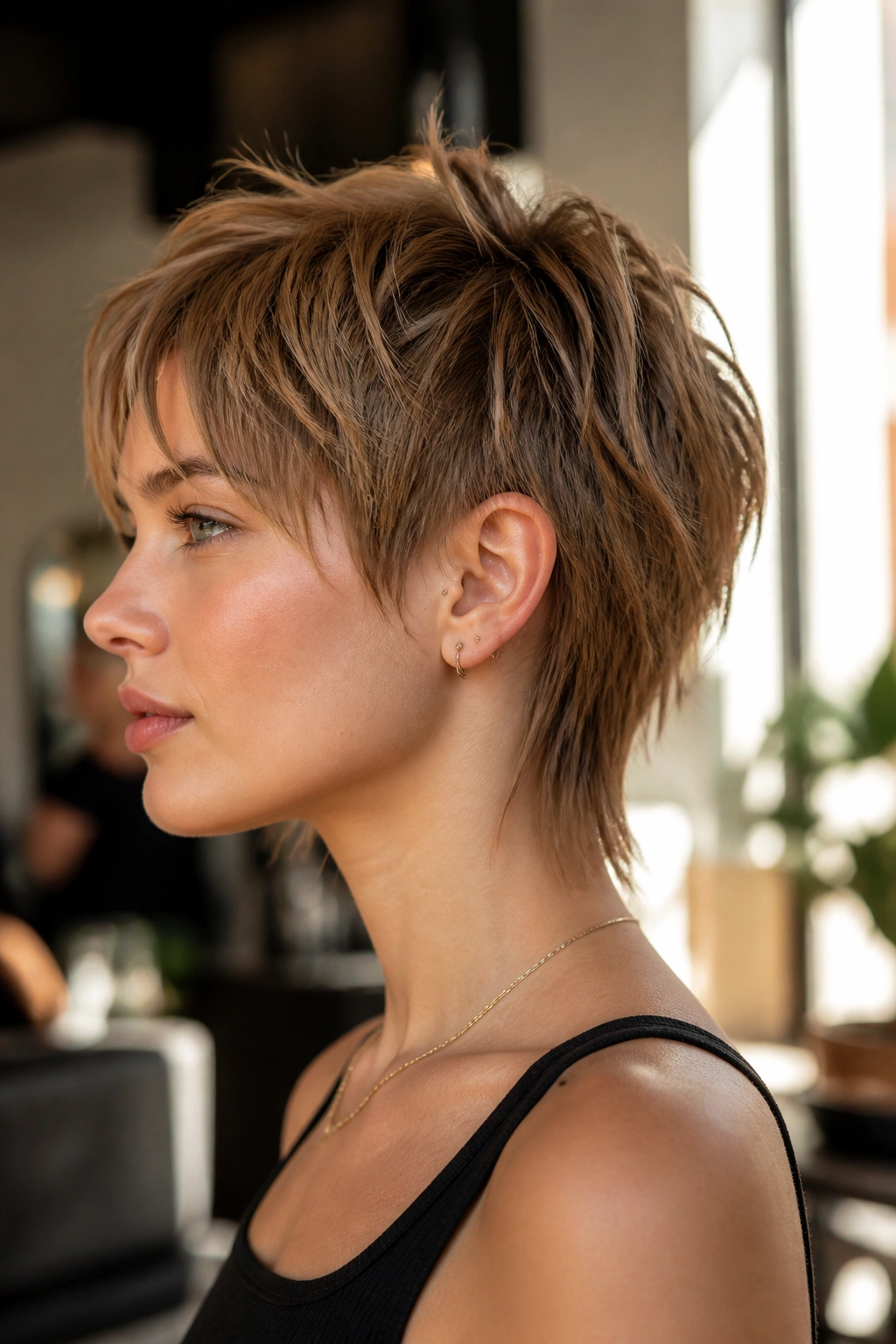
Straight hair loves this shape because the contrast is easy to see. A choppy crown gives the top some movement, while a feathered nape keeps the back from looking heavy or boxed in.
What to Ask For
Ask your stylist for short, point-cut layers through the crown and softer ends at the nape. The top should feel airy, not carved into one hard block. If the front pieces graze the eyebrow and the back hits the top of the neck, the shape stays modern instead of dated.
- Crown length: about 2 to 3 inches
- Nape length: just long enough to skim the collar line
- Finish: matte paste or a tiny bit of styling cream
- Best face match: oval, heart, and narrow faces
Pro tip: keep the crown piecey, not fluffy. Straight hair can go puffy fast if the cut is over-layered.
2. Micro Fringe and Tapered Sides
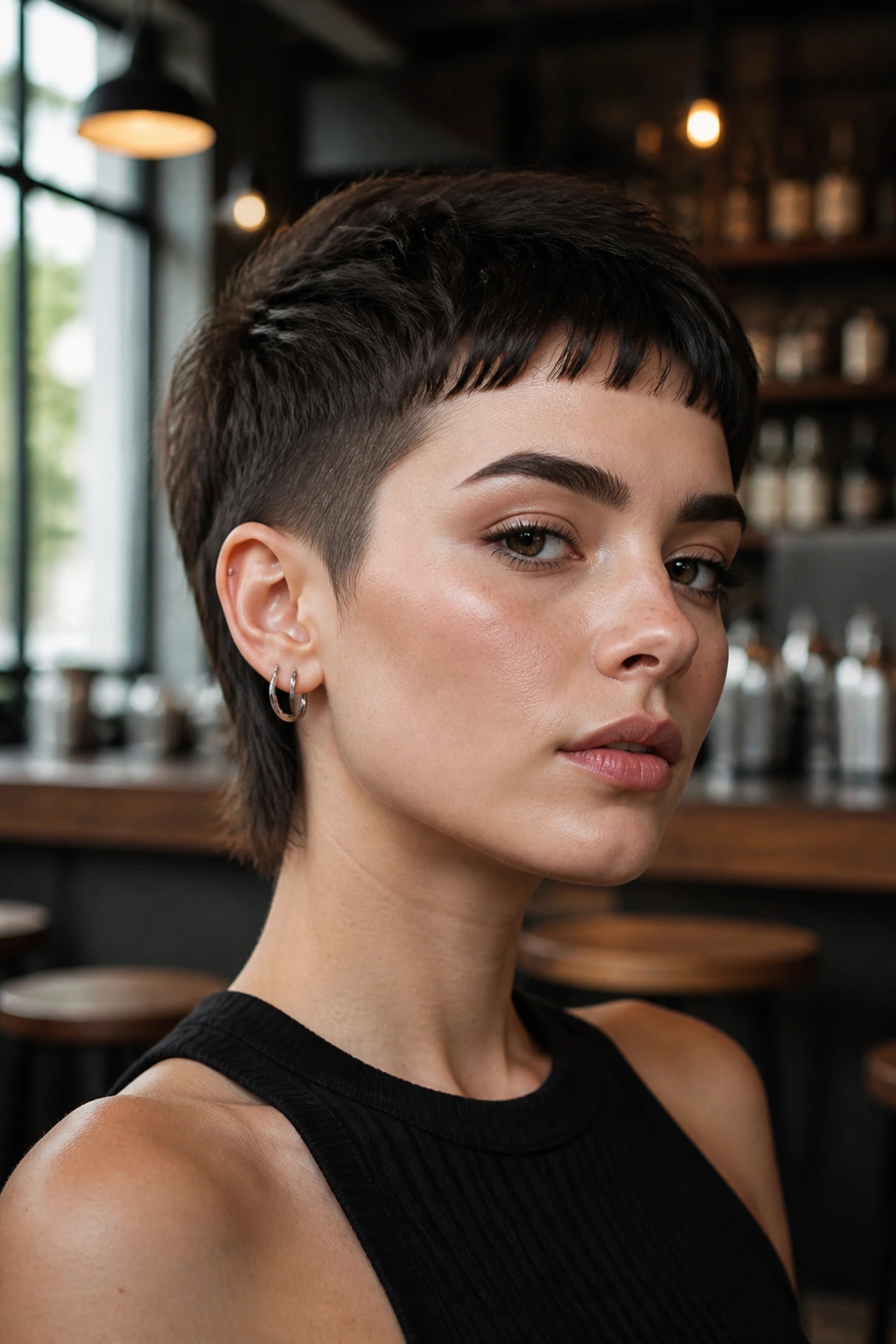
The shortest versions are the boldest. A micro fringe on straight hair looks clean and deliberate, and tapered sides keep the cut from feeling boxy around the ears.
This works because the fringe becomes the focal point. Your eye goes straight to the front, then slides back to the longer tail at the nape. That little shift gives the haircut its personality. Without it, the whole thing can read like a plain short crop.
I like this version on people who wear minimal makeup or have strong brows. It feels sharp without needing much styling. Dry hair, a dab of paste, and a quick finger-comb are usually enough.
3. Curtain Bang Pixie Mullet
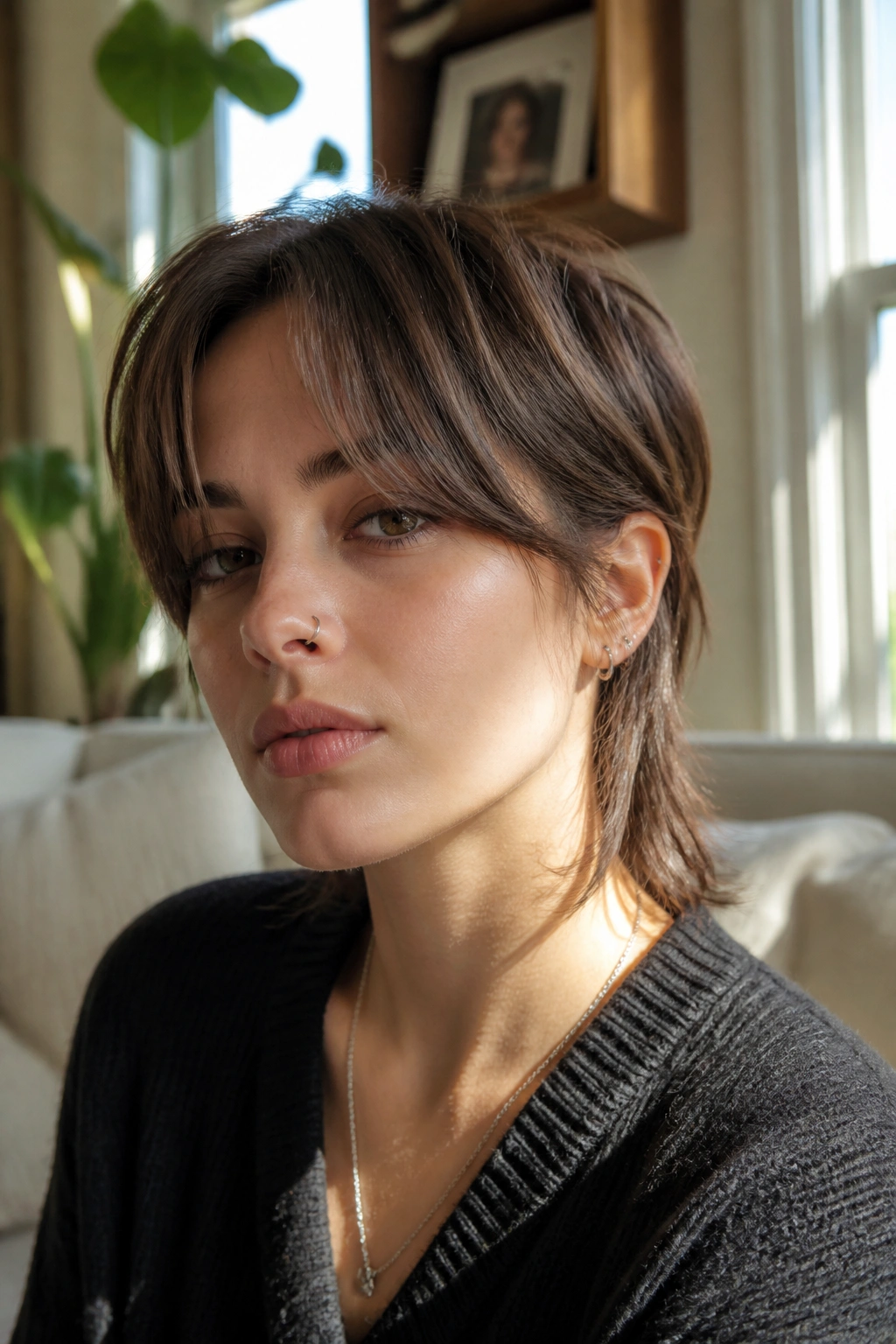
Can curtain bangs work on a pixie mullet? Yes, and they do it better on straight hair than most people expect.
The trick is keeping the fringe long enough to split, but not so long that it swallows the face. Start the shortest part around mid-forehead, then let the pieces slide toward the cheekbones. That gives the cut some softness without losing the mullet shape in the back.
How to Style It
Use a round brush or a small flat brush while blow-drying the front away from the face. A quick bend at the ends is enough. You do not need polished flips everywhere, and honestly, that would look too neat for this cut.
A light mist of flexible spray helps the curtain pieces stay separated. If the hair is too flat, lift the roots with your fingers while drying and stop before it gets puffy. Straight hair can turn from sleek to lank in a matter of minutes, so a little root support matters.
4. Blunt Baby Bang Mullet
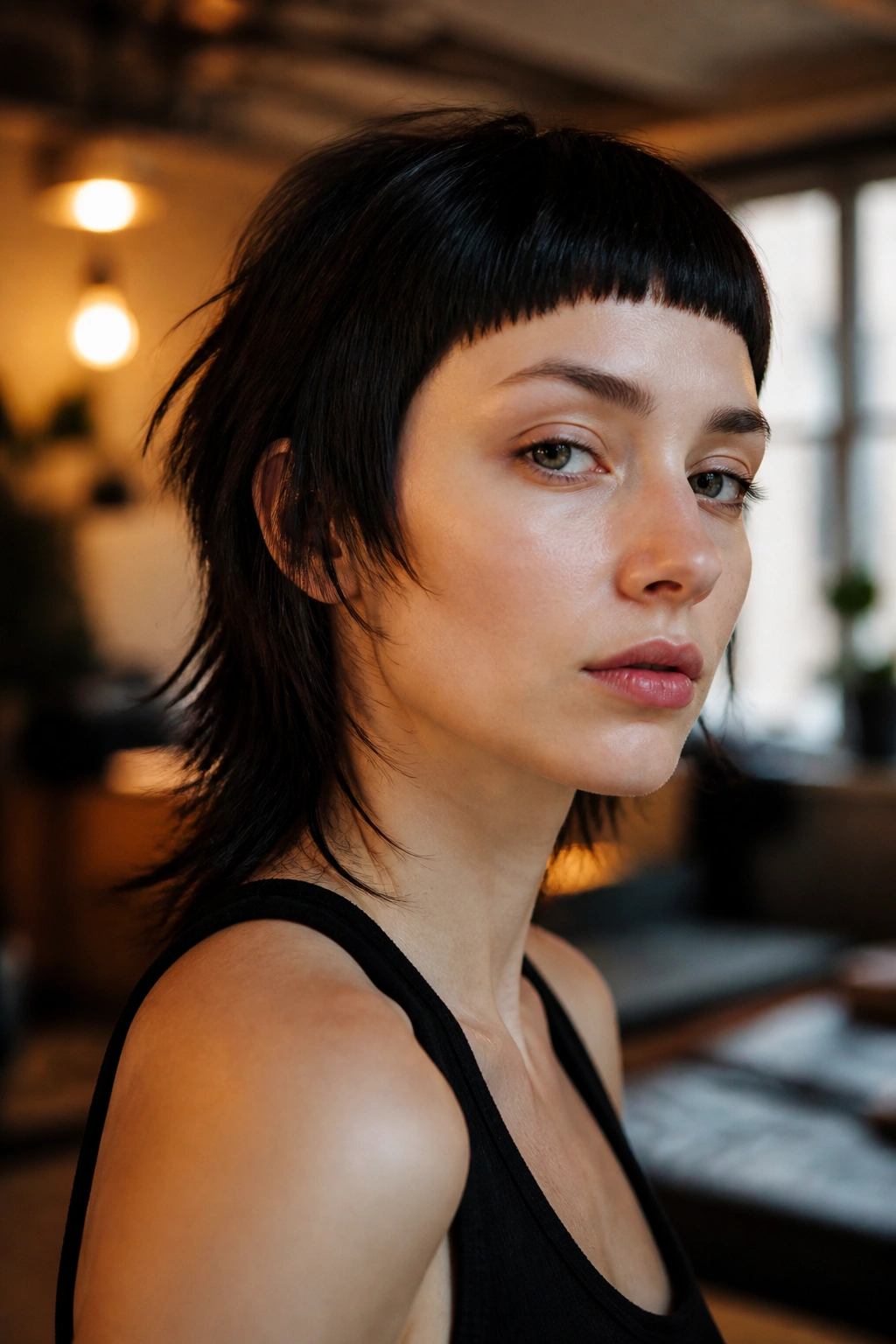
A blunt baby bang changes the mood fast. It makes a pixie mullet feel more graphic, almost architectural, while the longer nape keeps it from getting too severe.
I’ve always liked this on straight hair because the fringe line stays visible all day. Wavy hair can soften it too much. Straight strands hold that hard edge, and that edge is the whole point.
- Fringe length: well above the brows
- Side shape: trimmed close, but not shaved
- Back length: softly layered, never one solid curtain
- Product: a pea-size amount of pomade, warmed between fingers
The best version keeps the top compact and the ends slightly chipped. If the fringe is perfectly blunt and the back is equally blunt, the cut can feel stiff. One texture change is enough.
5. Side-Swept Crop with Long Tail
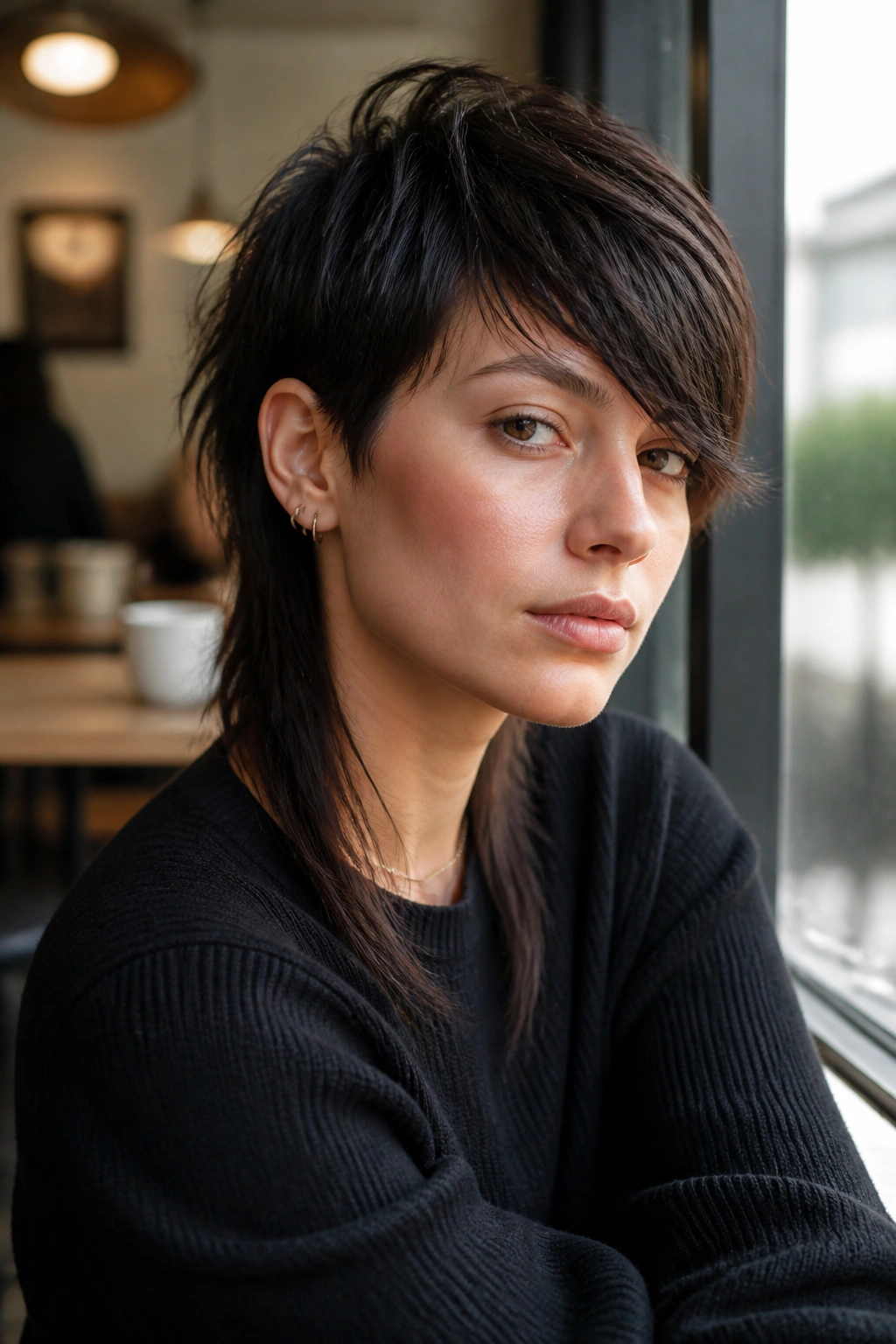
This is the one for people who want something easy to wear on a Tuesday and still interesting enough for dinner later. A side-swept front gives straight hair some movement, and the long tail in back keeps the mullet note alive.
What makes it work is the imbalance. The front sits low and soft over one brow, then the back drops away in a way that feels almost sneaky. From the side, it’s neat. From behind, it has a little bite.
I’d ask for a deep side part and enough length on the front to tuck behind one ear. That tiny detail changes how the whole cut falls. If the top is too short, the side sweep collapses. If it’s too long, the pixie part disappears.
6. Razor-Soft Layered Mullet
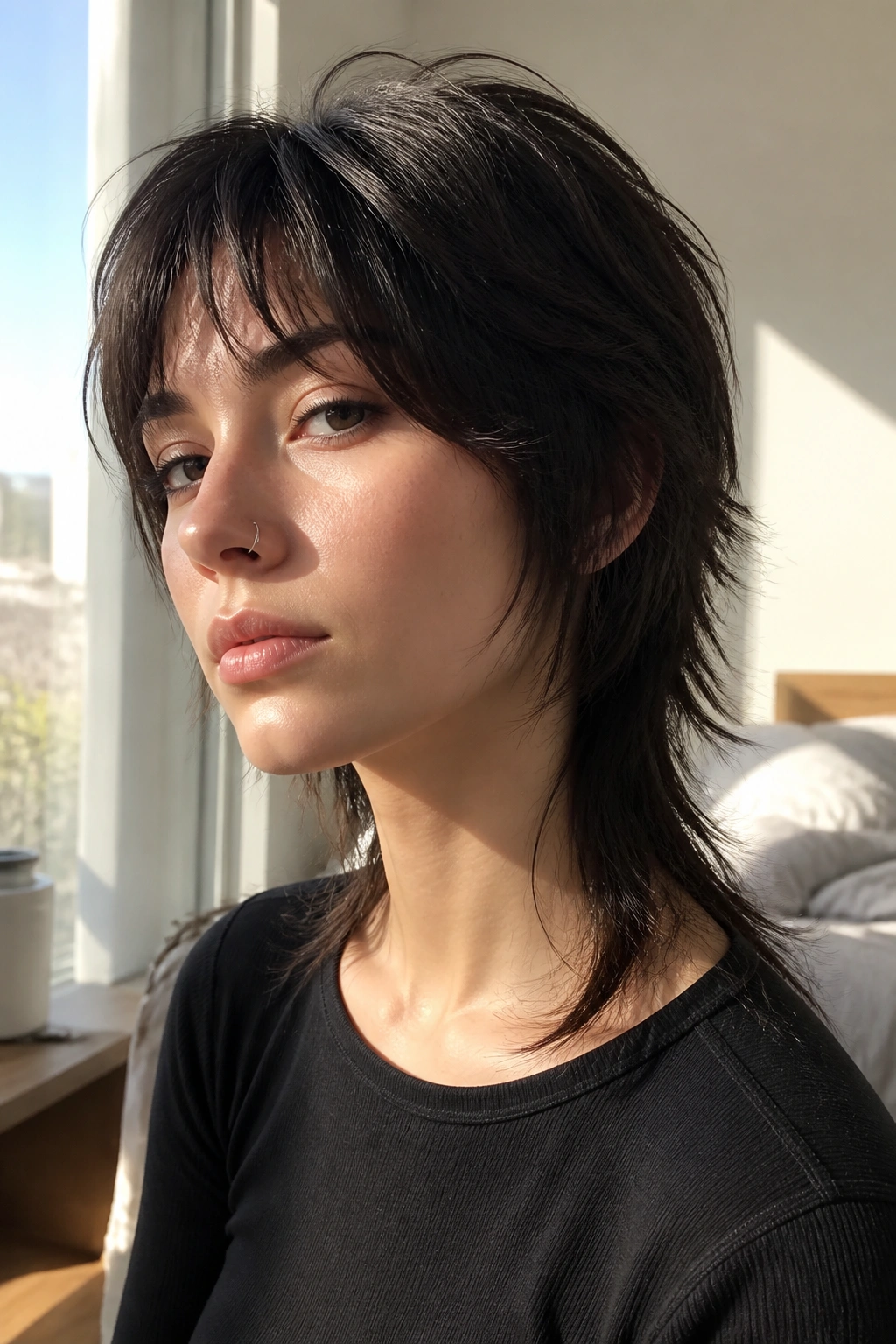
Unlike blunt cuts, this one blurs the transition from short to long. That’s the whole appeal.
Razor-soft layers make straight hair look lighter without stripping out all the weight. The cut still has a mullet shape, but the edges melt together a bit more. It’s a good choice if you want movement without a lot of obvious styling.
This suits fine hair especially well, because too much heavy layering can leave the crown looking see-through. Ask for soft internal layers instead of aggressive thinning. The difference matters. One keeps the shape airy; the other can make the ends fray.
A tiny amount of mousse at the roots and a quick blow-dry with your head tipped forward is enough. Keep the finish touchable. That’s where this cut lives.
7. Shaggy Pixie Mullet with Tucked Ears
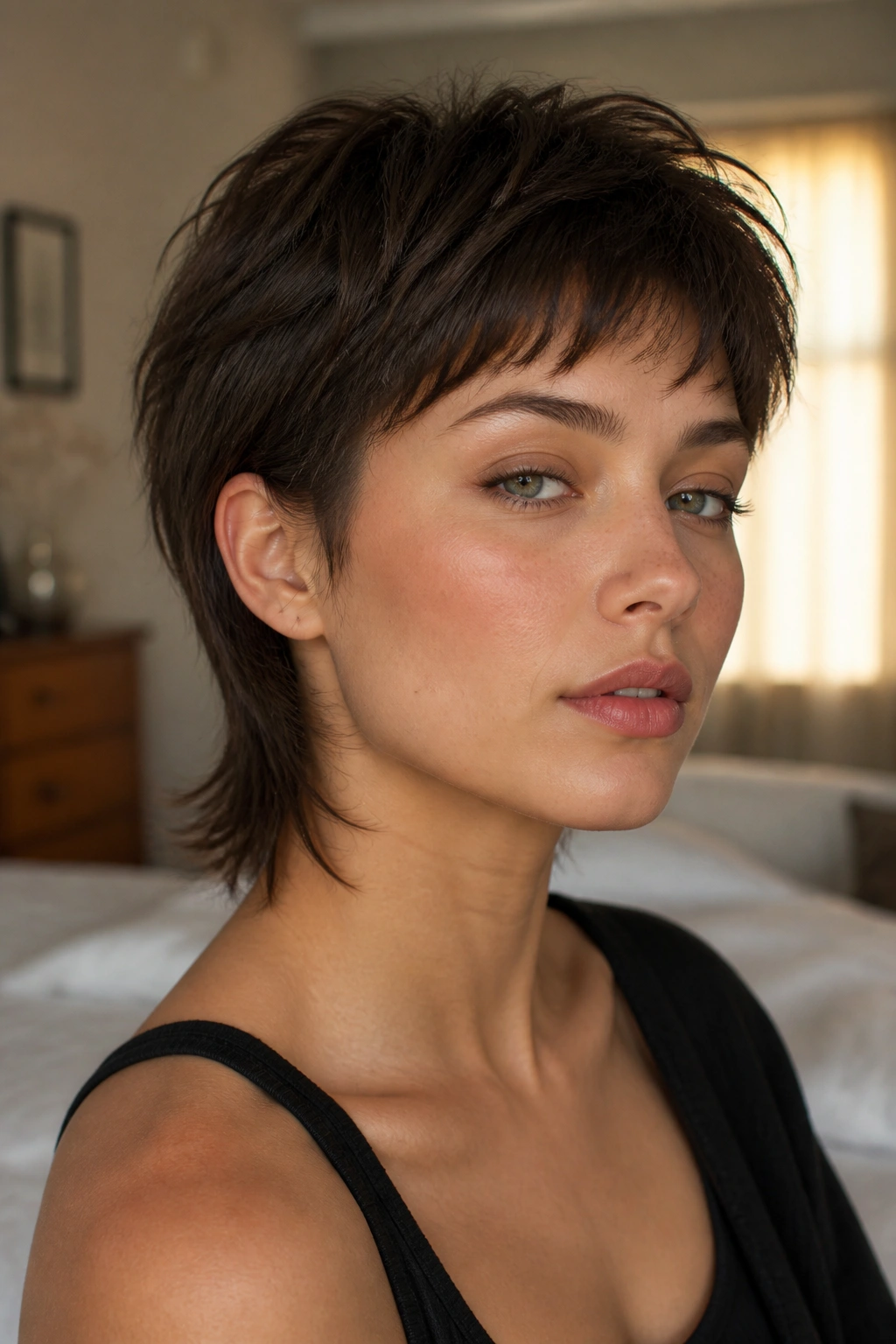
It feels a little messy in the best way, like you ran your fingers through it and stopped before it got fussy.
What Makes It Shaggy
The shaggy look comes from short, broken-up layers around the crown and sides, plus longer ends that graze the neck. On straight hair, those layers show clearly. That’s a gift. You can see the shape without needing a lot of heat or product.
- Crown layers should be sliced or point-cut for separation
- Side pieces work best when they hit just below the ear
- Nape length can vary, but should stay soft and loose
- A dry texture spray gives the cut that piecey finish
Tucking the ears once the hair dries makes the whole thing feel casual, not overworked. It’s a small move, but it changes the silhouette. If you want the cut to look lived-in, not sloppy, keep the ends rough and the roots lifted only a little.
8. Slicked-Down Top and Piecey Ends
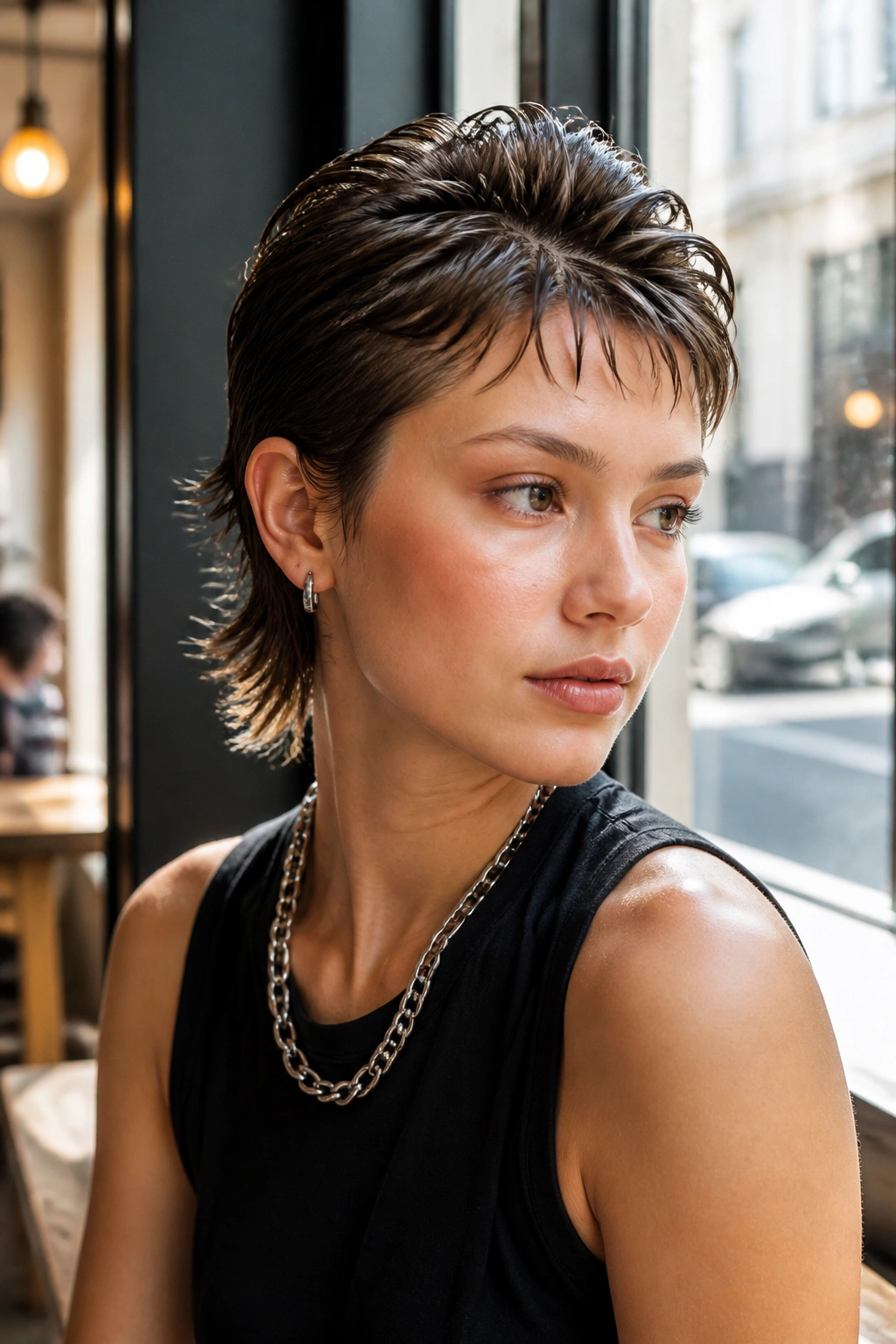
Straight hair can pull off polished and messy at the same time. This style proves it.
The top gets smoothed close to the head with a little gel or cream, while the ends stay separated and sharp. That contrast makes the pixie mullet feel modern instead of precious. It’s clean at the scalp, almost wet-looking near the front, then broken up at the back.
This one suits people who like hair that feels intentional. It also works well when the cut is growing out, because the slicked top gives shape to shorter layers that might otherwise fall flat. Use a fine-tooth comb for the front and your fingers for the tail. Mixing tools sounds fussy, but it keeps the finish from looking overly strict.
9. Asymmetrical Pixie Mullet
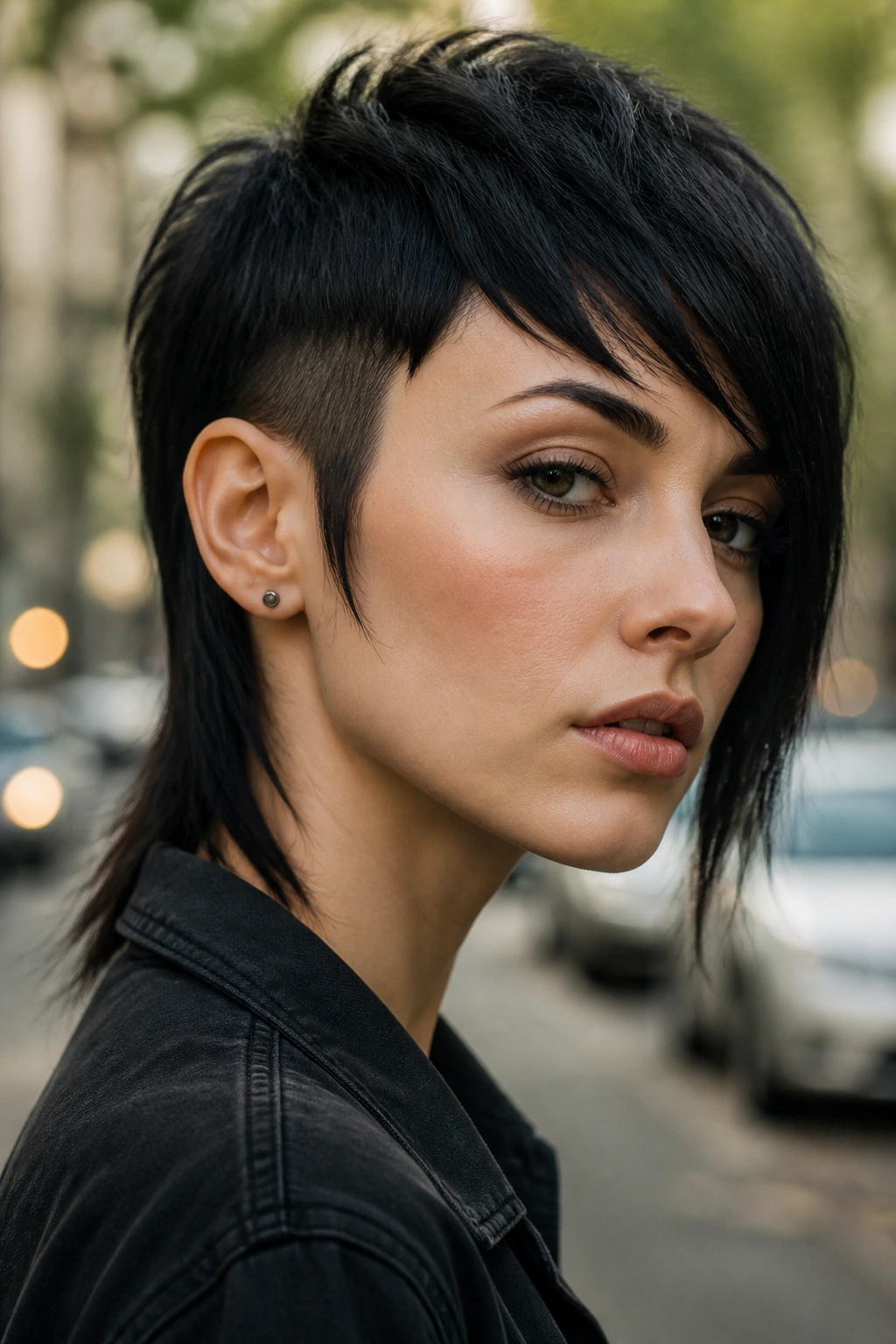
Why does one longer side look so good on straight hair? Because the line stays visible.
A slightly uneven cut lets the eye travel across the face instead of stopping at one blunt edge. One side can sit close to the jaw while the other brushes the cheekbone, then both sides merge into a longer nape. The difference does not need to be dramatic. Even a half-inch shift can change the whole mood.
How to Wear It
Part it deep on the shorter side and keep the longer side smooth. A round brush can bend the front a little, but don’t curl it too much. The point is shape, not bounce.
This version suits angular faces and strong cheekbones. It also works if you want the cut to feel a bit less neat than a center-parted style. Ask for the longer side to stay soft around the face, or the asymmetry can look accidental instead of stylish.
10. Ear-Length Front with Long Nape
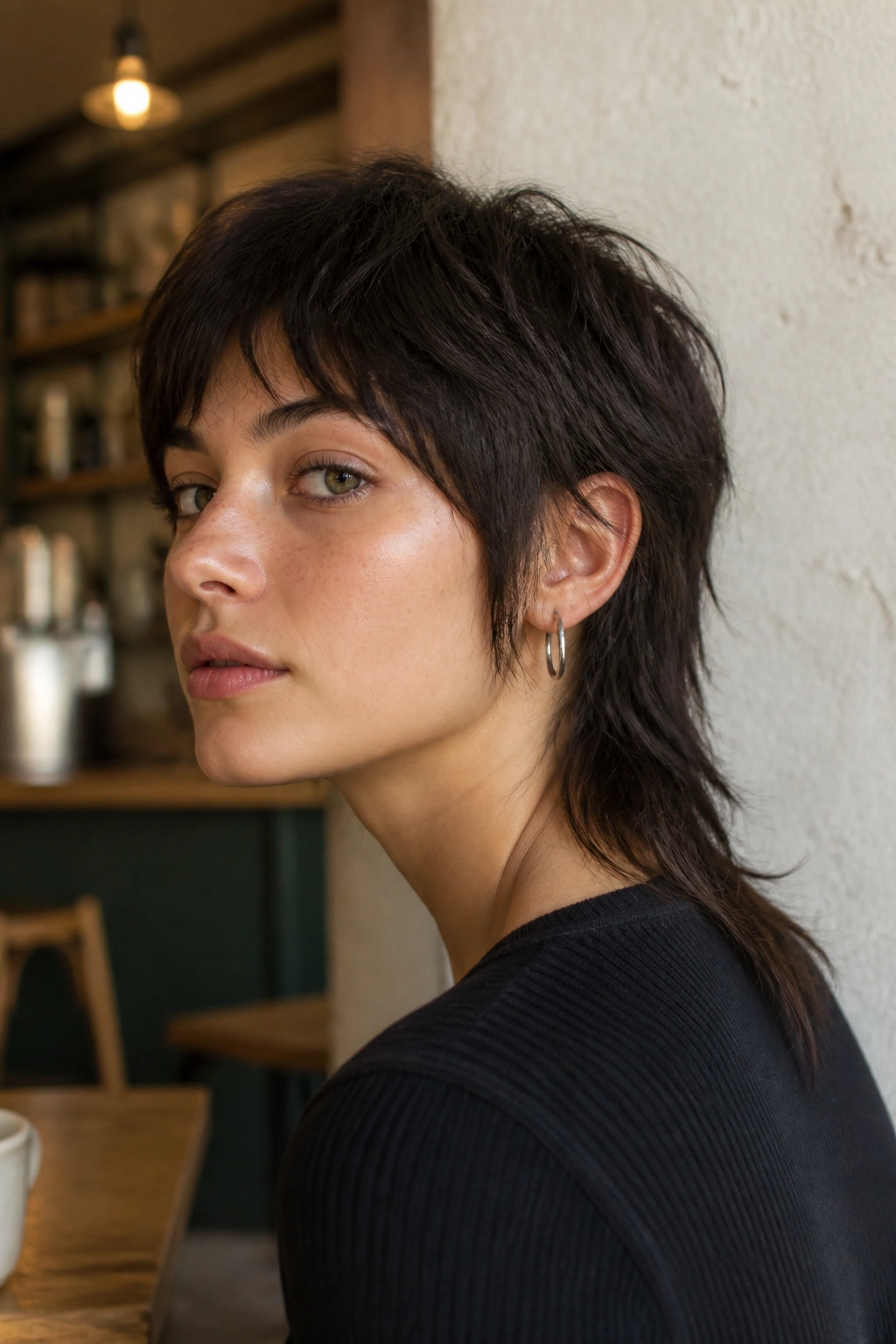
Picture a front that just kisses the ear, then a back that drops a few inches lower. That gap is what gives this cut its shape.
Straight hair makes the line easy to see, which is useful here. If the front is too short, the style turns severe. If the back is too long, it starts to read more mullet than pixie. The sweet spot sits in the middle, where the front feels tidy and the nape gives the haircut a little tail.
- Front length: around ear level
- Nape length: 2 to 4 inches longer
- Best styling move: tuck one side, leave the other loose
- Good finish: light hold spray or soft wax
This is one of those cuts that looks better after it’s been worn for a few hours. The hair settles, the edges loosen slightly, and the shape starts to feel natural.
11. Undercut Pixie Mullet
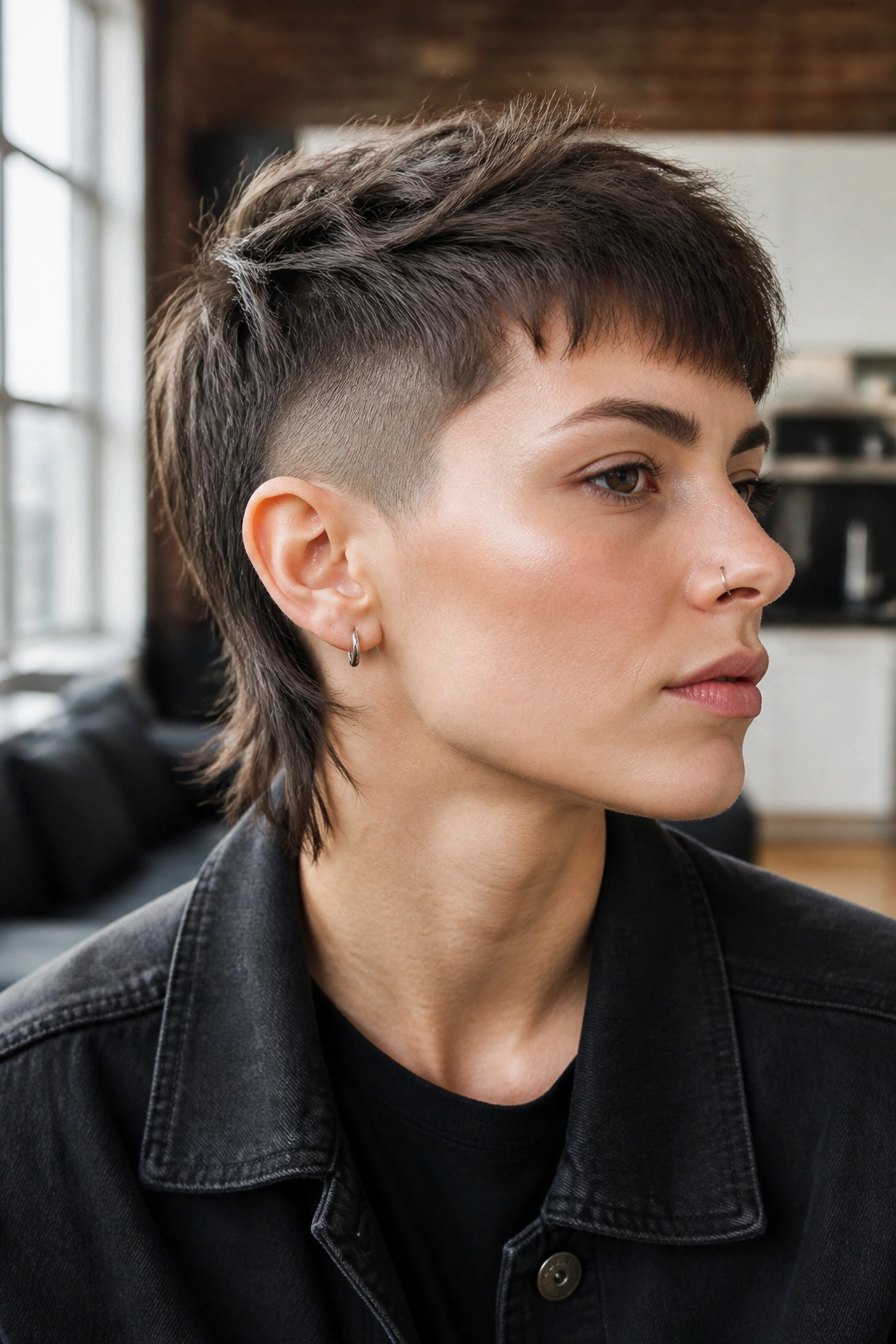
A clean undercut changes everything. It removes bulk from the sides and back, which makes the longer top and tail stand out more.
That’s why this version is so good for thick straight hair. Without the undercut, the cut can puff out at the temples and hide the shape. With it, the silhouette stays tight and the crown gets all the attention. It feels sharper, cooler, and a little more controlled.
Keep the top around 3 to 4 inches if you want enough length to move it around. Anything shorter can start to look too close-cropped. I’d call this the most confident version on the list. It doesn’t whisper.
12. Rounded Fringe and Narrow Neckline
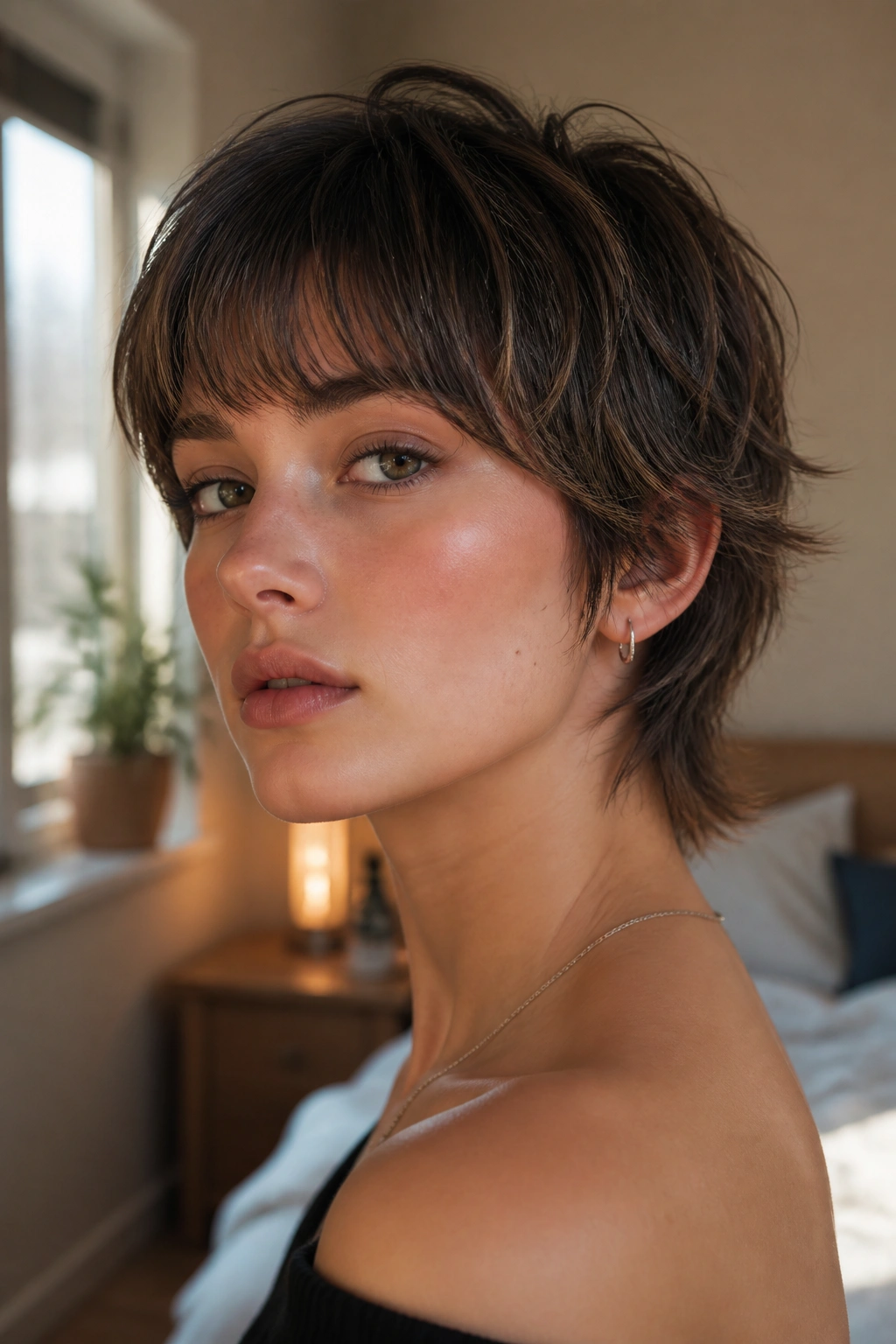
A rounded fringe softens the front, and a narrow neckline keeps the back from getting wide. That combination is quietly smart on straight hair.
The rounded fringe works best when it curves just enough to skim the brow, not sit in a heavy arc. The neckline should taper in as it reaches the nape, so the back stays neat. If both parts are too blunt, the cut can look stiff. If both are too soft, the mullet shape disappears.
A good match here is a square jaw or a long face that needs a little balance. The fringe brings the focus down, and the narrow neckline keeps the whole cut from looking boxy.
13. Layered Bowl-Pixie Mullet
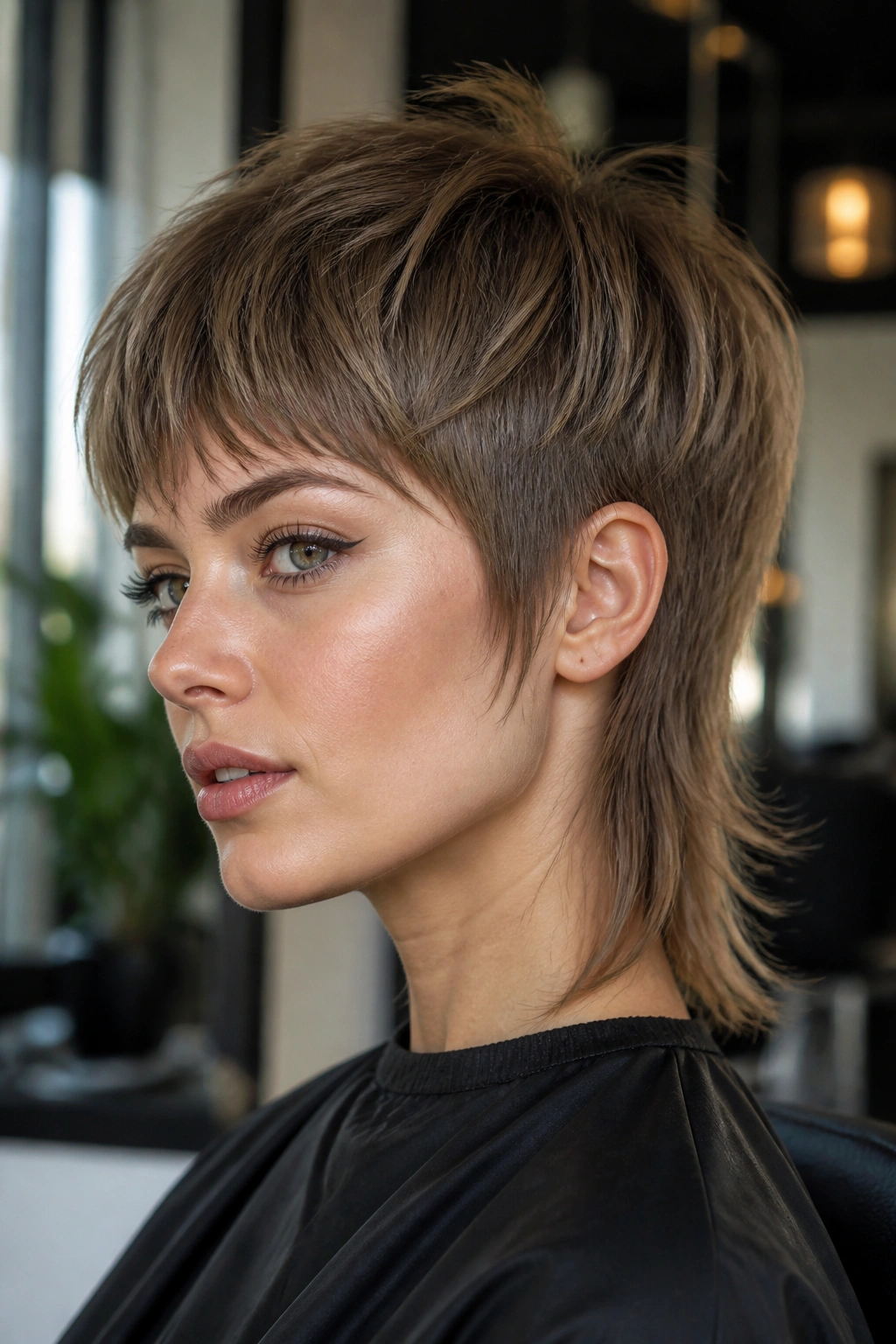
Can a bowl shape and a mullet coexist? Absolutely, if the layers are placed well.
This version keeps a rounded outline at the top but lets the back trail longer, so it feels playful instead of retro costume. On straight hair, the bowl influence shows up in the clean arc around the head, while the mullet part comes through in the soft drop at the nape. The mix is strange in a good way.
How to Keep It Modern
Ask for texture through the crown and softer edges near the ears. A heavy, perfect bowl can go old fast. A layered one has more air in it.
I’d recommend this for someone who likes shape and doesn’t mind a little edge. It pairs well with a matte finish and a blunt lip or strong brow. If your hair is very flat, keep some root lift at the crown or the rounded shape will collapse by midday.
14. Tousled Crown, Clean Sides
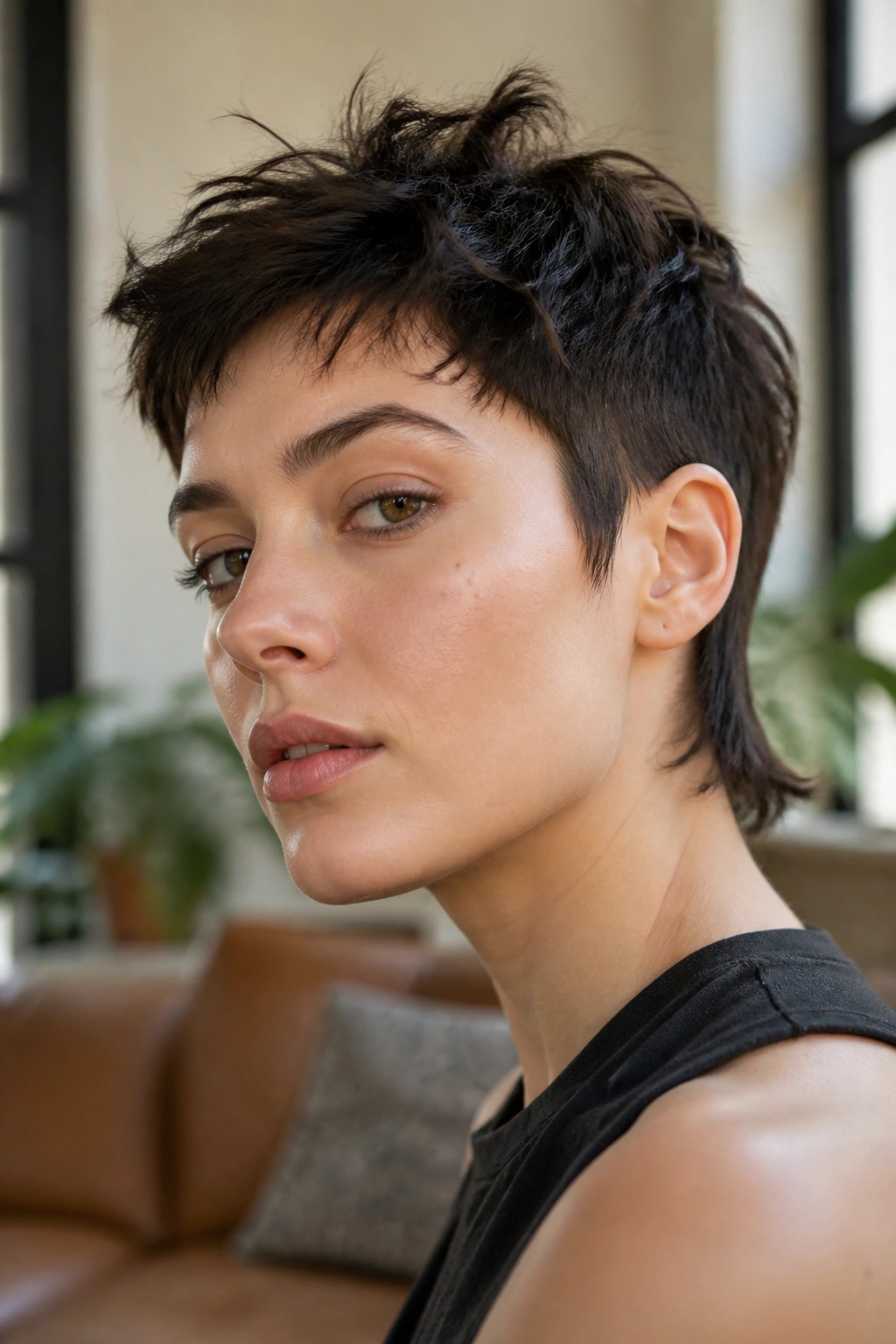
The top gets the mess; the sides stay tidy. That’s the whole idea, and it works especially well on straight hair because the contrast is easy to read.
A tousled crown needs just enough product to separate the pieces. A clean side keeps the haircut from turning into a full shag. Put those together and you get a style that feels casual without losing structure. It’s a smart choice if you want something that can survive a busy day and still look deliberate.
I like this cut on people who hate spending time with a curling wand. A little mousse, a rough blow-dry, and a finger twist at the crown usually does the job. Simple. No drama.
15. Wispy Bixie-Mullet Hybrid
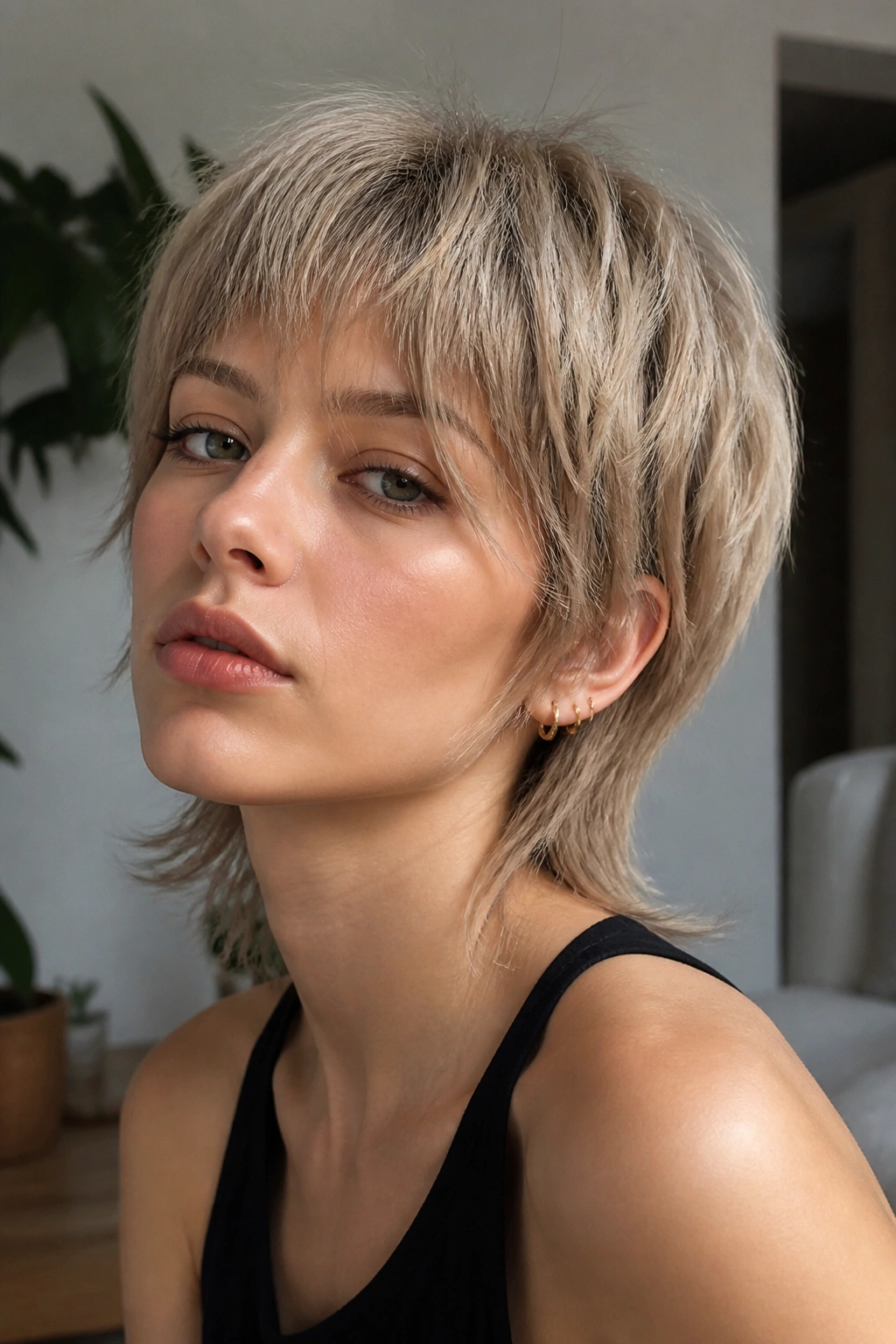
This sits between a pixie and a mullet, and that middle ground is exactly why a lot of people end up liking it.
A bixie-mullet hybrid keeps more softness around the face than a strict pixie, but it doesn’t go as long or as shaggy as a full mullet. Straight hair gives the cut a clean outline, so even the wispy bits still look defined. It’s a gentle place to start if you’re curious but not ready for a big chop.
Who It Flatters Most
It works well on oval faces, softer jawlines, and anyone with hair that falls flat when cut too short. Leave enough length near the cheekbones to frame the face, then keep the nape lightly textured. That gives you movement without losing polish.
This is also one of the easier versions to grow out. The transition from one phase to the next feels less awkward than with a harder cut.
16. Flipped-Out Nape Mullet
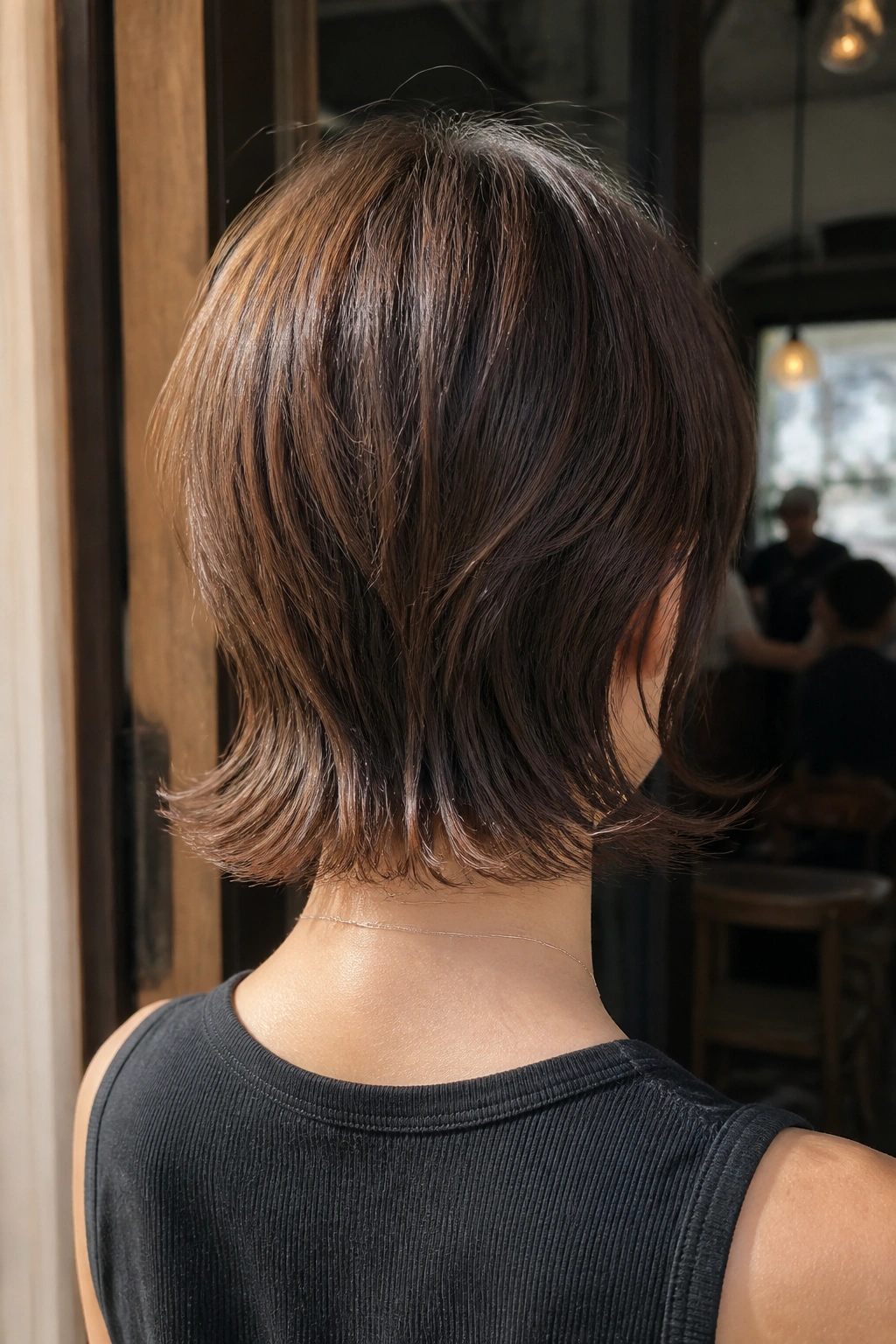
When the ends flick out a little at the neck, the cut starts to feel alive.
That flip gives straight hair a sense of motion it doesn’t always have on its own. The trick is in the cut, not the product. Slightly blunt ends at the nape will hold that outward bend better than wispy ones. A round brush or a quick pass with a flat iron can help, but the shape has to be there first.
- Nape should sit long enough to bend outward, not curl in
- End weight should stay solid
- Side pieces should taper into the back
- A little heat protectant goes a long way
I like this version with shirts that leave the neck open. You can see the line of the cut, and that matters here. If the nape is too layered, the flip loses its shape and starts to look frayed instead of playful.
17. Center-Parted Pixie Mullet
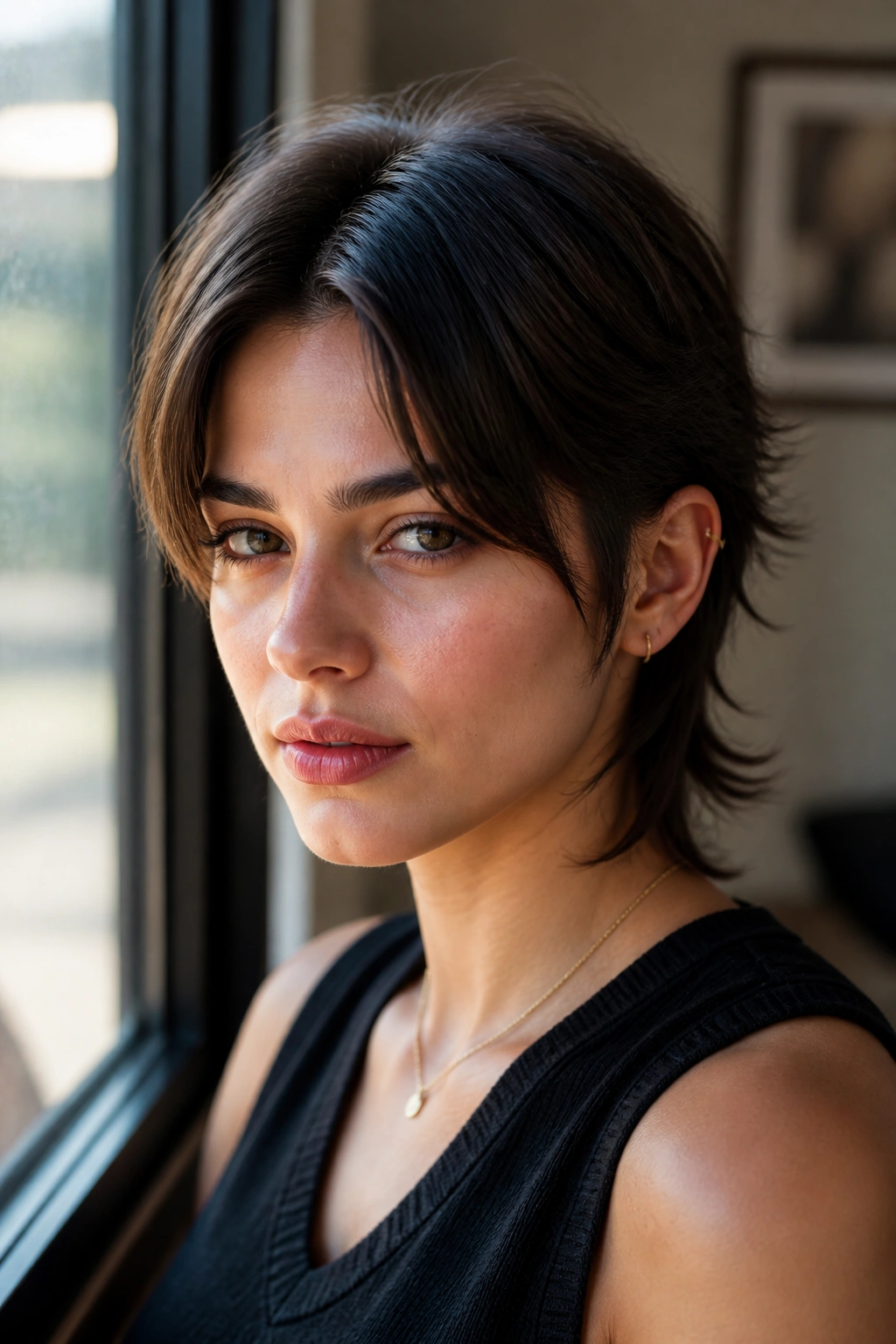
A center part on a pixie mullet? Yes, if the crown has enough length to fall on both sides.
This version feels calmer than a deep side part. It draws attention to the eyes and cheekbones while letting the back do the heavy lifting. Straight hair is useful here because the part stays clean and the front pieces hang in neat lines rather than puffing out.
How to Wear It
Keep the top just long enough to split without leaving a gap at the scalp. A tiny bit of root spray helps the hair sit away from the head rather than stick flat to it. If you have a longer face, ask for a little width through the sides so the center part doesn’t exaggerate length.
This is one of the more wearable options if you want the cut to feel tidy in daylight and slightly cooler at night.
18. Piecey Sideburn Mullet
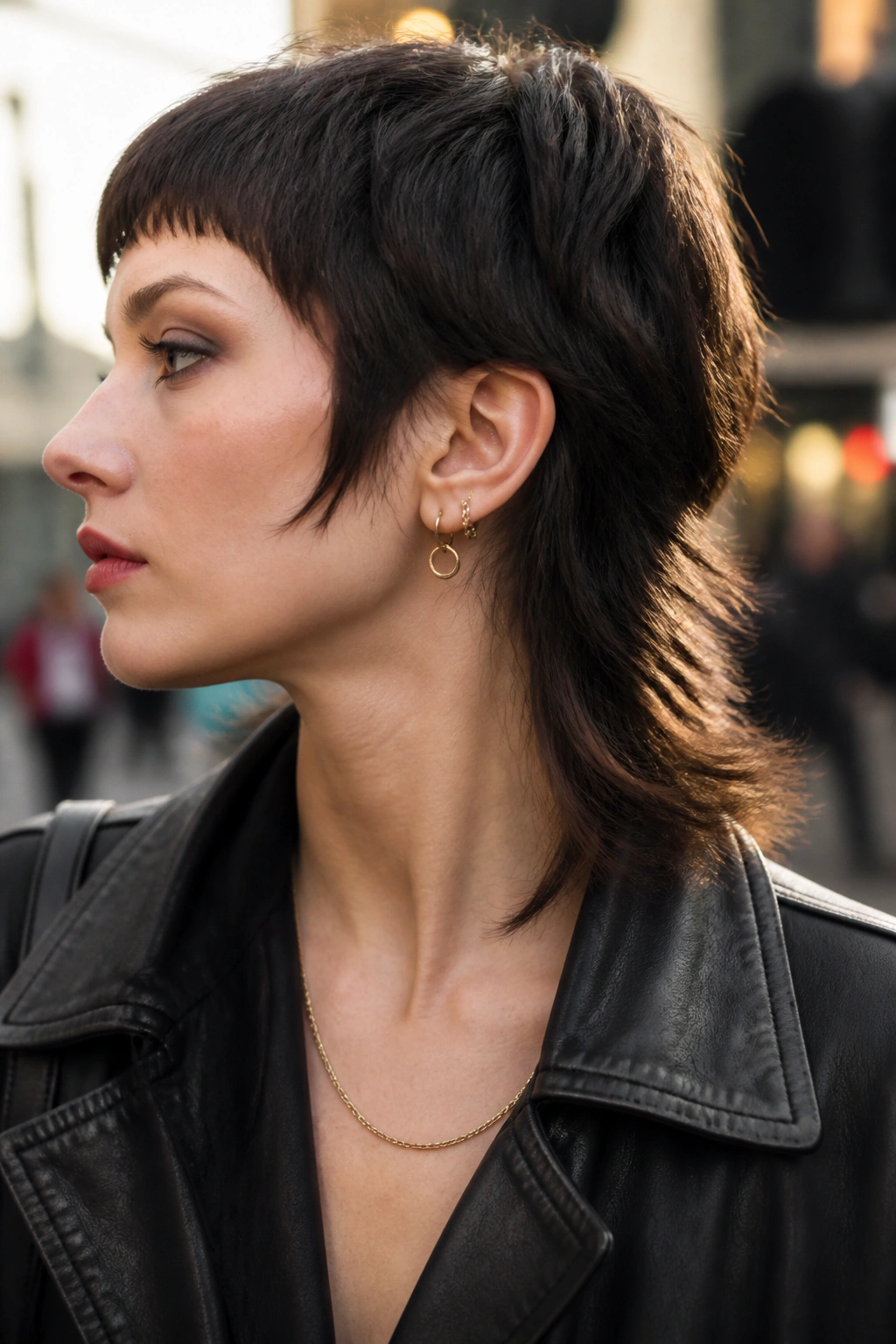
Sideburn pieces do more work than people think. On straight hair, they soften the jump from short front to longer back, and that makes the haircut feel less abrupt.
The pieces should be narrow, not thick. Two little strands around the sideburn area can do the job without crowding the face. A touch of wax on your fingertips is enough to separate them. Too much product will glue them together, and then they lose their point.
This style is good if you like a little face-framing detail but do not want full bangs. It’s subtle. That’s the charm. The sideburns also help if your jawline is sharp and you want a softer edge near the cheeks.
19. Nape-Grazing Short Top
The shortest top doesn’t have to look severe.
With this cut, the crown stays compact while the nape grazes the neckline, so the eye keeps moving. Straight hair helps the line read cleanly, which keeps the style from feeling too bulky. It’s a nice choice if you like your hair short but still want a back view that feels a little longer and more interesting.
Who Should Ask for It
People with fine hair often do well here, because the cut removes weight without leaving the shape wispy. It also suits strong features, since the short top keeps attention near the face while the nape softens the back.
Ask for texture through the crown, not volume for volume’s sake. Those are different things. A little lift at the roots is enough. A good stylist will leave the neck area soft, so the haircut moves when you turn your head.
20. Geometric Sharp-Line Mullet
Unlike feathered styles, this one is about clean edges and clear structure.
Straight hair is the right base for it because the lines stay visible. The front can sit blunt near the brow or cheekbone, the sides can taper in a straight shape, and the back can fall in a narrow tail. Nothing about it is random. It’s the kind of cut that looks best when every section has a reason to be there.
I’d point this one toward people who like crisp clothes, sharp eyeliner, or a wardrobe with a lot of black and white. It matches that mood. If you want softness, skip it. If you want a haircut that looks intentional from every angle, this one delivers.
21. Airy Layered Pixie Mullet
What makes it airy is not the length. It’s the space between the layers.
This cut uses internal layering to create lift, especially around the crown and upper sides. On straight hair, that matters a lot, because straight strands can collapse into one flat sheet if the shape isn’t built in. The result is light and moveable, but still short enough to keep the mullet outline.
Styling Note
Use a light mousse near the roots and dry the hair with your fingers lifting sections off the scalp. Don’t overbrush it. Too much brushing drags the layers down and kills the airy effect.
This is one of the easiest versions for warm, humid days because it doesn’t depend on perfect styling. It just needs some rough structure and a little separation.
22. Wet-Look Pixie Mullet
Straight hair already has a natural lean toward sleekness, so the wet look doesn’t fight the texture. It leans into it.
A small amount of gel at the roots and a shine cream through the ends gives the cut that slick, just-combed finish. The back should stay defined, not drenched. Otherwise, the mullet part disappears into one shiny mass, and that’s not the point. Keep the sides close and the crown smooth, then let the back retain enough shape to show off the length.
- Best on freshly washed hair
- Works with a fine-tooth comb
- Needs very little product, maybe a dime-size amount
- Pairs well with sharp earrings or a simple neckline
This version feels polished, but not stiff. It’s a good choice when you want the haircut to do the talking.
23. Grown-Out Pixie Mullet
This is the cut that saves you when you’re between trims and not feeling precious about it.
The grown-out version keeps the original shape but relaxes the edges. The front gets a little longer, the crown softens, and the back starts to brush the nape with more ease. Straight hair makes the growth pattern obvious, which sounds like a downside, but it’s actually useful. You can see where the shape needs a tiny snip and where it’s still doing its job.
A grown-out pixie mullet often looks best when it’s not over-styled. A touch of dry shampoo at the roots and a finger rake through the ends is enough. It has that lived-in, slightly rebellious feel people chase on purpose, then pretend they didn’t try too hard. Fair enough.
24. Tucked-Behind-Ear Pixie Mullet
Unlike styles that depend on volume, this one depends on shape and placement.
Tucking the front behind one or both ears opens the face and shows off the outline of the cut. Straight hair is perfect for it because the tuck stays put better than it does on slippery waves. The front should be long enough to hold the tuck without bouncing loose, and the back should have enough length to keep the mullet note visible.
This is a strong choice for work settings or anywhere you want the haircut to feel neat without losing edge. I’d keep the front pieces around 2 inches past the ear so they can tuck cleanly. If they’re shorter than that, the style can fight you all day.
25. Long Crown Sweep Mullet
A long crown sweep gives the haircut a bit of drama without pushing it into full shag territory.
The crown is brushed forward and across, then lifted slightly so it doesn’t sit like a flat cap. From there, the layers slide into a longer back. On straight hair, that sweep reads clearly and makes the profile look more dynamic. It’s a nice answer if you like movement near the front but don’t want a heavy fringe.
Why It Works on Straight Hair
Straight strands hold a directional sweep better than most textures. Once the hair is trained to fall across the head, it stays there with only a little help. A light mousse or styling cream is usually enough.
I’d keep the sweep soft, not shellacked. The cut should still move when you turn. That’s where it feels modern.
26. Split Fringe Tapered Back
A split fringe gives the front some air. The tapered back keeps the shape from getting too bulky.
This version is good if your forehead feels wide and you want a little opening at the center rather than a solid block of bangs. The split doesn’t need to be deep. Sometimes a narrow gap is enough. Straight hair helps because the fringe stays separated and the taper in back remains visible.
The cut feels especially nice when the side pieces are trimmed close around the cheekbones. That little frame pulls the eye inward. If the back is overgrown, though, the taper disappears. So this one likes maintenance more than some of the softer styles.
27. Minimalist Straight-Edge Mullet
Can a mullet look quiet? It can, when the line is subtle and the layers are kept clean.
This is the pared-back version: short top, neat sides, modest length at the nape, and no extra frill. Straight hair is ideal because it shows the shape without needing texture to carry it. You get the attitude of a mullet, but the finish stays restrained. That makes it easy to wear with plain T-shirts, tailored jackets, or anything else that doesn’t need a loud haircut to help it along.
How to Ask for It
Tell your stylist you want the front short, the back longer by a few inches, and the transition soft rather than choppy. Keep the outline tidy. Keep the texture light. If you want the least fussy version on this list, this is probably it.
28. Volume-Heavy Top Pixie Mullet
This one is the opposite of minimalist. The crown gets height, the sides stay tighter, and the back hangs low enough to keep the mullet shape honest.
Volume-heavy cuts are useful on straight hair that tends to lie flat against the scalp. A root-lift spray, a round brush, and a bit of heat can build the top up without making it fluffy. The trick is to stop before the hair loses its clean line. Too much height starts to feel dated fast.
This style suits narrower faces and anyone who wants a little lift near the crown. It also photographs in a different way from the flatter cuts, because the silhouette changes with every turn of the head. That movement is the point.
29. Soft Face-Framing Mullet
Soft face-framing pieces can make a pixie mullet feel easier to wear, especially if you’re nervous about anything too sharp.
The front layers should curve around the cheekbones and jaw, then slip into the longer back with no hard break. Straight hair makes that transition visible in a good way. You can actually see the face frame open and close as it moves. That’s nice when you want a cut with personality but not too much edge.
This version flatters square and angular faces because it softens the outer line without hiding your bone structure. It also works if you wear glasses, since the front pieces can sit around the frames rather than fight them. A small detail. A big difference.
30. Low-Maintenance Everyday Pixie Mullet
The easiest version is often the smartest one.
This cut keeps the shape clear but softens every part that would otherwise demand daily fixing. The top stays short enough to dry fast, the sides are tidy enough to tuck behind the ears, and the nape has just enough length to give the haircut some motion. Straight hair is a gift here because it air-dries in a way that still shows the cut. You don’t need much more than a little cream or spray and five minutes with your hands.
If you want one practical rule, make it this: bring three reference photos — front, side, and back. Straight hair changes shape fast depending on angle, and a single photo never tells the whole story. The back matters just as much as the fringe. Maybe more.
That’s why this final version is the one I’d hand to someone who wants the look without a daily ritual. It still has edge. It still has movement. It just doesn’t demand a full styling session every morning, and honestly, that’s a pretty good deal.
