



Straight hair can be brutal on layered cuts.
Give it too much chop, and the whole shape turns wispy at the ends and flat at the roots. Leave it too blunt, and the hair hangs there like a curtain nobody bothered to steam. A long wolf cut for straight hair with bangs sits in that narrow middle ground where the cut has enough shape to move, but not so much slicing that it starts looking thin and confused.
The fringe does a lot of heavy lifting here. On straighter textures, bangs can create the illusion of lift at the front, which helps the rest of the hair feel less one-note. If the layers are placed well — a little softer through the crown, longer through the perimeter, and not over-thinned at the ends — the whole cut looks deliberate instead of accidental. That difference matters more than people think.
And yes, there’s a catch. Straight hair shows every mistake. A bad wolf cut on waves can still look airy. A bad wolf cut on straight hair tends to look like someone got enthusiastic with the scissors and ran out of plan halfway through. So the best versions are the ones that respect the weight of the hair, keep the line long enough to feel modern, and give the bangs a shape that actually belongs there.
1. Long Wolf Cut With Curtain Bangs and Soft Face-Framing

Curtain bangs are the safest doorway into wolf-cut territory, and I mean that in the best way.
They split the front open without making the haircut feel severe, which matters a lot on straight hair. The longer face-framing pieces can start around the cheekbone and drift toward the jaw, while the crown gets enough layering to stop the style from collapsing at the top. It’s a clean, flattering balance. Not fussy.
Why It Flatters Straight Hair
Curtain bangs work because they give you movement right where straight hair usually falls the flattest: around the face. The middle part keeps the fringe from looking heavy, and the longer sides help the cut blend into the rest of the hair instead of sitting on top of it.
If your hair is fine, this version is especially kind. The cut keeps the bottom long enough to feel full, and the bang shape pulls attention upward without needing a ton of product.
- Ask for the shortest bang pieces to hit around the cheekbone.
- Keep the longest face-framing layers just below the jaw.
- Let the crown layers stay soft, not choppy.
- Style with a round brush bend, not a tight curl.
- Trim the bangs every 4 to 6 weeks so they keep their shape.
Pro tip: ask your stylist to point-cut the bang ends instead of making them blunt. The line will look softer and it grows out better.
2. Blunt Micro Bangs and Razor-Sheared Ends
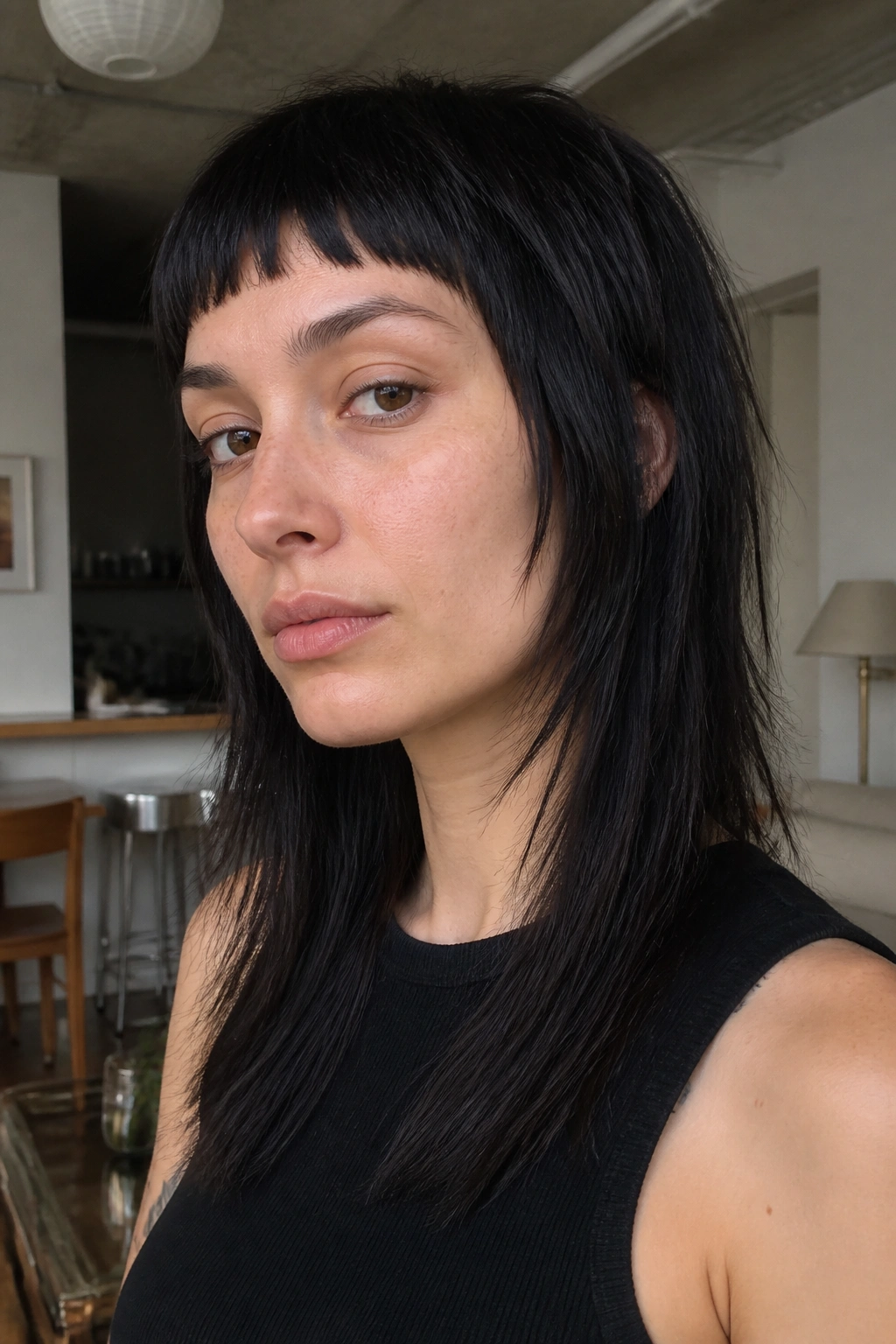
This is the sharpest cut on the list.
Micro bangs change the whole mood of straight hair in one move. Instead of relying on texture for personality, the haircut gets its edge from contrast: a tiny, blunt fringe up front and long, broken-up layers through the body. The result feels cool and a little stubborn. Good. It should.
The trick is to keep the ends from getting too airy. If the razor work gets overdone, straight hair can start looking stringy in the lower half, which kills the impact of the micro fringe. The better version keeps some weight through the last few inches so the hair still has a solid line when it moves.
This shape suits people who like their hair to look deliberate even when they do almost nothing to it. It also works well if you wear strong brows, bold glasses, or a sharp neckline. The fringe becomes a frame, not a decoration.
3. Bottleneck Bangs and Longer Crown Layers

Why do bottleneck bangs look so good on straight hair? Because they solve the one problem most fringes have: too much heaviness in the middle.
The center section is shorter and fuller, then it opens out toward the temples in a way that feels easy instead of stiff. On a long wolf cut, that shape gives the front of the hair lift without stealing too much density. The crown layers can stay longer too, which helps the style keep body instead of turning into a feathered cloud.
How to Style It
Blow-dry the fringe forward first, then sweep the side pieces away from the face with a round brush. That little bend makes the whole cut look more finished.
A tiny amount of lightweight mousse at the roots helps, but don’t coat the lengths. Straight hair gets greasy-looking fast when product travels too far down the shaft.
This is a good choice if you want bangs that feel grown-up. Not severe. Not childish. Just clean, soft, and easy to wear with the hair tucked behind one ear or left loose.
4. Side-Swept Fringe and a Swingy Hem
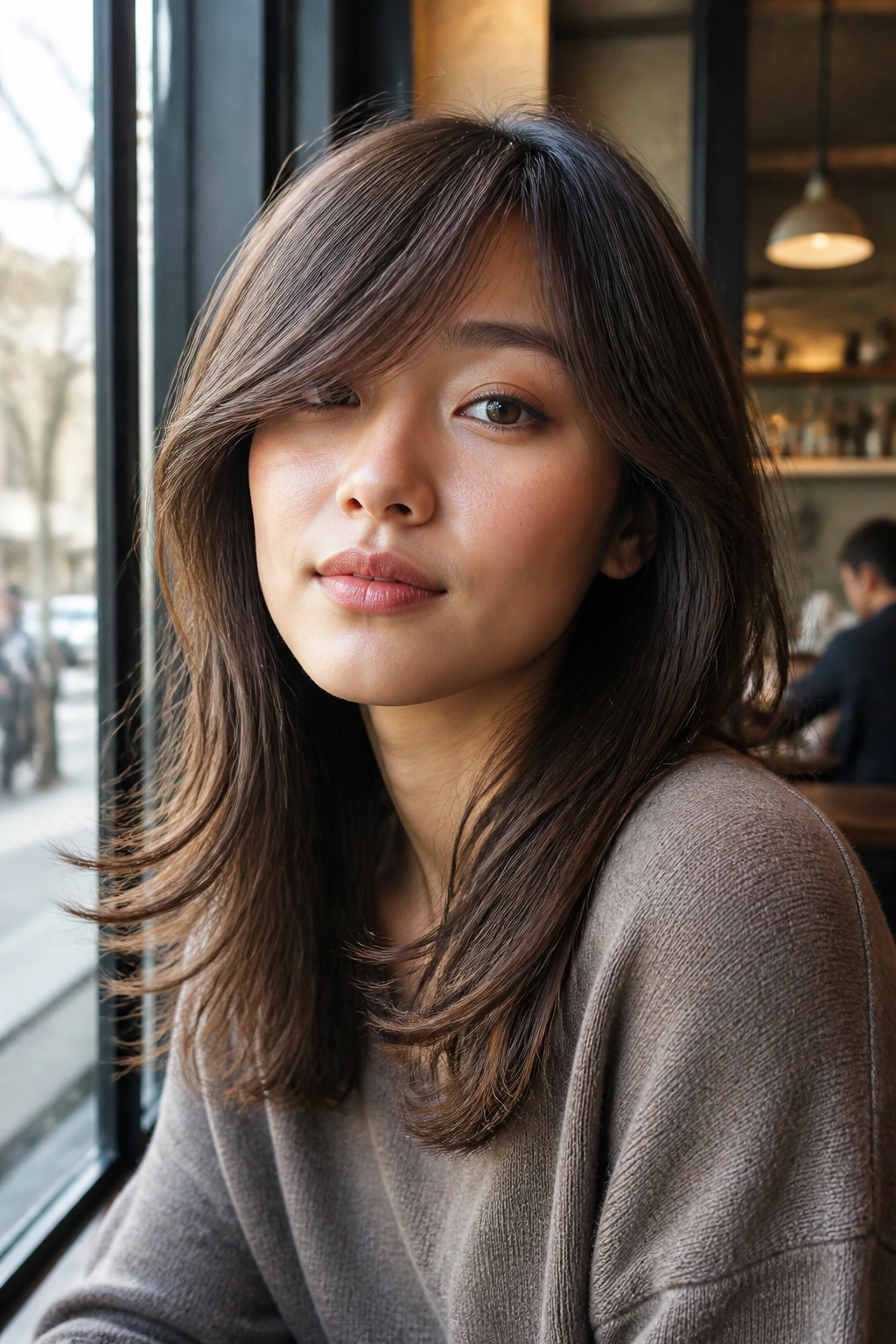
If your hair falls flat by lunchtime, this is the version I’d point you toward first.
A side-swept fringe gives straight hair an immediate diagonal line, and diagonal lines are the old trick for making limp hair look more awake. The rest of the cut can keep a longer hem with a soft flick at the ends — nothing too beachy, nothing too sculpted. Just enough bend to keep the silhouette from sitting in one shape all day.
The other nice thing about side bangs: they’re forgiving around cowlicks and weird growth patterns. If your front hairline pushes in different directions, a clean middle-part fringe can be a battle. A side sweep tends to cooperate. Usually.
- Ask for the shortest bang piece to land near the outer corner of the eye.
- Keep the sweep soft, not helmet-like.
- Let the perimeter hit collarbone or just below it.
- Use a flat brush at the roots, then a round brush at the ends.
- Finish with a pea-size amount of cream, not oil.
The cut feels casual, but it isn’t lazy. There’s a difference.
5. Wispy Brow-Grazing Bangs and Light Internal Layers
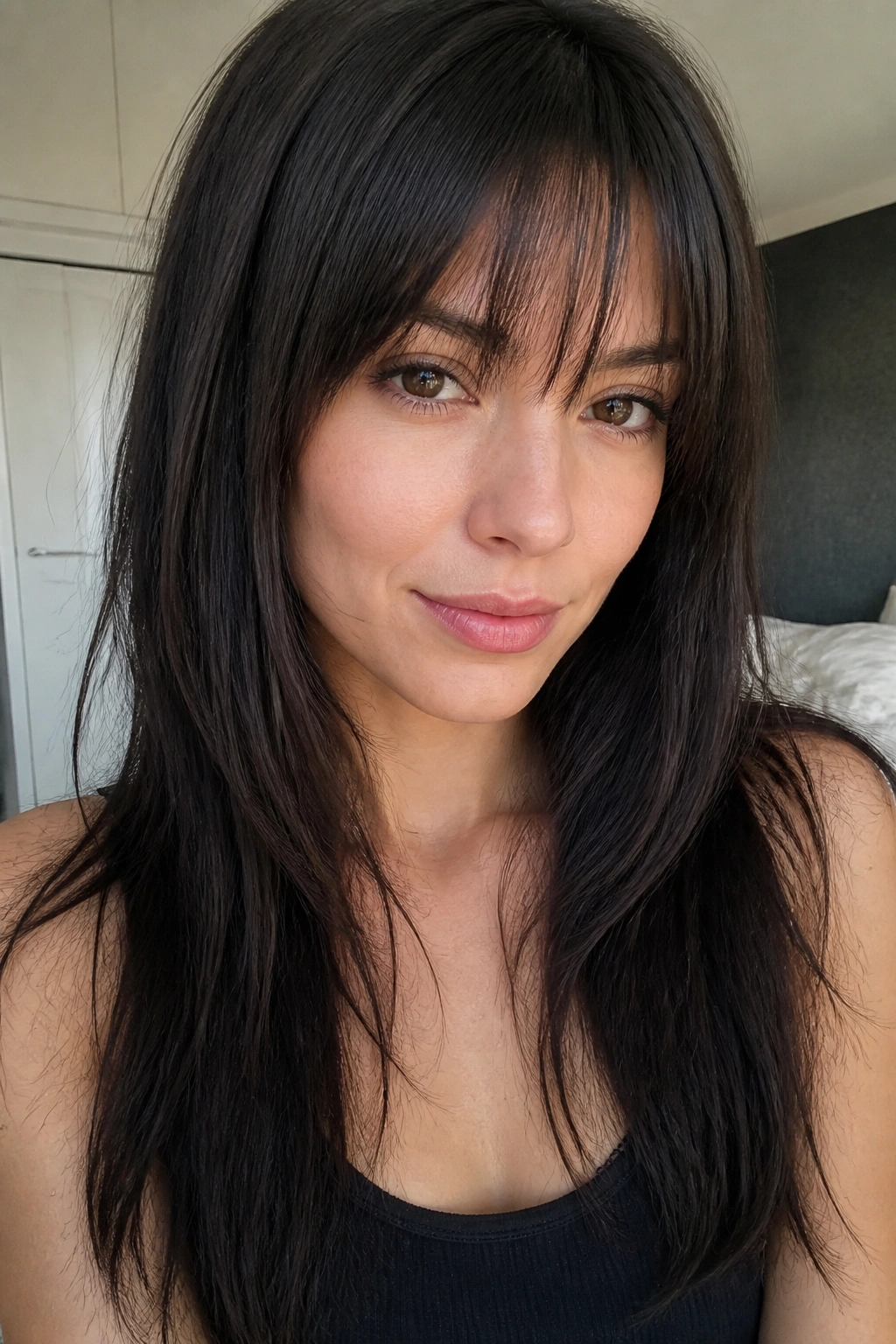
Wispy bangs are the least demanding front shape on this list, and on straight hair that can be a very smart move.
A full fringe can dominate the whole haircut if the hair is thin or if the bangs are cut too heavy. Wispy bangs stay soft enough to let the length speak, which means the wolf-cut layers can do their job without fighting the front. The look is airy, a little undone, and far less severe than blunt bangs.
This version is especially good if you want movement but do not want your hair to scream “I got a haircut” every morning. The layers should sit inside the shape, not chew through the perimeter. That keeps the outline long and healthy-looking. It also stops the ends from fraying into nothing.
One thing to watch: wispy bangs need discipline at the scissors. Too much thinning turns them see-through in a bad way. The goal is soft density, not sparsity. There’s a fine line, and yes, people cross it all the time.
On straight hair, this cut looks best when the bang line skims the brows and the longest layers brush the upper chest. That leaves room for the hair to move without losing its shape.
6. Choppy Bangs and a Heavier Tail

Unlike curtain bangs, this version doesn’t try to play nice.
Choppy bangs give straight hair a quicker, rougher edge, and that works well when the rest of the cut keeps more weight through the back. I like that contrast. It feels less sweet, more blunt in the good way. The front says one thing; the length says another. That tension gives the haircut character.
What Makes It Different
The bangs should have visible separation, almost like little pieces rather than one smooth sweep. The ends through the back stay thicker, which keeps the shape from getting too stringy. On straight hair, that extra weight matters because it helps the silhouette look full in a photo and in real life.
This is the version for people who want movement without softness. If your clothes lean edgy, tailored, or a little graphic, the cut fits right in. If you live in a world of soft knits and airy dresses, it can still work — just keep the bang texture loose.
- Best on medium to thick straight hair.
- Keep the fringe around brow to upper lash length.
- Ask for internal layering, not aggressive thinning.
- Style with a matte texturizing spray at the roots.
- Skip heavy serum near the bangs.
My take: if your hair gets greasy fast, this cut needs more dry shampoo than the softer versions.
7. Center-Part Wolf Cut With a Clean, Straight Finish

The ends flick, the top lies smooth, and the whole cut feels neat but not stiff.
That’s the appeal here. A center-part wolf cut on straight hair keeps the shape tidy, which is helpful if you like your hair to look controlled even when it has layers. The bangs split softly at the nose bridge or slightly below, then taper into face-framing pieces that hold the line without crowding the face.
What Makes It Different
The magic is in the restraint. The layers shouldn’t jump out at you right away. They should reveal themselves when the hair moves. That means less chopping at the crown and more careful blending through the sides.
This version suits people who hate messy texture products and don’t want a shag that looks tousled from across the room. It still gives the wolf-cut shape — just with cleaner edges and a more polished finish.
How to Keep It Sleek
Use a smoothing cream before blow-drying, then run a paddle brush from roots to ends. At the very bottom, turn the brush inward or outward by half an inch so the perimeter doesn’t hang dead straight.
A flat iron is optional. When the cut is done right, you won’t need much. The bangs should fall with a soft bend, not a hard crease.
8. Full Fringe and Feathery Length

A full fringe changes the whole haircut.
It makes straight hair feel denser at the front, which is useful if the rest of the layers are feathered and light. That contrast keeps the cut from looking too delicate. Full bangs give the eye something solid to land on, while the long layers below can move and soften the shape.
Why the Contrast Works
The front has weight. The bottom has lift. That’s the whole idea.
If both areas are airy, the haircut can start to look flimsy. If both areas are heavy, it looks boxy. A full fringe gives you a solid line across the forehead, while feathery lengths let the silhouette breathe.
- Keep the fringe thick enough to cover the forehead evenly.
- Ask for the bang line to sit just at or slightly below the brows.
- Let the layers start below the cheekbone so the fringe stays the star.
- Use a round brush to tuck the ends under or flick them out.
- Trim the fringe often. Full bangs grow fast visually.
Some people avoid full bangs because they think they’re high-maintenance. They are. A little. But if you like the look, the payoff is worth the extra trimming.
9. Grown-Out Bangs That Blend Into the Sides

Not every fringe has to be crisp.
That’s especially true on straight hair, where a perfect line can start to feel too hard if the rest of the cut is soft. Grown-out bangs let the wolf cut breathe. They sit somewhere between a curtain bang and a face frame, which makes the haircut look intentional even when it’s easy to style. I like this version for people who hate the feeling of “fresh bangs” every six weeks.
The shape should blend from the center of the forehead down into the cheekbone pieces without a sharp corner. That smooth slope is what keeps the haircut flattering as it grows. It also means the cut doesn’t fall apart the moment the bangs get a little longer than planned.
This is the version for someone who likes the idea of bangs more than the maintenance schedule. That’s a real category, by the way. Very real.
10. Tapered Bangs With Curved Face Layers
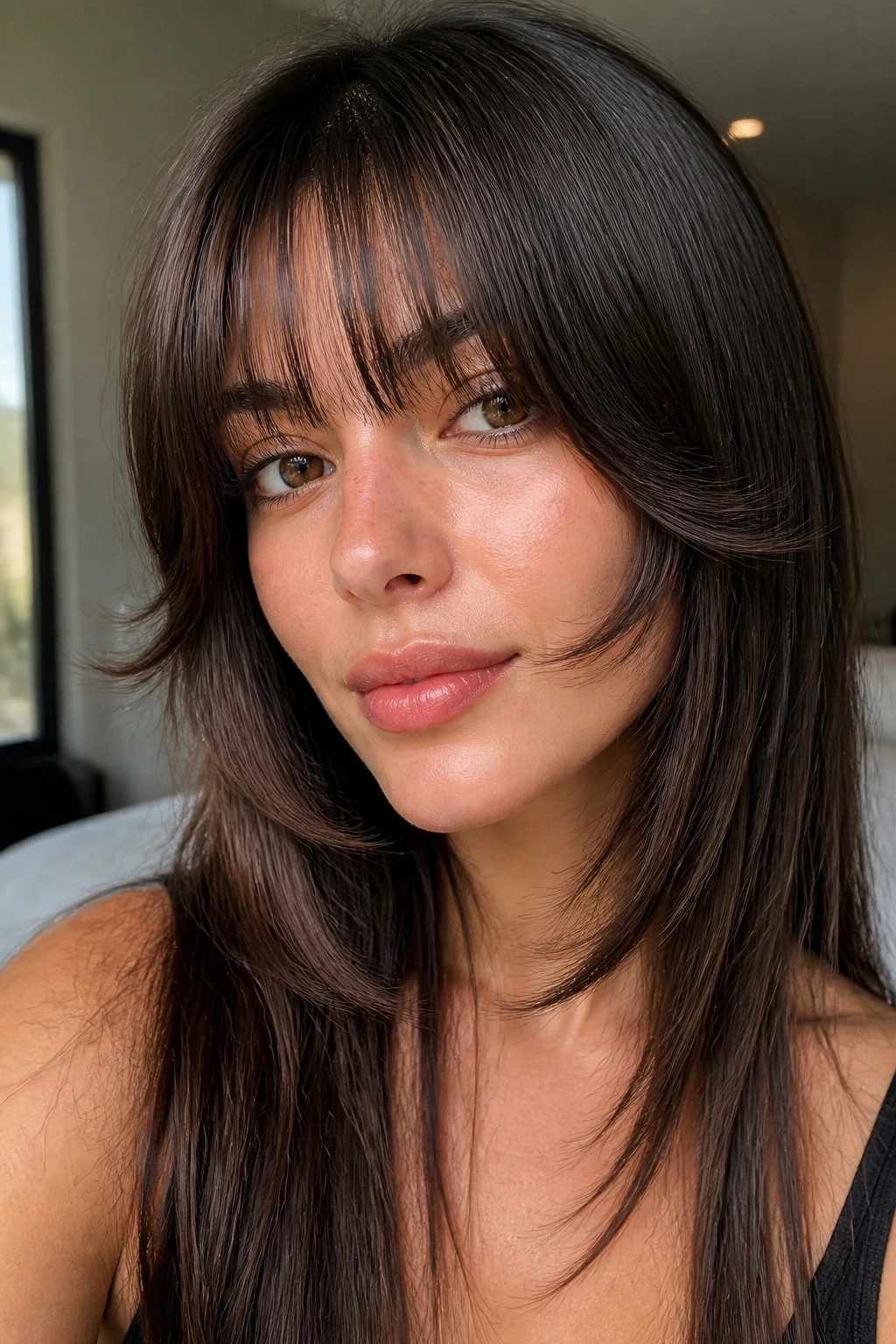
If your cheekbones are the part you want people to notice, tapered bangs are a smart move.
They start a little fuller in the center, then narrow as they move toward the temples, which creates a gentle frame around the face instead of a hard band across the forehead. On straight hair, that taper matters because it keeps the front from feeling heavy while still giving the cut enough structure to matter.
The face layers should curve inward just enough to follow the cheek and jaw, then release into the long lengths. That curve is what makes the haircut feel sculpted instead of flat. It’s subtle. That’s the point.
- Best for oval, square, and heart-shaped faces.
- Ask for the shortest fringe to sit around brow level.
- Keep the side pieces long enough to hit the jaw or just below.
- Dry the bangs forward first, then bend them away from the face.
- Avoid over-round-brushing the side pieces or they’ll puff out.
This cut is a good one if you want a flattering frame without a dramatic bang commitment. Clean. Soft. Easy to wear with straight hair that likes to lie where it wants.
11. Piecey Bangs and a Soft Mullet Silhouette

Can straight hair pull off a mullet shape without looking harsh? Yes, if the bang line stays piecey and the back doesn’t get too short.
The soft mullet version of a wolf cut relies on a gentle difference between the crown, sides, and length. The bangs break into separate strands instead of forming one dense line, which keeps the front light. The back stays long enough to feel like hair you can actually wear, not a costume.
How to Use It
Keep the top layers shorter, but not spiky. Ask for soft graduation from the crown through the nape so the shape narrows gradually.
This style works best when the bangs are styled with your fingers rather than brushed into perfection. A little separation is the whole point. If the fringe looks too neat, the haircut loses its edge.
Piecey bangs are also good for people who like to tuck hair behind the ears and let a few front sections fall out on purpose. That slightly undone feel is part of the charm.
A tiny bit of styling paste on the bang ends can help, but only on the ends. Any more and the front starts to look sticky.
12. Razor Texture and a Narrow Fringe
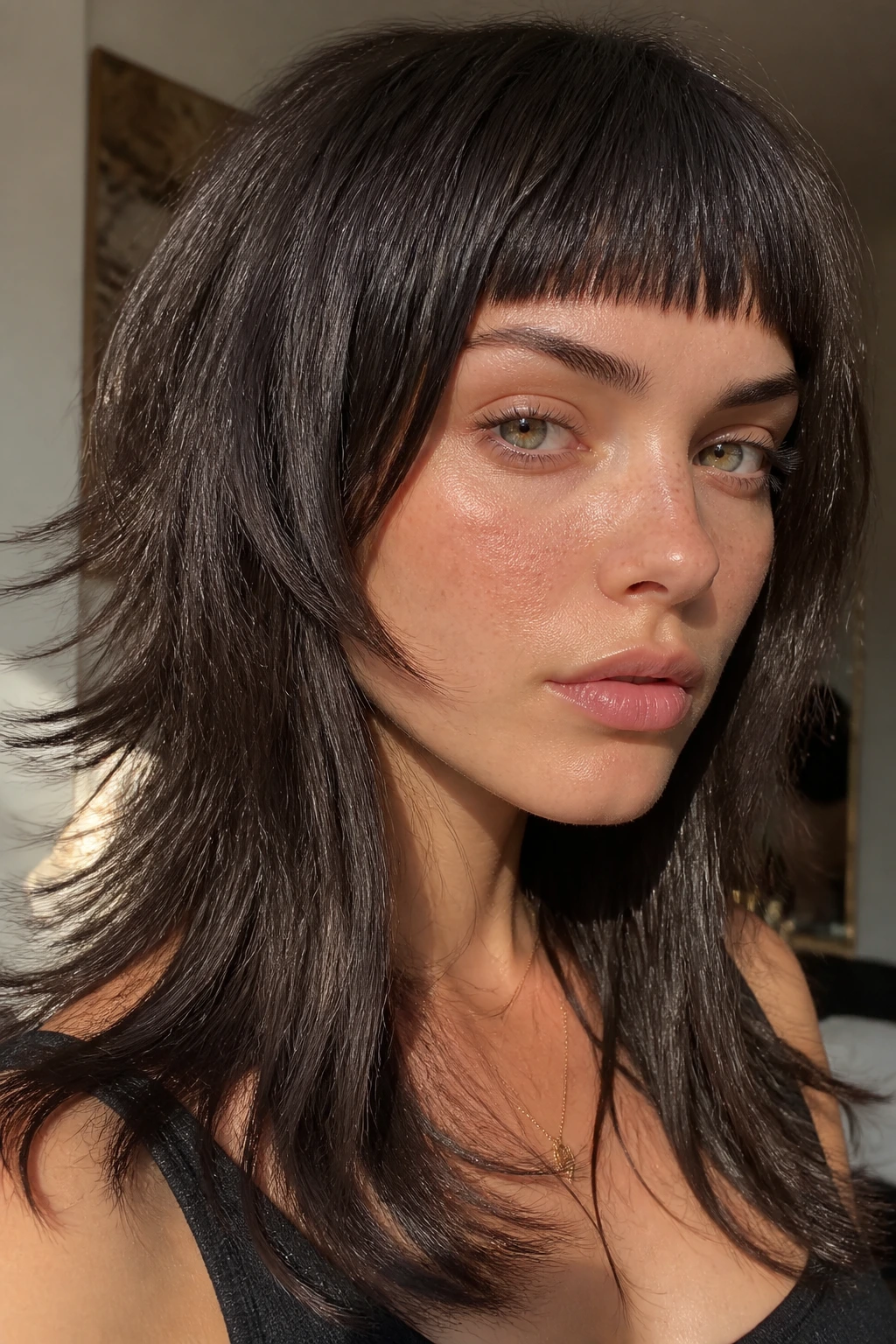
This is the sharpest long wolf cut in the bunch.
Razor texture gives straight hair a sliced, airy finish that scissors sometimes can’t fake. The fringe stays narrow and defined, which keeps the front of the haircut from ballooning out. On hair that naturally lies smooth, that can look very cool. Clean, but not plain.
The warning is simple: razor cutting is easy to overdo. Too much, and the ends start to look frayed instead of feathered. Fine hair is especially tricky here because it can lose substance fast. Medium-density straight hair handles this shape better, since it has enough body to support the texture.
I’d ask for this version if you like a little grit in the cut and you don’t mind seeing a few irregular pieces. It looks best when the fringe falls just above the lashes and the layers move around the cheek and collarbone instead of stopping at one flat point.
The feel of it matters. It should look sliced, not shredded.
13. Long Wolf Cut for Fine Straight Hair and Side Bangs

Fine straight hair needs a different strategy.
Too many layers can leave it looking see-through by the time the hair reaches the shoulders. So this version keeps more bulk at the perimeter and uses side bangs to create shape without stealing density from the rest of the cut. That’s the smart part. You want lift, not gaps.
What to Ask For
- Keep the longest length at or below the collarbone.
- Start the top layers low enough to preserve fullness through the middle.
- Use side bangs that sweep from the arch of the brow to the cheekbone.
- Ask for soft internal layering only where the hair is thickest.
- Style with a root-lifting mousse before blow-drying.
This cut is ideal if your hair goes limp easily and you still want the wolf-cut vibe. The bangs give the front enough presence that the rest of the haircut can stay a little quieter. That trade-off makes sense on fine hair.
And no, you do not need to shred the ends to create movement. On fine straight hair, restraint is the real trick.
14. Thick Bangs and Deep Internal Layers

I keep coming back to this version for dense straight hair, because it fixes the flat-helmet problem.
Thick bangs give the front a bold block of shape, while deep internal layers remove weight from the inside of the cut instead of chopping the outside apart. That means the hair can move without looking thin. The outline stays strong. The inside breathes.
What to Ask for at the Salon
- Request thick bangs that sit at brow or lash level.
- Ask for the bang line to be point-cut so it doesn’t look blunt in a harsh way.
- Keep the outer perimeter long and full.
- Remove bulk under the crown and behind the ears, not just at the tips.
- Skip aggressive texturizing on the bottom third.
That last part matters. Dense straight hair can handle texture, but not if the texture gets scattered everywhere. You want selective softness. A little weight left in the ends helps the haircut swing instead of puffing out.
This is a strong choice if your hair takes forever to dry and feels bulky at the sides. It also wears well with a simple blowout, which is nice when you want the cut to do more of the work than your styling tools.
15. The Softest Long Wolf Cut for Low-Maintenance Styling

This is the version I’d hand to someone who wants the shape without the drama.
The layers stay long and blended, the bangs skim the eyes instead of sitting in a hard line, and the ends move just enough to keep the hair from looking heavy. On straight hair, that softness is a gift. It means the cut can air-dry with a decent shape and still look intentional by the time you leave the house.
The best part is how forgiving it is. A soft wolf cut does not demand perfect styling every morning. A quick blow-dry at the roots, a brush through the bangs, maybe a little bend in the front pieces — that’s enough. If you tuck one side behind the ear or throw the hair into a low clip, the cut still holds together.
What I’d ask for: long layers through the crown, a gentle fringe that brushes the eyelashes, and no heavy thinning at the ends. That combination keeps the haircut looking full even as it grows out. It also makes the whole thing easier to live with, which is the point for a lot of people. Pretty hair that takes 40 minutes every morning gets old fast.
If you want the shortest version of the advice, here it is: choose the amount of fringe you’ll actually style, and keep the rest of the cut long enough to survive a lazy day. That’s the version that keeps earning its place.
