



A wolf cut bob with bangs can do what a plain bob rarely manages: make hair look thicker at the crown, lighter through the ends, and a little dangerous in a good way. The cut borrows the choppier energy of a shag and the uneven shape of a mullet, then reins it in with bob length so it still feels wearable.
That combination is why it works on so many people. The shorter layers around the crown add lift, the ends stay soft instead of boxy, and the bangs keep the whole cut from looking like a halfway-grown-out shape. But the details matter a lot — a wolf bob that looks great on one head can turn into a fuzzy triangle on another if the fringe is too heavy or the layers are cut too high.
Hair texture changes the whole story. Fine hair usually needs lighter internal layers and a cleaner perimeter, while thick hair can take more removal and still hold shape. Straight hair needs a different kind of movement than curly hair, and the bang choice can make the difference between freshly cut and ready for a trim.
That is where the good versions earn their keep. Some are soft and face-framing, some are sharper and more editorial, and a few are gloriously messy in a way that still looks deliberate. The styles below are the ones worth a real look.
1. Classic Wolf Cut Bob With Curtain Bangs
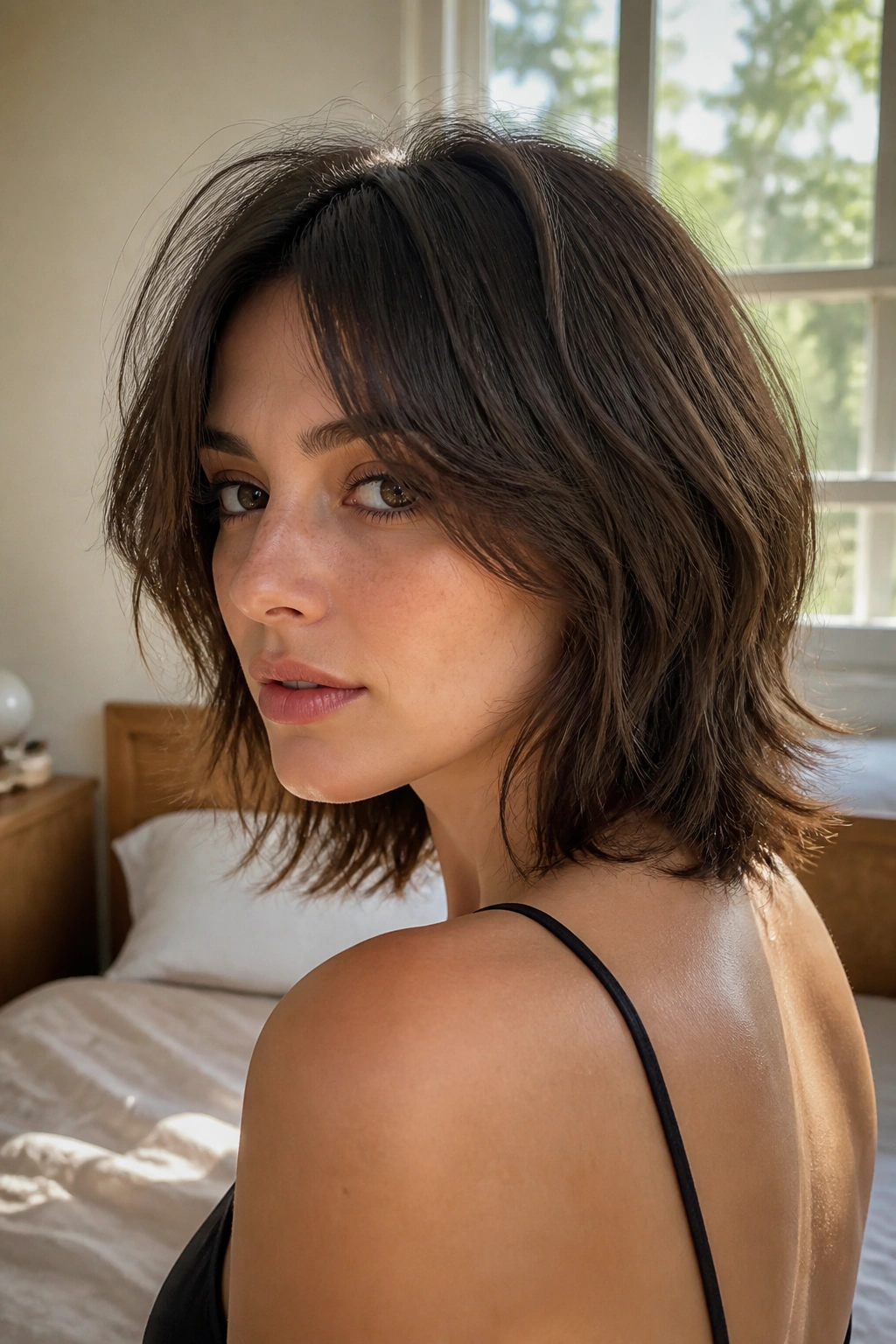
Curtain bangs are the easiest entry point into the wolf-cut-bob look. They split softly at the center, skim the cheekbones, and let the shorter crown layers do their job without turning the whole haircut into a statement piece.
Why the shape works
This version keeps the perimeter of the bob clean enough that the cut still reads as a bob first and a shag second. That matters. If the layers climb too high and the bangs get too blunt, the shape can tip into chaos fast.
Curtain bangs also give you room to style the cut a few different ways. You can blow them away from the face with a round brush, bend them with a flat iron, or let them fall a little messy on purpose. They do not need to be perfect. Good news, because perfect bangs are a lie.
- Best on hair that has a little natural bend.
- Works especially well when the shortest layers hit around the cheekbone.
- Looks good with a center part or a slight off-center part.
- Usually needs a trim every 5 to 7 weeks to keep the fringe from collapsing.
Pro tip: keep the bangs a touch longer than you think you need. Curtain fringe shrinks up once it dries, and the extra length gives you breathing room.
2. The Bottleneck Bang Wolf Bob

This is the version that looks expensive without trying too hard. Bottleneck bangs are shorter in the center and longer at the sides, so they frame the face in a way that feels softer than blunt fringe and less predictable than curtain bangs.
The shape is especially useful if you want a wolf cut bob with bangs but don’t want full forehead coverage. The center opens the face up, while the longer sides blend into the front layers and make the haircut feel smooth instead of chopped into pieces. That little detail changes everything.
I like this cut on people who hate the feeling of heavy bangs sitting on their brows. It has movement, but it doesn’t demand a lot of styling drama. A quick blow-dry with a small round brush, a light mist of flexible spray, and you’re done. Nothing fussy.
The catch is that the transition between the short center and the longer sides has to be cut well. If it’s too abrupt, the fringe can look disconnected. If it’s too soft, you lose the point of the shape entirely. Middle ground. Always middle ground.
3. Micro Bangs With Choppy Wolf Layers

Can a bob and micro bangs live together without looking like a costume? Absolutely — if the rest of the cut has enough softness to balance the tiny fringe.
Micro bangs make the wolf cut bob feel sharper and more graphic. They show off the eyes, open up the face, and put all the drama into a very small strip of hair. That sounds bold because it is bold. It also means the layers underneath should stay loose and airy, not overbuilt.
How to wear it
The trick is to keep the bob a little uneven and a little piecey. You want movement around the cheek and jaw, because the bangs are already doing the heavy lifting. If the rest of the haircut is too polished, the contrast gets awkward.
A light matte paste at the ends helps. So does rough-drying the fringe with your fingers instead of forcing it flat. And if your hair grows fast, be honest with yourself: micro bangs need more maintenance than most people expect.
- Best for strong brows and a bit of attitude.
- Needs regular trims, sometimes every 3 to 4 weeks.
- Works well with straight or slightly wavy hair.
- Not the friendliest option for a very swirly hairline.
4. The Curly Wolf Cut Bob With Fringe
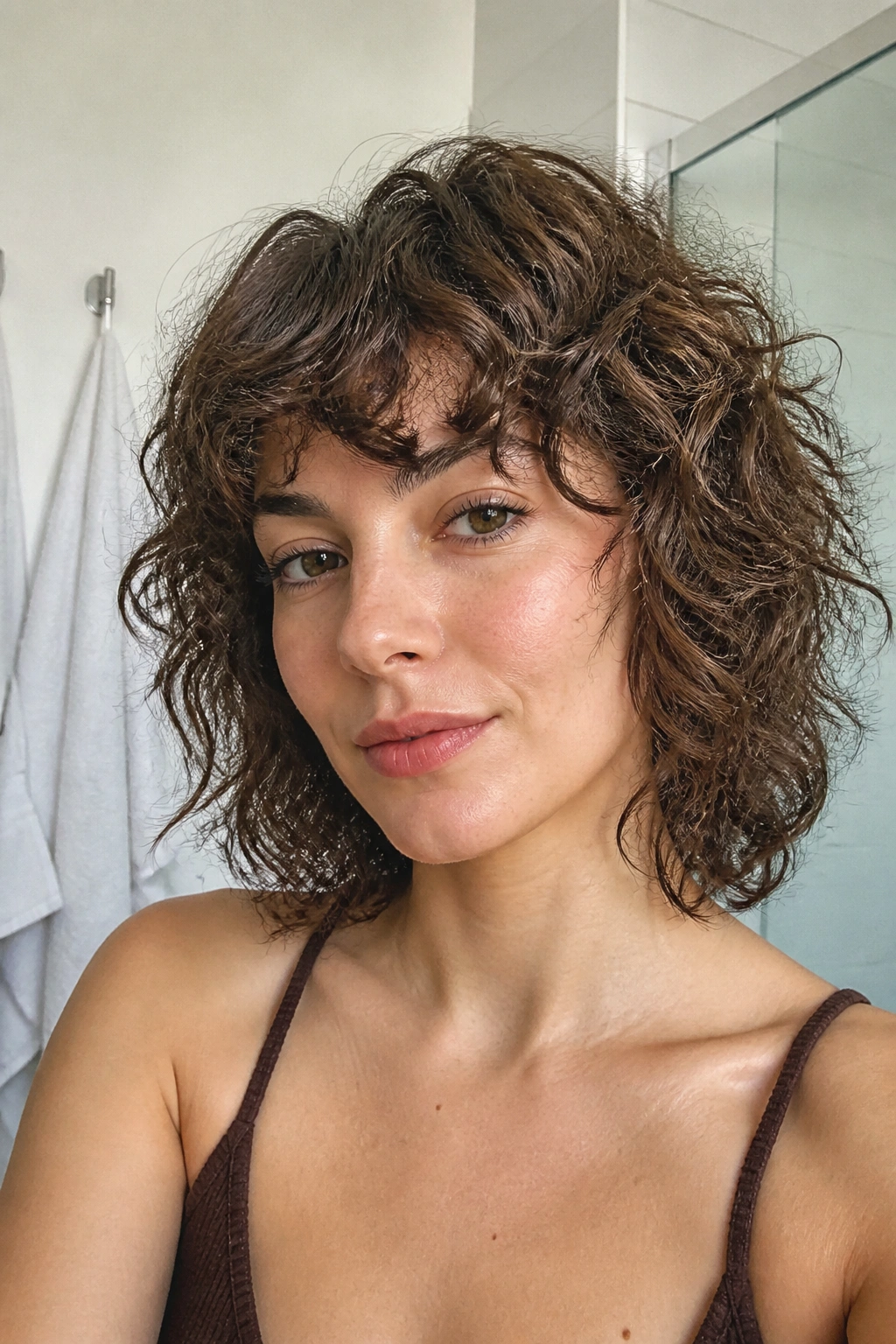
I have a soft spot for this one. Curly hair and wolf layers make sense together, and the bangs can look fantastic when they’re cut with the curl pattern in mind instead of against it.
Picture a bob that bounces when you move, with fringe that lands at eyebrow level when dry and sits a little longer when wet. That extra length matters because curls spring up more than most people expect. If someone cuts curly bangs the same way they would cut straight bangs, the result can be way too short.
The mechanism here is simple: the crown layers remove weight, the bob length keeps the shape grounded, and the fringe gives the cut that slightly wild edge people love about wolf cuts. A diffuser helps, but so does patience. Let the curls form before you judge the shape.
If your curls are tight, ask for the bangs to be left longer and shaped dry. If they’re looser, a softer fringe with face-framing layers can keep the haircut from turning too round. This is one of those styles that improves when the stylist respects the curl instead of trying to beat it into submission.
5. Razor-Cut Wolf Bob for Fine Hair
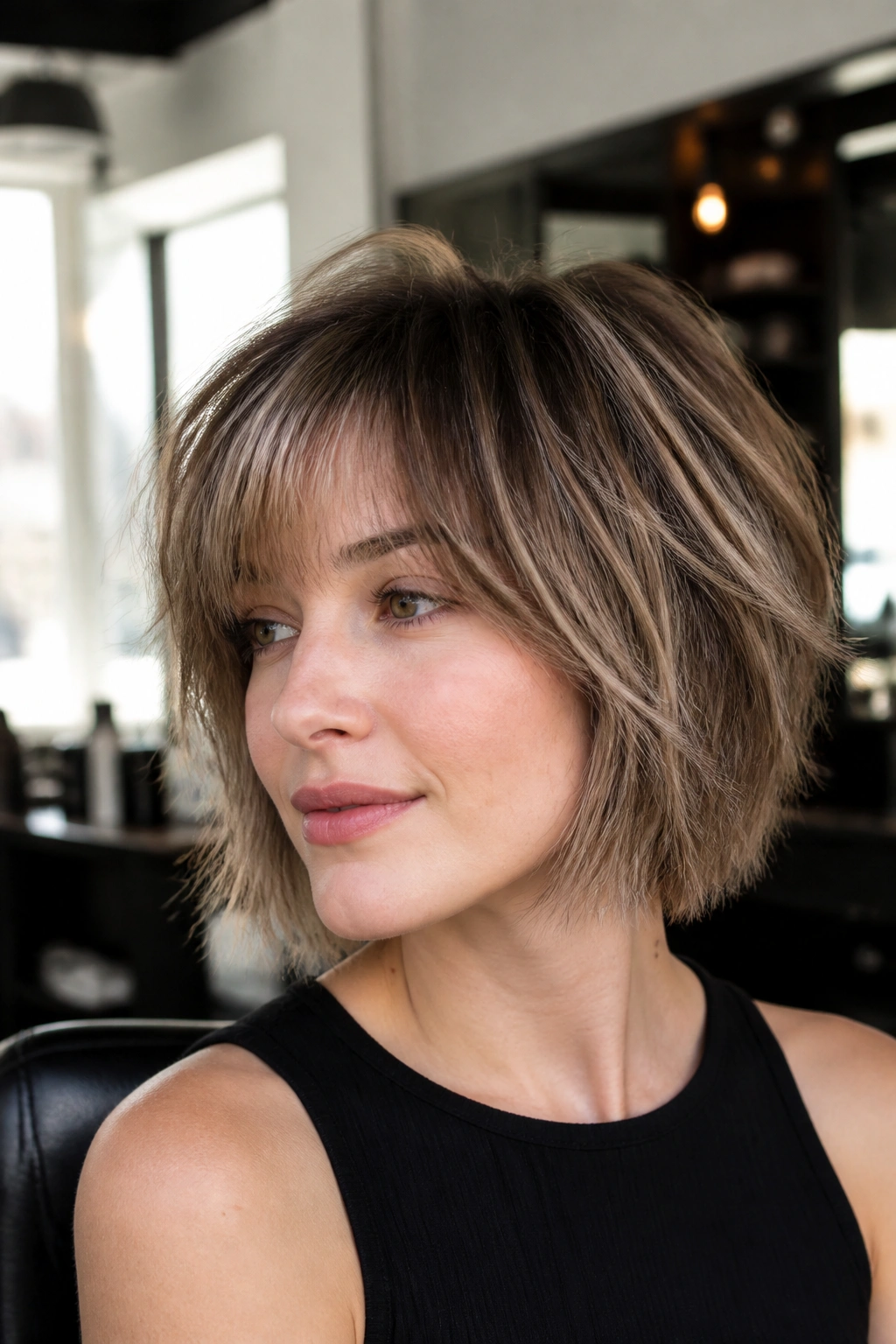
Fine hair needs a careful hand. Too much layering and it goes see-through; too little and the wolf cut bob turns into a blunt helmet. That’s why razor cutting or point cutting can help so much here.
The goal is movement without stripping away the ends. You want the hair to look airy at the crown and around the face, but still have enough density at the perimeter to hold the bob shape. When I see a fine-haired wolf bob that works, it usually has slightly longer front pieces and a fringe that blends rather than sits as a separate block.
A good stylist won’t thin the whole head just to create texture. That’s lazy cutting, and it often leaves the ends wispy in the worst way. Better approach: build soft layers around the top, keep the bottom line clean, and let the bangs do a bit of the work.
This version usually shines with a root-lifting mousse at the crown and a quick blow-dry using a small brush. No heavy creams. No greasy oils. Fine hair goes flat fast, and this cut needs lift more than slip.
6. Thick-Hair Wolf Bob With Piecey Bangs
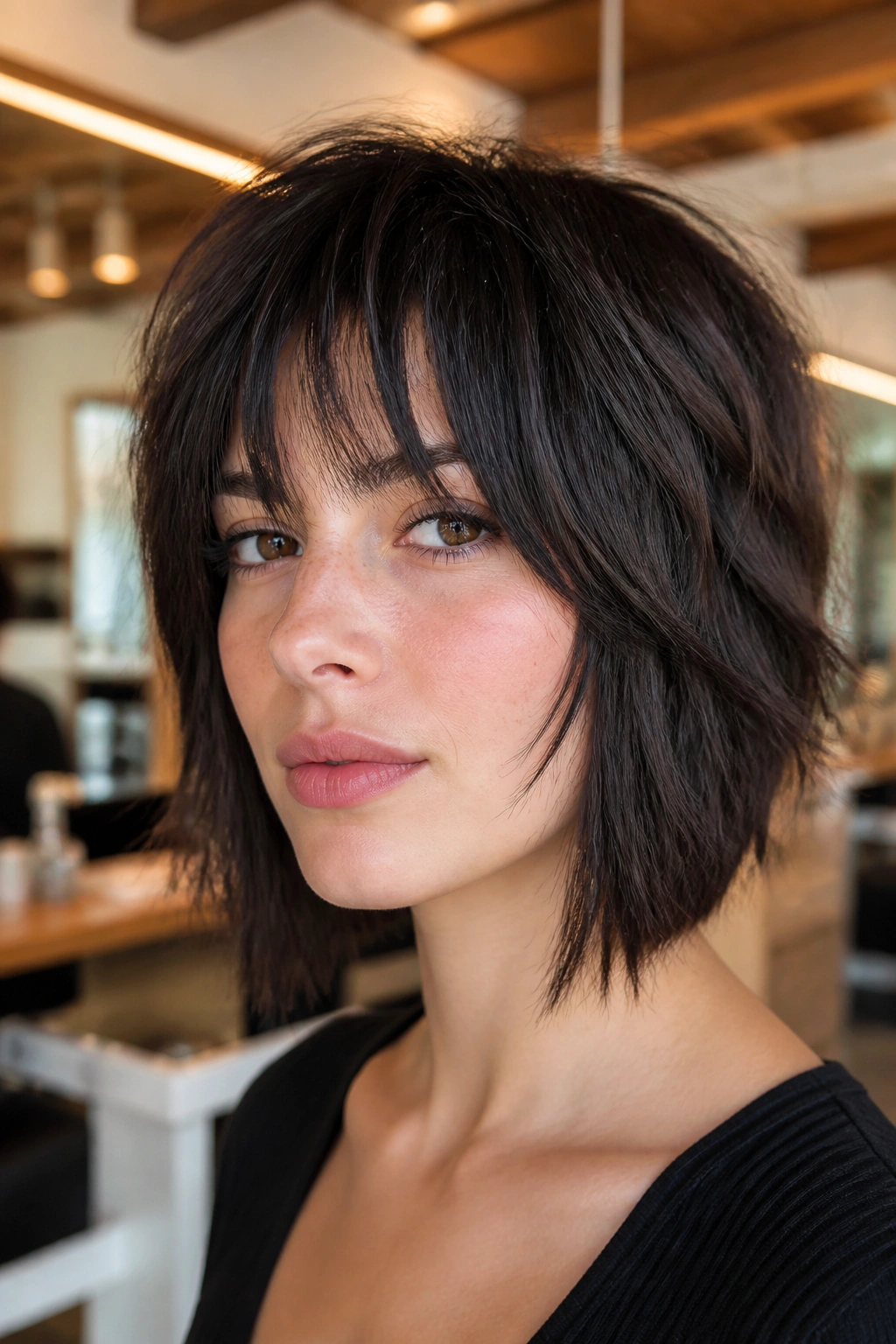
Unlike the fine-hair version, this one can take a lot more internal layering and still hold its shape. Thick hair needs room to move, or the bob starts to look puffy around the sides and too dense through the back.
That’s where piecey bangs help. They break up the front and stop the whole cut from feeling like one big block of hair. The bangs should be separated enough that you can see a little forehead through them. Not see-through, exactly — just broken up enough to keep the fringe light.
When it works best
It works best when the stylist removes weight underneath the top section and leaves the perimeter strong. That combination gives you the wolf cut texture without the bulky triangle shape thick hair sometimes creates.
A little more product helps here than it does on fine hair. Think light cream through the mids, then a texture spray at the ends once it’s dry. If you skip the styling step completely, thick hair can still look nice, but the bangs may fall flat on the face.
- Good for dense, straight, or wavy hair.
- The fringe should be cut in small sections.
- Texture spray beats sticky gel.
- Needs shape maintenance every 6 to 8 weeks.
7. The Inverted Wolf Bob With Face-Framing Bangs
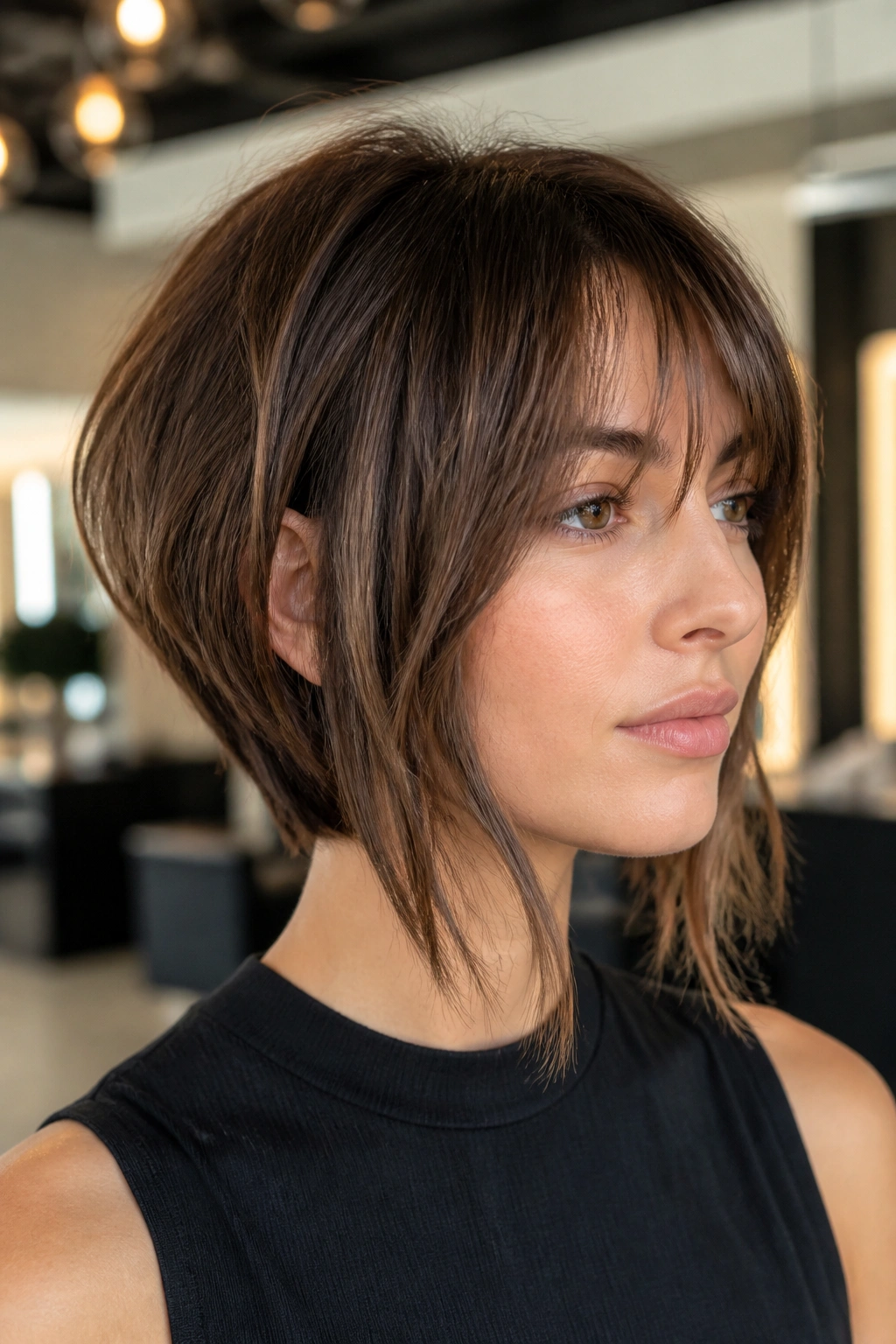
This version leans into the angle. Shorter in the back, longer toward the front, it gives the wolf cut bob a little more swing and a lot more movement around the jaw.
The shape is especially flattering if you want the front pieces to graze the cheekbones without dragging the whole haircut down. The back stays neat, which keeps the style from getting too shaggy. I think that matters. Some wolf cuts go so hard on texture that they lose the bob part completely, and then you’re left with a haircut that needs more effort than it’s worth.
What the angle does
The angled length draws the eye forward, which helps elongate rounder faces and keeps the cut from feeling too square. Face-framing bangs can sit with the angle instead of fighting it, especially if they’re slightly longer at the sides.
A few details to ask for:
- a stacked or softly shorter nape,
- front pieces that hit between the chin and collarbone,
- bangs that melt into the first layer near the temples,
- texture cut into the ends, not hacked through the middle.
This is a good choice if you like structure but still want a little mess in the finish.
8. Side-Swept Bangs With a Shaggy Wolf Bob
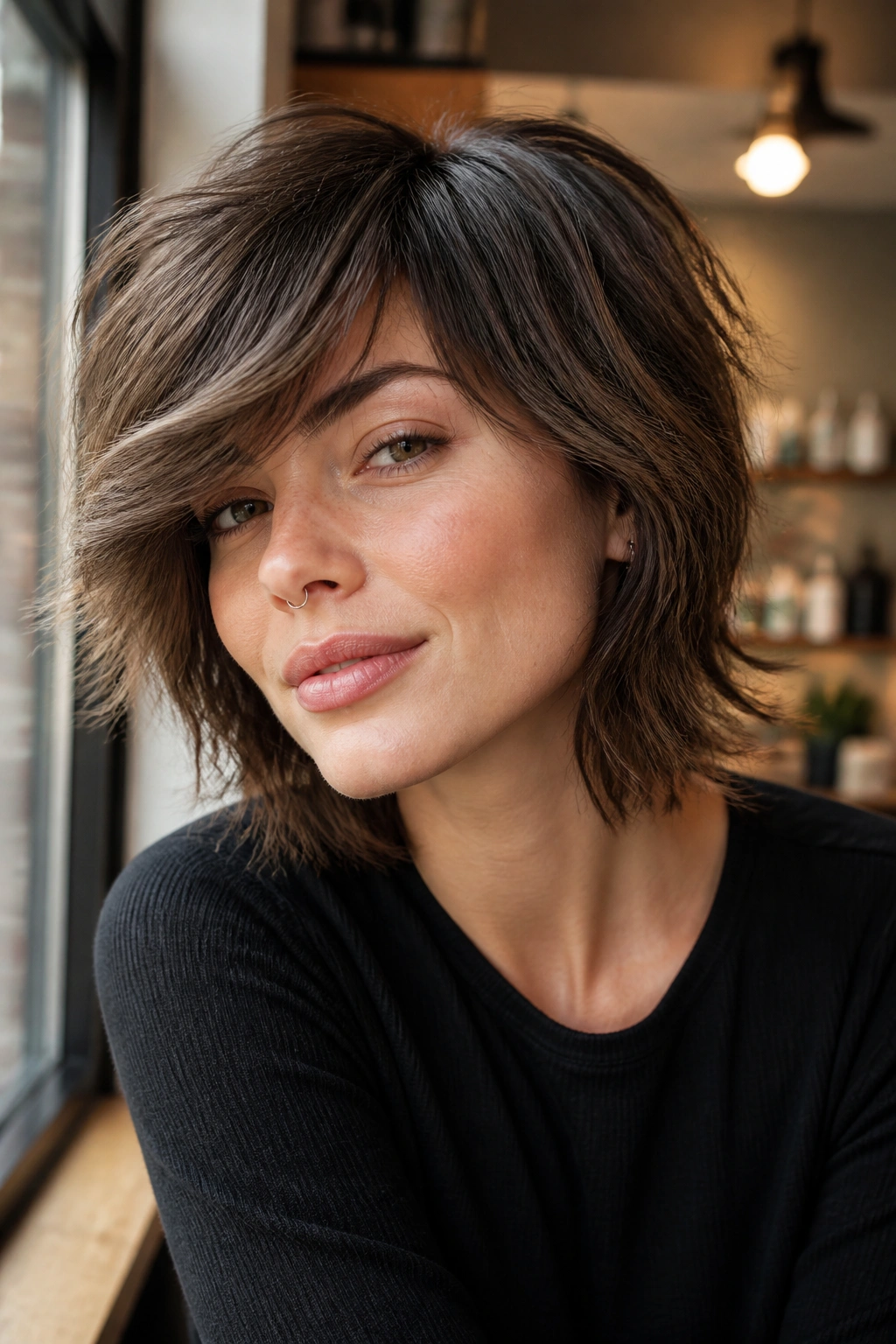
Side-swept fringe is the safe choice, but not in a boring way. It’s the option for people who want the wolf cut bob vibe without putting a full curtain of hair across the forehead.
The side sweep softens the face and gives the haircut a more relaxed feel. It also plays well with cowlicks and tricky front growth patterns, which is handy if bangs usually fight you. A side part can make the top layers fall in a way that looks intentional even when you’ve barely styled it.
If you’ve ever liked a shag but worried it would look too much like bed hair, this is the bridge. The bob keeps it tidy. The fringe keeps it interesting.
Use a round brush or a medium flat brush to guide the bang in one direction as it dries. Don’t over-direct it. Too much tension makes it flip back in weird ways later, and nobody wants that. A tiny bend at the ends is enough.
This style suits someone who wants softness more than edge. It’s not the loudest wolf bob, but it may be the easiest to live with.
9. The Beach-Wave Wolf Cut Bob
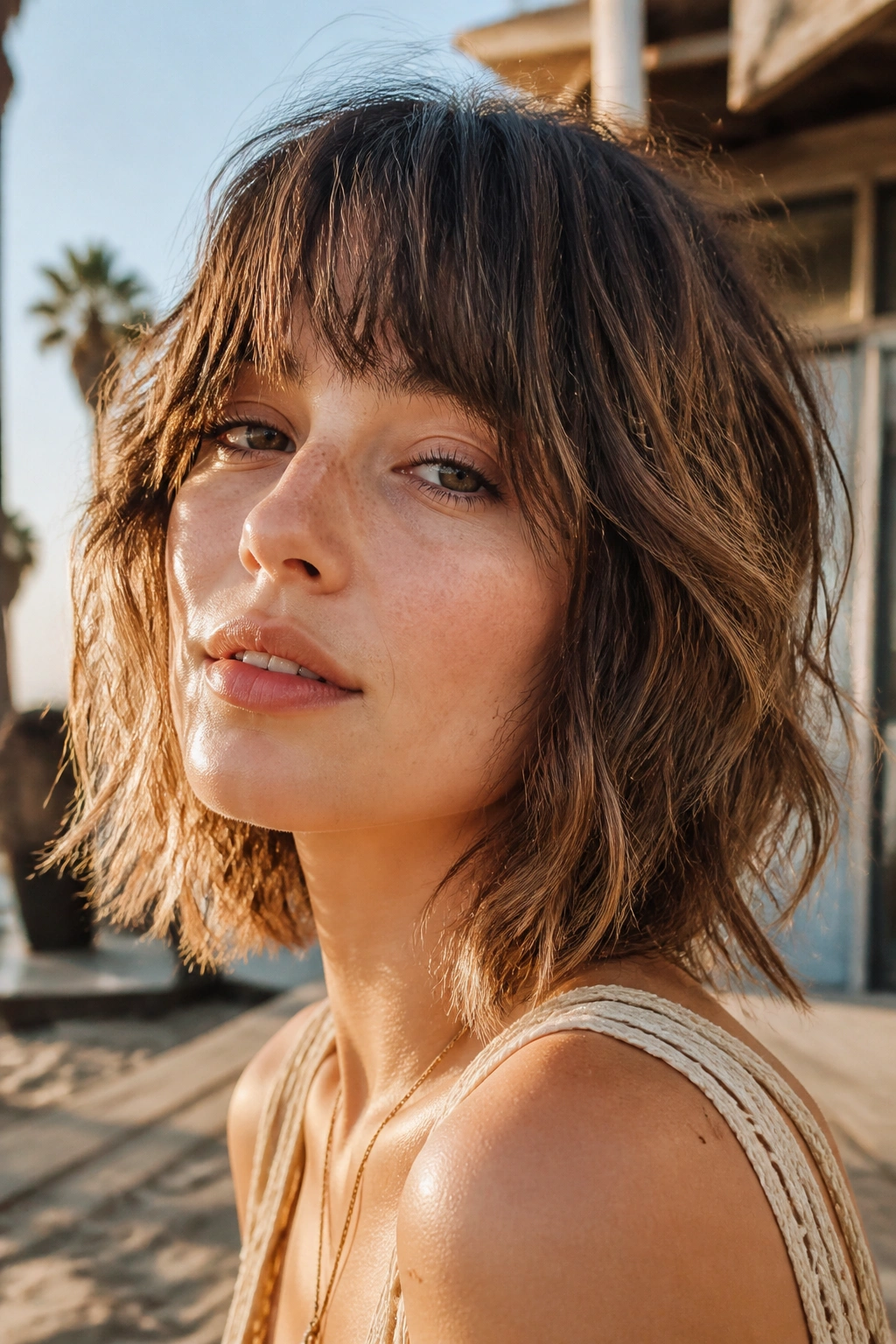
You know the look: bends, not curls; texture, not fluff. That’s the sweet spot for a beach-wave wolf cut bob with bangs.
This style depends on visible movement in the mids and ends, so the bob should never be cut too blunt. The bangs can be curtain-style, wispy, or slightly side-swept, but they need to stay soft. Hard lines break the spell. The whole point here is that the hair looks like it has already been lived in for a day or two.
A 1-inch curling iron or a flat iron wave technique works well if you want to fake the texture. Wrap the hair loosely, leave the ends out on a few pieces, and shake the waves apart with your fingers once they cool. A sea salt spray can help, but use it lightly. Too much and the hair feels crunchy, which is a fast way to ruin an otherwise easy look.
This is the version people often ask for when they say they want “something cool but not too done.” Fair request. This cut understands the assignment.
10. The Jaw-Length Wolf Bob With Blunt Bangs
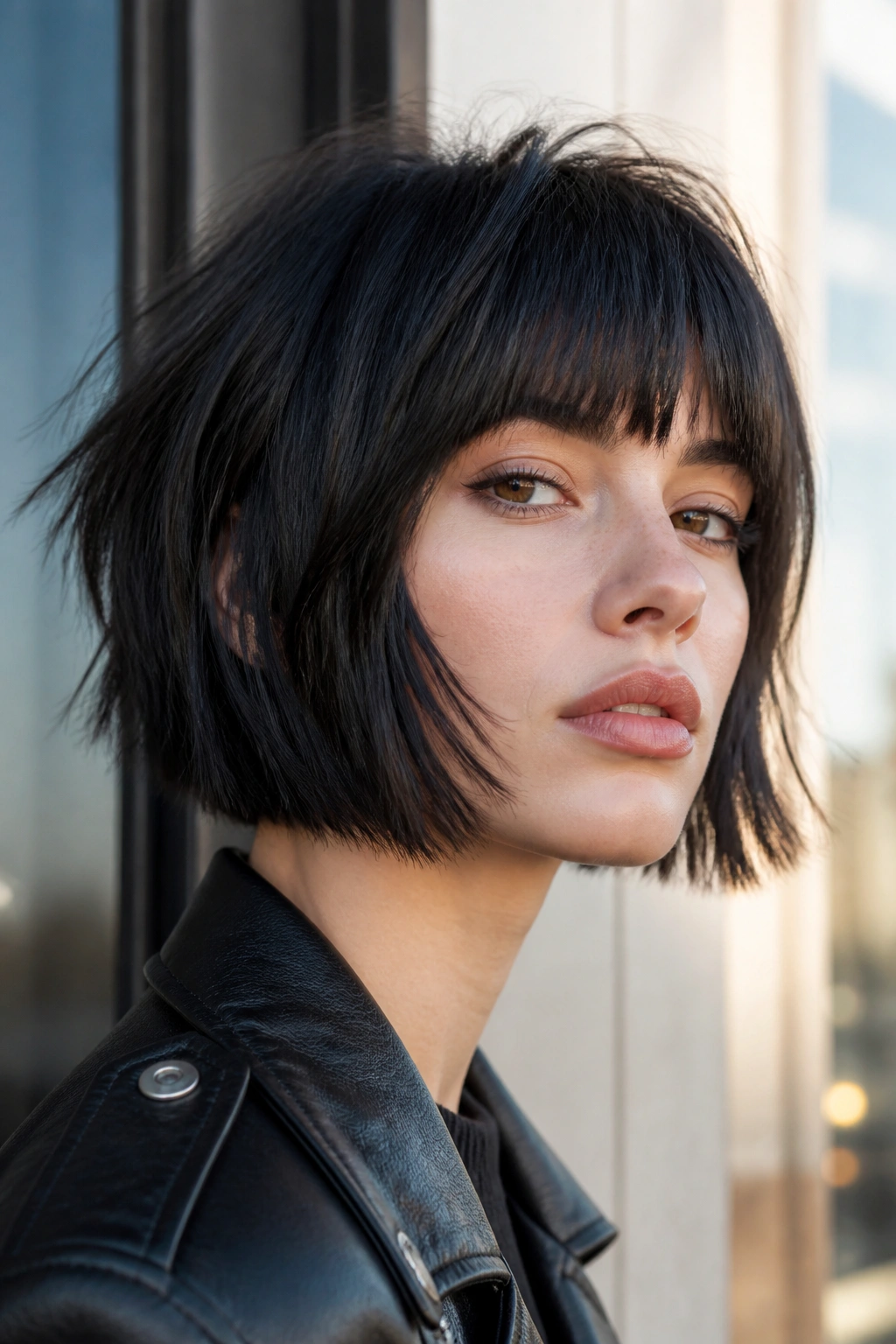
This is the sharpest option on the list. Jaw-length, strong fringe, choppy layers around the crown — it has a little bite to it, and that’s why it works.
The blunt bangs give the cut a clean front edge, which makes the textured layers behind them feel even more dramatic. If you like contrast, this is the one. A soft fringe can disappear into the haircut, but blunt bangs claim the front of the face and make the rest of the shape look more undone by comparison.
There’s a catch. The cut has to be precise. If the bob line is crooked or the bangs are too thin, the whole thing looks unfinished in a bad way. On the other hand, when it’s done well, it has a very strong, modern shape that doesn’t need much styling beyond a blow-dry and a touch of paste on the ends.
Best on straight to slightly wavy hair. Curly hair can wear it too, but the fringe needs to be cut with shrinkage in mind, or you’ll lose the clean line.
11. The Chin-Length Wolf Bob With Curved Fringe
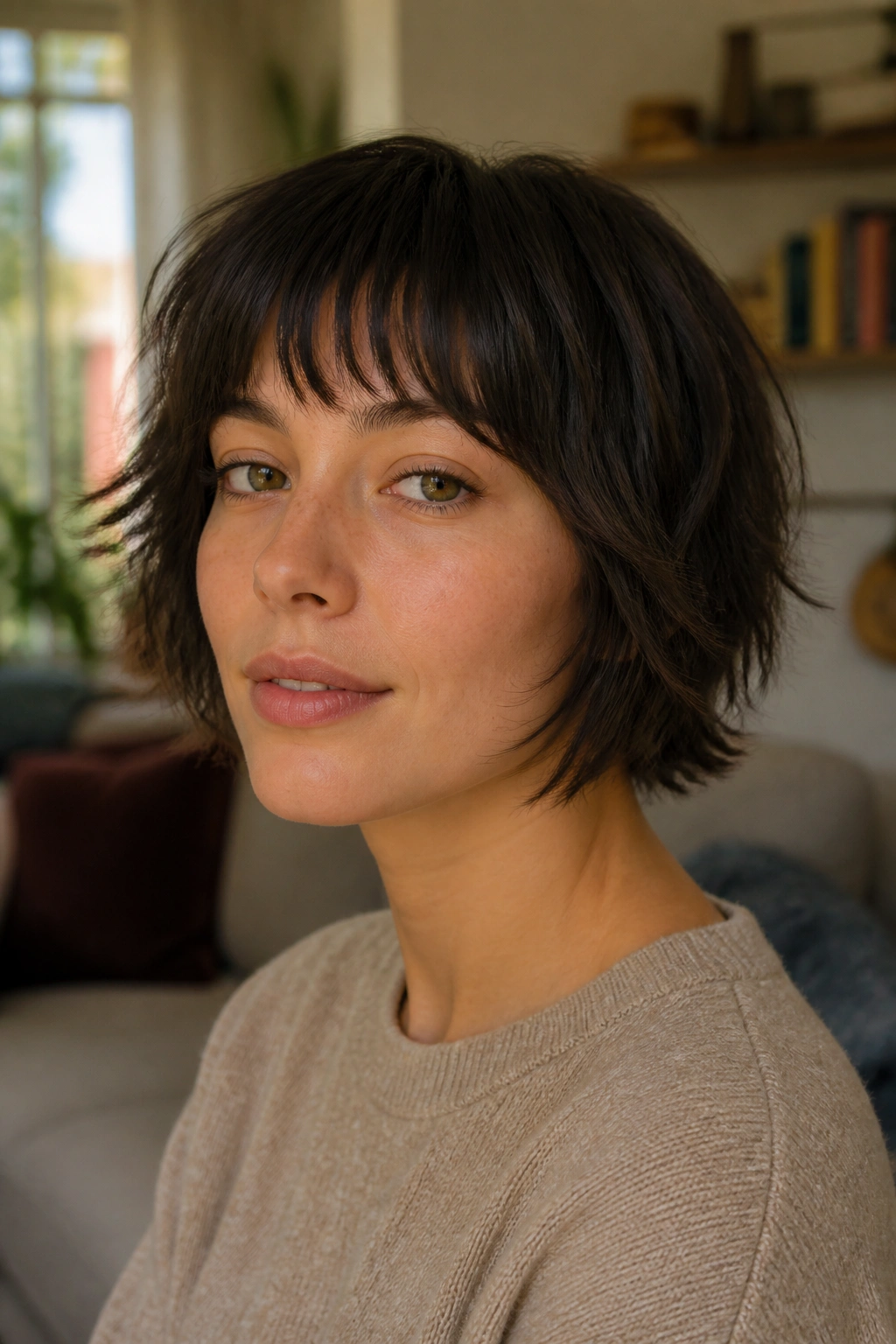
A chin-length wolf bob with bangs has a softer, more tailored feel than the jaw-length version. The curve in the fringe matters here. It follows the brow line a little, then opens toward the temples so the face doesn’t get boxed in.
I like this one because it gives you texture without crowding the features. The bangs can sit a touch longer in the center and taper at the sides, which keeps the shape friendly instead of severe. That makes the haircut a nice pick for anyone who wants a shorter bob but doesn’t want the edge of a blunt mini bob.
Why it reads so clean
The chin length puts the focus right where the face starts to move: cheeks, jaw, and eyes. The soft fringe then works with that line instead of sitting on top of it. If the bob is cut well, the whole thing has a neat curve even while the ends stay broken up.
Ask for the front to be slightly longer than the back, and keep the layers light around the temples. Too many short pieces there can puff out in a way that dates the cut fast. A simple bend with a round brush is enough styling for most hair types.
12. The Collarbone Wolf Bob With Long Curtain Bangs
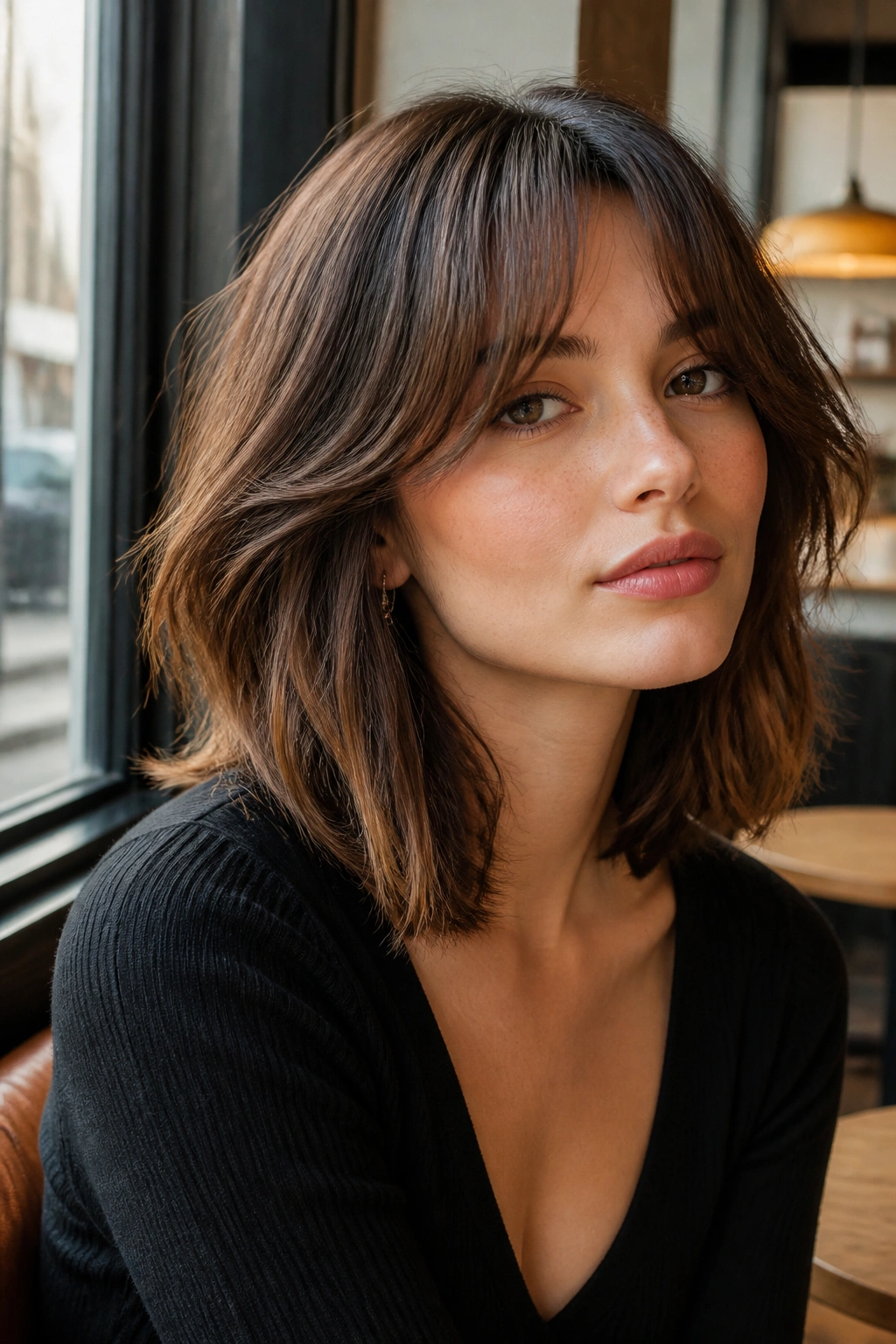
This is the most forgiving length on the list. It sits between a bob and a lob, which means you get the wolf-cut texture without feeling like the haircut is all bang and no body.
Long curtain bangs are the reason it works so well. They blend into the front layers and give the style a bit of softness, especially if you like to tuck hair behind the ears. The longer length also makes grow-out easier. That is not a small thing. A lot of layered bobs look great on day one and then turn awkward in three weeks. This one gives you more breathing room.
Unlike the sharper jaw-length versions, this cut can handle a little more natural texture. The extra length keeps the ends from puffing up too much, and the fringe can fall loose instead of being forced into place. That makes it a solid choice for people who want the wolf bob look but do not want to wrestle with it every morning.
If you prefer a hairline that looks soft around the face, this is probably the one I’d point you toward first.
13. The Air-Dry Wolf Bob With Wispy Bangs
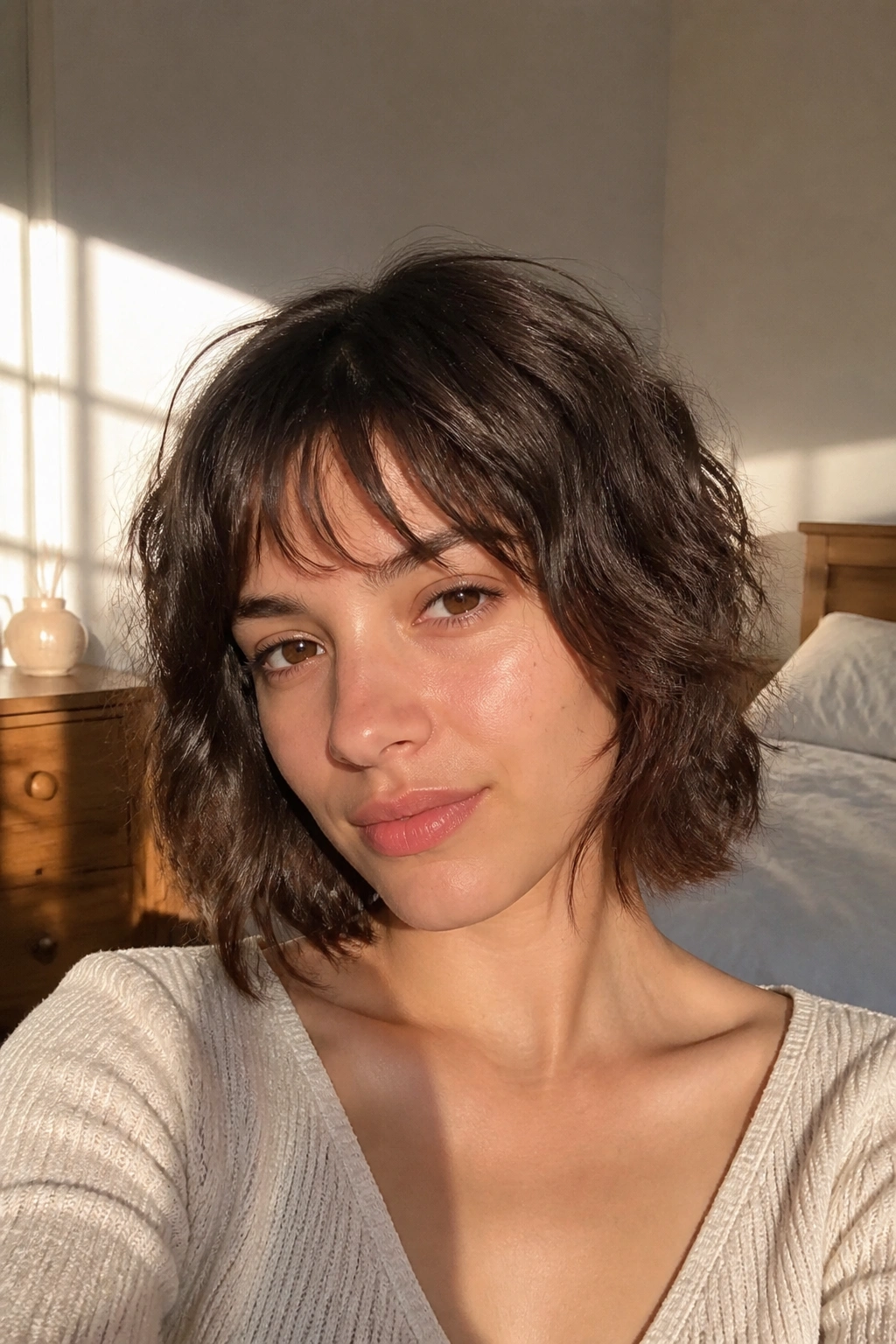
Some haircuts ask for styling tools. This one behaves better when you leave it alone. That’s the whole appeal.
An air-dry wolf cut bob with bangs leans into your natural wave or bend instead of fighting it. The layers should be soft enough that the hair falls into a bit of shape on its own, and the bangs should stay wispy so they don’t dry into a heavy curtain. If your hair already has movement, you can make this look with very little effort.
How to air-dry it
Start with a leave-in conditioner through the mids and ends, then scrunch in a light curl cream or mousse. Use your fingers to place the bangs where you want them, then stop touching them. Seriously. Constant fiddling is what makes the front look stringy and weird.
The best part is the texture gets more interesting as it dries. Not wild, not frizzy — just a little broken up in the right places. You can clip the crown for 10 to 15 minutes while it dries if you want a touch more lift.
- Good for wavy and loose-curly hair.
- Works well with a softer perimeter.
- Needs less daily styling than sharper bob shapes.
- Can fall flat if the layers are cut too heavy.
14. The Wolf Bob With Big Crown Volume

A lot of wolf cuts are sold as messy, but the ones with real shape usually have something else going on: height at the crown. That lift changes the whole silhouette.
This version is built for people who want the top of the hair to have a little body instead of lying flat against the head. The bang area can be soft, curtain-like, or side-swept, but the crown needs the main event. Shorter layers near the top create that lift, while the bob length keeps the bottom from ballooning out.
How to get the lift
Blow-dry the roots first. Not last. If you flatten the crown while everything is still damp, you spend the rest of the day trying to rescue it. Use a mousse at the roots, lift the hair with a vent brush, and clip the top section up while it cools.
The style looks strongest on medium to thick hair, though fine hair can wear it too if the layers are cut carefully. The danger is going too short at the crown. Then you get height with no softness, and the cut starts to feel dated fast. Keep the lift, but keep the movement.
- Use root spray at the crown.
- Blow-dry the front away from the face.
- Keep the ends light, not frayed.
- Trim often enough to preserve the silhouette.
15. The Sleek Wolf Bob With Soft Bangs
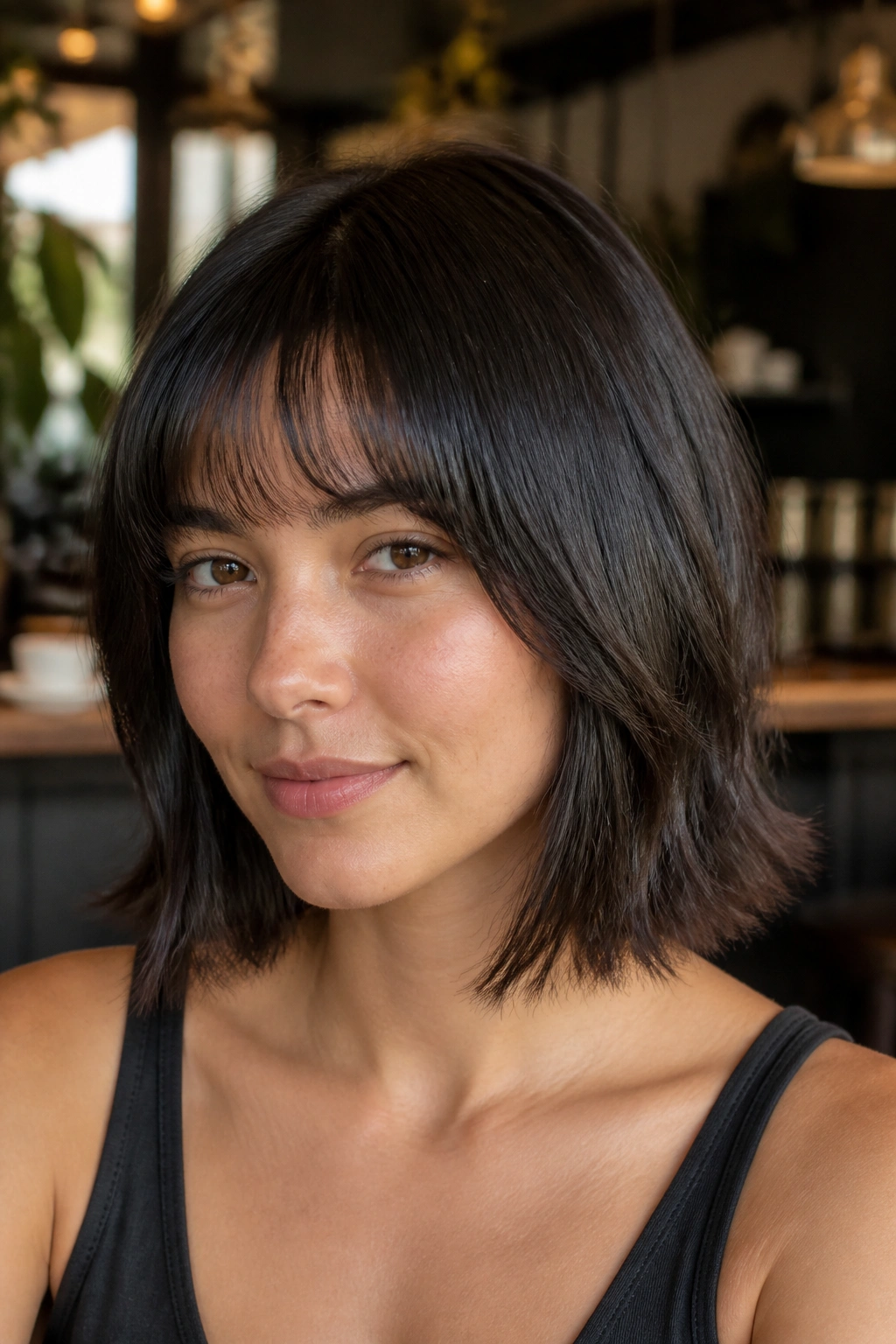
Yes, a wolf cut bob can be sleek. It doesn’t have to live in the messy, sea-salt-spray universe all the time.
This version is for straight hair or for people who like to wear their hair smooth most days but still want some texture in the layers. The bangs stay soft and slightly separated, which keeps the front from looking heavy. The bob itself should have a clean outline, but the interior layers still need enough movement that the haircut doesn’t turn into a plain box.
A flat iron with a tiny bend at the ends can do most of the work. Run it through the bangs first, then bend the front pieces just enough to keep them from sticking straight down. Finish with a light serum on the ends only. Not the roots. The roots need air, not shine.
This is one of my favorite versions for people who want the wolf cut bob with bangs but need it to behave in a more polished setting. It still has texture. It still has attitude. It just does it in a quieter way, which, honestly, is often the smarter move.
