



A round face is defined by its soft, circular perimeter where the width and length are roughly equal, often lacking the sharp, angular definition of a square or heart-shaped face. When you have this face shape, the goal of a great haircut is usually the same: introduce structure, create verticality, and draw the eye toward your features rather than the width of your cheeks. Nothing does this quite as effectively as a shag.
The genius of the shag lies in its internal structure. By layering the hair heavily around the crown and keeping the ends lighter, you naturally add height at the top of the head. This “vertical volume” elongates the silhouette, which is the exact visual effect you want. Unlike a heavy, one-length bob that might emphasize a round jawline, a well-executed shag breaks up that circular line with movement and texture.
You are not just getting a haircut; you are building an architectural frame for your face. The secret is in the razor work. A blunt cut creates a shelf, but a razor-cut shag creates a taper. When you remove weight from the mid-lengths and focus the volume above the occipital bone, you essentially sculpt a new shape for your head. Whether you have stick-straight hair or a ringlet-heavy natural texture, the right shag adapts to your specific canvas.
1. The Classic 70s Shag
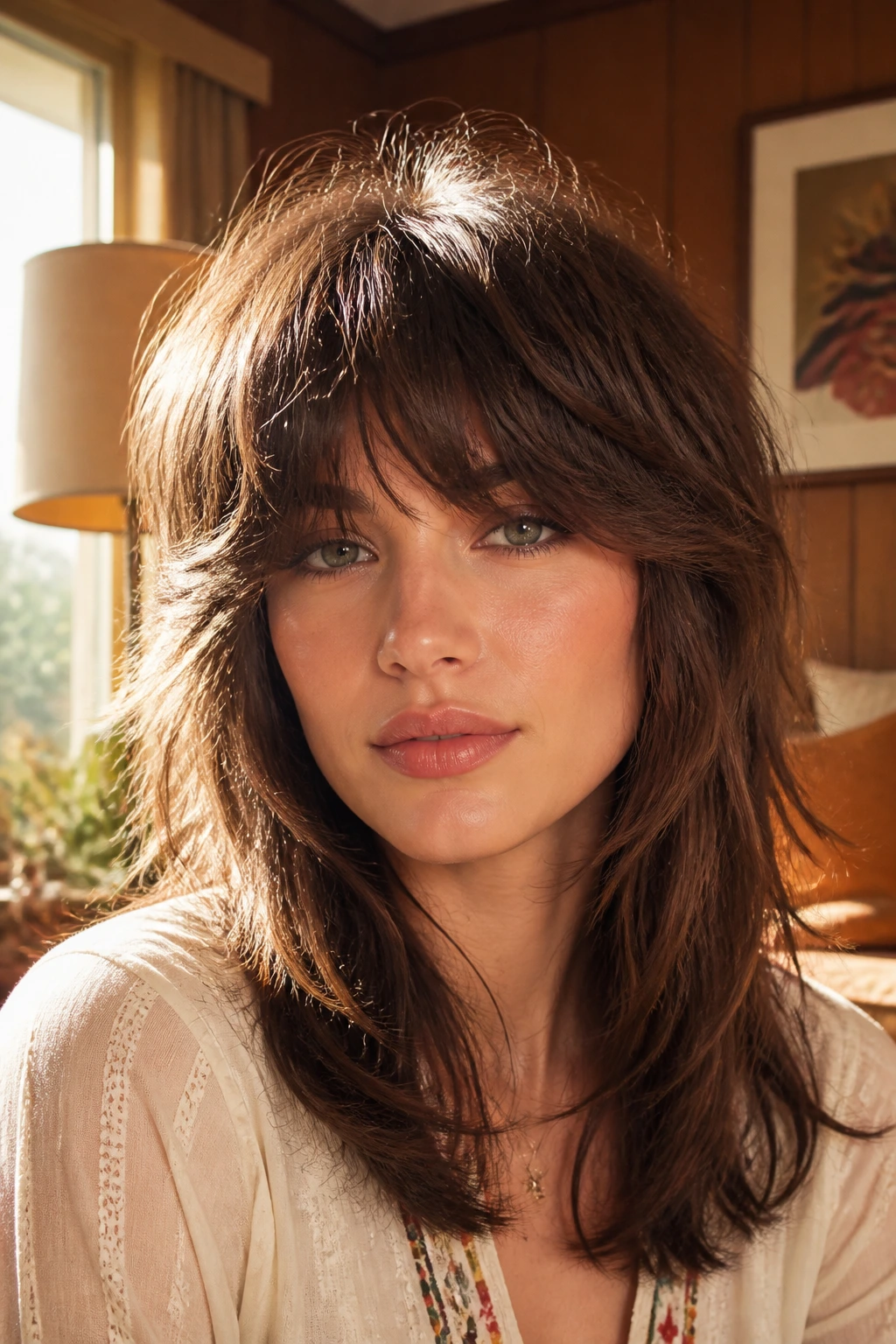
This is the original inspiration, characterized by heavy, choppy layers that start relatively high up near the crown. For someone with a round face, this is ideal because that crown volume creates a visual line of length.
Why It Works for Roundness
The key here is the “shattered” effect. By using texturizing shears to break up the weight, the hair doesn’t just sit in a round, heavy mass around your face. It pulls the eye upward.
How to Style It
- Use a salt spray on damp hair.
- Scrunch the ends with your hands while blow-drying with a diffuser.
- Avoid using a round brush, which can create too much horizontal volume—keep the sides flatter than the top.
Pro tip: Don’t over-condition the hair; you want that slightly gritty, lived-in feel that gives the 70s style its authentic edge.
2. The Modern Wolf Cut
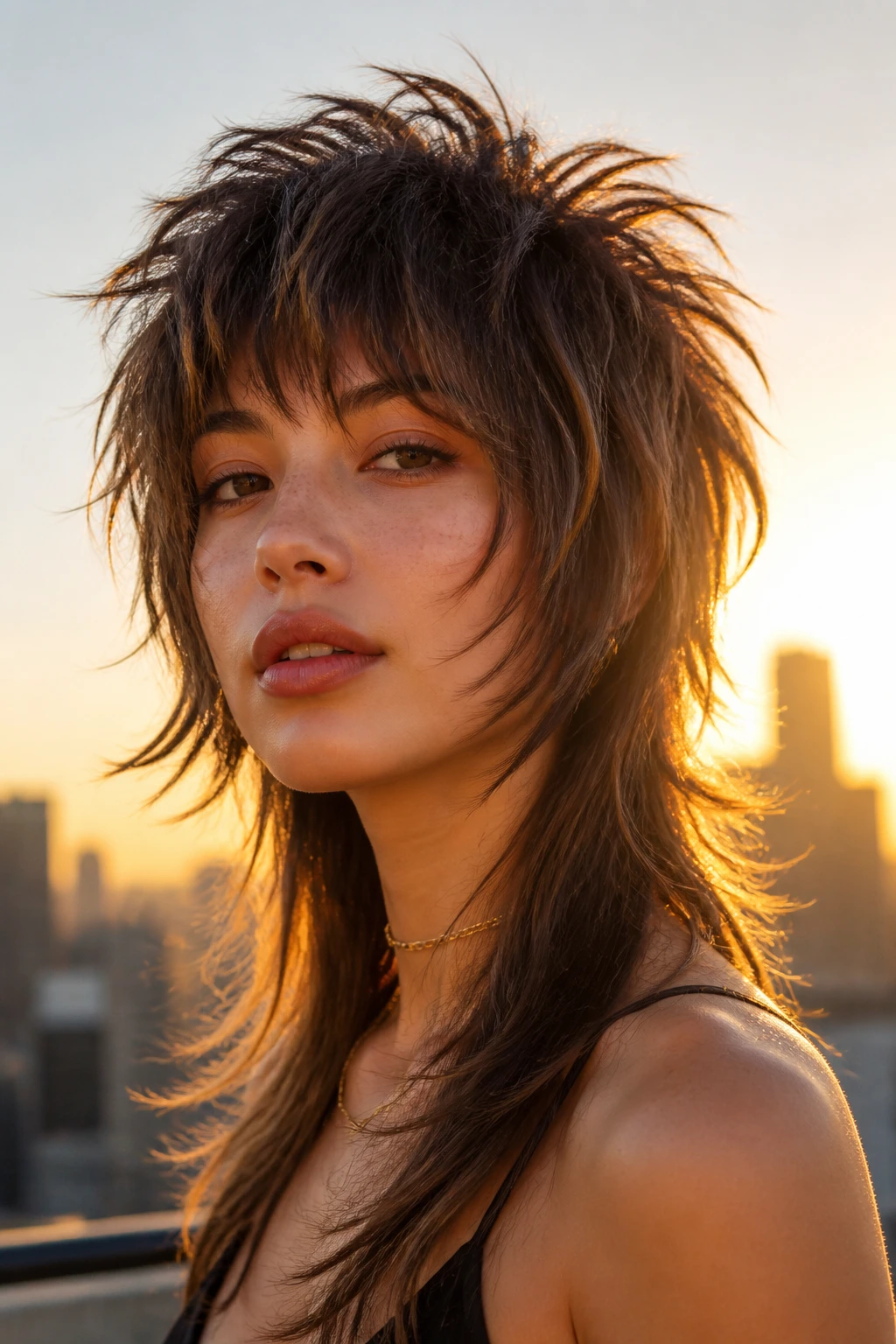
The wolf cut is essentially the shag’s edgy younger sibling. It takes the crown volume of the 70s shag and pushes it to the extreme. The top is incredibly short and full, while the bottom layers remain long and wispy.
The Face-Framing Effect
Because the top layers are so short, they fall around the cheekbones in a way that creates an “invisible” contour. It breaks the roundness of the cheeks instantly. The long, thin pieces at the bottom prevent the hair from looking too voluminous at the jawline, keeping the face looking leaner.
Maintenance Note
This cut requires regular trims to keep the layers distinct. If you let it grow out for too long, the layers will blend and you lose that distinctive, jagged wolf-like shape.
3. The Shaggy Lob (Long Bob)
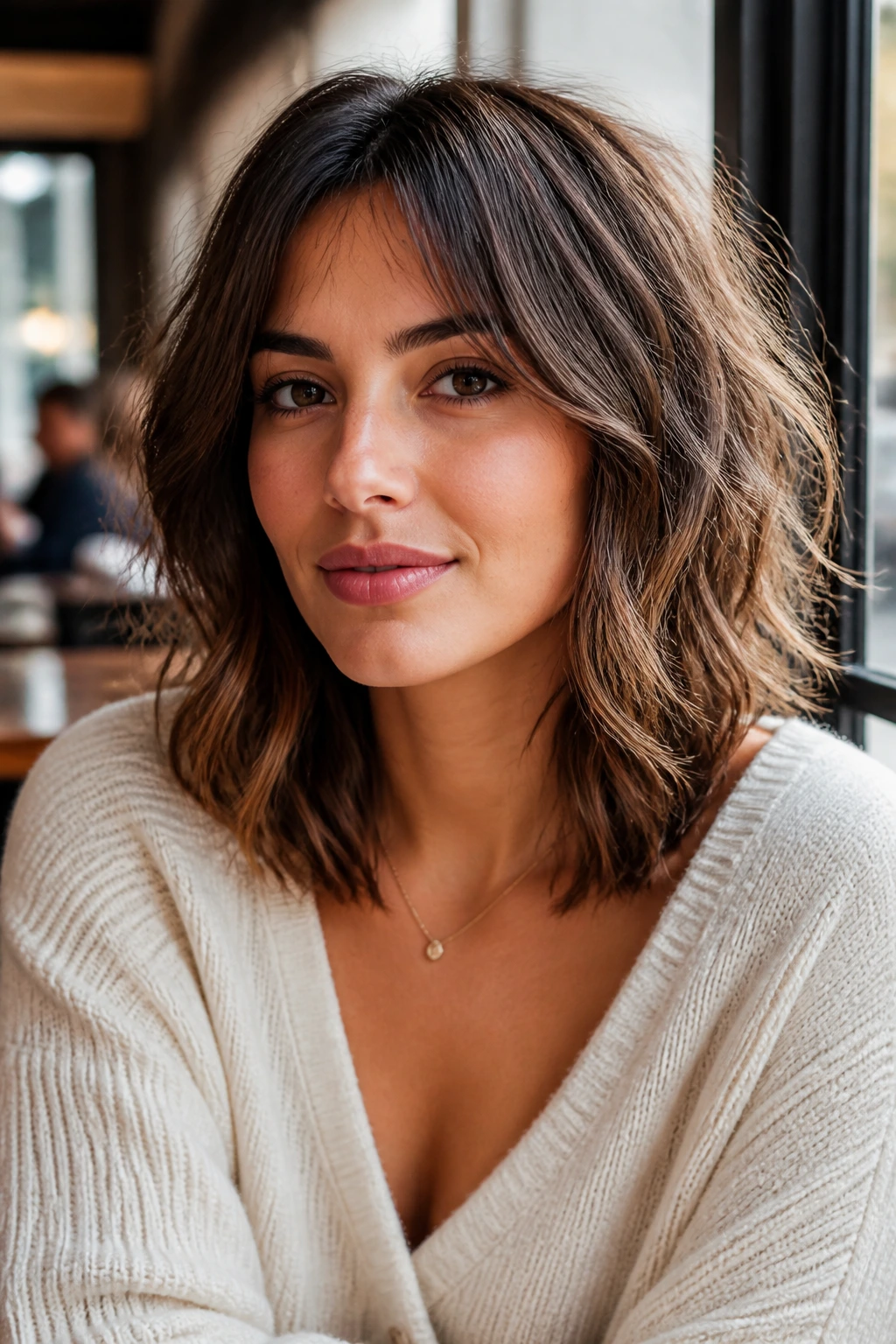
If you aren’t ready for a drastic chop but want to move away from one-length hair, the shaggy lob is your entry point. It keeps the hair at or slightly below the collarbone, but incorporates shattered, shorter layers throughout.
Why This is a Safe Bet
The length ensures you can still pull your hair back into a ponytail on days you just don’t have time to style it. The layers provide the texture that keeps the “round” shape of the hair from echoing the “round” shape of your face.
Ask your stylist: “I want a long bob with internal layers, not external weight.” This tells them you want the bulk removed so the hair doesn’t flare out at the chin.
4. Curtain Bang Shag
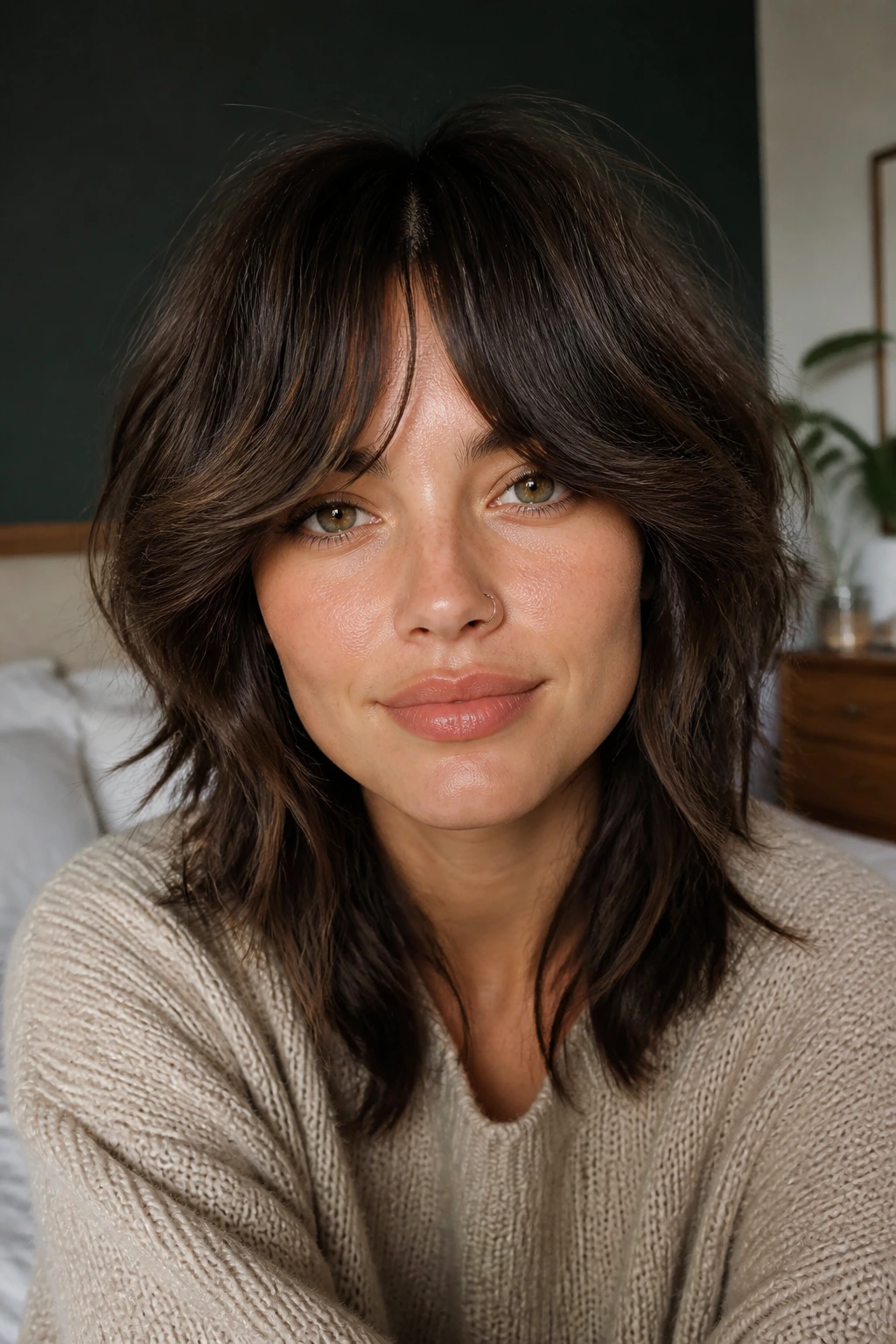
Curtain bangs are almost universally flattering, but they are a specific powerhouse for round faces. They part in the middle and sweep outward, essentially acting like a curtain that hides the widest part of your face.
The Geometry of the Cut
By having the shortest part of the bangs hit around the eyebrows and the longest part hit the cheekbones, you create a soft angle. This is the definition of “soft contouring.” It draws the eye to the center of your face rather than the edges.
Daily Styling
- Use a small round brush to blow-dry the bangs backward and away from the face.
- Let them sit for a minute while they cool to lock in that sweep.
5. Choppy Pixie Shag
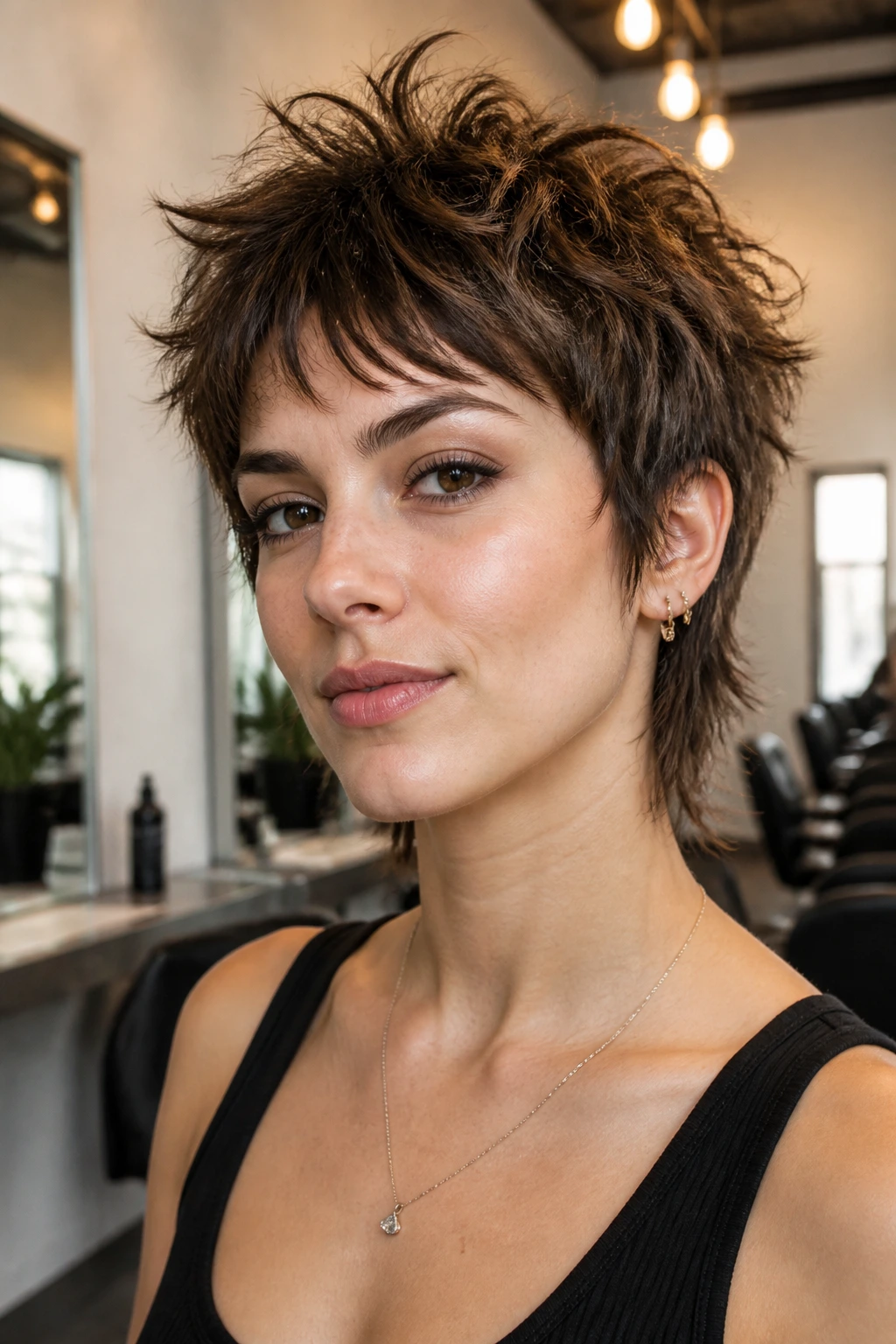
Who says short hair can’t be a shag? A choppy pixie shag is brilliant for round faces because it relies entirely on vertical height. By keeping the sides tight and the top heavily layered, you are essentially “adding” inches to your height.
Key Considerations
- You need a good pomade or texture paste.
- The layers on top should be long enough to give you that “bedhead” look but short enough to stand up on their own.
Reality check: This requires styling every single morning. There is no waking up and going with a pixie shag. It’s high-effort but high-reward.
6. Curly Texture Shag
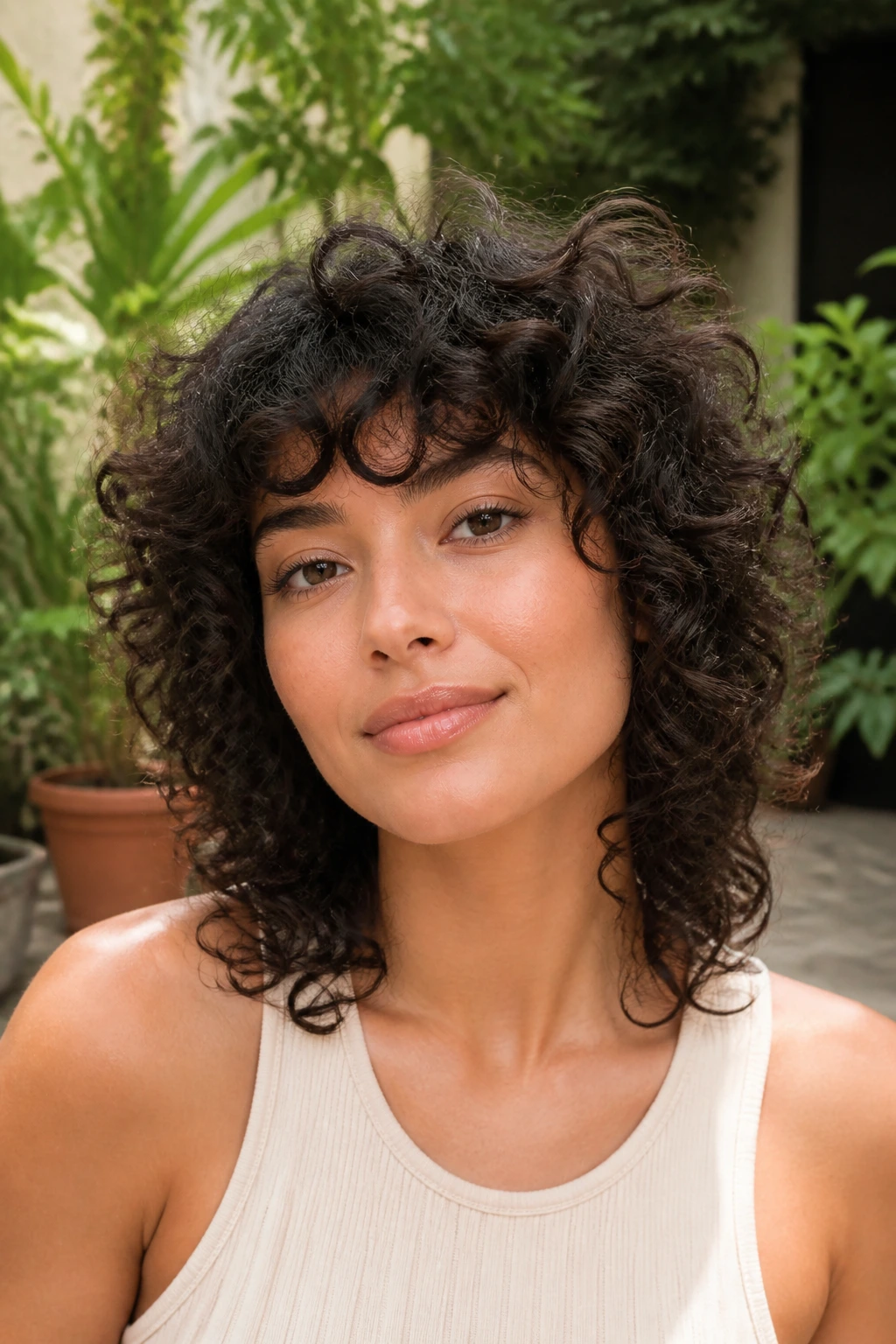
Curls and shags are a match made in heaven. If you have tight, ringlet-style curls, a shag allows the curls to sit wherever they want without being weighed down. For a round face, this is excellent because the curls create their own “halo” of volume that lifts the hair off the scalp.
Handling the Shrinkage
Curly hair shrinks significantly. Tell your stylist to cut it while dry. If they cut it wet, they might take off too much length, and you will end up with a shape that is too wide, which is exactly what we want to avoid.
7. Wispy Fringe Shag
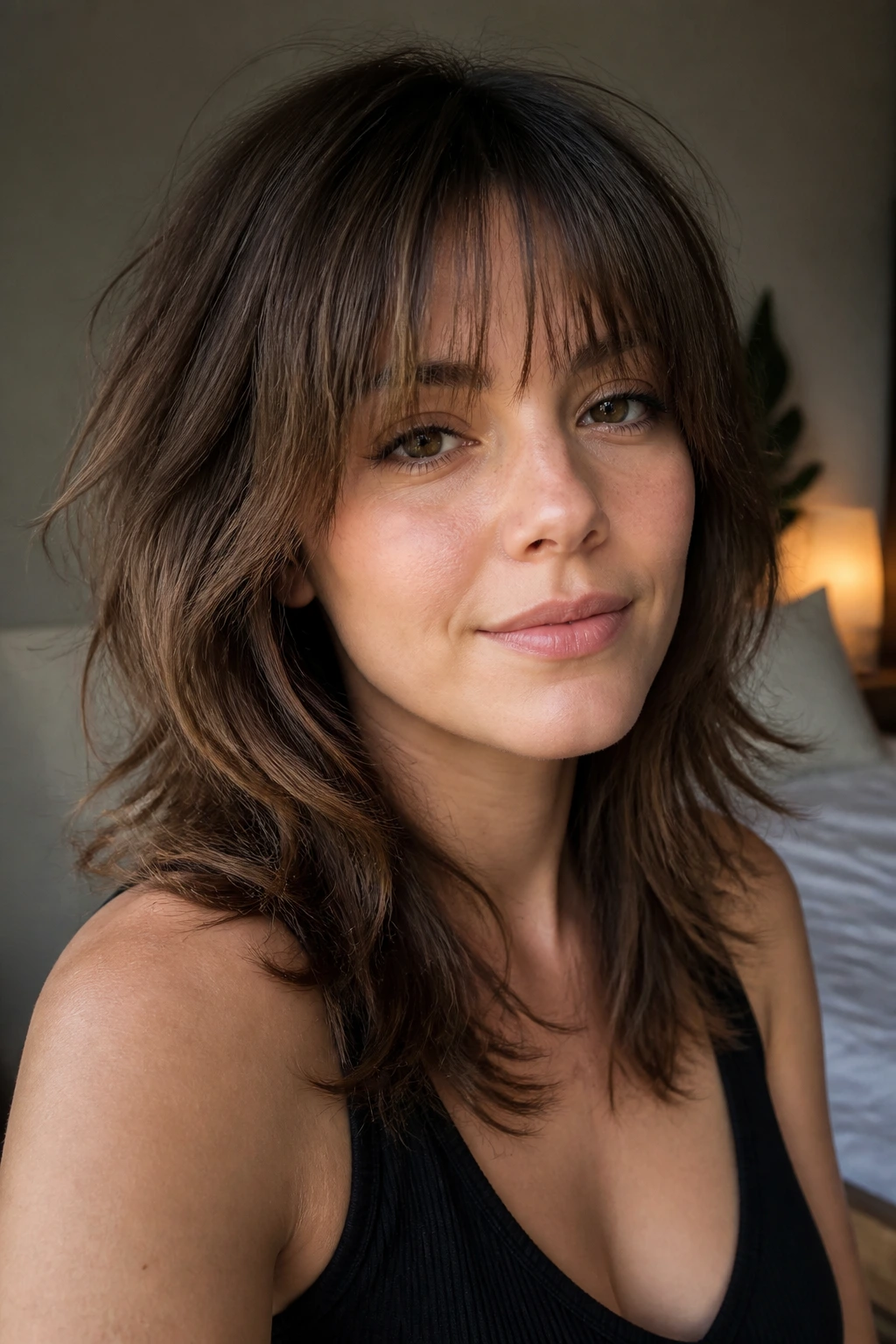
A heavy, blunt fringe is usually the enemy of a round face—it cuts the face in half horizontally and makes everything look wider. A wispy fringe, however, is your friend.
What to Ask For
- “I want see-through bangs.”
- The hair should look light and airy.
- Keep the fringe long enough to touch your eyelashes.
This keeps the forehead partially exposed, which creates length, while still giving you the framing benefits of a bang.
8. Razored Ends Shag
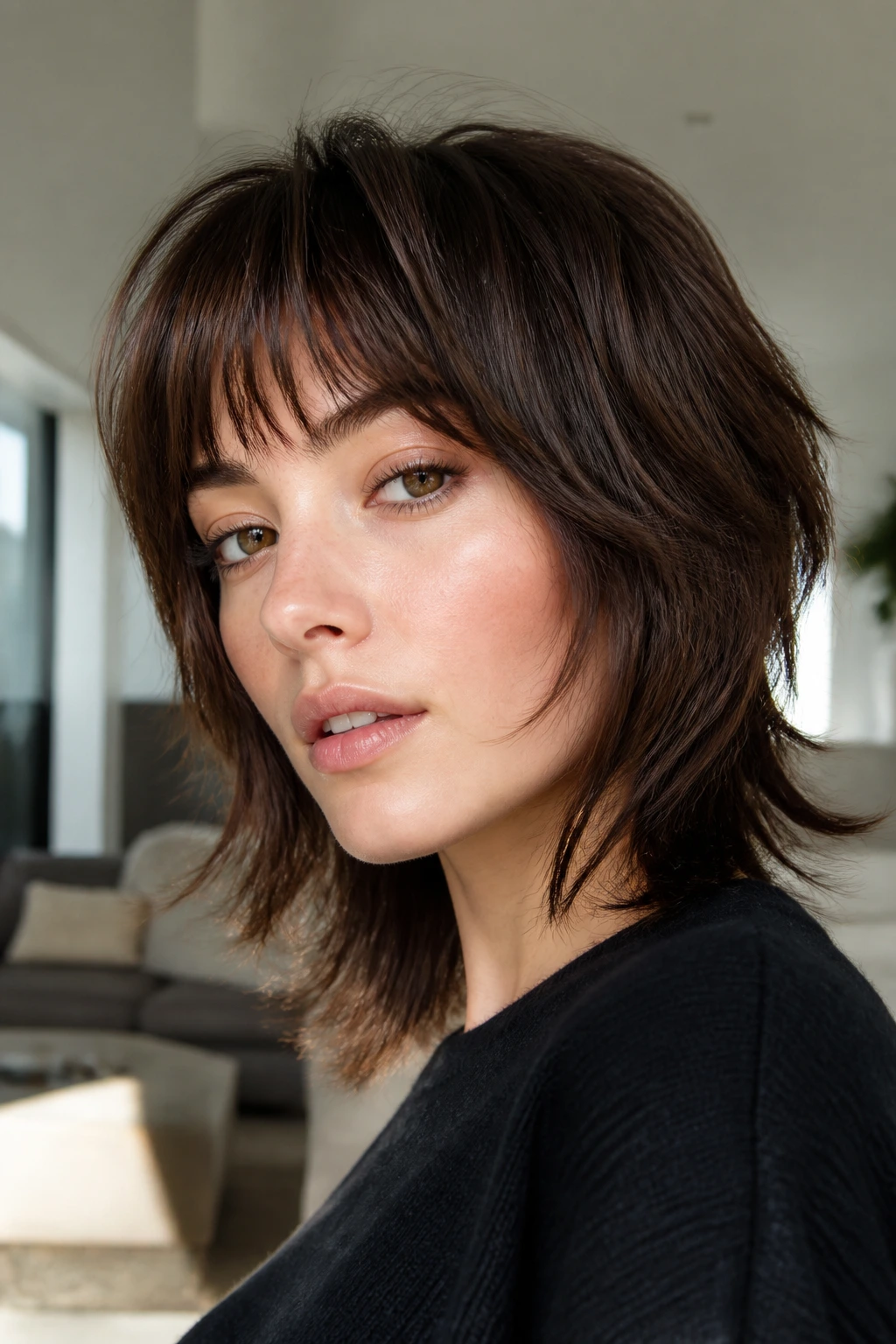
The tool matters. Scissors create a blunt cut; a razor creates a tapered, feathered edge. A shag is all about that feathered edge.
The Result
When the ends of your hair are soft and wispy, they don’t draw the eye to the jawline. If you have blunt, heavy ends, they sit right next to your chin, which acts like a highlighter for roundness. Razored ends disappear into the background, letting your features stand out.
9. Bottleneck Bangs Shag
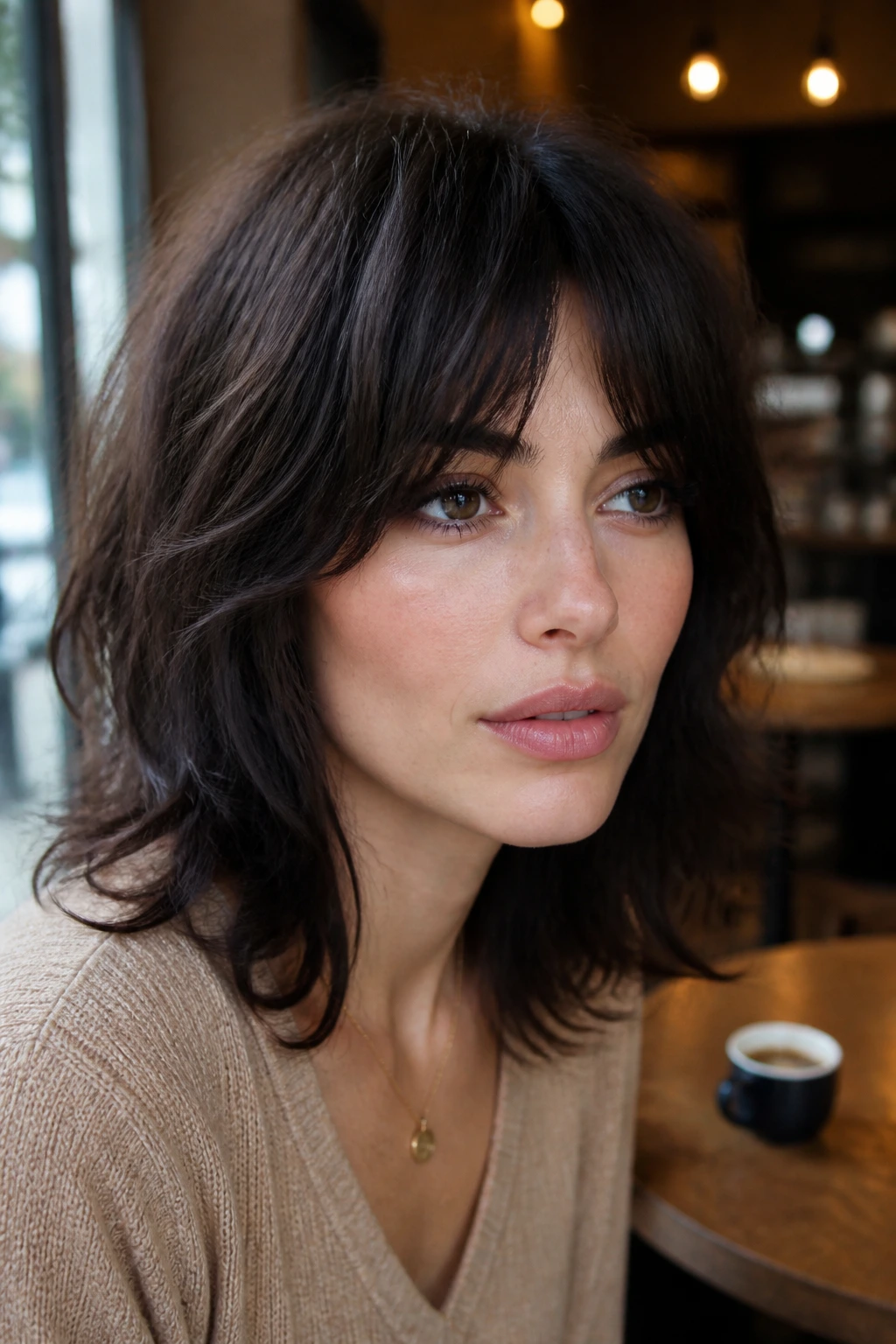
Bottleneck bangs are a mix between curtain bangs and a shaggy fringe. They are shorter in the middle and get longer as they move out, looking like the neck of a bottle.
The Illusion
They create a “V” shape in the middle of your forehead. Any time you can introduce vertical lines or “V” shapes into a haircut for a round face, do it. It acts as a visual arrow, pointing down toward your nose and mouth, which makes the face look longer.
10. Subtle Layered Shag

Not every shag needs to look like a rockstar from the 1970s. You can get a very clean, professional version of this cut.
Key Characteristics
- Focus the layering only on the front and the crown.
- Leave the back relatively full.
- Keep the layers “softly blended” rather than “shattered.”
This provides the benefits of the shag—lifting the hair off the face—without the extreme, disconnected look of a traditional mullet-shag.
11. The Shaggy Mullet Hybrid
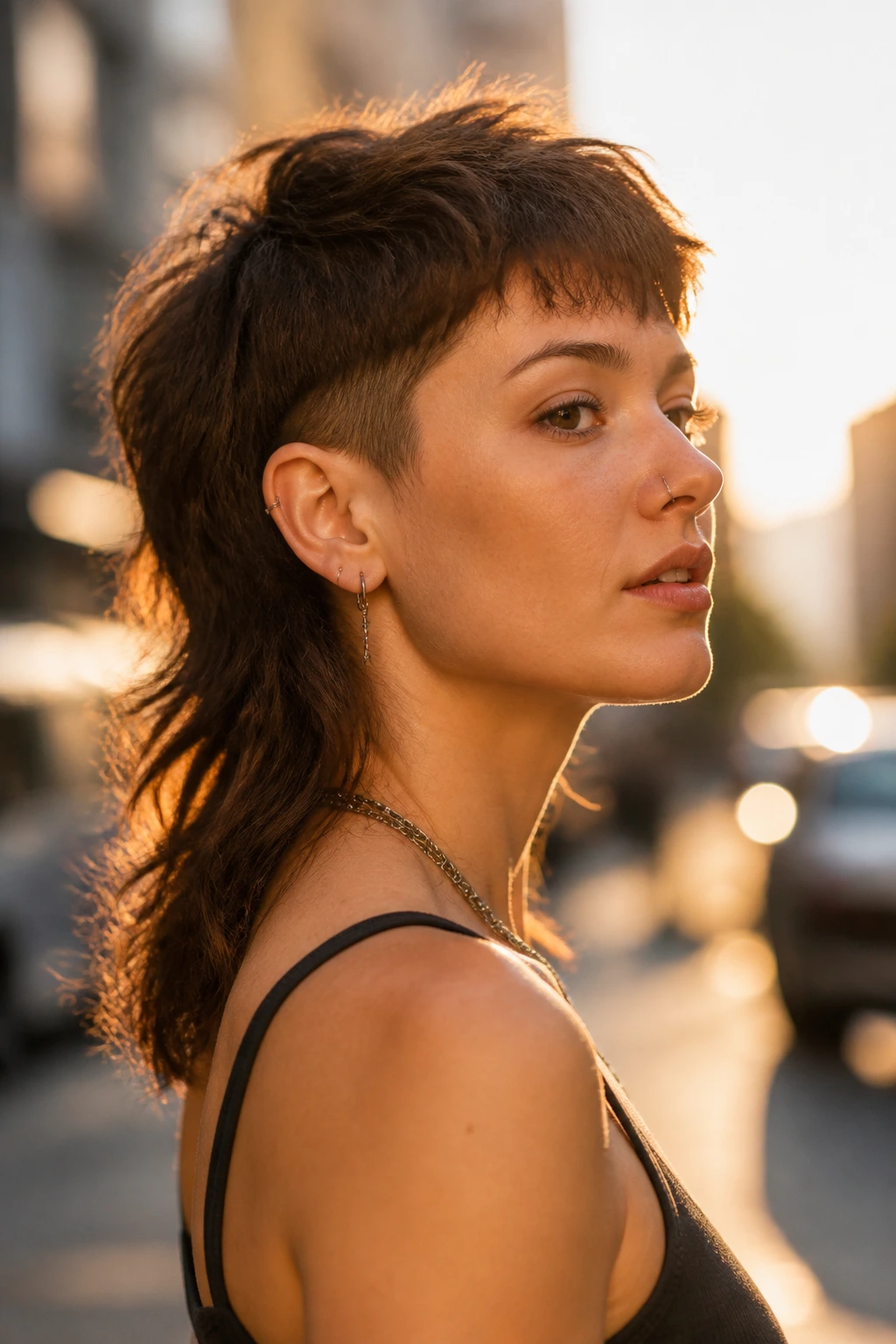
Yes, mullets are back, and they are surprisingly great for round faces. The shortness on the sides and the length in the back provides an incredible silhouette.
Why It Works
It’s all about the side profile. The hair is taken away from the sides, which immediately thins the appearance of the face. If you are bold enough to pull this off, the side-tapering is an instant slimming trick for the jawline.
12. Face-Framing Highlight Shag
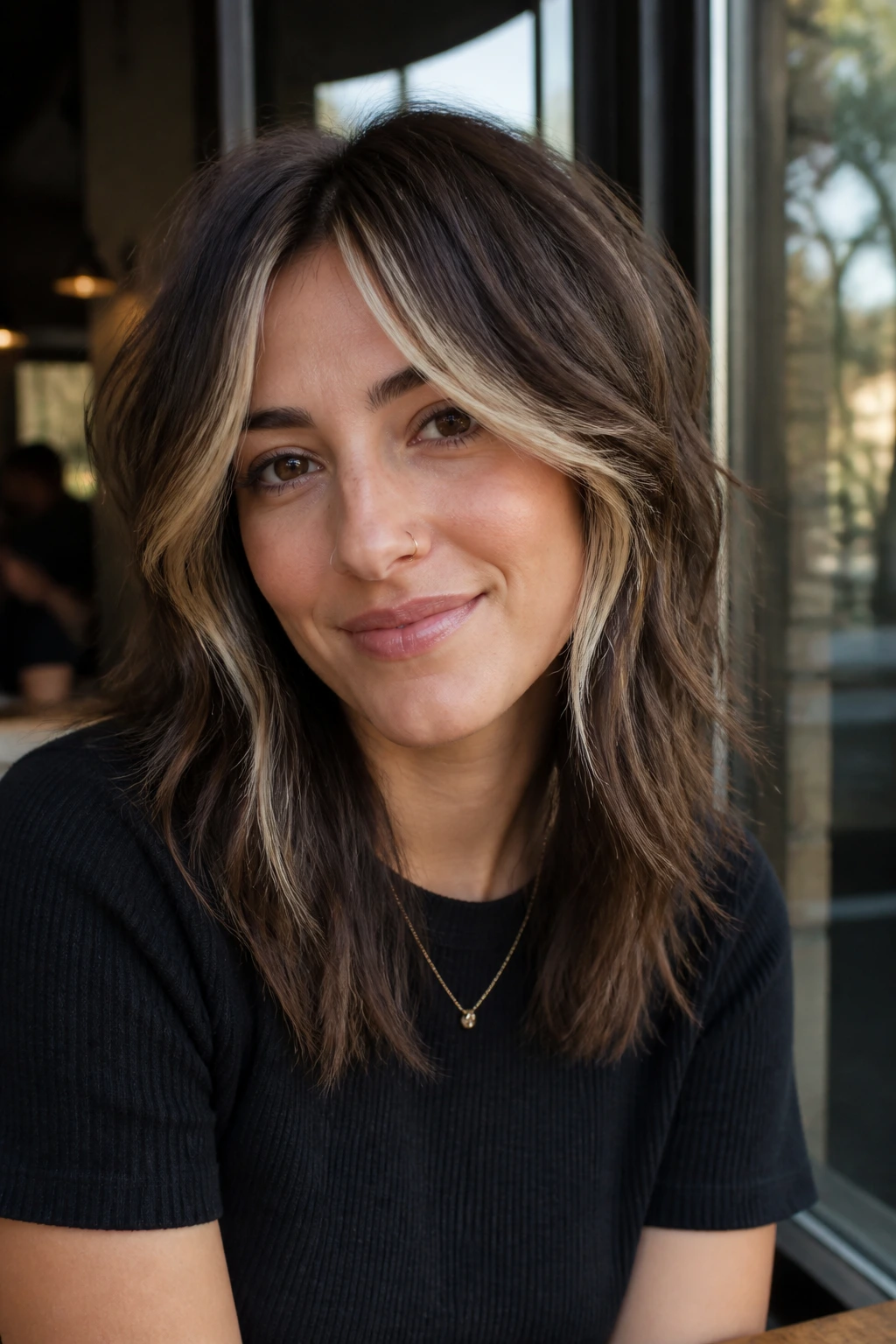
Color is a tool for shape. If you have a shag, ask for “money piece” highlights or lighter pieces right around the front of the face.
The Optical Illusion
Light colors advance (they pop forward) and dark colors recede. By placing highlights right next to your face, you are essentially drawing a frame that separates your face from the surrounding hair. This keeps the hair from “swallowing” your features.
13. Asymmetrical Shag
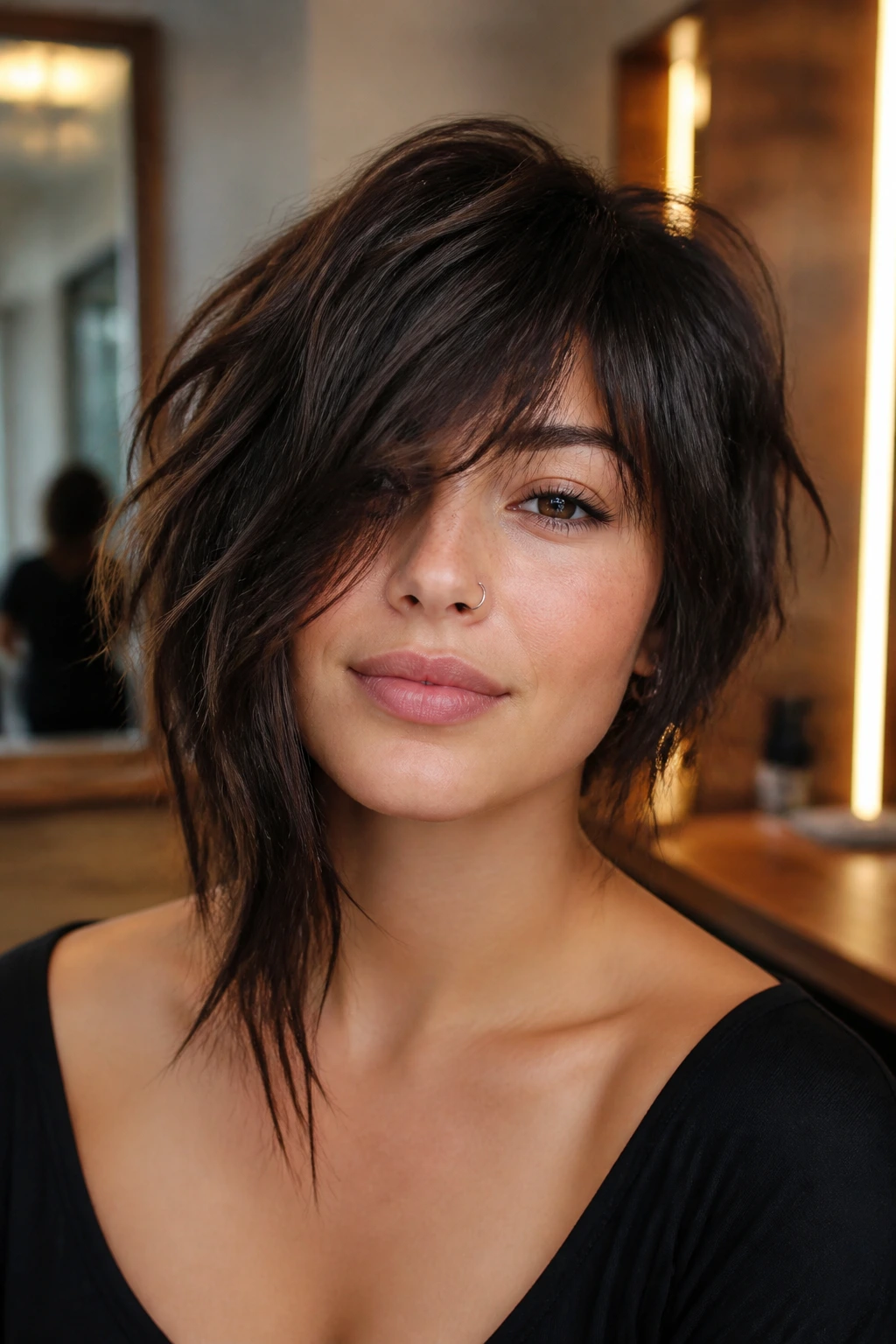
If your face is round, playing with asymmetry is one of the smartest moves you can make. By making one side slightly longer or having the part deep-offset, you break the symmetry of the circle.
The Result
The eye will naturally follow the longer side of the cut, creating a diagonal line across your face. Diagonal lines are much better for round faces than horizontal ones. They add length and dynamism.
14. Thin Hair Volume Shag
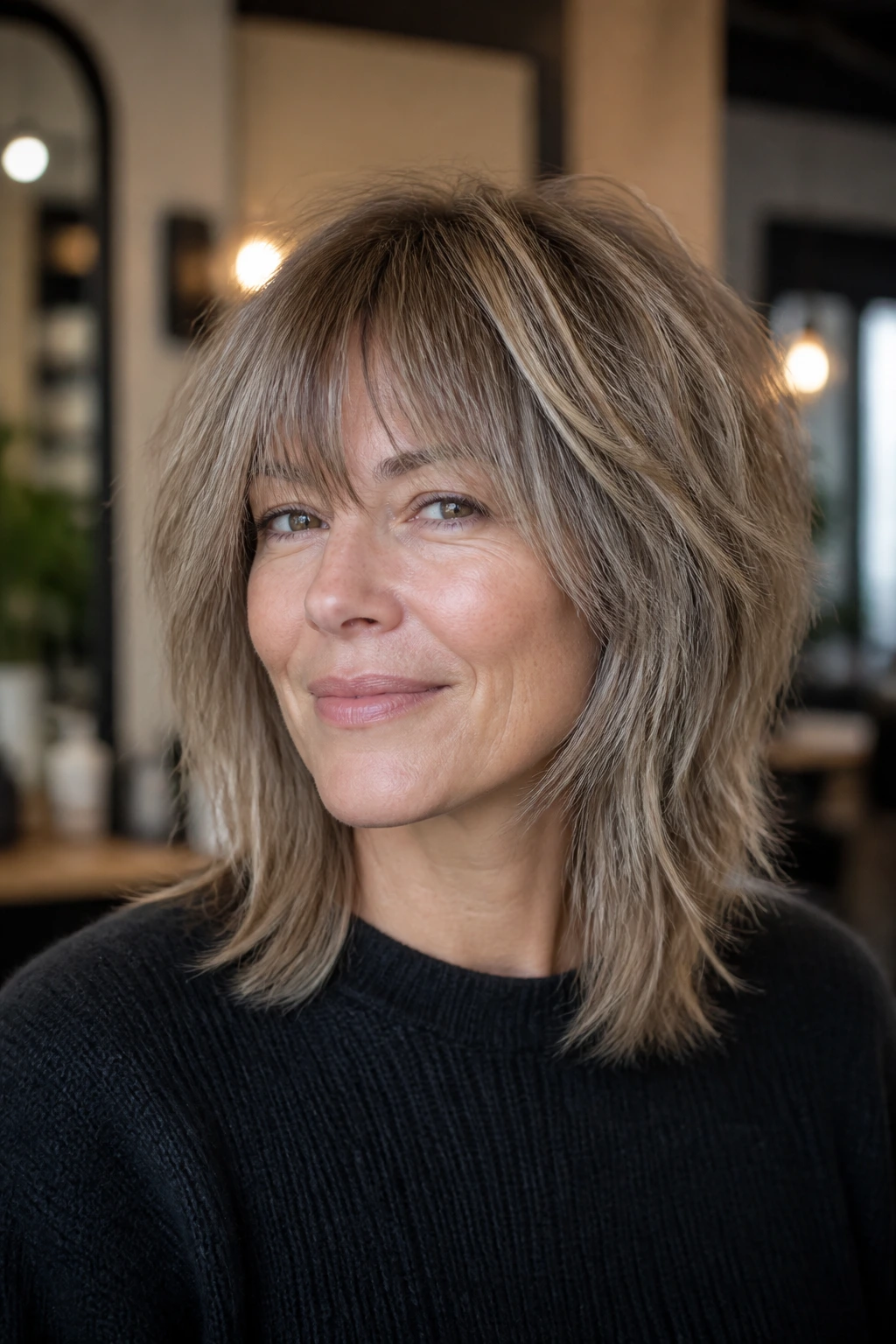
If you have fine or thin hair, a shag can sometimes look like a “mullet gone wrong” if the layers are too short. The trick is to keep the base length consistent and add “internal layers.”
The Technique
Your stylist should use a point-cutting technique. They take a section of hair, pull it out, and cut into it vertically with the tips of the scissors. This creates layers without removing the bulk that you need to make your hair look full.
15. Thick Hair Weight-Removed Shag
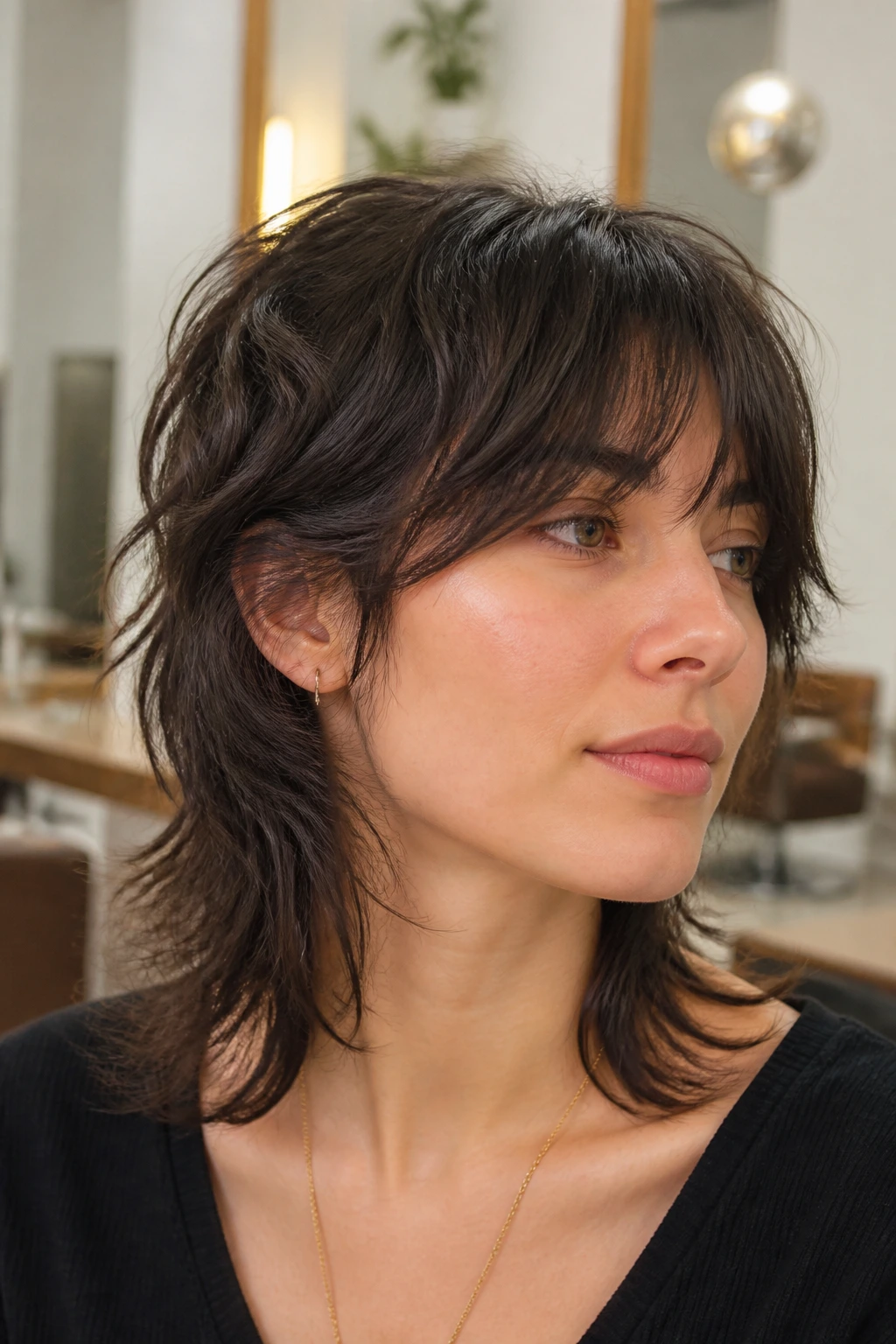
Thick hair can get “triangle-y” when cut into a shag—the top goes flat and the bottom flares out like a bell. To avoid this, you need aggressive thinning.
What to Say
- “Please remove weight from the mid-lengths.”
- Do not layer the bottom too much, or you’ll just have a thinner triangle. Focus the thinning shears on the area just above the ears to make the hair sit closer to the head.
16. Two-Tone Color Shag
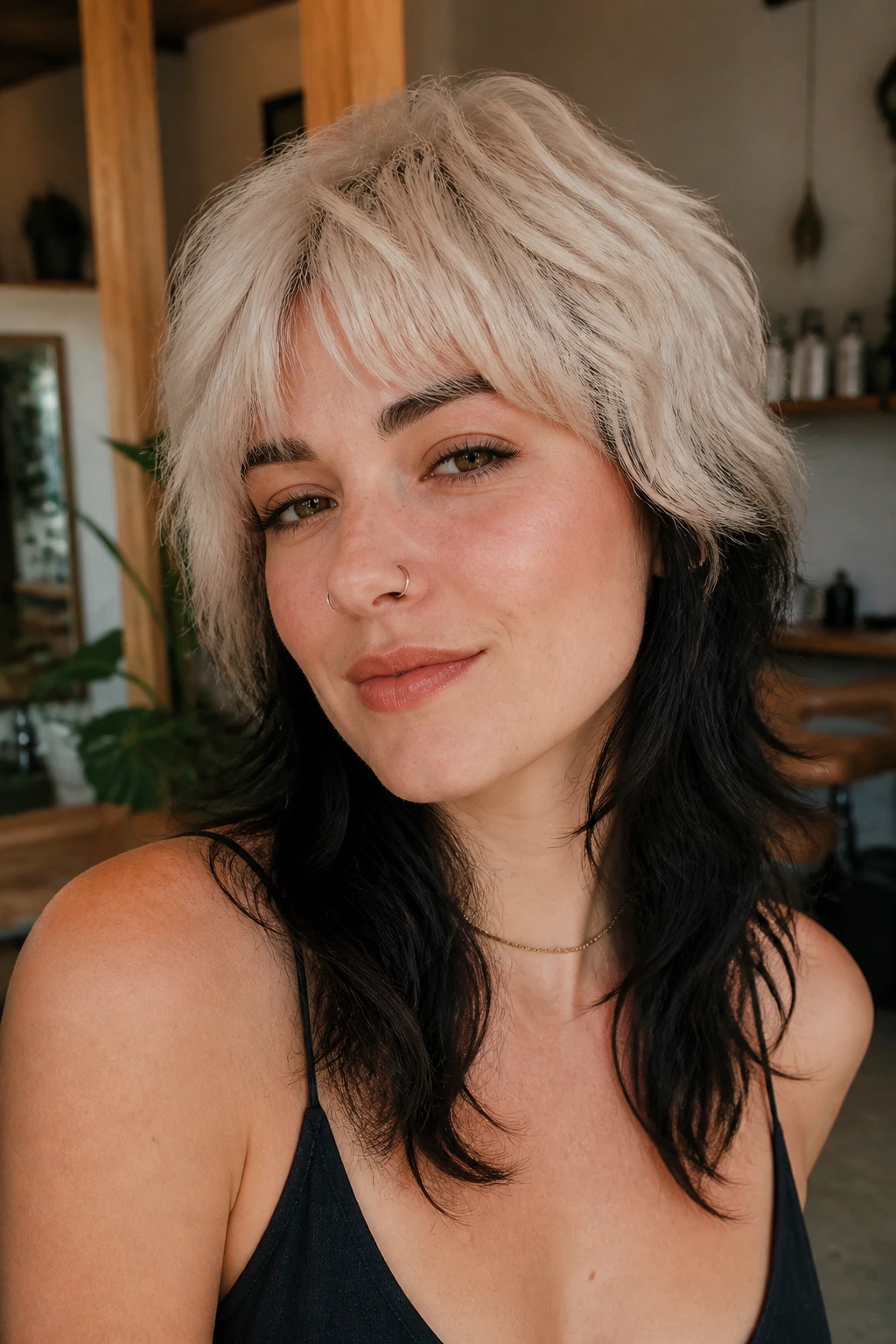
This is for the adventurous. By coloring the top layer of your shag a different tone than the bottom, you emphasize the layers.
The Benefit
It creates a clear visual distinction between the crown volume and the length. For a round face, this helps define exactly where the “height” starts. It draws the eye to that top section, emphasizing the verticality you worked so hard to create.
17. Beach Wave Shag
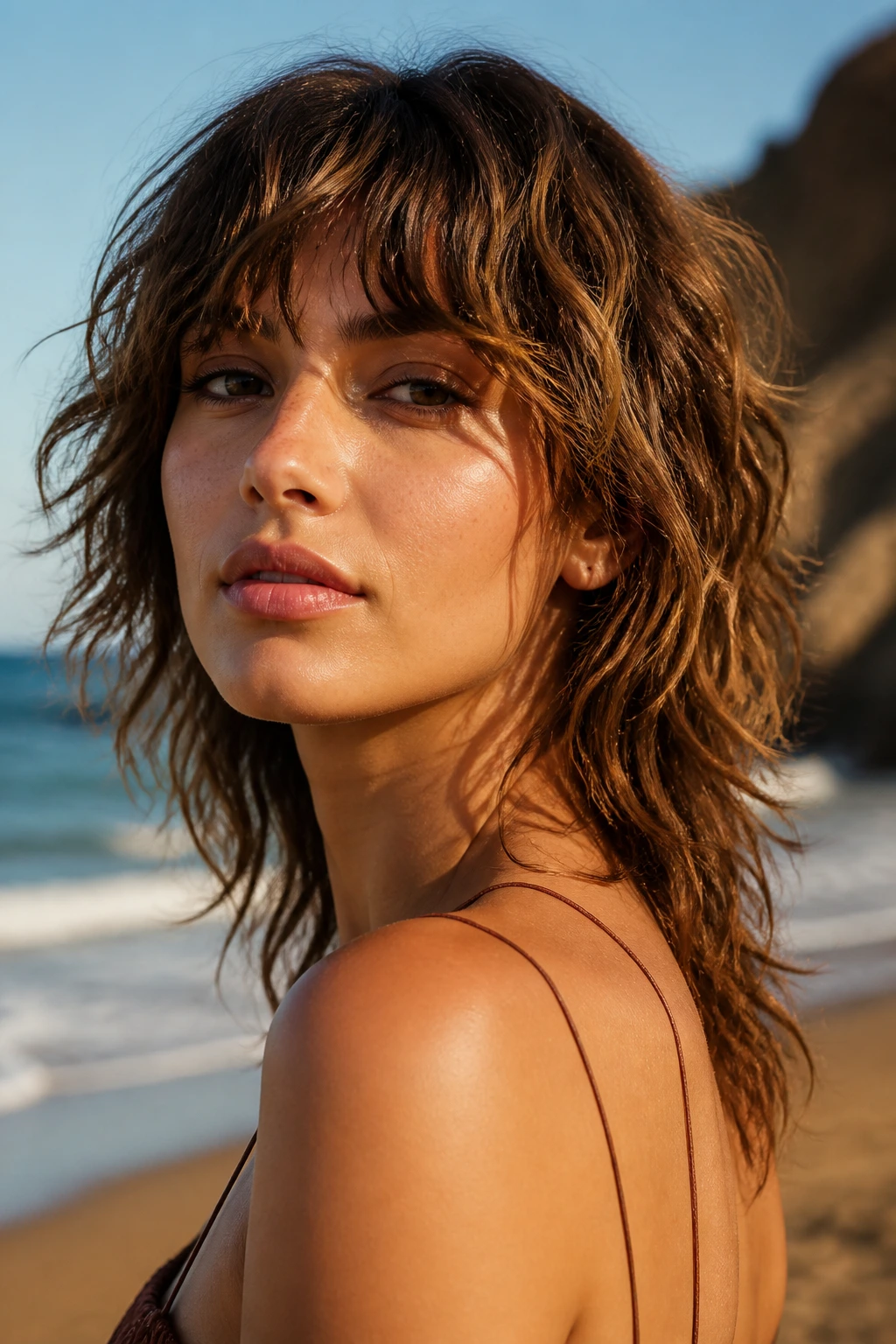
This cut is all about texture. The beach wave shag is usually cut with a bit more length at the nape to give the waves room to move.
Styling Tip
Use a salt spray, twist your hair into several large sections while damp, and let it air dry. The resulting “S” wave is soft and breaks up the roundness of the face without being as aggressive or “sharp” as a straight, choppy shag.
18. Micro-Bang Shag
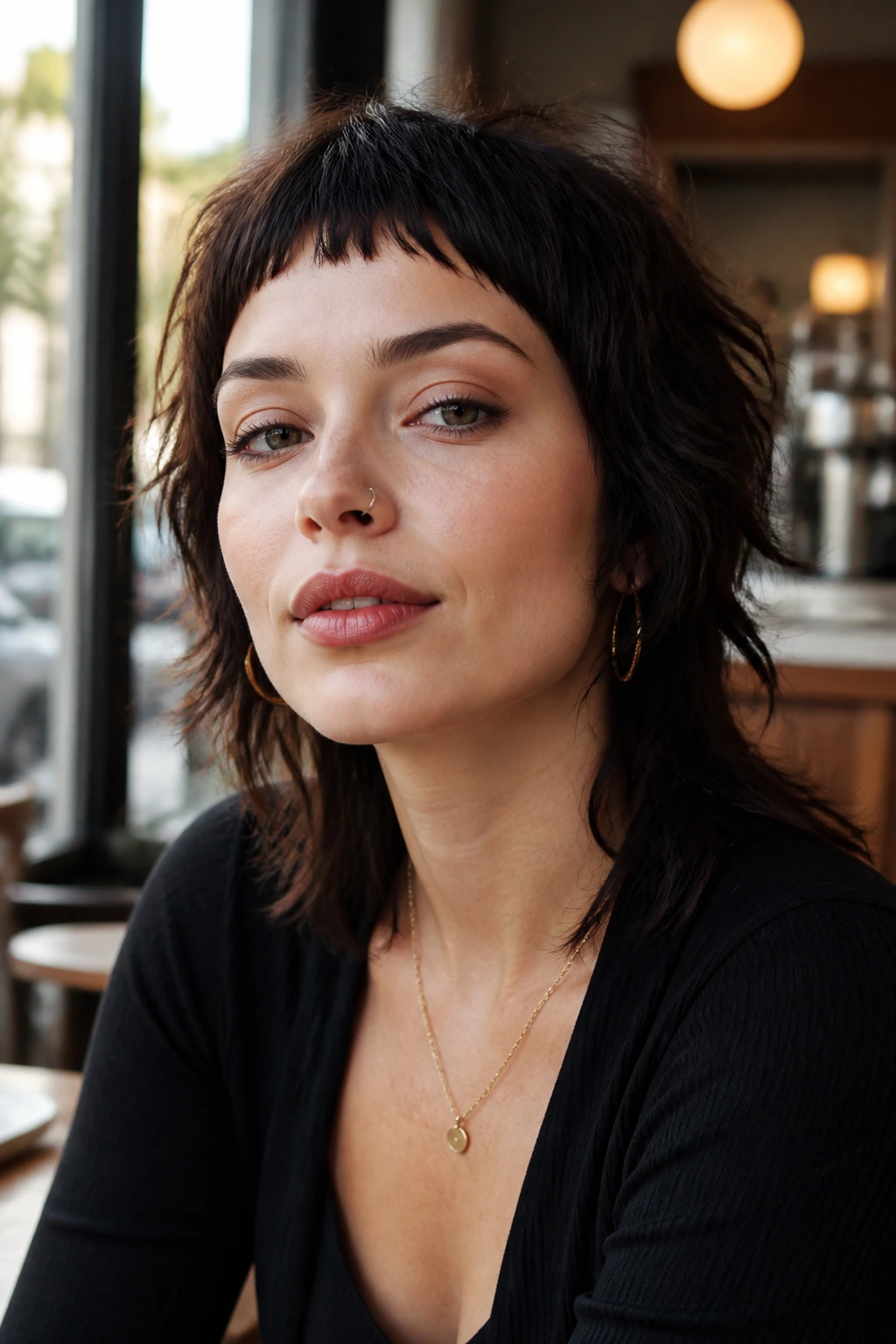
Also known as baby bangs. This is a bold choice, but incredibly effective for round faces.
The Logic
By cutting the bangs very short (way above the eyebrows), you expose the entire forehead. This is the opposite of the “hiding” technique—it’s an “opening” technique. It creates a massive amount of vertical space on your face, which balances out a round shape. It’s dramatic and stylish.
19. Long Layers Shag
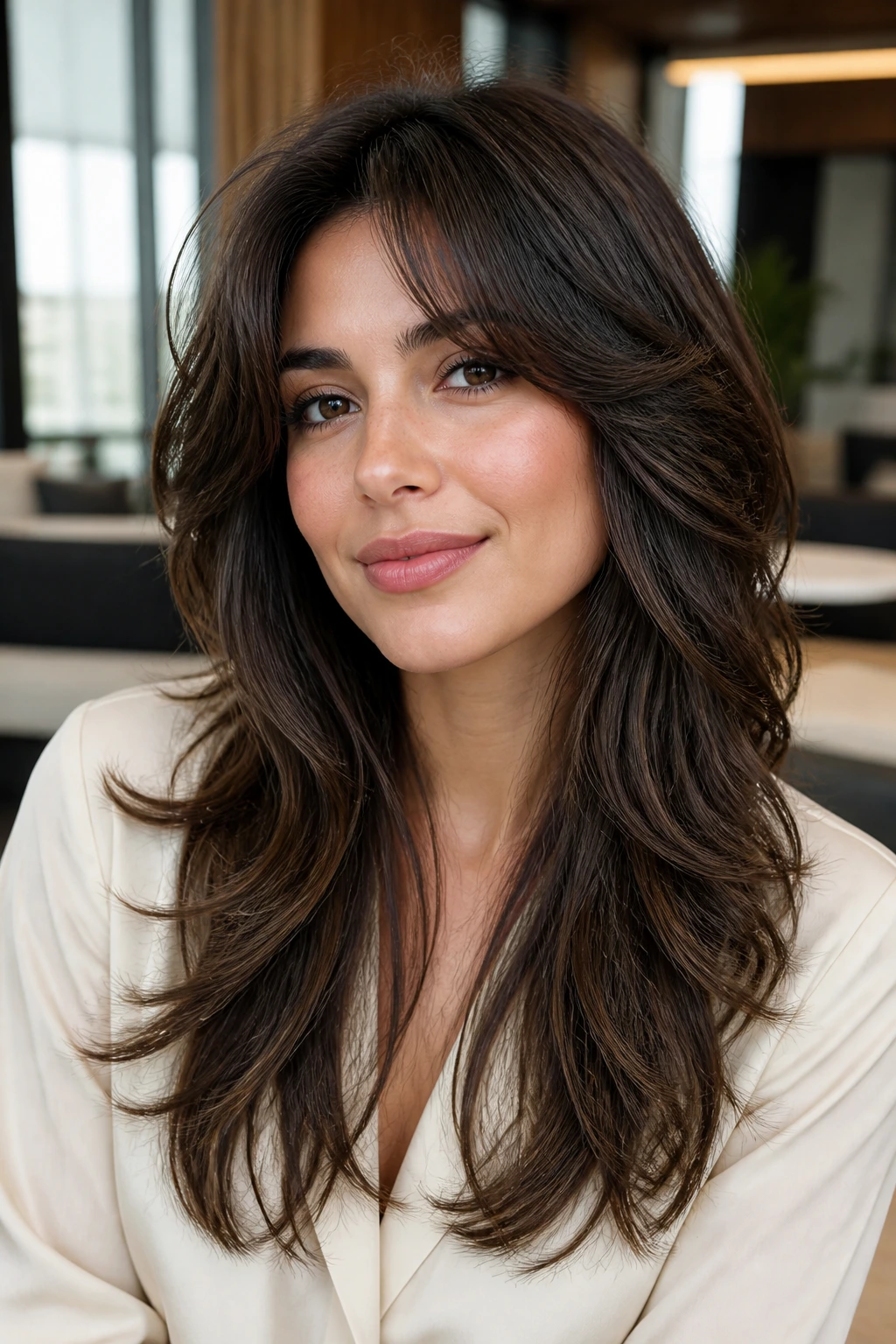
Sometimes a full-on choppy shag is just too much. A “long layer” version keeps the layers longer and smoother but still maintains the crown volume.
Why It’s Effective
It’s a gentler way to do the cut. You get the benefits of layering—removing weight and adding lift—but you keep the polish of a long, flowing style. It’s perfect for office environments where you might want to appear a bit more conservative.
20. Deep Side Part Shag
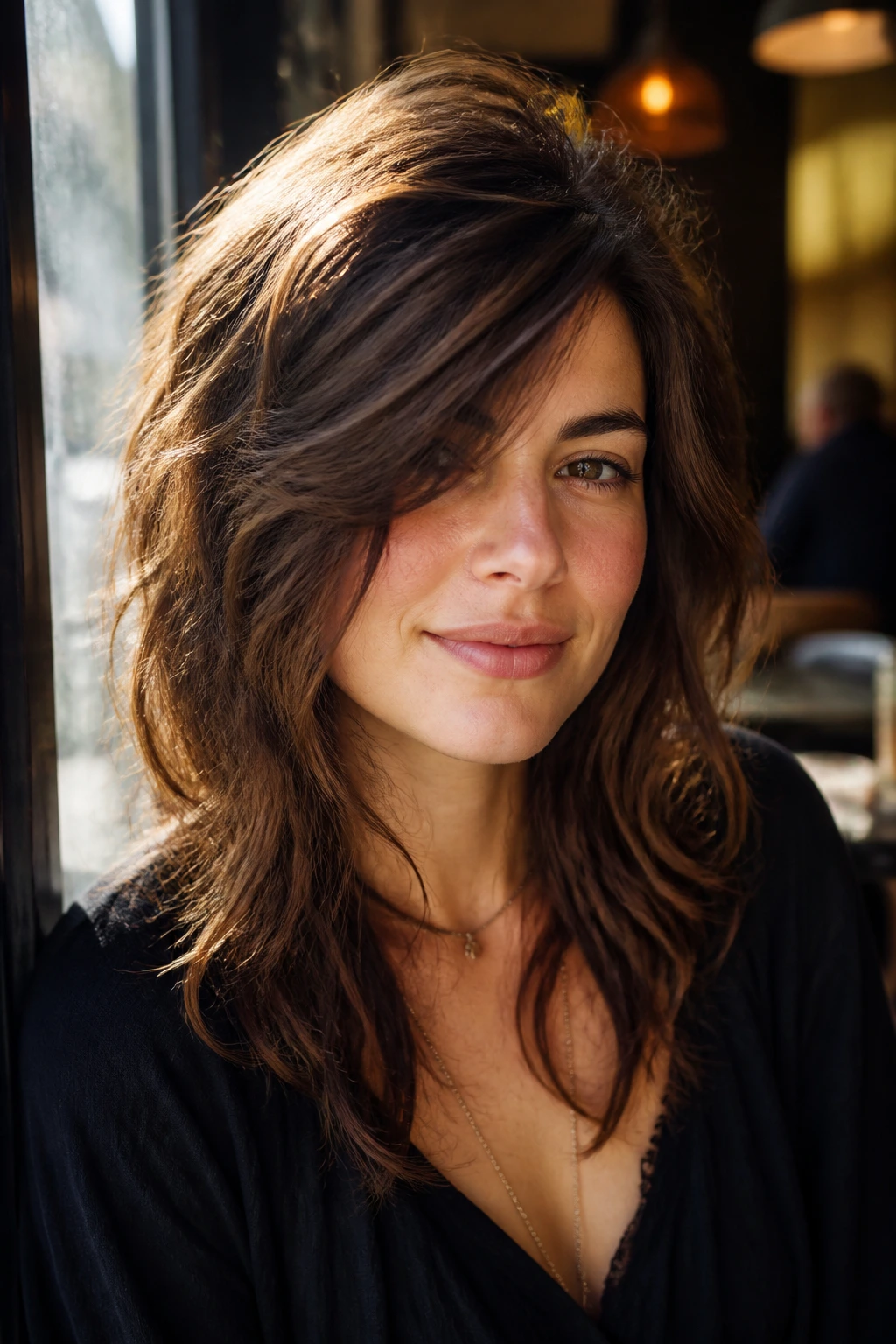
If you have a round face, the center part can sometimes emphasize the circularity by framing the face perfectly symmetrically. A deep side part changes that.
The Shift
It pushes more hair to one side, creating a swoop that acts like an asymmetrical frame. This instantly adds a diagonal slant to your appearance, which helps disguise the roundness of the cheeks.
21. Blunt-End Shag
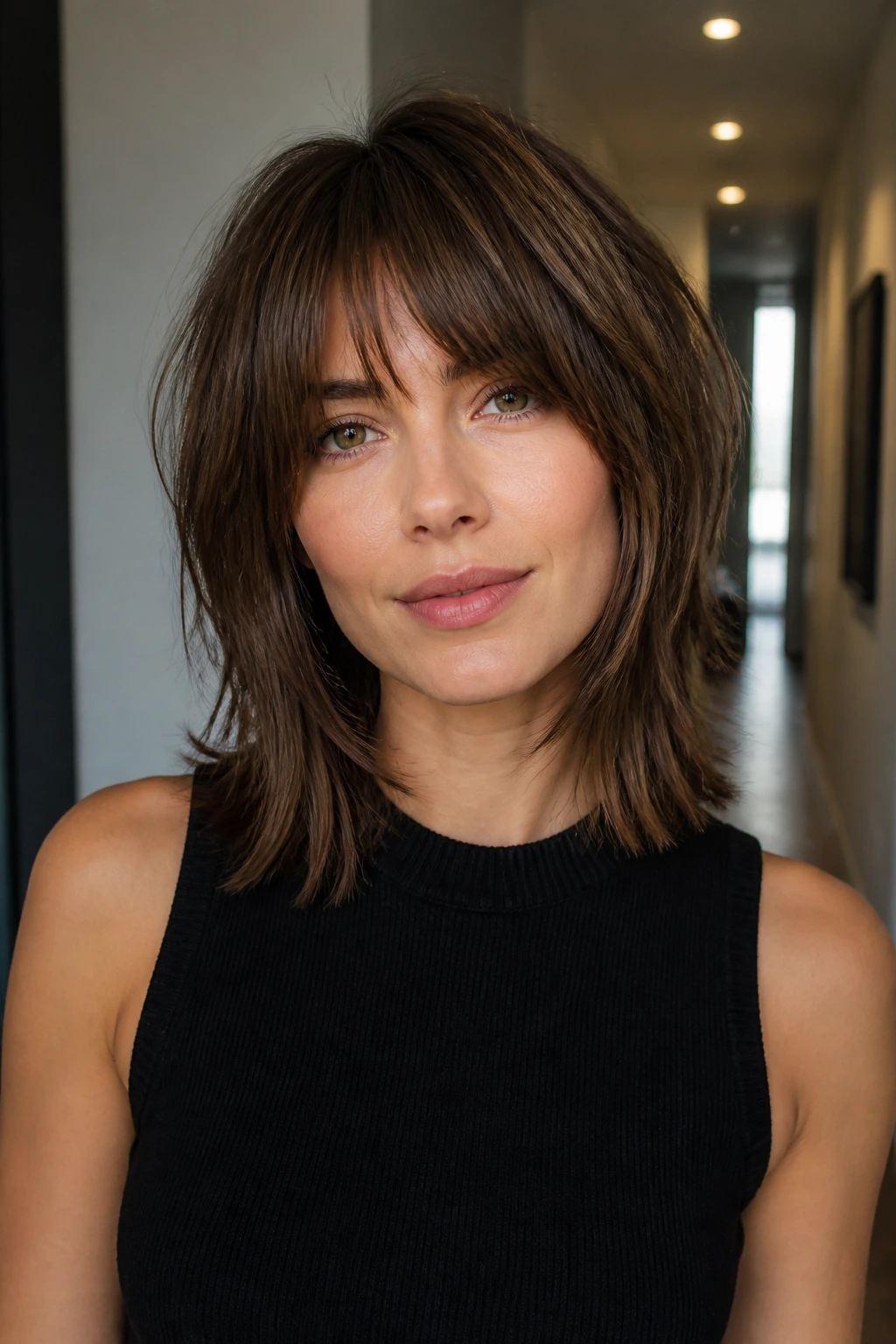
Yes, you can combine bluntness with a shag. You keep the layers shattered and textured on top, but you cut the very ends of the hair straight across.
When to Choose This
If you have very fine hair, this helps give the illusion of thickness. The blunt ends provide a solid “bottom” to the style, so it doesn’t look stringy, while the layers on top keep it feeling light and modern.
22. Feathered Layer Shag
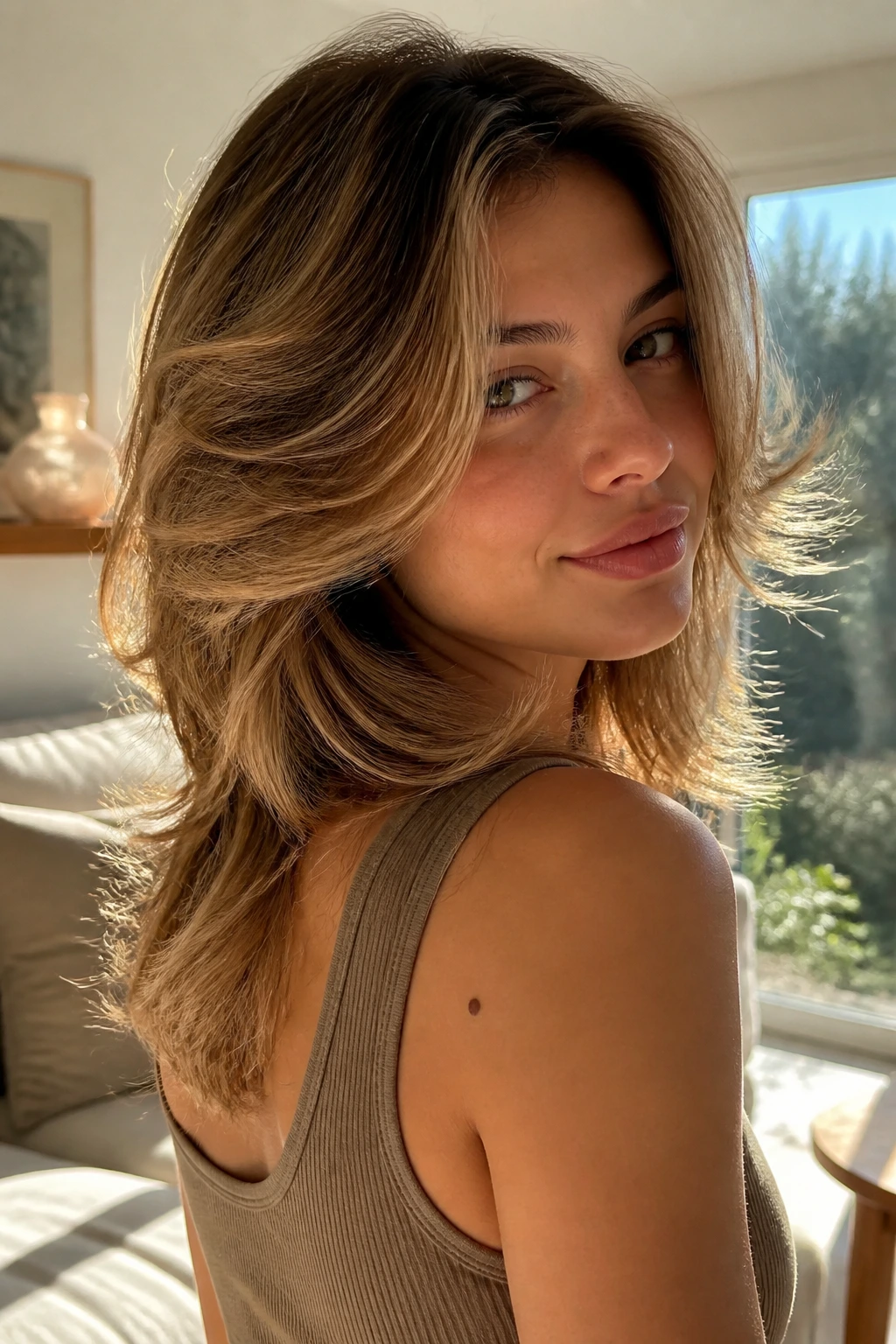
Think of the 90s “Rachel” cut but modernized. Feathered layers are soft, rounded, and sweep back away from the face.
The Motion
When layers are feathered, they create a sense of movement. The hair looks like it’s constantly flowing backward. This keeps the hair away from your face, which is key. The more hair you have hanging forward, the more closed-in and round your face will appear.
23. Shattered Ends Shag
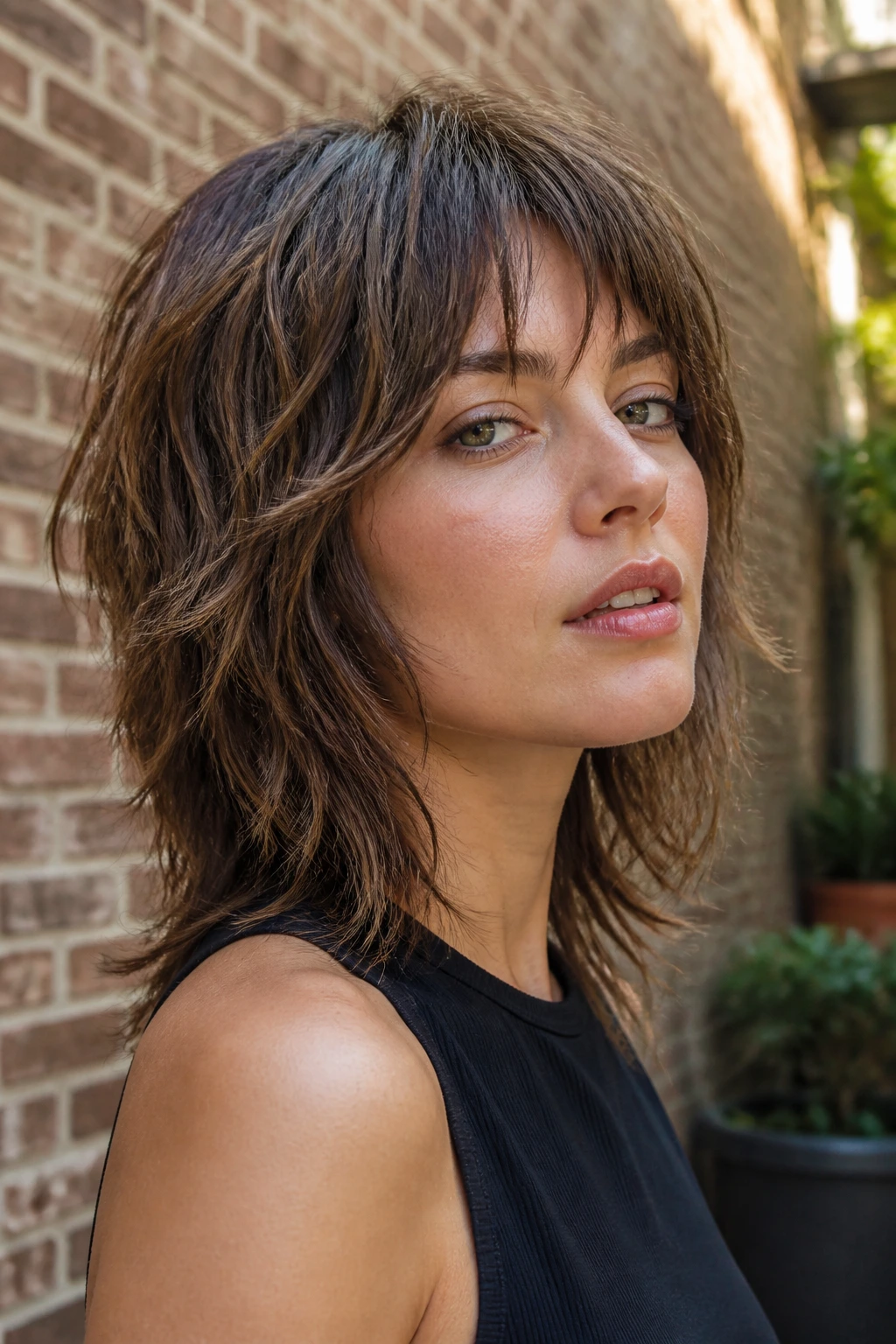
This is the “deconstructed” look. It’s not about smooth, feathered layers; it’s about aggressive texturizing that makes the ends look almost frayed.
Why This Works
It’s the ultimate antidote to a heavy, round-faced look. Because the ends are so jagged and irregular, they don’t provide a “line” for the eye to follow. The eye just dances over the texture, which prevents your face from being boxed in.
24. Soft Waves Shag
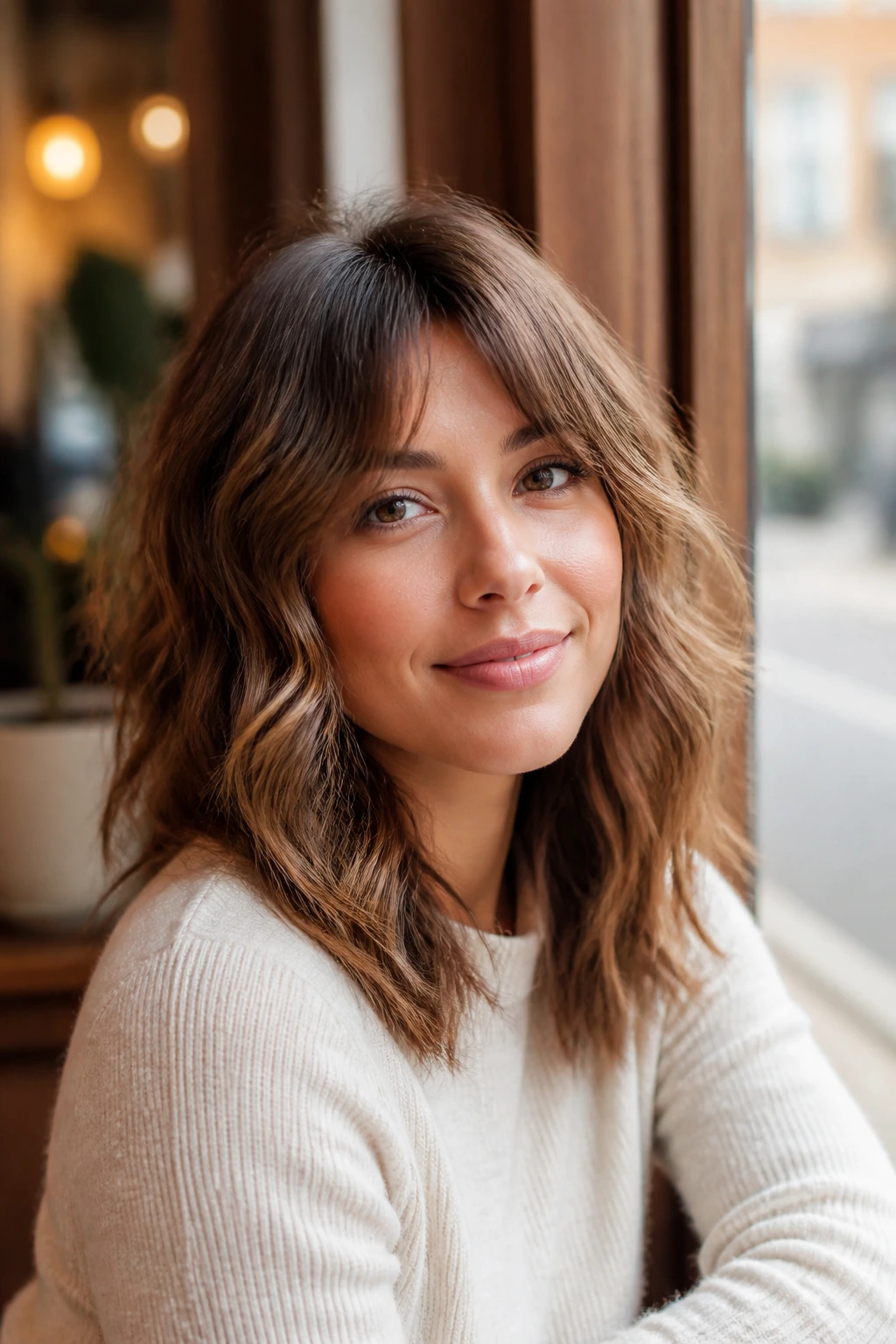
This is arguably the most romantic version of the cut. It’s a shag that is styled into soft, loose, touchable waves rather than being worn straight or crunchy.
Styling Method
Use a large-barrel curling iron, but wrap the hair around it rather than clamping the ends. You want to leave the last inch or two of hair straight so it doesn’t look too “done” or polished.
25. The “Bedhead” Shag
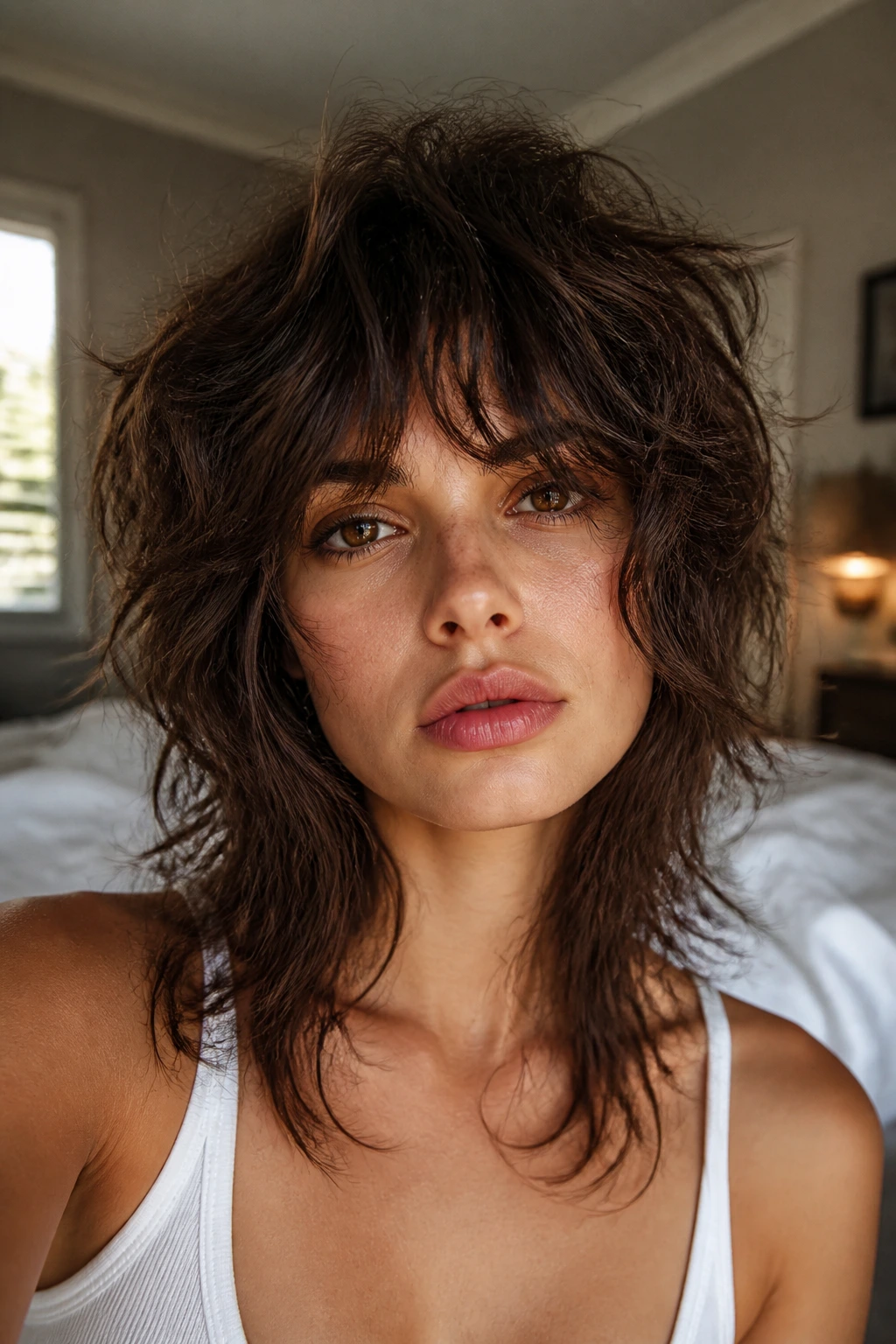
This cut is all about messy, undone texture. It’s for the person who hates styling their hair.
The Technique
The secret here is a good texturizing powder. When your hair is dry, lift it up at the roots, sprinkle in a bit of powder, and shake it out. The bedhead shag is supposed to look a little bit chaotic. For a round face, that chaos is actually an asset—it breaks up the symmetry of the face.
26. Graduated Layer Shag
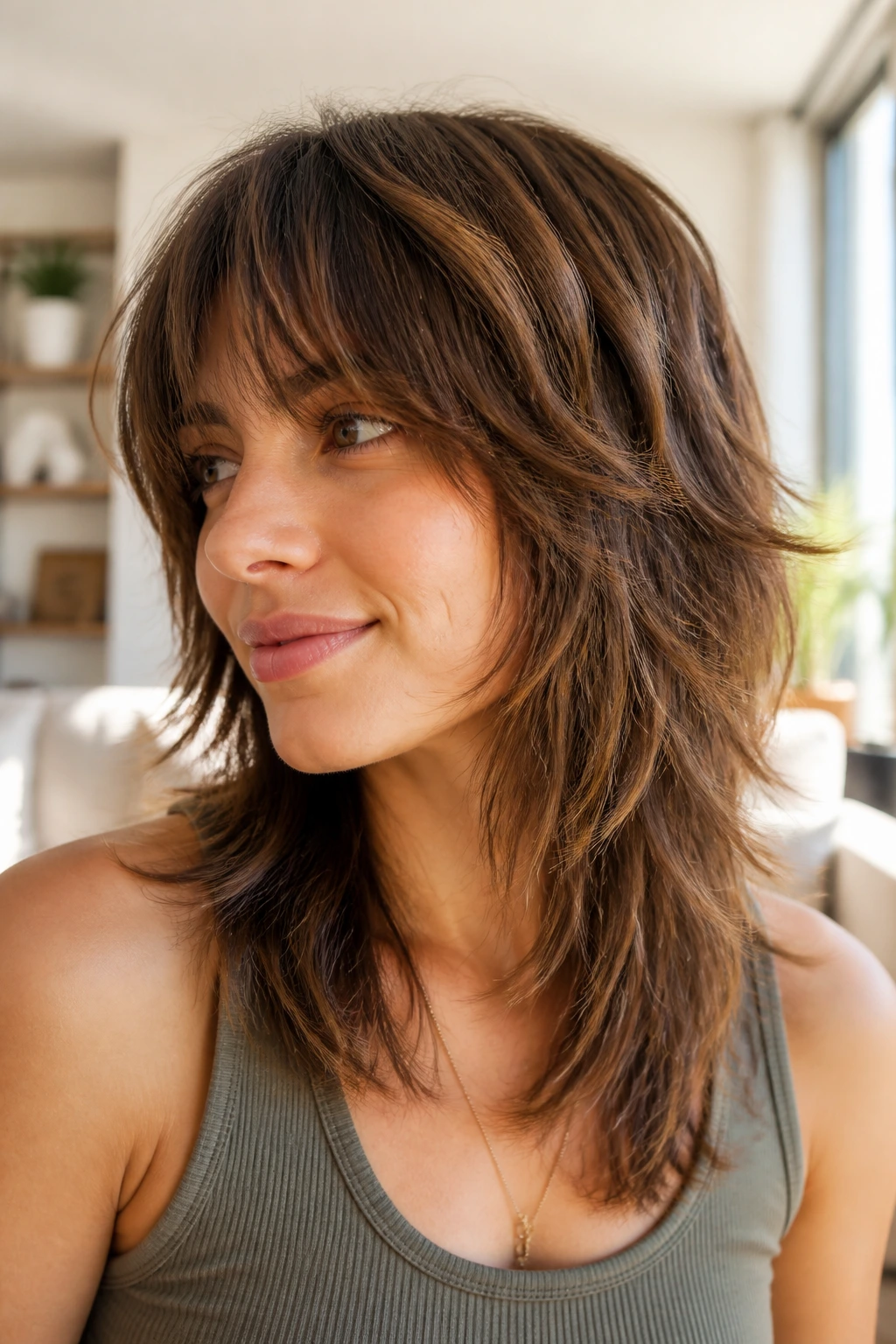
Graduated layers mean the hair gets longer from the top to the bottom in a very clear, stepped sequence.
The Effect
It creates a “staircase” effect. This is great for adding length because your eyes naturally follow the steps down. It creates a visual illusion of a longer, slimmer face. Just be careful that the layers don’t start too low, or you’ll lose that crucial crown volume.
27. Center-Parted Shag
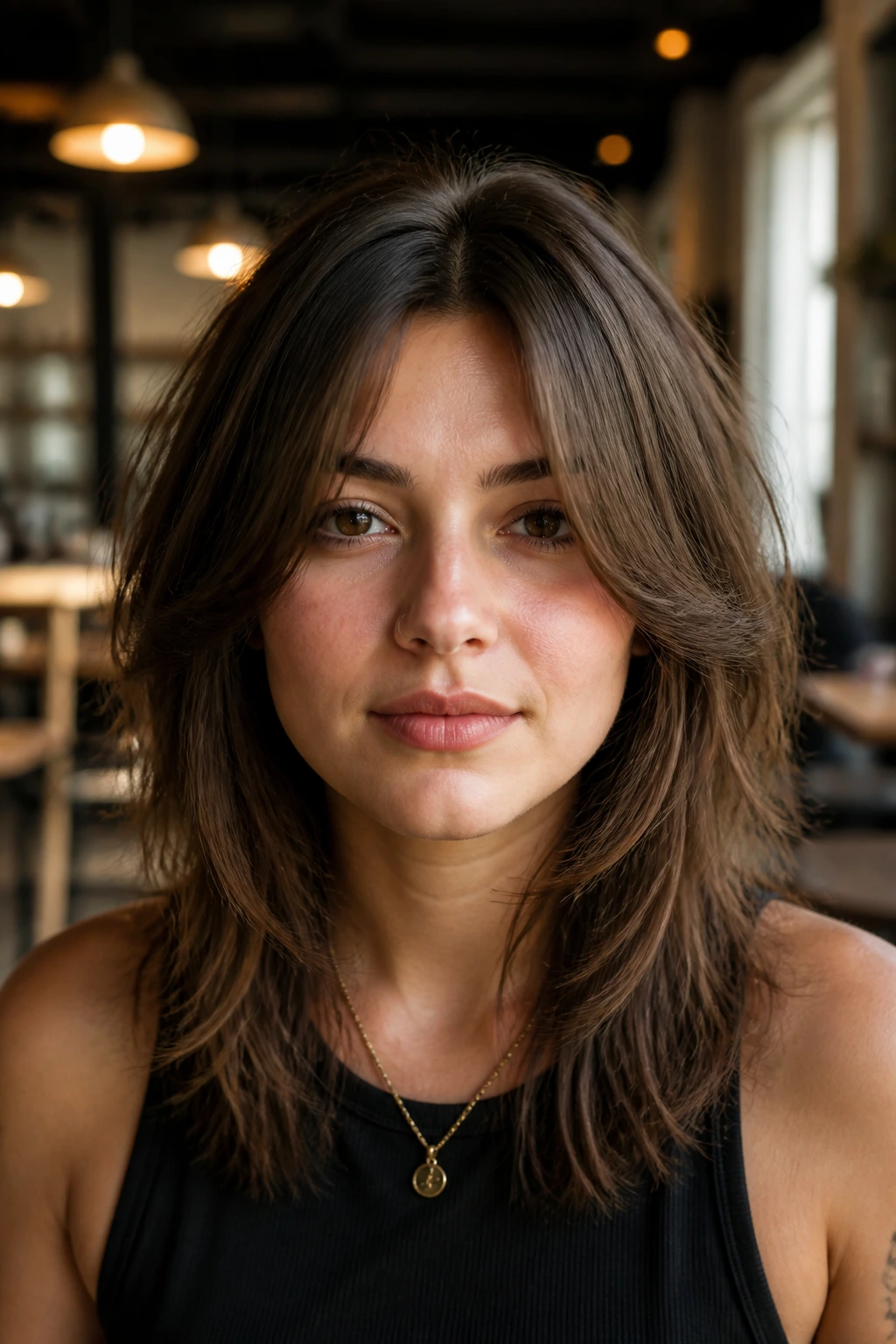
While side parts are great for creating angles, a center-parted shag can work if it’s paired with long, face-framing curtain bangs.
The “Curtain” Rule
If you part in the center, you must have bangs that fall around the cheekbones. If you part in the center and have the hair cut to one length, it will frame your face like a literal circle, emphasizing the roundness. The curtain bangs are the mandatory compromise here.
28. Side-Swept Bangs Shag
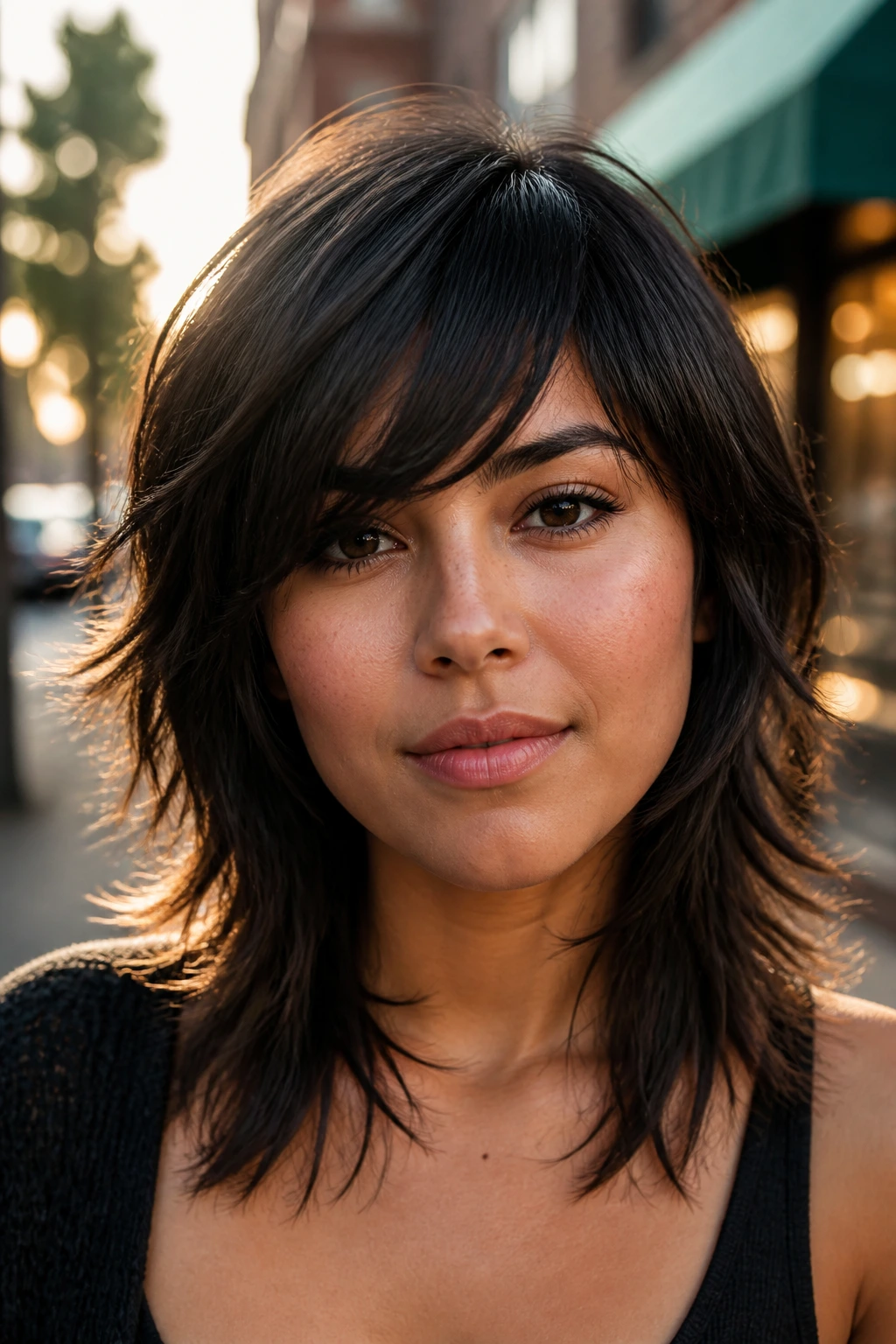
This is the classic, low-maintenance version of the shag. The bangs sweep across the forehead, creating a diagonal line.
Why It’s a Classic
It shortens the forehead slightly but lengthens the face overall. It’s a very flattering shape for anyone who feels their forehead is too large or who wants to create a softer, more approachable look.
29. Undercut Shag
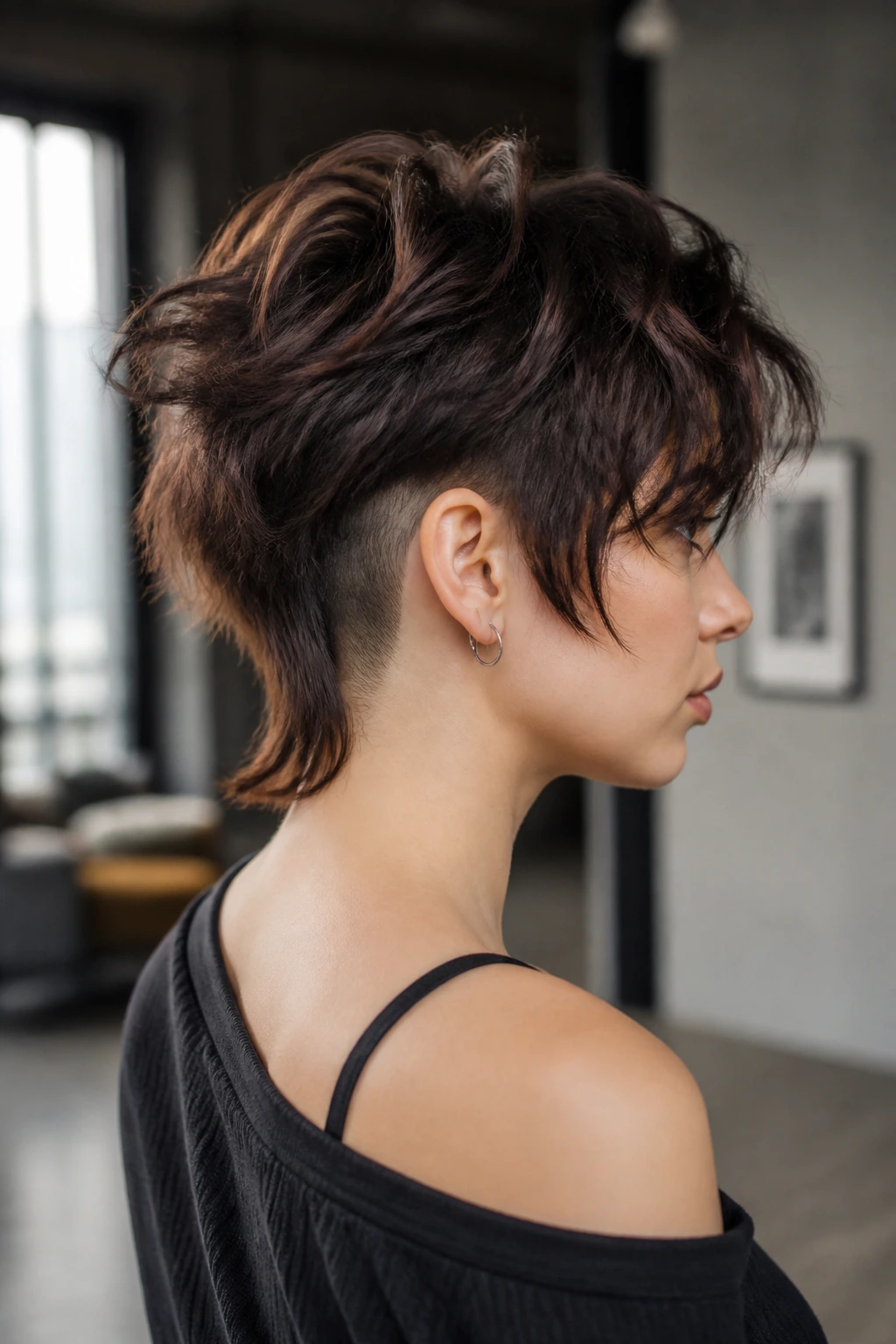
This is an edgy take. You shave or buzz a small section of hair at the nape of the neck and let the top layers fall over it.
The Benefit
It removes massive amounts of bulk. If you have incredibly thick hair and a round face, you might feel like your hair makes your head look bigger. An undercut removes the bulk at the bottom, making your hair lay much flatter against the neck, instantly streamlining your profile.
30. Natural Curls Shag
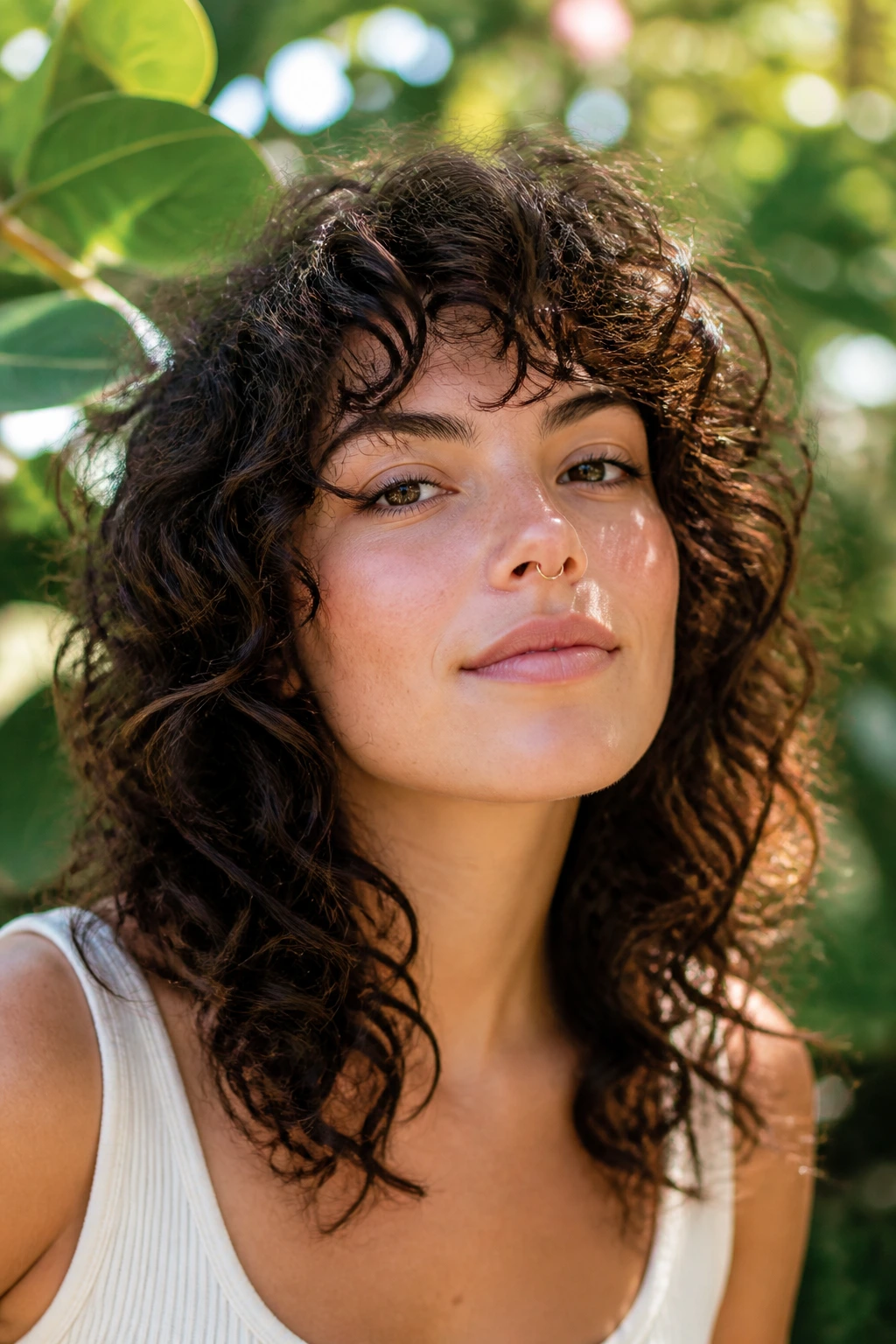
If you have natural curls, don’t try to straighten them. A shag cut is arguably the best thing you can do for natural curls.
Embracing the Shape
Let your curls do the work. The layers will allow your curls to spring up, and the volume they create at the crown is perfect for balancing a round face. Avoid heavy gels that “crunch” the curls, as they can make the hair look like a solid helmet.
31. Pastel Color Shag
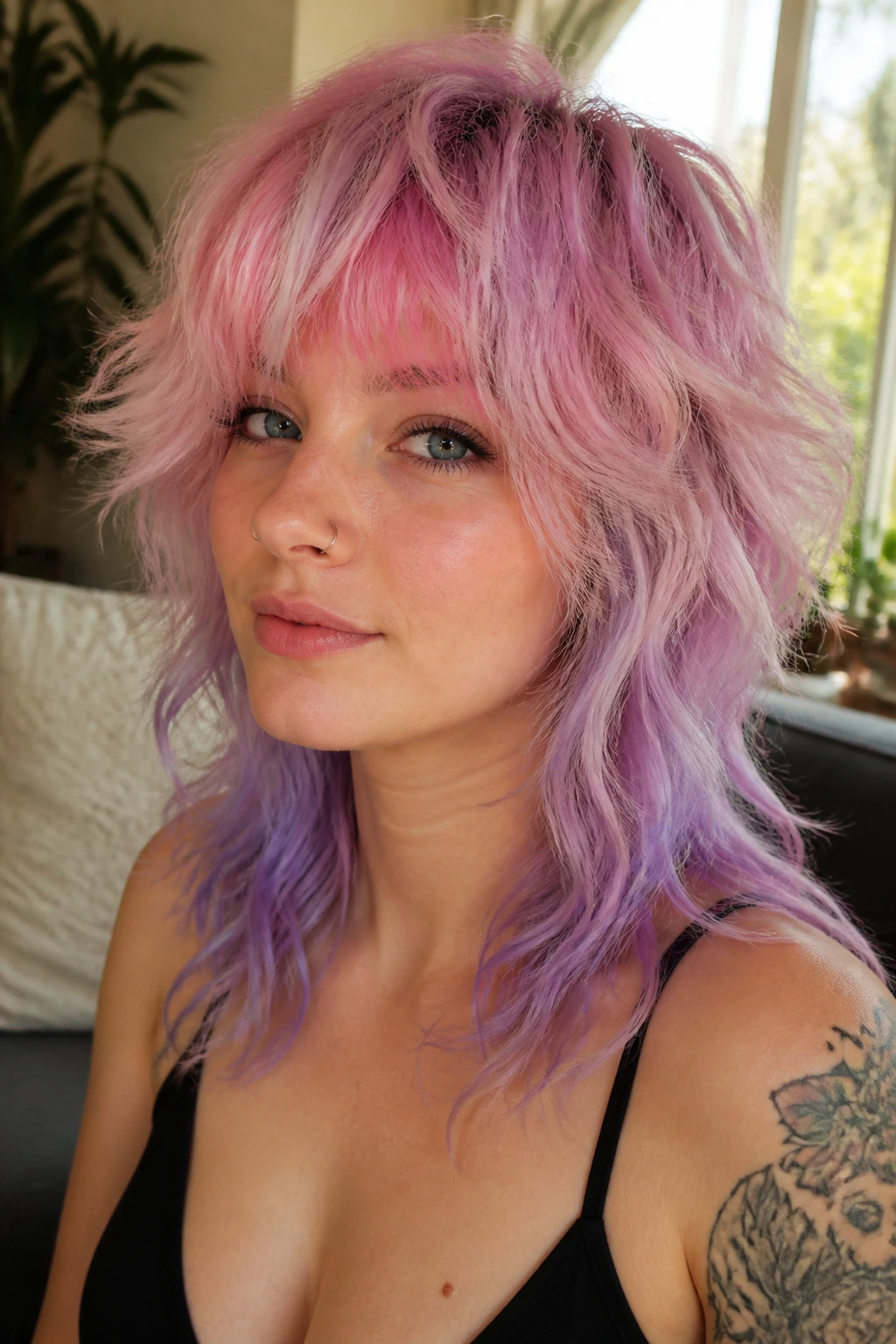
If you are going for a bold color—like a soft pink, lavender, or mint green—a shag is the best haircut to pair with it.
The Connection
Fun colors and edgy cuts go together. The shag provides the movement that makes the color look multidimensional. When the light hits those layers, the color will shift and shimmer, which draws attention to the hair and away from the face.
32. Shag with Blunt Face-Framing
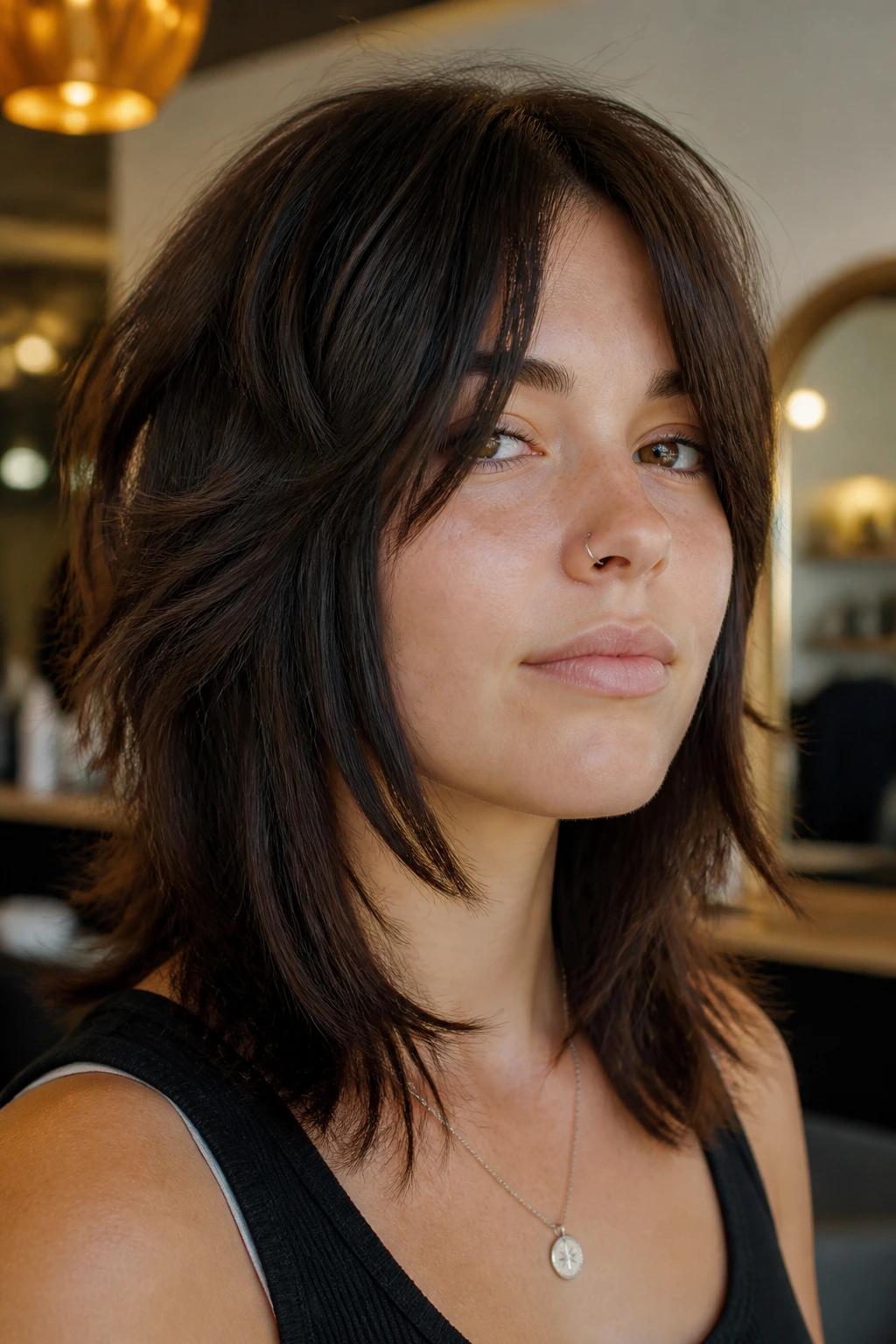
Sometimes, you want the shag look, but you still want that “crisp” feel around your jaw. You can cut the layers in the back, but leave the front pieces blunt.
The Contrast
It’s a mix of a bob and a shag. It gives you the “cool” factor of the shag, but the blunt front pieces help anchor your face. Just ensure the blunt pieces don’t cut right across your chin—have them hit either above or below.
33. The “Butterfly” Shag Hybrid
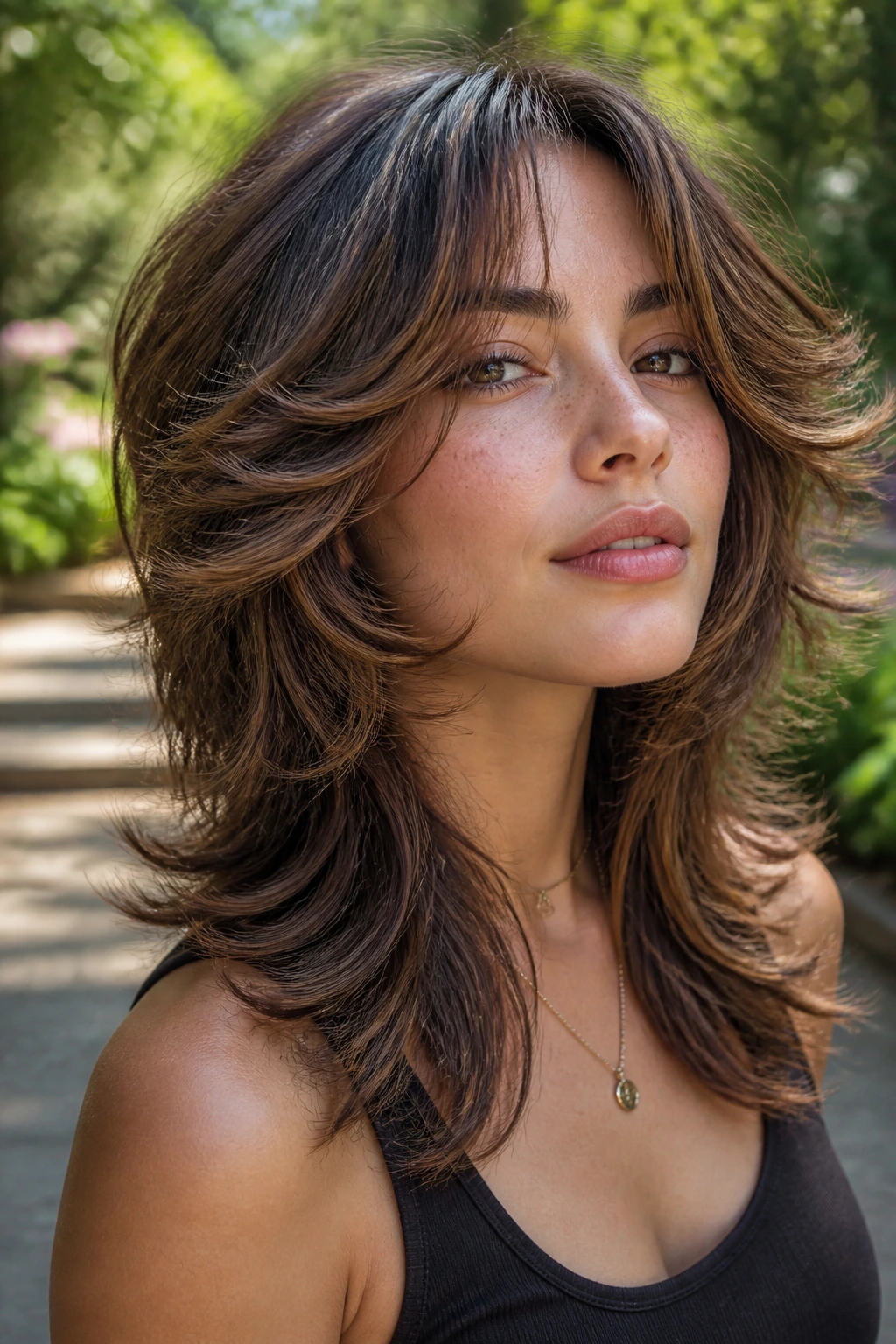
The “butterfly” cut is famous for its heavy, face-framing layers that curve outward. A shag version of this uses the same layering technique but makes the ends choppy rather than feathered.
Why It Works
It’s the ultimate face-framing experience. It mimics the shape of butterfly wings around your face, which creates a very distinct, flattering frame that hides the roundness of the cheeks.
34. Shag with Textured Crown
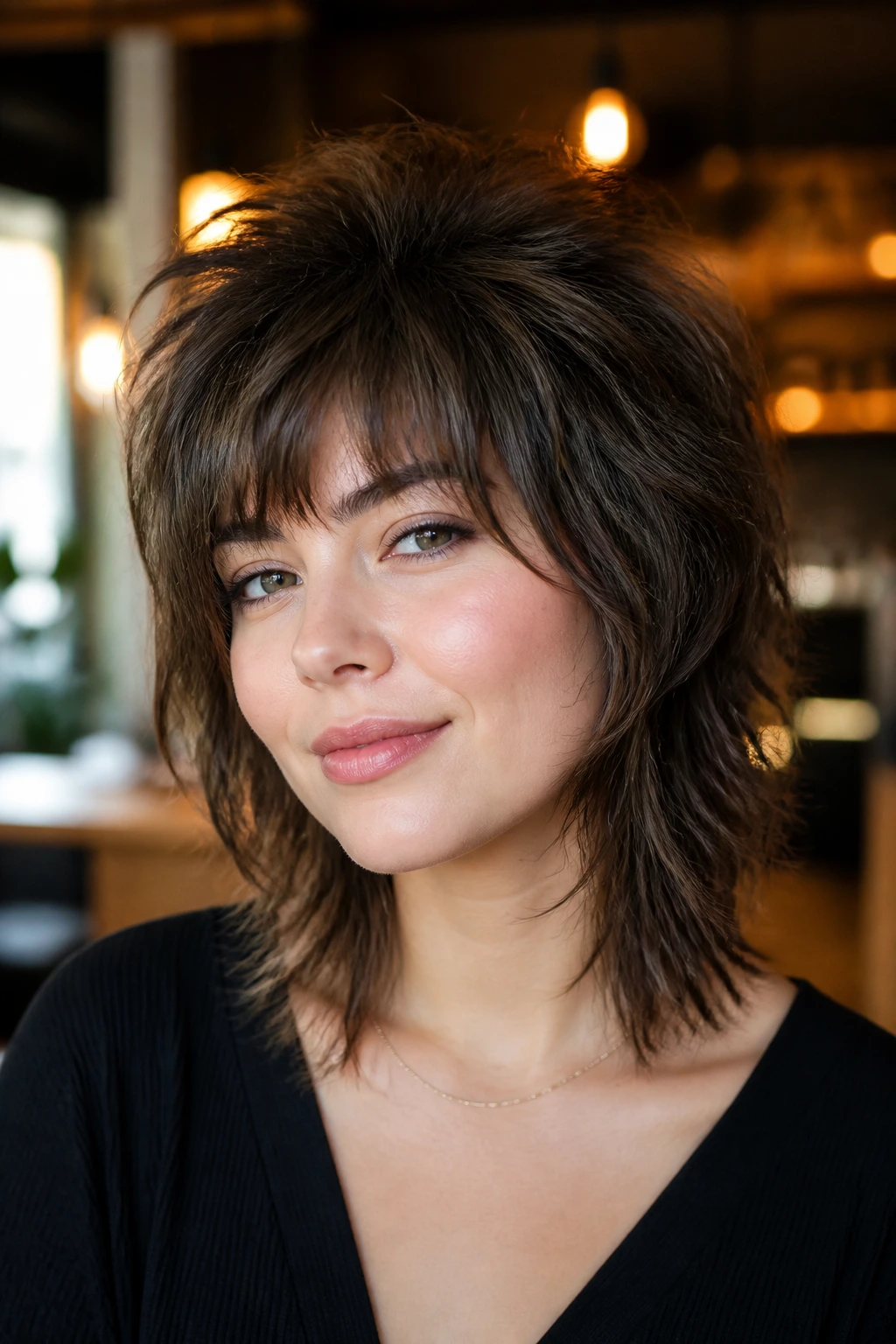
If your hair is very flat on top, you need this specific variation. The stylist focuses on cutting the hair at the crown shorter so it naturally stands up.
The Mechanics
By creating a “cushion” of shorter hair at the top, you create a foundation for the rest of the style. This is your height, your verticality, and your secret weapon against a round face.
35. Blunt Fringe Shag
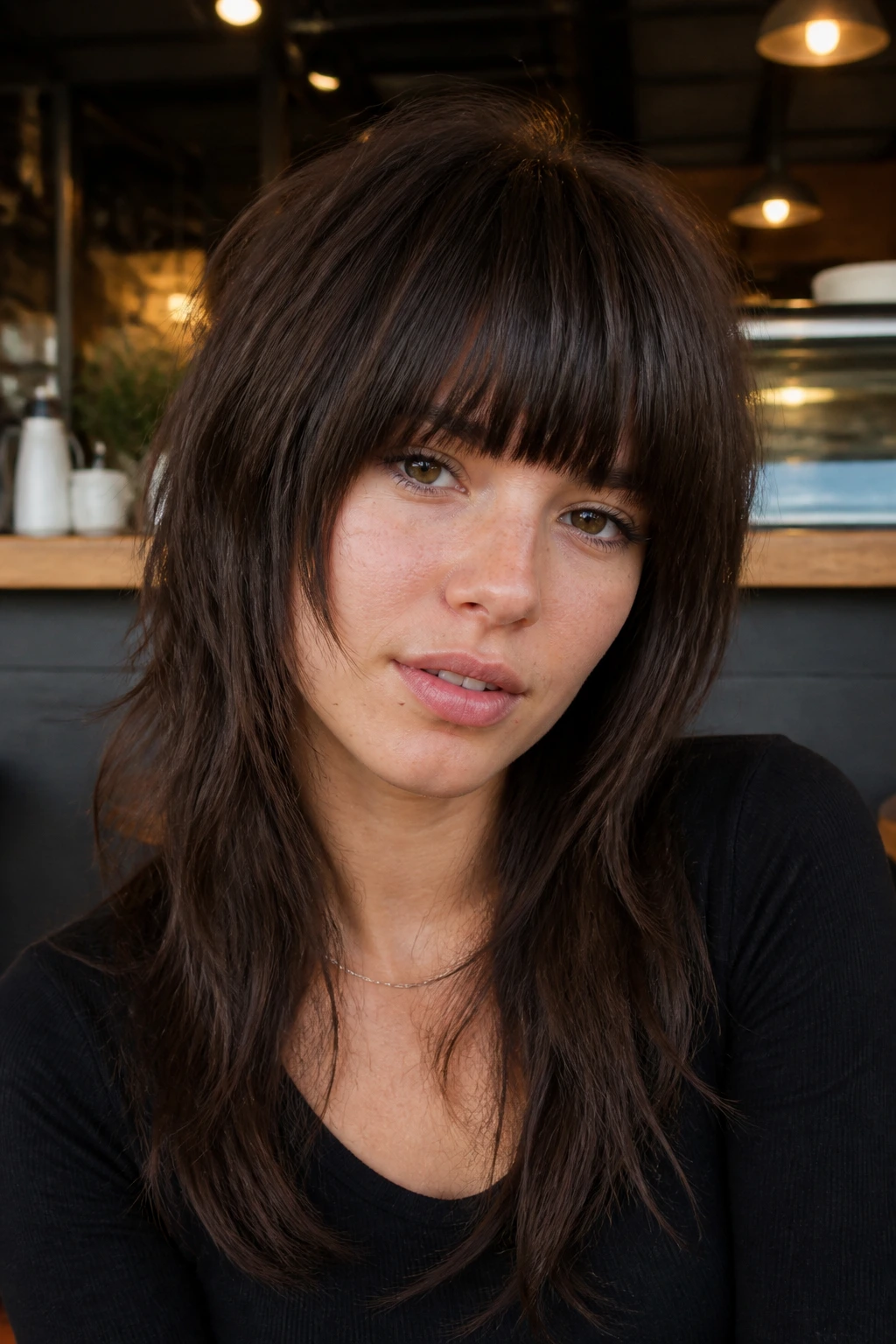
This is for the brave. A blunt, heavy fringe paired with a heavily layered shag.
The Counter-Intuitive Approach
Usually, we say avoid heavy fringes on round faces. However, if you keep the hair long and the layers around the face very soft, the blunt fringe can act as a “statement” piece that makes the roundness of your face look like a deliberate, stylish choice. It’s about owning the shape.
36. The Minimalist Shag

This is a “soft” shag. The layers are subtle, the edges are blended, and the volume is controlled.
The Target Audience
This is perfect for the minimalist. It doesn’t require a mountain of product, it doesn’t take 40 minutes to style, and it looks professional in any setting. It’s proof that you don’t need to go “extreme” to get the benefits of a shag.
37. Shag with Longer Nape
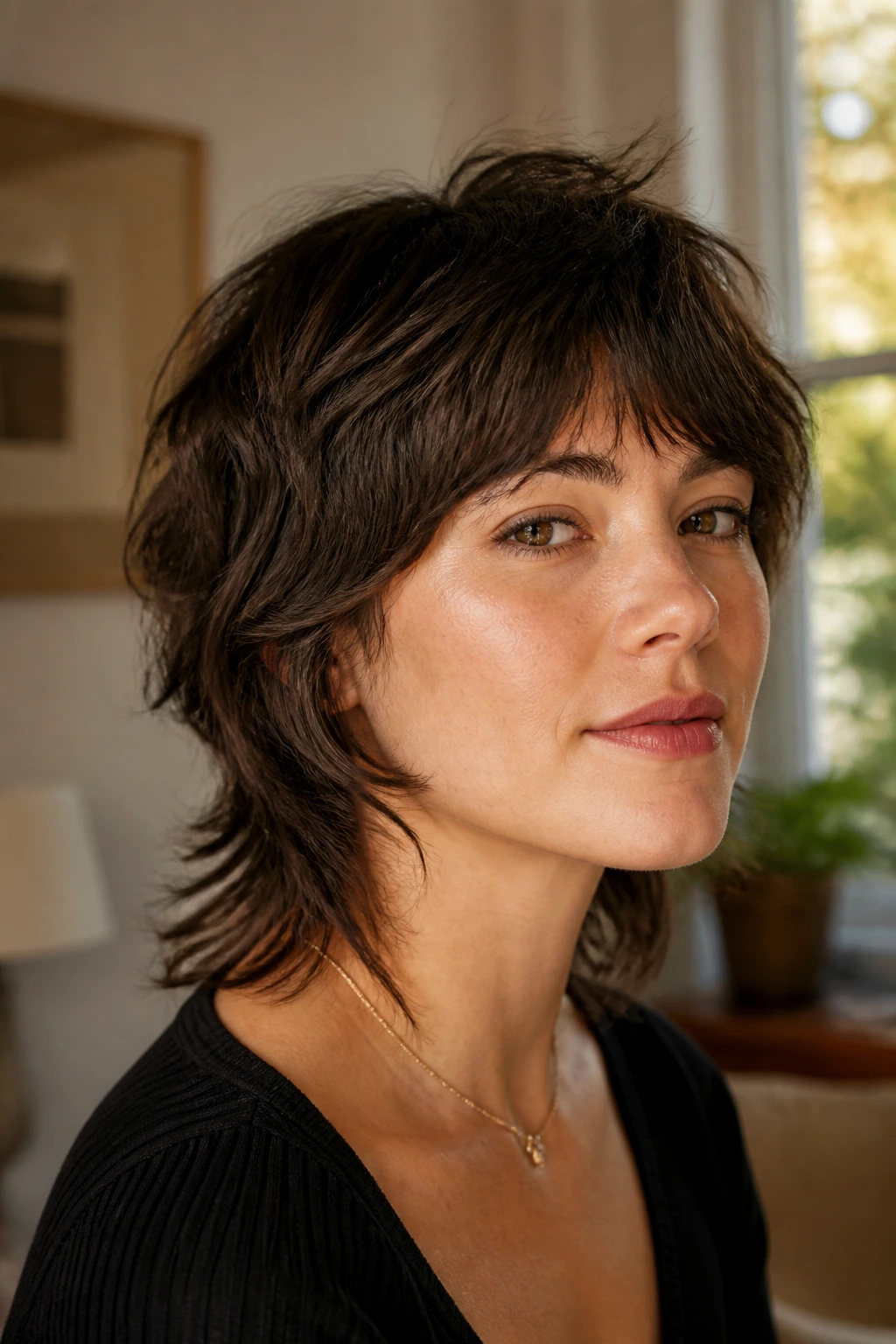
Keeping the hair at the back of the neck slightly longer than the rest of the shag gives it a slightly more traditional “mullet” vibe but with more length.
The Result
It creates a beautiful line from the crown down to the shoulders. It’s an elegant, elongated shape that feels very sophisticated. It’s a great option for those who want a shag but are worried about the “short hair” commitment.
38. Softly Blended Shag
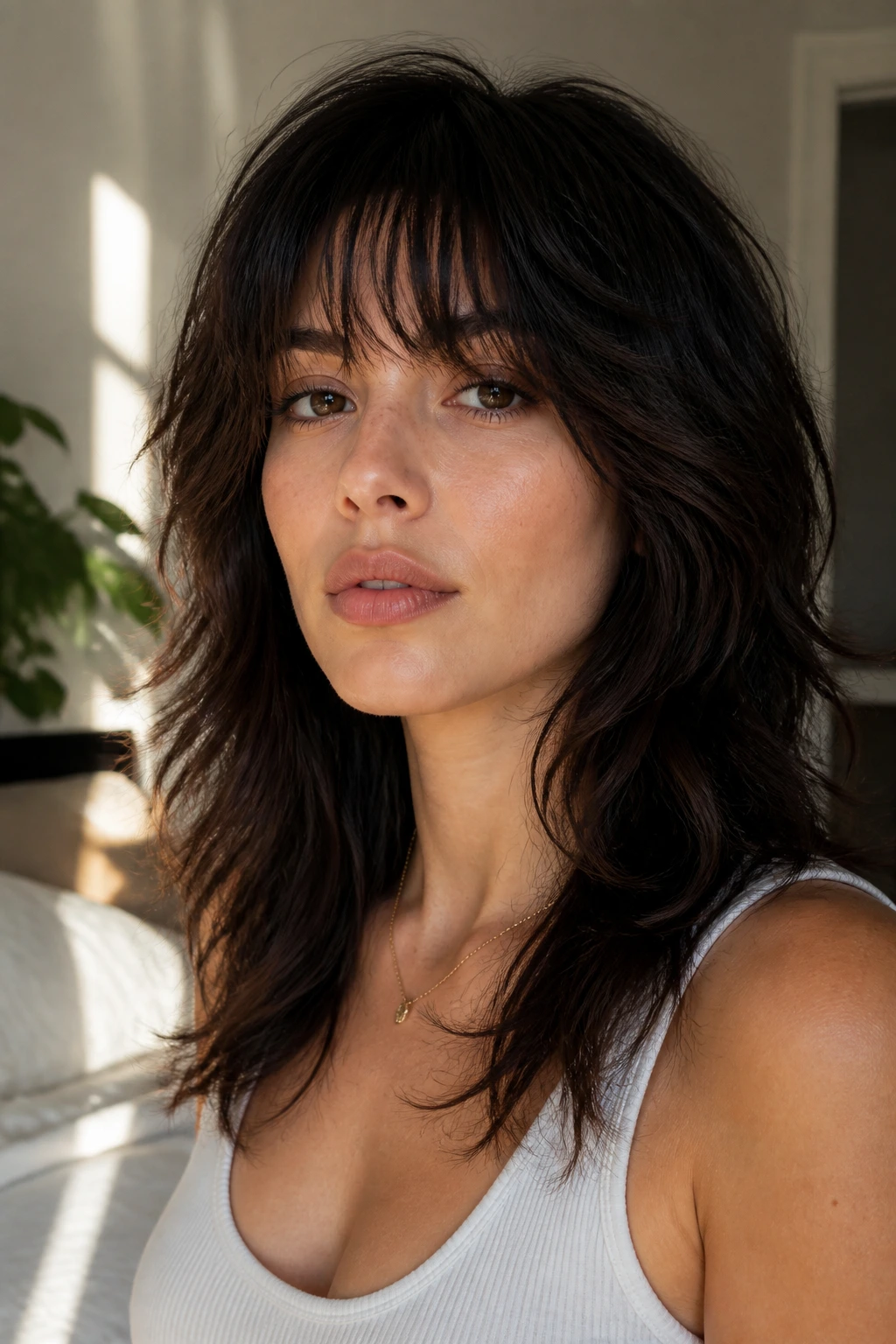
Instead of “shattered” or “choppy” layers, you ask for “blended” layers. The stylist uses slide-cutting techniques to make the hair transition smoothly from short to long.
Why This Matters
It eliminates the “shelved” look. If you have thick, coarse hair, sharp layers can sometimes look like they’ve been cut with a lawnmower. Blended layers feel much more expensive and polished.
39. High-Volume Crown Shag
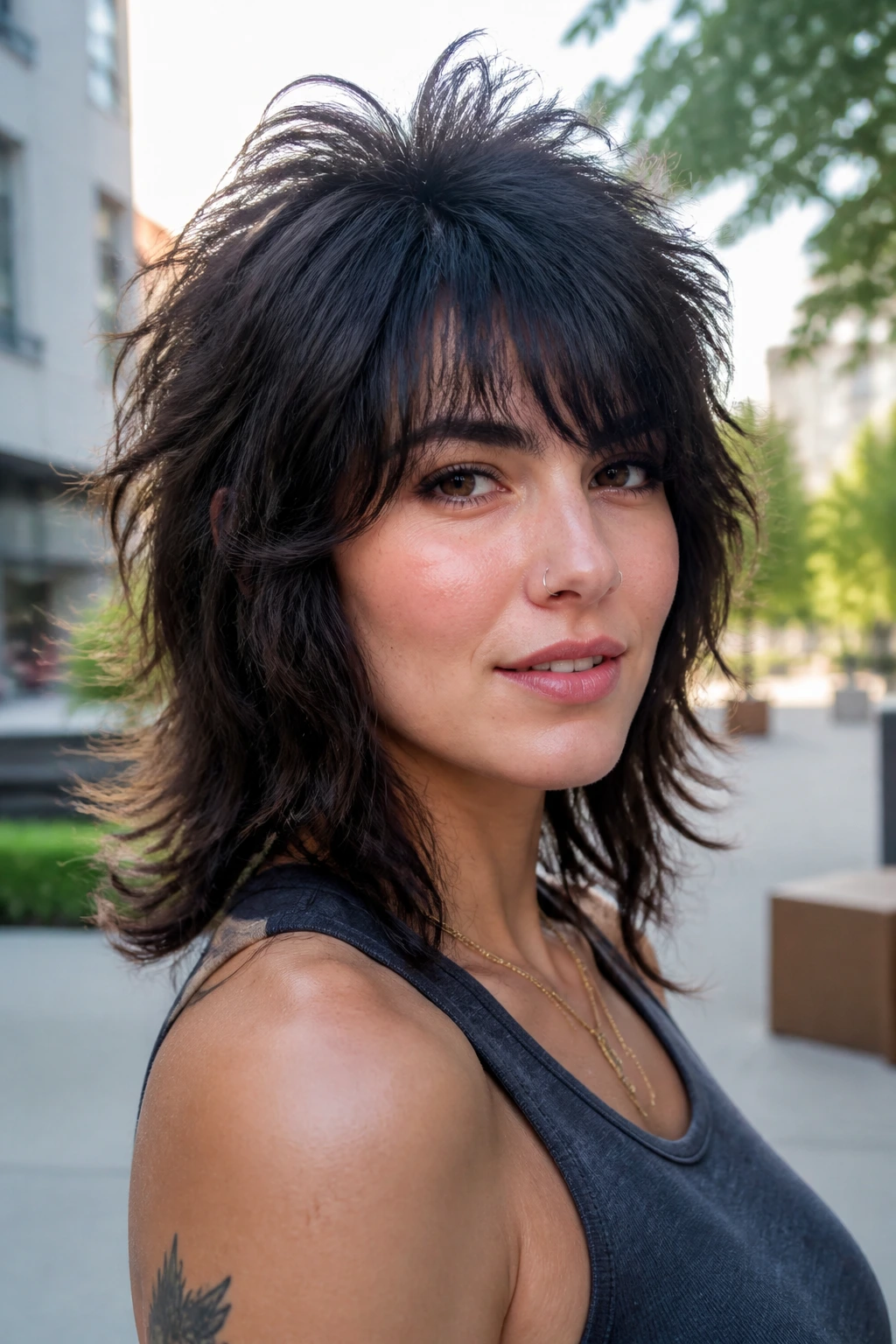
If your face is very round, this is the most aggressive “correction” you can make. The layers start as high as possible on the head.
The Strategy
You are trying to create as much space between the top of your head and your eyes as possible. This extra volume at the very top creates a triangular silhouette—pointy at the top, wider at the cheeks, tapering down—which is naturally more flattering than a circle.
40. The Choppy “Edgy” Shag
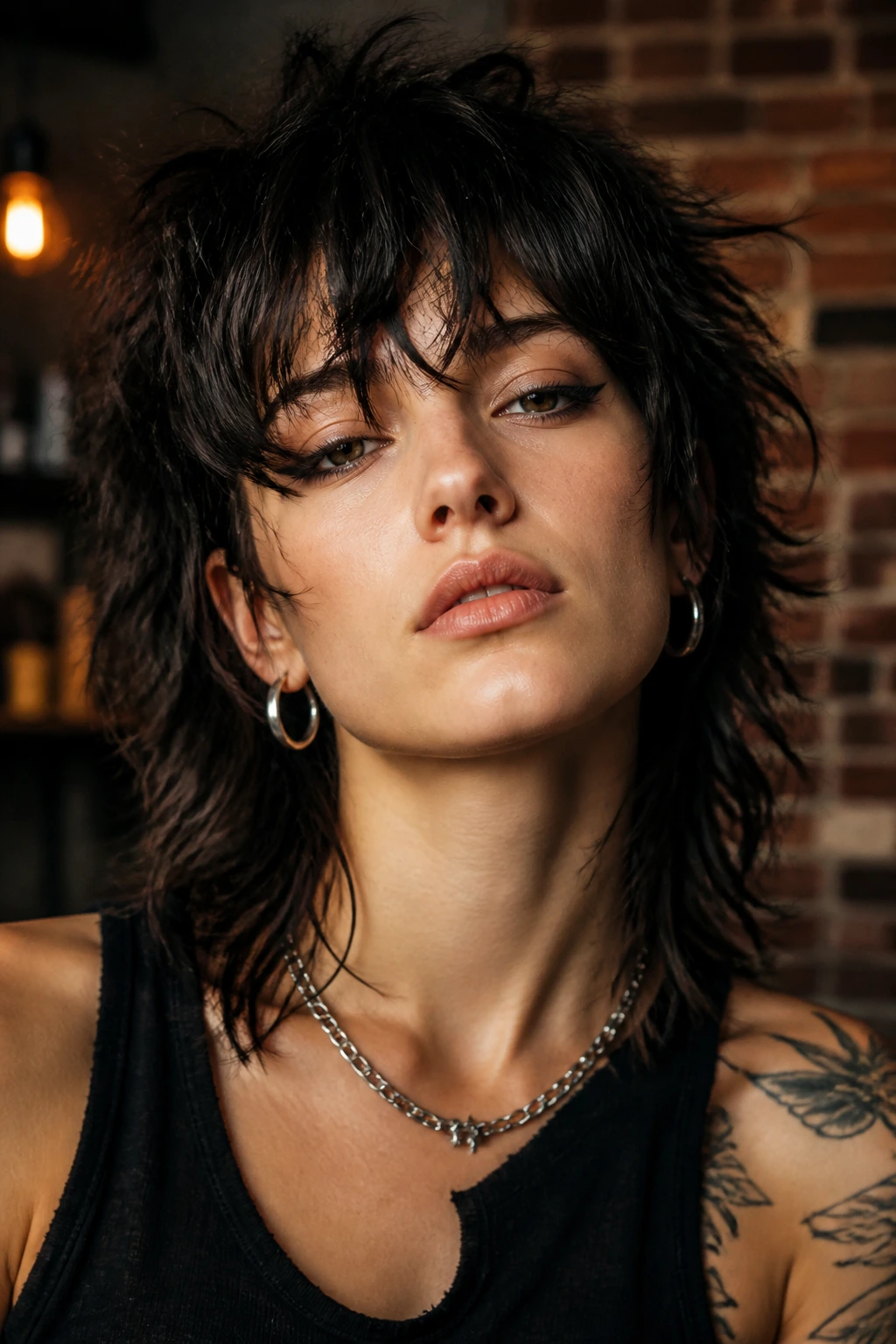
This is the full-rock-star version. Every section is cut with a razor, the fringe is piecey, and the ends are razor-thin.
Final Takeaway
This is not for the faint of heart, but it is incredibly freeing. When you have a cut this textured, you stop worrying about “hiding” your round face and start enjoying your hair. It’s a haircut that demands to be seen, and confidence is the best accessory you can pair with it.
The Bottom Line
Choosing the right shag for your round face isn’t just about picking a picture from a magazine and hoping for the best. It’s about communicating with your stylist about your hair type, your lifestyle, and your comfort level. Do you want the soft, romantic “curtain bang” version, or are you ready for the high-volume, edgy wolf cut?
Remember, the most important aspect of any shag is the internal texture. You want weight removed from the mid-lengths and height added to the crown. If you keep those two principles in mind, you will find a version of this cut that not only works for your face shape but makes you feel like the best version of yourself. Don’t be afraid to try a little height—it’s amazing how much a few inches of lift at the root can change your entire outlook.
