



Flat roots are the enemy.
Long wolf haircuts for volume solve that problem by doing something blunt cuts rarely do: they move weight out of the wrong places and keep the length looking alive. Instead of a heavy curtain that hangs straight from the scalp, you get lift at the crown, softness around the face, and ends that still feel long enough to flip, tuck, or throw into a clip.
The trick is where the layers start, not how many layers you cram in. Too high, and the shape can go frizzy or thin at the ends. Too low, and you get a long haircut that behaves like it’s bored of itself. The best versions have a little swagger. They look loose, but they’re not random.
And that’s why this cut keeps showing up on hair that needs body without losing length. Fine hair needs help holding shape. Thick hair needs weight removed without turning into a puffball. Wavy and curly hair need room to spring up without being pushed into a triangle. The 20 versions below lean into those differences instead of pretending every head of hair wants the same thing.
1. Crown-Lift Wolf Cut for Fine Hair
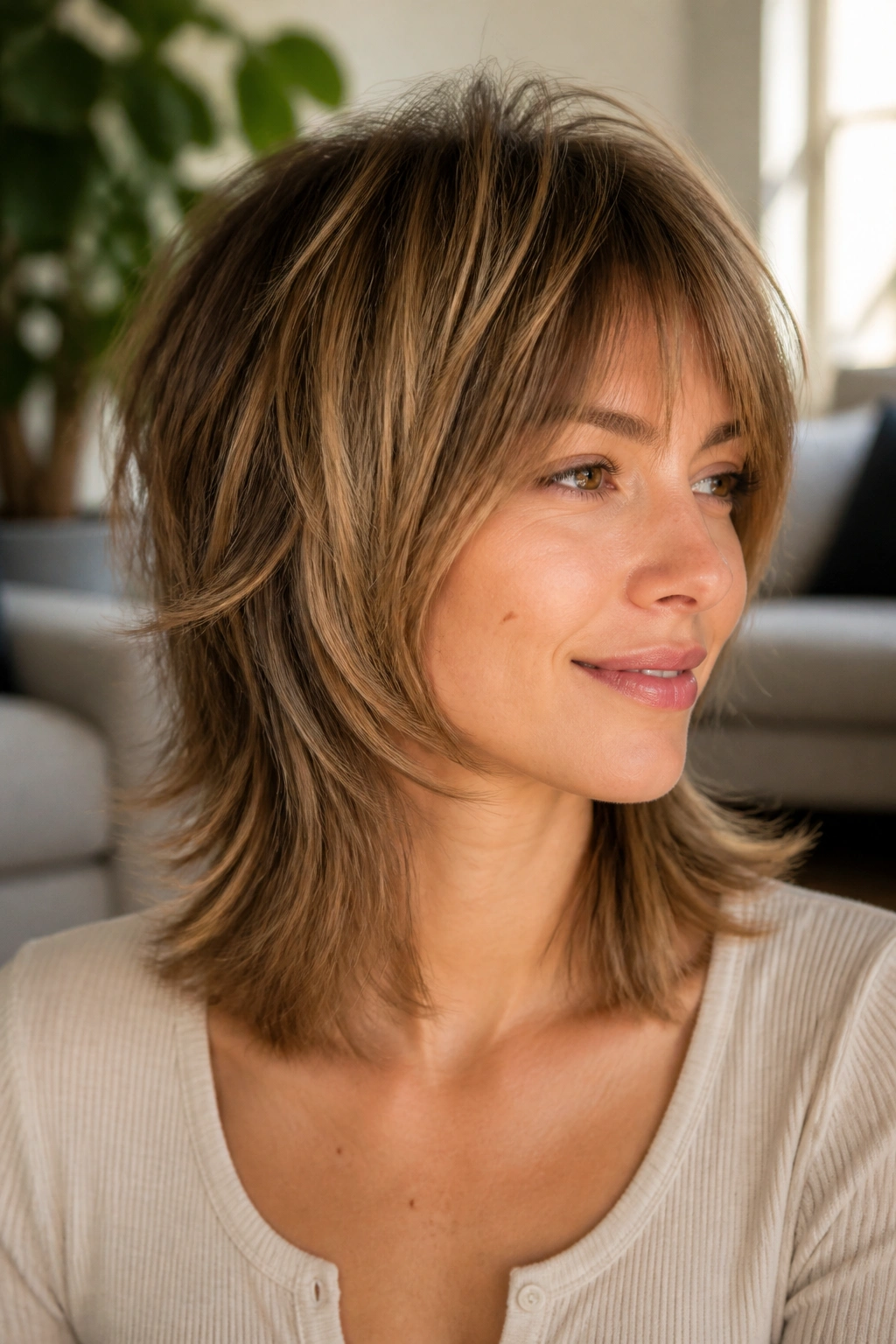
Fine hair does not need more weight at the bottom.
This version of the wolf cut puts the shortest layers up near the crown and keeps the perimeter thick enough to hold a line. The result is a cut that looks fuller at the top without making the ends look wispy, which is the part a lot of stylists get wrong when they chase volume too aggressively.
Why It Works
The crown gets a little lift because the top layers are shortened just enough to stop the hair from lying flat against the head. The longest pieces still graze the chest or collarbone, so the whole shape feels long, not shrunken.
- Ask for short internal layers at the crown and a softer face frame.
- Keep the ends blunt-ish, not shredded.
- Style with a light mousse at the roots and a quick rough-dry upside down.
- Avoid heavy oils near the top; they drag the lift down fast.
Best note: if your hair usually collapses by midday, this is the version that gives you the biggest visual payoff for the least drama.
2. Curtain-Bang Wolf Cut with Feathered Ends
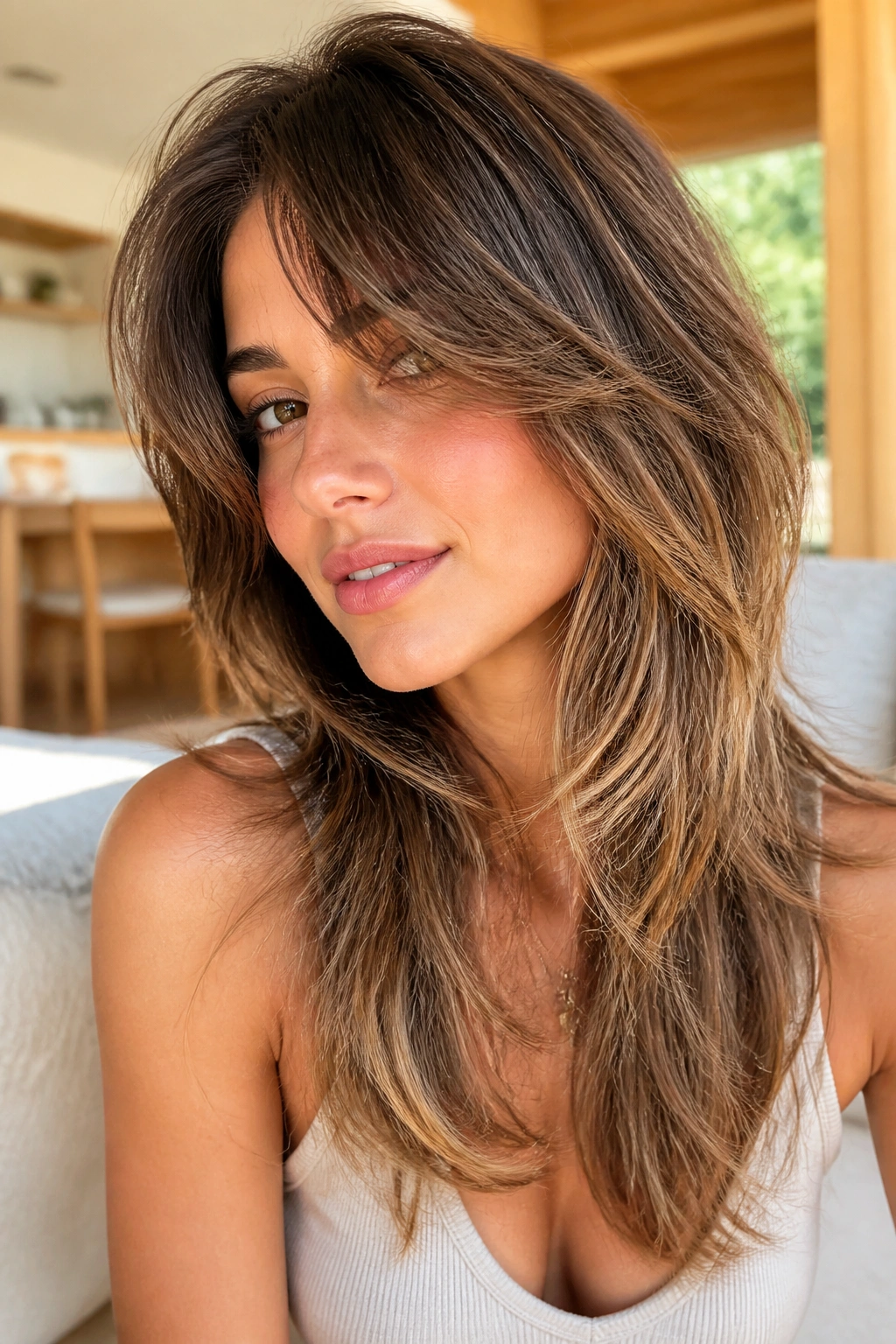
Curtain bangs are the easiest way to cheat a bigger-looking haircut.
They split the front of the face, open up the cheekbones, and make the rest of the layers feel more intentional. On a long wolf cut, that matters. The cut stops reading as “long hair with texture” and starts looking like a shape with actual structure.
It also gives you a built-in volume trick. When the fringe is blown away from the face, the roots around the hairline lift with it, which makes the top of the head look a little taller. Not a lot. Enough. That small shift changes the whole mood of the cut.
This version works especially well if your hair falls flat around the temples. Keep the curtain pieces long enough to tuck behind the ear when you want them out of the way, but not so long that they merge into the rest of the layers and disappear. A round brush, a quick bend at the ends, and a cool shot from the dryer are enough.
3. Razor-Feathered Wolf Cut with Airy Movement

Why does a razor make some wolf cuts look fuller instead of thinner?
Because the blade can soften the line of the hair without chopping it into obvious steps. On straight-to-wavy hair, a razor creates that floaty separation people want from a wolf cut. The strands move independently, so the style looks light and lived-in instead of packed together like a heavy blanket.
The Part a Stylist Watches
A razor works best when the hair has enough density to hold shape. If your ends are already fragile or see-through, too much slicing can make the outline look ragged. The good version keeps the interior soft while leaving a stronger edge through the perimeter.
- Best on medium to thick hair with some natural bend.
- Ask for feathered layers, not shredded ends.
- Use heat protectant before blow-drying or diffusing.
- Let the front pieces stay long enough to frame the jaw without flipping out awkwardly.
If you like movement more than polish, this is a sharp pick. It has edge without looking messy, which is a harder balance than it sounds.
4. Heavy Crown, Tapered Length Wolf Cut
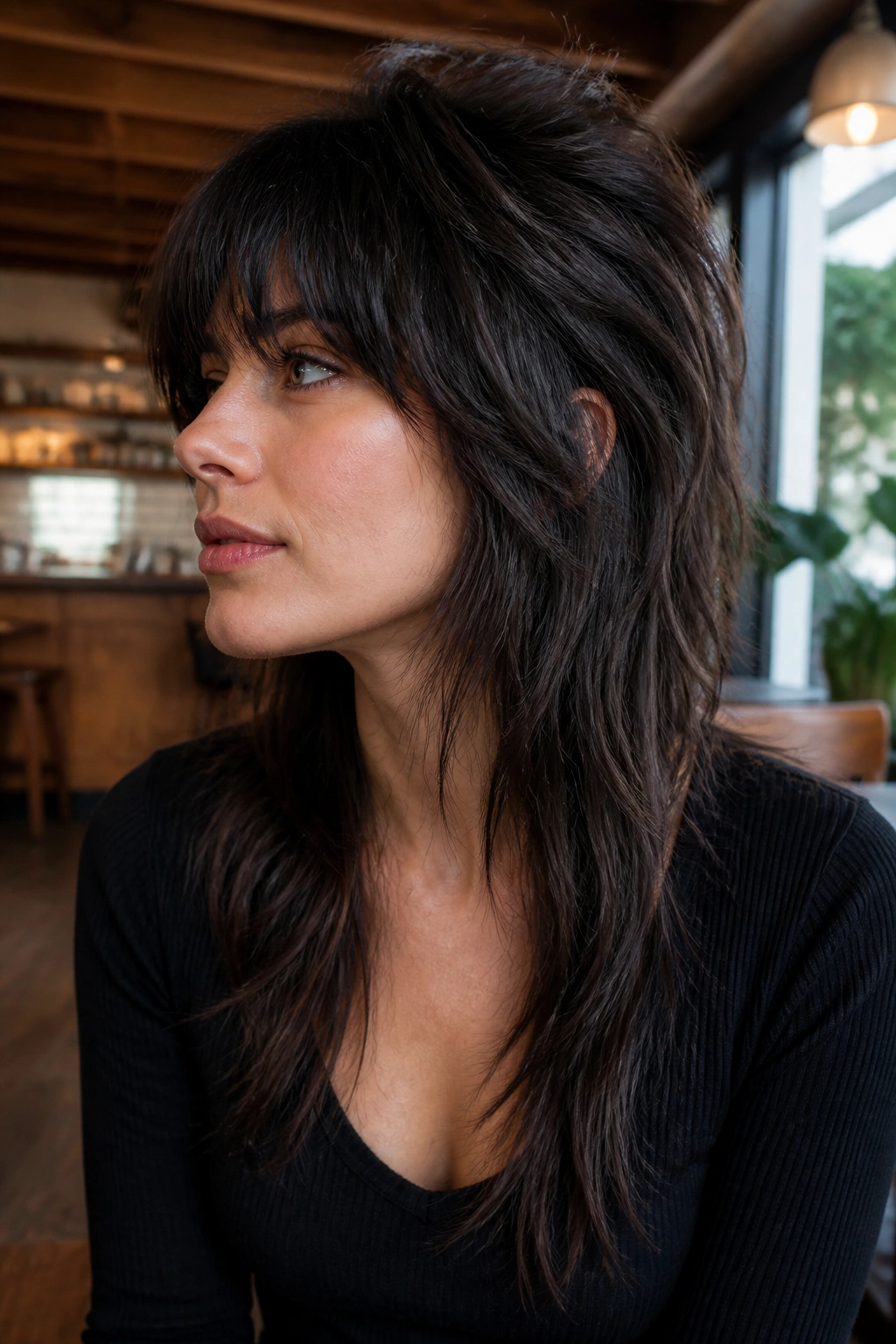
If your hair sits flat on top and poofs out at the bottom, this shape feels like a reset.
The whole point is to take weight out of the upper lengths while keeping enough density through the bottom to stop the cut from looking flimsy. That makes it a strong choice for hair that grows wide instead of tall. The crown gets lifted. The lower half stays grounded.
A lot of people ask for “more layers” when what they really need is better placement. Here, the shorter pieces start high enough to open the silhouette, but the taper through the sides stays gradual. That keeps the haircut from turning into a triangle with opinions.
Ask for a rounder transition from the cheek area down to the chest. If the stylist starts chopping the sides too short, the whole thing can mushroom out. A root clip while the hair cools helps lock in the lifted shape. So does drying the top section against the direction it naturally falls.
5. Face-Framing Wolf Cut for Rounder Cheeks
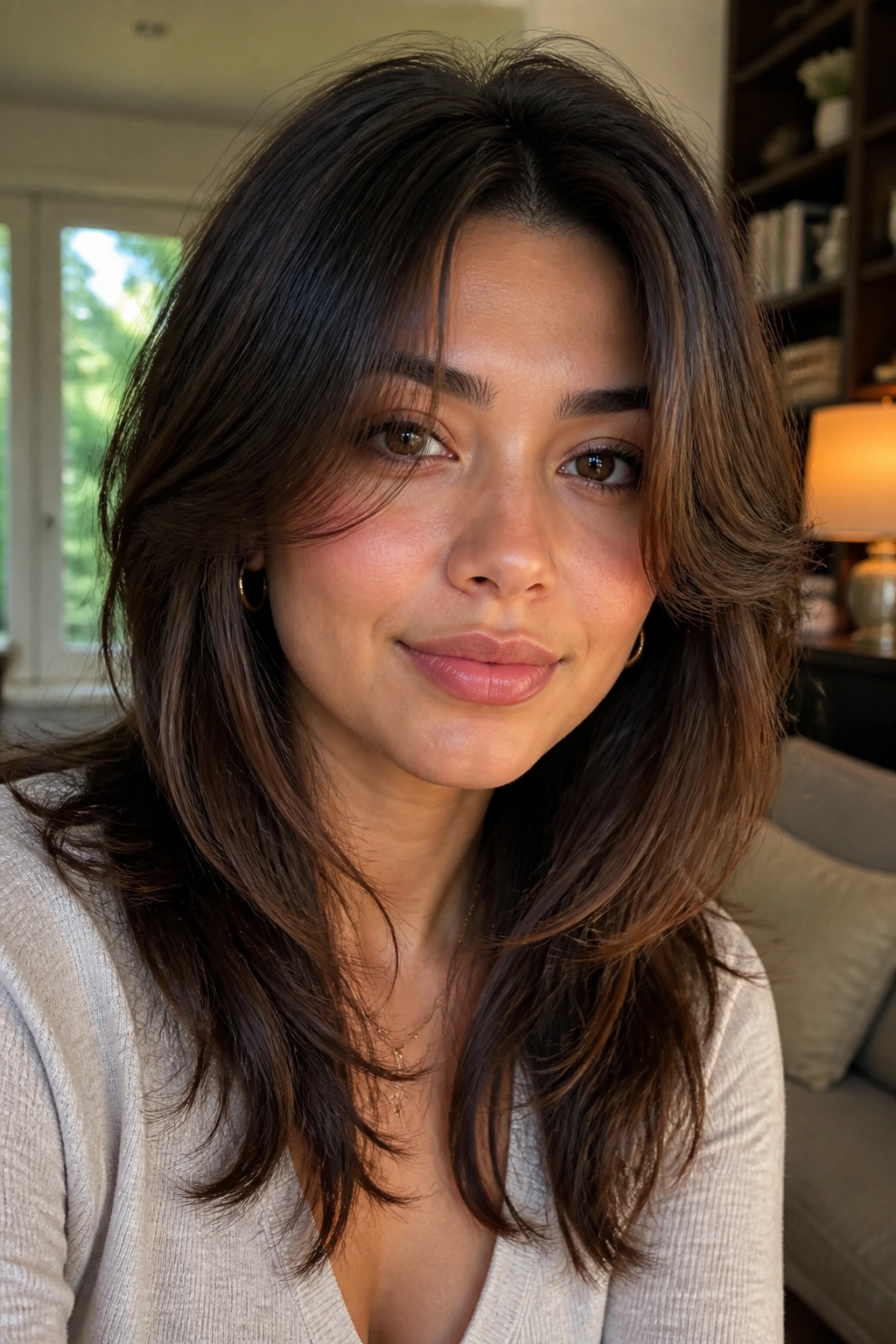
The best face-framing wolf cut doesn’t carve up the cheeks. It stretches the face.
That sounds subtle, and it is. The front pieces start a little lower, usually around the cheekbone or just below it, then melt into longer layers that land near the collarbone. The haircut keeps the eyes and cheekbones open while leaving enough length to avoid that over-edited, over-layered look some shag cuts fall into.
A side part can help here, especially if your hair wants to puff out on both sides. The asymmetry gives the face more angle. A center part can work too, but only if the front pieces are long enough to fall past the widest part of the face. Short face-framing layers are the fastest way to make a round face look wider, and nobody needs that.
I like this version for people who want volume without a big attitude. It’s soft, flattering, and easy to grow out. The cut has enough movement to feel current, but it does not shout for attention every time you walk into a room.
6. Bottleneck Bangs and Long Layers Wolf Cut
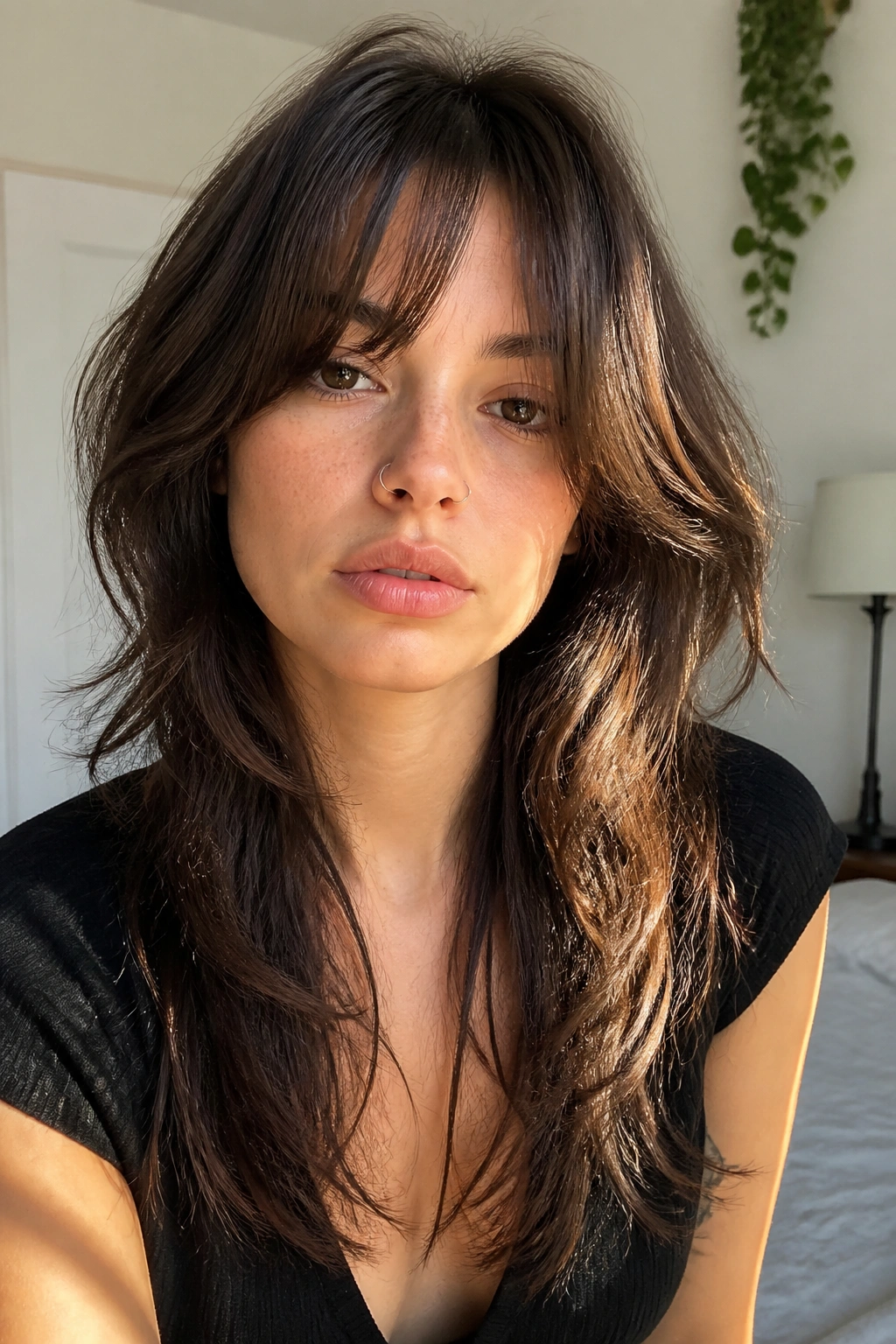
Curtain bangs are easy. Bottleneck bangs do more work.
The center stays shorter and narrower, then the sides open out more gradually near the temples. That little change matters because it keeps the middle of the face clear while still adding width where the haircut needs it. On a long wolf cut, that means the fringe can help with lift without swallowing your forehead whole.
This version suits people who want a softer version of the shaggy bang idea. The fringe is visible, but it does not dominate the haircut. It makes the volume feel more controlled, which is useful if your hair already has a lot of body and you’re trying to shape it rather than bulk it up.
The best part is how well it grows. Bottleneck bangs blur into the rest of the layers more gracefully than a blunt fringe does. If you’re the kind of person who forgets to trim bangs the second they’re cut, this one is kinder to your life.
7. U-Shaped Wolf Cut with Interior Layers
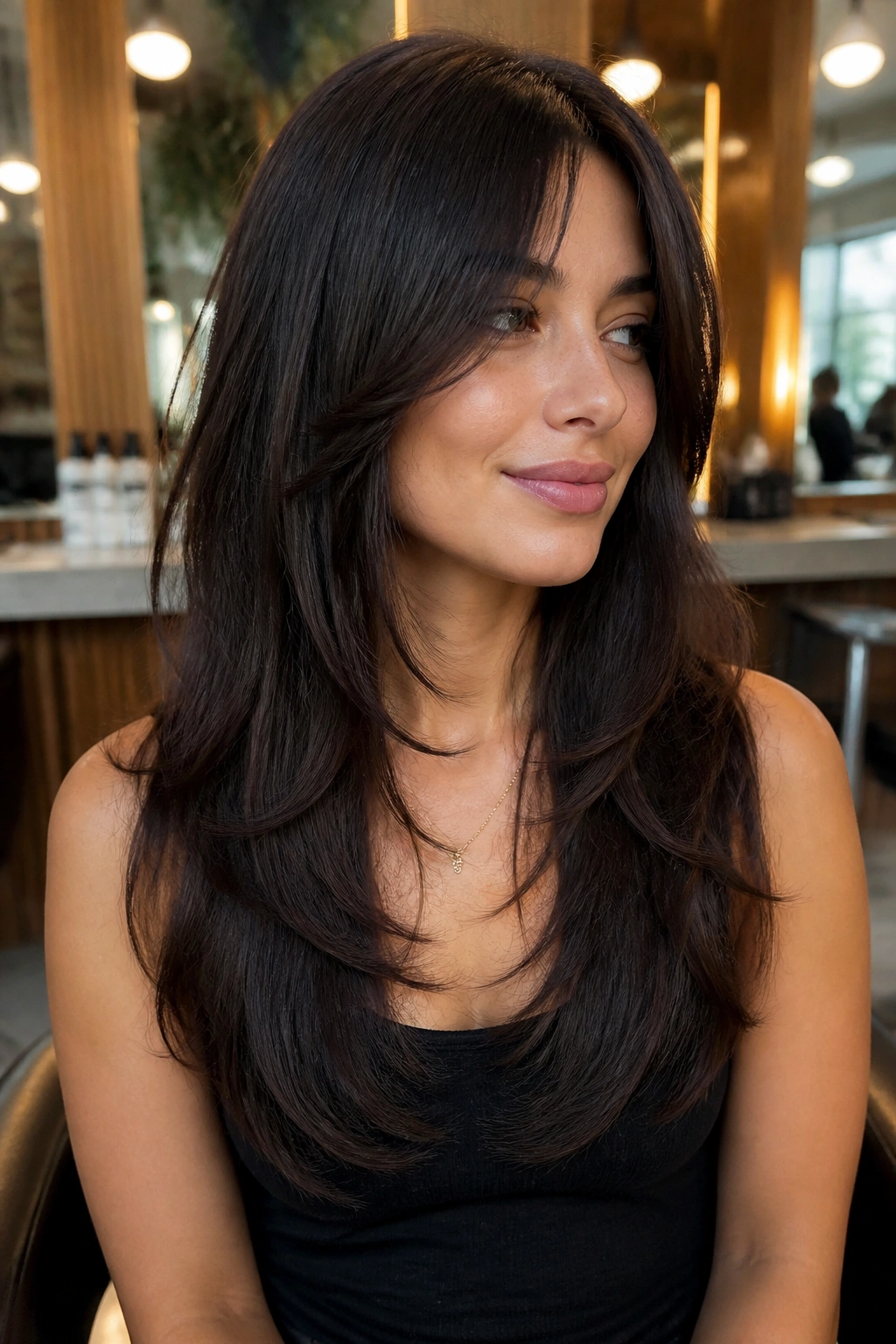
Why keep the outline in a U instead of going straight across?
Because the U-shape preserves softness and fullness at the ends. Straight-across long cuts can feel heavy or blocky, while a U-shaped perimeter follows the fall of the hair and makes the layers inside the cut stand out more cleanly. The shape is especially useful if you want the wolf-cut texture without losing the feeling of long, expensive-looking hair.
What to Ask For
Tell the stylist you want the length kept in a soft U and the interior layers lifted enough to create movement through the mids. That stops the cut from looking too choppy near the hemline.
- Keep the bottom edge rounded, not blunt.
- Place layers inside the shape, not all around the surface.
- Let the face frame start around the jaw or upper neck.
- Style with a round brush only on the top half if you want a cleaner finish.
This is one of my favorite options for thicker hair that needs air but not a dramatic chop. It gives you shape without making the haircut feel overworked.
8. Air-Dried Wave Wolf Cut with Soft Separation
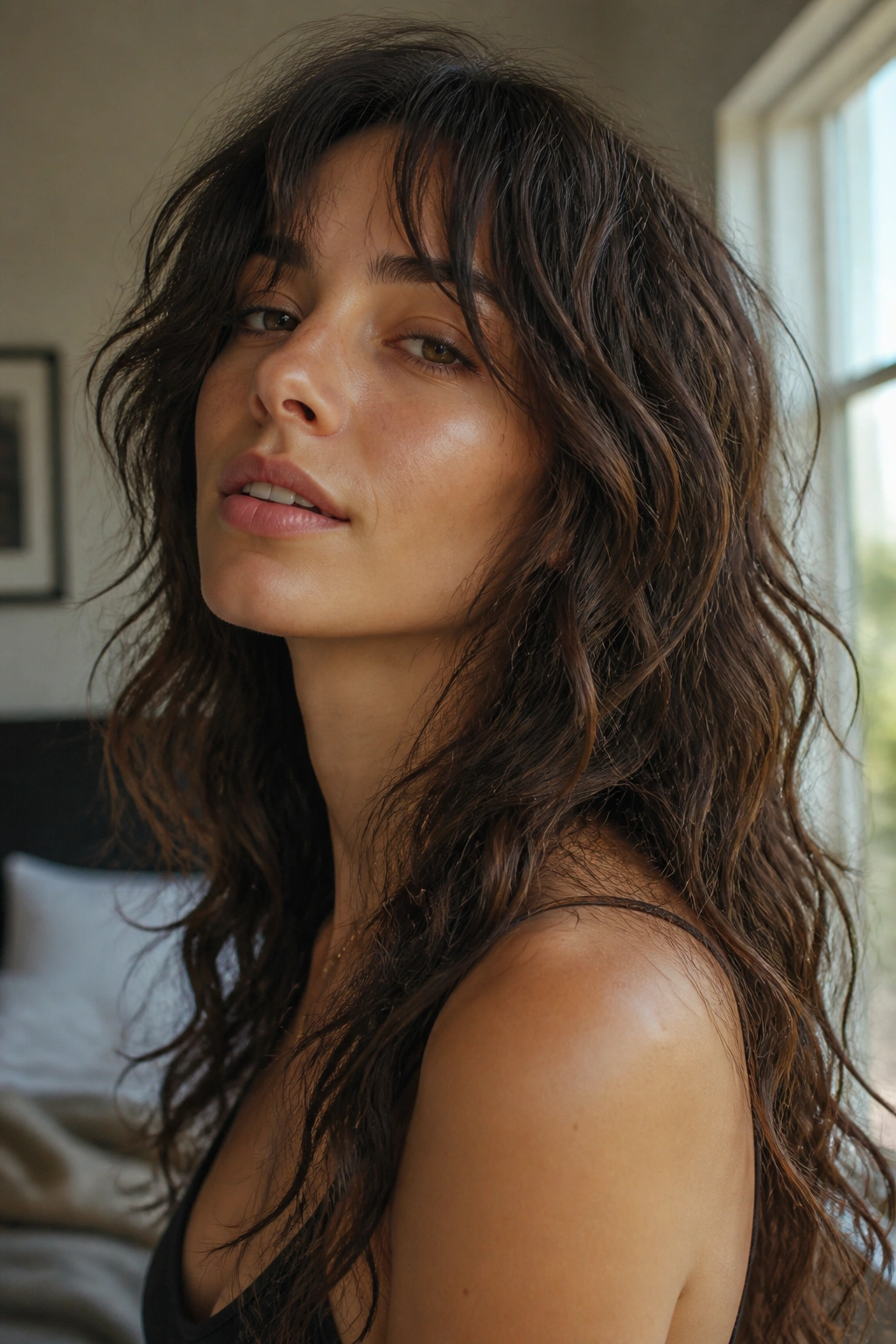
You wash your hair, scrunch it, walk away, and it still looks intentional.
That’s the dream here. An air-dried wolf cut depends on layers that are short enough to create bend but long enough to avoid that dry, crunchy shag look. The cut should let natural wave pattern show up where it wants to, then leave a little fray through the ends so the texture reads as movement rather than frizz.
Use a light cream or foam on damp hair, then scrunch from the ends upward. If you touch it too much while it dries, the wave pattern gets fuzzy. If you brush it after it sets, the whole shape loses definition. Leave it alone. That’s the hard part.
The Easy Routine
- Blot with a T-shirt or microfiber towel.
- Work in a small amount of light foam or wave cream.
- Scrunch and twist a few front pieces.
- Don’t rake your fingers through it once the top starts to dry.
This version is for people who want volume that looks a little effortless without actually being accidental. There’s a difference.
9. Blowout Wolf Cut with Rounded Volume
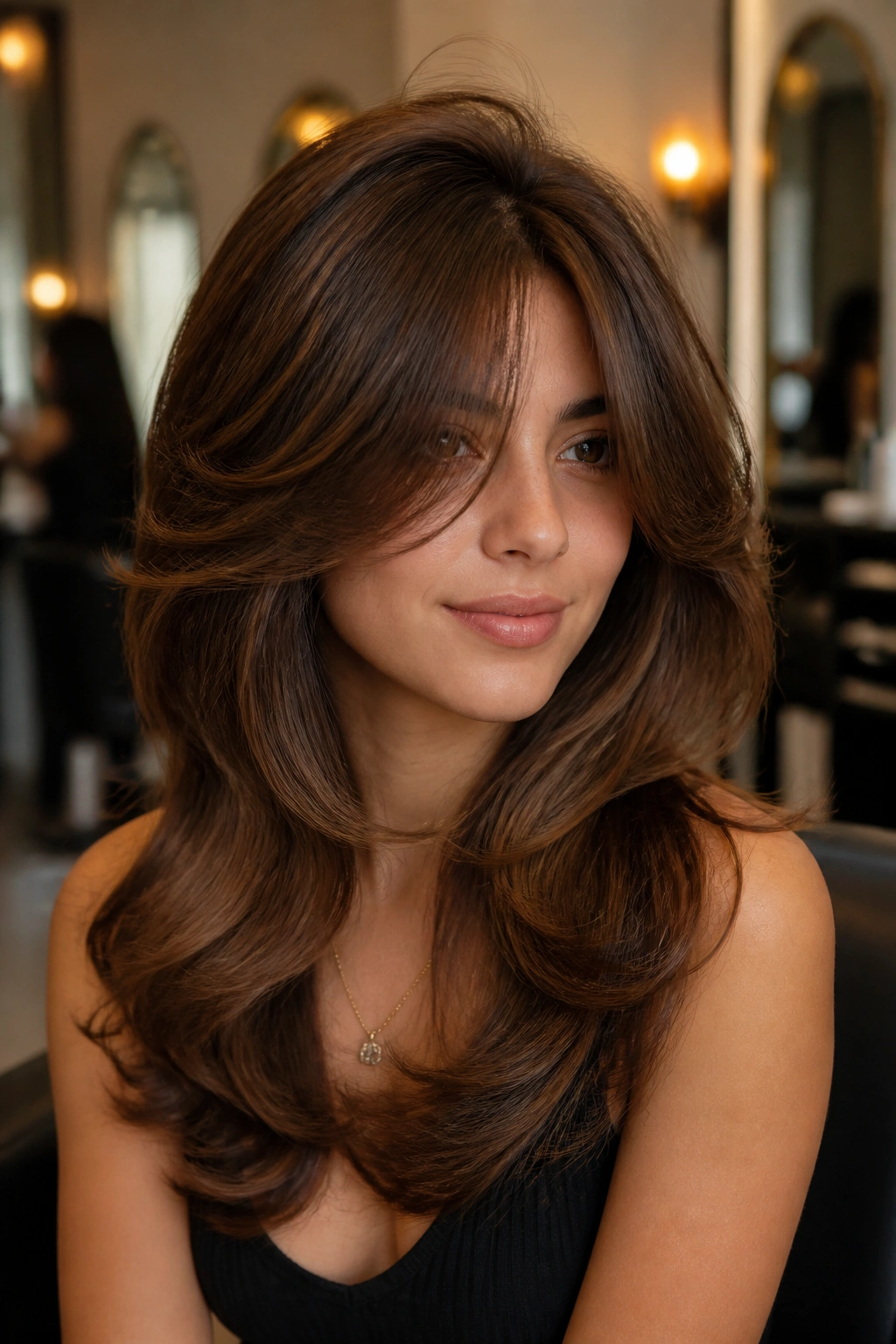
A round brush can make a wolf cut look fuller than a curling iron ever will.
That’s because the blowout lifts the root and bends the layers in a smooth arc, which gives the cut a rounder, softer silhouette. The shape ends up feeling plush instead of piecey. If your hair tends to fall limp after styling, a blowout-based wolf cut can hold that lifted shape longer than loose waves do.
It also gives the front a cleaner line. The face frame swings away from the cheek and the ends curve under or out just a touch. Not too much. Enough to make the hair look thick and touchable.
It sounds fussy. It isn’t. Once you learn the brush angle, the routine gets fast: rough-dry to about 80 percent, clamp sections with the brush, pull up at the root for a couple of seconds, then finish the ends with a soft bend. Velcro rollers on the crown while the hair cools can help if your roots are stubborn.
10. Curly Wolf Cut with Lifted Crown Layers
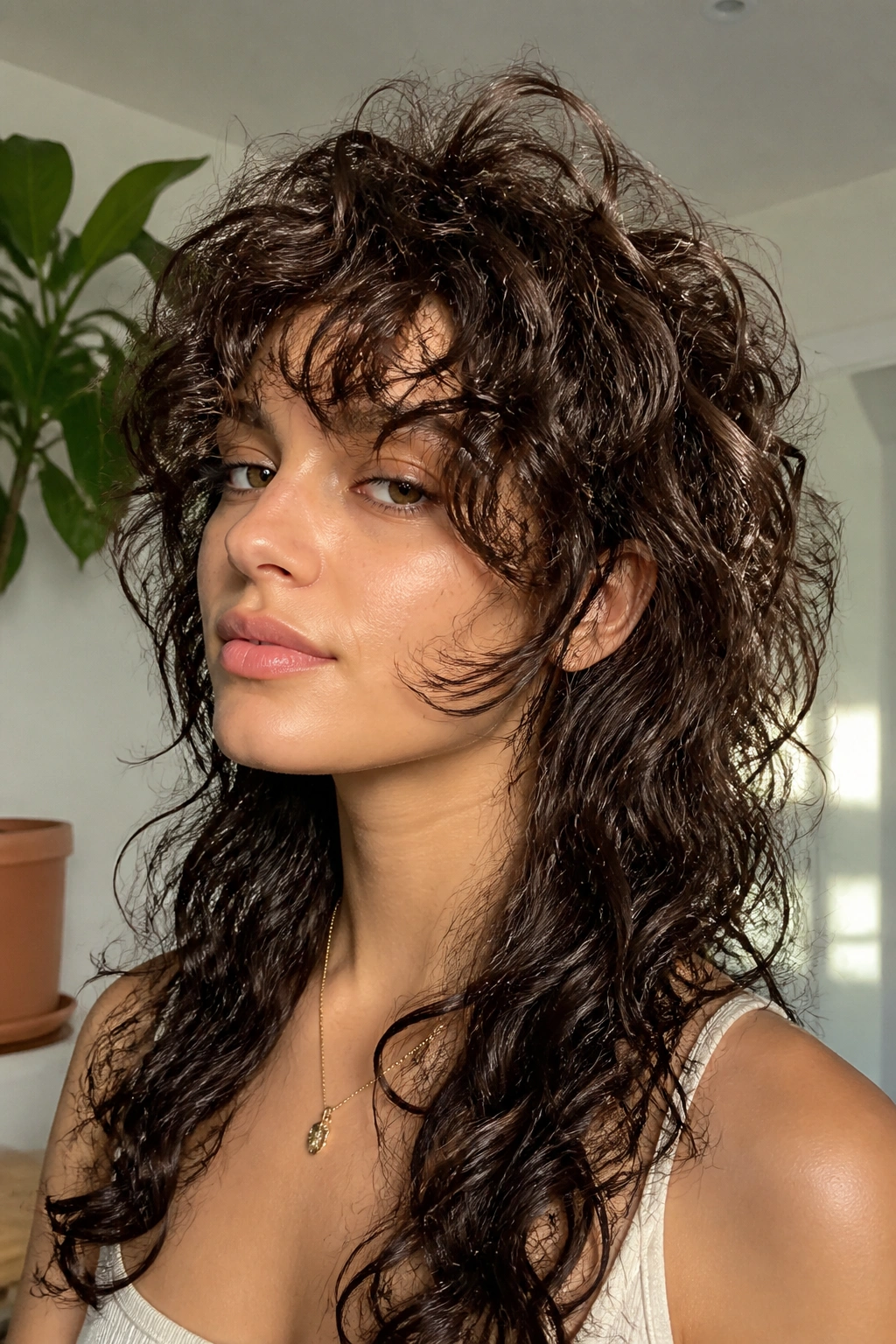
Can curls handle a wolf cut?
Absolutely, but the cut has to respect shrinkage. Curls need space at the crown and a little caution through the top layers, because too much shortness up high can make the head look wide instead of tall. The goal is lift, not a triangle with excellent texture.
A good curly wolf cut is often shaped with the curl pattern in mind, sometimes on dry or stretched hair. That lets the stylist see where the coils sit when they’re not compressed. The front pieces can still frame the face, but they need to be long enough to spring up without sitting awkwardly above the cheek.
How to Keep the Top from Getting Puffy
- Ask for soft crown layers, not a stack of short pieces.
- Keep the sides a little longer so the silhouette stays vertical.
- Diffuse on low heat and low speed.
- Clip the roots at the crown while they cool if you need extra lift.
This cut is lovely when the curls are healthy and springy. It is less forgiving when the ends are dry, because the shape can turn fuzzy fast.
11. Sleek Wolf Cut with Hidden Layers
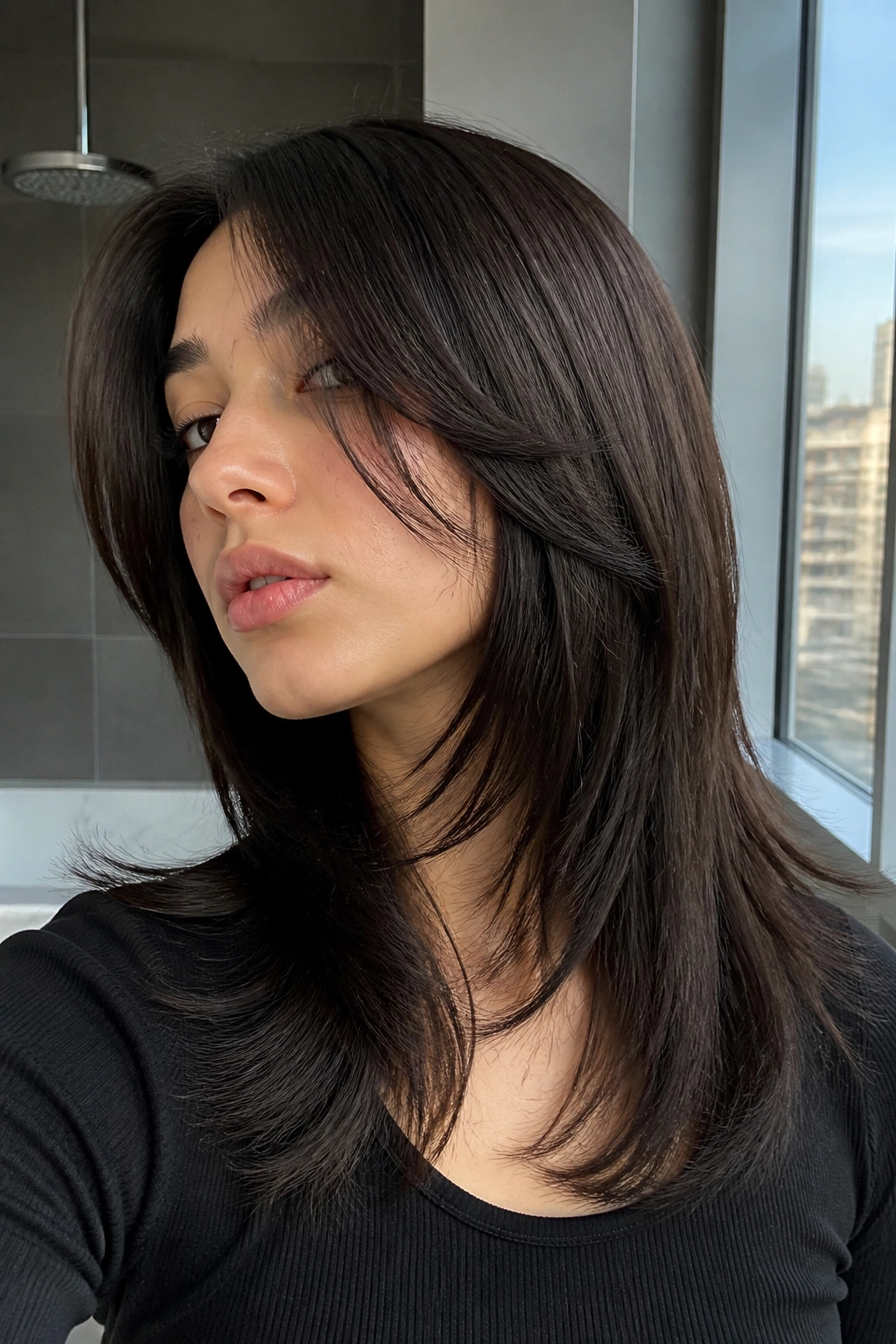
If you hate obvious choppiness, this is the version to ask for.
The layers stay tucked under the outer surface, so the haircut looks smoother from the outside while still moving when you walk. It’s a smart choice for straight or slightly wavy hair that needs body but not a shaggy finish. You get the lift without the obvious “I have layers” look.
The best part is the balance. A sleek wolf cut can still have a strong perimeter line, which makes the ends look thicker than they would in a heavily textured cut. That matters if your hair is fine but not fragile. You want the illusion of fullness, not a gap between the top and the bottom.
This version also behaves nicely with a flat iron. A small bend at the front and a little lift at the roots are enough. You do not need to curl every piece. In fact, too much styling can make the hidden-layer effect disappear.
12. Choppy Wolf Cut with Piecey Ends

Some hair just looks better a little bitten up at the ends.
A choppy wolf cut leans into separation. The pieces sit apart from one another in a way that makes the whole style look fuller, because the hair doesn’t collapse into one flat sheet. On long hair, that separation can be a gift. It creates movement without forcing the length to disappear.
The danger is overdoing it. Too much texturizing and the ends start to look thin, especially in daylight. A clean choppy cut keeps the perimeter strong enough that the ends still have presence, even when the layers above them are lively.
Key Details to Watch
- Keep the longest layer long enough to hit the chest or lower.
- Ask for texturing mainly through the interior and mid-lengths.
- Use a pea-sized amount of styling cream to define the pieces.
- Avoid brushing it into a single smooth curtain once it’s dry.
This is one of the more playful options in the bunch. It’s not the quietest cut, but it has personality in a way that plain long layers never quite do.
13. Deep Side-Part Wolf Cut for Extra Lift
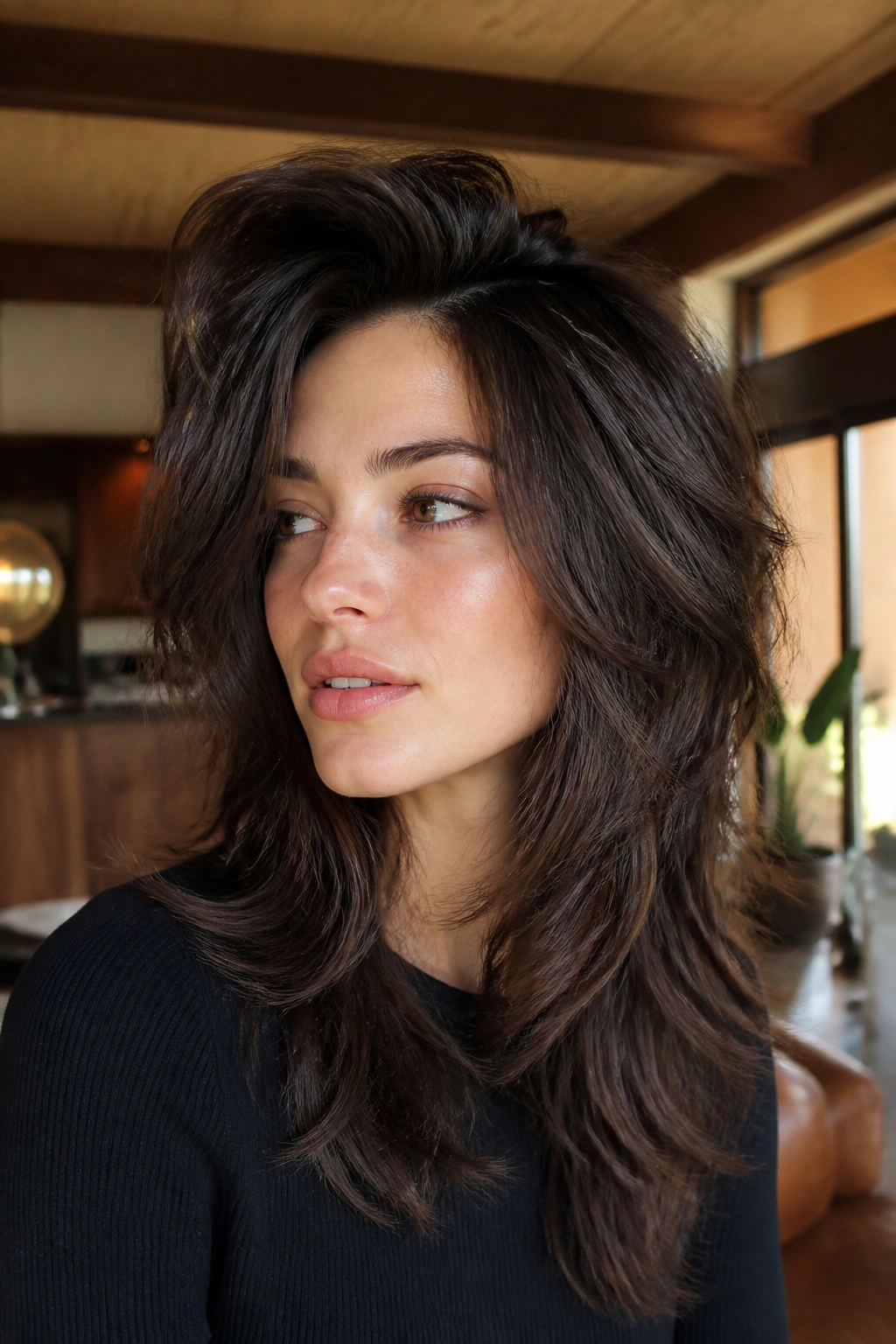
A deep side part can fake more crown height than another inch of layers.
That’s the whole trick. When hair is moved away from its usual fall, the roots on the heavier side naturally stand up more, and the top of the cut gets a little air. Combined with a wolf cut’s shorter upper layers, the effect is stronger than you’d expect. Small change. Big payoff.
It works especially well if your hair refuses to stay lifted at the center part. Some heads of hair just sit better off to one side, and forcing a middle part on them is a good way to get flat roots and a sulky fringe. A side part gives the cut movement before you even touch a styling tool.
Use your part while the hair is damp, then clip the heavy side back for ten minutes as it dries. That’s often enough to train a little height into the roots. If you want more polish, bend the front pieces away from the face with a one-inch iron and leave the rest alone.
14. Collarbone-Front, Long-Back Wolf Cut
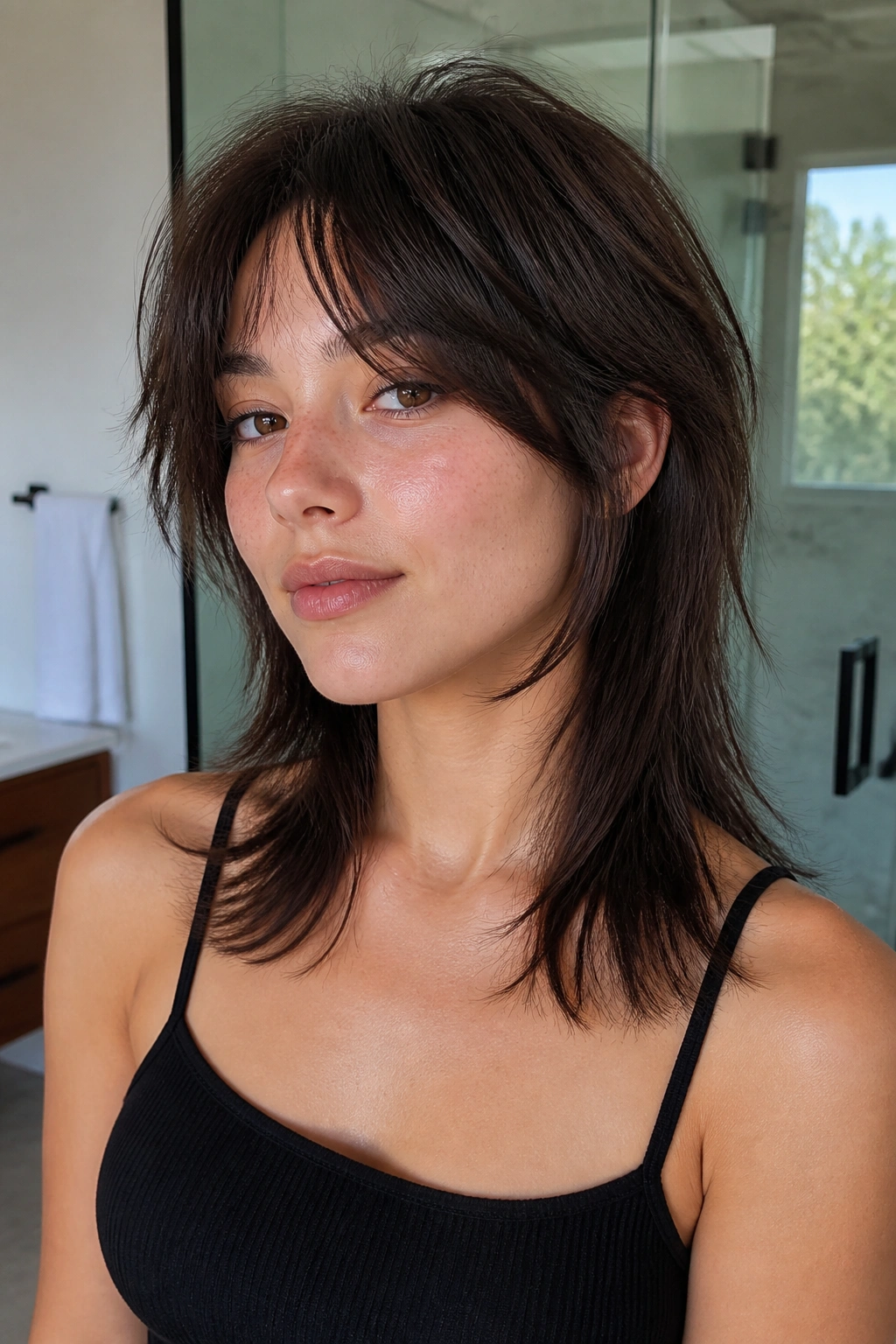
Why keep the front pieces at the collarbone while the back stays long?
Because it gives the haircut shape without taking away the length people usually want to protect. The collarbone front pieces act like a frame, pulling attention up and around the face, while the longer back keeps the cut feeling soft and wearable. It’s a good compromise if you love volume but hate the idea of losing your ponytail length.
This version is especially flattering when the front grows into the rest of the hair at a gentle angle. Too abrupt, and the haircut starts to look disconnected. Too subtle, and you lose the movement that makes the wolf cut interesting in the first place.
What to Ask For at the Salon
Ask for the front to hit around the collarbone and the back to stay noticeably longer, with internal layering to stop the ends from dragging. That leaves you with a visible shape from the front and a more relaxed outline from behind.
This is a nice cut for people who want the wolf-cut spirit without the dramatic chop.
15. Softer Long Wolf Mullet with Tapered Edges

A softer wolf mullet is for people who want edge without commitment.
It keeps the short-to-long progression that makes a mullet interesting, but the transition is smoother and the ends are less severe. The top still gets lift. The back still stretches out. The difference is that nothing feels harsh, so the cut can live in office lighting without looking like it escaped from a music flyer.
This shape is a good fit for long hair that needs energy. If everything is cut evenly, the hair can look sleepy. If the back is kept too heavy, the mullet effect disappears. The soft version splits the difference and makes the whole head feel lighter.
I like this cut on hair that already has a little texture. The layers don’t have to work as hard. A bit of bend through the mids and a smoothed-out perimeter are enough. You can wear it messy, brushed out, or tucked behind the ears, and it still keeps its outline.
16. Flipped-Out Ends Wolf Cut

When the ends flick out instead of hanging straight, the whole cut reads lighter.
That little flip matters. It keeps the lower half of the hair from looking like a weighted sheet, and it gives the layers above something to play against. On a long wolf cut, flipped-out ends can make the haircut feel breezier without stealing length.
The easiest way to do it is with a blow-dryer and a round brush or with a flat iron twist on the last inch of hair. Keep the movement soft. You want a bend, not a barrel curl. If the flip gets too large, the cut starts looking retro in a way that can fight the wolf shape.
- Blow the ends away from the neck for a looser finish.
- Use a 1-inch iron only on the final inch or two.
- Keep the root area smoother so the flip doesn’t compete with the crown lift.
- A light mist of spray helps the bend hold without going stiff.
This is a smart move for hair that gets heavy at the bottom and needs a little life at the hemline.
17. Thick-Hair Wolf Cut with Weight Removal
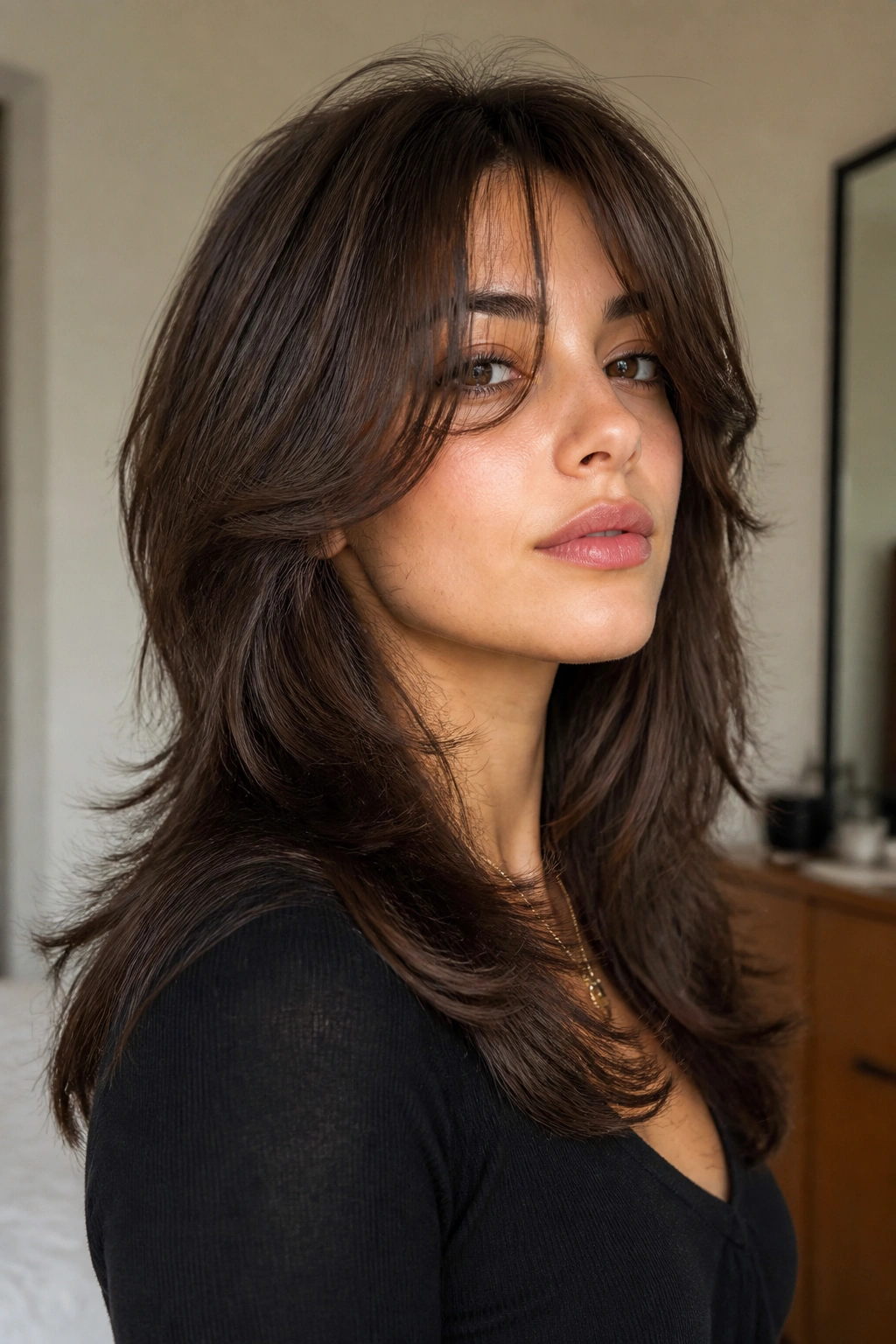
Does thick hair need the same wolf cut as fine hair?
No. Thick hair needs smarter weight removal, not a wholesale chop. If the stylist removes too much through the perimeter, the haircut can puff out at the sides and lose the sleekness that keeps it wearable. The better approach is to take bulk out from the inside while preserving a controlled edge.
A good thick-hair wolf cut gives the crown enough lift to stop the top from sitting like a helmet. At the same time, it keeps the lower half from exploding outward. That usually means longer face-framing layers, careful texturizing through the mids, and a perimeter that still has enough density to swing.
How to Keep It from Puffing Out
- Ask for internal weight removal, not razor work everywhere.
- Keep the outer line a little thicker.
- Dry the roots smooth before adding texture to the ends.
- If your hair is coarse, a smoothing cream on the mids can help the shape stay controlled.
This version can be gorgeous when it’s cut well. It can also become a triangle fast if the person cutting it gets happy with the thinning shears. Be picky.
18. Wispy Fringe Wolf Cut with Long Sides

A wispy fringe changes the whole mood of a long wolf cut.
It softens the forehead, draws the eye upward, and lets the side layers do more of the talking. Unlike a heavier bang, a wispy fringe does not steal the whole show. It just nudges the haircut into a lighter, airier lane. That matters if you want volume but still want to see your face.
The long sides help keep the style balanced. If the fringe is airy and the rest of the cut is too chopped up, the whole thing can feel scattered. Keeping the side lengths longer gives the eyes somewhere to travel. It also makes grow-out easier, which is a nice side effect if you hate regular bang trims.
This cut works best when the fringe is cut narrow enough to separate cleanly, then styled with a quick round-brush bend. No need for perfect symmetry. A little irregularity gives it character, and character is half the point of a wolf cut anyway.
19. Low-Maintenance Airy Wolf Cut

Some cuts ask for a curling iron and a prayer. This one doesn’t.
A low-maintenance airy wolf cut is built for hair that looks better with a bit of movement than with strict styling. The layers are placed so the hair can dry into shape on its own, and the length stays long enough that it doesn’t require constant reshaping. It’s the version for people who want body without turning their bathroom into a salon.
The smartest part of this cut is the grow-out. Because the layers are soft rather than dramatic, they don’t turn awkward the moment they lose a quarter-inch. The silhouette stays usable longer. That means fewer emergency trims and less daily negotiation with your own hair.
- Use dry shampoo at the roots only when needed.
- Twist a few front pieces while they’re damp if they fall too flat.
- Skip heavy finishing cream on the top layers.
- Sleep with hair loosely tied so the crown doesn’t get crushed.
If you want a wolf cut that looks good with minimal fuss, this is the one I’d point to first.
20. Grow-Out-Friendly Long Wolf Cut
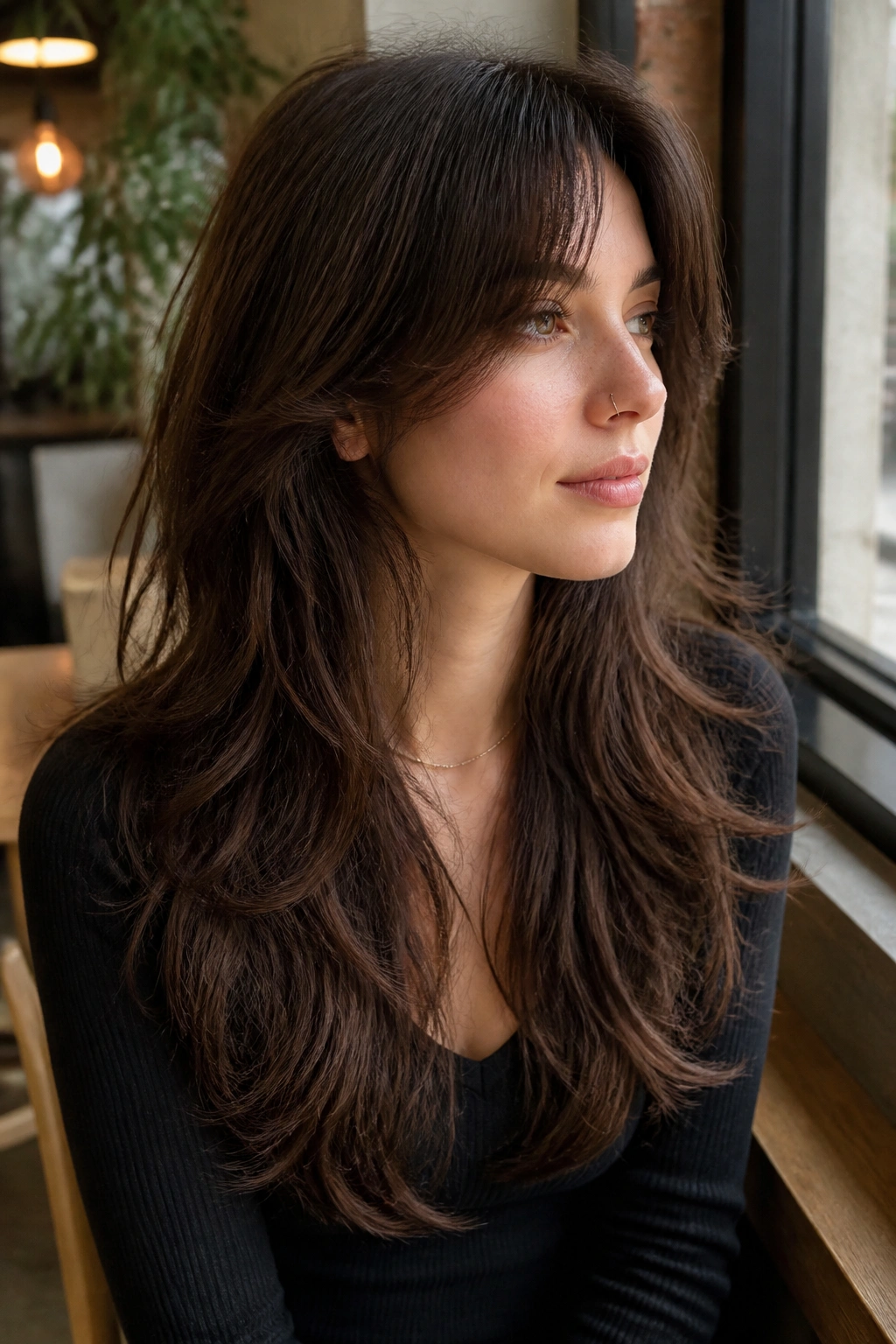
The nicest long wolf cut is the one that still looks good after it has grown a bit.
That sounds boring until you live through the opposite version. Some layered cuts look sharp for three weeks and then turn into a sad, over-thinned mess. A grow-out-friendly wolf cut keeps the crown layers soft, the face frame long enough to blend, and the ends dense enough to stay honest. You get volume without constant cleanup.
This is the version I’d hand to someone who wants body, length, and a little attitude without signing up for a haircut that needs babysitting. The perimeter should stay strong, the layers should melt rather than jump, and the fringe—if you want one—should be long enough to tuck, split, or ignore on a lazy morning. That flexibility is the whole point.
Ask for maintenance trims every 8 to 12 weeks if you like the shape tight, or stretch that a bit longer if you prefer a softer, less polished feel. Either way, the cut should still move when you shake it out. That’s the sign you got the balance right.
