



A shag haircut should not behave politely. The moment it gets too smooth, too rounded, or too polished at the ends, the whole cut starts looking like a layered haircut that missed its exit.
What gives shag haircuts that add texture their charm is the mess with a purpose. The right version breaks up bulk, lifts the crown, and lets the ends move in different directions instead of hanging there like one heavy sheet. That tiny difference changes everything. Fine hair gets more body. Thick hair gets room to breathe. Waves get somewhere to go.
The trick is that “shag” is not one single shape. A curly shag, a short shag, and a long shag with curtain bangs all behave differently once they leave the chair. Some need more removal at the crown. Some need softer face framing. Some should be cut with a razor and some should not, because a razor can turn coarse hair into frizz if the hand is too eager.
Details matter here. Length, fringe, where the layers begin, and how much weight gets taken out around the perimeter decide whether the haircut looks lived-in or simply unfinished. The good versions look intentional even when they’re a little wild. The bad ones look like someone got impatient halfway through.
1. Classic Shag Haircut With Feathered Ends
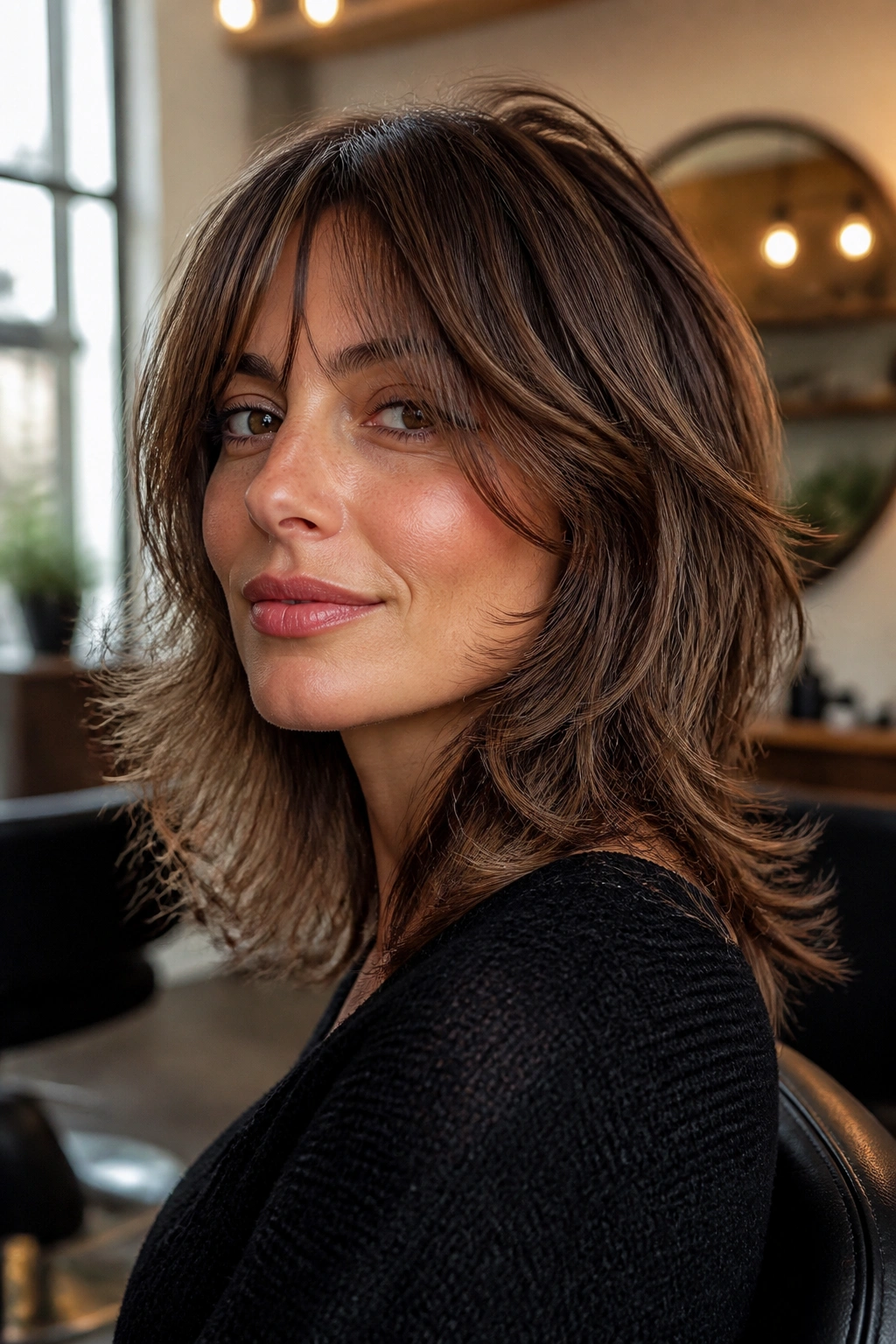
Feathered ends are the old reliable of the shag world. They soften the outline of the cut so it moves when you turn your head, instead of sitting there like a block with layers slapped on top. On medium hair, that’s often enough to create the texture people want without making the whole thing feel too chopped up.
Why It Works
The classic shag haircut works because it keeps the crown a little shorter while letting the lower layers stay airy. That gives you lift at the top and swing at the bottom, which is the whole point. If the shortest pieces land around the cheekbone or jaw, the shape feels open and easy to wear.
This version is a good fit for hair that has some natural bend but not a ton of curl. Straight hair can wear it too, but it usually needs a quick bend with a round brush or a 1-inch iron to keep the ends from falling flat. Thick hair likes it because the ends stop looking like a blunt shelf. Fine hair likes it because the feathering gives a little visual lift.
- Best on medium-length hair that hits between the chin and the shoulders
- Ask for point cutting at the ends, not heavy texturizing through the whole head
- Style with a pea-size amount of mousse at the roots
- Rough-dry first, then smooth only the front pieces if needed
- Trim every 8 to 10 weeks so the feathering does not collapse into one shape
Tip: If the ends look wispy but the crown feels heavy, the layers were placed too low. That usually means the cut loses its bounce after a few washes.
2. Curly Shag With Rounded Layers

Curly hair is where the shag finally starts making sense. A curly shag should follow the curl pattern, not fight it, or you end up with a triangle at the sides and a flat top that refuses to lift. Rounded layers help the hair stack in a softer way, which keeps the shape from turning boxy.
Cutting this version with the curl’s spring in mind matters more than almost anything else. Hair that looks shoulder length when wet may shrink several inches as it dries, so the shortest layer needs to be placed with that shrinkage in mind. A stylist who cuts curly hair the same way they cut straight hair is asking for trouble. Dry cutting, or cutting on hair that is mostly dry, usually gives a better read on where the curl lives.
The styling part is simple, but it does need discipline. Use a leave-in conditioner, then a curl cream or light gel, and leave the hair alone once the curl clumps start forming. Diffuse on low heat or air-dry if you have patience. Finger-combing after the curls have set can wreck the shape fast.
If the layers are too short, the top will puff while the bottom shrinks. That’s the mistake I see most often with curly shags. The haircut can be gorgeous, but only when the layers respect the curl instead of trying to force a new one.
3. Soft Shag With Curtain Bangs

Why do curtain bangs and shag layers work so well together? Because both shapes want movement around the face, and neither one needs to sit dead still. A soft shag with curtain bangs gives you texture without the sharp edge of a full fringe, which makes it easier to wear on busy mornings and awkward grow-out days.
The bangs do a lot of quiet work here. They pull attention toward the eyes and cheekbones, then melt into the rest of the cut instead of drawing a hard line across the forehead. That’s useful if you want something flattering but not fussy. The rest of the shag can stay loose and layered, with the shortest face-framing pieces starting around the cheekbone and sliding down toward the jaw.
How to Style the Fringe
- Blow-dry the bangs forward first, then sweep them away from the center with a round brush
- Use a barrel brush around 1.5 inches for soft bend, not a tight curl
- Keep the roots lifted while the hair cools
- Finish with a light mist of flexible-hold spray, not a stiff lacquer
- Touch the fringe with dry shampoo on day two if it starts to split
Curtain bangs are forgiving, but they do ask for a little attention. If you are allergic to styling the front of your hair, this version will annoy you. If you can spare three minutes, though, it pays you back every single time you tuck the sides behind your ears.
4. Wolf-Shag Hybrid With Choppy Crown

Picture a client who wants edge, but not a full mullet. That’s where the wolf-shag hybrid lands, and it has a stronger personality than a classic shag without going completely extreme. The top is choppier, the crown gets more lift, and the back keeps a little more length so the whole cut feels rougher and more playful.
The mechanism is simple: more contrast between the crown and the nape means more visual texture. Instead of every layer melting into one another, you get a slight disconnect that makes the haircut look taller and more lived-in. It is especially good on medium to thick hair, because the extra weight gives the shape something to hold onto.
- Crown layers sit shorter and more broken up
- The nape stays longer for that slight mullet echo
- Works well with air-dried waves or a quick diffuser pass
- Looks best when the ends are a little separated, not brushed into a smooth sheet
- Needs trimming before the back loses its shape and starts looking shaggy in the wrong way
The upside is attitude. The downside is that this one is not shy. If you want a haircut people barely notice until they stand next to you, skip it. If you like texture that reads from across the room, this is the cut that brings it.
5. Long Shag With Face-Framing Layers
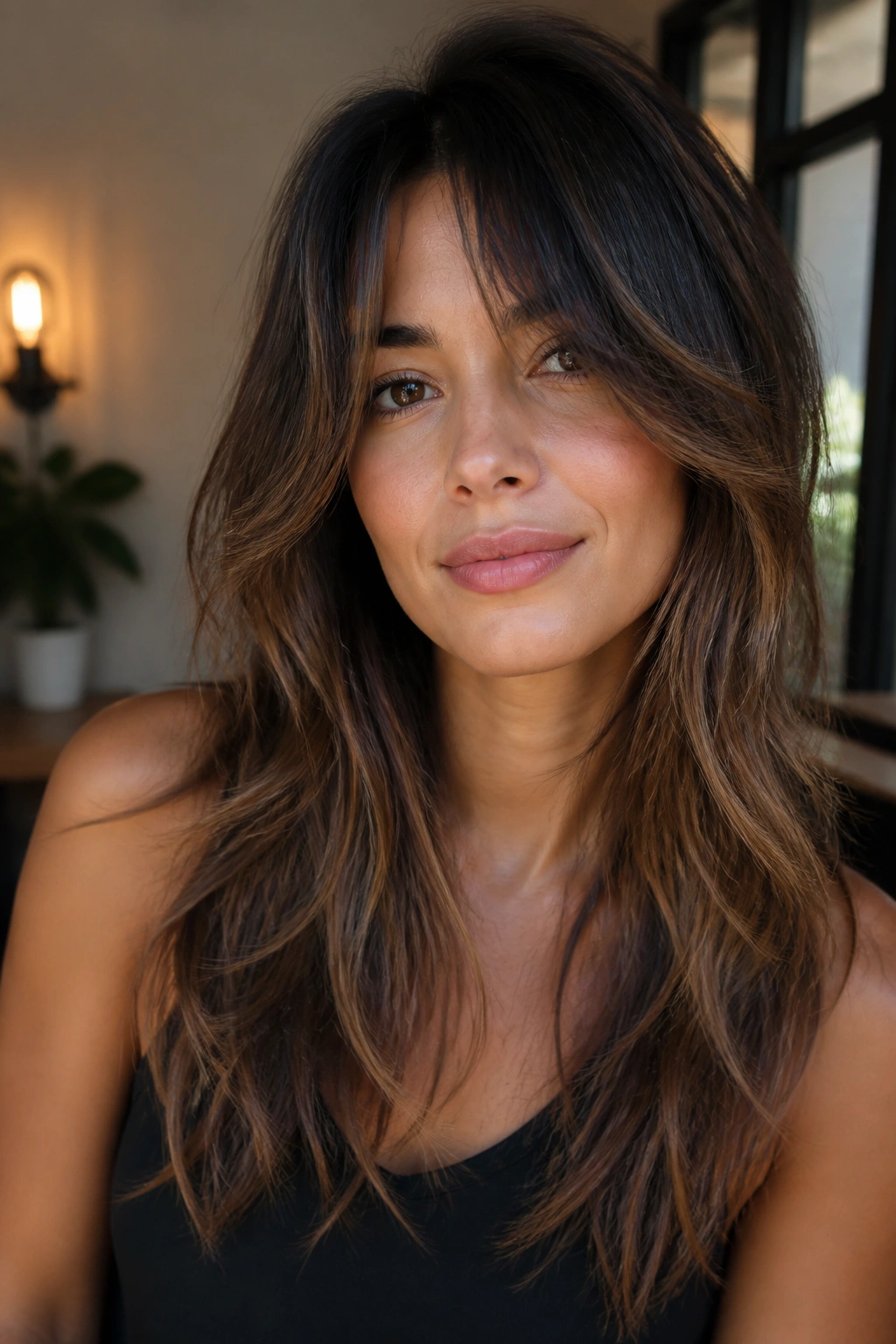
Long hair can get heavy fast, and that heaviness is exactly what a long shag fixes. The trick is to remove weight without sacrificing length, so the hair still falls past the shoulders but stops behaving like one flat curtain. Face-framing layers do a lot of the visible work, while the interior layers keep the movement under the surface.
I like this version most on people who keep their hair long on purpose. They want ponytails, buns, braids, all of it — but they also want the hair down to look like it has shape. A long shag can do that if the shortest front pieces start below the cheekbone and the rest of the layers stay soft enough to blend. Too many short layers and the whole thing starts floating in odd places. Too few and you lose the point.
The best part is how it behaves on second-day hair. A little dry shampoo at the roots, a quick shake, maybe a few bends with a large iron, and the haircut often looks better than it did on day one. That is the sweet spot.
One thing to watch: if the layers only live in the front, the back can still feel heavy. Ask for internal movement through the mid-lengths too. That detail matters more than the trendy part of the haircut, and yes, I know that sounds boring. It is also the reason the style works.
6. Razor-Cut Shag For Fine Hair
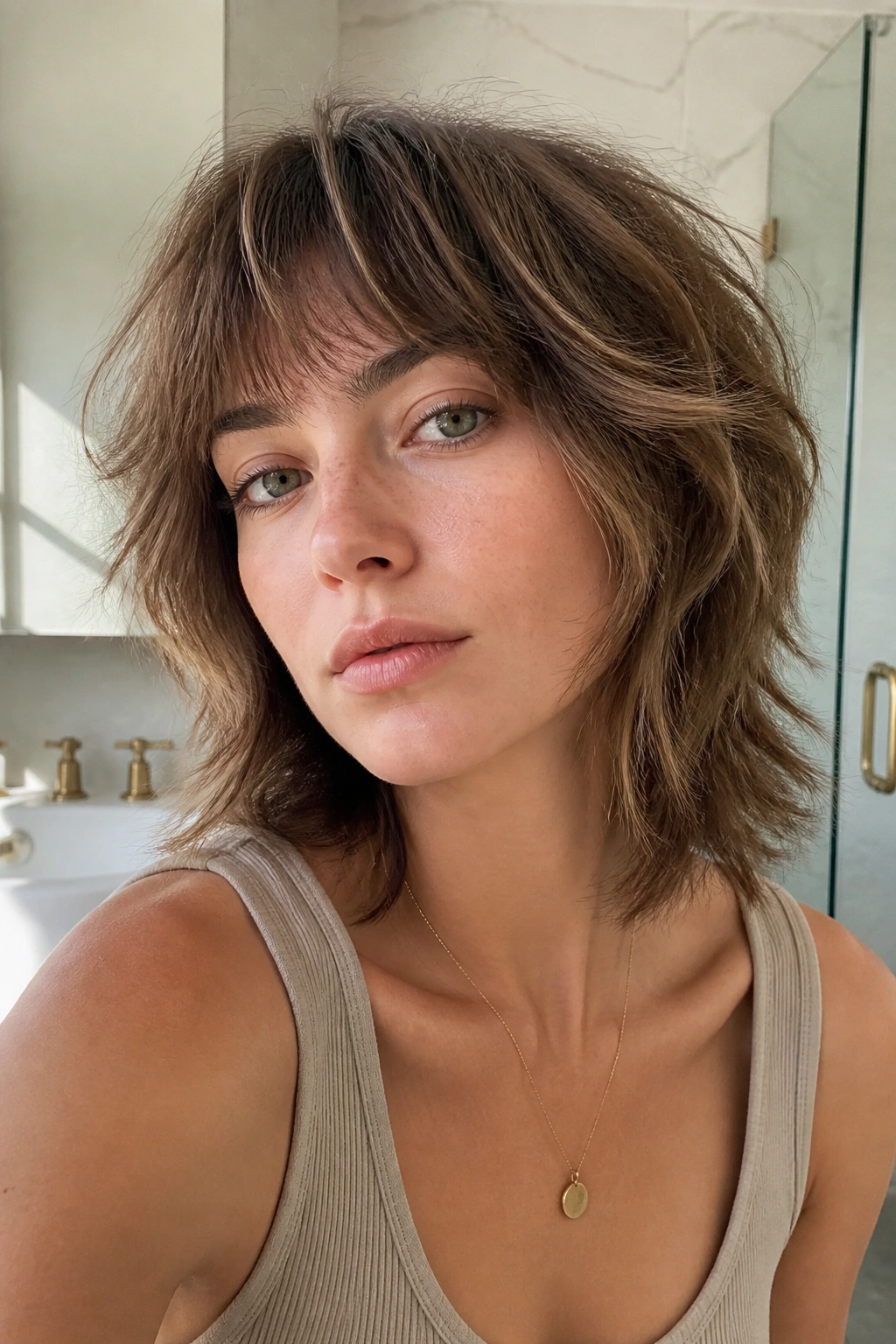
Unlike a blunt cut, a razor-cut shag doesn’t rely on perfect density to look alive. The edges come out softer, the layers look lighter, and fine hair gets a little more broken-up movement without needing a ton of product. That can be a lifesaver when your hair lies flat the minute humidity, sweat, or a long day enters the picture.
What makes this version different is the edge itself. Scissors make a cleaner line; a razor tears a softer one, and that softness can create the illusion of more texture. Fine hair often benefits from that, because a hard perimeter can look thin and stringy at the bottom. A razor softens the outline so the hair feels more airy.
But there is a catch. Coarse or frizz-prone hair can go fuzzy fast if the razor is used too aggressively. That is why I’d keep the razor work focused on the ends and the lightest face-framing sections, not through the whole head. A little goes a long way.
Best for: straight to slightly wavy hair, especially if it tends to fall limp by lunchtime. If your hair already has a rough surface, ask for softer scissor work instead. You want movement, not frayed ends that puff when you step outside.
7. Short Shag With Micro Fringe
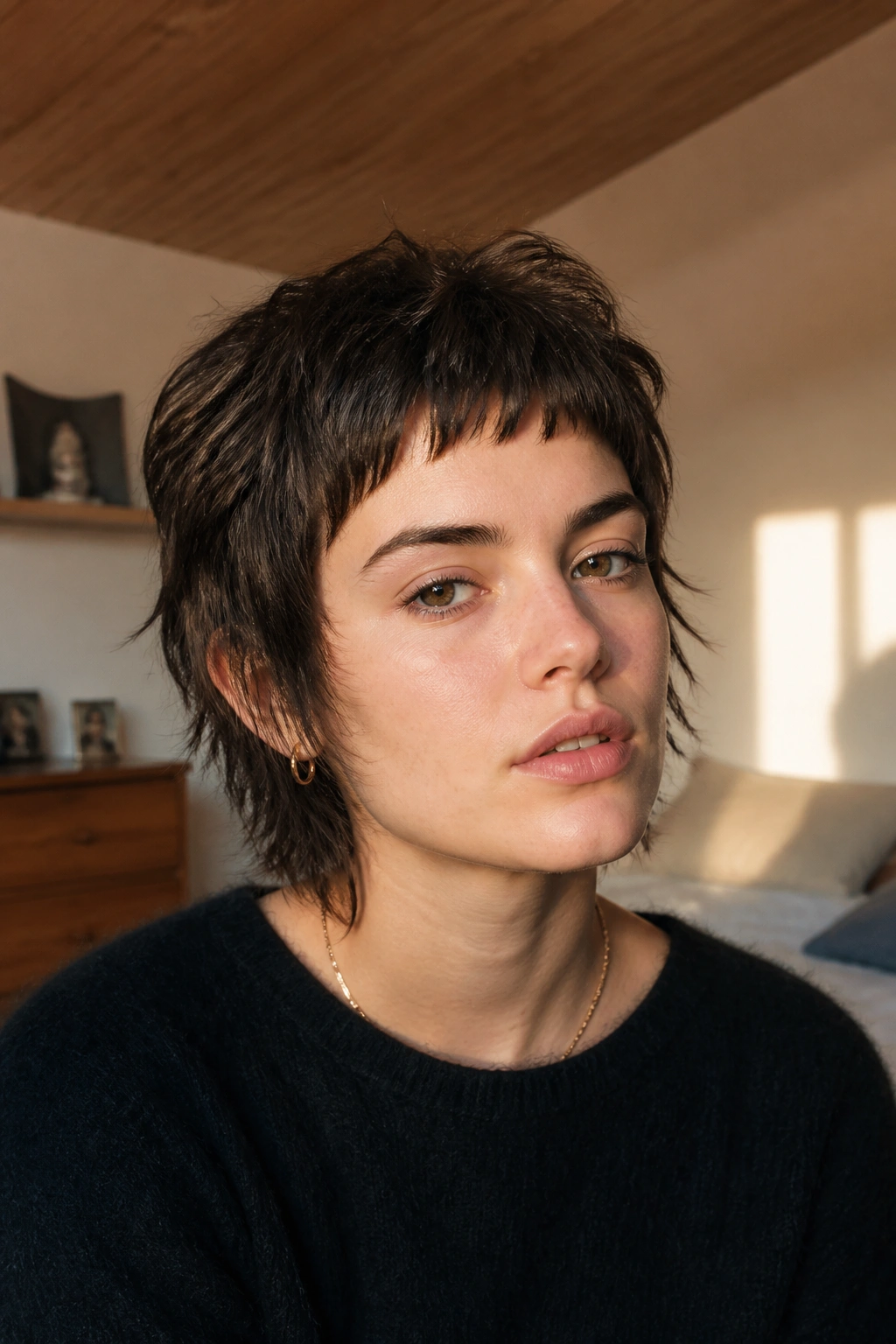
Short hair gets punchy when a micro fringe enters the room. This shag sits above the shoulders, sometimes brushing the jawline, and the fringe lands higher than a curtain bang so the face feels more open and a little sharper. It has attitude. No pretending otherwise.
Why It Works on Short Hair
The shorter length means the layers can do more visible work in less time. A little lift at the crown, a few broken-up pieces around the temples, and a chopped fringe make the whole haircut feel textured even when the styling is minimal. It also keeps the shape from turning into a rounded helmet, which is a common problem with short cuts that are layered but not really designed.
This version shines on straight and wavy hair because the fringe gives it a focal point. If your hair has a natural bend, the ends will kick out a bit and give the cut that slightly undone feel people chase. If your hair is very curly, the micro fringe can be tricky. It shrinks fast. Fast enough to surprise you.
- Ask for a fringe that lands above the brow, not halfway into it
- Keep the nape soft so the shape does not feel boxy
- Style with a small round brush or a flat brush and a quick root lift
- A pea-size paste on the ends adds separation without grease
- Trim more often than a longer shag so the fringe stays intentional
Tip: If you hate forehead maintenance, skip this cut. The fringe is the whole point, and half-committing to it is how people end up resenting their own haircut.
8. Heavy-Texture Shag For Thick Hair

Thick hair does not need more hair; it needs more air. That’s the whole argument for a heavy-texture shag. Instead of just layering the top and calling it textured, this version removes bulk inside the shape so the hair moves instead of swelling into a solid mass.
The difference shows up fast on dense hair. If you’ve ever had a haircut that looked great for ten minutes and then expanded into a triangle, you already know why this matters. The right internal layering lets the underneath breathe. The surface still looks full, but the shape has space inside it. That is what keeps the texture visible.
Slide cutting and point cutting are useful here, though they need a careful hand. Too many short pieces around the crown can make thick hair flare out at the top, and that is a hard look to live with. I usually prefer longer layers through the mid-lengths, then a little extra weight removal near the sides where hair tends to pile up around the jaw.
A quick warning: thinning shears can be a mess on coarse hair if they’re used like a shortcut. They can leave fuzzy ends that feel rough and look frayed after a few washes. A cleaner interior shape tends to age better.
9. Collarbone Shag With Lived-In Waves
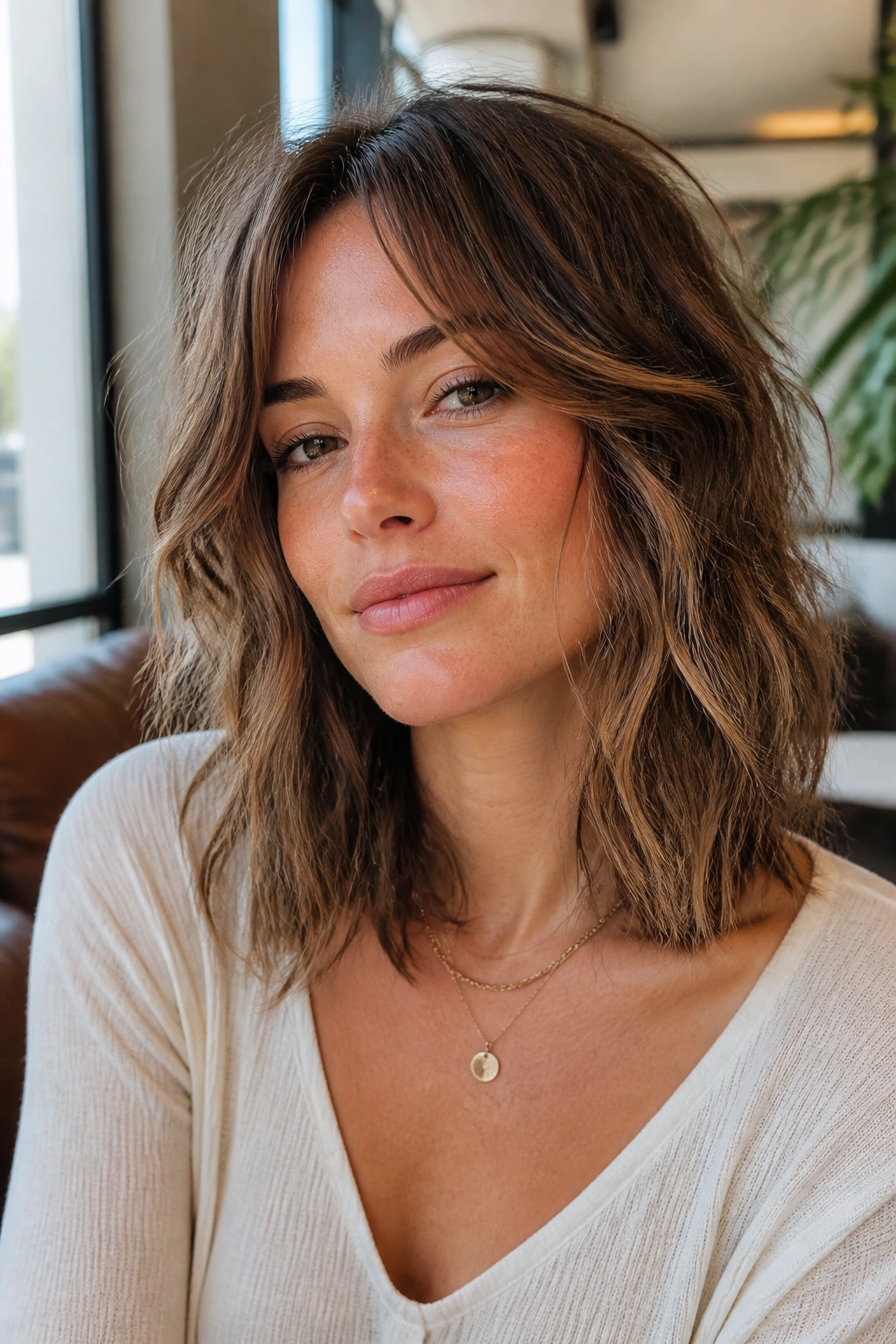
Why does the collarbone length work so well with a shag? Because it sits in that sweet spot between too short and too long. The hair has enough weight to swing, but the layers can still break up the outline and keep the whole thing from looking flat against the neck.
This version is a favorite for people who like their hair to look relaxed without looking underdone. The ends hover around the collarbone, the front pieces can skim the chin, and the waves are loose enough to feel casual. It is not trying to be dramatic. That’s part of the charm. The texture shows up through motion, not through sharp contrast.
How to Style It
- Start with heat protectant on damp hair
- Rough-dry until the roots are about 80% dry
- Use a 1.25-inch curling iron or wand on random sections
- Leave the last inch of each section out so the ends do not curl into ringlets
- Alternate curl direction from section to section for a more broken-up finish
- Let the hair cool fully before finger-combing
- Finish with a mist of flexible spray, then scrunch once or twice
The nice thing about this length is that it does not fall apart the second you leave the house. Even when the wave drops a little, the haircut still looks shaped. That is not true of every shag, and it is one reason this version gets worn more often than people expect.
10. Shag With Bottleneck Bangs

A client walks in asking for curtain bangs, but wants something narrower at the top and softer at the sides. That usually means bottleneck bangs, and they sit beautifully on a shag. The center is a touch shorter, then the sides open out as they fall, which gives the forehead a framed look without the wide sweep of a traditional curtain bang.
The shape matters more than it sounds. Bottleneck bangs make texture feel built in, because they create a visual notch at the front of the haircut. The eye follows that opening and then keeps moving through the shag layers instead of stopping at one hard line. That makes the cut feel lighter around the face.
- Shorter in the center, longer at the sides
- Best when the longest bang pieces blend into cheek-level layers
- Can be blow-dried with a small round brush or a hot brush
- Works well if you want forehead coverage without full heaviness
- Needs a little shaping between trims so the center does not split awkwardly
I like this version for people with strong brows or a forehead they do not want fully exposed. It softens the middle without swallowing the face. And because it sits inside a shag, the bangs do not feel like an add-on. They feel like part of the haircut, which is exactly why they age better.
11. Retro ’70s-Inspired Shag With Flipped Ends
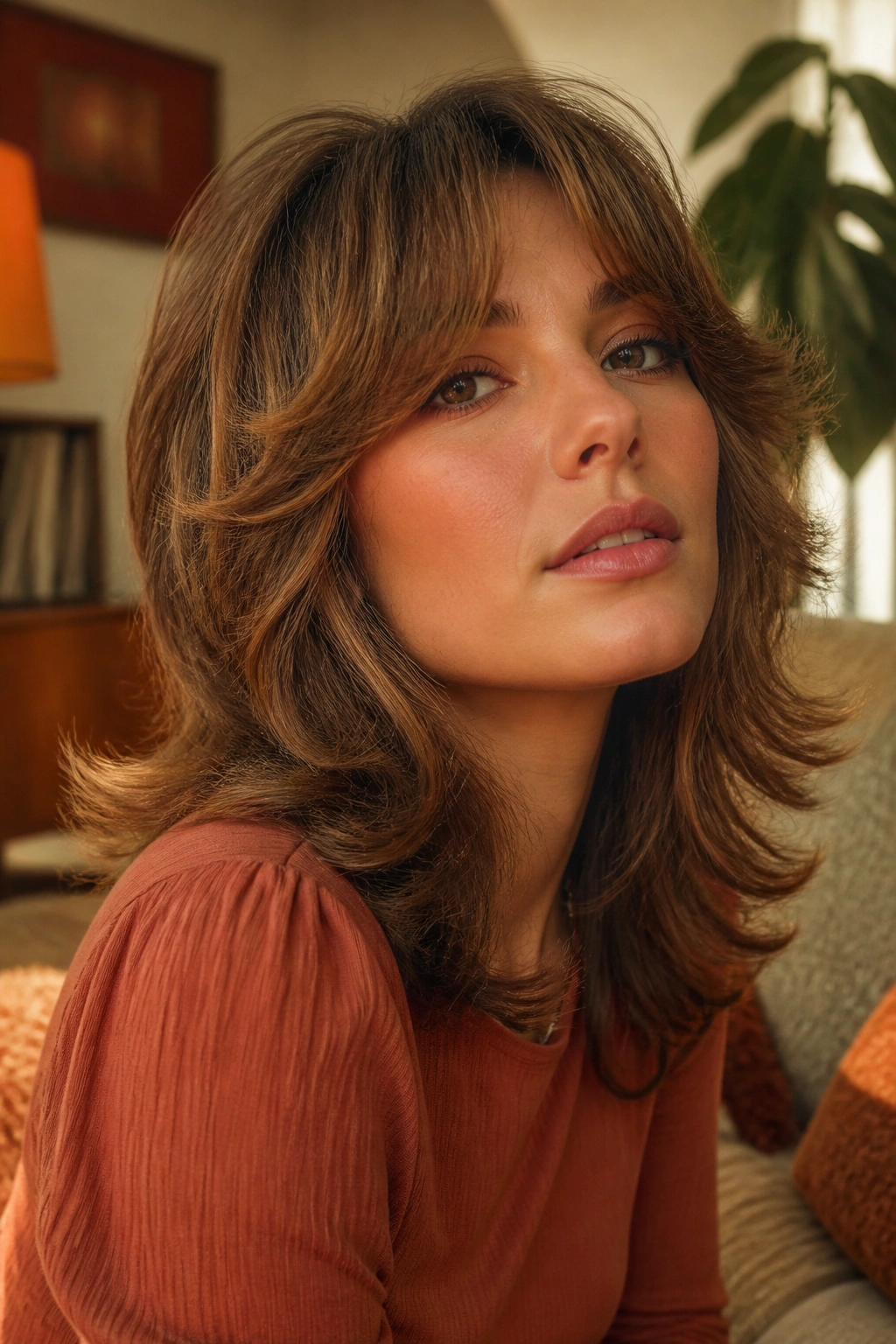
The retro shag is the one that looks the most styled, even when the haircut itself is relaxed. It has that old blowout energy: feathered crown, airy sides, and ends that kick away from the face instead of curling under. If you like hair that looks a little glamorous but not stiff, this cut has a strong case.
The shape lives on contrast. Soft volume at the top, movement through the cheekbone area, and a flip at the bottom that keeps the line from feeling heavy. A large round brush or a blow-dry brush helps here, because the ends need enough tension to curve without turning into a tight roll. Medium heat is usually enough. Too much heat and the hair starts looking too set, which kills the ease.
I’m partial to this one on straight or slightly wavy hair. The flip gives structure to hair that might otherwise hang limp, and it makes a simple center part feel deliberate. A little heat protectant, a few sections around the face, and a cool shot at the end go a long way.
The only thing I’d skip is overloading it with product. A touch of mousse at the roots and a light spray at the end is plenty. If the hair feels crunchy, the movement disappears, and that is the whole reason to wear the cut in the first place.
12. Air-Dried Shag For Natural Texture
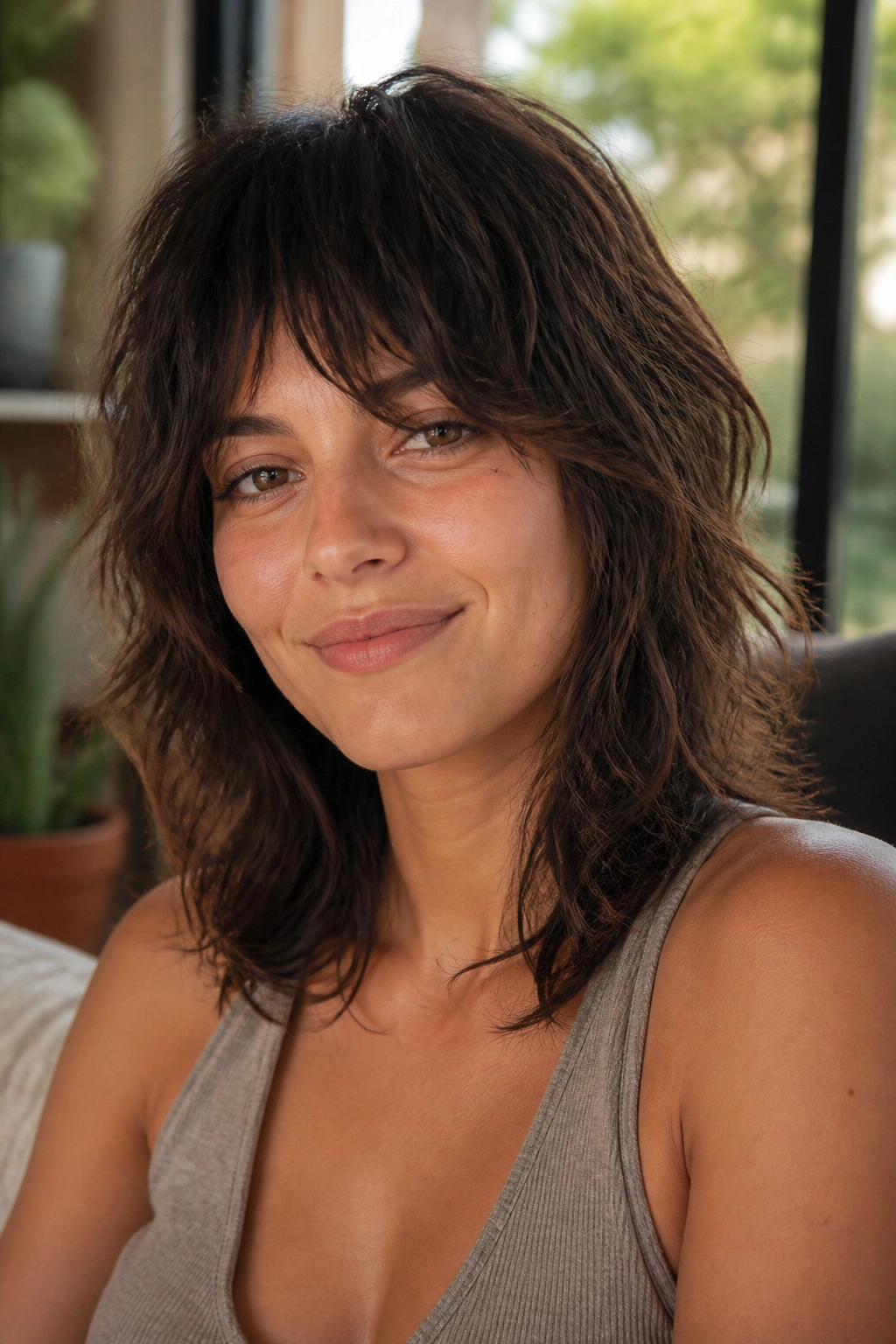
Compared with a heat-styled shag, the air-dried version is looser, quicker, and a little less controlled. That’s a good thing if your natural texture already has some bend or wave. The haircut does the shaping, and the drying process just lets it happen.
This is the shag I recommend to people who hate a long styling routine but still want their hair to look intentional. A leave-in conditioner, a light mousse, and maybe a small dab of gel on the ends are enough for most heads of hair. Scrunch once or twice, then stop touching it. That last part matters more than people think. Hands can flatten the wave before it sets.
What to Ask For
- Soft internal layers that do not remove too much weight at the bottom
- Face-framing pieces that still blend when air-dried
- A perimeter that keeps some softness so it doesn’t dry into a hard edge
- Texture around the crown if you want lift without blow-drying
- Enough length in the front to avoid a frizzy halo near the cheekbones
A T-shirt or microfiber towel helps more than rough bath-towel drying. And if your hair is nearly straight, two loose braids or a twist while damp can give you a bend that a plain air-dry won’t. That tiny extra step can make the cut look much more alive the next morning.
13. Layered Shag Bob
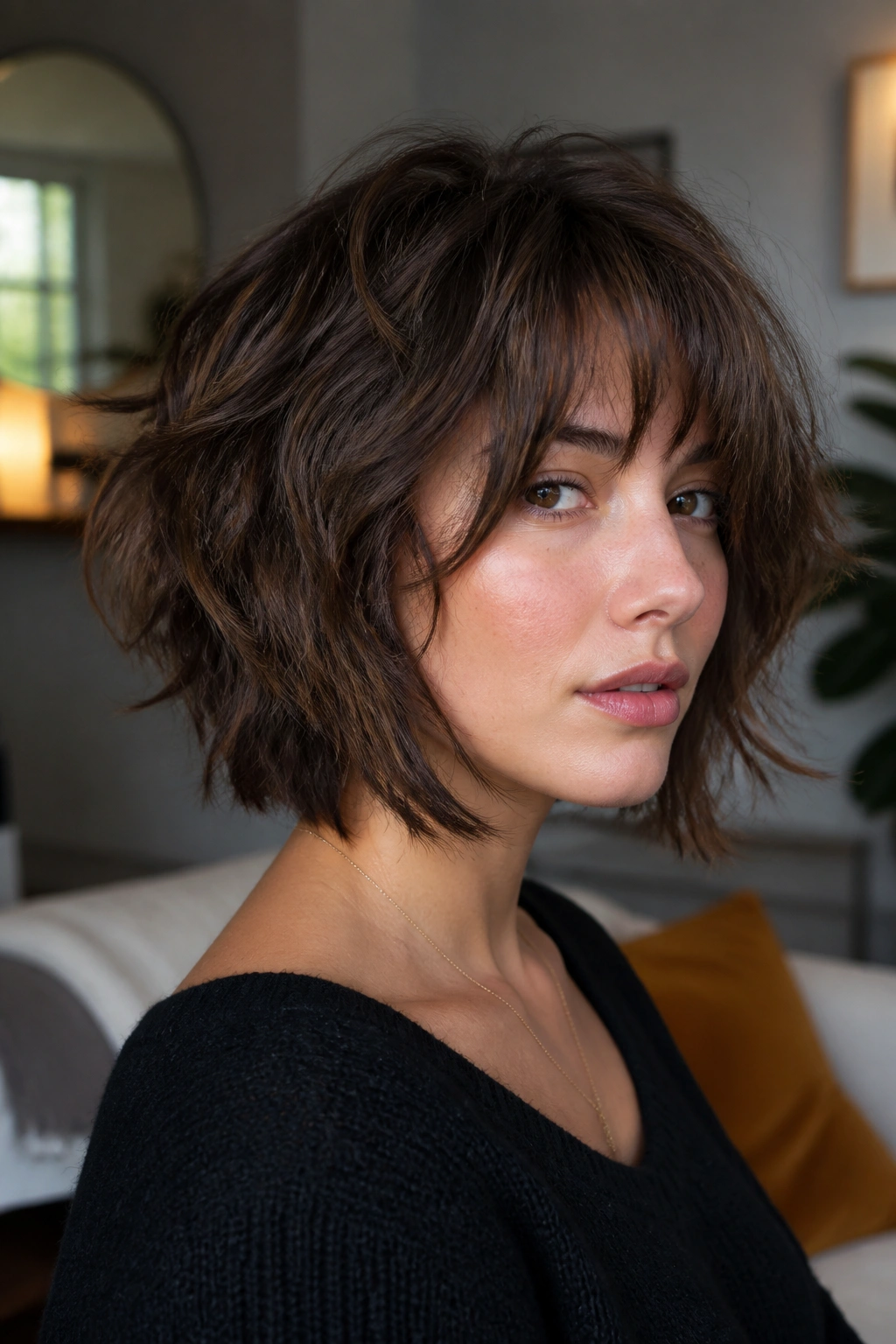
A shag bob trims the drama down a little, and that is the appeal. The length sits at the jawline or just below, the layers break up the shape, and the whole cut lands somewhere between polished and messy. If long shags feel like too much hair to deal with, this is the cleaner, sharper cousin.
Why It Works
The shorter length gives the layers more lift, so even fine or medium hair can feel fuller with less styling. A blunt bob can look sleek, but it also can go flat fast. A shag bob keeps the line soft at the ends and gives the top more room to move. That means the haircut still looks good when you tuck it behind one ear or pin one side back. Those little off-duty moments matter.
It also grows out nicely if the layers are cut with restraint. Go too hard on the texturizing and the bob can turn fluffy around the edges. Keep the layers subtle, and the haircut will hold its shape longer than you’d expect.
- Best if the perimeter sits near the jaw or top of the neck
- Ask for internal layers rather than choppy slices through the whole head
- Works well with a side part or a soft center part
- Can be air-dried or smoothed with a paddle brush
- Needs clean edges every 6 to 8 weeks to keep the bob shape clear
Tip: If you want texture but still need to look put together for work, this is a smart middle ground. It has movement without the full wildness of a longer shag.
14. Edgy Shag With Hidden Undercut
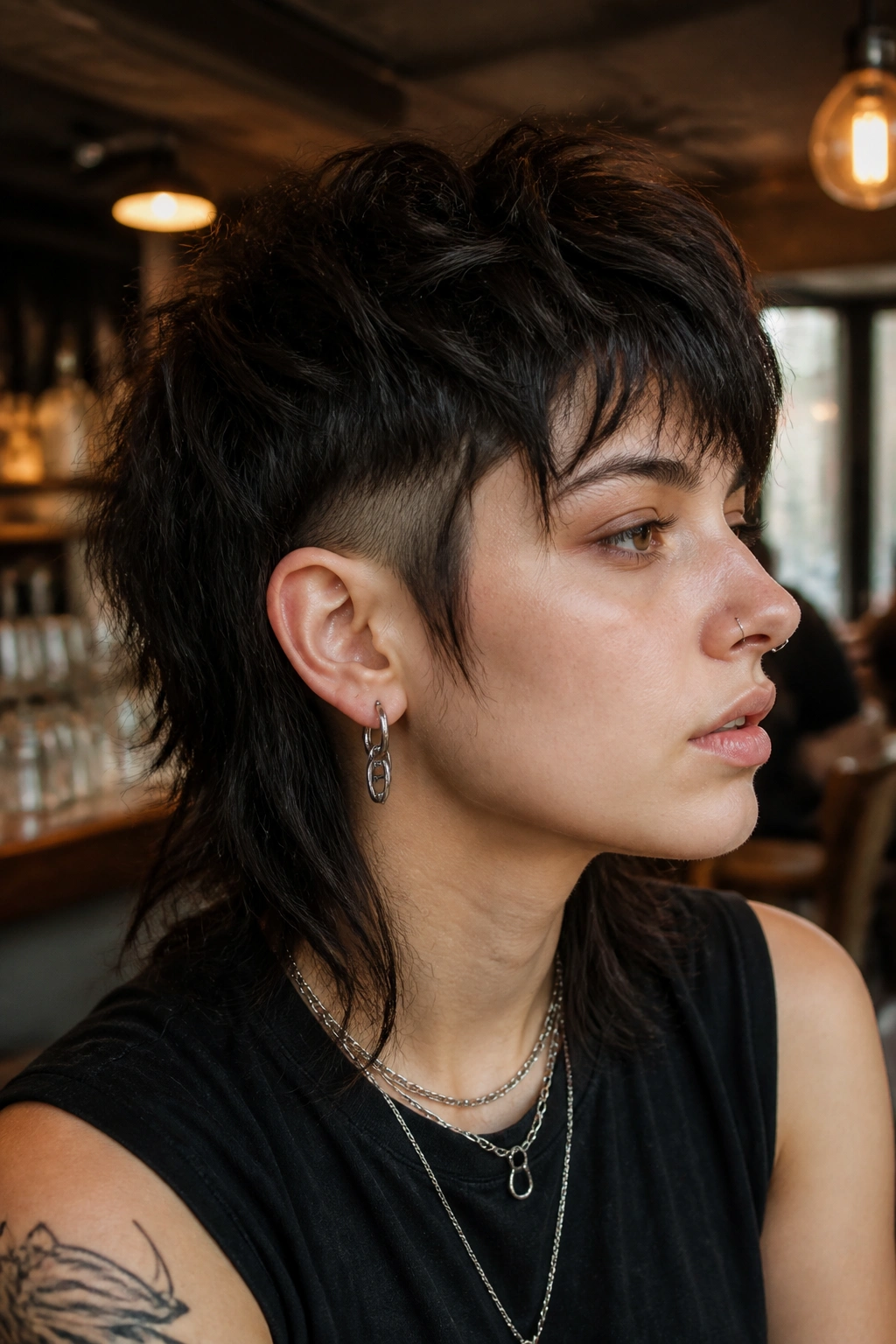
Thick, bulky hair can hide a secret pretty well. A hidden undercut tucked beneath a shag is one of the most useful tricks for reducing weight without making the haircut look shaved or obvious. The top stays full, the sides keep their movement, and the underside stops building that heavy wall at the nape.
This version is not for everyone, and that’s fine. If you like your hair to feel plush and one-length, an undercut will annoy you. If you want texture that feels lighter through the back of the head — especially around the neck and lower crown — it can be a real fix. The shag layers on top create the visual texture, while the undercut does the hidden work.
A hidden undercut also helps the cut sit better under coats, scarves, and high collars. That sounds small until you’ve spent half a winter fighting a dense mop against your jacket. The difference is noticeable.
The catch is upkeep. The shaved area grows out faster than the visible layers, so this is a version that likes regular cleanups. If you are the type who forgets about trims until the ends get angry, choose a softer shag instead. If you don’t mind maintenance and want the hair to feel lighter every day, this one earns its keep.
15. Low-Maintenance Shag With Soft Internal Layers

What if you want texture, but you do not want to baby your hair? Then ask for a low-maintenance shag with soft internal layers. This is the quietest version on the list. It still has movement, but it doesn’t depend on sharp disconnection or a fringe that needs daily negotiation.
What to Ask For at the Chair
- Long internal layers that start below the cheekbone
- A face frame that blends into the rest of the cut, not a separate front section
- Soft texturizing at the ends, not heavy thinning
- Enough length left through the crown so the hair does not puff up
- A shape that still looks good when tucked back or tied low
This version works because it grows out gracefully. That’s rare, and it matters. A haircut can look great on day one and turn into a chore two weeks later. Soft layers keep their shape longer, especially if your hair is straight to wavy and you only want a little bend from a brush or a quick air-dry.
I like this for people who want the shag effect without the styling homework. It gives the hair movement when it’s loose, but it does not fall apart if you skip a wash day or sleep on it badly. If you need a cut that still looks decent after a messy ponytail, this is the one I’d hand you first.
