



Brown hair often gets an unfair reputation for being “safe” or one-dimensional. If you’re staring at your reflection and feeling like your color has lost its spark—like it’s just one solid, heavy block of pigment—it is time to stop thinking of brunette as a singular shade. You don’t need to bleach your hair into oblivion or switch to a high-maintenance platinum to create movement. In reality, the best color jobs on brown hair are the ones that respect the health of the strand while adding depth, light, and dimension.
The secret isn’t just picking a color off a chart. It is about understanding the undertones in your skin and the texture of your hair. A warm caramel might look stunning on someone with olive skin, but that same shade could wash out someone with cooler, pinker undertones. You have to look for the “bounce” in the hair—that visual trickery created by contrasting light and dark—rather than just slapping a box dye over your natural shade. Let’s walk through the options that actually work.
1. Honey Balayage
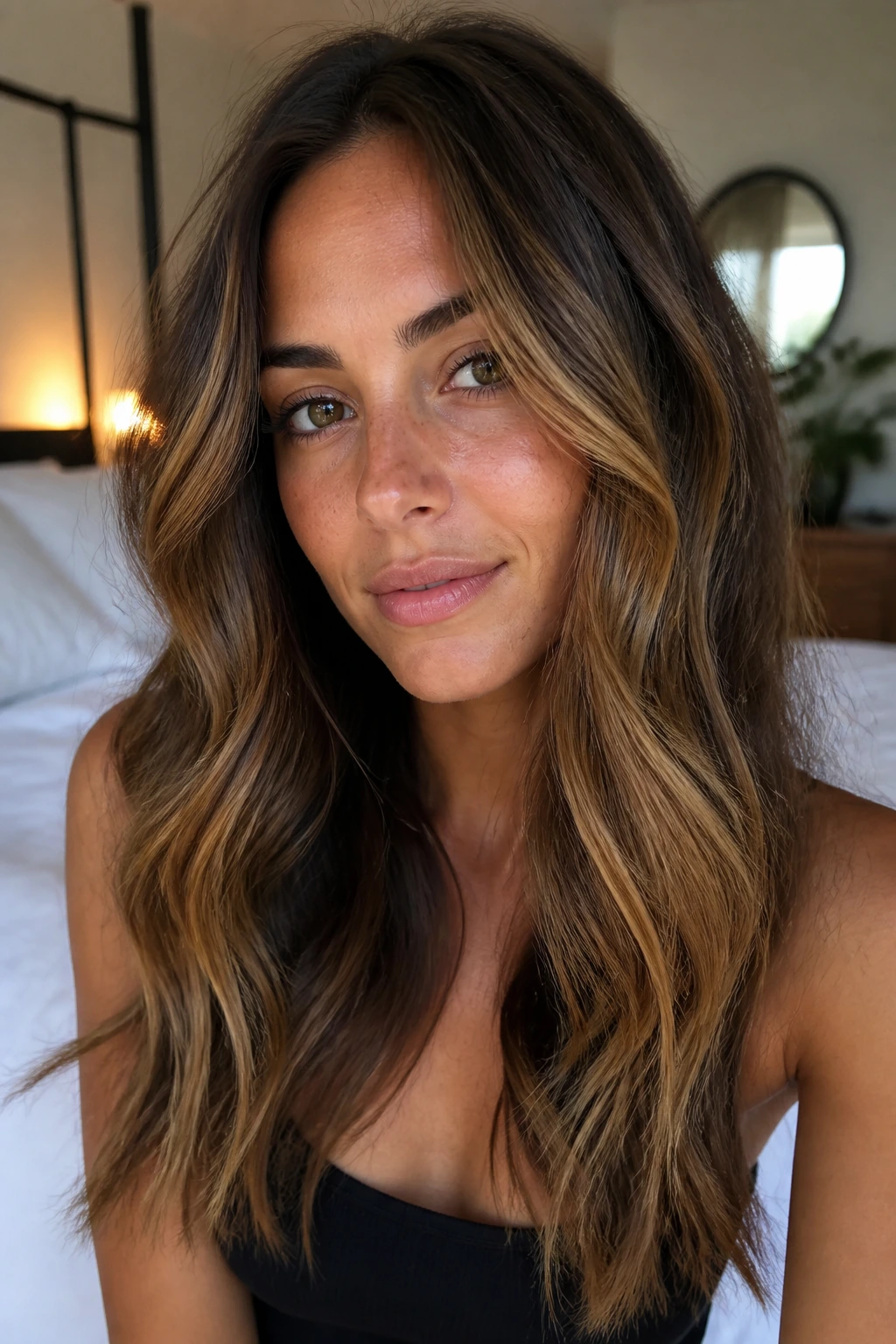
This is the gold standard for anyone who wants to dip their toes into lighter shades without committing to the upkeep of traditional highlights. Balayage, by definition, is a freehand technique. It isn’t about perfect, symmetrical stripes of color; it’s about painting pieces of light where the sun would naturally hit your hair.
Why It Works for Brunettes
Honey provides a warm, golden contrast against deep brown bases. It softens the frame of your face, which is particularly helpful if your natural color feels a bit too harsh or dark near your hairline. Because it is painted on, you don’t get that stark, solid line of demarcation when your roots grow out. You can easily go six months between appointments if you’re careful with your at-home care.
The Maintenance Reality
- Touch-ups: Every 4–6 months.
- Care: Use a color-depositing conditioner with warm tones to keep the honey from turning brassy or muddy over time.
2. Caramel Highlights
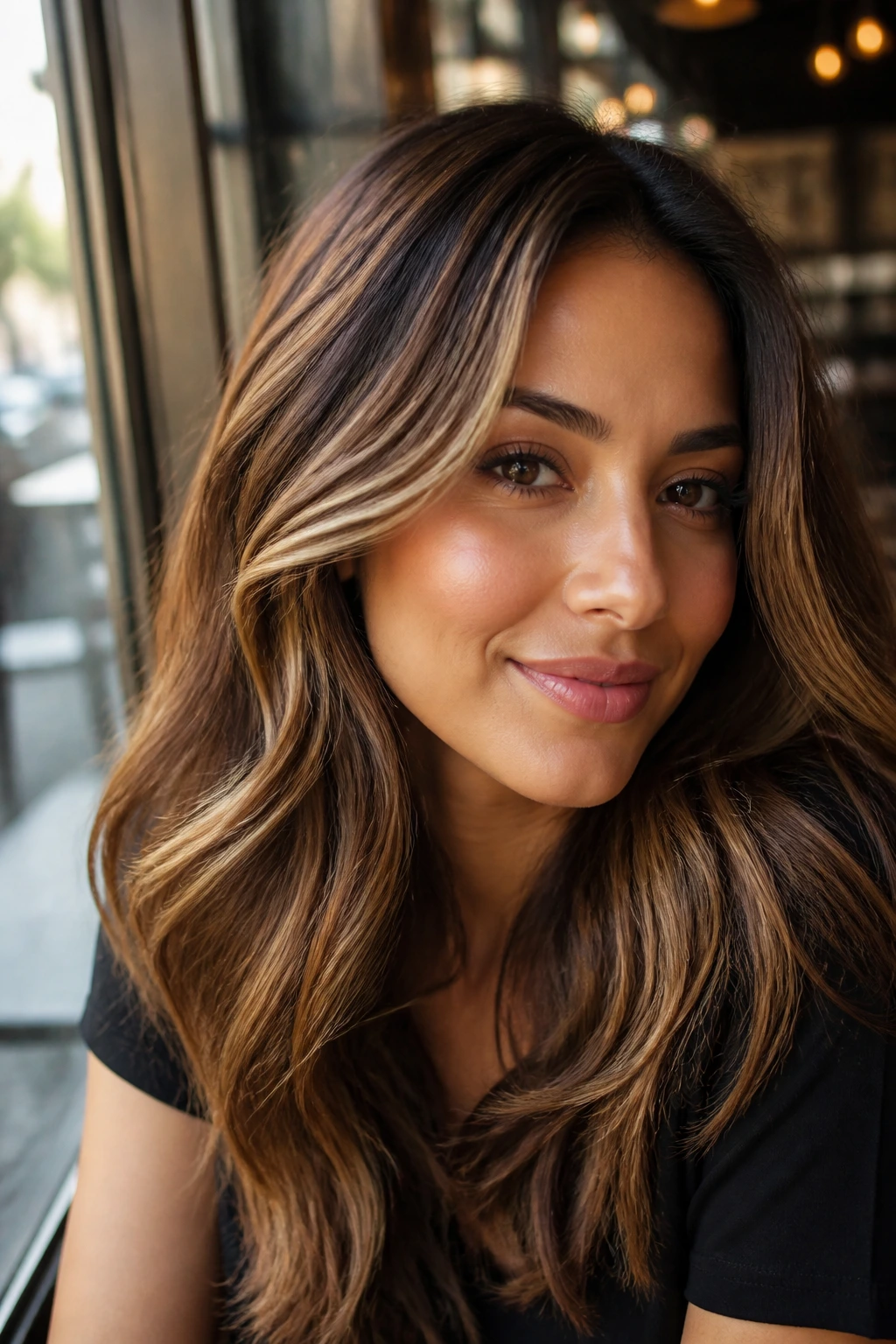
If balayage feels too subtle for you, step it up with traditional foils. Caramel highlights are placed more deliberately than balayage, meaning you get a more concentrated pop of brightness. These are usually woven into the hair near the crown and around the face to provide maximum impact.
How to Get the Look
Ask your stylist for “ribbons” of caramel rather than “slicing.” Slicing often creates chunky, 90s-style highlights that can look dated if not done perfectly. Ribbons are softer and weave through the hair, creating a seamless blend that looks natural even when the wind blows through your hair. This works exceptionally well on hair with a bit of natural wave or curl, as the light catches the bends in the hair perfectly.
3. Espresso with Copper Lowlights
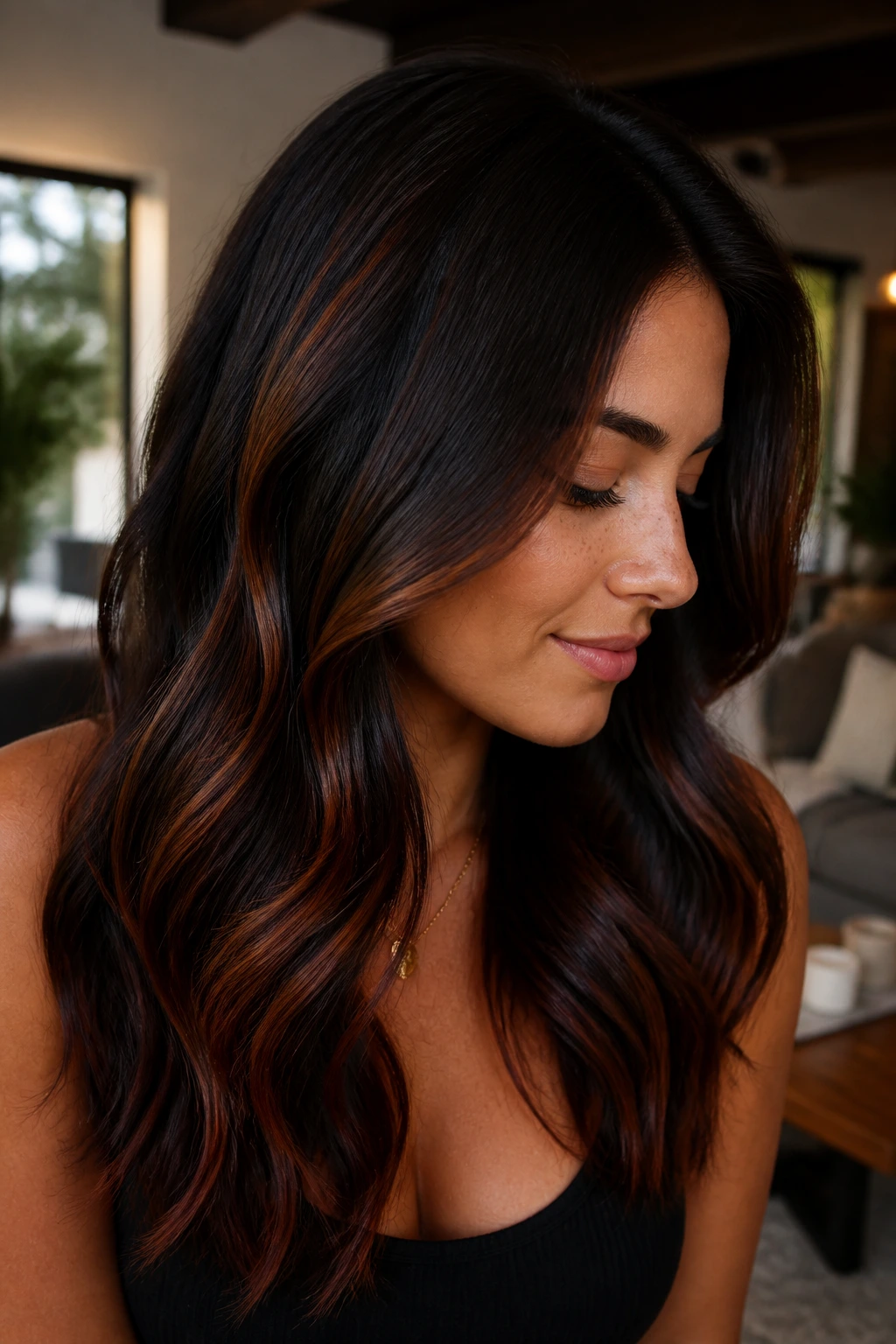
Sometimes, you don’t need to go lighter to make your hair look expensive; you need to add warmth through lowlights. Lowlights are simply strands of color that are darker than your base, but when you pick a shade like copper, you are doing something clever. You are adding a red-orange tint that makes the deep espresso brown look richer and more vibrant.
This is a fantastic option for someone whose hair feels “ashy” or dull. If you have cool-toned skin, copper can be tricky—you might want to lean toward a deeper mahogany instead—but for those with warm or neutral skin, this is a sophisticated, moody choice that screams high-end salon work.
4. Soft Mocha Ombré
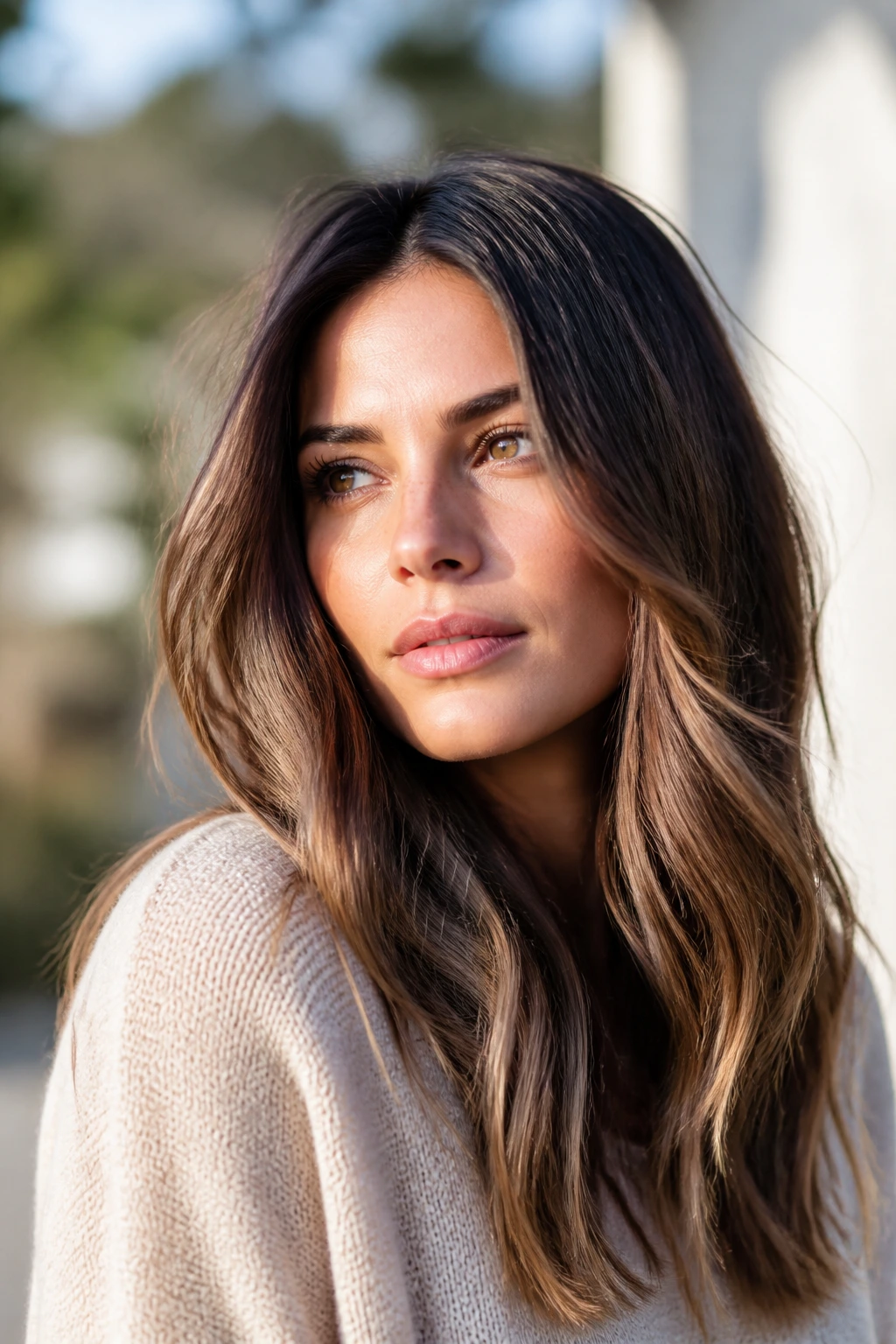
Ombré had a reputation for a while as being the dip-dyed look of the past, but the modern version is much more refined. A soft mocha ombré uses a gradual fade from your natural deep brown at the roots to a lighter, milk-chocolate mocha tone at the ends.
The goal here is a seamless transition. There should be no visible line where the color changes. If you see a hard jump from dark to light, the blend wasn’t done well. A good mocha ombré acts like an extension of your natural color, just lighter where the ends have “worn down” over time. It is effortlessly chic and requires very little maintenance.
5. Chocolate Cherry
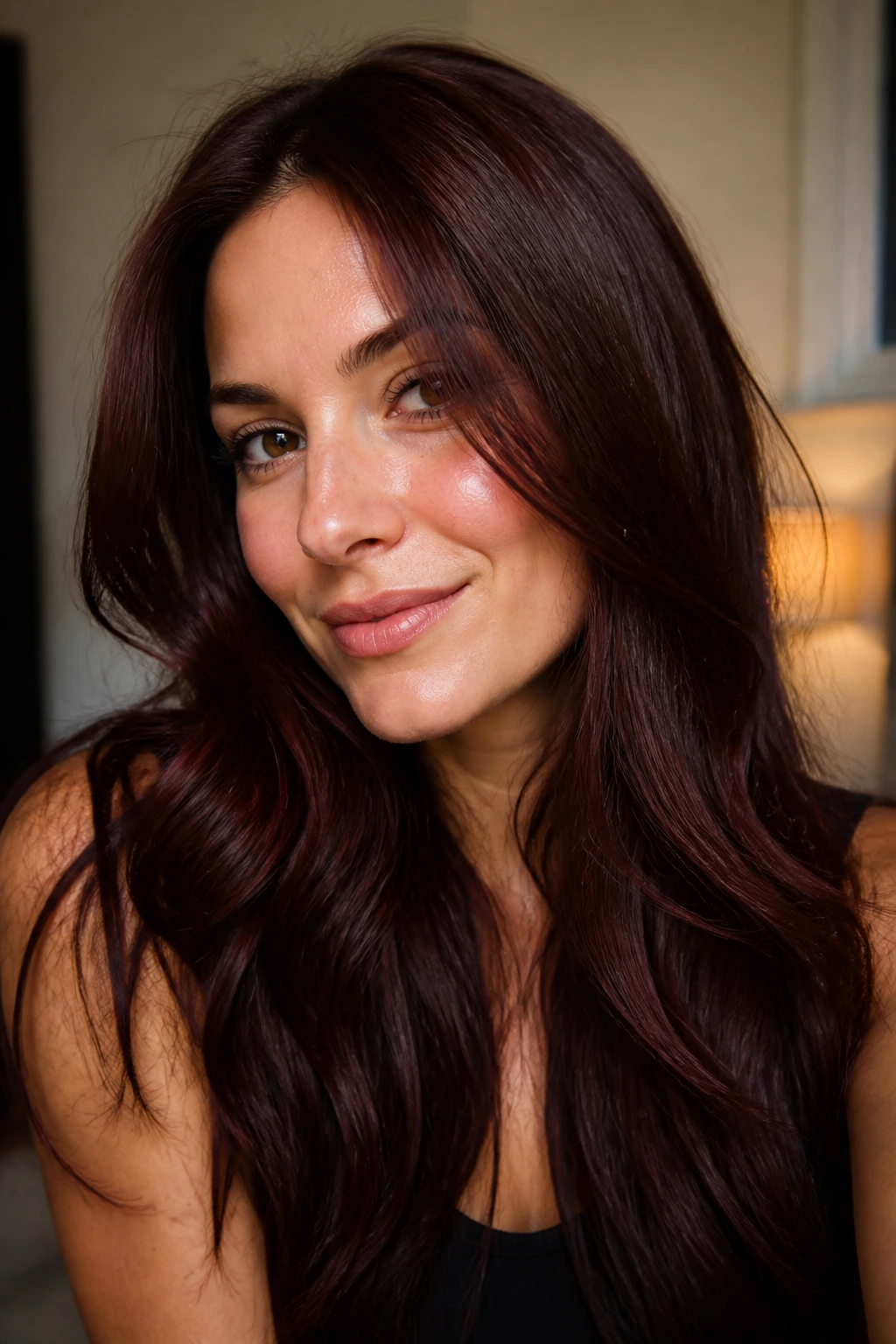
This is for the person who wants color that is visible but not “loud.” Chocolate cherry is essentially a deep, dark brown base infused with subtle, dark red or burgundy tones. It isn’t a bright fire-engine red, and it isn’t pink. It’s a sophisticated, dark purple-red that catches the light and makes brown hair look glossy and healthy.
It pairs beautifully with pale skin, providing a striking contrast that feels very gothic-romance in the best way. When you walk outside, the red tones come alive, but in indoor, low light, it just looks like a rich, high-shine brunette. It is the perfect “secret” color.
6. Rose Gold Tint
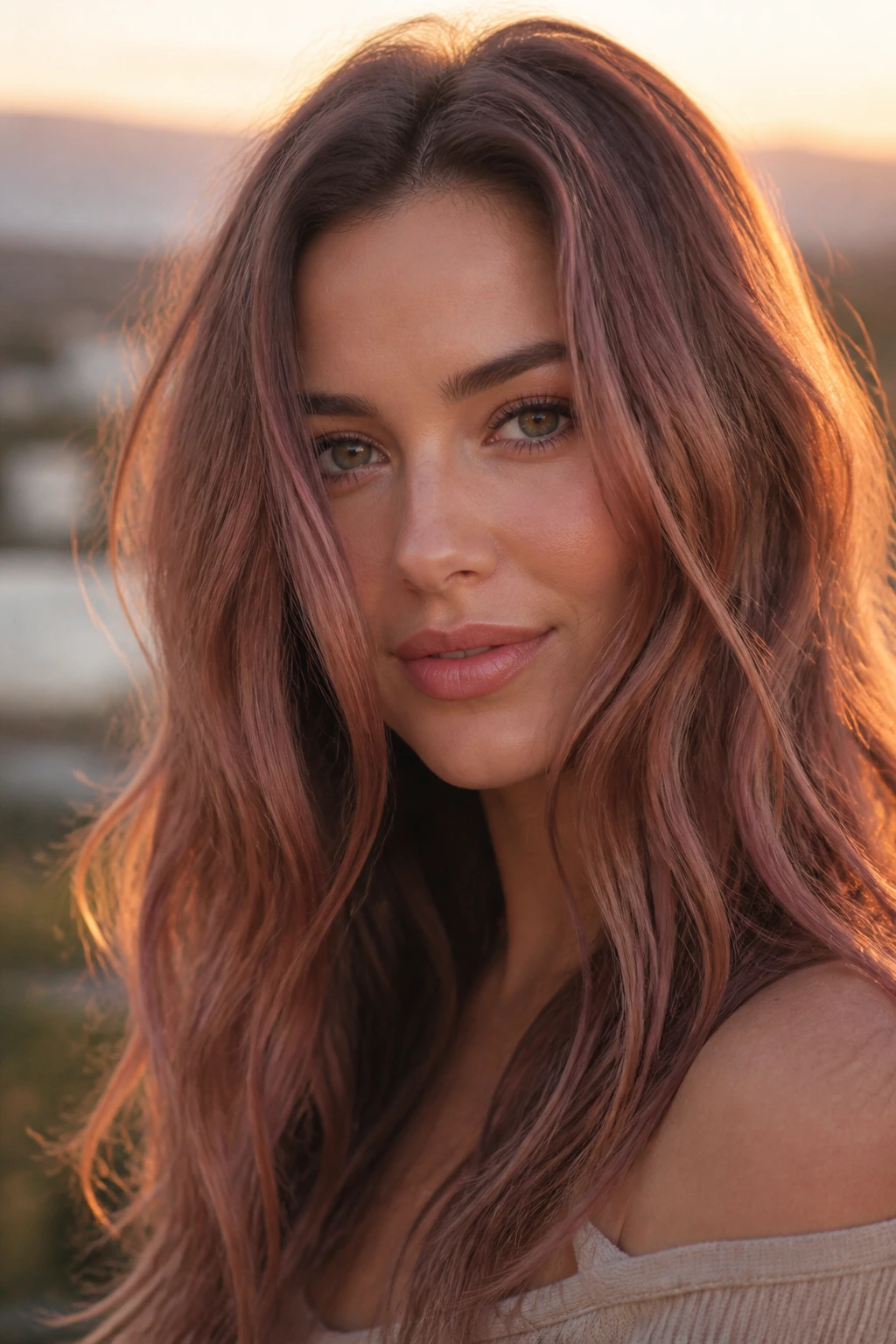
Yes, you can do rose gold on brown hair, but you have to adjust your expectations. You won’t get that pastel, cotton-candy pink unless you bleach your hair to a level 10 blonde first. Instead, think of a “muted” or “metallic” rose gold.
Your stylist will likely need to pre-lighten specific strands—a balayage or babylight approach works best here—and then apply a rose-gold gloss over the top. The result is a dusky, dusty pink that blends with your brown base. It is a creative color that feels surprisingly grown-up and understated.
7. Golden Brunette Babylights
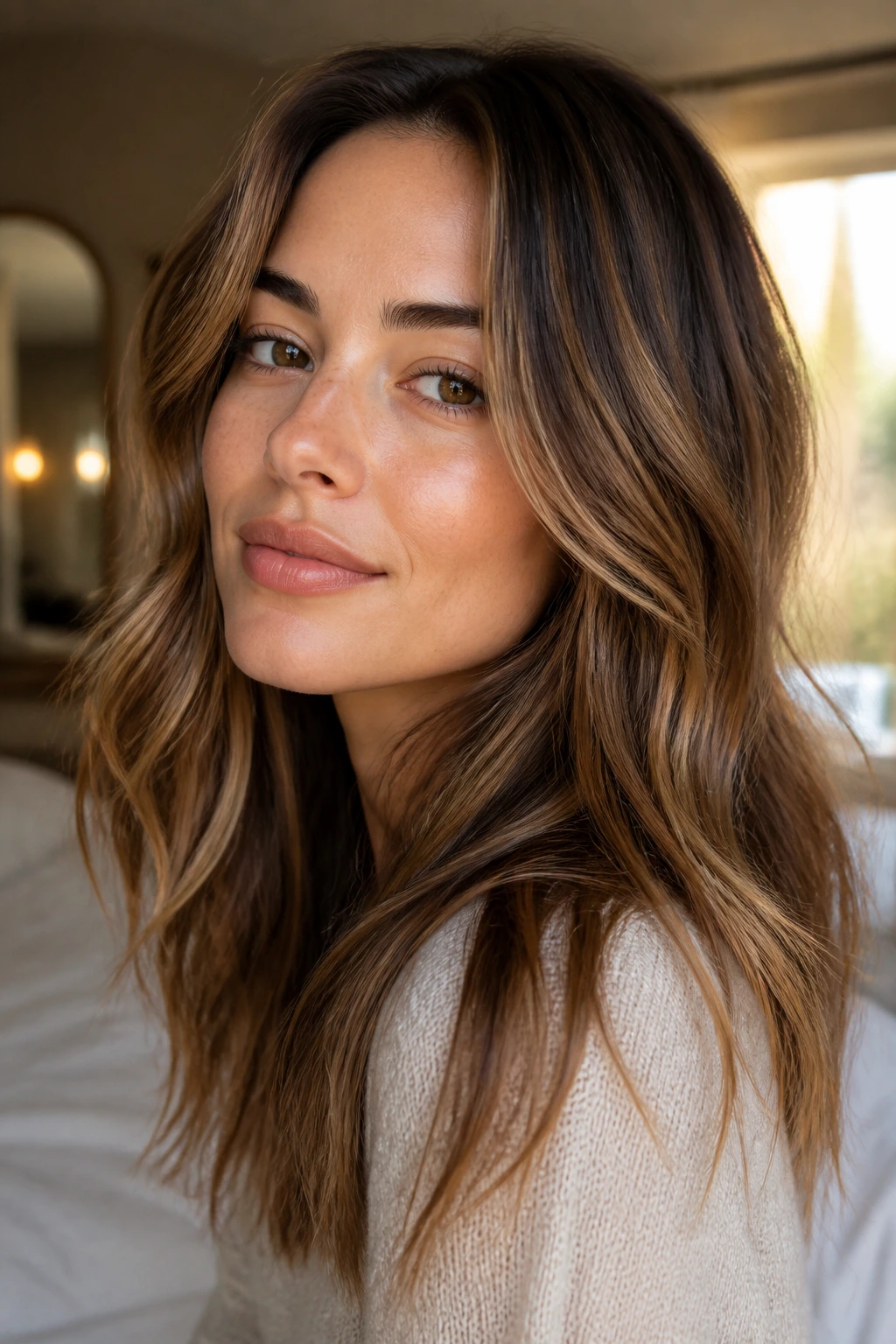
Babylights are the finest, thinnest highlights possible. They are meant to mimic the hair of a toddler, where the sun has naturally lightened individual strands over a summer. If you want to brighten your entire look without it looking like you got highlights, this is the path to take.
Achieving the Effect
- The Technique: Your stylist should use a fine-tooth comb to weave out tiny sections of hair.
- The Look: It’s almost invisible on its own, but collectively, it makes your hair look several shades lighter and significantly more luminous.
- Best Hair Type: Fine to medium hair. Very thick hair might lose the effect because the baby lights get buried in the bulk of the hair.
8. Ash Brown Dimension
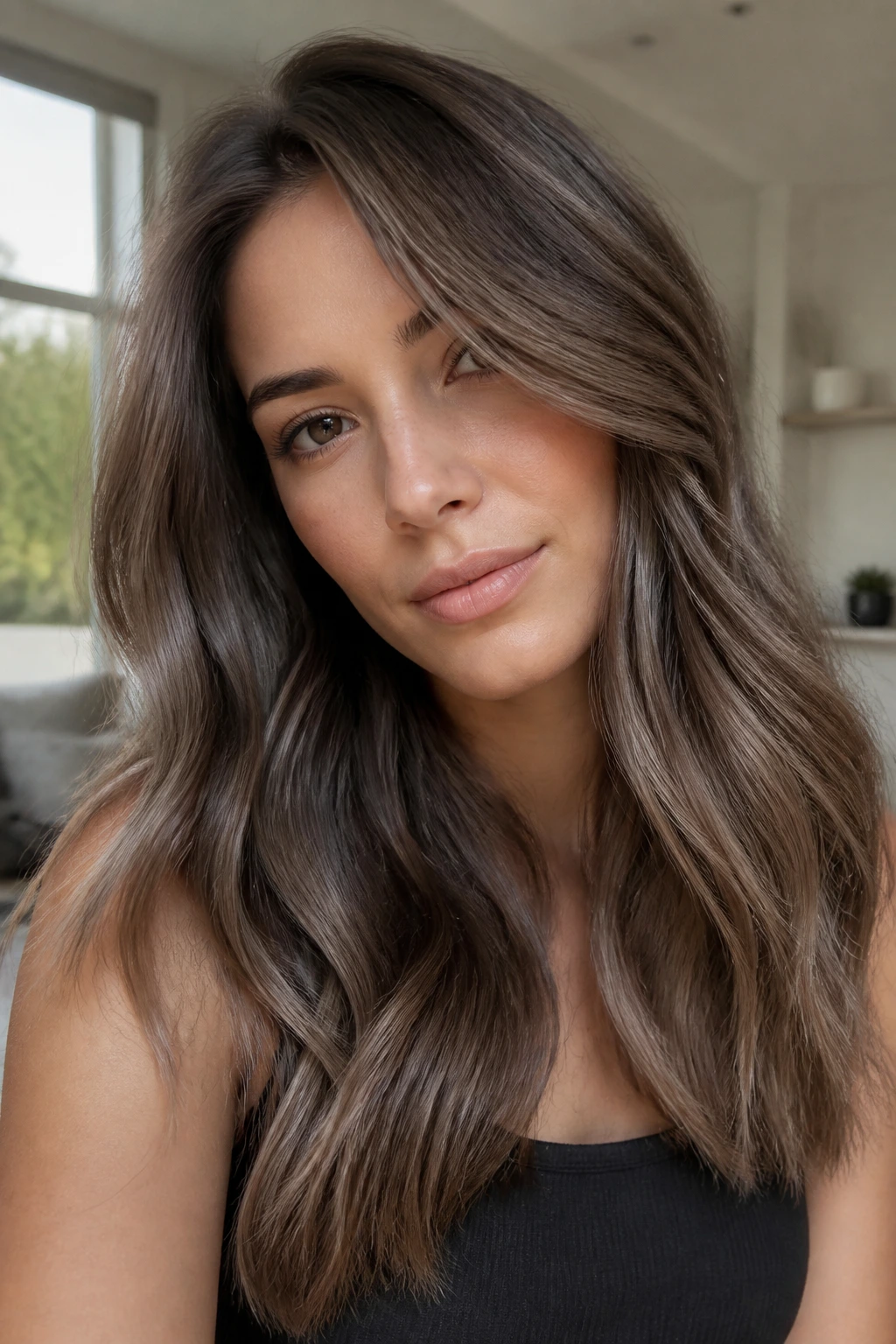
If your hair naturally pulls warm or red when it gets light, and you absolutely hate that, you need to ask for “ash.” Ash-toned hair contains blue, green, or violet undertones that cancel out the orange and red.
Going for an ash-brown look is all about “cool-girl” energy. It is sophisticated, muted, and very trendy. However, be warned: ash colors can look dull if you don’t keep them shiny. You will need a high-quality gloss treatment every 6 to 8 weeks to keep that cool tone from looking flat or lifeless.
9. Cinnamon Swirl
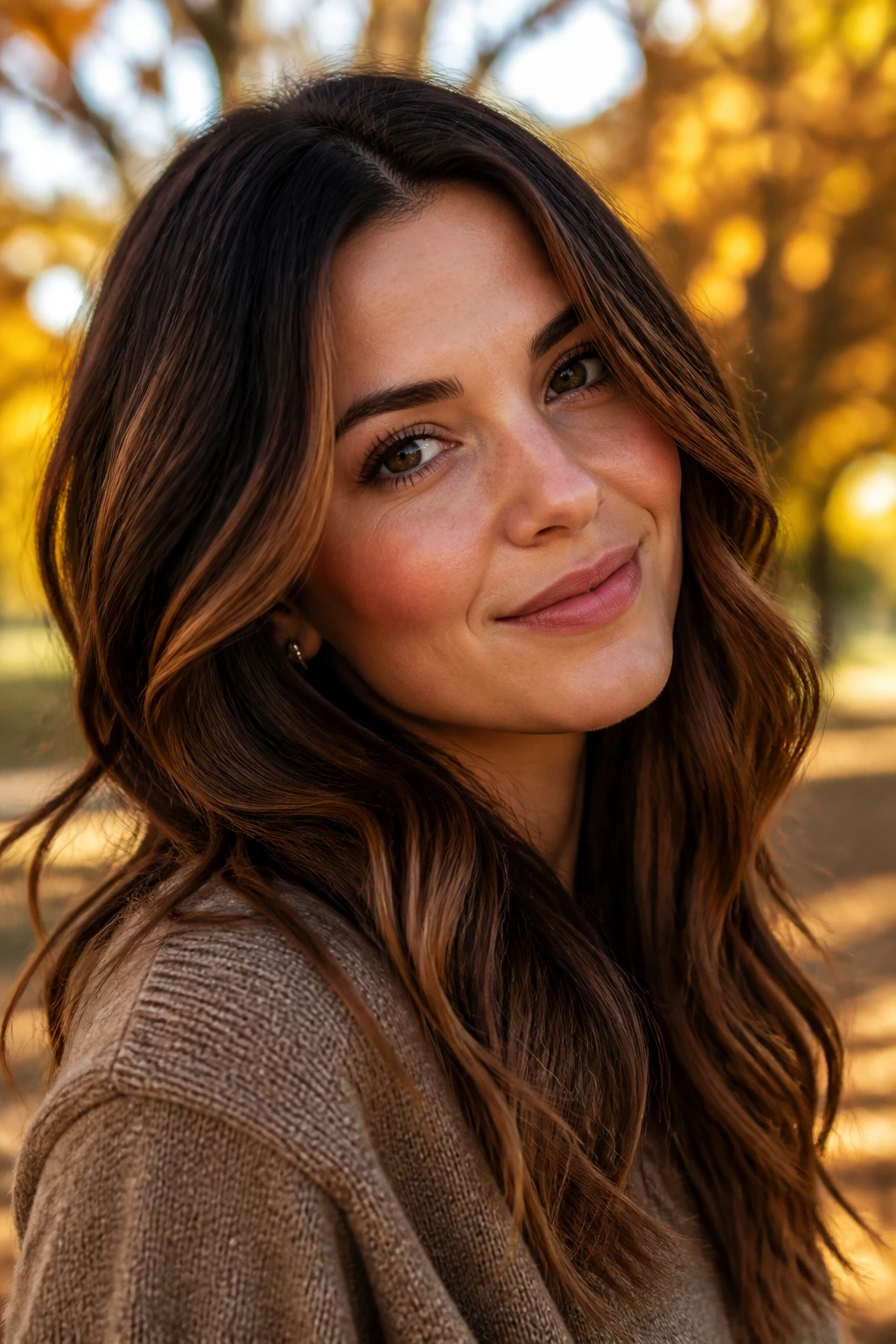
Think of this as a cross between brunette and auburn. Cinnamon is a warm, spicy reddish-brown. When you swirl it through deep brown hair using a balayage technique, it looks like a spice blend.
This is a particularly great look for autumn or winter, but honestly, it works all year round. It brings a lot of life to the face and adds a “glowy” quality to your complexion. It’s a very flattering shade for almost everyone, provided you keep the red tones rich rather than brassy.
10. Chestnut with Toffee Ribbons
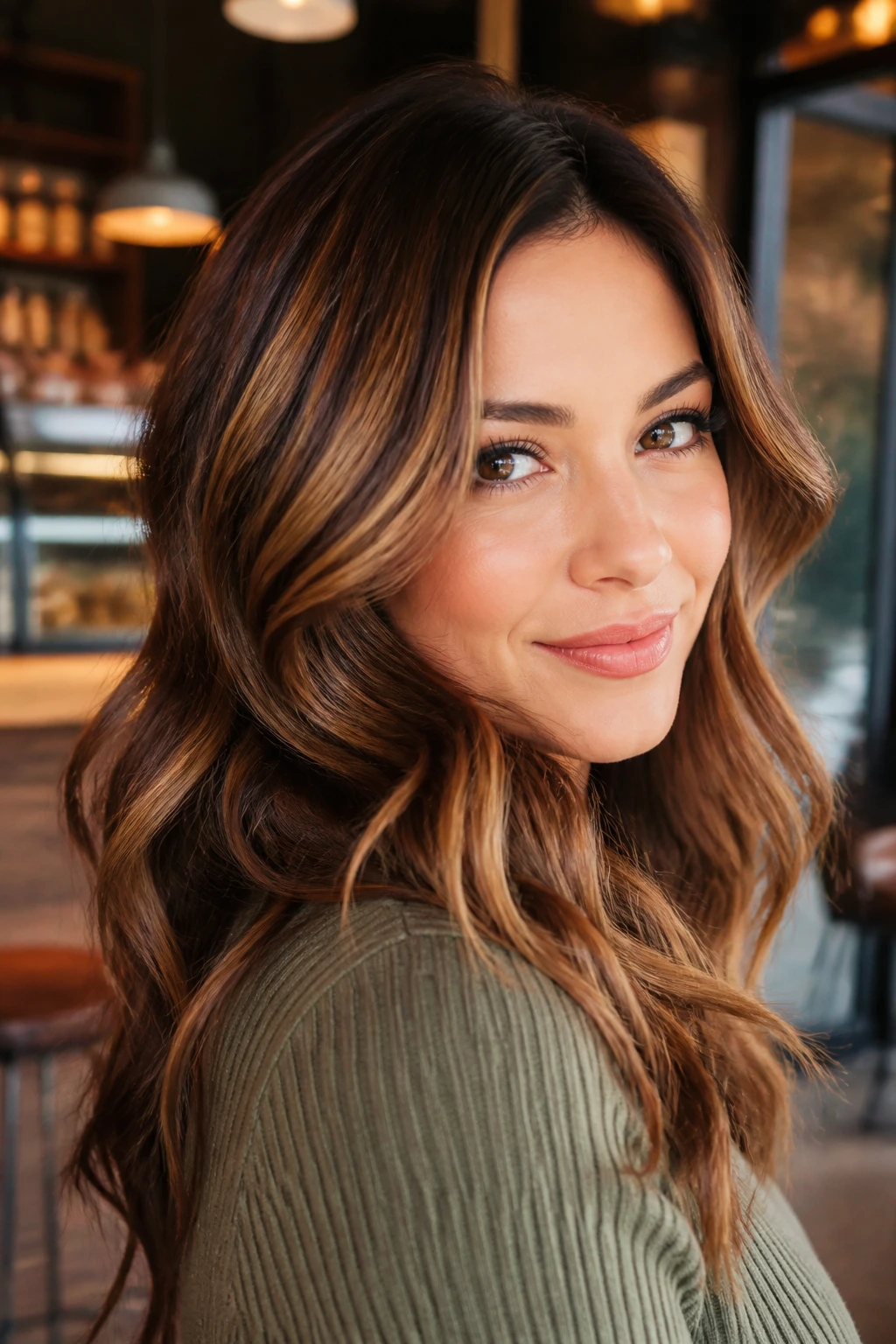
Chestnut is that classic, medium-brown shade—not too dark, not too light. It’s the color of a chocolate bar. To elevate it, add ribbons of toffee-colored highlights. Toffee is a bit creamier and lighter than caramel.
Why This Combination Works
The combination of the neutral chestnut base and the creamy toffee highlights creates a multi-dimensional effect that is very forgiving. It doesn’t require a lot of styling to look good. Even if you wear your hair in a messy bun, the different levels of color make it look intentional and styled.
11. Dark Auburn
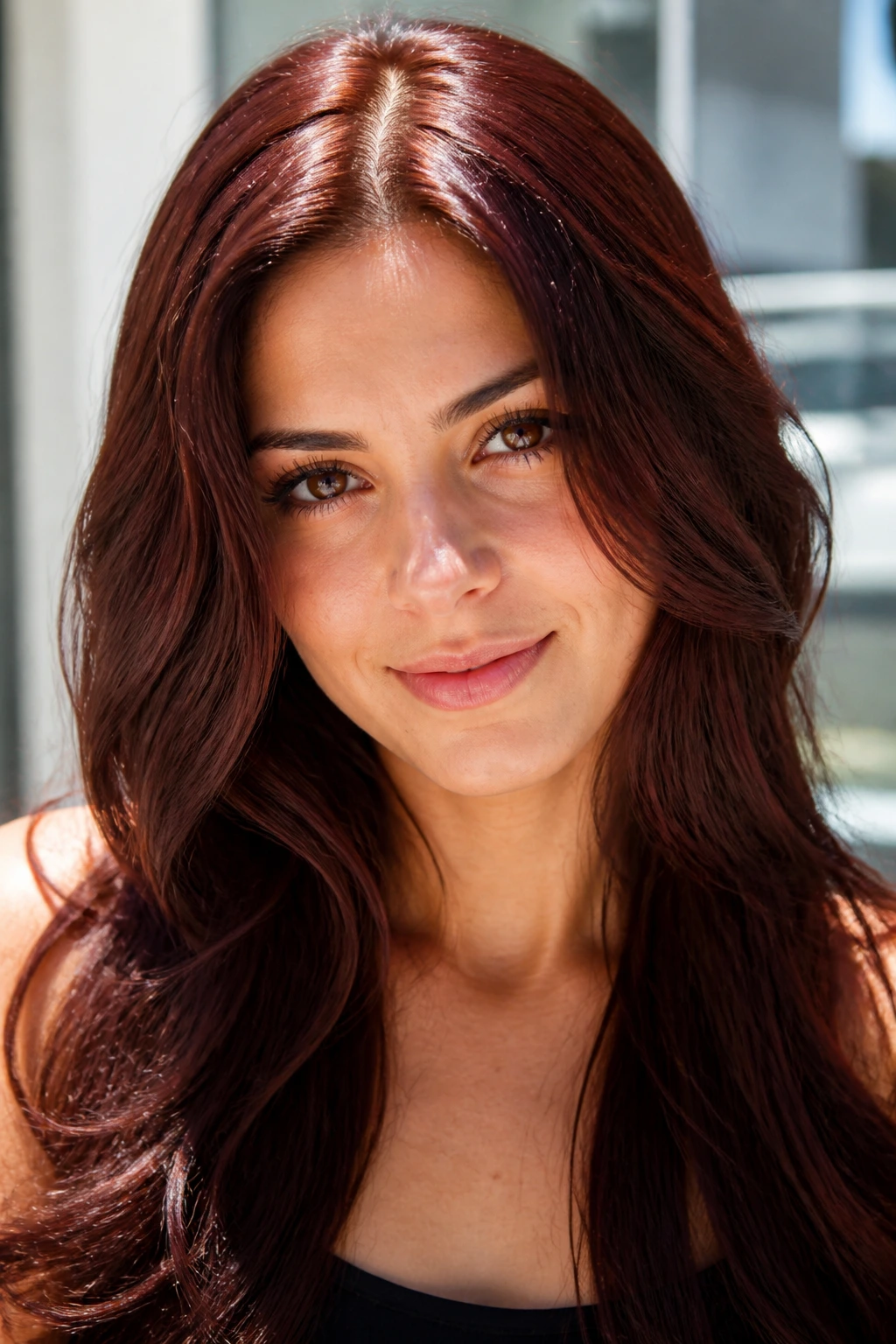
If you have always wanted to be a redhead but were too afraid of the commitment, dark auburn is your bridge. It’s a deep, brownish-red that is incredibly rich. It is much easier to maintain than a bright ginger or copper, as it doesn’t fade as aggressively.
You can do this as an all-over color if your hair is already a medium brown, or you can add it as a glaze over your natural color to test the waters. Just keep in mind that red pigments are the first to wash out, so you will need a color-safe shampoo and a cold water rinse to keep it vibrant.
12. Caramel Macchiato Melt
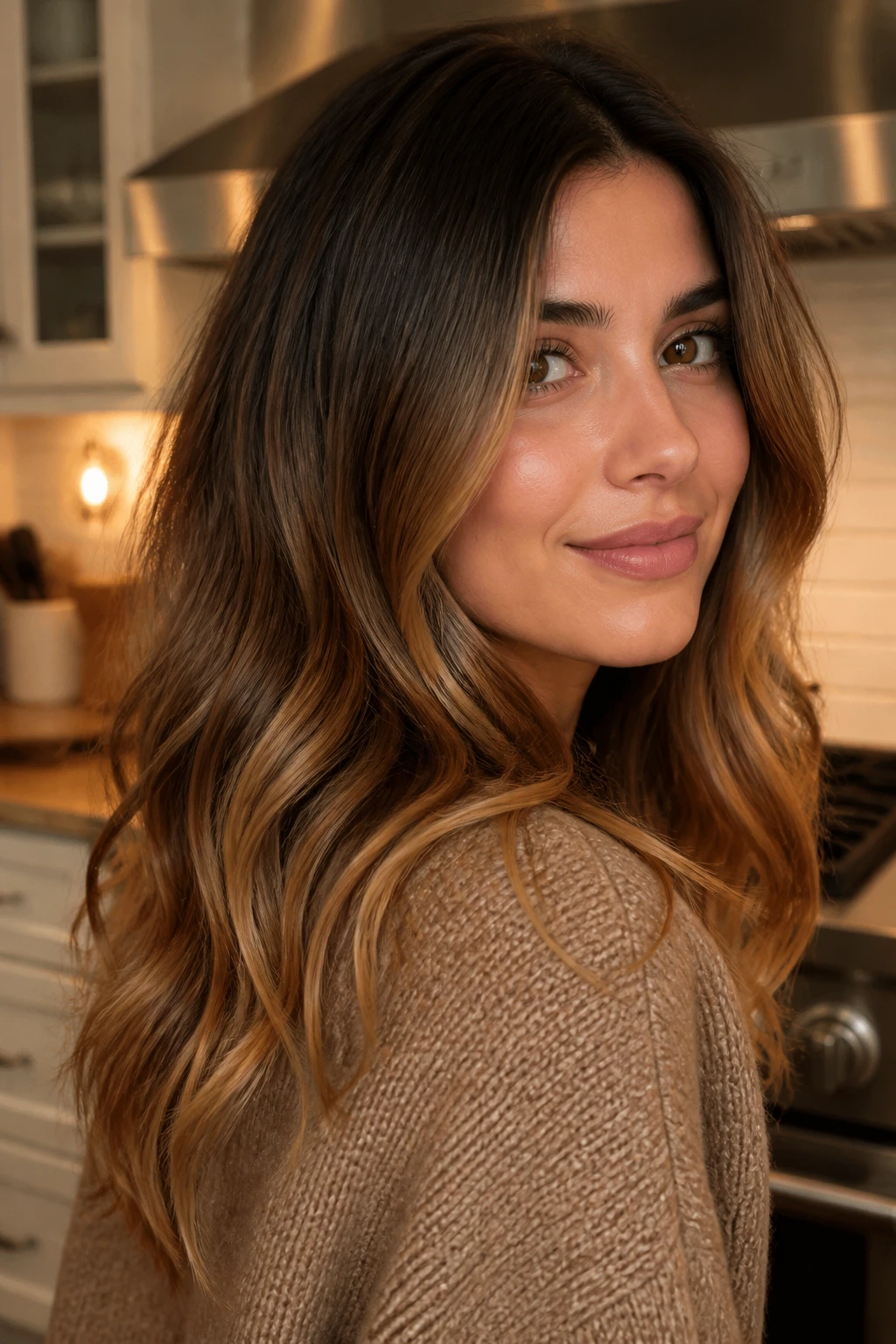
This is a specific type of color melt. Instead of highlights, the stylist uses a “root smudge”—where they take a shade that matches your natural root color and paint it down an inch or two into the highlights.
This blurs the line between your natural growth and the color, making it look like your hair naturally transitioned from dark to light. It is arguably the lowest-maintenance color job you can get. If you are someone who hates the “stripey” look of traditional highlights, this is the remedy.
13. Sandy Brown Highlights
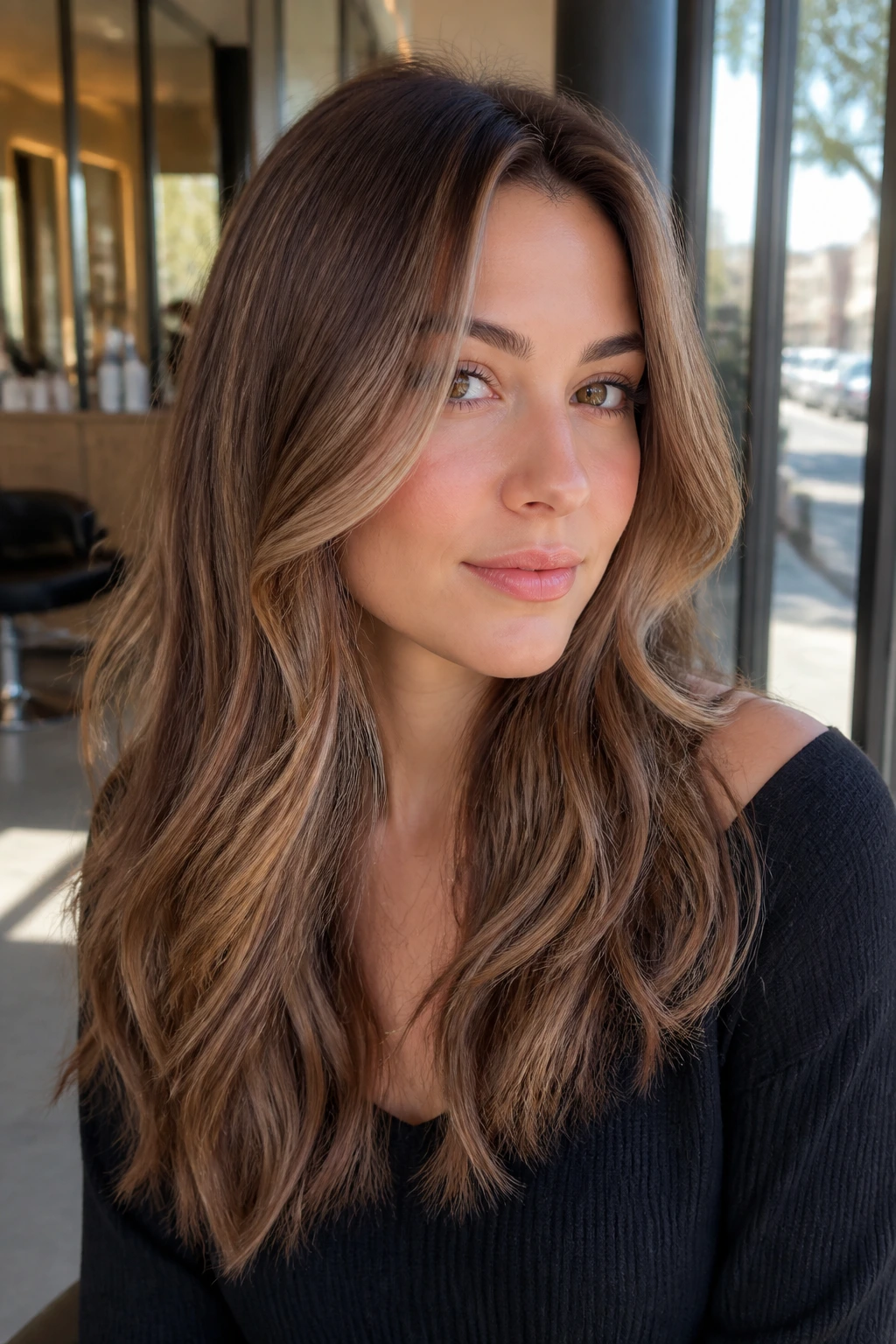
Usually, we associate “sandy” with blonde, but sandy brown is a neutral, slightly beige-toned highlight. It’s perfect for the person who wants to go lighter but isn’t a fan of the warmth of caramel or honey.
It’s very understated. It looks like you spent a lot of time outdoors. Because it’s neutral, it doesn’t clash with skin tones as easily as warm highlights might. It is a very safe, professional choice if you work in an environment where wild colors or extreme contrasts are frowned upon.
14. Espresso with Caramel Face-Framing
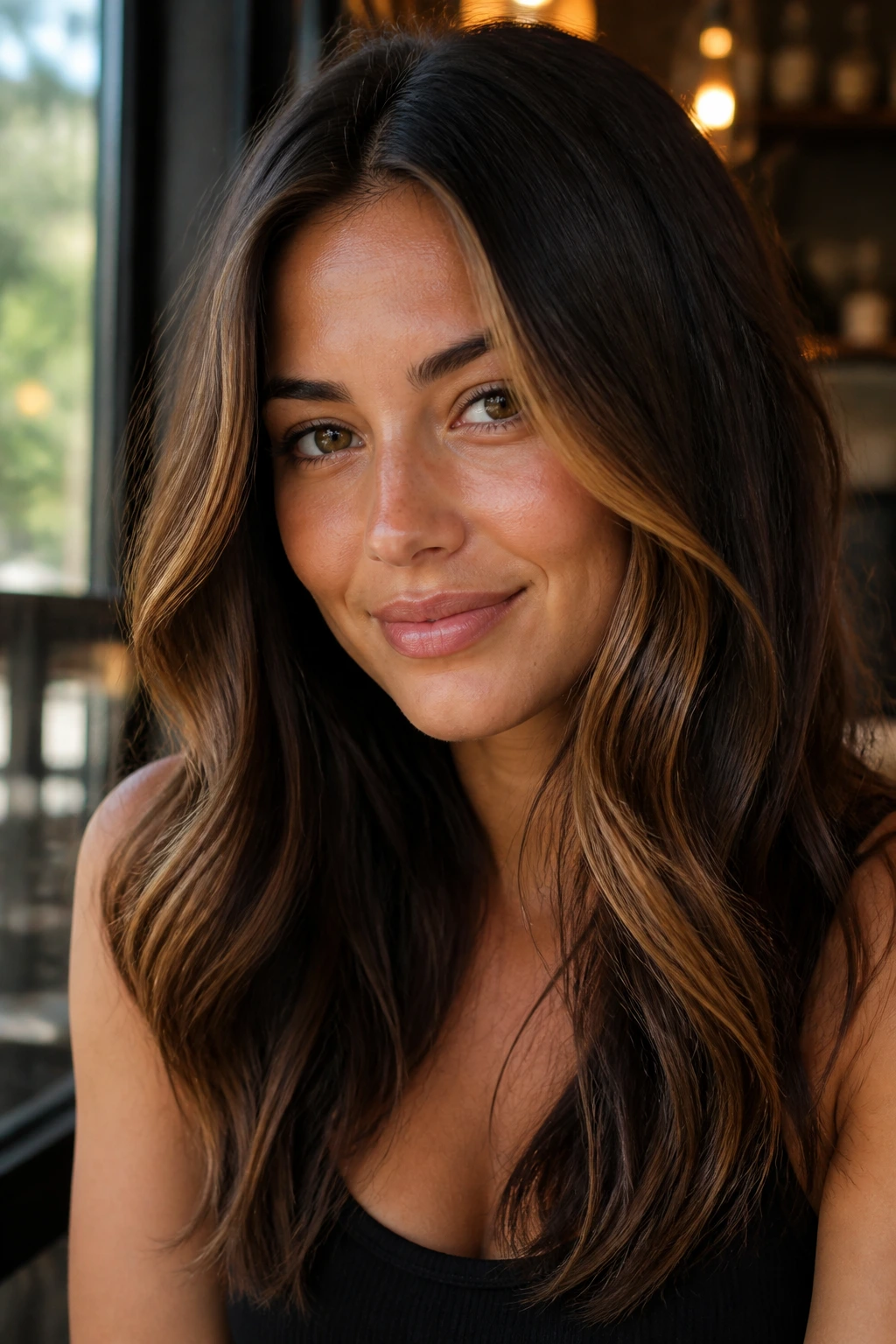
Sometimes, you don’t need color everywhere. You just need it where people look first: your face. This technique is often called “money pieces,” but when you do it with a soft caramel, it’s much more elegant.
Keep the rest of your hair a deep, rich espresso, and concentrate the lighter, caramel color on the front two strands of hair and the very front section of your bangs or layers. It brightens the face instantly, makes your eyes pop, and requires very little bleach. It is a high-impact, low-commitment look.
15. Espresso and Mushroom Brown
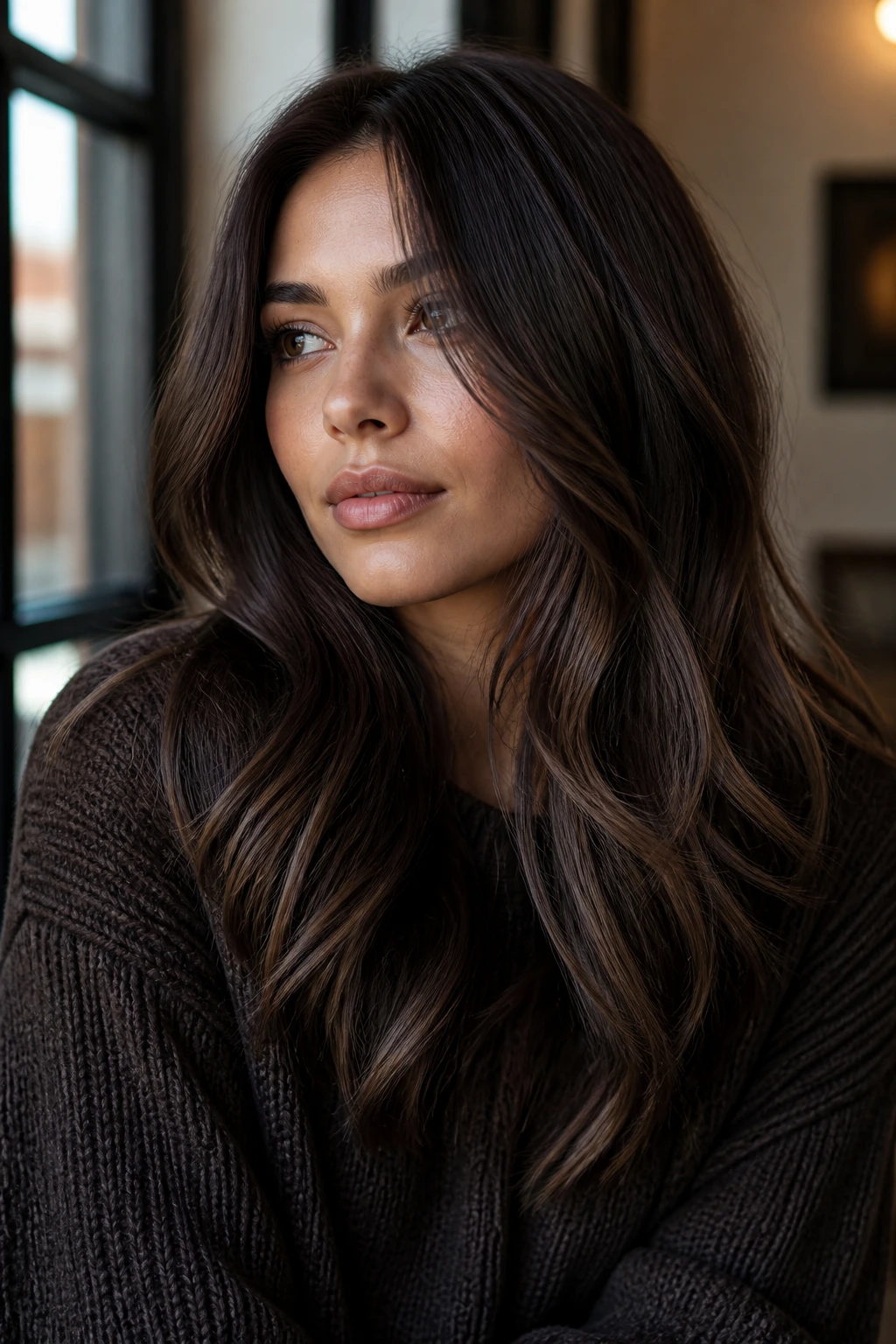
“Mushroom brown” has become a massive term in the hair industry, and it essentially means an earthy, cool-toned taupe. Mixing this with a deep espresso base creates a very moody, sophisticated, and earthy look.
It’s not for the person who wants to be “bright.” It’s for the person who wants to be “chic.” It looks fantastic on people with cool or olive skin tones. Because both colors are relatively muted and close in depth, the dimension is subtle. It’s a “if you know, you know” kind of color.
16. Mahogany Red Accents
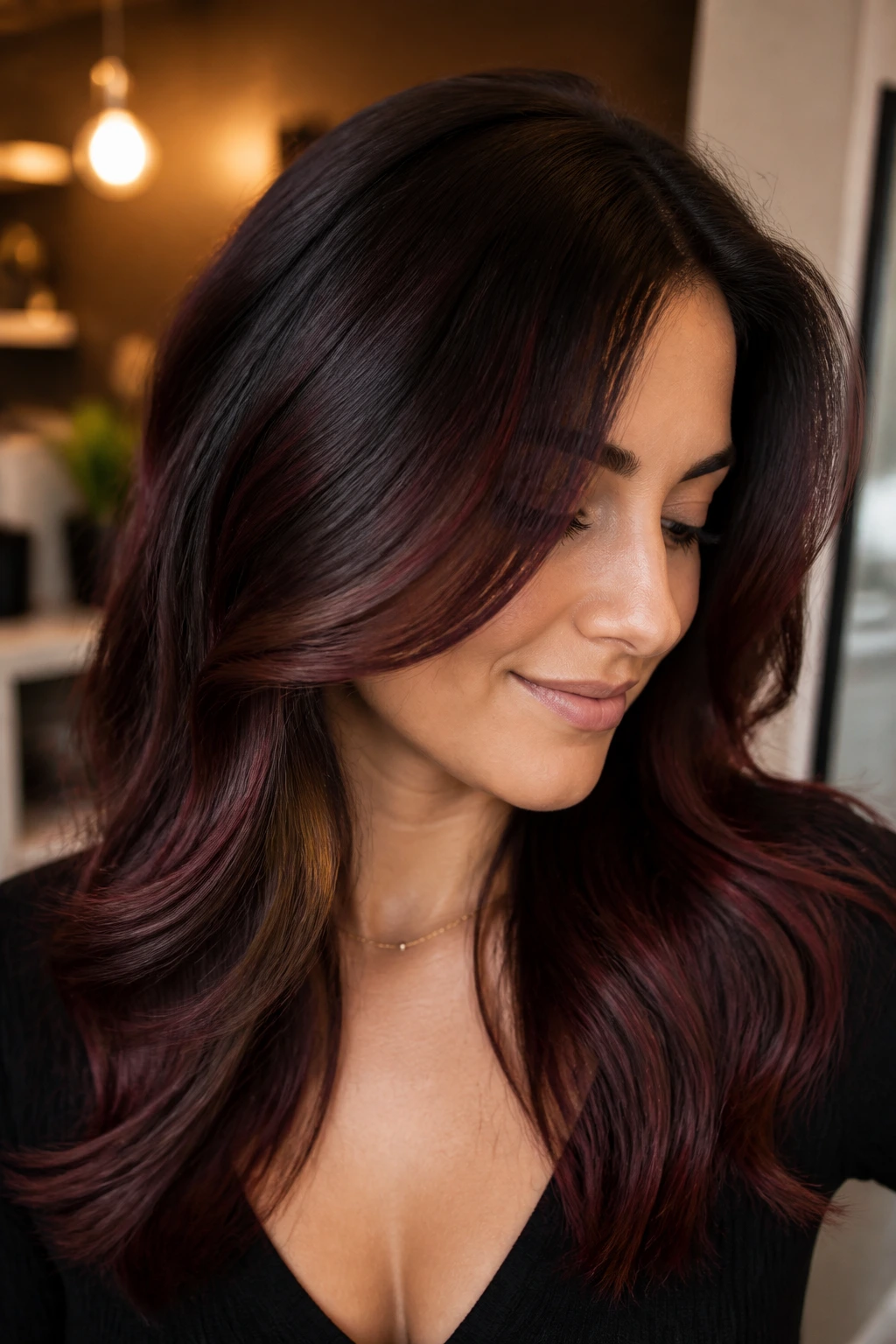
Mahogany is a cool-toned red, meaning it has a purple base rather than an orange base. Adding mahogany accents to dark brown hair gives it a “plum” quality that is very elegant.
Unlike copper, which can feel casual and fun, mahogany feels formal and intense. It is a great way to deepen your hair color without actually making it darker. If you feel like your brown is looking a bit boring, asking for a mahogany glaze is an easy way to switch things up without a permanent commitment.
17. Caramel and Vanilla Blonde Balayage
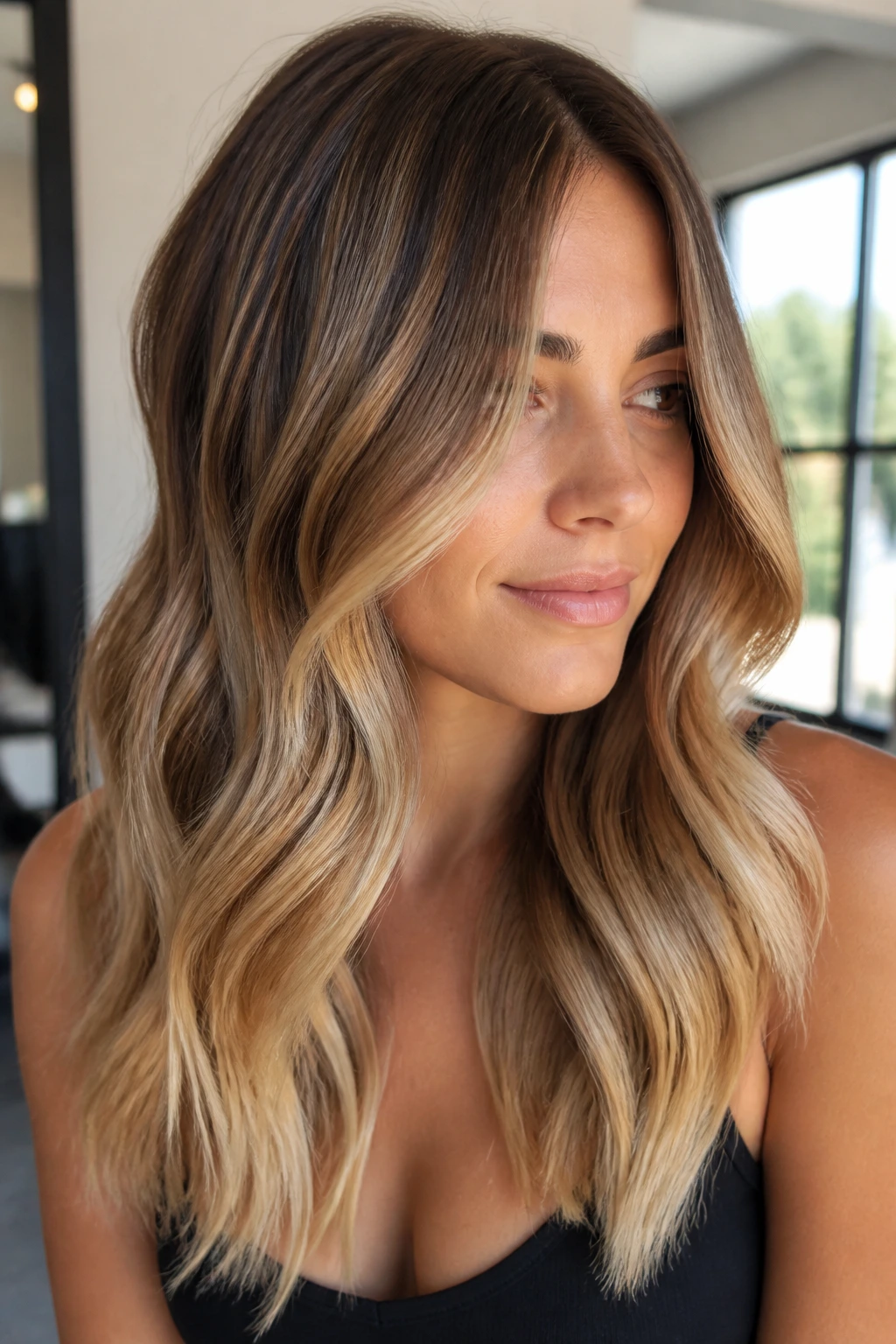
If you are ready to be a bit bolder, you can mix caramel ribbons with very light, vanilla-blonde pieces. This creates a high-contrast look that is very noticeable.
The caramel helps bridge the gap between your dark brown roots and the light vanilla ends, preventing that “zebra” effect. This look requires more maintenance than a single-tone balayage because you are dealing with lighter, bleached ends. You will need to be diligent about deep conditioning to keep those vanilla ends from getting brittle.
18. Spicy Paprika Brunette
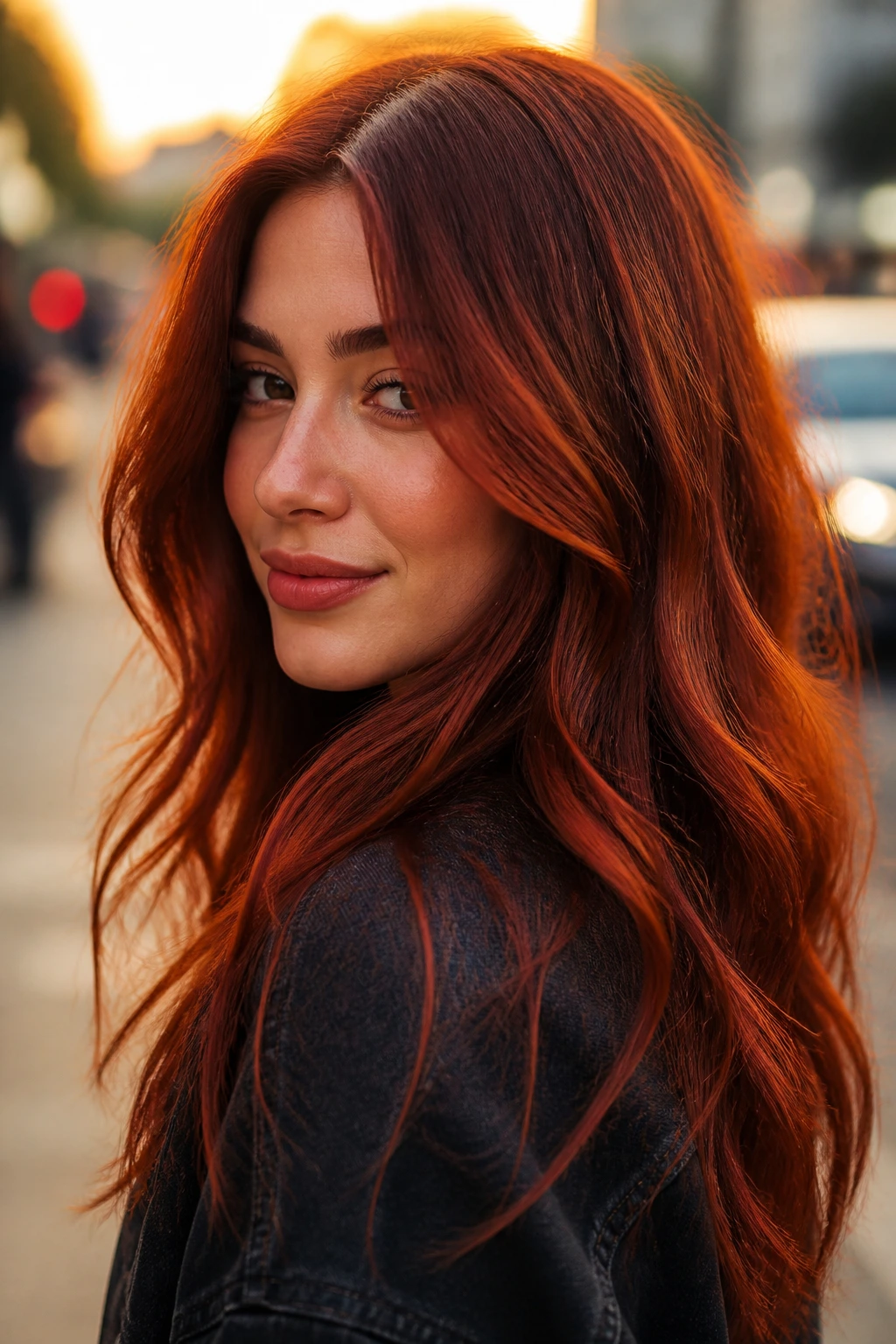
Paprika is a brighter, more orange-leaning red than copper. It is a bold, energetic shade. When applied as a glaze or balayage over deep brown, it creates a “fire” effect.
This isn’t a subtle choice. If you want to stand out, this is the one. It looks incredible with green or hazel eyes, as the orange/red tones bring out the flecks of color in the iris. Be prepared for a bit more fade; reds are notoriously quick to leave the hair shaft, so you will need to refresh this color frequently.
19. Bronde Face Framing
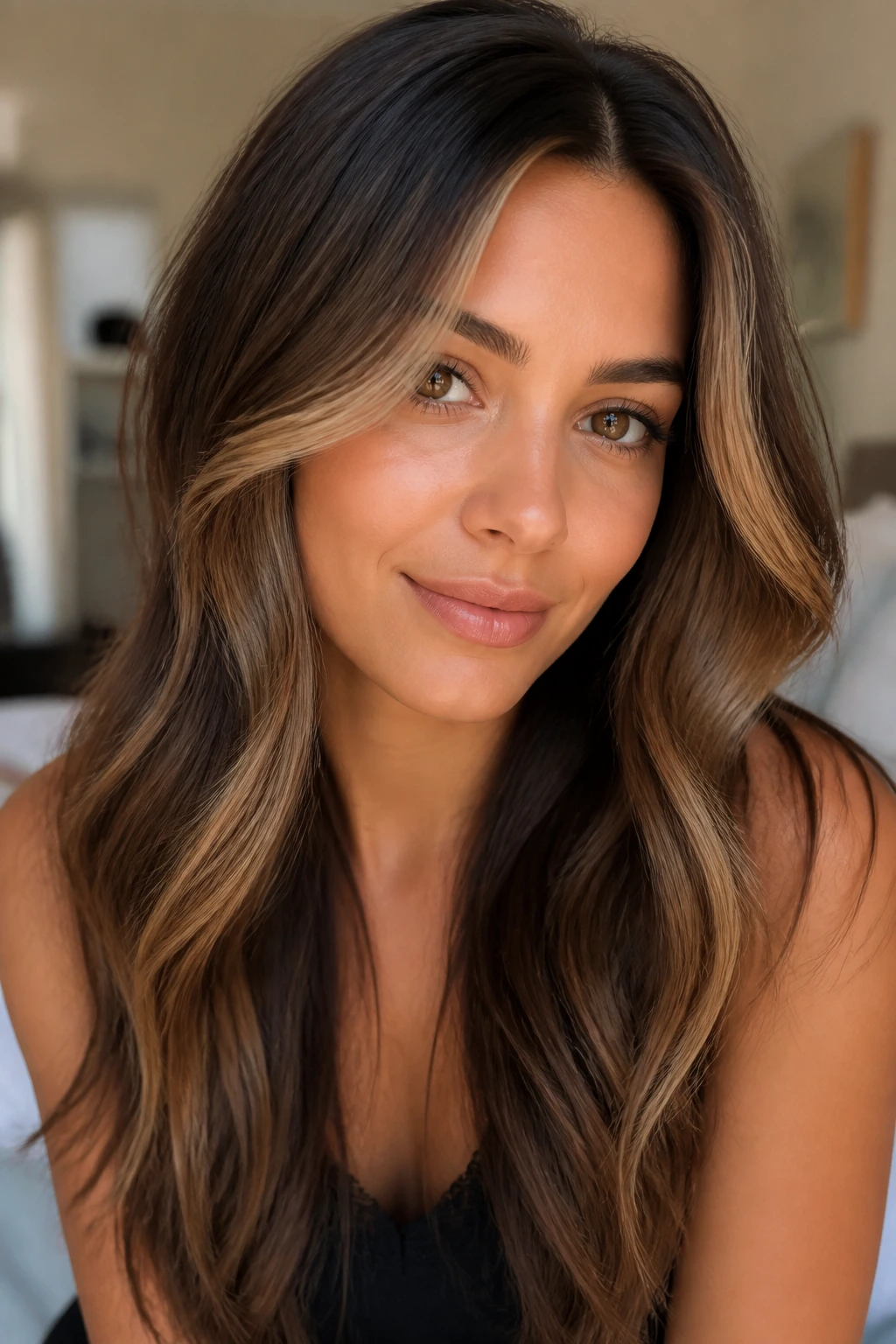
“Bronde”—that perfect hybrid of brown and blonde—is a classic. Instead of an all-over bronde, try keeping the bulk of your hair a rich brown and focusing the bronde tones purely around the face and on the ends.
It gives you the lightness of being a blonde without the massive maintenance of covering your entire head. It is also much healthier for your hair, as you are only lightening about 30% of your total strands rather than 100%. It’s a practical, modern approach to lightening up.
20. Dark Chocolate with Caramel Highlights
This is the classic, high-contrast look that never goes out of style. It is striking, clean, and polished. You want the dark chocolate base to be almost black-brown, and the caramel highlights to be defined and distinct.
This look works best when the hair is styled with a slight wave or curl, as it shows off the contrast between the dark base and the light highlights. When you wear your hair bone-straight, it can look a bit “stripy,” so prepare to reach for the curling iron or round brush to get the full effect.
21. Chestnut and Copper Ombré
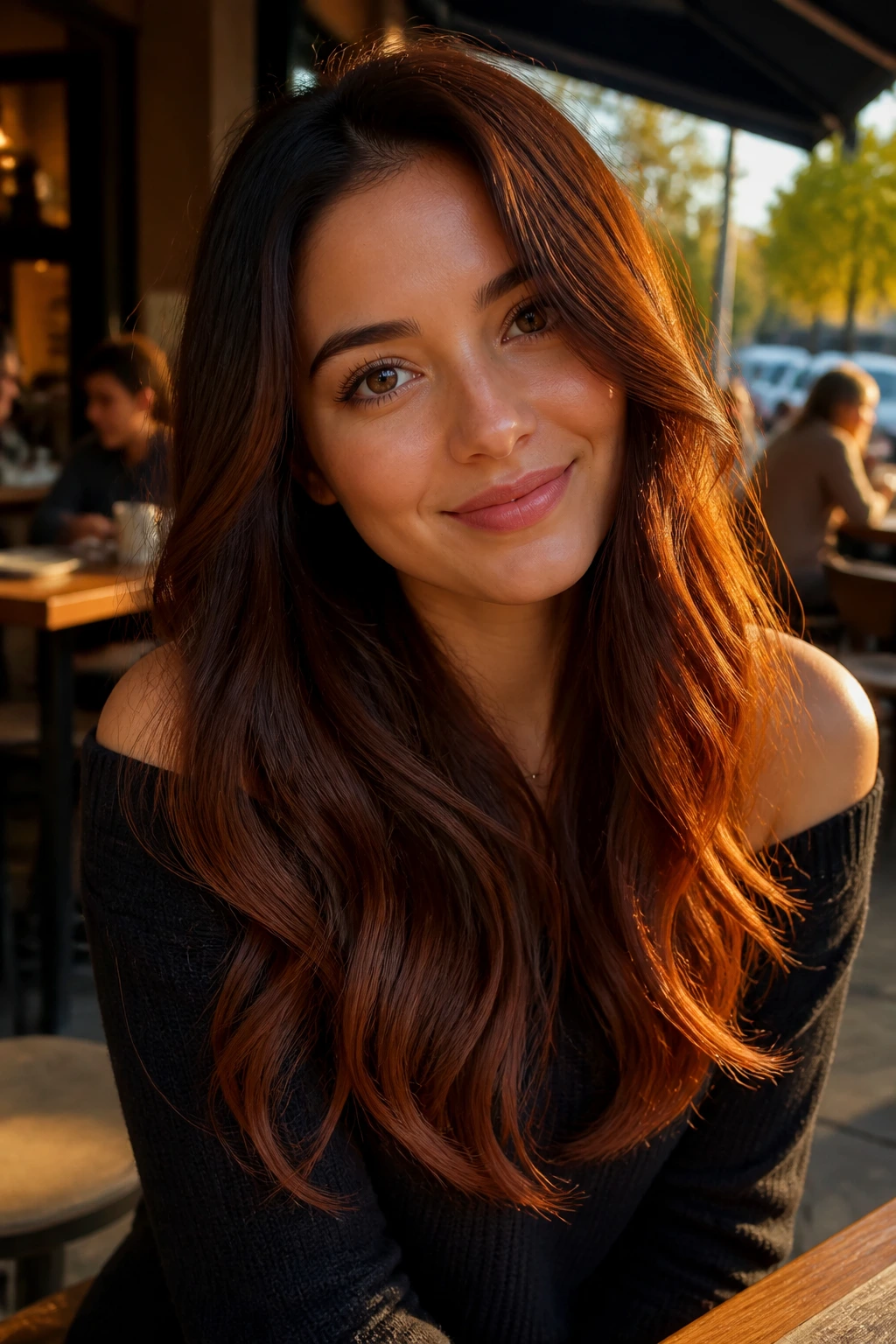
This is a very warm, vibrant combination. Chestnut is the base, and it transitions into a bright, coppery orange at the ends. It looks like a sunset.
Because both colors are warm, this looks amazing on people with warmer skin tones. It feels very energetic and youthful. However, you have to be comfortable with your ends being quite vibrant. If you prefer a more subtle look, ask your stylist to keep the copper a bit closer to the chestnut level (a “dark copper”) rather than a bright, punchy copper.
22. Iced Coffee Brown
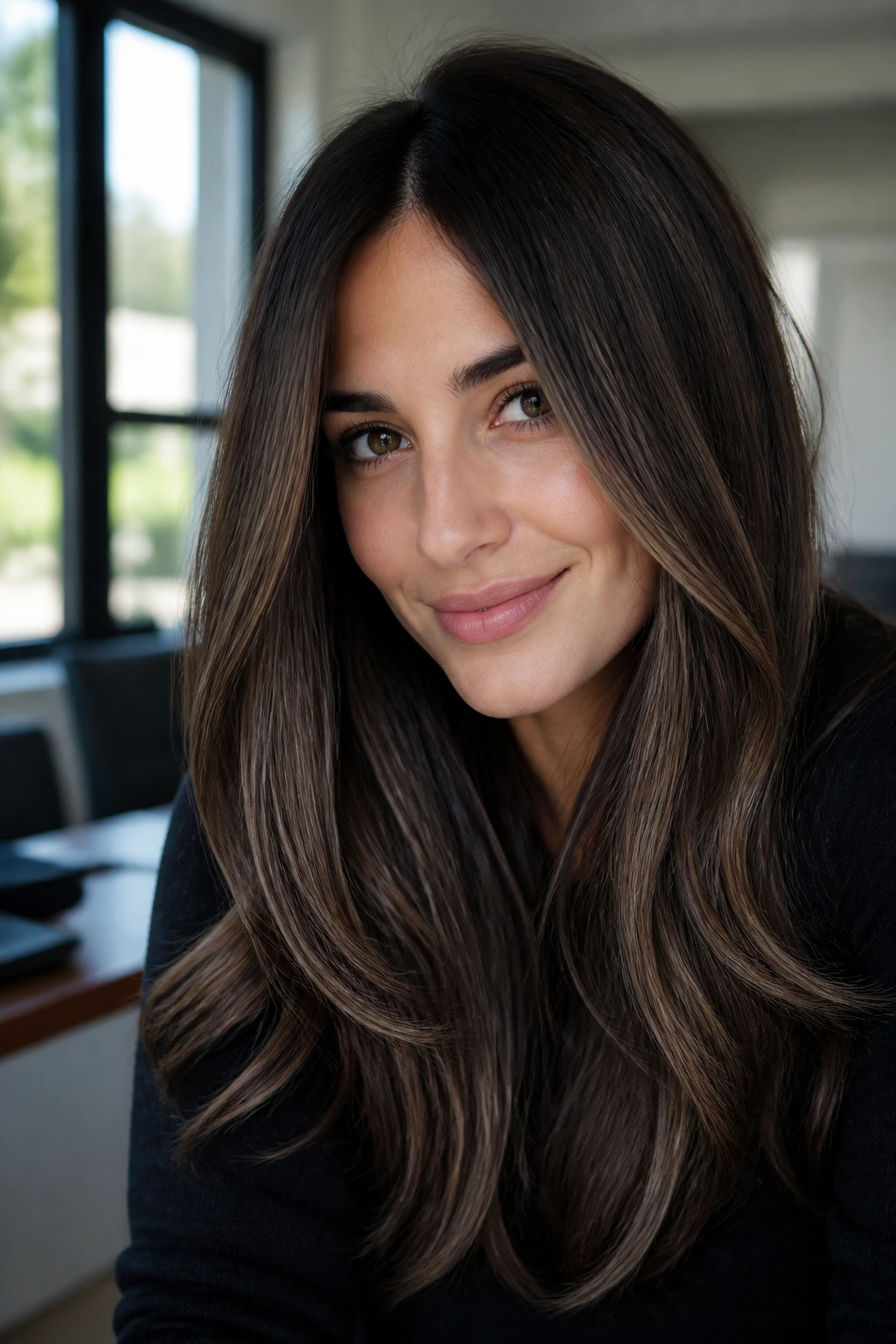
Imagine your dark espresso brown mixed with a splash of milk—that’s the iced coffee look. It involves taking a deep, cool-toned dark brown and weaving in very cool, taupe-blonde highlights.
The key to this look is “cool.” If you add any warmth to the highlights, the whole look fails. It should be a monochromatic, cool-toned blend. It is incredibly sleek and looks like expensive, designer hair. If you have a professional, corporate job, this is one of the best ways to incorporate lighter tones while remaining understated.
23. Warm Mocha Balayage
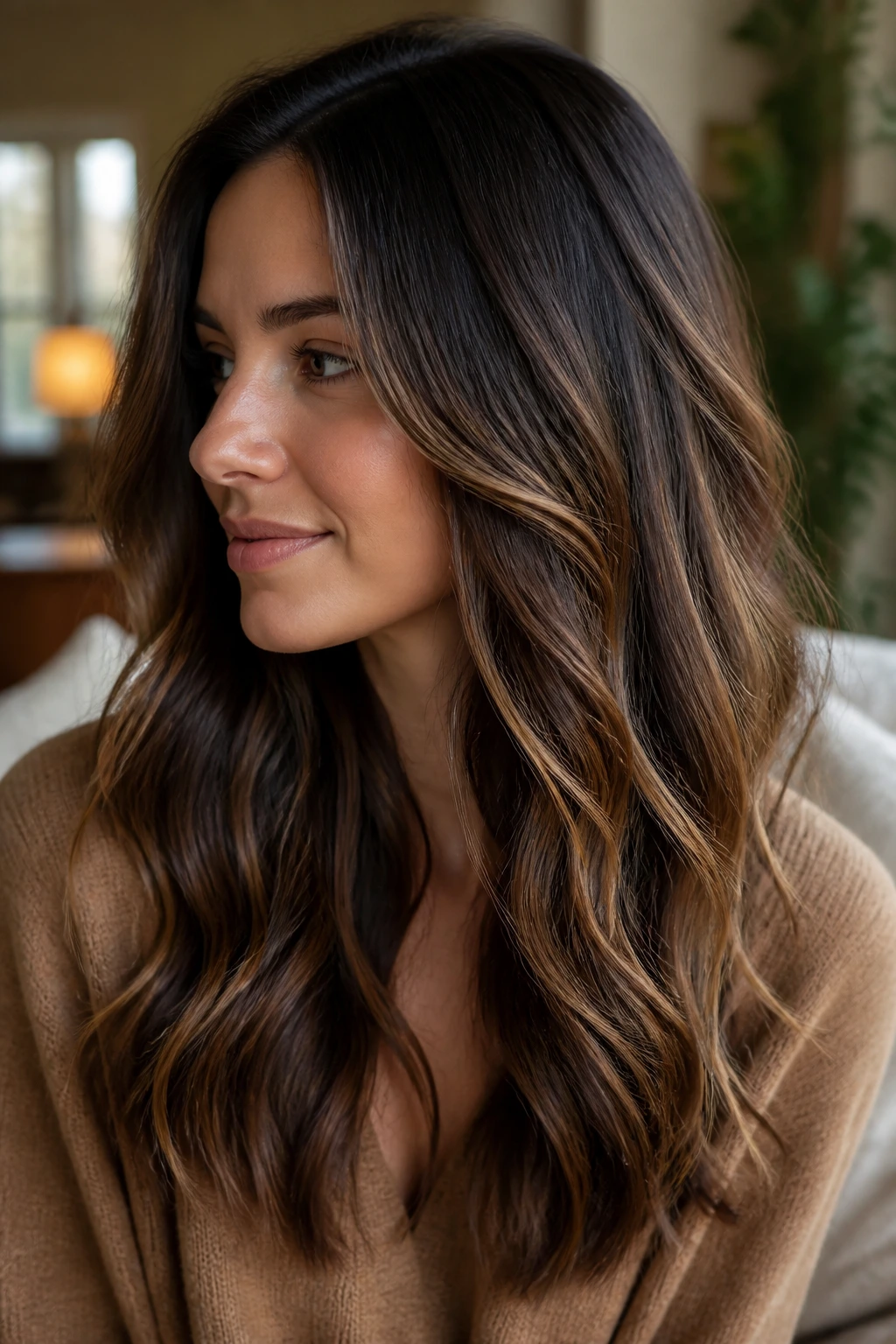
This is a very natural, “my hair but better” look. It involves taking a warm mocha-brown shade and painting it onto your natural, darker hair. The contrast is minimal—maybe only two shades lighter than your natural color.
This is the ultimate low-maintenance look. It adds shine and movement without the “oh, you dyed your hair” reaction. It just looks like you were born with hair that catches the light perfectly. It is a fantastic choice if you are just starting your hair-coloring journey and are nervous about a drastic change.
24. Espresso with Golden Tips
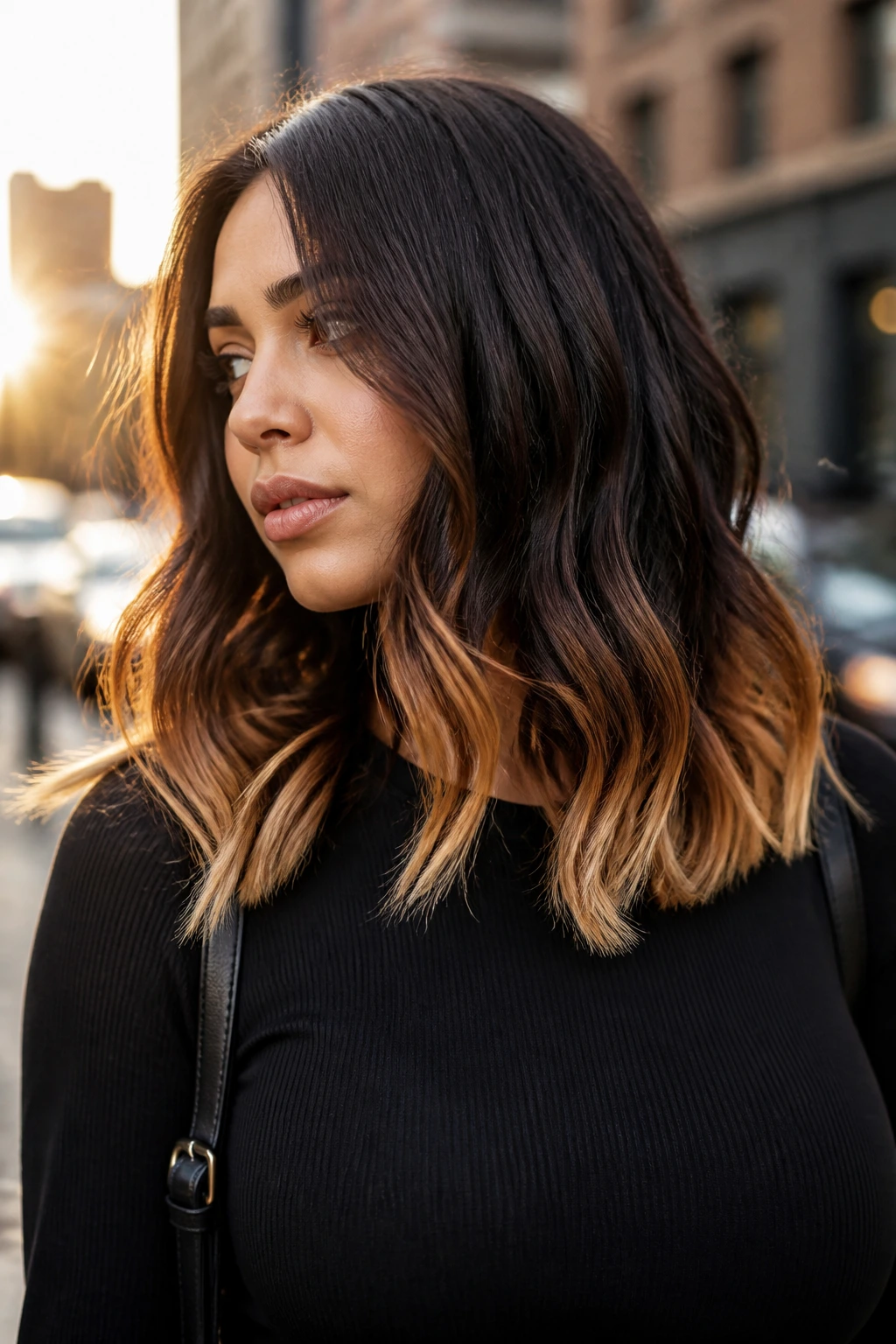
This is a modern, slightly edgier take on the dip-dye. Instead of a full ombré, you are specifically lightening only the very ends of the hair—the last two or three inches—and toning them a bright, sunny gold.
It’s bold, it’s fun, and it’s very easy to manage. If you decide you don’t like it in six months, you can simply chop off the ends. It is a great way to experiment with bright, light colors without having to worry about bleach damage near your scalp or mid-lengths.
25. Deep Auburn Balayage
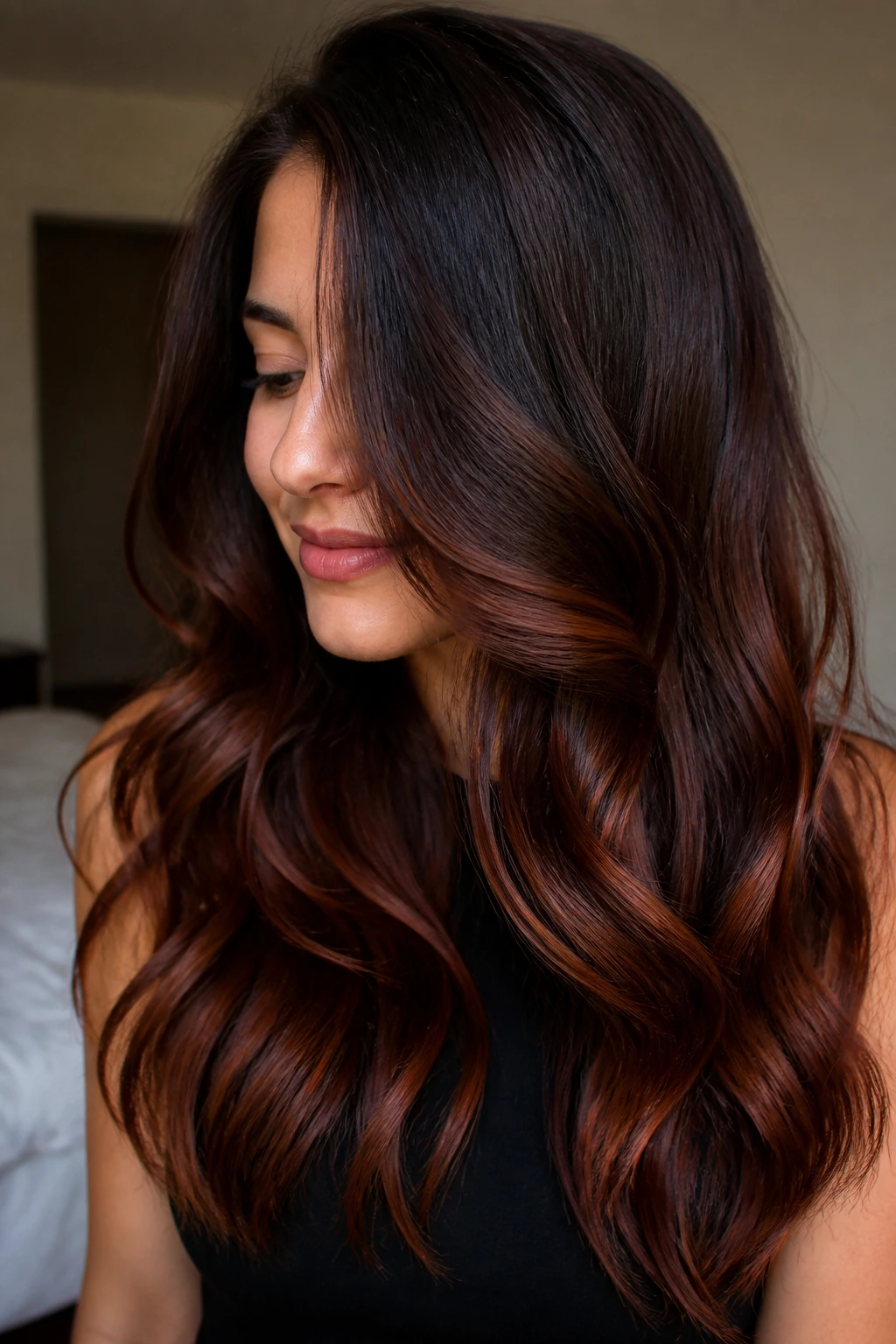
This takes the deep auburn idea and softens it. Instead of an all-over red, you are balayaging those deep, red-purple tones into a dark brown base.
It looks like polished mahogany wood. It is incredibly rich and looks very healthy. This is a great choice if your hair has been damaged by previous bleaching and you want to stop the cycle of damage while still having a “color” that feels fun and distinct. Red tones are excellent at reflecting light, which can make even damaged, slightly dry hair look healthier and shinier than it actually is.
Final Thoughts
At the end of the day, the color that will look best on you is the one that you feel confident wearing. While skin tone charts and “rules” exist, personal preference matters just as much. If you love a bright copper, don’t let a stylist tell you it “won’t suit your undertones”—ask them to find a version of copper that works for you.
The biggest mistake people make with brunette hair is going into the salon without a clear vision or, conversely, being so rigid that they don’t listen to their stylist’s advice about their specific hair health. Bring photos, be honest about your maintenance schedule, and don’t be afraid to start small. You can always go lighter or brighter, but going back to dark is a process that your hair doesn’t always enjoy. Take your time, focus on the health of your strands, and enjoy the change.
