



Type 2B waves can be charming and annoying in equal measure. They bend into that loose S-shape, then flatten when the cut is too blunt, or puff out when the layers are chopped too high and too short. A long shag haircut handles that balancing act better than most shapes because it keeps enough weight for the waves to hang together while still breaking up the bulk that makes wavy hair look boxy.
The catch is restraint. 2B hair does not usually need a sky-high crown or a cloud of tiny layers that disappear into frizz by lunch. It wants movement that starts in the right places, face-framing pieces that actually frame, and ends that still look deliberate when the hair dries on its own.
Weight matters. A lot.
A good long shag on type 2B wavy hair usually respects the bend pattern instead of fighting it. The shortest pieces should live where the wave can support them — around the cheekbone, jaw, or collarbone — while the lower lengths stay full enough to keep the shape from going wispy. That is why some shag haircuts look effortless on one person and chaotic on another. The difference is almost always placement, not magic.
1. Long Curtain Shag for Soft Face Framing
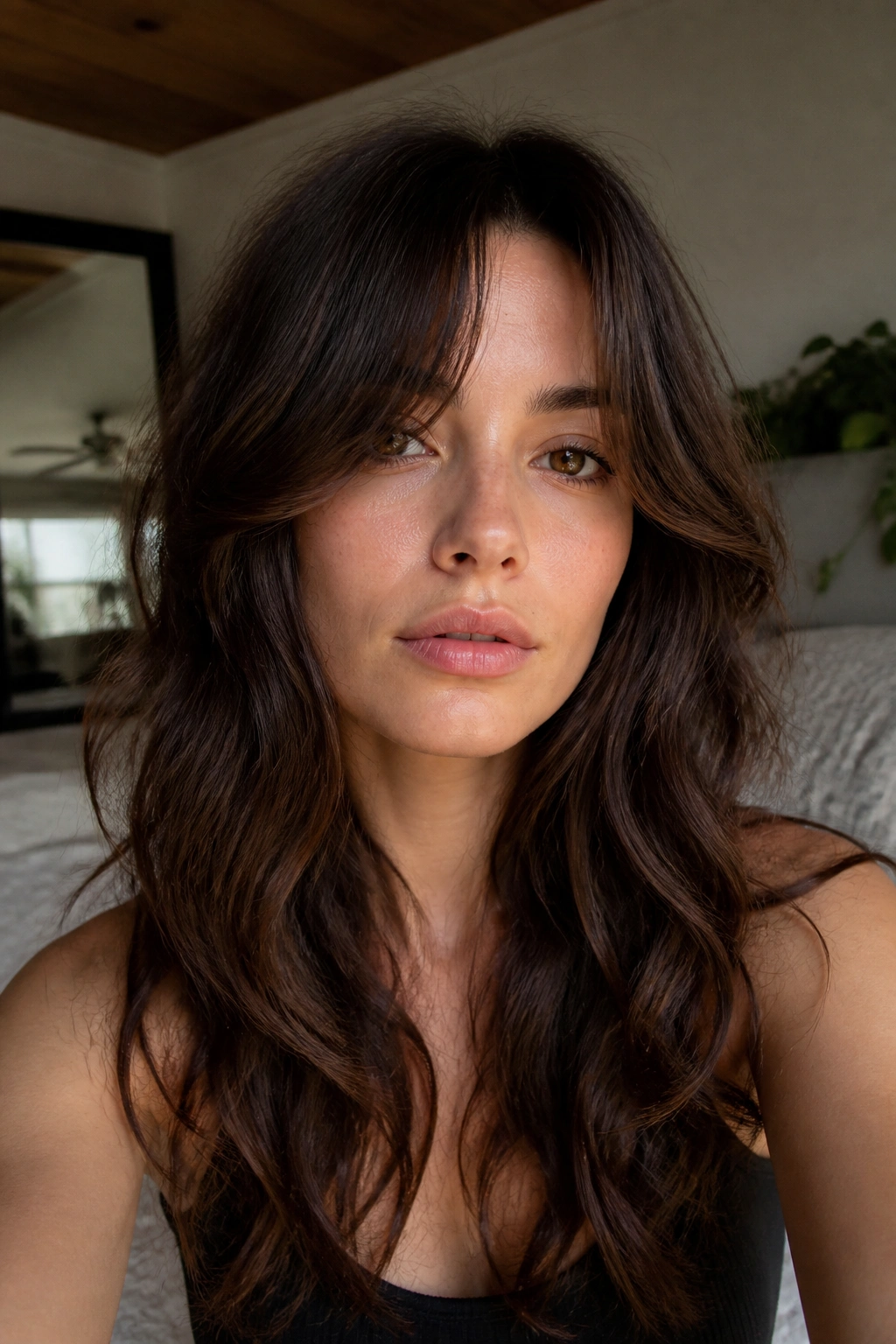
If you want the safest place to start, this is it. A long curtain shag keeps the hair’s length, opens up the face, and gives type 2B waves a place to fall without looking overworked. It’s the kind of cut that can look easygoing on air-dried hair and still hold shape with a quick blow-dry.
Why it flatters 2B waves
Curtain bangs are a smart match for wavy hair because they blend into the front layers instead of sitting there like a separate feature. On 2B texture, that blend matters. The wave pattern already has movement, so the cut should meet it halfway, not force it into a strict curl shape.
Ask for the shortest face-framing layer to land around the cheekbone or just below it. That gives the hair room to swing when you move, and it keeps the fringe from shrinking too far upward once it dries. The goal is soft framing, not a tiny fringe that disappears.
- Best for medium-density hair that gets bulky near the sides.
- Good if you want a shag haircut that still reads polished at the office.
- Easy to grow out because the bangs blend into the front layers.
- Works well with a middle part or a slight off-center part.
Pro tip: Have the stylist cut the front pieces with your hair in its natural wave pattern, not stretched straight. Otherwise the layers may land too short and feel choppy once the hair dries.
2. Razor-Cut Shag with Soft, Tapered Ends
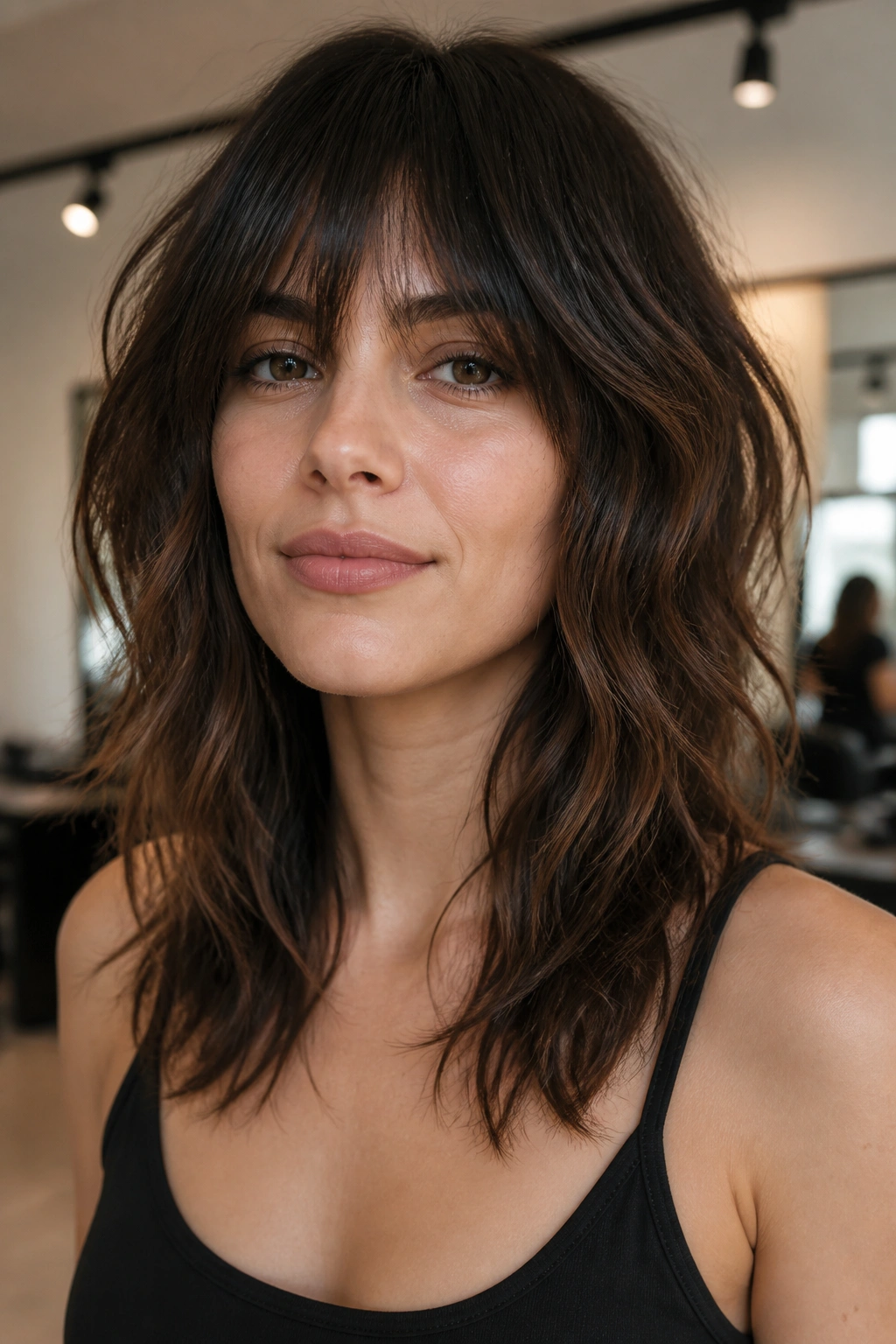
Can a razor cut work on type 2B wavy hair? Yes, but only if the razor stays near the ends and the hand holding it knows when to stop. A razor-cut shag can look airy and piecey in a good way, especially when the wave pattern is loose and the hair has some density to it.
The reason it works is simple. 2B hair likes separation. A razor can create that separation faster than blunt scissors, especially through the mid-lengths and lower layers where the hair tends to feel heavy. But too much razoring near the crown can make the top frizzy and thin in a hurry. That’s not a texture problem. It’s a cutting problem.
Where the razor belongs
Use the razor for the last inch or two of the ends, or for very controlled slicing through thick sections. The cut should still leave enough substance that the ends don’t look shredded. If your hair already feels dry or porous, the stylist should be even more conservative.
There’s a nice payoff when it’s done right. The ends move. The layers break up cleanly. And the whole haircut looks like it has a little air in it instead of sitting like one heavy sheet.
A razor shag is especially good if you air-dry often and don’t want to fight the shape every morning. Just skip heavy creams. A light mousse or foam works better here because it holds the separation without weighing down the layers.
3. Butterfly Shag for Lift at the Crown
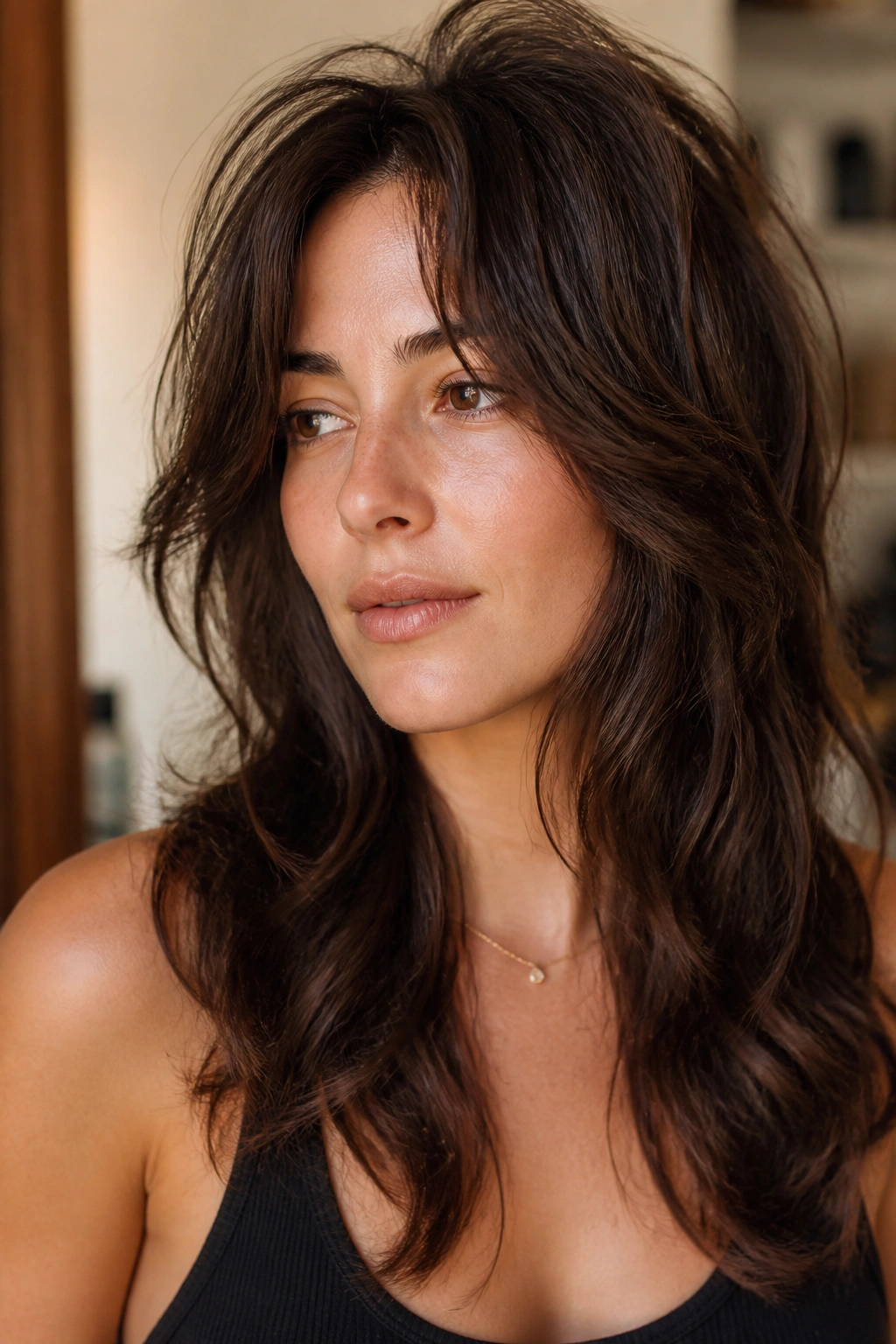
If your hair goes flat at the top and heavy at the bottom, this cut fixes that split. The butterfly shag borrows the lift of a shorter cut while keeping the security of long length, which is a pretty sweet spot for 2B waves that need shape but not drama.
The magic is in the layered architecture. The upper sections are cut to create height and movement around the crown and upper cheek area, while the lower lengths stay long enough to keep the silhouette from puffing out. It gives the impression of more volume without actually removing much length. That matters if you like wearing your hair down and still want to tuck it behind your shoulders without losing the outline.
What to ask for
- Shorter internal layers around the crown, but not so short that they spike up.
- Longer front pieces that connect to the rest of the hair.
- A bottom perimeter that keeps enough density to anchor the shape.
- Soft blending through the sides so the layers do not separate into obvious steps.
The butterfly shag tends to look best when you rough-dry the roots and then let the ends settle on their own. A little root mousse goes a long way. A lot of it usually goes bad.
4. Long Shag with Bottleneck Bangs
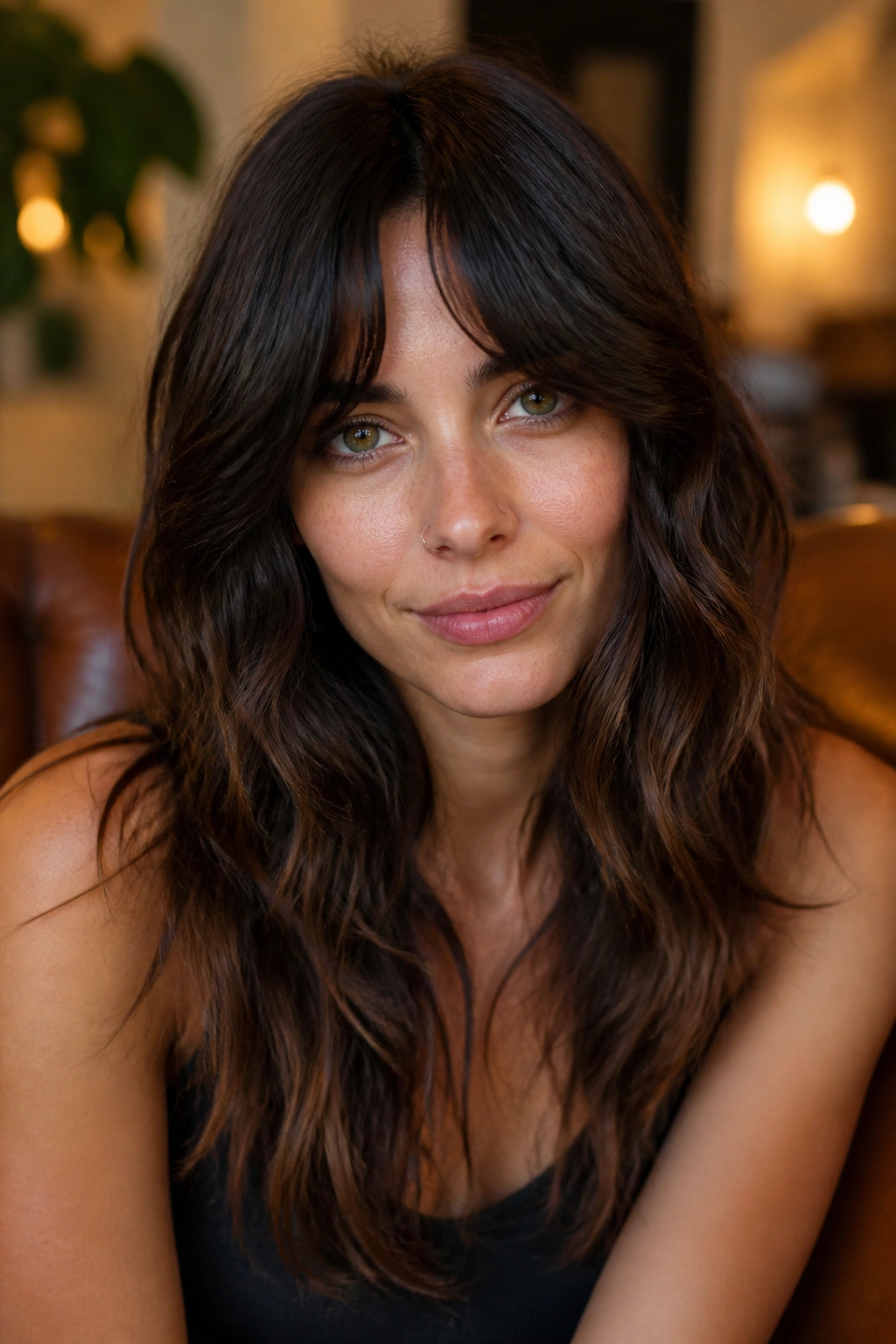
Bottleneck bangs can make a long shag feel sharper without turning it stiff. That’s the whole appeal. The center of the fringe sits a touch narrower, then opens out near the cheekbones, which gives type 2B waves a face-framing shape that feels a little more tailored than curtain bangs.
The cut works especially well when your wave pattern starts to bend right away near the front. Instead of fighting that bend, the bangs ride with it. You end up with a front section that can fall softly or split in the middle depending on how you dry it. That flexibility is useful. Hair that refuses to behave the same way twice a week tends to need options.
Bottleneck bangs are also handy if you like a long shag haircut but don’t want the front to feel too open. Curtain bangs can sometimes feel airy to the point of vanishing. Bottleneck bangs keep a bit more presence around the eyes and cheeks.
Style them separately from the rest of the hair. Dry the fringe first, then let the layers do their thing. If you wait until everything is half-dry and then start messing with the bangs, they usually puff out in a way nobody asked for.
5. Wolf-Leaning Long Shag for Extra Edge
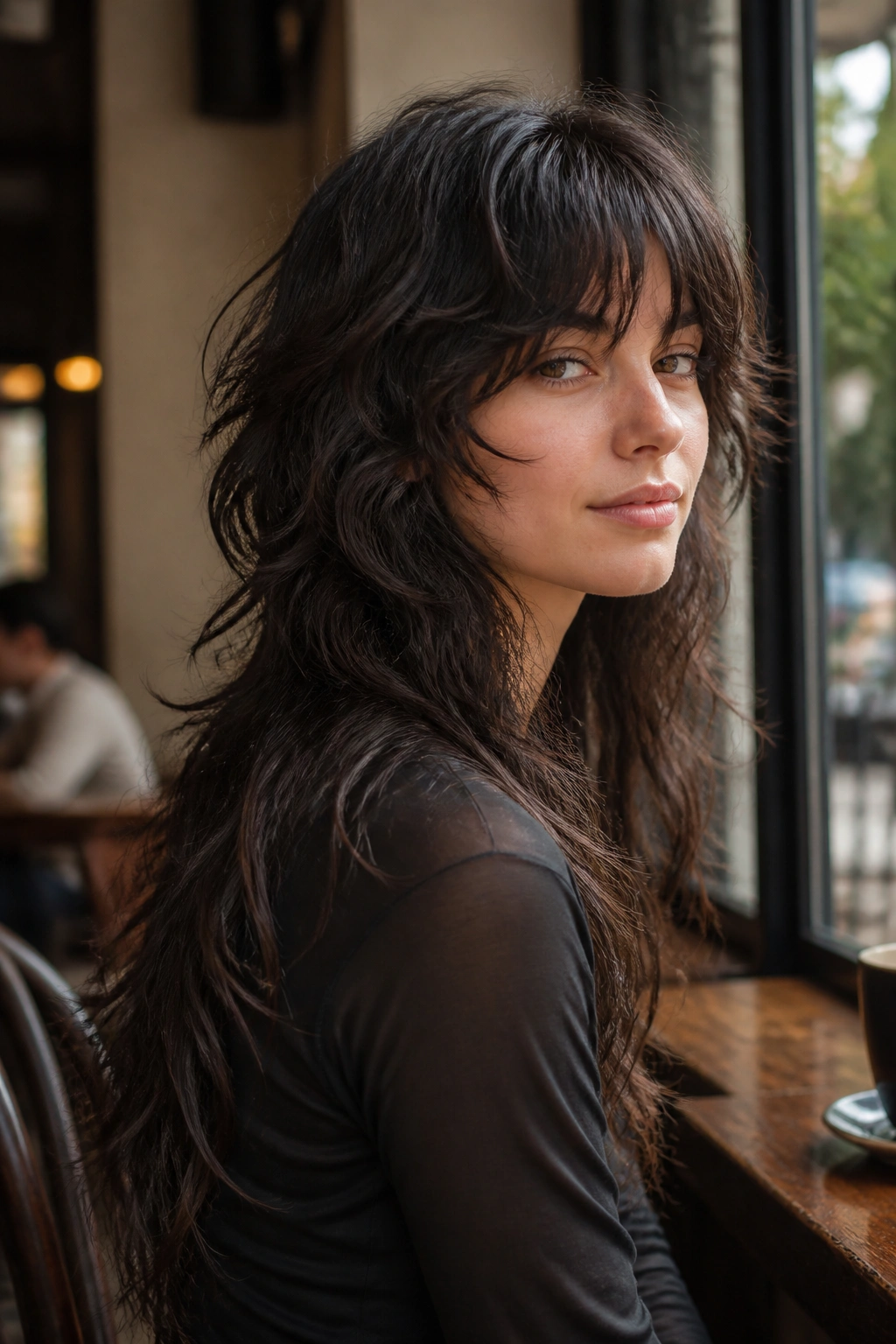
A wolf-leaning long shag is not the same as a classic shag. The wolf version keeps more length through the back, leans into stronger layers, and gives 2B waves a more piecey finish that reads a little sharper around the face and nape. It’s the one to choose if you want movement with some attitude.
The cut suits thick or medium-thick wavy hair especially well because those textures can hold the shape without collapsing. On finer 2B hair, the same structure can get airy too fast. That’s the trade-off. The more aggressive the layer pattern, the more the cut depends on density.
What I like about this shape is the way it keeps the hair from feeling too precious. It looks good a little messy. It looks good tucked behind one ear. It even looks good when the ends have gone slightly flat, which is more than I can say for some other layered cuts that only behave right after a fresh blowout.
If you ask for this version, say you want longer back length, visible top texture, and soft connection around the sides. You do not want a disconnected mullet unless that is the point. You want a shag that has edge, not costume.
6. U-Shaped Shag with Face-Framing Ribbons
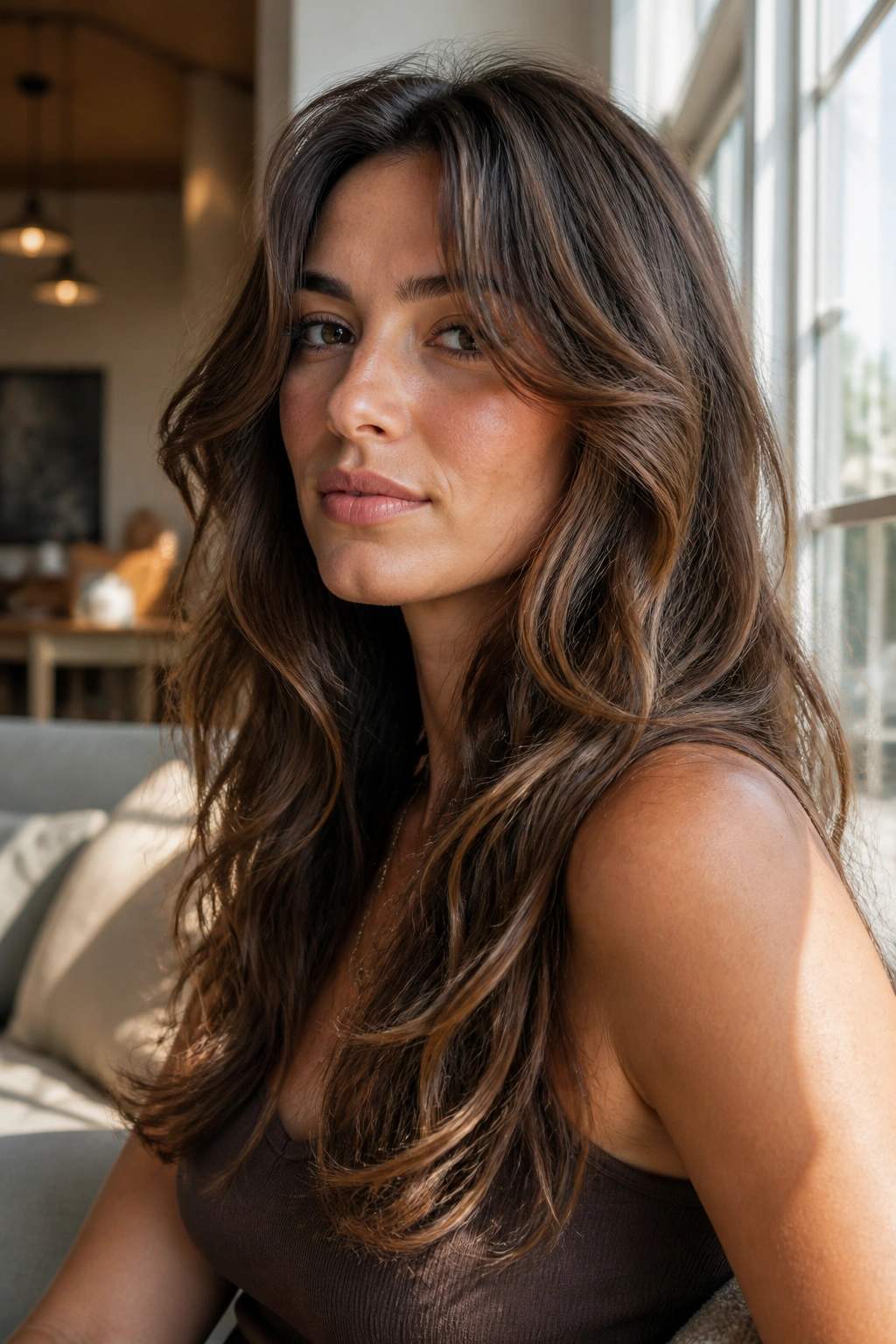
Picture growing out a blunt cut and hating how heavy it feels, but also not wanting the whole thing chopped into a cloud. That’s where the U-shaped shag earns its keep. The perimeter curves gently in back, while long face-framing ribbons break up the front.
The U shape is useful on type 2B wavy hair because it keeps the outline from turning square. A straight perimeter can make waves look wide at the sides and flat at the bottom. The U curve keeps the weight centered and lets the wave pattern drape more naturally.
What makes it different
- The back keeps a soft arc instead of a hard line.
- The front pieces can start at the cheekbone or jaw.
- The longest layers still reach past the shoulders, so you keep that long-hair feel.
- The shape plays nicely with a side part if your waves collapse in the middle.
A cut like this is ideal if you like seeing the waves when your hair is down but still want enough length to braid, clip, or tie back. It’s not flashy. That’s the point. The shape does the work quietly, and the hair looks fuller because the outline makes sense.
7. Choppy Crown Shag for Flat Roots
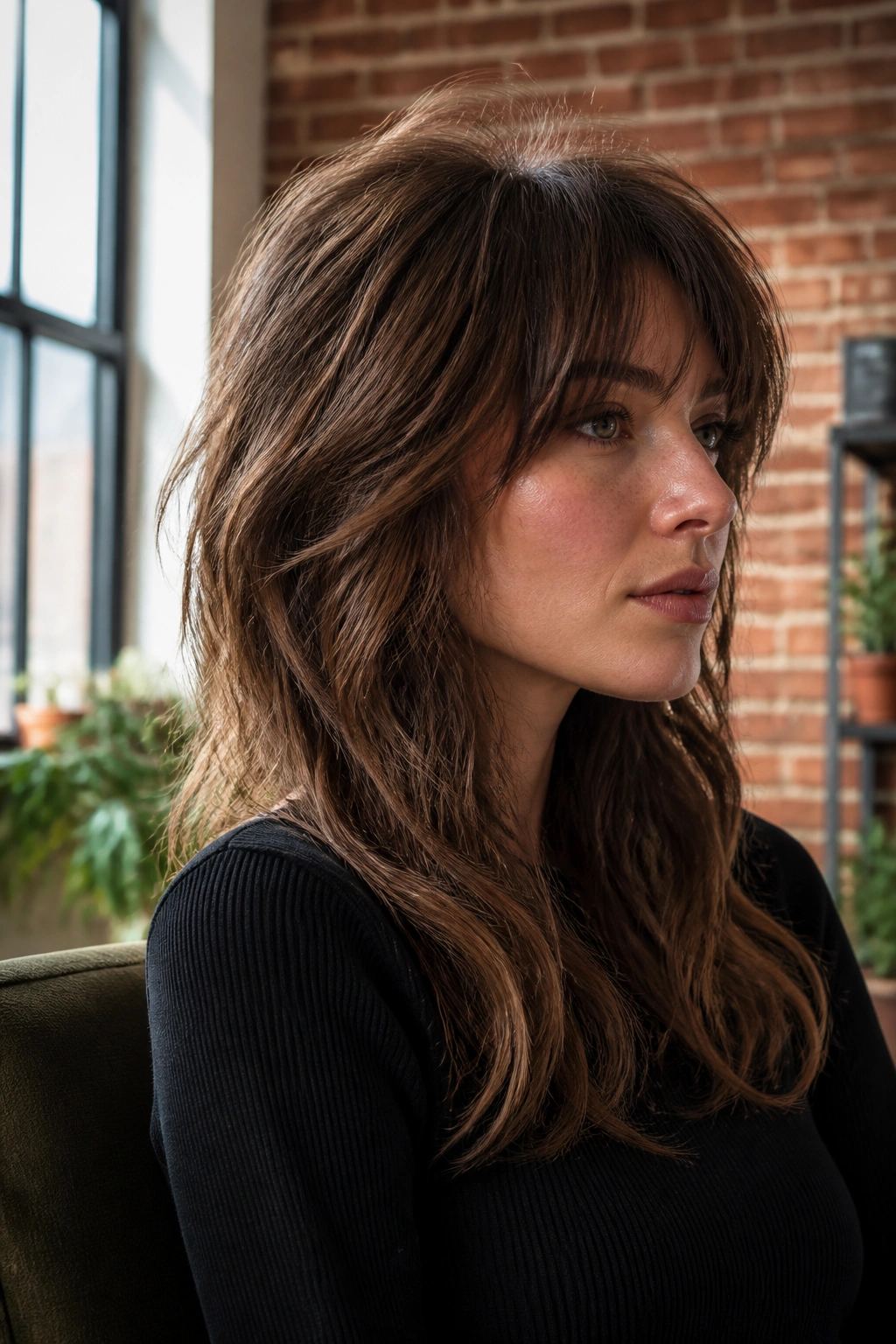
Can a shag fix flat roots without turning the top into a puffball? Sometimes, yes. The choppy crown shag is built for that exact problem. It puts texture where type 2B hair often needs it most — at the roots and upper layers — while leaving enough length below to keep the ends from looking thin.
What to ask for
Tell your stylist you want internal crown layers, not a bunch of short surface layers. That difference matters. Internal layers create lift from underneath. Surface layers just make the top look busy. On 2B waves, busy is usually not the goal.
A good crown shag also works well if your hair falls heavy around the head shape. You know the look: flat on top, heavy around the jaw, then too little movement through the middle. A few carefully placed shorter pieces can break that pattern and make the whole style feel lighter.
This cut does need some styling. A root clip at the front while the hair dries can help lift the crown without teasing. A diffuser on low heat can do the same thing if you like more definition. Skip heavy oil near the roots. It will undo the point of the cut before lunch.
8. Soft Mullet Shag With Length Left in Back
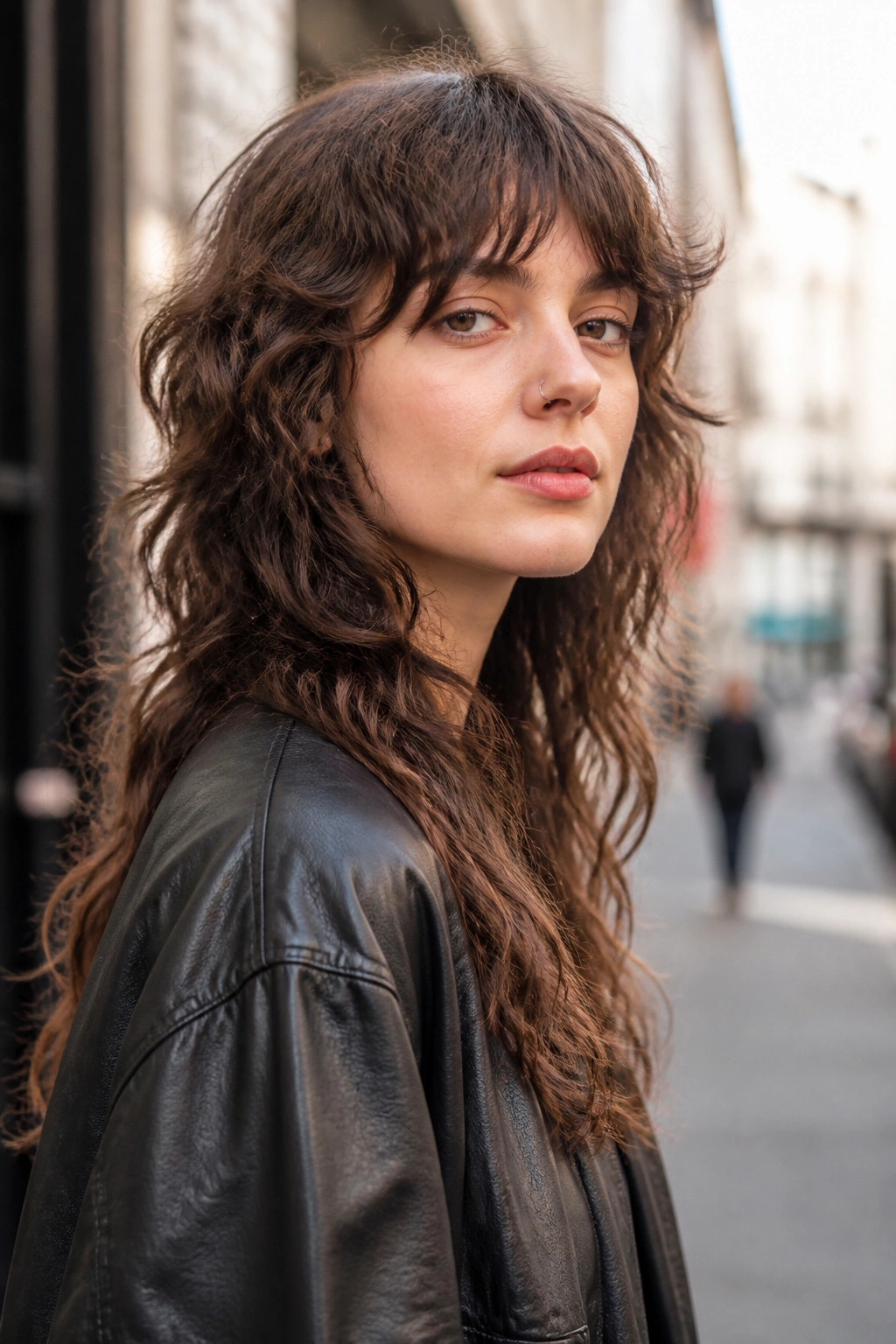
A mullet does not have to look like a dare. The soft mullet shag keeps the energy of a mullet but smooths out the hard edges, which makes it a smart option for type 2B wavy hair that needs movement and still wants length in the back.
The front and crown sit a little shorter. The back stays longer and looser. In between, the layers connect instead of dropping off sharply. That connection is what keeps the cut wearable. Without it, the shape can feel too disconnected for everyday life.
This is a good choice if you like pulling the front pieces forward and letting the back hang long over a jacket collar or sweater. It also works for thicker waves that want freedom around the face but still need weight through the nape. If you wear your hair half-up a lot, this shape has a nice payoff because the shorter layers add texture even when the back is tied.
Best for: people who want a little edge, dense 2B hair, and a cut that still feels long from the side.
Skip if: your hair is very fine and you already struggle with sparse-looking ends.
9. Invisible-Layer Shag for Low-Maintenance Waves
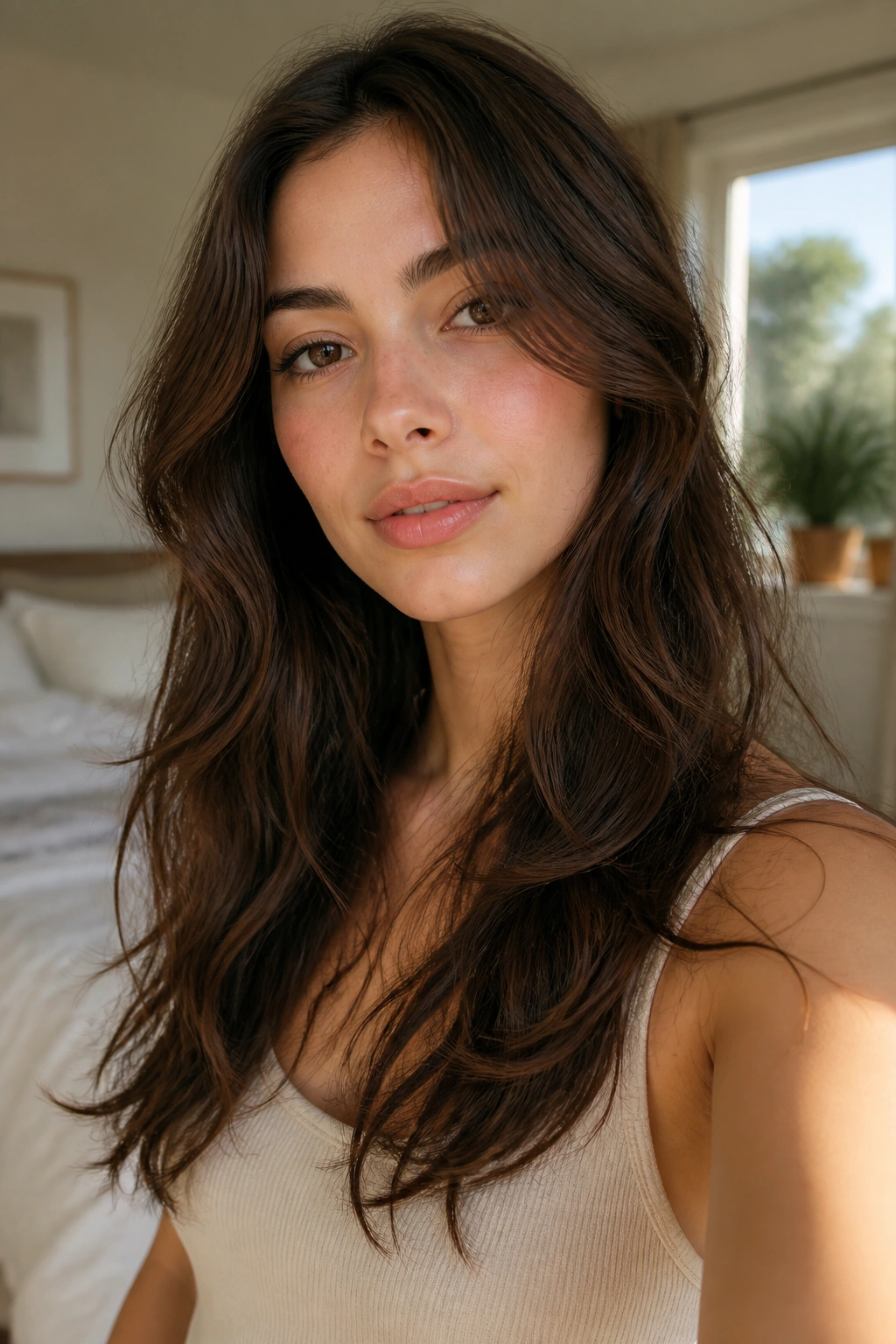
The invisible-layer shag is for people who want the movement of a shag without the obvious “I got a shag” look. The layers are there, but they’re tucked into the haircut so cleanly that the shape just feels softer and lighter instead of visibly chopped.
That makes it a strong choice for type 2B wavy hair that needs help but not a full personality change. Fine to medium hair often does best here because the cut removes bulk without stealing too much density from the ends. The hair still looks full when it dries, which is the main reason this version keeps getting loved by people who air-dry and walk away.
The maintenance side is nice too. You don’t have to rebuild the shape every morning. A little leave-in mist, a light foam, and a quick scrunch are usually enough. If you like a routine that takes under ten minutes and does not involve a dozen tools, this is the shag to ask about.
It’s also one of the best grow-out choices in the whole list. The layers fade quietly, which is rare and useful.
10. Long Shag with Heavy Fringe

A heavy fringe changes the mood fast. Compared with curtain bangs, it gives you more coverage at the forehead and more obvious structure at the front, which can be a great thing if your face shape likes a stronger line or you want the haircut to feel more deliberate.
On type 2B waves, heavy fringe works best when the hair around it stays long and soft. If the rest of the cut gets too chopped, the fringe can look separate and the whole style starts to fight itself. Keep the shag layers long enough to echo the bangs, not compete with them.
This is a good option if your waves are loose enough that the fringe can bend rather than spring into little hooks. If your hairline tends to get oily, be honest about that before you commit. Heavy bangs need a bit more daily attention than curtain pieces, and there is no point pretending otherwise.
Styling the fringe
Dry the fringe first. Use a round brush or even just fingers and a quick blast of warm air, then let it cool flat against the forehead. That cooling step matters more than people think. A fringe that cools in place holds better and frizzes less.
The rest of the shag can stay easy. That contrast — structured front, loose body — is what makes the cut interesting.
11. Feathered 70s Shag with Airy Ends
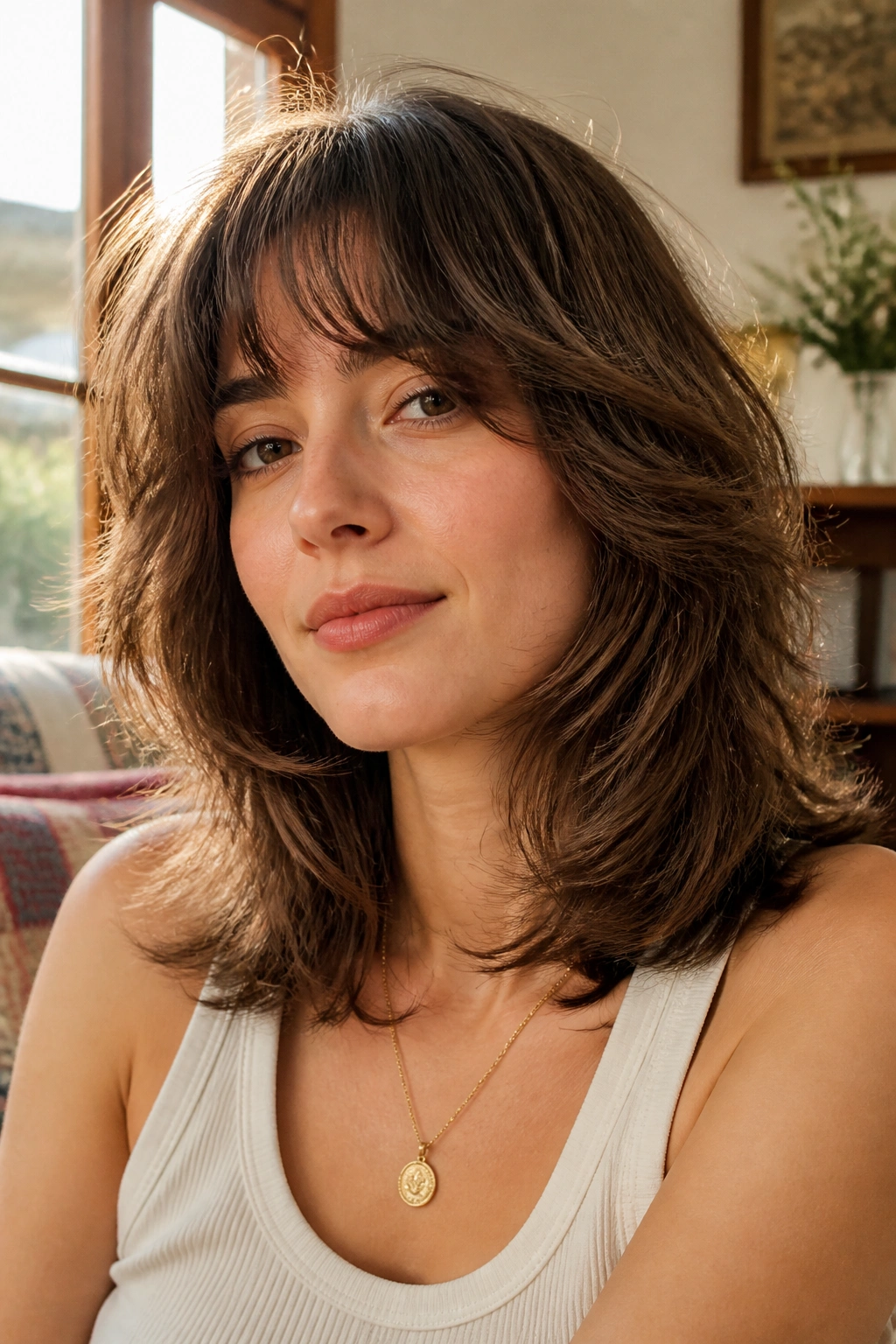
Feathered layers move first. You see it before you feel it. That’s the charm of a feathered 70s shag on type 2B wavy hair: the hair swings, separates, and lifts at the ends in a way that feels alive without looking stiff or overstyled.
This version leans on point cutting and soft feathering rather than blunt chopping. The ends taper out, the face frame opens, and the whole cut gets a lighter edge. It suits thicker waves especially well because the feathering takes some of the weight out of the perimeter. If the hair is very fine, you need a gentler hand. Too much feathering and the ends get see-through.
The 70s influence can sound dramatic, but in practice it’s pretty wearable. The layers create motion around the shoulders, the front pieces sweep away from the face, and the finish can go from polished to undone with one scrunch. That flexibility is the reason this cut has so much staying power.
- Best when you like movement at the ends.
- Good for dense 2B waves that hold shape.
- Works with a middle part or a deep side part.
- Needs a stylist who knows how to soften, not shred.
12. Collarbone-Grazing Long Shag

Long does not have to mean waist length. A collarbone-grazing shag still counts as long in the practical sense, because the hair can move, tuck, clip, and tie back without losing the layered effect. For type 2B waves, that length is often a sweet spot.
Why the length matters
When the hair stops around the collarbone, the waves usually keep enough spring to show the cut. Go much longer and the weight can start pulling the bend out at the ends. Go much shorter and the shag can edge into a different shape entirely. Collarbone length keeps the haircut readable.
This version is especially useful if you’re growing out a shorter layered cut and want something that feels deliberate during the awkward middle stage. The shag layers can hide uneven growth while the overall outline stays easy to manage. A loose wave through the front keeps it from looking too safe.
It also plays nicely with clothes, which sounds small until you live with the haircut. Coats, scarves, collars, and chunky knits all sit better when the layers fall around the collarbone instead of disappearing under the jaw or brushing the top of the shoulders in a weird way.
13. Sliced Shag for Dense 2B Hair
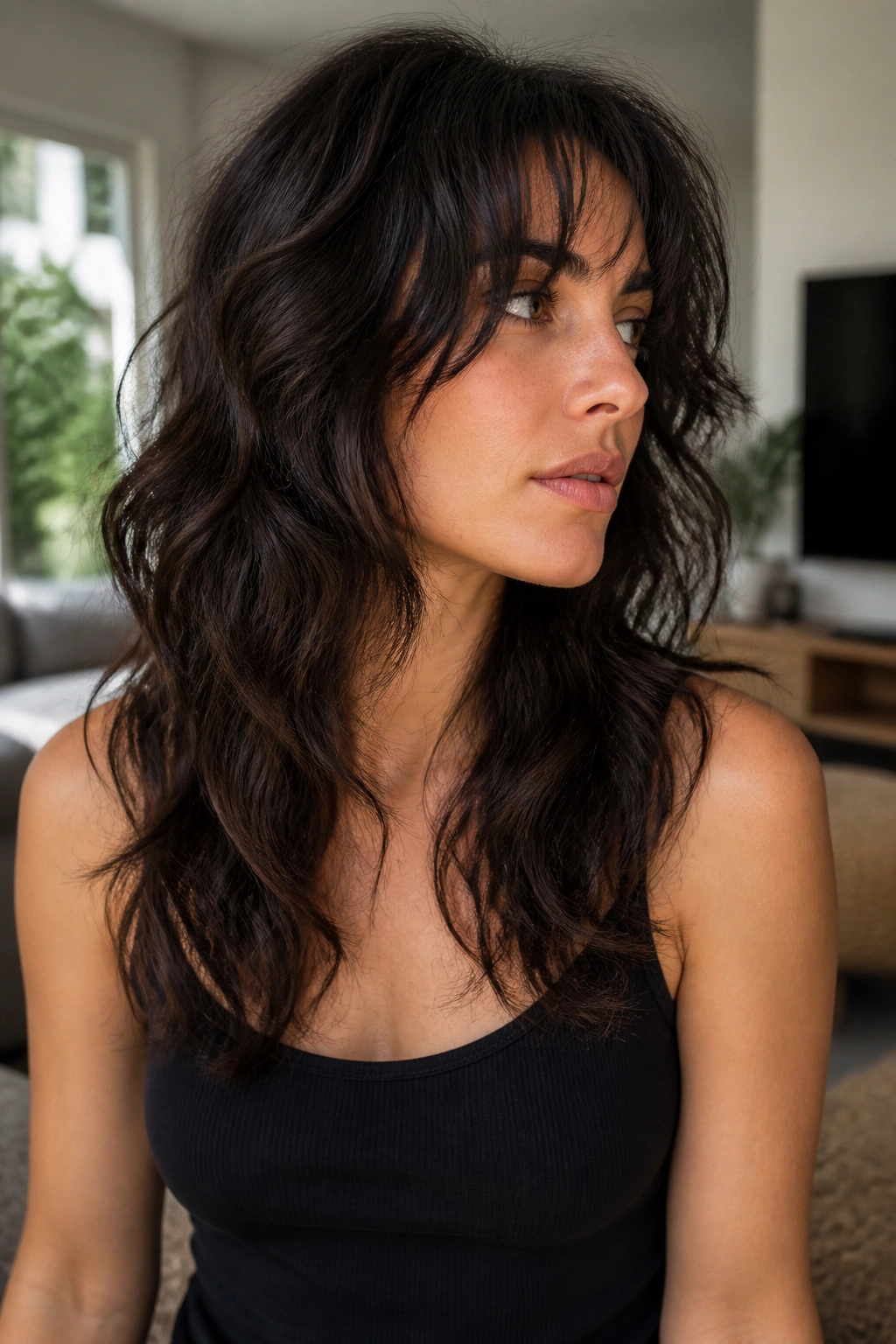
Sliced layers can save dense 2B hair from feeling like a helmet. That’s not an exaggeration. When hair is thick and wavy, blunt weight can build up fast, especially through the middle and ends. Slicing through select sections breaks that mass apart and lets the haircut breathe.
Slicing versus thinning
Slicing removes bulk in a longer, more controlled way than aggressive thinning shears. That matters because thinning can leave wavy hair looking frayed if it’s overused. Slicing, done well, keeps the shape intact while taking the heaviness out of the right spots.
This cut is not for very fine hair. Fine 2B waves need body, and too much slicing can make them look stringy. For dense hair, though, it’s a relief. The hair settles better on the shoulders, the wave pattern shows more clearly, and the ends stop pushing outward like a pyramid.
Ask for slicing through the mid-lengths and lower interior, not the very bottom edge. Keeping the perimeter strong prevents that sparse look that can happen when stylists get enthusiastic with texture tools. The best version of this cut looks full, not shredded.
14. Rounded Shag for Fuller Ends
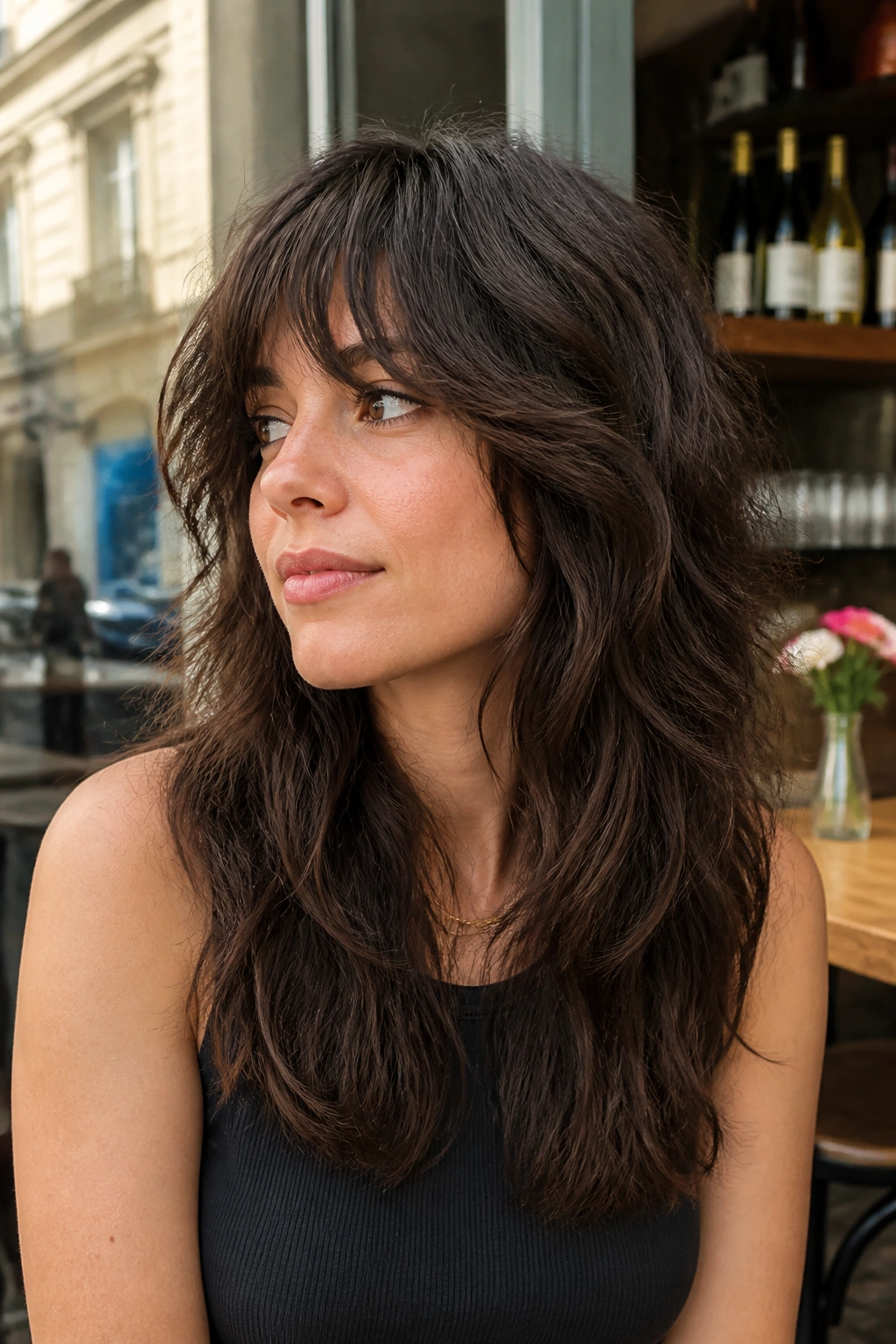
Why do some shag haircuts turn triangle-shaped? Usually because the layers are too aggressive up top and the ends are left too sparse. The rounded shag fixes that by keeping a soft curve around the lower edge so the haircut still feels full where it lands.
This shape is a good match for type 2B wavy hair that needs movement but not a ton of separation. The rounded outline keeps the silhouette from looking too sharp at the sides, which helps if your waves flare outward when they dry. It also gives the ends a thicker look, even when the interior has been layered for lift.
Keeping the perimeter soft
The main move is simple: keep the lower line curved, not flat. A rounded edge gives the wave pattern a place to settle, and the face-framing pieces can melt into that curve instead of fighting it. It’s a small shape choice, but it changes the whole feel of the haircut.
This version is one of the best bets if you like a more classic shag but hate when the bottom looks stringy. It’s also kind to medium-density hair that wants texture without losing its body. If you usually wear your hair down and prefer a fuller outline, this is a very safe choice.
15. Airy Long Shag with Barely-There Bangs
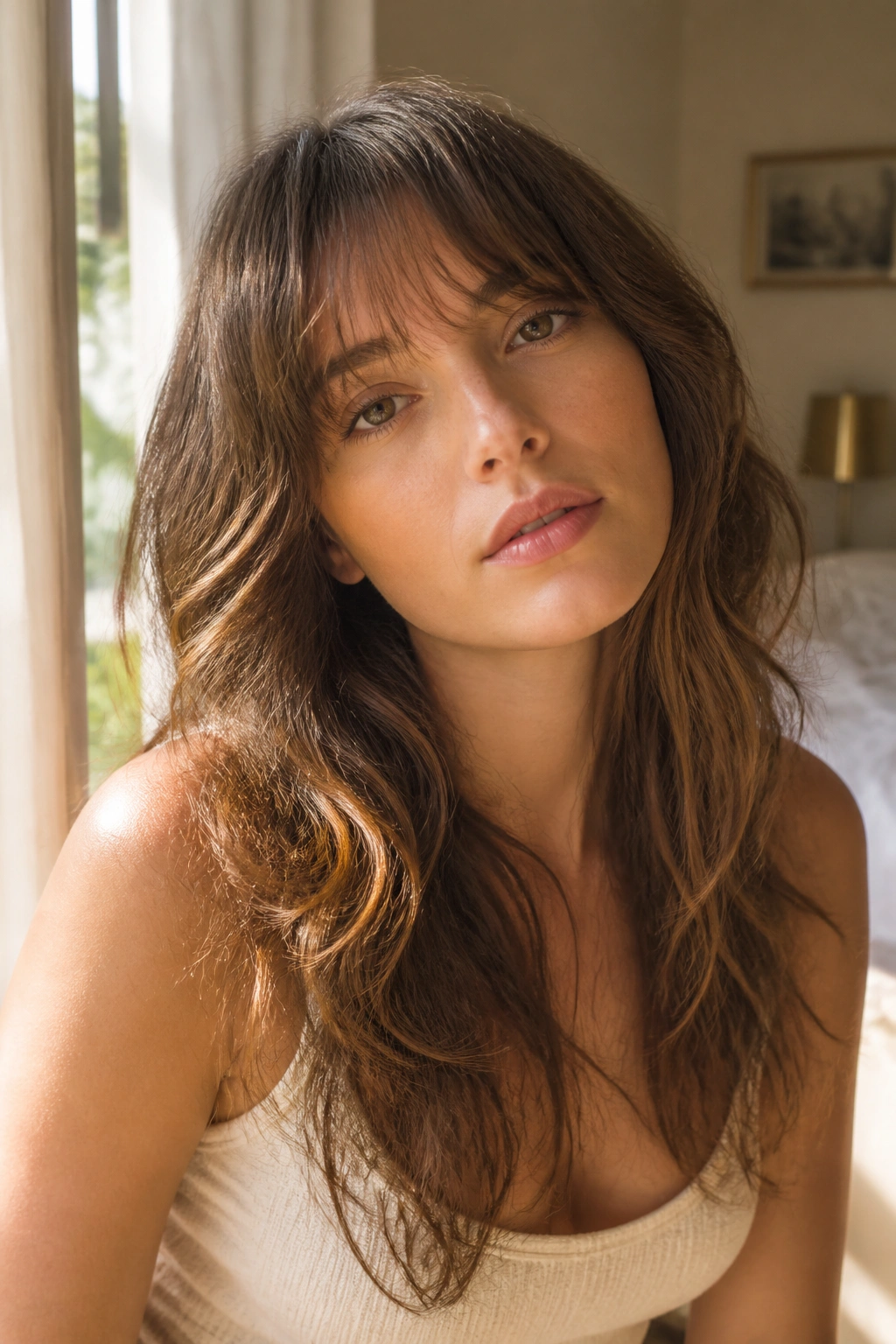
Not everyone wants the fringe to announce itself. The airy long shag with barely-there bangs keeps the front light, lets the waves do most of the talking, and gives type 2B hair a soft shape that does not demand constant upkeep.
This is the one to pick if you want movement more than statement. The bangs skim the forehead or sit just below it, then disappear into long face-framing layers that keep the front open. It works especially well for people who like to wear their hair tucked back sometimes, because the front pieces stay easy and flexible instead of sitting as a heavy block.
It also behaves well on days when styling time is short. A little mousse, a quick scrunch, and a side-to-side shake are often enough. If the hair wants a little more polish, a diffuser on low heat and a cool shot at the front will usually settle the shape without flattening it.
For 2B waves, the smartest long shag is the one that respects the wave instead of trying to force a different texture. Choose curtain bangs if you want softness around the eyes. Choose a wolf-leaning version if you want edge. Pick an invisible-layer or rounded shag if you want the easiest day-to-day wear. If you keep that logic in mind, the haircut usually lands in the right place the first time.
