



A short pixie wolf cut has a funny habit of looking sharper the messier it gets. The crown sits up, the nape stays neat, and the ends keep a little bite instead of lying flat like a tidy helmet. That contrast is the whole appeal.
Flat hair hates this cut. So do people who want a haircut with movement but do not want to spend half the morning chasing it with a round brush. The best short pixie wolf cut shapes build lift where you need it and leave enough roughness in the top layers to keep the style alive by lunch.
There’s a sweet spot here. Too polished, and it loses the wolf-cut edge. Too shaggy, and it can start looking like you forgot to finish the haircut. The good versions land between those two extremes: cropped, piecey, and a little wild around the edges, but still deliberate.
If you’re thinking about a short pixie wolf cut, the details matter more than the label. Length at the crown changes the whole mood. So does the fringe. And the nape? That tiny stretch of hair can make the difference between “cute and edgy” and “why does this look unfinished?”
1. Crown-Lifted Short Pixie Wolf Cut
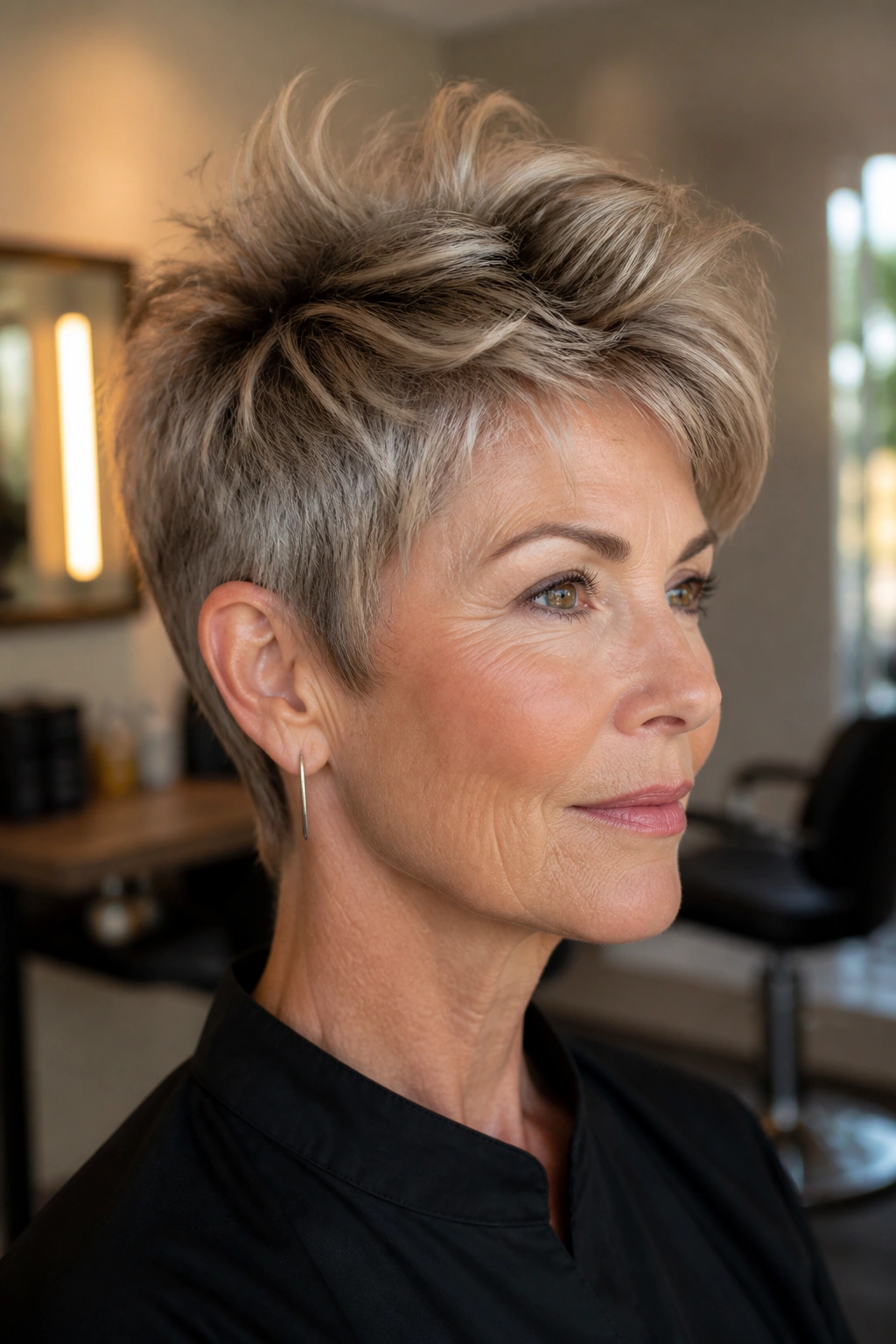
This is the one I reach for when someone wants height without bulk. The crown stays a touch longer, usually around 1.5 to 2.5 inches, so it can stand up and move instead of sitting close to the head. The sides stay tight enough to keep the shape clean. No mushroom. No puffball.
Why It Works
The trick is in the balance. You get the airy, layered feel of a wolf cut, but the shorter perimeter keeps it from spreading out too far. On straight hair, it gives the top some attitude. On wavy hair, the layers break up that heavy triangle shape that short cuts can fall into.
Best for: fine hair, flat crowns, and anyone who likes a little height at the top.
Ask for: choppy crown layers, a tapered nape, and soft weight removal through the top third only.
Style with: a root-lifting mousse, then blow-dry forward and slightly up with your fingers.
Tip: keep the crown longer than the sides by at least half an inch, or the shape loses its lift fast.
The best part is that this version grows out in a decent way. It still looks intentional after a few weeks, which is more than I can say for some short cuts that get fuzzy almost immediately.
2. Wispy Micro-Bang Wolf Pixie
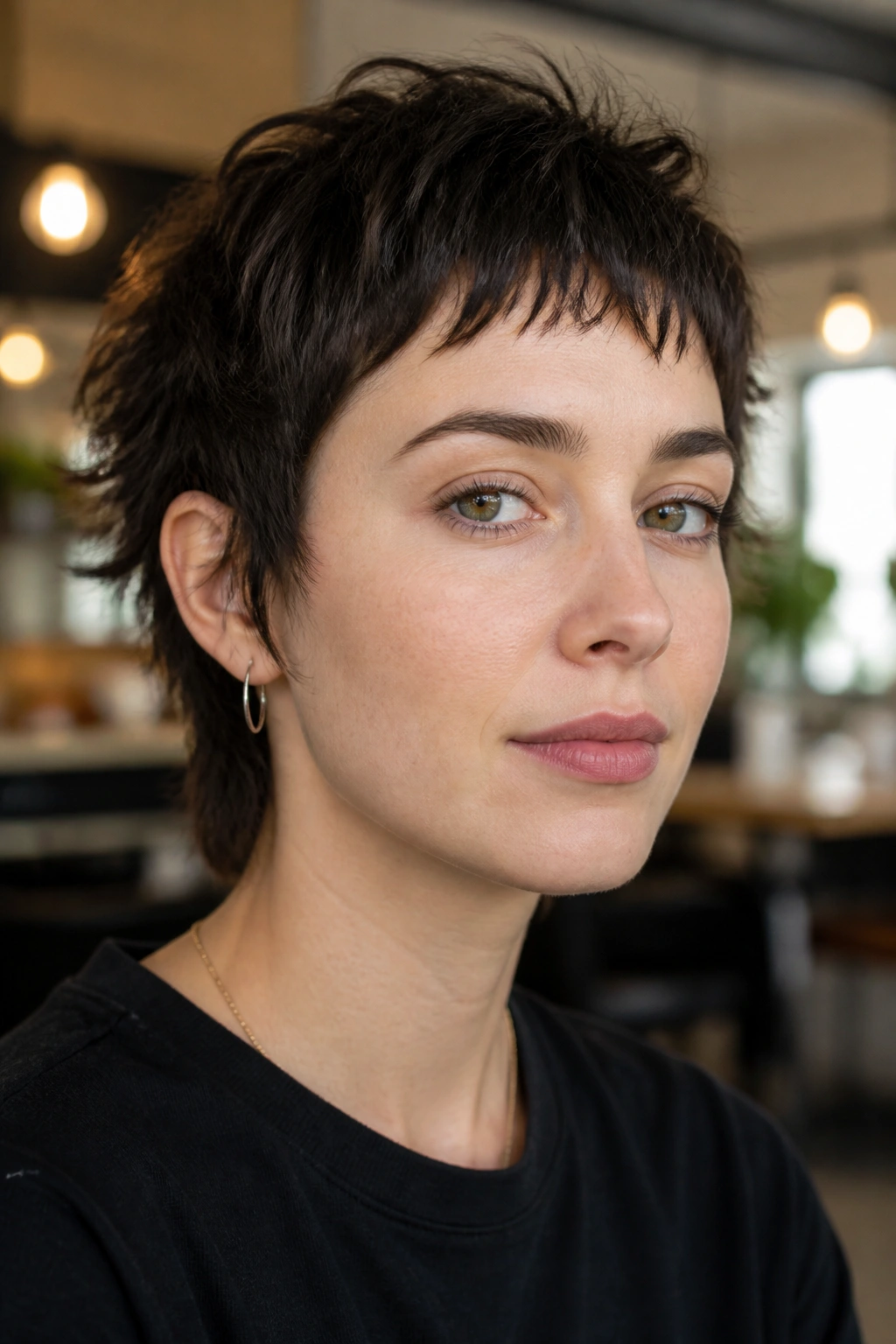
Can micro bangs work with a wolf pixie? Yes, if you keep them feather-light instead of blunt and heavy. A fringe that lands well above the brows gives the cut a sharp little kick, but it needs space around it. Squeeze it too tight and the whole look turns harsh.
What Makes It Different
The fringe is the whole story here. You’re not hiding the forehead; you’re framing it with a narrow, broken line that feels a bit artsy and a bit rebellious. The rest of the cut should stay cropped and choppy so the bangs don’t look disconnected from the rest of the head.
If your hair grows straight down at the front or you have a stubborn cowlick near the hairline, this needs more care. Not impossible. Just not casual. A tiny fringe lives or dies by the way it dries.
How to Style It
- Blow-dry the bangs from side to side while they’re still damp.
- Use a pea-sized amount of light paste, not a heavy wax.
- Point the dryer nozzle downward once the fringe starts to take shape.
- Trim every 2 to 3 weeks if you want that short-bang line to stay crisp.
A micro-bang wolf pixie looks best when the rest of the cut is loose enough to soften the front. That little contrast keeps it from feeling severe.
3. Tapered Nape and Spiky Top
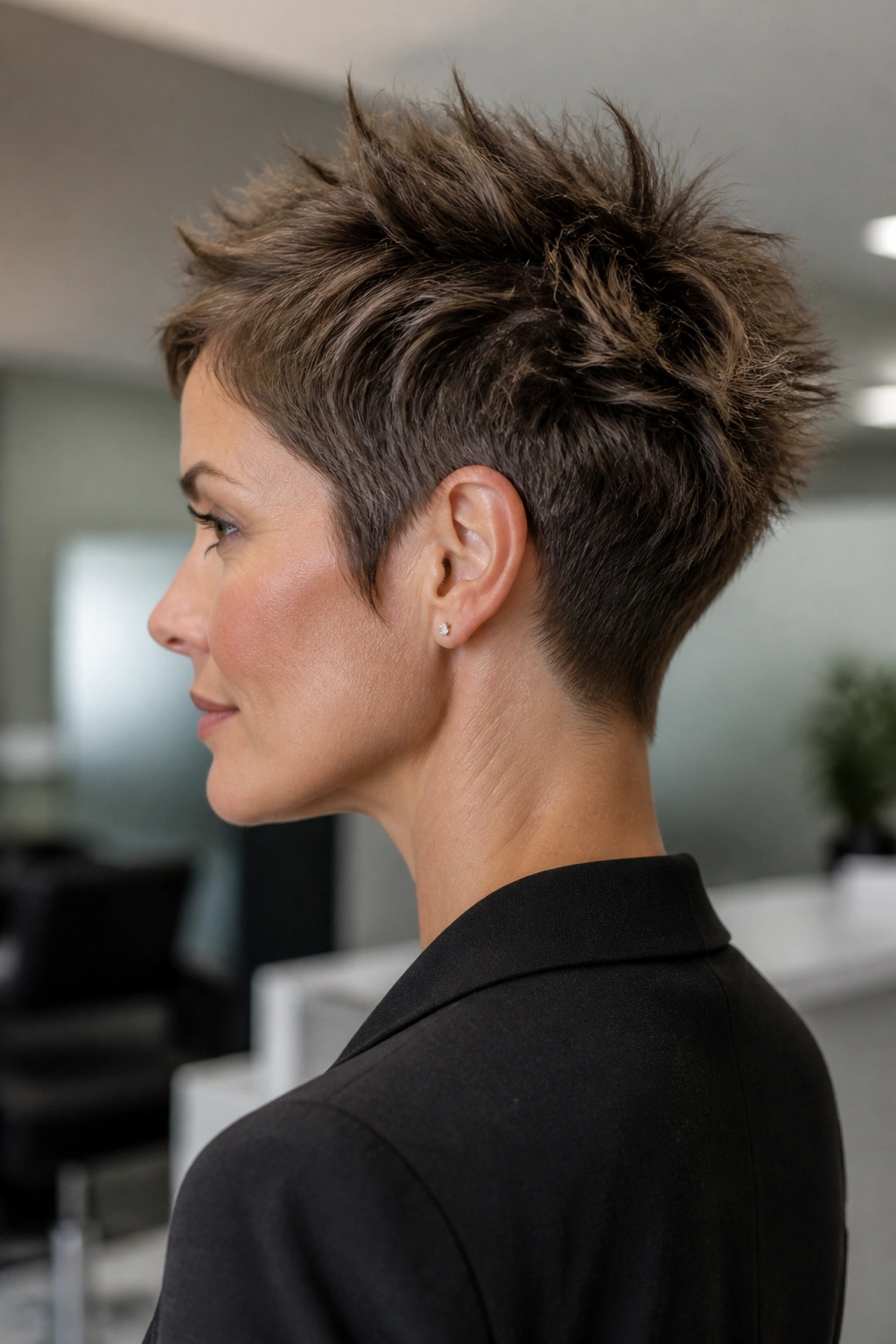
Picture a short haircut that clears the neck cleanly, then rises into a piecey top that feels almost lifted by air. That’s the point of this version. It’s tidy where it touches your collar and mischievous where it hits the crown.
This shape is especially good if you have thick hair and hate that “helmet” feeling. A tapered nape removes the heavy base, which lets the top sit lighter. The crown can be cut into short, staggered layers so it breaks apart with a bit of wax or pomade.
- Keep the nape closely tapered, not shaved bare unless you want extra contrast.
- Leave the top slightly longer so you can push it forward, up, or diagonally.
- Use a matte styling product if you want separation, not shine.
- Works well with strong jawlines because the clean back keeps the focus above the neck.
The nice thing about this cut is that it shows off earrings and collars. A crewneck, a sharp blazer, even a plain T-shirt — the neckline suddenly matters. Strange little bonus. But real.
4. Feathered Layers for Fine Hair

Fine hair can make a short cut look either soft and airy or thin in all the wrong places. Feathered layers solve that better than blunt chopping does. The goal is movement, not see-through ends.
Feathering works because the layers are softened at the tips instead of being carved into hard steps. That keeps the top from collapsing while still giving the hair a bit of swing. If your hair has any natural bend at all, this cut will wake it up.
The biggest mistake is over-thinning. People hear “textured” and assume more slicing equals more style. Nope. Too much removal at the wrong spot can leave gaps, especially around the temples and crown. Ask for soft internal layering, not aggressive razoring through the whole head.
A feathered short pixie wolf cut usually looks best with a light mousse or root spray on damp hair, then a quick finger-dry. I like this shape on people who want easy mornings and don’t mind a little piece-y softness around the face. It feels light without looking fragile, which is a rare thing in short hair.
5. Curly Short Pixie Wolf Cut
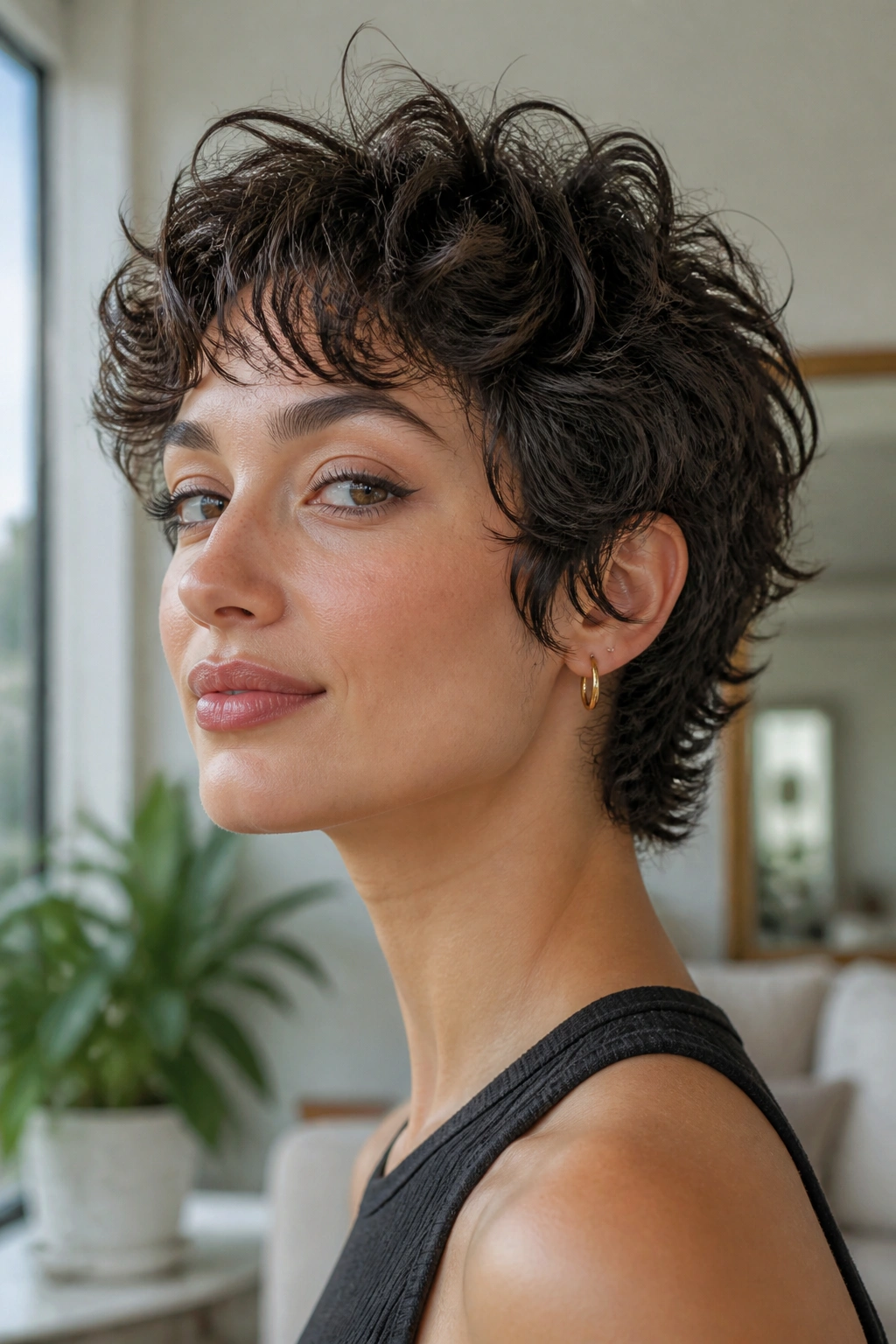
Can curls handle a pixie wolf cut? Absolutely. In some cases, they make the cut better, because the layers can spring up and show off shape instead of just hanging there. The key is leaving enough length for the curls to do their thing.
How It Behaves on Curls
Curly hair needs a different conversation at the salon chair. Short layers can shrink a lot once they dry, so the cut has to account for that bounce. If your curls are tighter, the top usually needs a bit more length than you think. If they’re looser, the texture can be trimmed closer without losing shape.
The most flattering version keeps the perimeter soft and lets the top layer move freely. That stops the cut from turning boxy. And boxy is the enemy here.
Styling Notes
- Apply leave-in conditioner to damp hair first.
- Scrunch in a curl cream, then a small dab of gel if you want more hold.
- Diffuse on low heat, or air-dry if you can tolerate the time.
- Separate only the pieces that clump together too much.
A curly short pixie wolf cut is one of those styles that looks better once you stop trying to control every curl. Let a few pieces fall wherever they want. The shape gets stronger, not weaker.
6. Razor-Cut Platinum Wolf Pixie
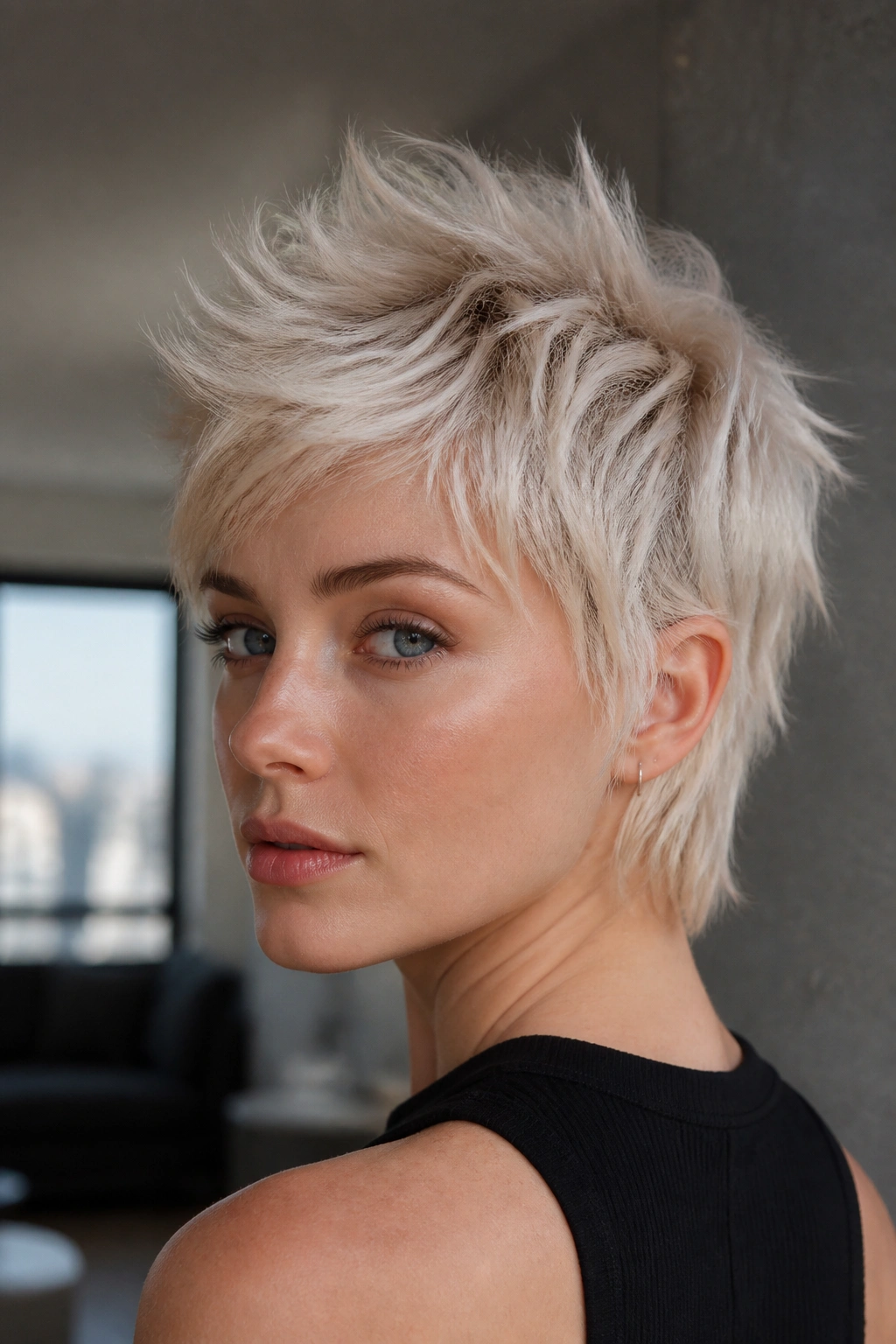
This is not a shy haircut. Razor-cut edges give the ends a broken, airy look, and platinum blonde makes every layer show up even more clearly. If you like something crisp, cool-toned, and a little sharp around the edges, this one has real presence.
Razor cutting can be gorgeous on the right hair, but it does ask for honesty. On very dry or fragile strands, too much razor work can make the ends feel wispy in a bad way. On healthier hair, though, the texture looks edgy without turning blunt. Platinum takes it a step further because the pale color makes each chopped layer easier to see.
The maintenance is not small. Light blonde needs toning, and razor-cut ends need regular trims before they start fraying. That said, if you like a haircut that looks intentionally undone, this is a strong choice.
It suits people who wear a lot of black, silver jewelry, or simple clothes and want the hair to do the talking. Loud? Maybe. But in a clean, controlled way.
7. Side-Swept Fringe Wolf Pixie
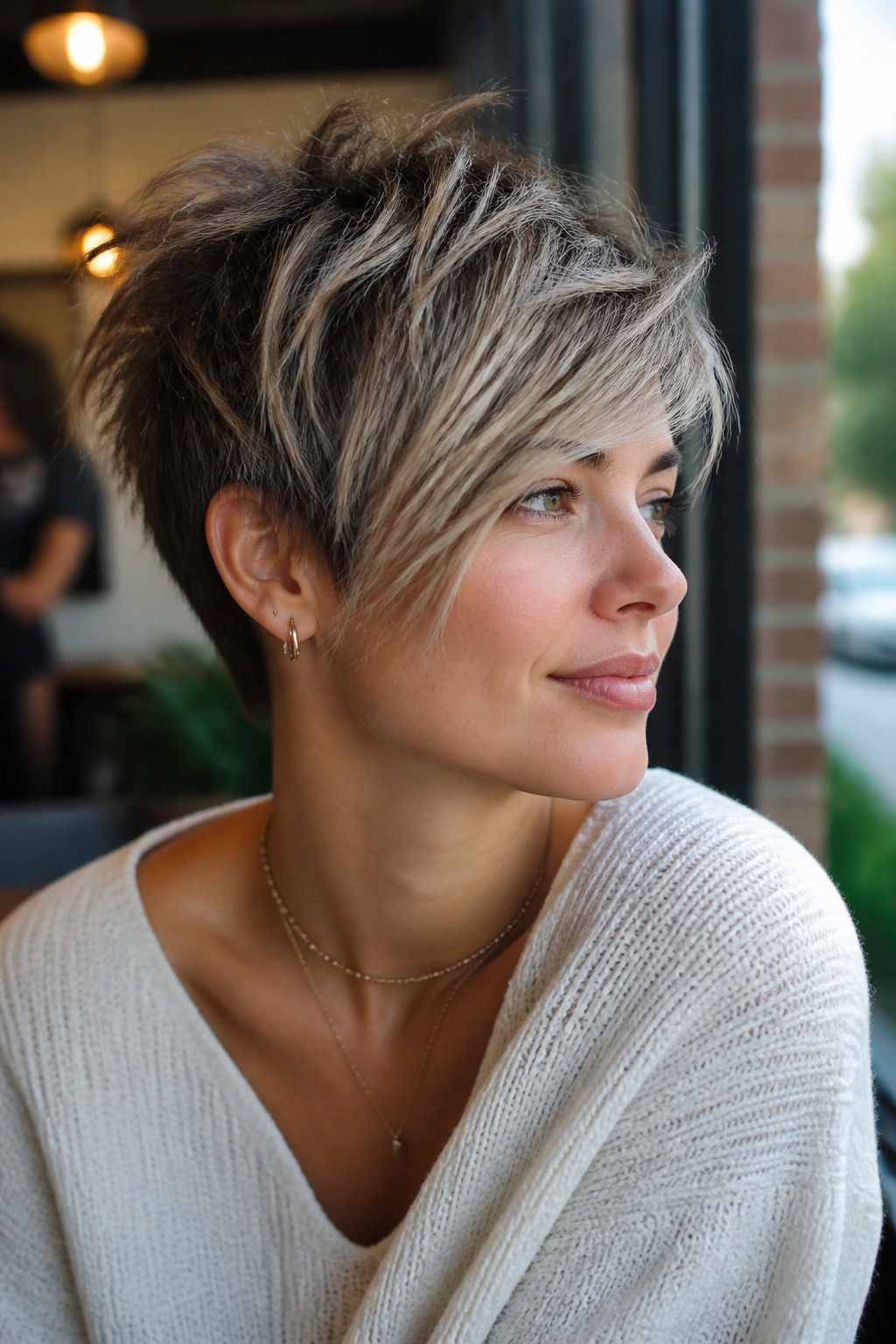
A side-swept fringe changes the whole mood of a short pixie wolf cut. Instead of going hard on the forehead, the hair drapes diagonally across one side and softens the face in a way that feels easy to wear. It’s a good middle road if micro bangs feel too severe and curtain bangs feel too long.
What to Watch For
The fringe should skim, not swallow. If it drops too far over the eye, you spend your day flipping it back. If it’s too short, it loses the sweep and turns into a random chunk. The sweet spot usually sits around the high brow or just below it, depending on your face shape and hair texture.
A side-swept version also lets the rest of the cut stay a little more rugged. The top can be choppy, the nape tighter, and the overall outline still feels soft because the front line is doing the smoothing work.
Styling it well
- Blow the fringe in the opposite direction first.
- Switch it back while it’s still warm.
- Use a small round brush if you want a bend, not a wave.
- Finish with a light mist of flexible hairspray.
This one is especially kind to readers who want something flattering but not fussy. It looks like you made an effort, even when you did not spend long on it. That’s worth a lot on a weekday morning.
8. Mullet-Leaning Pixie Wolf Cut
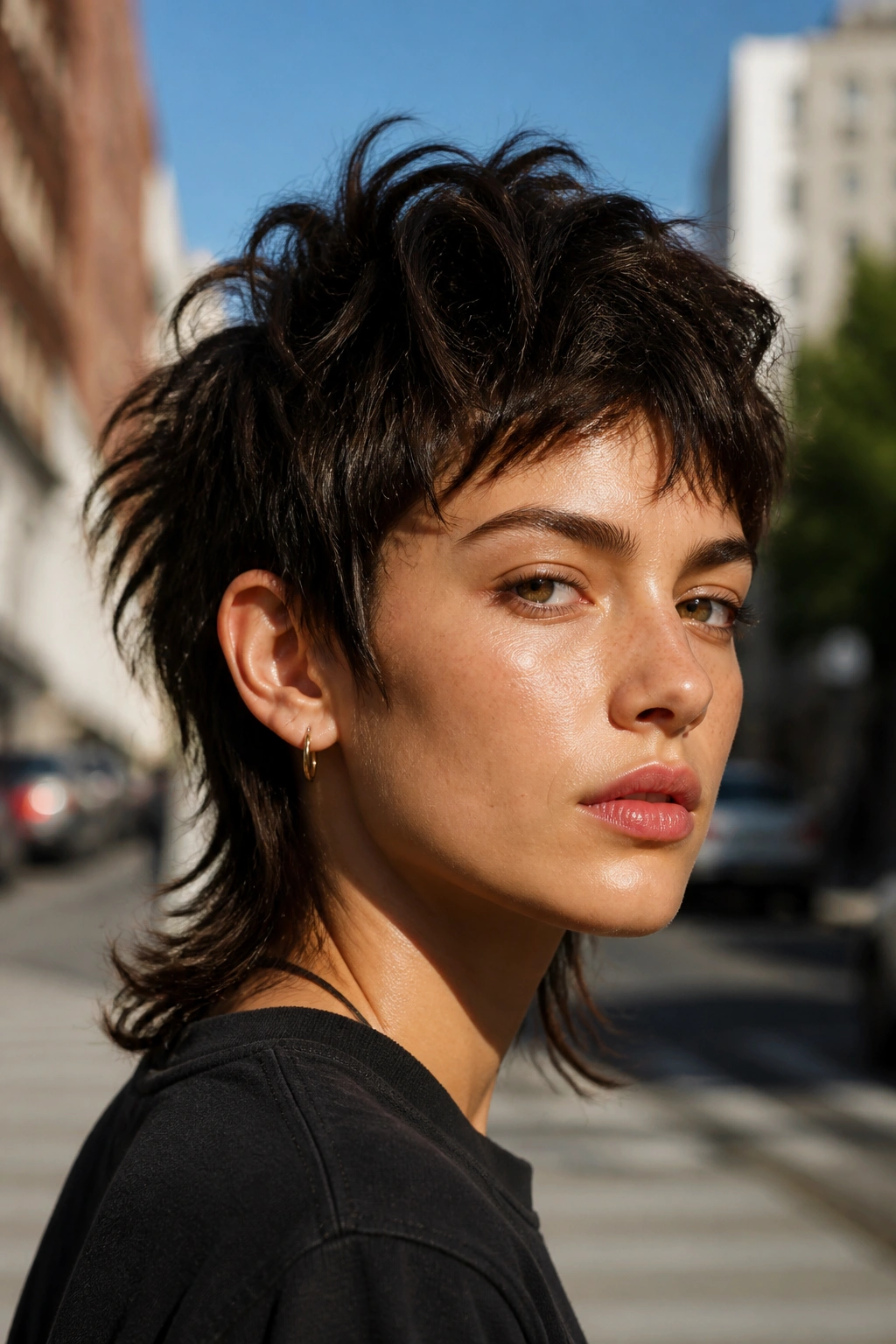
A lot of people say they want a wolf cut, but what they really want is a little mullet energy without going all the way there. This is that haircut. Shorter around the front and sides, longer through the back, and still cropped enough to stay in pixie territory.
The back length matters. Leave too much, and you’ve got a mullet. Leave too little, and the shape loses the wolf-cut bite. The balance sits in the contrast: cropped top, obvious texture, and a nape that trails just enough to hint at something bigger.
This cut works well if you like movement when you turn your head. The back can flick out a little, especially if your hair has a natural bend. Straight hair can wear it too, but you may need a texturizing spray to keep the ends from lying flat.
It’s not a quiet haircut. Good. Some styles should have a little nerve. If you want a short pixie wolf cut that looks sharper from the side than from the front, this one deserves a look.
9. Undercut Pixie Wolf Cut
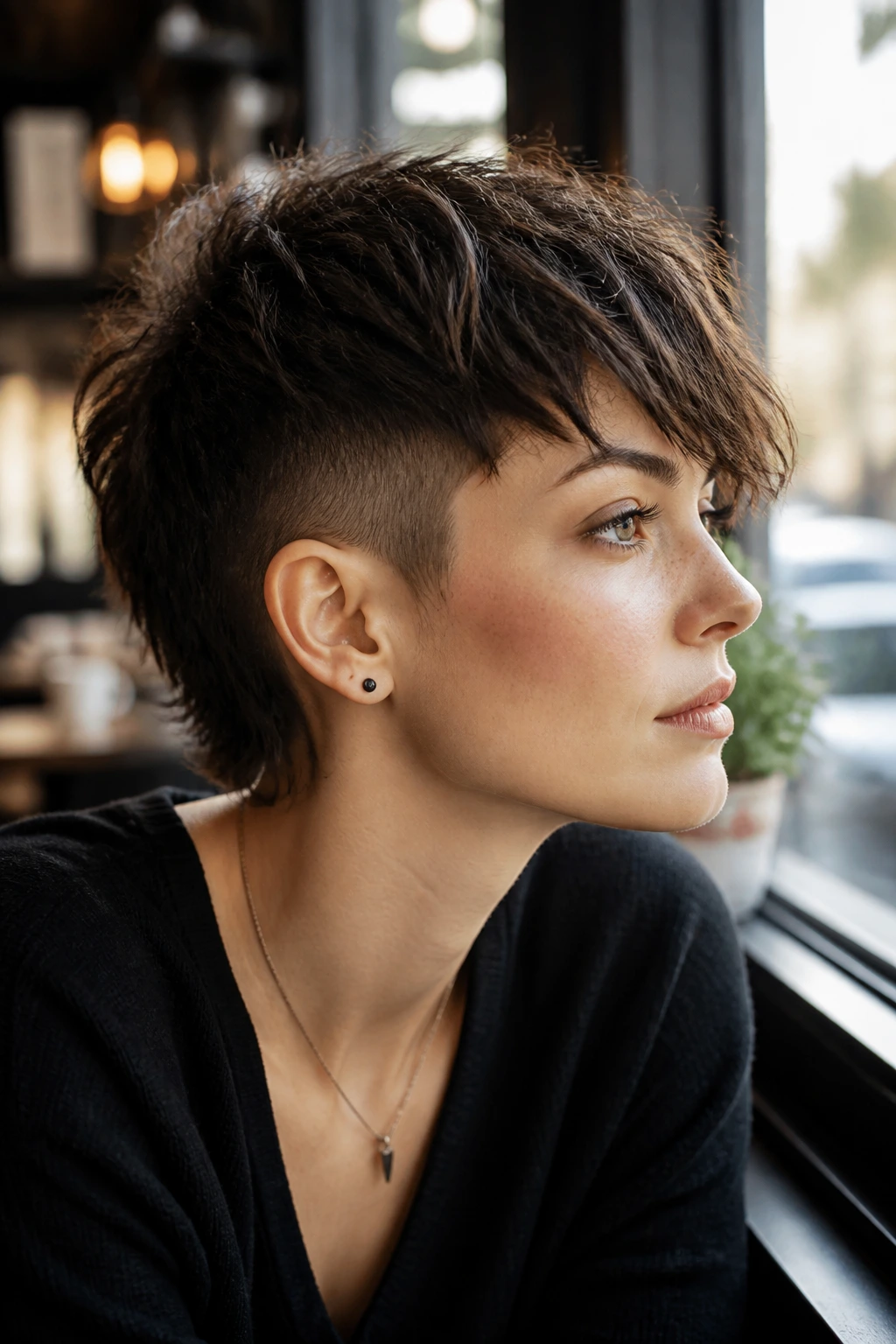
An undercut fixes one of the most common problems with short textured cuts: too much bulk at the sides and back. Remove that hidden weight, and the top suddenly has room to move. The whole shape gets lighter without losing edge.
The Structure
Ask for an undercut that sits low enough to stay covered when you want it to, but high enough to make a difference. On thick hair, that might mean taking the sides and nape down with a clipper guard around 3 to 6 mm, then leaving the top much longer. The contrast is part of the appeal, but you can keep it subtle if you prefer.
The top should still read like a wolf cut, not a buzz cut with ambition. That means textured layers, a little unevenness, and enough length near the crown to give you styling options. You can sweep it forward, spike it, or let it fall softly.
Nope, this is not the haircut for someone who wants a completely invisible grow-out. Undercuts need trims if you want the clean shape to hold. But if your hair is thick, this can be the difference between loving your cut and fighting it every morning.
10. Asymmetrical Short Wolf Pixie
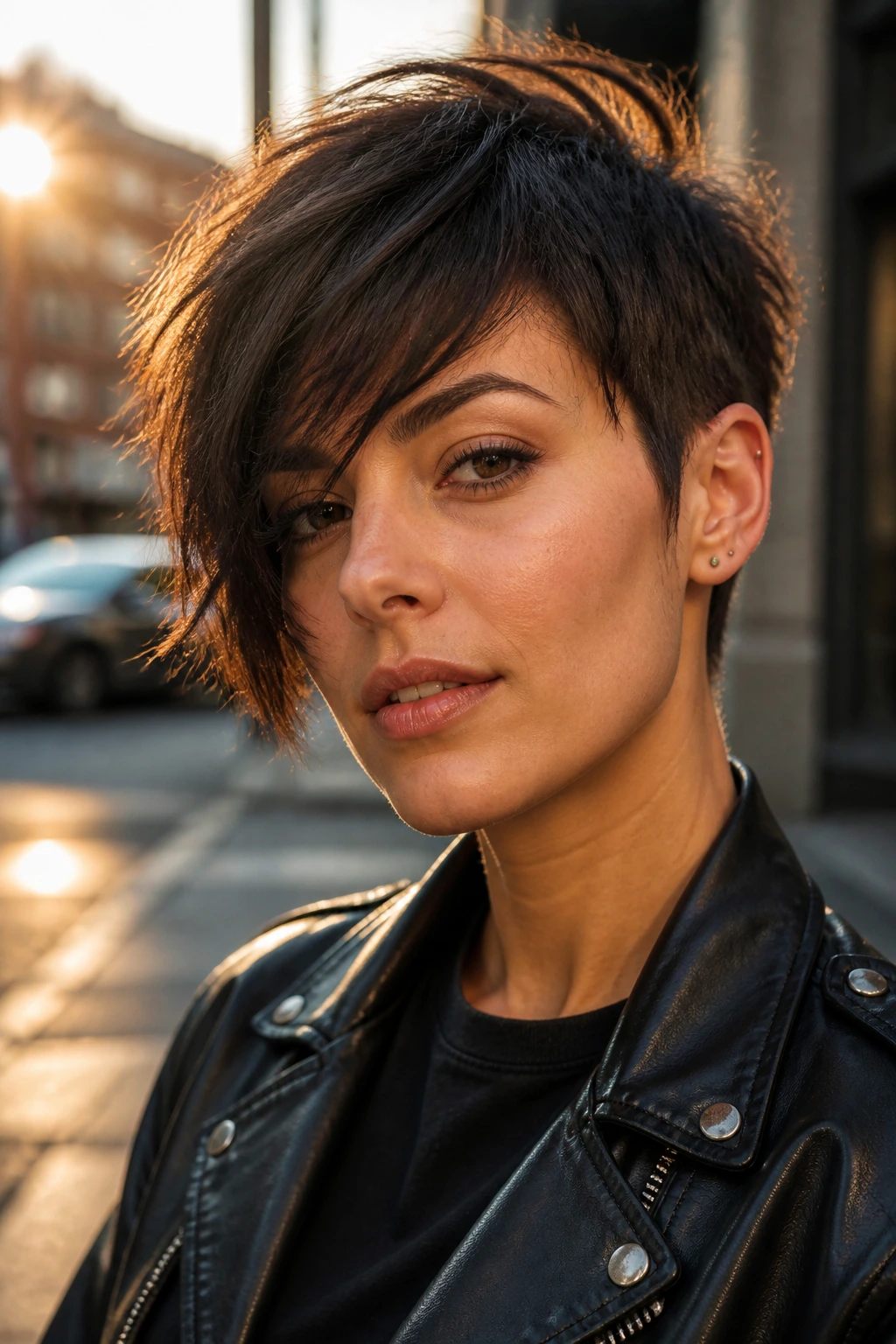
One side longer. That’s the headline here, and it changes more than people expect. A short asymmetrical wolf pixie gives the cut a built-in point of interest, even when the styling is minimal. On straight hair, the difference shows right away. On wavy hair, it looks softer but still noticeable.
Why does it work? Because the unevenness pulls the eye across the face instead of letting the shape sit in a neat little box. The shorter side can tuck behind the ear, while the longer side can graze the cheekbone or jaw. That little shift makes the haircut feel alive.
- Keep the longer side only 1 to 2 inches longer than the shorter side unless you want a bolder look.
- Ask for texture through both sides so the asymmetry does not look accidental.
- Tuck one side behind the ear when you want the cut to feel cleaner.
- Use a light cream, not a heavy paste, or the longer side can clump.
This is a good choice if you like structure with a little drama. Not too much. Just enough to keep strangers from calling it “cute” and moving on.
11. Curtain Bang Wolf Pixie
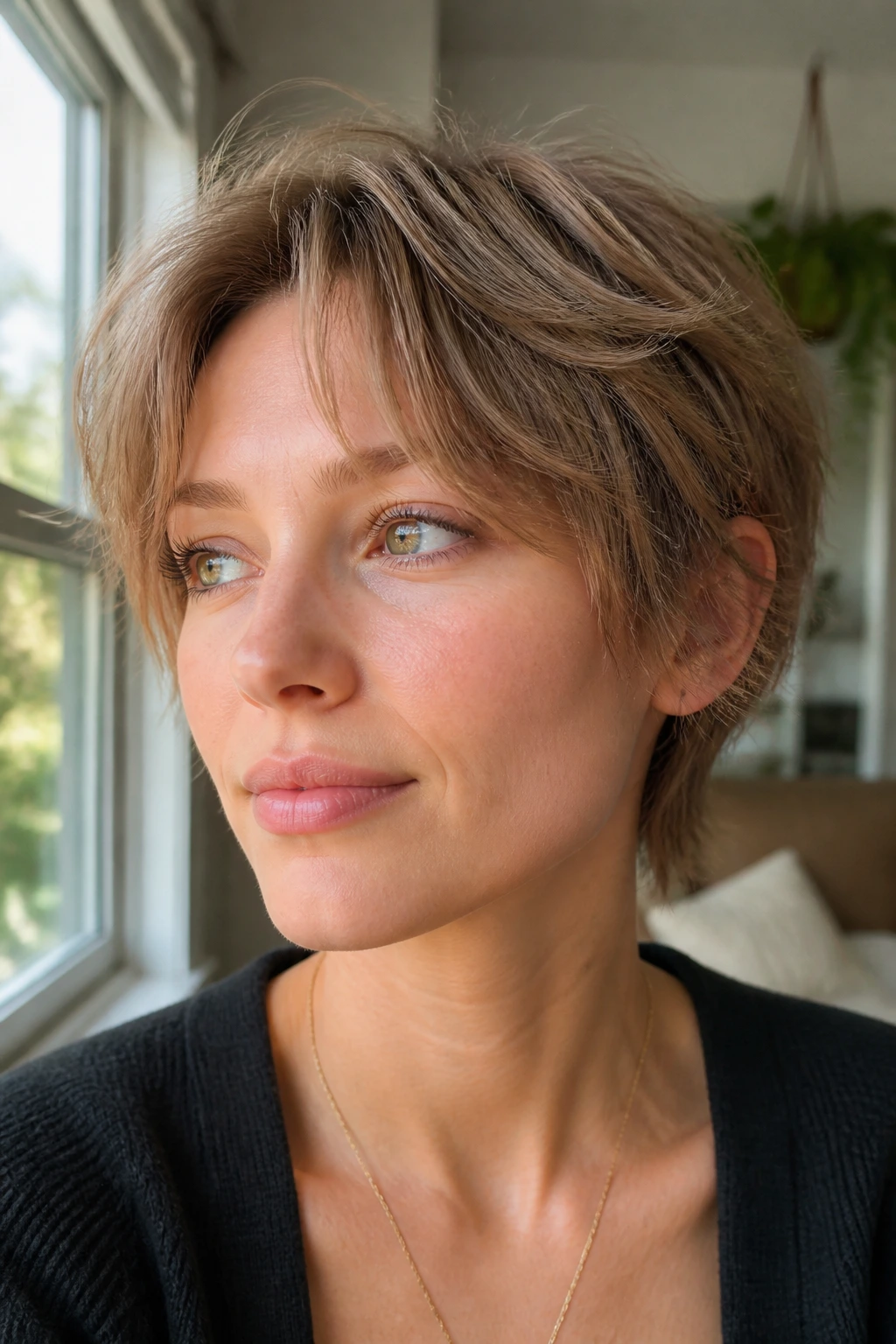
Curtain bangs on a short pixie wolf cut sound odd until you see them done well. Then the whole thing makes sense. The fringe parts in the middle, opens around the eyes, and blends into short, shaggy layers that give the front a soft frame instead of a hard line.
The reason I like this version is that it cuts down on forehead heaviness without putting all the focus on the brows. The hair can be short and still feel face-framing. That matters if you want the cut to look relaxed rather than severe.
The bangs should stay light enough to move. Heavy curtain bangs on short hair can collapse fast and hide the rest of the cut. Ask for longer face-framing pieces that join into the top layers, then keep the center short enough to show a little separation.
This one works especially well if you style by rough-drying and then finger-combing the front pieces into place. You do not need a perfect bend. A small bend is enough.
12. Soft Brunette Piecey Pixie Wolf Cut
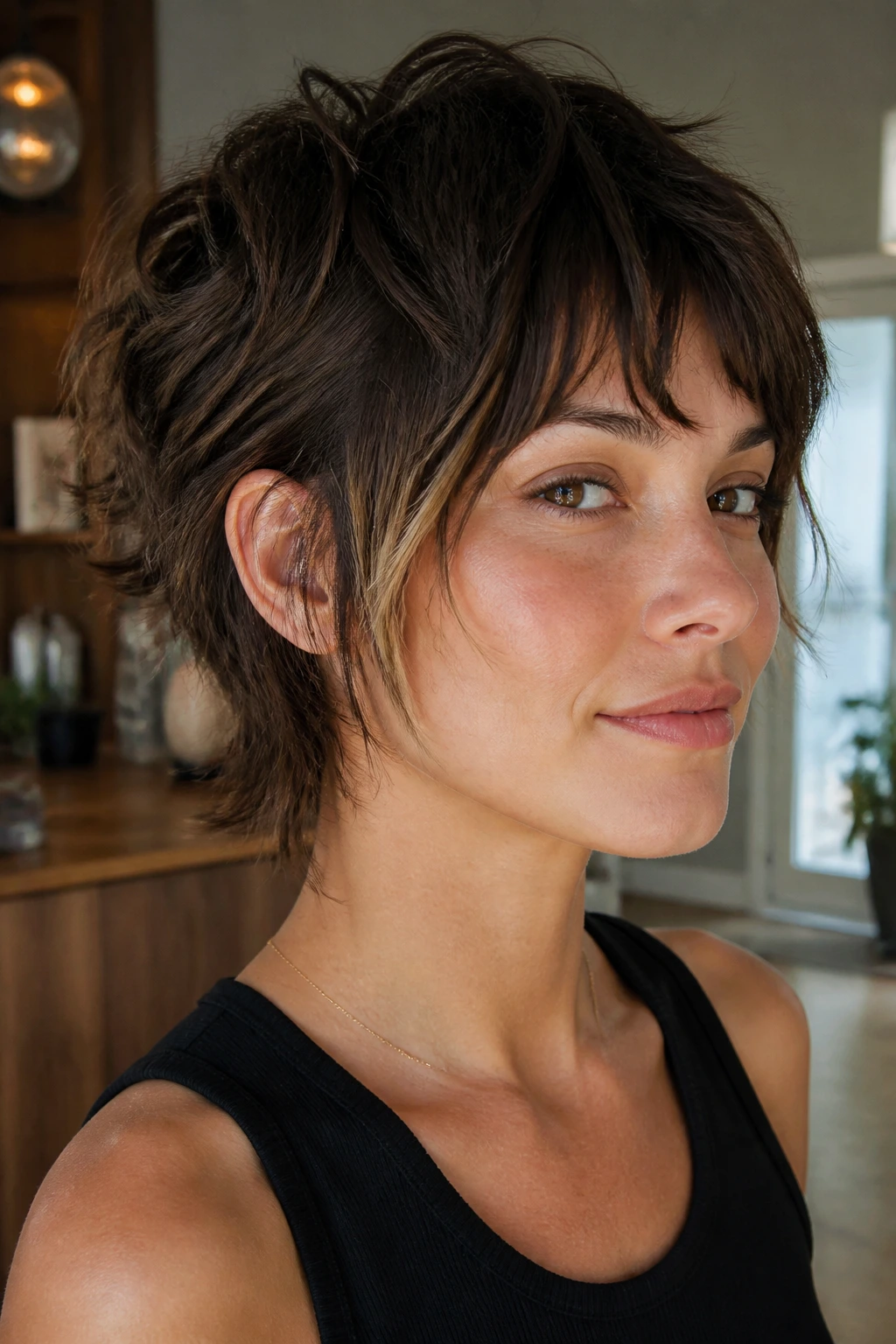
Dark hair shows texture in a different way. You don’t need bright color to make this haircut interesting; you just need good layer placement and a clean cut line around the neck. On brunette hair, the piecey ends can look richer because the shadows between the layers make the shape easier to read.
The Color Effect
If you do add color, keep it subtle. A few lighter ribbons near the top or around the face are usually enough. Heavy streaking can fight with the haircut instead of helping it. The shape should stay the star.
What I like here is the mix of softness and edge. The base color keeps it grounded, while the short wolf layers keep it from feeling plain. Use a matte paste or a light styling cream so the separation shows, but don’t turn it greasy. That mistake is common, and it ruins the clean pieces through the top.
This version suits people who want short hair without an obviously punk finish. It reads modern, yes, but it also works with basic clothes, bare makeup, and low-effort mornings. That combination is not fancy. It’s practical. And practical hair is underrated.
13. Air-Dried Wavy Wolf Pixie
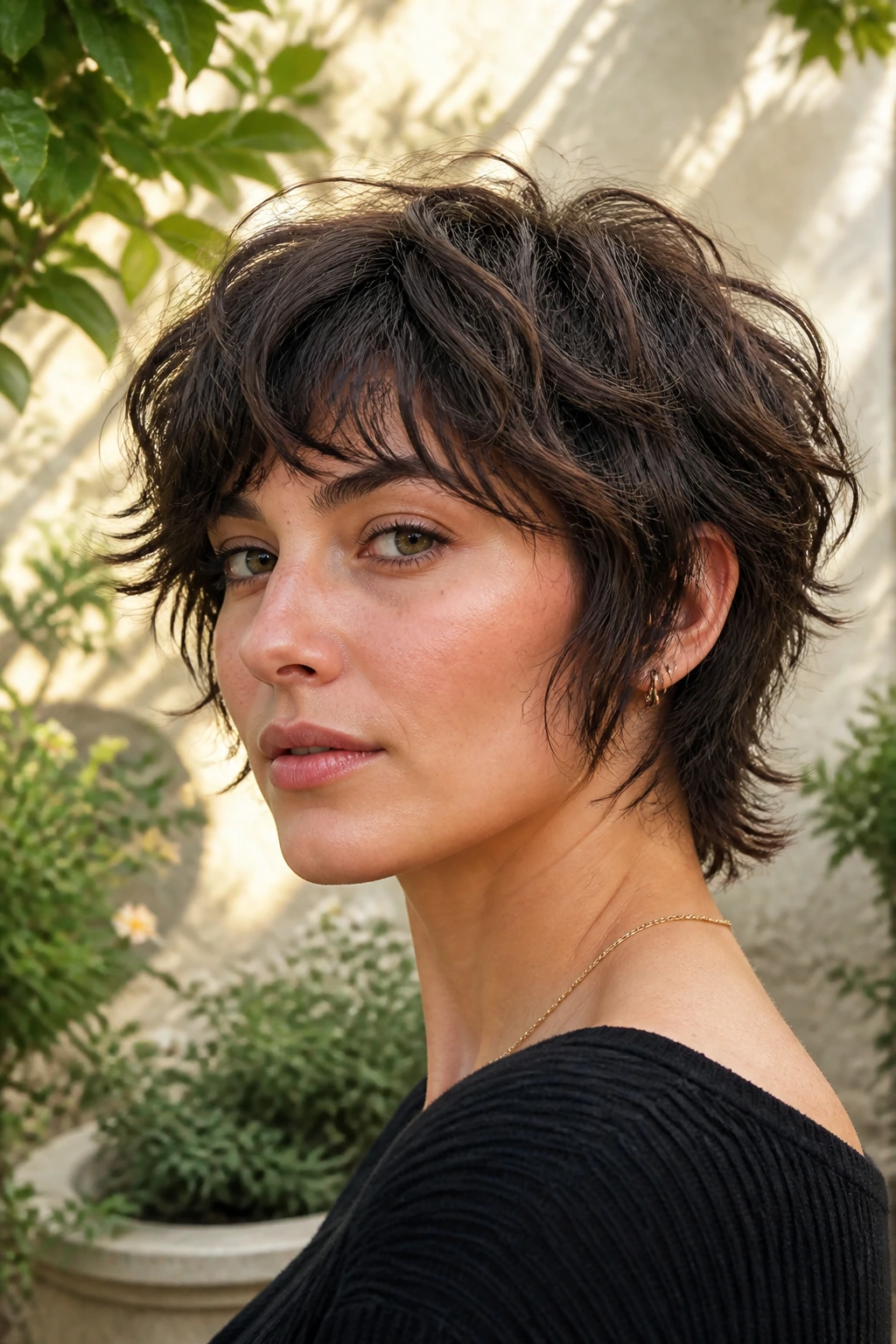
If you hate heat styling, pay attention to this one. An air-dried wavy short pixie wolf cut can look fantastic because the layers break up the wave pattern before it gets too bulky. You wash it, scrunch it, and let it settle. Done.
The cut needs to be shaped with air-drying in mind, though. That means the crown should not be cut too short, or the top will puff in an awkward way when it dries. The sides should stay lighter, and the nape should be tidy enough that the whole thing doesn’t lose structure as it dries.
A little sea-salt spray can help, but don’t drown the hair in it. Two or three sprays per side is plenty for short hair. Too much and the ends go dry fast. Better to use a small amount of leave-in conditioner first, then add texture on top.
This is the kind of cut that suits people who like a touch of mess. Not chaos. Just enough irregularity to look like hair, not a project.
14. Salt-and-Pepper Textured Pixie Wolf Cut
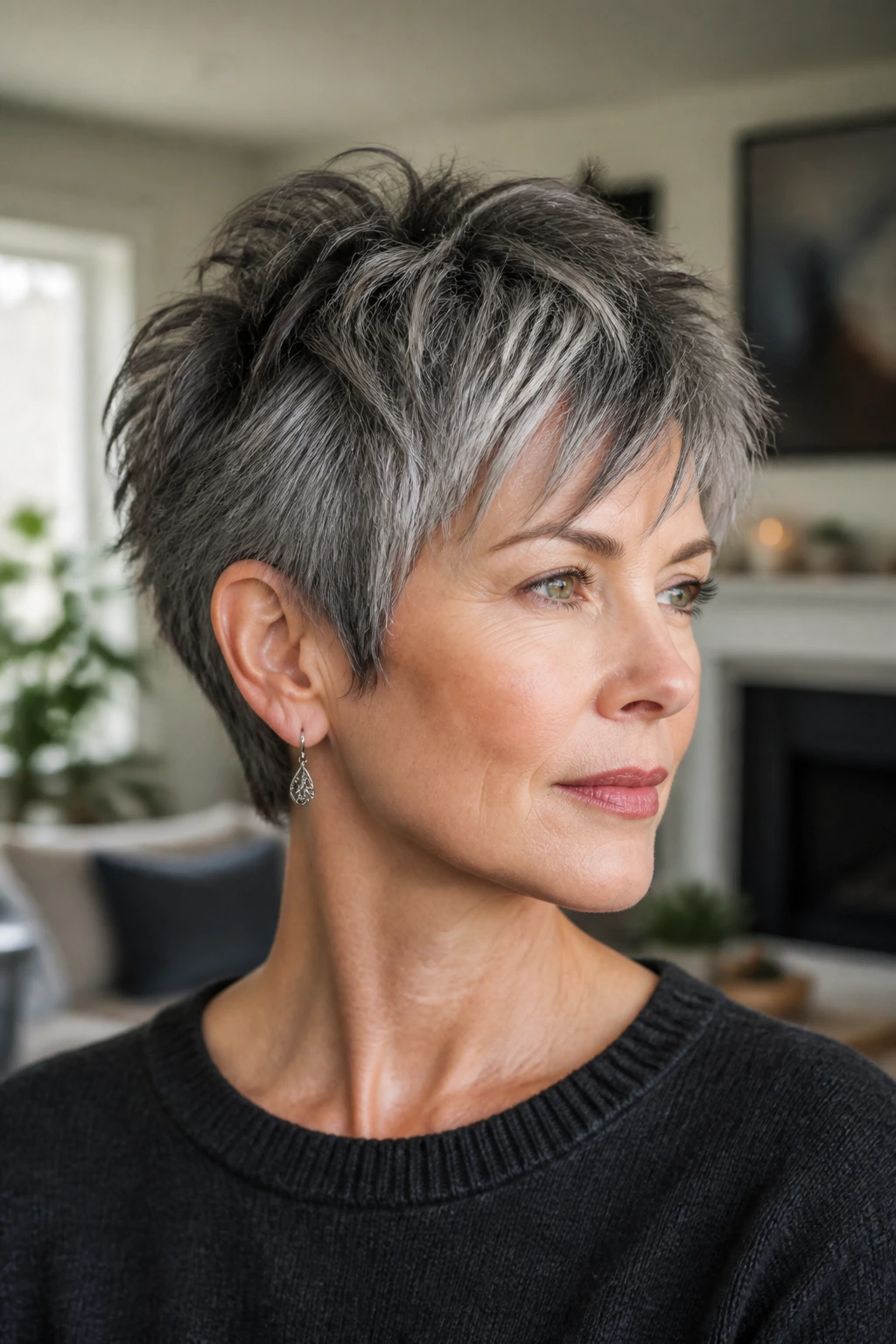
Gray and silver strands make textured cuts easier to read, which is one reason this style looks so good on salt-and-pepper hair. The lighter hairs show the layer separation, and the darker strands keep the shape from washing out. You get contrast without trying very hard.
The cut should stay piecey rather than overly polished. Short layers around the crown, a soft fringe if you want one, and a tapered back give the hair movement while respecting its natural density. Coarser gray hair often needs a little moisture, so a dab of smoothing cream can help the ends behave without flattening the top.
- Choose a light styling cream if your gray hair feels wiry.
- Trim every 5 to 7 weeks so the nape does not bulk up.
- Let the crown stay slightly longer than the temples.
- Skip heavy shine products unless you want the layers to lie down.
This version has a nice honesty to it. It doesn’t try to disguise the gray. It uses it. That’s the better move, in my opinion, because the texture gets clearer instead of hidden.
15. Grown-Out Neck-Hugging Wolf Pixie
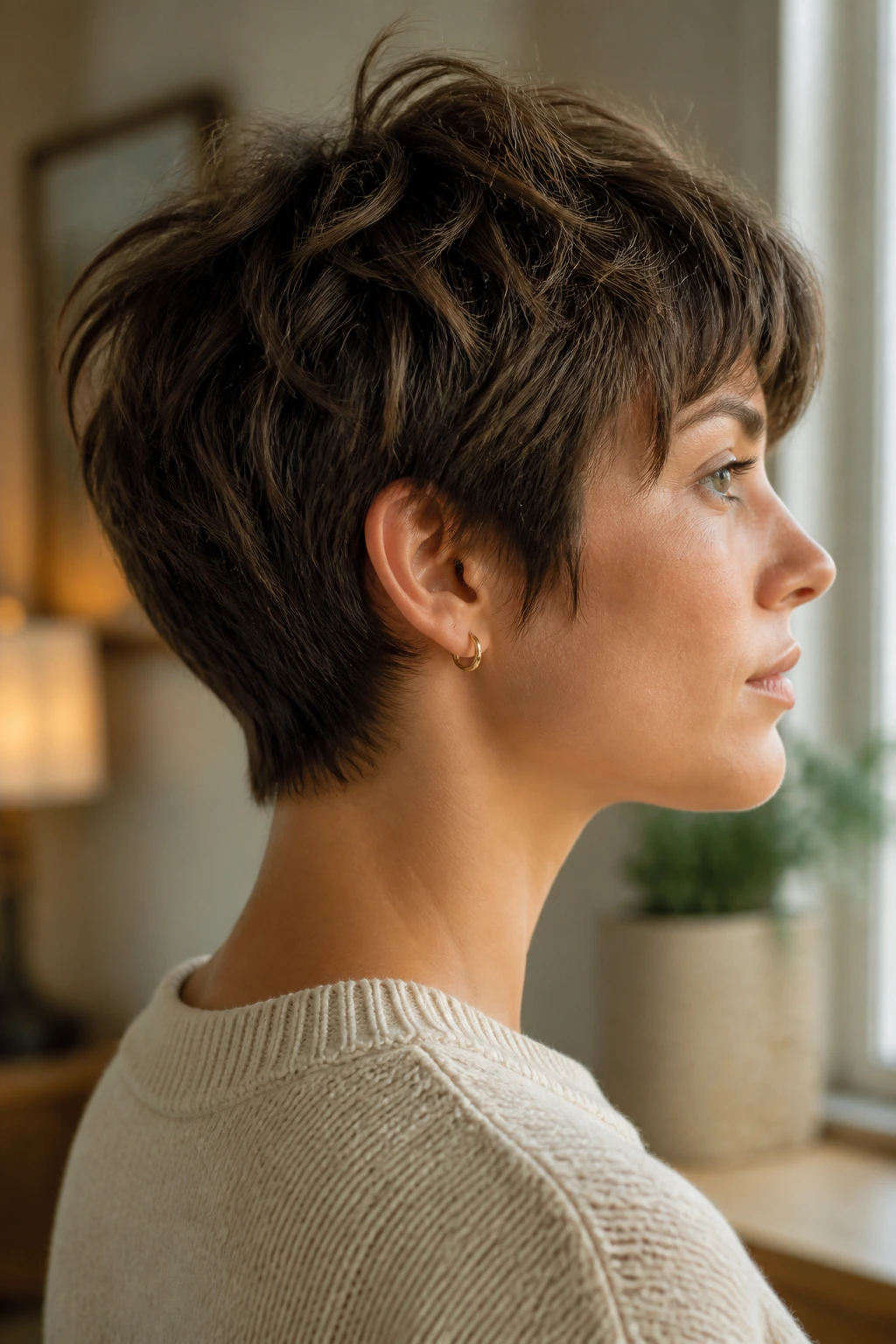
The best short pixie wolf cut for low-maintenance people is often the one that looks good a few weeks after the salon visit. A neck-hugging version does that well. It keeps the nape close, lets the top stay soft and choppy, and grows out without losing its shape right away.
I’d ask for a rounded outline through the back, not a blunt shelf. That tiny difference matters. A rounded nape follows the neck more naturally, so the cut keeps its shape as the hair grows. The top can stay a bit longer and messy, which gives you room to push it around with your fingers or leave it alone.
This is also a smart choice if you work in a setting where you want short hair but not a hard-edged haircut. It has enough texture to feel modern, enough length to soften the face, and enough structure to avoid looking accidental. Quiet? A little. Boring? Not even close.
Give it a light styling cream, a quick finger-scrunch, and a trim before the back starts to puff. That’s the whole deal. The shape does the rest.
