



A wolf shag haircut for curly hair works because it lets the curl pattern do the heavy lifting. The cut brings in choppy layers, a little crown lift, and enough length in the lower sections to keep the shape from turning into a mushroom or a triangle.
That sounds simple. It isn’t.
Curly hair changes the rules. The same layered cut that looks airy on straight hair can spring up, puff out, or stack in awkward shelves once the curls dry. A good wolf shag respects shrinkage, density, and the way curls clump together. Done well, it looks alive. Done badly, it looks like somebody got enthusiastic with the scissors and never checked the mirror.
The detail work matters more than people think. Where the shortest layers sit. How much weight stays at the perimeter. Whether the bangs are cut wet, dry, or somewhere in between. How much room the shape leaves for curls to bounce without fighting each other. Some versions flatter loose waves. Others make sense only if your curls are springy, thick, or a little stubborn. That is the fun part, honestly. There is no single wolf shag for curly hair. There are fifteen useful ones, and the right one depends on how your hair behaves when it dries.
1. Soft Crown Layers That Let Curls Rise
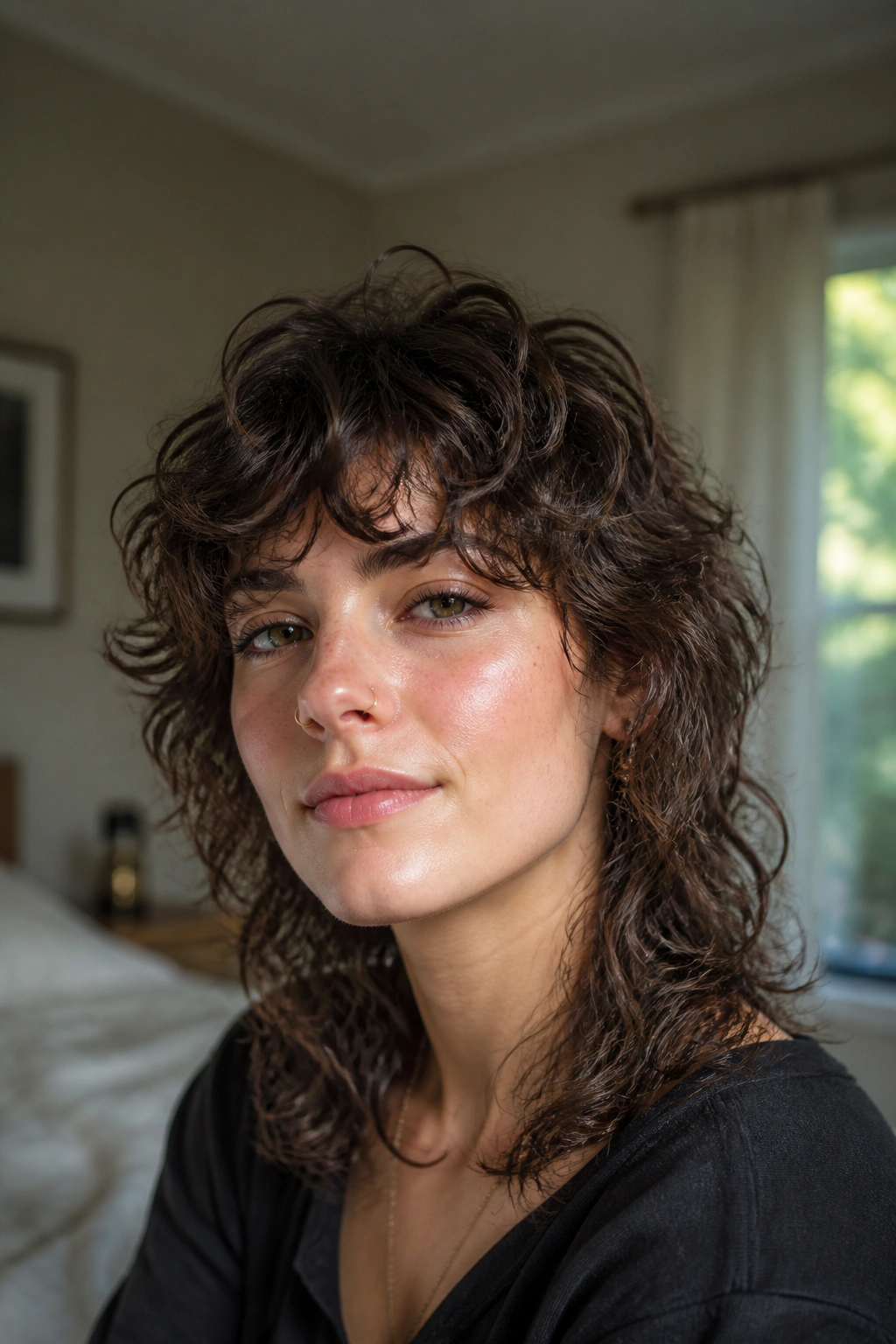
A soft crown-heavy wolf shag is the easiest place to start if you want movement without looking like you lost a fight with the clippers. The trick is simple: keep the top airy, keep the sides blended, and leave enough length around the back and neckline so the cut still has shape when your curls shrink up.
Why It Works
The crown is where a lot of curly cuts go wrong. Too much weight up top and the hair sits flat. Too much removal and the whole head turns puffy. This version threads the needle by lifting only the upper layers and leaving the lower half to support the silhouette.
Ask for longer face-framing pieces that begin around the cheekbone or a little lower. That gives you movement around the face without making the front look chopped off. If your curls are loose, this shape can look almost feathered. If they’re tighter, the layers stack into a more obvious shag line.
- Best for 2C to 3B curls
- Works well with medium density
- Looks good with a diffused side part or soft middle part
- Needs a dry check before the cut is finalized
Pro tip: Tell your stylist you want the top to move, not disappear. That one sentence saves a lot of regret.
2. Curtain Bangs That Split and Swing
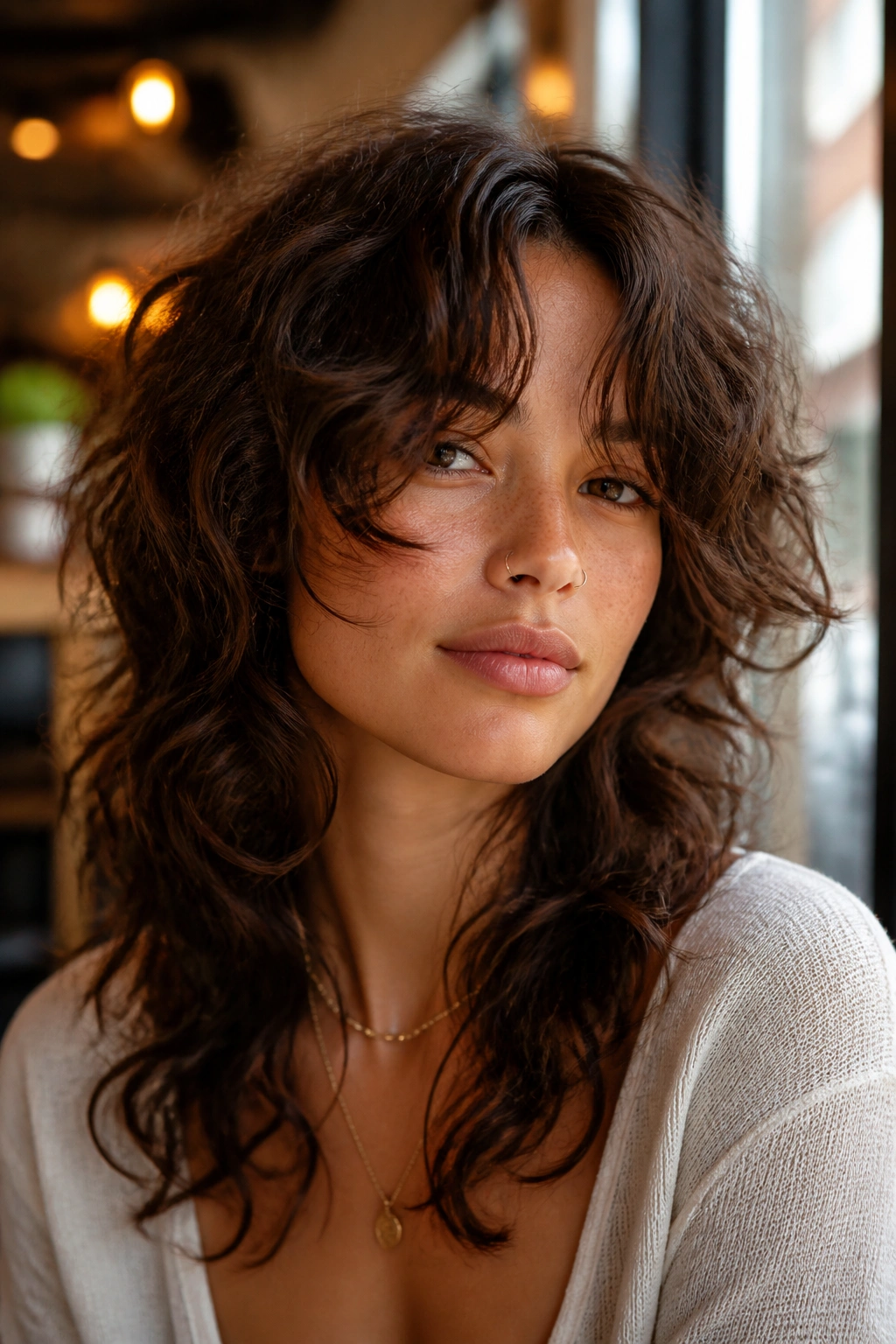
You know that awkward stage where bangs either cling to your forehead or vanish into the rest of your hair? A curly wolf shag with curtain bangs solves that better than most fringe ideas do.
The center part is doing a lot here. Curtain bangs give you softness around the eyes, but they also let the hair fall away from the face instead of boxing it in. On curly hair, that matters. You want the bangs to split, bend, and land around the cheekbones or jaw, not sit in one heavy sheet.
The best version is usually cut slightly longer than you think. Curly bangs shrink. Sometimes a lot. I would rather see bangs touch the lashes when wet and settle at brow level dry than the other way around.
Use a lightweight cream, rake it through the fringe with your fingers, then scrunch once. Not six times. Once. The bangs need direction, but they do not need to be manhandled.
3. A Rounded Wolf Shag for Tight Curls
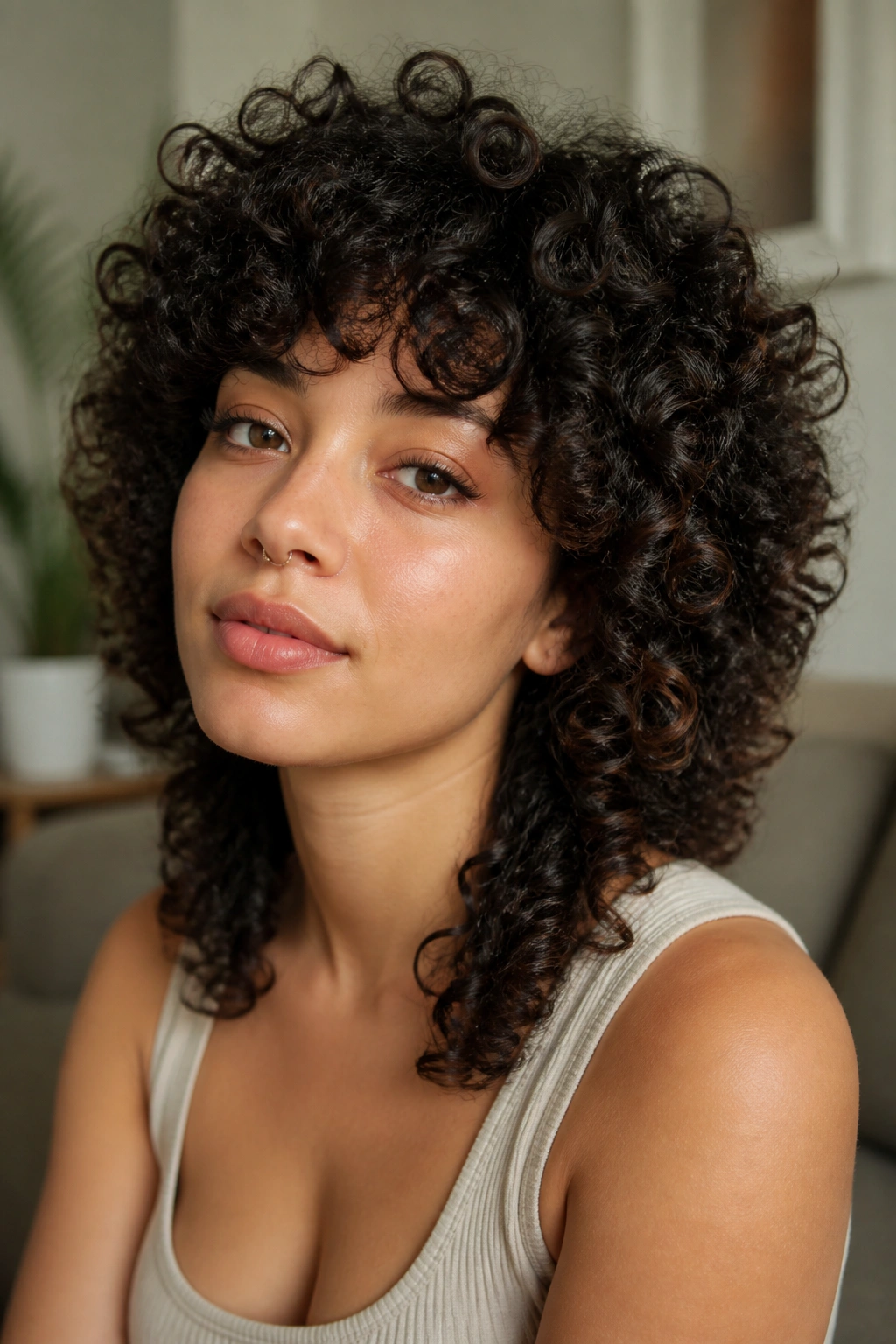
Can a wolf shag work on tight curls? Absolutely. It just has to be rounded, not ragged. That distinction is the whole game.
With tighter curl patterns, a hard-edged shag can make the outline feel bulky in some spots and too thin in others. A rounded version keeps the shape soft through the perimeter while still carving enough layers to let the curls stack neatly. Think of it as a curve with texture, not a jagged silhouette.
What to Ask For
Tell the stylist you want internal layers for movement and a perimeter that stays clean. That usually means less fussing at the bottom and more attention to what happens inside the haircut. If the hair is very dense, a little debulking near the crown can help, but over-thinning is a bad trade. It often creates frizz and weird see-through ends.
Good signs to look for
- Curls fall in rounded clusters, not separated spikes
- The nape stays neat even when dry
- The top has lift without the helmet effect
- Side pieces blend into the jaw instead of kicking out
This version is especially nice if you want shape on day one and day four. The grow-out is forgiving, which counts for a lot.
4. Big Crown Volume With a Tapered Back
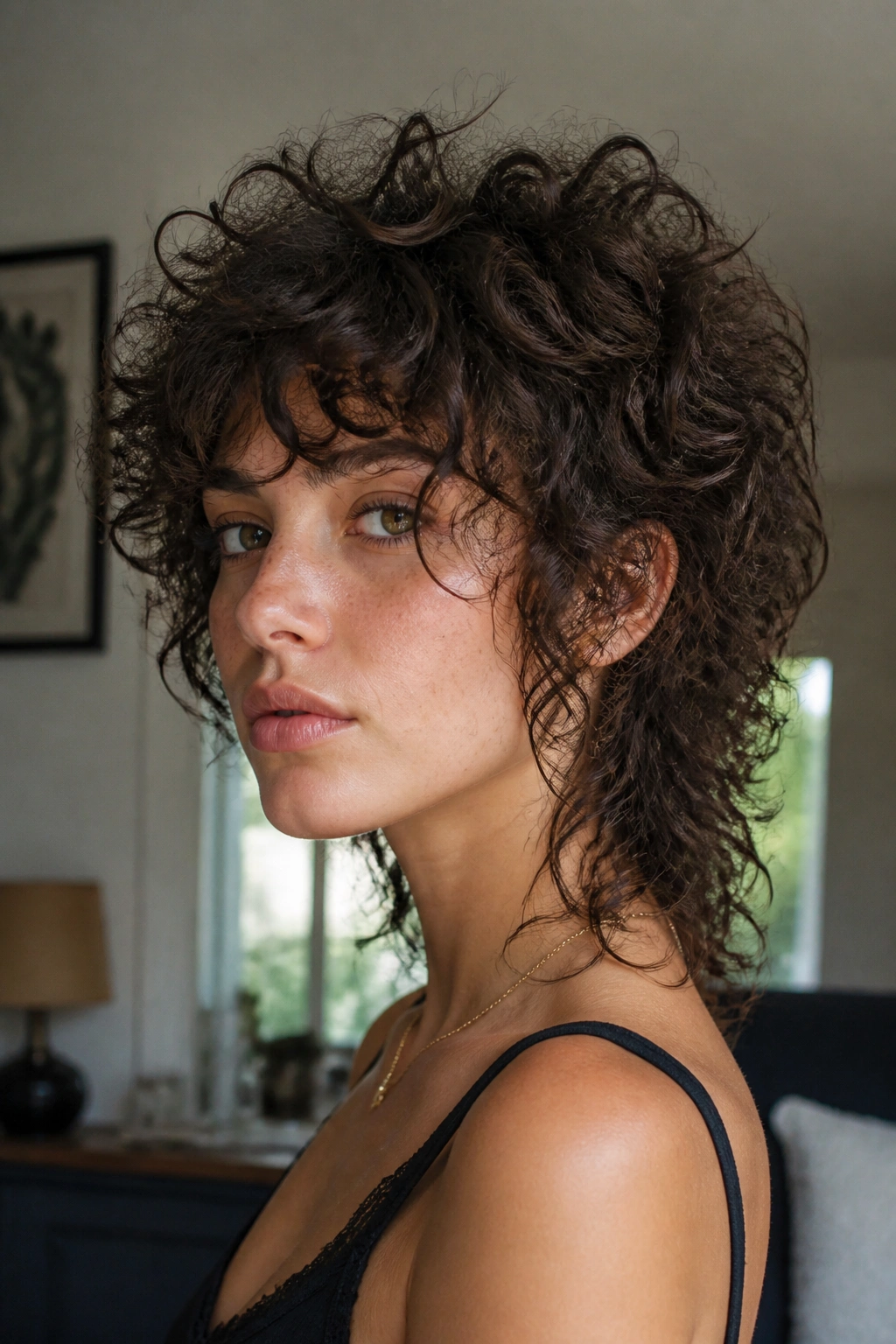
Some people act like crown volume is the enemy. It isn’t. Bad crown volume is the enemy. The right amount gives a curly wolf shag its edge.
This version leans into lift at the top and taper at the back, which creates that slightly wild profile people notice from across the room. It works especially well if your curls fall flatter around the roots but puff out at the ends. The shape gives the top room to breathe while the back stays lean enough to avoid the triangle look.
A stylist can build this by keeping the shortest layers near the crown and allowing the back to stay longer and narrower. That keeps the outline from widening too fast. If your hair is dense, this is one of the few cuts that can handle it without looking boxy.
Best styling move: clip the crown at the roots while the hair is damp, then diffuse until about 80 percent dry. The root lift lasts longer when the curl pattern sets upright instead of sideways.
5. Long Layers That Keep the Length
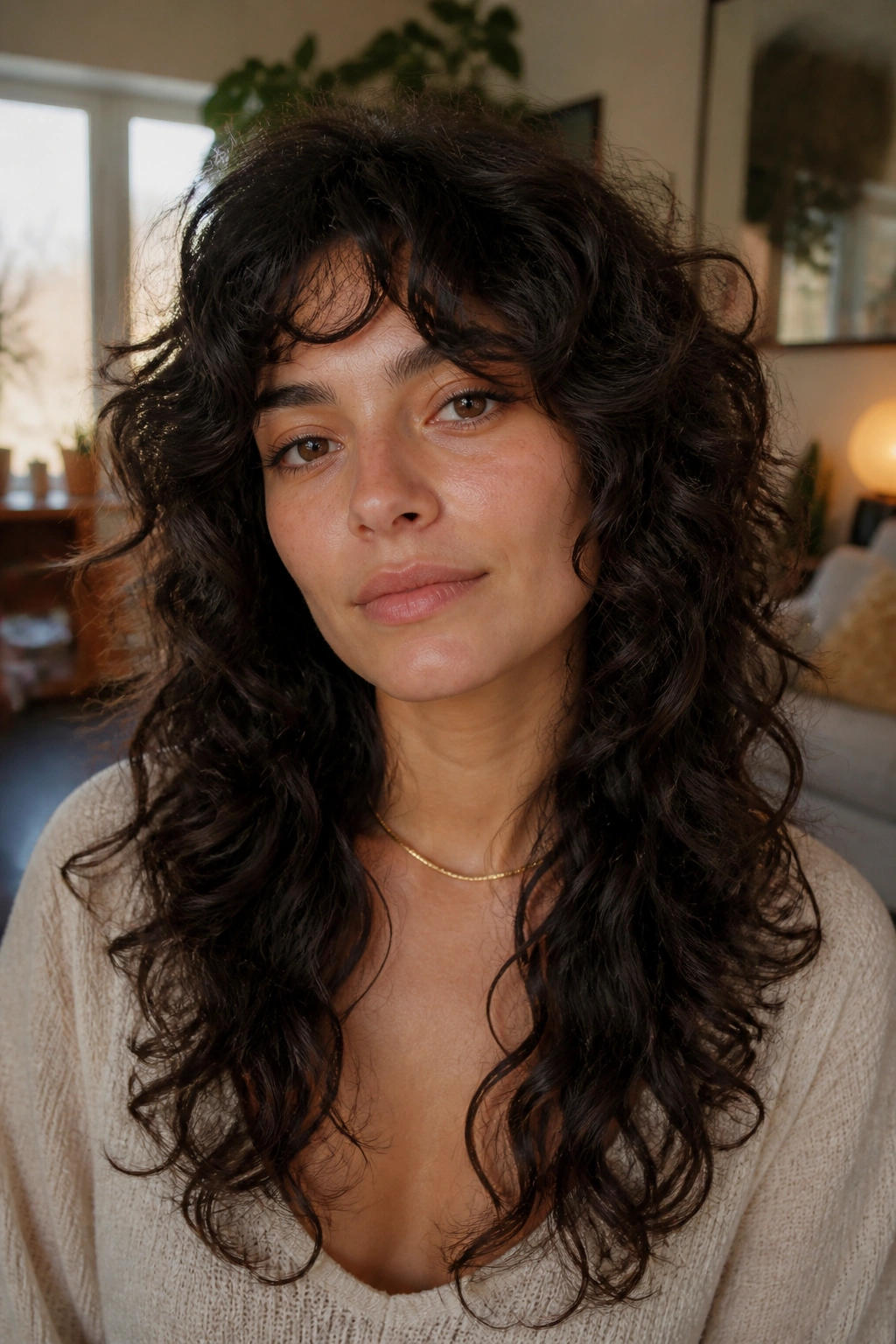
Not everyone wants to lose inches. Fair enough. A long wolf shag for curly hair keeps the length but sneaks in enough layering to stop the ends from hanging like a curtain.
This is the version I recommend to people who love their hair long but feel trapped by it. Curly hair can get heavy, and once it gets heavy, it starts doing that frustrating thing where the root is flat and the bottom looks like it belongs to another head. Long layers fix that without forcing a dramatic chop.
The best long version keeps the front pieces near the collarbone or chest, depending on curl shrinkage, and uses softer interior layers to remove some bulk. You do not need obvious stair-step layers for this to work. In fact, too much separation can make the shape look thin.
If you wear your hair down most days and only want enough change to make it move better, this is the one. Subtle. Practical. No drama.
6. Chin-Length Bounce With Loose Ends
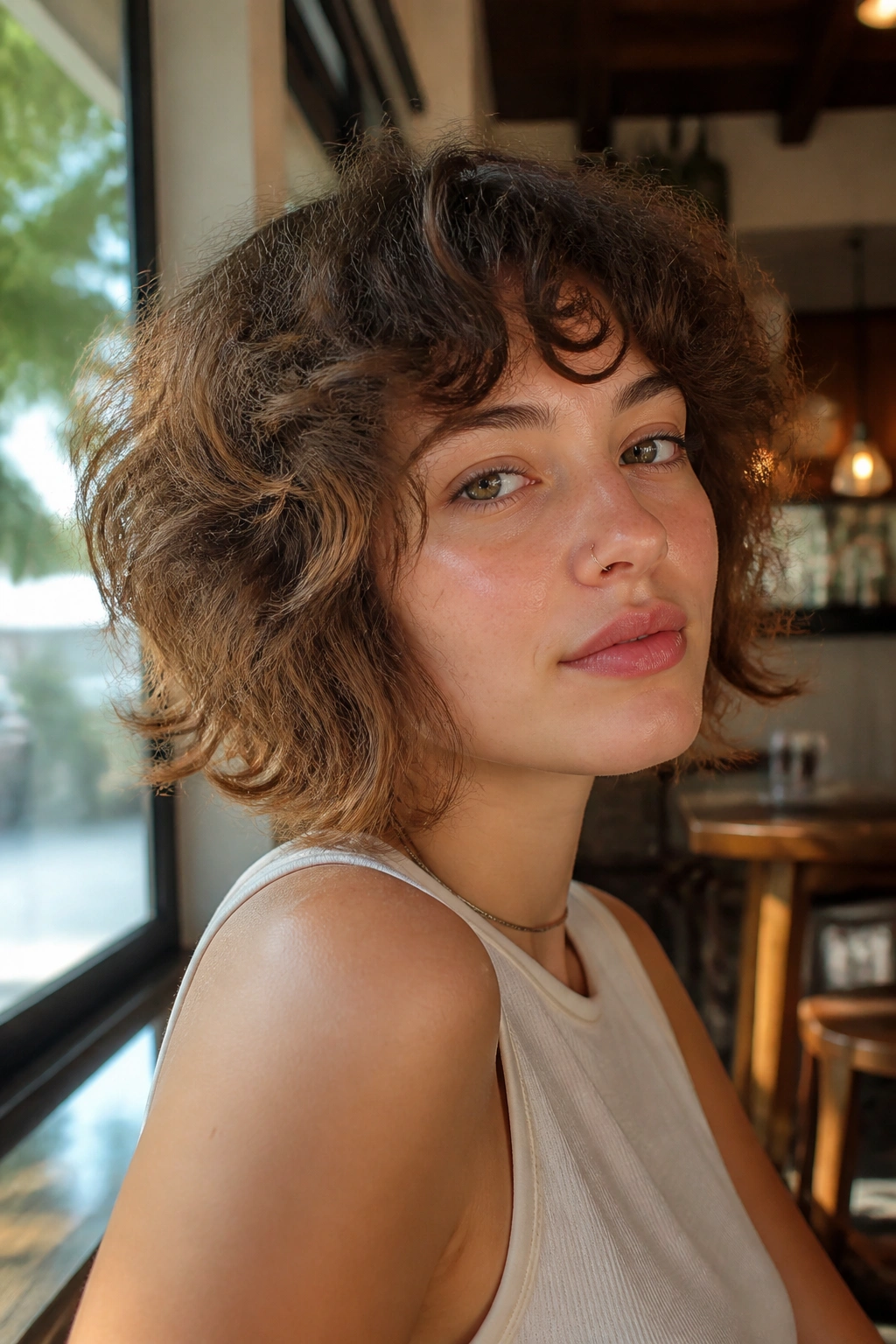
A chin-length wolf shag on curls can be glorious, but it needs commitment. Once the curls spring up, that chin length may sit at the cheek, the jaw, or somewhere in between. Good. That’s part of the charm.
This cut has a lot of energy because it puts the shape right where people notice it first: around the face. The back stays slightly longer, the front gets a bit more swing, and the overall effect is breezy rather than polished. I like this version on hair that has enough curl memory to hold its shape without constant rescue.
The one thing to watch is the bottom edge. If the perimeter is too thin, the cut can look stringy. If it’s too blunt, the shaggy top loses its edge. You want a little balance there, which means a stylist who knows how to leave weight in the right spots.
How to Wear It
- Scrunch in a gel with a soft hold
- Diffuse on low heat and low airflow
- Break the cast only when the hair is fully dry
- Refresh with water and a tiny amount of leave-in between washes
Shorter curly hair can be a little bossy. That’s fine. It should be.
7. Micro Bangs and a Fiercer Fringe
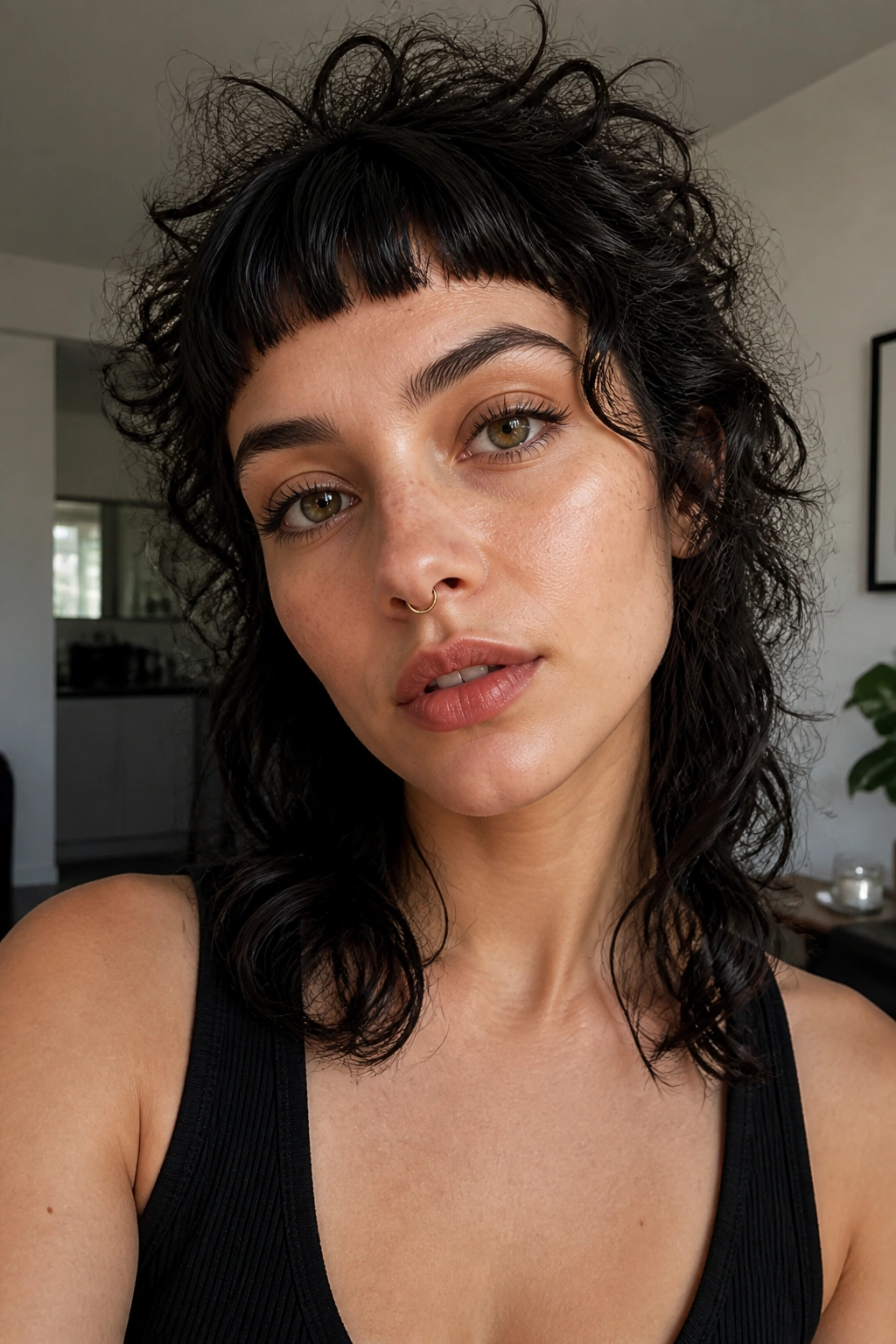
A micro fringe on curly hair is not for the shy. It’s a statement, and it sits right at the front of the face where you cannot hide from it. When paired with a wolf shag, though, it can look sharp in a way that feels deliberate instead of fussy.
The reason this works is contrast. The short fringe gives the haircut attitude, while the longer layers around the sides and back keep the shape from feeling cartoonish. Curly texture softens the severity, which helps a lot. A straight micro bang can read severe. A curly one reads textured, a little playful, maybe even slightly unruly in the best possible sense.
The catch? Shrinkage. A lot of people cut micro bangs too short because the curls look longer when wet. That’s a mistake. Leave room. Check the fringe dry. Then check it again after a full day of wear, because curls settle and lift in ways that are rarely tidy.
If you like high-contrast hair and you don’t mind a fringe that gets noticed, this is a strong pick.
8. A Side-Part Wolf Shag With Asymmetry
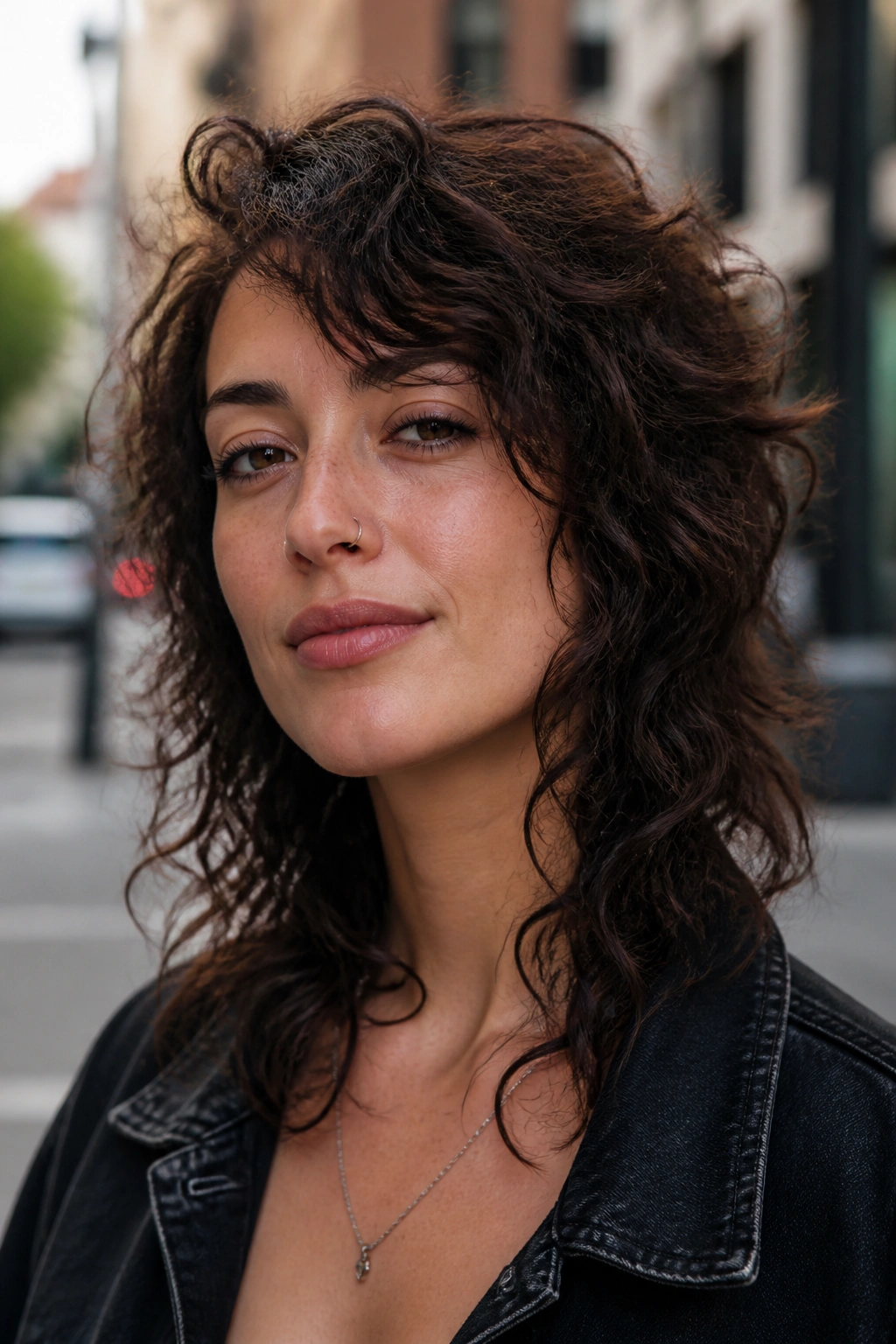
Why does a side part change the whole haircut? Because it shifts weight, and curly hair responds to weight like it’s a law of physics.
A side-part wolf shag gives the cut a slant. One side sits fuller. The other side falls a little closer to the face. That asymmetry makes the shag feel softer and less uniform, which is useful if your curls naturally favor one side anyway. Most people have a side that wants to dominate. Fighting it usually wastes time.
This version works especially well when the front pieces are cut to sweep across the cheek instead of dropping straight down. The result is movement near the eyes and a little drama around the jawline. Not theater-kid drama. Better than that. More like hair that knows where it wants to go.
Best For
- Curls that naturally separate on one side
- Faces that look good with diagonal lines
- People who want volume without a center-part frame
- Hair that gets flat at the roots on both sides if left alone
If your curls are uneven from side to side, a side part can hide that beautifully. It also makes the grow-out easier, which is never a bad thing.
9. A Thick-Hair Version That Removes Bulk
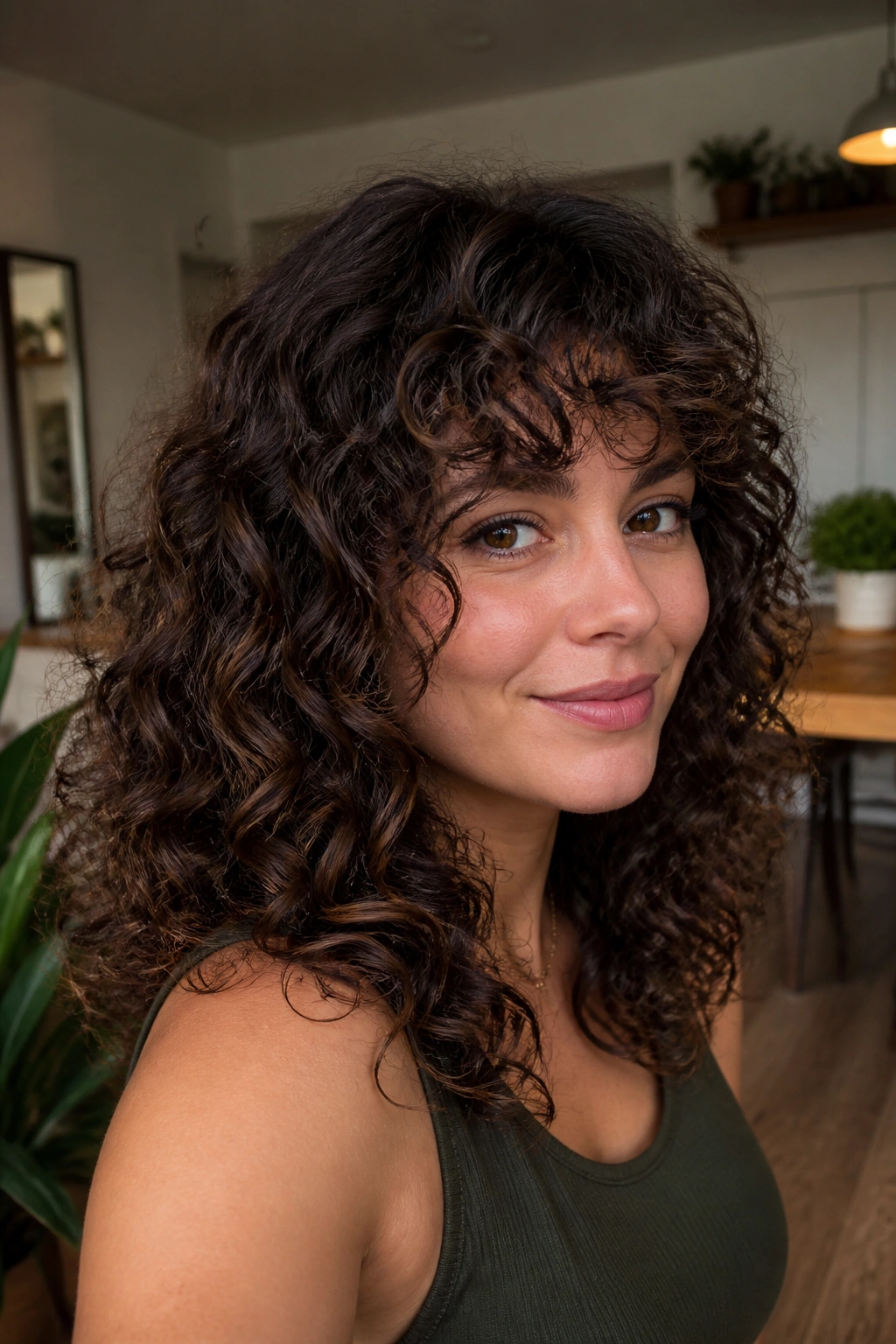
Thick curly hair needs a firm hand and some restraint. Both. The biggest mistake is assuming thick hair should be aggressively thinned. That usually backfires.
A thick-hair wolf shag should remove bulk from the interior, not carve the ends to pieces. Point cutting, slide cutting done carefully, and strategic layering can all help, but the goal is movement, not frizz. When the density is high, the hair can sit like a block if the weight is not managed properly. You know the look. Big, wide, and a little stubborn.
This version usually looks best when the layers are staggered enough to let curls stack in a staggered pattern, but not so short that the silhouette widens near the ears. The lower sections should still have enough mass to anchor the shape.
One thing I tell people with thick curls: do not ask for “lots of layers” and leave it there. That phrase is too vague. Ask for weight removal in the interior, length left at the perimeter, and face-framing layers that don’t blow past the cheekbones unless that is the look you want. Specificity matters here.
10. The Wolf Mullet That Leans Harder Into Edge
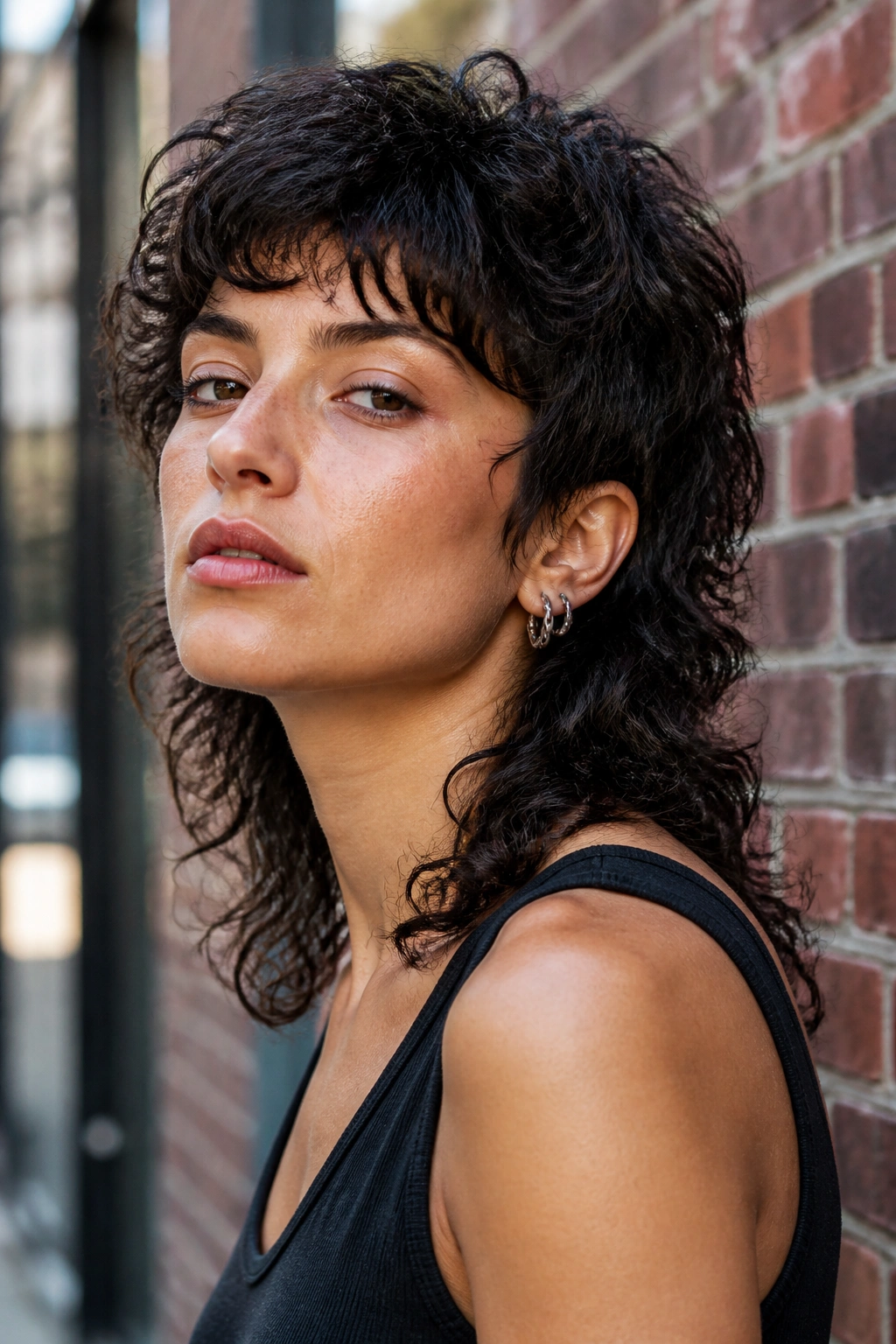
Unlike a soft shag, this one leans into the mullet side of the family tree. The top and sides stay lively, while the back is left longer on purpose. If you want your curly hair to look a little rebellious, this is the lane.
The appeal is pretty obvious once you see it on the right hair. The front and crown get texture, the back keeps that signature length, and the whole cut has a sharper profile than a standard shag. Curly hair makes it less harsh than it sounds on paper. The curls blur the lines a bit, which helps the cut feel wearable instead of costume-y.
This is best if you like visible shape. Not subtle. Visible. The haircut should look different from every angle, and you should be fine with that. If you like clean symmetry, skip it. If you enjoy a little mess and don’t mind people asking who cut your hair, this one delivers.
What to Watch For
- The back should stay long enough to balance the crown
- The top should not be over-thinned
- The sideburn area needs blending, or the cut can look choppy in a bad way
- Curl shrinkage can make the back appear shorter than expected
It’s a strong choice for dense curls that need an edge without losing their shape.
11. Shoulder-Length Wash-and-Go Layers
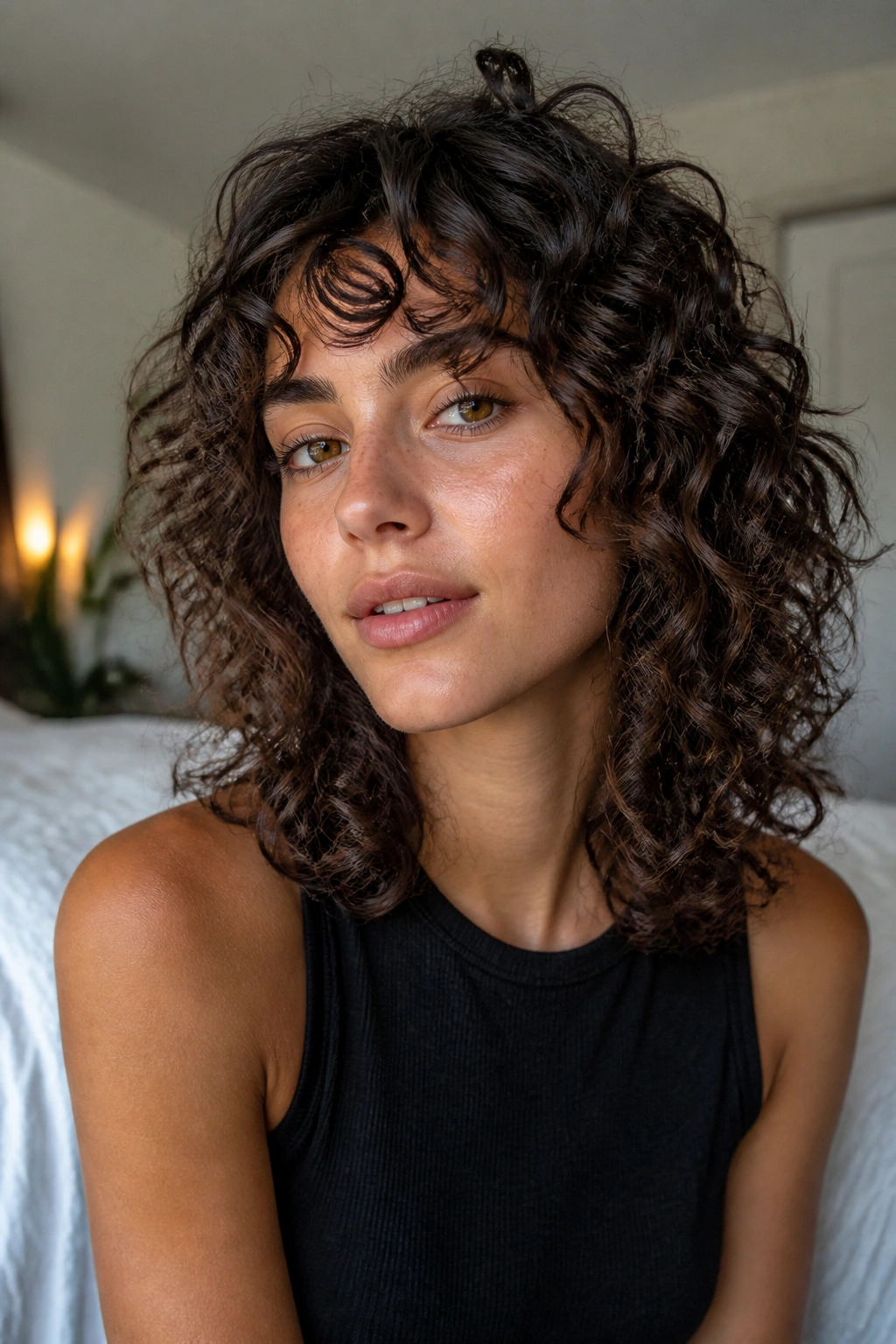
A shoulder-length wolf shag is the one I recommend when someone says, “I want style, but I don’t want a morning project.” That’s a fair ask.
Shoulder length gives curls enough room to spring without losing the outline. It also makes the haircut easier to refresh because the sections are not so long that they take forever to dry. If you have a routine built around leave-in conditioner, curl cream, and a diffuser, this cut fits neatly into it.
How to Keep It from Puffing Out
The answer is not more product. It’s smarter product placement.
- Put leave-in conditioner mostly through the mid-lengths and ends
- Use a light gel near the crown to help the roots hold shape
- Scrunch out water with a microfiber towel, not a rough bath towel
- Diffuse in short bursts, then stop and let the hair cool
This shape does especially well when the layers start around the cheekbone and fall softly toward the shoulders. It gives the haircut a nice swing when you walk, which sounds small until you notice how often hair gets stuck in jackets, seat belts, and scarf collars.
12. A Shorter Shape for 3A Curls
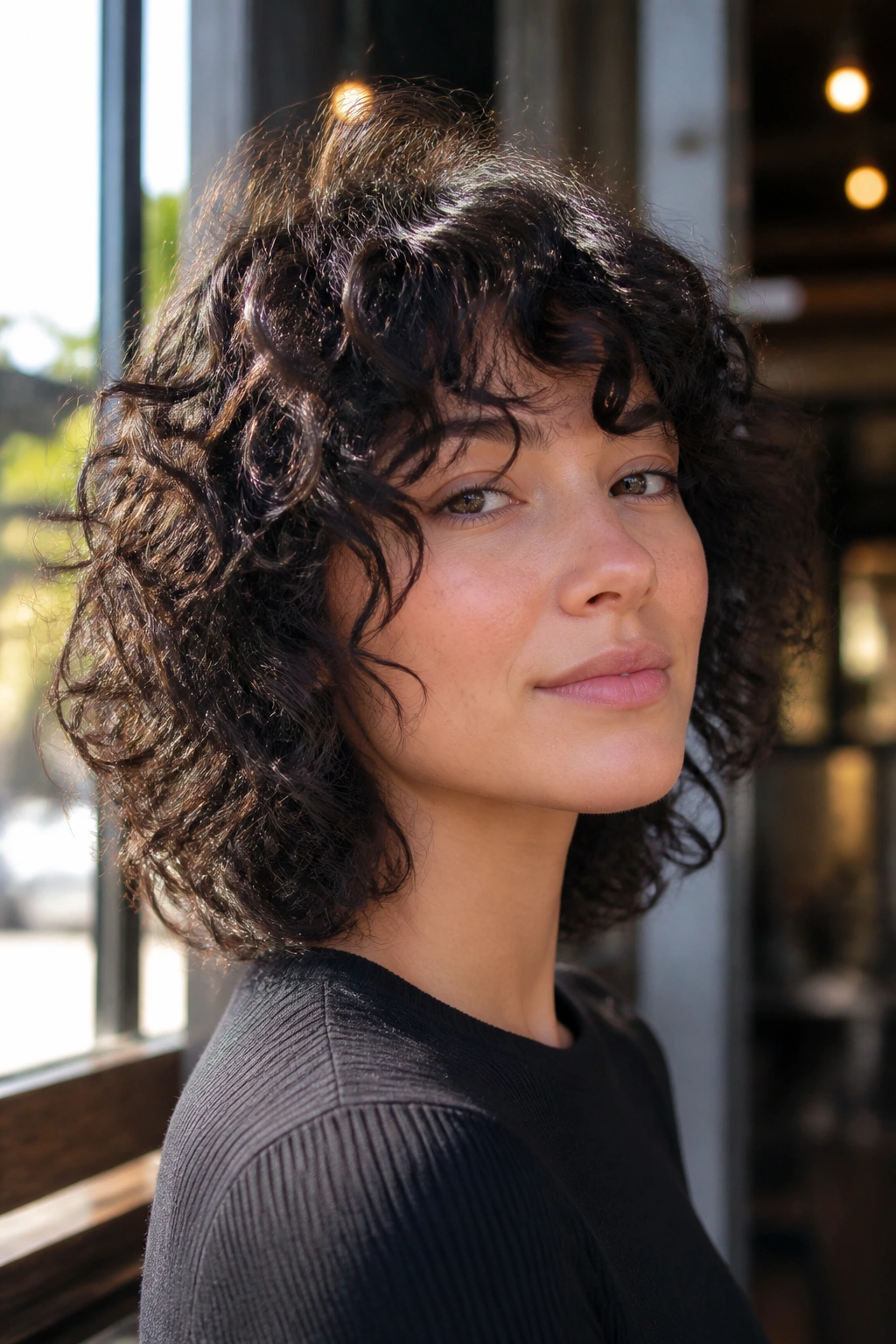
A shorter wolf shag can look very polished on 3A curls, which surprises people who think shaggy cuts only work when the hair is long. Shorter lengths can actually make the curl pattern read more clearly.
The reason is simple: the curl clumps are easier to see when the hair is not buried under its own weight. A shorter shape lets the layers stack in a cleaner way, so the hair looks bouncy instead of collapsed. This is especially useful if your curls have a defined S-shape and a decent amount of spring.
A chin-to-shoulder range usually works best here. Too short and the shape can jump outward. Too long and you lose the crisp curl pattern that makes the cut interesting. The sweet spot depends on how much shrinkage you get, which is one of those boring details that turns out to be everything.
If you like hair that looks styled even when you barely touch it, this version pulls that off. It gives structure without freezing the curls in place.
13. Full Curly Bangs That Frame the Eyes
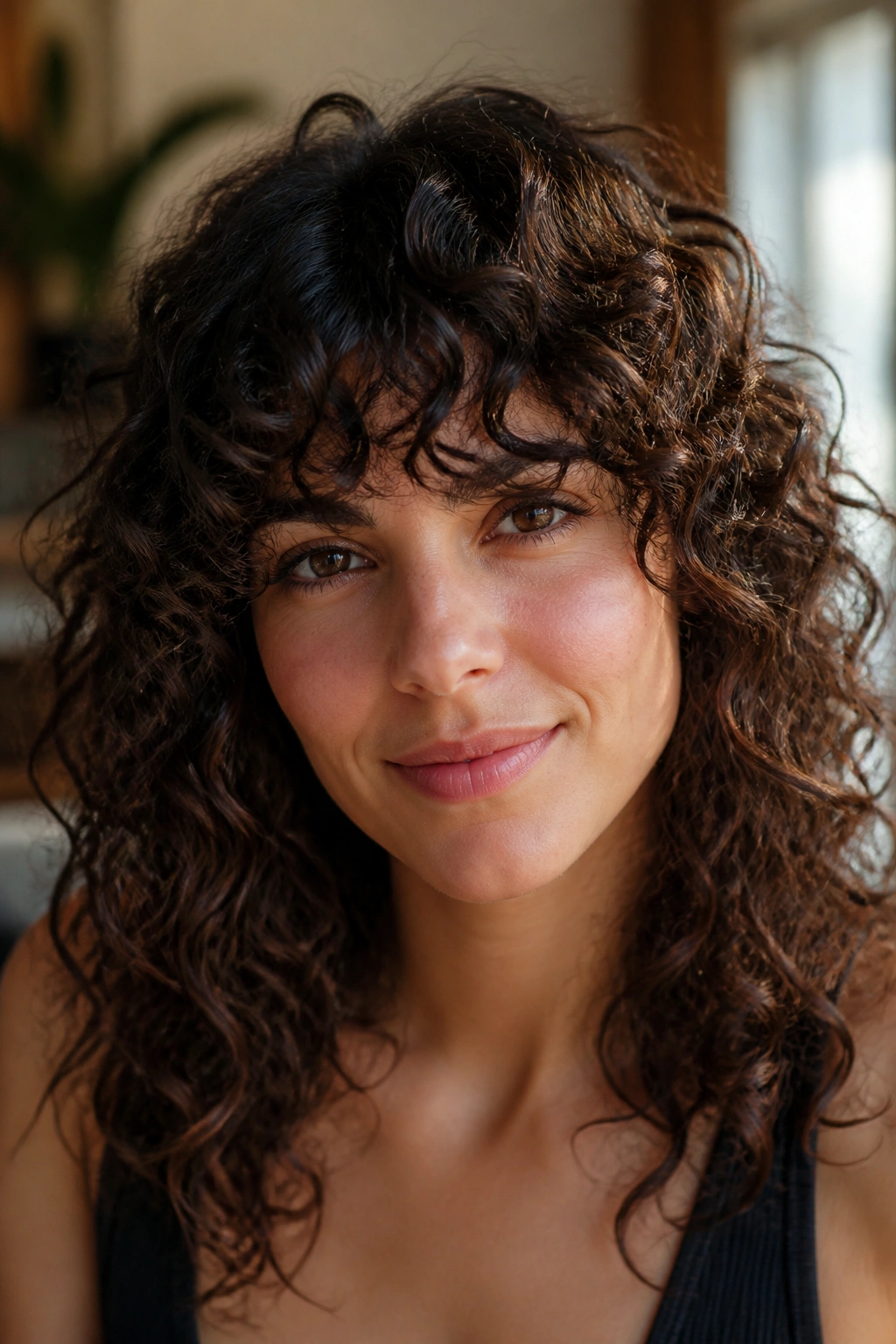
Can curly bangs work without taking over the entire haircut? Yes, if the bangs are treated like part of the shape instead of an afterthought.
A wolf shag with full curly bangs is softer than the micro-fringe version and more face-focused than curtain bangs. The bangs sit fuller across the forehead, but because they’re curly, they still have air and movement. The trick is keeping enough length so they bend rather than buckle. That usually means the bangs should be cut with shrinkage in mind and checked dry before anything gets trimmed short.
What Makes It Different
This style is all about the front. The rest of the haircut supports it, but the bangs are the star. They can soften a long face, bring balance to a stronger jaw, or make a straightforward shag look more intentional. If your curls tend to separate in little ribbons, the bang area can look especially pretty when it is cut to encourage that pattern.
Be honest about maintenance. Curly bangs need a bit more attention than the rest of the cut. A quick water refresh in the morning, a touch of curl cream, and a small round diffuser usually keep them in line.
Some people hate that extra step. I get it. But if you love the look, it is worth the fuss.
14. A Softer Wolf Shag for Fine Curls
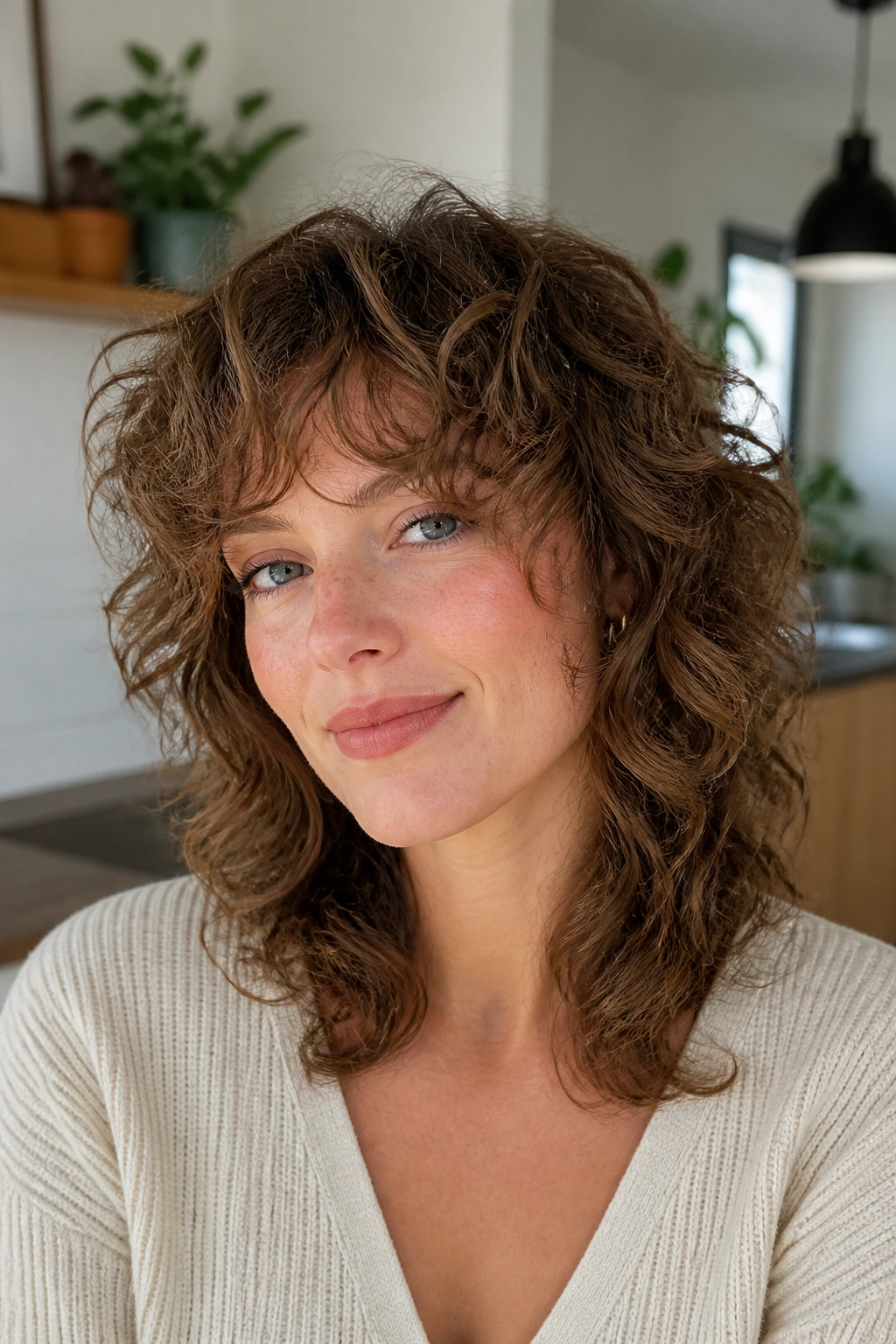
Fine curls need a different kind of thinking. Too many layers can strip away the little bit of body the hair has, and then the whole style starts to look wispy before it has any chance to move.
A softer wolf shag keeps the outline fuller and uses light layering only where it helps the curl sit better. The goal is not to create a huge, dramatic shape. The goal is to give the hair enough structure so the curls don’t collapse into flat pieces. That means fewer extreme cuts, more careful blending, and a strong perimeter.
This is one of those cases where restraint pays off. If the stylist goes too hard with thinning or razor work, fine curls can lose their bounce fast. Better to keep the layers long, let the ends look neat, and use styling products that give grip without weight.
A Few Things That Help
- Use a small amount of mousse at the roots
- Avoid heavy oils near the crown
- Ask for soft face-framing pieces, not dramatic choppy breaks
- Dry the hair with the head upright if volume is the goal
Fine curls can look airy and sharp in this shape. They just need room to do it.
15. The Best Cut for Your Curl Pattern

The best wolf shag for curly hair is the one that respects what your curls already do. That sounds obvious, but it gets ignored constantly. People bring in a photo of a cut that worked on a completely different texture, then wonder why their hair behaves differently. Hair is rude that way. It always tells the truth.
If your curls are loose and springy, you can usually go bolder with the layers and the fringe. If your curls are tight, you may want a rounder outline and less aggressive texturing. If your hair is dense, focus on bulk removal inside the shape. If it is fine, keep the layers long and the outline solid. No single version wins for everybody, and that is fine.
The one constant is this: a wolf shag looks best when it looks intentional. The layers should seem like they were placed there for a reason, not hacked in because someone wanted “a lot of texture.” Ask for where you want the shortest pieces to land. Mention how much shrinkage you get. Bring a dry reference photo if you can, because curly hair on a screen and curly hair in a chair are not the same thing.
A good cut grows out with some grace. That matters more than a one-day wow moment. Hair has to live with you, after all.
