



The wolf cut is essentially a chaotic marriage between a classic 1970s shag and a 1980s mullet, and it demands an attitude that matches its silhouette. You have got choppy layers, a ton of volume at the crown, and those wispy, face-framing ends that basically beg to be styled. When you shorten that cut, you strip away the weight, leaving behind a raw, edgy aesthetic that acts like a canvas for color.
Color placement on a short wolf cut is not about covering your head in a single, flat shade. It is about geography. You need to think about how light hits those stacked layers and where the texture falls. A heavy, one-dimensional color can easily flatten the haircut, turning a deliberate mess into a shapeless mop. You want shades that create depth, define the layers, and accentuate the choppy movement that makes the cut so unique in the first place.
Whether you are looking for something that screams loud and punk or a subtle shift that adds just a hint of dimension to your natural base, the right hue can completely reframe the shape of your hair. This is not about following a passing phase; it is about finding the tone that makes you feel like the most authentic version of yourself. Let’s look at how to pair color with the architecture of a short wolf cut.
1. Platinum Blonde
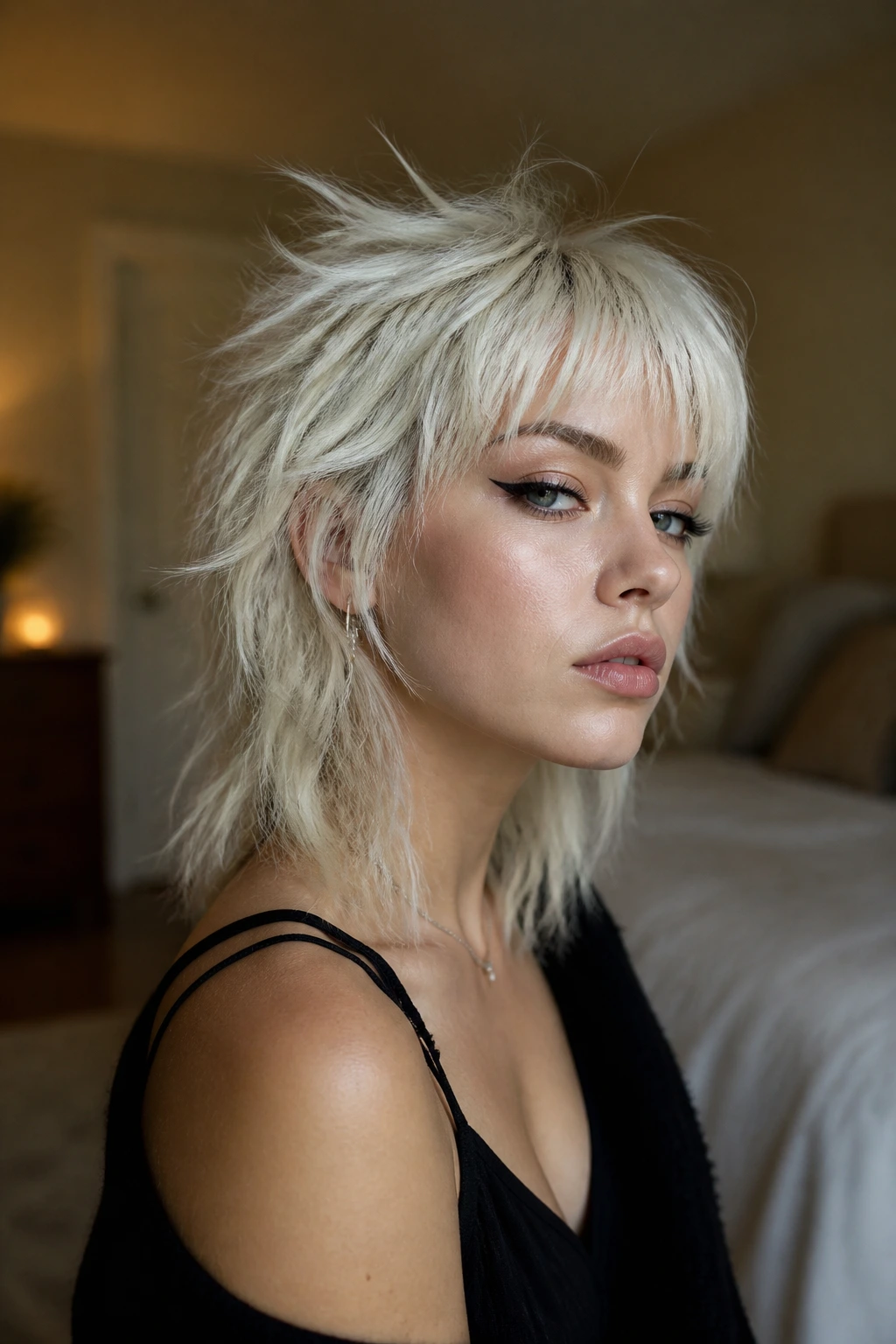
This is not for the faint of heart, but it is undeniably the most effective way to highlight the aggressive texture of a short wolf cut. Platinum strips the hair of its natural depth, which sounds counterintuitive, but it actually allows the shadow and light to define the layers more clearly. When your hair is white-blonde, every single snip of the scissor is visible. You see the separation of the fringe, the chaos of the crown, and the taper at the nape.
Why It Works for Shorter Layers
The lack of pigment creates a stark, graphic quality. If your hair is dark, the regrowth creates a natural root smudge that adds depth to the crown volume without you having to do a thing.
- The Texture Factor: Bleach roughens the cuticle, which actually gives the hair a bit more grip and grit. This is perfect for a wolf cut, which needs that messy, “lived-in” texture to hold its shape throughout the day.
- The Contrast: Pair this with a dark, bold lip or sharp winged eyeliner. The platinum provides a clean, neutral background that makes any makeup choice look intentional and fierce.
Pro tip: Use a high-quality purple shampoo at least once a week. Without it, that platinum will pull yellow, and yellow can make the layers look muddy instead of crisp.
2. Jet Black
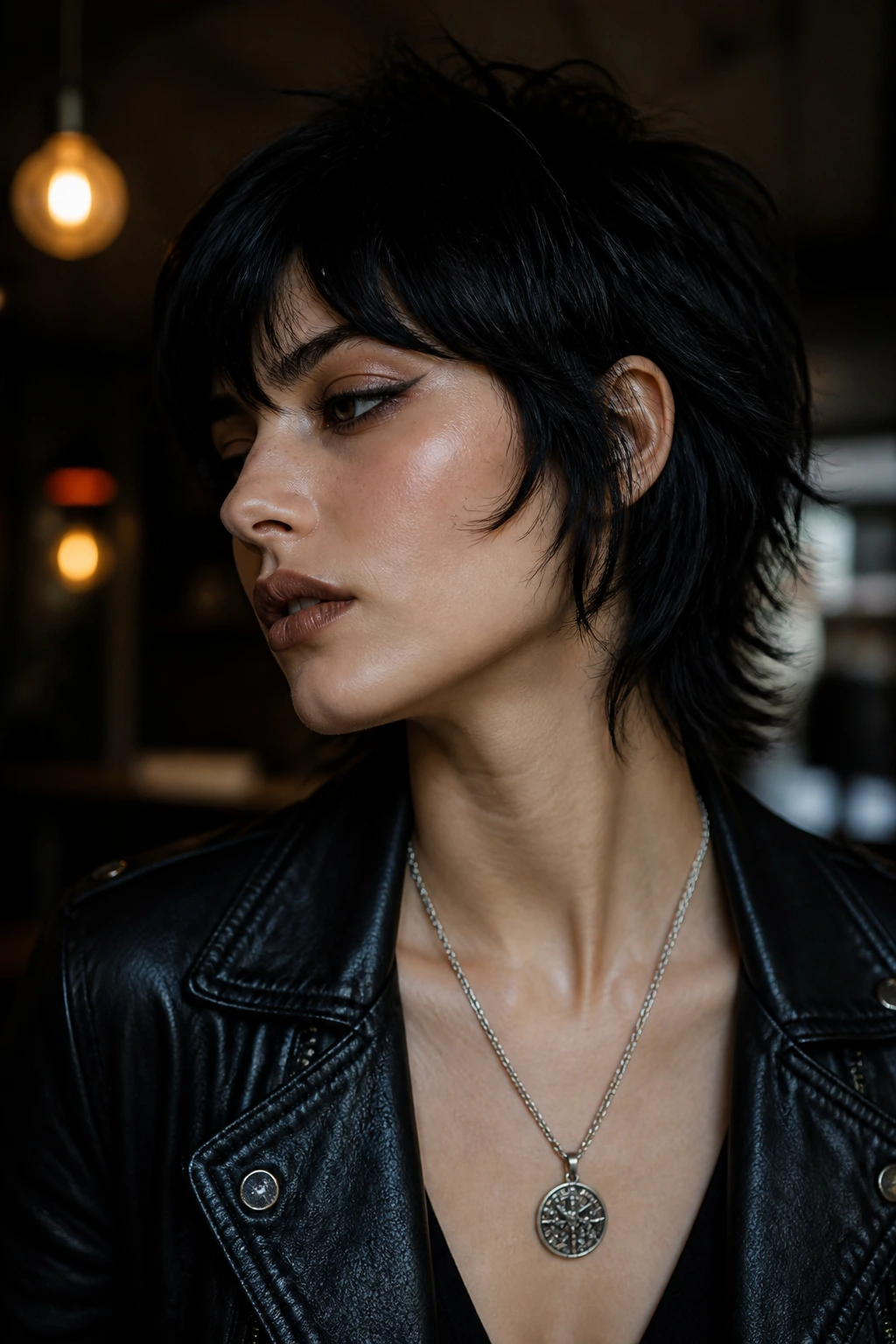
Black hair can sometimes look like a solid helmet, but on a layered, short wolf cut, it becomes a silhouette. Because the cut has so much movement, jet black takes on a sleek, gothic, or high-fashion quality that shifts with the light. It emphasizes the shape of the cut rather than the texture. You lose the detail of individual strands, but you gain a powerful, structured aesthetic that looks expensive and sharp.
Avoid using a box dye if you can. You want a black that has a high-shine finish, almost like polished onyx. If the black is too matte, it will swallow the layers and the cut will just look like a bowl cut from a distance. Ask your colorist for a demi-permanent gloss after the color application to lock in that mirror-like sheen. This adds the dimension that black hair on a short cut desperately needs.
3. Copper and Burnt Orange
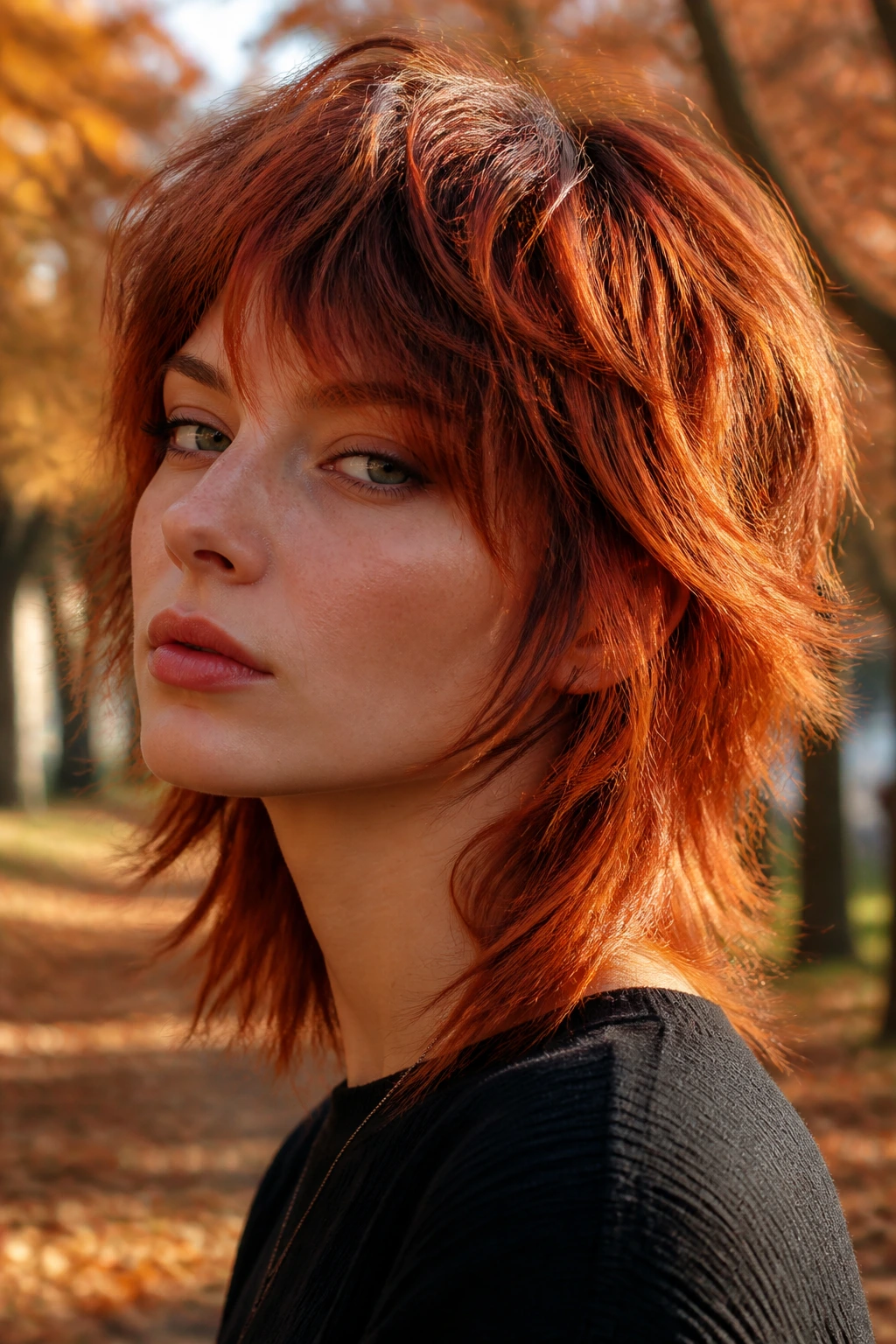
Copper is the ultimate shade for highlighting the internal movement of a shag-mullet hybrid. It acts like a highlighter for the hair. Because copper sits on the warmer side of the spectrum, it catches the light at every angle, making the choppy ends look vibrant and full of life. It makes the hair look thicker, too, which is a massive bonus if your hair texture is on the finer side.
Think of autumn leaves—that mix of gold, red, and brown. You can achieve this by doing a base of deep copper and weaving in lighter, golden-orange balayage pieces through the fringe and the top layers. When the wind blows or you run your fingers through your hair, the colors blend together in a way that feels organic and effortless. It’s a very low-maintenance high-impact look because it grows out so gracefully.
4. Pastel Pink
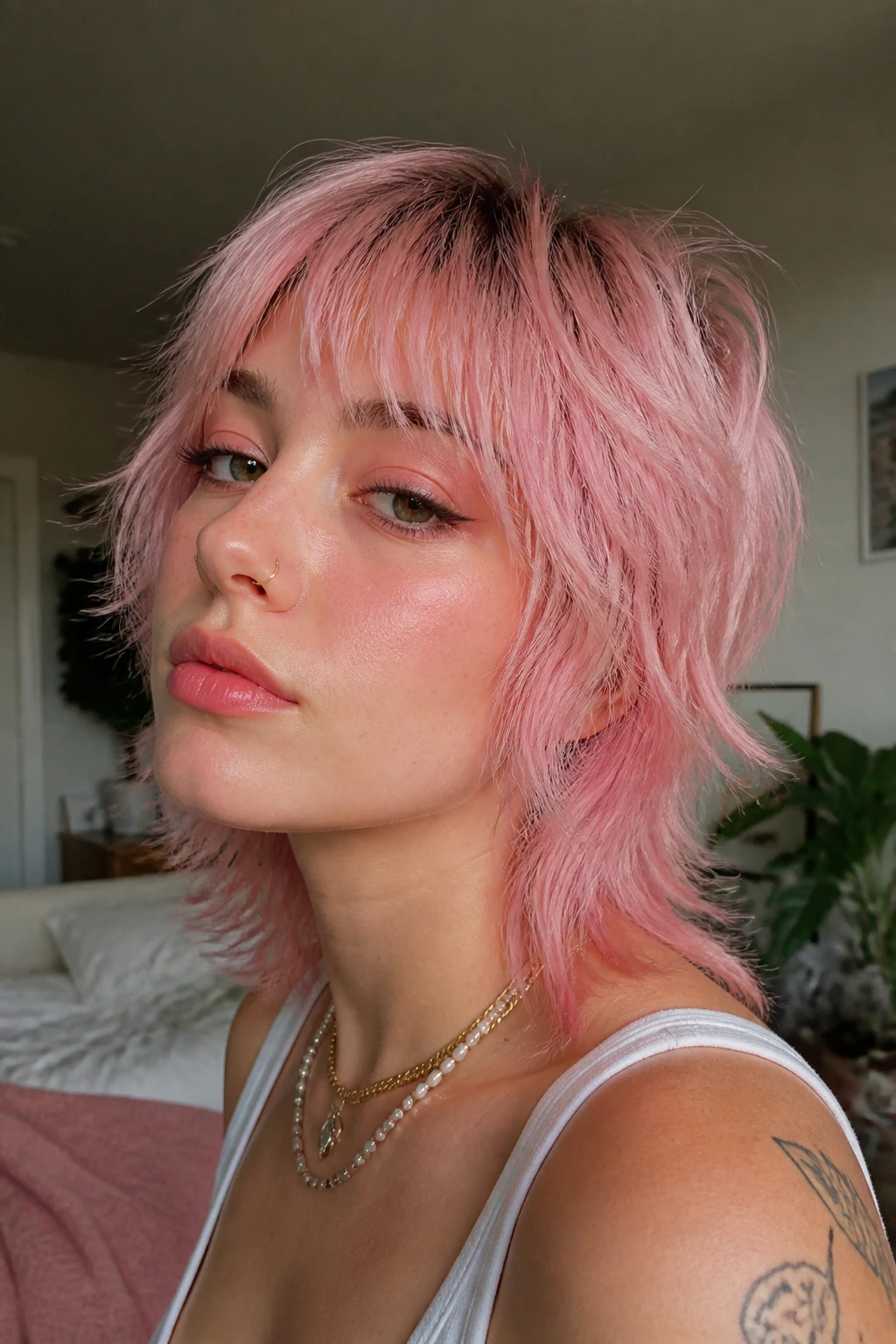
Pink on a short wolf cut is a classic trope for a reason. It is inherently soft yet defiant. The best way to approach this is to keep the roots slightly darker—maybe a natural ash brown or a deeper dusty rose—and let the pink fade out toward the ends. This gradient effect mimics the natural shadow that the short layers create, so it never looks like a wig.
The Maintenance Reality
Pastel colors are notoriously fleeting. They will fade within two to three washes if you are not careful.
- The Strategy: Mix a bit of your direct dye (the semi-permanent pink) into your daily conditioner. Every time you wash your hair, you are essentially depositing a tiny bit of pigment back into the strands.
- The Aesthetic: This keeps the pink looking intentional rather than “washed out.” A faded, patchy pink can look cool if that’s the vibe you want, but a vibrant, consistent pastel requires that refresh step.
5. The Money Piece
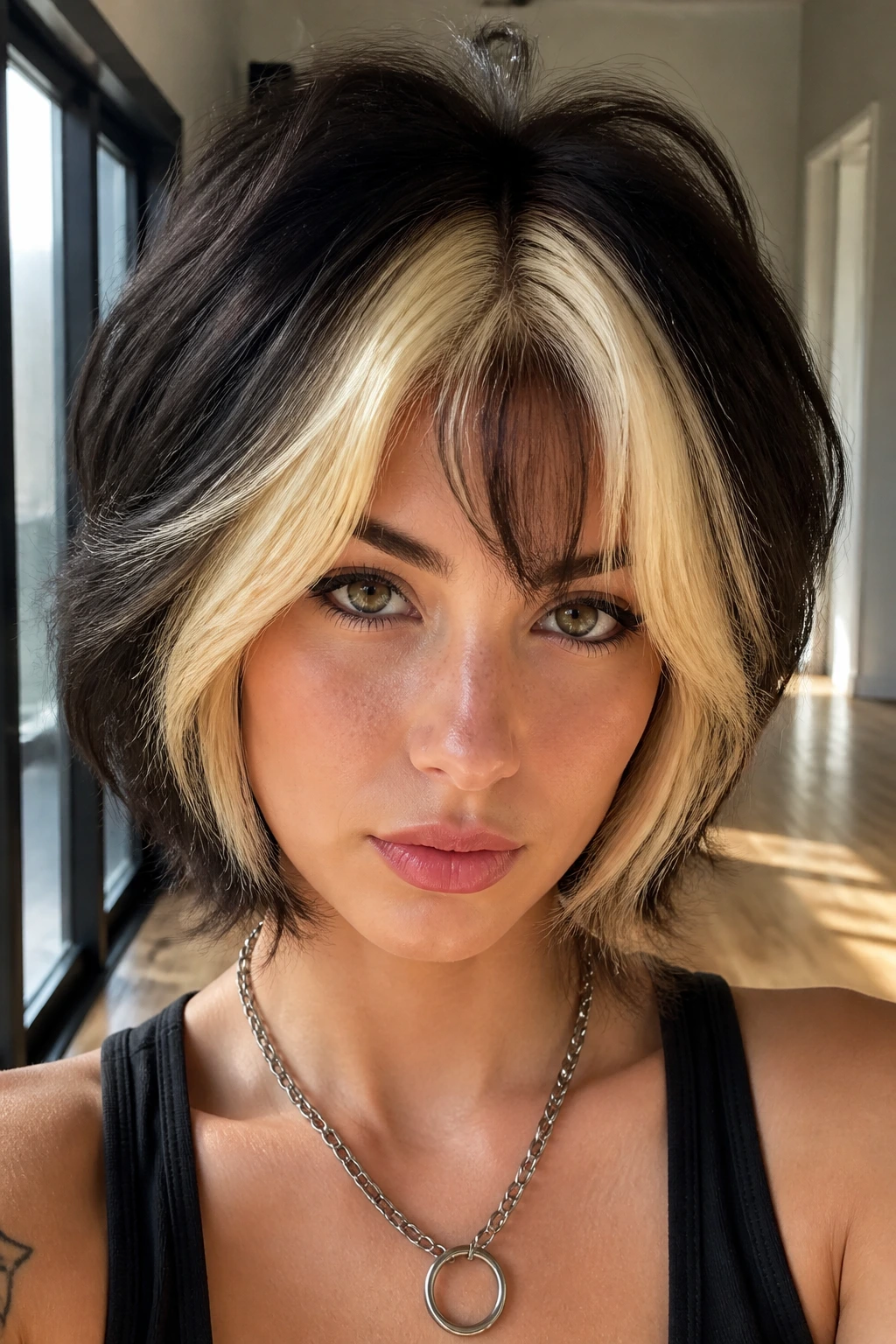
The money piece is that thick, face-framing chunk of hair bleached or dyed a contrasting color. On a short wolf cut, this is transformative because of the heavy fringe. You aren’t just highlighting a few strands; you are framing your entire face with a bold streak of color that draws eyes directly to your features. It adds a Y2K-inspired punk edge that feels very grounded in current styling preferences.
Do not be afraid to go extreme with the contrast. If your natural hair is dark brown, go for a creamy vanilla blonde or even a vivid red. The key here is the thickness of the section. If the section is too thin, it just looks like a stray highlight. If it is thick, it looks like a design choice. Ensure the section starts right at the center part and wraps around the front of the face, mirroring the length of your shortest fringe layer.
6. Peekaboo Underlights
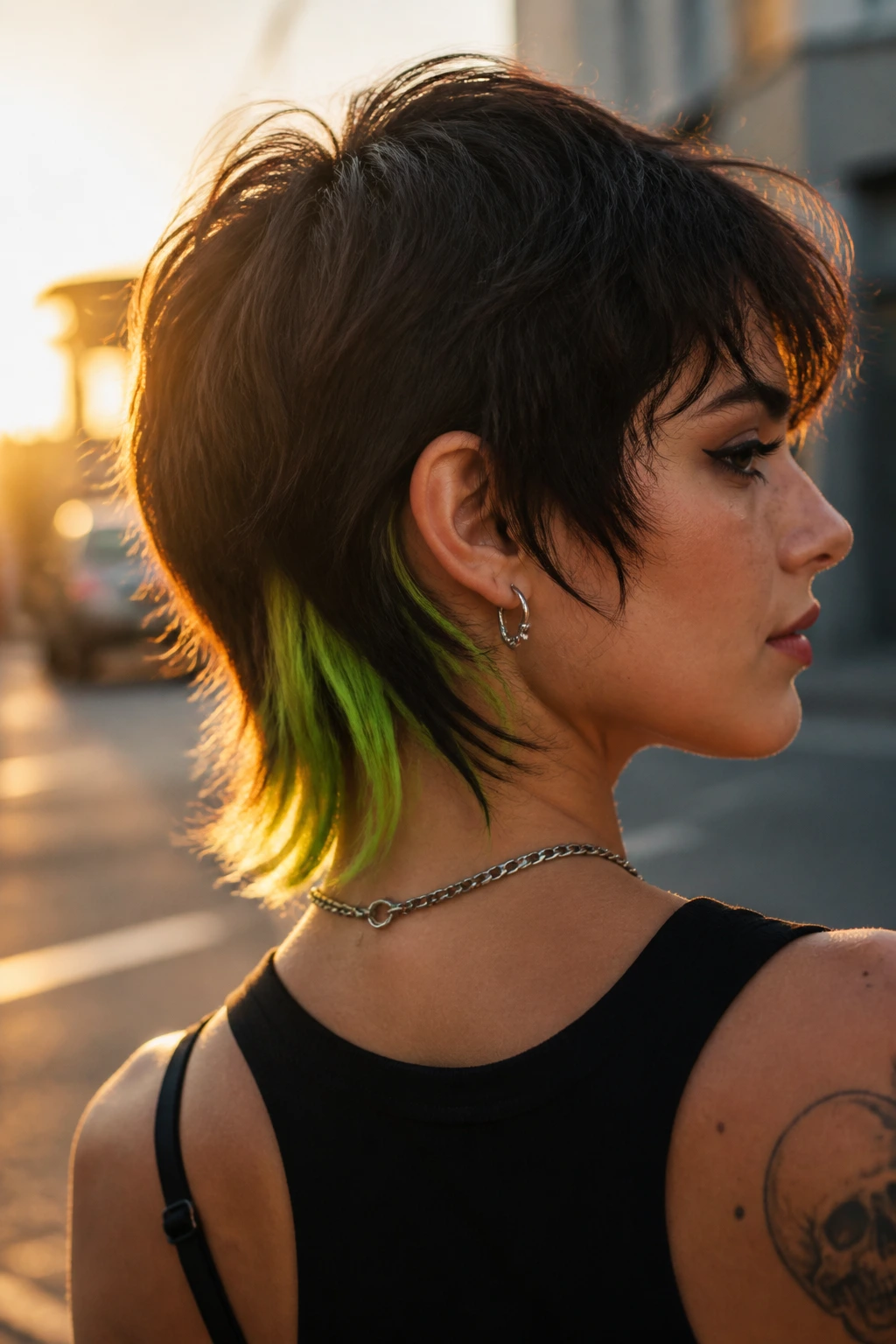
This is the “business in the front, party in the back” of hair color. You keep the top layers, the fringe, and the crown a natural or subtle shade, then go wild with the hair underneath at the nape of the neck. When your hair is still, it looks like you have a simple, grounded cut. The moment you move, shake your head, or tuck your hair behind your ears, the surprise color flashes through.
This works exceptionally well for short wolf cuts because the back is already tapered and shorter. The nape section is small, so you can afford to use a high-maintenance color like neon green or electric blue without having to dye your entire head. It is a fantastic testing ground for bold colors. If you get bored or don’t like it, it is barely visible from the front, so it’s easy to grow out or color over.
7. Shadow Root
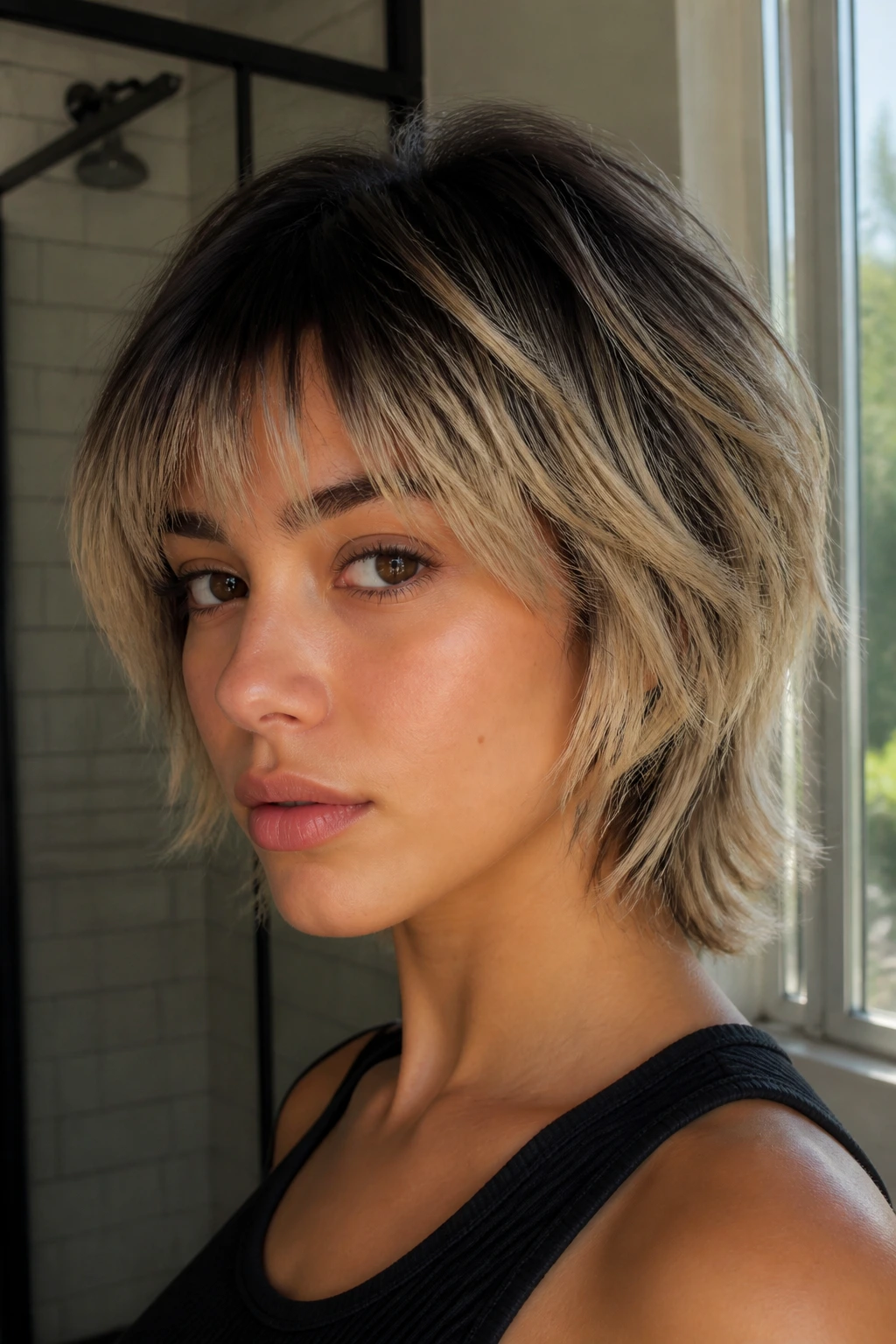
Shadow root is the secret weapon for anyone who loves the look of bleached hair but hates the three-week touch-up cycle. By keeping the roots at your natural shade—or even darkening them slightly—and blending the color down into the rest of the cut, you get a “lived-in” effect that looks intentional. It removes that harsh line of demarcation that happens when your hair grows out.
On a short wolf cut, a shadow root adds depth to the crown. The volume at the top of a wolf cut is where the hair sits flattest against the scalp; darkening that area creates an illusion of density. It’s a trick of the eye that makes the cut look voluminous and intentionally piecey. Ask your colorist for a “smudged” root, which uses a darker formula to gently transition the color into the lighter lengths.
8. Split Dye
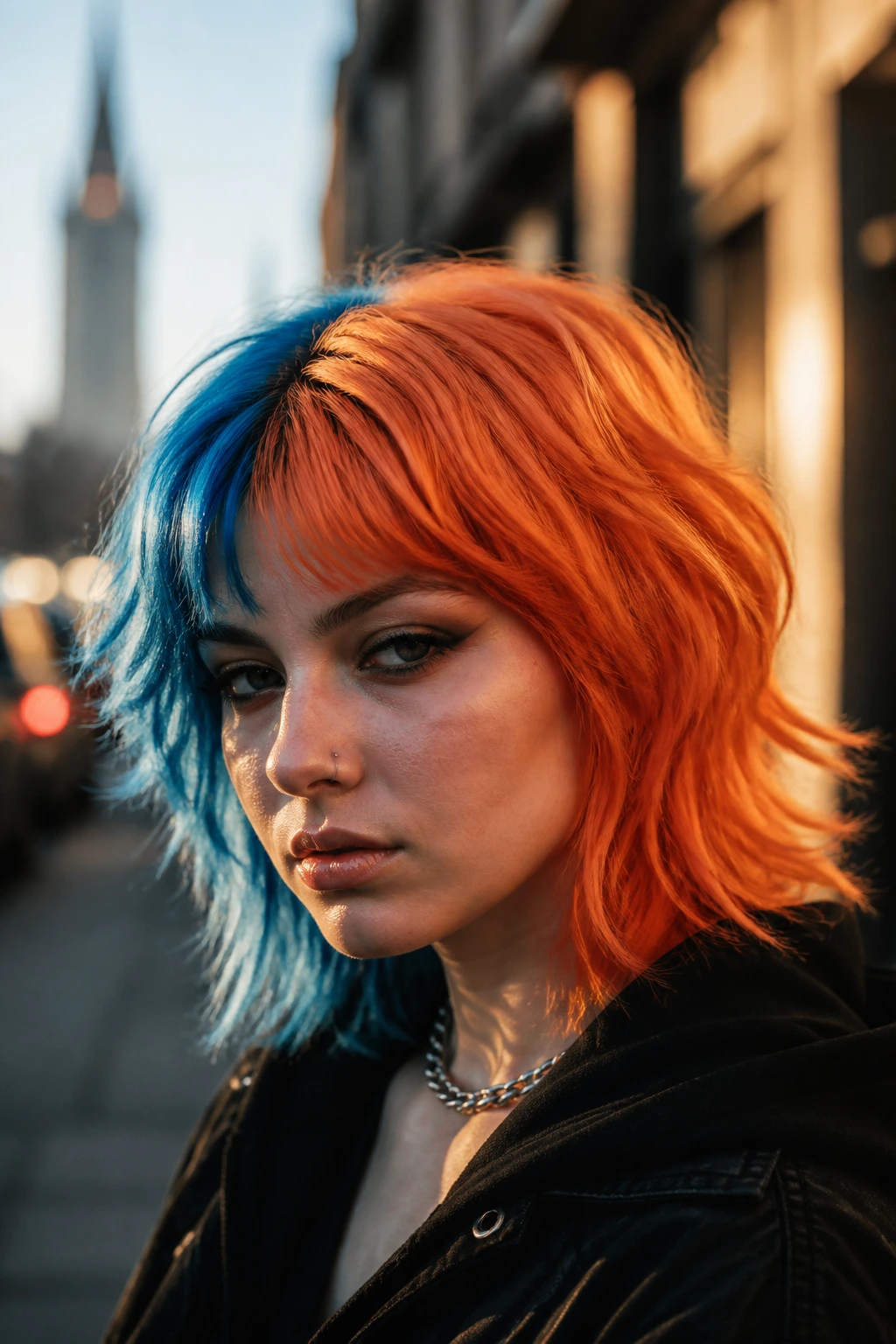
The split dye—where one half of the head is one color and the other half is another—is the ultimate commitment to the edgy, chaotic nature of the wolf cut. It’s a graphic look. Because the cut is inherently uneven and asymmetrical, splitting the color right down the center line of your part creates a stark, balanced contrast.
You can go for monochromatic, like black and white, or pick two opposing colors on the color wheel, like blue and orange. Just be prepared for the maintenance. The biggest challenge with split dye is preventing the colors from bleeding into each other during the wash. You have to wash your hair with cold water and section it off, rinsing each side separately. It is a ritual, but for the aesthetic payoff, many find it worth the extra effort.
9. Silver and Ash Grey
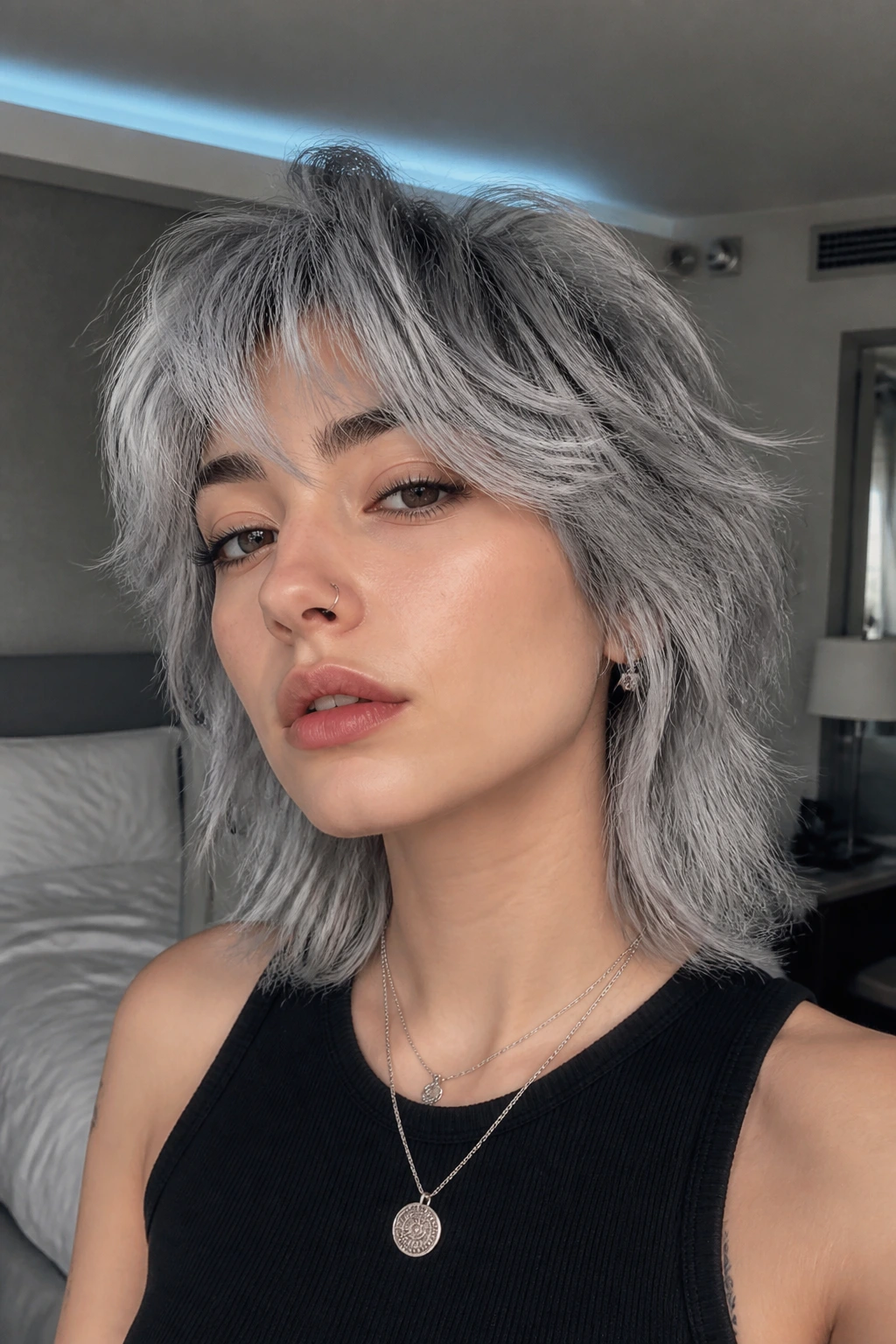
Silver and ash tones are not just for the older crowd. When placed on a short, messy cut, they look futuristic and metallic. Ash grey is particularly good for neutralizing brassiness, which makes it a very “cool” color in every sense of the word. It highlights the cool undertones of your skin and pairs beautifully with silver jewelry.
Think of it as a slate-colored canvas. Because grey is a neutral, it doesn’t compete with the shape of the cut. It allows the choppy layers to stand out without distraction. You will need a strong toning routine to keep it from turning yellow. A blue-based shampoo is your best friend here, but do not overuse it, or you might end up with a faint blue tint—which, to be fair, also looks pretty great on a wolf cut.
10. Cherry Cola
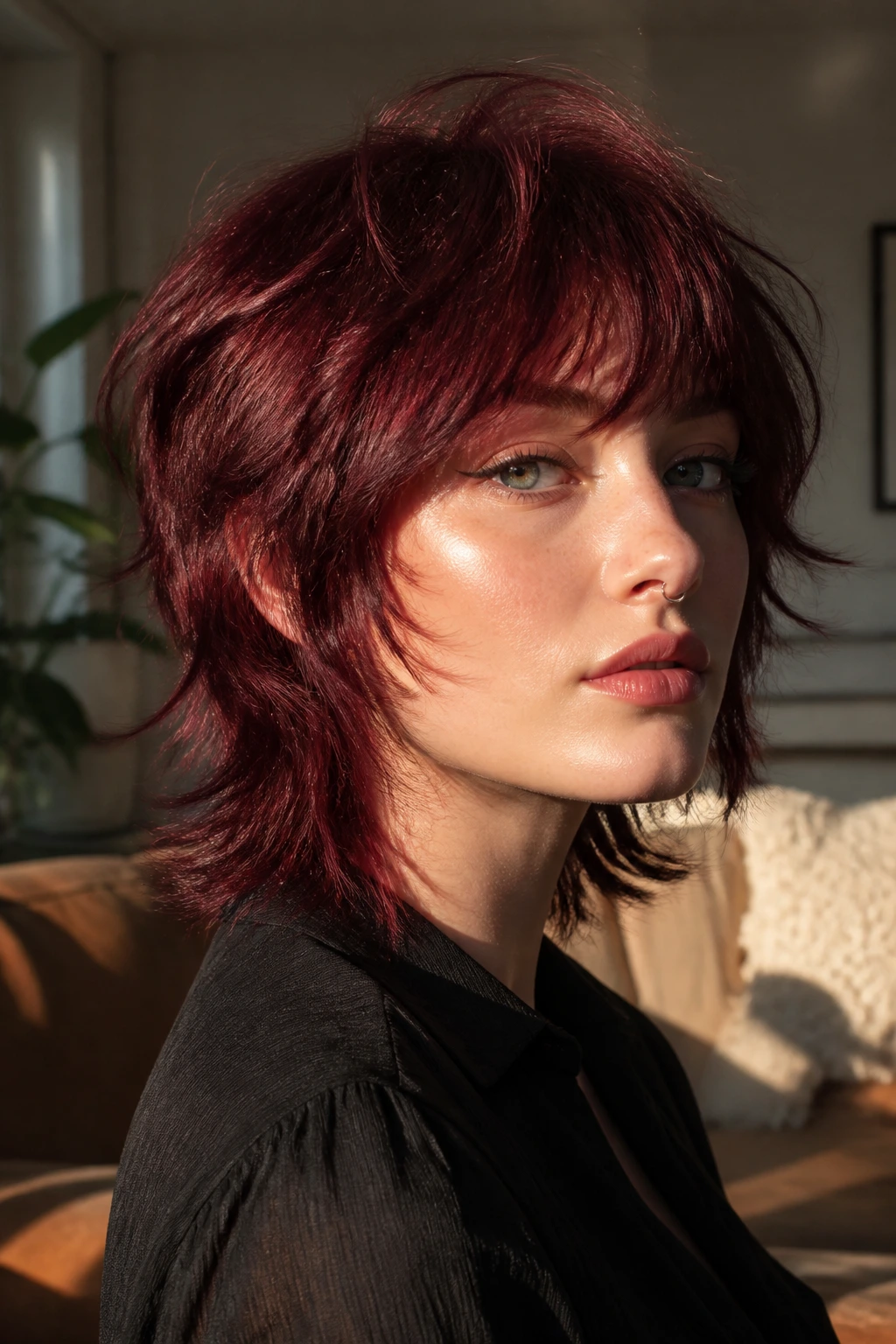
This is a deep, moody red with violet or brown undertones. It’s not quite a fire-engine red, and it’s not quite a natural auburn. It sits in that sweet spot of being vibrant yet sophisticated. On a short wolf cut, this color catches the light beautifully, especially on the ends of the layers where the light hits the texture.
It has an incredible depth that makes the hair look healthier and thicker. If you have darker hair, you can achieve this by doing a gloss or a semi-permanent deposit over your natural color, which means less damage. It’s a great entry-level “fun” color because it’s muted enough to be office-appropriate in most environments while still looking intentional and styled.
11. Caramel Highlights
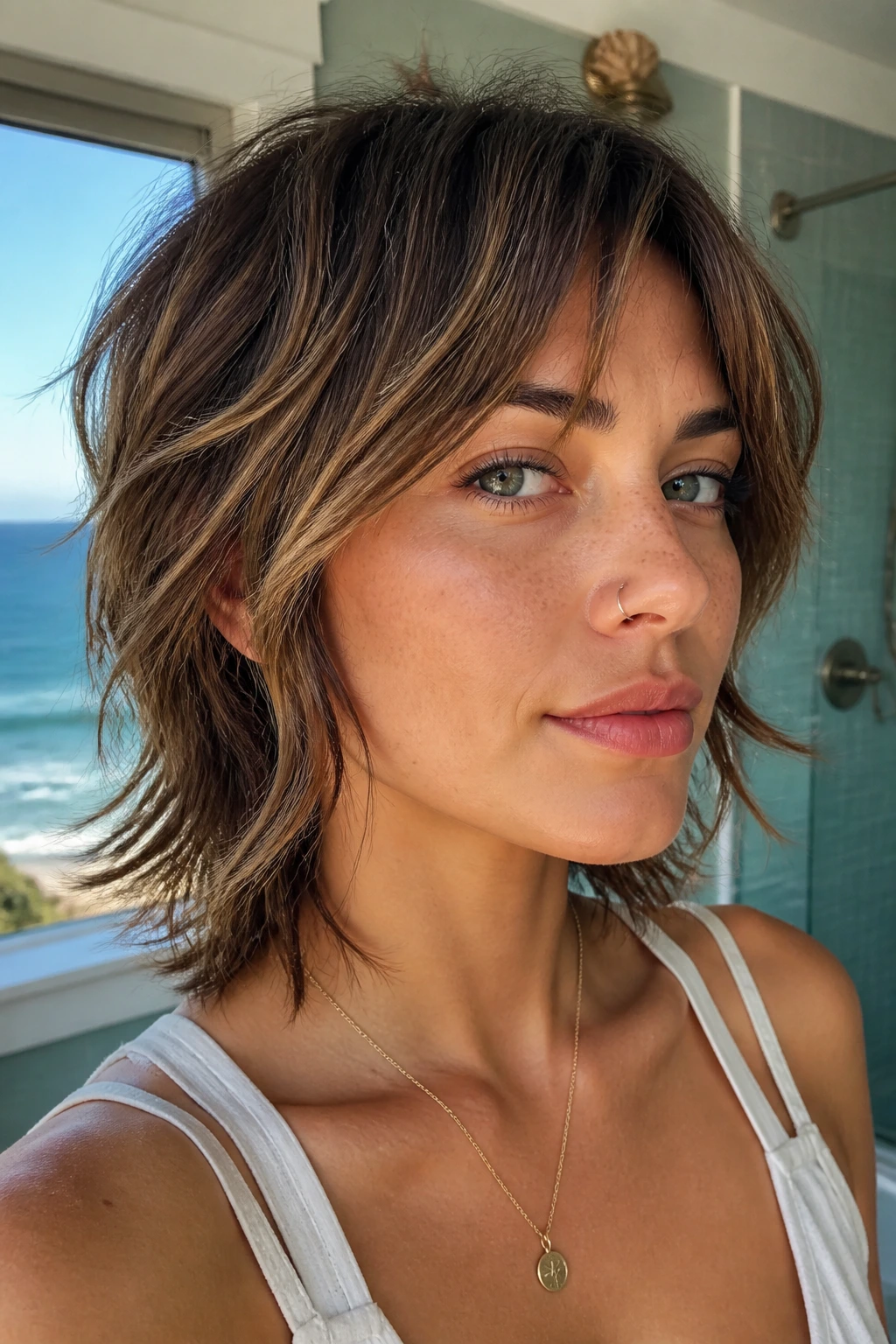
If you want dimension without the maintenance of a full bleach job, caramel highlights are your best bet. You are essentially adding ribbons of golden-brown color throughout the mid-lengths and ends of the layers. This mimics the way the sun naturally lightens hair, giving you a beachy, windswept look that complements the loose, shaggy feel of the wolf cut.
Because the cut is short, the highlights need to be placed carefully. You don’t want thick, chunky stripes. You want fine, “baby-lights” that weave through the layers. This breaks up the solid base color and makes the haircut look soft and touchable. It’s the perfect way to add visual interest to a brown or dark blonde base without changing your entire identity.
12. Electric Blue
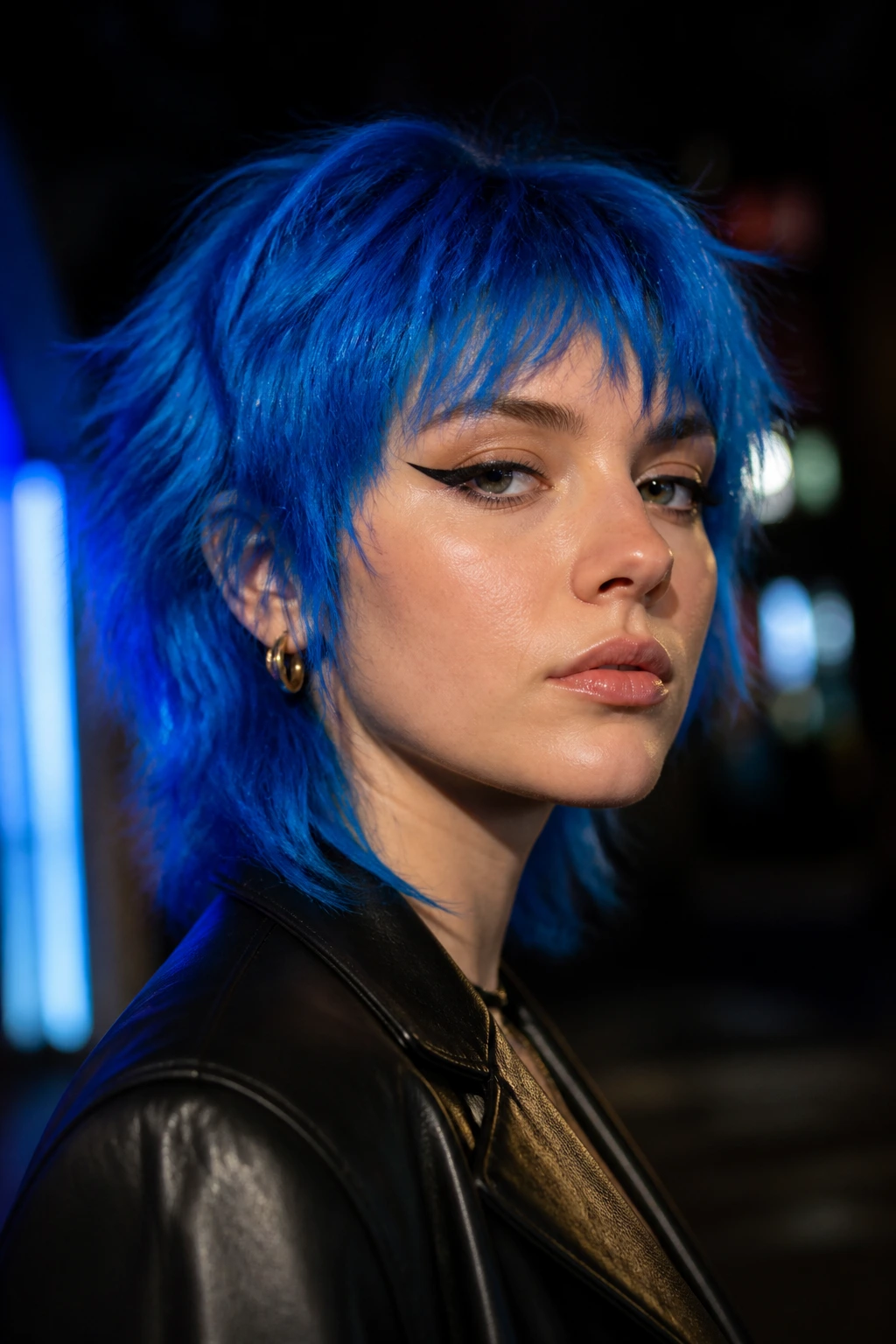
Blue is the color of the bold. When you dye a short wolf cut electric blue, you are making a statement that you aren’t afraid of being noticed. Blue is a cool tone, so it looks particularly striking on skin with pink or cool undertones. It adds a certain “punk-rock” quality that fits the history of the shag-mullet perfectly.
Keep in mind that blue dye can be incredibly stubborn. If you ever plan on changing your hair color soon, think twice before going blue. It will cling to your hair for months, often fading into a greenish-teal that can be difficult to lift. However, if you are ready to commit to the look for the long haul, it is one of the most rewarding colors to wear. It looks like a neon sign in the dark—vivid, intense, and impossible to ignore.
13. Mushroom Brown
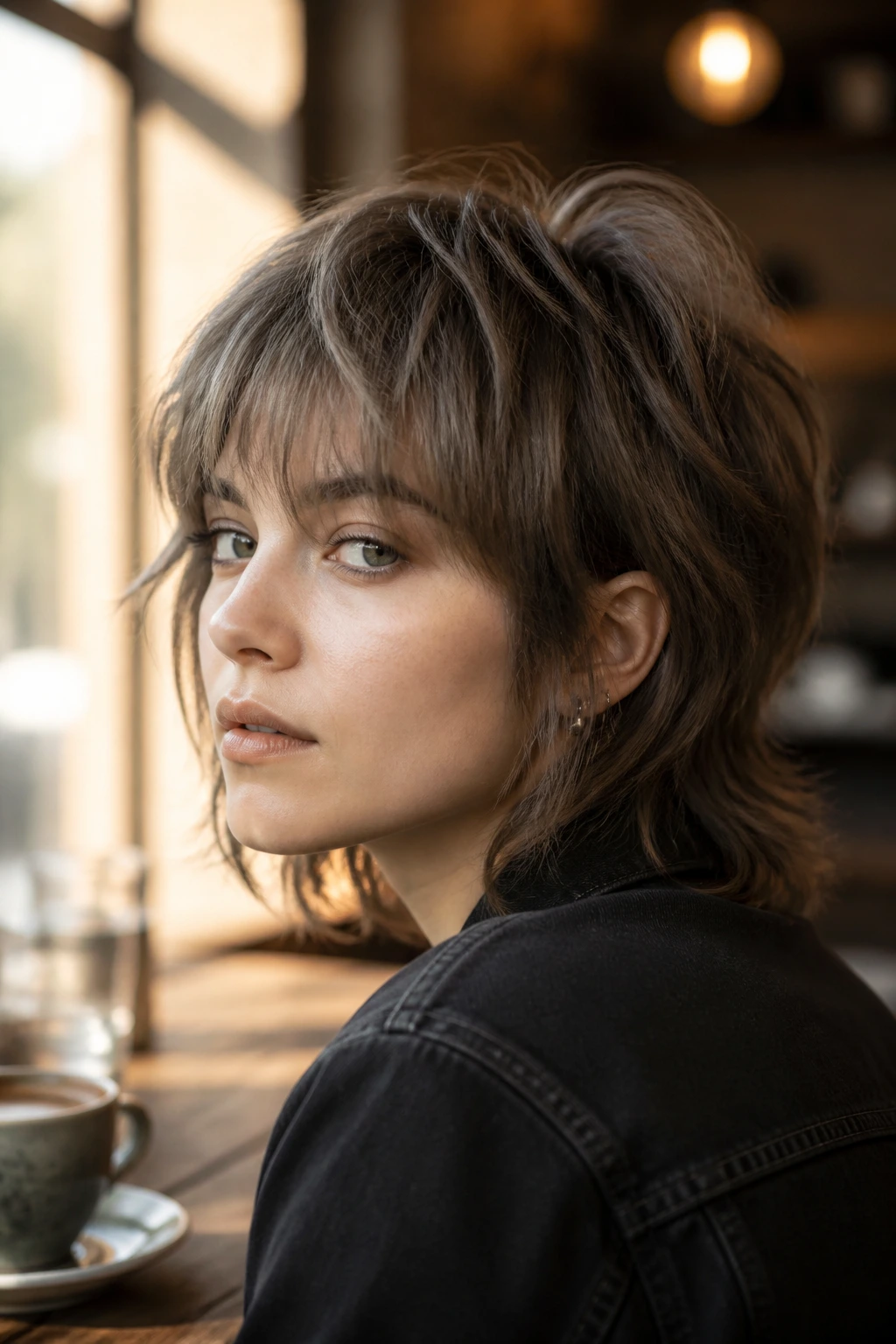
Mushroom brown is essentially a cool-toned, earthy taupe. It’s not a warm chocolate brown, and it’s not an ashy grey. It’s a grounded, neutral shade that looks incredibly chic. On a short wolf cut, this color emphasizes the texture over the tone. It’s understated, which makes it perfect if you want the cut itself to be the star of the show.
It is a low-contrast look, which makes it feel mature and polished. This is the color for you if you want an edgy haircut but need to keep the color professional. It absorbs light rather than reflecting it, which can make the layers look tighter and more precise. Pair this with minimal styling—a little bit of sea salt spray—for an effortless, “I woke up like this” vibe.
14. Lavender
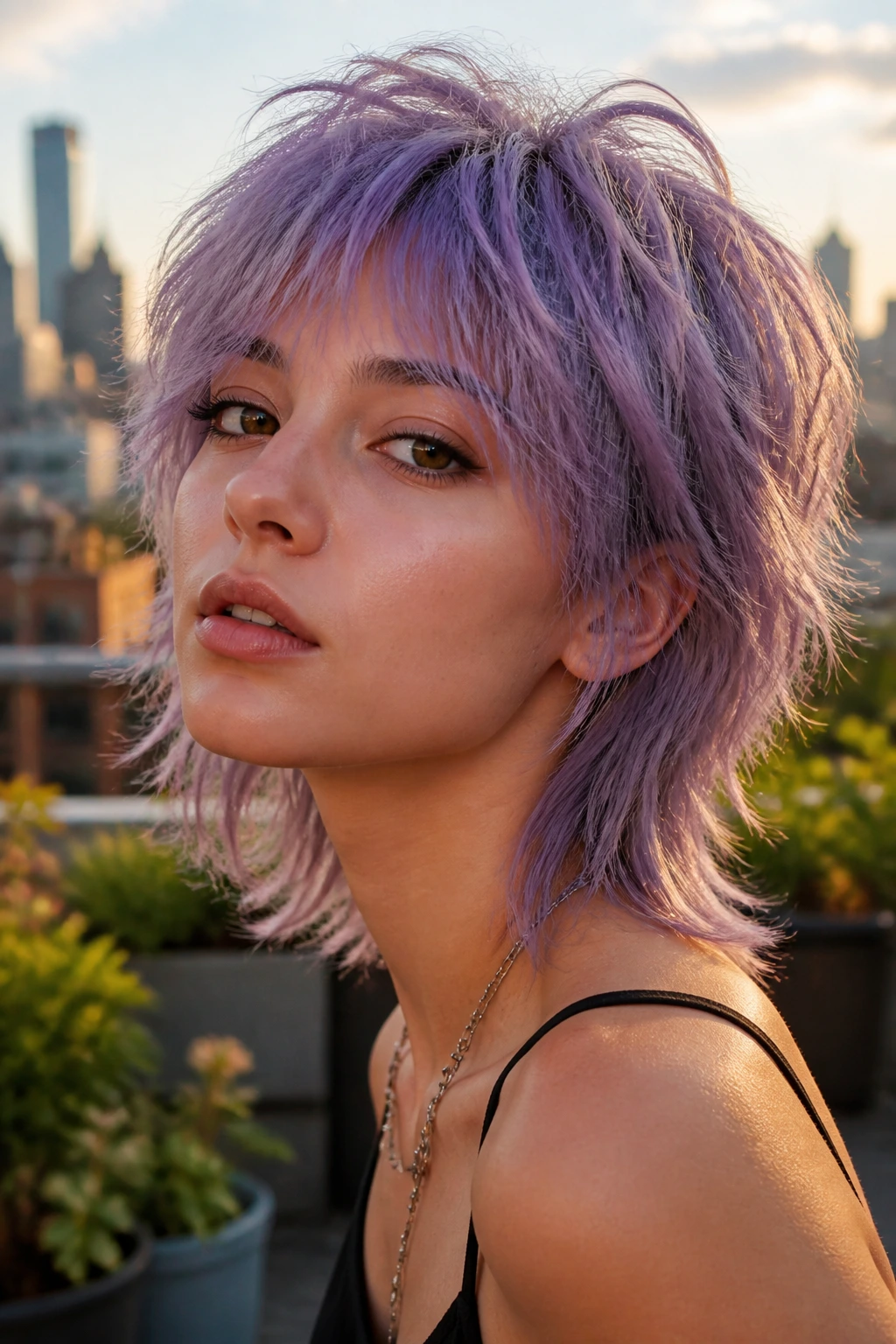
Lavender is the soft, ethereal cousin of the bold purple. It sits somewhere between pastel and bright, offering a whimsical vibe that pairs surprisingly well with the grit of a wolf cut. It’s a surprising contrast—the tough, shaggy cut paired with a soft, dreamy color. That tension is exactly what makes the look work.
Lavender will fade to a silvery white if you take care of it, which is a lovely evolution of the color. Use a violet-tinted conditioner to keep the tone true. This color is also quite forgiving on different skin tones, as long as you find the right balance between the blue and red undertones. A warmer lavender with more pink fits olive skin, while a cooler, bluer lavender pops against pale or deep skin.
15. Honey Blonde
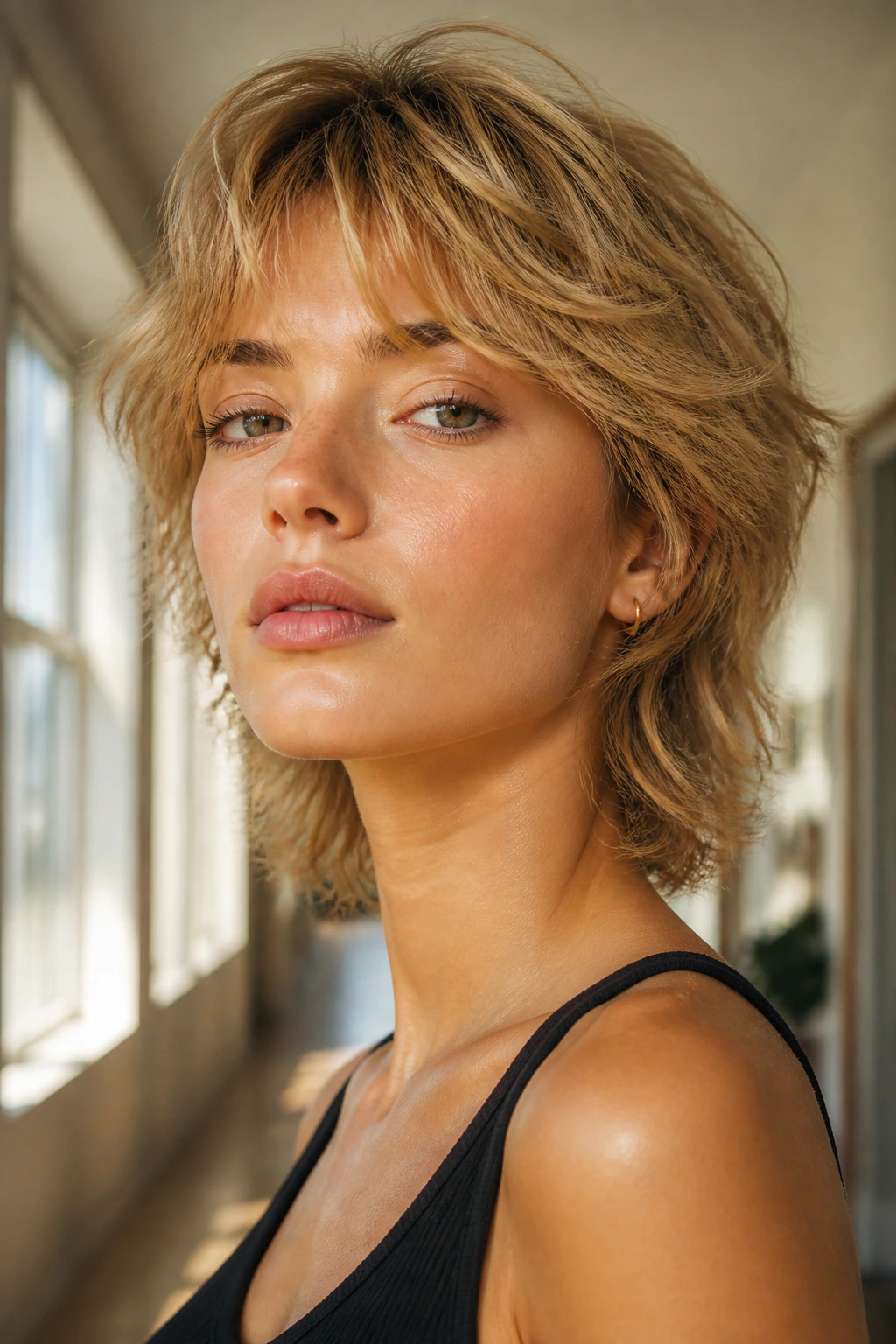
Honey blonde is warmth personified. It’s that golden, buttery shade that feels rich and indulgent. Unlike platinum or ash blonde, which can feel harsh, honey blonde adds a glow to the skin. On a short wolf cut, it emphasizes the soft, shaggy ends, making them look healthy and hydrated rather than dry and fried.
This is a fantastic option if you have dark hair and want to go lighter but are worried about the damage of going full-platinum. You can achieve this with a balayage technique, keeping your roots natural. It’s very low maintenance because the grow-out is soft and blended. It’s the kind of color that makes you look like you’ve just returned from a summer vacation.
16. Dip-Dyed Ends
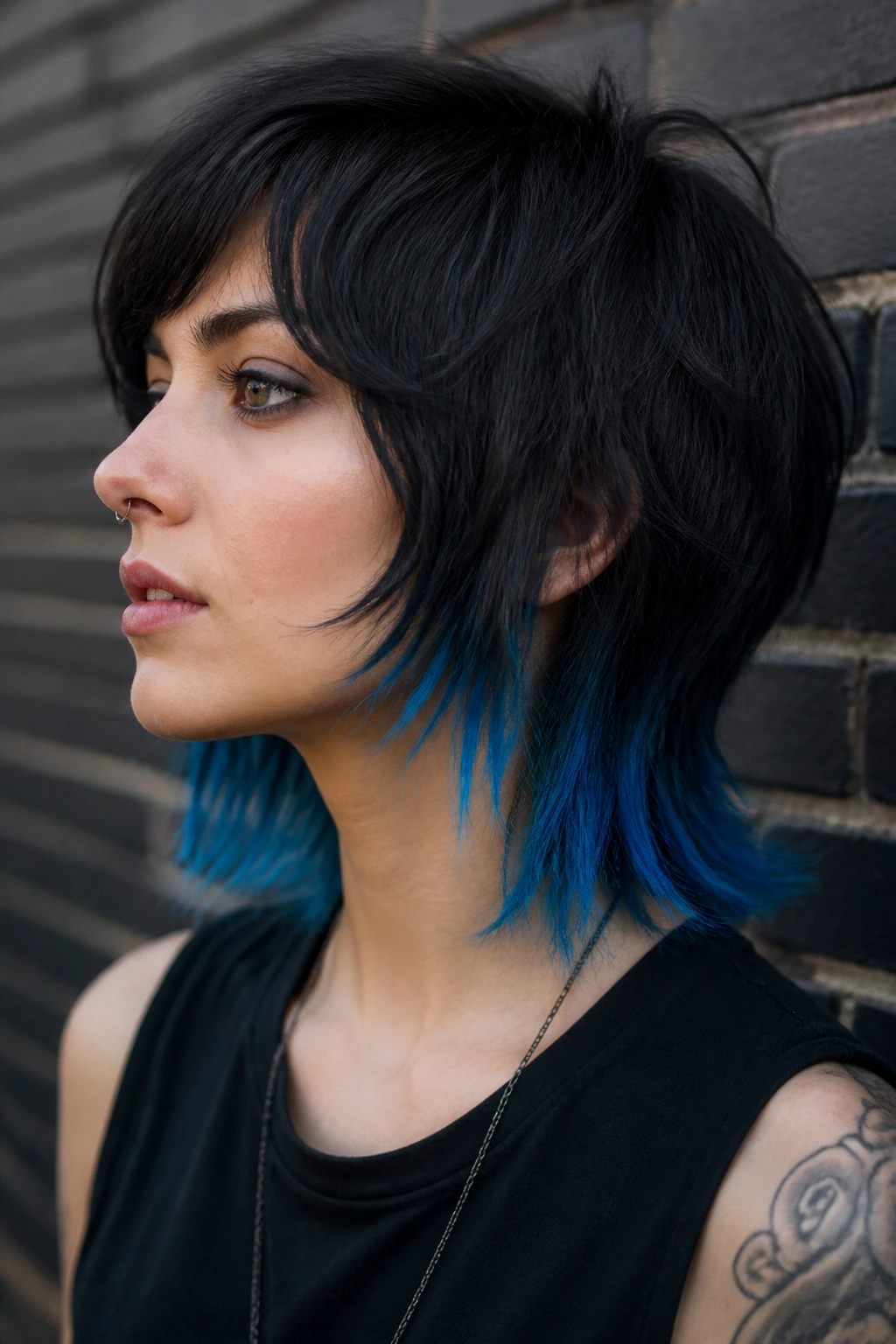
Dip-dye is exactly what it sounds like: the tips of your layers are a completely different color from the rest of your hair. This is a deliberate, graphic look. On a short wolf cut, you can dip-dye just the longest, whispiest ends that graze your neck. It draws attention to the length of the mullet section while keeping the rest of the cut contained.
You can go subtle with a darker brown on blonde hair, or extreme with black on platinum hair. The key is the placement. The line of demarcation should be crisp and sharp. It’s a nod to the grunge aesthetics of the past but feels fresh when paired with the modern, choppy layering of a wolf cut. It’s also very easy to change—if you get tired of it, you can just trim the ends off.
17. Face-Framing Streaks
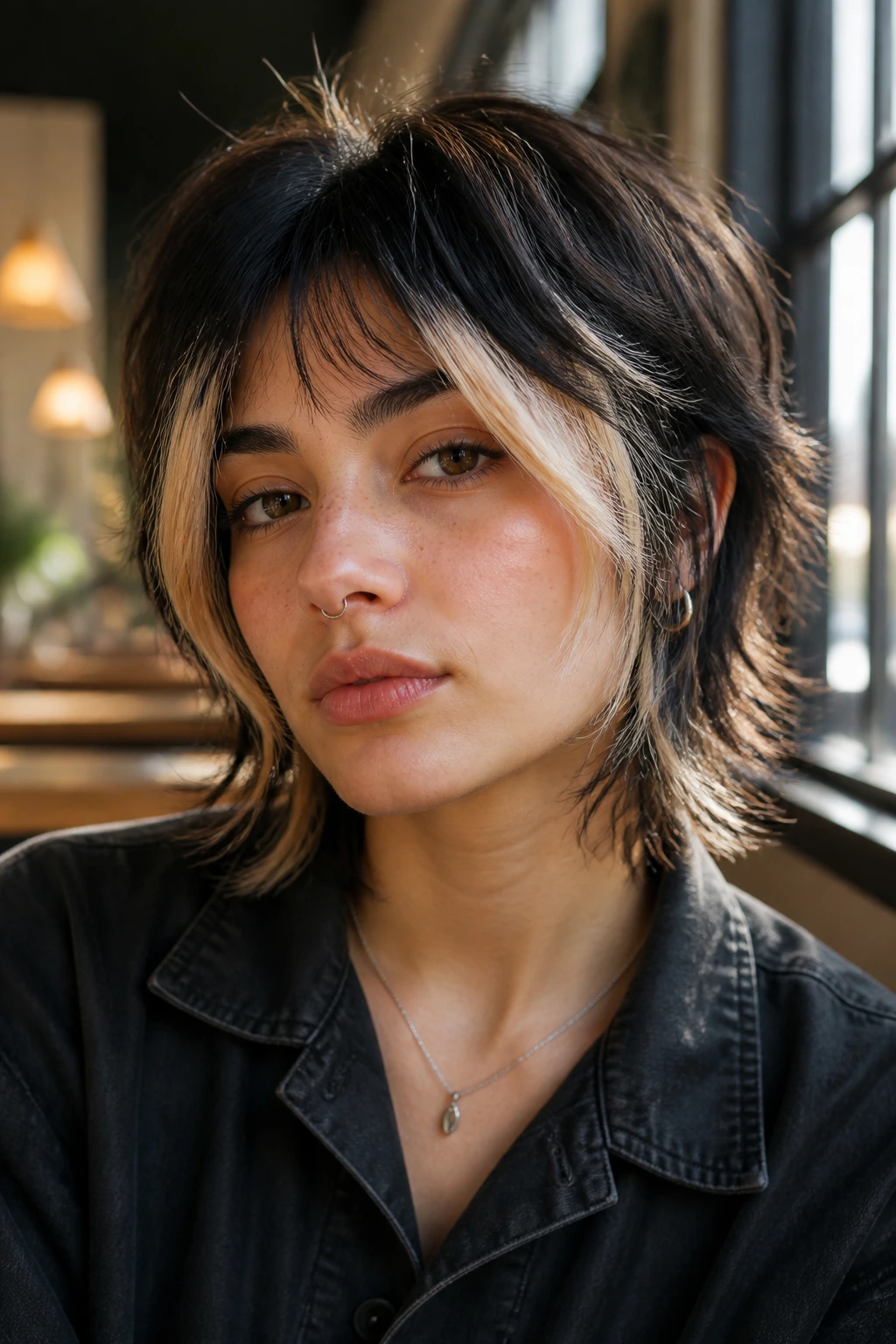
If you aren’t ready to dye your whole head, the face-framing streak is the perfect compromise. Think of this as the “money piece” but more intentional and precise. You are taking the very front layers—the fringe and the side-burn area—and dyeing them a contrasting color. This draws immediate attention to your cheekbones and jawline.
This is great for a short wolf cut because the cut itself is already designed to frame the face. The layers are usually shortest in the front, so the color won’t bleed into the back. It’s a high-contrast style that feels very retro. You can do just two strands in the front for a “rogue” look, or the entire front section of the cut for a “block” look. Both are timeless.
18. Neon Green
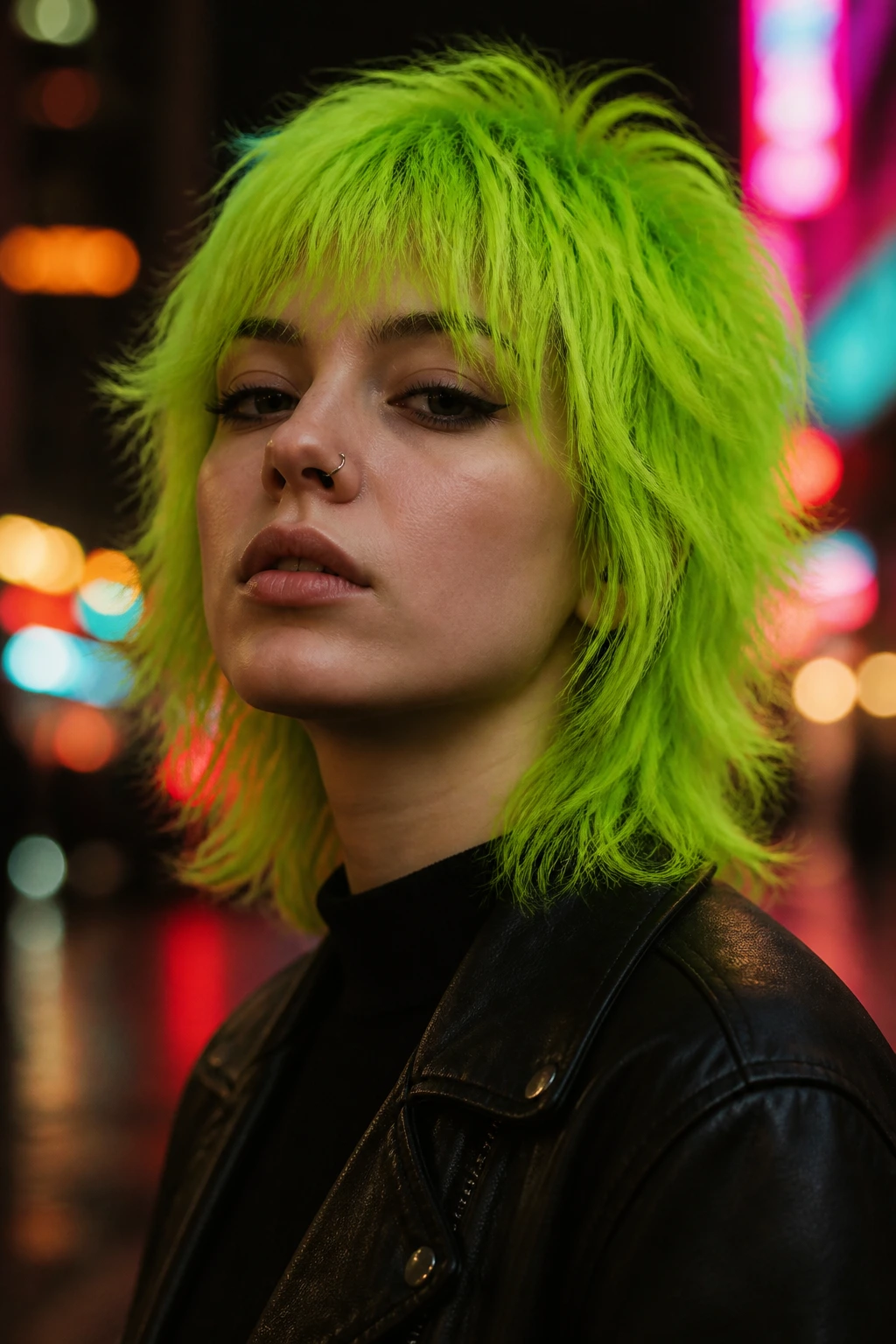
Neon green is for the person who wants to be seen from across the street. It’s vibrant, it’s loud, and it’s undeniably “scene.” On a short wolf cut, it creates a almost cyber-punk aesthetic. It’s unexpected, which is why it works. Green is a difficult color to pull off, but when it’s done with confidence, it looks like a fashion statement.
You will need a very light blonde base to get this right. Any leftover yellow in the hair will mix with the blue-based green dye and turn it into a swampy olive—unless that is the look you are going for, in which case, proceed. This is high-maintenance, but the reward is a hair color that looks like a permanent filter. It’s perfect for someone who loves to experiment and doesn’t take their style too seriously.
19. Ash Brown
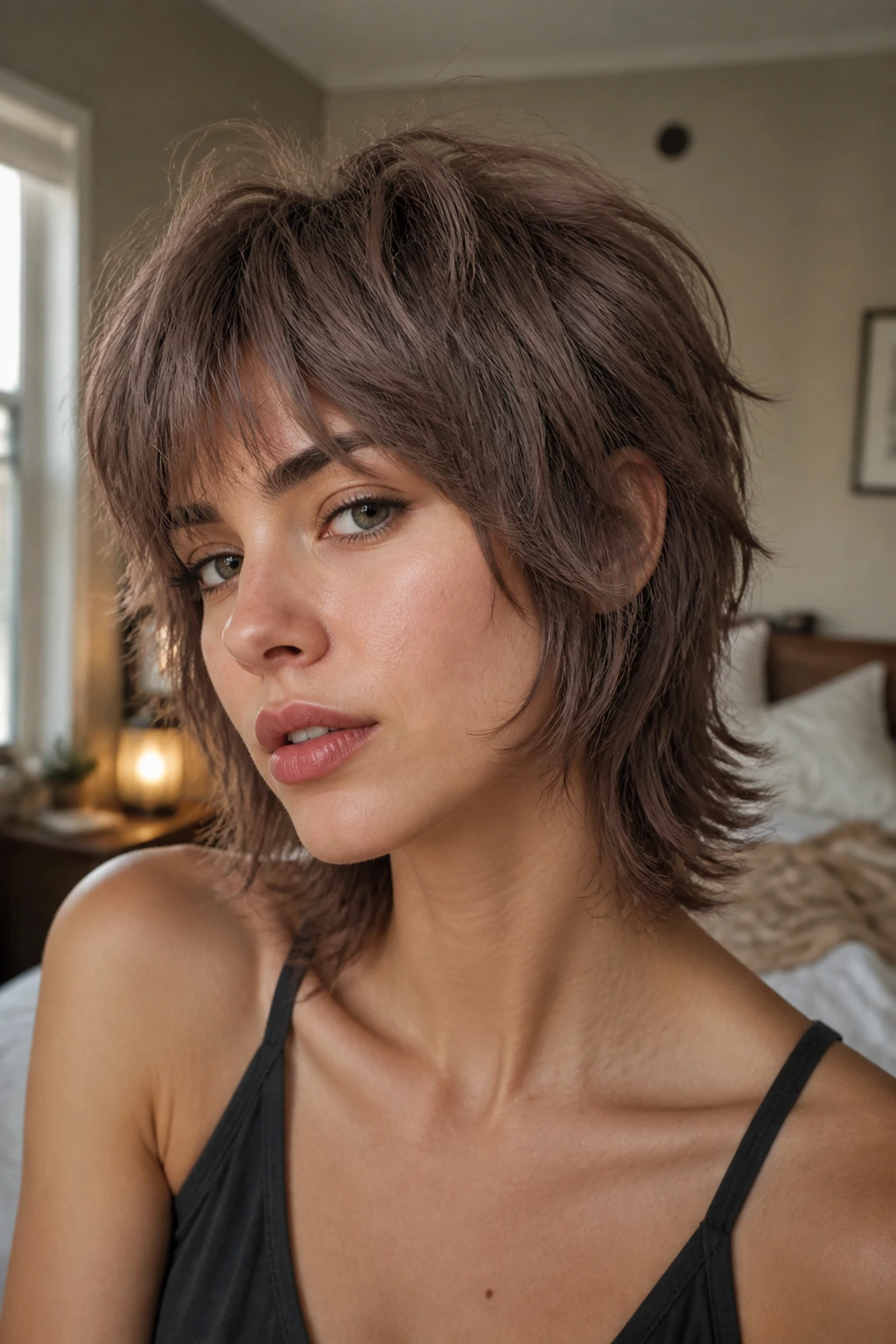
Ash brown is the antidote to the brassy, orange-tinted hair that so many people struggle with. It’s a cool, muted brown that looks incredibly sophisticated. Because it’s neutral, it acts as a base that makes your eye color pop and your skin look clear. On a short wolf cut, it feels very grounded and natural.
This is a “cool girl” color. It doesn’t scream for attention, which makes it feel all the more confident. It looks fantastic with a matte finish. Ask your stylist for an “ashy” or “cool” formula to avoid any red undertones. It’s also very low maintenance; you can go months without a touch-up because it looks so similar to natural hair color, just with the “edge” taken off the tone.
20. Warm Ginger
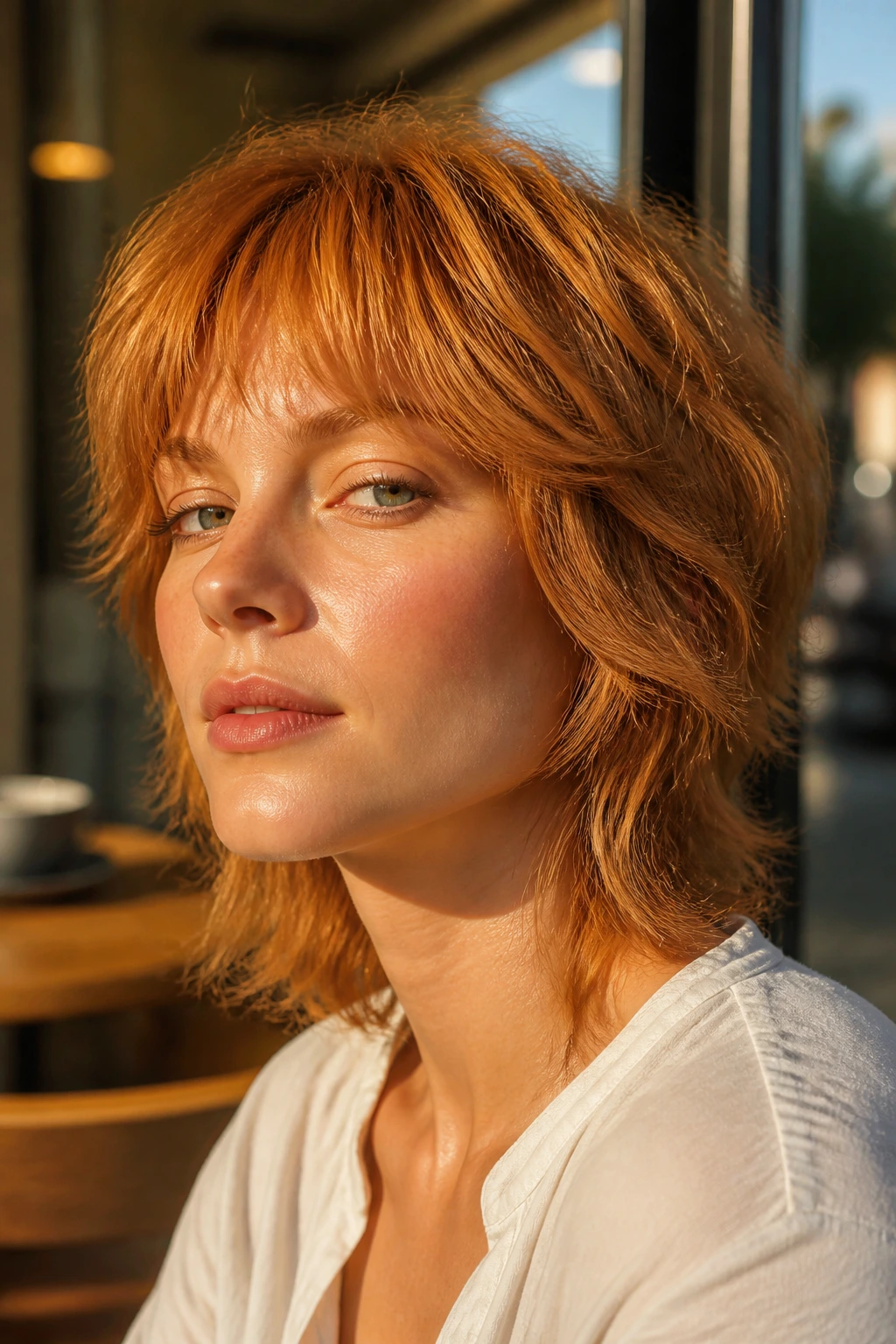
Warm ginger is softer than copper and less intense than bright red. It’s a natural-looking red that has hints of gold and honey. It makes a short wolf cut look playful and energetic. It’s a vibrant color, but because of its organic undertones, it doesn’t feel like you are wearing a costume.
This color is particularly good for highlighting the texture of the hair. Red reflects light in a way that makes every strand seem visible. If you have thick hair, this color will make your wolf cut look even more voluminous. If you have thin hair, the warmth of the ginger will help your skin tone glow, taking the focus off the hair’s thickness and putting it on your face.
Final Thoughts
Choosing a color for a short wolf cut is not just about picking a shade from a swatch book; it is about choosing a personality. The cut itself is already loud. It says you don’t care about the rules of traditional styling, and you aren’t afraid of a little bit of chaos. Your color should amplify that.
Whether you go for the high-impact contrast of a split dye or the grounded, cool-toned ease of an ash brown, the best color is the one that makes you feel like you are ready to take on the day without a second thought. Don’t stress too much about “perfect” placement. The beauty of a short wolf cut is in its imperfection. If the color fades a bit, or the roots start to show, it just adds to the aesthetic. Embrace the mess, choose a shade that excites you, and let the cut do the heavy lifting. Your hair is an accessory that you wear every single day—make sure it reflects exactly who you want to be.
