



Long hair gives you room to play, but it also has a way of making every bad choice louder. A flat crown looks flatter. A loose elastic slips faster. Heavy ends can drag a style down before lunch. The best hairstyle ideas for long hair are the ones that work with that weight instead of fighting it.
The small details matter more here than they do on shorter cuts. A ponytail sits an inch higher, a braid gets tightened at the nape, a few face-framing pieces stay out on purpose, and suddenly the whole look changes. That’s the part people miss. Long hair is not difficult because it’s long. It’s difficult because it reacts to every tiny adjustment.
Some days you want polished. Some days you want your hair off your neck in 30 seconds. Some days you want a style that looks deliberate even if you were running late and using dry shampoo as a life choice. The first few ideas are the easiest to wear, then the looks get a little more detailed, a little more dressy, and a little more fun.
1. Soft Loose Waves
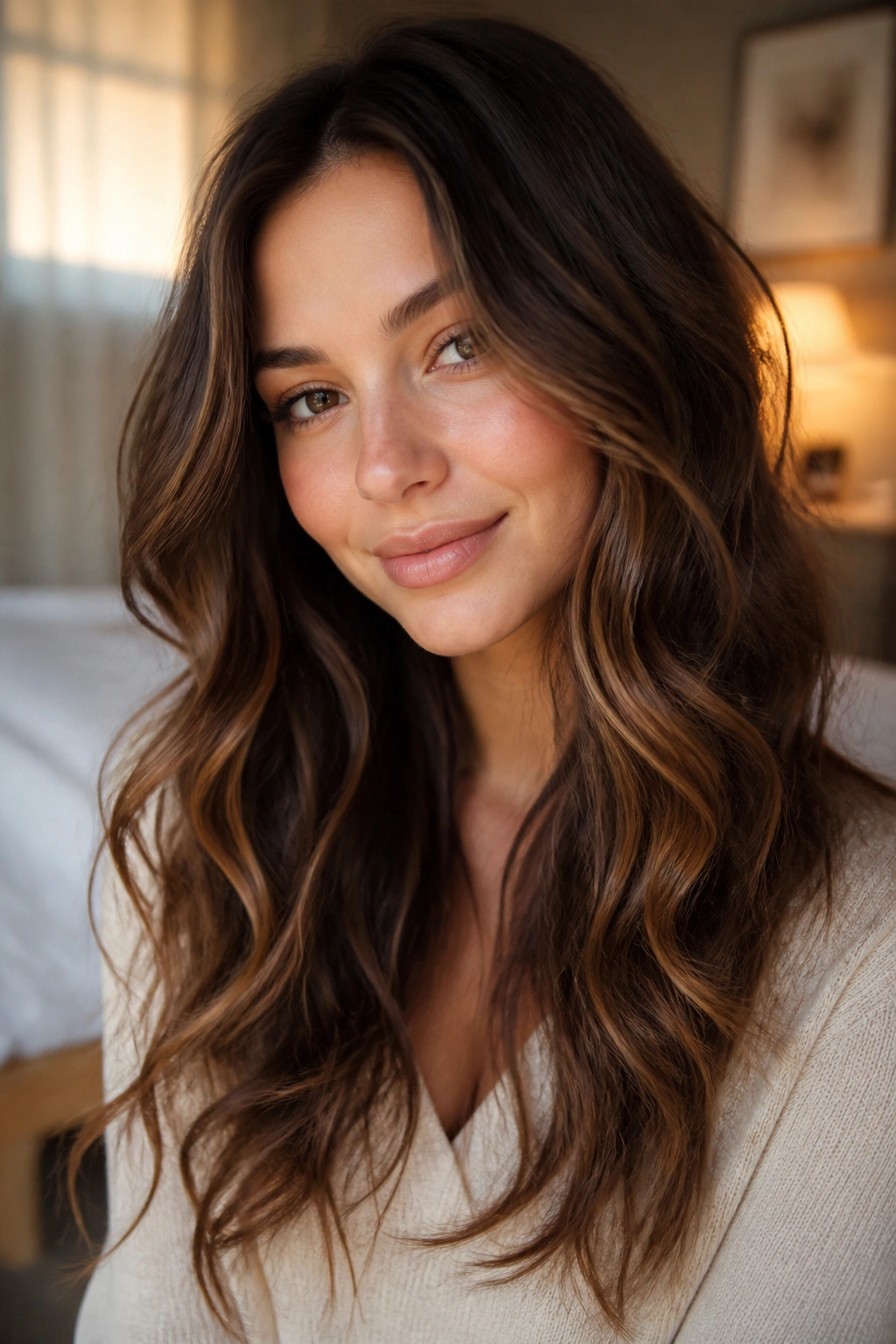
Soft waves are the easiest long-hair style to keep in rotation because they don’t try too hard. The shape looks relaxed, but it still gives long hair movement, which matters when the length starts pulling everything downward. A 1.25-inch curling iron or a large wand is usually enough to bend the mids and ends without turning the whole head into ringlets.
Leave the first inch near the roots alone. That little gap keeps the style from looking stiff. I like to curl away from the face on one side and toward the face on the other, then run fingers through the curls once they cool. A light mist of flexible hairspray is enough. Heavy spray kills the swing.
This is the style I’d pick for day-two hair that needs a reset. It hides frizz. It softens blunt ends. And it still looks fine if the waves loosen by evening.
2. Sleek Middle-Part Blowout

A sleek middle part makes long hair look expensive without needing much drama. It’s sharp, clean, and a little severe in a good way. The trick is the blow-dry: smooth the roots with a paddle brush, then bend the ends under just enough that they don’t stick straight out.
What Makes It Work
Long hair tends to split and puff at the ends if you rush this style. Use a heat protectant first, then chase each section with a round brush or a dryer nozzle until the shine shows up. If your hair is thick, clip the top half away and dry the underneath layers first so the crown doesn’t go flat.
A touch of serum on the mid-lengths helps, but keep it away from the roots. Too much there and the whole style collapses. The clean center part is the point, so draw it with the tip of a rat-tail comb and press the part line down while the hair is still warm.
This one works when you want your long hair to look controlled, not over-styled. It’s a little polished. It’s also one of the few styles that makes straight hair look intentional instead of accidental.
3. Low Ponytail with a Wrapped Base
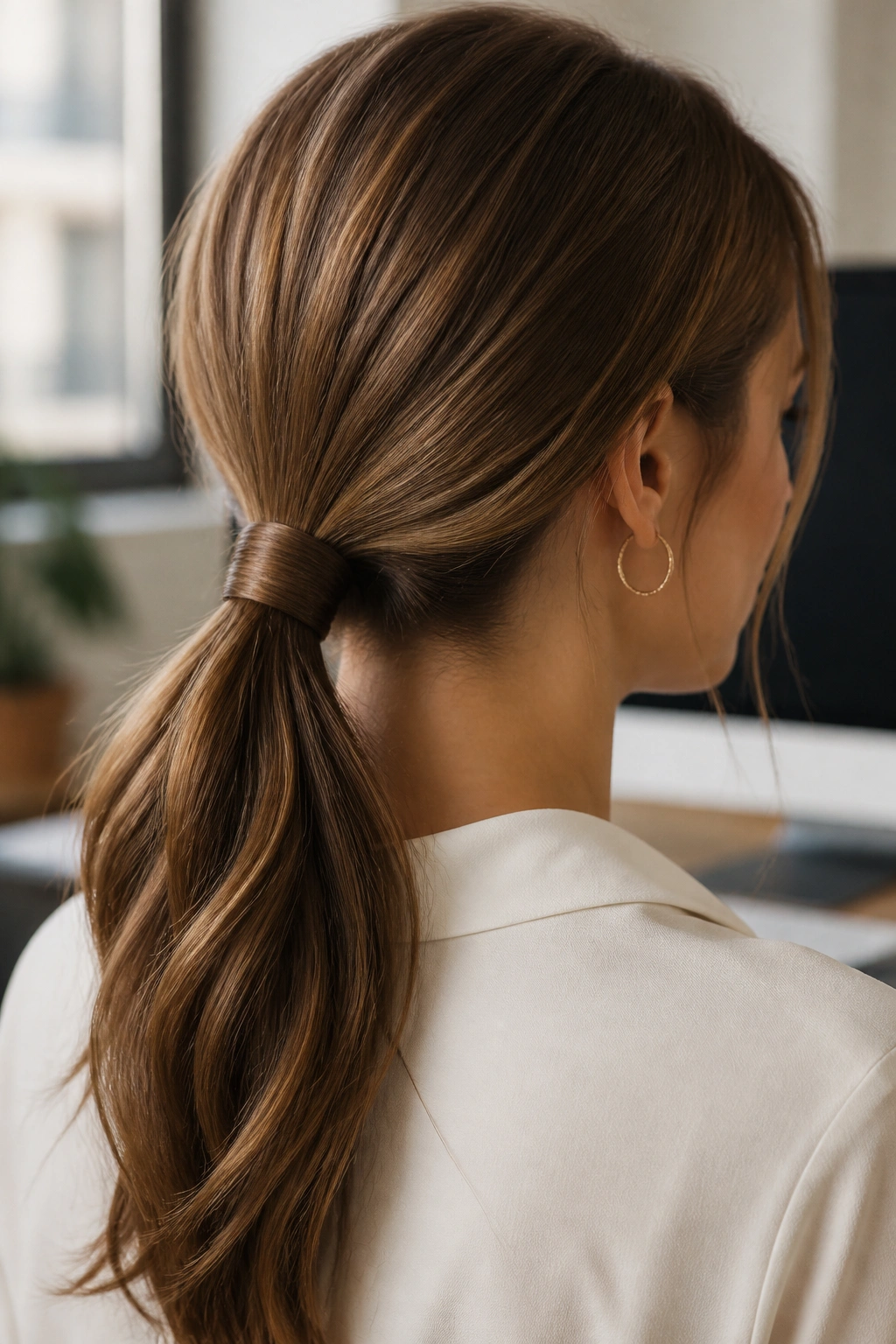
The low ponytail with a wrapped base is one of those styles that feels plain until you see it done well. Then it looks like someone cared. Pull the hair to the nape, secure it with a thin elastic, then wrap a one-inch section of hair around the band and pin it underneath.
Keep the pony low and slightly loose unless you want a hard, formal finish. A fine-tooth comb helps smooth the top, but don’t erase every bit of texture. A little softness near the temples makes the style less severe. If your hair is slippery, a tiny spray of texturizing mist at the roots gives the elastic something to hold.
I reach for this when I need long hair to behave in a meeting or at dinner. It works on straight hair, wavy hair, and hair that has a little second-day grit. Clean. Simple. Good.
4. High Ponytail with Crown Volume
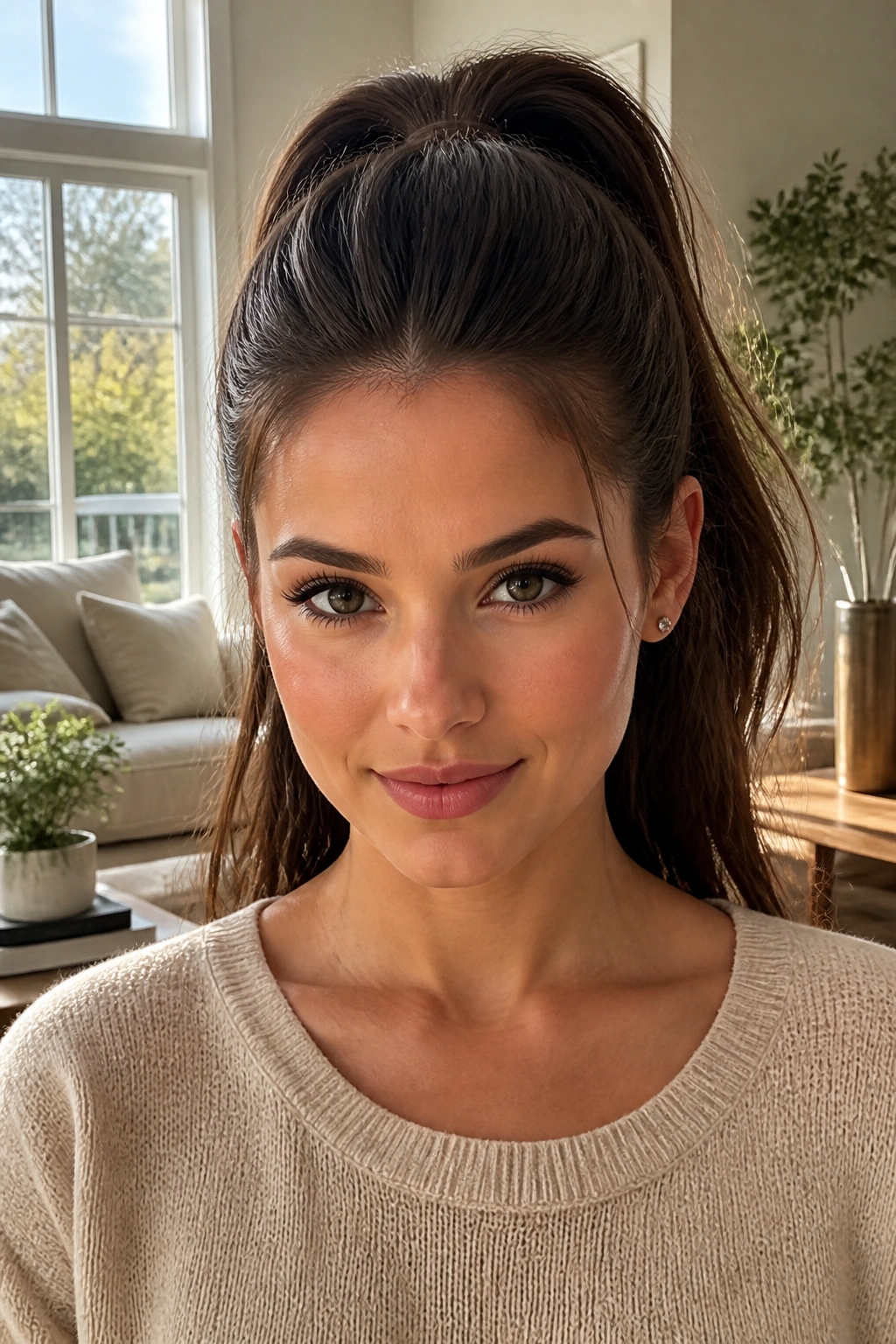
A high ponytail only works on long hair if you give the crown some lift. Otherwise it can look heavy and a bit tugged. Start by teasing a small section at the crown or blowing the roots upward before you gather the hair. Then secure the pony high and smooth the sides with your hands, not a brush, so it doesn’t go too flat.
The base should sit high enough to open up the face. That’s the whole point. If your hair is very thick, use two elastics stacked together so the pony doesn’t sag by the afternoon. A wrapped base or a small strand around the elastic makes the style feel finished.
This is the version that survives a busy day better than a loose down style. It keeps hair off the neck. It also makes long lengths look fuller, which is useful if the ends tend to look thin when they’re hanging free.
5. Half-Up Claw Clip Twist
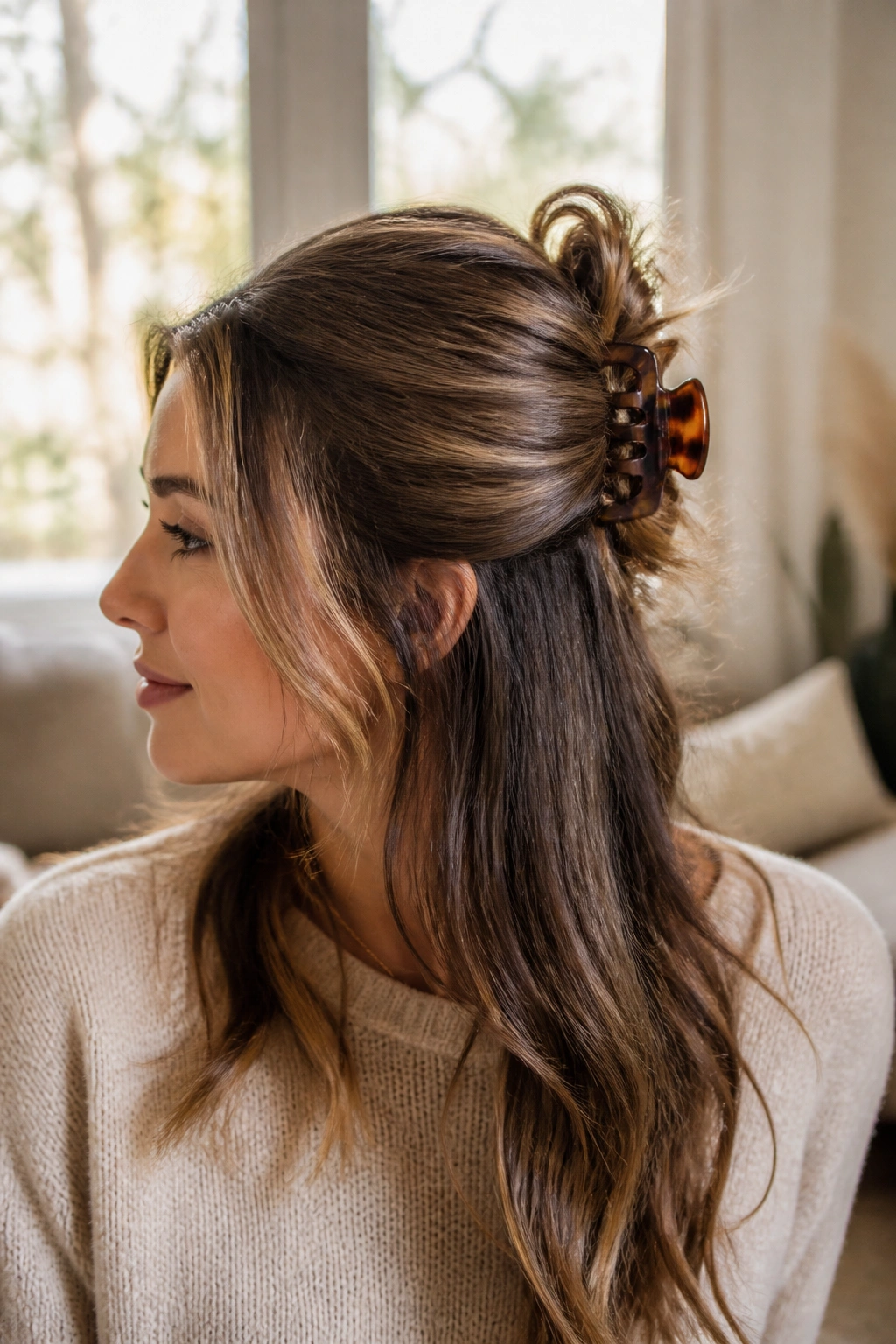
A claw clip twist is the hairstyle equivalent of getting away with something. It takes less than a minute, but it still reads as put together. Gather the top half of the hair, twist it once or twice, and clip it vertically so the ends spill upward and then fold down.
How to Keep It From Slipping
The trick is not overloading the clip. If your hair is thick, use a larger clip with a wide jaw and catch a smaller section than you think you need. If your hair is silky, rough up the top layer with dry shampoo first. That gives the clip grip instead of letting it slide.
Leave a few pieces around the face if you want the style to feel softer. If you want it cleaner, tuck everything back and smooth the front with a little cream. Either way, this is one of the fastest long-hair looks around.
It’s the style I’d wear for errands, work-from-home days, and those weird in-between afternoons when you want your hair up but not done.
6. Bubble Ponytail
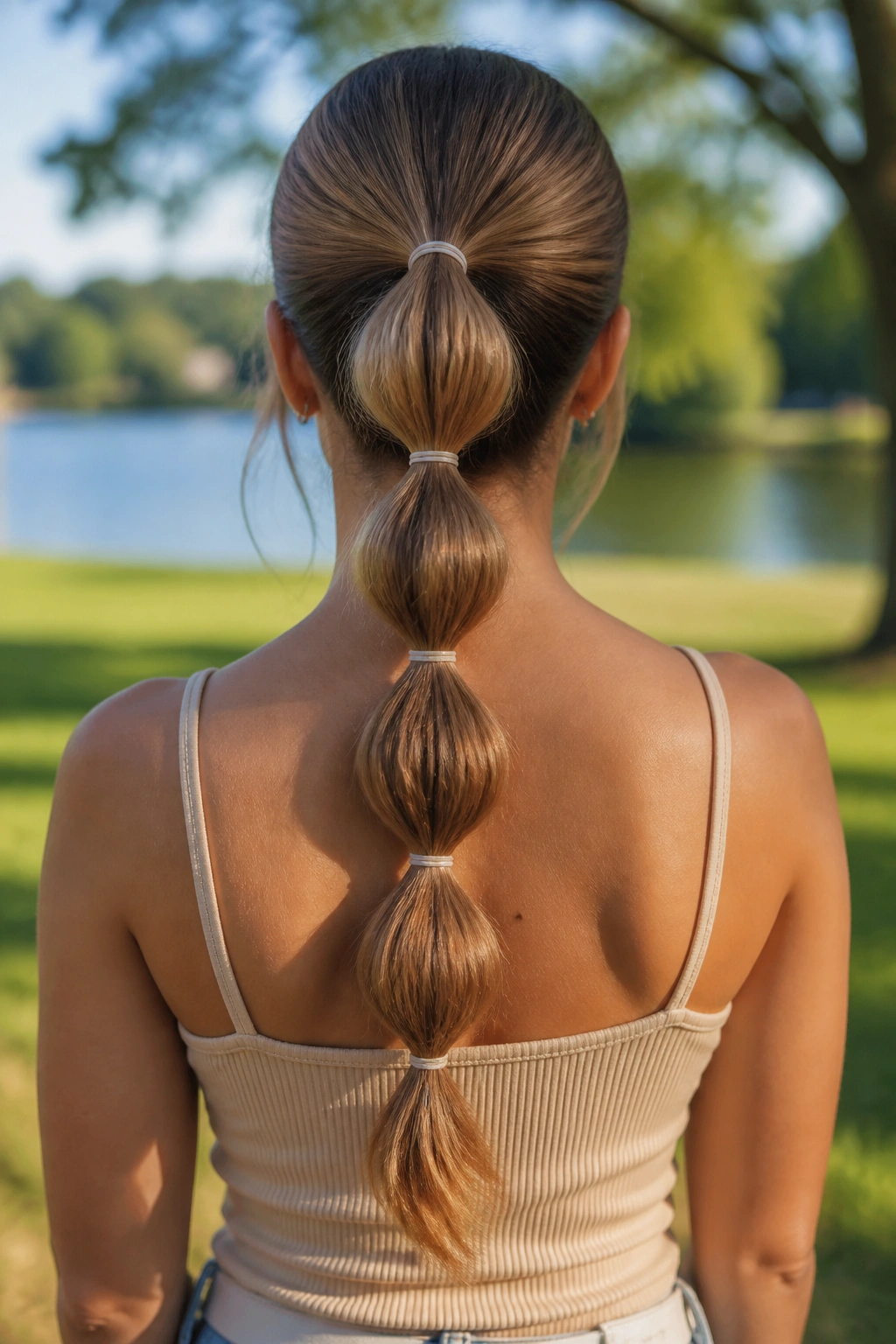
Bubble ponytails look playful, but they work because the sections create structure. Start with a regular ponytail, then place small elastics every 2 to 3 inches down the length. Gently pull each section outward to make the “bubbles” round and full.
This style likes long hair because there’s enough length to show the shape. If your hair is layered, smooth the shorter pieces into the pony first with a little cream or spray. You can hide each elastic with a tiny wrapped section if you want it cleaner, but I like the visible bands. They make the look feel deliberate.
Use this on straight or slightly wavy hair. It’s fun for concerts, weekends, and any day when a plain ponytail feels boring. It also stays put better than you’d expect, which is half the charm.
7. Classic French Braid
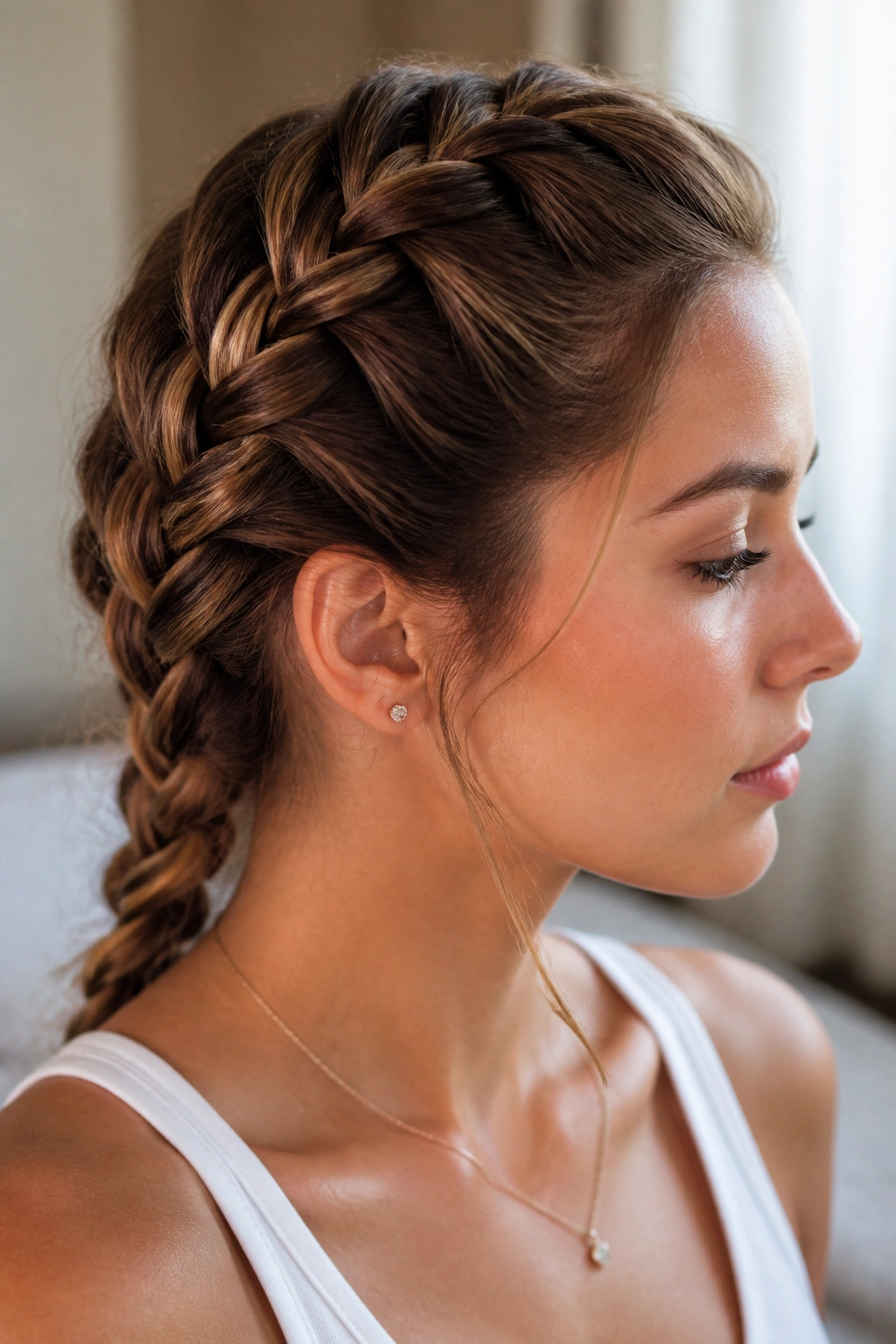
The French braid earns its place because it holds long hair close to the head without feeling fussy. Start at the crown, add small sections as you move down, and keep the tension even from top to bottom. Loose braiding in the first inch is what makes the style drift apart later.
Why It Stays Put
Long hair can get slippery at the roots, especially if it’s fine or freshly washed. A light grip spray at the crown gives the braid something to catch. If your fingers keep dropping strands, don’t panic. Tighten the first three passes, then relax a little as you reach the nape.
A French braid is one of the few styles that can handle a full day, a hat, and a little weather without falling apart. It also leaves the ends tidy, which is nice if you hate hair brushing your coat collar.
I like it when hair needs to be controlled but not hidden. It feels practical. It looks neat. And it never seems out of place.
8. Dutch Braid

A Dutch braid sits on top of the hair instead of sinking into it, which gives long hair a little more edge and a lot more texture. The method is the same as a French braid, except you cross the sections under instead of over. That one change makes the braid pop.
This style shows better on thick hair, but it works on fine hair too if you pancake the braid gently afterward. Use your fingertips to tug the outer edges apart just a little. Not too much. You want width, not a mess. If the braid gets too loose at the start, the whole thing can slump, so keep the crown snug.
It’s a good pick when you want a braid that looks more visible in photos or in daylight. The shape stays cleaner than a loose side braid, and it handles long lengths without turning into a frayed rope by noon.
9. Fishtail Braid
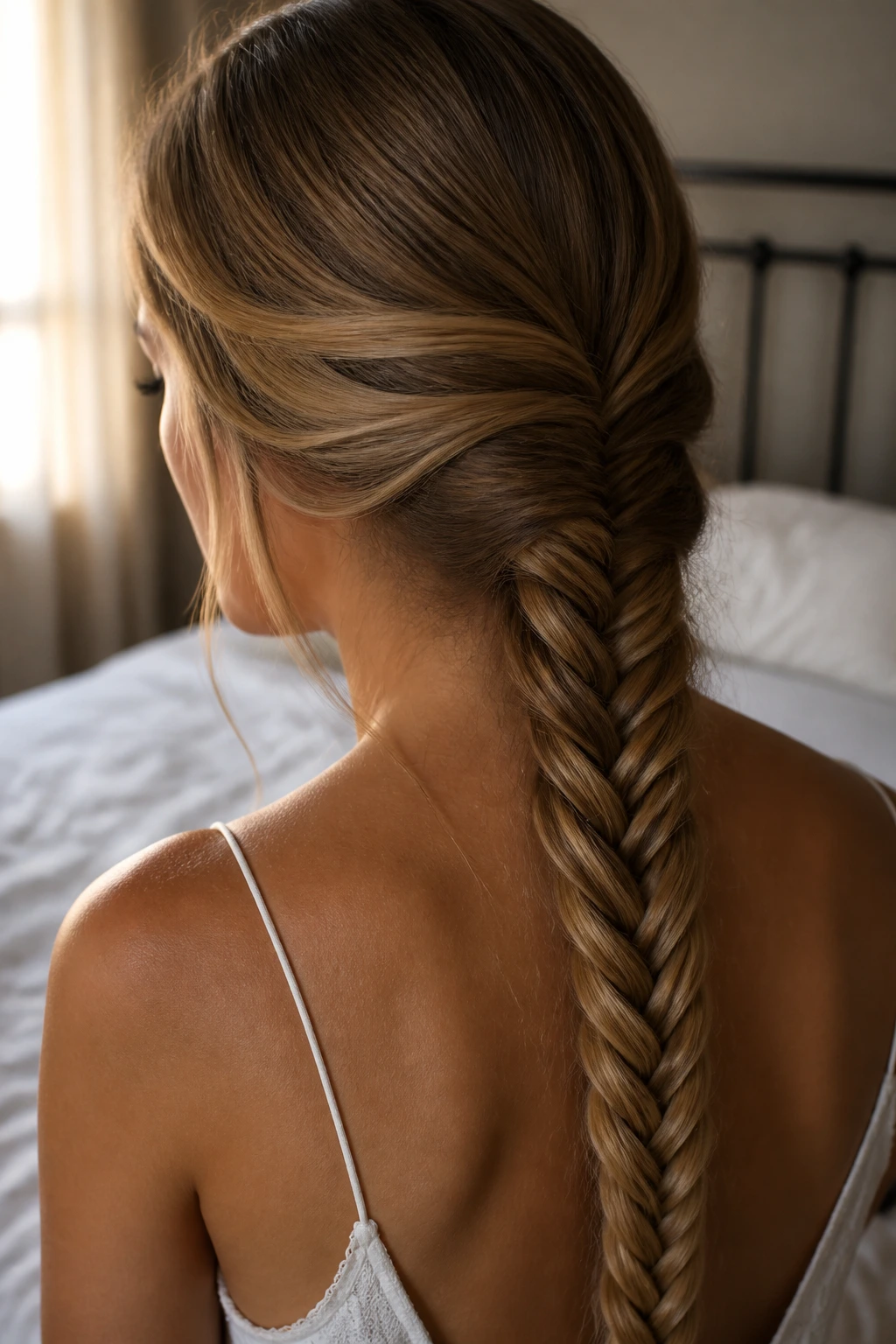
A fishtail braid looks complicated from a distance, then turns out to be mostly patience. Divide the hair into two sections, then pull tiny pieces from the outside of each side across to the other side. Thin pieces make the weave crisp. Big pieces make it chunky and casual.
This braid really shows off long hair because the length gives the pattern room to run. If your hair is freshly washed and slippery, add dry shampoo or texture spray first. Otherwise the braid can unravel before it settles. A few pieces pulled loose around the face keep it from looking too strict.
I like fishtails for days when a regular braid feels too common. They work down the back, over one shoulder, or gathered into a low side knot. They take a minute longer than a basic braid, and that minute is worth it.
10. Side Braid Over One Shoulder
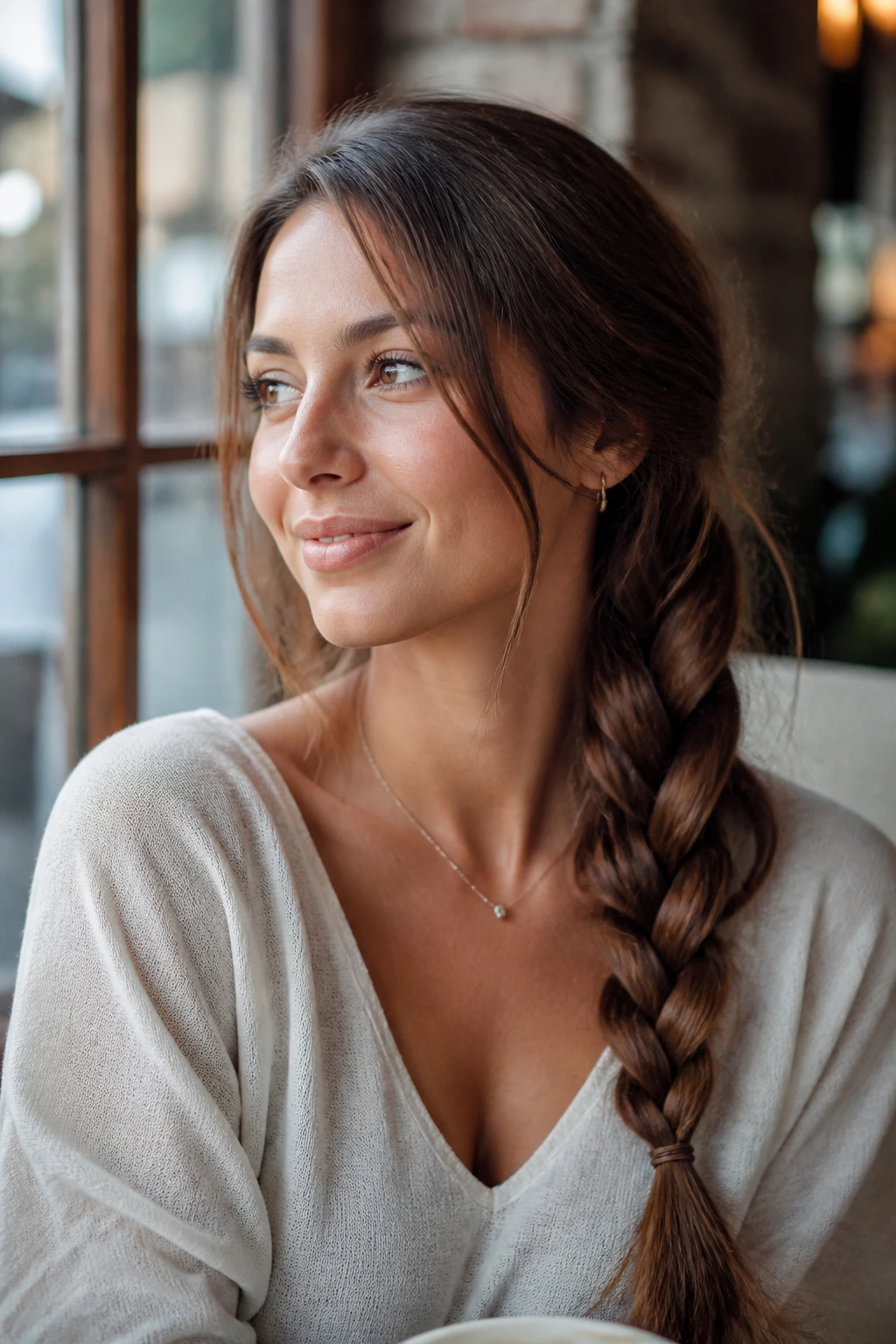
A side braid is one of those styles that looks softer than it has any right to. Sweep all the hair to one side, then braid it loosely over the shoulder and secure it with a clear elastic. Pull the braid apart gently once it’s done so it looks fuller and less sharp.
The best part is how forgiving it is. Uneven layers? Fine. Slight frizz? Fine. Second-day texture? Even better. If one side of your hair naturally falls flatter, use that side as the braid side so the other side can stay tucked behind the ear and out of the way.
This is a good style for long hair that you still want to show off. It keeps the length visible, but it also keeps it from getting tangled in a coat, scarf, or chair back. Small win. Big difference.
11. Half-Up Half-Down Twist

The half-up twist is one of the easiest ways to make long hair look styled without fully committing to an updo. Take two sections from the front, twist each one back toward the crown, and pin them together. Done right, it gives you lift at the top and movement through the bottom.
Where It Goes Wrong
People usually pull the front sections too tight. Then the style looks strained. Leave a little softness around the temples so the twist sits naturally. If the ends are blunt, curl them under slightly or leave them straight; both can work, but they should match the rest of your hair texture.
This one is good when you want the face open but the length down. It plays nicely with waves, blowouts, and even straight hair if the top has enough shine. A small barrette can replace the pins if you want a more dressed-up finish.
It’s a reliable style. Not flashy. Just useful in the best way.
12. Waterfall Braid
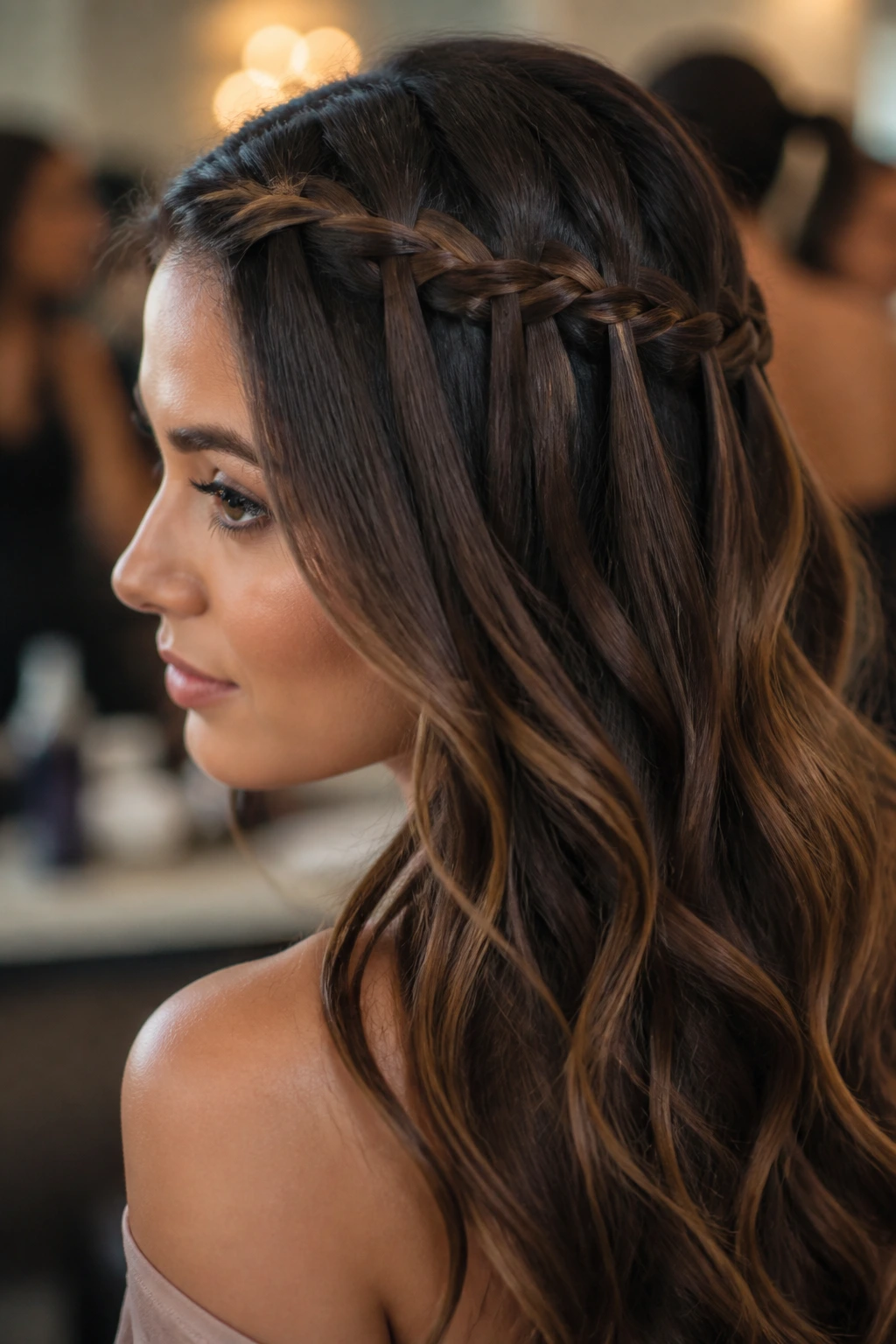
A waterfall braid brings detail to long hair without pinning everything back. As you braid across the head, drop one strand each time and pick up a new section to replace it. The result is a braid that looks like it’s floating over loose hair.
This style needs a little more patience than a standard braid, and it shows best on hair with some wave or bend. Super-straight hair can make the pattern look thin unless you add texture first. A curling wand set on low heat works well if you only want the lower lengths to move.
I like waterfall braids for parties, showers, and dinners where you want a polished detail near the face. It’s not the fastest option, but it has that hand-finished look people notice. Clean parting helps a lot here.
13. Crown Braid

A crown braid wraps around the head like a built-in headband, which makes long hair look contained in a very intentional way. Braid along the hairline on one side, continue around the back, then pin the end under the other side. It can be tight and neat or loose and romantic.
If your hair is thick, braid in sections close to the scalp so the shape stays close to the head. If it’s fine, a bit of backcombing at the roots before you start gives the braid more grip. Bobby pins matter here; use more than you think, and push them in diagonally so they lock.
This style keeps hair away from the face and neck, which is useful when you’re dealing with heat, movement, or a dress with an open neckline. It looks more involved than it is. That’s a nice trick.
14. Rope Braid Ponytail

A rope braid ponytail is a nice switch when you want the clean lines of a braid without actually braiding. Split the ponytail into two sections, twist each section in the same direction, then wrap them around each other in the opposite direction. That reverse motion is what keeps the twist from unraveling.
The finish is sleek and slightly glossy. It works especially well on long hair that’s one length or only lightly layered, because the twist shows off the shape. If your ends fray easily, add a small elastic at the bottom before the rope starts to loosen. It keeps everything tidy.
This is one of my favorite low-effort evening looks. It feels smarter than a plain ponytail, but it doesn’t ask for much. A little shine serum makes it look even cleaner.
15. Braided Low Bun
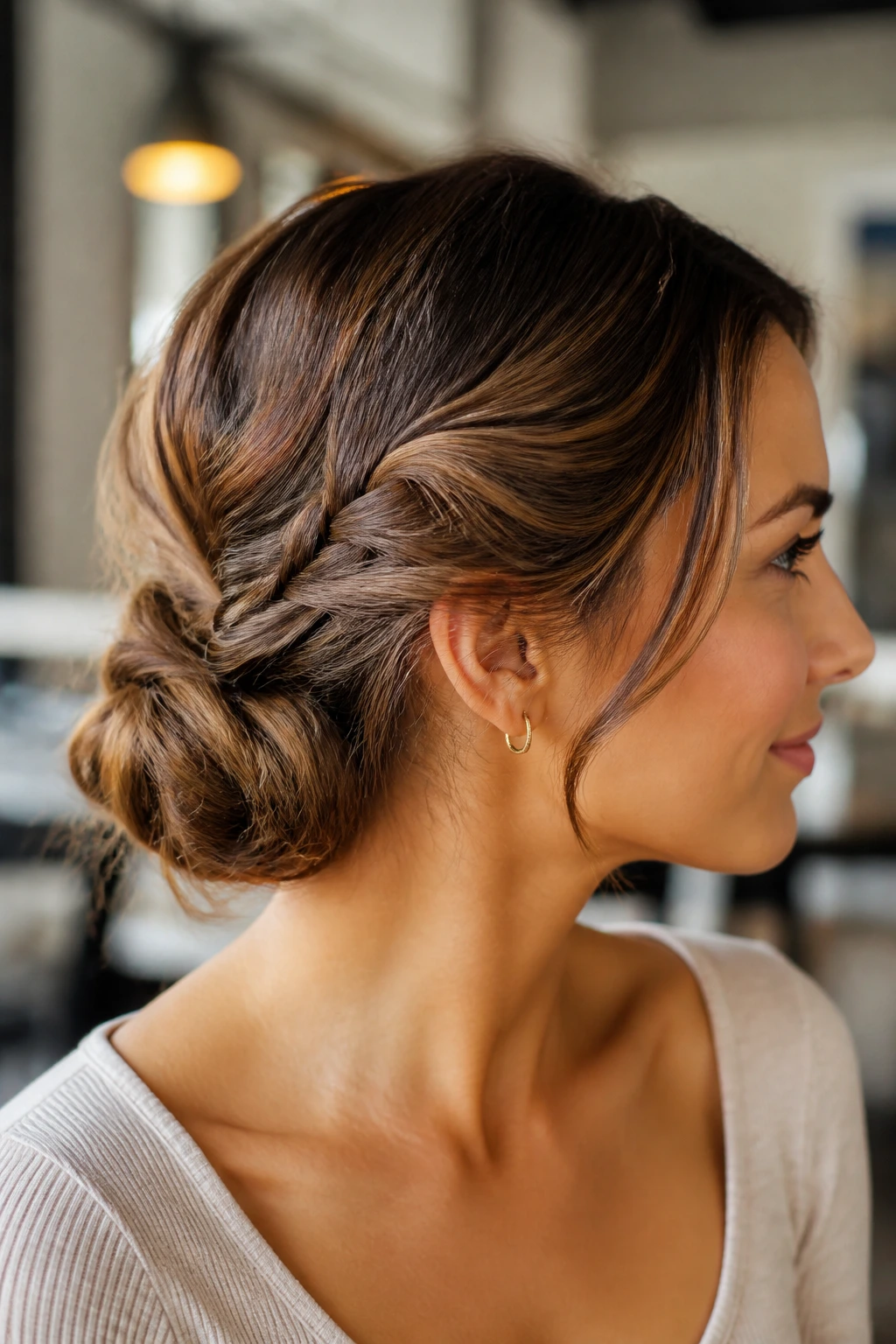
A braided low bun gives long hair a secure shape that stays neat all day. Start with a low braid at the nape, then coil the braid into a bun and pin the ends underneath. The braid gives the bun texture, so even a simple shape looks more finished.
The key is to keep the braid snug enough that it doesn’t puff out, but not so tight that the bun feels tiny and hard. If your hair is very long, twist the braid around itself in two loops before pinning. That usually keeps the bun from turning into a giant knot at the base.
It’s a solid style for work, travel, or formal events when you need your hair off your shoulders. It also hides the awkward stage where the back of your hair is too long for a clip and too short to stay put in a loose knot.
16. Messy Top Knot

The messy top knot is not actually messy if you do it right. That’s the funny part. Pull the hair to the crown, twist it once, coil it loosely, and pin it with a few bobby pins or a large elastic. Let a few ends stick out on purpose. Otherwise it reads too neat and loses the point.
A little dry shampoo at the roots helps the knot stay high instead of sliding down the back of the head. If your hair is very long, don’t wrap every inch of it around the base. Leave some length out and tuck it loosely. That keeps the bun from looking too bulky.
This is the style I use when I want long hair out of the way fast. It’s not subtle. It’s useful. And on the right day, that’s enough.
17. Smooth Low Bun
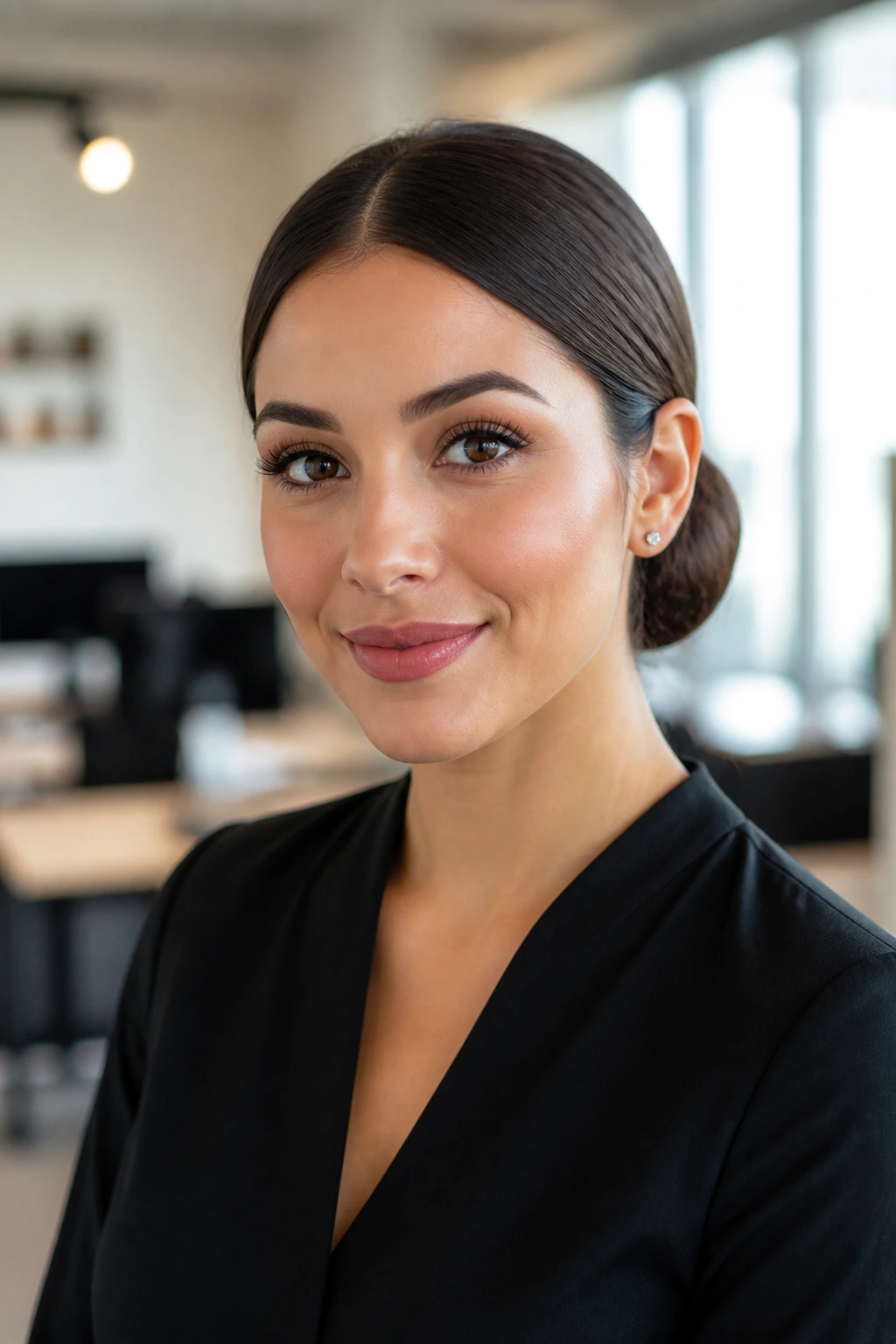
A smooth low bun is the quiet version of a formal updo. Comb the hair back, gather it at the nape, twist it into a compact bun, and pin it flat against the head. A little styling cream or gel around the hairline keeps the flyaways under control without making the hair look wet.
A Small Detail That Matters
Place the bun slightly off-center if your head shape needs it. That tiny shift can make the style sit better, especially on thick or heavy hair. If you have layered hair, tuck the shorter pieces in with pins before you start twisting, or they’ll poke out later.
I like this bun when a sleek look feels more appropriate than a loose one. It’s excellent under a coat collar, with statement earrings, or when you just want to look calm and not like you spent half an hour on your hair. You didn’t.
18. Textured Chignon
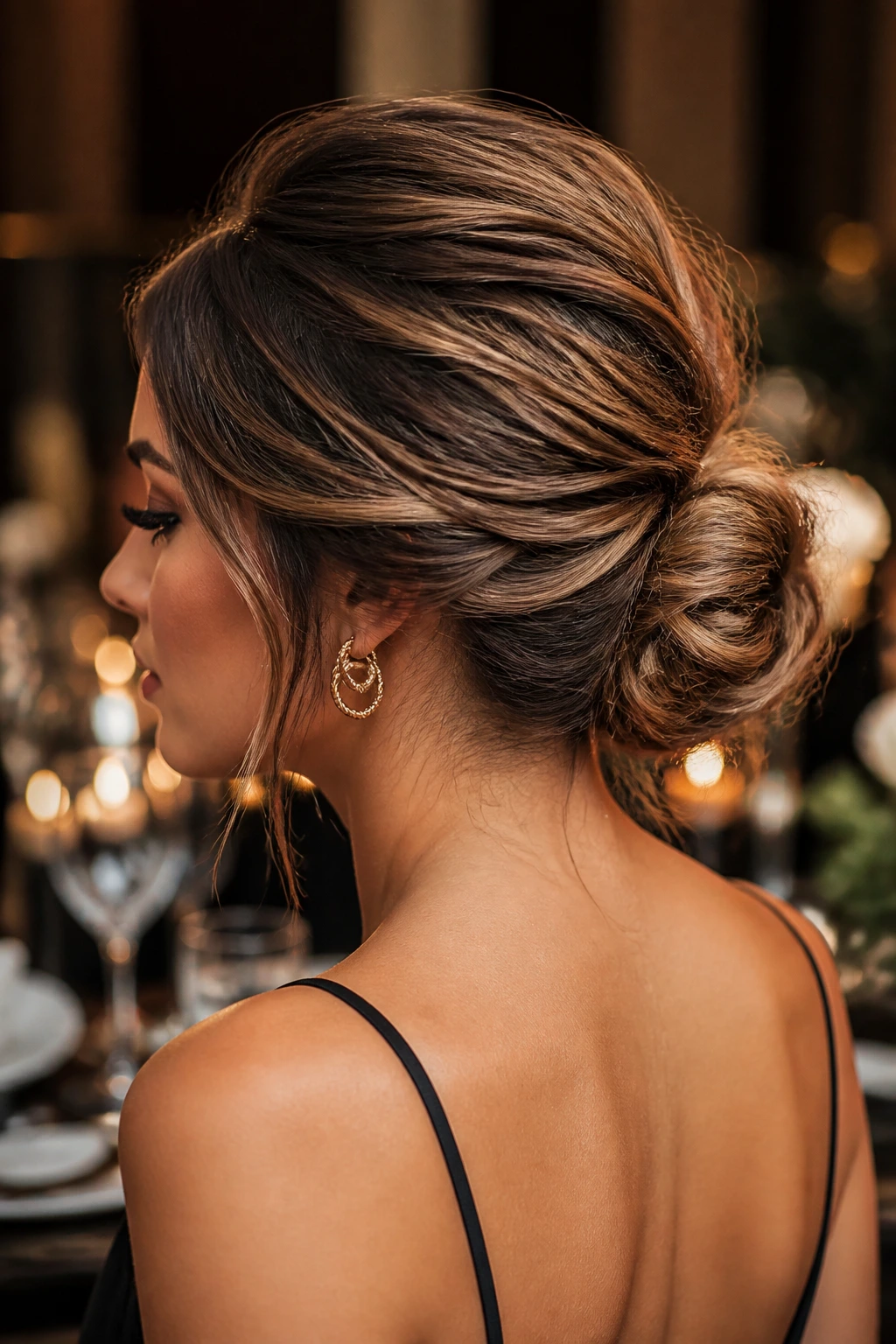
A textured chignon looks soft, but it still has shape. Start with loose waves or rough-dried hair, gather it low, then twist and pin it into a folded knot at the back of the head. The texture is what keeps it from looking stiff.
Where to Pin It
Pin from underneath and work outward. That way the visible side stays smooth while the hidden side carries the weight. Use small pins rather than one big grip if your hair is thick. If it feels like the bun is sliding, anchor it with a hidden elastic first, then pin around that.
This style works especially well with long hair that has layers, because the shorter pieces can soften the bun instead of fighting it. It feels a little dressier than a plain knot, but not fussy. Good for weddings. Good for dinners. Good for days when you want your hair to look intentional.
19. Claw Clip French Twist
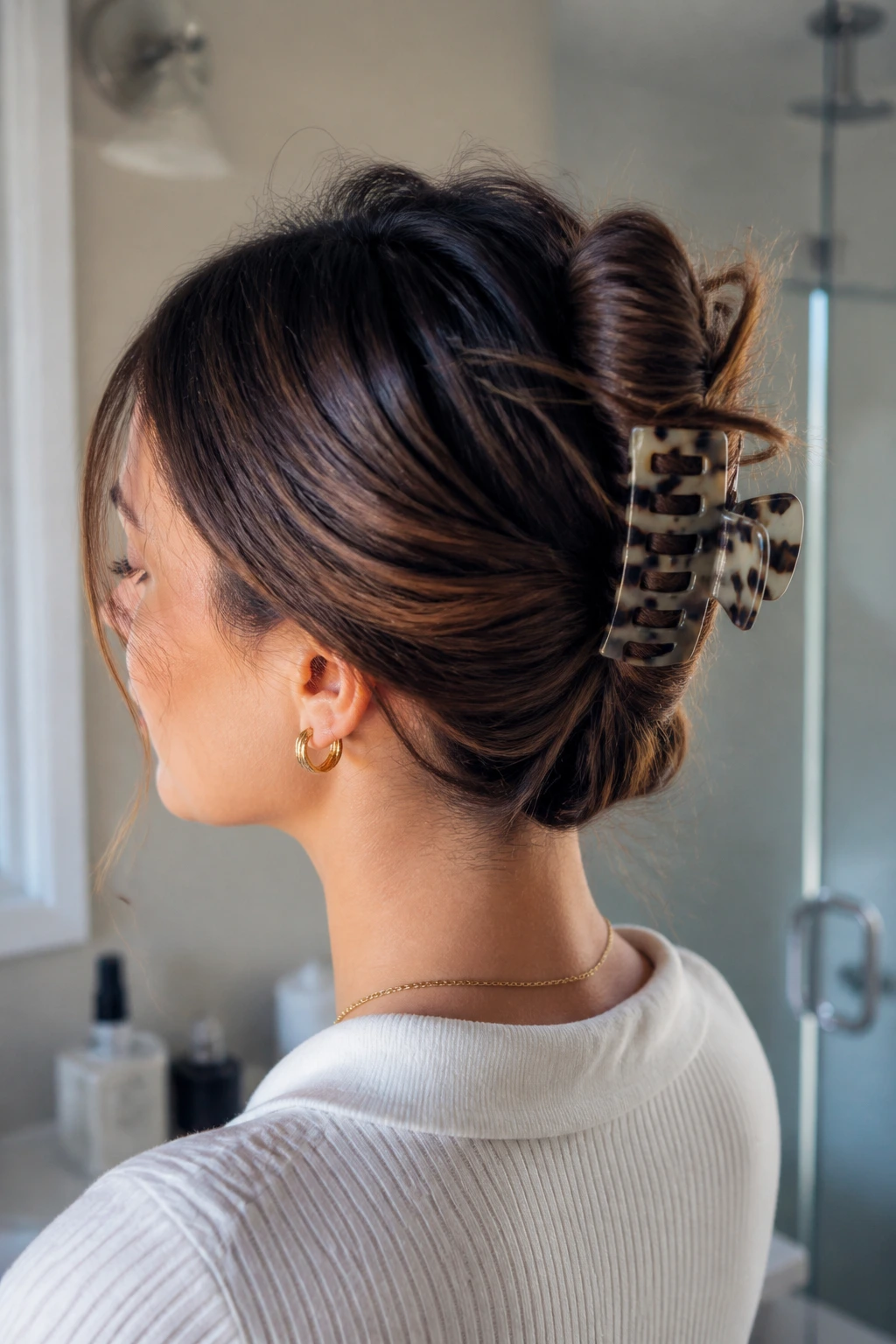
The claw clip French twist is what happens when practicality gets dressed up. Gather the hair as if you’re making a low ponytail, twist it upward, fold the length inward, and clamp it with a clip. The ends can fan out at the top or tuck inside, depending on the clip size.
This style looks best when the hair has a little texture, because freshly washed strands slide out more easily. A medium or large clip with strong teeth is worth having; cheap clips tend to pop open when long hair gets heavy. If your layers fall loose, pin the shorter pieces first, then clip the rest.
It’s a quick fix that still looks clean from the front. I use it on workdays, grocery runs, and anytime I want my neck free without committing to a full bun.
20. Hair Scarf Ponytail
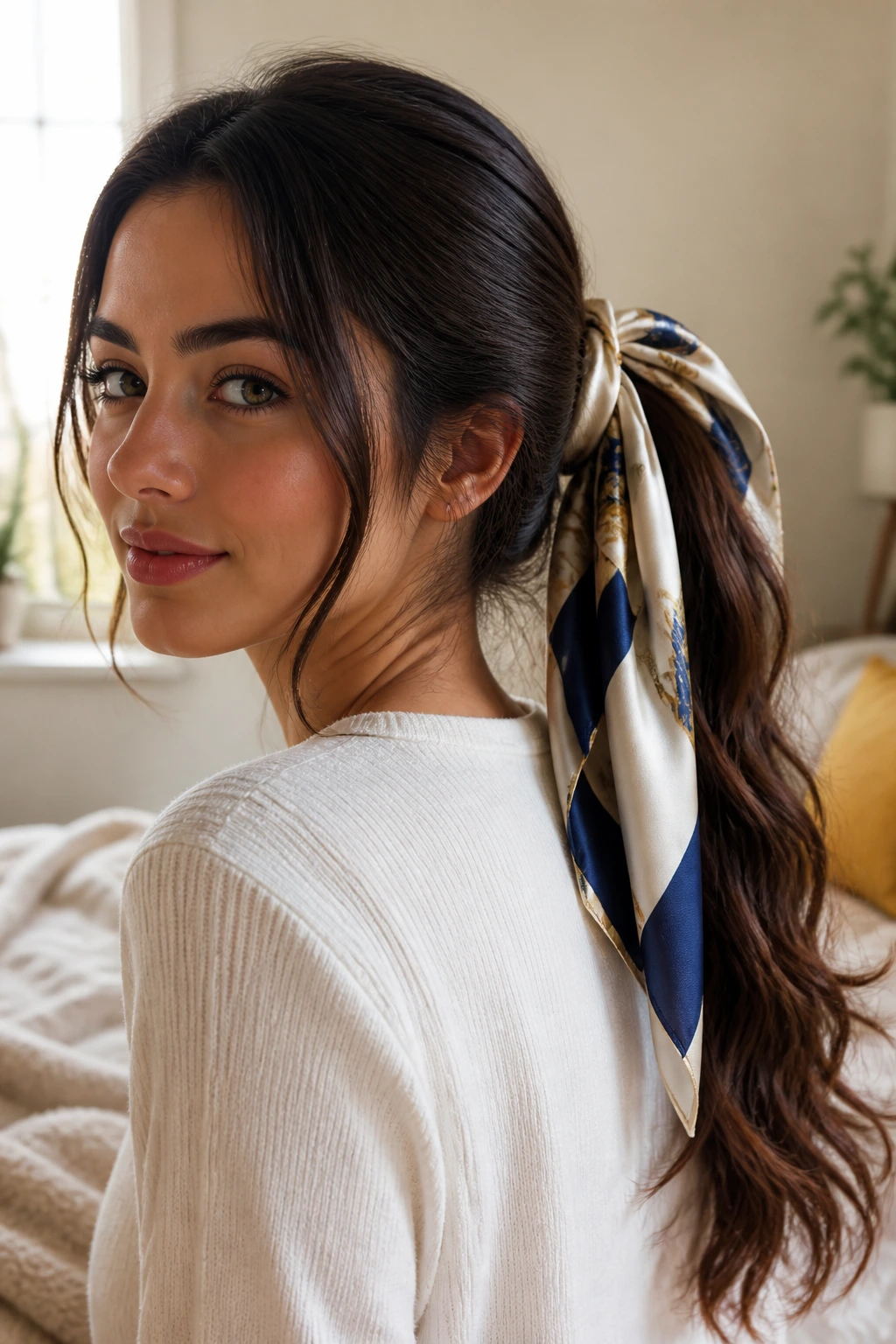
A hair scarf can turn an ordinary ponytail into something that feels more finished. Tie the ponytail first, then knot a scarf around the elastic or weave it through the base. A silk scarf gives a smoother finish, while cotton reads more casual and stays put better.
The trick is picking a scarf that isn’t too bulky. If it’s too thick, it sits awkwardly at the back of the head and makes the ponytail droop. Keep the rest of the hair simple so the scarf stays the focal point. Straight hair works well here, but soft waves look good too.
This is one of my favorite ways to make a basic style feel personal. It takes the same five-minute ponytail and makes it look like you chose the whole outfit around it.
21. Ribbon-Woven Braid
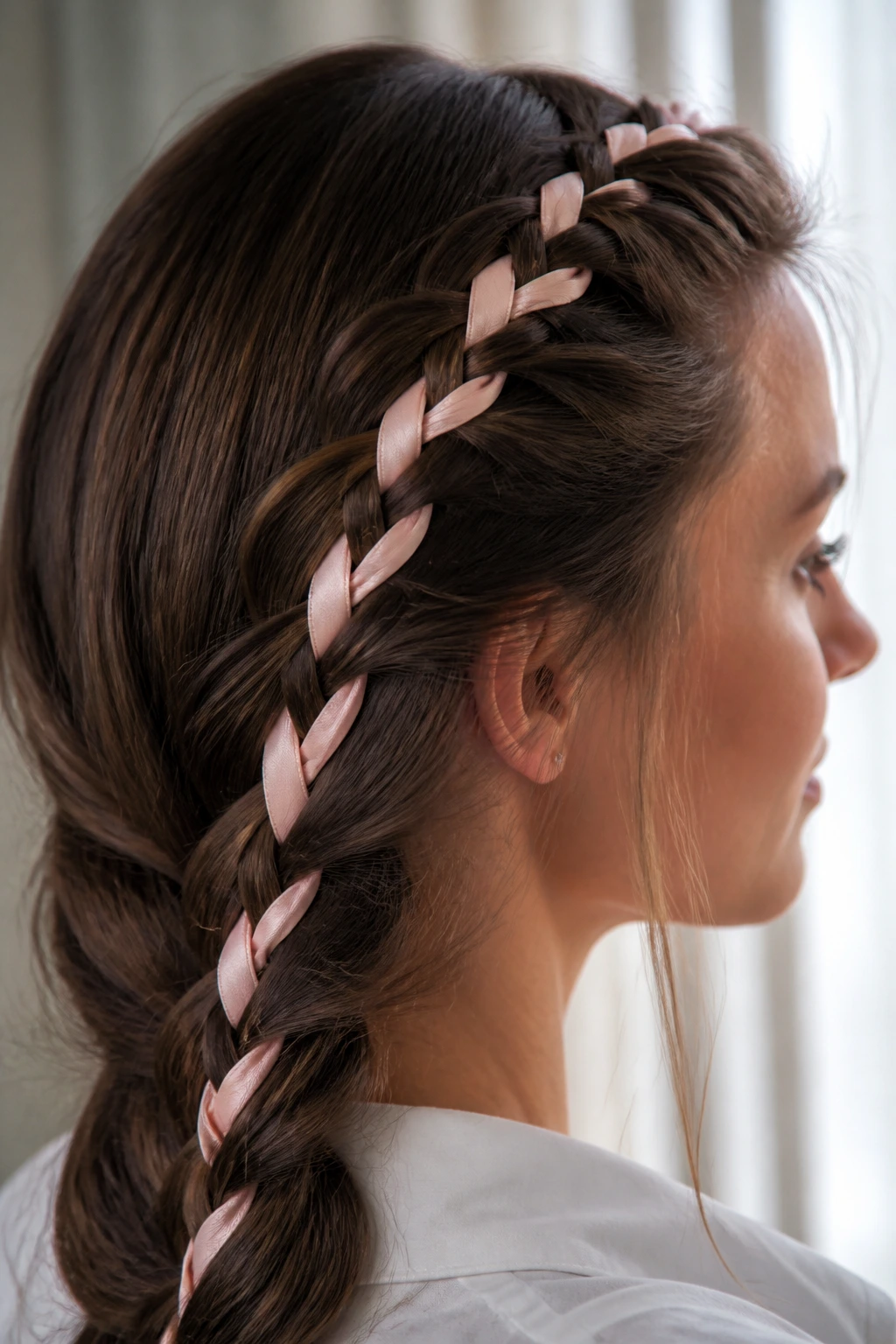
A ribbon-woven braid has a softer, more finished look than a plain braid. Tie a narrow ribbon to one strand at the top, then weave it through the braid as you go. The ribbon can match your outfit or add a clean color contrast if you want the braid to stand out.
How to Get the Best Shape
Use a ribbon that lies flat. Satin works, but it can slide, so a slightly textured ribbon is easier if you’re new to this. Keep the braid medium-tight so the ribbon shows at regular intervals. If the sections are too tight, the ribbon disappears into the hair instead of sitting on top.
I like this for birthdays, brunches, and days when long hair needs something extra without a full updo. It’s a small detail, but it changes the whole look.
22. Sleek Straight Glass Hair
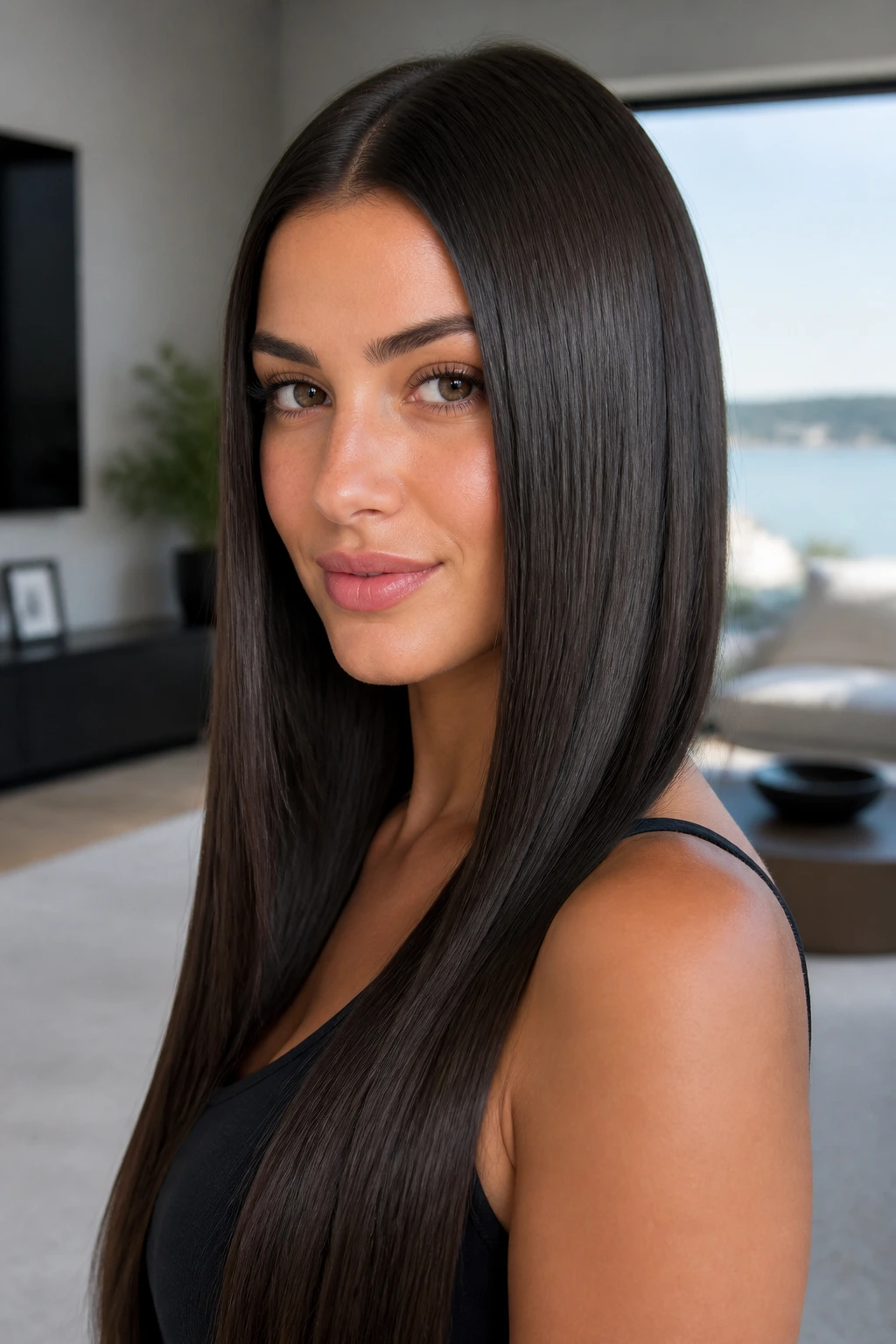
Sleek straight hair has one job: look smooth from root to end. That means heat protection, a careful blow-dry, and a flat iron only if the hair still needs it. The finish should move like one sheet, not separate into dry little pieces.
This style depends on condition as much as technique. A light leave-in and a drop of serum on the ends help, but too much product will make the roots greasy. If your hair frizzes at the crown, hit that area with the dryer nozzle while brushing it downward. It makes a bigger difference than most people expect.
It’s the style I’d choose when I want long hair to look clean and sharp. No braid. No wave. No distraction. Just smooth lines and a center or side part that sits exactly where you put it.
23. Voluminous Blowout with Curtain Bangs
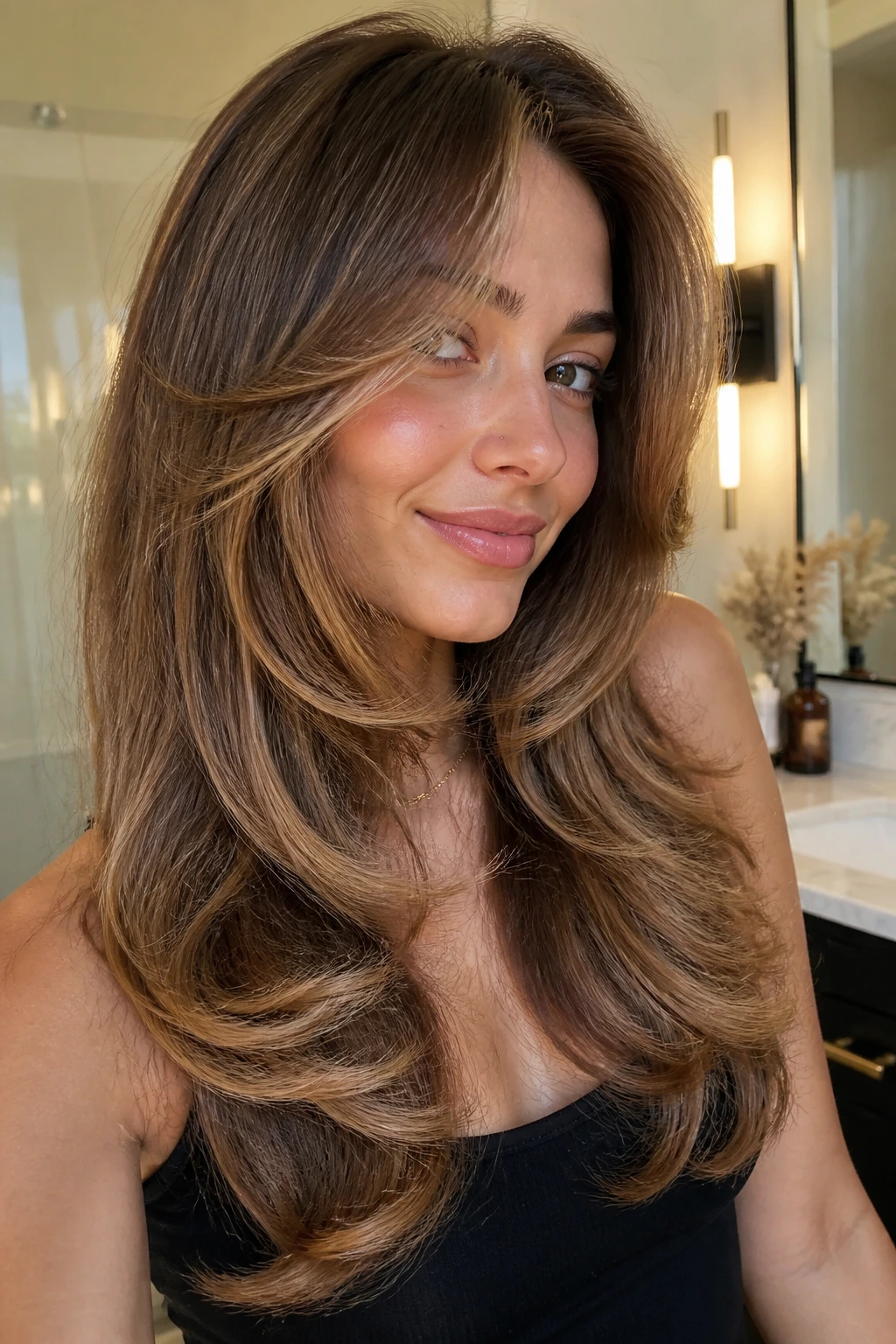
A voluminous blowout makes long hair feel lighter because the shape lifts away from the head. Round-brush the top sections up and back, then bend the ends under just enough to keep them polished. Curtain bangs or face-framing pieces help the style move instead of hanging flat.
The key is root lift. If the crown is flat, the whole blowout loses energy. Clip the bangs aside while drying the rest, then style them last with a round brush and a quick blast of cool air. That keeps the shape from collapsing into your forehead.
This one has a little salon drama, but not in a stiff way. It works well when you want your long hair to feel full and airy. And yes, it takes more effort than a ponytail. That’s the trade.
24. Face-Framing Layers and Tucked Ends
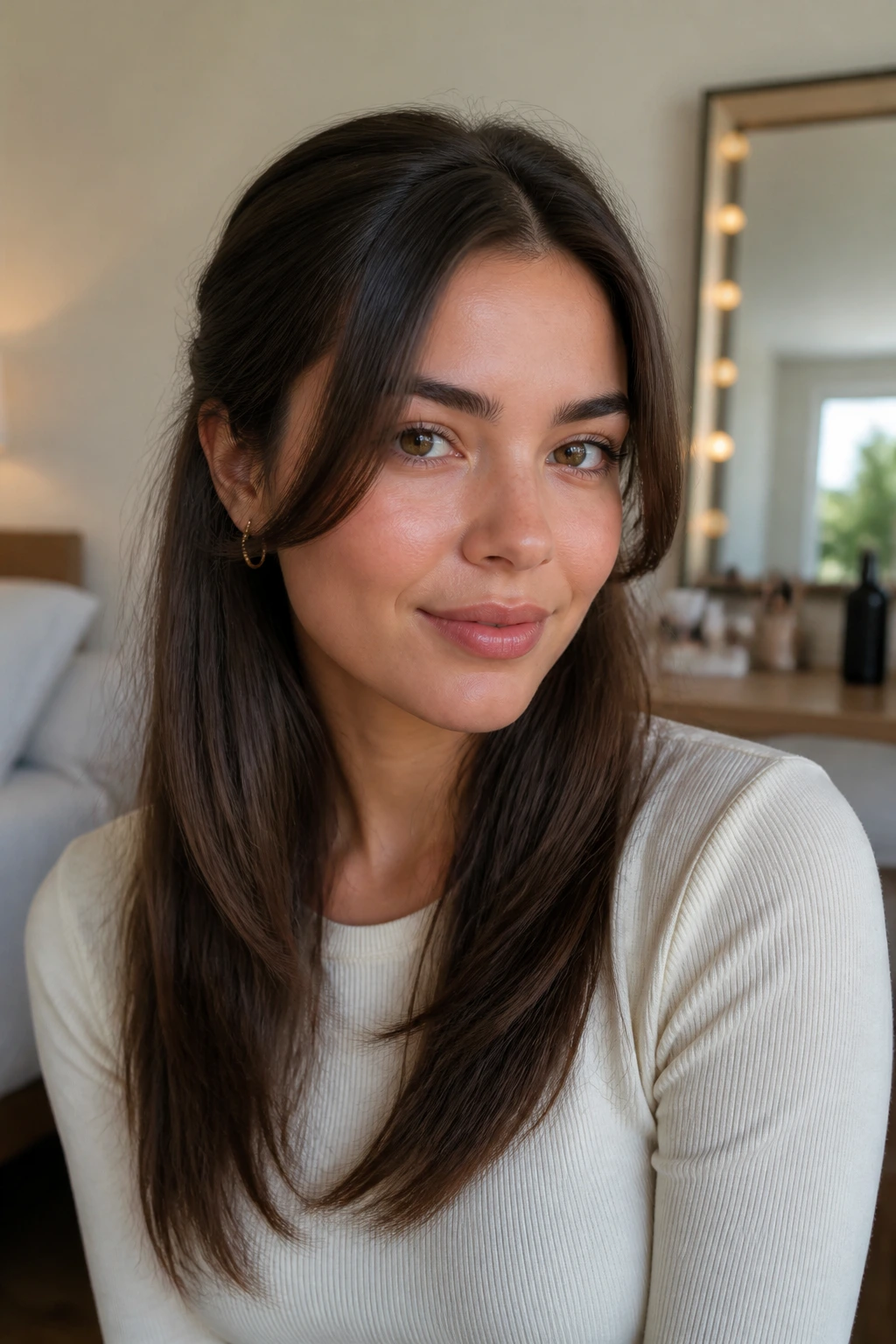
Sometimes the best long-hair style is not a full updo at all. Tuck the front sections behind the ears, leave the layered pieces loose around the face, and smooth the ends so they fall cleanly. It sounds small, but the effect is calmer and more polished than leaving everything forward.
This works especially well when your haircut already has layers or curtain pieces. A tiny bend at the ends, made with a straightener or round brush, helps the shape settle. If one side keeps flipping out, pin it under for a minute while you finish makeup or earrings, then release it. That little pressure can reset the bend.
It’s a quiet style. Not flashy. But when the cut itself is good, this is often enough.
25. Half-Up Space Buns
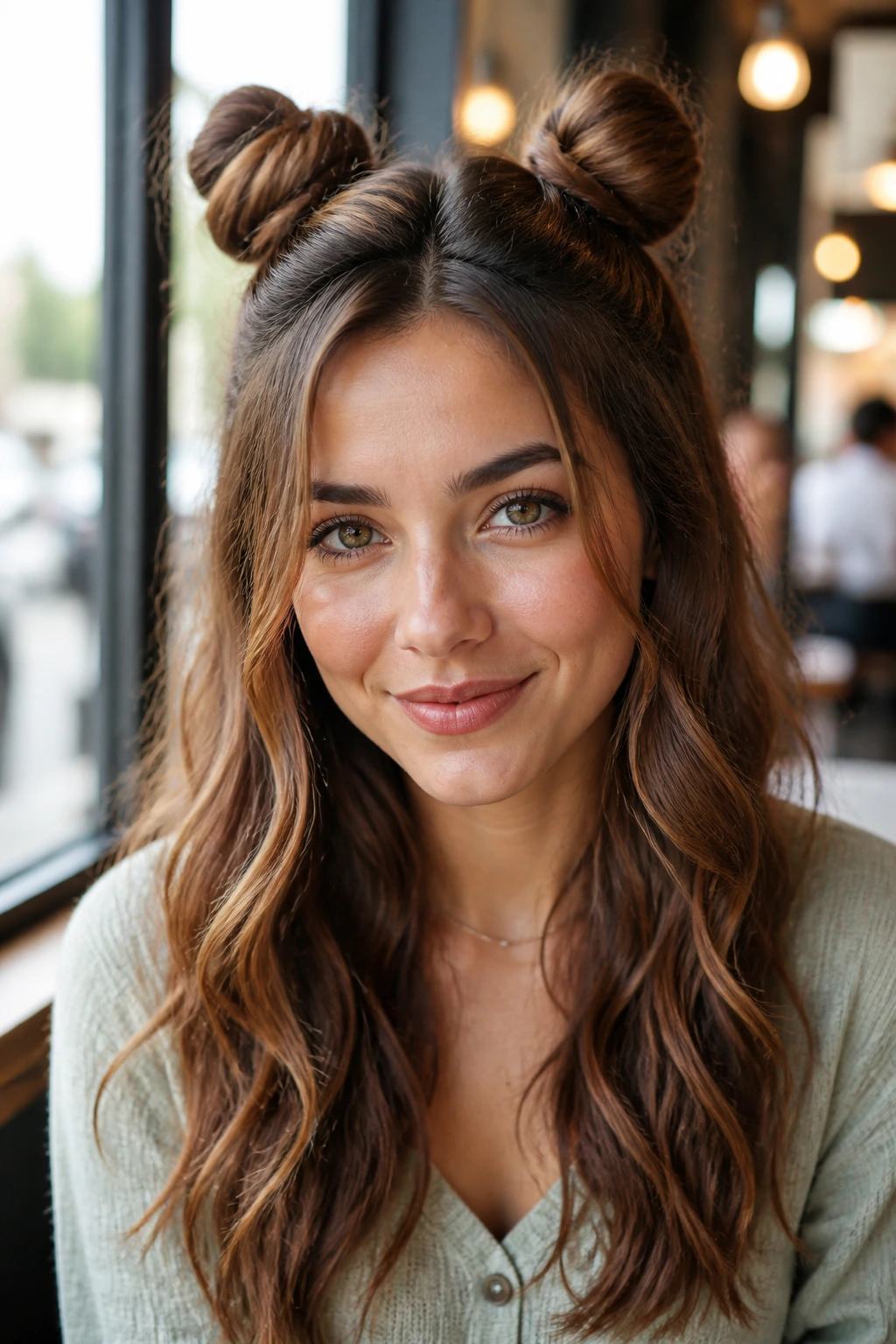
Half-up space buns bring a playful shape to long hair without sending all of it up. Part the top section down the middle, make two small ponytails high on the head, twist each one into a bun, and pin or elastic them in place. Leave the rest of the hair down and loose.
Best Way to Wear It
The buns should be compact, not giant. If they’re too large, the style starts to look top-heavy. Keep the bottom half soft with waves, straight lengths, or even a light bend at the ends. That contrast is what makes the style work.
This one is fun, yes, but it’s also practical on hot days or busy weekends. The top stays out of the face, and the long hair still shows. If you want it less youthful, keep the buns smaller and the part clean.
26. Double Braids into Pigtail Braids
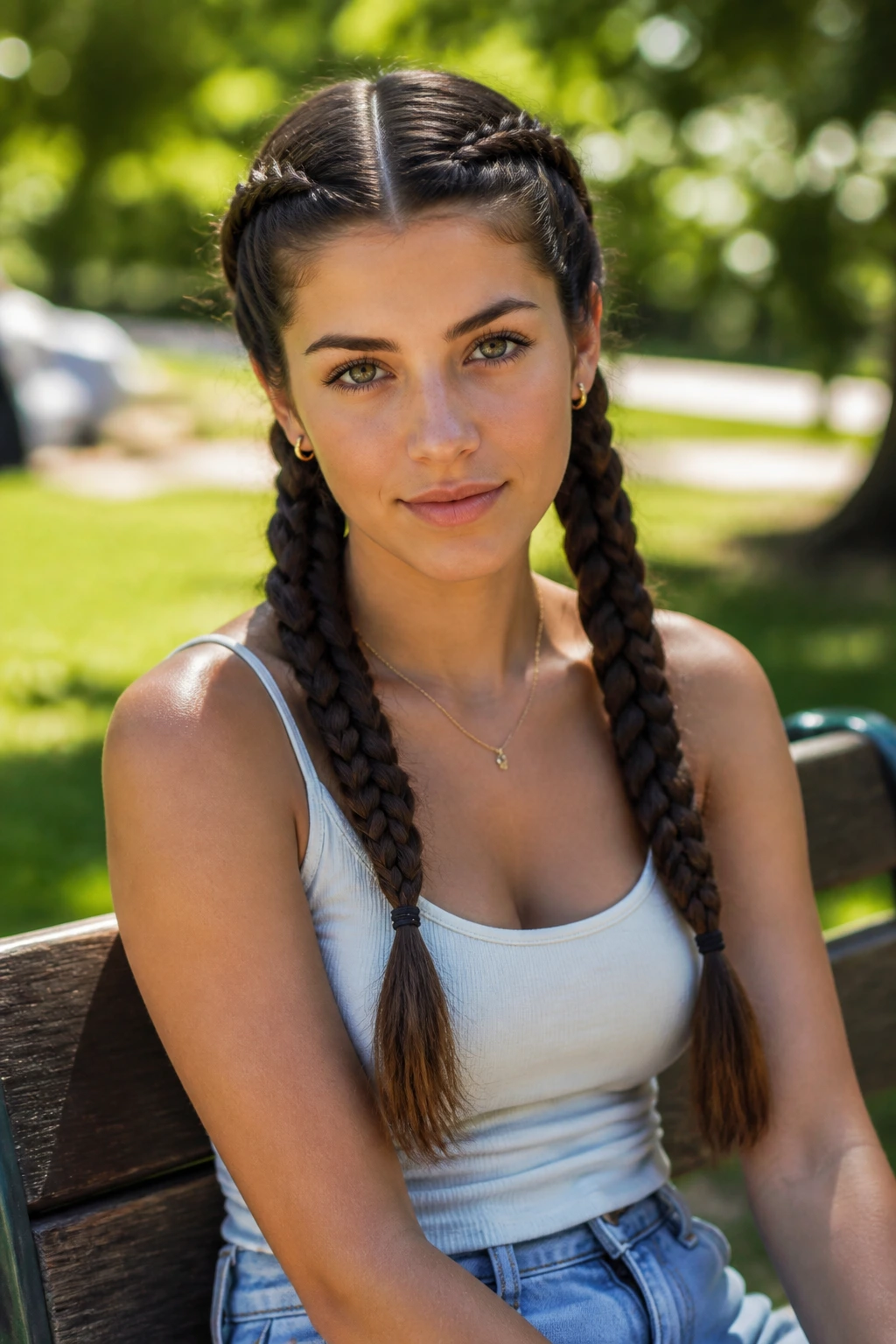
Double braids can look sporty, neat, or a little nostalgic depending on how tight you make them. Part the hair down the center, braid each side from the crown to the ends, and secure them low. Keep the sections even so one side doesn’t feel heavier than the other.
Quick Shape Notes
If your hair is very long, braid with a firm hand at the scalp and a looser hand at the ends. That stops the braids from pulling too much at the roots. A small amount of texture spray at the front helps the part stay visible and keeps short flyaways from escaping all over the place.
I like this style when I need long hair completely controlled. It’s good for walking, errands, casual travel, and active days. It also works better than people think with thick hair, because the two braids split the weight.
27. Low Pigtail Braids with a Clean Center Part
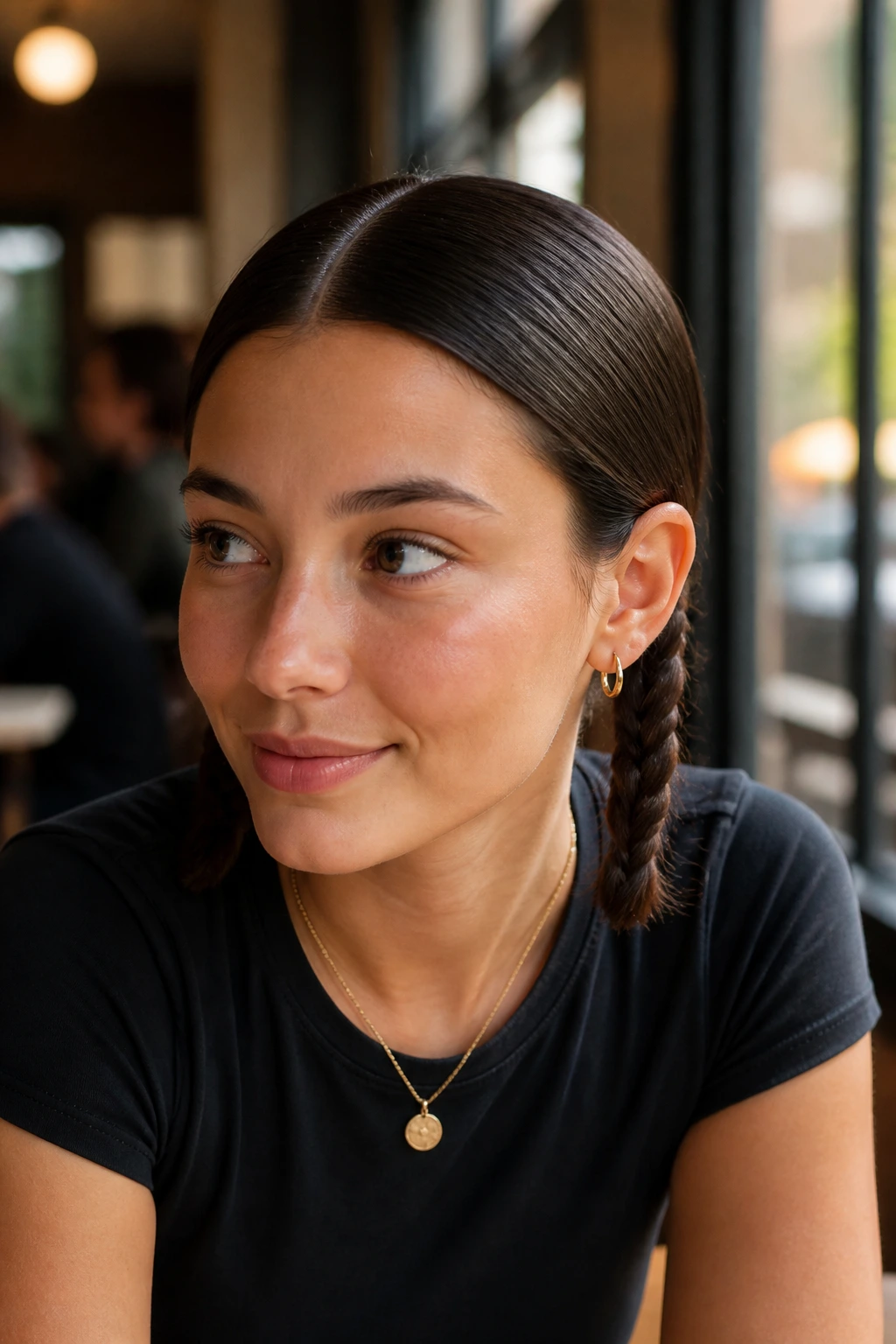
Low pigtail braids are less playful than the high version and a little more polished. Make a straight center part, keep the braids low at the nape, and braid each side tightly enough that they sit close to the head. The lower placement softens the look.
The center part matters here. It gives the style structure and keeps it from reading too childlike. If your hair has layers around the face, tuck the shorter pieces in with a tiny bit of cream before you start. That keeps them from poking out and frizzing around the temples.
This is one of those styles that looks clean with a turtleneck, a coat, or a simple T-shirt. I like that it feels tidy without needing pins, spray, or a mirror every ten minutes.
28. Knotted Half-Up Style
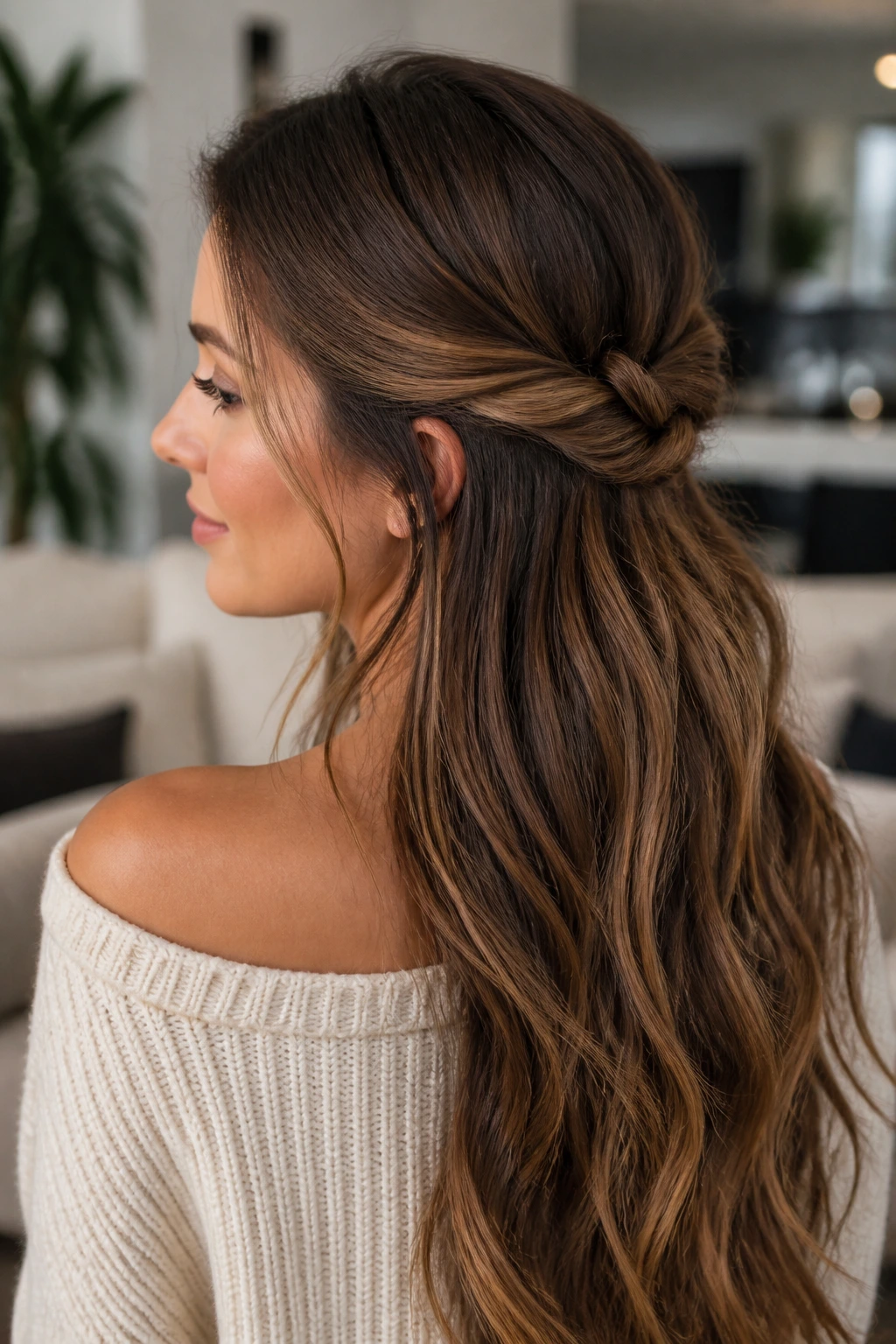
A knotted half-up style looks like you did something clever with your hair when, really, you just tied two sections together. Take two front sections, cross one over the other, pull them into a knot, and pin the knot at the back with bobby pins hidden underneath.
The shape works best when the hair has a little bend or volume, because the knot can disappear into very smooth hair. If the strands are slippery, rough them up first with dry shampoo or a matte texture spray. A small clip can replace the pins if you want a more visible finish.
This style is a nice middle ground between loose hair and a full half-up pony. It shows off length, keeps the front away from your eyes, and has enough detail to look intentional.
29. Twisted Halo Half-Up
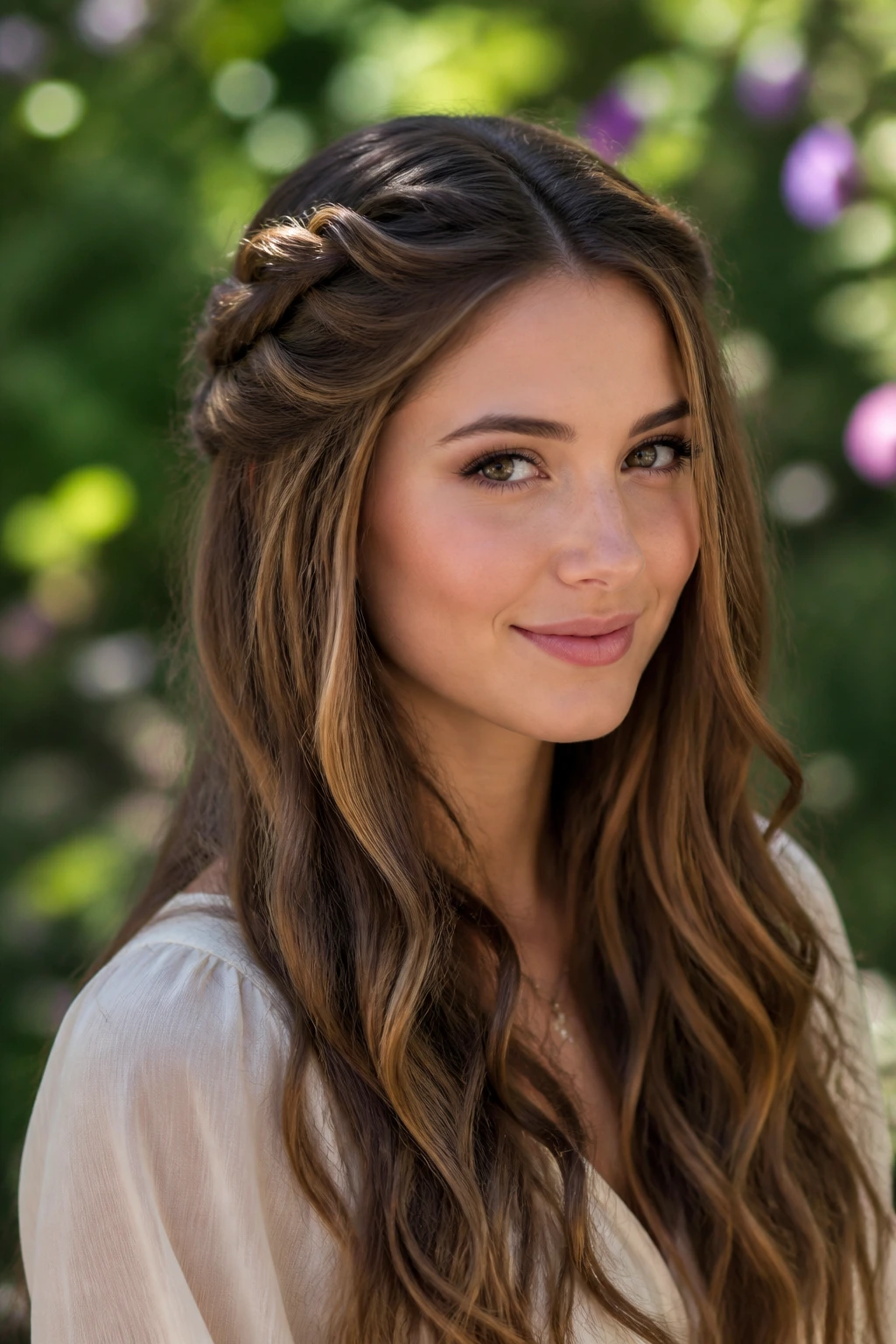
The twisted halo half-up gives long hair a soft frame around the head without going fully braided. Twist two sections from each side, bring them around toward the back, and pin them where they meet. Let the rest of the hair hang loose underneath.
The trick is keeping the twists low enough to feel relaxed. If they sit too high, the style starts to look stiff. A few loose pieces near the ears make it feel gentler, especially if the rest of your hair is thick or full. It also helps to curl the ends lightly so the bottom half moves with the top.
This is the sort of style that looks good with dresses, earrings, and anything with a soft neckline. It’s not loud. It just frames the face in a way that feels cared for.
30. Braided Ponytail
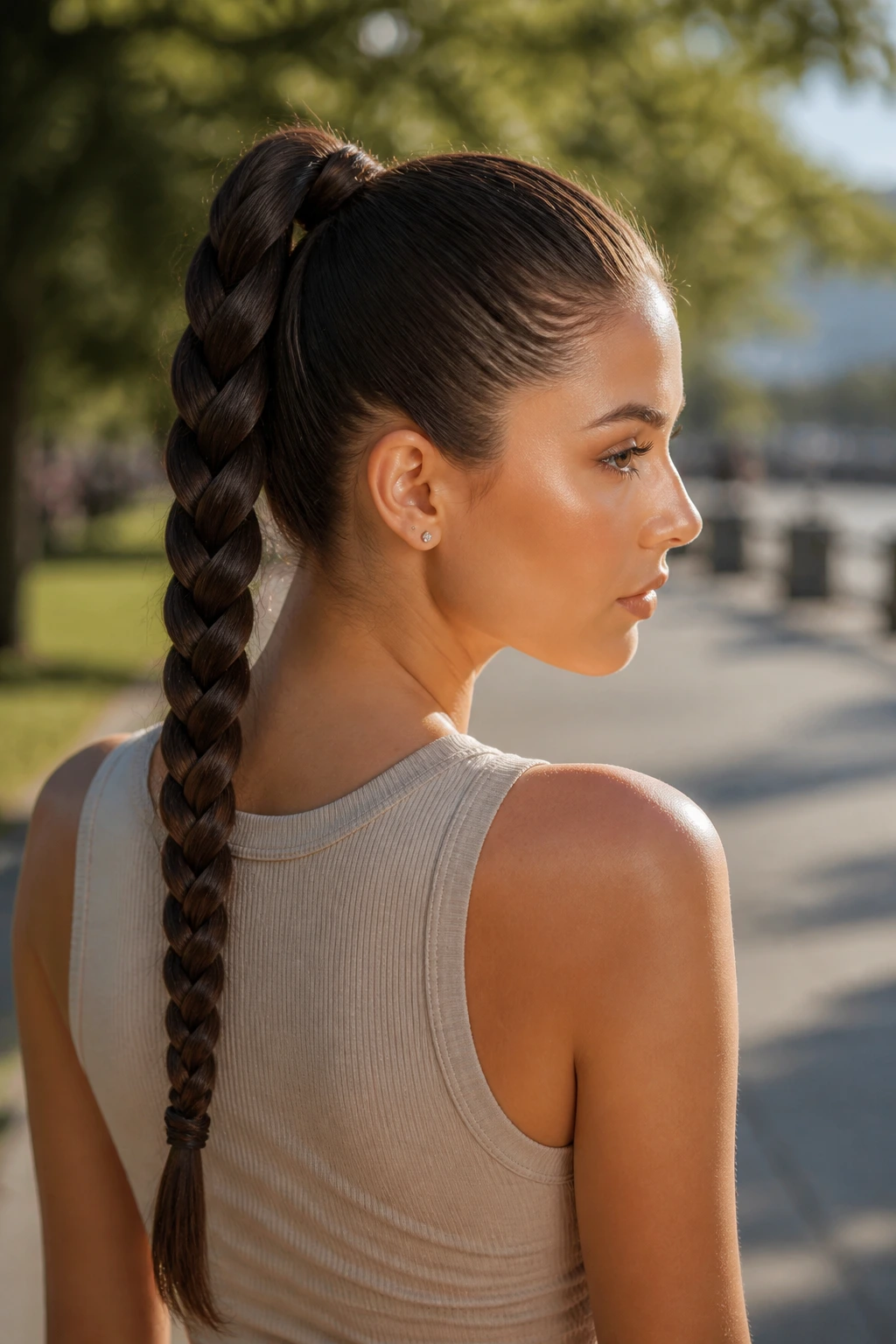
A braided ponytail takes an ordinary pony and gives it more shape. Pull the hair back, secure it with an elastic, then braid the ponytail itself all the way to the ends. The braid keeps long hair from tangling and gives the finish a clean line.
Why It’s Worth Doing
If your hair is thick, this style can stay neat for hours because the braid locks the length down. If it’s fine, use a little texturizing spray before you start so the braid doesn’t slide apart. A wrapped elastic at the base makes the whole look cleaner.
I use this when I want a ponytail that doesn’t feel too plain. It works for school runs, office days, walks, and travel. It’s also easy to turn into a bun later if the day runs long.
31. Side-Swept Hollywood Waves

Side-swept waves bring drama to long hair without needing a complicated updo. Curl the hair in one direction, brush the waves into a soft S-shape, and sweep everything to one side before pinning the back discreetly. The style should look glossy and deliberate, not crunchy.
This one lives or dies by the finish. Use a large-barrel iron, let the curls cool fully, then brush them out with a soft bristle brush. That cooling step matters more than people think. If you brush too early, the waves fall flat and lose their shape. A light shine spray gives the final polish.
It’s the kind of look I’d save for an evening event, a photo-heavy day, or any time long hair should feel a little more dressed up than usual.
32. High Bun with Face-Framing Pieces
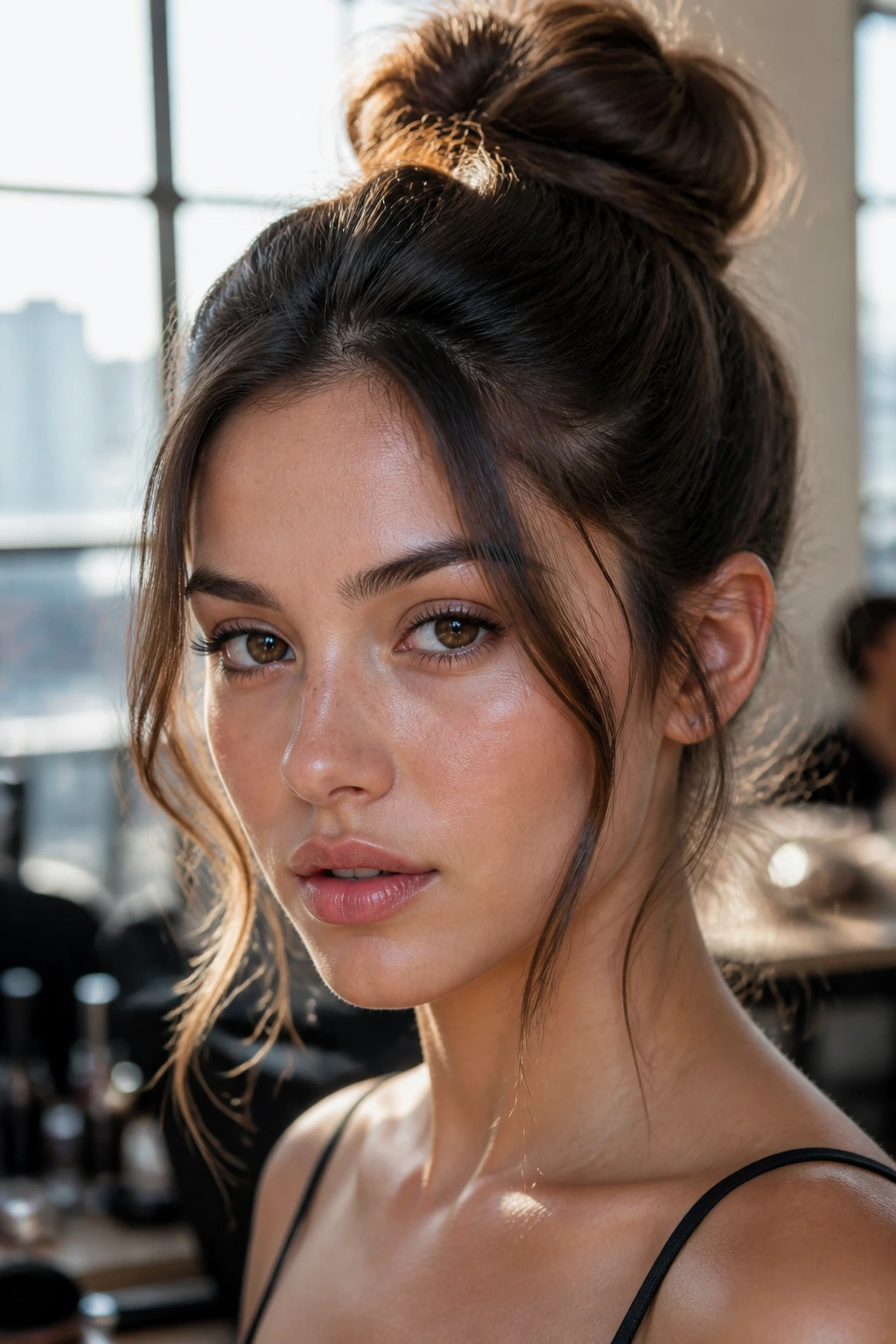
A high bun gets softer when you leave a few front pieces out on purpose. Gather the hair high, twist it into a bun, then pull a few thin sections loose around the temples and jaw. Those pieces keep the style from feeling too severe.
Keep the Balance Right
The bun should sit high enough to lift the face, but not so high that it looks like it’s fighting your head. If your hair is very long, coil it once around the base and let the rest fold in rather than wrapping every inch. That helps the shape stay airy.
This style works on days when you want your hair off your neck but still want some softness around the face. It’s especially good with strong brows, earrings, or a neckline that needs space. A good bun pin job makes all the difference here.
33. Low Ponytail with a Deep Side Part

A deep side part turns a basic low ponytail into something more interesting. Shift the part well off center, smooth the hair back, and secure the pony at the nape. The part adds instant shape, especially on long hair that tends to fall straight and heavy.
The style looks best when the top is sleek and the ponytail still has a little movement. You can wrap the base, curl the ends, or leave them natural if your texture already has bounce. If one side is flatter, use a tail comb to lift the roots a little before you pull the hair back.
I like this because it feels easy but not lazy. The side part changes the silhouette in a way that makes people think you did more than you did.
34. Loop-Through Ponytail
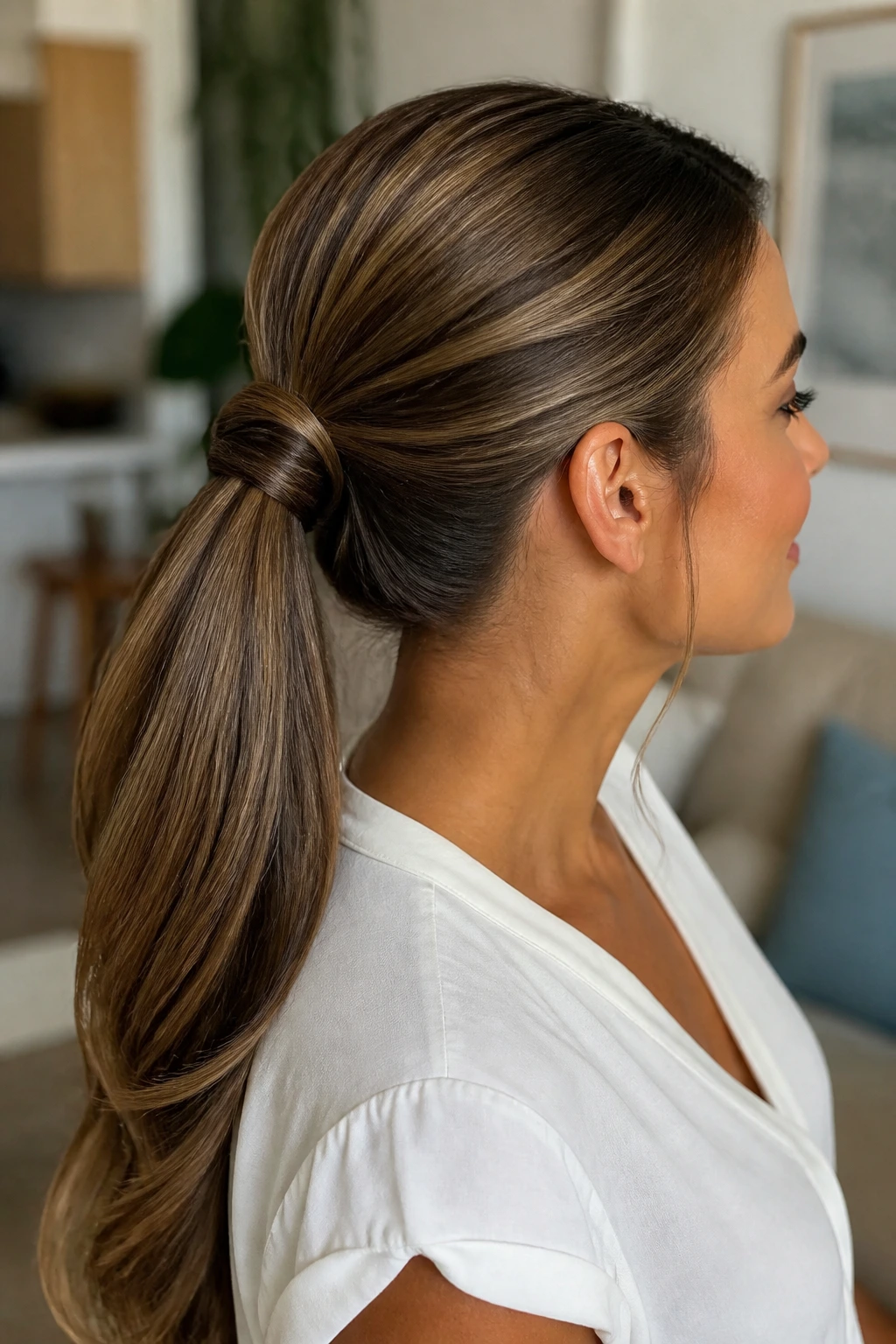
A loop-through ponytail gives long hair a little twist without much effort. Make a low or mid ponytail, split the hair above the elastic to create a gap, and flip the ponytail through that opening. The top section creates a neat folded effect that looks tidier than a regular tie-back.
This style works best when the hair has some smoothness, but not so much slip that the loop falls apart. A small elastic right before the loop can help if the hair is heavy. If you want the ends to sit cleanly, run a straightener over them or bend them softly under.
It’s one of those styles that makes a plain pony feel finished. Nothing fancy. Just smart.
35. Criss-Cross Half-Up

A criss-cross half-up style adds structure without taking away much length. Take two thin sections from each side, cross them at the back, pin them in place, then repeat once or twice above or below depending on how full your hair is. The pattern gives the style a little built-in detail.
The sections should be thin. If they’re too thick, the cross looks bulky and starts to slide. On long hair, this style works nicely because the lower lengths stay loose while the top half gets a little control. A small barrette can cover the pins if you want a cleaner finish.
I reach for this when a plain half-up feels too bare. It has just enough structure to look styled, but it still leaves the length doing what long hair does best.
36. Mermaid Waves

Mermaid waves are big, loose, and more textured than classic soft curls. Use a deep waver or braid-dry methods if that’s your thing, then separate the waves with your fingers so they fall into chunky bends. The pattern should look lived-in, not precise.
This style shines on long hair because the length gives the wave pattern room to stack. If your ends are thin, a quick bend with a wand helps them look full instead of stringy. A salt spray or texture spray can help, though I’d keep it light if your hair dries out easily.
It’s a good choice for relaxed weekends, beachy outfits, or days when you want movement more than polish. The look can go boho fast, so balance it with a clean part or simple makeup if you want it calmer.
37. Sleek Braided Bun
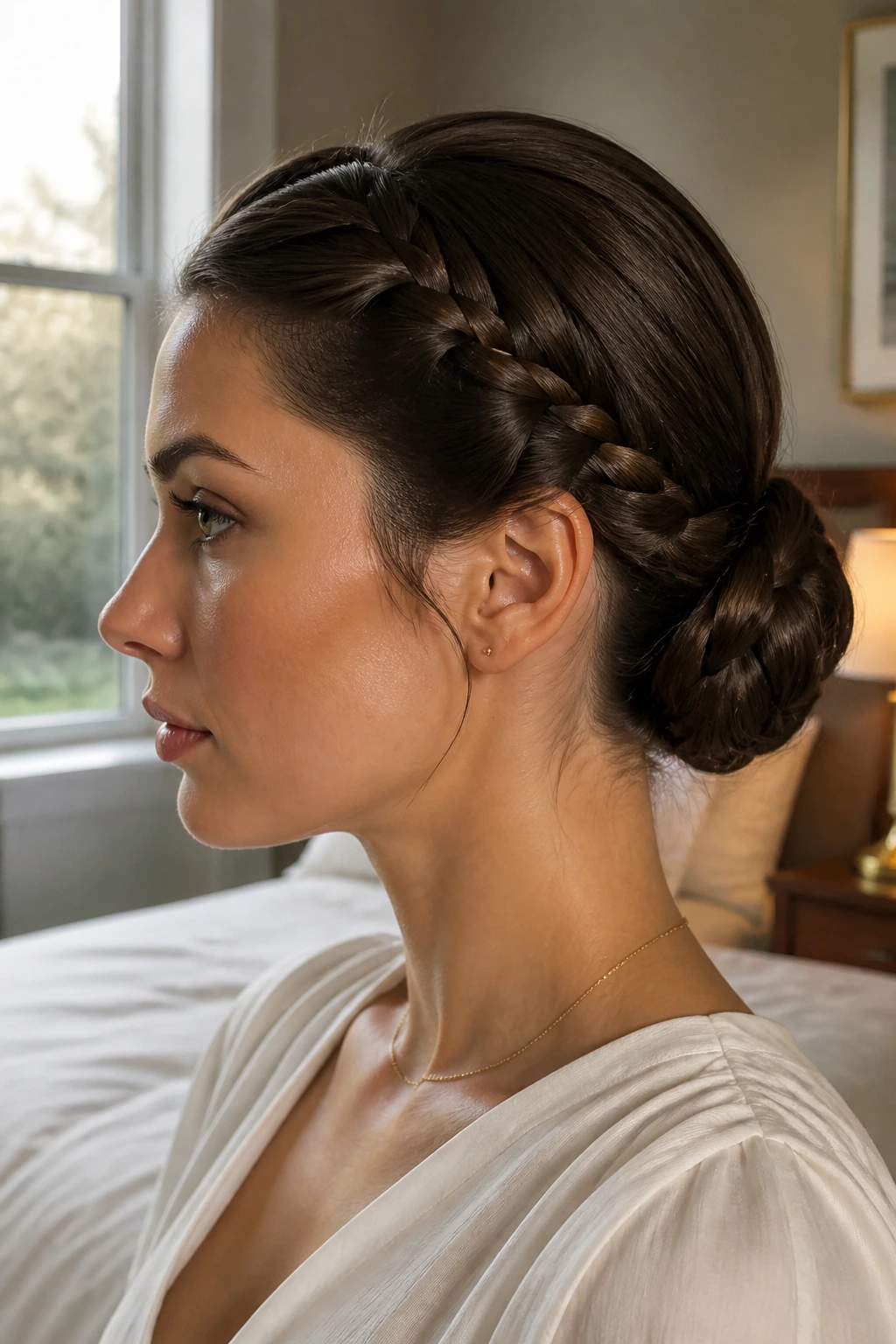
A sleek braided bun combines two reliable ideas: braid first, then coil. Make a low braid, wrap it into a bun at the nape, and pin it down so the braid itself becomes the texture. The surface stays smooth, but the bun has more interest than a plain coil.
Why I Like It
This style holds better than a simple bun because the braid gives the pins something to grab. It’s especially helpful on thick, heavy long hair that wants to slip loose. A little gel around the hairline keeps the finish clean, and a fine comb helps the top stay flat.
It’s a strong option for formal settings, uniforms, or any day when you want hair fully controlled. It also looks better than a plain bun from the side, which is not a small detail if you’re wearing it all day.
38. Fishtail Crown Half-Up
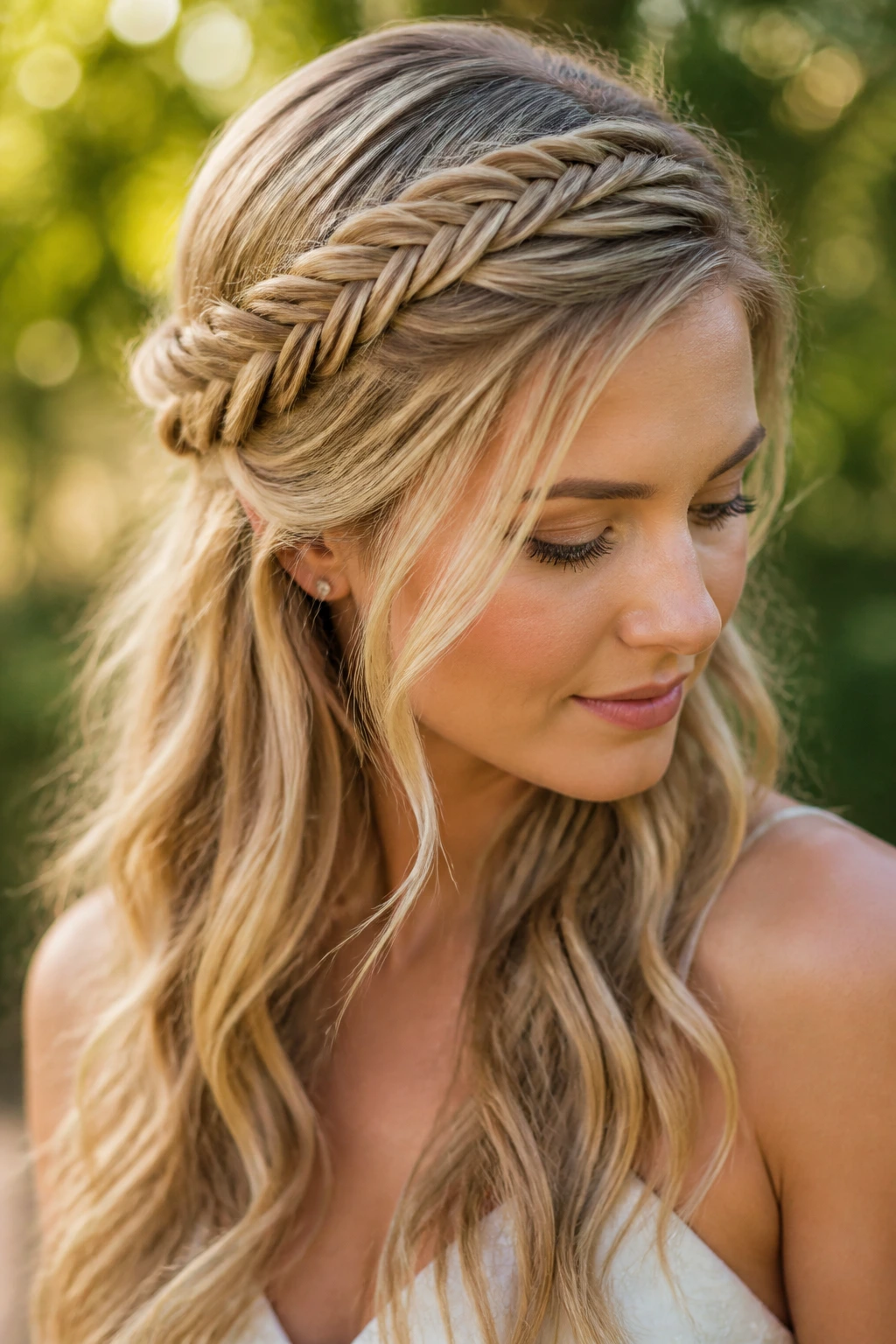
A fishtail crown half-up gives you detail across the top without hiding the length. Braid a fishtail from one side, guide it across the back like a crown, and pin it on the opposite side. Leave the rest of the hair loose and slightly waved so the braid has something soft to sit on.
The fishtail pattern is more visible here than in a full updo, which is why it works so well. Pull the braid edges apart a little after pinning so it looks fuller. If your hair is layered, tuck the shorter pieces under the braid with a couple of hidden pins before the style loosens.
This is a pretty option for long hair that you still want to wear down. It has enough detail to stand out, but it doesn’t take away the length you came to show off.
39. Loose Bubble Braid Down the Back
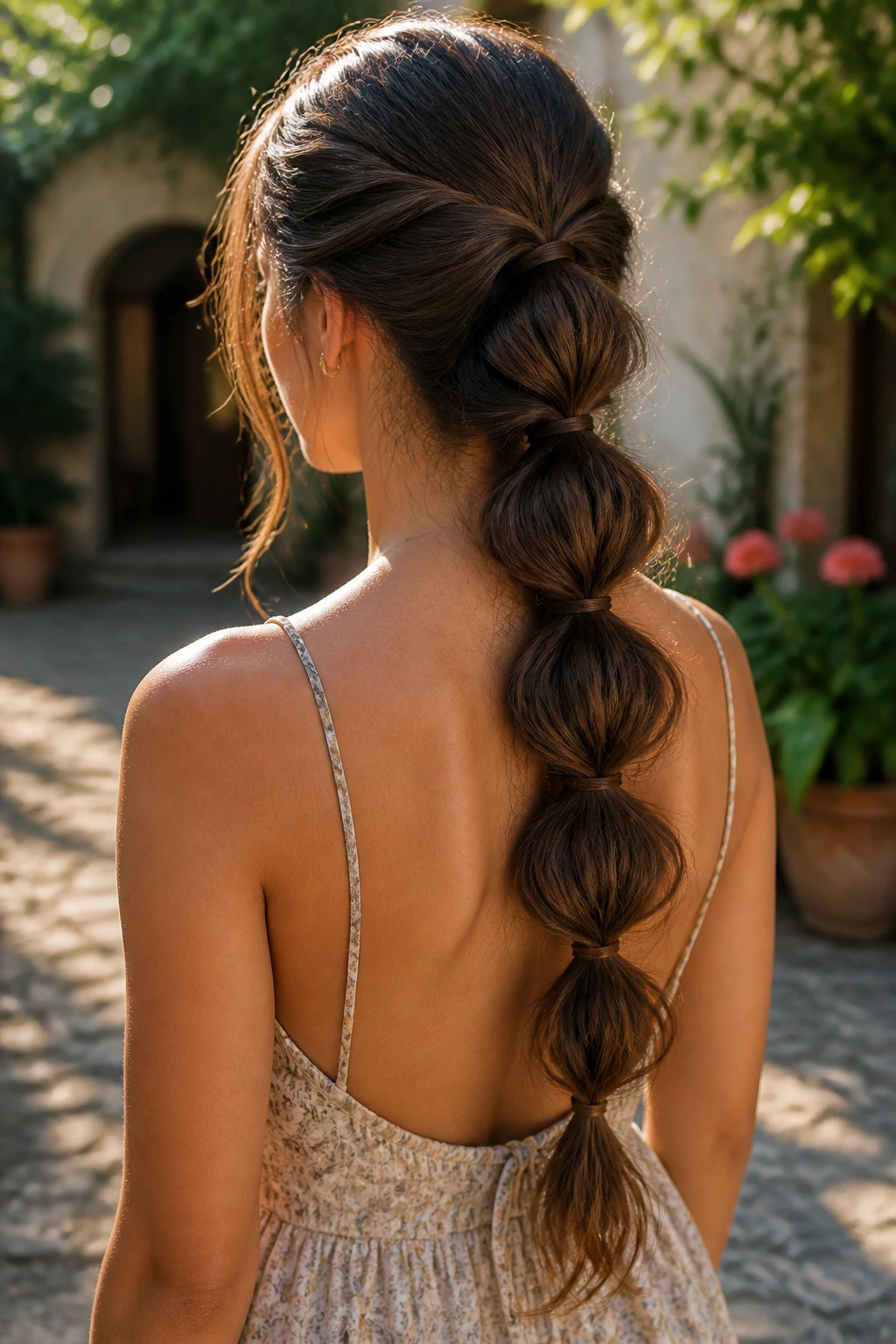
A loose bubble braid down the back feels playful but still grown-up when you keep the sections spaced well. Start with a low pony, add elastics every few inches, then tug each section outward until the bubbles have shape. Unlike the tight version, this one should move a little.
The loose spacing makes long hair look even longer, which is half the appeal. If your hair is thick, the bubbles can be more dramatic. If it’s fine, gently backcomb each section before adding the next elastic so the rounds don’t collapse. Keep the base secure or the style will drift downward.
This is a fun choice for weekends, casual events, and any day when you want your hair to do something different without becoming a full project.
40. Polished Everyday Ponytail
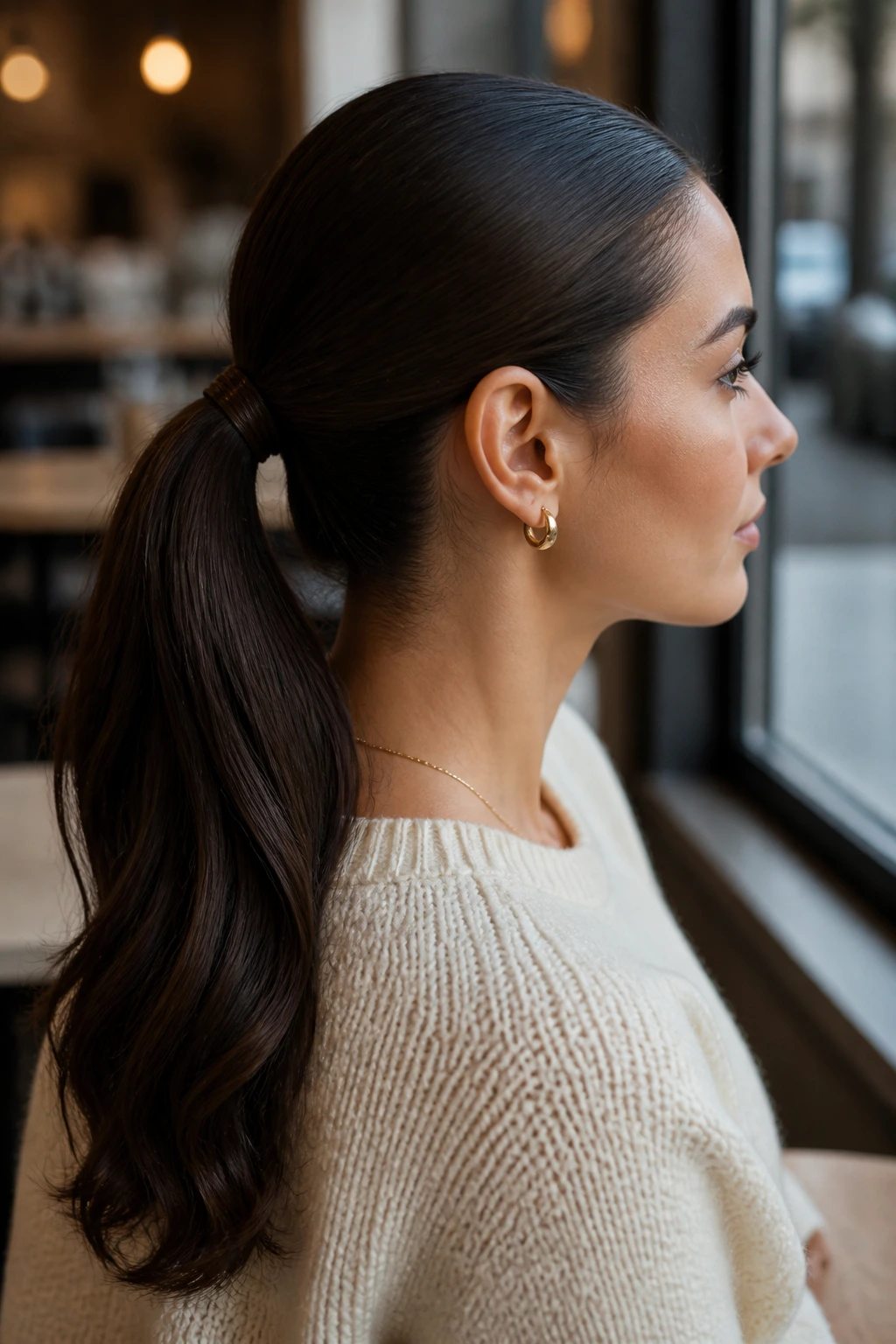
A polished everyday ponytail sounds basic because it is basic, and that’s exactly why it belongs here. Brush the hair back, lift the crown slightly, tie the pony at a spot that flatters your face, and smooth the surface with your hands. Add a wrapped base if you have ten extra seconds.
The real trick is placement. Too low and the pony drags the face down. Too high and it can feel severe. The sweet spot is usually mid-low on the back of the head, where the hair still swings but doesn’t fall into your collar every five minutes. A little shine cream on the ends keeps the tail from looking dry.
I keep coming back to this one because it does the job. It works for long hair on rushed mornings, long drives, after workouts, and those days when you want one simple style to carry the rest of the outfit.
