



Short hair can look neat from across the room and a little dangerous up close. That’s the sweet spot a lot of people chase without naming it out loud. Edgy haircuts for short hair work because they let the shape do the talking: a hard line at the jaw, a shaved temple, a piecey fringe that breaks apart instead of sitting politely in one sheet.
The nice thing about short cuts is that they don’t need much to feel bold. A half-inch removed in the right place can change the whole mood. A bob with blunt ends feels sharper than a longer cut with more drama. A pixie with uneven texture can look more rebellious than a loud color job, and it’s often easier to live with.
There’s also a practical side people forget. Short hair shows the neck, the ears, the brow, the cheekbones. That means the cut has to work with your face shape and your hair texture, not fight them. The best short edgy style doesn’t scream for attention. It sits there with confidence and dares you to overthink it.
Some of these cuts are clean enough for a dress code. Some are a little feral. That mix is the point.
1. Choppy Pixie with Jagged Ends
A choppy pixie is one of the easiest ways to make short hair look intentional instead of accidental. The trick is in the ends. They’re cut unevenly, often with texturizing shears or a razor, so the hair breaks into little shards rather than lying in one smooth cap.
Why the Jagged Edge Works
The jagged edge keeps the cut from reading too sweet. You still get the close crop around the ears and nape, but the top has bite. On straight hair, it looks sharp. On wavy hair, it looks even better because the texture multiplies the movement.
Tell your stylist you want piecey separation, not a fluffy helmet. That one line matters. If the top is left too heavy, the cut starts to look round and old-fashioned. If the crown is lightly layered and the fringe is cut a touch longer, the whole thing feels modern fast.
- Best on fine to medium hair
- Needs a trim every 4 to 6 weeks
- Styles fast with a pea-sized matte paste
- Looks especially good with sideburns left a little longer
Pro tip: Scrunch a tiny amount of paste into dry hair, then twist 3 or 4 front pieces between your fingers. That tiny bit of mess is what makes it work.
2. Micro Bob with Blunt Edge
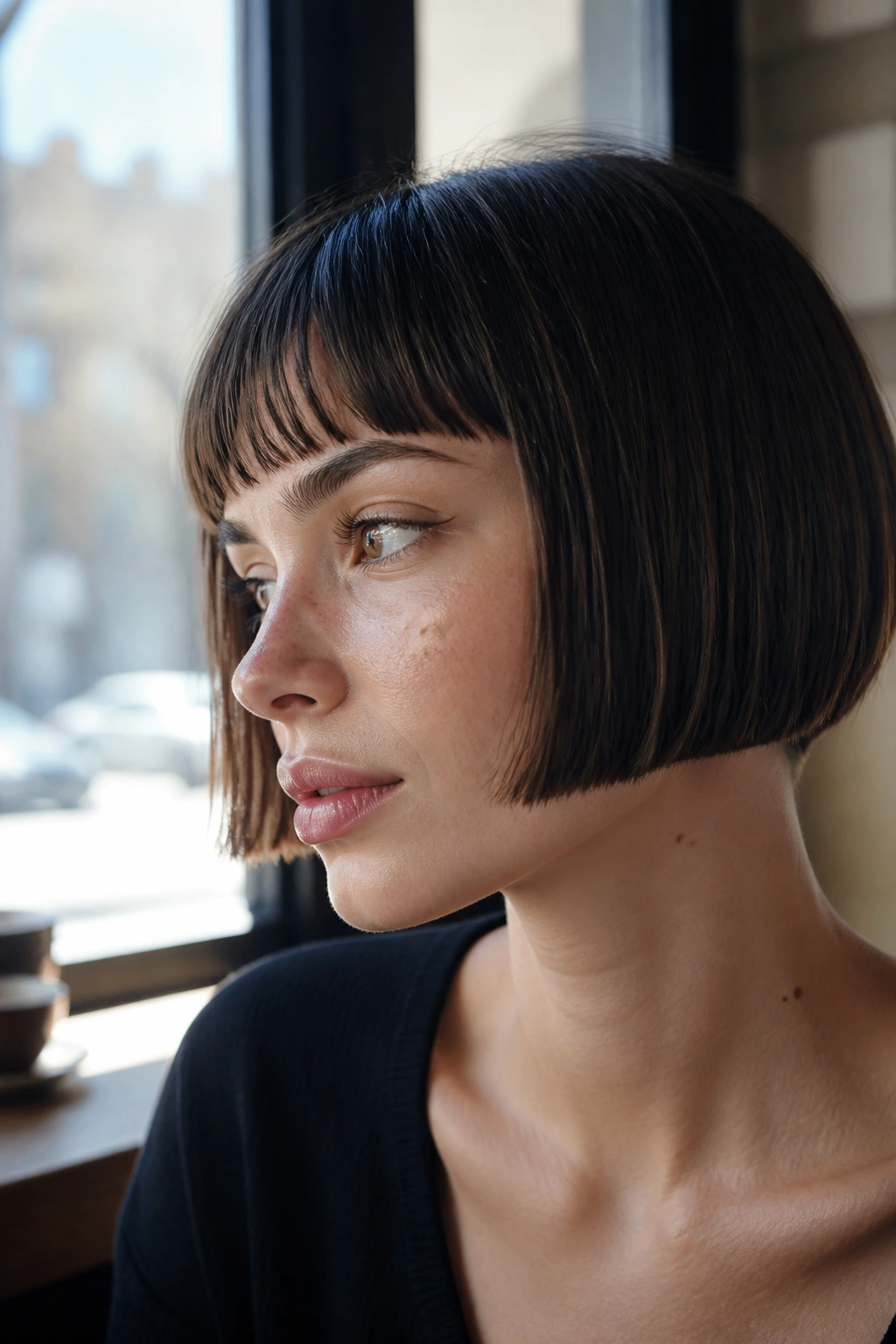
Can a bob be edgy without any layers at all? Absolutely. The micro bob proves it. Cut somewhere between the earlobe and the jaw, it gets its attitude from the blunt line, not from volume or softness.
This is the haircut that looks expensive in the plainest way. No fluff. No apology. When the perimeter is cut straight, the eye goes right to the shape of the face and neck. That’s why it feels so strong on square jaws and narrow chins. It frames hard, which is the whole point.
It also has a sharper personality than a chin-length bob because there’s less hair to hide behind. If you want something polished but not boring, this is a smart place to land. Blow it smooth for a sleek finish, or tuck one side behind the ear and let the other fall forward. Tiny move. Big shift.
3. Asymmetrical Pixie Bob
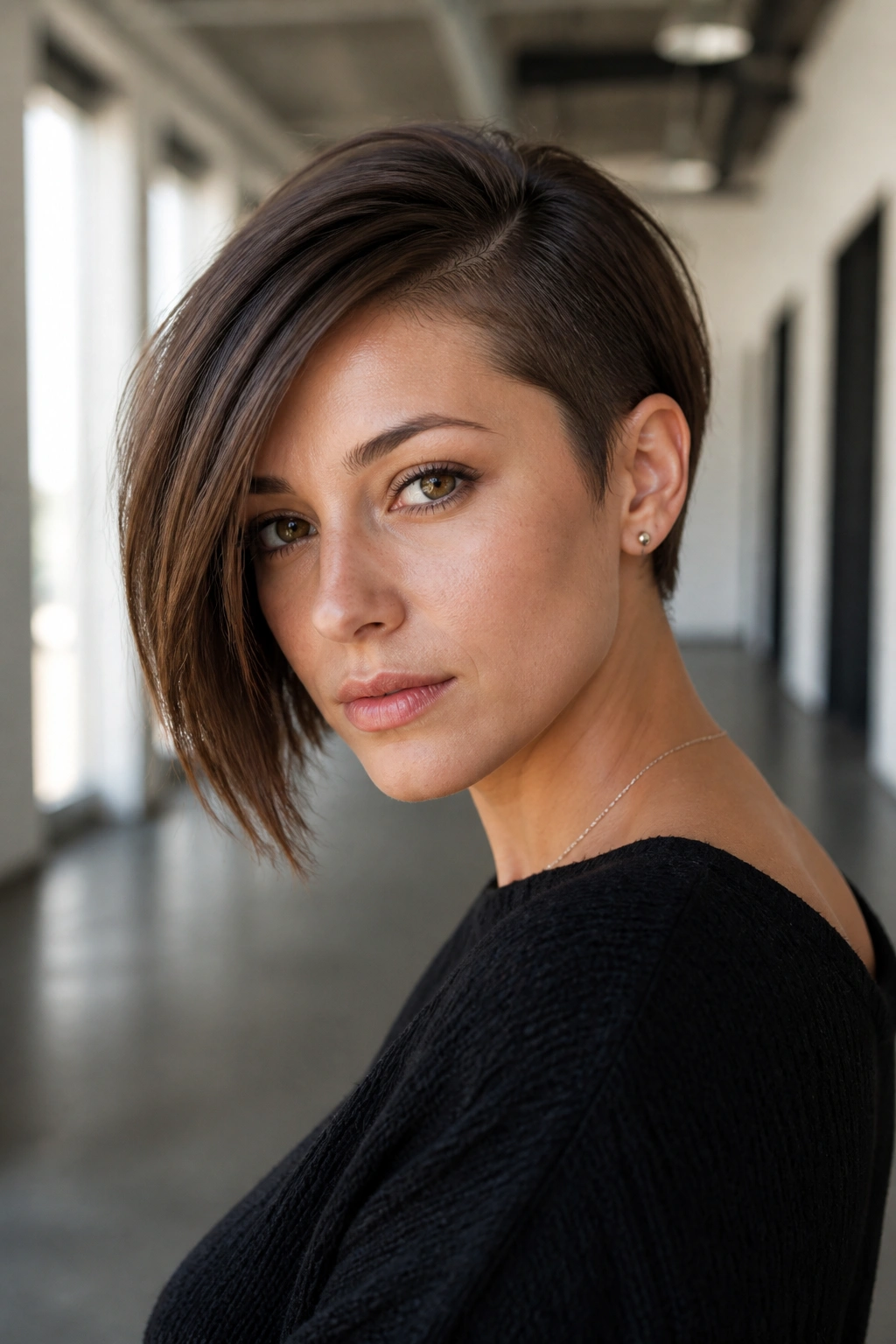
One side a little longer. One side a little shorter. That small imbalance does a lot of work. An asymmetrical pixie bob sits between a pixie and a bob, which makes it useful if you want edge but do not want to commit to a full crop.
What Makes It Different
The longer side softens the look just enough to keep it wearable. The shorter side keeps the haircut from feeling safe. That contrast is the entire reason it lands so well. You get the shape of a short cut with a line that feels off-center in a good way.
This cut is strong on straight or slightly wavy hair because the angle shows clearly. If your hair is very curly, the asymmetry can still work, but the difference between sides should be a little bigger or it gets lost. Ask for a longer front piece that skims the cheekbone, then a tighter back that hugs the nape.
How to Wear It
Keep the longer side tucked behind one ear on a clean day. Push both sides forward when you want the cut to look more graphic. If you like a bit of grit, use a light wax on the ends only. No heavy cream. That makes it sink.
4. Undercut Crop with Long Top
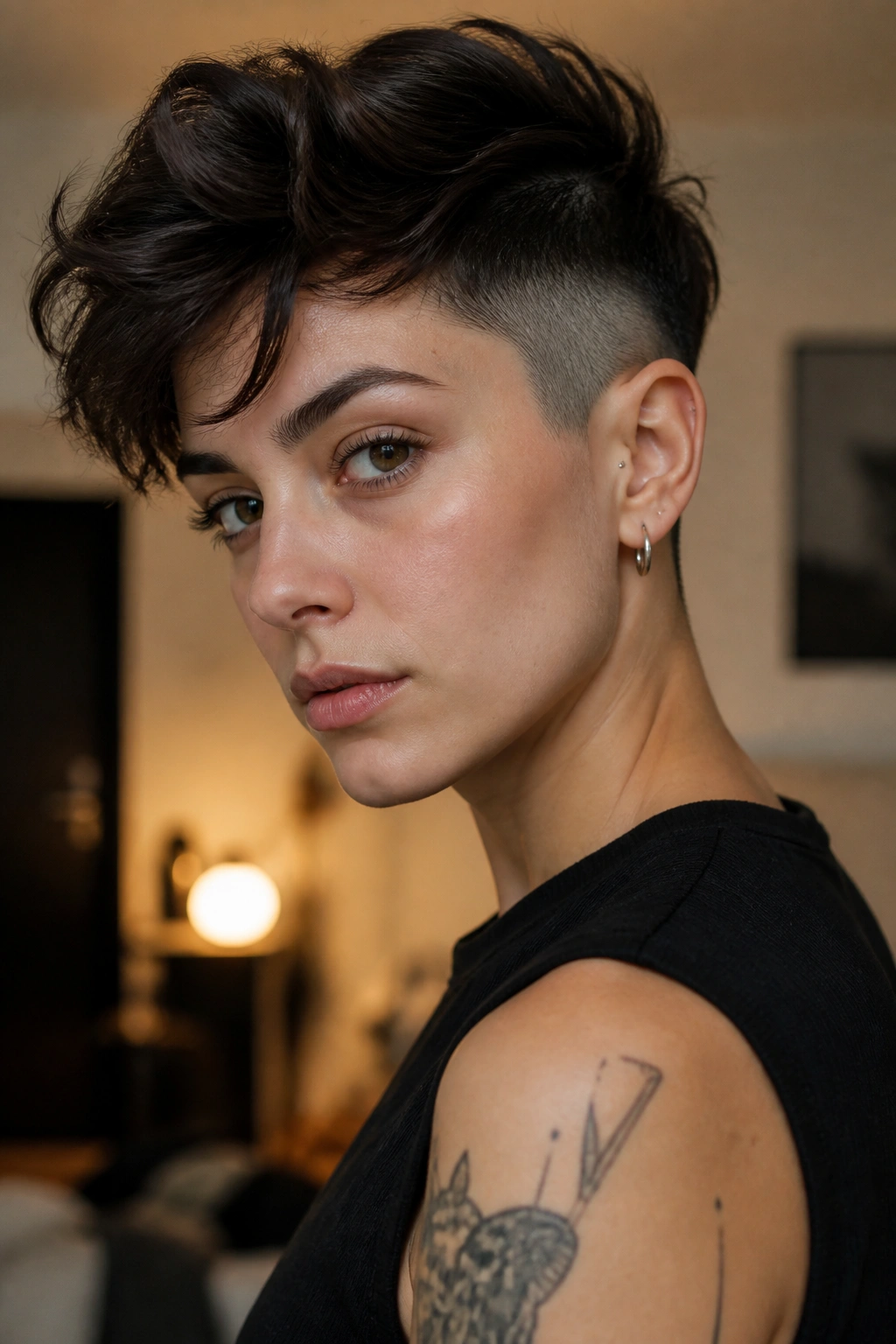
The undercut crop is what happens when you want short hair to feel sharp from the neck up. The sides and back are clipped close—sometimes very close—while the top stays longer so it can fall, flip, or spike depending on your mood.
A lot of people assume this cut is loud all the time. It isn’t. Under a sweater or blazer, it can look almost minimal. Then you turn your head and the shorter sides show themselves. That surprise is half the fun.
This is a good cut if you hate bulk. Thick hair especially benefits because the undercut removes weight that would otherwise puff out around the ears. Keep the top layered enough to move, but not so shredded that it falls flat. A matte clay on damp hair gives lift; a stronger paste on dry hair gives more definition.
If you want an edge that feels architectural, this one is hard to beat.
5. Shaggy French Bob
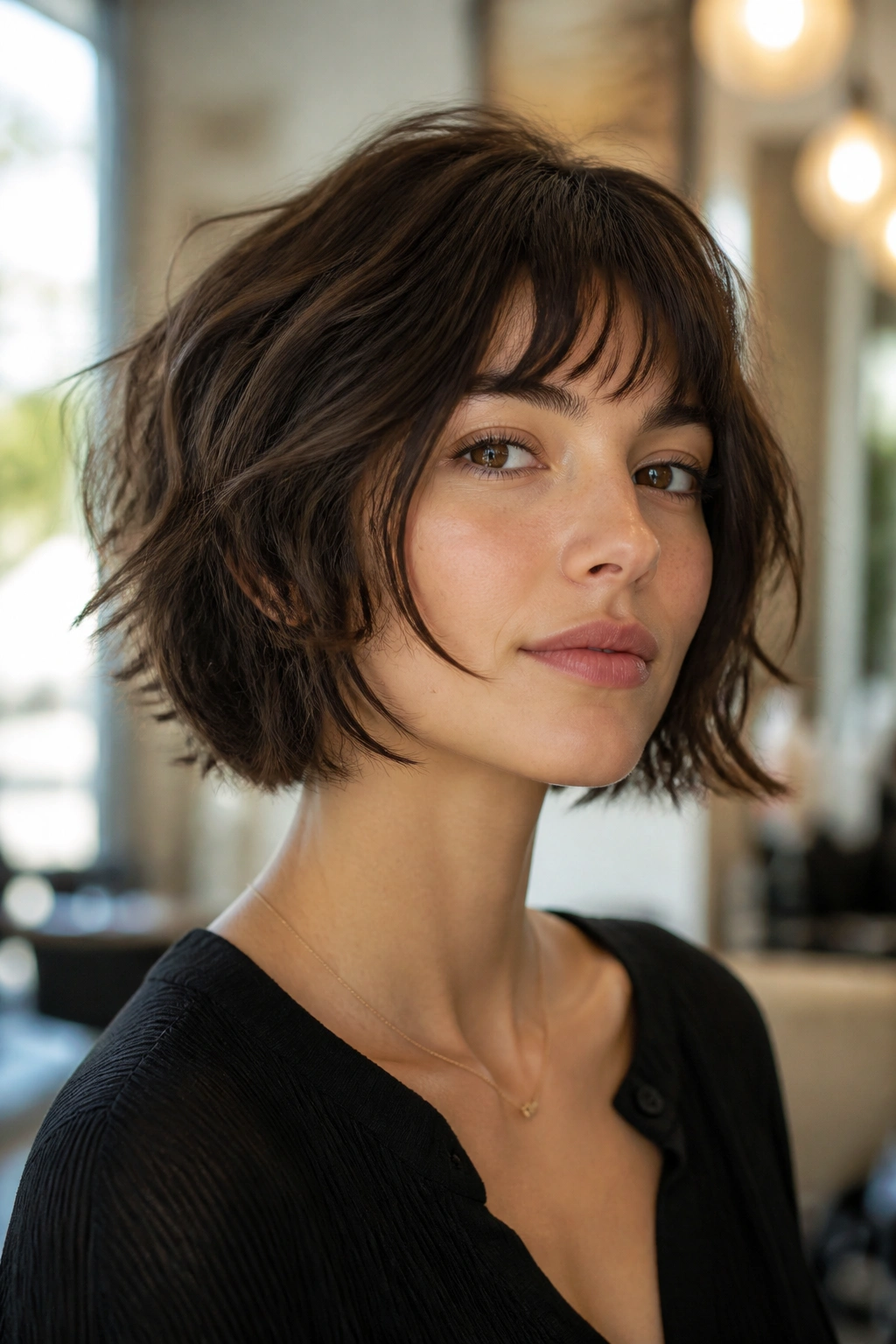
A shaggy French bob has that loose, slightly undone look that makes people think you didn’t try too hard. I like it for that reason. It feels cool without trying to look tough, which is harder to pull off than it sounds.
The cut usually sits around the chin and gets its edge from airy layers, a broken fringe, and ends that aren’t too neat. The shape should move when you turn your head. If it sits still like a helmet, it’s wrong. The best versions look a little rumpled in a nice way, with the front pieces brushing the cheekbones and the ends flicking out.
This is one of the better edgy haircuts for short hair if your face is softer and you want a little structure without harsh lines. Dry it with a diffuser if your hair bends naturally. Or rough-dry it and tuck one side behind the ear for that slightly slept-in finish that still looks deliberate.
6. Buzzed Side with Swept Fringe
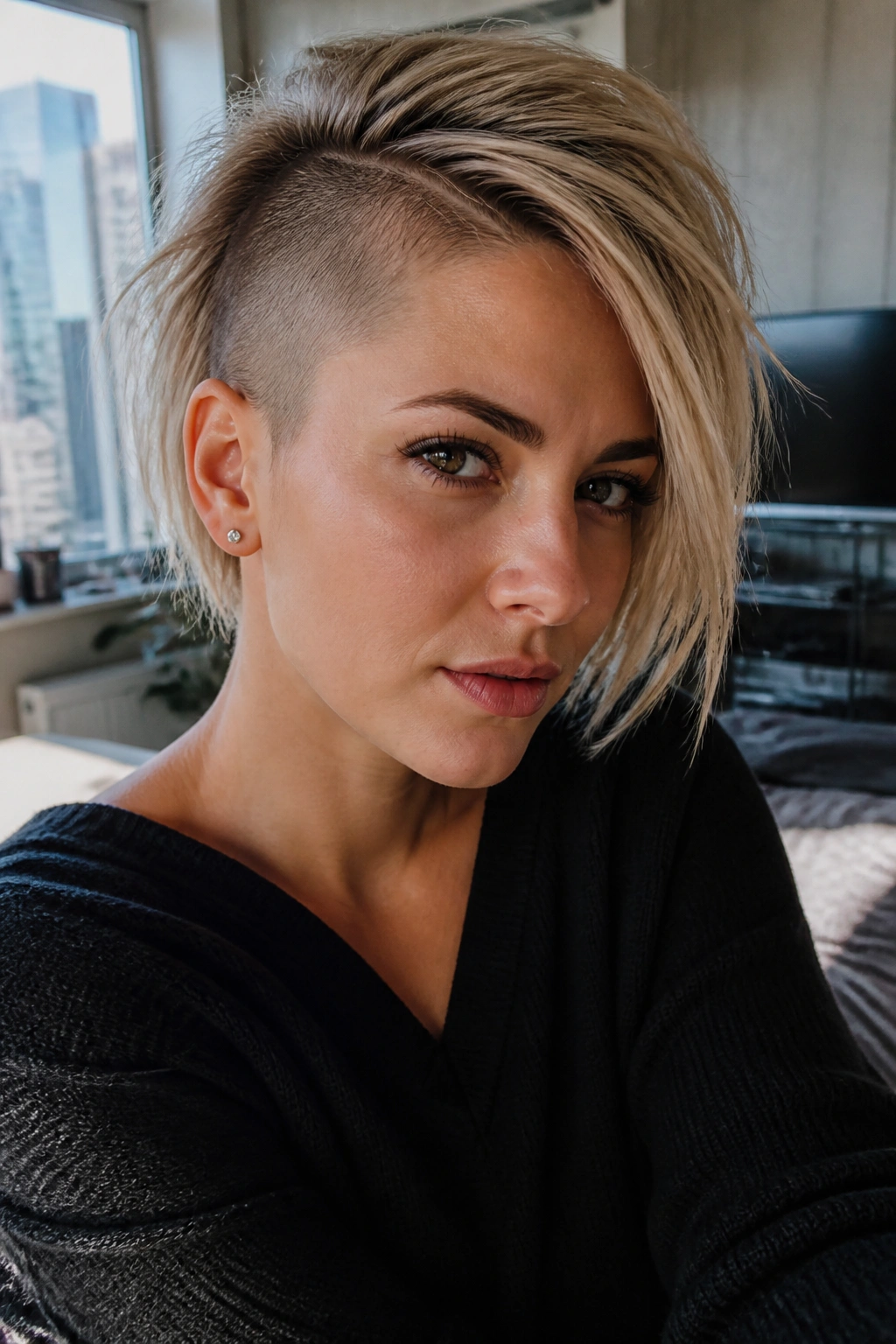
A buzzed side changes the whole read of a short haircut. The fringe does the talking on top, and the cropped side gives it a hard edge that feels immediate the second you see it.
The contrast matters more than the individual parts. Without the buzzed side, this could become a plain pixie. Without the sweeping fringe, it can look too severe. Together, they balance each other out. The longer top lets you keep some softness near the face, while the shaved section brings in that clean, almost streetwise line.
This cut is especially good if one side of your face is your favorite. Sweep the fringe toward that side and let the buzzed panel stay visible. It draws the eye right where you want it. Maintenance is the catch, of course. The shaved section grows out fast and starts to blur the shape.
Still. Worth it.
7. Piecey Curly Crop
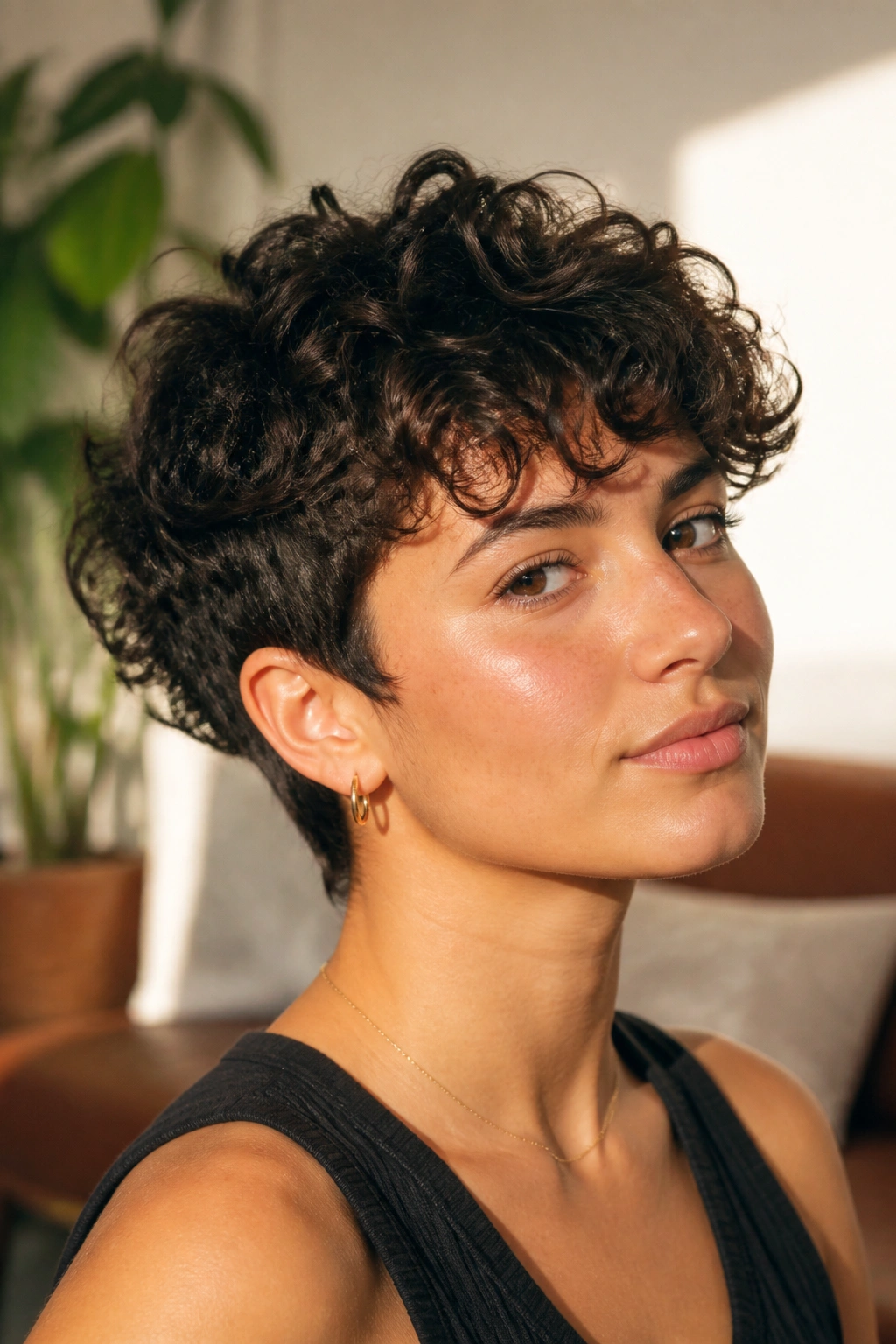
Curly hair does not need to be tamed to look edgy. It needs shape. A piecey curly crop keeps the length short enough to feel crisp, then builds in enough layers so the curls separate instead of forming one round cloud.
The best part is the texture. When the curls are cut thoughtfully, they stack with just enough lift at the crown and a little irregularity through the ends. That broken silhouette is what makes the cut feel modern. You don’t want a perfect bubble. You want little shifts in direction.
Use a lightweight curl cream, not a heavy butter. Heavy products can collapse the top and erase the shape. If your curls are tighter, ask for dry cutting or at least a cut on stretched hair so the stylist can see how much spring your curl pattern has. Short curly cuts can go wrong fast when somebody guesses.
8. Mini Wolf Cut
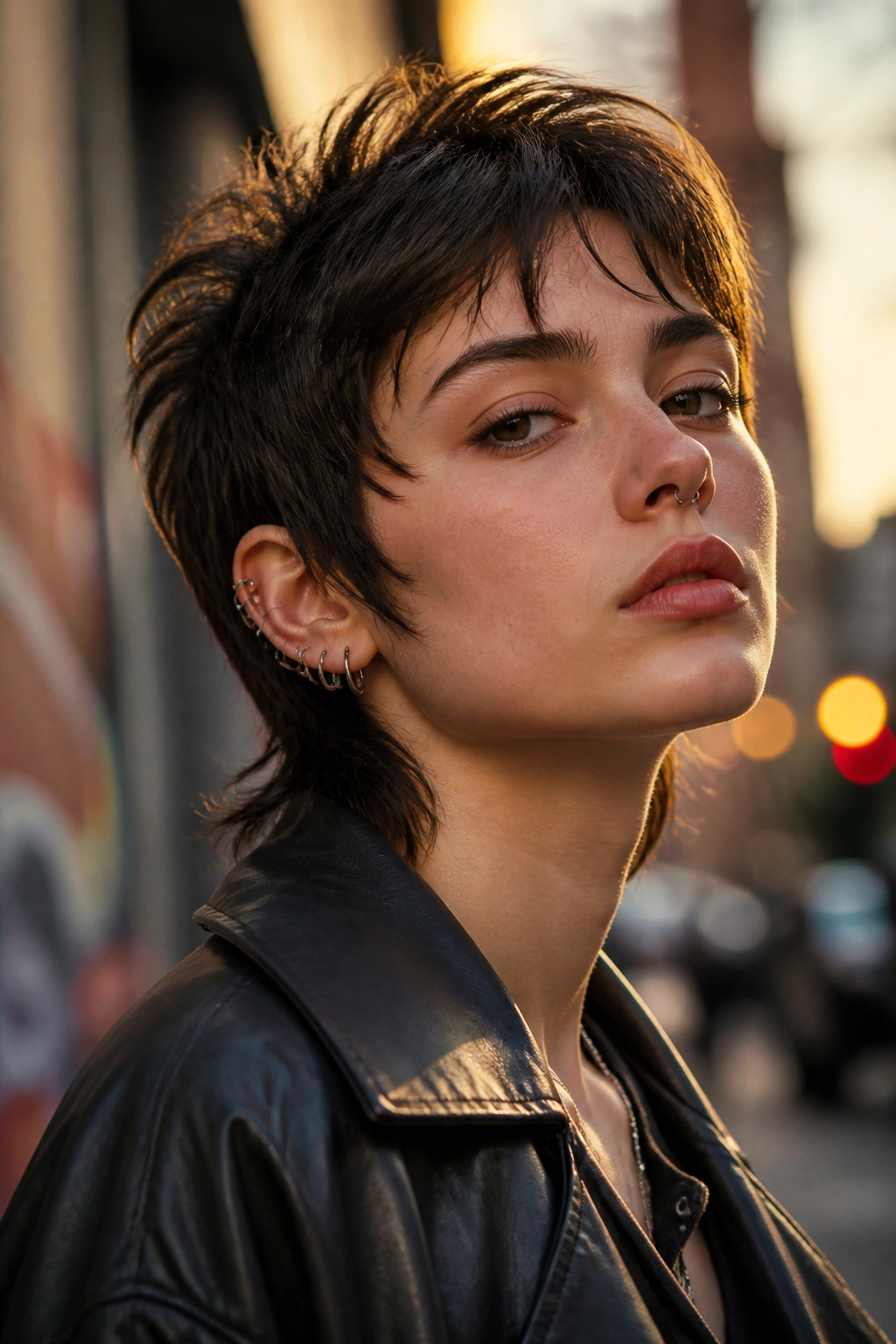
The mini wolf cut is the scruffier cousin of the shag. It keeps the crown lifted, lets the layers fall in uneven lengths, and leaves the ends a little wild on purpose. On short hair, that becomes a cropped, punky shape that feels lived-in.
The Shape That Makes It Work
The crown needs more height than the sides. That’s the whole game. If the top is too flat, it loses the wolf feeling and becomes a regular layered bob. If the nape is too full, the haircut turns bulky. The sweet spot is a short top, feathery layers through the sides, and a fringe that can be pushed around.
Good Ways to Style It
- Air-dry with a texturizing spray for rough movement
- Blow-dry the crown up and forward for extra lift
- Twist random front pieces after drying for separation
- Skip thick oils near the roots
This cut looks best when it’s not too precious. That sounds vague, but it’s real. You want shape, not perfection.
9. Bowl Cut with Soft Texture
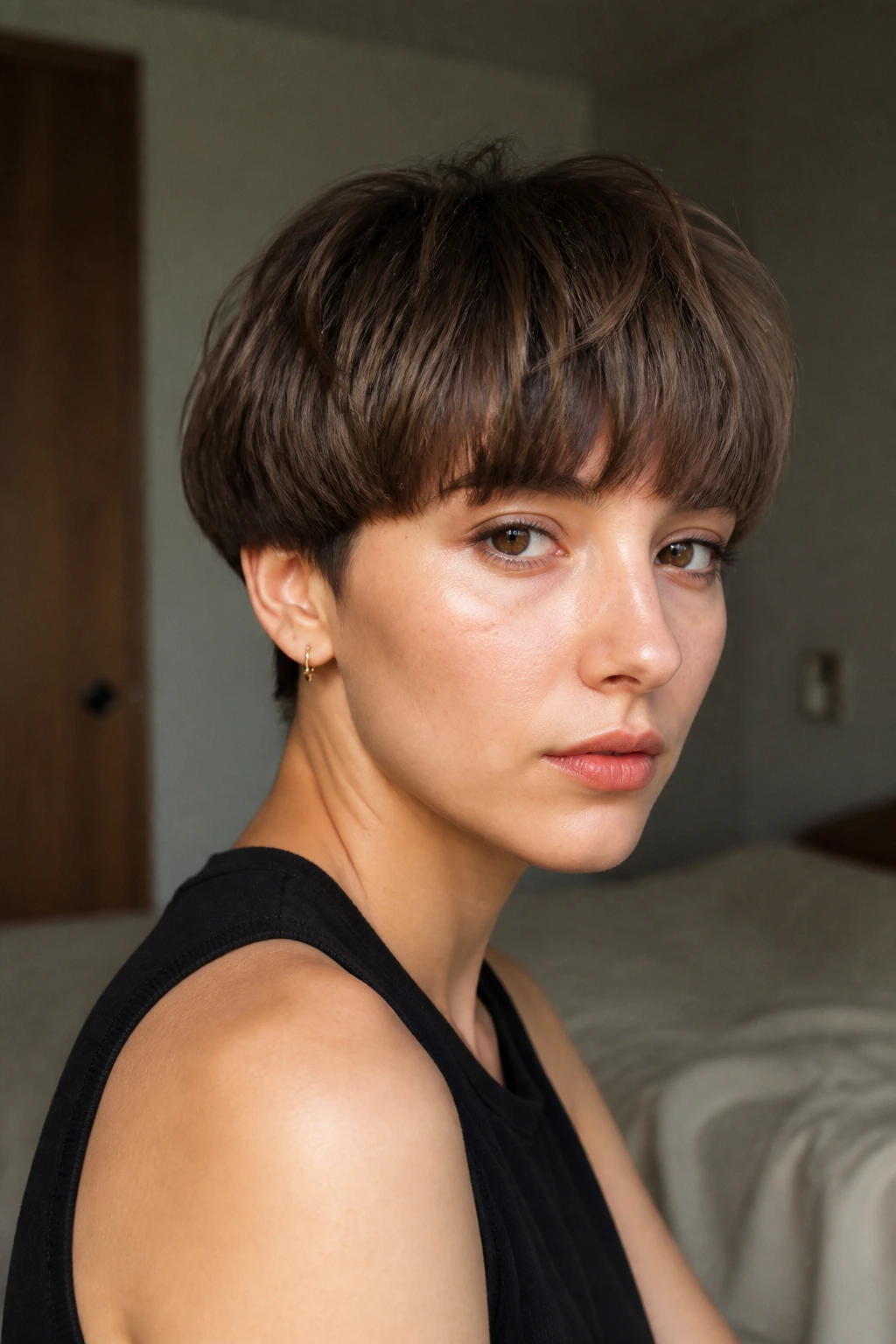
A bowl cut can sound like a bad idea until you see it done with texture. Then it starts looking sharp in a very specific way. The outline is still rounded, but the edges are broken up so it doesn’t feel childish or severe.
The soft-textured version keeps the silhouette strong around the head and uses light layering to stop the cut from sitting like a hard shell. It’s a bold choice. No pretending otherwise. But when the fringe is slightly irregular and the sides are softened, the effect is cleaner than people expect.
This haircut works well on straight hair and on fine hair that needs structure. It also loves a strong brow line. If you go too fluffy with it, the shape gets lost. Keep the top smooth, add a little separation through the ends, and let the outline do the heavy lifting.
10. Razor-Cut Bob
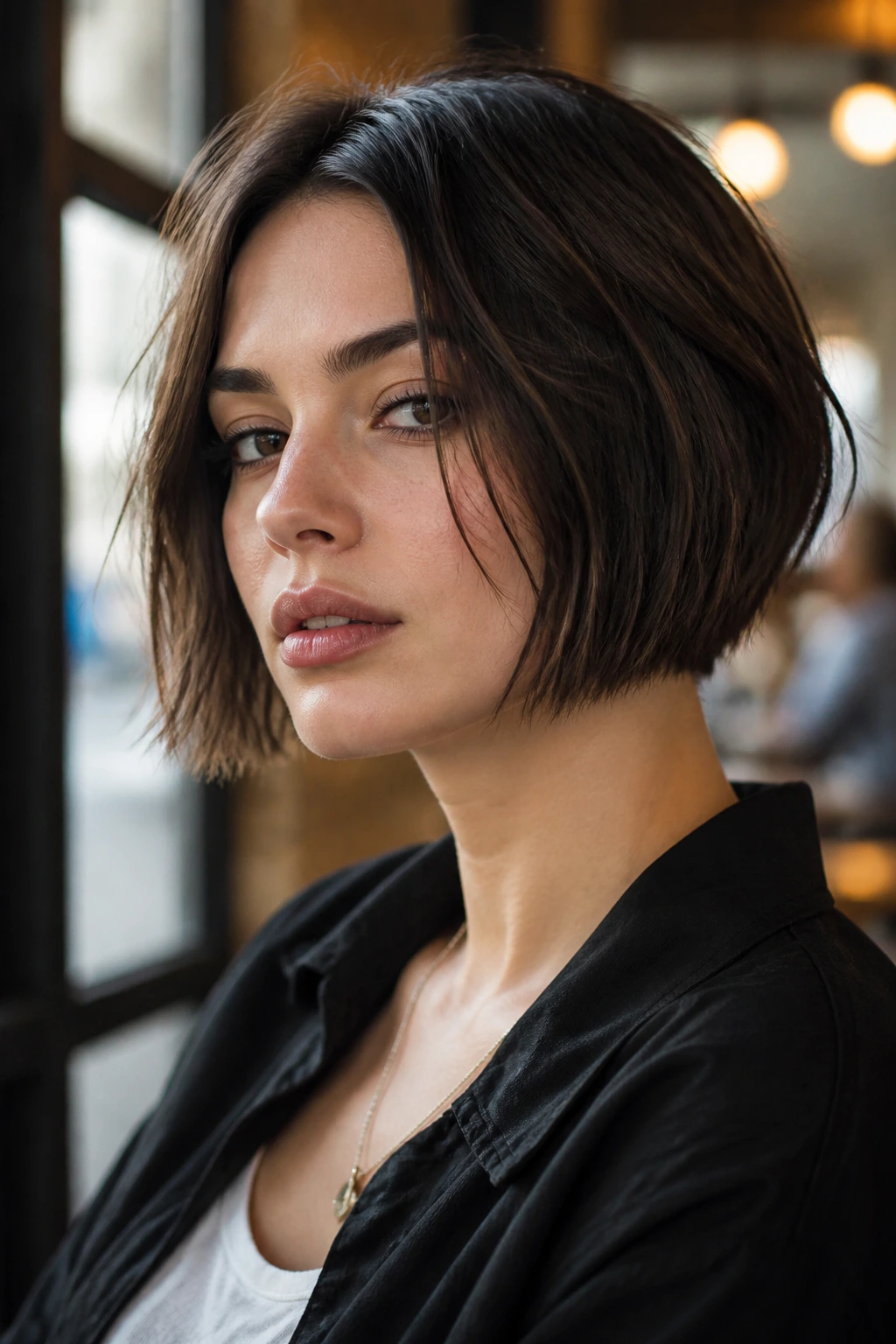
A razor-cut bob moves differently from a blunt bob. The ends are softer, more feathery, and a little irregular, which makes the cut feel lighter and more restless. That restlessness is the edge.
The razor takes out weight without making the haircut look choppy in a bad way. It’s especially useful if your hair is thick or stubbornly straight. Instead of sitting as one heavy block, the hair sways and bends. You still get a strong bob shape, but it doesn’t feel stiff.
I’d choose this over a blunt bob if you want something less polished and more touchable. The tradeoff is maintenance. A razor cut needs a stylist who knows how much texture to remove. Too much, and the ends go wispy. Too little, and it loses the point. Drying it with a round brush can smooth it out; air-drying gives a rougher finish.
11. Ear-Grazing Mullet
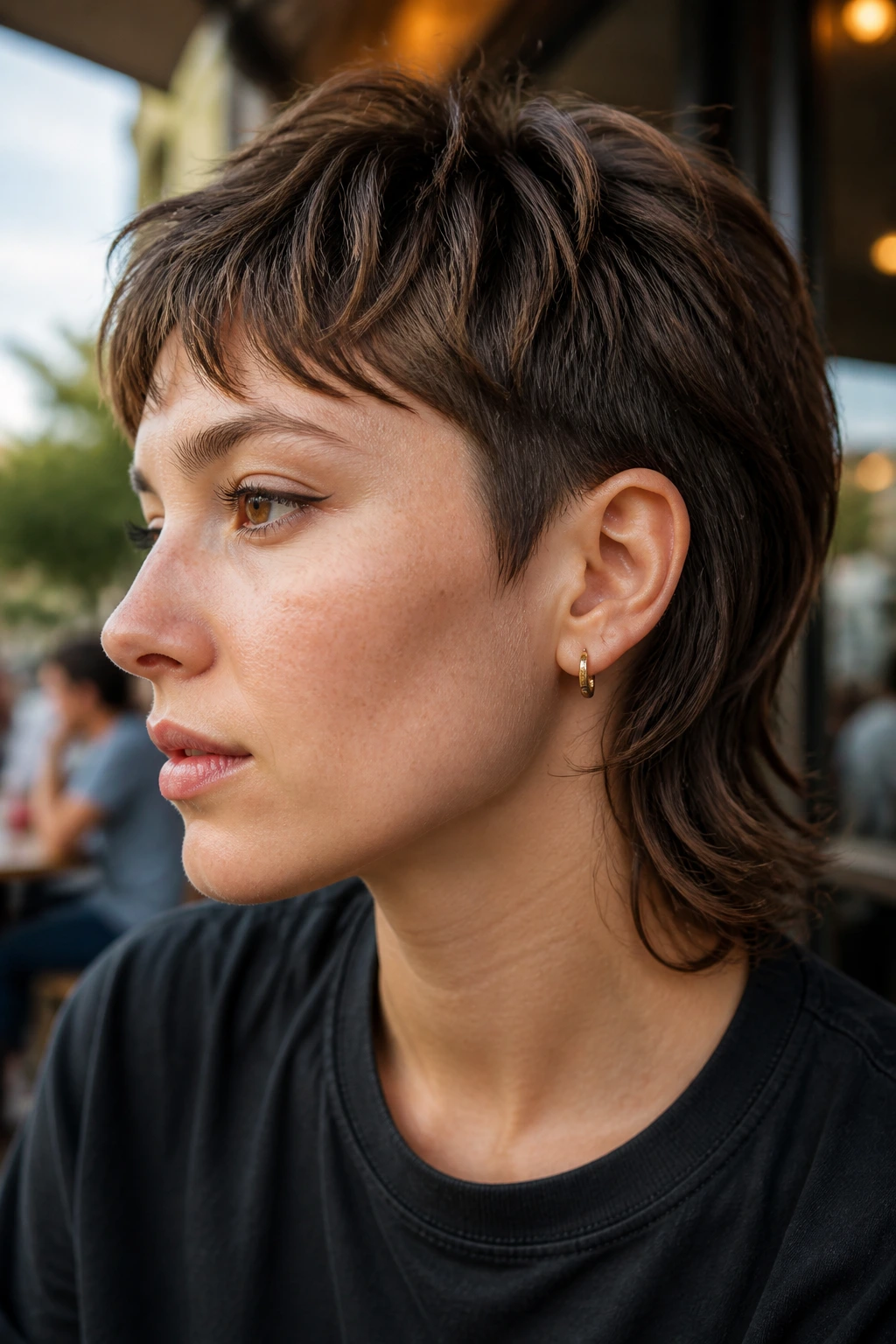
The ear-grazing mullet is not shy, and that’s why it works. The front stays short, often around the cheek or ear, while the back keeps a little tail of length. Short in front. Longer in back. Simple, blunt, a little mischievous.
What makes this version feel current is the softness in the transition. The change in length should not look like two separate haircuts fighting each other. It should move from cropped to longer with a bit of feathering around the crown. That keeps it from looking costume-y.
This cut suits people who like shape and don’t mind getting a few opinions from strangers. It’s especially good if your neck is long or if you want to show off earrings and collar lines. Keep the fringe airy, not heavy. Heavy bangs can drag the whole thing down.
12. Tapered Afro Crop
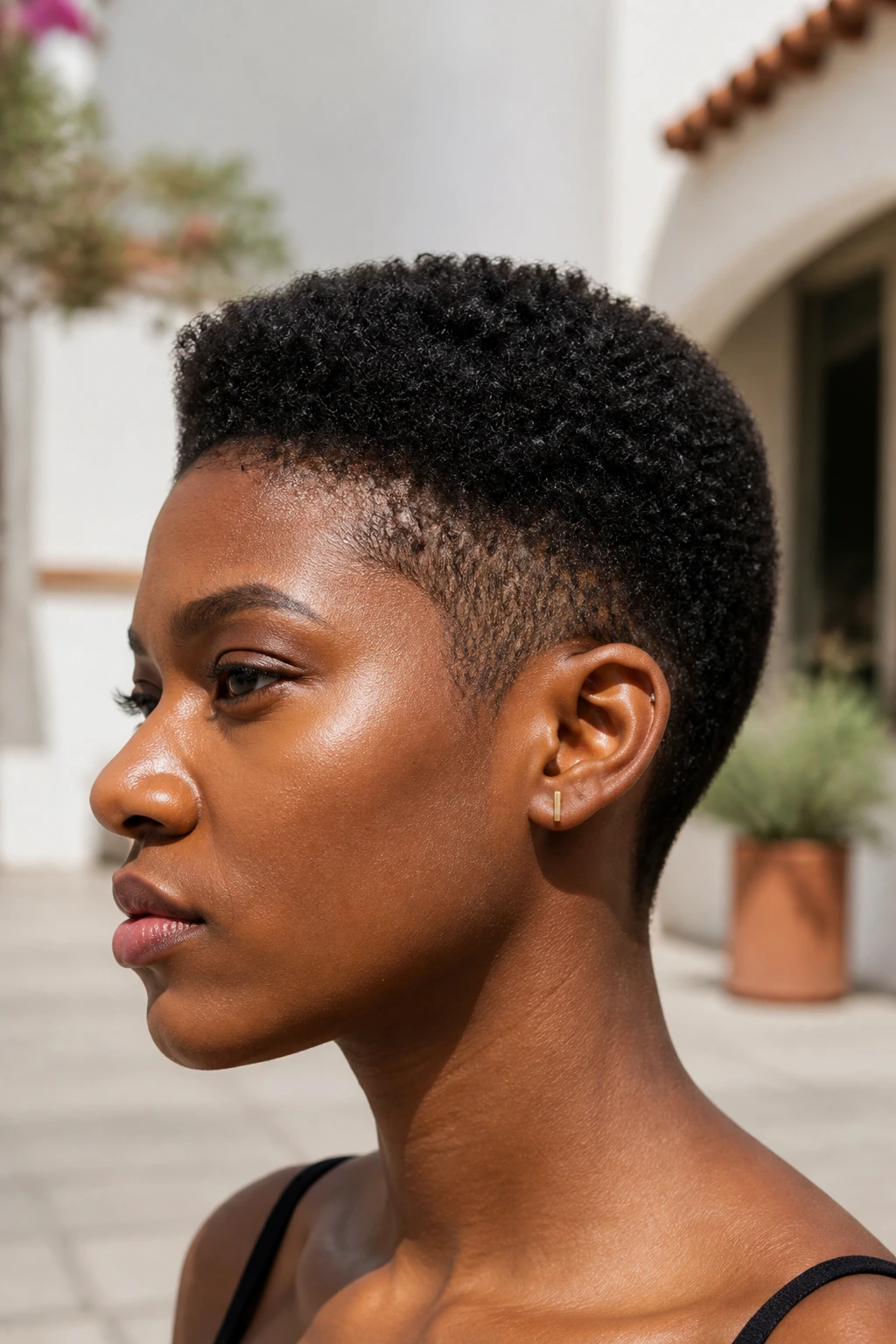
A tapered afro crop is one of the cleanest short cuts with attitude. The hair is kept fuller on top and tapered tight at the sides and nape, which creates a neat outline while letting the natural texture stay in charge.
The edge here comes from contrast. The silhouette is crisp, almost sculpted, while the top can be round, lifted, or slightly flat-topped depending on curl pattern. I like this cut because it does not pretend texture is a problem to solve. It treats it like the main event.
A good taper keeps the sides smooth and close without stealing too much width from the top. If the fade is too high, the shape can look top-heavy. If it’s too low, the cut loses definition. Moisture matters, too. Use a leave-in that keeps curls soft and reduce frizz, then shape the top with fingers instead of a comb so you don’t break the curl pattern apart.
13. Cropped Cut with Micro Bangs
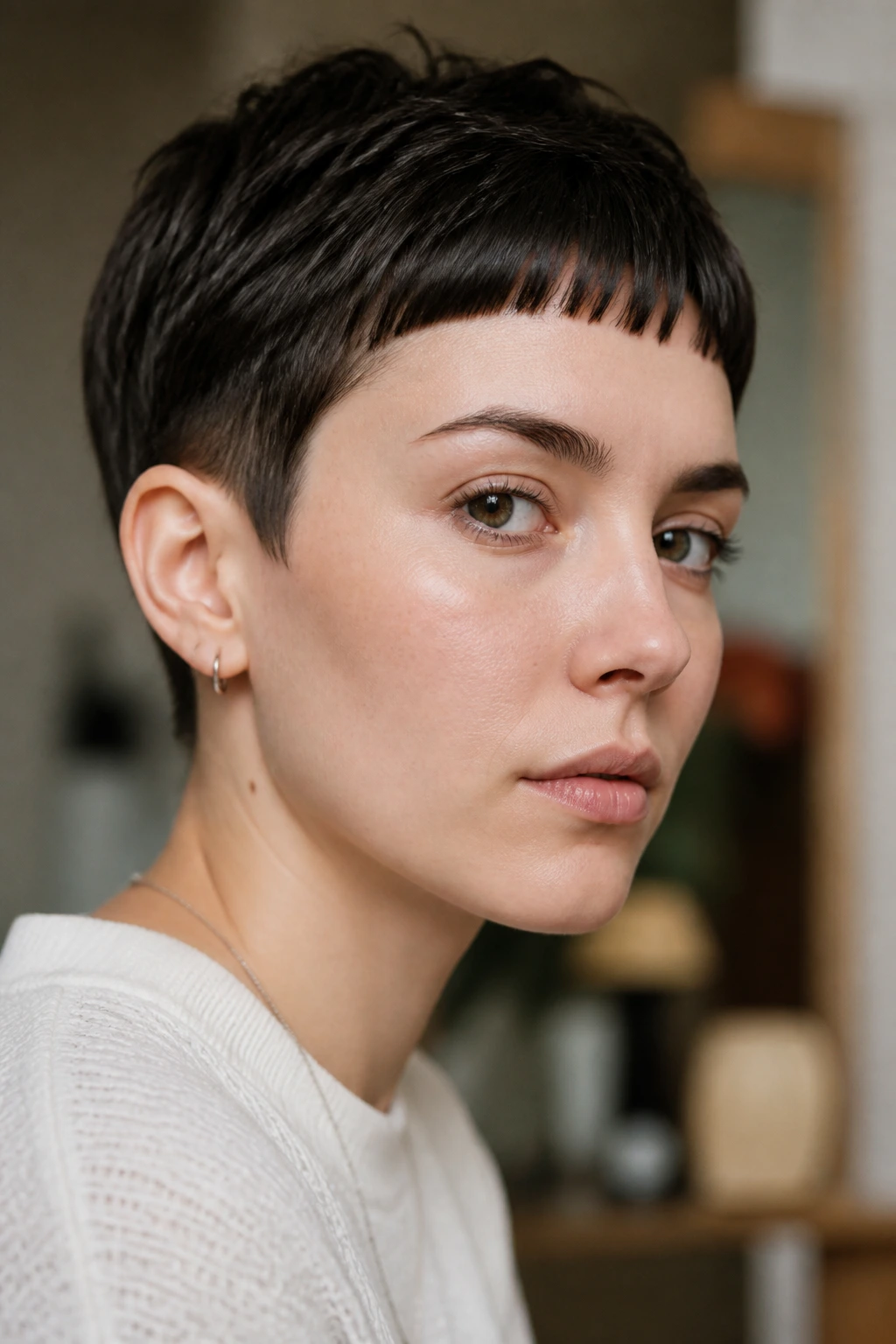
Micro bangs make a short haircut feel sharper in one move. They expose the brows, shorten the face visually, and bring attention straight to the eyes. On a cropped cut, that little strip of fringe turns the whole style from cute to pointed.
The rest of the cut should stay fairly tidy so the bangs can be the main event. A soft nape and close sides keep the shape balanced. If the bulk is too heavy around the jaw, the micro fringe can look disconnected in a bad way. You want contrast, not confusion.
This cut is not for someone who wants to hide behind hair. It puts your forehead front and center. Which is fine, because that honesty is part of the appeal. It pairs well with straight or slightly wavy textures, and it looks especially strong when the fringe is cut blunt but not thick. Too thick, and it starts to feel costume-like.
14. Side-Swept Undercut Pixie
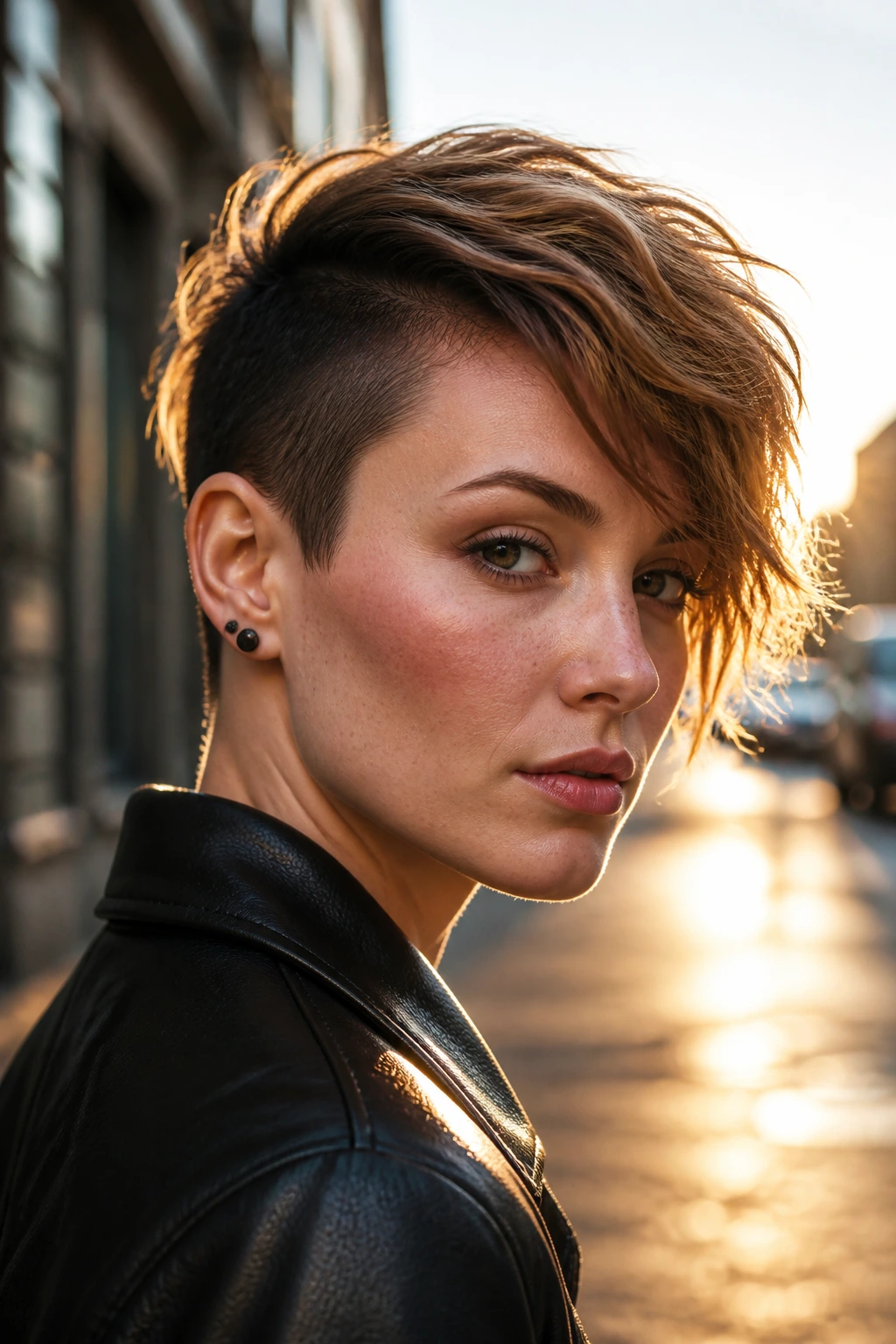
What happens when you combine a soft sweep with a shaved side? You get a cut that can go from polished to sharp without changing the shape at all. That’s why this one stays useful.
Why the Side Sweep Matters
The sweep gives the face some softness, which keeps the undercut from feeling too hard. It also lets you change the mood by changing the direction of the fringe. Brush it low and sleek for a neat finish. Lift it a little with paste and the whole cut feels more rebellious.
Ask For This
- One side clipped short near the temple
- Longer top layers that can fall across the forehead
- Light texturizing through the crown
- Enough length in front to tuck or sweep
This is a smart choice if you like contrast but don’t want a full buzzed panel. It grows out more gracefully than a stricter undercut, which matters more than people admit.
15. Wet-Look Sculpted Crop
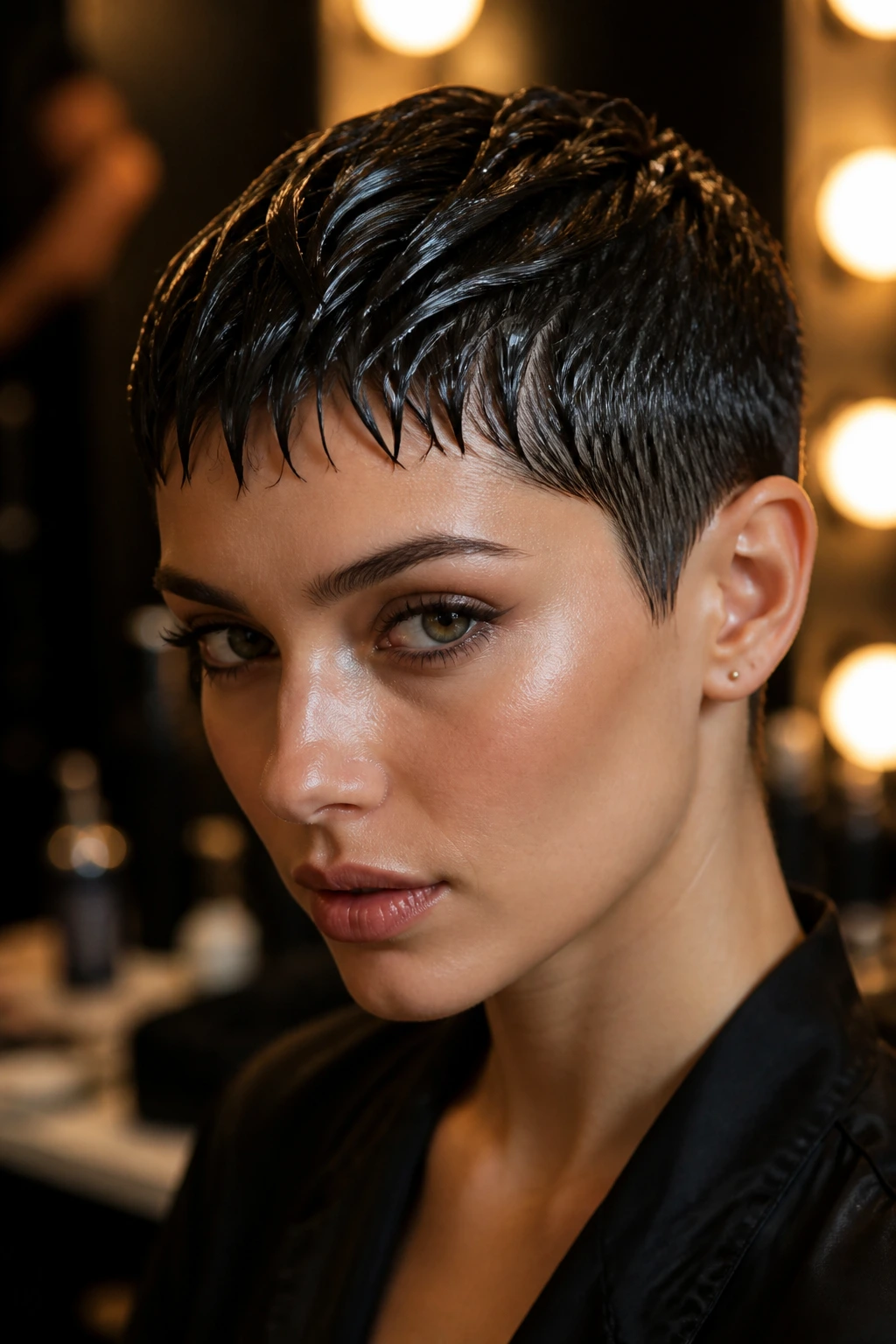
A wet-look crop can be dramatic without needing extra length. The shine, the close shape, the clean outline around the ears—those things carry the mood. It’s polished, yes, but not soft. That’s the appeal.
The haircut underneath has to be good, because the styling gives away everything. Short layers on top, tight sides, and a controlled fringe all help the finish hold. If the cut is too bulky, the product just sits there. If it’s too thin, the hair goes flat and stringy in a sad way.
This style works well for evenings, photo-heavy days, or any moment when you want a hard-edged finish. Use gel on damp hair, then comb it into the direction you want before it dries. Don’t touch it once it starts setting. That’s where most people ruin it. They keep fussing. The sleek look only works when you leave it alone.
16. Jaw-Length A-Line Bob
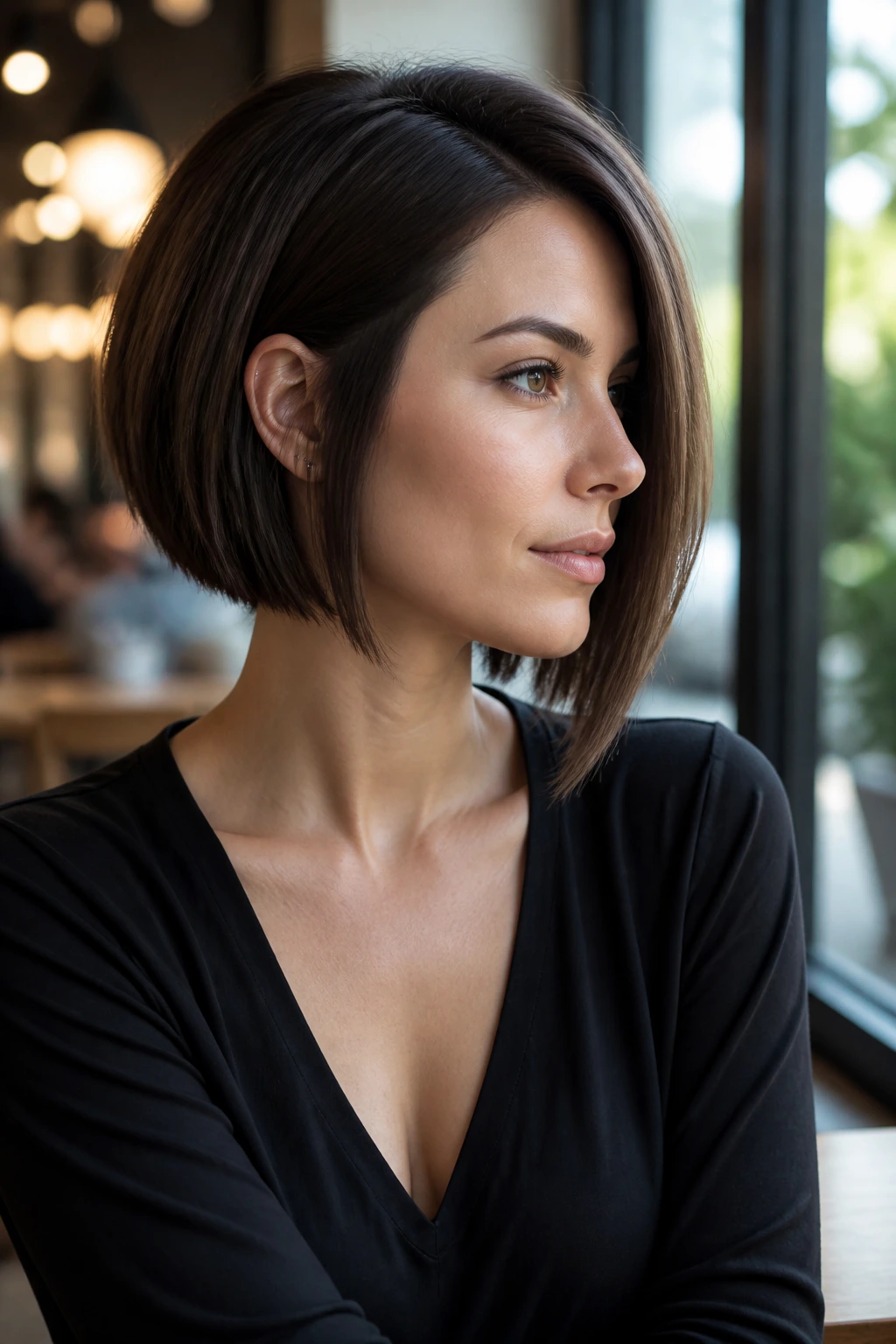
The A-line bob looks simple from the front and sharp from the side, which is exactly why it earns a spot here. Longer pieces in front skim the jaw, while the back sits shorter and tighter against the neck. That angle gives the cut a built-in edge.
This is a strong choice if you want structure but not a full-on avant-garde cut. It still feels wearable, and that matters. The line from the back to the front creates movement even when the hair is straight. On thick hair, the shape can feel bold and clean. On finer hair, it can look lean and precise.
A side part deepens the angle and gives the front more drama. A center part makes the line feel cooler and a little stiffer. Either way, keep the ends blunt enough to hold the shape. If they’re thinned out too much, the bob loses its spine.
17. Spiky Textured Crop
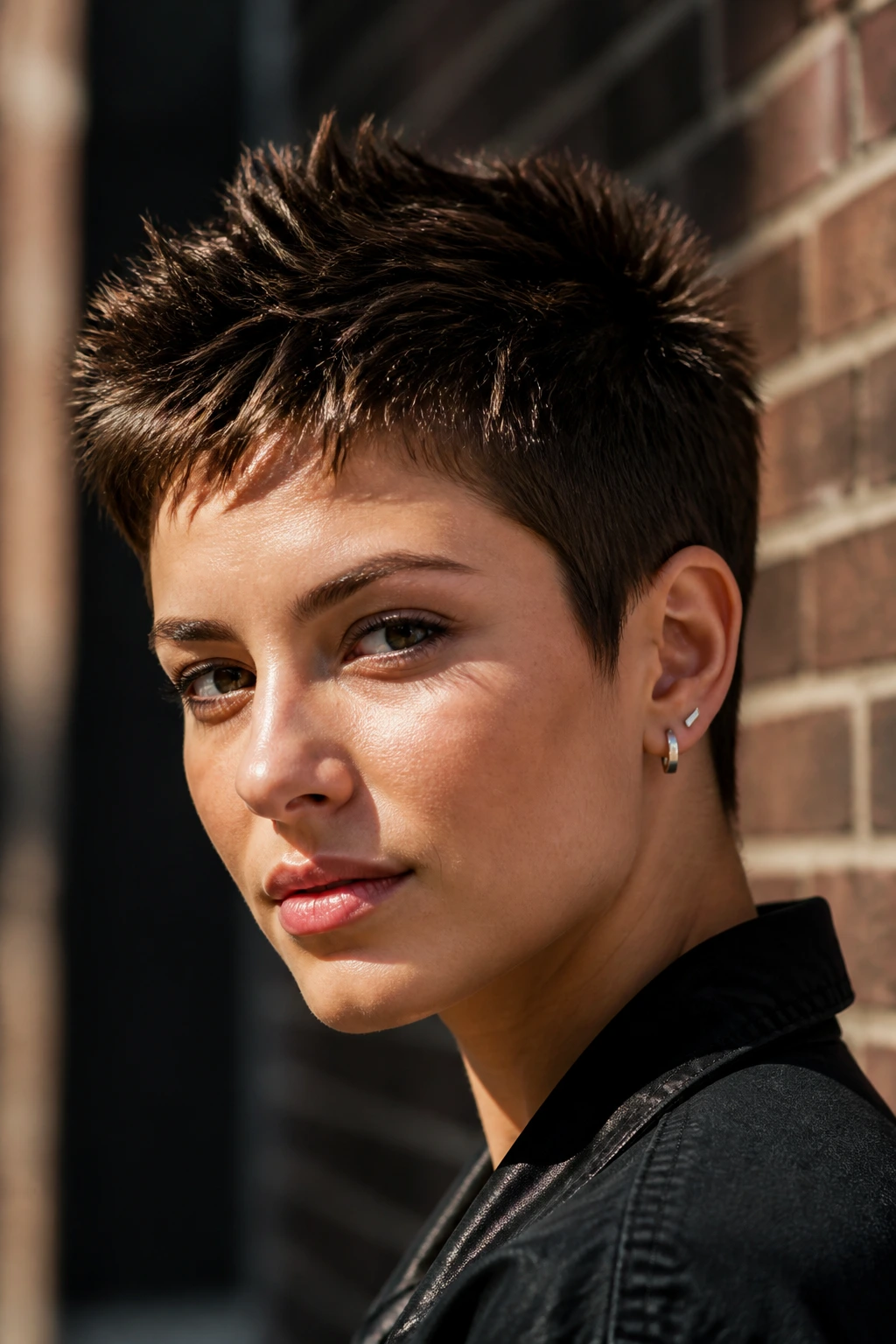
A spiky crop is blunt in a fun way. The hair is short enough to stand up a little, then textured enough that the pieces separate instead of sitting flat. It feels confident without needing a lot of length or fancy styling.
This cut works best when the top is left just long enough for movement. Think fingertips, not fingers. A tiny amount of strong paste can push the hair upward and forward, or upward and sideways, depending on the mood. The edges around the ears and neck should stay clean so the top has room to misbehave.
It’s a good fit for straight hair that holds shape and for thick hair that needs weight removed. Fine hair can do it too, but you may need a blow-dryer for lift. The charm of this cut is that it never looks too precious. A little bit rough is the whole point.
18. Disconnected Bob
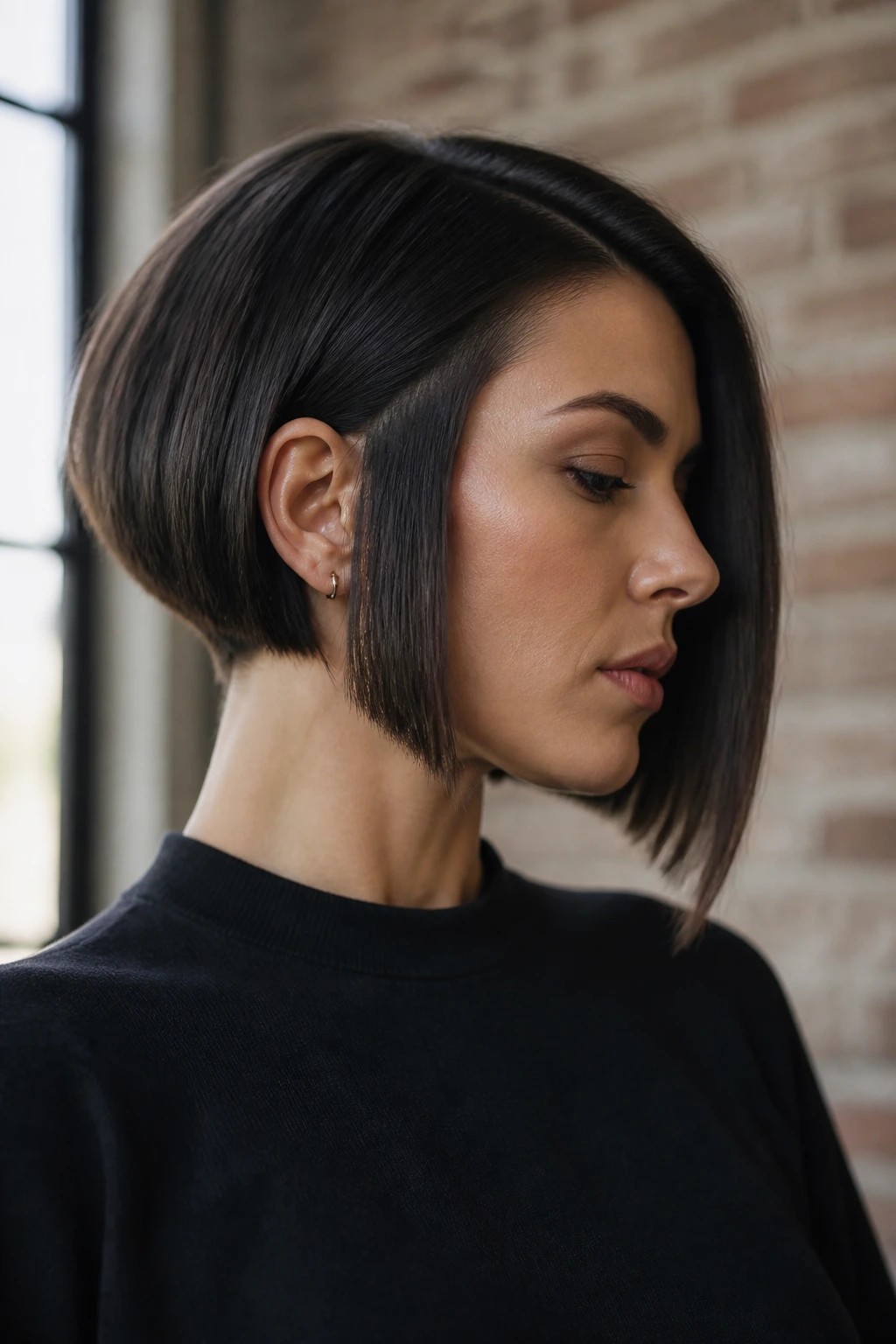
A disconnected bob creates edge by refusing to blend everything together. One section sits clearly apart from another—usually a shorter back with a longer front, or a heavier top over a tighter underlayer. The disconnect is visible, and that’s the appeal.
Unlike a softly layered bob, this cut has a deliberate break in the shape. It looks more graphic. More edited. If you like hair that reads like a design choice rather than a safe trim, this one hits the mark. It’s especially striking on straight hair because the lines show up cleanly.
The downside is that it needs a stylist who understands balance. Too much disconnection, and the haircut looks unfinished. Too little, and it turns into a regular bob with no real punch. I’d bring a photo and point to the line you want. Not the vibe. The line.
19. Curly Undercut Pixie
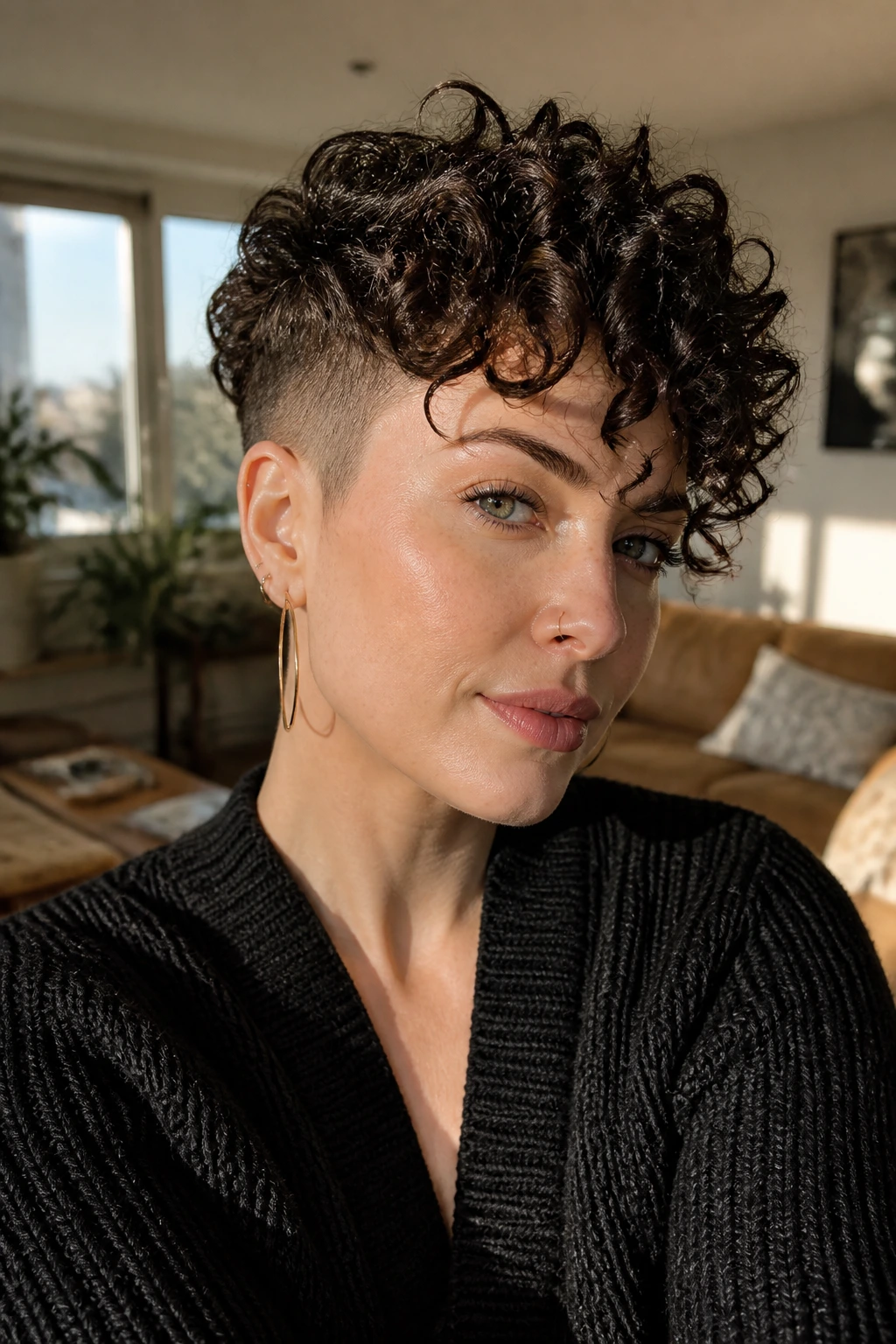
Curly hair and an undercut are a strong pair when the goal is shape instead of volume everywhere. The undercut removes bulk at the sides and back, while the curls stay lively on top and around the front where they can frame the face.
The cut works because it gives the curls somewhere to land. Without that tighter base, some curly pixies balloon out at the sides and lose all definition. With the undercut, the shape becomes cleaner and more focused. You can keep the curls soft and round on top, or let them lean forward for a more dramatic look.
Tell your stylist how your curls behave on day two. That matters. Some curls spring up; some stretch down; some frizz near the crown and lie flat at the nape. A good curly pixie should account for that reality, not just the fresh-cut photo.
20. Forward-Swept Crop with Long Fringe
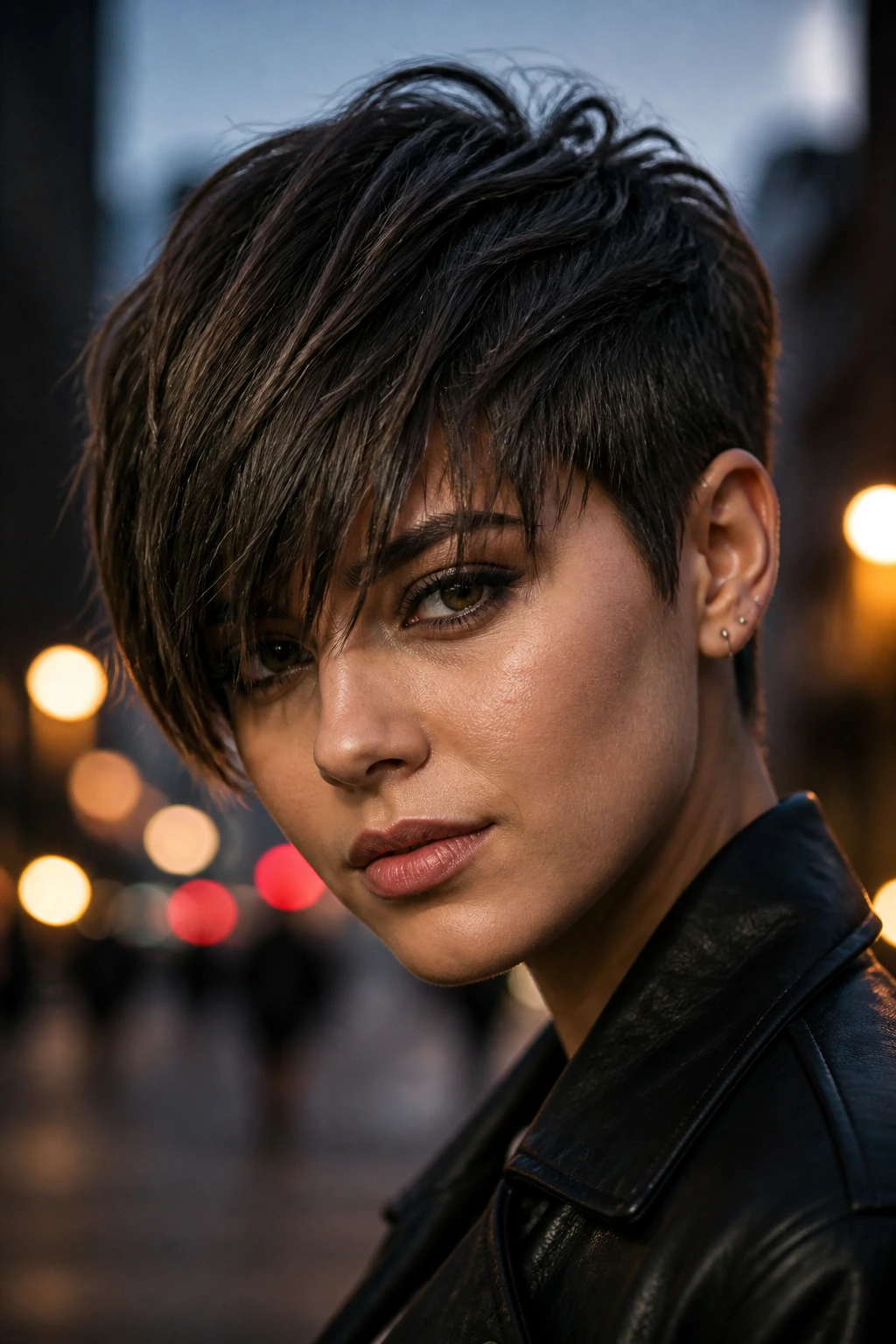
A forward-swept crop pulls the eye straight to the face. The fringe sits long enough to skim the brows or cover one eye, while the sides stay tight enough to keep the shape clean. It’s moody in a useful way.
Where It Gets Its Shape
The front length does the heavy lifting. The rest of the cut should stay controlled so the fringe doesn’t look like an afterthought. If the top is too layered, the long sweep falls apart. If it’s too blunt, it can feel heavy. You want enough length to move, not enough to droop.
How to Style It
- Blow-dry the fringe forward with a flat brush
- Use a small round brush at the roots for lift
- Finish with a light paste on the ends
- Push the fringe slightly off-center for a softer line
This cut suits people who like a little drama near the eyes. Not everyone wants that. Fine. But if you do, this one delivers without needing much length.
21. Ear-Tucked Mini Shag
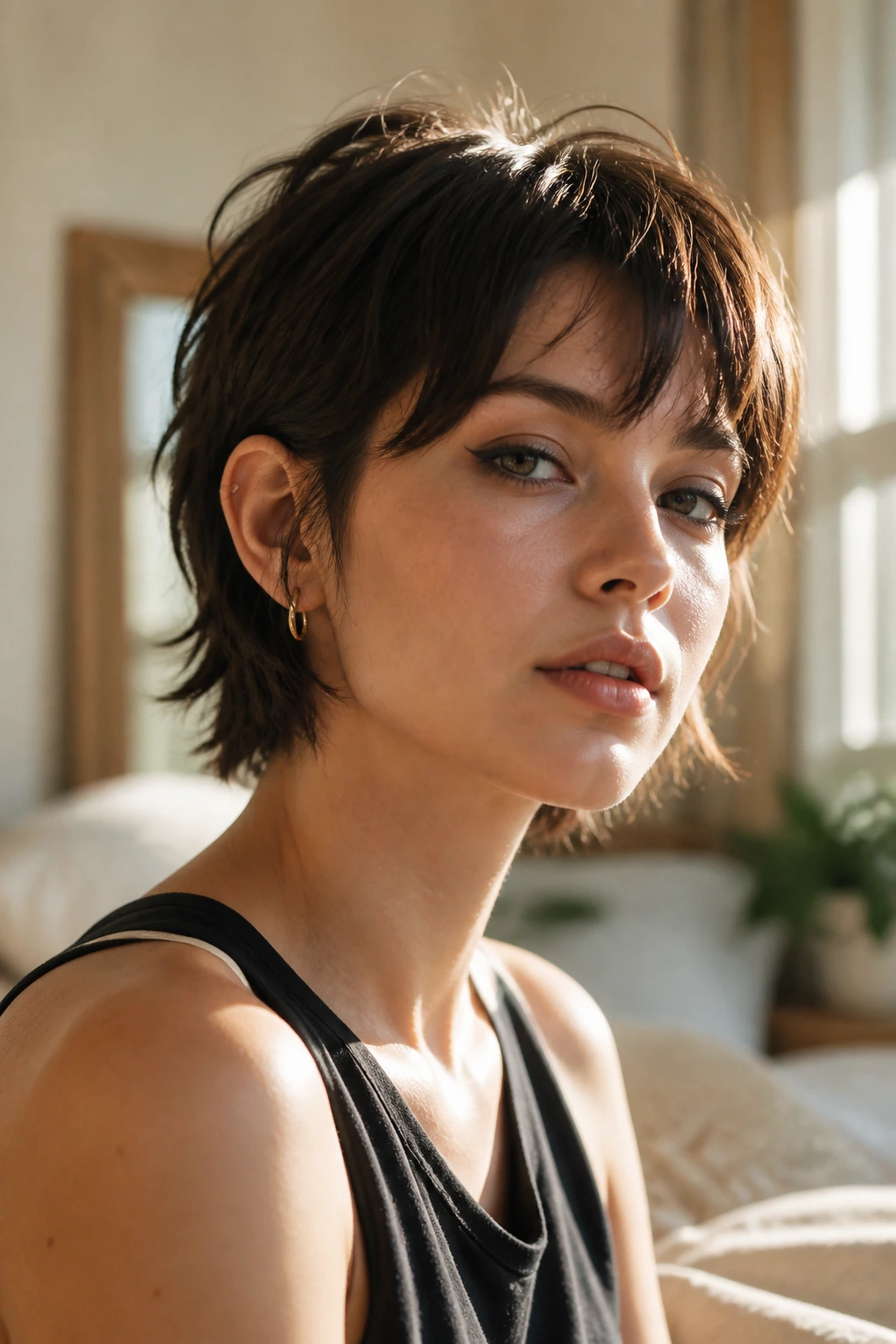
A mini shag feels especially good when the hair hits the ears and can be tucked behind them. That little bit of interaction with the ear makes the cut look relaxed and a touch messy, which is a good thing here.
The layers should be short enough to move but not so broken up that the shape disappears. You want a hint of fringe, a bit of lift at the crown, and ends that don’t sit in one boring line. Ear-tucking is part of the style, not a fix for it. The tuck reveals the neck and gives the haircut a break between soft and sharp.
If your hair is straight, a salt spray can rough it up. If it’s wavy, a diffuser helps keep the layers separated. Either way, the goal is the same: a short cut that looks casual but still has shape when you catch it from the side.
22. Tapered Nape Pixie
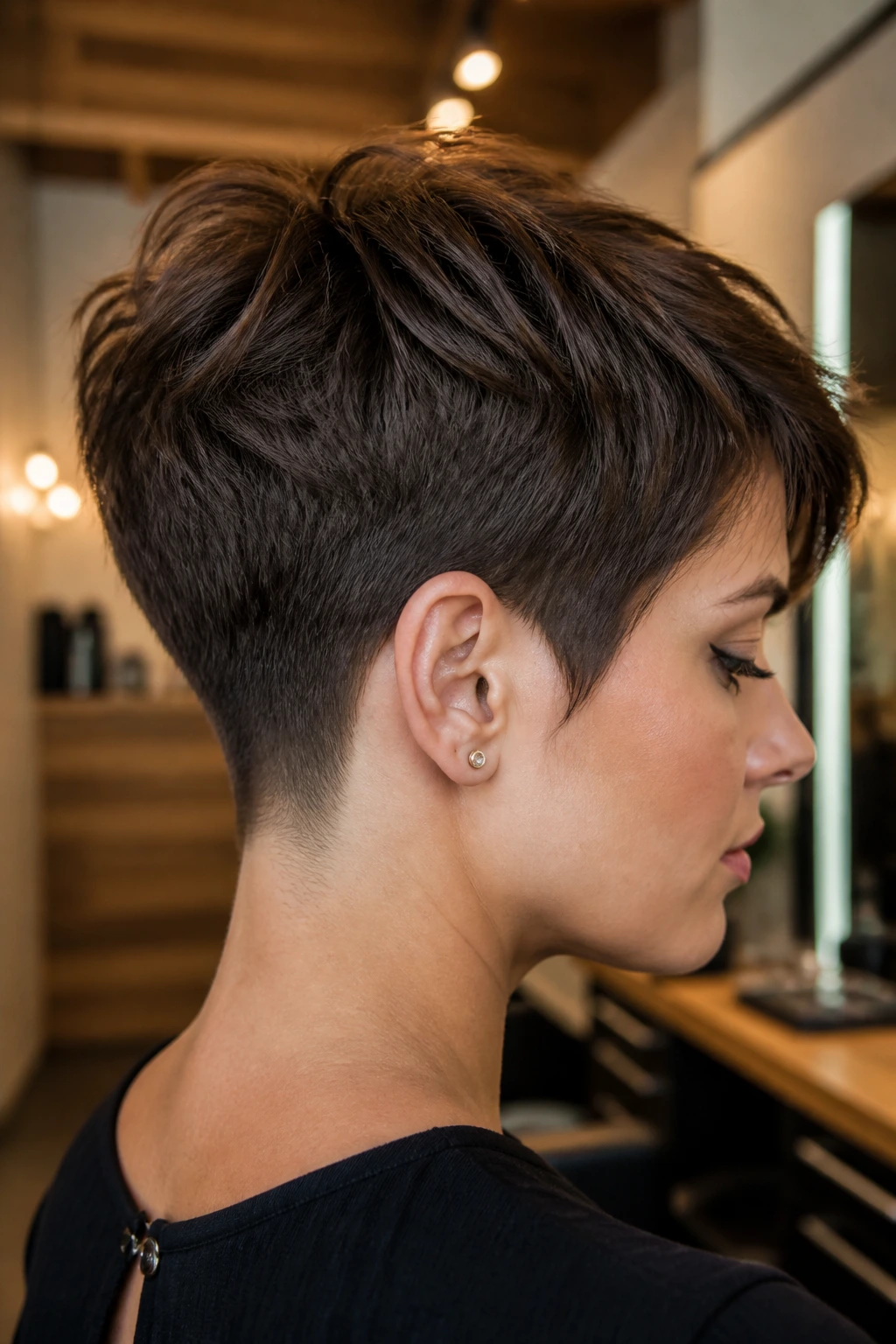
The tapered nape pixie is all about the back. Clean, close, and neatly tapered down at the neck, it creates a crisp outline that makes the top feel fuller by contrast. That contrast is where the edge lives.
This is one of those cuts that looks modest from the front and unexpectedly sharp from behind. I love that. It feels smart without being loud. The nape should taper smoothly into the neck, not stop in a hard shelf. Up top, the layers can stay soft, spiky, or side-swept depending on how much attitude you want.
It’s also easier to wear than people think. A lot of the effort is in the cut itself, not the daily styling. If you want short hair that looks neat with very little fuss, this is one of the better bets. The only catch is upkeep. The nape grows fast, and once it loses the taper, the whole silhouette flattens.
23. Razored Wolf Bob
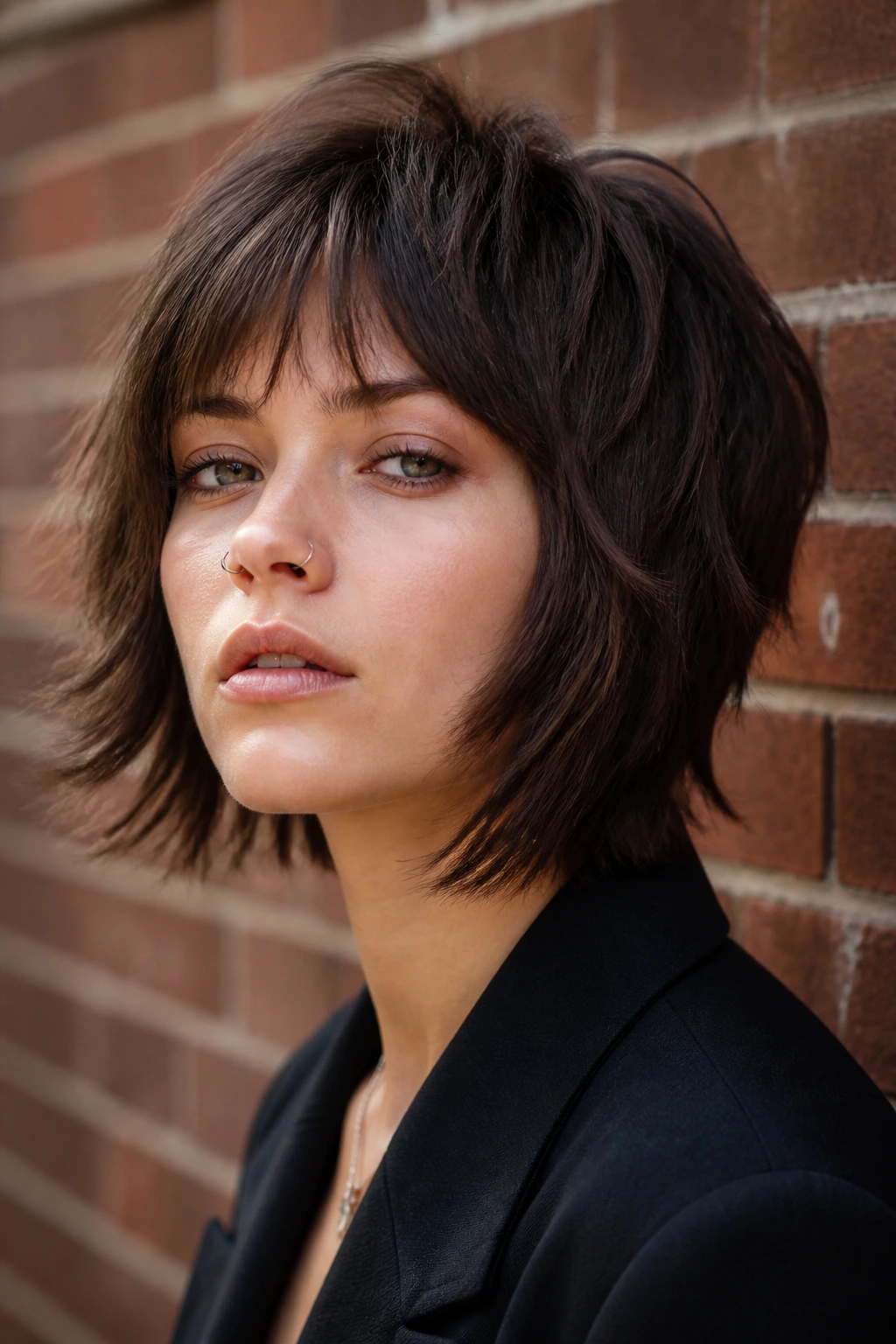
A razored wolf bob sits between a shag and a bob, with more texture than the first and more structure than the second. The razor adds movement through the ends, while the longer layers around the crown keep the top from looking too blunt.
What makes this cut edgy is the way it breaks the line. A regular bob wants to hold one shape. A razored wolf bob wants to flick, feather, and move. That softness around the ends keeps the cut from feeling heavy, and the extra texture near the front gives the face some shadow and depth.
It’s a smart choice if you like the idea of a wolf cut but want something shorter and easier to live with. Keep the fringe light. Heavy fringe can make the bob feel dense instead of airy. A little grit goes a long way here. Too much, and the shape starts to fray.
24. Soft Mohawk Crop
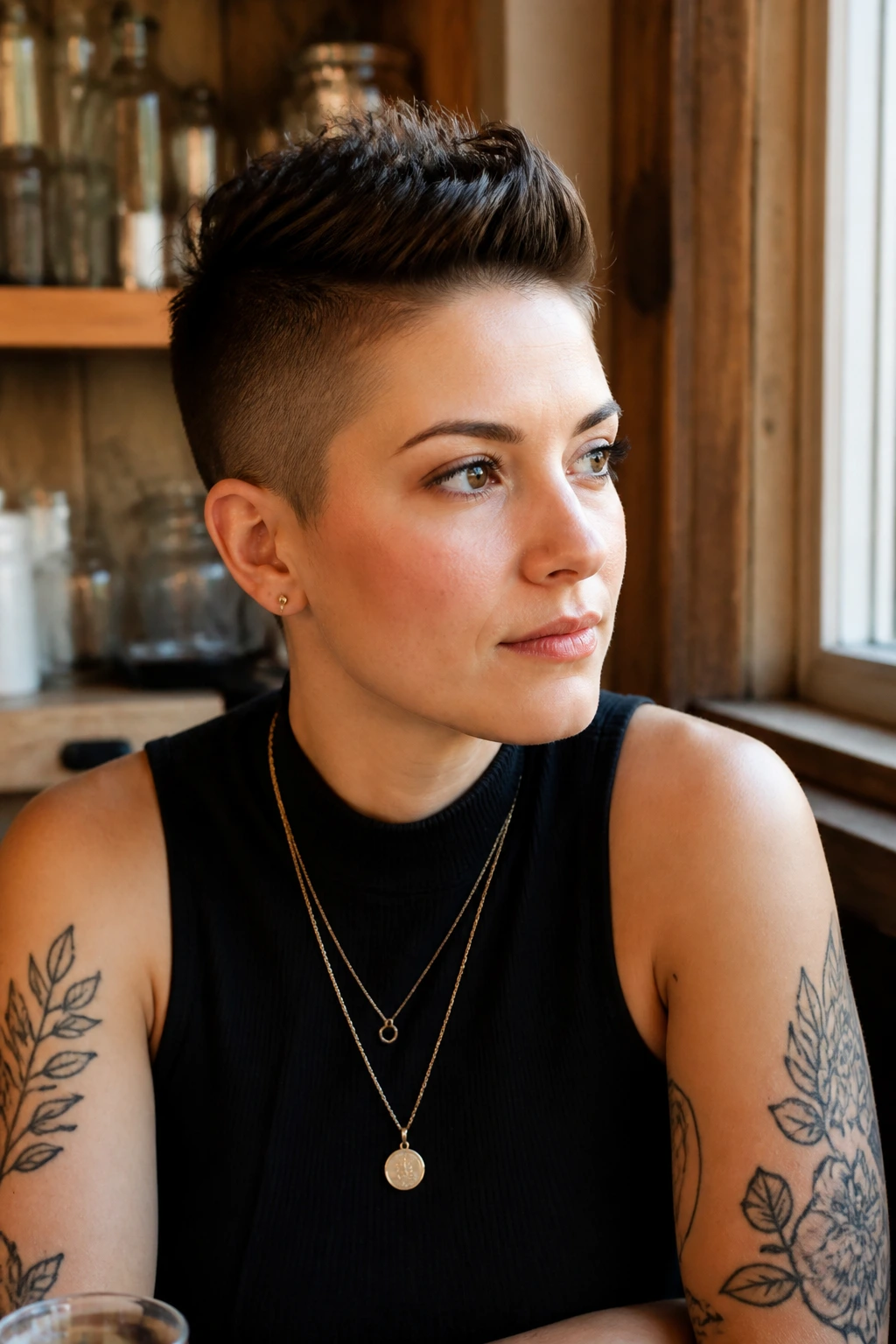
A soft mohawk crop has the energy of a mohawk without the cartoon version people picture first. The sides are cut tighter, sometimes almost close to the head, while the center strip stays longer and softer so it can be worn flat, lifted, or brushed forward.
The center is what gives it shape. If it’s too narrow, the cut can feel severe. If it’s too wide, the mohawk idea disappears. The sweet spot is a visible ridge through the middle with enough softness to move. That makes it edgy without turning it into a costume.
This cut looks best on people who are comfortable with a bit of attitude at the temples and ears. It’s a statement, sure. But the nice part is that it can be styled down with a bit of cream and a side sweep, or styled up with stronger paste when you want the full effect. Not many short cuts give you that much range.
25. Chin-Length Box Bob with Choppy Ends
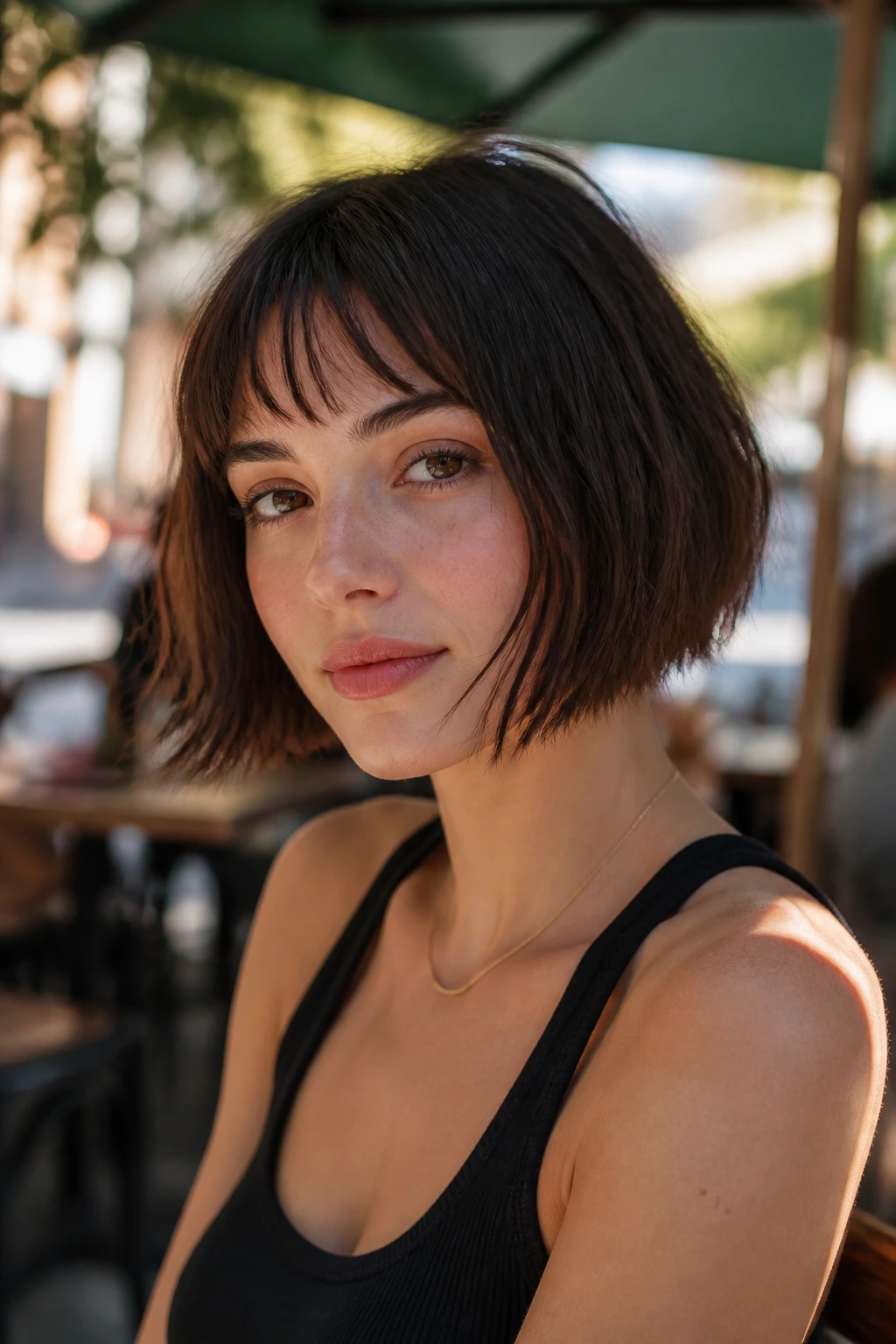
A box bob usually sounds structured, almost severe. Add choppy ends, and it gets a completely different personality. The base stays square and neat around the chin, while the ends are broken up enough to keep it from feeling stiff.
That combination is the charm. You get the clean shape of a classic bob, but the texture keeps it from looking too proper. On straight hair, the line reads clearly. On wavy hair, the ends flick and separate in a way that makes the cut feel less formal. I’d choose this when you want a short haircut that can pass in a polished setting but still has some edge when you look closer.
If your jawline is one of your favorite features, this cut will show it off. If your hair is very thick, ask for a little internal weight removal so the box doesn’t puff out. Small adjustment. Big difference.
Final Thoughts
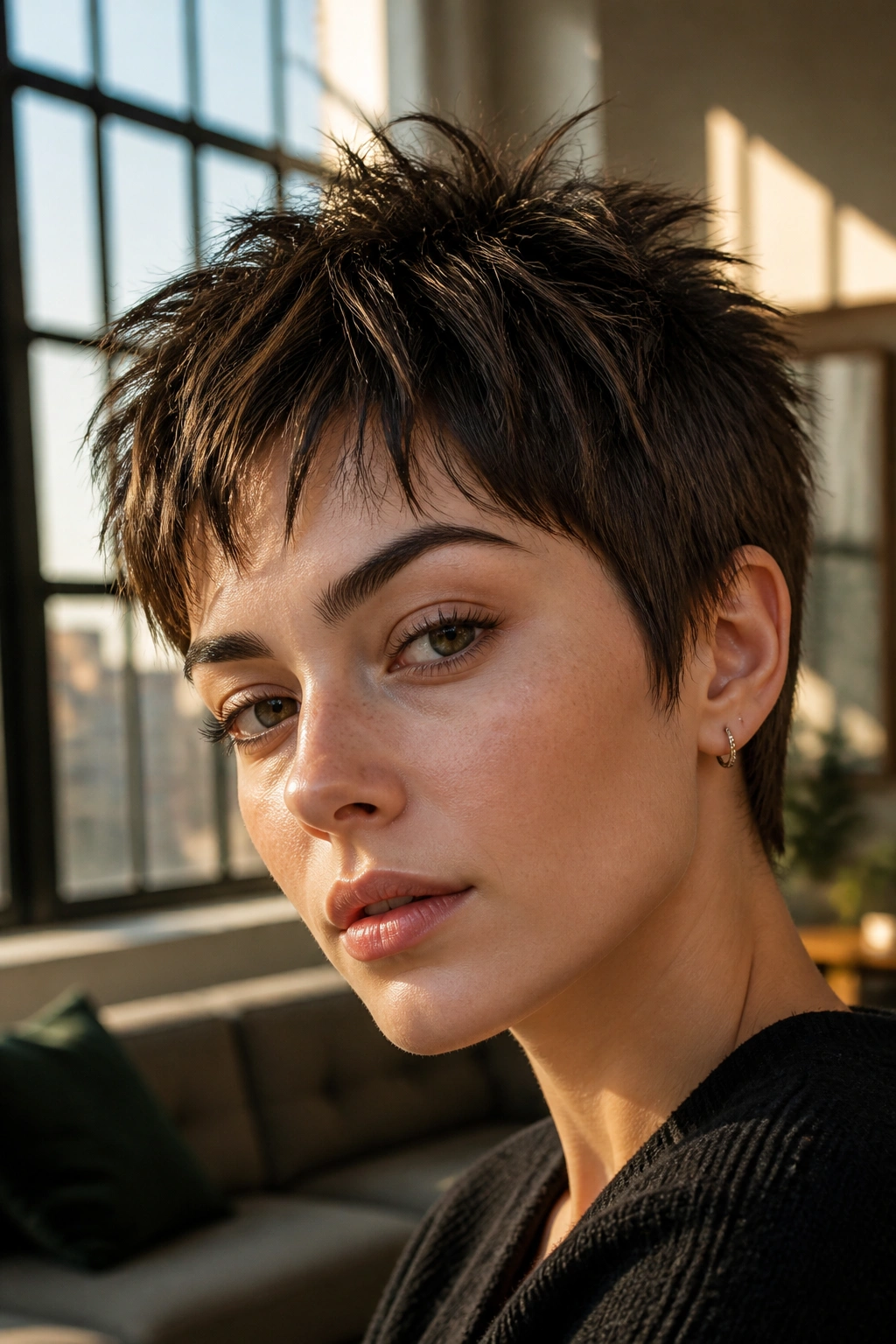
Short hair gets interesting when the shape has a clear opinion. That can mean a blunt edge, a shaved side, a rough fringe, or a cut that lets texture take the lead instead of fighting it. The best edgy styles do not rely on one trick. They use contrast.
Bring photos, yes, but also bring your real habits. If you hate styling, skip the cuts that need a blow-dryer every morning. If you like a little drama around the face, lean into fringes and asymmetry. That’s where these cuts earn their keep.
And if one of them feels a little too daring, that may be the one worth trying. Hair grows. Faster than you think.
