



Very fine hair looks best when the cut does most of the work.
That sounds blunt, but it’s the truth. Women with very fine hair do not need more fuss; they need a shape that holds its own even when the wind hits, the roots flatten, or the day runs long.
The wrong cut can steal what little density you have. Too many short layers, too much razor work, and all that airy texture people praise in salon photos can turn into ends that look sparse by the second week.
What tends to work instead is clean structure: blunt lines, smart length, a little lift in the right place, and just enough movement to keep the hair from looking helmet-stiff. The styles below lean into that idea in different ways, from short and sharp to long and polished. Some are tidy, some are softer, and a few have a little attitude — which, frankly, hair should have now and then.
1. Chin-Length Blunt Bob for Very Fine Hair

A chin-length blunt bob is the haircut I reach for first when someone wants their fine hair to look denser without turning styling into a job.
The line sits close to the face, so the eye reads it as fuller than it really is. That clean edge matters. If the ends are sliced up too much, the bob starts to look wispy; keep the perimeter blunt and you get a stronger shape right away.
Why the blunt line matters
The shorter length gives the hair a chance to sit with more control at the bottom, which is where fine hair often looks weakest. Chin length also keeps the cut away from the shoulders, so the ends do not flick out and fray as easily.
Ask for one solid line with only the lightest bit of texture at the surface if your hair needs movement. I would skip heavy thinning shears here. They sound harmless. They are not.
- Best length: right at the chin or a half-inch below it
- Best finish: blunt perimeter, slight inward bend at the ends
- Best styling tool: a 1-inch round brush or a small flat iron
- Best product: a lightweight mousse at the roots, not a heavy cream through the ends
Pro tip: dry the crown first, then the sides, because the top collapsing too early can make the whole cut look flatter than it is.
2. Collarbone Lob With a Clean Edge
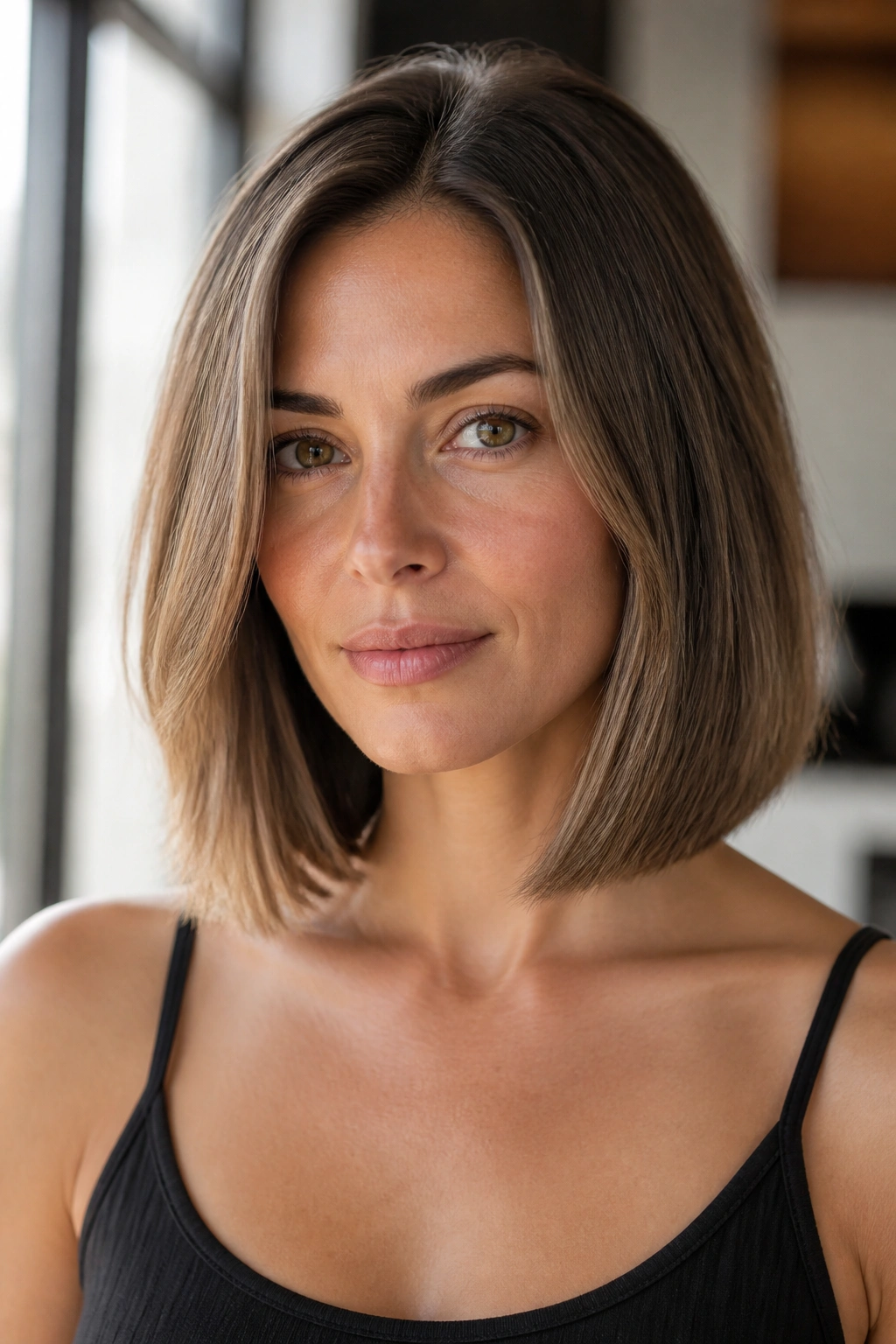
This is the cut for women who want some length and still want hair that looks like it has a pulse.
A collarbone lob sits in that sweet spot where the ends can move, but not so far down that they become stringy. Fine hair often starts to lose shape once it drops much below the collarbone, so keeping the line sharp is doing you a favor.
The nice part is that this cut looks polished even on lazy days. A rough blow-dry with a little root lift is usually enough. If you tuck one side behind the ear, the shape still feels intentional instead of accidental, which is more than I can say for most longer cuts on very fine hair.
Wear it slightly off-center if your roots flatten easily. That tiny shift creates height without making the cut look fussy.
3. French Bob With a Light Fringe
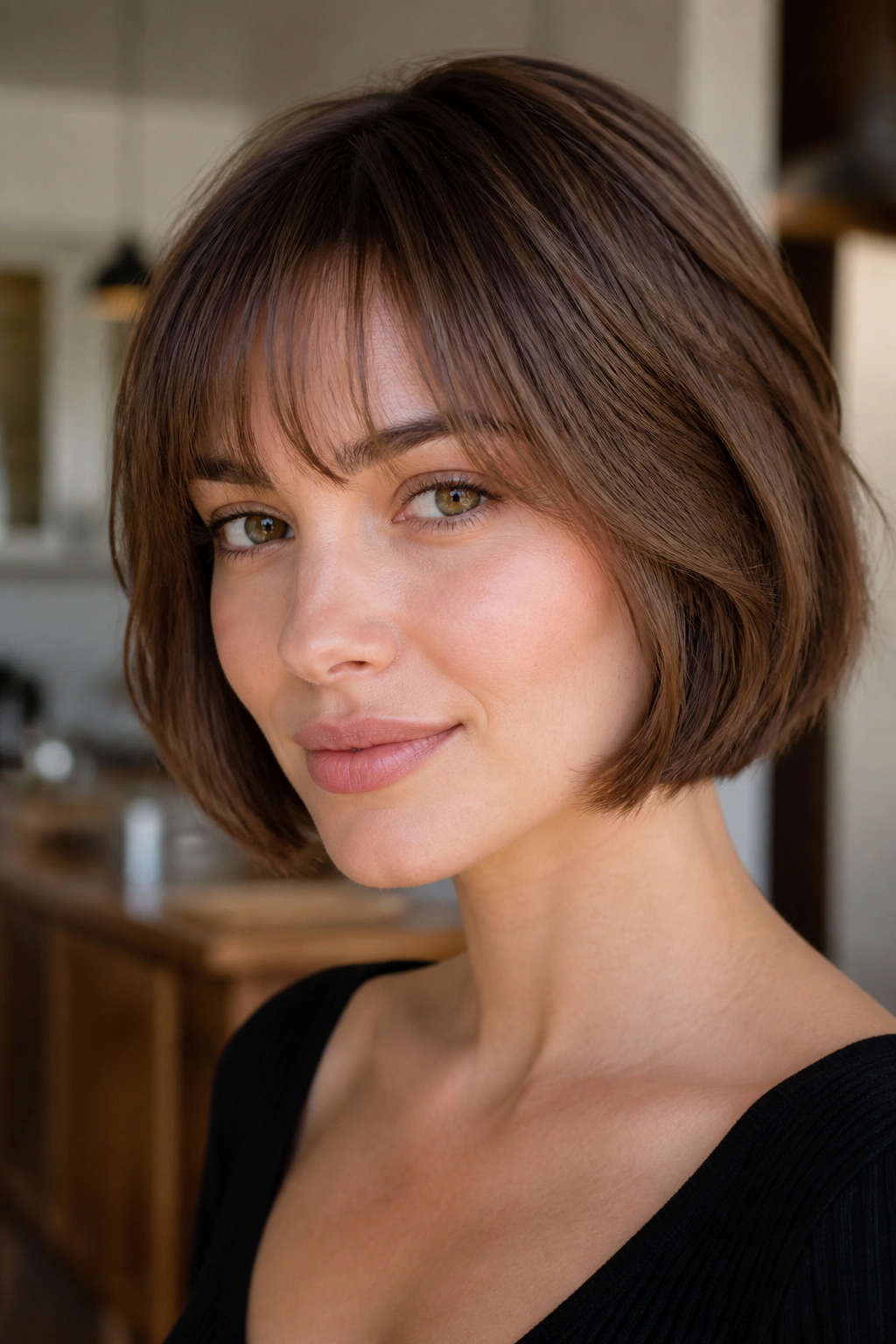
Why does a French bob work so well on very fine hair? Because it gives the illusion of thickness by keeping everything compact, tidy, and close to the face.
The bob usually lands between the cheekbone and the jaw, and that shorter length lets the hair stack visually. The fringe matters too, but only if it stays light. A heavy, blunt fringe can swallow the face; a soft one gives you shape around the eyes without eating up too much density.
How to wear the fringe
Ask for a fringe that skims the brows or sits just below them, with a little separation. The goal is movement, not a solid curtain across the forehead.
A French bob also likes a bit of bend through the ends. You do not need perfect curls. You need a soft, slightly undone finish that keeps the haircut from reading too severe.
- Works well on: straight or slightly wavy fine hair
- Ask for: chin-to-lip length with a softly broken fringe
- Style with: a round brush and a touch of dry shampoo at the crown
- Avoid: chunky layers that start too high on the head
It’s a small cut with a lot of attitude. That’s the charm.
4. Pixie With a Longer Crown
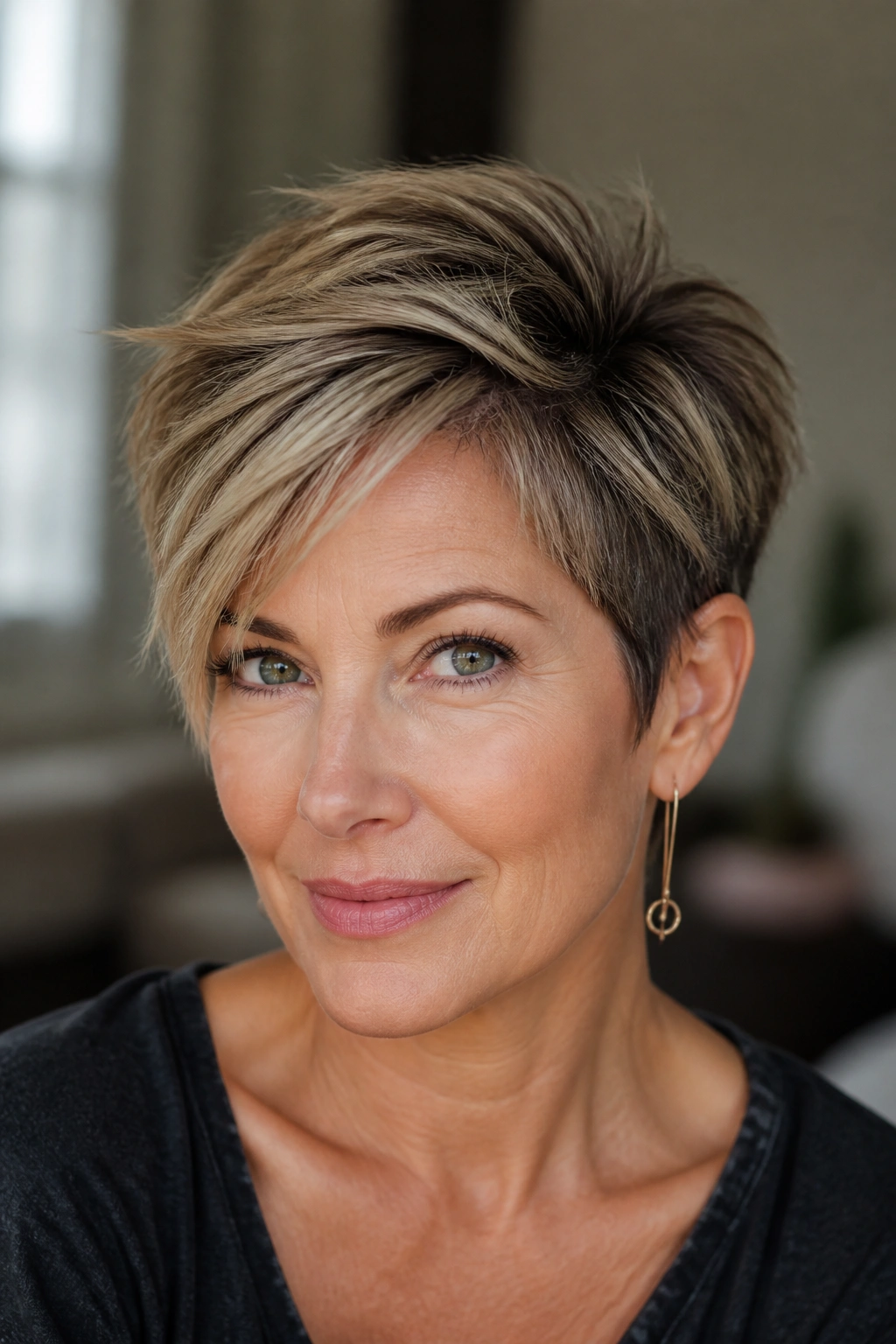
Short hair can be the smartest answer when fine hair refuses to hold volume at all.
Picture this: the roots fall flat by noon, the sides puff awkwardly, and the ends around the shoulders look thin no matter how much product you use. A pixie with a longer crown cuts through that mess. The hair is shorter on the sides and back, while the top stays long enough to lift, sweep, or piece out.
What makes it work
The longer crown gives you options. You can wear it forward, flip it to one side, or rough it up with a tiny bit of paste. The back stays neat, which makes the whole style look fuller because there is no weak, stringy length dragging everything down.
A good pixie for very fine hair should feel tailored, not choppy. Ask for texture in the top, but do not let the stylist thin the ends to death. Fine hair needs shape. It does not need to be feathered into dust.
- Best for: women who want low drying time
- Best detail: sides kept close, crown left 2 to 4 inches long
- Styling note: use a pea-sized amount of matte paste, then lift at the roots with your fingers
- Watch out for: over-texturizing, which can make the top look broken instead of airy
The right pixie looks crisp. Not cute in a childish way — crisp in the way a well-cut jacket is crisp.
5. Bixie Cut That Keeps Shape

The bixie sits between a bob and a pixie, and that middle ground is exactly why it flatters very fine hair.
You keep enough length around the sides to make the haircut feel soft, but the crown stays short enough to stop the top from collapsing. That balance matters. Too much length and the fine strands hang. Too little and the haircut can look too open at the ends. The bixie solves both problems if it is cut with restraint.
I like this cut for women who want movement and do not mind a little styling. It has a relaxed feel, but it still needs a hand. A mist of mousse at the roots, a quick blow-dry, and a bit of finger shaping usually does the trick. If your hair is naturally straight, the bixie gives it some built-in lift without forcing a heavy routine on you.
It also grows out well. That’s not a small thing. A lot of short cuts for very fine hair look sharp for two weeks and awkward after that. The bixie tends to blur its edges in a nicer way, so the transition feels softer.
6. One-Length Shoulder Cut

Compared with layered cuts, a one-length shoulder cut gives very fine hair the thickest-looking outline.
That’s the whole point. When every strand ends in roughly the same place, the eye reads a denser line. Shoulder length keeps the style versatile — you can wear it down, clip it back, or twist it into a low knot — but the blunt base keeps it from going stringy at the tips.
The trick is not to let it drift much past the shoulders. Once fine hair hangs well below that line, the ends can look see-through unless the hair is naturally packed with density. Keep it neat, keep it even, and ask for a dry cut or a careful wet cut depending on how your hair behaves when it’s flat.
This is the cut I’d suggest for someone who wants the least drama in the morning. It plays nicely with a center part, a side part, or a slight bend from a large-barrel iron. No fancy tricks needed.
7. Slightly Asymmetrical Bob
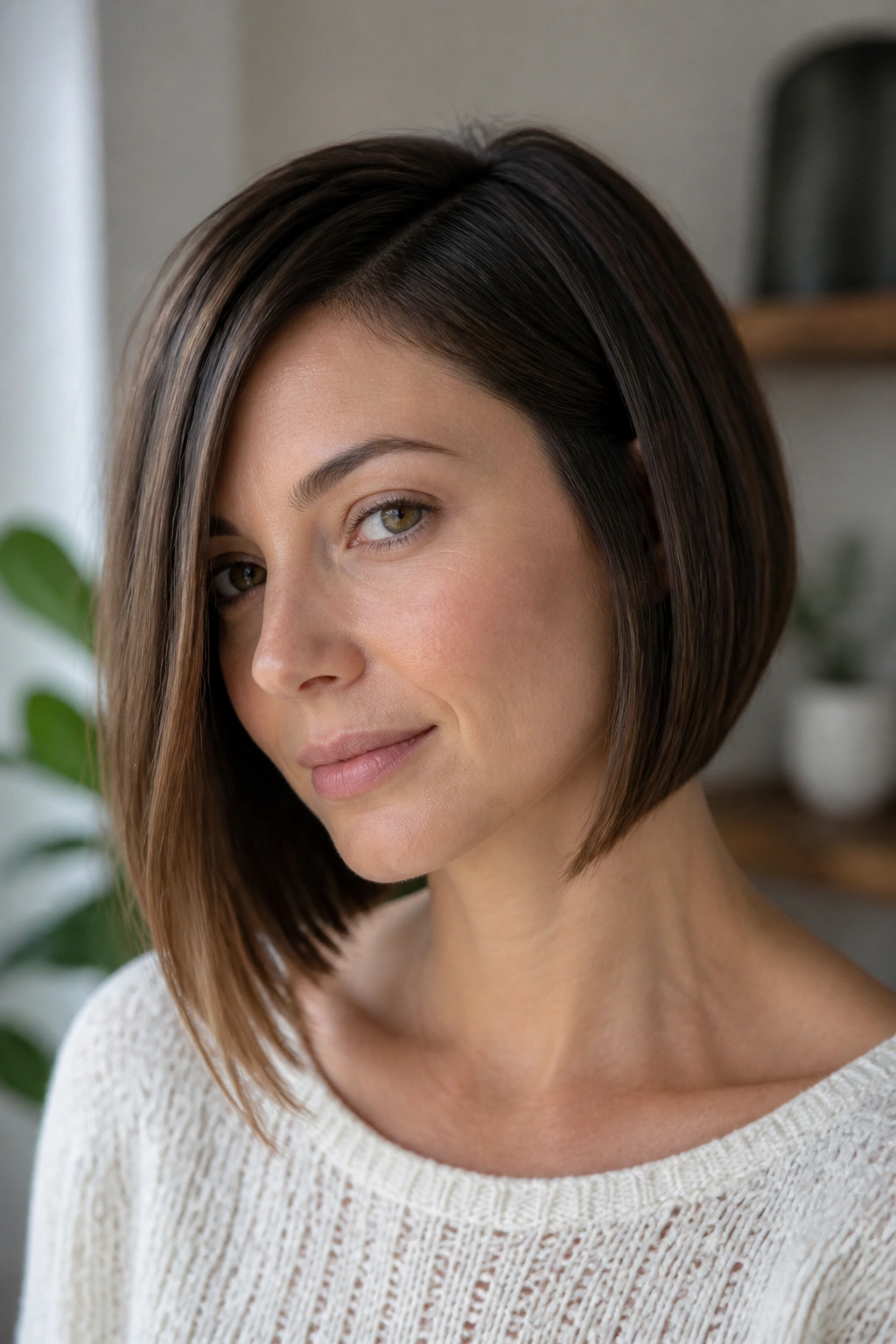
A small asymmetry can do more for fine hair than a pile of layers ever will.
One side sitting even half an inch longer changes how the eye follows the line. That diagonal shape adds movement, but the cut still feels controlled. It is a sneaky little way to make hair look fuller without making the ends choppy.
What to ask for at the salon
Keep the difference subtle. We’re talking about a gentle tilt, not a dramatic side sweep that screams for attention. A slight asymmetrical bob works best when the front falls around the jaw and the back stays a touch shorter, so the haircut has lift from behind and length in front.
- Length difference: roughly 0.5 to 1.5 inches from one side to the other
- Best parting: a side part that supports the longer side
- Best hair type: straight or softly wavy fine hair
- Styling tip: bend the ends under with a flat iron so the shape stays clean
This cut suits women who want a little edge but do not want the maintenance of a truly dramatic shape. It’s neat. It’s modern. And it makes thin-looking hair feel a lot more deliberate.
8. Curtain-Bang Lob
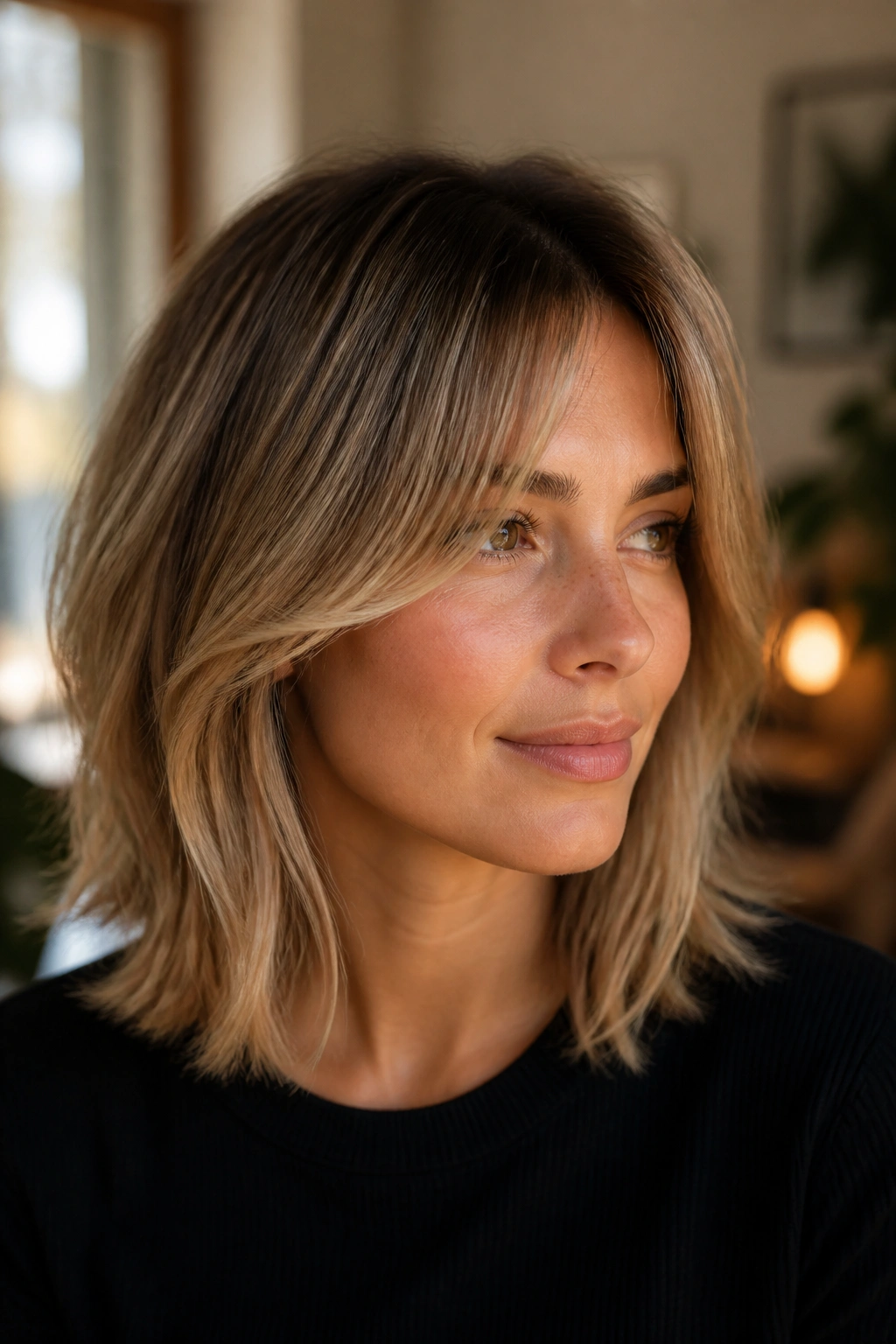
Can curtain bangs help very fine hair? Yes — if they’re cut long enough to blend and not chopped into a wispy little fringe that disappears by lunch.
A lob with curtain bangs gives you movement around the face without taking density out of the whole head. That matters. Fine hair can lose its best lines when a stylist gets carried away with face-framing layers, but curtain bangs done well stay soft and useful.
The sweet spot is usually around cheekbone level, with the bangs opening away from the face and the rest of the lob sitting around the collarbone. That shape lifts the front, softens the jaw, and keeps the length versatile. It’s a good answer if you want something a little less severe than a blunt cut but not as short as a bob.
You will need a blow-dryer or a round brush for the front pieces, especially if your hair falls flat around the temples. That front lift is half the look. Skip the heavy oils near the fringe. They make the hair separate in a way that fine hair rarely forgives.
9. Rounded Bob With Beveled Ends
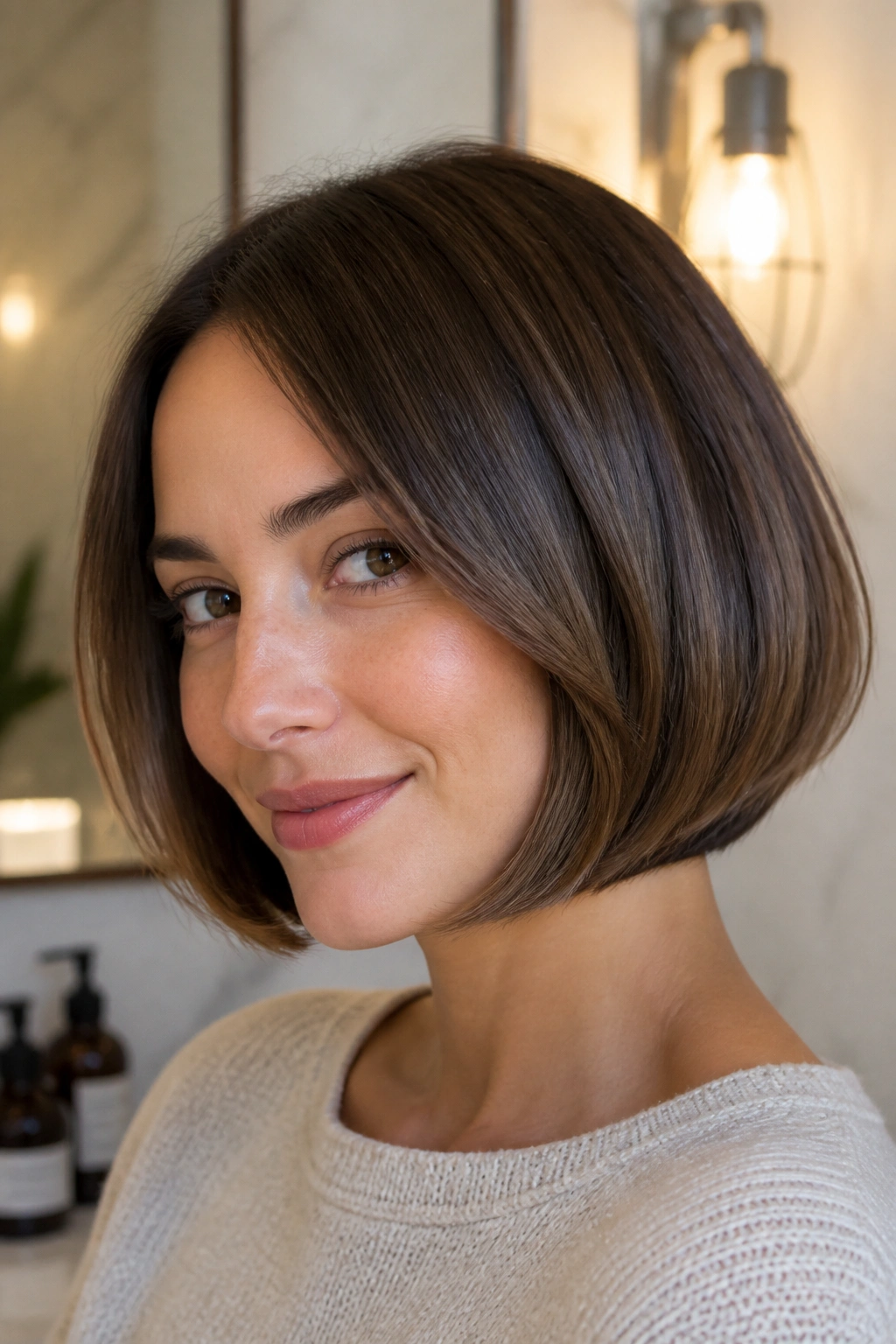
A rounded bob is one of those cuts that makes fine hair look intentionally styled even when you did not spend forever on it.
The curve is the whole trick. Instead of ending in a sharp, flat line, the bob bends inward a bit at the bottom, which gives the illusion of softness and fullness. It feels a little more polished than a straight blunt bob, and it can be easier on hair that wants to flip out at the ends.
Why the bevel matters
A beveled edge gives the perimeter a thicker look because the hair is sitting with a little shape instead of hanging straight off the jaw. Ask your stylist to keep the line full, not shaved into pieces. The goal is roundness, not choppiness.
This cut works especially well if your hair is straight and your neck is a little longer, because the curve can balance everything out. It also does a nice job of hiding uneven growth between salon visits.
Best styling move: use a round brush that matches the length of your hair, then finish with a cool shot to lock the bend. That tiny detail keeps the ends from collapsing by midday.
10. Invisible-Layer Midlength Cut

If you like shoulder-length hair but hate how it can go limp, invisible layers are the smartest middle road.
The layers live inside the haircut, not on the outside edge. That keeps the perimeter full while taking a little weight off the crown and midsection. The result is movement without the obvious chopped-up look that can make fine hair seem thinner than it is.
This is a good cut for women who want hair that still goes into a ponytail or clip but does not drag itself flat against the head. The hidden layers give a bit of lift at the roots, and because they stay tucked under the top surface, the ends still look thick.
Ask for layers that start low — well below the cheekbone — and have the stylist show you the outline before anything gets too short. That sounds fussy, but it saves you from the common mistake of turning a useful cut into a stringy one.
A light volumizing spray at the roots works better here than anything creamy. Fine hair gets weighed down fast. Fast.
11. Side-Swept Crop
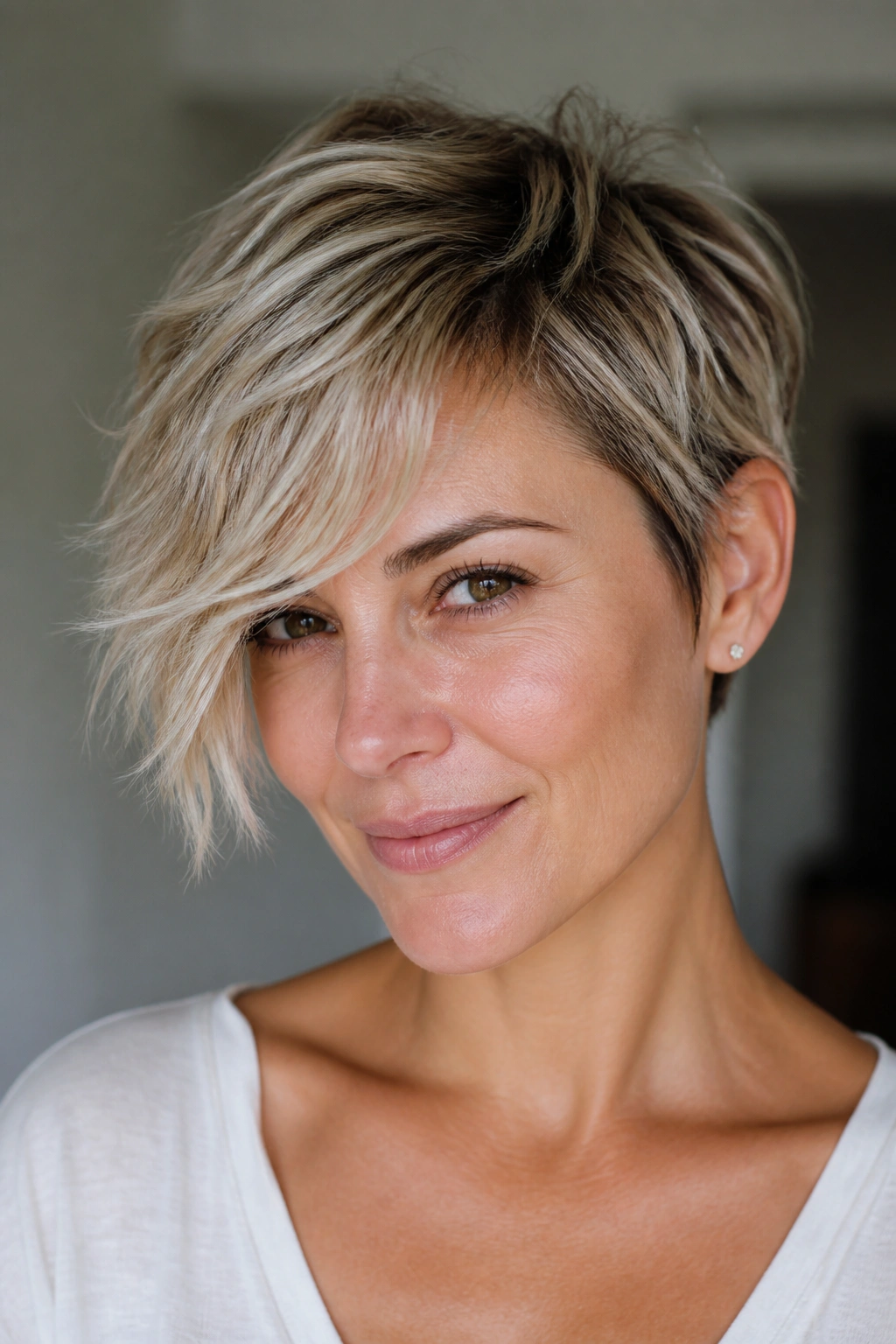
The side-swept crop is a strong answer for very fine hair that goes flat at the hairline.
It keeps the length short enough to stay lively, but the longer sweep across the front creates a little drama and a lot of movement. That front section can hide sparse temples, soften a high forehead, and make the whole cut feel fuller because the hair is not split evenly down the middle.
This is one of those cuts that looks better with a bit of mess. Not sloppy. Just relaxed. You can work a touch of lightweight paste through the top, push the front to one side, and be done. If your hair is fine but dense, this cut can look especially good because it uses structure rather than bulk.
I like it for women who wear glasses, too. The side sweep plays nicely with frames and keeps the face from feeling boxed in. Keep the back close and the front longer, and the silhouette stays clean instead of puffing out where you least want it.
12. Italian Bob With a Soft Curve
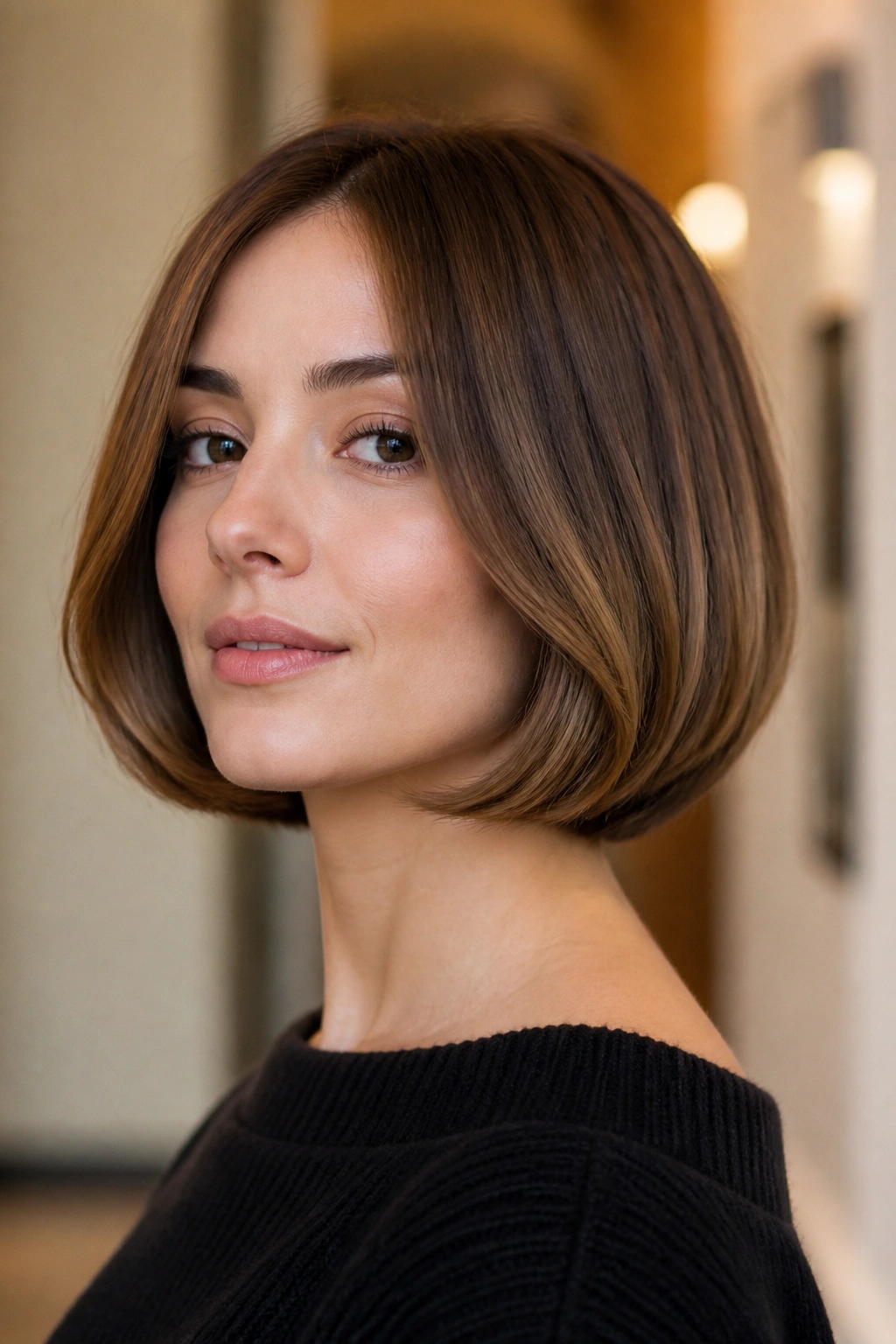
The Italian bob is like the French bob’s slightly more glamorous cousin.
It usually sits a little fuller at the bottom and often feels rounder through the sides, which gives very fine hair some welcome weight. The shape reads plush without needing a lot of layers, and that is exactly why it works. Fine hair often looks best when the cut gives the illusion of thickness through line, not through chopped texture.
What makes it different from a French bob
A French bob can feel sharper and more cheeky. The Italian version leans smoother, with a bit more length through the jaw and neck. That extra room helps fine hair move without losing the bottom edge.
It’s a good option if you like polished hair that still feels easy. The cut can be worn with a side part, a center part, or brushed back behind one ear. I’d ask for a solid perimeter and a soft curve under the chin, not a lot of interior cutting.
- Best for: straight to wavy fine hair
- Best length: chin to upper neck
- Best finish: rounded, smooth, and a touch fuller at the sides
- Avoid: sharp razored ends that fray quickly
13. Long Blunt Cut With Face-Framing
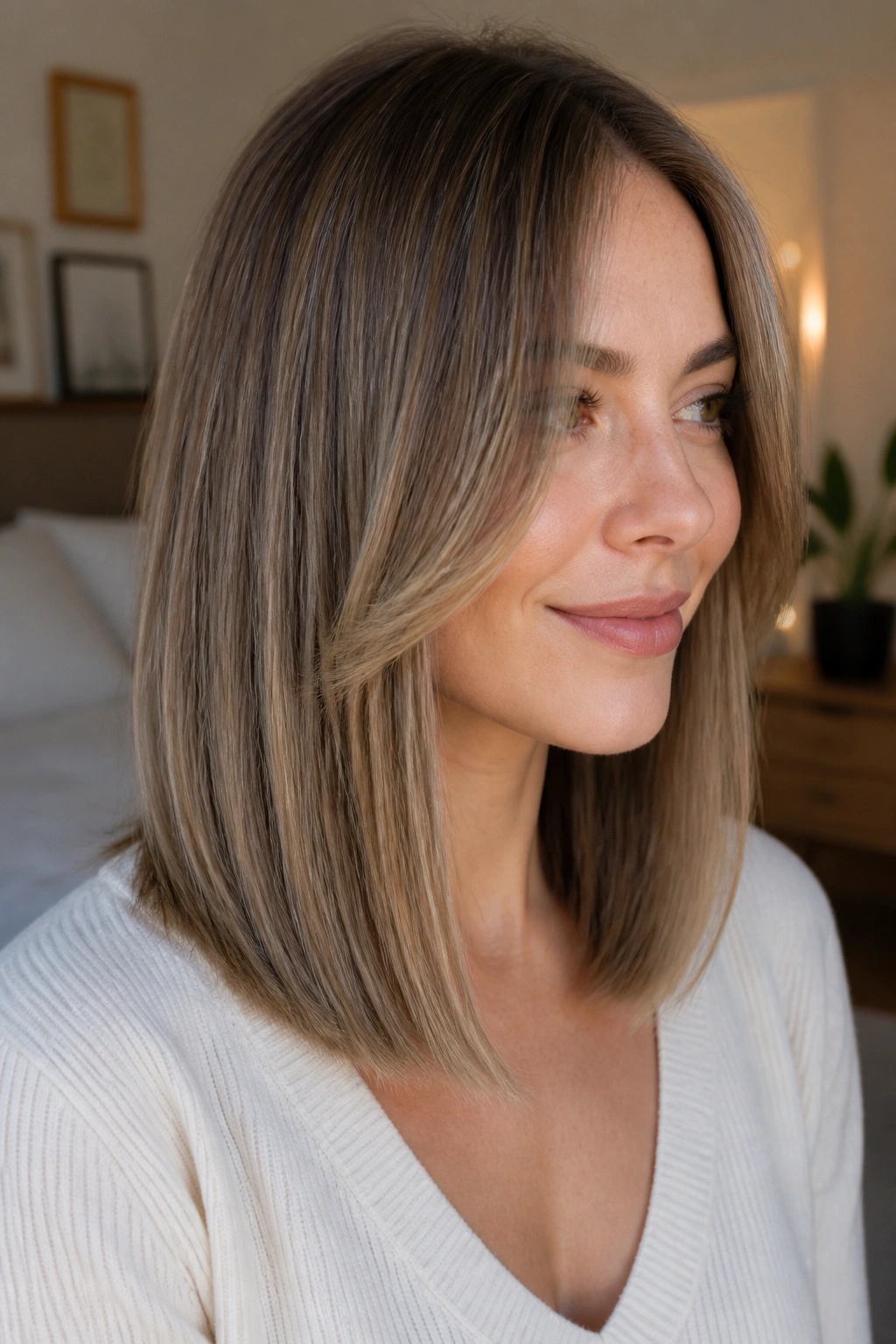
Not everyone wants to lose length, and you do not have to.
A long blunt cut can work on very fine hair if the ends stay heavy and the face-framing stays controlled. The reason it works is simple: the longer shape keeps the look feminine and soft, while the blunt bottom line stops the ends from vanishing into a wispy mess.
Why it works
The face-framing pieces should start low, usually below the cheekbone, so they soften the face without stealing too much density from the front. Anything too short around the face can make the rest of the length look thin by comparison.
If your hair is very fine but you like wearing it down, this is one of the safest long options. Keep the base blunt, keep the layers minimal, and ask for a small amount of movement only where you want it. That’s the part most people get wrong. They ask for “soft layers,” and the hair comes back with barely-there ends. Not ideal.
- Best length: a few inches below the collarbone
- Best face frame: long pieces that start around the lip or chin
- Best styling tool: a 1.25-inch iron for a soft bend
- Best product: a light heat protectant with a little shine, not a greasy serum
If you want to keep your length and still see volume, this is the one.
14. Soft Shag With Kept Ends
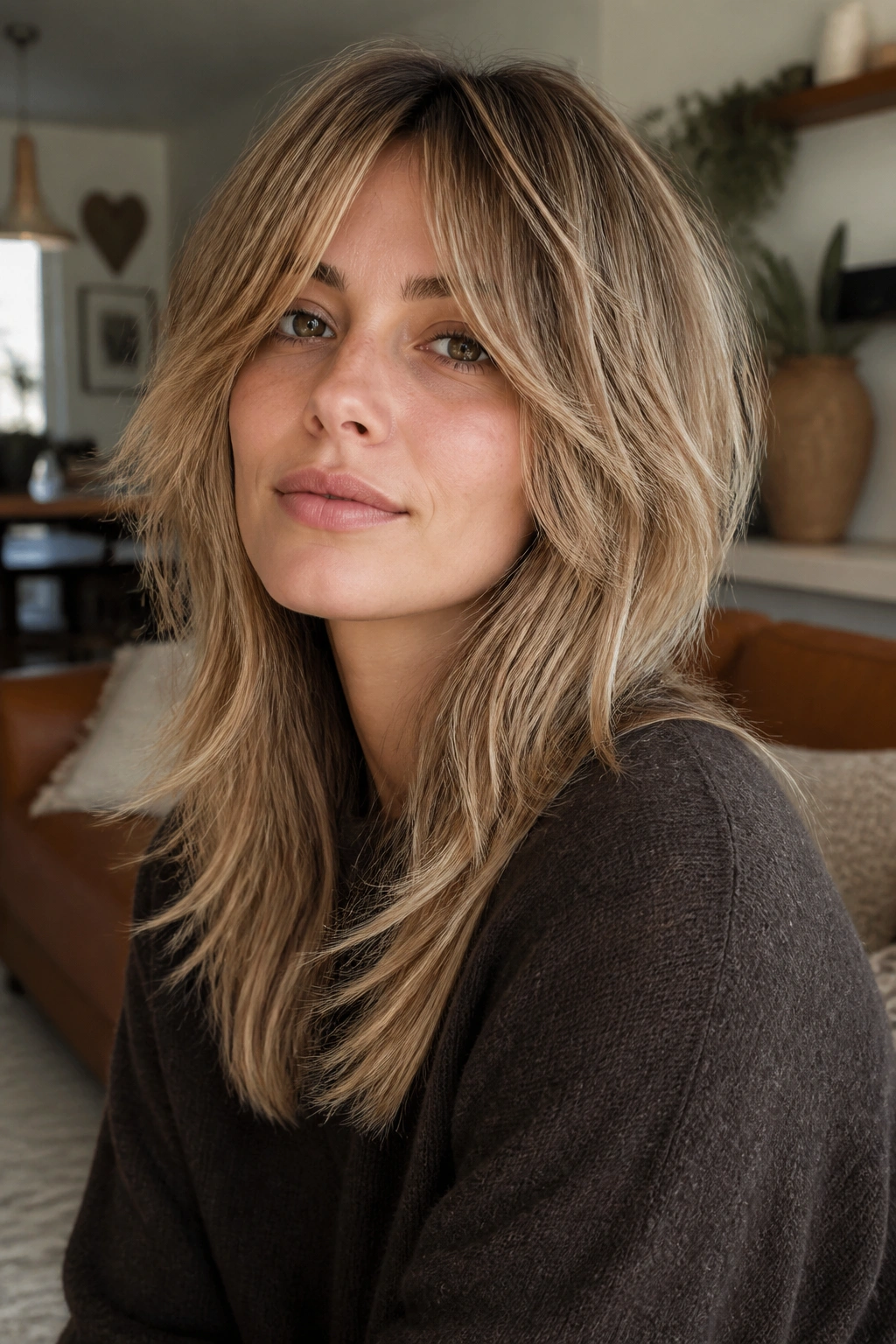
A shag can work on very fine hair, but only if the layers are kept long and the ends stay intact.
That sounds picky because it is. A heavy shag with chopped layers all over the head can leave fine hair looking sparse, especially at the sides and around the hemline. A softer version keeps a blunt or nearly blunt base and uses longer layers only where you need movement — usually around the crown and cheekbones.
This cut suits women who like a bit of lived-in texture and do not mind that the style has some attitude. It is not the right call if you want sleekness every day. It does, however, help hair that lies too flat on top by giving the crown a little air.
Ask for a soft shag, not a choppy wolf cut. Those are not the same thing on fine hair, and the difference matters. The best version keeps the shape readable from the front and does not shred the bottom into pieces.
A light volumizing mist and a diffuser can help here, but do not drown it in sea-salt spray. Fine hair turns crunchy fast, and crunch is not the look.
15. Tapered Bob With a Clean Nape
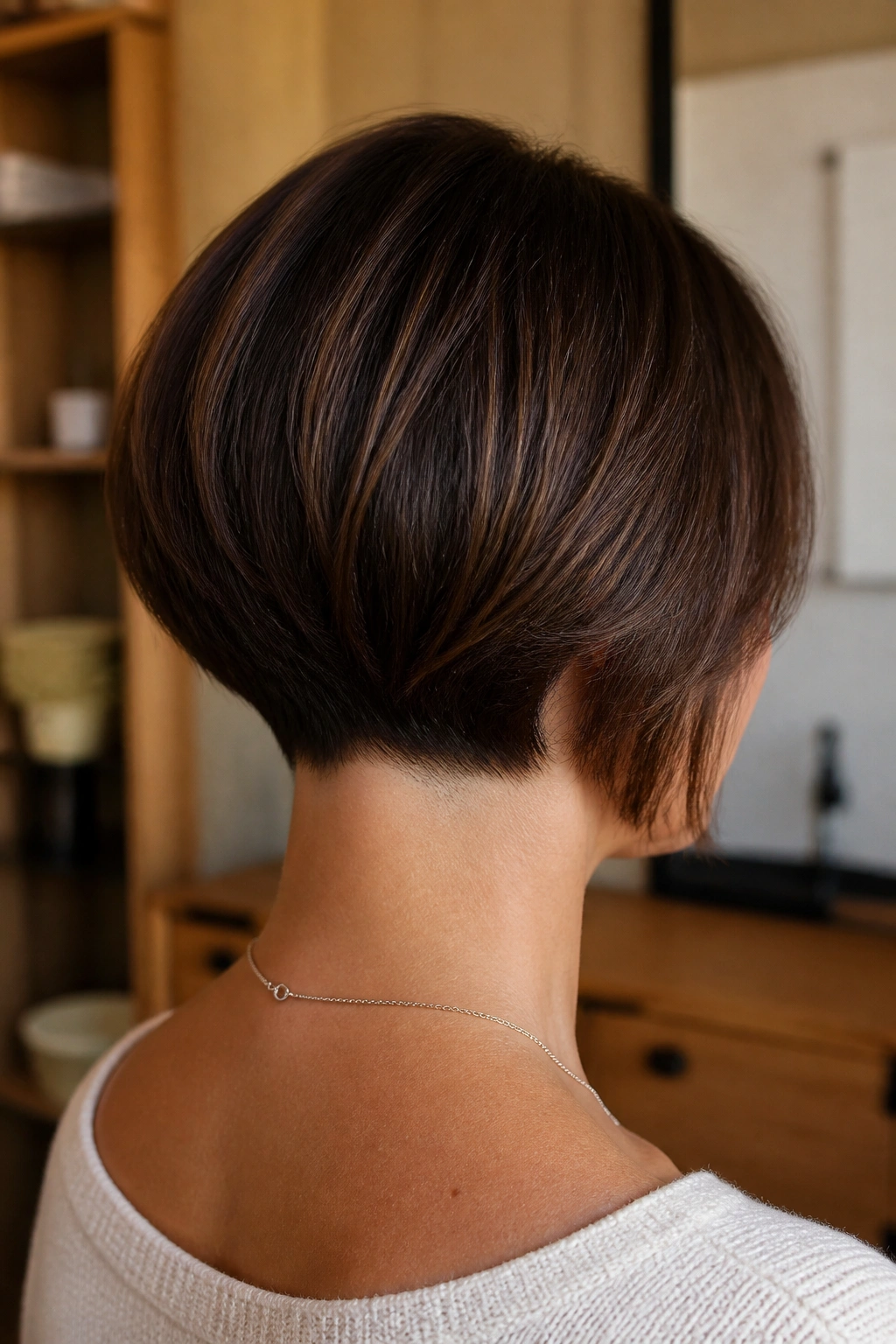
Why does the back view matter so much? Because fine hair can look thin in the nape before you even notice it from the front.
A tapered bob fixes that by keeping the back tidy and slightly shorter, then letting the shape fall forward toward the jaw. The result is a cleaner neckline and a fuller-looking silhouette overall. It is especially useful if your hair grows in awkwardly at the nape or tends to puff out where the neck meets the collar.
This cut is not about heavy stacking. Too much stacking at the back can look dated fast and can make the top go flat. A gentle taper is better. You want the haircut to feel lifted, not bulky.
How to ask for it
Tell the stylist you want the nape kept neat with a gradual slope into the front. The perimeter should still feel solid, and the front pieces should be long enough to frame the face without thinning out the ends.
- Best length: jaw to just below the chin
- Best back shape: softly tapered, not stacked high
- Best parting: side or center, depending on your cowlicks
- Best upkeep: trims every 5 to 7 weeks so the nape stays crisp
For women with very fine hair, this cut has a nice practical side too: it grows out gracefully if the line stays clean. No drama. No frayed edges. Just a haircut that keeps doing its job.
