



Long hair tells on you. If the part is crooked, the roots are fuzzy, or the ends look dry, the whole style gives itself away in about two seconds. Elegant straight hairstyles for long hair work for the exact opposite reason: the line is clean, the shine is controlled, and the shape looks deliberate.
A good flat iron helps, yes. So does a fine-tooth comb, a heat protectant, and a light hand with serum at the very end of the hair.
What people miss is that straight styles need structure, not just smoothness. A low wrap, a deep side part, a barrette, or a tucked section changes the whole mood without asking the hair to do anything dramatic. That’s the appeal. Straight hair can look calm, sharp, and expensive-looking when it’s handled with a little restraint.
Flyaways ruin the mood fast.
1. Glass-Sleek Center Part

A clean center part can make long straight hair look sharper than almost anything else. The reason is simple: the eye gets one straight line from forehead to hem, and that line feels strong when the hair is smooth from root to tip.
Start with dry hair that has already been blown out or straightened in small sections. Use a flat iron with 1-inch plates, and keep the passes slow enough that you do not need to go over the same section three times. Finish with a pea-size amount of serum on the last 4 to 5 inches only. Too much near the scalp, and the whole look turns limp.
What Makes It Work
- A sharp middle part gives long hair shape without needing volume.
- Blunt or lightly layered ends look cleaner than wispy, broken ones.
- A fine-tooth comb along the part keeps the line crisp.
- A drop of shine spray on the mid-lengths can help, but keep it light.
My favorite part is how little it needs. If the front is smooth and the ends are tidy, the style already looks done.
2. Low Wrapped Ponytail

Why does a low wrapped ponytail look so polished? Because the elastic disappears. Once you hide the band with a 1-inch section of hair, the whole style stops looking like a quick tie-back and starts reading as a finished look.
Pull the ponytail to the nape, not the crown. That lower placement keeps long hair from puffing out at the sides, which is where these styles usually get messy. Secure it with a clear elastic first, then wrap a strand around the base and pin it underneath with a small bobby pin.
Why the Wrap Matters
The wrapped base does two jobs. It hides the hardware, and it breaks up the obvious “I just tied my hair back” feel.
If your hair is very thick, use two elastics stacked close together. If it is fine and slippery, mist the underside of the pony with a little texture spray before you wrap it. That gives the pin something to grab.
A low wrapped ponytail is one of those styles that works for a meeting, a dinner, or a long day when you want your hair off your neck. No drama. Just clean lines.
3. Straight Hair Tucked Behind the Ears
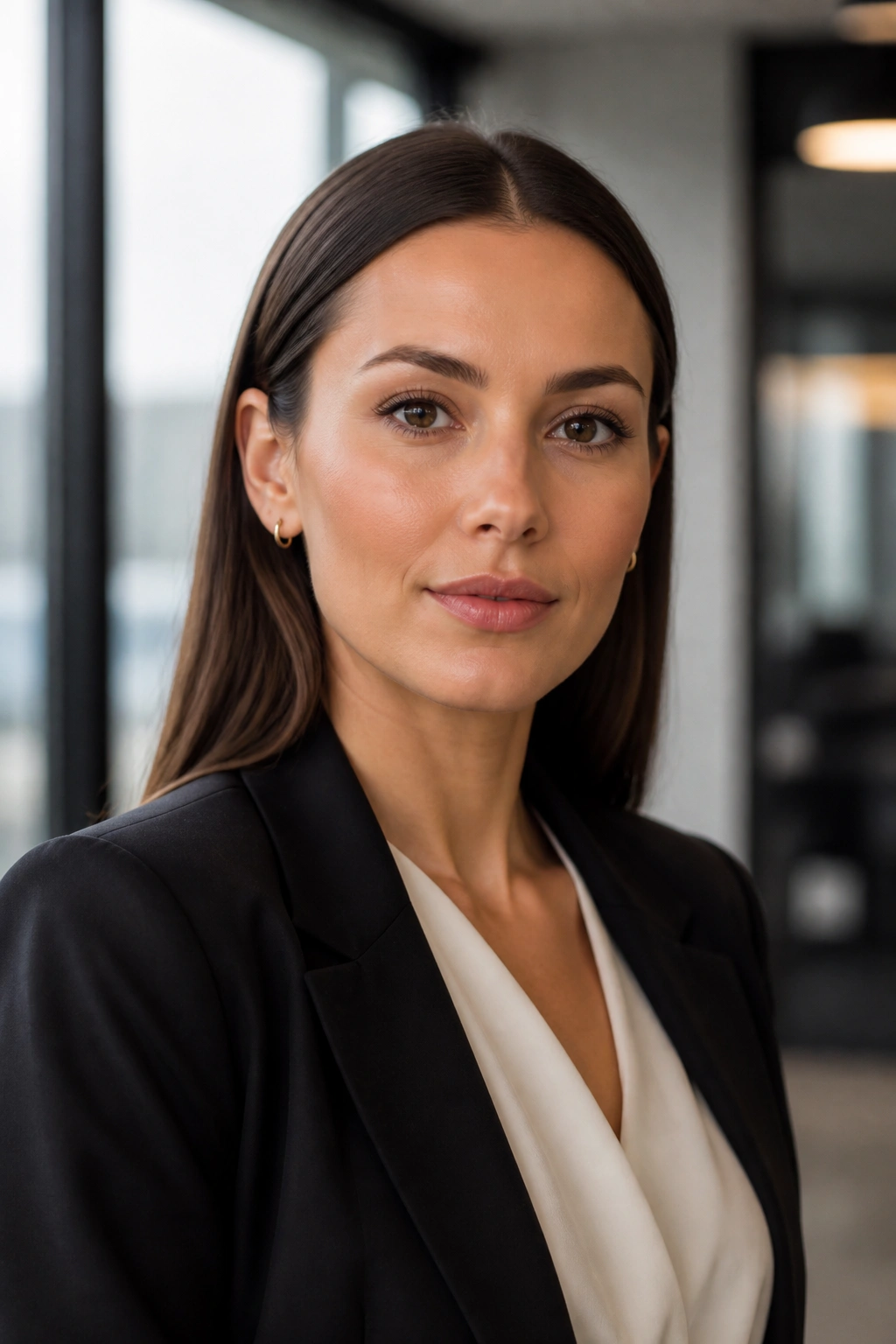
Picture long hair hanging straight over a blazer, with both sides tucked back just enough to show the jawline. That’s the whole look. It feels calm, grown-up, and a little severe in a good way.
The trick is not tucking everything back too tightly. Leave the part open, smooth the top layer, and tuck only the front third of the hair behind the ears. If the hair refuses to stay put, place a hidden pin just above the ear and slide it under the top layer.
A little shine product at the ends helps here, because this style puts the length on display. The hair has to look healthy. Split ends show faster when the front is tucked away.
If you wear earrings, this is the style that actually lets them matter. Studs look neat. Drops look elegant. And the hair stays out of the way without looking pinned down.
4. Half-Up Twist With the Rest Left Straight
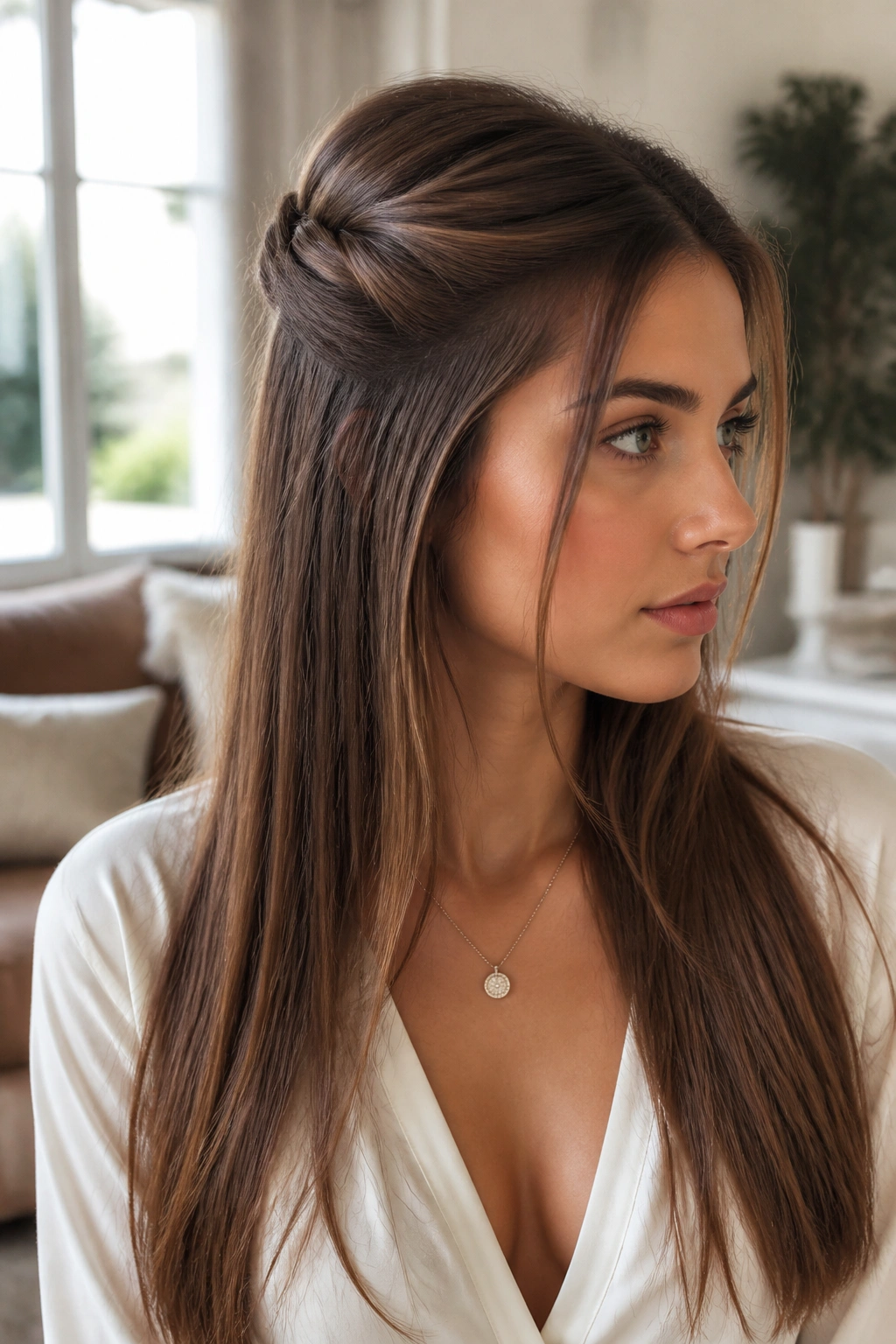
A half-up twist is one of the easiest ways to make straight long hair look finished without hiding the length. It also solves the most annoying part of long hair, which is that the front can fall in your face while the back still wants to stay loose.
Take a section from each temple, twist them back loosely, and join them at the center of the crown or just below it. Secure the twist with a small clip or a clear elastic under the hair. Keep the twist flat against the head so it does not puff out like a rolled-up napkin.
Where People Go Wrong
A half-up style can turn harsh fast if the twist is pulled too tight. The crown gets flattened, the front lifts awkwardly, and the whole thing looks like it hurts.
Leave a few tiny pieces loose around the face if your hairline feels too severe. Not wisps everywhere. Just a little softness.
This one works especially well on straight hair that has a subtle bend in the ends. The top stays neat, the bottom still moves, and the two parts balance each other instead of fighting.
5. Deep Side Part With Blunt Ends

A deep side part brings drama without asking for curls, waves, or a lot of product. Long straight hair can sometimes look too even, and a side part fixes that by shifting the weight and giving the face a stronger frame.
This style looks best when the ends are blunt or only lightly layered. Too many short layers and the hair starts to flip around the face instead of lying in one clean sheet. That’s fine if you want movement. It is not great if you want polish.
If your hair sits flat at the roots, lift the top with a round brush or a touch of root spray before you place the part. Then comb one side back behind the shoulder and let the other side fall forward. The asymmetry is the point.
I like this one for a simple black top or a button-down shirt. It does not need much else. The part does the work.
6. Satin-Ribbon Ponytail
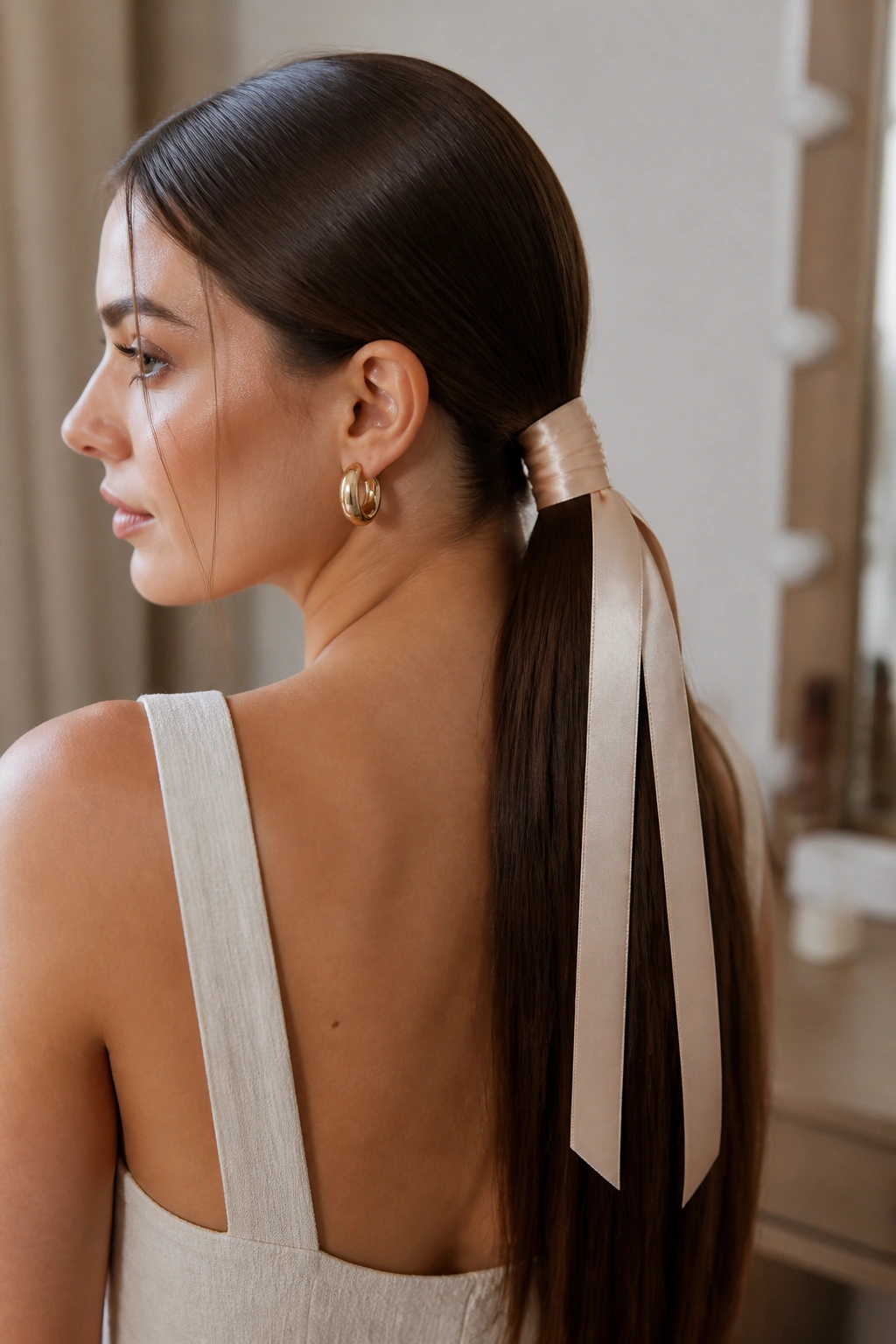
I reach for a satin-ribbon ponytail when the outfit is plain and the hair needs one clear detail. It is the kind of style that looks softer than a hard metal clip but still feels deliberate.
Tie the ponytail low or at mid-height, then knot a ribbon around the base so the tails hang down the back. A ribbon that is about 1/2 inch to 1 inch wide is enough. Anything thicker starts to feel costume-like unless the rest of the look is very simple.
- Silk or satin ribbon gives the cleanest finish.
- A low ponytail reads more refined than a high one.
- Soft colors feel quieter; black, ivory, and deep jewel tones stand out more.
- Keep the hair smooth before you add the ribbon, or the contrast looks accidental.
A ribbon is also one of the easiest ways to make long straight hair feel special without adding bulk. That matters when the hair itself is already the statement.
7. Face-Framing Curtain Layers

Can straight hair still feel soft? Absolutely, if the layers are cut and styled with care. Face-framing pieces that start around the cheekbone or collarbone keep long hair from looking like one heavy block.
The part should stay clean, but the front pieces need a little bend. Not a curl. Just enough movement so the layers fall toward the cheek instead of sticking straight down like strips of paper. A round brush on the first 2 inches near the face is usually enough.
How to Keep Them Soft
Use a flat iron only on the lengths that need taming. The front pieces can get a slight curve under, while the rest stays pin-straight.
If the layers are too short, they tend to flip outward and feel fussy. Longer face-framing pieces are easier to live with. They slide back when you want them away from your face, and they fall forward when you want shape.
This is a good choice if you wear long hair every day and do not want the same dead-straight outline all the time. A little framing changes everything.
8. Low Chignon With a Long Tail
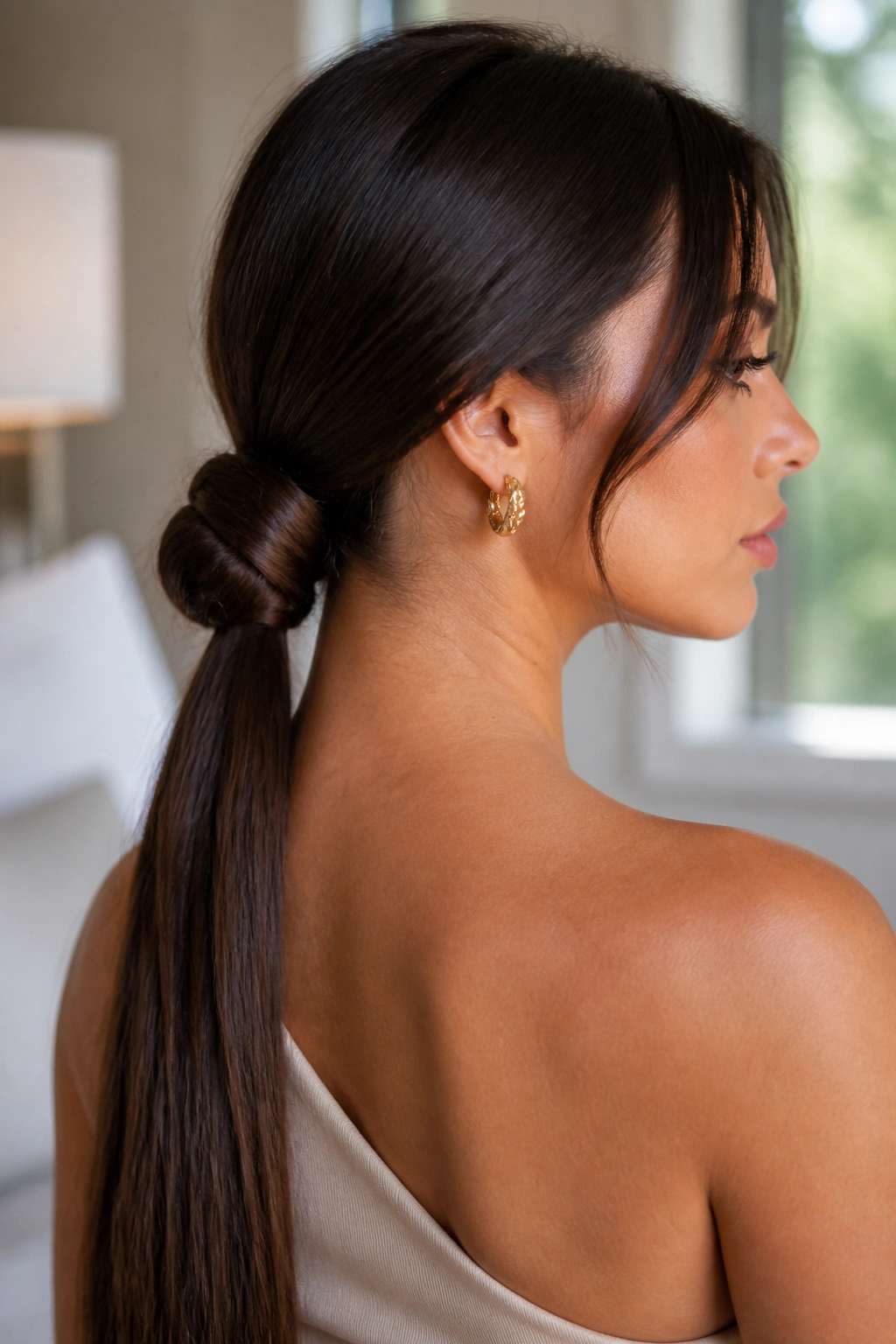
A low chignon on long straight hair has a different energy from a round, fluffy bun. It feels cleaner, quieter, and a little more formal. The best version keeps some length visible, either through a tucked tail or a narrow section left out at the base.
Start by gathering the hair low at the nape. Twist it once, then coil it into a small, flat knot rather than a bulky roll. Secure the knot with pins that disappear into the hair. If you leave a tail, make sure it is smooth and intentional, not a random strand that escaped by accident.
The reason this style works on long hair is that it controls the mass instead of fighting it. A giant bun can swallow the whole head. A low chignon keeps the silhouette neat.
It is also one of the few updos that can look elegant even when the rest of the outfit is plain. The shape is enough.
9. Bubble Ponytail With a Sleek Crown
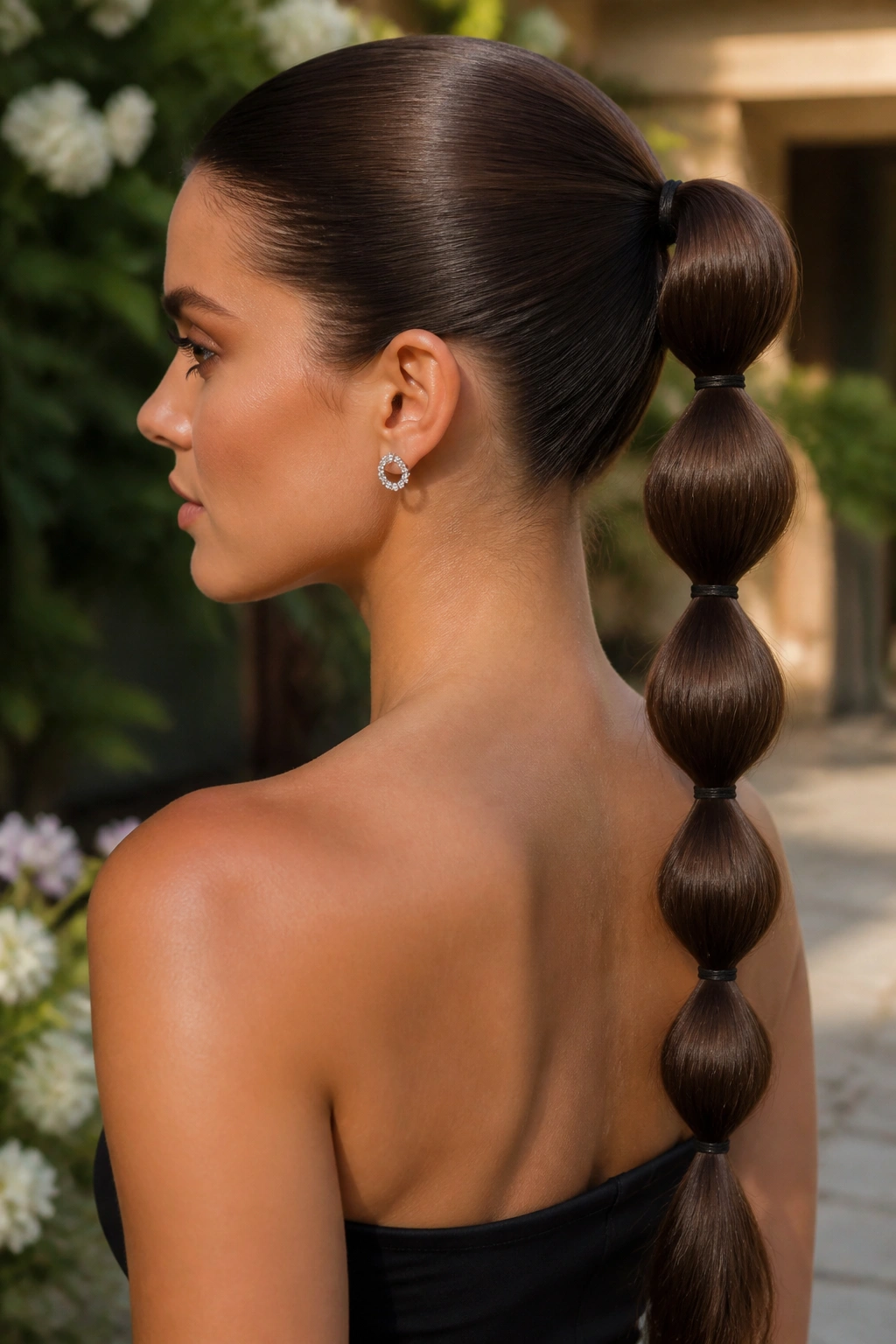
A bubble ponytail sounds playful, but on long straight hair it can look surprisingly polished if the bubbles are soft and evenly spaced. The sleeker the crown, the better the result. That contrast is what keeps it from looking like a kids’ hairstyle.
Tie the first elastic low or mid-height, then add more elastics every 3 to 4 inches down the length. Gently pull each section outward with your fingers until it forms a rounded bubble. Don’t yank. You want a little fullness, not a puffed mess.
Use clear elastics if you want the structure to disappear, or choose small matte bands in a color that matches your hair. If the ends are blunt, the bubbles look neat. If the ends are very layered, you may need a tiny bit of smoothing cream on the tips so they do not fray out.
This style gives long hair a bit of rhythm. It is still straight. It just has shape.
10. Oversized Barrette Sweep

The sound of a barrette snapping shut against smooth hair is oddly satisfying. So is the look. One strong clip on the side can do more for long straight hair than a handful of tiny pins scattered everywhere.
Sweep one side behind the ear and clip it near the temple or just above the ear. A brushed gold, tortoiseshell, or black barrette works best if you want the style to feel clean rather than flashy. If your hair is heavy, use two barrettes stacked an inch apart so the clip does not slide.
A barrette sweep works especially well when the rest of the hair stays loose and straight. It creates one clear focal point, and that’s enough. No need to crowd the style with extra accessories.
If your hair tends to slip, rough up the hidden side with a mist of dry texture spray before clipping. Not too much. Just enough grip to stop the slide.
11. Half-Up Pearl Clip Pair
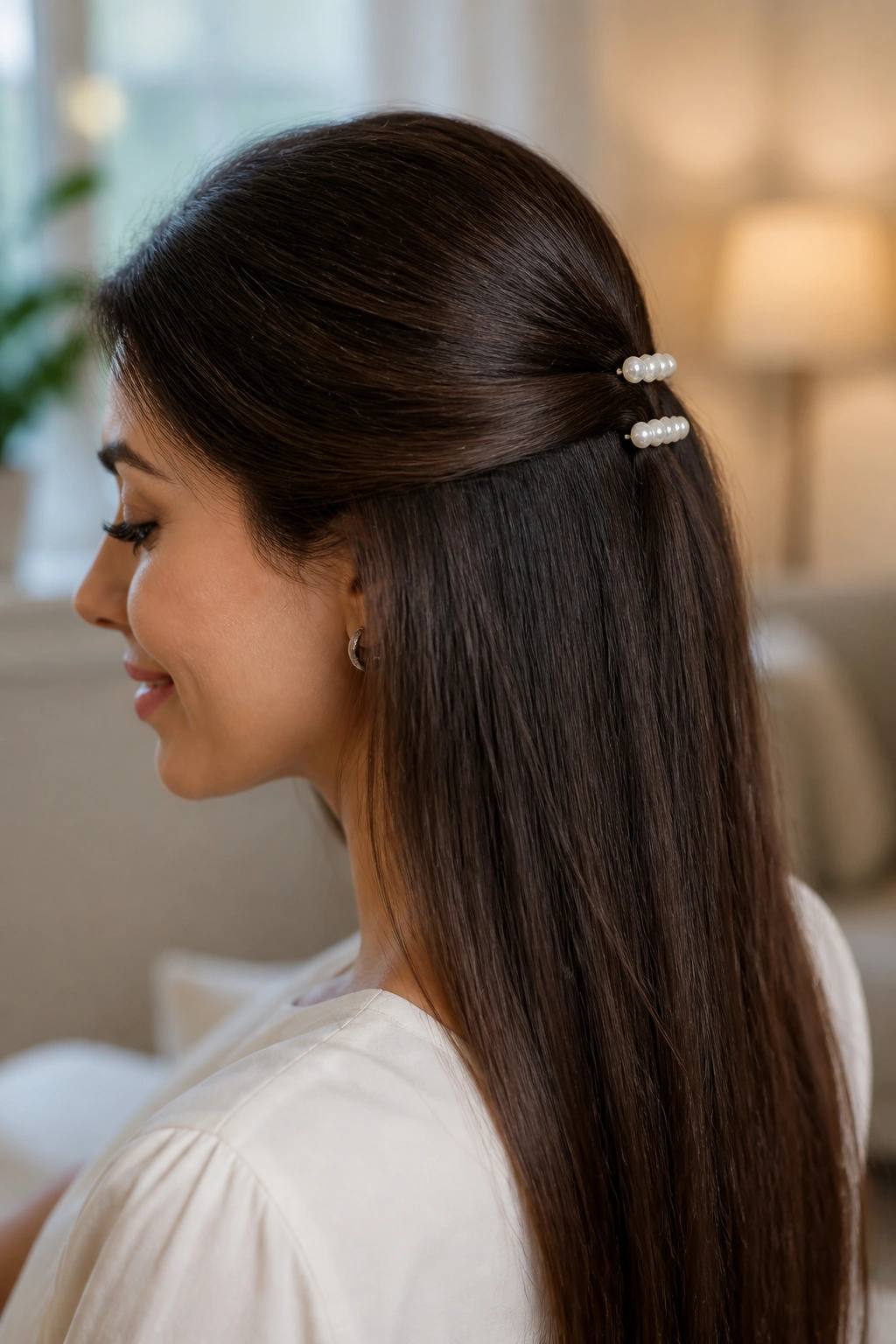
Two small pearl clips placed with intention can look better than one large statement clip that tries too hard. That is especially true on long straight hair, where the length already brings enough presence.
Take a narrow section from each side of the crown, pull it back evenly, and fasten it with a pair of clips about 2 to 3 inches apart. The spacing matters. Too close together and they blend into one blob. Too far apart and the shape starts to look accidental.
Small Hardware Wins
Pearl clips give you shine near the face without adding weight to the whole head. That is the whole appeal.
If your hair is thick, lightly backcomb the section under the clip so the hardware has something to hold. If it is fine, skip the backcombing and use a second tiny pin under the clip for support.
This style works for dinners, parties, and any day when the hair needs one pretty detail but you still want the length down. It is tidy, not stiff. That matters.
12. Hidden Braid Accent

A hidden braid is one of my favorite ways to break up straight long hair without changing its texture. The braid sits under the top layer, so when the hair moves, you get little flashes of texture instead of a full braided look.
Take a 2-inch section from near the temple or just above the ear and braid it into a tight three-strand braid. Keep it short, usually 4 to 5 inches long, then pin it flat under the top layer or let it tuck into the lengths. The point is surprise, not obvious decoration.
This works well when the rest of the hair is straight and smooth. The braid gives the eye something to find. It also helps if you want a little interest without adding height at the crown.
A hidden braid is especially nice with a center part, because it breaks the symmetry in a quiet way. That tiny asymmetry keeps the look from feeling too plain.
13. Blunt-Cut Waist-Length Straight Hair
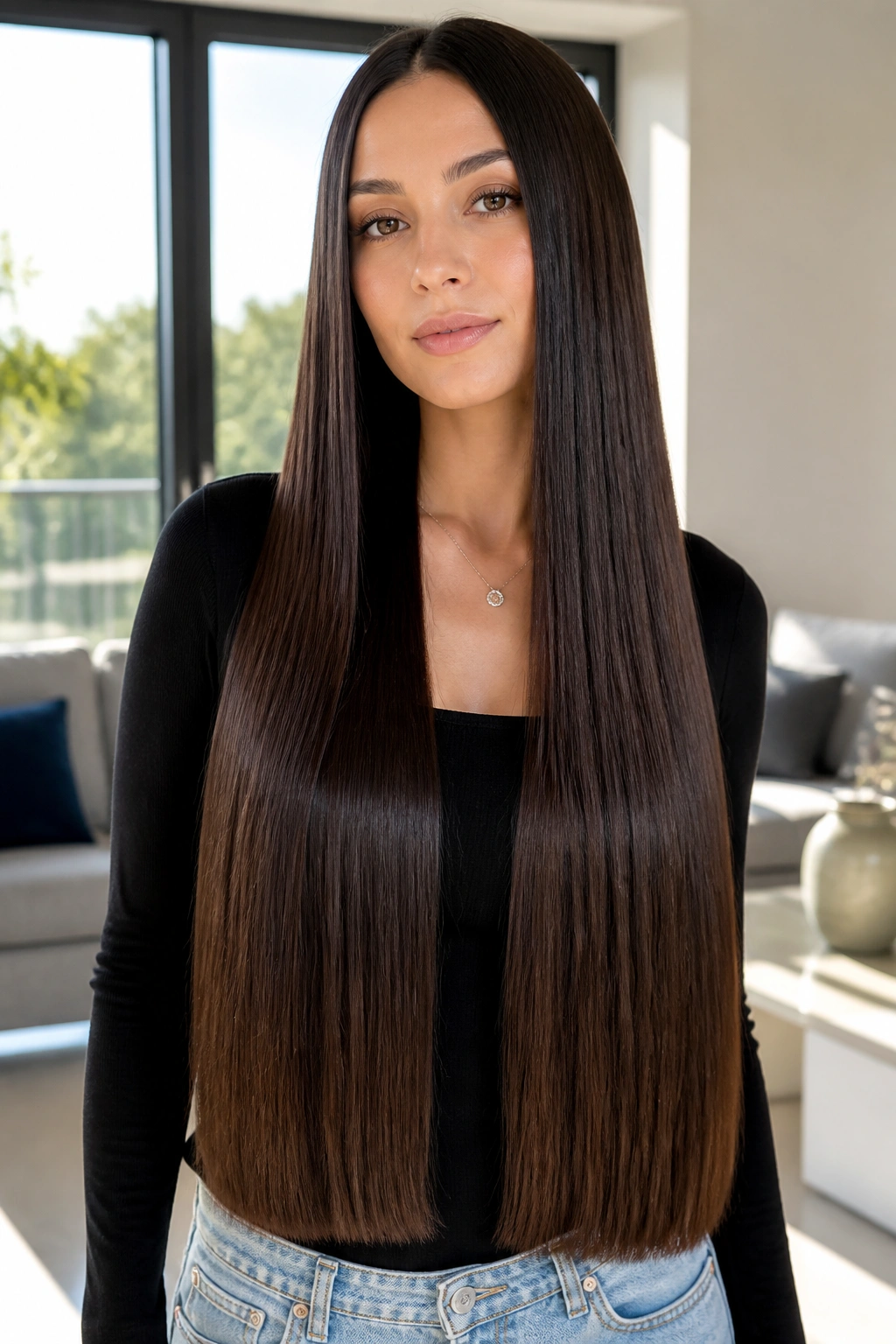
Can a haircut count as a hairstyle? On long straight hair, yes. A blunt hem turns the whole head of hair into one clear line, and that line looks expensive when it is freshly trimmed and properly styled.
A blunt cut works because the ends sit together instead of feathering out. That gives the hair a heavier, denser look, which is useful if your hair is fine or a little sparse at the bottom. It also makes the shine read more clearly, since the light hits one even edge instead of a wispy finish.
If the hair is very thick, the interior may need some weight removed so the shape does not balloon outward. A blunt outer line does not mean the inside has to be bulky. That would be a headache.
Keep the hem tidy with regular trims and use a flat iron only when the ends start to flip. A crisp cut carries the style on its own.
14. Side-Swept Bobby Pin Tuck
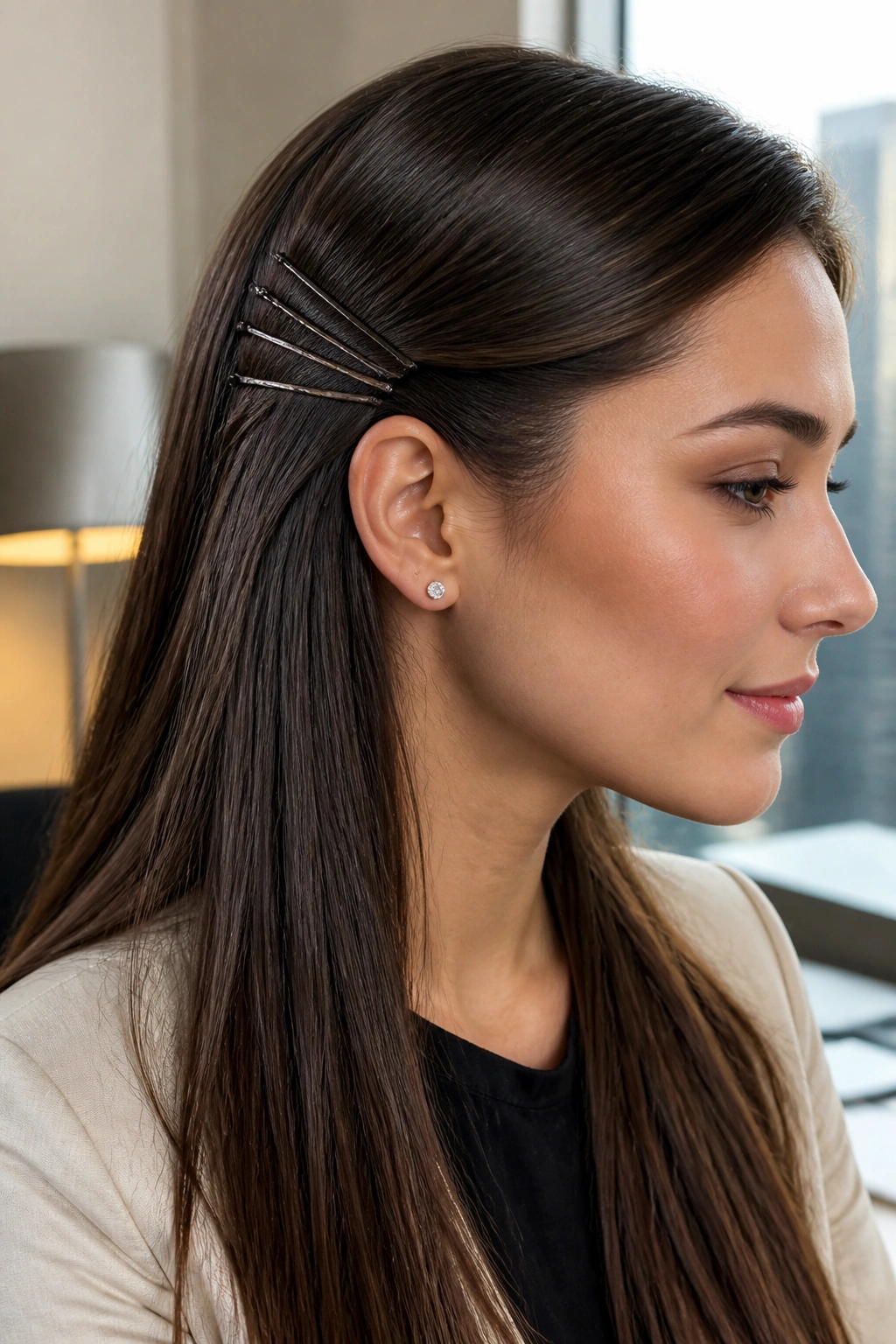
A row of bobby pins can look plain in the wrong hands and sharp in the right ones. On long straight hair, a side-swept tuck gives you that neat, controlled feel without pulling everything back.
Sweep one side away from the face and pin it just behind the ear with 3 to 5 pins, depending on thickness. Keep the pins in a straight line or a soft diagonal. Matched pins disappear into the hair; metallic ones become part of the outfit.
How to Pin It
Slide each pin in from the back so the open side grips the scalp, not the hair ends. That small detail helps the pins stay put.
The tucked side should lie flat, but the rest of the length needs to stay loose and smooth. If the front looks too tight, release one section above the temple. The whole style should feel deliberate, not strained.
This is a great office look, but it also works for evening if you swap plain pins for something with a little shine. Tiny change. Big difference.
15. Crown-Lifted Straight Blowout

Long straight hair can go flat at the crown faster than people expect. A little lift fixes that. Not a teased, old-school bump. Just enough root height to keep the shape from collapsing toward the scalp.
Use a round brush while drying the top section, lifting the roots straight up and rolling the hair away from the face. Let each section cool before touching it again. That cooling step matters more than people think. It sets the shape so the roots do not sink back down five minutes later.
A crown-lifted blowout works well with long layers, because the volume at the top balances the weight at the bottom. If the hair is one length, the lift keeps the whole style from looking too heavy.
A little root-lift mousse or spray at the damp stage helps, but don’t pile it on. Too much product at the crown turns smooth hair sticky.
16. Scarf-Tied Low Ponytail
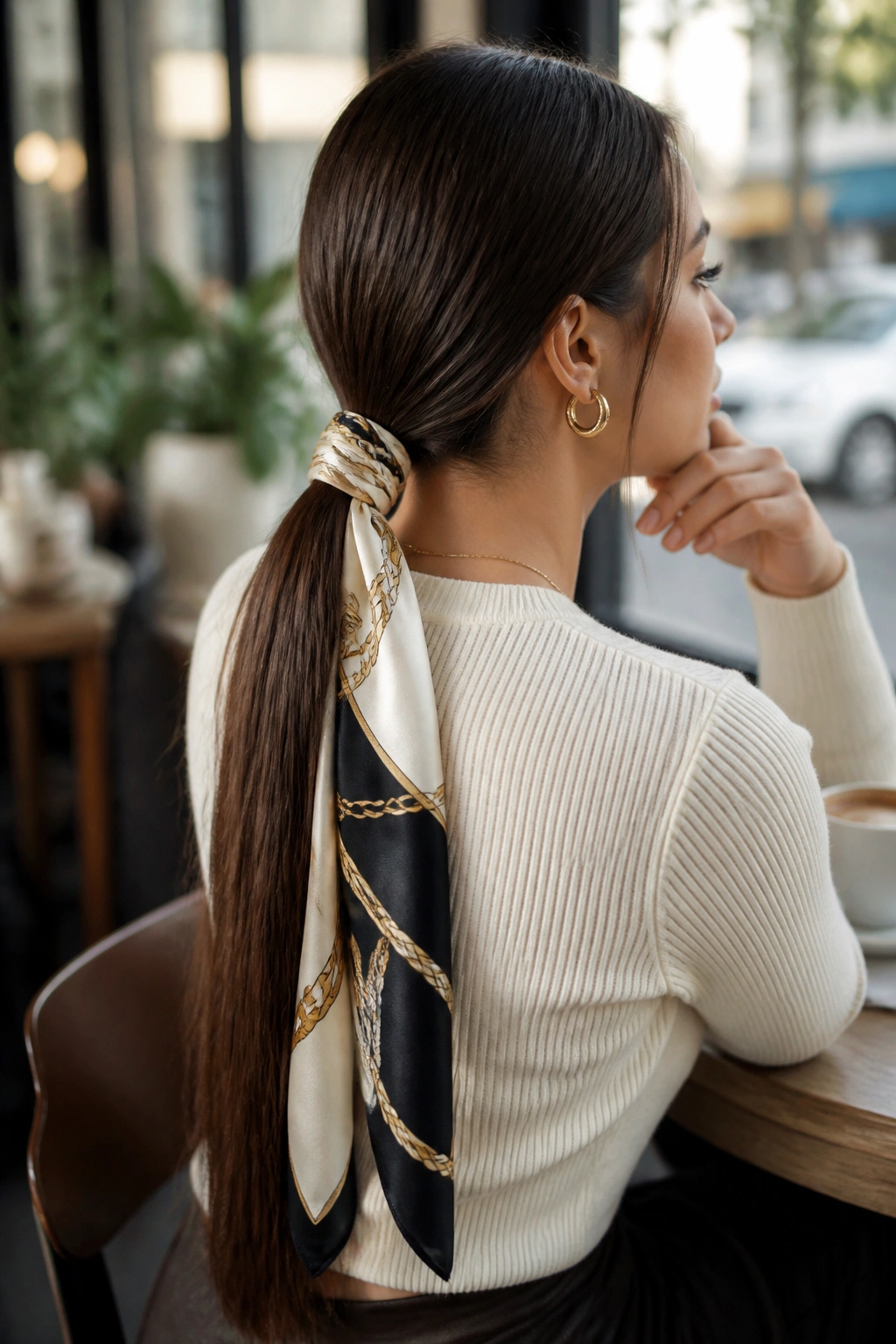
A scarf-tied low ponytail can make straight hair feel instantly more styled, and it does not ask for much effort. That is why I keep coming back to it when the outfit is simple and the hair needs a little personality.
Gather the hair low and smooth, then tie a silk or satin scarf around the base. Knot it once off to the side and let the ends fall down the back. A scarf that is about 2 to 3 inches wide gives enough shape without swallowing the ponytail.
- Silk and satin glide best over straight hair.
- A low ponytail keeps the scarf visible.
- Small prints work better than huge ones if the outfit is already busy.
- If the scarf is slippery, secure the base with a clear elastic first.
The look feels polished, but not stiff. And if the scarf color echoes your shirt, earrings, or lipstick, the whole outfit starts to look thought through without looking forced.
17. Subtle C-Bend Ends
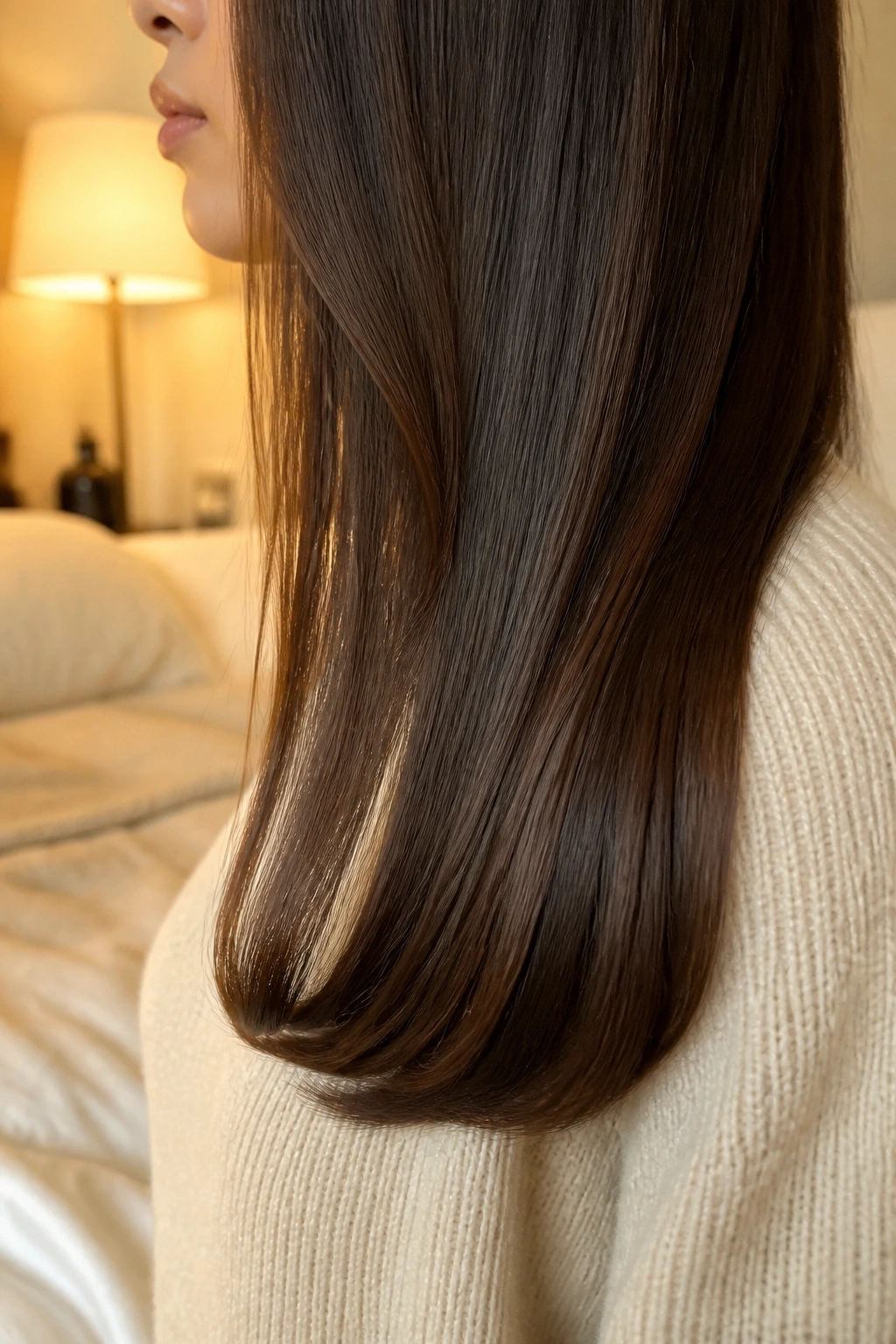
Straight hair does not have to end like a ruler. A soft C-bend at the ends gives long hair movement while keeping the overall look sleek. It is one of those tiny styling choices that changes the mood more than you’d expect.
Use a flat iron on 1-inch sections and turn the wrist just enough to create a single inward curve at the very end. Keep the bend shallow. You are not making a curl. You are easing the ends under so the hair falls with a little shape.
This works especially well when the hair is freshly blown out and the mids already sit smooth. If the ends are overworked, they start to look puffed or bent in a way that feels dated. One pass is enough most of the time.
I like this style because it moves when you turn your head. That small swing matters. It keeps long straight hair from feeling stiff.
18. Temple Braid Accent
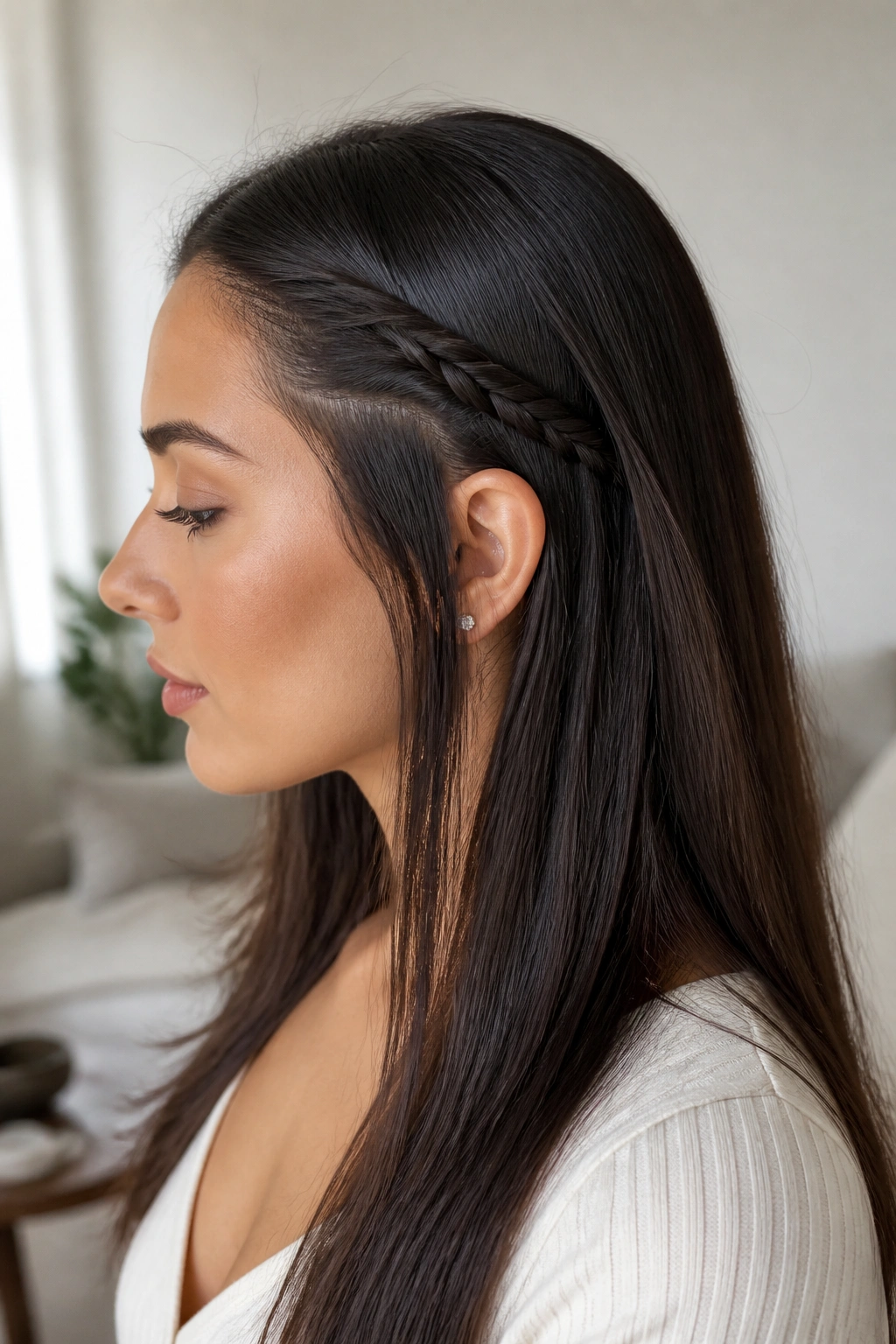
A temple braid gives straight long hair a touch of texture right where the eye lands first. It is a narrow detail, which is why it stays elegant instead of shouting for attention.
Take a 1-inch section above the temple, braid it tightly, and tuck it back behind the ear or pin it along the side. Keep the braid slim. A thick braid takes over the whole look and starts to feel sporty.
How to Keep It Elegant
Use a small clear elastic at the end of the braid and hide it under the loose length. A matte pin holds better than a shiny one if the rest of the hair is smooth.
This style works nicely with a side part, but it also looks neat against a center part if you only braid one side. The contrast between the braid and the straight length is the whole point.
It is a good option when you want a little detail near the face without losing the clean outline of straight hair. Quiet, but not bland.
19. Low Folded Ponytail
A low folded ponytail looks a little more thoughtful than a standard tie-back, and it preserves more of the hair’s length in the final shape. That matters when you have long hair and you do not want to hide all of it in a knot.
Pull the hair into a low ponytail and loop the tail halfway through the elastic so it folds back on itself. You can leave the ends tucked under or let a narrow section hang through the fold. Either way, the back looks neat and the length still reads clearly.
This style feels cleaner than a loose bun and softer than a tight ponytail. It is one of the few looks that can handle thick hair without becoming bulky.
If your hair is very fine, lightly tease the underside of the pony before you fold it. That keeps the shape from collapsing. If it is thick, use two pins to anchor the fold so the weight does not pull it apart.
20. Velvet Headband With Straight Length
A velvet headband can rescue straight long hair on days when you want a polished finish with almost no effort. It gives the hair one defined frame, and the softness of the fabric keeps the style from feeling harsh.
Place the headband just behind the hairline, then smooth the hair back so the crown lies flat and the length falls freely. A narrow band feels quieter; a wider one reads more dressed up. Velvet works well because it holds its shape and adds texture against straight strands.
The key is to keep the rest of the hair calm. No messy volume at the top. No frizz around the ears. The band is the detail, and everything else should support it.
This is the kind of look I trust when the outfit already has enough going on. It is easy, but not lazy. And if you need one last rule for straight long hair, use this: keep the line clean, then stop touching it.
