



If you’re hunting for summer haircuts for women who hate frizz, start with the cut, not the serum. A great anti-frizz haircut does half the work before you ever touch a blow-dryer, because shape controls how hair sits when heat, sweat, and humidity start messing with it.
That matters more than people like to admit. Frizz is not one single problem. Sometimes it’s dry ends. Sometimes it’s cuticle damage. Sometimes it’s a haircut that has been thinned, layered, and point-cut into little fluffy pieces that have no chance of lying flat once the air gets sticky.
The right shape changes the whole mood of your hair. Blunt lines keep ends together. Smart layers remove bulk without creating puff. The best cuts for humid weather usually do one simple thing well: they let hair fall instead of fighting the weather all day.
So if your summer routine depends on a flat iron, a hat, and a small prayer, start here.
1. The Chin-Length Blunt Bob

A chin-length blunt bob is the haircut that makes humid air lose interest. The ends sit together in one clean line, which means there are fewer little loose pieces rising up and catching moisture. That alone makes the style calmer than a heavily layered cut.
This cut works especially well on fine to medium hair that tends to go fuzzy at the bottom. Keep the edge precise, not wispy. A blunt perimeter gives the hair a heavier finish, and that weight helps it stay put.
- Best for: straight, slightly wavy, or fine hair that gets fluffy at the ends
- Ask for: a clean blunt line at the chin, with minimal internal layering
- Style note: a nickel-sized amount of smoothing cream is usually enough
One small warning: if your hair grows out quickly, this cut needs tidy trims. The shape loses its edge once it starts drifting past the chin.
2. The Collarbone Lob With Soft Ends

Why does a collarbone lob calm the chaos so well? Because it lands in that practical middle zone where hair is still long enough to tuck behind the ear, but short enough that it does not drag all day in heat and moisture.
The trick is in the ends. You want soft ends, not shredded ones. A blunt base with just a little softness at the bottom keeps the cut from feeling boxy, and it helps wavy hair fall in a smoother line instead of blooming outward.
How to ask for it
Ask the stylist for a lob that hits right at the collarbone, with the lightest touch of layering only around the face. If they start chopping layers high up near the cheekbones, the cut can turn puffy fast.
The good version of this haircut looks easy, which is exactly why I like it. It gives you movement without a lot of extra hair drama. And yes, that matters on a sticky day.
3. The Jaw-Skimming French Bob

A French bob sits against the jaw and moves with a little bend, not a cloud of frizz. It has that slightly undone shape people love, but when it’s cut well, the outline stays controlled.
The reason it works is simple: it keeps the length short enough that your hair doesn’t have much room to balloon. The jawline gives the cut a natural stopping point, and that makes the whole style feel intentional even when you air-dry it and walk away.
It also plays nicely with natural texture. Straight hair gets a clean line. Wavy hair gets a soft curve. Even when the air is damp, the shape tends to look more polished than a longer cut that’s been thinned too much.
Short hair can be fussy, sure. But this one is the nice kind of fussy.
4. The Shoulder-Length One-Length Cut

Layers get a lot of praise, but a one-length shoulder cut can be kinder to frizz. When all the hair sits at the same line, the ends support each other instead of breaking off into little frizzy bits.
This is a smart choice for thick hair that swells when it’s humid. The weight stays spread out across the bottom, which keeps the cut from floating upward. If your hair has a lot of volume already, that extra weight is your friend.
- Good for: thick, coarse, or slightly wavy hair
- Not ideal for: hair that is super fine and flat
- Stylist note: ask for a full line at the shoulders, then soften only the very ends if needed
I like this cut because it doesn’t try too hard. It gives you clean shape, and clean shape is half the battle.
5. The Tapered Pixie
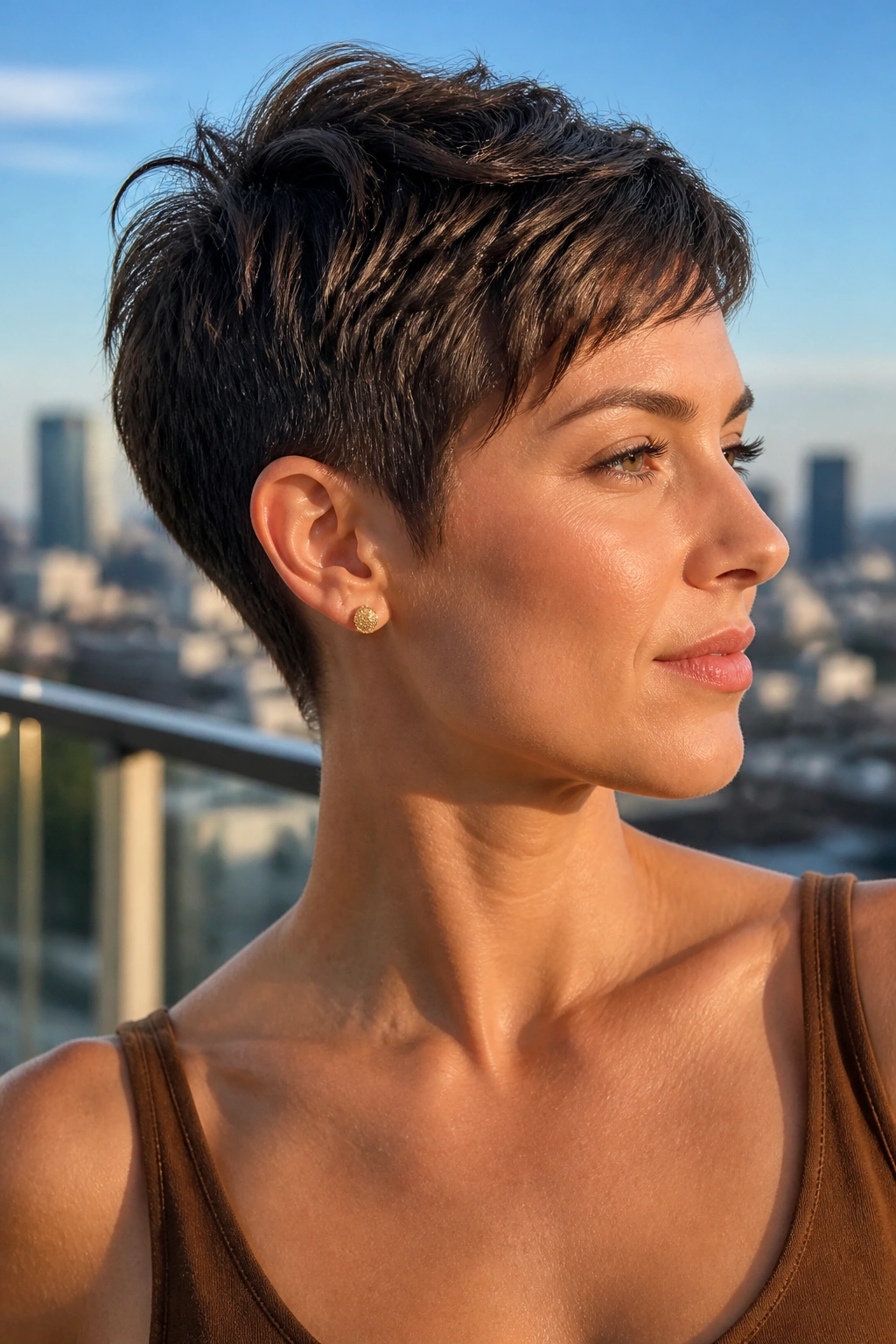
Short hair is honest.
A tapered pixie gets rid of the length that usually turns fluffy first, especially at the neck and around the ears. Since there’s less hair to absorb moisture, dry out, and misbehave, the style stays neat with far less effort than a long cut.
The important part is the taper. You want the nape and sideburn areas kept close, while the top stays a little longer so you still have some movement. If the top is cut too short, the hair can stand up in awkward little spikes once the humidity hits.
This cut is good for women who want something low-fuss and quick to wash. It also dries fast, which is a bigger deal than people think on busy mornings. Less drying time, less chance for frizz to sneak in.
6. The Bixie Cut
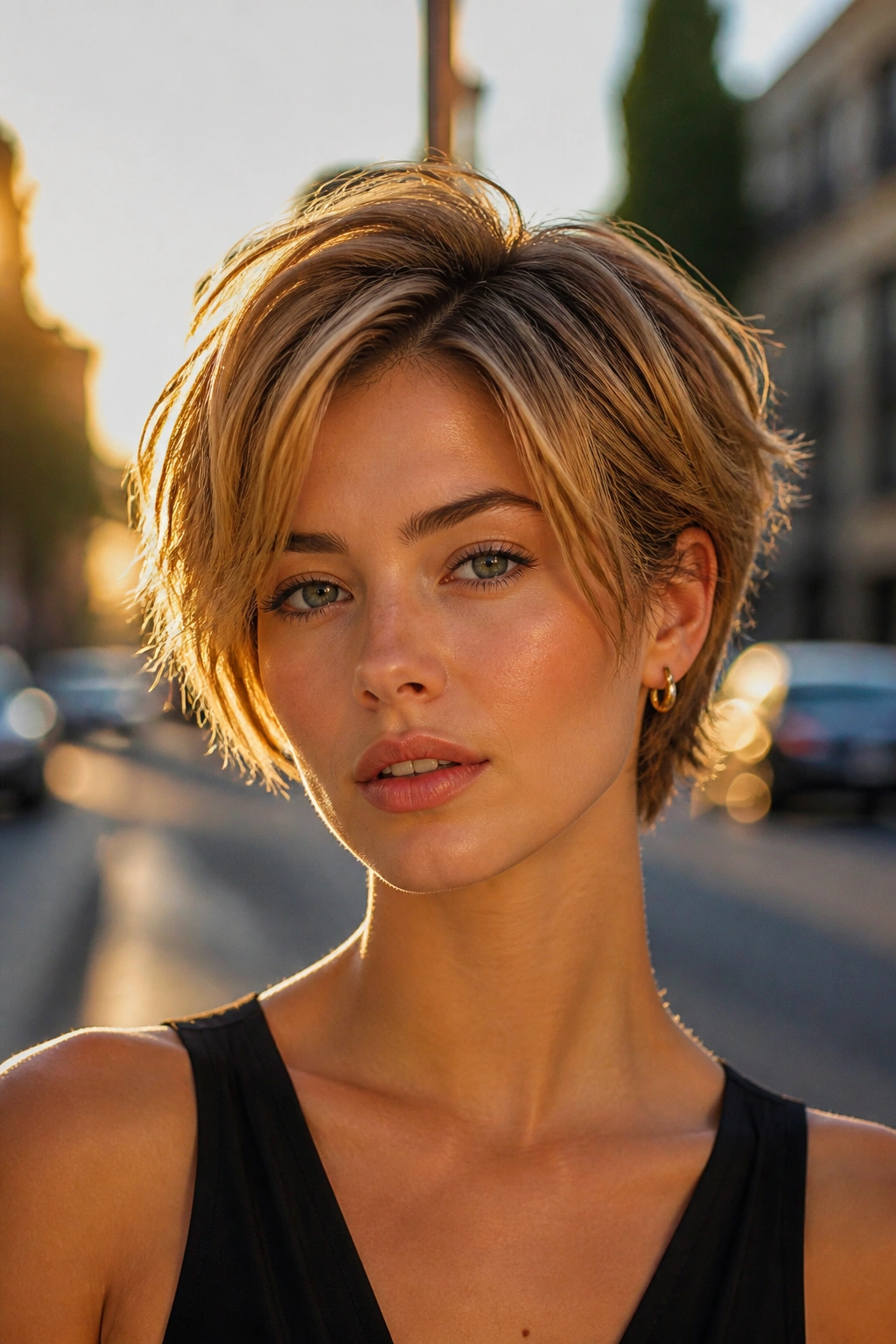
A bixie sits between a pixie and a bob, and that middle ground is exactly why it helps with frizz around the ears and neckline. You keep enough length to soften the shape, but not so much that the hair turns into a heavy, puffing curtain.
Unlike a full bob, the bixie gives you more lift at the crown. Unlike a close crop, it still leaves a bit of hair to tuck behind the ear or sweep across the forehead. That makes it useful for hair that needs control without looking severe.
What it does best
It works especially well if your hair is fine and tends to go limp at the root but fuzzy at the ends. The shorter outline reduces the spread of frizz, while the longer pieces in front keep the style from looking sharp in a bad way.
If you want something playful but not high-maintenance, this one earns its place.
7. Long Layers Below the Shoulders
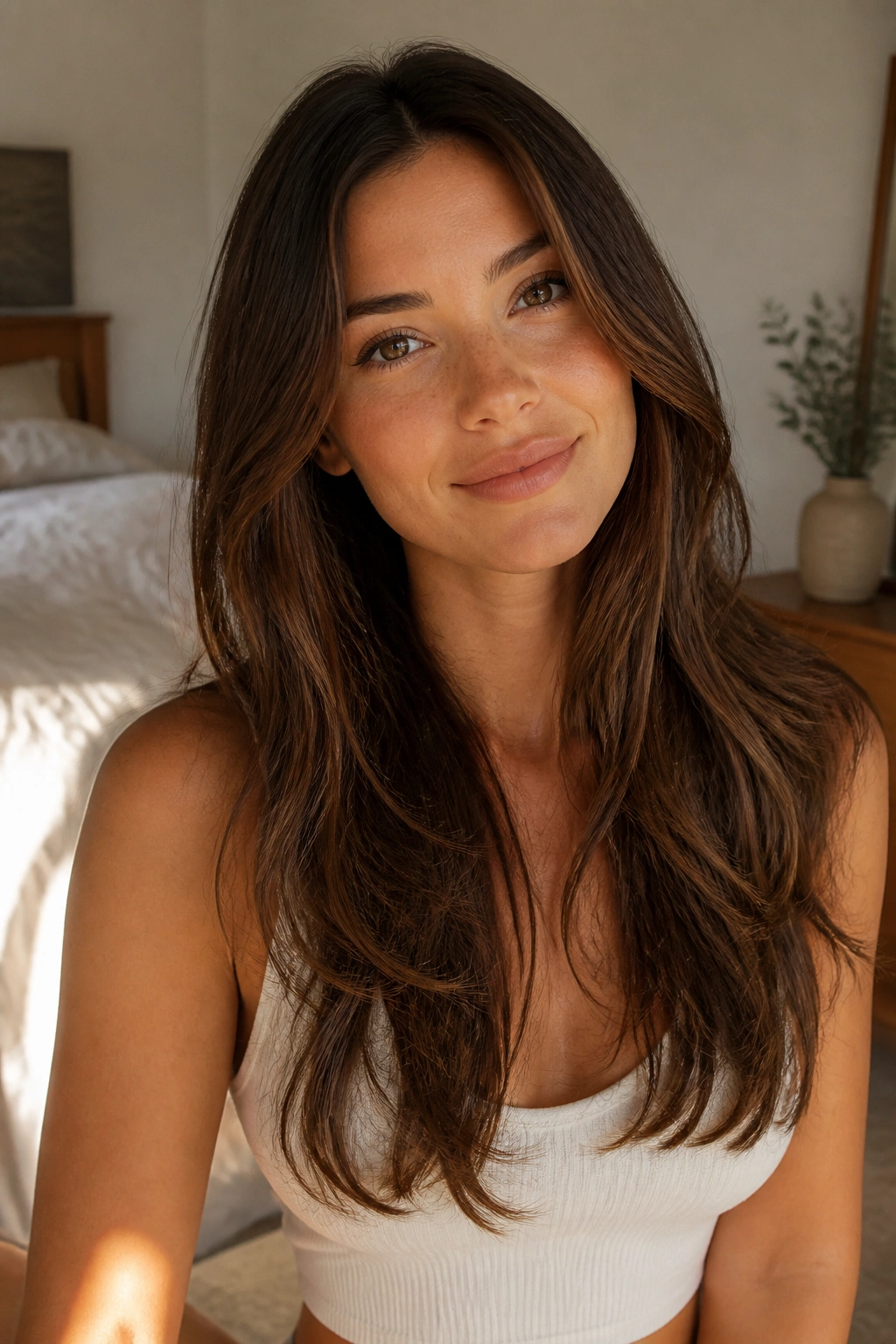
You love your length. Fine. Keep it.
The key is where the layers start. If your hair frizzes when it’s too layered, tell the stylist to keep the first layer well below the shoulders, not near the cheekbones or jaw. That keeps the surface smoother and prevents the top from puffing up like a parachute.
A good long layer cut should still leave the perimeter feeling solid. The ends need weight, especially if your hair is thick or coarse. Too many short layers near the top can make the whole style lose its shape the minute the weather gets sticky.
- Ask for: layers that begin low, with a blunt-ish bottom line
- Avoid: heavy thinning at the crown
- Works best on: medium to thick hair with some natural wave
If you want movement without the frizz tax, this is one of the safest long-hair options.
8. The Curly Shag With Internal Layers
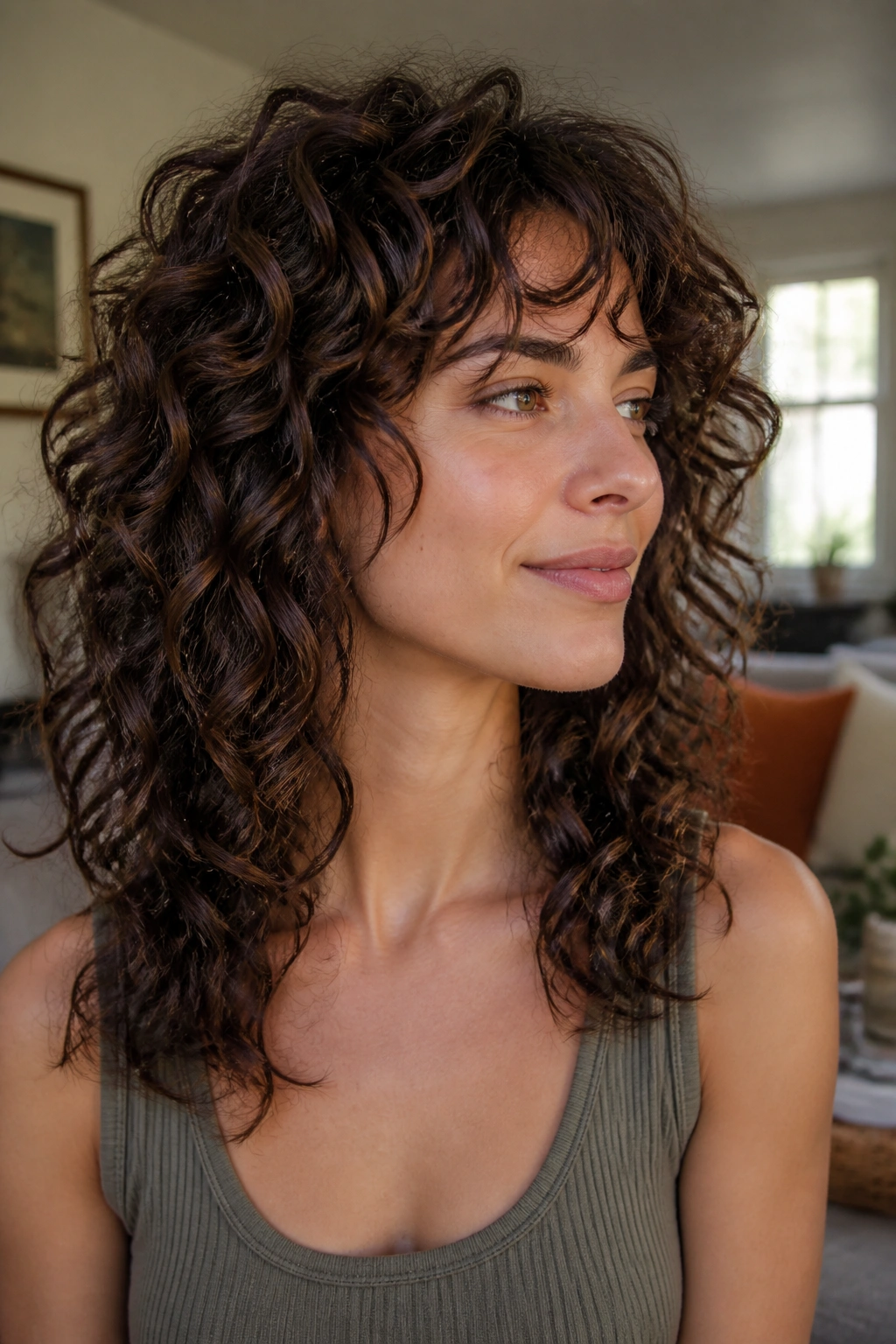
Can a shag be frizz-friendly? Absolutely, if the layers live inside the shape instead of shredding the outside.
Curly hair often frizzes when the cut creates a triangle or removes too much weight in the wrong places. Internal layers fix that by building shape from within. The outside still looks full, but the bulk is more balanced, so the curls don’t swell into a big halo.
What to ask for
Ask for a dry cut if your stylist knows how to do one well. Curls behave differently when they’re wet, and cutting them dry lets you see where the frizz usually starts.
- Keep the top layers long enough to avoid a mushroom shape
- Leave the perimeter soft, not hacked up
- Skip aggressive razor work on fragile curls
A good curly shag has bounce, not chaos. That difference matters a lot more than the name on the salon menu.
9. The Inverted Bob
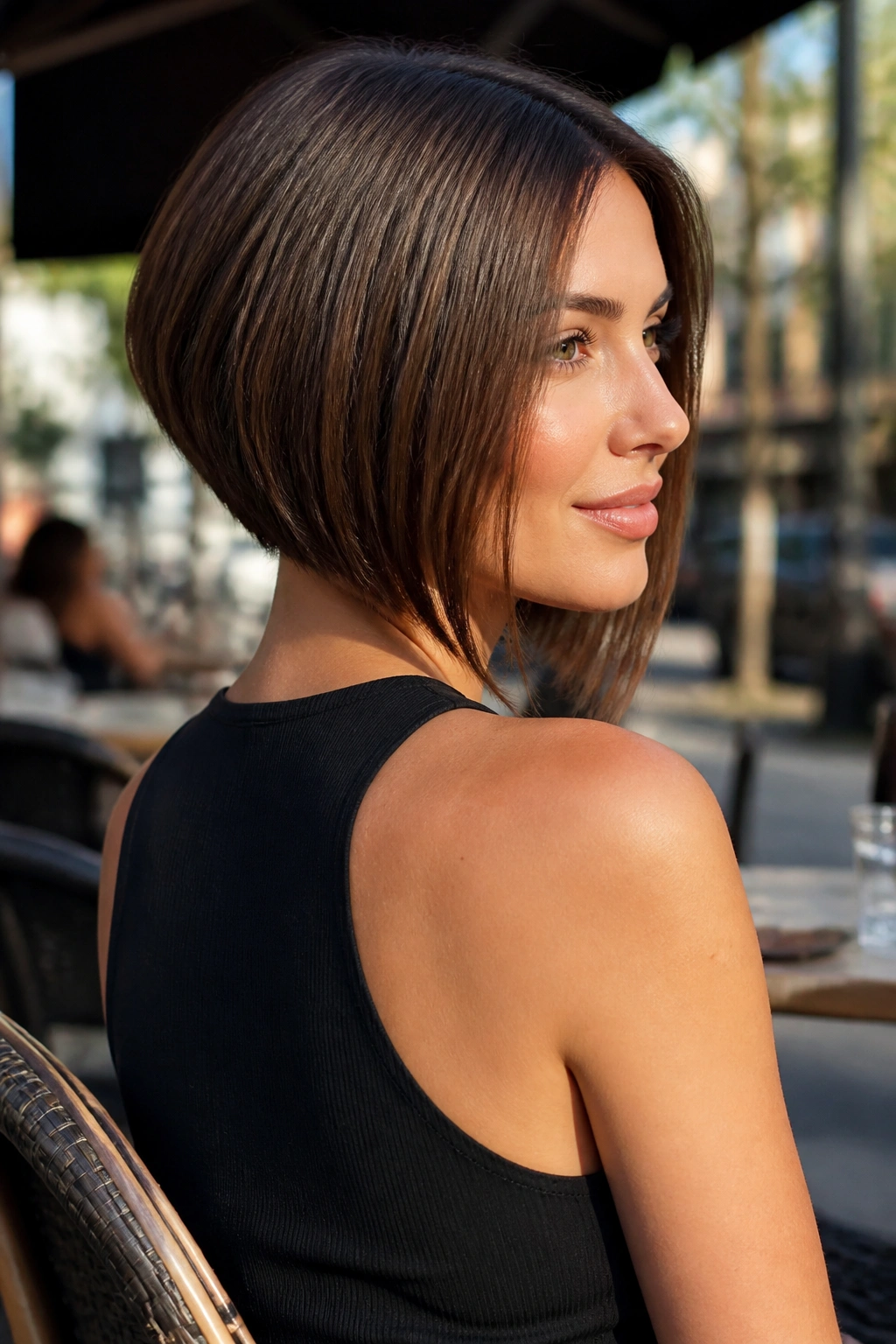
An angled bob is calmer than a round one when hair starts to puff. The shorter back keeps the nape neat and light, while the longer front gives the face a little frame and keeps the sides from ballooning out.
That angle also helps the haircut sit close to the head. The back does less work because it’s not carrying much length, and the front pieces fall forward in a controlled way. On straight or slightly wavy hair, that can make the cut look sleek even when the air feels sticky.
This is a particularly good choice if you hate the feeling of hair brushing your neck all day. Summer heat makes that feeling worse, and a clean angled bob gets around the problem without looking harsh.
It’s tidy. That’s the point.
10. The U-Shaped Long Cut

For long hair, a U-shape beats a hard straight line more often than people think. A subtle curve keeps the ends from looking chopped off, and it helps the cut fall in a smoother line down the back.
The front pieces are usually a little shorter than the center back, which helps the hair sit around the shoulders instead of kicking out at odd angles. If you’ve ever had long hair that turns into a wide triangle in humidity, you know why this matters.
A shallow U is usually enough. If the curve gets too deep, the ends can start looking thin and the frizz becomes more obvious. I prefer this cut on medium-density hair that needs movement but not a lot of internal layering.
Long hair can behave. It just needs a smarter outline.
11. The Italian Bob

The Italian bob looks polished without acting precious. It’s fuller than a French bob and usually lands around the chin or a touch below it, with enough weight to keep the shape grounded.
That fullness is what makes it useful in humid weather. Instead of lots of broken-up layers, you get a strong body line that stays together. Hair with a little bend looks especially good here, because the cut invites a soft curve rather than a lot of fluff.
It also has a nice side benefit: it still looks good when you tuck one side back or let it dry with a slight bend. No fussy styling needed. Just enough polish to keep the cut from collapsing.
This is one of my favorite choices for people who want structure, but not stiffness.
12. The Blunt Mid-Length Cut With Curtain Bangs
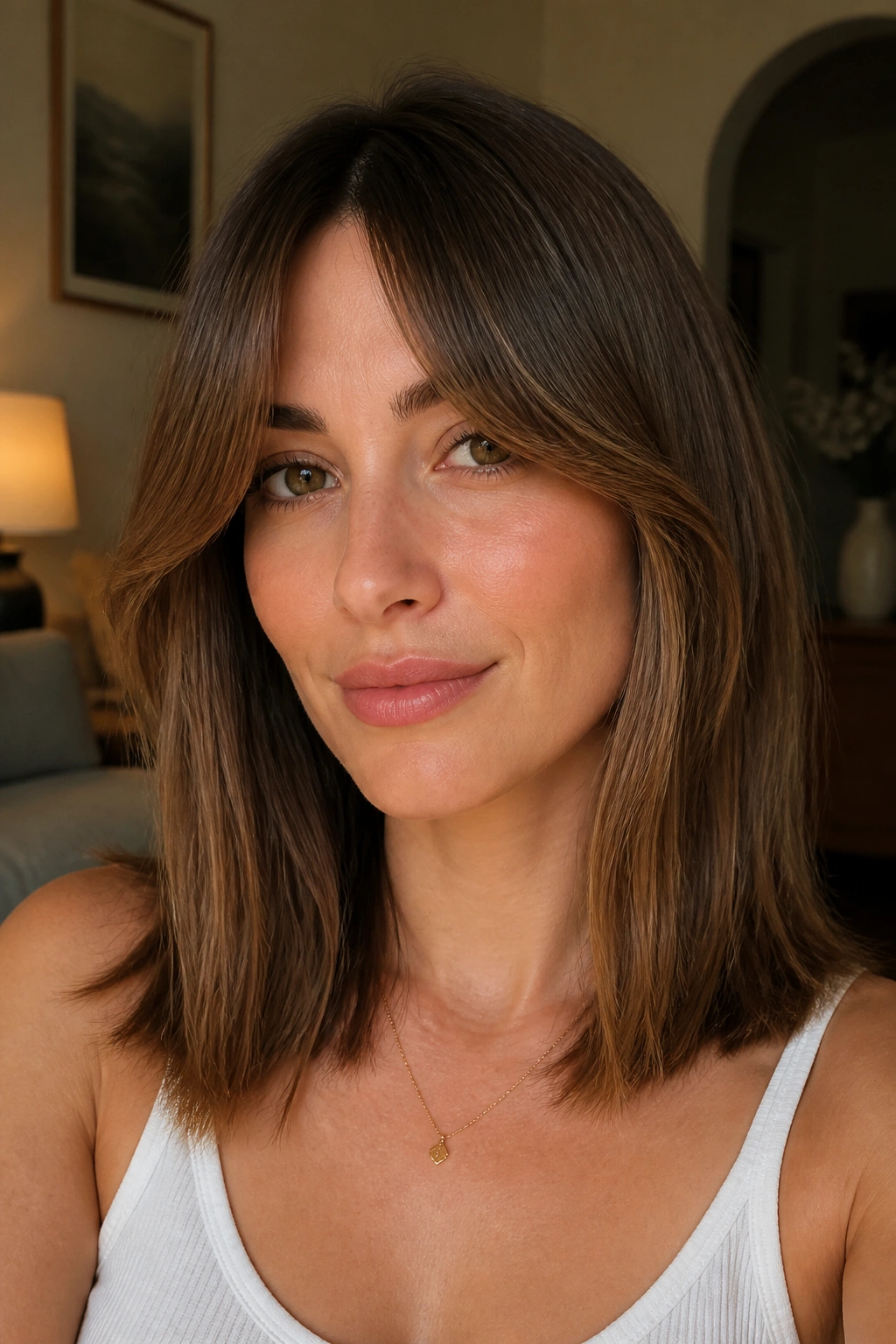
Can bangs survive humid weather without turning into a disaster? Yes, if the bangs are long enough to split and blend instead of sitting like a short curtain across the forehead.
A blunt mid-length base gives the haircut a steady body line, and the curtain bangs add shape around the face without forcing you into a heavy fringe. The key is keeping the bangs longer at the edges so they can sweep into the rest of the cut.
How to keep the fringe calm
Ask for curtain bangs that start near the cheekbones and taper toward the jaw. Anything too short tends to swell up or separate once the sweat and moisture show up.
- Keep the fringe longer than eyebrow level
- Ask for soft blending at the sides
- Dry the bangs side to side with a brush, not straight down
When this cut is done well, it frames the face and still feels easy. That’s a hard balance, and it’s worth asking for carefully.
13. The Feathered Crop

If your hair is thick enough to hold a helmet shape, feathering can be a relief. A feathered crop lightens the crown and sides without destroying the outline, which means the hair can move instead of sitting like a block.
The trick is restraint. A little feathering around the ears and upper layers helps air pass through the shape. Too much feathering, though, and you get airy ends that puff at the first sign of moisture. That’s the part people regret.
- Best for: coarse, dense, or straight-to-wavy hair
- Not so great for: fragile hair that already looks thin at the ends
- Ask for: soft feathering near the top, clean edges at the bottom
This cut has a practical, low-drama feel. It’s not shiny in a salon-photo way. It’s useful, and I mean that as a compliment.
14. The Rounded Bob With Tucked-Under Ends
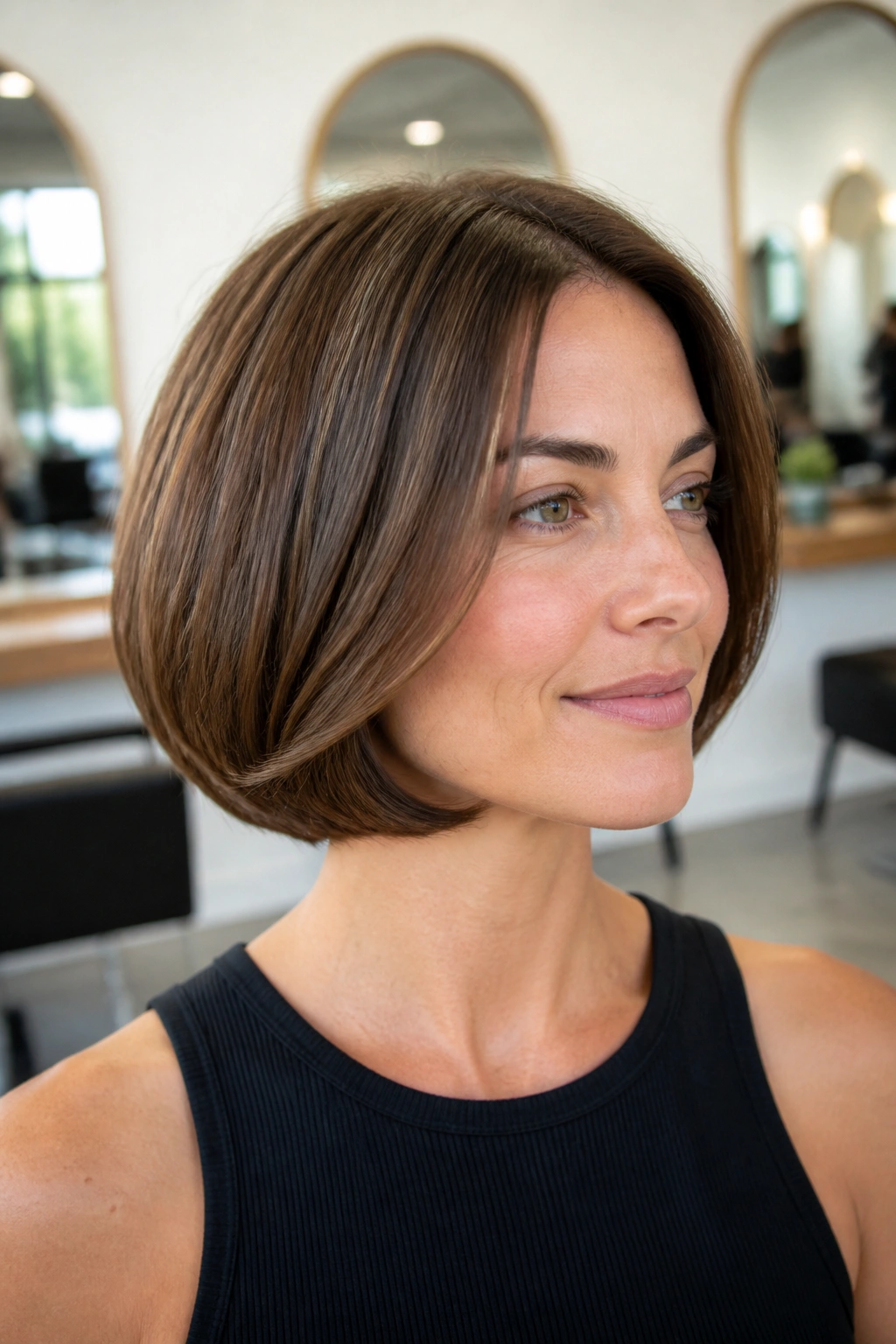
A box bob can feel sharp. A rounded bob feels softer, and usually behaves better in humidity.
The rounded shape helps the ends tuck in toward the neck and jaw instead of kicking outward. That’s useful when your hair tends to puff as it dries, because the curve gives the style a place to sit. A quick round-brush blow-dry helps, but the cut itself does a lot of the work.
It’s especially good for straight hair that goes poofy at the bottom. The curve keeps the outline tidy, and the hair looks deliberate even on days when you don’t feel like styling much.
Not flashy. Just sensible.
15. The C-Cut Lob
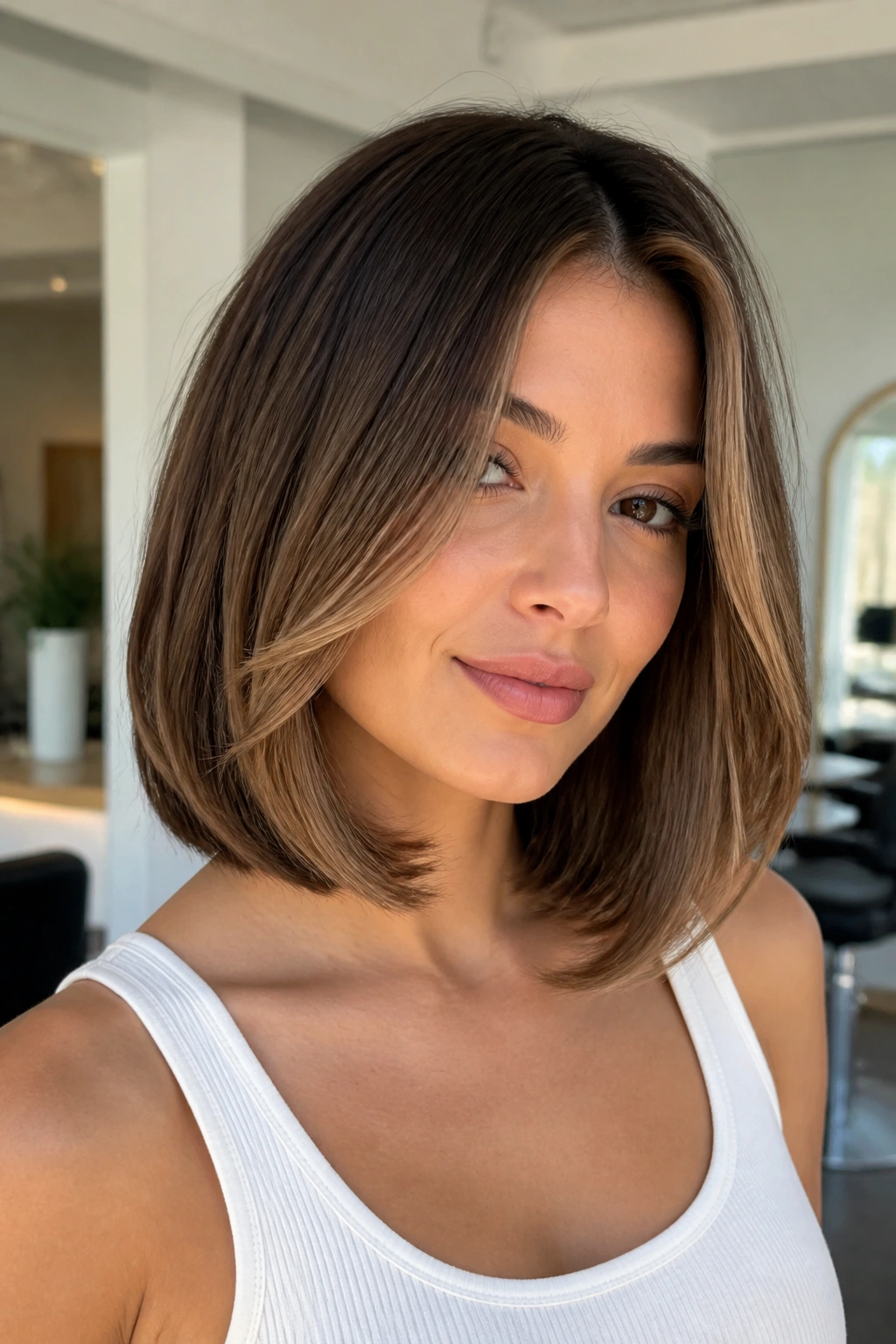
A C-cut lob is worth the chair time if your hair flips out at the ends. The shape bends inward around the face in a soft arc, which keeps the outline from feeling blocky or too square.
The cut usually starts with longer face-framing pieces that sweep from the chin toward the collarbone. That creates movement without chopping the whole head into layers. For medium-density hair, it can be a sweet spot: enough shape to feel interesting, enough weight to stay calm.
What makes it different
The C-shape gives the hair a curve, not a stack. That means the cut looks smooth when it air-dries, and it also takes less effort to blow-dry into place. If you want a cut that looks polished but doesn’t need a full styling session every morning, this one makes sense.
I’d choose it over a choppier lob almost every time for frizz-prone hair.
16. The Mixie Cut
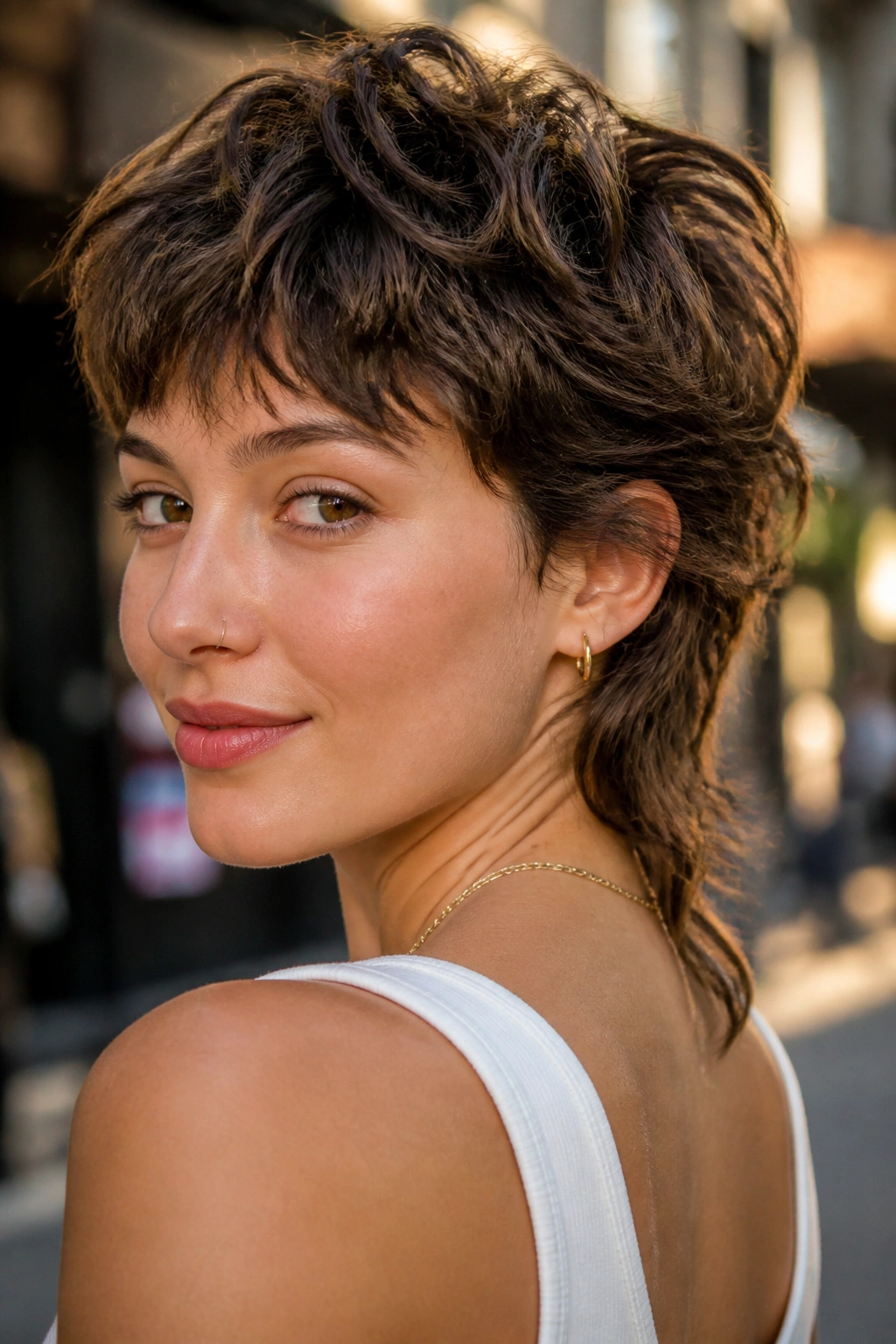
What if you want short hair, but not a pure pixie? That’s where the mixie comes in.
It borrows the cropped ease of a pixie and keeps a little extra length through the back and sides. That extra length softens the shape, which matters if your hair tends to puff around the neckline or ears. A mixie can look edgy, sure, but the useful part is that it removes a lot of bulk without leaving the whole head exposed to frizz.
It works well on wavy and curly hair, too, because the shape can be tailored to the curl pattern instead of forcing everything into one rigid line. If you want a style that dries quickly and still has personality, it’s a strong option.
This cut needs a good stylist. Do not wing it at home.
17. The Sliced Bob
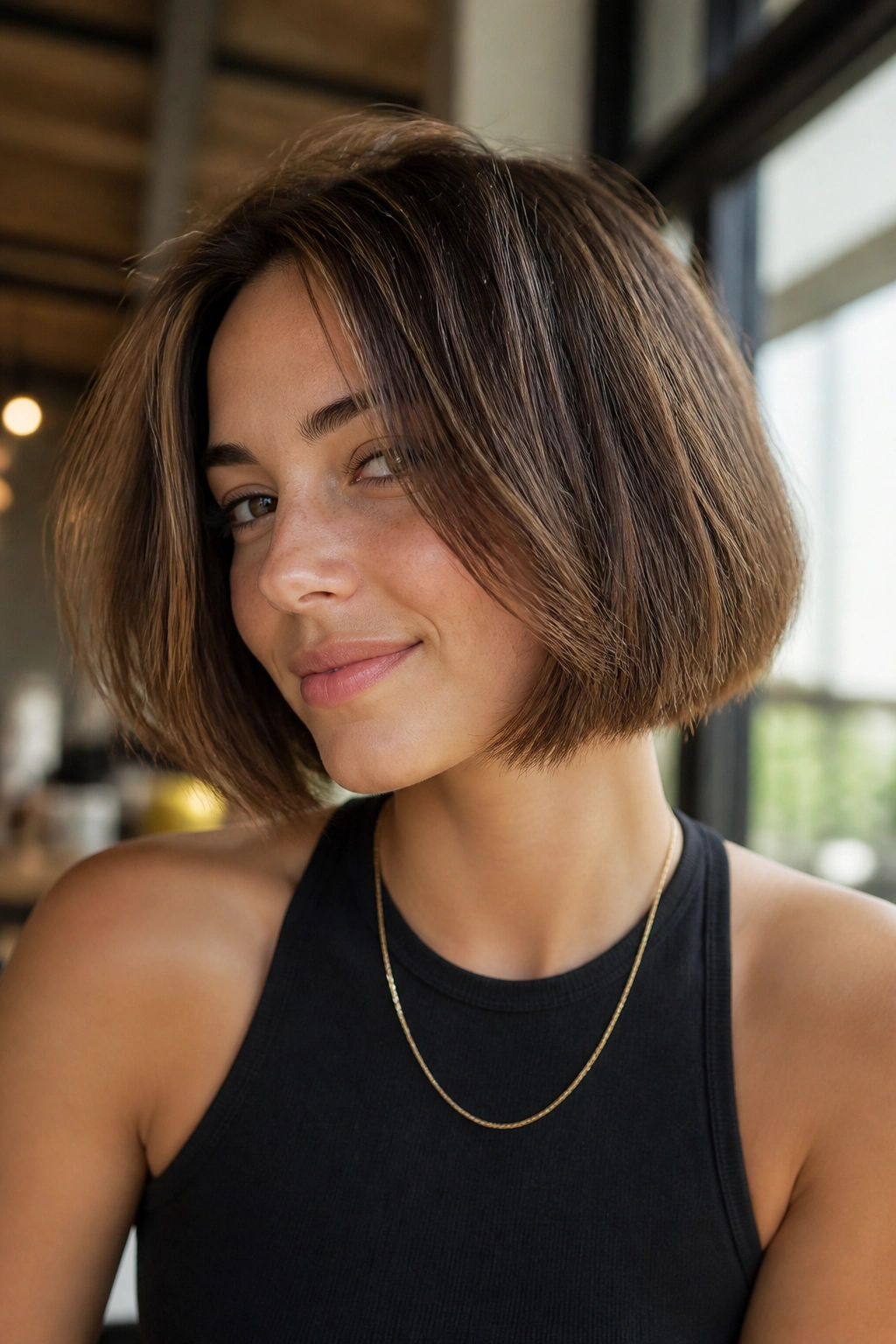
A sliced bob feels lighter before you even step outside. The slicing technique removes some bulk from the inside of the cut while keeping the outer line smooth, so you get movement without a ragged finish.
That’s a big deal for dense hair. Heavy hair often frizzes because it gets bulky, not because it lacks enough layers. A sliced bob reduces that dense, swollen feeling while preserving enough structure to keep the style tidy.
The important part is control. You want the hair thinned in a thoughtful way, not hacked with a razor until the ends look frayed. A good sliced bob should still hold a crisp perimeter.
If your hair is thick and you’ve been told to “just add layers,” I’d push back. Sometimes the cleaner answer is smarter weight removal, not more texture.
18. The Midi Cut With Invisible Layers

The best mid-length cuts for frizz usually look plain until the air hits them. That’s what makes invisible layers so useful.
These layers sit inside the shape instead of cutting the surface into pieces. The result is a smoother outer layer with less bulk underneath, which helps the cut stay neat on humid days. You still get movement, but you don’t get the scattered ends that make hair look fuzzy from a few feet away.
Why stylists like it
Invisible layers give thick hair somewhere to go without exposing those cut marks on the outside. If your hair is coarse, wavy, or naturally full, this can keep the silhouette balanced without making the style look overworked.
It’s a good choice when you want to air-dry and go. The hair settles in a softer way, and the shape usually holds up better than a cut with obvious short layers at the top.
19. The Curly Crop With Tapered Sides
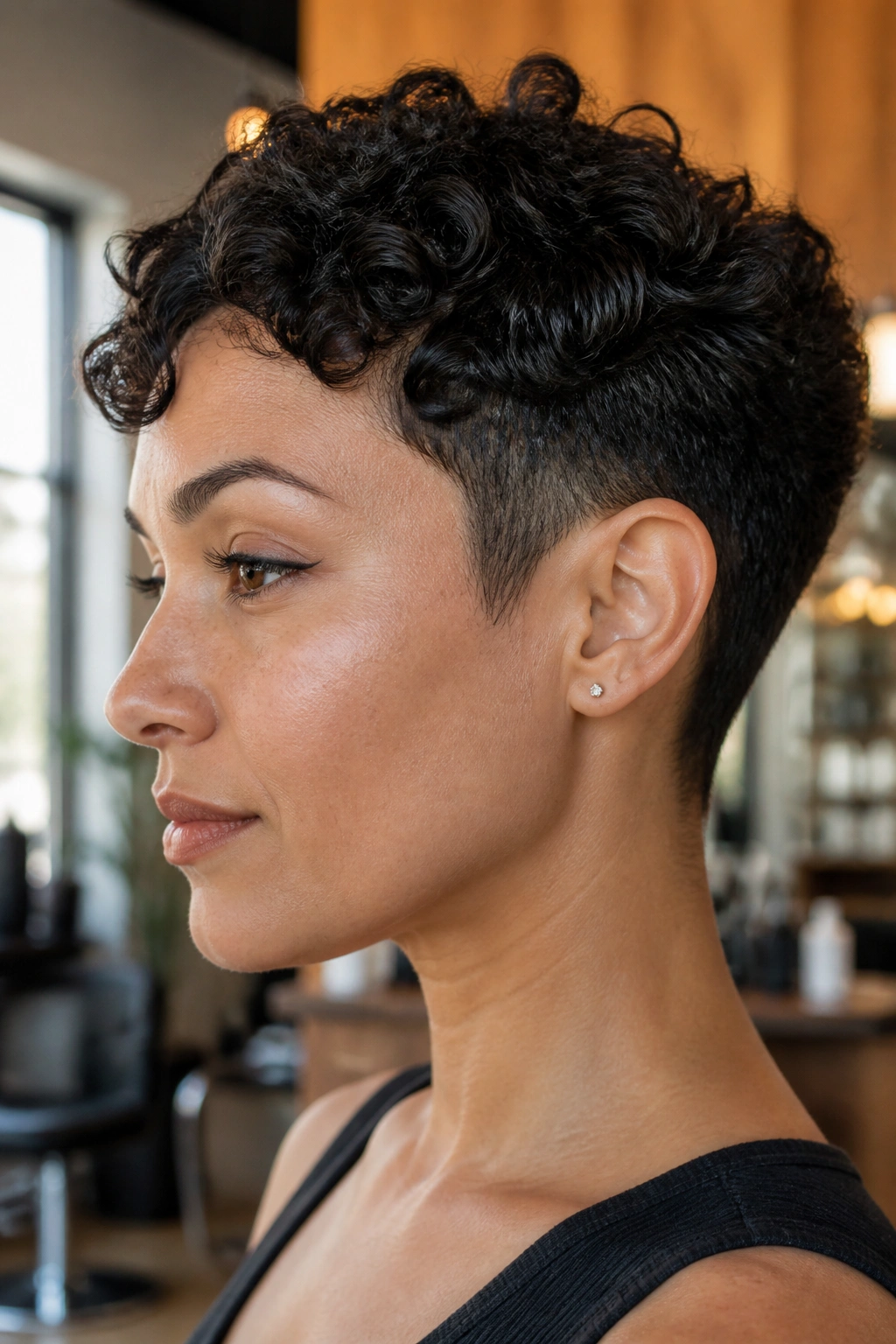
Compared with a square curl cut, tapered sides make the outline calmer. The shape narrows near the temples and nape, which keeps curls from building that heavy triangle effect.
This haircut is especially good for tight curls and coils that start to puff around the sides of the head. A little taper keeps the bulk in the right places and stops the hair from feeling wide at the cheeks. The top can stay a little longer so the curl pattern still has room to spring.
The crop also keeps the neck cooler, which sounds small until you’ve spent a hot afternoon with dense curls sitting on your skin. Then it feels like a gift.
I’d choose this over a blunt curly box shape if your main complaint is volume spreading outward, not downward.
20. The Long Bob With a Deep Side Part

A deep side part can do more for frizz than another inch of cutting. It shifts the weight of the hair, gives the roots a little lift, and lets the rest of the cut fall in a cleaner direction.
That matters because frizz often looks worse when the hair sits flat in the wrong spots and puffs in the wrong spots. A side part breaks that pattern up. It also helps hide uneven texture near the crown, which is where a lot of people see the first signs of humidity.
- Good for: straight, wavy, and medium-density hair
- Ask for: a lob that sits between the collarbone and shoulder
- Style note: part the hair while it’s damp so it dries in the right direction
This is one of those small changes that pays off fast. Not fancy. Useful.
21. The Soft Wolf Cut

A wolf cut only turns frizzy if it’s cut too aggressively.
That’s the part people miss. The shape can be useful for hair that wants movement, as long as the layers are softened and the crown isn’t stripped bare. A softer wolf cut keeps the shaggy energy, but it leaves enough length through the top and sides to stop the style from ballooning.
The version that works
Ask for longer exterior layers and only a little crown lift. If the stylist takes too much weight off the top, the hair can expand in humid air and look much bigger than you wanted.
This cut suits wavy hair that needs shape around the face and neck. It’s not the neatest option on the list, and I wouldn’t recommend it if you want a polished, one-line finish. But if you want controlled texture with a bit of attitude, it can work.
22. The Face-Framing Cut Around Cheekbones
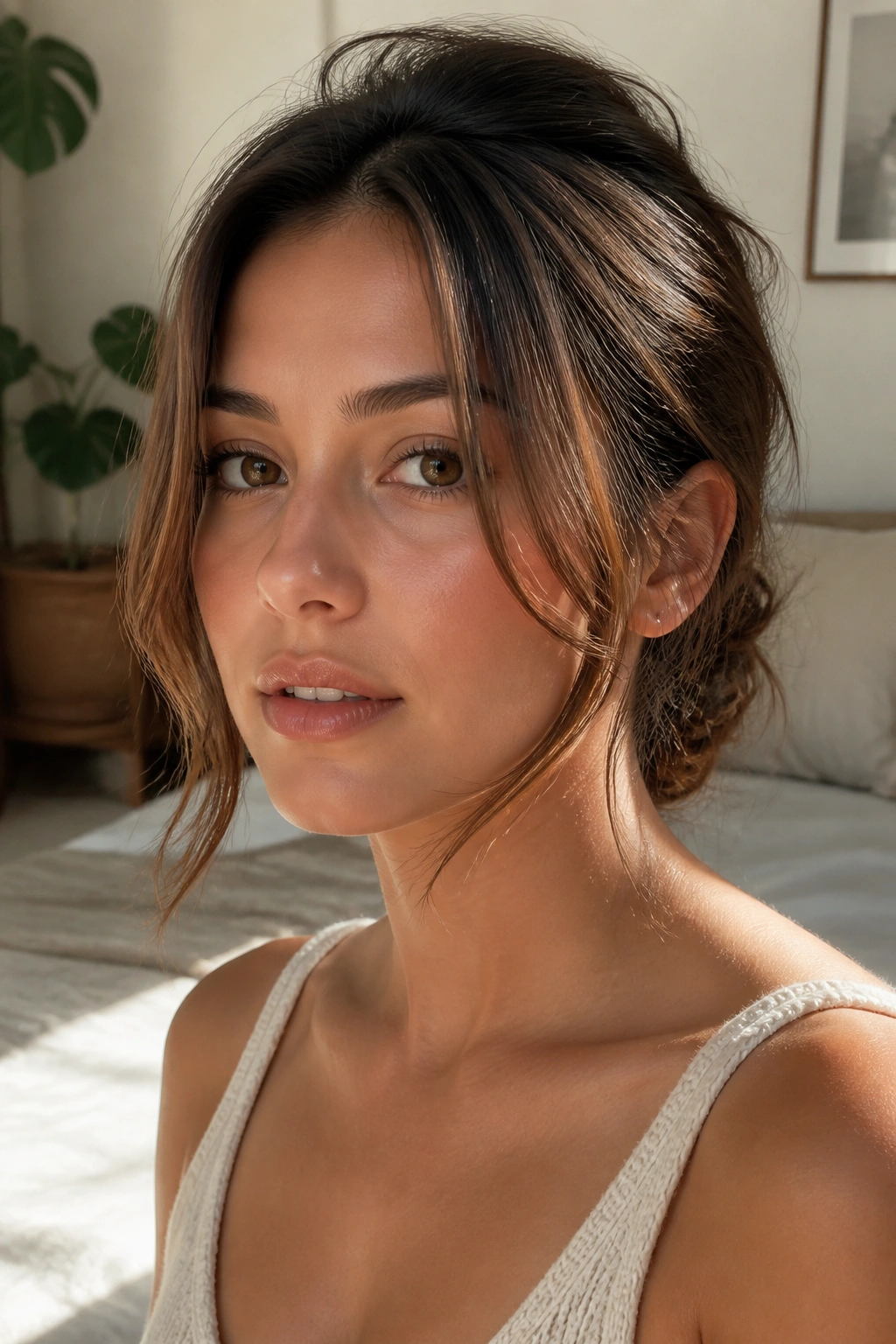
Need movement without surrendering the whole perimeter? A face-framing cut does that job.
The back and lengths stay mostly intact, while the front pieces are shaped to skim the cheekbones, jaw, or collarbone. That means you get softness near the face and a stronger body line everywhere else. For frizz-prone hair, that’s a smart trade, because the ends are usually the first place to go fuzzy.
This cut is also easy to grow out. The face-framing pieces can blend into ponytails and buns without looking awkward. That makes it practical if you like to wear your hair up once the temperature climbs.
A small detail matters here: keep the front layers long enough to tuck behind the ear. Too-short face framing can separate and puff on the first humid day.
23. The Shoulder-Skimming Cut With Built-In Movement
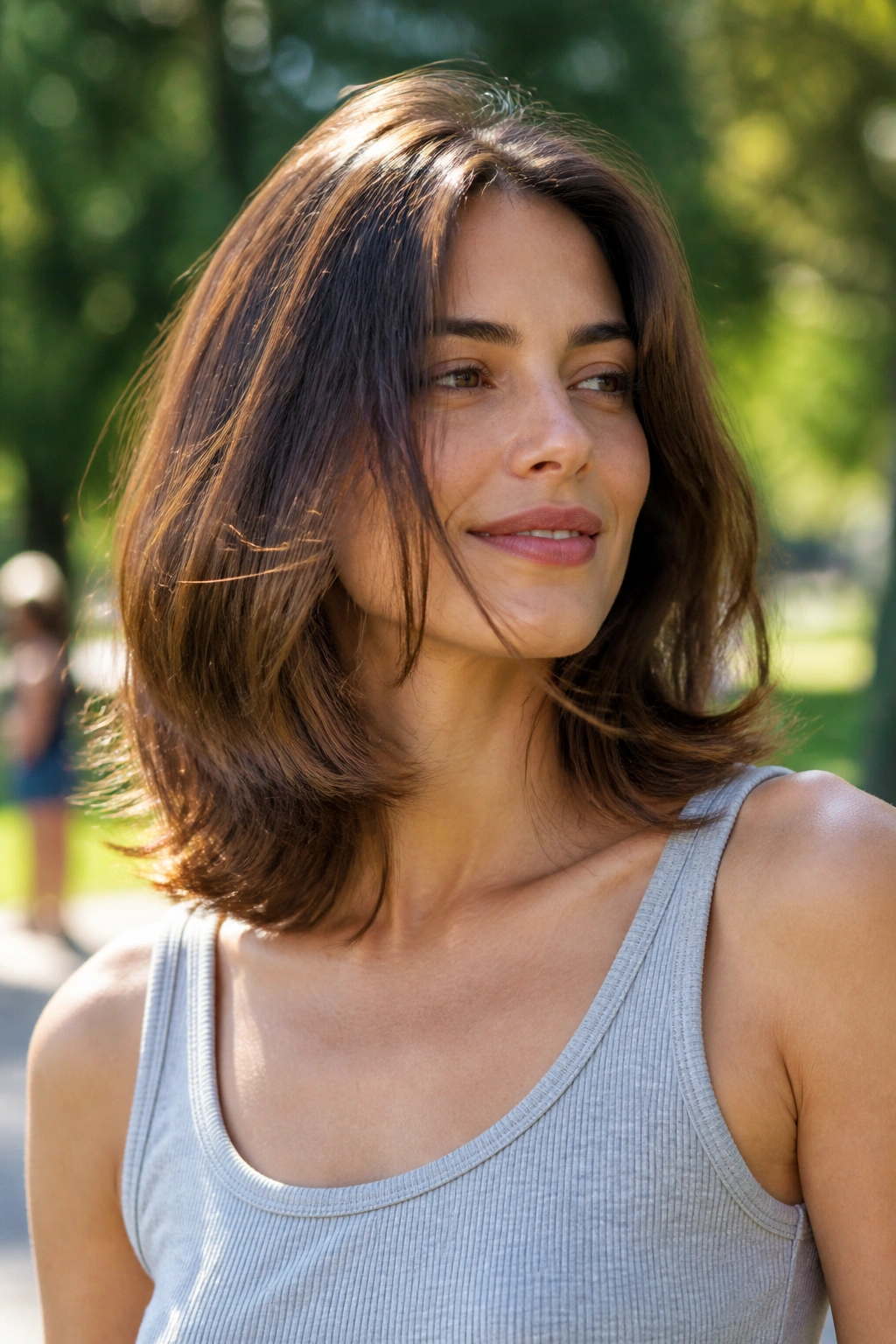
This is the haircut for people who want motion and hate the sticky feeling of heavy hair on the neck. Shoulder-skimming length keeps the hair from living right against the skin, which makes a surprising difference when the air is thick.
The built-in movement comes from subtle internal shaping, not a lot of obvious layers. That helps the surface stay smoother while the hair still bends and swings. If your hair is straight, this cut can stop it from hanging flat in a dull line. If it’s wavy, it can keep the shape from looking wild.
It’s a strong pick for busy days because it doesn’t need a ton of styling to look like a real haircut. The length is easy, the movement feels natural, and the frizz usually stays more contained than it would in a longer cut with too much layering.
Simple. That’s why it works.
24. The Micro Bob
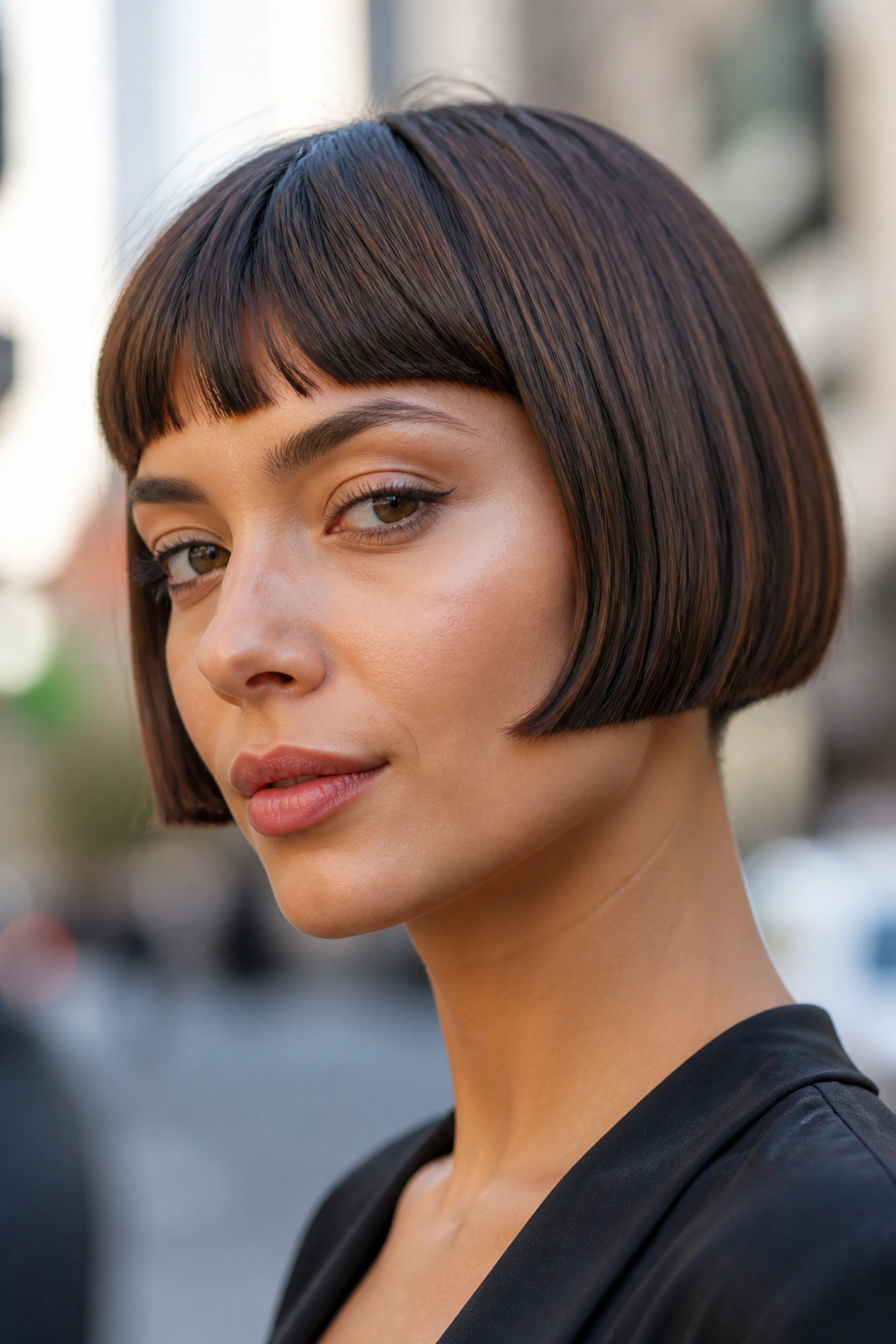
Tiny, neat, blunt.
A micro bob sits above the jawline, which means there’s less length for humidity to grab onto. Hair dries quickly, the shape stays crisp, and the whole cut looks sharp in a way that can be a relief if you’re tired of fighting puff around the shoulders.
The downside is obvious: it shows everything. Cowlicks, growth, uneven ends, all of it. So this is not a cut for someone who wants to ignore their hair for six weeks at a time.
It does suit fine hair well, though, because the blunt shape can make the hair look denser. If you like a clean neck, quick washes, and a style that doesn’t drag on the skin, it’s a strong choice. Just keep the trims regular. A micro bob grows out fast in the visual sense, even when the tape measure says otherwise.
25. The Long Blunt Cut With Barely-There Layers
If you want length and control, this is the one I would put near the top of the list.
A long blunt cut keeps the ends together, which is the whole game when frizz shows up at the bottom first. The hair reads smoother because there are fewer broken lines at the perimeter. If you add any layers at all, they should be barely there and tucked low into the shape.
How to brief your stylist
Ask for a long, blunt base with only minimal internal movement. If your hair is thick, you can ask for a small amount of weight removal underneath, but the surface should stay clean.
- Keep the outline even
- Avoid short layers near the crown
- Leave enough weight at the ends to stop puffing
This cut is good for women who want to keep their length and still look put together when the weather gets sticky. It does not scream for attention. That’s the appeal.
Final Thoughts
The cuts that handle frizz best usually have one thing in common: they keep the outer shape clean. Whether that means a blunt bob, a lob with hidden layers, or a soft crop with a tapered nape, the haircut is doing more of the work than the styling product ever will.
If you’re torn between two options, pick the one that fits your natural texture with the least struggle. A cut that behaves on an air-dry day is worth more than a clever-looking shape that only works after twenty minutes of heat and a lot of patience.
Humidity is not going anywhere. Neither is frizz. But the right cut can make both far less annoying, and that’s usually enough.
