



Round faces and bob haircuts have a tricky relationship. A blunt line can make one face look wider; the same cut, with a longer front and a clean part, can sharpen the whole look in a matter of minutes.
The sweet spot is rarely about hiding your cheeks. It’s about building vertical lines, keeping weight away from the widest point of the face, and letting the hair move in a way that looks deliberate instead of puffy.
Some bobs do that with angles. Some do it with layers. Some lean on a side part, a curtain fringe, or a length that skims the collarbone instead of stopping right at the jaw. That last part matters more than people think.
Start with the cut that gives your face the most room to breathe, then move from there.
1. Chin-Grazing Blunt Bob for Round Faces

A chin-grazing blunt bob can be a smart move if you want a sharp, clean shape without going too short. The trick is placement. If the line lands right at the fullest part of the cheeks, it can make the face look wider. Let it fall a touch below the chin, and it suddenly starts doing useful work.
Ask for a slight off-center part and ends that are blunt but not stiff. On straight hair, the edge looks sleek. On wavy hair, it takes on a little bend and softens the look. Either way, this cut works best when the silhouette stays narrow through the sides.
2. Soft A-Line Bob

Why does an A-line bob keep showing up in lists for round faces? Because the eye follows the diagonal. Shorter in back, longer in front, this cut pulls attention downward and away from the widest part of the face.
Keep the angle gentle. A dramatic tilt can look edgy, but it can also feel heavy if your hair is thick. A soft A-line bob is easier to wear, especially if you like to blow it out with a round brush and tuck one side behind the ear. Clean. Easy. No fuss.
3. Collarbone Lob with Bend
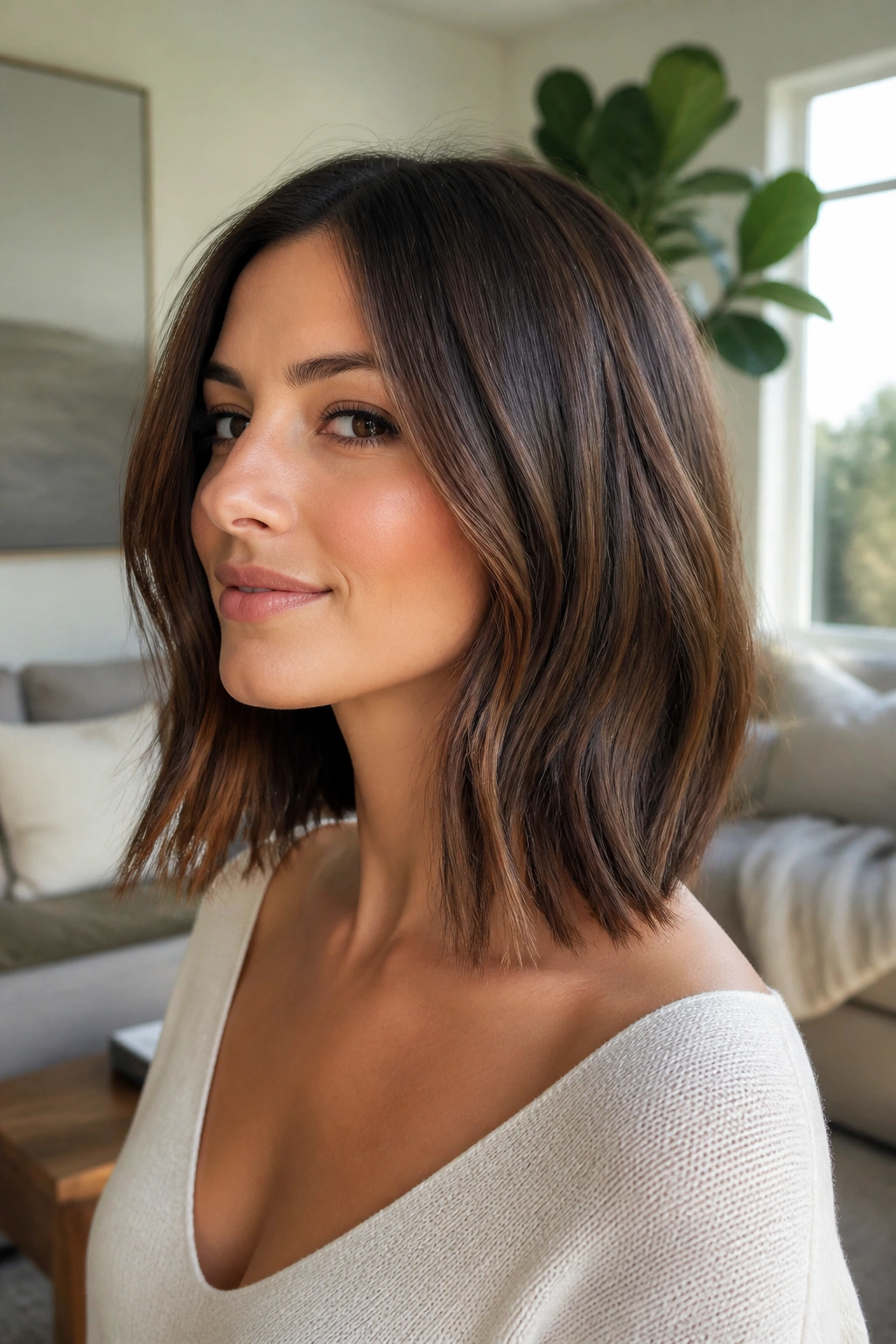
A collarbone lob is one of the safest bets if you want length without drowning your face. The extra inches below the jaw give the face more room, which is useful when your cheeks are the widest point. That length also gives you options. Straight, waved, tucked, parted in the middle, parted off-center.
What makes this version flattering is the soft bend through the mid-lengths, not volume at the sides. A 1-inch iron, wrapped loosely and left out at the ends, keeps the shape airy. If the hair is thick, ask for light internal layering so it doesn’t turn into a block.
4. French Bob with Airy Fringe

A French bob can work on a round face, but it needs restraint. The classic version is short and cheeky; on some faces, that can be too much width in too small a space. A better version sits just below the cheekbone and comes with an airy fringe instead of a heavy slab of bangs.
The fringe should look soft, not packed. You want movement at the forehead and a little breathing room at the temples. If you like hair that looks done without looking stiff, this one has a lot going for it. It feels lived-in, but not sloppy. That balance is the whole game.
5. Deep Side-Part Bob

A deep side part does a lot of quiet work. It breaks up symmetry, adds height at the crown, and shifts the visual weight off the center of the face. On a round face, that shift matters. The eye stops reading width and starts reading line.
This is one of the easiest bob haircuts for round faces if you want a change without a full cut overhaul. Even a simple chin-length bob looks leaner when you move the part over and give the roots a little lift. Use mousse at the crown, then blow-dry away from the part. Small change. Big difference.
6. Stacked Bob with Crown Lift
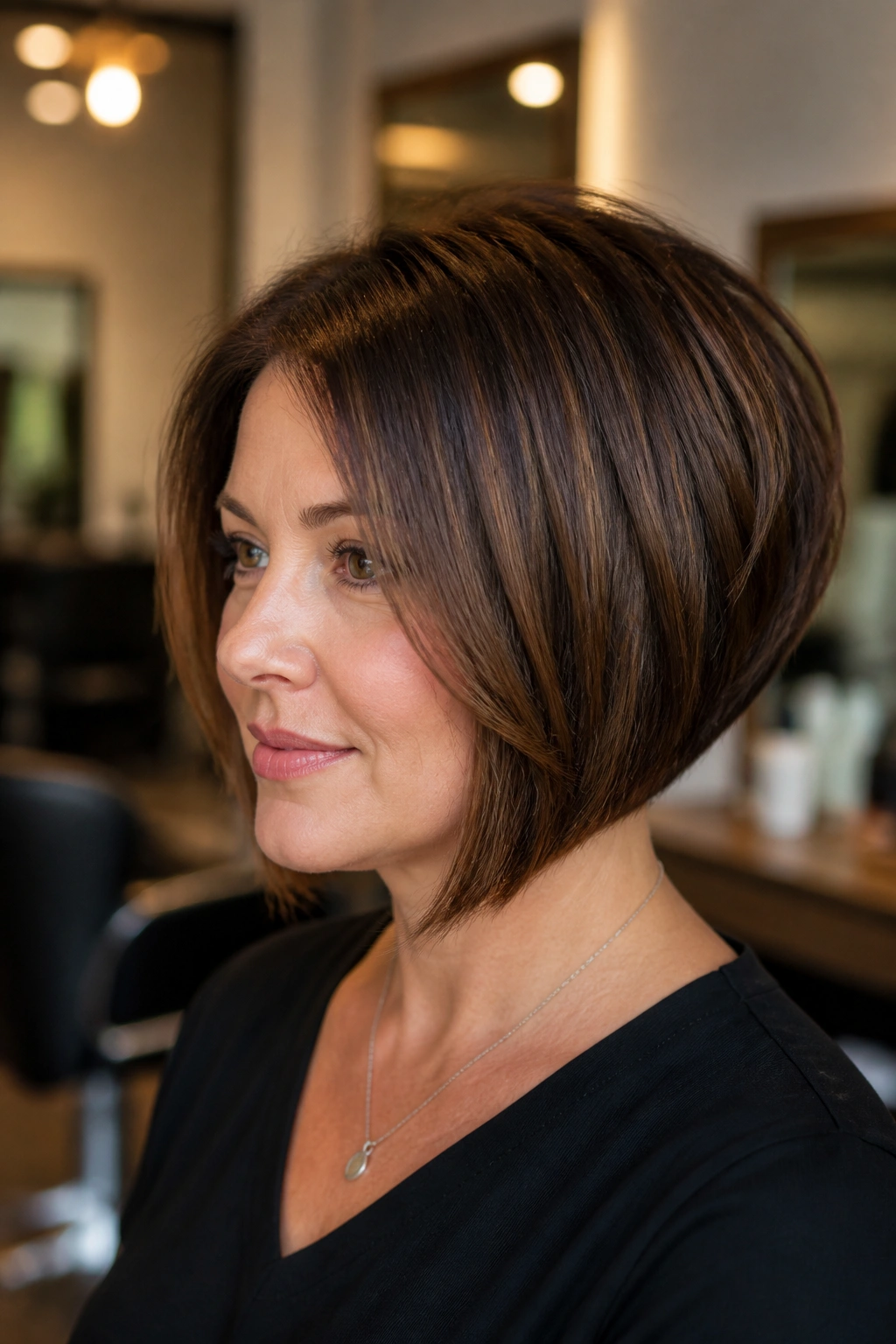
A stacked bob can be fantastic when the back is built properly. The shorter layers at the nape lift the shape, while the crown gets more height. That extra lift pulls the eye upward, which is exactly what you want when the face feels broad from cheek to cheek.
The catch? Too much stacking can go poofy fast. You want shape, not a mushroom. Keep the sides sleeker and the front slightly longer so the cut doesn’t spread outward. If your hair is fine, this cut can make it look fuller. If it’s thick, it needs careful thinning, not aggressive chopping.
7. Curtain Bang Bob

Curtain bangs are a good fit for round faces because they open the face instead of boxing it in. They create two soft vertical lines that lead the eye down the cheeks and toward the jawline. That’s the useful part. Bangs that stop bluntly across the forehead can flatten the whole look; curtain bangs don’t.
The best version starts around the cheekbone and blends into the bob instead of sitting like a separate piece. Keep the center a little shorter and the sides longer. It gives you movement near the eyes without cutting the face in half. Easy to style, too. A round brush and five minutes usually do it.
8. Razor-Cut Bob

A razor-cut bob is a relief if your hair is thick, blunt, and prone to sitting like a helmet. The razor softens the ends and breaks up the heavy edge. On a round face, that lightness matters because it keeps the bob from spreading outward at the cheeks.
This cut works best when the texture is allowed to move. A little bend, a little separation, a little piecey finish. If you have very fine hair, though, go carefully. Too much razor work can make it look see-through at the ends. That’s not the vibe. Ask for soft removal of bulk, not shredding.
9. Asymmetrical Bob for Round Faces

A slightly asymmetrical bob is one of the quickest ways to stretch a round face visually. One side sits a bit longer, the line becomes directional, and the eye starts moving instead of landing in one wide spot. It’s subtle, but it counts.
You do not need a wild, dramatic difference. Even one or two inches of variation can be enough. This style looks especially good with straight hair or a smooth blowout, because the line stays clean. If you want something modern without going too short or too layered, this is a strong choice.
10. Layered Lob with Face-Framing Pieces

Layers can help a round face, but only if they’re placed with some sense. A layered lob with pieces that begin below the chin keeps the volume off the cheeks and lets the front soften around the jaw. That’s the useful part. Layers that start too high can puff the face out.
The face-framing pieces should fall somewhere between the chin and collarbone, depending on your length. Keep them long enough to guide the eye downward. If you wear your hair wavy, this cut gets even better, because the bend adds movement without making the sides wider. It’s forgiving, which matters.
11. Sleek Center-Part Bob
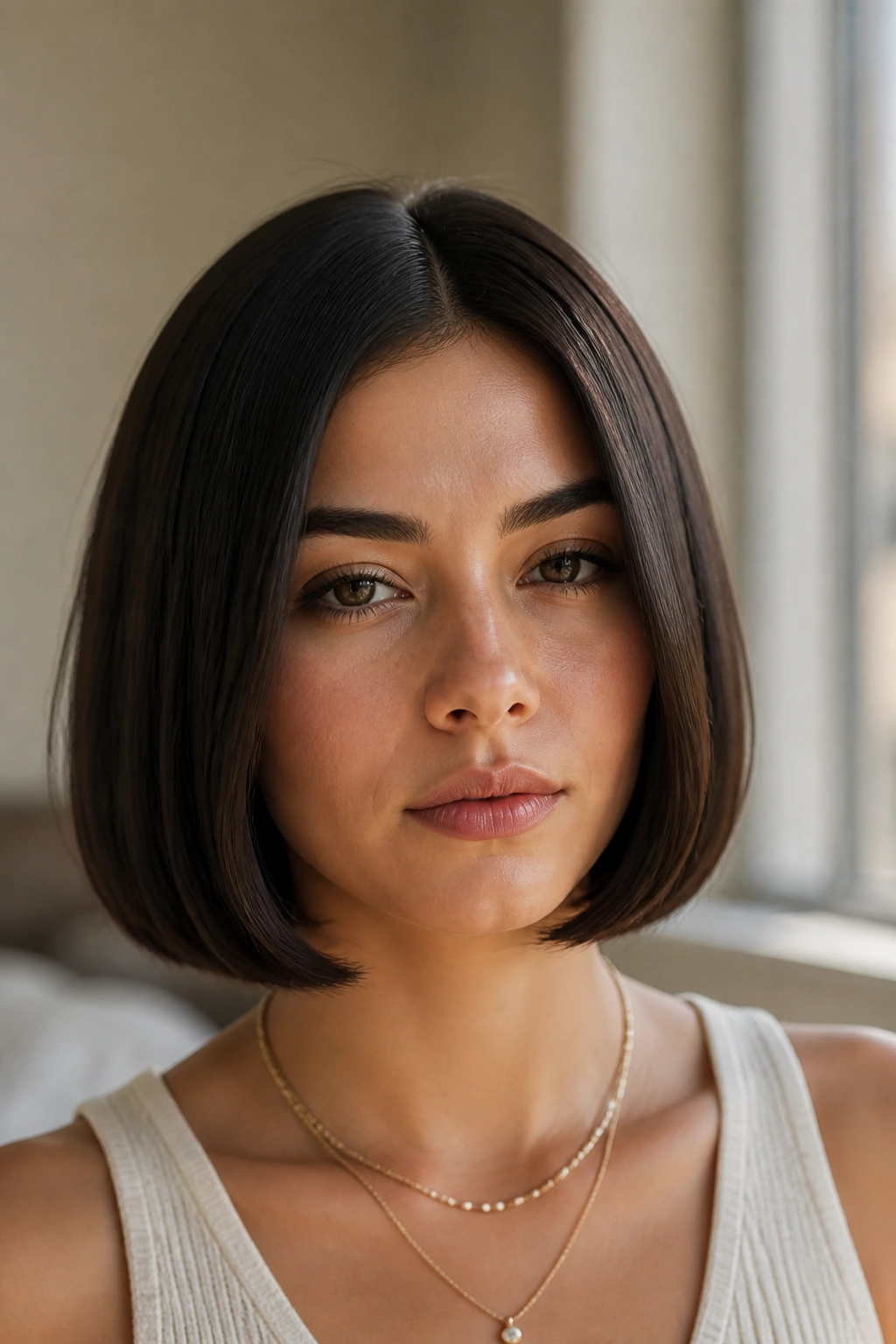
A center-part bob can be flattering on a round face, but only when the length and finish are right. If the cut is too short and the sides puff out, the face reads wider. If the bob falls closer to the jaw or collarbone and stays sleek, the center part creates two clean vertical lines.
This is a polished look, not a fluffy one. Blow-dry smooth, tuck in the ends just a bit, and keep the volume at the crown rather than the cheeks. If your hair has a natural wave, a flat iron pass at the front can help. It’s a sharp style when done with discipline.
12. Tousled Wavy Bob

Messy can be good here, as long as the mess is controlled. A tousled wavy bob breaks up the width of a round face because the eye sees movement instead of one solid curve. The uneven texture keeps the shape from feeling heavy.
The best version uses loose, broken waves rather than tight curls all over. Leave the ends out on the curling iron, and don’t overbrush it. That’s how you get the kind of separation that looks modern instead of overdone. A texturizing spray at the mid-lengths helps, but don’t load up the roots or you’ll lose the shape.
13. Graduated Bob
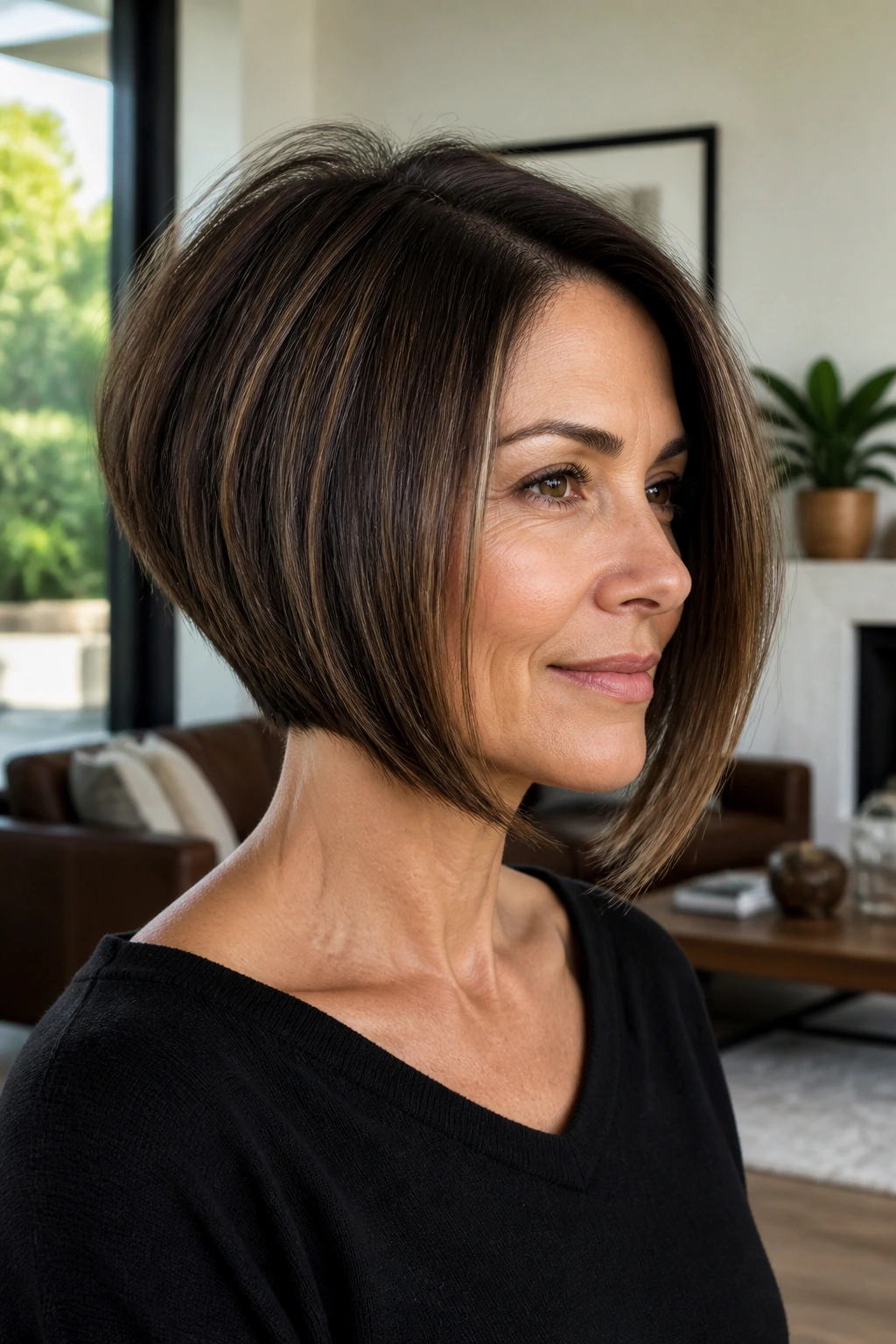
A graduated bob gives you lift in the back without a bulky outline. The shorter layers at the nape build a neat curve, while the front stays longer and more directional. For round faces, that front length is the part that keeps the cut from feeling too wide.
This is a good one if your hair is fine and tends to collapse. The graduation adds body where you need it, but the front still does the flattering work. It’s a clean, structured look. Not fussy. Not soft to the point of disappearing. Just enough shape to make the cut feel intentional.
14. Box Bob with Softened Corners
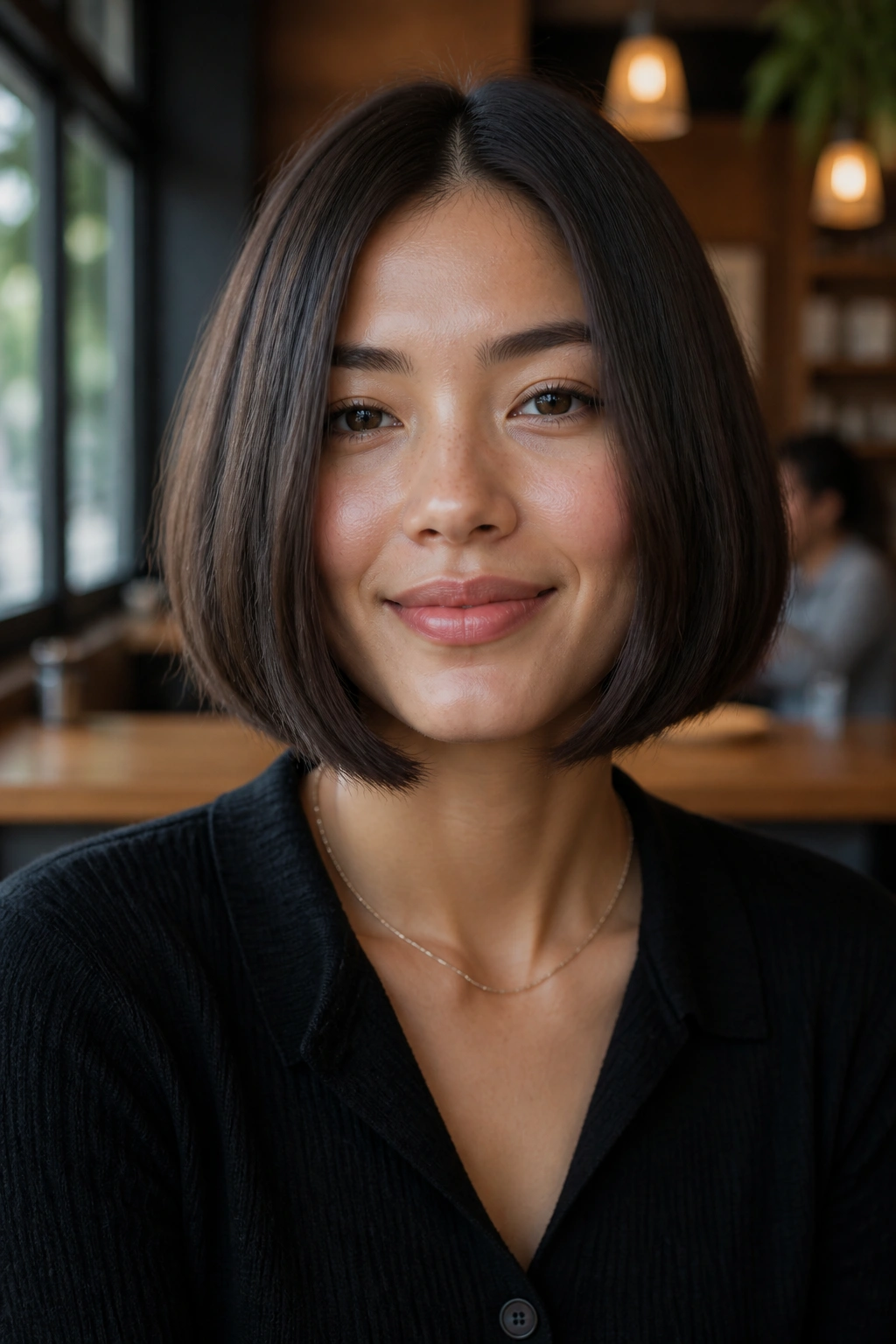
A box bob sounds harsh, and honestly, it can be if it’s cut too bluntly. But softened corners change everything. The square outline gives you a crisp shape, while the gentle edges stop the cut from looking heavy at the cheeks.
This works best when the length sits below the mouth or just under the chin, not right on it. The corners should skim, not stick out. If your hair is straight, the result looks sharp and clean. If it has a bit of wave, the softness around the edges keeps it from turning too rigid. A neat option for someone who likes structure.
15. Side-Swept Fringe Bob

A side-swept fringe is one of those small changes that can make a bob feel better immediately. The diagonal line pulls attention across the face instead of letting it sit in one round shape. It also opens up the forehead in a way that feels relaxed, not forced.
Keep the fringe long enough to blend into the bob. Too short, and it looks like an afterthought. Too heavy, and you lose the lift. The sweet spot is a fringe that slides across one brow and melts into the sides. Good with straight hair. Good with a soft wave. Hard to mess up when it’s cut well.
16. Curly Bob with a Deeper Side Part
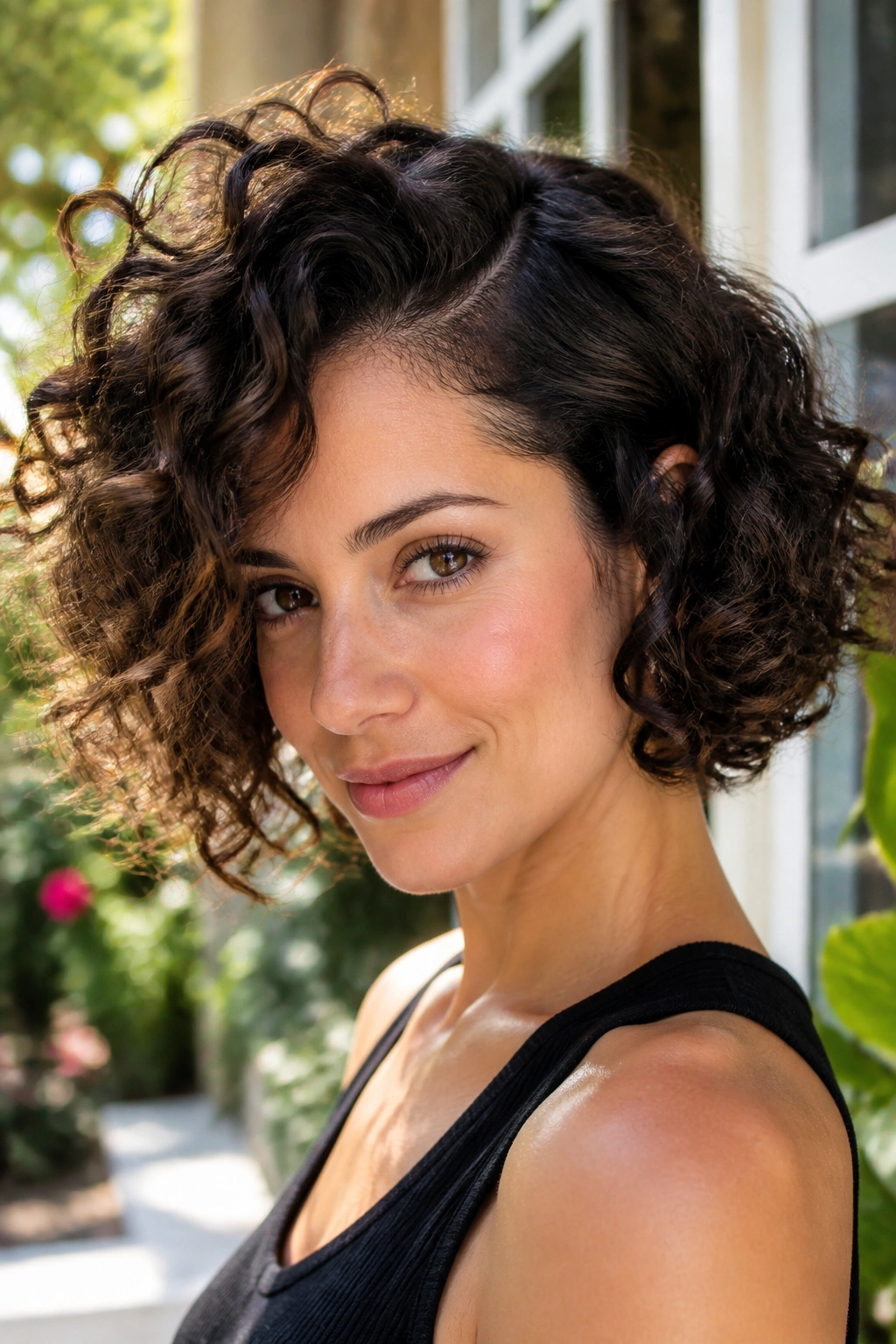
Curly hair on a round face needs shape, not suppression. A curly bob with a deeper side part gives the curls room to rise at the crown while keeping the width from sitting too evenly on both cheeks. That balance matters a lot.
Ask your stylist to cut it dry if possible, or at least to respect the curl pattern as it actually lives, not as it looks wet. The longest pieces should fall past the widest part of the face. That helps the silhouette feel taller. A little frizz is fine. A crushed curl pattern is not.
17. Airy Shag Bob

A shag bob is good for round faces when you want texture with a little edge. The layers break up the outline, and the airy ends keep the hair from forming one big circle around the face. That’s the main reason it works.
Do not let the shortest layers land right at the cheek. That’s where this cut can go wrong. Keep the bulk moving through the ends and the lower half of the hair instead. A shag bob looks best when it feels loose and a little wild. Not sloppy. Just touched by the wind, if that makes sense.
18. Inverted Bob

The inverted bob is a classic for a reason. Shorter in the back, longer in the front, it creates a strong diagonal that naturally lengthens the face. On a round face, that front angle is doing the heavy lifting.
The cut looks best when the back hugs the nape cleanly and the front drops below the jaw. If the front is too short, the shape loses its usefulness. Pair it with a side part or a very soft off-center part if you want even more length through the face. It’s polished, tidy, and surprisingly versatile.
19. Jawline-Skimming Bob with Long Fronts
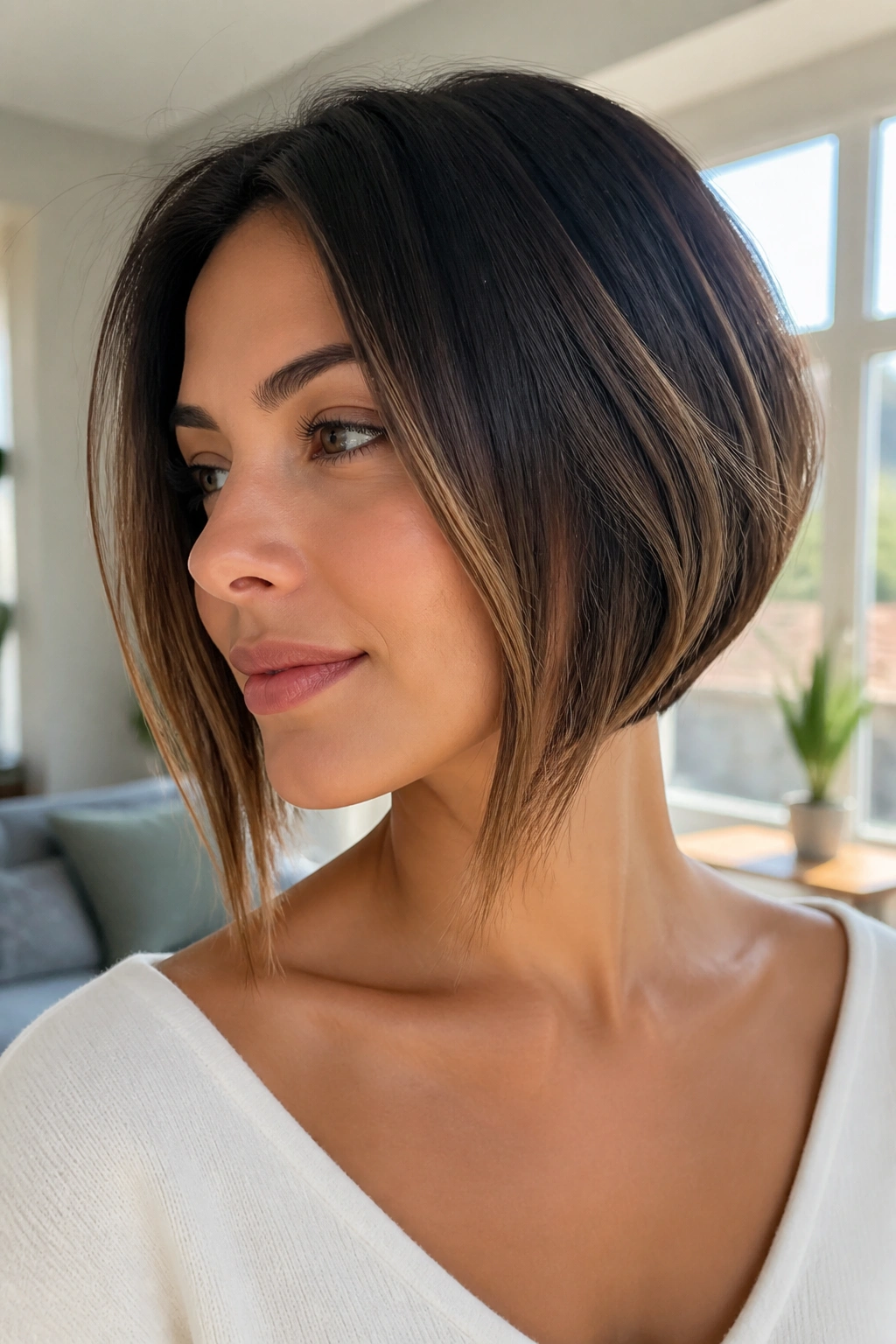
If you want a bob near the chin but don’t want to emphasize the cheeks, this is the move. Keep the front pieces slightly longer than the jawline and avoid a straight stop exactly at the widest point of the face. That little bit of extra length matters more than people think.
The back can stay lighter and tighter so the front does the framing. This gives you the feel of a short bob without the bulk right where you don’t want it. It’s a practical cut for someone who wants their neck to show but still needs a shape that plays nice with a round face.
20. Glass Bob for Round Faces

A glass bob is all about shine, smoothness, and a controlled line. On a round face, it works when the cut is long enough to avoid widening the sides and the finish is sleek enough to keep everything narrow. A glossy bob with a slightly off-center part can look very sharp.
The danger is puff. If the roots lift too much, the cut starts to spread. Keep the silhouette close to the head and use a smoothing cream before blow-drying. A flat iron pass on the ends can help, but don’t overdo the bend. The best glass bob looks expensive because it’s clean, not because it’s frozen in place.
21. Choppy Bob with Piecey Ends

A choppy bob helps a round face because it breaks up the outline. Instead of one smooth curve, you get small shifts in length that keep the eye moving. That movement makes the face feel less wide and the cut feel less rigid.
The key is keeping the choppiness controlled. You want pieces, not holes. The ends should look separated and touchable, not shredded. This cut is especially useful if your hair is medium to fine and tends to fall flat. A little texturizing spray can bring it to life, but only a little. Too much and it gets dry fast.
22. Ear-Tuck Bob with Longer Front Pieces

A bob that can be tucked behind the ear is quietly useful. It lets you create asymmetry on the fly, which helps break up the roundness of the face. Longer front pieces also draw the eye down and outward, not just across the cheeks.
Ask for front sections that sit long enough to tuck without losing shape. That sounds small, but it changes how the haircut behaves in real life. You can wear it neat, messy, or half-tucked. The cut itself does not need to be dramatic. It just needs to give you options.
23. C-Cut Bob
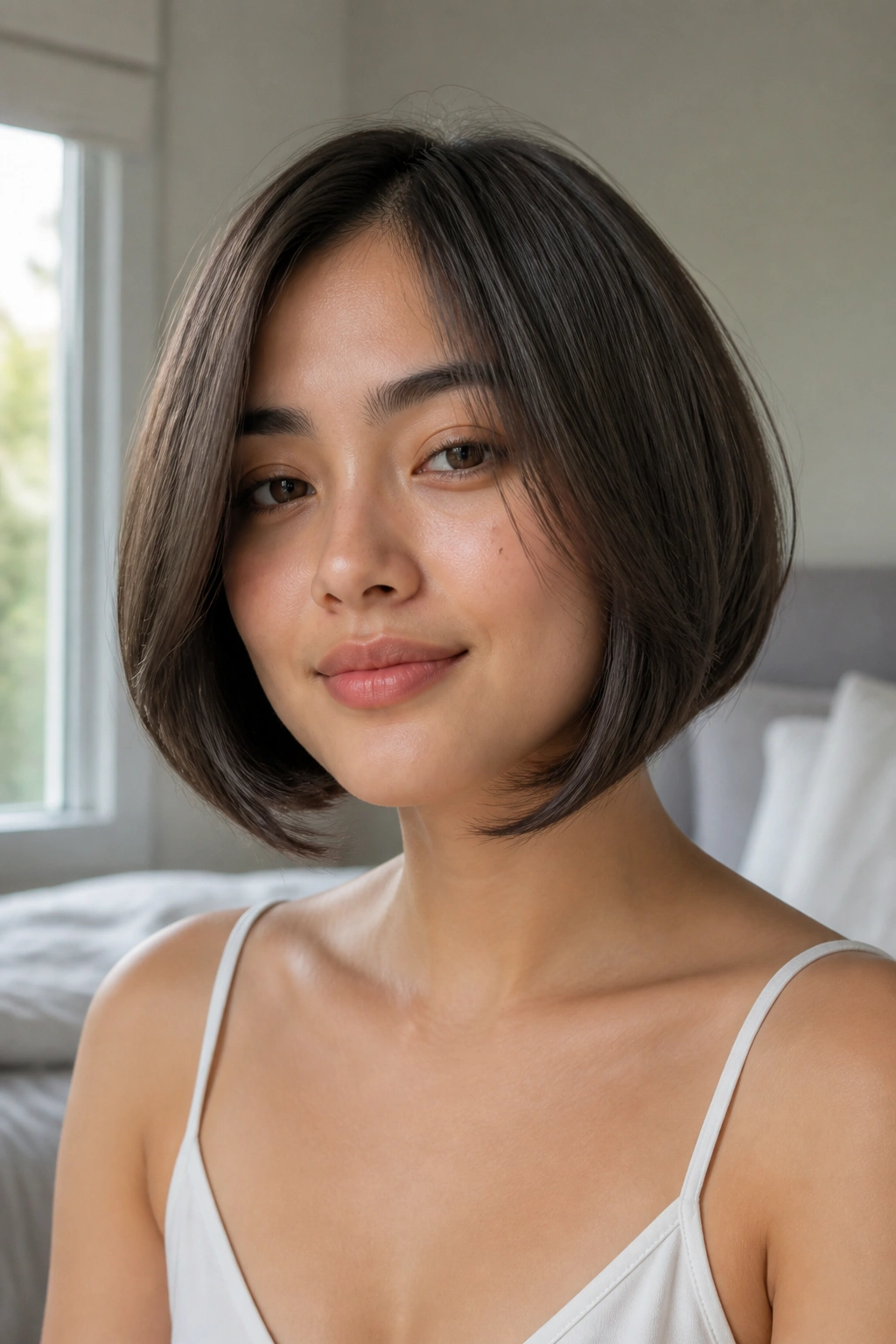
A C-cut bob curves inward around the face instead of outward. That shape matters on a round face because it creates a soft frame without adding width. The line feels rounded, but in a controlled way.
This is especially flattering if you want movement without obvious layers. The hair swings inward at the ends and leaves the top cleaner. It can look elegant on straight hair and soft on wavy hair. If you’re tired of blunt edges but don’t want a shag, a C-cut bob gives you a middle ground.
24. U-Shaped Lob

A U-shaped lob is a nice compromise between blunt and layered. The center is slightly longer, the sides come up a touch, and the whole shape reads like a soft curve instead of a block. On a round face, that longer center section quietly adds length.
It’s a good choice if you like simple styling. The cut doesn’t depend on perfect waves or heavy product. It just needs a clean outline and a length that sits below the chin. If you wear it straight, the U shape becomes more obvious. If you wave it, the shape stays there without shouting about it.
25. Micro Bob with Side Volume

A micro bob can work on a round face, but only if the volume stays at the crown and the sides are kept narrow. Short hair can make a face look wider if it stops too abruptly at the cheek. That’s the problem. The solution is to keep the silhouette tight and the top lifted.
This cut is better for someone who likes a bold, neat shape and does not mind regular trims. It’s not the easiest bob on the list. But when it’s cut with precision, it looks crisp and modern. If you have a lot of face width and very little neck length, go slower with this one.
26. Lob with Bottleneck Bangs

Bottleneck bangs are a smart fringe choice for round faces because they start narrow at the forehead and widen softly near the cheekbones. That shape creates a gentle frame without slashing across the face in a hard line.
With a lob, they work especially well because the longer length keeps everything balanced. The bangs guide attention toward the eyes and the center of the face, while the lob gives the rest of the cut room to breathe. If you want bangs but worry about looking boxed in, this is one of the easiest places to start.
27. Razor Lob with Internal Weight Removal
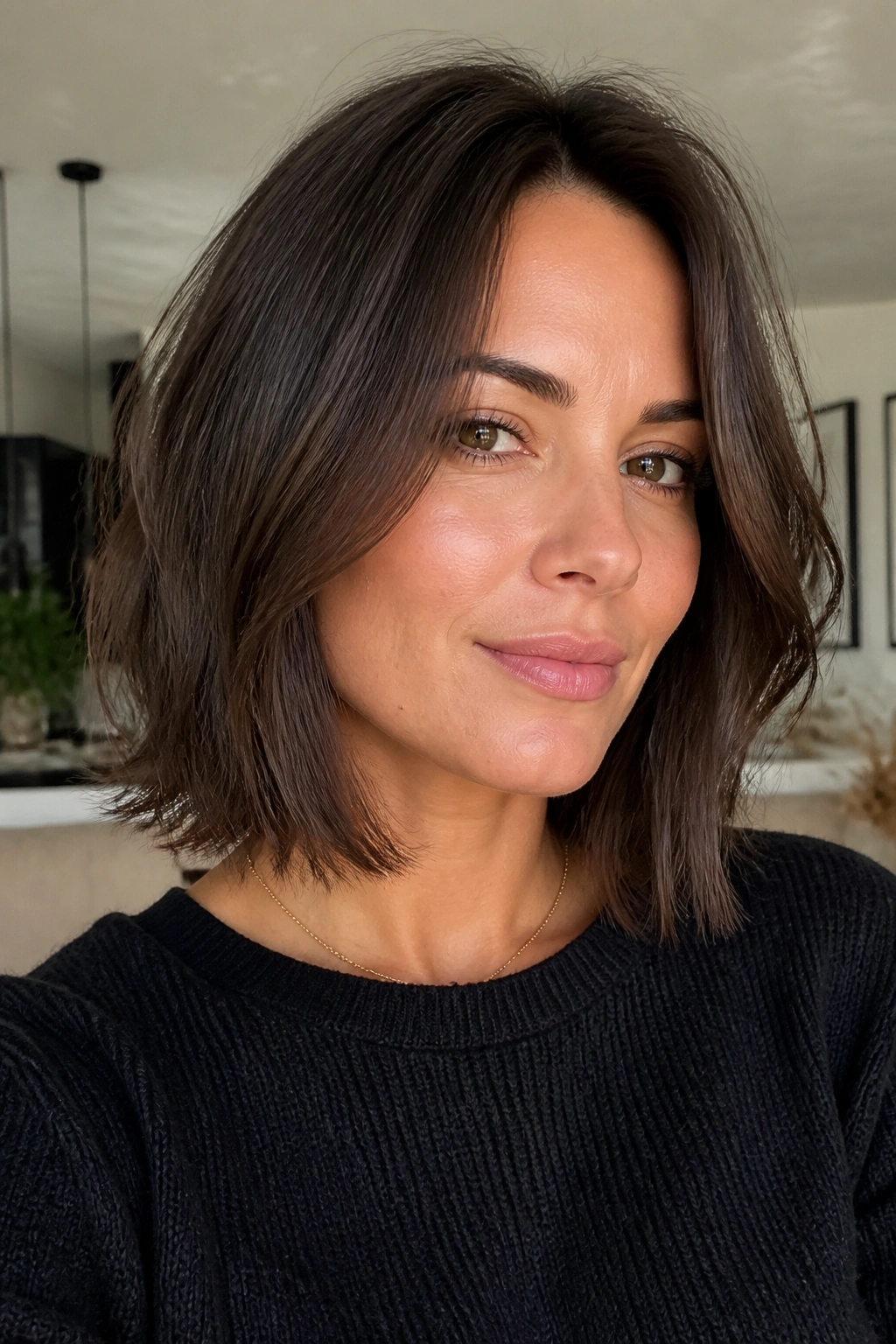
Thick hair can make a round face look fuller if the cut holds too much mass at the sides. A razor lob with internal weight removal fixes that problem without making the hair look thin. The surface stays smooth, but the inside loses bulk.
That means the shape falls better, swings better, and dries faster. It’s a particularly good option if your hair loves to puff at the ends. Ask for movement below the cheekbone, not above it. If the hair is very fine, this cut needs a lighter hand. Done right, though, it feels airy and controlled at the same time.
28. Sculpted Natural Curl Bob
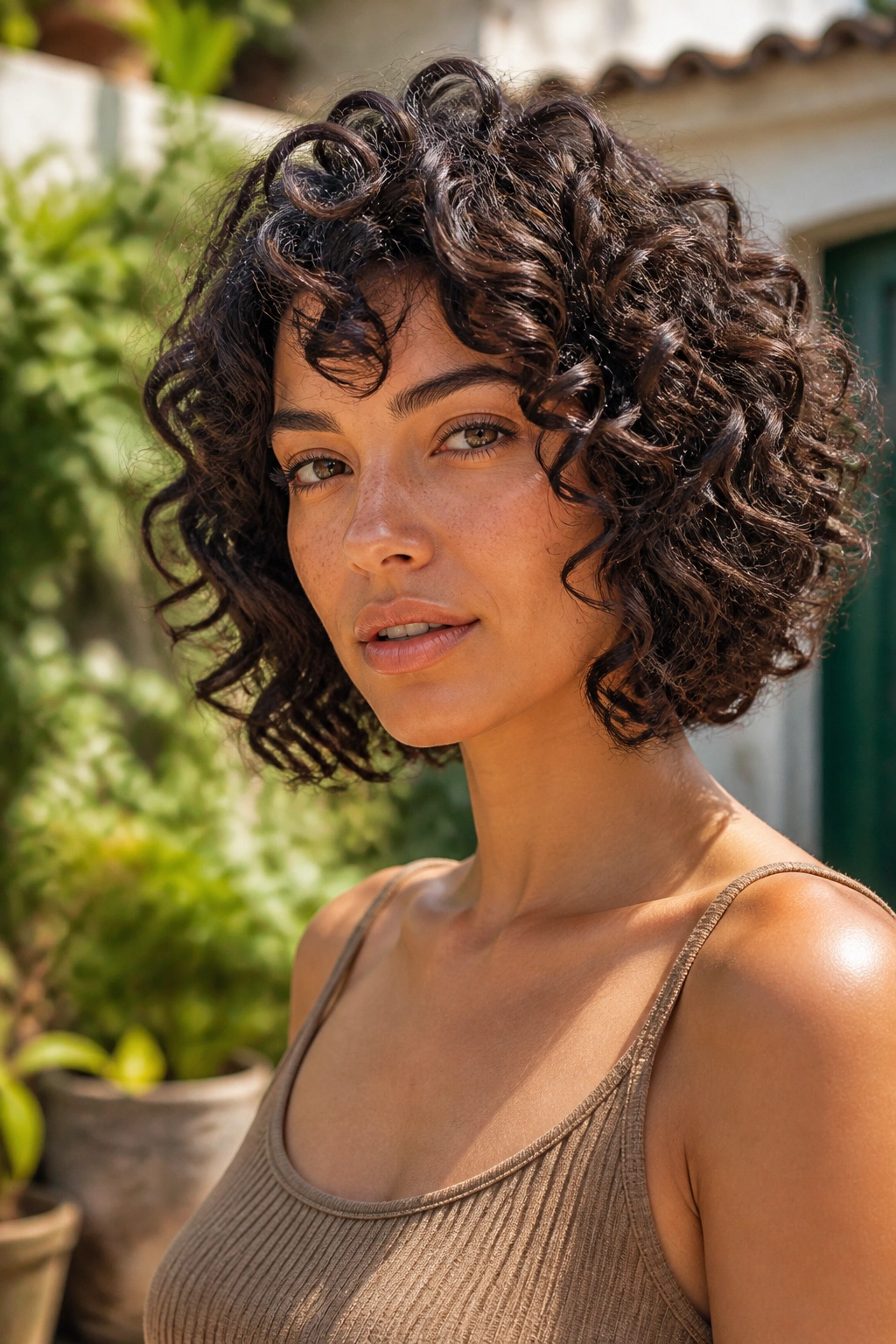
Curly bobs need structure, not just length. A sculpted natural curl bob is cut with the curl pattern in mind, so the shape opens around the face instead of pressing straight out from the cheeks. On a round face, that difference is huge.
The best curls start with a little height at the crown and longer pieces around the lower face. The stylist should shape the bob where the curls actually live when dry. If the curls are forced into a blunt, wet-cut line, they usually spring up in the wrong spots. Good curl cuts look a little uneven in the chair and much better once dry.
29. Softly Stacked Pixie Bob
A pixie bob sits in that nice middle place between a cropped cut and a real bob. For round faces, the softness matters. You want stacking at the nape for lift, but longer pieces around the temples and front so the face still looks stretched.
This cut is ideal if you want short hair without losing all your framing options. It also works well when you like to tuck one side or sweep the front forward. The biggest mistake is cutting it too uniformly. It should feel layered and shaped, not helmet-like. The nape can be neat. The front should move.
30. Off-Center One-Length Lob
A one-length lob sounds plain, and that’s exactly why it can work so well. The clean line gives the hair weight, but the off-center part prevents the cut from settling into one wide, symmetrical shape around the face. That little offset matters.
Keep the length at least a bit below the chin. If it sits too high, the bluntness can make the cheeks look fuller. If it falls around the collarbone, the face gets more vertical space. This is one of the easiest cuts to style well, which is useful if you do not want to spend 20 minutes fixing your hair every morning.
31. Flipped-End Lob
A flipped-end lob can be playful without turning childish, as long as the flip stays light. The outward movement at the ends adds energy and keeps the hair from lying flat against the jaw. On a round face, that means the shape feels lifted rather than boxed in.
The flip should happen low, near the ends, not at the cheeks. If it starts too high, you lose the lengthening effect and the face can look wider. A round brush or a quick pass with a flat iron can create the bend. Keep the roots calm. Let the ends do the talking.
32. Shoulder-Skimming Blowout Bob
This is the haircut for anyone who wants movement and polish in the same breath. A shoulder-skimming bob with a soft blowout keeps the face open, while the ends curve away from the cheeks. It’s especially good if you like a little bounce but hate fluffy sides.
The length is doing the most work here. Shoulder-skimming hair gives the face room, and the blowout adds shape without crowding it. Use a round brush to smooth the top and create a slight bend from the mid-lengths down. A little shine serum on the ends helps. Heavy oil on the roots does not.
33. Short Bob with Long Sideburn Pieces
Long sideburn pieces are underrated. They carve out the face in a way that tiny bangs or blunt edges often do not. On a round face, those longer front sections create a narrow path beside the cheeks, which is exactly what you want.
The rest of the bob can stay fairly short and neat. The contrast makes the front pieces feel intentional instead of accidental. This cut looks good when the sideburn sections are left just long enough to sweep forward or tuck behind the ear. It’s a small detail, but small details are where good bobs live.
34. Mixed-Length Bob
A mixed-length bob uses slight differences in length to keep the shape from feeling too even. That unevenness helps a round face because it stops the haircut from sitting like one perfect circle. A little disruption goes a long way.
This style works best when the differences are subtle. You do not want the cut to look choppy for the sake of it. Think soft variation, not random patches. The best mixed-length bobs have movement at the ends and a gentle shift through the front. That keeps the eye moving downward, which is the whole point.
35. Wedge Bob
A wedge bob has a stronger shape than many people expect. The back is compact, the profile rises toward the crown, and the front stays long enough to keep the face from looking too broad. On a round face, that angle can feel sharp in a good way.
It’s a bolder cut, and it needs precision. If the shape is too rounded, it can echo the face instead of balancing it. Keep the front pieces long and the nape tight. It suits straight or slightly wavy hair best, because the line stays visible. If you like definition, this one delivers it.
36. Textured Bob with Micro Layers
Micro layers are a quiet fix for hair that feels too solid. They remove just enough weight to let the bob move, but not so much that the shape turns wispy. On round faces, that motion helps break up width around the cheeks.
This cut is especially helpful if your hair is dense and tends to balloon out at the sides. The texture should live through the body of the hair, not all the way up at the temples. That keeps the silhouette slim. A little sea salt spray can help, though I’d keep it light. Dry texture has a short shelf life.
37. Swing Bob
A swing bob has that slight forward swing through the front that makes the haircut feel alive. The movement draws the eye down and away from the sides of the face, which is why it works so well on round features. The shape looks soft, but not shapeless.
The back is usually shorter, while the front drapes longer and lighter. That front swing is the part to protect. If the cut is too even, the magic disappears. It’s a good choice if you like movement without lots of layers. Clean lines in the back, easy motion in the front.
38. Modern Pageboy Bob
A pageboy bob can be tricky because the classic version is rounded and heavy. The modern version fixes that by adding a tapered nape and longer front sections. That gives you the neatness of the old shape without the boxy width that round faces usually fight against.
This cut works best when the ends are smooth and the silhouette stays controlled. Keep it polished, not puffy. If the fringe is included, make it light or side-swept rather than thick and straight. The appeal here is structure. It feels deliberate, and that matters when the face already has soft curves.
39. Undercut Bob with Hidden Weight Removal
Thick hair can make a bob behave like a triangle. An undercut bob solves that by taking weight out from underneath, often at the nape or interior layers. The top still looks full, but the overall shape drops better and sits closer to the head.
That hidden removal is useful for round faces because it keeps the sides from ballooning out. The haircut can still look dense and healthy on top while feeling much lighter underneath. You won’t necessarily see the undercut every day, which is the point. It does the work where no one needs to notice.
40. Soft Shoulder-Length Bob with Invisible Layers
A shoulder-length bob with invisible layers is a smart final option because it gives you the least drama and often the best payoff. The hair stays long enough to stretch the face, but the hidden layers keep the shape from lying flat or turning into one heavy curtain.
This is the cut I’d point to for someone who wants a bob but does not want to commit to anything too short, too sculpted, or too trendy. It can be worn straight, waved, tucked, or air-dried, and it usually behaves. On a round face, that reliability matters. Not every haircut needs to announce itself. Some just make the face look better and move on.
