

A curly bob can look effortless when it is cut with the curl pattern in mind, and comically wide when it is not. That is the whole problem, really.
The difference usually comes down to where the weight sits, how much shrinkage the stylist planned for, and whether the shape was checked dry before the scissors came back out. Curly hair does not behave like straight hair under a cape, and anyone who has watched a fresh bob bounce up three inches after the first wash knows that truth by heart.
The good versions have movement, a clean outline, and enough structure to make the curls fall into a shape instead of a cloud. The bad ones look like they were cut on a dare. So the smart move is not picking a bob at random; it is choosing the bob that matches your curl density, your face shape, and how much styling you are willing to do on a normal Tuesday.
Start with the classic chin-length cut, because everything else makes more sense once you see how that shape works.
1. Chin-Length Curly Bob
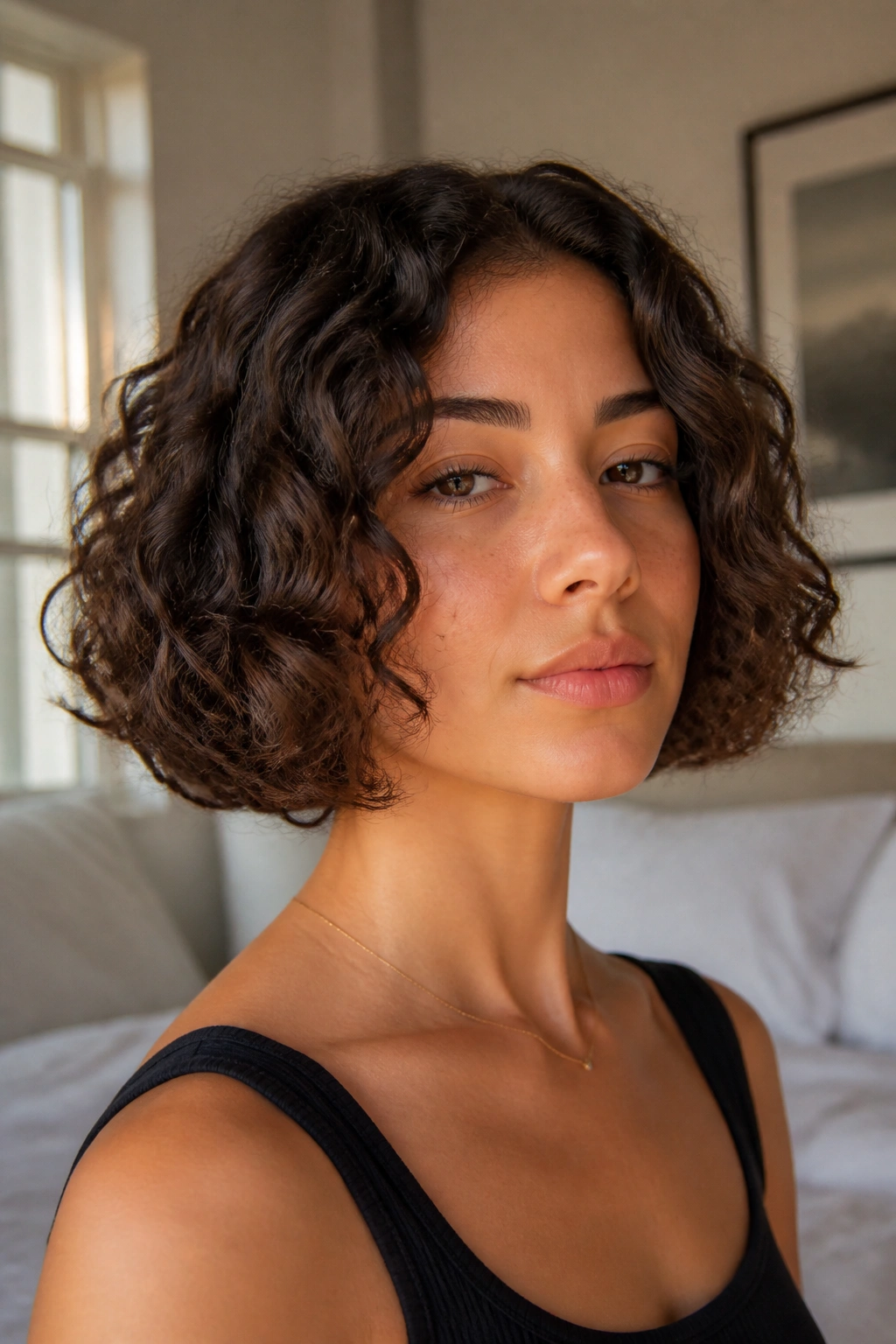
A chin-length curly bob is the shape most people picture first, and for good reason. It sits close enough to the face to show off curl pattern, but it still leaves enough length for the curls to spring without turning into a puffball.
What Makes It Work
The magic is in the balance. When the ends land right around the chin, the haircut frames the face instead of swallowing it. That makes it a smart choice for loose waves, springy ringlets, and anyone who wants a shorter shape without going full crop.
- Length: usually lands at the chin or just below it
- Best for: medium curl density, oval and heart-shaped faces, and people who want shape without too much fuss
- Styling note: a small amount of curl cream keeps the outline smooth; too much product weighs the curls down
- Cutting note: this shape looks better when the stylist checks it dry, because curl shrinkage can change the line fast
Ask for the outline to be checked in its natural state. That one detail keeps the bob from rising higher than you wanted.
2. Layered Curly Bob for Dense Hair

If your hair turns into a triangle by lunchtime, layers are not optional. A layered curly bob takes some of the bulk out of the middle and lower sections so the curls can stack in a cleaner way.
The trick is not to let the layers climb too high. Short layers near the cheekbones can make thick curls swell outward, which is exactly the opposite of what most people want. Longer layers, placed with some restraint, let the shape breathe without making the ends look thin.
This cut is a good fit for dense 3A through 4B curls, especially when the hair holds a lot of weight at the bottom. It also helps on humid days, because the haircut gives the curls places to sit instead of letting everything balloon at once. That said, it needs a stylist who understands how your hair behaves when it dries. A heavy hand with thinning shears can wreck the whole thing.
3. Rounded Curly Bob

Why do some curly bobs feel soft and balanced while others look boxy? Usually because the rounded bob follows the curl pattern instead of fighting it.
A rounded curly bob curves gently around the head, with the widest point sitting near the cheeks or jaw. It has a naturally feminine, cloudlike shape, but not the awkward halo effect people worry about. The outline is smooth, which makes it a nice choice if your curls are already fairly even from root to tip.
How to Style the Curve
A diffuser helps, but the real trick is how you dry. Let the curls set with the head tilted slightly to one side, then switch sides halfway through. That keeps the shape from leaning too hard in one direction.
A rounded bob looks especially good on medium-density curls and on faces that benefit from softer edges. It is a little less dramatic than an angled cut, and that is the point. Quiet shape. Clean line. Easy to wear.
4. Angled Curly Bob
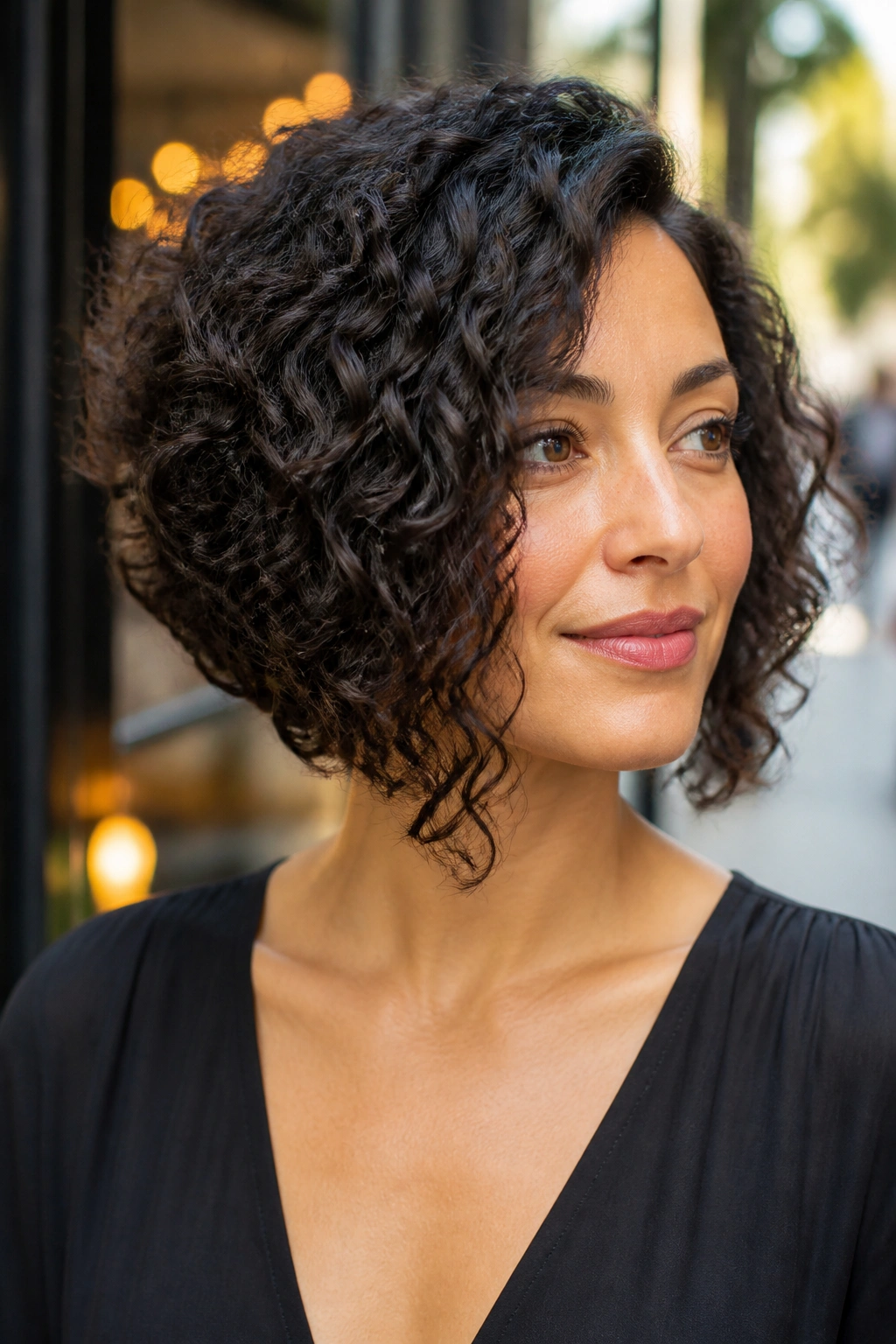
An angled curly bob gives you the cleanest visual line of the bunch. The back sits shorter, while the front pieces extend forward and skim the jaw or even the collarbone.
That diagonal shape is useful if your curls tend to puff at the sides. The longer front pieces pull the eye downward, which makes the haircut feel slimmer and a little sharper. It also opens up the neck, which people either love immediately or notice only after they wear it for a week.
The Details That Matter
- Shorter back: keeps bulk away from the nape
- Longer front: frames the face and adds movement
- Best for: thick curls, rounder faces, and anyone who wants a stronger silhouette
- Watch out for: too many short layers at the crown, which can create extra width
The best angled bobs are precise. Not severe, not helmet-like. Just enough slope to make the curls fall forward on purpose.
5. Asymmetrical Curly Bob

One side longer than the other sounds bold on paper, but on curly hair it often reads as easy movement rather than drama for drama’s sake. The uneven length keeps the cut from feeling too tidy, which is useful if your curls already have a mind of their own.
This shape does a nice job of balancing facial features. If one side of your face carries more volume, or if you prefer wearing your part consistently on one side, the asymmetry can make the whole cut feel more natural. It also gives your curls a path to fall that is a little less predictable, which can be a good thing.
The cut does need clean sectioning. If the lines are sloppy, it looks accidental instead of intentional. That is the difference between a great asymmetrical bob and a haircut that just grew in strange places.
6. French Bob
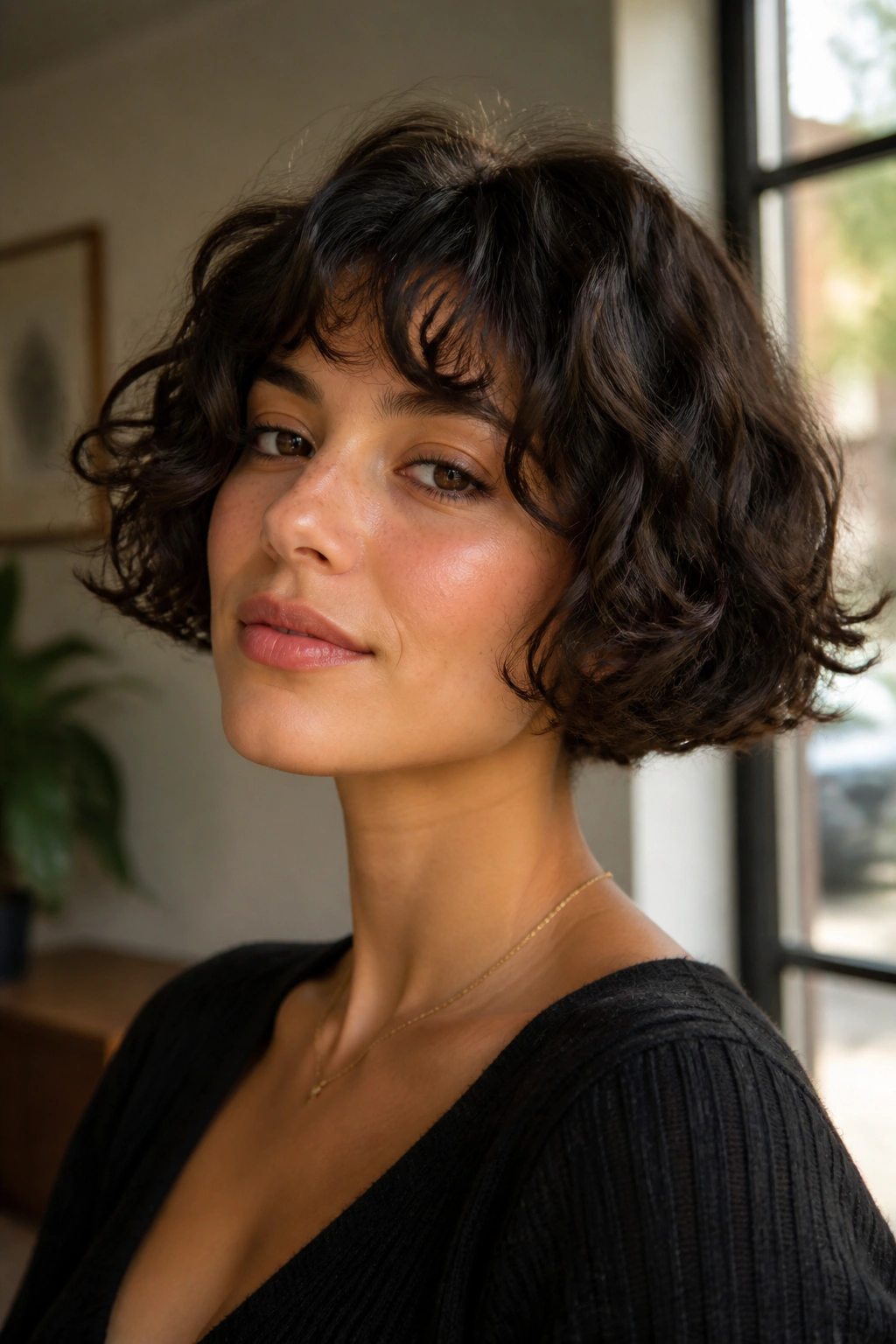
A French bob is short, cheeky, and a little bit stubborn in the nicest way. It usually lands somewhere between the cheekbone and the jaw, often with a fringe or soft bang, and it has a compact shape that looks almost tailored.
Compared with a classic bob, the French version feels less polished and more lived-in. That matters on curly hair, because curls already add texture. You do not need much else. A little bend near the front and a soft, blunt line at the bottom are enough to make it feel finished.
Who It Suits
This cut works best on loose curls, wave-heavy hair, and people who like a face-framing shape that does not drag past the chin. It is not the friendliest option if your shrinkage is dramatic, though. Go too short and you may end up with a much tighter crop than you expected. Bring photos that show the length on curly hair, not just on straight styles.
7. Curly Lob

A curly lob is the easiest bob for a nervous first-timer. It keeps the length near the collarbone, which means you still get shape without betting everything on a shorter cut.
Why People Keep Coming Back to It
The extra length softens shrinkage. That sounds boring, but it matters. A lob gives curly hair room to move, and it tends to grow out with less awkwardness than a chin-length bob. It is also easier to clip back, which people with busy mornings tend to appreciate.
- Length: collarbone to just above the chest
- Best for: anyone unsure about going short, especially thicker curls
- Styling perk: works with air-drying or a diffuser
- Maintenance: trims still matter, but the grow-out is forgiving
If you want the bob shape without the commitment, this is the one I’d point you toward first.
8. Stacked Curly Bob

A stacked curly bob puts the weight where it helps most: the back of the head. The layers are shorter and more compact near the nape, which creates lift at the crown and gives the whole haircut a rounded, supported shape.
That lift is useful if your curls lie flat near the roots. It is also helpful for finer hair that needs structure to look full. The stack keeps the shape from collapsing, and when the curls spring, they create a nice little rise in back that makes the cut look intentional.
Be careful if your hair is already wide or very dense. Too much stacking can make the silhouette feel heavy on the top and too open at the sides. The best version has shape, not a hump.
9. Inverted Curly Bob
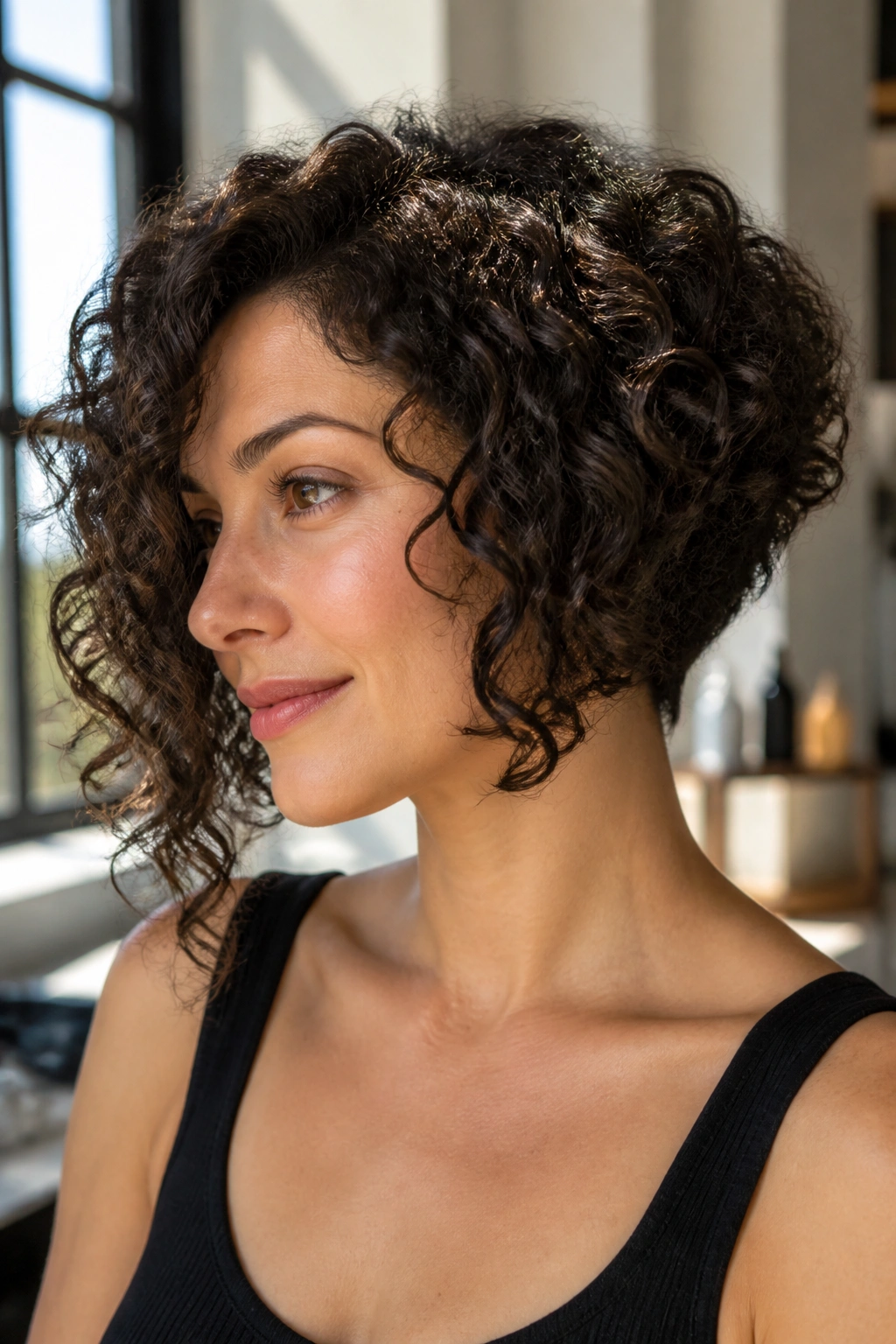
What makes an inverted bob different from an angled one? The back-to-front contrast is usually sharper. The nape is shorter, the front is longer, and the line feels more deliberate.
On curls, that structure can look especially neat because the front pieces have room to frame the face while the back stays lighter. It is a clean look, almost architectural, but the curls keep it from feeling stiff. That little bit of texture softens the geometry.
What to Ask For
Ask your stylist to keep the back compact without over-thinning it. You want lift and shape, not airy ends that disappear. If you wear a deep side part, mention that too. The part changes where the front pieces land, and that can make the whole cut either graceful or strangely lopsided.
10. Blunt Curly Bob

A blunt curly bob can look expensive in the simplest sense of the word: clean, direct, and not overworked. The hemline is cut in a straight-ish line, which gives the curls a strong base to sit on.
The catch is that blunt does not mean heavy. On curly hair, a true one-length cut can turn into a triangle if the interior is not handled carefully. The best blunt bobs keep the edge crisp while removing just enough bulk inside to let the curls fall.
This style works best when your curl pattern is fairly even and your density is medium to high. If your curls vary a lot from one side to the other, the line can look uneven in a bad way. When it works, though, it is sharp. Very sharp.
11. Shaggy Curly Bob

A shaggy curly bob is what happens when you stop asking curls to behave like they were born in a corporate folder. It has piecey layers, a looser outline, and enough movement to make a wash-and-go feel believable.
If your curls never sit in the same place twice, this cut can feel like a relief. The unevenness works with the hair instead of against it. You get shape at the top, movement through the sides, and ends that do not need to look perfectly aligned to make sense.
The best shaggy bob is not messy in a lazy way. It still has structure; it just wears that structure lightly. A little curl cream, a light gel, and a diffused dry can keep the layers separated without making them crunchy.
12. Tapered Nape Bob

A tapered nape bob keeps the back close to the neck and lets the front carry a little more softness. It is one of the most useful cuts for thick curly hair because it removes bulk right where it tends to build up.
The result feels cleaner from behind. That sounds small until you wear a high collar, a jacket, or anything that rubs at the neck. Then it feels practical in the best way. The taper also helps the bob sit neatly when your curls expand after drying.
This cut can be subtle or obvious. A softer taper gives a polished shape; a tighter taper feels more modern and neat. Either way, it is a strong choice if you want a shorter bob that does not flare out at the back.
13. Side-Part Curly Bob
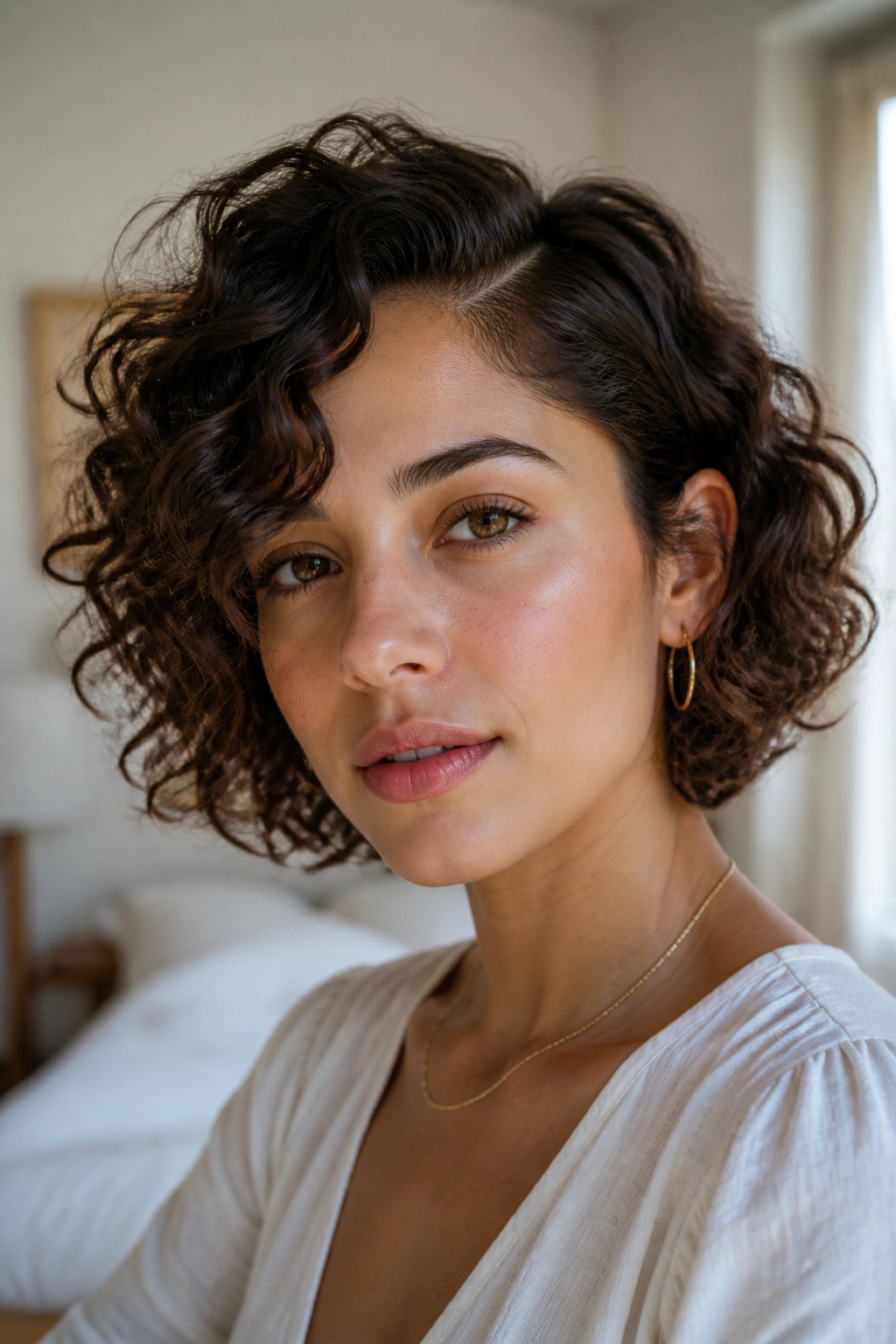
A side part changes a curly bob more than people expect. It shifts volume, breaks up symmetry, and can make the face look longer or softer depending on where the part lands.
Where the Part Should Sit
The best starting point is usually somewhere near the arch of the eyebrow, not hard over at the temple. That small move keeps the hair from falling flat on one side and overloading the other. If you have a cowlick, the side part can work with it instead of fighting it.
A side-part curly bob is especially handy for round faces, fuller cheeks, or roots that go flat quickly. It is one of those cuts that looks effortless but is actually doing quiet work in the background. And that is often the nicest kind of haircut.
14. Curly Bob with Curtain Bangs

Curtain bangs soften a curly bob in a way blunt fringe never quite can. They open in the middle or just off-center, then fall to each side like a frame around the face.
The real advantage is flexibility. If you are growing out bangs, this shape buys you time. If you want forehead coverage without committing to a heavy fringe, it does the job. On curly hair, the bangs should usually be a touch longer than you think, because they spring up once they dry.
This look works especially well with chin-length and lob-length bobs. The bangs give the haircut a face-first feeling, which is nice if you want the front to lead and the rest of the cut to follow. It is soft without being fussy.
15. Curly Bob with Micro Bangs

Micro bangs are not shy. They sit high on the forehead, and on curly hair they usually spring up a little more than straight-haired people expect. That is part of the charm, but it is also the part that gets people into trouble.
This cut has a strong point of view. It looks cool with loose ringlets, springy coils, and anyone who likes a little edge near the face. It can also throw a lot of attention upward, so if you already have a tall forehead or a strong brow line, make sure you actually want that focus.
Skip this one if you hate regular styling. Micro bangs need more care than people admit. They often need a quick mist, a finger shape, and a little reset in the morning so they do not split into odd little wings.
16. Deva Cut Bob

A Deva cut bob is less about a single silhouette and more about how the haircut gets built. The hair is cut curl by curl, usually in its dry state, so the shape follows the way your curls actually land instead of guessing through wet shrinkage.
What to Ask For
- Dry cutting: so the stylist can see true length and spring
- Curl-by-curl shaping: especially useful if one side curls tighter than the other
- Balance checks: front, sides, and back should be viewed from multiple angles
- Wear test: show your usual part and how you style it most days
This approach is useful when your curl pattern changes across your head. Maybe the front is looser, the crown is flatter, and the nape is tighter. A dry cut gives the stylist a chance to work with that reality instead of flattening it into one uniform idea.
17. A-Line Curly Bob
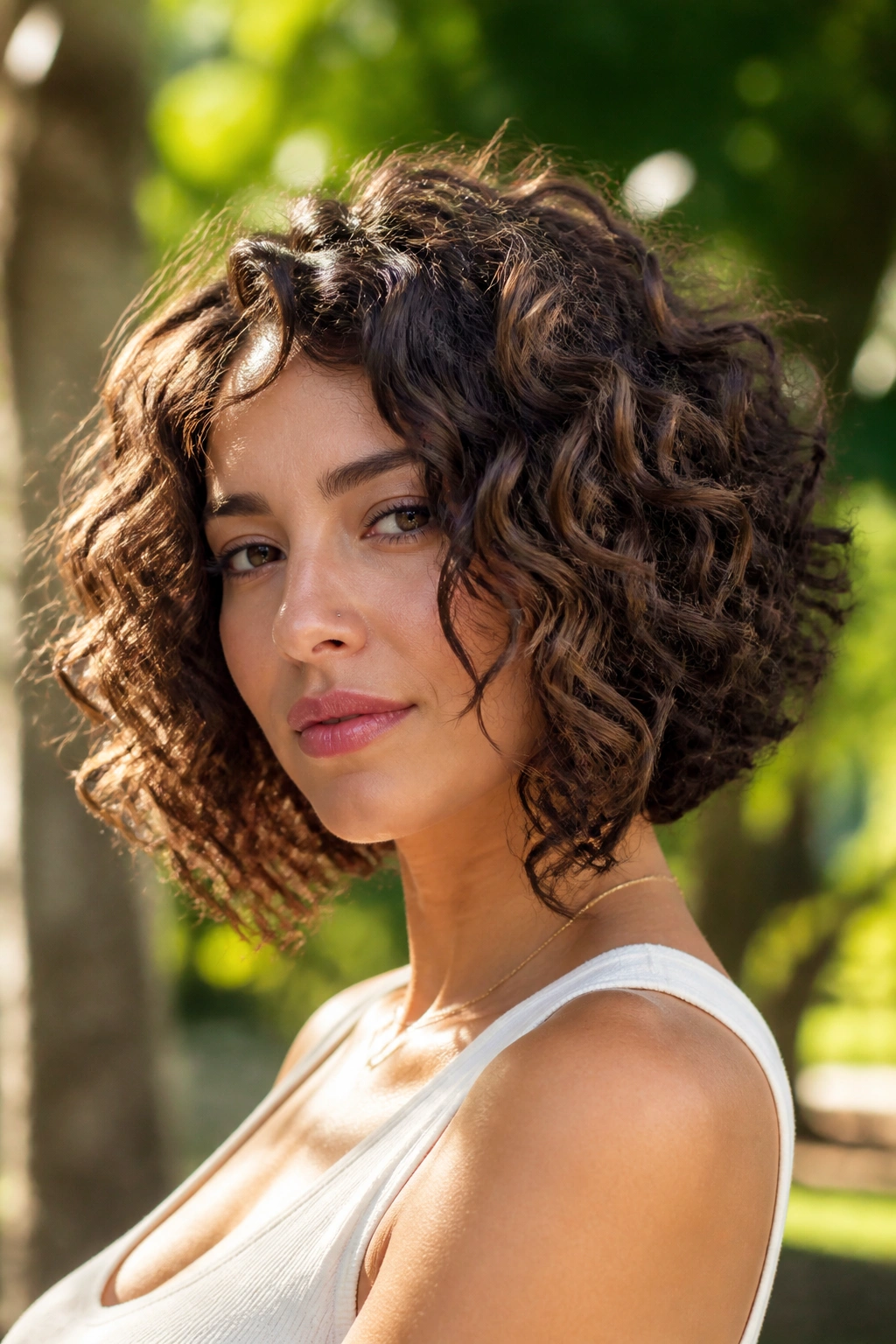
An A-line bob is a little subtler than the more dramatic angled versions. The front is longer than the back, but the shift is smooth rather than sharp, so the line feels almost easy.
That softer angle is part of the appeal. It gives you the movement of a forward-leaning bob without making the shape feel severe. On curly hair, the A-line can look polished even when the curls are doing their own thing, which is useful if you do not want a lot of daily fuss.
It suits people who like clean shape but do not want a strong stack in back. If you want your bob to look neat from every side, this is a reliable choice. It grows out well, too, which is something more people should care about.
18. Graduated Curly Bob

A graduated curly bob has built-in structure through the back, with layers that step down gradually from the crown to the perimeter. It is similar to a stacked shape, but the transition feels smoother and more blended.
This is one of the better cuts for dense curls that need direction. The graduation creates lift where the hair often collapses and keeps the lower section from looking too heavy. If you want your curls to sit in a compact shape instead of spreading wide, this cut does a lot of quiet work.
It does ask for skill. Poor graduation can look blocky or too round in the wrong spots. Good graduation looks almost invisible until the curls dry and suddenly the shape makes sense.
19. Jaw-Length Curly Bob
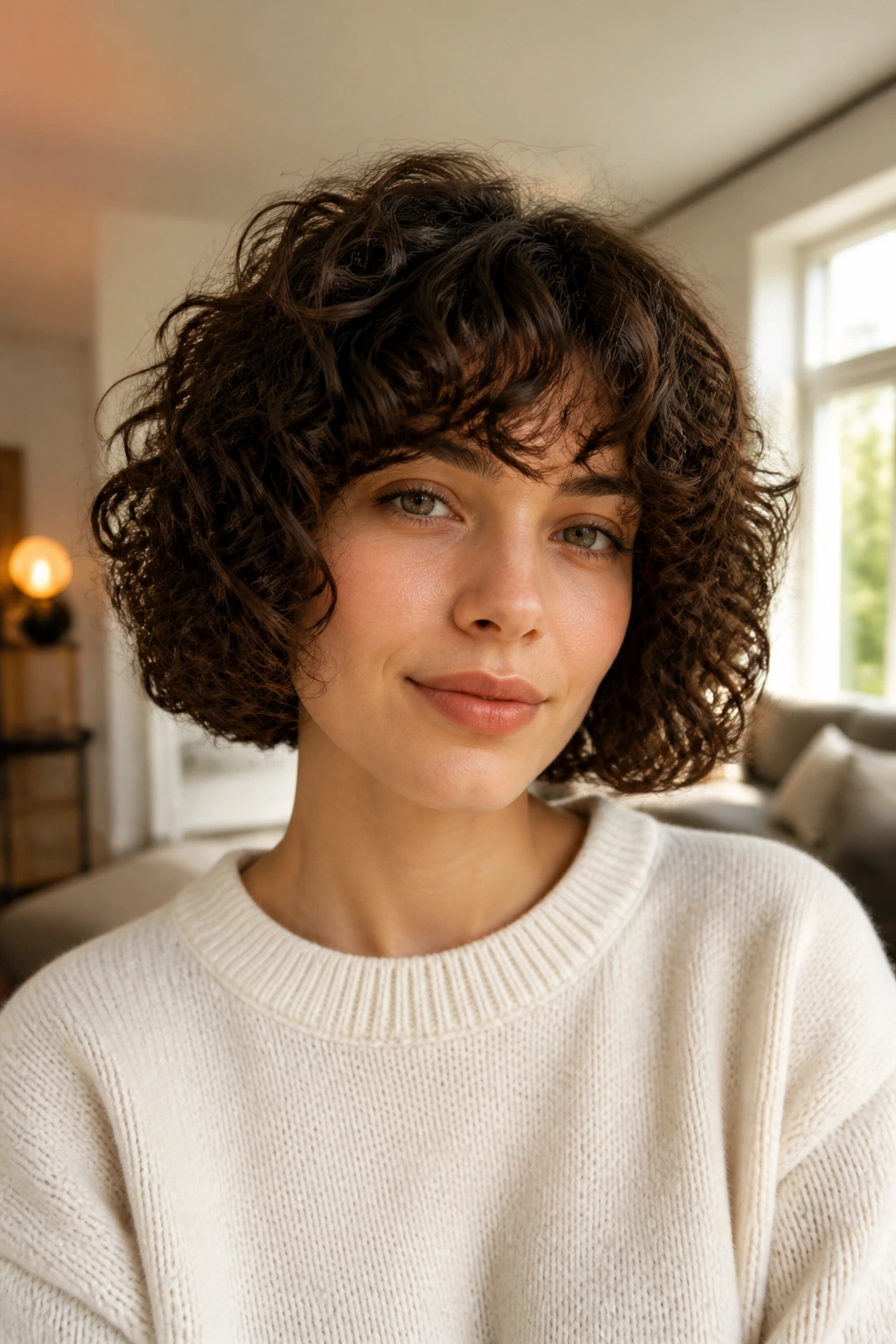
A jaw-length curly bob is short enough to feel fresh, but not so short that it loses its bob identity. It lands right around the jawline, which gives the face a crisp frame and puts the curls close enough to see their texture clearly.
This length can be gorgeous on defined ringlets and tighter curls because the shape feels sculpted. It can also be a little tricky if your shrinkage is dramatic. The dry length may need to sit well below the jaw so it does not jump up too high after washing.
One sentence to keep in mind: short bobs need better planning than longer ones. The difference between chic and awkward is often half an inch.
20. Collarbone Curly Bob with Face-Framing Layers

A collarbone bob with face-framing layers gives you the safest mix of length and shape. The base stays long enough to tuck, pin, or clip back, while the front pieces are cut to soften the cheekbones and jaw.
This is a smart option if you like having hair around your face but do not want a heavy curtain. The layers can start around the lips, chin, or cheekbone, depending on how much definition you want. That placement changes the whole mood of the cut.
It is also a good bob for people who change their style a lot. One day it can air-dry loose, the next it can be diffused into a fuller shape. Not every curly bob can do that without losing its identity, but this one can.
21. Undercut Curly Bob
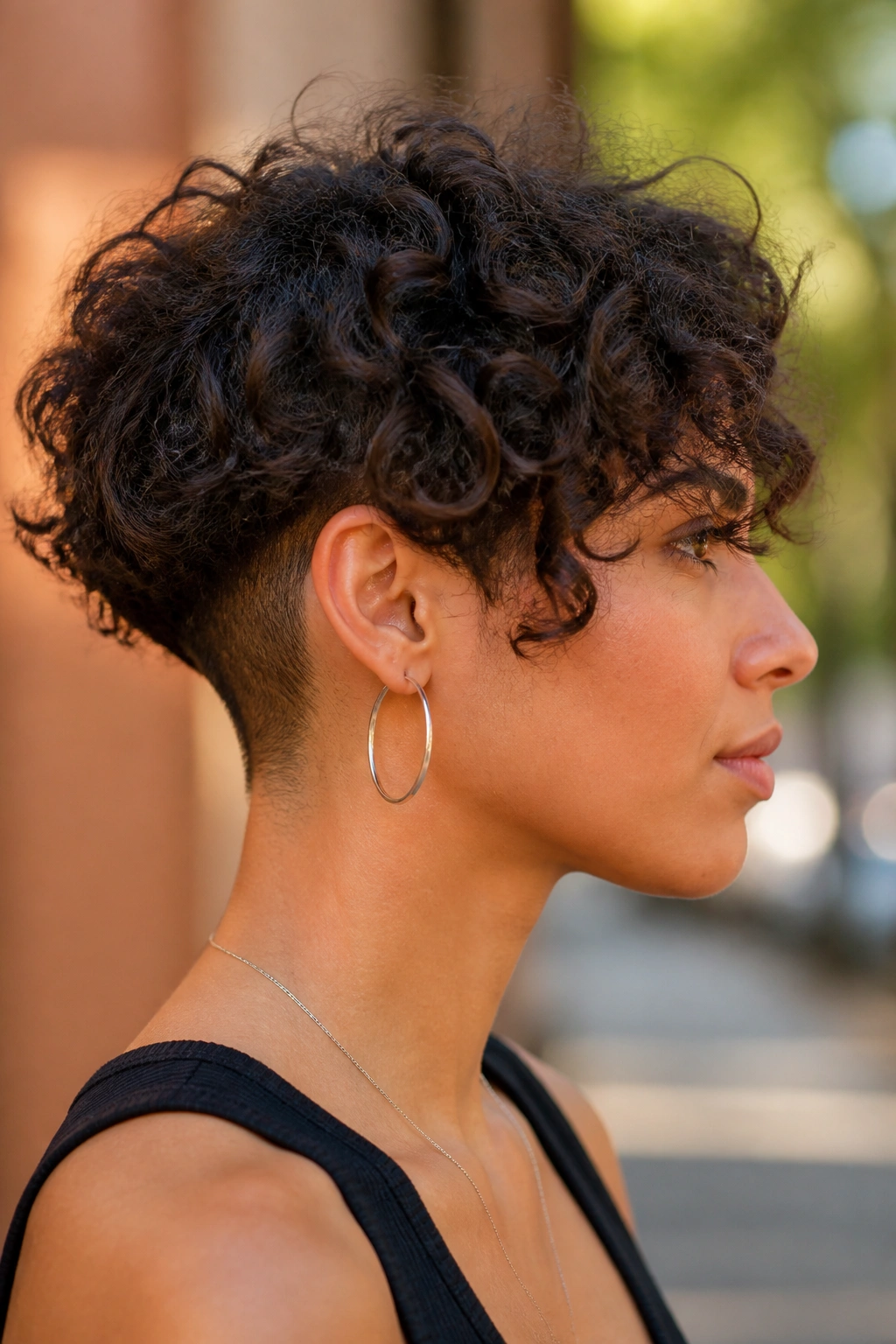
An undercut curly bob is for anyone who has stared at the bottom layer of thick curls and thought, “That is too much hair.” Shaving or clipping out a hidden section underneath removes bulk where it builds most.
Why It Helps
The top layer gets to sit more cleanly. The curl pattern can show without being pushed outward by the weight underneath. That means less triangle shape, less neck heat, and usually less drying time too.
- Hidden undercut: keeps the look subtle when hair is down
- Visible undercut: adds edge and lightness
- Best for: very dense curls, heavy waves, or anyone who gets helmet hair at the nape
- Downside: it needs upkeep as it grows out, or the shape starts to feel fuzzy underneath
This cut is practical first and stylish second. Which is part of why it works.
22. Bixie Bob for Curls
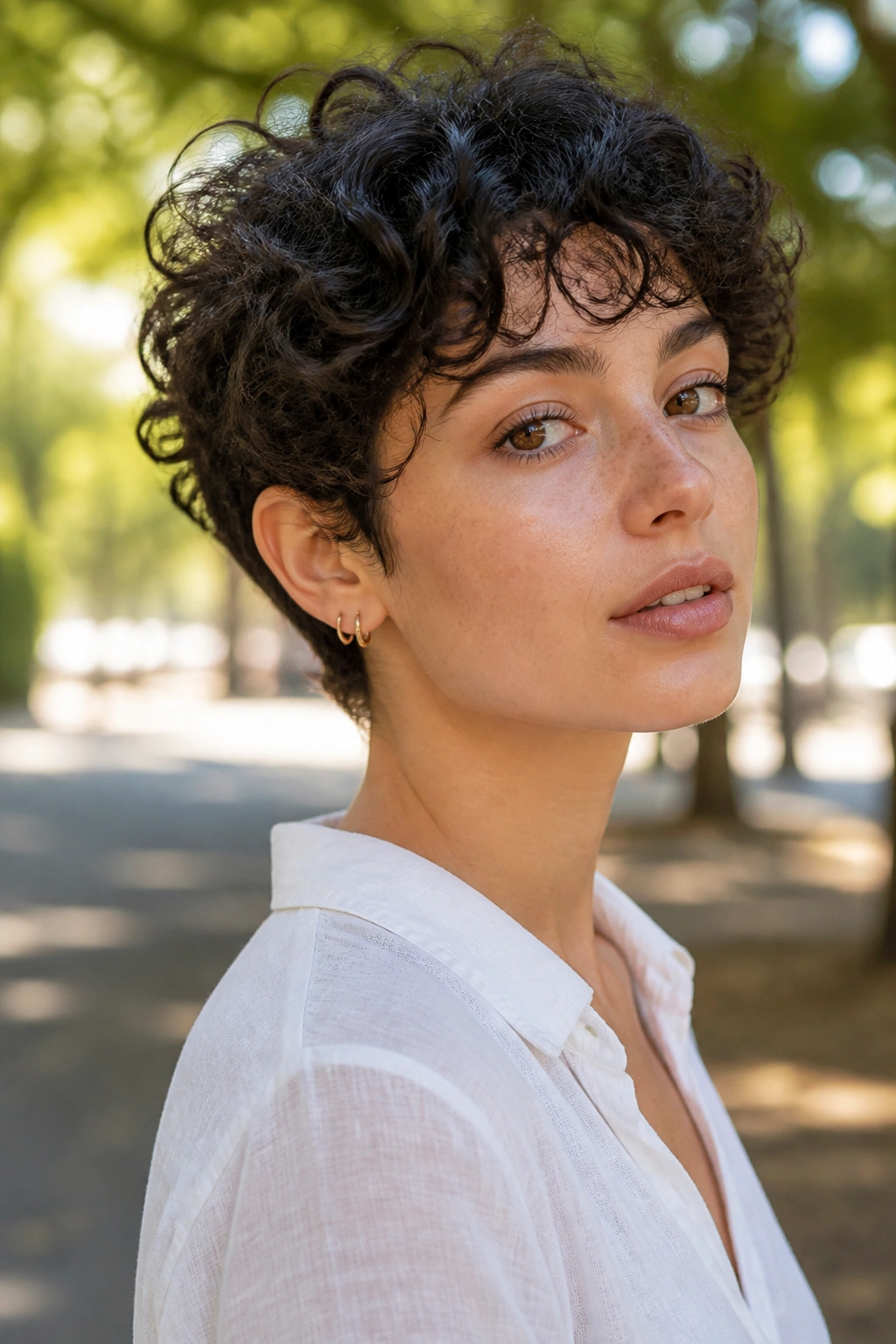
A bixie bob sits between a bob and a pixie, and on curls it can look playful without being childish. The sides are shorter, the nape is neat, and the top still has enough length to curl and move.
It is a good choice if you want something lighter around the head but do not want to commit to a full pixie. The shape shows off cheekbones and ears in a way that feels open, especially when the curls are springy and well defined.
This cut needs confidence and a little maintenance. The grow-out is not as graceful as a longer bob, and that is worth saying plainly. But if you want a shorter curly shape that still feels soft, the bixie bob earns its keep.
23. Side-Swept Fringe Curly Bob

A side-swept fringe gives a curly bob a diagonal line across the face, which can soften the forehead and break up a very round silhouette. It is gentler than micro bangs and less committed than a full fringe.
The fringe itself usually needs a little extra length so it can fall properly once the curl shrinks. That part matters more than people think. Cut too short, and the fringe springs up into a little puff that sits nowhere useful. Leave enough length, and it drapes in a way that feels easy.
Styling Note
A light mist of water plus a tiny bit of cream can reset the fringe without rewetting the whole head. That matters on days when only the front has gone strange.
24. Curly Bob with Hidden Layers

Hidden layers are for people who want movement but hate seeing choppy ends. The layers sit inside the haircut, so the outside line stays clean while the interior has room to breathe.
This is a very good option when your curls vary in strength. The outer shape hides the differences a bit, which keeps one side from looking dramatically lighter than the other. It also lets the curls clump together better, since the shape is not fighting itself at the perimeter.
If you have ever said, “I want layers, but I do not want to look layered,” this is the cut you were asking for. It is one of the quietest fixes in curly hair, and one of the smartest.
25. Square Curly Bob
A square curly bob has a more geometric edge than most curly cuts. The sides stay fuller, the bottom line stays firm, and the overall look feels deliberate rather than soft.
That can be a great thing. On strong curls, a square shape gives the hair a frame, which keeps it from becoming all roundness and no structure. It can also sharpen the jawline and make the haircut feel modern without looking severe.
The downside is that it leaves less room for error. If the curls are frizzy or uneven, the square outline can look bulky. Keep the styling clean, and the shape rewards you. Let it dry wild, and it can get boxy fast.
26. Soft Blunt Curly Bob
A soft blunt bob gives you the clean edge of a blunt cut without the hard finish. The ends still land in a clear line, but the interior shaping takes some of the stiffness out of it.
That makes it a good compromise for people who like neatness but do not want a hard geometric look. It sits well on medium-density curls and can feel especially nice if your hair has a mix of loose and tighter pieces. The perimeter looks controlled, while the inside keeps some movement.
This is one of those cuts that people often underestimate in pictures and like more in real life. The softness keeps it from feeling helmet-like. That alone is worth a lot.
27. Crown-Heavy Curly Bob
A crown-heavy bob puts the emphasis up top, which can be a lifesaver if your roots lie flat. The silhouette rises at the crown and narrows a bit through the sides, so the haircut has lift without needing a huge amount of styling.
This shape works well for round faces and for anyone who wants height more than width. It also gives the curls a chance to open away from the scalp, which makes the texture easier to see. A good diffuser helps, but the cut has to support the shape first.
Do not choose this if you hate volume on top. It is built to show it off. If you want the head to look a little taller and the sides a little slimmer, though, this one does the job.
28. Tousled Curly Bob
A tousled curly bob aims for softness, air, and a little bit of imperfect movement. It is not sloppy. It just prefers a looser finish over a tight, polished one.
The trick is getting enough separation without turning the curls frizzy. A leave-in conditioner, a small amount of gel, and a gentle scrunch can keep the pieces from clumping too hard. Once the cast breaks, the cut should still have a little bounce and a little edge.
This style is a nice middle ground for people who want casual but not lazy. It looks good on second-day hair, and that matters more than most salon photos admit. Hair that still looks intentional after sleeping on it earns its place.
29. U-Shaped Curly Bob
A U-shaped bob falls in a gentle curve, with the center a touch shorter than the sides. The line is softer than a blunt cut and less directional than an A-line, which is why it tends to feel easy on the eyes.
Curly hair likes this shape because it gives the curls a little room around the edges while keeping the middle from feeling heavy. The result is a subtle frame that works especially well if your curls are more compact in the back or if your hair grows wider at the sides.
It is a nice choice for people who like shape but do not want a cut that announces itself from across the room. Quietly flattering. No drama. That can be a relief.
30. Halo Curly Bob
A halo bob is rounded all the way around, so the curls form a soft circle that sits close to the head. It can look almost sculpted when the curl pattern is even and the cut is balanced.
Why It Has So Much Presence
The rounded outline creates fullness without needing extra length. That is a useful trick for curls that want to spread outward instead of downward. The shape gives the eye a single, clear silhouette to follow, which makes the haircut feel controlled even when the texture is lively.
A halo bob is especially striking on defined spirals and tighter curl patterns. It also photographs in a way that makes the shape obvious, which is helpful because the clean roundness can get lost if the cut is too textured. Ask for a dry check around the sides and crown so the circle stays even.
31. Long-Front Curly Bob
A long-front curly bob keeps the front pieces near the collarbone while the back stays much shorter. It is a forward-leaning shape, but softer than a full lob because the back still reads as a bob.
That extra length around the face is useful if you like to tuck hair behind one ear or let the curls drape along the cheeks. It can also help elongate the face a little, which is handy for rounder features. The long front pieces give you styling options without forcing you into one neat shape.
The balance matters here. If the front is too long and the back too short, the haircut starts to feel uneven in a bad way. Keep the transition smooth, and it looks deliberate.
32. Micro-Layer Curly Bob for Fine Hair
Fine curls need a light hand. A micro-layered bob uses small, subtle layers to keep the shape moving without stripping out so much weight that the ends go stringy.
That is the line to watch. Too many layers on fine hair, and the whole cut can collapse into wisps. Too few, and it goes flat. The sweet spot is usually a little internal shaping near the crown and very gentle movement through the mid-lengths.
This cut is a good match for looser curl patterns and fine waves that need help holding shape. Use a lightweight curl cream instead of something heavy and sticky. The hair should feel airy, not coated.
33. Dense-Curl Bob with Weight Removal
A dense-curl bob is about control, not collapse. The goal is to remove weight from the interior so the silhouette stays neat while the curls still have room to spring.
The Tools That Matter
- Point cutting: softens the ends without making them thin
- Internal debulking: removes bulk from inside the shape
- Avoid over-thinning: thinning shears can make some dense curls frizzy at the ends
- Dry evaluation: shows where the bulk actually sits once the curls settle
This cut is useful for hair that feels heavy even when it is short. Think thick spirals, coarse waves, or a lot of hair packed into a small head shape. The shape should feel lighter when you shake it out, but still full enough to hold a bob line. That balance is the whole game.
34. Deep Side-Sweep Curly Bob
A deep side-sweep gives a curly bob a strong diagonal line across the face. The hair falls heavily to one side, which can make the cut feel glam without turning it formal.
This works well when you want movement near the eyes and cheekbones. It can soften a strong jaw, cut down on forehead space, or help a bob feel less symmetrical. The side sweep also gives the curls somewhere to land, which helps when one side is curlier than the other.
A little pin or clip can keep the sweep in place on days when the root wants to rebel. That is not a flaw. That is curly hair being curly hair.
35. Grown-Out Curly Bob
A grown-out curly bob is the in-between length that many people end up loving more than the original haircut. It sits between chin and collarbone, which gives the curls enough room to settle while still keeping the bob shape visible.
This length is forgiving. It clips back easily, it shrugs off a missed trim better than a strict blunt cut, and it often looks even better on day two or three. If you are unsure whether to stay short or move toward a lob, this is the safest landing place.
There is a nice honesty to this shape. It does not pretend to be crisp and exact. It just lets the curls live a little, and sometimes that is the smartest haircut of all.
Final Thoughts
The best curly bob is not the shortest one, or the trendiest one, or the one that looks neatest on a hanger. It is the one that puts the weight in the right place and respects how your curls actually move when they dry.
If you remember only one practical thing, make it this: curly bobs should be discussed in dry shape, not just wet length. Shrinkage, density, and parting change everything. A stylist who checks those details will usually give you a cut that looks better on day one and still makes sense three weeks later.
And if you are torn between two options, pick the one with the cleaner silhouette. Curls bring plenty of personality on their own. The haircut’s job is to give them somewhere good to land.