



A good bob box braid install does two jobs at once: it clears the neck, and it sharpens the face. On Black women, that shape can look clean, soft, sharp, or a little bit dangerous depending on where the braids stop and how the ends are cut.
Bob box braids are not a single look. A blunt chin-length cut feels crisp. An angled bob brings movement. Knotless roots sit flatter at the scalp, and a few cuffs or beads can turn a plain cut into something with attitude.
The parting matters more than people think. So does braid size. Too much hair in each braid makes the ends bulky, and a bob that should look neat starts to puff and swell in the wrong places. That’s the part many style boards skip, which is a shame because the shape is where the style lives.
The right choice comes down to comfort, maintenance, and the kind of line you want around your jaw and neck. Some bobs need almost no styling after install. Others only work if you keep the fringe, edges, or accessories in check. The styles below cover the ones worth asking for.
1. Classic Chin-Length Bob Box Braids
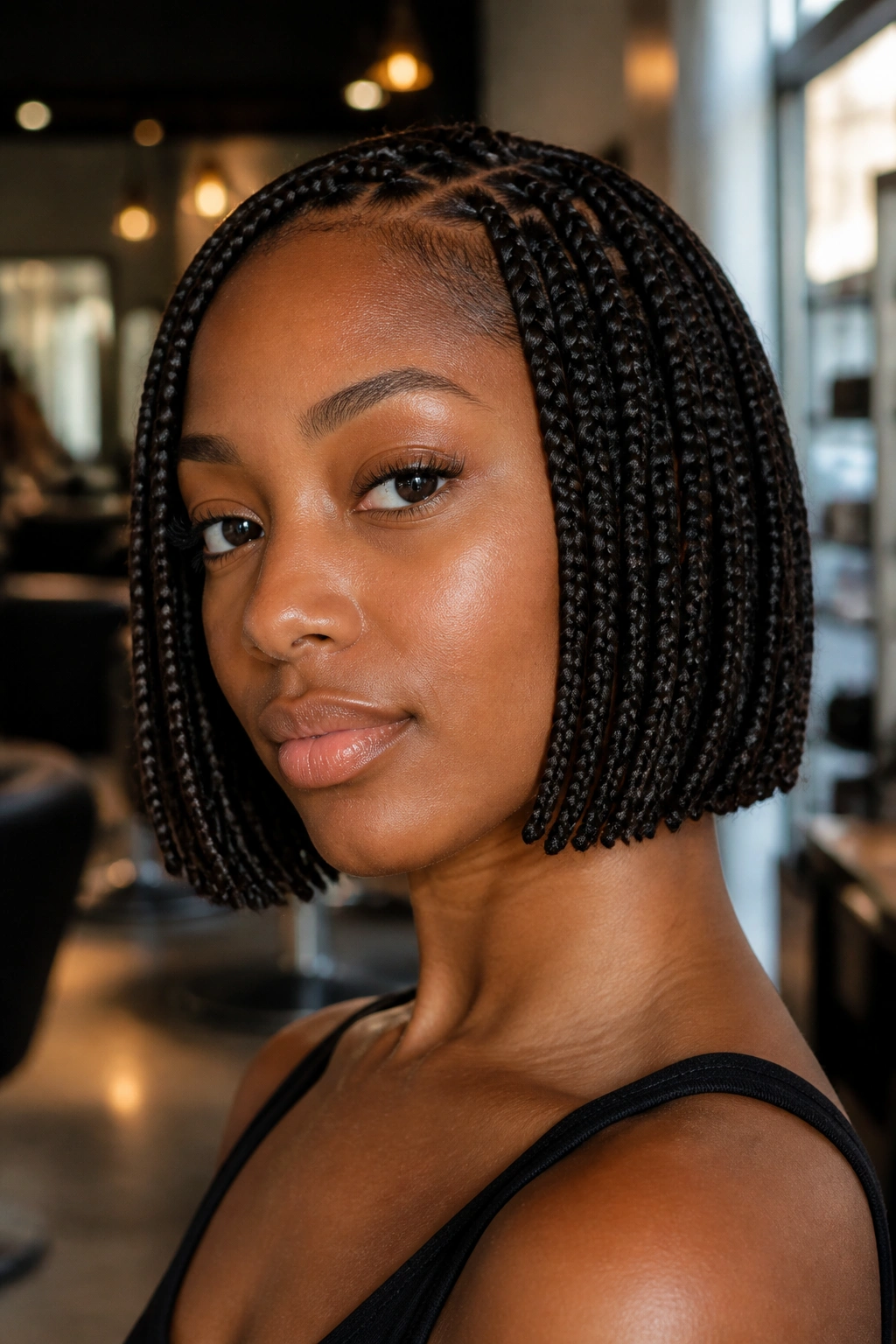
Nothing beats the clean line of a chin-length bob. It sits right in that sweet spot where the braids feel tidy without swallowing your face, and that matters a lot on Black women with sharp cheekbones, fuller cheeks, or a strong jaw that deserves a frame.
Why this cut keeps showing up
A straight bob gives the braid pattern room to show. The ends land around the jaw or just under it, so the eye sees the shape first and the braid size second. That’s why this style looks crisp even when the braids themselves are medium and plain.
If you want the classic version, ask for finished braids that fall about 8 to 10 inches. Keep the ends blunt rather than wispy, and make the parting medium-sized so the scalp pattern stays neat without looking too busy. Pre-stretched hair helps the bottom line stay even.
My tip: check the length while you’re standing up, not only in the chair. Sitting can make a chin-length bob look longer than it will once you walk out.
2. Angled Asymmetrical Bob Box Braids

An angled bob is the easiest way to make box braids look intentional. One side sits a little longer—usually about 1 to 2 inches—and that tiny tilt changes everything.
The diagonal line pulls the eye across the face instead of stopping it at the chin. That works especially well if your face is round, heart-shaped, or if you wear glasses and want the braids to sit around the frames instead of fighting them. I also like this shape when the braids are medium-sized, because chunky braids can make the angle look blunt in a bad way.
You do have to trust the cut. If the longer side is too dramatic, the style starts to feel costume-y. Keep the difference subtle and let the parting stay simple. The bob should look like it was cut that way on purpose, not like someone got bored halfway through.
A side that drops just a little lower near the jaw is enough. Clean. Sharp. Easy to wear.
3. Triangle-Part Bob Box Braids

Why do triangle parts change the whole style so much? Because the scalp becomes part of the design, not just the place where the braids live. A triangle-part bob box braids install feels a little bolder right away, even if the braid length is plain.
The shape works best when the parts are big enough to read from a few feet away. I like triangles that are around 1 to 1.5 inches across for a bob. Smaller than that, and the pattern can start to look crowded; bigger than that, and the shape loses its edge. The braids themselves can stay medium, which keeps the style balanced.
How to ask for it
Tell your braider you want the triangles to stay visible around the crown and side panels. That way the pattern doesn’t disappear once the braids settle. The whole point is that little flash of geometry near the scalp.
This is a good pick if you want the braid pattern to do some of the heavy lifting. You do not need extra color or beads. The parts are already doing a lot.
4. Knotless Bob Box Braids

If your scalp gets sore fast, knotless bob box braids are the version to ask for first. The roots lie flatter, the hair feeds in more gradually, and the whole look feels lighter at the hairline.
That lighter feel matters even more in a bob because the cut is short enough to sit close to the neck and jaw. You notice every bit of tension. You also notice any bump at the root. Knotless braids solve both problems, and they sit nicely under hats, scarves, and hoodies without that lumpy start knot showing through.
- The root looks flatter and cleaner.
- The braids sit a little easier around the temples.
- The style feels less heavy on fine edges.
- The bob keeps its shape better when you tuck it behind the ears.
I like knotless bob box braids for clients who want a style they can wear to work, brunch, and then straight into a long day without thinking about it. Still, don’t go too chunky with the braids. Huge knotless braids in a bob can lose the sleekness fast.
5. Jumbo Bob Box Braids

Jumbo bob box braids are blunt, bold, and done with their point. That is the charm. The bigger braid size makes the cut look fuller, which can be gorgeous on thicker hairlines and on people who want the style to read from across the room.
They also save time in the chair. Fewer braids means a shorter install, and that’s worth something when you know you do not want to sit through a marathon. The tradeoff is simple: jumbo braids show mistakes faster. If the parting is sloppy or the sections are uneven, you’ll see it immediately.
This style looks strongest when the bob lands around the chin and the ends are cut clean. If the braids get too long, the weight starts to pull the shape downward. If they get too short, the roundness can feel top-heavy. A 12- to 16-braid install often hits the sweet spot, though the exact count depends on head size and braid thickness.
I reach for jumbo bob box braids when I want the hair to feel like an outfit, not a background detail. They have presence. No fuss.
6. Micro Bob Box Braids

Unlike jumbo braids, micro bob box braids put the focus on movement, not size. The parts are tiny, the finish looks soft, and the whole style sits close enough to the head that the bob can swing without looking bulky.
This is a good choice if you like a neat profile and you do not mind a longer install. Micro braids take time. There’s no way around that. But once they’re in, they tend to give a very smooth line around the jaw, which can be lovely on narrow faces or on anyone who wants the bob to feel light instead of chunky.
The one thing to watch is frizz. Tiny braids in a bob can fuzz up faster at the ends than people expect, especially if you wear them loose every day. A silk scarf at night helps. So does not over-oiling the scalp. Heavy products make small braids slip and look limp.
If you want a low-profile bob that still has detail, this is the one. If you want quick and easy, skip it.
7. Stacked Layered Bob Box Braids
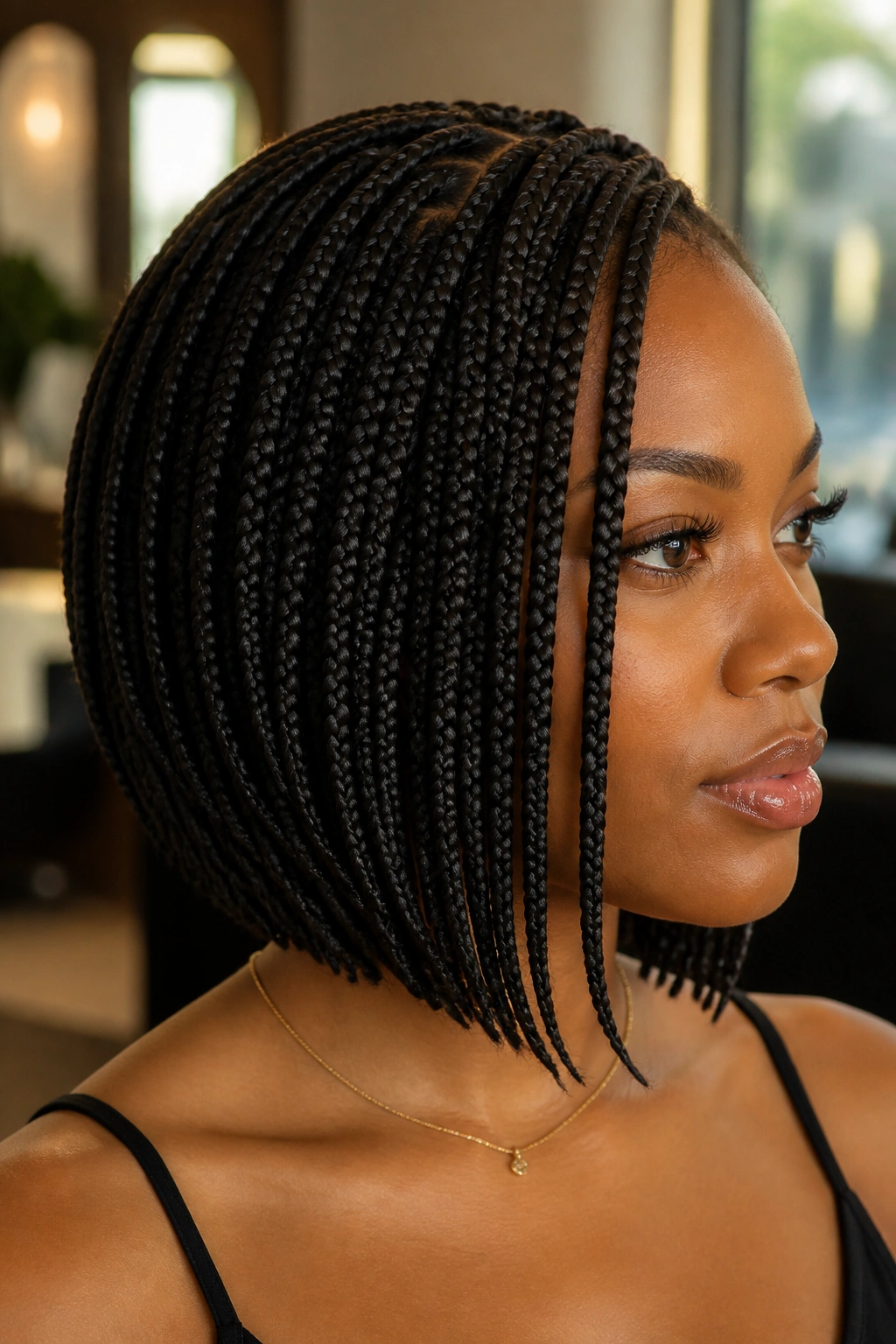
A stacked layered bob fixes the number-one complaint people have about short braids: flatness. Shorter layers in the back and slightly longer pieces toward the front give the cut lift, shape, and a little swing at the ends.
That extra structure matters on box braids because braids do not move like loose hair. They need the cut itself to create motion. A stacked bob does exactly that. The back sits close and tidy, while the front falls into a sharper frame around the cheeks and jaw.
What to tell your braider
- Keep the nape shorter so the back hugs the neck.
- Leave the front 1 to 2 inches longer than the back.
- Use medium braid size so the layers stay visible.
- Trim the ends cleanly once the install settles.
A stacked bob can look amazing. It can also look like a pyramid if the layers are too heavy. That’s the trap. Keep the graduation subtle and let the shape breathe a little.
8. Curly-End Boho Bob Box Braids

The first thing you notice is the movement. Curly-end boho bob box braids soften the whole look because the ends stop being blunt and start feeling a little airy, almost like the braids are brushing the collarbone even when they’re short.
I love this version on Black women who want texture without giving up the structure of box braids. The braided body keeps the style neat, and the loose curls at the bottom third add a softer finish. It reads less severe than a straight bob, which is useful if you wear minimal makeup or like a more relaxed look.
Keep the curls concentrated near the ends. If the loose pieces start too high up the braid, the bob can lose its clean shape and get frilly fast. A few packs of water-wave hair or a similar curl pattern are usually enough, depending on thickness and length.
The touch I like most is letting a few curls sit unevenly. Not all of them need to be perfect. A little mess at the ends makes the whole style feel lived in.
9. Beaded Bob Box Braids
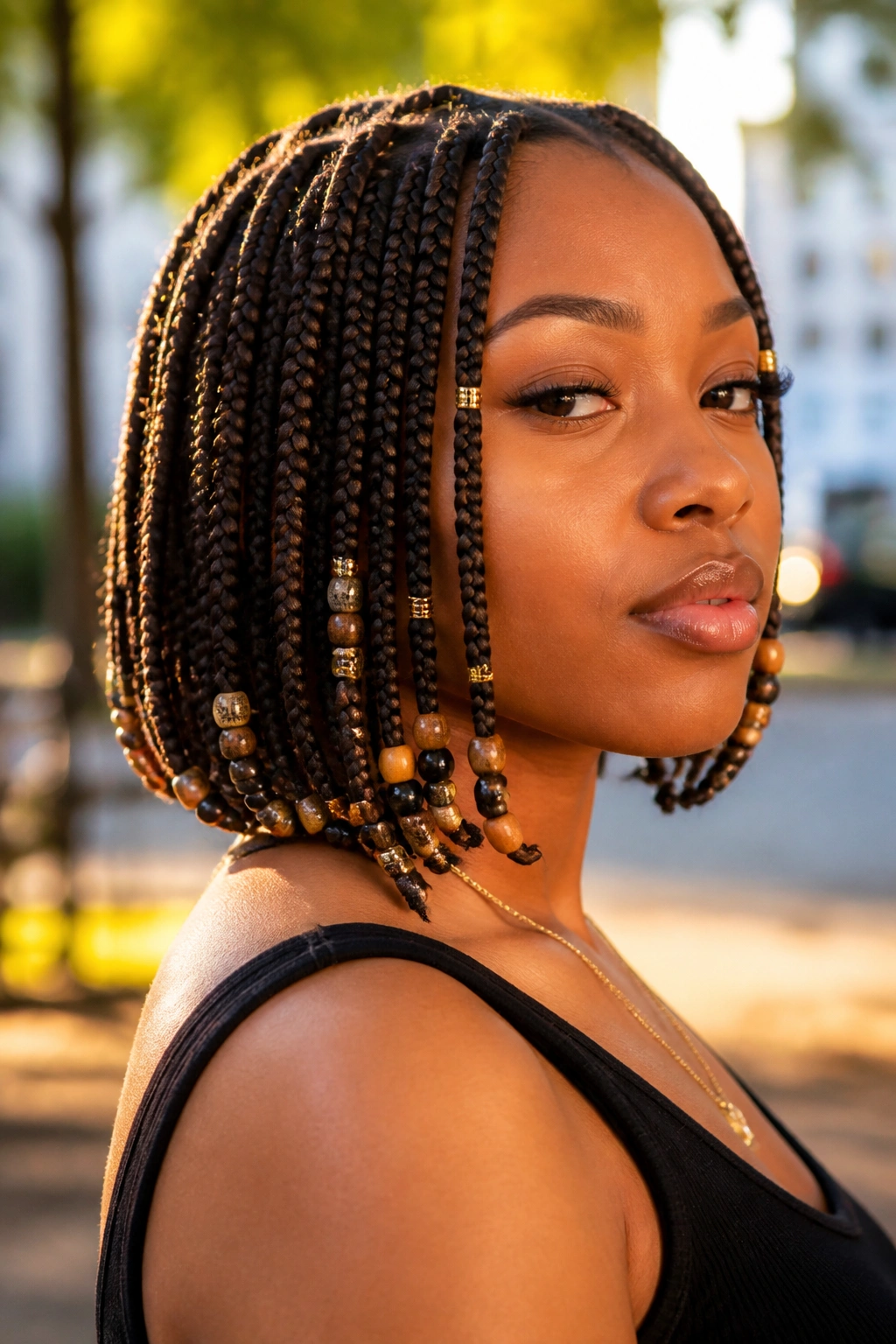
Beads matter more on a bob than people expect. The shorter length keeps them near the face, so even a small handful changes the whole vibe. Beaded bob box braids can lean playful, polished, or ceremonial depending on how many you use and where you place them.
A few beads at the very ends do the job. You do not need to load every braid. In fact, too many beads can drag the bob down and make it swing awkwardly. Four to six accent braids are often enough, especially if the rest of the style is already clean and centered.
A small detail that helps
Place the heavier beads lower on the braid, not right at the root. That keeps the braid from flopping forward around the forehead. If you want the style to stay neat for longer, use clear or matching beads instead of super-heavy decorative ones.
I like this look for weekends, festivals, and any day when plain braids feel too safe. It has personality without trying to become a costume.
10. Color-Block Bob Box Braids

A little color can do more than a dramatic cut sometimes. Color-block bob box braids make a blunt bob feel sharper because the eye reads the contrast first, then the shape. That’s useful if you want the haircut to feel like part of the design, not just the frame around it.
The trick is placement. Bright ends near the jaw can pull attention straight to the face, which is nice if you want your features front and center. Dark roots with copper, honey, burgundy, or auburn ends keep the style grounded. A peekaboo panel underneath can work too, especially if you want the color to show only when the bob moves.
I prefer a clean two-tone story over a lot of colors fighting each other. One strong contrast is enough. The bob is already doing visual work, so the color should support it, not crowd it.
This is the style I’d pick for someone who wants the braids to feel a little louder without adding more length. Short hair can still make a statement. Loudly.
11. Deep Side-Part Bob Box Braids

A deep side part gives bob box braids instant shape. It shifts the weight to one side, opens up the forehead, and brings a little drama without needing any extra length or accessories.
If your face needs more softness around one side of the jaw, this is an easy fix. The part can sit about 2.5 to 3 inches over from the center, though the exact line should follow your face, not a ruler. On Black women with strong brows or high cheekbones, that offset can look especially clean.
What to watch for
A part that goes too deep can expose too much scalp and make the style feel sparse at the crown. That’s a real thing. Keep the first row close enough to the hairline that the braids still have support, especially if the install is medium or jumbo.
I also like to tell people not to force the bob behind one ear too hard with this style. Let the side part keep its shape. The whole point is the line, and once it collapses, the effect goes with it.
12. Half-Up Bob Box Braids

I like this one for days when a low ponytail would be boring and full down feels like too much. Half-up bob box braids give you a little lift at the crown, but they leave enough length down to keep the bob shape visible.
This style works especially well on medium bobs, roughly 9 to 12 inches long, because there’s enough hair to twist into a small knot, top puff, or clipped half-pony without stealing all the length from the back. The result feels neat without being severe.
- Use a soft scrunchie or small braid tie to avoid pulling at the roots.
- Leave two or four braids loose in front if you want face-framing.
- Keep the top section loose enough that it does not dent the crown.
- A ribbon or a single cuff at the base is enough. More can get messy fast.
I would not pull this style tight every day. That turns a cute bob into a sore scalp. Keep the tension light and the shape relaxed.
13. Braided Bang Bob Box Braids
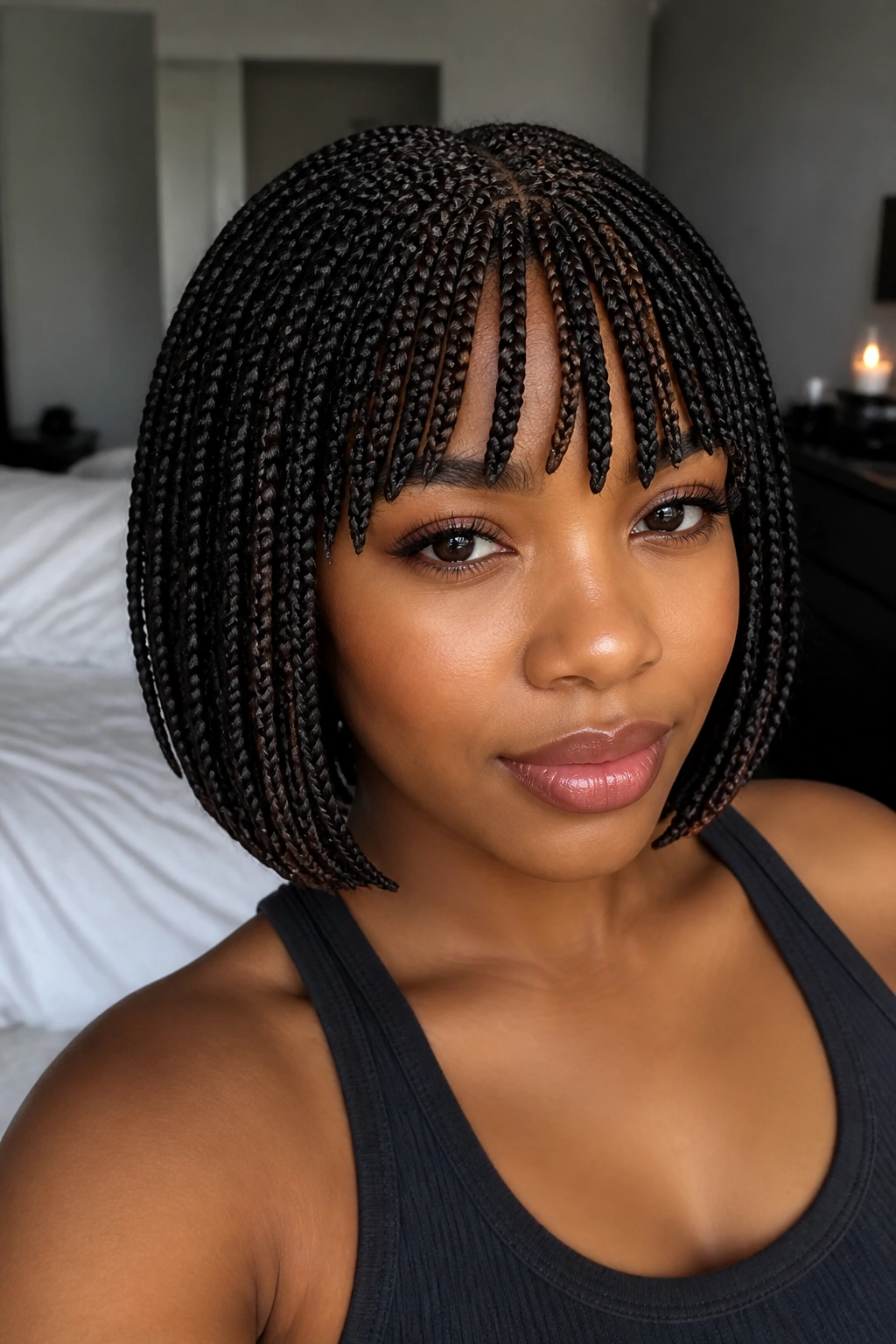
A braided bang bob does one thing well: it changes the whole face without changing the length. That’s why it feels so fresh when a regular bob starts looking familiar.
The bang can be blunt, split slightly in the middle, or swept to one side, but the idea stays the same. You pull a few braids forward so they graze the brow or land just above it, and suddenly the style feels more fashion-forward. It can soften a long forehead, break up a wide face, or hide a hairline that’s been through one too many installs.
The one catch is upkeep. Bangs touch makeup, forehead oil, and your hands all day. They frizz first. If you want this look, plan on refreshing those front braids a little more often than the rest of the head.
I like this version best when the bangs are not too dense. A few well-placed front braids do more than a heavy curtain. Heavy bangs can make the bob feel stuffy.
14. Shoulder-Grazing Lob Box Braids
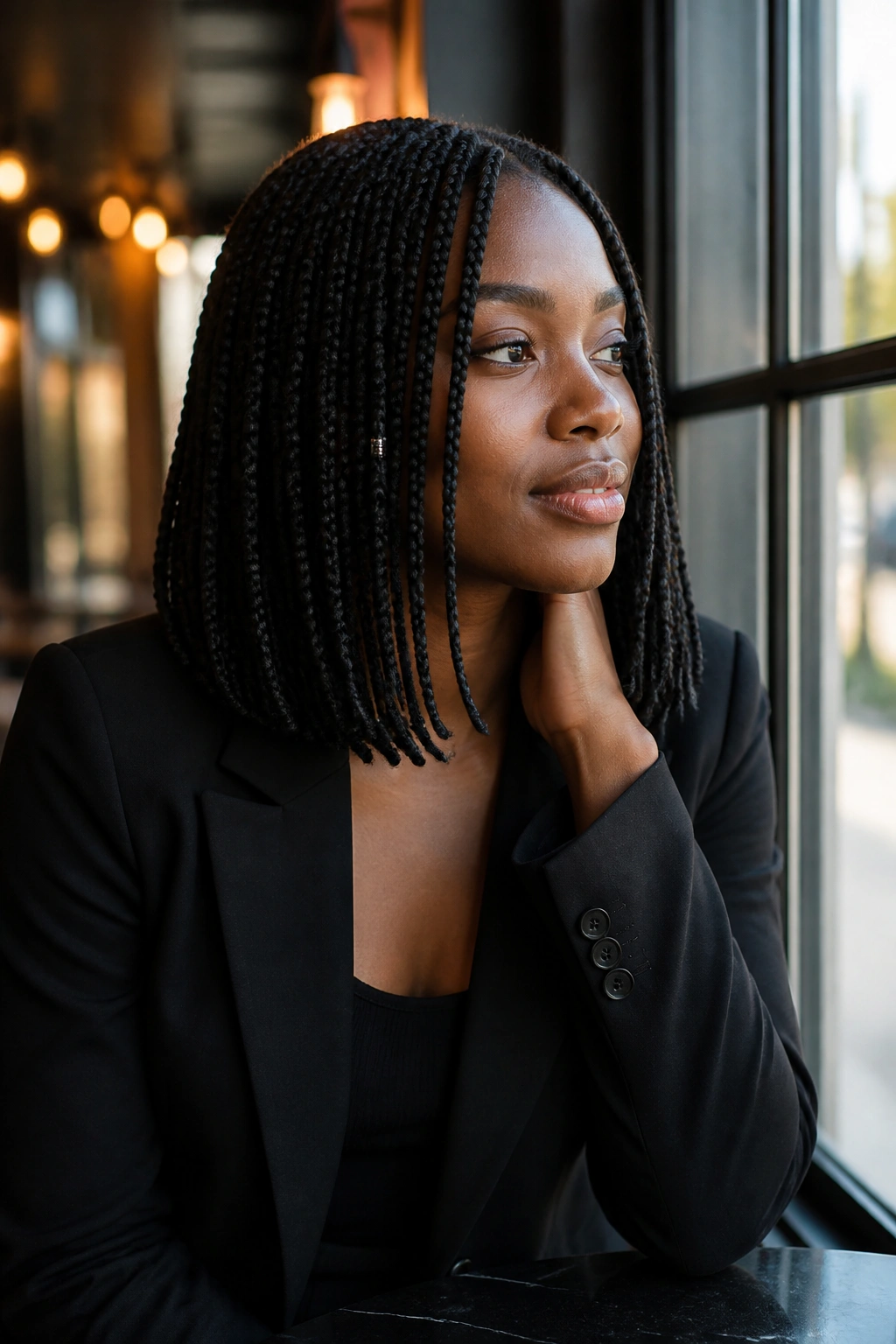
If a chin-length bob feels too short, the lob is the easiest step up. Shoulder-grazing lob box braids keep the same boxed shape, but the extra length gives the braids more swing and a little more room to tuck behind the ears.
This is the version I’d choose for someone who wants braids that work with blazers, hoop earrings, and a little more styling flexibility. You can wear it down, pin one side back, or gather the front into a half-up style without fighting the length. It’s also kinder if you like having hair that brushes the collarbones instead of stopping above the jaw.
A lob does need discipline. If the ends get ragged or the braids vary too much in length, the shape can go limp fast. Keep the cut even and the braid size medium so the length feels intentional rather than unfinished.
If you are unsure between bob and longer braids, start here. It gives you the structure of a bob without the feeling that your neck is carrying all the work.
15. Swirl-Part Bob Box Braids
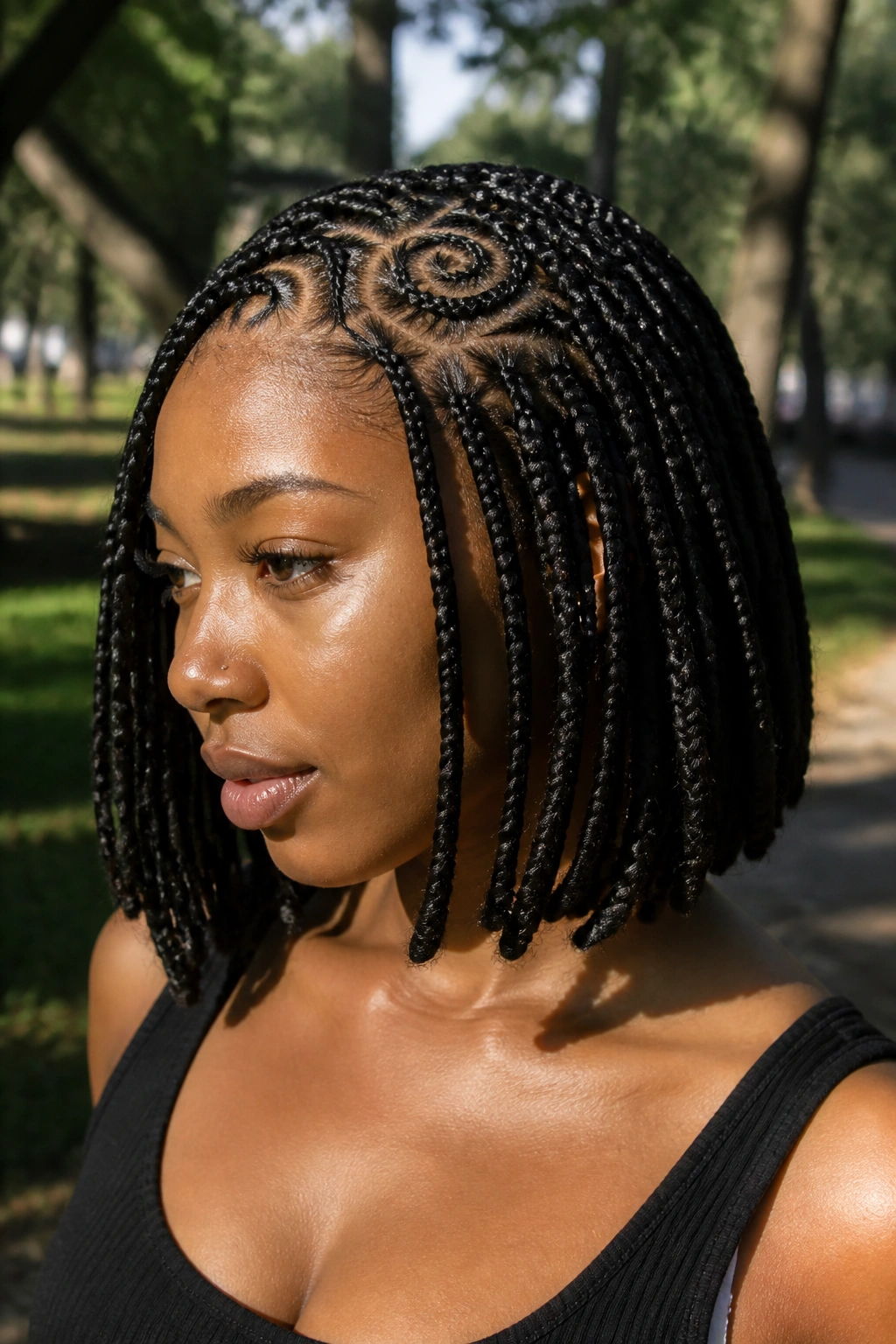
Swirl parts are the cleanest way to make a bob look custom. Instead of straight lines marching from front to back, the sections curve around the scalp in soft arcs that follow the head shape. That small shift changes the whole mood.
The style is especially good when the braids are medium, because the parting has enough room to breathe. Tiny braids can make the swirl look busy. Jumbo braids can hide it. Medium is the sweet spot. The curve shows up, the bob stays tidy, and the pattern feels deliberate.
Why it takes patience
Curved parts take more time to map out. A good braider has to keep checking symmetry from side to side, and that can slow the install a bit. The payoff is worth it if you like neat details that reward a second glance.
I’d ask for swirl parts when you want the scalp pattern to carry the style. You can keep the braids plain, keep the length modest, and still end up with something that feels special.
16. Gold-Cuff Bob Box Braids
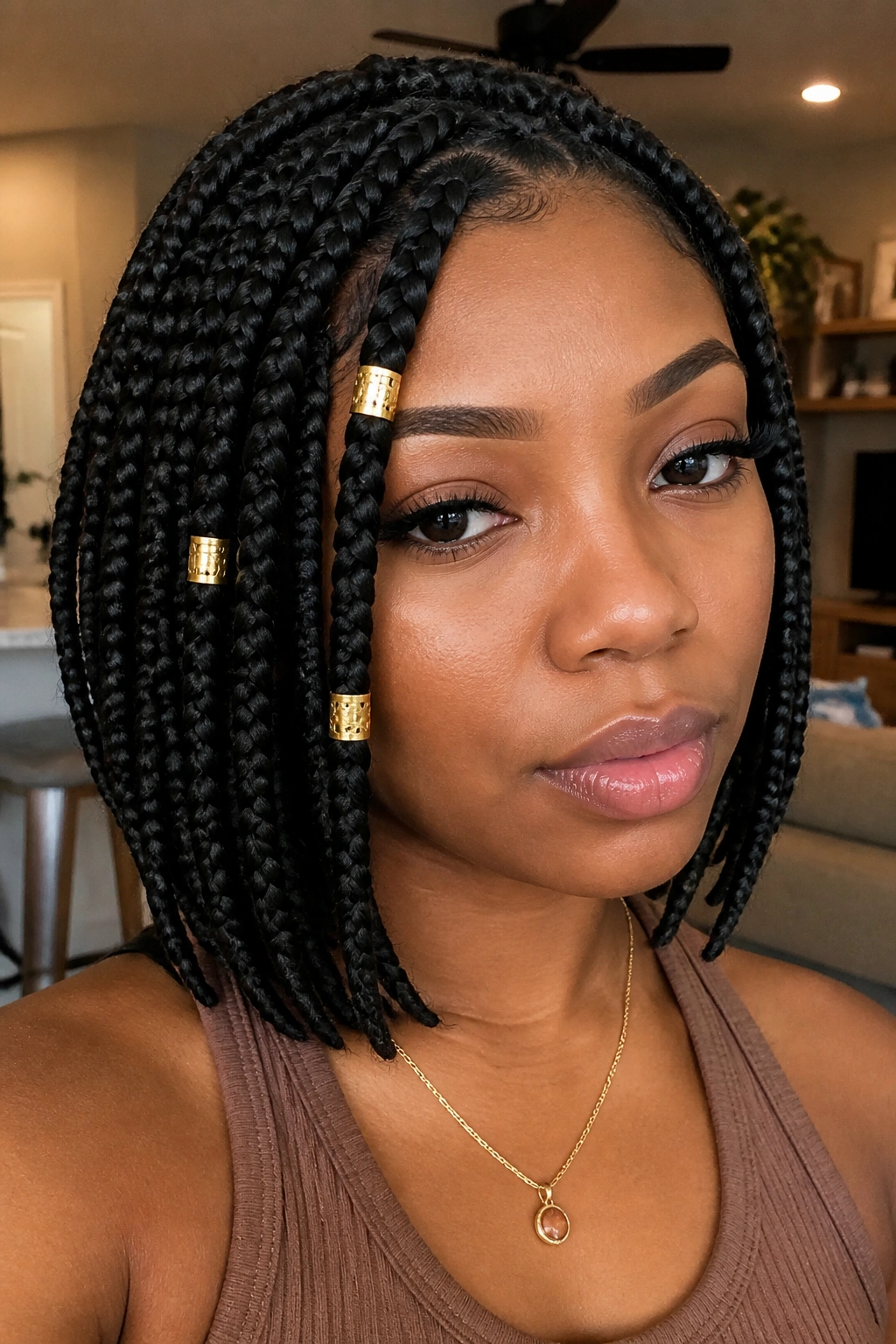
Do a few gold cuffs matter? More than people think. A short bob leaves very little room for decoration, which means each cuff reads loud and clear. Put the right one in the right place, and the style goes from plain to polished in under a minute.
I like gold cuffs on medium-length bob box braids because they catch the ends without fighting the cut. Three to six cuffs is plenty for most heads. Put them on the outer braids near the face or lower half of the bob, then leave the rest clean. If every braid has hardware, the style starts to look crowded.
The best cuff placement is uneven on purpose. One near the jaw, one lower on the opposite side, maybe one tucked in the back. That unevenness keeps the eye moving. Too much symmetry makes the style feel stiff.
A cuffed bob is a small lift, not a full costume. Keep the metal simple, and let the braids do the talking.
17. Fulani-Accent Bob Box Braids
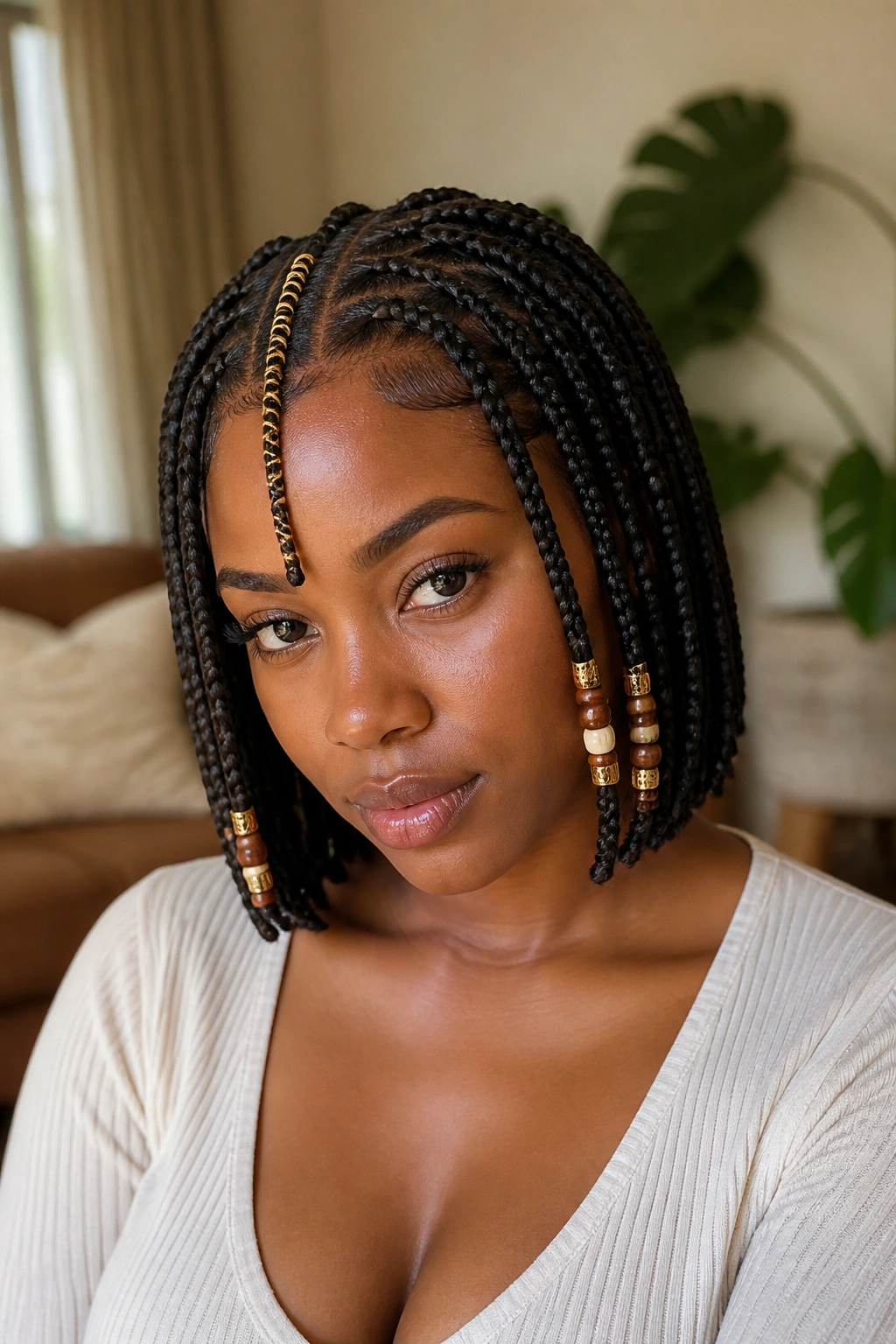
If you like a braid pattern with a little history and a little edge, this is the one. A Fulani-accent bob borrows the side and center detailing you see in traditional Fulani-inspired patterns, then trims it down to a bob length so it stays wearable every day.
The accents usually live in one or two front braids, or in a neat center row that draws the eye down the middle of the head. The rest stays in standard box braids. That balance matters. You want the accent to feel like a feature, not a costume piece pasted onto the front.
- Keep the accent braids near the face.
- Add beads or cuffs only to those few strands.
- Let the back stay simple so the pattern doesn’t get crowded.
- A chin-length or lob finish works better than a super-short cut.
I like this style because it respects pattern without overloading the head. There’s room to breathe, and the bob keeps the whole thing grounded.
18. Tapered Nape Bob Box Braids
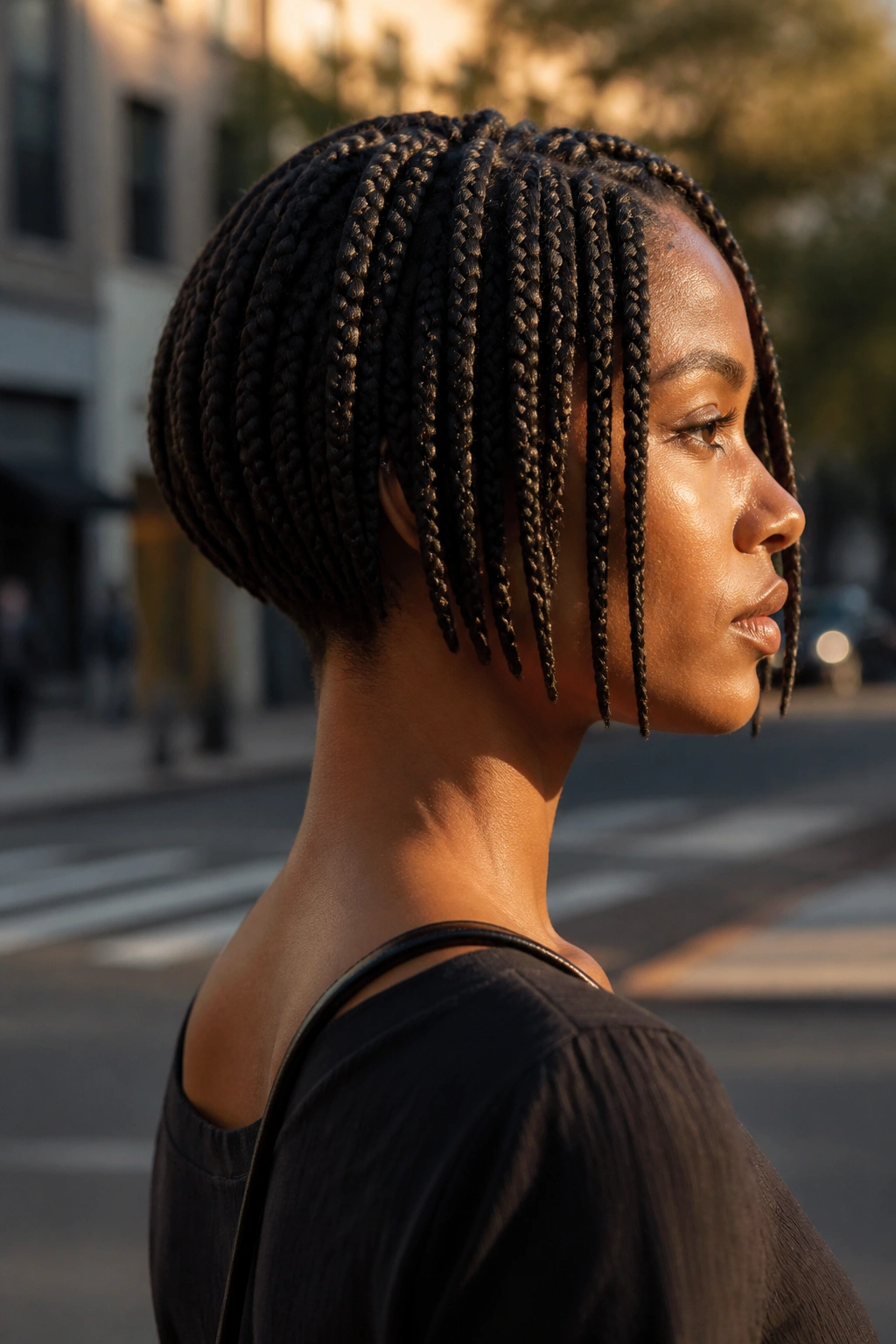
A tapered nape bob is the one I recommend when you want the cleanest neckline. The back sits shorter and closer to the neck, while the front hangs a touch longer around the chin or cheekbones. That little taper makes the whole style feel sharp from every angle.
It’s a smart choice for people who wear jackets, collars, or scarves a lot. The shorter nape keeps the braids from bunching under clothes, and the slightly longer front keeps the face framed instead of boxed in. On Black women with thicker hair or denser installs, that taper also helps the bob lie down instead of ballooning outward.
This cut is not flashy, which is exactly why it works. It looks neat on Monday and still looks neat by the end of the week. No constant fuss. No hard styling routine.
If you want one bob box braid style that feels clean, practical, and flattering without asking for much from you, start here. It’s the calmest kind of good-looking, and sometimes that is the smartest move of all.
