



Thin hair and blunt bob haircuts are a smart match. A clean line at the bottom makes hair read fuller, while wispy layers can drain away the little weight you’ve got. If your ends start looking see-through the minute they pass your shoulders, you already know why this matters.
The good blunt bob haircuts for thin hair do not try to fake thickness with a lot of extra movement. They build the illusion of density by keeping the outline solid, placing the length in the right spot, and avoiding the kind of choppy cutting that makes fine strands look scattered. A jaw line, a chin line, or a collarbone line can change everything.
I’ve always thought the worst advice for thin hair is “just add layers.” Sometimes that works on coarse hair. On fine hair, it often does the opposite, because the ends lose their edge and the cut starts to look tired fast. A blunt perimeter is blunt for a reason. It gives the eye something strong to follow.
The cuts below lean on that idea in different ways. Some are short and sharp. Some are longer and softer around the face. A few rely on a part, fringe, or finish to make the whole thing look denser than it really is. And yes, that little distinction matters more than most people think.
1. Chin-Length One-Length Blunt Bob

This is the blunt bob that does the cleanest job of all. The ends sit right at the chin, the perimeter stays straight, and the whole shape reads as full even when the actual hair count is modest.
A chin-length blunt bob works because the eye lands on the strongest part of the face. The jaw, chin, and cheekbones do some of the work for you, so the hair does not need to be overloaded with tricks. If your hair is fine but not flat at the crown, this cut can look expensive in the plainest possible way.
What to ask for at the salon
- Keep the length right at the chin, or a half-inch below if your jaw is wider.
- Ask for a one-length perimeter with no heavy internal layers.
- Skip razor cutting; it can make the ends look fuzzy.
- Use only a light dusting on the ends if they need cleanup.
Best for: oval faces, narrow jaws, and hair that collapses when it gets too long.
One small warning: if your neck is short, don’t let this ride too high. A chin-length bob can hit the wrong spot and make the face look crowded. Move it down a touch, and the whole thing breathes.
2. Jaw-Length French Bob With a Soft Bend
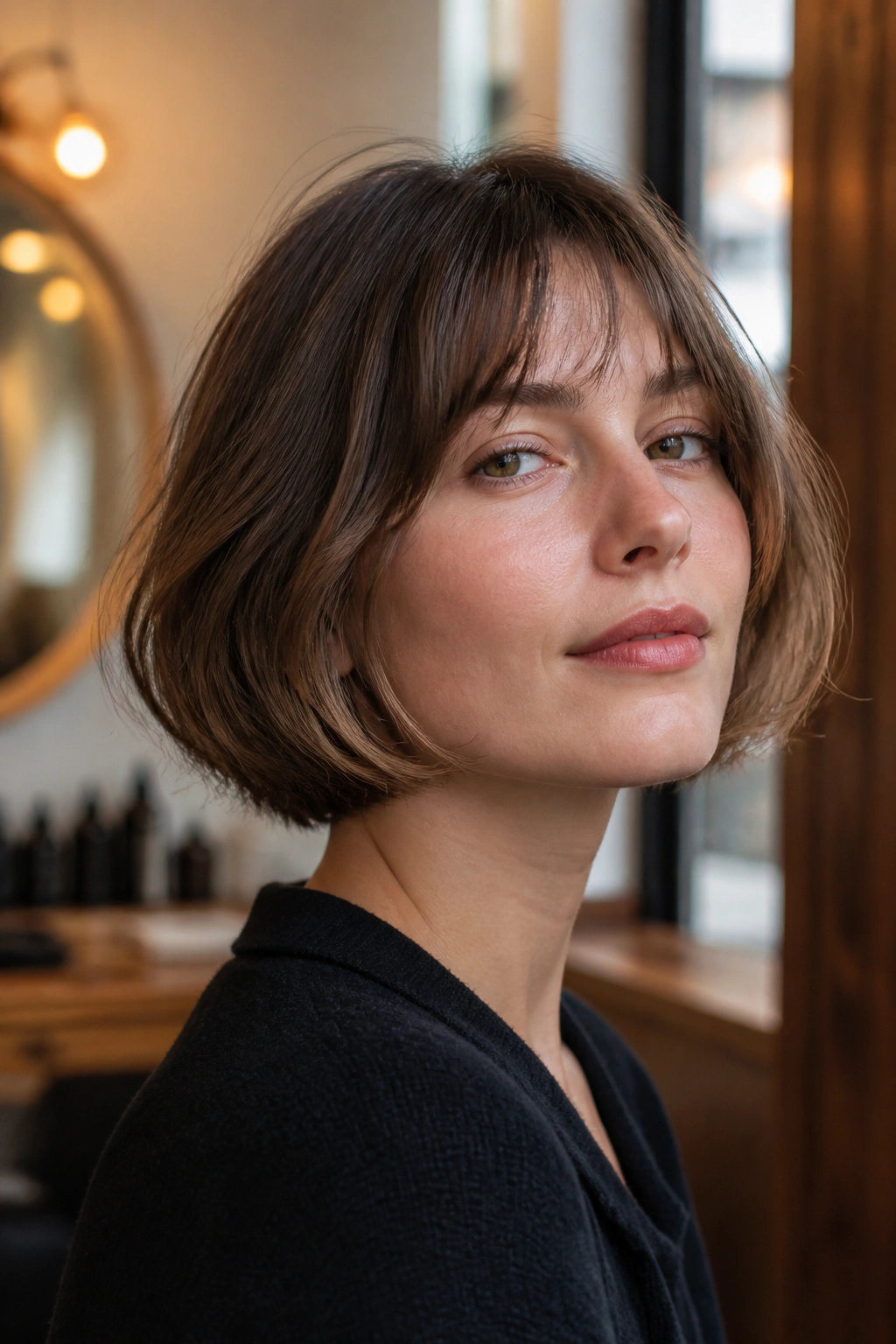
Why does this one keep showing up in good salons? Because it has attitude, but it still flatters thin hair. The jaw-length French bob ends just around the jaw and usually carries a soft bend at the edge, which keeps the shape from looking hard or blocky.
The nice thing about this cut is how it frames the face without asking for much daily work. Fine hair that falls limp halfway through the afternoon often looks better when it is shorter and a little airier. This cut does exactly that. It gives you a neat line, but not a helmet.
How to style it
- Blow-dry with a small round brush, about 1 to 1.5 inches wide.
- Bend the ends inward just enough to keep the outline neat.
- Add a pea-sized amount of cream only through the mid-lengths.
- If you want a little more lift, dry the roots in the opposite direction first.
The French bob is a good pick if you like hair that looks deliberate without looking fussy. It also grows out in a decent way, which matters more than people admit. A lot of short cuts only look good on day one. This one hangs on.
3. Collarbone Blunt Lob That Skims the Shoulders
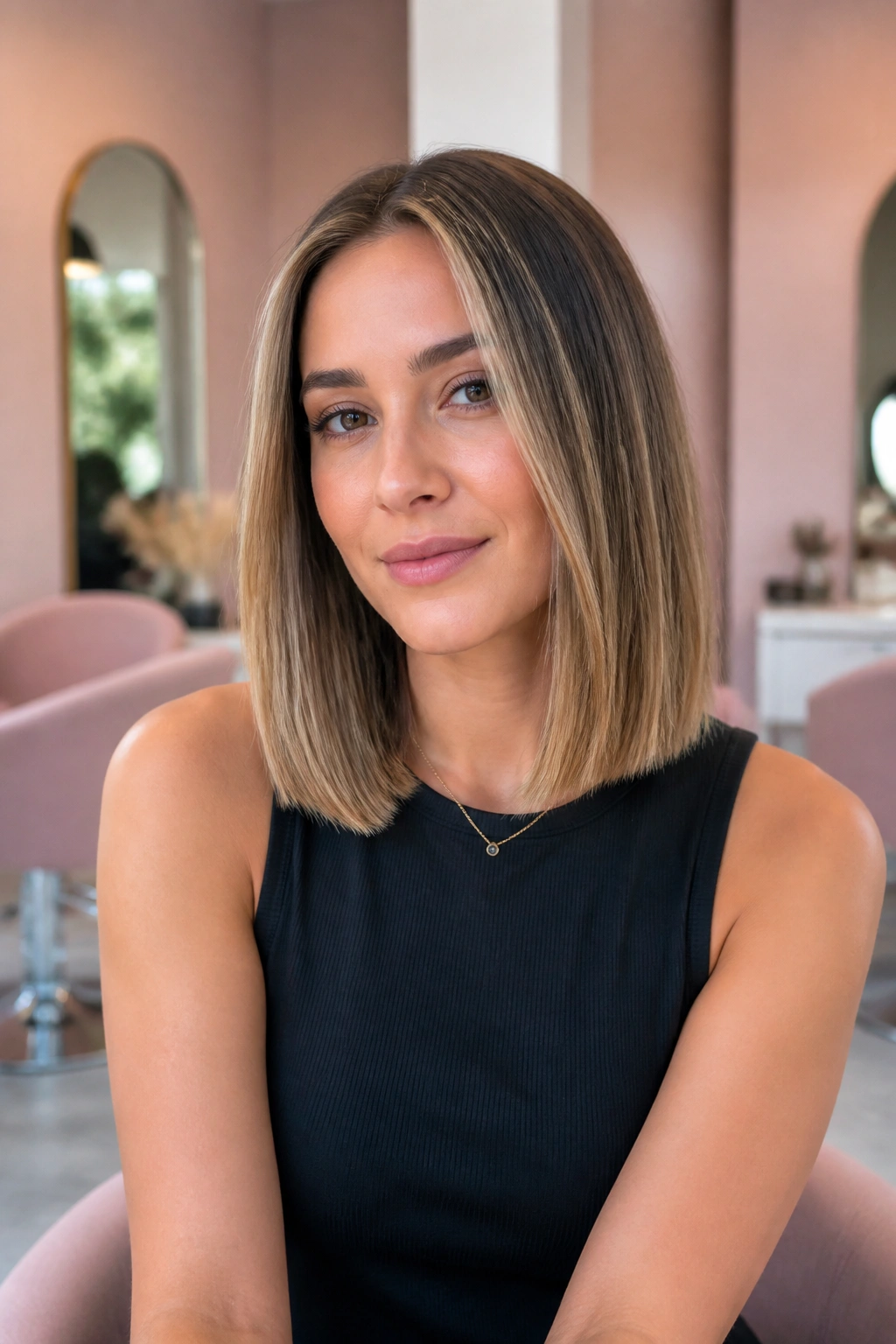
A collarbone blunt lob is the safest place to start if you are nervous about going short. It keeps some length, but the clean edge at the bottom still gives fine hair a fuller look.
I like this one for people who keep a lot of their hair tied back and only want a better shape when it’s down. It clears the shoulder line, which is a sneaky problem for thin hair. Once hair starts rubbing against coats, scarves, and sweater necks, the ends go frizzy and thin-looking fast. This cut avoids that mess.
Why it works so well for thin hair
- The collarbone length keeps enough weight at the bottom.
- The blunt edge makes the hairline look denser.
- It’s long enough for a low ponytail.
- It does not need layers to move.
If you want a cut that can survive growing out, this is probably the most forgiving shape on the list. A few loose waves help, but they are not required. Straight, tucked, or softly bent under all work.
4. Micro Blunt Bob That Stops at the Ear

This one is sharp. Not mean, just sharp. A micro blunt bob stops around the ear or just below it, and on the right face shape it can make thin hair look thicker by removing the soft, limp length that usually gives it away.
The trick is confidence and proportion. If your hair is sparse at the ends but reasonably full at the crown, cutting it shorter can actually make it look denser. There’s less weight pulling it down, less chance of separated ends, and more visual punch at the jaw and cheekbones.
A micro bob is not the easiest cut to wear every day. Wind notices it. So do glasses, earrings, and collars. But if you like a neat neckline and you don’t want to fuss with round-brush blowouts for 20 minutes, it has a lot going for it.
Watch for this: if your hair naturally flips out at the bottom, ask for a tiny bevel at the edge. That tiny change saves the whole cut from looking like it was trimmed with no plan.
5. Center-Part Sleek Blunt Bob

A center part can be ruthless on the wrong cut. On a blunt bob, though, it can make thin hair look orderly and denser because the two sides mirror each other so cleanly.
This is the version I’d pick for someone who likes a polished, plain shape and hates anything that looks overworked. A center-part blunt bob draws a straight vertical line through the face, which can make the whole look feel balanced. It also hides uneven density better than a side part sometimes does, especially if one side of your hair is a little flatter.
The catch is root lift. If the crown is glued down, the middle part will show it. Use a lightweight mousse at the roots and blow-dry the front sections forward first, then back. That tiny move gives the part a bit of air.
Sleek hair here does not mean greasy hair. Keep the product off the scalp and use just enough serum to stop flyaways. Too much, and the blunt line loses the crisp edge that makes the style work.
6. Deep Side-Part Blunt Bob
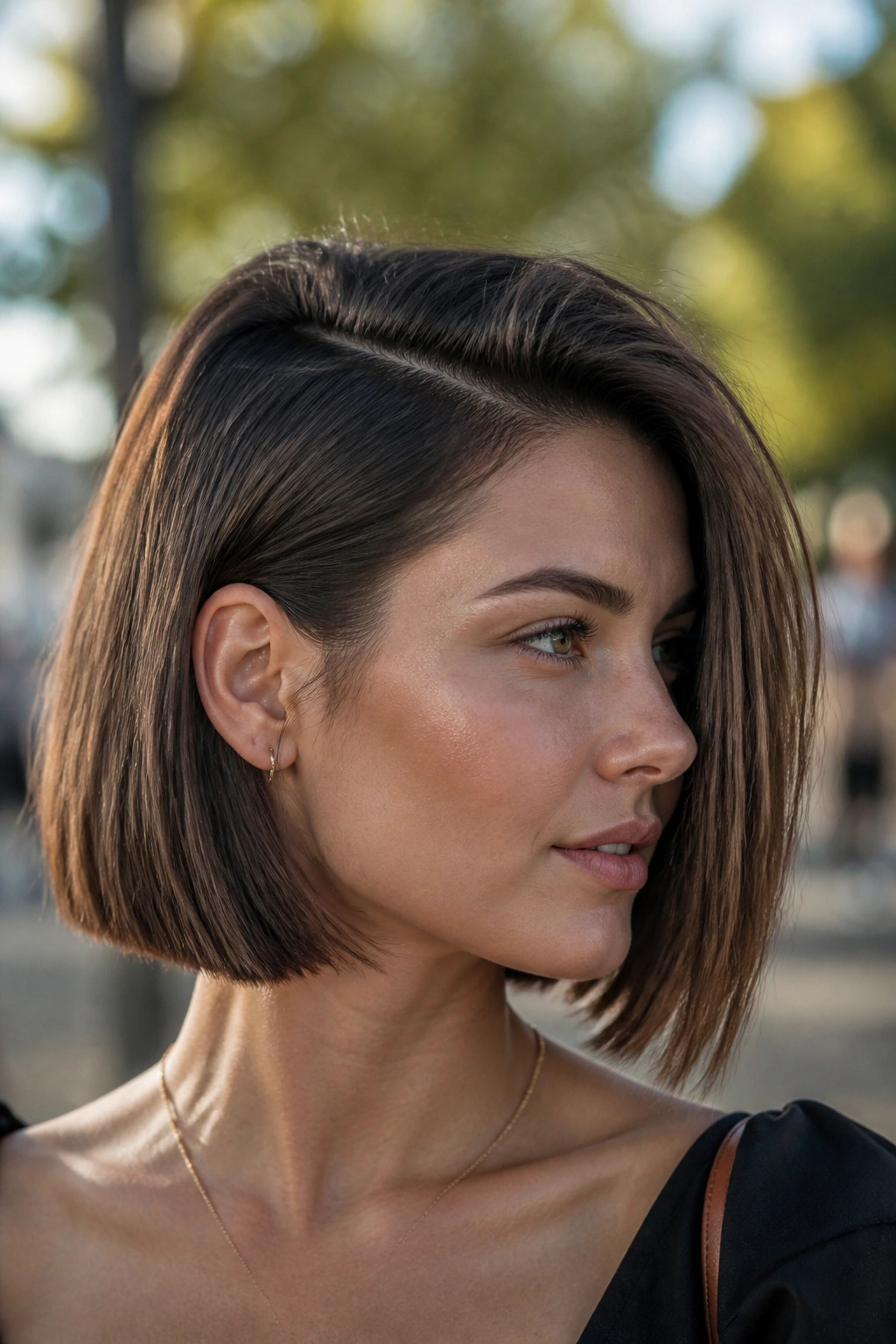
A deep side part is the fastest way to fake lift at the crown. On thin hair, that matters. The extra volume on top makes the whole bob look less flat, even if the hair itself is not changing.
This cut is especially good if your hair tends to lie against the head on one side. The part creates height where you need it and gives the front a little sweep, which is flattering around the eyes and cheekbones. It also keeps the shape from looking too symmetrical, which can sometimes make fine hair look thinner than it is.
Here’s the part people miss: the deep side part should not look like you took a comb and fought with your scalp for 10 minutes. It needs to be soft enough to move, but strong enough to hold. Spray a little root lift at the heavier side, then direct the hair across and away from the part as you dry it.
Best for: round faces, low crowns, and hair that needs a little drama without fringe.
7. Blunt Bob With Curtain Bangs
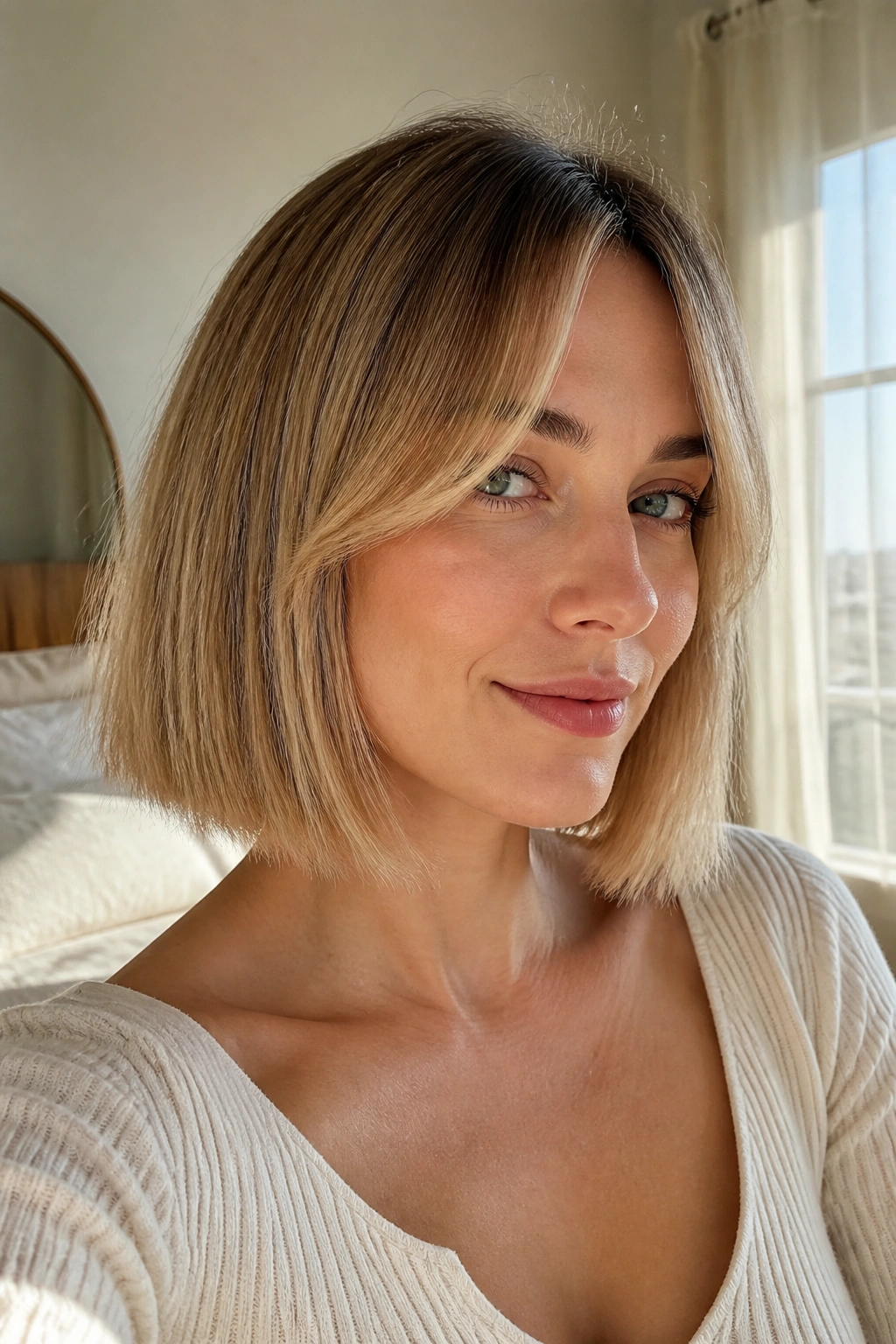
Can blunt ends and curtain bangs live in the same haircut? Absolutely. In fact, they often help each other, which is why this version shows up so much on people with fine hair who still want softness around the face.
Curtain bangs add the feeling of fullness near the eyes and cheekbones, while the bob itself keeps the bottom line solid. That combination matters. Thin hair can look stringy when all the weight is sitting only at the ends, so bringing a little shape higher up helps the whole cut feel more complete.
How to wear it
- Start the curtain bangs a little below the crown, not too far forward.
- Keep the shortest point around cheekbone level.
- Blow-dry them away from the face with a medium round brush.
- Let the rest of the bob stay straight or softly bent.
The biggest mistake is making the fringe too thick. A heavy curtain bang on thin hair can eat up too much density and leave the rest of the bob feeling skimpy. Keep it airy. That’s the whole point.
8. Blunt Bob With Full Straight Bangs

This cut has opinions. Good. Hair should have some.
Full straight bangs can make thin hair look denser because they add a solid band of hair across the forehead. That front weight helps balance a bob that might otherwise feel too light, especially if the rest of the hair is very fine but naturally straight.
This look works best when the hairline has enough density to support the fringe. If the bangs are too sparse, they separate and go stringy by lunchtime. Nobody needs that. Ask for a blunt fringe that sits just above or right at the brows, and keep the rest of the bob clean and one-length.
- Blow-dry the bangs first while they are still damp.
- Use a flat brush to keep them smooth.
- Trim every 3 to 4 weeks if you want the line to stay tidy.
- A little dry shampoo at the fringe roots helps keep the front from splitting.
This is a strong look, not a shy one. If you like structure and you do not mind regular upkeep, it’s one of the best ways to make thin hair look intentional.
9. Blunt Bob With Baby Bangs
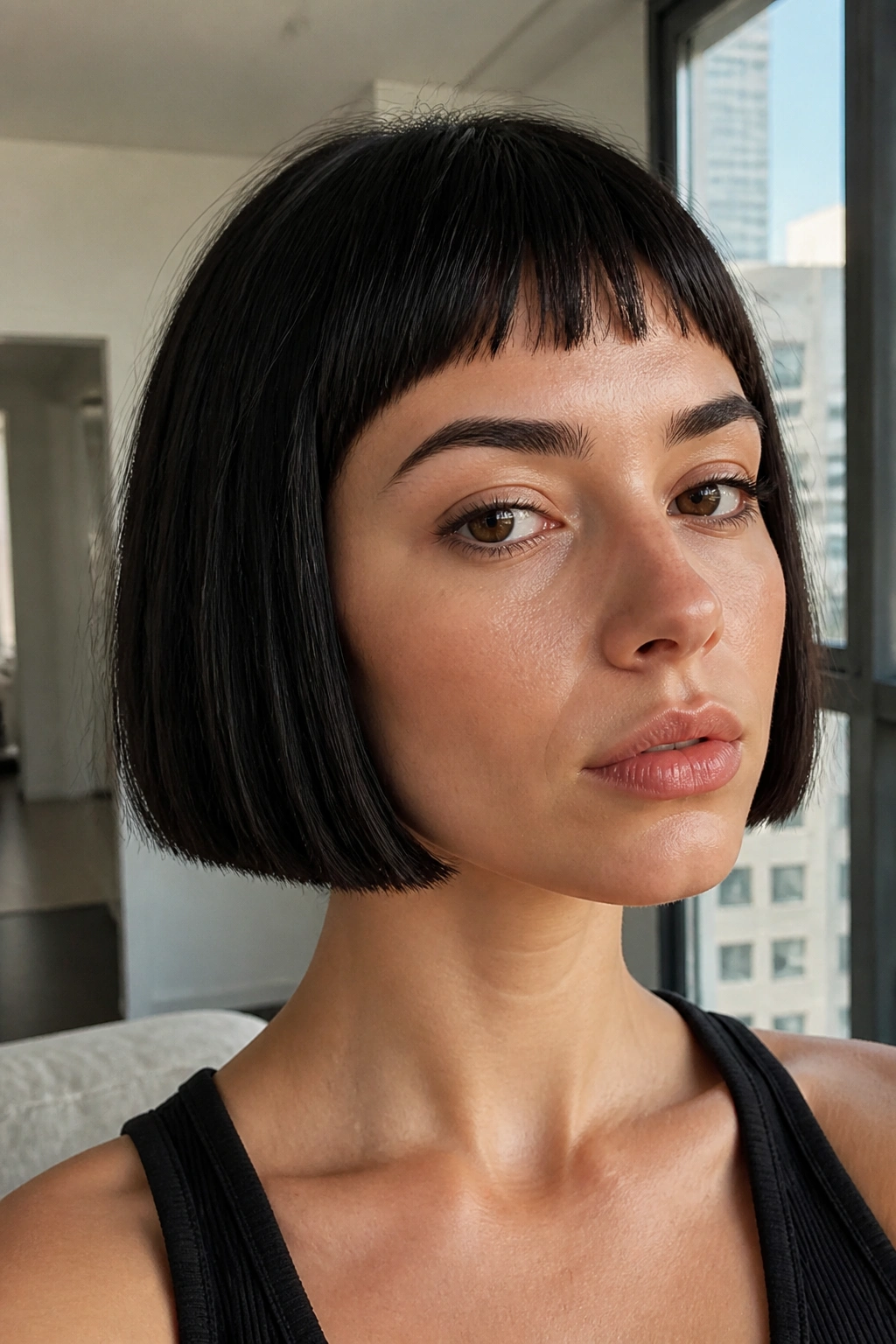
Baby bangs are not for everyone. That is fine. They are also not the same thing as a bad fringe cut too short. There is a difference, and a big one.
On a blunt bob, baby bangs can create a sharp, editorial edge that pulls attention upward. For thin hair, that can be useful because the cut feels deliberate even if the texture is fine. The bob stays dense at the bottom, and the short fringe keeps the eye moving.
This cut works best on people with strong brows, a defined forehead, or a face that can handle a little drama near the eyes. It’s not the most forgiving shape if you dislike maintenance. Baby bangs show every cowlick. Every one.
Still, when they’re cut well, they can make a plain bob look like a style choice instead of a default. That matters more than the trend names people attach to it. A blunt bob with baby bangs is small, neat, and a little rebellious. Nice combination.
10. A-Line Blunt Bob

A slight A-line shape gives thin hair a useful trick: the front stays a bit longer than the back, which creates a cleaner line around the face and keeps the bob from feeling heavy in the wrong places.
Compared with a straight-across bob, the A-line version gives a little more movement without breaking the blunt perimeter. That’s the sweet spot for a lot of fine hair. You still get a firm edge, but the front pieces help lengthen the neck and slim the jaw if that is something you want.
The angle should stay subtle. If it gets too dramatic, the short back can look skimpy and the whole cut loses balance. A modest difference of about 1 to 2 inches from back to front is enough for most heads. You do not need a sharp triangle.
This is also one of the better picks if you wear scarves, high collars, or jackets with stiff necklines. The longer front pieces keep the cut from disappearing under fabric.
11. Rounded Blunt Bob

A rounded blunt bob sounds softer, and it is, but it still keeps the edge that thin hair needs. The shape curves gently inward toward the jaw, which helps keep the hair from kicking out at the sides.
That inward curve matters more than people think. Fine hair often flips in weird directions once it gets to the chin or shoulders. A rounded bob guides the shape instead of fighting it, so the cut looks tidier at the end of the day than a flat, dead-straight version might.
If your face is sharp or angular, this shape can soften the overall effect without sacrificing density. If your hair tends to puff out at the sides, though, ask for the rounding to stay modest. Too much curve can make the head look wider.
The best rounded bobs still feel blunt when you run your eyes along the bottom. That’s the real test. Soft shape, solid line.
12. Beveled Blunt Bob
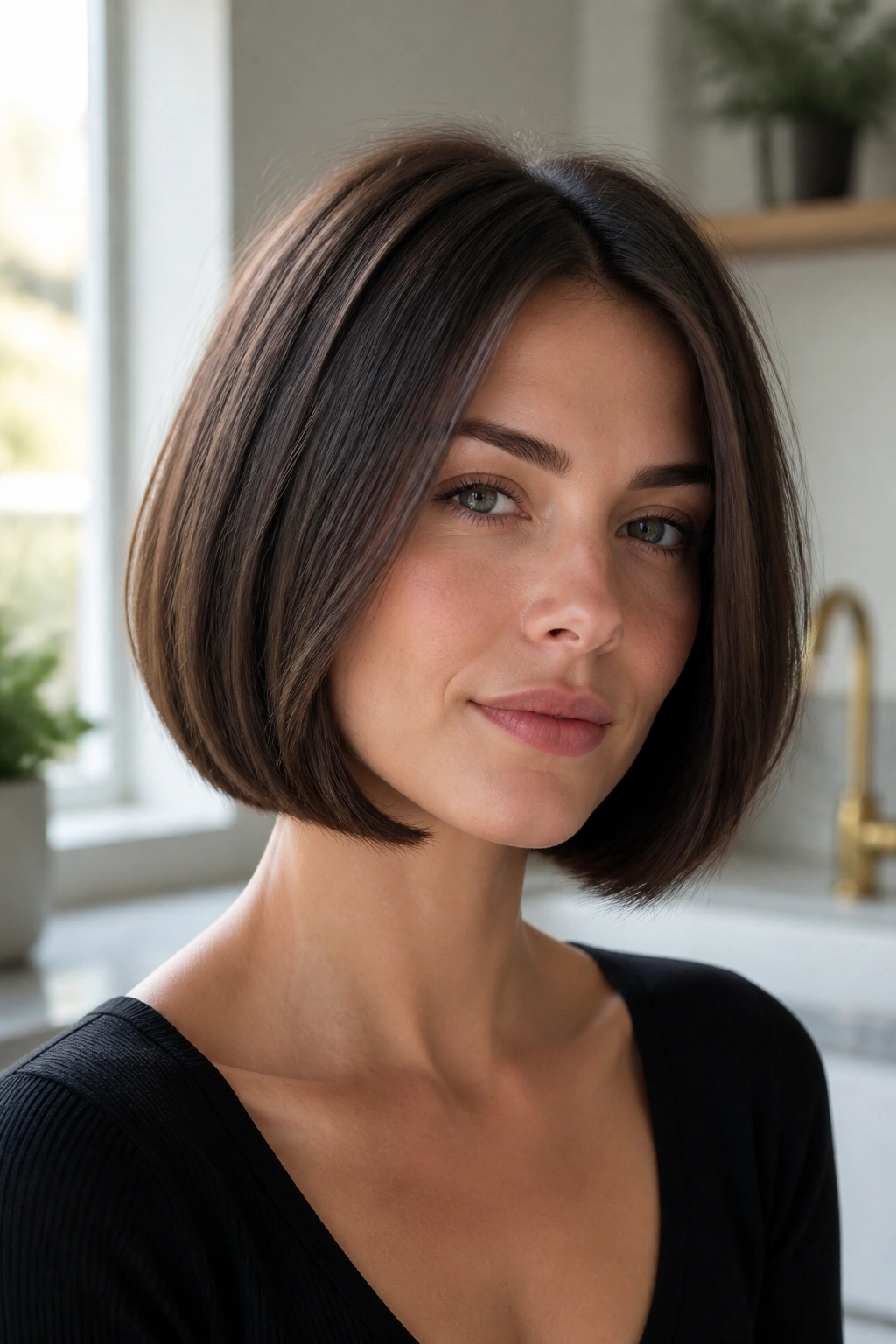
A beveled bob is one of those cuts that sounds technical but feels easy once it’s on your head. The edge is still blunt, but the finish tips inward just a little, usually through the way the hair is cut and then dried.
For thin hair, that bevel can be a lifesaver. It stops the ends from looking stick-straight and limp, which is what fine hair often does when it’s cut too flat. The slight inward dip makes the outline look fuller and cleaner at the same time.
What I like here is how low-maintenance it can be. You do not need a curled-under salon blowout every day. You just need the right cut and a brush that can tuck the ends under for 30 seconds while they dry.
Ask for this if: your hair hangs straight but never quite looks finished, or if your ends tend to poke out instead of sitting down. A little bevel can fix that without adding visible layers.
13. Tucked-Behind-Ear Blunt Bob

There’s something quietly useful about a bob that looks good both tucked and untucked. Thin hair benefits from that kind of flexibility because it can change shape quickly without needing a complete restyle.
A tucked-behind-ear blunt bob keeps one side of the face open, which shows off cheekbones and gives the cut a cleaner line. The other side can stay fuller and forward, so the bob does not lose its body. That asymmetry makes the hair feel a little richer than it may actually be.
What makes this one work
- It flatters glasses and earrings.
- It gives a narrow jaw a little more structure.
- It helps thin hair look intentional on days when it’s flatter than usual.
- It’s easy to switch back to a full-framed look if you want more softness.
The trick is keeping the tucked side from getting too flat. Use a bit of root spray there and don’t over-smooth the whole head. A bob that is too polished on one side can start to look pasted down. Nobody needs that either.
14. Glass-Hair Blunt Bob
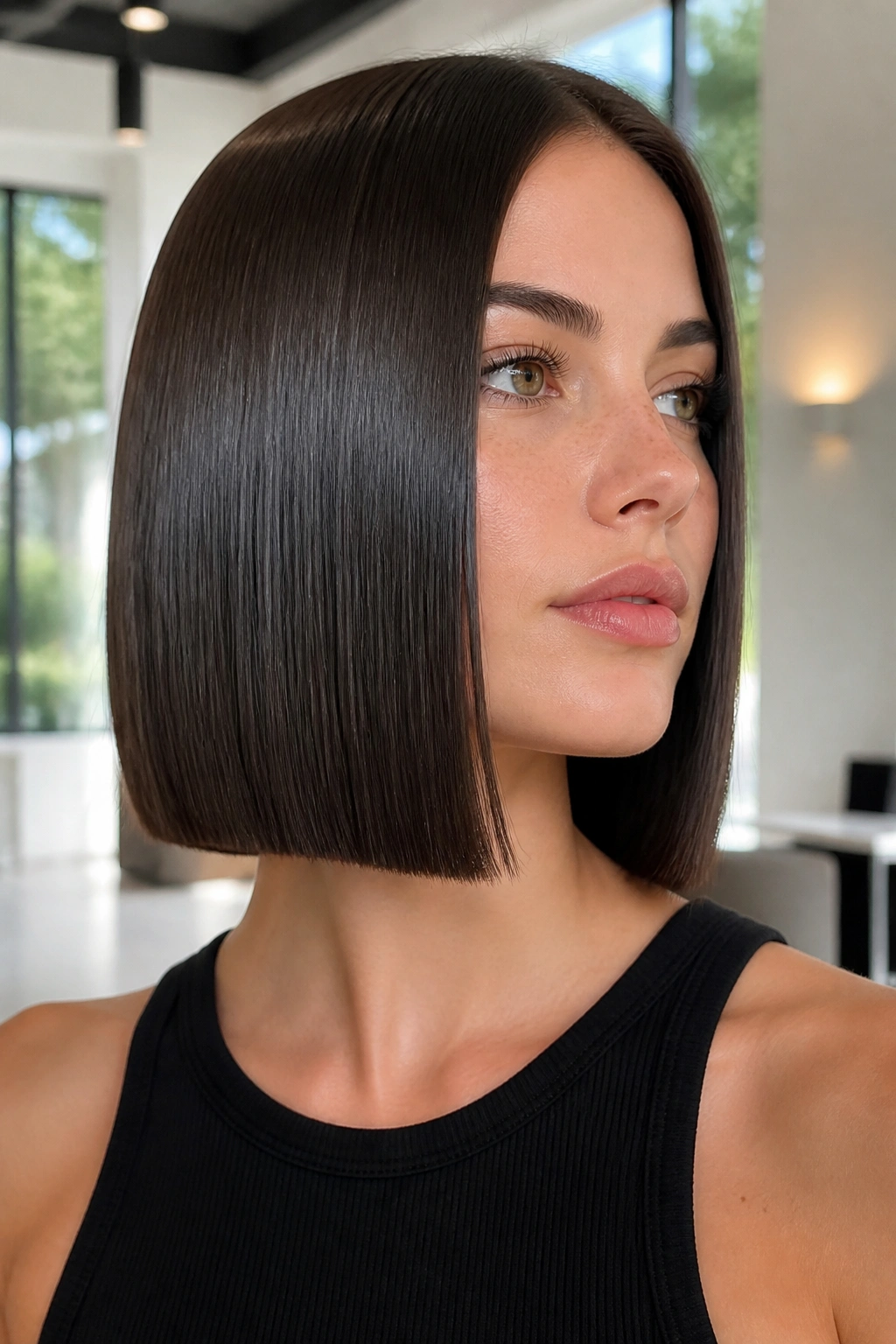
This is the sleekest version on the list. A glass-hair blunt bob depends on shine, straightness, and a very clean perimeter, and thin hair often looks denser in this finish because the strands sit together instead of separating.
The goal here is not volume in the classic sense. It’s surface control. When the hair reflects light evenly, the eye reads it as thicker and smoother, even if the actual density is modest. That’s why this style looks so strong with a one-length cut.
Use a heat protectant, a flat iron on low to medium heat, and a tiny amount of serum through the mid-lengths and ends. Too much product near the roots turns the whole thing limp. Too little, and the frizz comes back fast.
This style is not forgiving of damaged ends. If your bob is past due for a trim, the glass effect disappears. The ends need to be crisp, or the whole point falls apart.
15. Soft-Bend Blunt Bob

A soft-bend blunt bob is the one I recommend to people who want movement without layers. The hair stays blunt, but the ends bend just enough to make the cut feel alive.
Why does that help thin hair? Because a hard-straight edge can sometimes look too sparse if the strands are very fine. A soft bend gives the illusion of body without breaking the perimeter. It also keeps the style from looking stiff when you move.
How to get the bend
- Dry the hair about 80 percent first.
- Wrap 1 to 1.5-inch sections around a round brush or a straightener.
- Turn only the last 1 to 2 inches under.
- Leave the crown a little airy so the shape does not go flat.
The bend should look casual, not curled. If the ends start flicking into obvious S-shapes, you’ve gone too far. Keep it subtle. The best version looks like the hair naturally decided to behave for once.
16. Wet-Look Blunt Bob
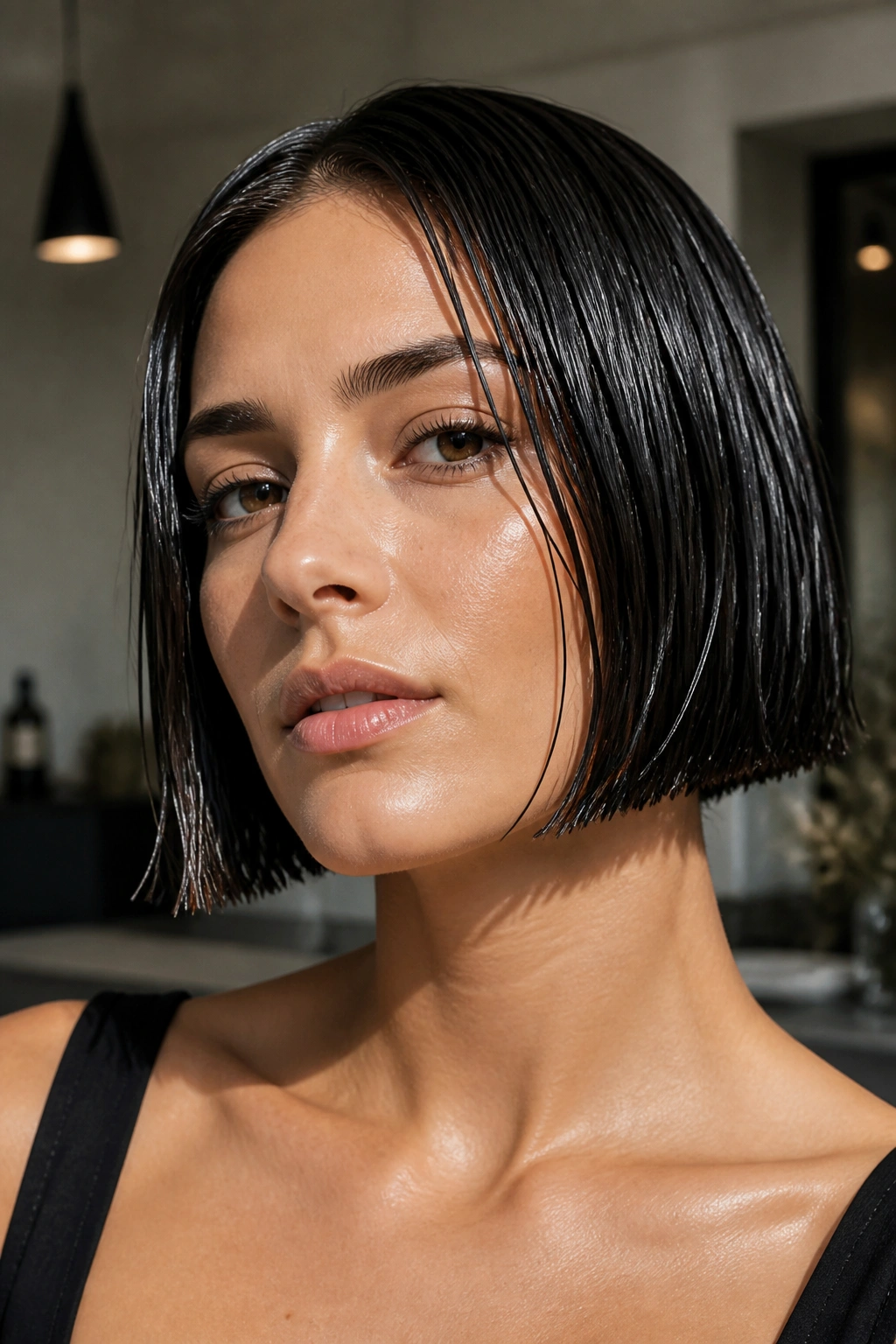
A wet-look blunt bob is strong, sleek, and a little severe in the best possible way. It’s not a daily cut, really — it’s more of a finish — but on thin hair it can look cleaner than loose, separated texture.
The reason it works is simple: product makes fine strands cling together, which can disguise a lack of density. A bit of gel or styling cream combed through damp hair creates a solid surface. That said, the line between sleek and greasy is thin. Go past it and the scalp starts showing more than you wanted.
Keep the product concentrated from mid-length to ends, then use a fine-tooth comb to direct the hair into a smooth shape. A middle part makes the effect sharper; a side part softens it a touch.
This is a better choice for evenings, events, or days when you want your hair to look sculpted instead of airy. It can be a bit unforgiving in bright light, so if your hairline is sparse, leave a few pieces loose around the face. A tiny bit of softness saves the whole look.
17. Flipped-Under Ends Blunt Bob

This is the classic salon blowout bob, and there’s a reason it never really leaves. Flipped-under ends give the illusion of thickness because the hair gathers inward instead of hanging in a thin sheet.
For thin hair, that inward curve is gold. The bob looks fuller at the bottom, and the perimeter stays easy to read. You can get this effect with a round brush, a blow-dryer nozzle, and a little patience. A 1.5-inch brush is usually enough for most chin-to-lob lengths.
What I like about this style is how friendly it is to ordinary life. It does not need perfect symmetry. It still works if one side flips a little more than the other. The shape is forgiving.
If your hair often kicks out at the ends, this cut and styling approach can save you from the triangle effect. That ugly wide-at-the-bottom look is one of the biggest problems with fine hair, and a flipped-under finish is a clean fix.
18. Nape-Grazing Blunt Bob

A nape-grazing blunt bob sits just above or right at the nape, which keeps the neckline clean and stops hair from fighting with collars all day. For thin hair, that can be a small relief that makes a big visual difference.
This length works especially well when the shoulders are a problem zone. If your hair flips out every time it touches a coat or sweater, going a bit shorter in the back can solve more than one annoyance at once. The cut stays tidy, the ends stay heavier looking, and the back of the neck gets more shape.
It’s a neat little cut. Almost stubborn.
The best version is not too stacked and not too long. You want the back to feel settled, not puffy. A little undercutting in the nape area can help remove bulk from thick spots, but if your hair is truly fine, keep that adjustment tiny. You need the weight, not the drama.
19. Blunt Bob With a Side-Swept Fringe
A side-swept fringe is a good middle ground for people who want some softness but do not want to commit to full bangs. On a blunt bob, it adds a diagonal line across the face, which is flattering and easy on thin hair.
The side sweep helps because it shifts attention upward and away from the ends, where fine hair often looks weakest. It can also balance a round face or soften a forehead without eating too much density from the rest of the cut. That last part matters. A fringe that is too thick can steal from the bob itself.
Keep the fringe long enough to tuck behind the ear if needed, usually somewhere around cheekbone level. That makes it flexible. You can wear it forward on days when you want more shape or sweep it back when you want the face open.
This is one of the most wearable choices in the bunch. Not the flashiest. Just easy, flattering, and practical in a way that earns repeat appointments.
20. Slightly Asymmetrical Blunt Bob
A slightly asymmetrical blunt bob is for the person who likes a clean line but wants a little edge. One side sits maybe half an inch to an inch longer than the other, and that small difference is enough to make thin hair look more interesting without turning the cut into a statement piece.
The asymmetry can help if one side of your hair naturally falls flatter or if your cowlick fights the usual part. It gives the hair direction. It also creates a subtle sense of motion, which can stop a fine bob from looking too static.
What I like most is that it stays believable. This is not a dramatic one-sided chop. It is a quiet shift in length that only shows itself when the hair moves. That makes it easier to wear to work, to dinner, or basically anywhere without feeling dressed up beyond reason.
If you’ve tried straight one-length bobs and felt they were a little too predictable, this is the smartest variation to test next. It keeps the density, but it gives the shape a better line.
Final Thoughts
Thin hair usually looks best when the cut stops trying to do too much. A blunt edge, a smart length, and a clean outline will usually beat heavy layers and fussy texturizing, every single time.
The real choice is not “short or long.” It’s whether the cut gives your hair a strong shape to live in. A chin-length bob, a blunt lob, or a fringe-driven version can all work, but the best one is the one that keeps the ends full and the silhouette clear.
If you take one thing from this, make it this: density lives in the outline. Protect that line, and thin hair starts to look like it has a lot more of it.
