



A chin-length bob can look sharp enough for a black blazer and soft enough for a T-shirt, and the difference usually comes down to the cut line. A clean chin-length bob is one of those haircuts that rewards precision: the ends sit where the jaw wants shape, the neck looks longer, and the whole head reads tidier without trying too hard. When the perimeter is blunt and the finish is smooth, the style can feel almost architectural.
What kills the look is fuzziness. Too much layering, a weak blow-dry, or a line that misses the chin by an inch can make the whole thing slide from polished to plain in a hurry. I like this length because it does a lot of work without asking for much hair, which is exactly why it keeps showing up on people who want neat, controlled hair that still moves.
Some chin-length bobs lean sharp, some lean soft, and some need bangs to feel complete. That range is the whole point. The right version is the one that matches your hair density, your face shape, and how much time you actually want to spend with a round brush in the morning.
1. Blunt Chin-Length Bob With a Clean Edge

A blunt chin-length bob is the cleanest place to start. The line sits evenly all the way around, so the eye reads shape first and texture second. That is why it looks so polished on straight hair, and why it can still look crisp on hair with a mild wave if the ends are cut well.
Why the blunt line works
The magic is in the perimeter. When the bottom edge is cut straight, the haircut looks deliberate even when you wear it with almost no styling. It also makes the hair look fuller, which matters if your strands are fine or a little sparse through the ends.
A blunt bob also behaves nicely under a smooth blow-dry. A quick pass with a paddle brush and a touch of smoothing cream is often enough to make it sit flat and glossy. No fluffy ends, no uneven wisps, no confusion.
- Ask for one-length cutting through the bottom edge with no aggressive texturizing at the hem.
- Blow-dry with a medium round brush or paddle brush, aiming the airflow downward.
- Finish with a pea-size amount of serum through the mid-lengths and ends.
- Trim every 6 to 8 weeks if you want the line to stay sharp.
Best for: straight, medium, or fine hair that needs the ends to look thick and neat.
2. Slightly Angled Chin-Length Bob

A soft angle can make a chin-length bob look more expensive than a perfectly flat line. That sounds fussy, but it’s true. A bob that sits a touch shorter in the back and slides forward toward the chin gives the whole cut a little motion without losing the tidy shape people want from polished hair.
This version is especially good when you want the face to look a bit leaner. The slight slope draws the eye downward in a clean line, which can be flattering on round faces or fuller cheeks. It also keeps the bob from feeling boxy, which is the main risk with very blunt cuts on thicker hair.
I prefer a gentle angle over a dramatic one for this length. Too much slope starts to read as a grown-out A-line, and that’s a different mood entirely. The sweet spot is subtle enough that nobody needs to think about it, but noticeable enough that the haircut doesn’t sit there like a helmet.
Wear it smooth, not puffy. That’s the whole deal.
3. Side-Part Chin Bob With Tucked Front

Why does a side part change everything? Because it gives the bob some asymmetry, and asymmetry always helps a polished cut feel less stiff. A side-part chin bob also lifts the roots a bit, which is useful if your hair tends to lie flat against the head.
The tucked front piece is the part I love most. One side goes behind the ear, the other falls forward in a controlled sweep, and suddenly the haircut has a shape you can actually see from across a room. It feels finished without needing curls, clips, or a lot of product.
How to wear it
- Place the part just off center, not all the way at the temple.
- Tuck the heavier side behind one ear and smooth the front with a light styling cream.
- Use a blow-dryer and brush to create a soft bend at the ends, not a flip.
- Keep earrings simple; this cut already does plenty.
This one works especially well if you like a bob that feels tailored. The side part adds attitude, but the tucked shape keeps it neat.
4. French Bob With Soft Fringe

A French bob has a little bite to it, and that’s part of the appeal. It usually lands close to the chin, sometimes a touch above, with a soft fringe that sits near the brows or brushes them lightly. The result is neat, expressive, and a bit romantic without turning fussy.
I see this cut as the answer for people who want polish but don’t want a severe line. The fringe breaks up the face, the length keeps the neck open, and the overall shape feels compact in a way that reads very intentional. It can be especially nice on straight hair that needs a bit of personality.
The trick is keeping the fringe airy. A heavy bang can drag the whole cut down, and that’s a shame because this style works best when it looks light around the eyes. A quick blow-dry forward with a small round brush usually does the job.
- Ask for a fringe that sits at or just below the brows.
- Keep the ends softly beveled, not razor-thin.
- Use a light cream or mousse, not a sticky paste.
- Trim the fringe more often than the rest of the cut.
This is a smart bob when you want polished hair with a little charm left in it.
5. Rounded Bob That Curves Under
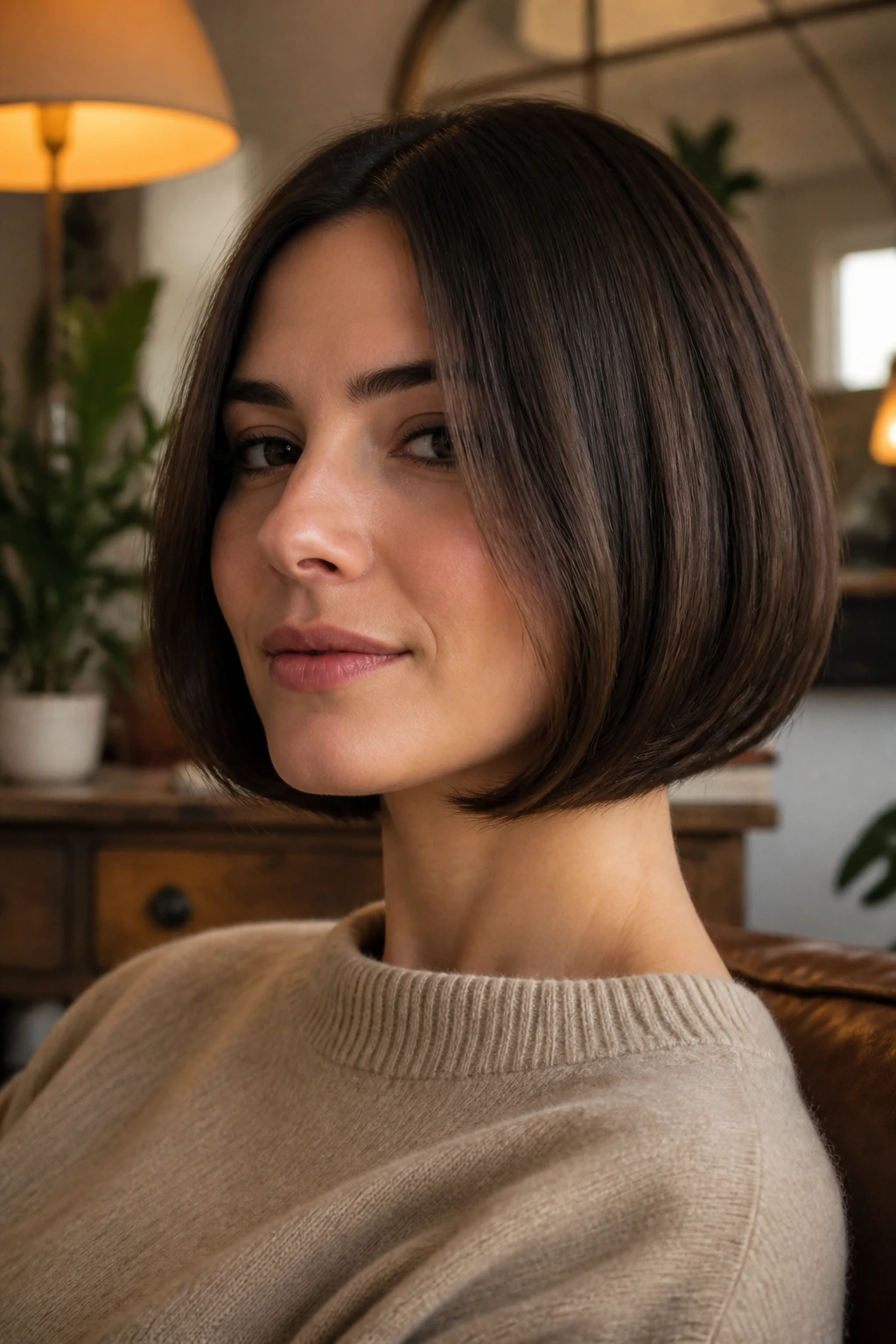
A rounded chin-length bob has a quieter kind of polish. Instead of sitting in a hard line, the shape curves gently under the jaw, almost like the haircut is giving the face a small frame. That softness can be a gift if your hair is thick, because it keeps the ends from flaring out in a blunt shelf.
The shape works best when the interior is controlled, not over-layered. You want enough structure to help the hair bend inward, but not so much that the cut loses its weight and starts to puff around the sides. A round brush helps here, and so does drying the roots in the direction you want the hair to fall.
This is the bob I reach for when straight lines feel too strict. It still looks neat, but there’s a little curve at the bottom that keeps it from feeling severe.
The downside? If the curve is pushed too far, the cut can start to look dated. Keep the bend subtle and the finish smooth, and you get a bob that feels polished without looking overworked.
6. Glass-Hair Middle-Part Bob
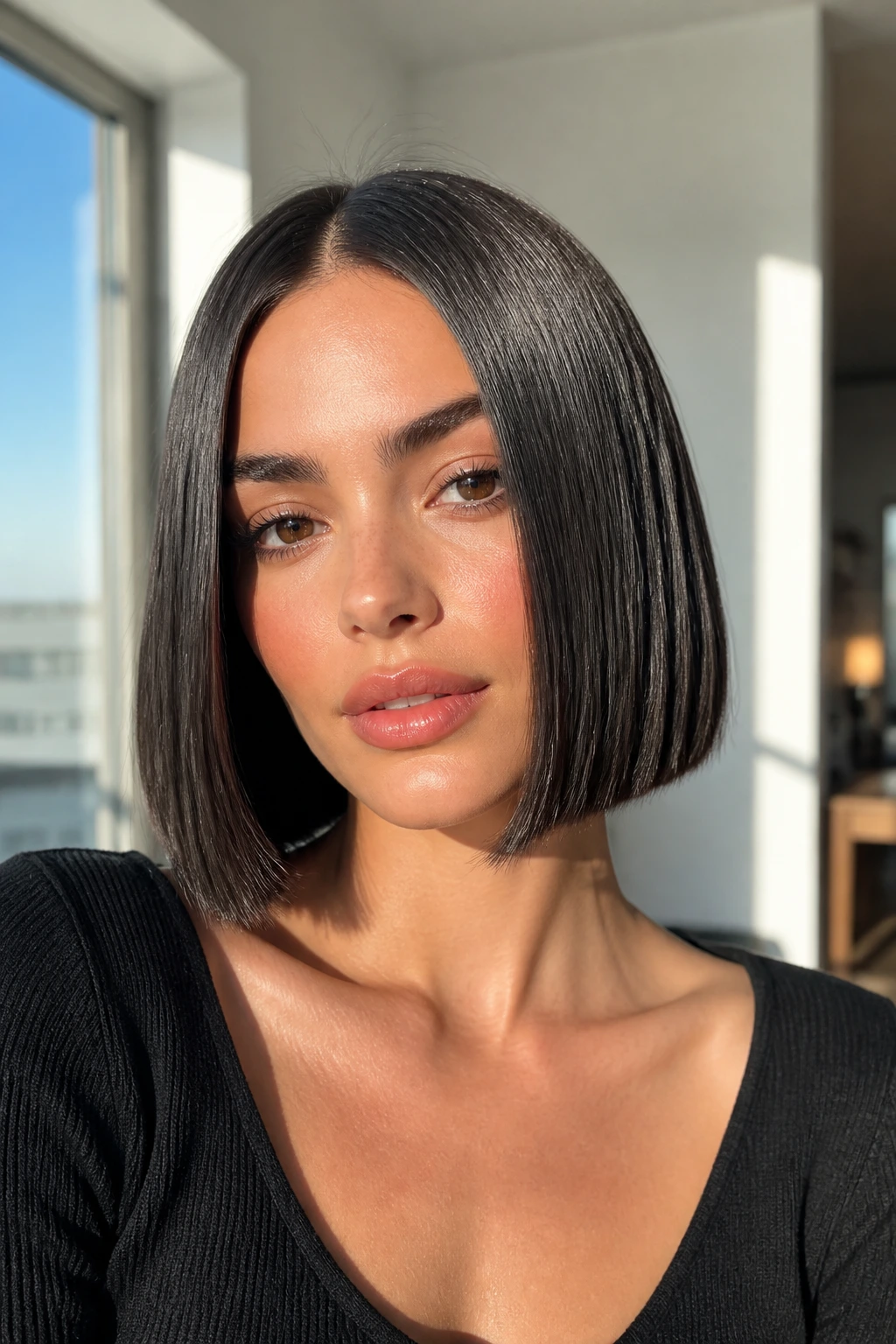
A glass-hair bob is all about shine and precision. Unlike a textured bob, which leans on movement, this one depends on a center part, a flat surface, and ends that look like they were placed there on purpose. The polish comes from control, not volume.
This style is a strong pick for straight hair, dense hair, or hair that can hold a smooth finish for most of the day. It is less friendly to coarse, frizzy textures unless you are willing to do a real blow-dry and follow it with a flat iron. Even then, humidity will have opinions.
What to ask your stylist
Ask for a chin-length cut with a very clean center part and no choppy internal layers near the surface. The top should lie smooth, and the ends should be exact. If the perimeter is too soft, the whole style loses that glassy look.
I like this bob because it looks expensive in daylight and under indoor lighting too. It does ask for maintenance, though. If you hate smoothing products or flat irons, skip it and choose something looser.
7. Chin-Length Bob With Curtain Bangs
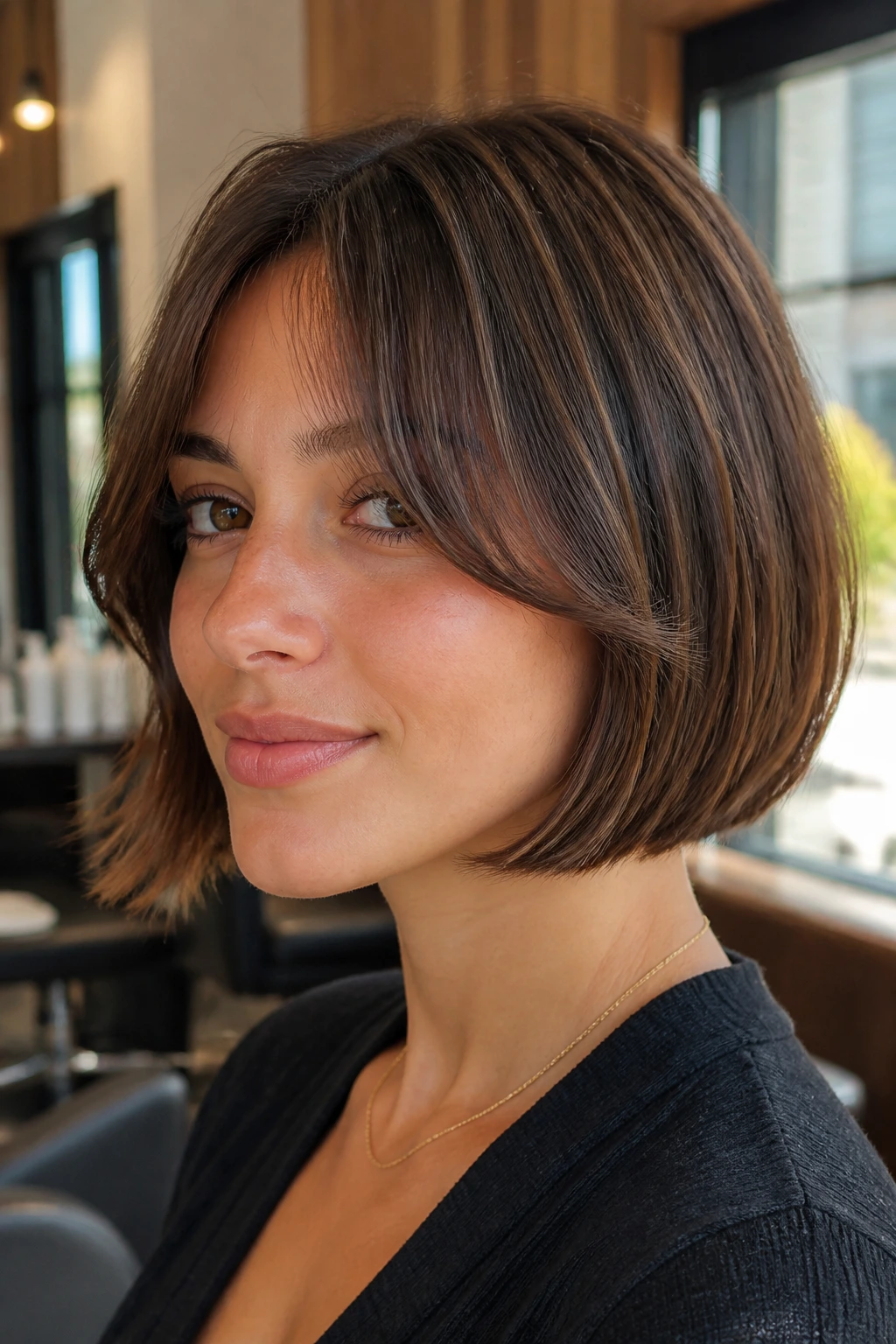
Curtain bangs can soften a chin-length bob without ruining the shape. That’s the reason this combo works so well. The bob stays tidy at the bottom, while the fringe opens up the face and gives the cut a little swing around the cheekbones.
The bangs should not be too heavy. A split fringe that drops from the part and blends into the sides keeps the haircut polished; a dense, blunt curtain fringe can crowd the eyes and make the bob feel busier than it needs to be. I prefer the bang length to start around the cheekbone and taper toward the jaw.
- Blow-dry the fringe away from the center part using a small round brush.
- Keep the longest pieces blending into the bob, not hanging like separate curtains.
- Use a lightweight heat protectant and a soft-hold finishing spray.
- Trim the bangs before they get so long that they lose their shape.
This version suits anyone who wants some face framing without giving up a clean outline. It is especially flattering if you like a bob that feels a little softer around the eyes and mouth.
8. Invisible-Layer Bob for Fine Hair
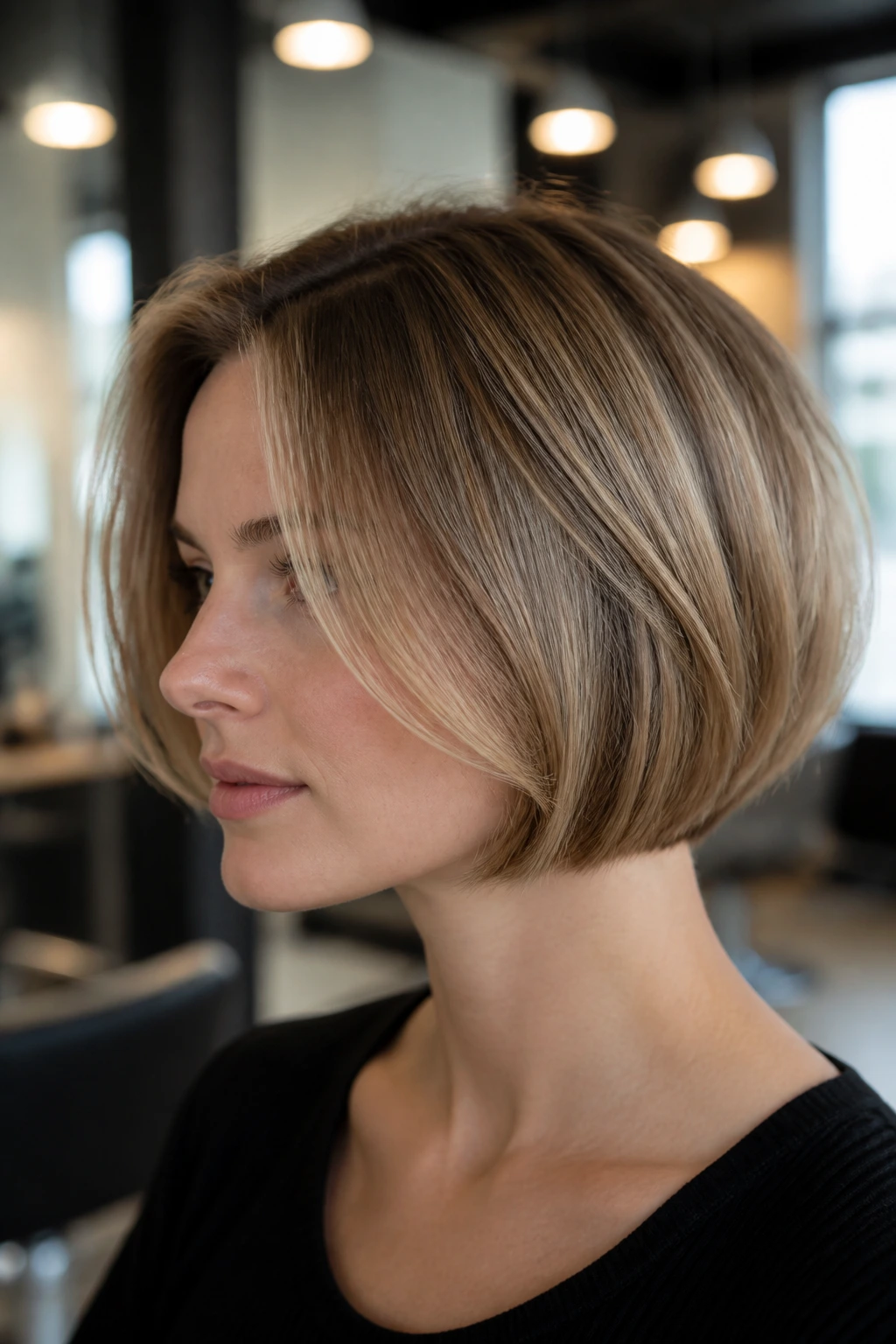
Fine hair can go flat fast, and that is where invisible layers earn their keep. The cut still looks like a clean chin-length bob from the outside, but the inside has subtle weight removal that helps the hair lift instead of collapsing into a sheet by noon.
The key word here is subtle. You do not want obvious layers that break the line. You want tiny internal changes that give the hair enough room to move while preserving that polished surface people can see from the front.
The trick
Ask your stylist to keep the outside perimeter full and neat, then soften the interior just enough to stop the ends from stacking on top of each other. That tiny difference can keep the bob from sticking to the head. A root-lifting spray at the crown helps too, especially if your hair dries close to the scalp.
This is one of those cuts that looks simple but behaves smartly. It gives fine hair a little body without asking it to be something it isn’t. That is the real win.
9. Piecey Bob With Soft Ends

Can a polished bob still have texture? Absolutely. The trick is making the ends look lived-in, not rough. A piecey chin-length bob keeps the shape neat while letting a few strands separate slightly, which stops the style from reading too formal.
This version works well on naturally straight or lightly wavy hair. If the ends are point-cut too aggressively, the haircut can look shaggy in a hurry, and that is not the point here. What you want is a clean outline with just enough separation to make the hair move when you turn your head.
How to keep it neat
Use a small amount of styling cream on damp hair, then rough-dry the roots first and smooth the ends with a brush. If you want more piece separation, rub a drop of serum between your palms and touch it only to the bottom inch or two. Stay away from heavy waxes; they make the bob look greasy instead of polished.
This is a nice choice if you like a bob that feels modern but still tidy. It is not stiff. It is not messy either. That middle ground is harder to hit than people think.
10. A-Line Chin Bob

An A-line bob gives you a little more shape through the front, and that can be a very good thing. The back sits slightly shorter, while the front angles forward toward the chin. The result is a clean silhouette that makes the jawline look sharper and the neck look longer.
This cut has a more graphic feel than a round bob, but it is still easy to wear. If you have a strong jaw or like structure in your haircuts, the A-line shape can be a useful one. It also helps thicker hair fall in a controlled way instead of kicking out at the bottom.
- Ask for the back to hit slightly above the chin line and the front to land at or just below the chin.
- Keep the angle soft if you want the look to stay polished rather than edgy.
- Dry the hair with a brush that pulls the front sections forward.
- Use a flat iron only on the outer surface if needed.
I’d choose this version for someone who wants obvious shape without bangs. It has enough geometry to feel stylish, but it still behaves like a clean, everyday haircut.
11. Curved Bob With Long Side Fringe
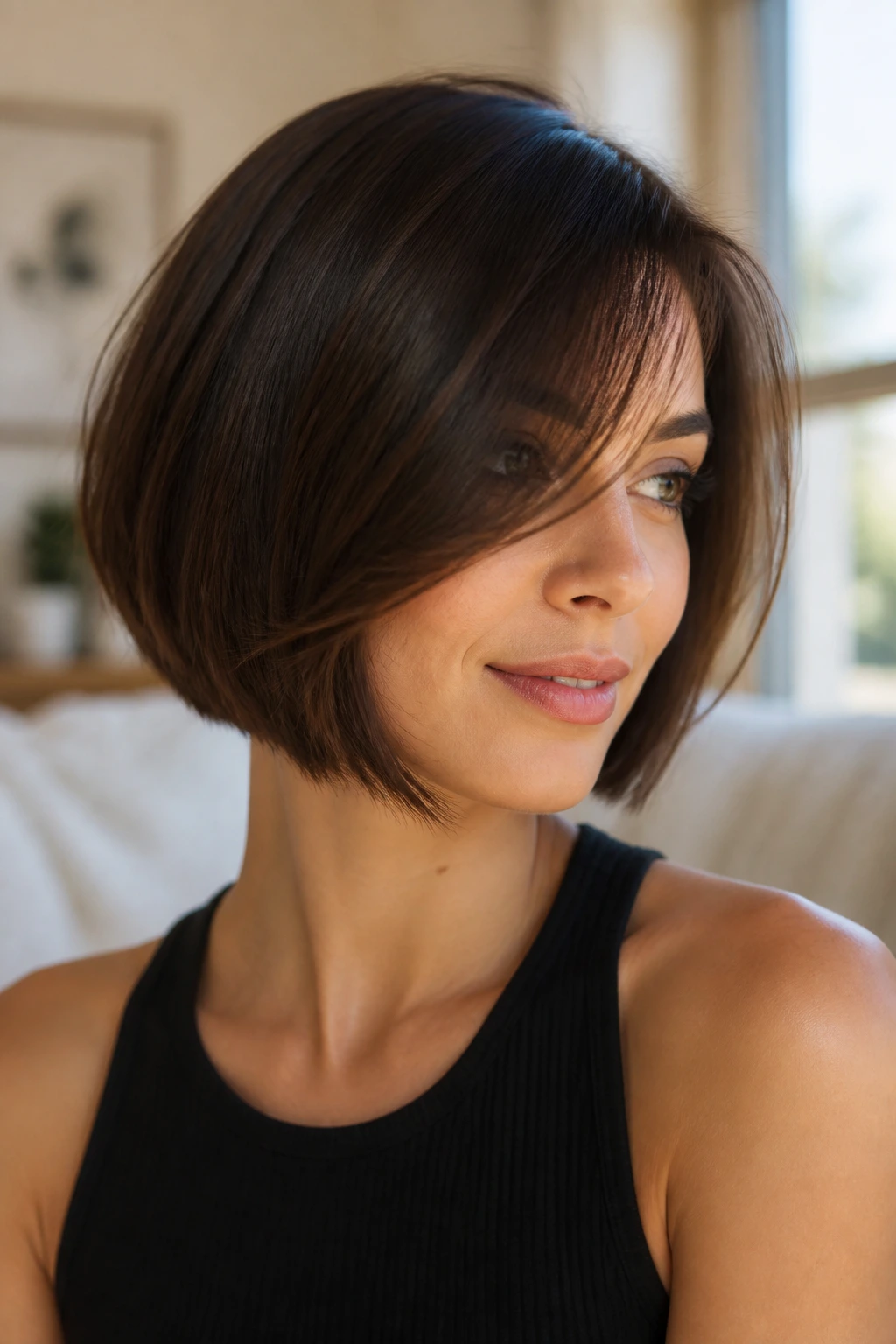
A long side fringe can make a chin-length bob feel softer at once. The fringe sweeps across the cheekbone and blends into the rest of the haircut, which is useful if you want to flatter a high forehead or soften a stronger jaw. It keeps the cut from looking too exact.
The best part is that this style still looks controlled. A long side fringe gives you movement near the face, but the bob itself stays neat at the bottom, so the whole haircut reads polished rather than fussy. I like this one on hair that has a little natural bend, because the fringe can be brushed into place without a fight.
The danger is making the fringe too thick or too short. Then it stops looking elegant and starts looking like a compromise. Let it stay long enough to tuck behind the ear or sweep across the brow, and it becomes much easier to live with.
One small trick: blow-dry the fringe in the opposite direction first, then sweep it over. It creates a softer fall and a better bend at the root.
12. Jaw-Framing Bob With Face Layers

This is the bob for anyone who wants softness without losing structure. Instead of one straight curtain of hair, the front sections are trimmed to frame the jaw and cheekbones, while the back stays cleaner and more compact. That split is what gives the haircut its balance.
Face layers can be helpful when a blunt chin-length cut feels heavy around the cheeks. A few carefully placed pieces break up the mass, which can make the face look less boxed in. The trick is keeping those layers long enough to blend; short face pieces turn messy quickly.
What to ask for
Tell your stylist you want the front to open around the cheekbone or upper jaw, then taper back into the main line. Ask them to keep the layers soft and connected, not chopped out. If your hair is thick, this shape can take a lot of weight off the front without losing the polished outline.
I like this version because it feels tailored. Not frilly. Not severe. Just controlled, which is usually what people mean when they say they want polished hair.
13. Wavy Bob With Polished Ends

A wavy bob does not have to look beachy to look good. In fact, when the ends are kept smooth and the wave is placed in the middle of the hair, the whole cut can look sharper than a perfectly flat blowout. The contrast is what makes it work.
This is the bob I’d suggest for someone whose hair has a natural bend but still wants the finish to look deliberate. Leave the bottom inch or so straighter, and the cut keeps its structure. Curling every strand from root to tip usually makes it too fluffy, which is the wrong direction for a polished look.
- Use a 1-inch curling iron on the mid-lengths only.
- Leave the bottom inch straight for a cleaner edge.
- Brush the wave out lightly with fingers, not a paddle brush.
- Finish with a shine spray, not a crunchy hairspray.
The style feels relaxed without looking unfinished. That is a hard balance to get, and this length makes it easier than longer hair does.
14. Micro-Fringe Chin Bob
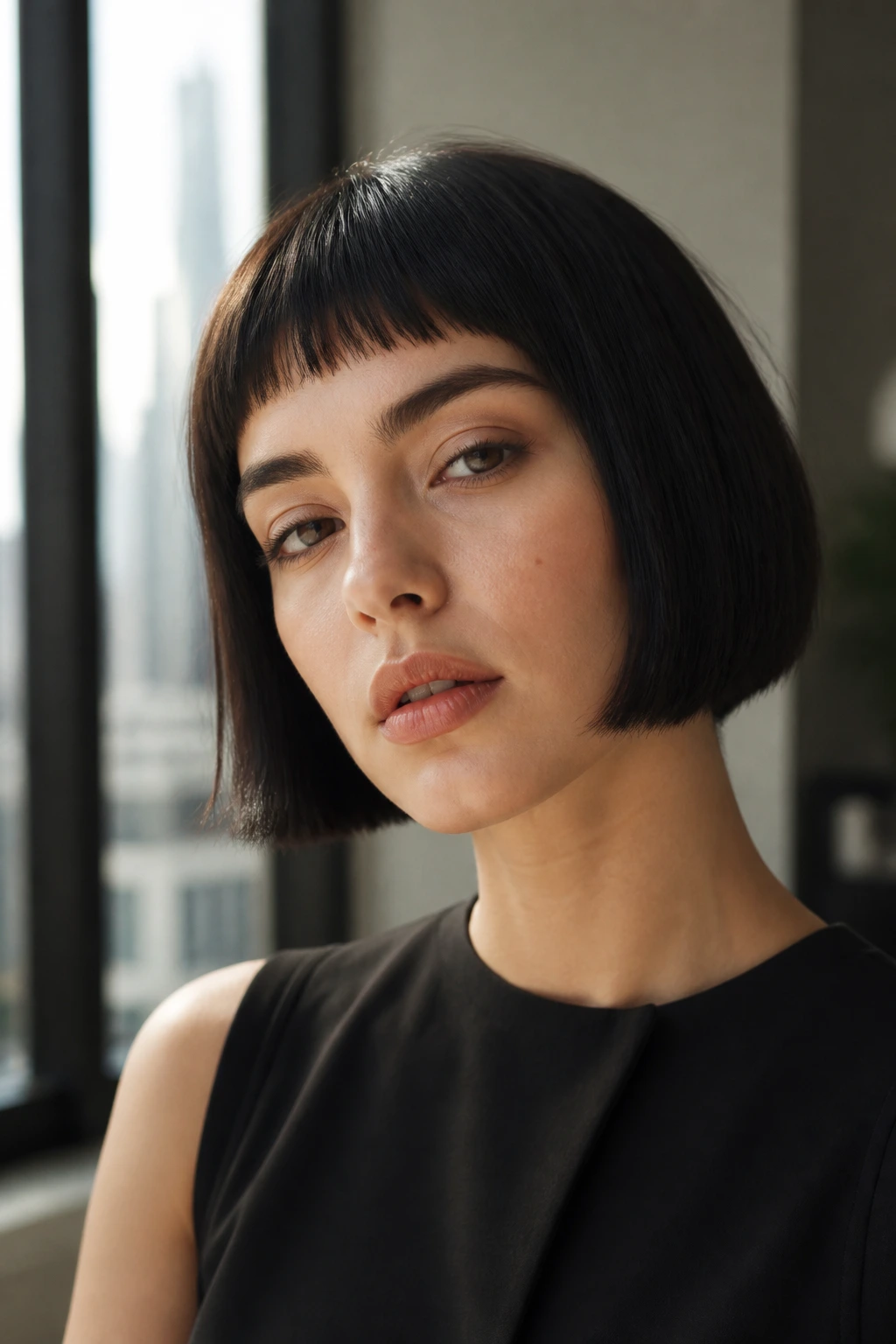
A micro fringe changes the mood fast. Pair it with a chin-length bob and the result is sharp, graphic, and a little editorial. It is not a quiet haircut, which is exactly why it works so well for people who want polished hair with some edge.
The cut depends on precision. If the fringe is too soft, the whole thing loses its bite; if the bob is too layered, the shape gets muddy. What you want is a very clear line at the bottom and a fringe that sits high on the forehead without looking jagged.
- Keep the fringe short and even, usually above the brows.
- Ask for the bob to stay clean through the perimeter.
- Use a smoothing balm on the ends so the haircut doesn’t puff.
- Trim the fringe often; short bangs grow out fast and lose the effect.
This is not the most forgiving option on the list. It does, however, look fantastic when the hair is well kept and the styling is intentional. If you like strong shapes, this one has plenty.
15. Low-Key Side-Part Bob With Tucked Ends and Satin Finish

A side part, tucked ends, and a little shine can carry a chin-length bob farther than most people expect. This is the version for busy mornings, office days, and dinner plans that happen without warning. It looks finished even when the styling took ten minutes.
Unlike the glass-hair version, this one does not need a mirror-flat surface. The side part gives it lift, the tucked ends keep the jawline open, and the satin finish reads healthy without screaming for attention. That softer polish can be easier to wear every day, which is why I think it deserves a spot near the end of the list.
If you want one cut that can go from clean and understated to dressed up with a quick brush of serum, this is the one I’d hand you first. It has shape. It has restraint. And it does not collapse the moment the weather gets a little damp. That alone is worth a lot.
Some haircuts need a lot of work to look intentional. This one looks intentional on its own.
