



A bob on wavy hair can look expensive in the best way — or it can puff out at the sides and fight you all day.
That’s why the best bob haircuts for wavy hair respect the bend in the hair instead of flattening it. Waves want room, shape, and a little honesty. Cut them too bluntly in the wrong place and you get the triangle effect. Cut them with no plan and you end up with frizz, corners, and a shape that changes every time the humidity changes.
The part people miss is this: wavy hair is not just “straight hair with a little movement.” It has its own rules. A cut that looks tidy when wet can spring up an inch or two once it dries, and the perimeter line can land somewhere completely different than you expected. That’s why a good bob is never only about length. It’s about weight, balance, and where the wave sits.
So the haircut has to do two jobs at once. It should give you a clean shape, and it should still let the wave do its thing. Some of these cuts are airy and soft. Some are sharp and graphic. A few live in that sweet spot where you can air-dry and walk out the door without much fuss. That’s the zone worth paying attention to.
1. Chin-Length French Bob for Wavy Hair

The chin-length French bob is the one that makes wavy hair look deliberate instead of accidental. It sits right at the jaw or just under it, which gives the wave enough room to move without dragging the shape down. If your hair bends in a loose S and you like a little swing around your face, this is a strong place to start.
Why It Works
The short length keeps the wave from getting heavy at the ends. That matters more than people think. Once wavy hair gets too long, the bottom can look stringy while the top still has volume, and the whole cut starts to feel out of balance.
Ask for a clean perimeter with only light internal layering. Too many layers here can make the bob puff at the sides. A little texture is fine. Choppy thinning is not.
- Best for: fine to medium-density waves
- Styling note: a small amount of mousse at the roots helps the cut keep lift
- Salon request: cut it dry or mostly dry so the stylist can see how much your waves spring up
- Maintenance: trims every 6 to 8 weeks keep the line neat
My favorite thing about this cut: it looks polished even when you’ve only rough-dried it for five minutes.
2. Jaw-Length Blunt Bob

Can a blunt bob work on wavy hair? Yes — if the wave is loose and the perimeter stays crisp. The whole trick is restraint. You want the bottom edge to read as one clean line, not a fuzzy halo of ends that look like they were cut with kitchen scissors.
This bob is especially good when your waves are soft and your hair is fine. The blunt edge gives the illusion of density, which is a nice trade if your hair tends to feel a little wispy. It also makes the wave pattern stand out more, because there’s a strong shape underneath all that movement.
Messy ends ruin the point.
If you try this cut, ask for minimal razoring and no aggressive thinning through the body. A blunt bob looks best when the interior still has enough weight to support the line. If the stylist removes too much bulk, the perimeter starts to flip in odd ways and you lose that clean finish.
3. Collarbone Lob With Soft Layers
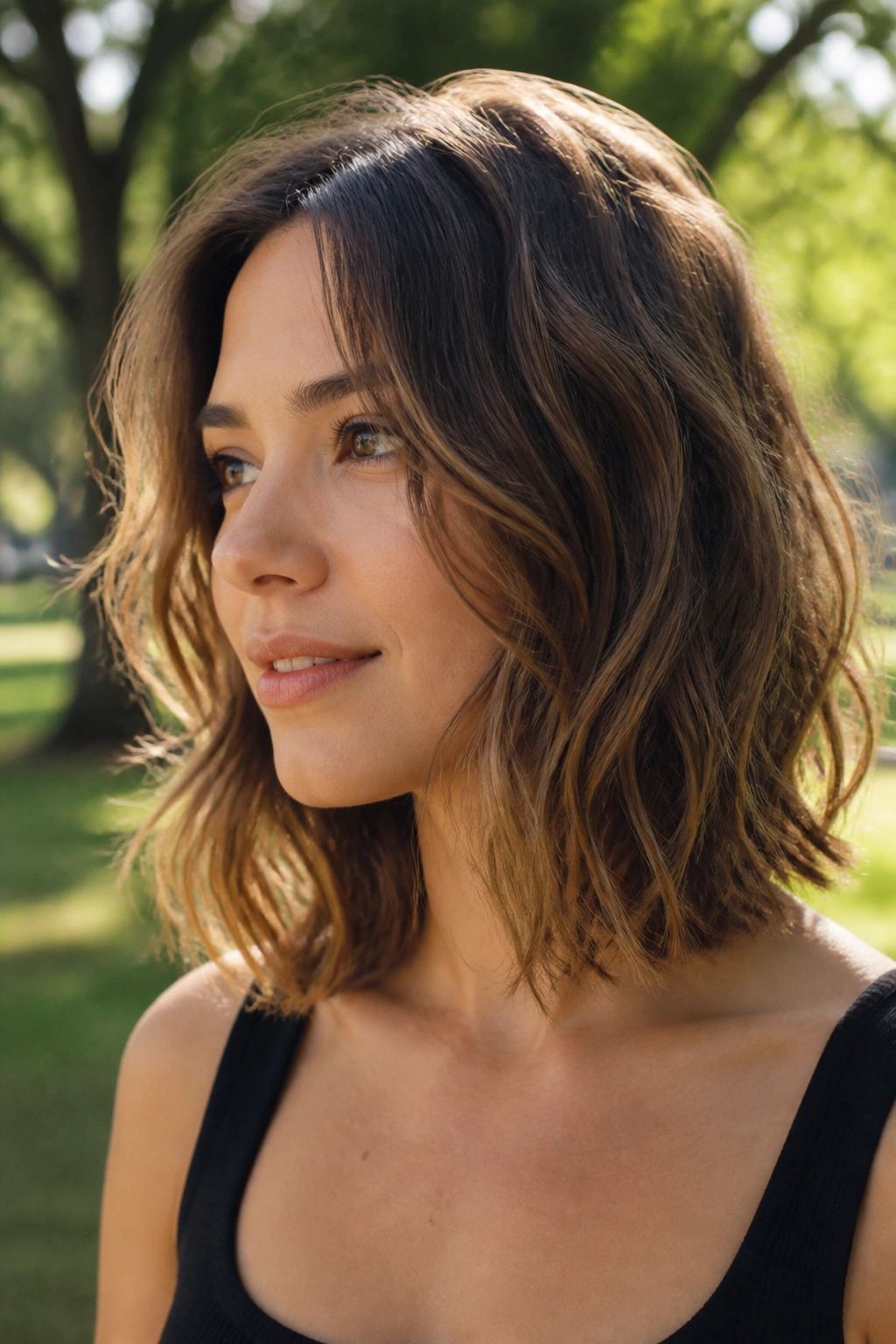
If your waves puff up when they’re cut too short, the collarbone lob is the safe bet. It gives you bob shape without forcing the hair to sit above the chin, and that extra length buys you a little control. It’s one of those cuts that looks easy because it is easy — not lazy, not boring, just practical.
What To Ask Your Stylist For
The key is soft layering that starts below the cheekbones. You want movement, not random holes in the shape. The longest pieces should brush the collarbone, while the top layers should blend enough to let the wave bend naturally.
- Length target: collarbone to upper chest
- Layer target: subtle, long layers around the face
- Best products: a light curl cream or wave lotion, not a heavy butter
- Best finish: air-dried or diffused on low heat
- Avoid: short crown layers if your hair frizzes easily
This cut is useful if you like putting your hair up part of the time. It still feels like a bob when it’s down, but it won’t make you resent your own haircut on busy days. That balance is underrated.
4. Angled A-Line Bob
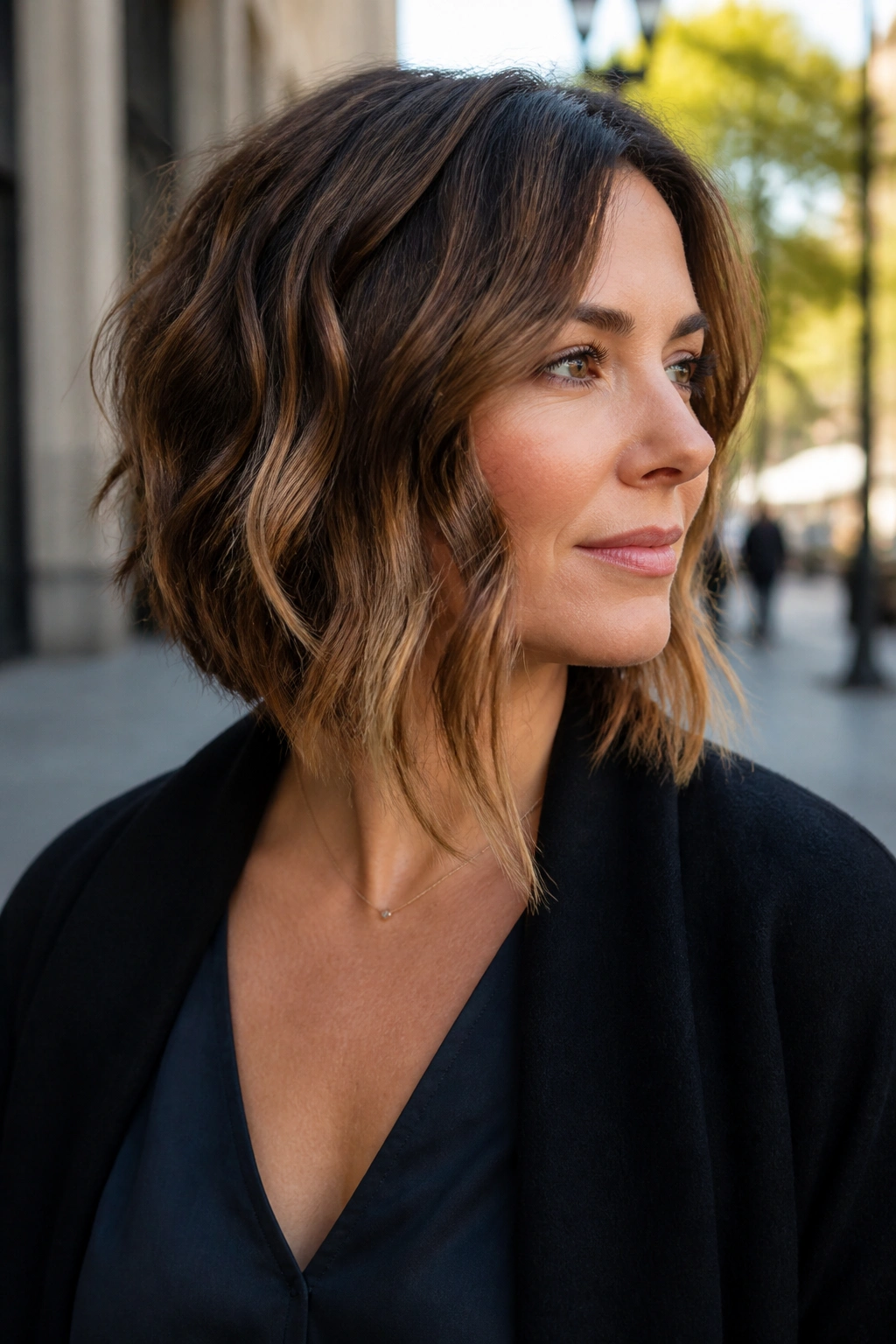
Unlike a straight, even bob, an A-line leaves the front a little longer and uses that angle to slim the jaw. On wavy hair, that front length also helps the ends settle instead of bouncing up into a boxy shape. It’s a neat haircut, but not a stiff one.
The back sits shorter, which means the nape stays tidy and the body of the cut doesn’t balloon out. That’s a big deal if your waves are thick or if your hair grows out into a helmet shape faster than you’d like. The angle gives the eye a place to travel, which keeps the cut from feeling heavy.
The danger is going too steep. A sharp A-line can look dated fast, especially if your wave pattern is loose and your styling is casual. Keep the angle moderate and ask for soft graduation through the back so the line still feels modern and wearable.
This one flatters people who want a little structure around the face without losing movement. It’s clean. It’s flattering. And it doesn’t ask for much once the shape is right.
5. Shaggy Bob With Choppy Ends

The shaggy bob is where wavy hair gets to be itself. No apology, no over-styling, no pretending the wave is something else. The edges are broken up, the layers are visible, and the whole cut has that slightly undone look that works best when hair has some natural texture already.
Pieces That Matter
The style lives or dies by how the layers are cut. You want softness around the cheekbones, a bit of air through the crown, and choppy ends that stop the outline from feeling too heavy. The result should move when you turn your head.
- Best for: medium to thick waves
- Great if you want: texture without a lot of hot-tool styling
- Styling product: sea salt spray for grip, followed by a light cream if the hair feels dry
- Salon note: ask for point cutting instead of harsh thinning
- Watch out for: over-layering if your hair is already frizzy
This is one of those cuts that can look expensive when it’s done well and a little chaotic when it isn’t. The difference is usually in the balance of the layers. If the stylist keeps the shape controlled, the shaggy bob has energy. If they don’t, it can just look like an unplanned grow-out.
6. Side-Parted Classic Bob

A side part does more for wavy hair than a lot of people expect. It lifts the roots, breaks up symmetry, and gives the bob a little sweep that makes the face look longer. On a classic bob, that shift is enough to turn a plain cut into something with presence.
This version works best when the line stays simple. Think clean ends, soft bend, and a part that isn’t glued into place. The wave falls to one side, the hair gains movement at the crown, and the whole haircut feels less severe than a center-parted version can.
I like this cut on finer wavy hair because it creates height without teasing or heavy product. A side part also hides a lot of normal hair behavior — cowlicks, uneven density, a flat side, all of it. The shape does some of the work for you.
If you hate looking too “done,” this is a smart choice. It can be dressed up or worn loose, and it doesn’t lose its shape the second you touch it.
7. Box Bob With a Square Edge

Why does a box bob look so good on certain waves? Because the square outline gives the texture something firm to bounce against. Instead of a rounded silhouette, you get a fuller, more graphic shape that feels modern and a little bold. It’s not soft around the edges, and that’s the appeal.
The Shape Rules
The cut stays fairly even from top to bottom, with minimal graduation. The ends are kept full, and the hair around the jaw is not over-thinned. That preserves the square profile, which is the whole point.
- Best for: thick or medium-thick waves
- Face shapes it often flatters: oval, heart, and narrower faces
- Ask for: a blunt base with just enough interior texture to keep it from puffing out
- Skip if: your hair is already fragile or breaks at the ends
- Style with: a diffuser and a light hold cream
This one can feel almost architectural when it’s fresh out of the chair. Then the waves start doing their thing, and the shape softens in a way that still reads intentional. That’s the magic. It has structure, but it doesn’t look frozen.
8. Razor-Textured Bob

A razor can save heavy wavy hair, but it can also chew up fragile ends. That’s the blunt truth. Used well, it removes bulk and gives the bob a softer, more feathered edge. Used badly, it leaves the ends looking wispy in a way that grows out unevenly and frizzes under the first dry breeze.
This cut suits medium to coarse waves that need movement. It works because the razor lightens the perimeter just enough to stop the hair from sitting in a hard block. The shape gets air inside it, which helps the waves separate instead of clumping into one big mass.
The catch is condition. If your hair is bleached, heat-damaged, or already dry at the ends, I would be cautious. A scissor-cut bob with gentle texturing is usually safer. You do not need more roughness if the hair is already struggling.
One good sign: when the hair moves, the ends should look soft, not shredded. That difference matters a lot more than most salon photos admit.
9. Inverted Bob With Lifted Nape
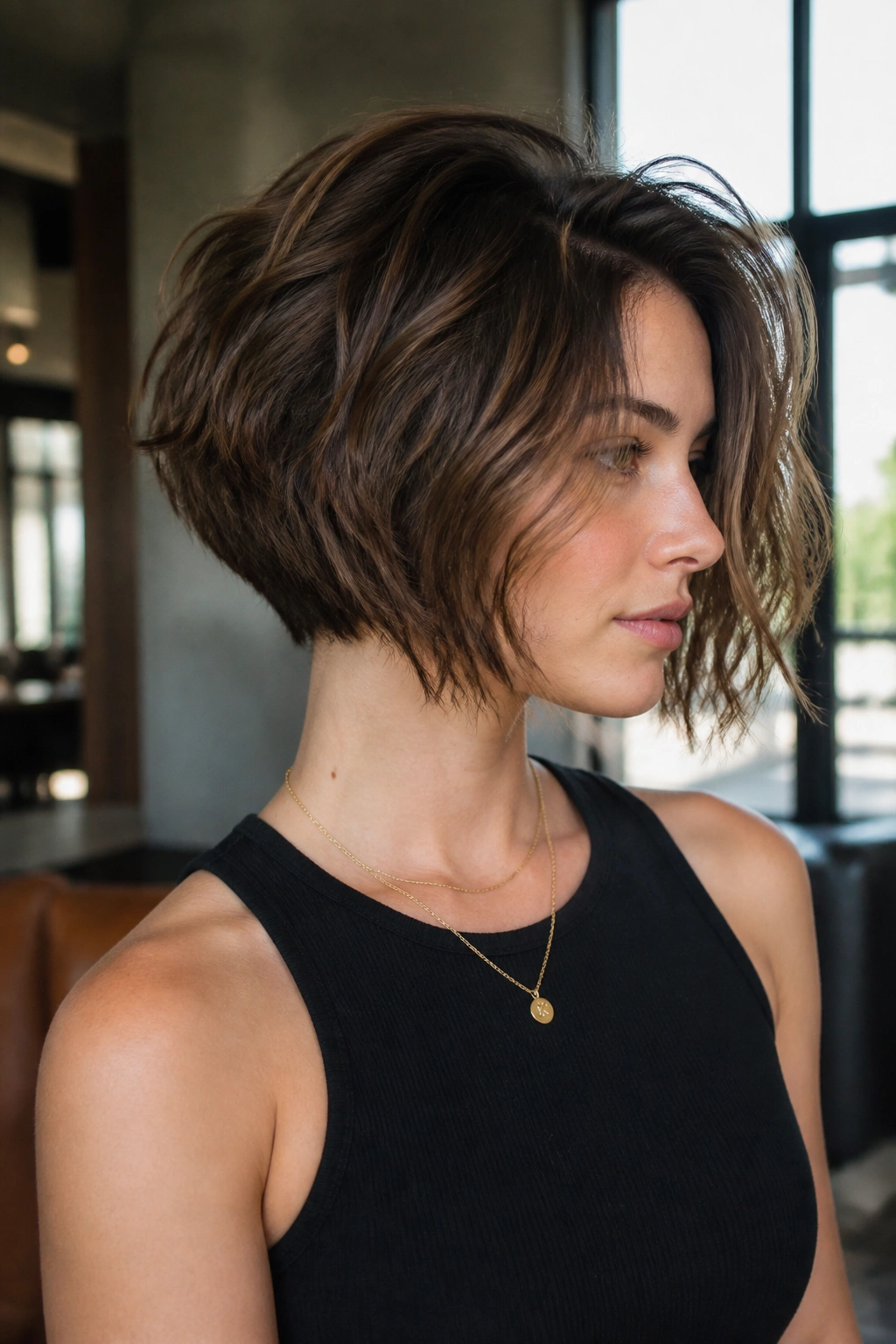
If the A-line feels too soft, the inverted bob tightens the back and gives the crown a little lift. It keeps the back shorter and stacked, then lets the front stay longer so the wave has somewhere to fall. The result feels sharper than a classic bob, but not as strict as a geometric cut.
This shape is useful when your hair collapses at the crown or grows thick at the nape. The shorter back removes bulk where it tends to build up, and the longer front keeps the face from looking boxed in. On wavy hair, that combination can be very flattering.
The danger here is overstacking. Too much volume in the back can make the cut feel old-fashioned fast, and too much angle in the front can look severe. The sweet spot is a gentle lift, not a wedge.
I like this style for people who want a bob that looks deliberate from every angle. You turn your head, and the cut still has something to say.
10. Bob With Curtain Bangs

The bob with curtain bangs keeps showing up in salon chairs because it solves two problems at once: it frames the face and it softens the forehead without committing to a full fringe. On wavy hair, the bangs blend into the sides in a way that feels easy, not fussy.
How To Style The Fringe
Curtain bangs should hit somewhere between the cheekbone and the lip, depending on face length and wave pattern. Too short and they spring up. Too long and they disappear into the rest of the cut.
- Best for: people who like face-framing movement
- Styling trick: dry the bangs side to side with a round brush or fingers until they settle
- Trim schedule: every 4 to 6 weeks keeps them from dropping into the eyes
- Good product: a light styling cream or spray, not a stiff gel
- Watch for: cowlicks at the front hairline
The bob itself can be chin length or a bit longer. The bangs do the softening, which means the perimeter can stay neat without feeling plain. If you want a haircut that looks thoughtful but not overworked, this is one of the nicer options on the list.
11. Micro Bob
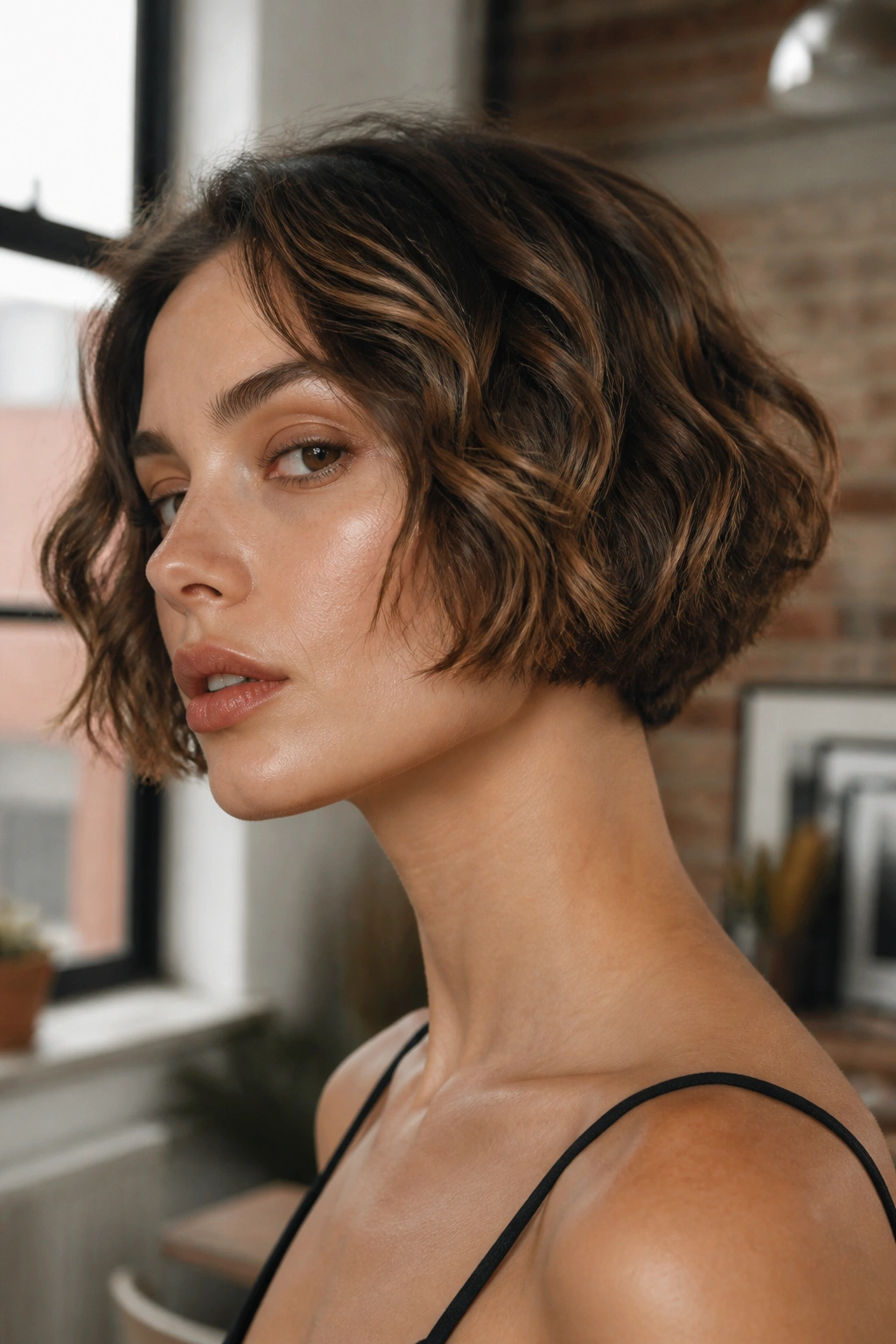
A micro bob is not for the faint of heart. That’s also why it works. The cut sits above the jaw, often close to the cheekbone, and it puts every bit of your wave pattern on display. There’s nowhere to hide, which is either thrilling or terrifying depending on how you feel about short hair.
The payoff is shape. On wavy hair, a micro bob can look crisp, expensive, and surprisingly full because the short length keeps the wave from dragging down. It also shows off the neck and jawline in a way that longer bobs just can’t.
That said, this is the haircut where shrinkage matters most. If your hair springs up a lot once it dries, you need to leave more length than you think. Ask your stylist to cut it with the dry finish in mind, not the wet one. That one detail saves a lot of regret.
I’d call this a strong choice for people who like clean lines and don’t mind upkeep. It grows out fast, but while it’s sharp, it has real presence.
12. Long Bob With Face-Framing Layers

Want a bob shape without committing to short hair? The long bob, or lob, is the easy answer. It keeps the length around the collarbone or just below, then adds face-framing layers so the front doesn’t feel heavy. For wavy hair, that extra room can make styling a lot easier.
Where The Layers Should Sit
The most useful layers usually start around the cheekbone or a little lower. That lets the wave bend forward around the face instead of flaring out at the sides. If the layers start too high, the haircut can turn fluffy in a hurry.
A lob like this works across a wide range of densities. Fine waves get movement. Thick waves get shape. And if you like tucking your hair behind your ears, the longer front pieces still look intentional.
- Best for: first-time bob wearers
- Style option: air-dry with a leave-in cream, then scrunch just the ends
- Salon request: keep the front slightly longer than the back
- Avoid: too many short layers near the crown
- Trim range: every 8 to 10 weeks keeps the layers blended
This is the most forgiving cut on the list, and that matters. Not every haircut needs to make a statement. Some need to behave.
13. Tapered Nape Bob
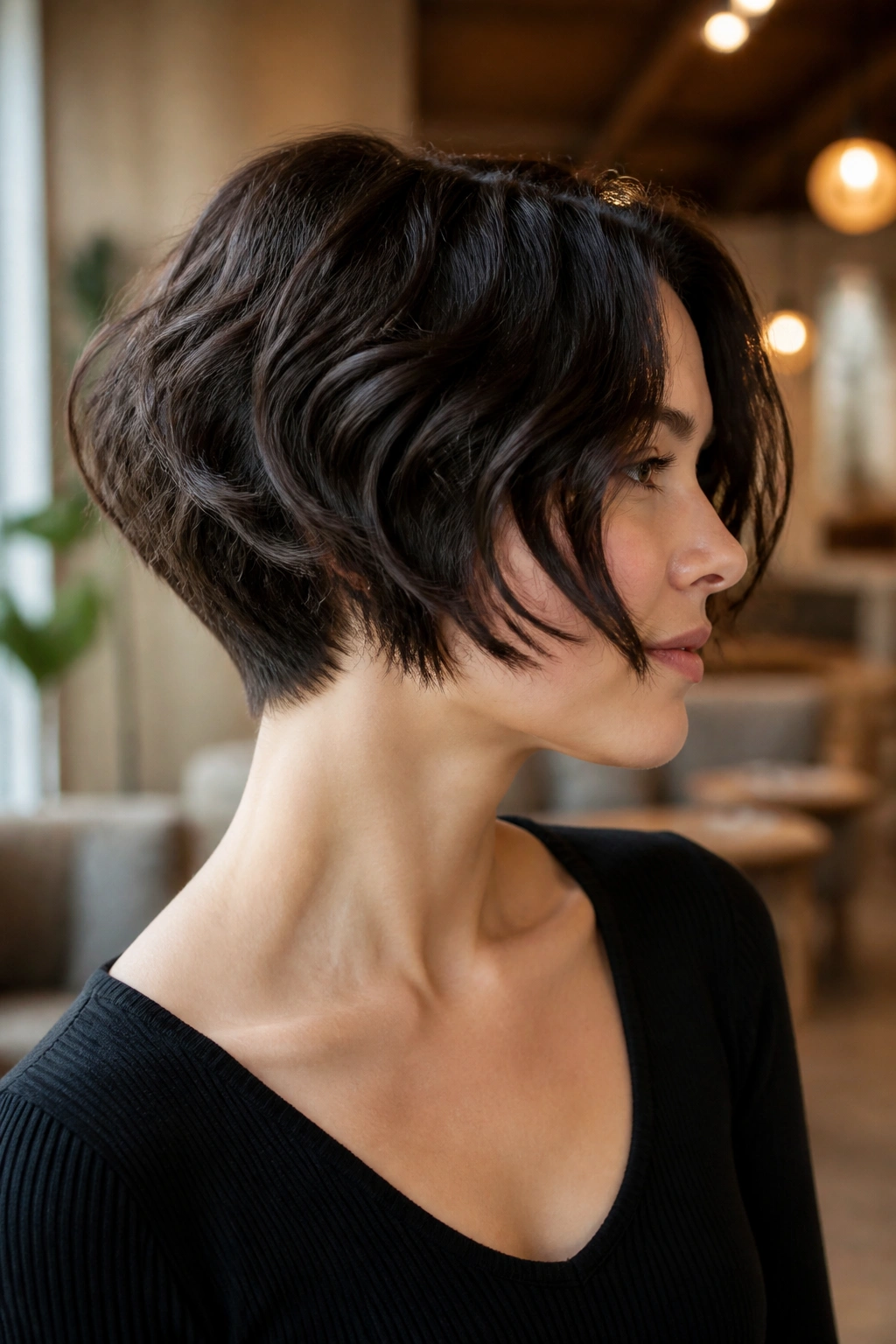
Thick wavy hair around the neck can feel like a wool scarf by noon. The tapered nape bob fixes that by removing bulk at the back while keeping the outer shape full. It’s a small change on paper and a big relief in real life.
The nape is cut shorter and closer to the head, then the length gradually builds as it moves toward the sides. That taper makes the neck area feel lighter, which is a blessing if your hair gets hot, bulky, or hard to pin up. The top still has enough room to show off the wave.
Why People Keep Coming Back To It
Because it behaves. That’s the simple answer. The back lies flatter, the shape stays tidy, and the cut doesn’t swell up every time you walk outside.
- Best for: dense, medium-coarse waves
- Good request to make: “Keep the nape clean, but don’t overthin the sides.”
- Works well with: a side part or a soft off-center part
- Less ideal for: very fine hair that needs bulk everywhere
- Maintenance: the back may need shape-up trims sooner than the front
This is a quietly practical bob. Not flashy. Very useful.
14. Sleek Wet-Look Bob
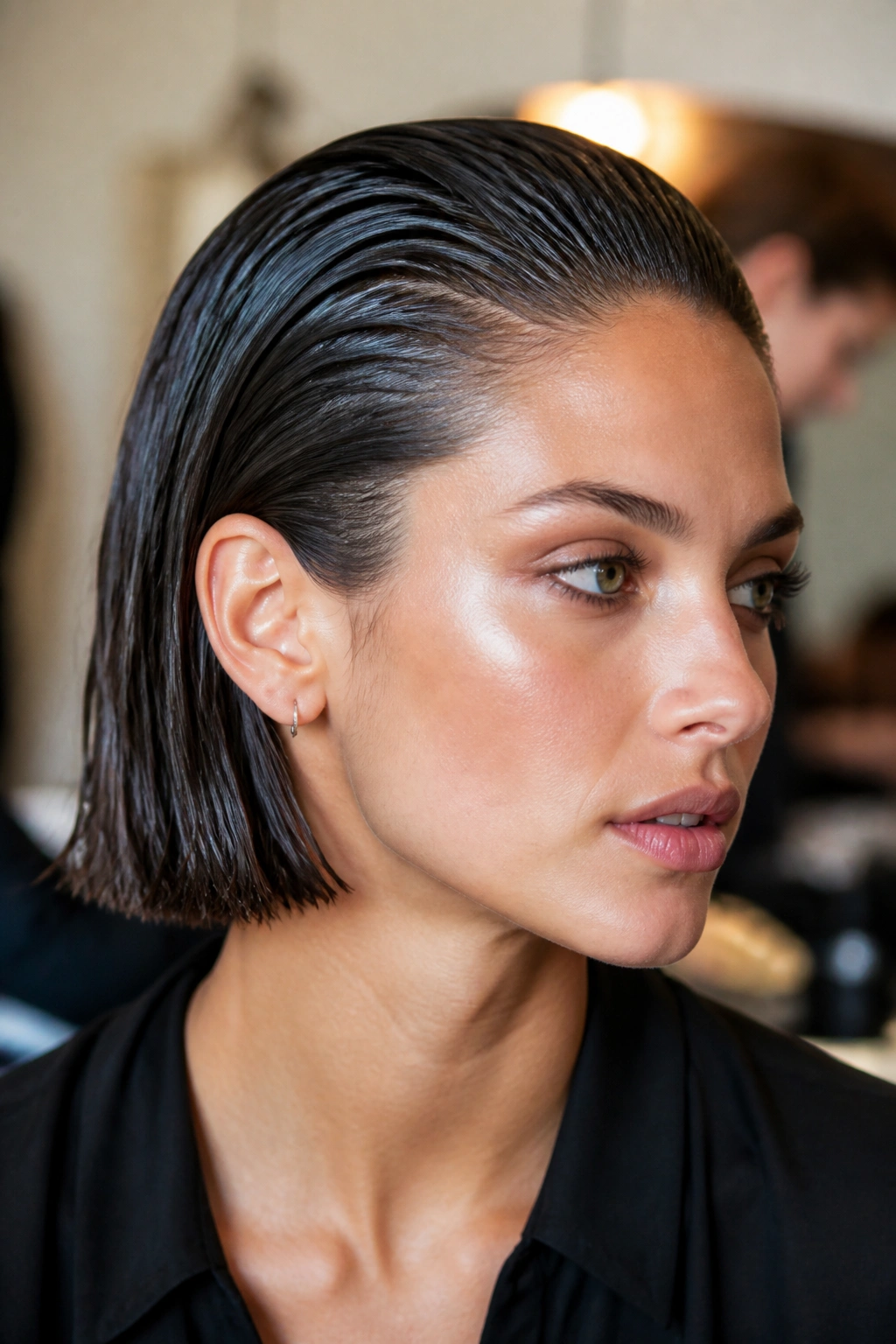
Wavy hair does not have to be “lived in” all the time. A sleek wet-look bob proves that. The haircut itself should be blunt or softly layered at most, because the styling does the dramatic work. When it’s done well, the effect is glossy, controlled, and a little bit sharp around the face.
This look depends on product, yes, but the cut still matters. You need a strong perimeter so the hair can be combed back or sideways without collapsing. If the shape is too flimsy, the wet finish looks stringy instead of polished.
I would not wear this every day if you hate product on your hands. It can feel a little slick, and it usually takes more effort to remove the product later. Still, for events or days when you want your bob to read more intentional, it’s a strong switch-up.
The nice part is that wavy hair often holds this style better than straight hair. The natural texture gives the look some grip. It doesn’t slide flat the way some people expect.
15. Rounded Bob With Soft Ends

The rounded bob is the one I recommend when you want softness, movement, and almost no drama at the ends. The outline curves gently inward, which makes wavy hair look fuller without getting boxy. It’s especially kind to hair that has a loose bend and a little natural body.
Ask for the weight to stay at the bottom and for the top layers to blend in softly. You want the haircut to follow the contour of your head, not sit out like a helmet. The ends should look cushioned, not chopped.
What To Say At The Salon
A few plain words usually work better than a long explanation.
- Ask for: a rounded perimeter with soft internal layering
- Say no to: aggressive razor texturing if your hair frizzes fast
- Best for: oval faces, softer jawlines, and medium waves
- Style with: a cream that encourages bend rather than a stiff hold product
- Keep in mind: this shape looks nicest when the ends are trimmed before they get ragged
I like this one because it’s forgiving. It grows out in a way that still looks like a haircut, which is not true of every bob on this list. If you want a style that feels gentle but not dull, this is where I’d point you first.
A good bob on wavy hair should look like it belongs to the hair you have, not the hair you wish you had. That’s the real test. When the cut and the wave work together, you stop fighting the shape every morning, and the whole thing becomes a lot easier to live with.
