



A bob haircut looks simple until you sit in the chair and realize there are at least a dozen ways to get it wrong. Too blunt, and it can feel helmet-like. Too layered, and the whole shape starts to wobble.
That’s exactly why bob haircuts keep coming back in so many forms. The cut can read sharp, soft, airy, polished, or a little rebellious depending on where the weight sits, how the ends are finished, and whether the front is longer than the back. A good bob does not fight your hair. It works with its habits.
The real trick is matching the shape to your texture and your routine. Fine hair usually likes a stronger outline. Thick hair often needs weight removed in the right places, not everywhere. Wavy and curly hair want room to move, not a hard shell around the head.
Start with the shape that does the heavy lifting.
1. Blunt Chin-Length Bob
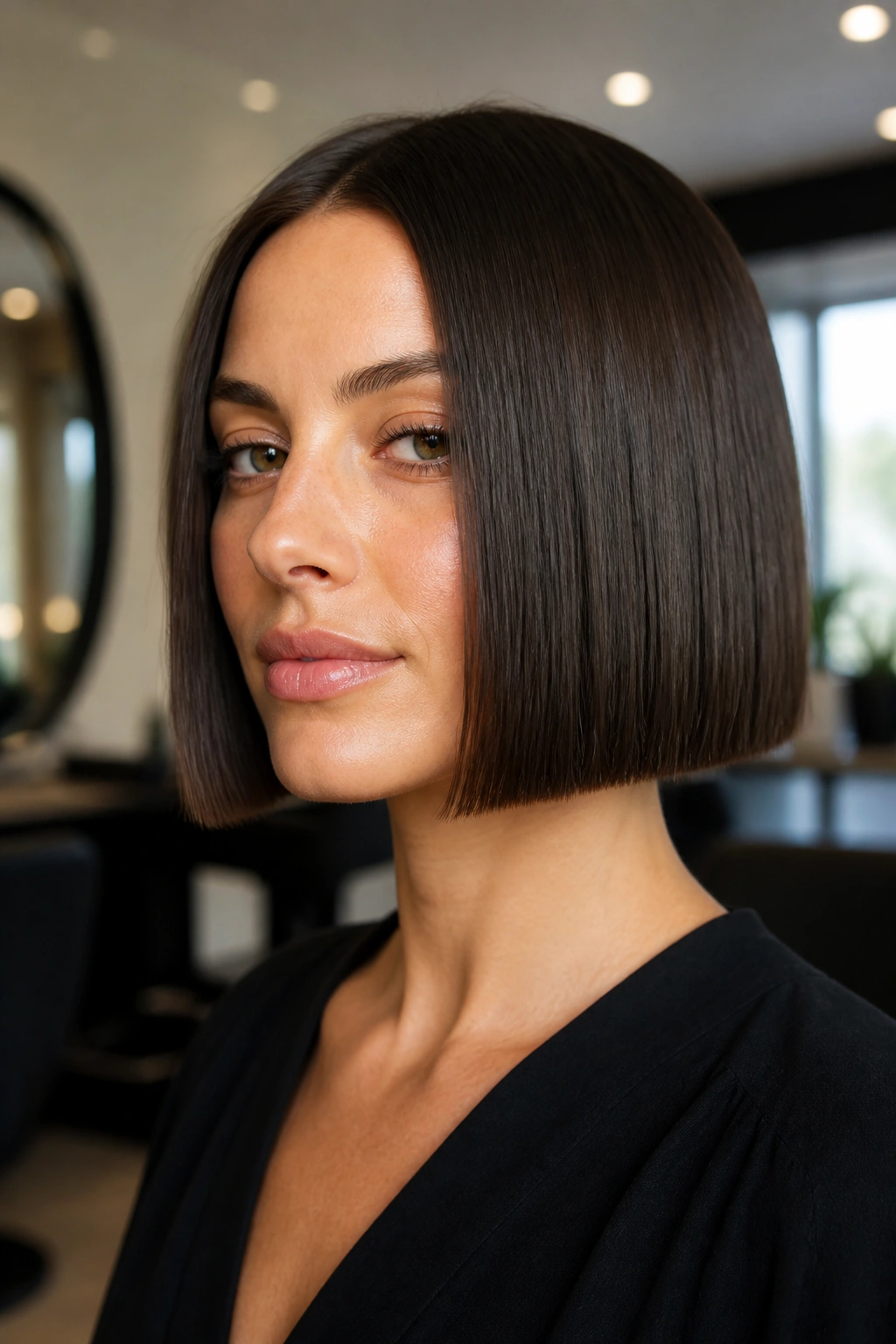
A blunt chin-length bob is the haircut I’d hand to anyone whose hair has been looking flat for months. The line does a lot of the work for you. It makes ends look fuller, gives the whole cut a cleaner edge, and keeps the shape from collapsing by noon.
What Makes the Line So Strong
The magic is in the perimeter. Ask for one solid length with no obvious internal layers, and have the ends sit right at the chin or just below it. That small difference matters. At chin length, the cut frames the face without swallowing it.
It’s a smart pick for fine to medium hair because blunt ends make the tail of the hair look denser. On very thick hair, the cut can still work, but the stylist may need to remove some bulk underneath so the shape doesn’t puff out like a triangle. That part gets overlooked all the time.
A paddle brush and a quick blow-dry are usually enough. If you want extra polish, pass a flat iron through the top layer only and leave the ends slightly soft. Too much iron on the ends and the bob starts looking stiff. That’s the line between sleek and overworked.
2. French Bob With Fringe
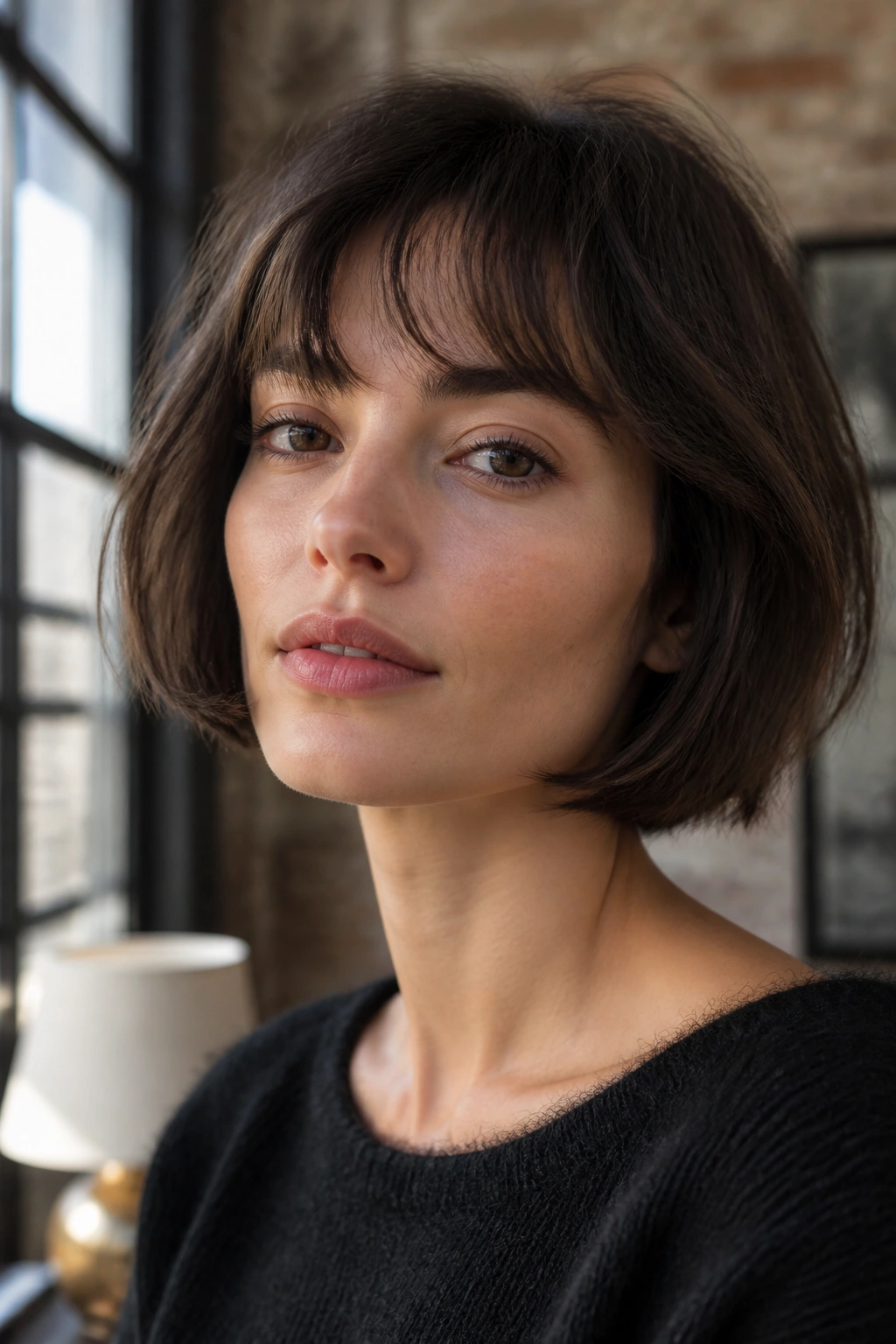
Why does a French bob always look like it has better plans than the rest of us? It’s the mix of short length, soft fringe, and a little bit of movement around the cheekbones. The cut feels casual, but not lazy. There’s a difference.
Why It Flatters the Face
A French bob usually sits around the lip, jaw, or just below the cheekbone, and the fringe is rarely heavy enough to block everything out. Instead, it breaks up the forehead and gives the face a small frame. That’s why it can look especially good on smaller faces or on anyone who wants a little softness near the eyes.
- Ask for a light, piecey fringe, not a thick wall of bangs.
- Keep the ends slightly textured so they move when you turn your head.
- Let the hair air-dry halfway, then rough it dry with a small round brush.
- Finish with a pea-sized amount of styling cream, focused on the fringe.
The best French bobs do not look “done.” They look like the wearer took ten minutes and knew exactly where to stop. That last part matters.
3. Italian Bob
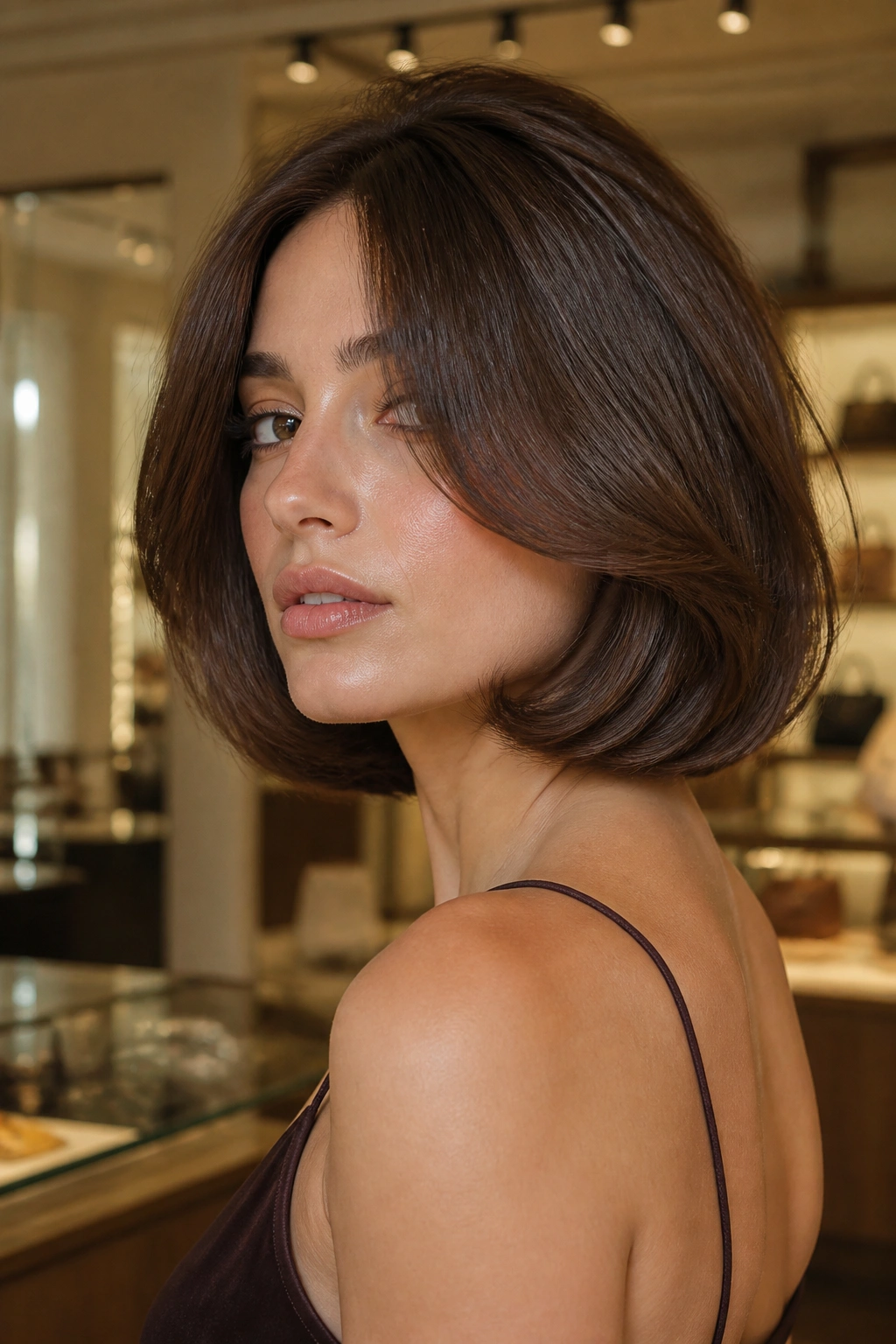
An Italian bob is a little fuller, a little rounder, and a lot more luxurious in shape than people expect. It usually lands between the chin and the collarbone, with enough weight at the ends to create that plush, almost blowout-like curve.
A lot of stylists cut this one so the body sits in the mid-lengths rather than at the roots. That’s the point. The silhouette has to feel rich, not airy in a weak way. It is the sort of haircut that looks best when the ends bend inward just a bit and the top has smooth lift, not obvious teasing or crunchy product.
I like this cut for hair that needs structure without harshness. It is softer than a boxy bob, but more deliberate than a loose lob. If the French bob is a little cheeky, the Italian bob is the one in a tailored jacket. It still moves. It just moves with more intention.
4. A-Line Bob
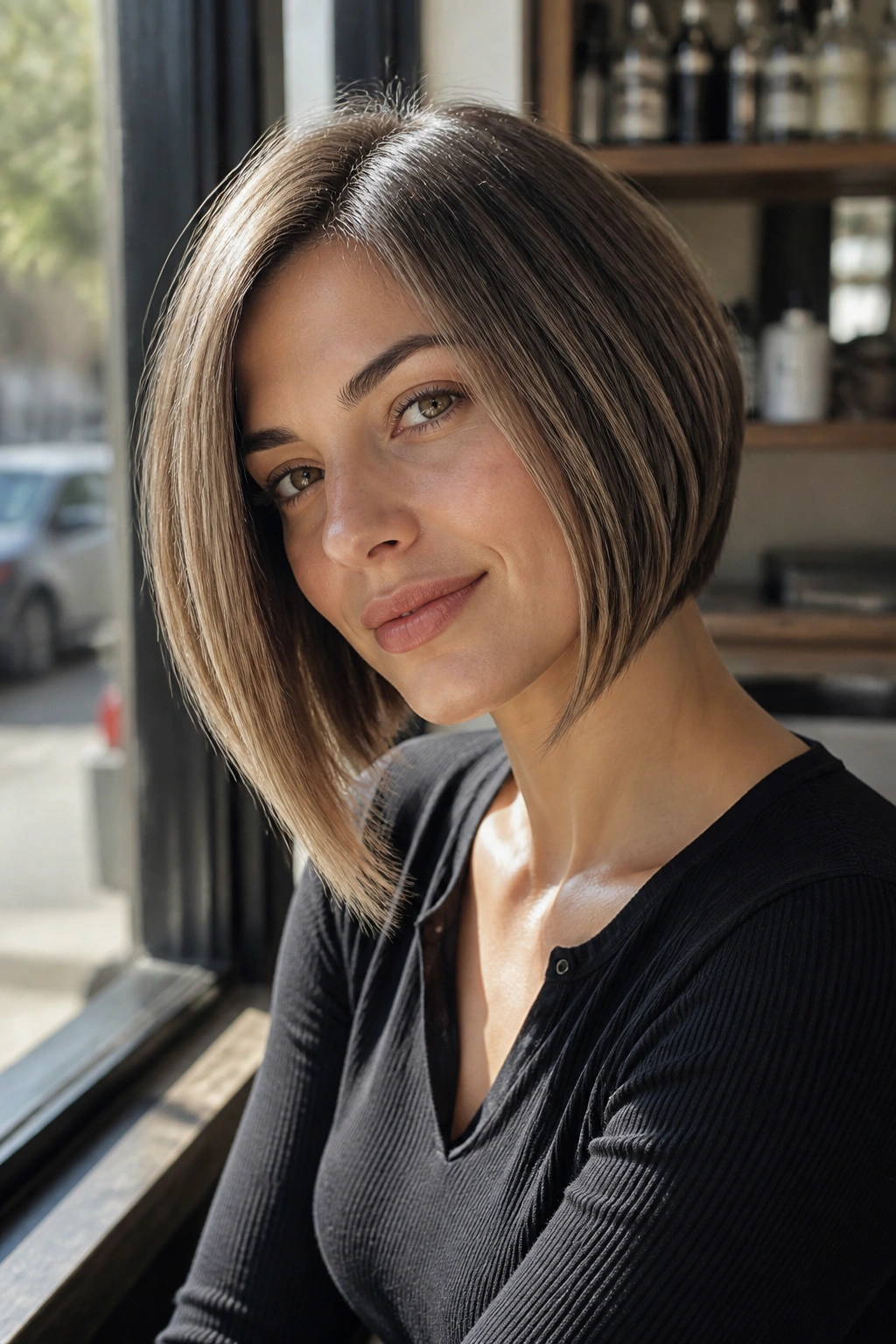
An A-line bob is not dramatic by default, and that is part of its appeal. The front is longer than the back, usually by about 1 to 2 inches, which creates a gentle diagonal line instead of a hard, sharp angle. That small shift changes the whole mood.
When to Ask for It
This cut makes sense when you want some length near the face but still want the back to feel neat and lifted. It can help a round face look a little longer, and it works nicely if you like tucking one side behind your ear. The longer front pieces do a lot of framing without looking fussy.
- Keep the back clean and close to the neck.
- Let the front graze the jaw or skim the collarbone.
- Blow-dry with the head slightly tilted forward for extra lift.
- Ask for soft beveling at the ends if your hair flips outward too easily.
A-line bobs can look too severe if the angle is pushed too far. I prefer the subtler version. It has more staying power and ages better as it grows out.
5. Stacked Bob
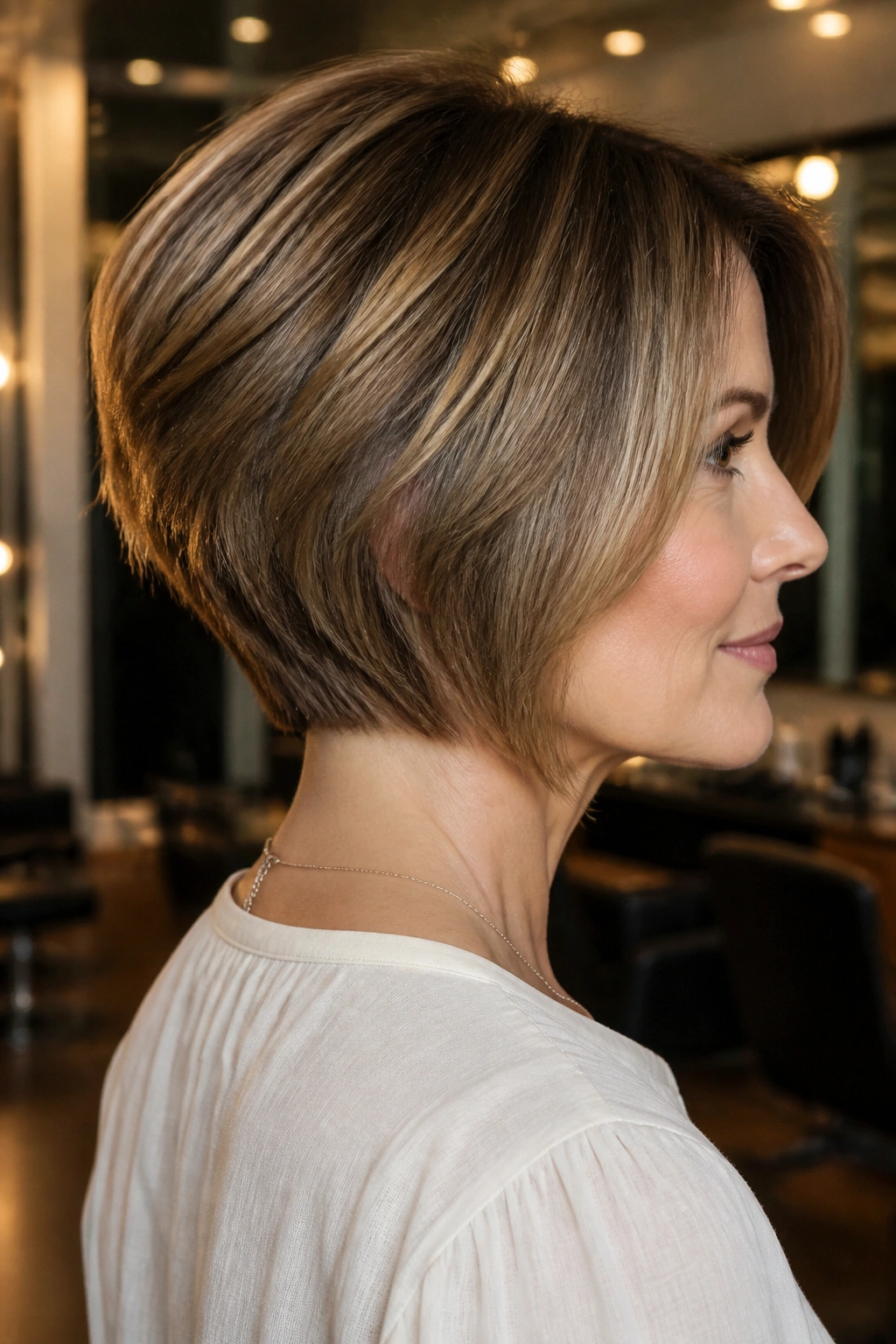
A stacked bob is the haircut you reach for when your hair needs volume in the back and a shape that holds its own. The shorter layers underneath create lift at the crown, so the head doesn’t look flat from behind. That sounds boring until you see the difference in the mirror.
The Volume Is Built In
The modern version of a stacked bob is softer than the older, heavily layered version that used to look a little too fixed in place. The layers should support the shape, not carve it into something stiff. You want the back to rise gently, then taper into a clean perimeter around the jaw.
This is a good cut for fine hair that refuses to stay off the scalp. It also works well for anyone who wants a more lifted profile without using a curling iron every morning. A quick round-brush blow-dry at the crown makes a huge difference. So does a root spray.
A stacked bob can go bad fast if the back is overcut. Once that happens, the hair starts to sit like a helmet. Keep the graduation soft and the top a little longer, and it stays sharp instead of dated.
6. Soft Layered Bob
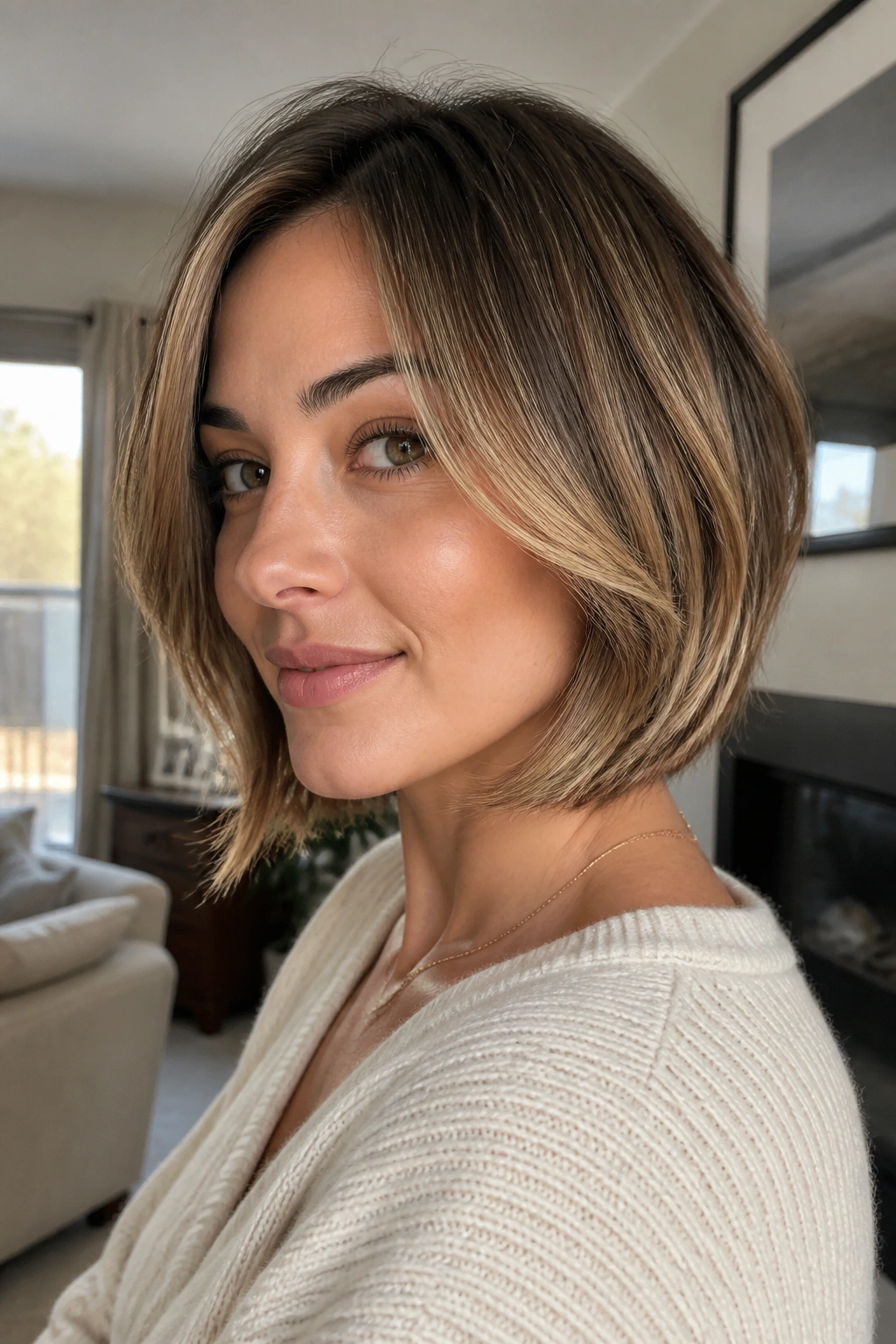
A layered bob can be brilliant or it can look chopped to pieces. The difference is in how the layers are used. Done well, the cut keeps weight at the bottom while letting the hair move around the face and through the ends.
That balance matters more than people think. If every section is cut too short, the bob loses its outline and starts to fray. But if the layers are kept long and blended, the shape feels lighter without looking thin. It is one of my favorite cuts for thick hair because it removes bulk where you can feel it most — around the nape, under the crown, and through the lower sides.
I also like it for people who wear their hair behind one ear most of the day. The cut still sits properly when you tuck it. That sounds small, but small things are where bob haircuts either win or lose.
7. Textured Bob
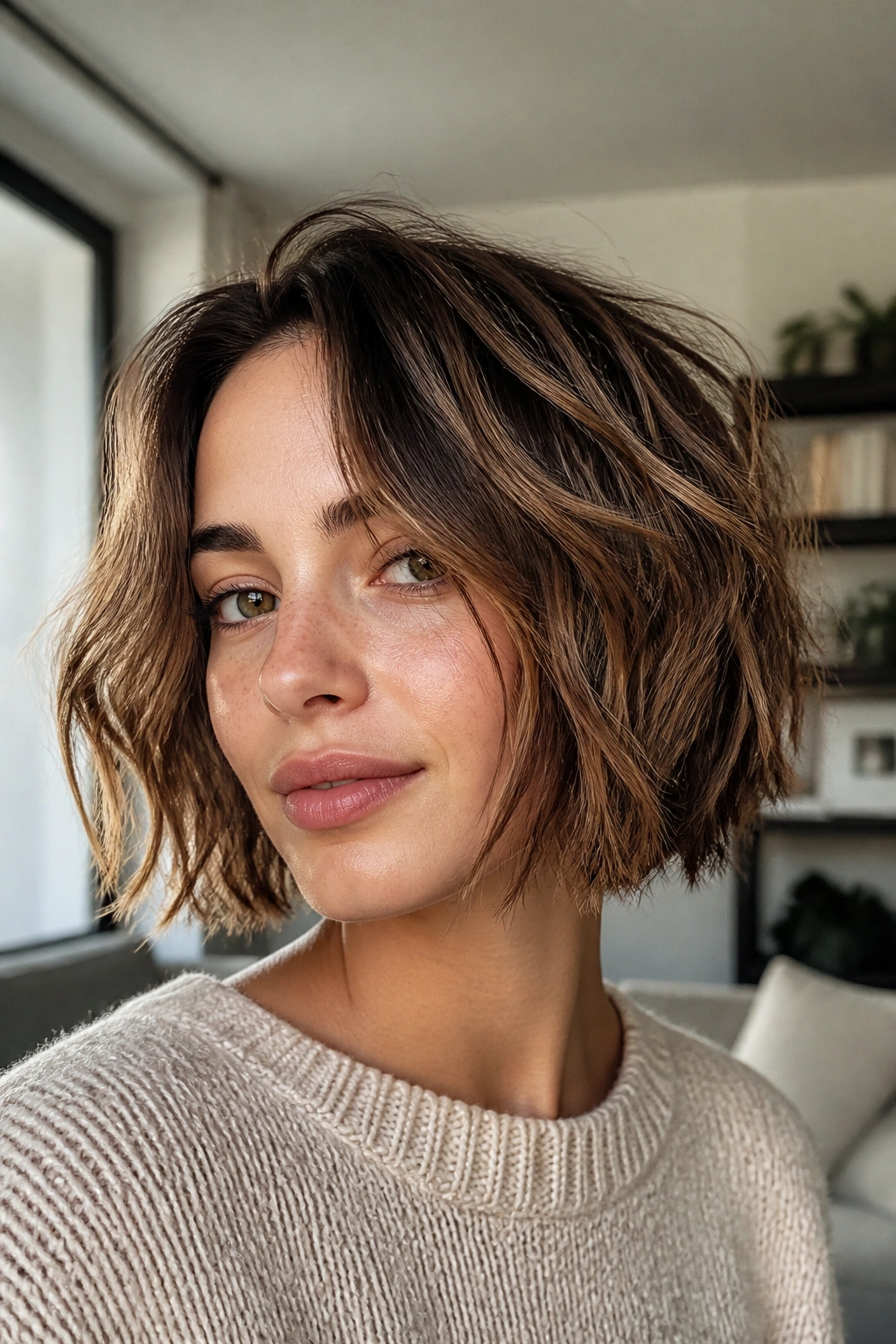
A textured bob has piecey ends, a little grit, and none of the flatness that makes some short hair feel too tidy. It’s the cut version of rolling up your sleeves. The shape says you’re not trying too hard, but you still care where the edges land.
How It Gets That Undone Finish
The texture usually comes from point cutting or dry cutting rather than a blunt pass with scissors. That keeps the ends from forming one solid curtain. A stylist may also carve out a few interior pieces so the hair separates more easily once it’s dry.
- Use a sea salt spray or lightweight mousse on damp hair.
- Scrunch with your hands if your hair bends naturally.
- Air-dry for a rougher finish, or diffuse on low heat.
- Work a tiny bit of styling paste through the ends to keep them separated.
This cut is a better fit for wavy and straight hair than for very fragile strands that break easily, because too much texturizing can make fine ends look wispy. Still, when it’s done well, it has that easy, lived-in quality that flat, one-length bobs can’t fake.
8. Curly Bob

Can a bob work with curls? Absolutely, but only when the shape respects the curl pattern instead of trying to boss it around. A curly bob should look rounded, balanced, and a little springy at the edges, not wide at the sides and flat at the top.
How to Ask for It
Curly hair shrinks more than people expect, so the cut often needs to land longer than the final shape you have in mind. A curl that looks chin-length when wet may sit closer to the cheek when dry. That’s normal. It just needs planning.
- Ask for a dry cut or a curl-by-curl shaping method if the stylist uses it.
- Leave a little extra length at the bottom if your curls shrink tightly.
- Keep the top from getting too short, or the cut can puff out.
- Use a curl cream first, then a gel if you want more hold.
The best curly bobs have movement, not control for control’s sake. I’d rather see a curl bounce and sit a little imperfectly than get squeezed into a round shape that never moves. There’s a line there, and curly hair knows when you’ve crossed it.
9. Wavy Lob
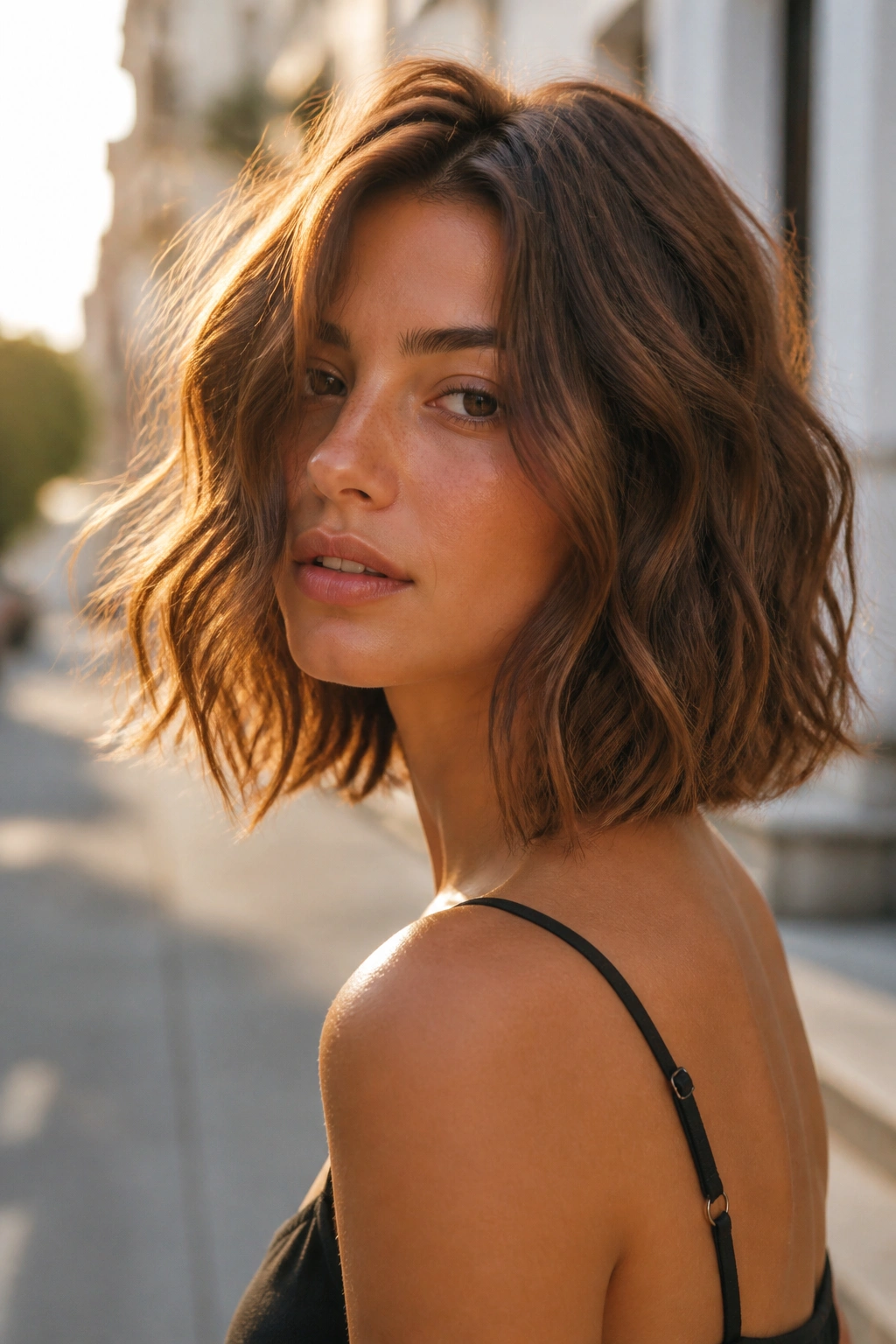
The lob is the haircut people grow into after a dramatic chop, and honestly, that’s not a bad place to land. At collarbone length, a wavy lob gives you enough hair to tuck, pin, twist, or wave, but it still feels lighter than longer lengths.
A soft bend through the mid-lengths makes this cut feel relaxed instead of formal. It works with a flat iron, a curling wand, or no heat at all if your wave pattern already has some shape. The longer length also means the waves fall in a gentler way than they do on a shorter bob. That softness is the whole point.
This is one of the easiest cuts to live with. It doesn’t demand a fresh blowout every morning. It can look polished with a center part and a few face-framing pieces, or more casual when the waves are broken up with a little cream. If you want a bob-adjacent cut that grows out gracefully, this is the one.
10. Asymmetrical Bob
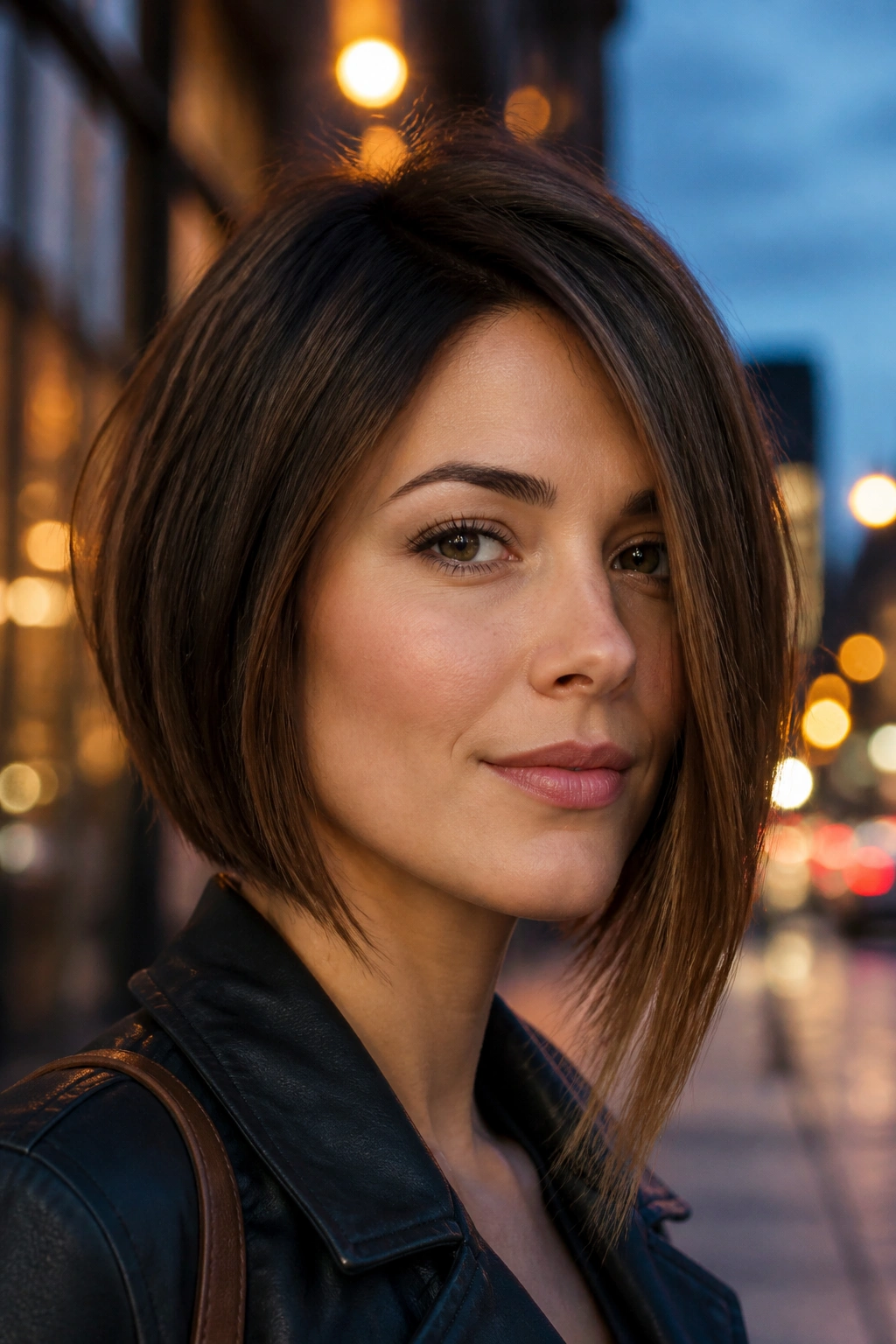
A little asymmetry can fix a haircut that feels too predictable. One side sits longer than the other — not by a shocking amount, just enough to make the shape feel intentional and current without turning it into a stunt.
That slight imbalance works well if you like a side part or if one side of your hair always falls flatter than the other. The longer side gives movement, while the shorter side keeps the outline crisp. It also looks good when one side is tucked behind the ear and the other stays loose. That contrast makes the cut feel sharper.
The key is restraint. A dramatic asymmetrical bob can look theatrical in a way not everyone wants. I prefer the version that whispers instead of shouts. It keeps the haircut fresh without turning your head into a geometry lesson.
11. Micro Bob
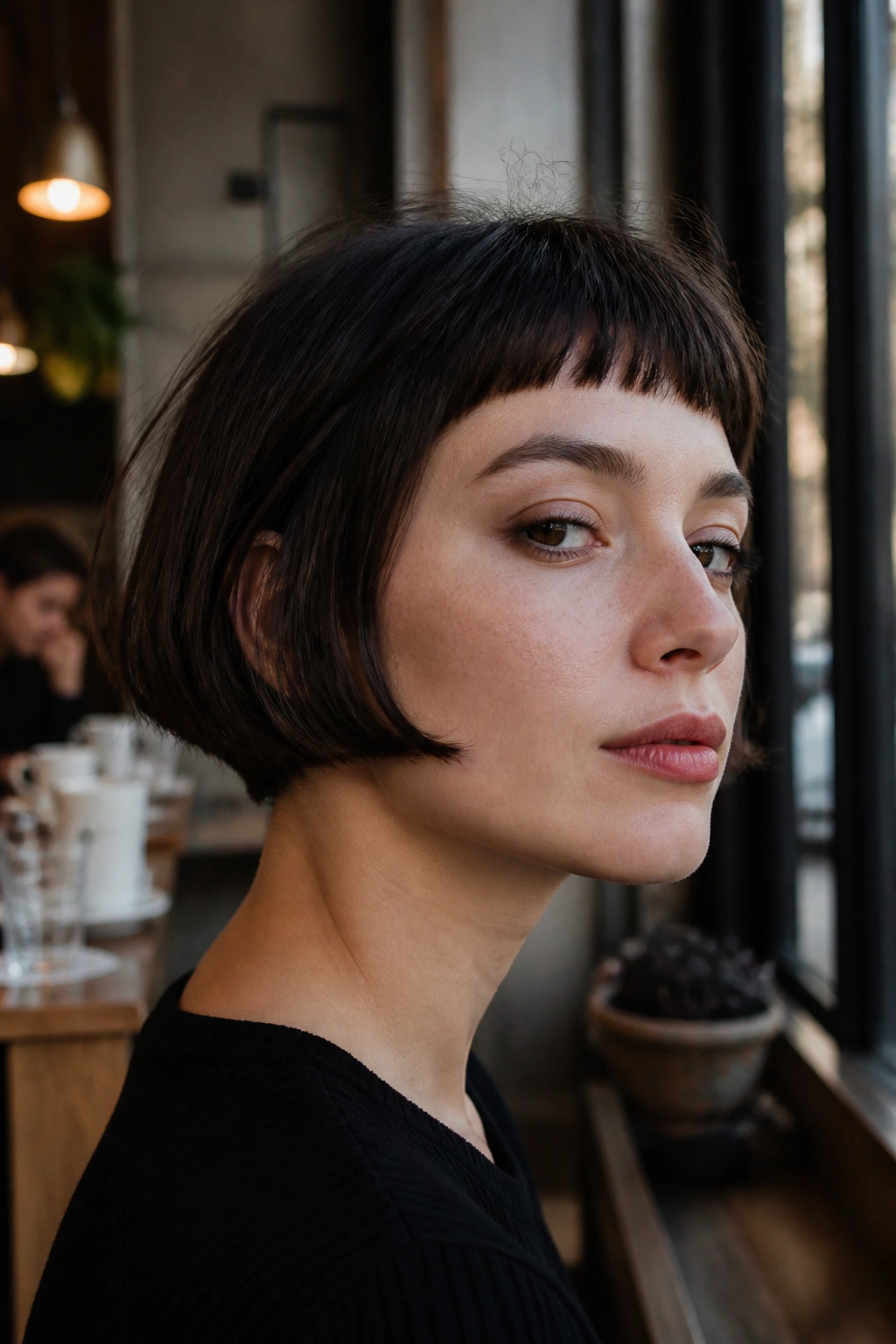
Short hair gets loud fast. A micro bob proves that point better than almost anything else on this list. It usually sits at the jawline or just above it, sometimes brushing the cheekbones, and it exposes the neck in a way longer bobs never do.
That exposure is what makes it feel modern. You see the line of the jaw, the curve of the ear, and the shape of the nape all at once. Earrings look better. Collars matter more. Even a plain black sweater feels styled when a micro bob falls cleanly around it.
This cut is not the best place to hide. Cowlicks show up faster. So do uneven growth patterns. And if you hate trims, skip it; the shape loses its snap once it grows out too much. Still, when the cut is fresh, it has a neat, sharp energy that a longer bob cannot imitate.
12. Curtain Bang Bob
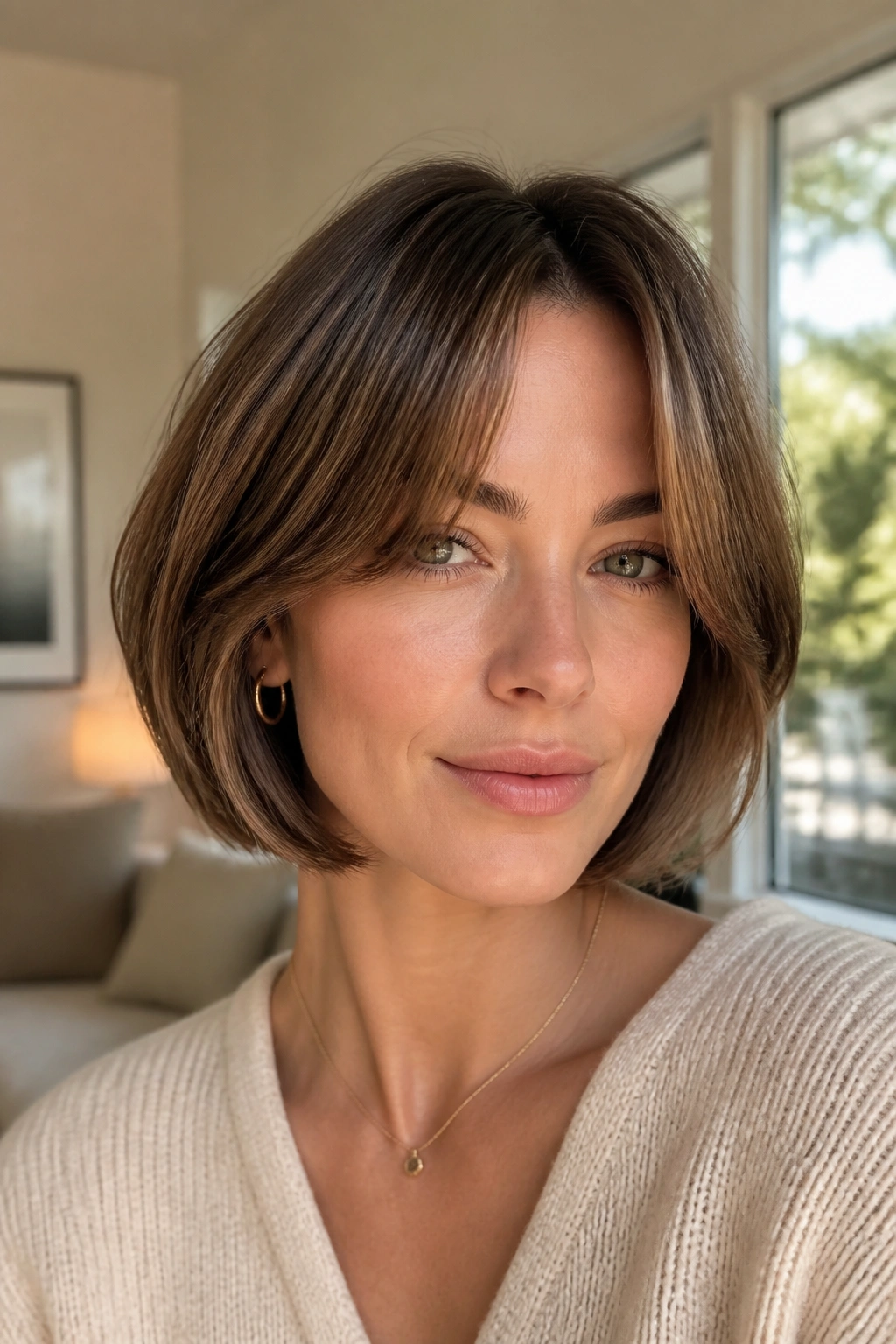
Want a bob that softens the face without hiding it? Curtain bangs are the move. They split at the center or just off-center and fall away from the forehead, which keeps the haircut open while still adding shape around the eyes and cheekbones.
Where the Bangs Should Sit
The sweet spot is usually somewhere between the eyebrow and the cheekbone, depending on the length of the bob and the curl of your hair. Too short, and the bangs lose that sweeping effect. Too long, and they turn into ordinary face-framing layers.
- Ask for bangs that are long enough to tuck behind the ears if needed.
- Keep the center shorter and the sides longer.
- Style them with a round brush or a quick bend from a small iron.
- Use a light spray, not heavy cream, or the fringe can separate awkwardly.
Curtain bang bobs are useful because they give you options. On clean hair, they look polished. On second-day hair, they still have shape. And if you’re tired of full bangs but want more than a plain bob, this is a very good middle ground.
13. Side-Part Sleek Bob
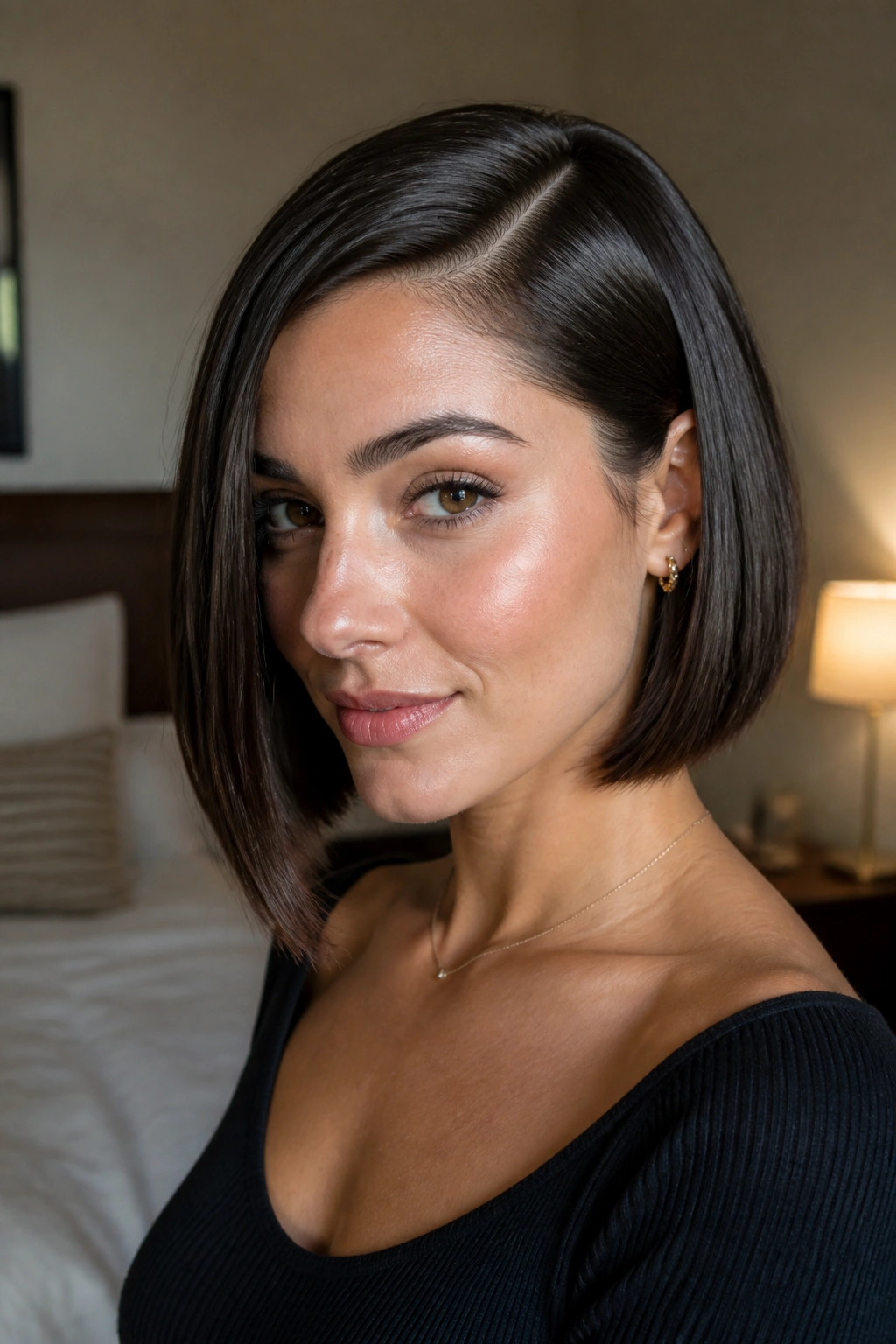
A deep side part can change a bob faster than a major haircut can. It adds lift at the root, creates a stronger line across the forehead, and makes sleek hair feel less strict. The shape is clean, but it has a little drama built in.
The shine matters here. A sleek side-part bob looks best when the cuticle lies flat and the ends are beveled just enough to avoid a harsh edge. A smoothing cream, a blow-dryer nozzle, and a flat brush are the workhorses. You do not need a cabinet full of products. You need control.
I like this cut on straight or slightly wavy hair because the part creates asymmetry without requiring the whole shape to be uneven. It also pairs well with a lip-length or jaw-length bob when you want the style to read confident instead of sweet. Small change. Big effect.
14. Flipped-Out Bob

The flipped-out bob has a bit of retro energy, but the modern version is cleaner and less cartoonish. The ends turn outward just slightly, which adds movement and keeps the haircut from sitting too close to the neck. It’s a small detail that does a lot.
A round brush or a flat iron twist at the bottom of each section can create the flip. The goal is not ringlets. It’s a controlled bend that makes the silhouette feel lively. That shape is especially nice on medium-length bobs, where the ends have room to fan outward instead of collapsing inward.
This cut can save hair that tends to look heavy or too polished. One turn of the wrist and the whole thing wakes up. If you like a touch of play in your styling, this one delivers without turning into full-on nostalgia.
15. Shaggy Bob
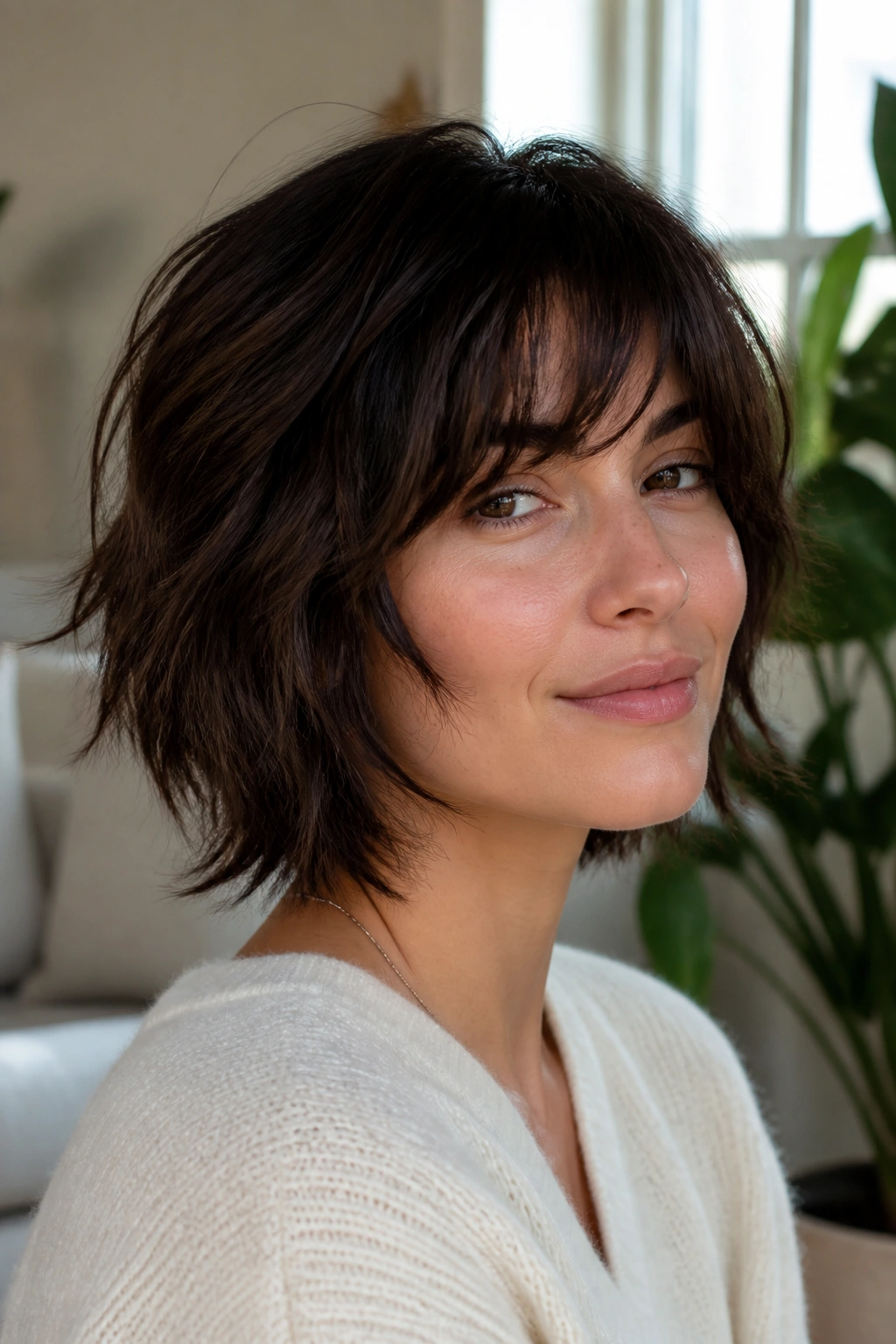
If polished hair feels boring to you, a shaggy bob has enough edge to stay interesting. The cut leans into choppy layers, broken-up ends, and a shape that looks better when it moves a little. It is not neat. That is the point.
The trick is keeping the shag from swallowing the bob. You still need a perimeter. Without that, the haircut turns into a fuzzy cloud with no real shape. A good shaggy bob keeps some line at the bottom while letting the top and sides feel loose. That mix is what makes it wearable.
This cut shines on naturally wavy hair, but it can work on straight hair too if you are willing to use texturizing spray and maybe a diffuser. It’s a better fit for people who don’t mind a touch of mess. In fact, the mess is part of the charm.
16. Feathered Bob

A feathered bob is softer than a shaggy bob and less severe than a blunt one. The ends are lightly layered so they sweep away from the face in a gentle way, almost like the haircut is exhaling a little. That sounds dramatic. It’s not. It just moves well.
Feathering works nicely when you want shape without visible chunks. The layers blend, the edge stays soft, and the face gets a bit of lift around the cheekbones and jaw. It’s one of those cuts that can make medium-density hair feel lighter without making it look thin.
What It Feels Like to Wear
It feels easy. That’s the honest answer.
You can blow-dry it with a round brush for polish, or let it dry with a little mousse for a more casual finish. Compared with a shag, it’s less piecey. Compared with a blunt bob, it has more give. I like it for people who want motion but not fuss.
17. Undercut Bob
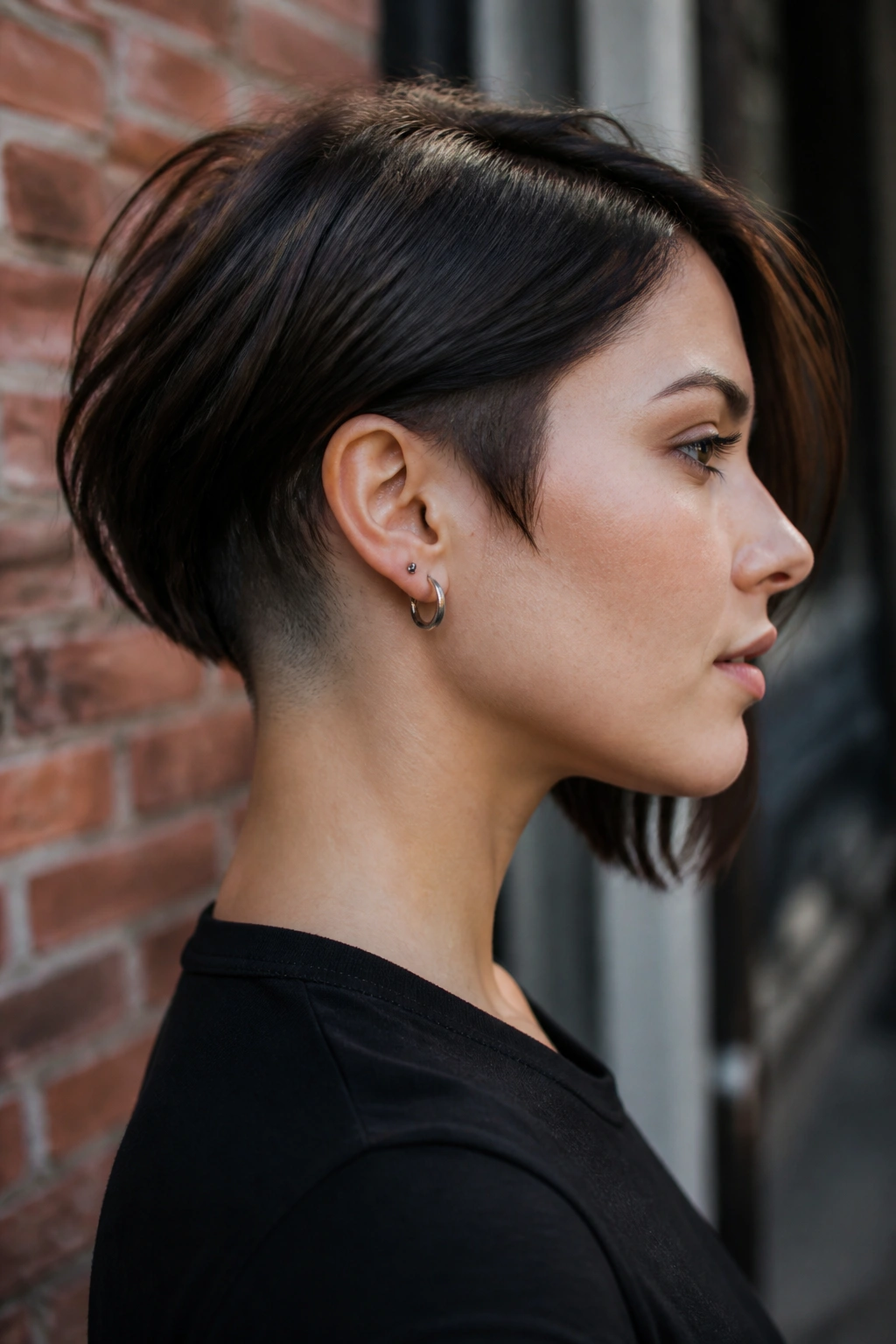
Thick hair can turn a bob into a triangle if you let it. An undercut fixes that problem at the source by removing bulk underneath — often at the nape, sometimes under one side, and occasionally in a hidden panel that only shows when the hair is lifted.
When It Makes Sense
This cut is useful when your hair holds too much weight at the bottom or gets hot and bulky at the neck. It can also make a bob feel lighter without sacrificing the outer shape. That means less puff, less drying time, and fewer fights with a hair dryer.
- Ask for the undercut to stay hidden when the hair is down.
- Keep the top length long enough to cover it fully.
- Make sure your stylist blends the edge so the line does not look choppy.
- Be ready for awkward grow-out if you change your mind later.
An undercut bob is not for everyone, and that’s fine. It’s practical, though, especially if your hair is dense and you want movement without losing your neck to a wall of hair.
18. Wet-Look Bob
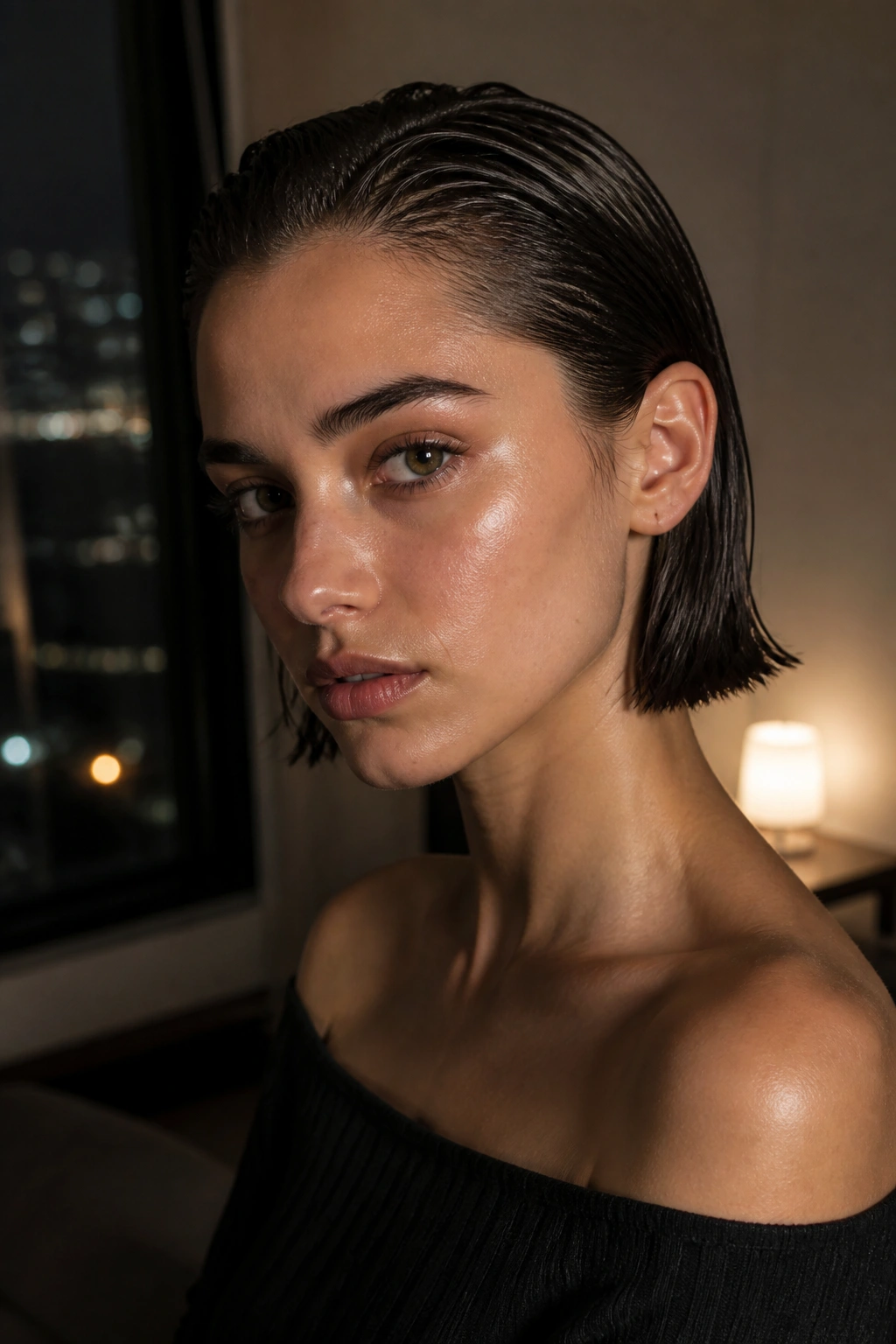
A wet-look bob is one of the easiest ways to make short hair feel intentional at night. The hair is slicked back or pushed into a controlled shape with gel, shine cream, or a strong styling balm while it’s still damp. The result is glossy, precise, and a little bit sleek in a way that reads fashion-forward without needing much length.
The cut itself matters less than the finish here. A blunt bob, a chin-length bob, or even a jaw-grazing lob can all work. What you need is a clean base and a product that sets without flaking. Comb it through, shape the front, then leave it alone. Touching it too much usually ruins the shine.
This style also has a practical side. If your hair is humid or refusing to behave, the wet look can hide the chaos instead of fighting it. I’d call that a decent trade.
19. Bubble Bob

A bubble bob has a rounded outline that curves inward at the ends and holds a little fullness through the middle. It feels polished, but not stiff. The silhouette is almost plush, which is why it can make hair look thicker than it really is.
The old version of a bubble shape could feel too perfect, almost too round. The modern one is softer. The edges shouldn’t be frozen in place. They should bend just enough to create that lifted, tucked-under look while still moving when you walk.
This cut works especially well on fine hair that needs the illusion of body. A round brush, a root-lifting spray, and a final pass under the ends can build the shape quickly. It also looks good on collarbone-length hair when you want a bob that doesn’t feel hard or boxy. Smooth. Rounded. A little plush. That’s the whole point.
20. Jaw-Grazing Bob
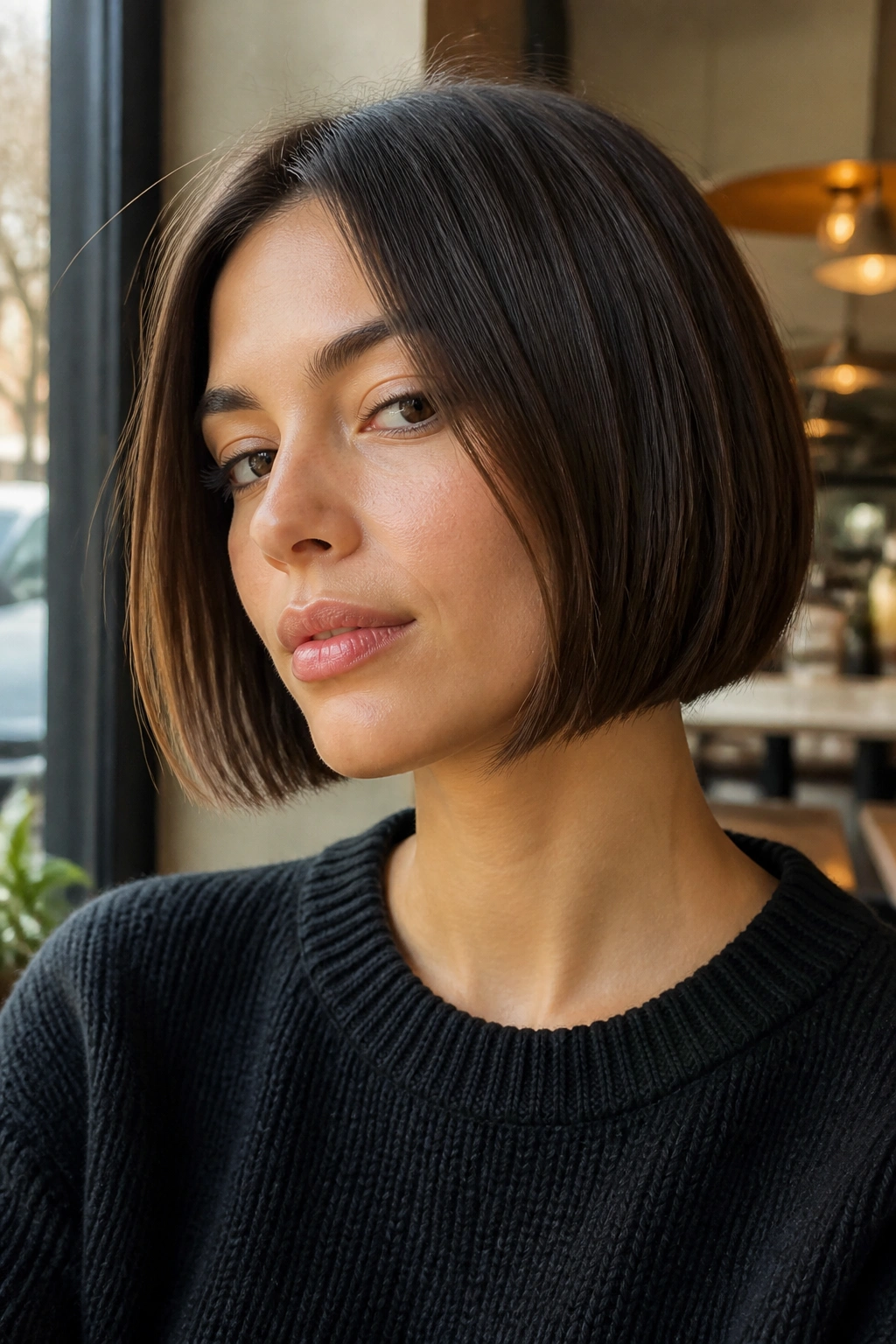
A jaw-grazing bob cuts right across the strongest part of the face, and that is exactly why it works. The line draws the eye to the jaw, the lips, and the neck, which gives the whole look structure without needing extra layers or bangs.
This length can be especially striking if your hair is straight or only lightly wavy. The edge sits where people can see it, and that clean stop makes the shape feel deliberate. It also pairs well with a center part when you want symmetry, or a side part when you want the cut to soften a little.
There is one catch. If the jaw is already a strong focal point, the cut will emphasize it. Some people love that. Some do not. That’s a judgment call, not a rule. If you want a crisp frame around the face, this bob delivers it without much drama.
21. Box Bob

A box bob is the square one. The sides fall in a straighter line, the bottom stays level, and the whole cut feels a little more architectural than a standard blunt bob. It’s neat, but not precious.
Why the Shape Feels Different
The width is what gives it character. Instead of tapering in toward the face, the bob keeps a strong horizontal line, which can make thick hair look controlled and straight hair look dense. The silhouette is bold in a quiet way. Not soft. Not fluffy. Just solid.
- Ask for a straight perimeter with minimal tapering at the sides.
- Keep corners softened slightly so the cut doesn’t look blocky.
- Use a smoothing serum if the ends frizz outward.
- Trim often if you want to preserve the square outline.
I like box bobs on people who want their hair to look deliberate even when the rest of the outfit is plain. It has presence. That’s the nicest word for it.
22. Bixie Bob
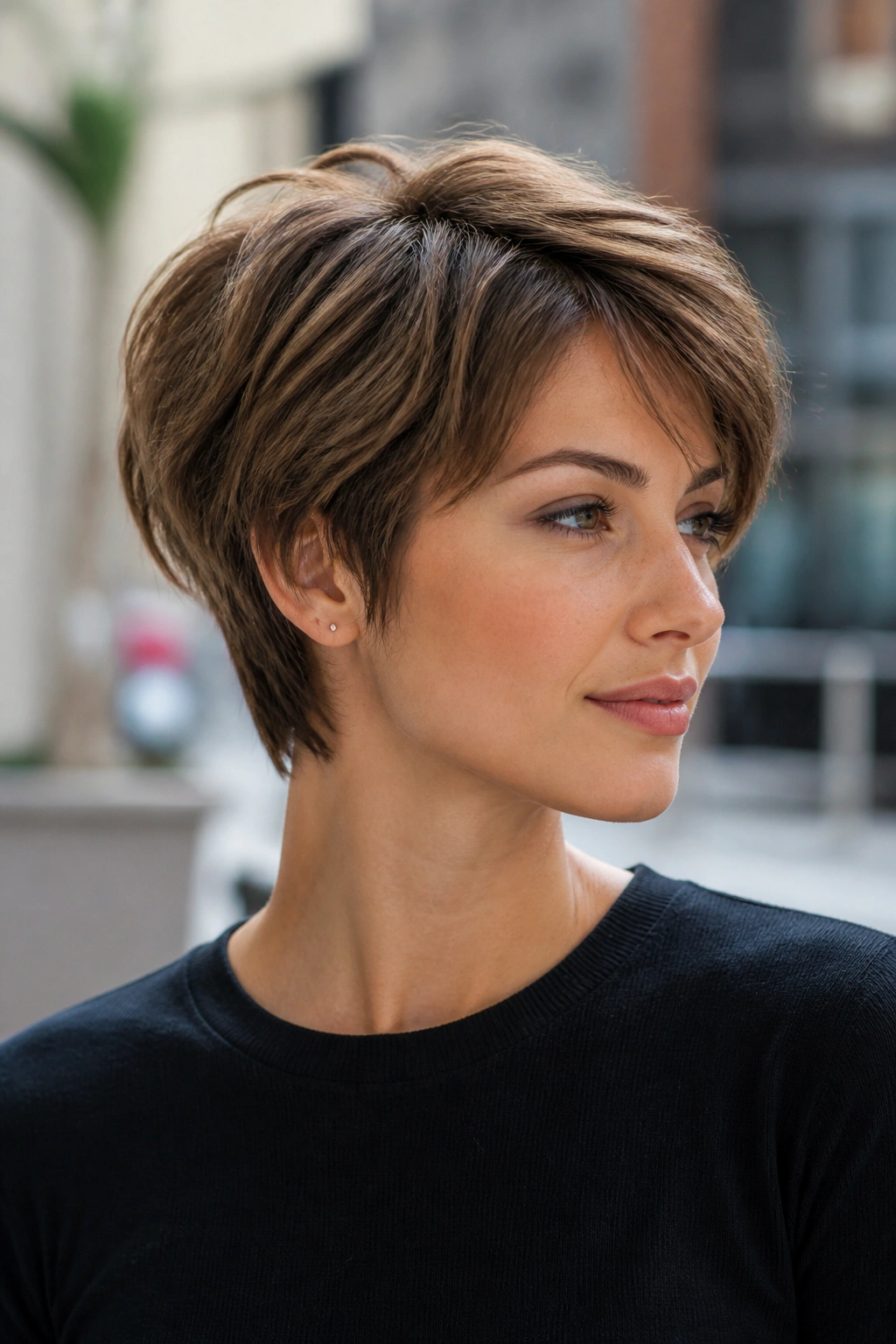
A bixie bob sits between a bob and a pixie, and that in-between space is where it gets interesting. The nape is shorter, the crown has a little more height, and the edges around the ears can be soft, choppy, or tucked depending on how bold you want to go.
It’s a good cut for anyone who wants short hair without going all the way into pixie territory. You still get the neck exposure and the lighter feel, but there’s more movement on top than a classic short crop. Styling is usually fast — a bit of mousse, a quick rough-dry, maybe a touch of paste at the ends. Done.
This one is not shy. It works best when the cut itself carries the look, so the detailing has to be clean. If you’ve been hovering between “I want short hair” and “I’m not ready for that much short,” the bixie bob is the compromise that doesn’t feel like a compromise at all.
