



A short angled bob can make a haircut look crisp before you even touch a styling tool. The front lands longer than the nape, so the eye moves forward instead of settling into one blocky shape. On straight hair, that line looks clean; on wavy hair, it looks deliberate.
That diagonal line does the work.
The part people miss is how different one angled bob can feel from another. A cut with a little graduation at the back reads polished and full. A cut with a blunt perimeter feels harder, almost tailored. Add texture, bangs, or an asymmetrical side, and the whole mood changes again.
Ask for the wrong version and you get a helmet. Ask for the right one, and the haircut does half the styling for you.
Short angled bobs are especially good when you want structure without a lot of daily fuss. They can sharpen the jawline, make the neck look longer, and give fine hair a denser outline. They can also be tricky, because a bad angle shows fast — especially in the back, where too much weight or too many layers can wreck the shape before you leave the salon.
1. The Classic Jawline Angled Bob
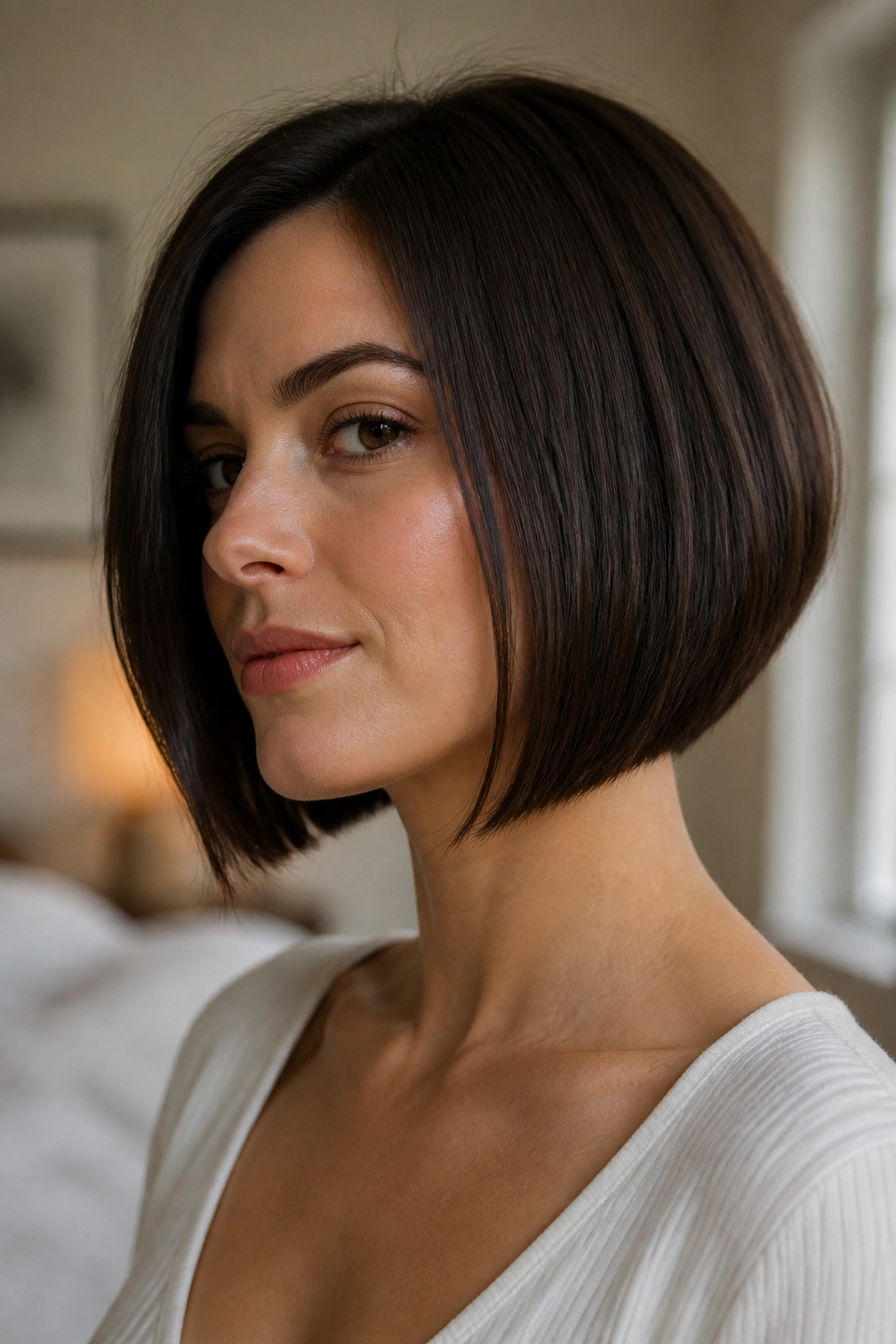
This is the version most people picture first, and for good reason. It’s the cleanest way to wear a short angled bob without making it feel overworked. The back sits shorter at the nape, while the front pieces skim the jaw or just below it, so the whole cut has a forward tilt that feels neat and sharp.
I like this shape on hair that already has a little bend or a fairly straight natural fall. It doesn’t need much styling. A quick blow-dry with a round brush, or even a flat brush and a light pass with a dryer, is enough to make the angle show.
The key is restraint. If the front is too long, the cut stops feeling short. If the back is too layered, the line goes soft in a way that looks accidental instead of intentional. Ask for the front to drop only about 1 to 2 inches longer than the back, and keep the perimeter clean so the edge stays visible when the hair tucks behind the ear.
One-sentence truth: this cut lives or dies on the outline.
2. The Stacked Angled Bob
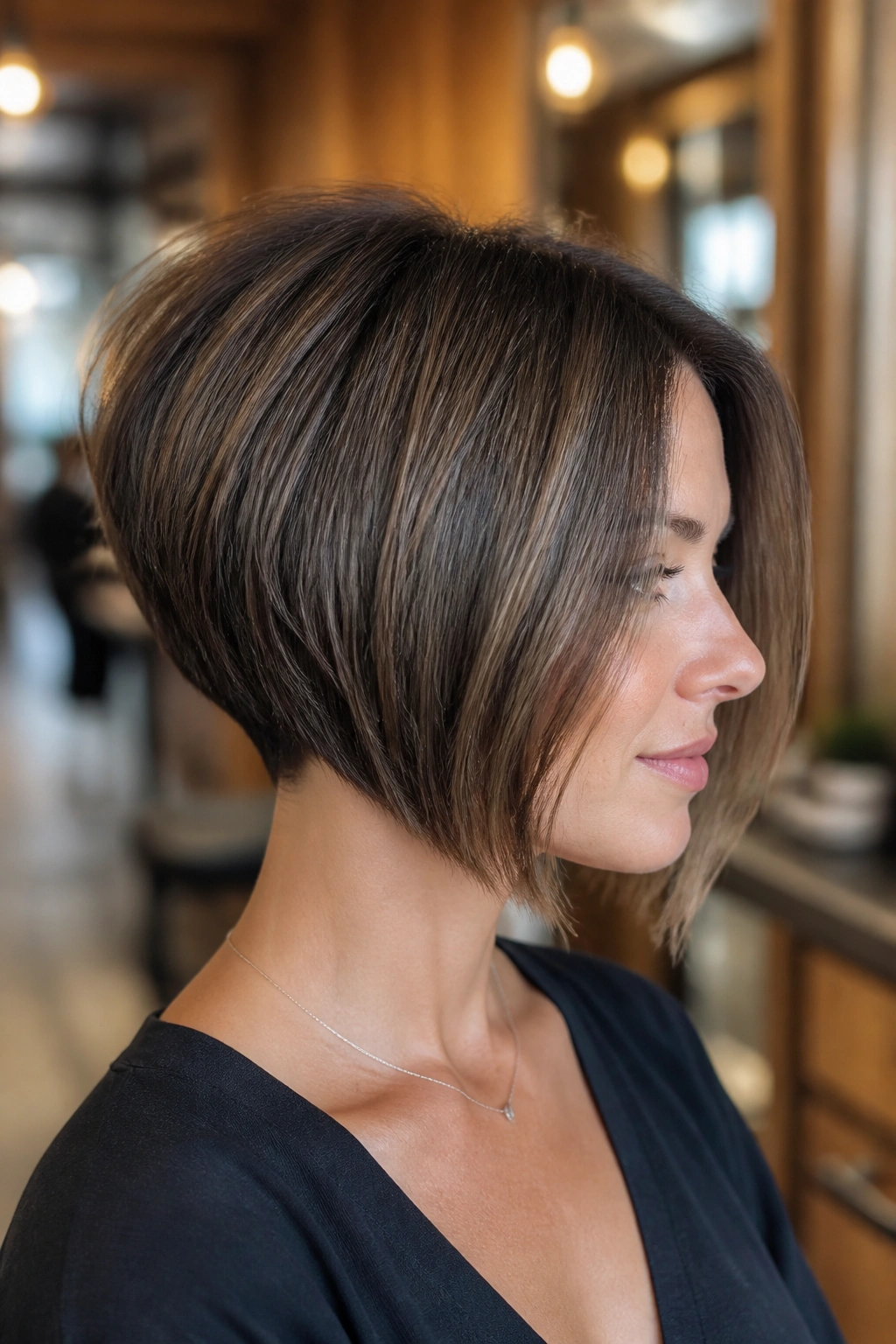
Want more lift at the back without turning the haircut into a round, puffy shape? A stacked angled bob is the move.
Why the Stack Changes the Shape
The stacking is what gives this bob its little bit of drama. The nape is cut with more graduation, so the back hugs the head and the crown gets a gentle boost. That means the angle looks stronger from the side, and the silhouette gets a nice curve instead of sitting flat.
This version works especially well on medium to thick hair, because the density helps the back hold its shape. Fine hair can wear it too, but the stacking has to be subtle or the ends can look see-through. Ask your stylist to keep the layers internal and tight to the head, not choppy on the surface.
What to Ask For
- Keep the nape shortest, then build in small steps upward.
- Leave the front long enough to graze the chin or just below it.
- Remove bulk near the crown only if the hair feels heavy there.
- Trim every 5 to 6 weeks if you want the stack to stay crisp.
The whole point is lift without puff. That balance is what gives the style its clean shape.
3. The Sleek Side-Part Angled Bob

If your hair falls flat on one side every morning, a deep side part can change the whole mood of the cut. The angle still does its job, but the part line adds a second diagonal, and that makes the haircut look longer and more sculpted.
This version is a good choice when you want a sharp bob that still feels soft enough for work, dinner, or a dressier outfit. A center part can make an angled bob look symmetrical and neat; a side part gives it a little swing. One side frames the cheekbone, while the other side sits closer to the head and keeps the shape from feeling too wide.
A blow-dryer nozzle and a medium round brush help here. Pull the heavier side across the forehead first, then direct the ends under just slightly. You do not want a big flip. You want a smooth bend that makes the front look intentional, not stiff.
It’s a small change. Still, it matters.
4. The Choppy Textured Angled Bob

A choppy angled bob is not “messy hair in a nicer outfit.” It’s a controlled cut that uses texture to make the angle feel lighter and more modern.
What the Razor Does
The texture usually comes from point-cutting or a light razor finish on the ends, not from shredding the whole haircut apart. That distinction matters. The goal is to break up the line just enough that the front pieces move when you turn your head, while the back keeps enough structure to hold the angle.
This style works well on wavy hair and on fine hair that needs a little separation. On thick hair, the texture can help the ends avoid that heavy shelf effect that sometimes happens with a blunt bob. But if your hair is already frizzy, you need to be careful. Too much slicing can make the outline fuzzy in a bad way.
What Makes It Different
- Ends are piecey instead of solid.
- The front pieces move more easily around the cheekbones.
- A texture spray or light mousse helps the shape stay airy.
- The haircut looks best when it’s not overly polished.
A little roughness is the point. Clean enough to show the angle, loose enough to feel lived in.
5. The Asymmetrical Angled Bob
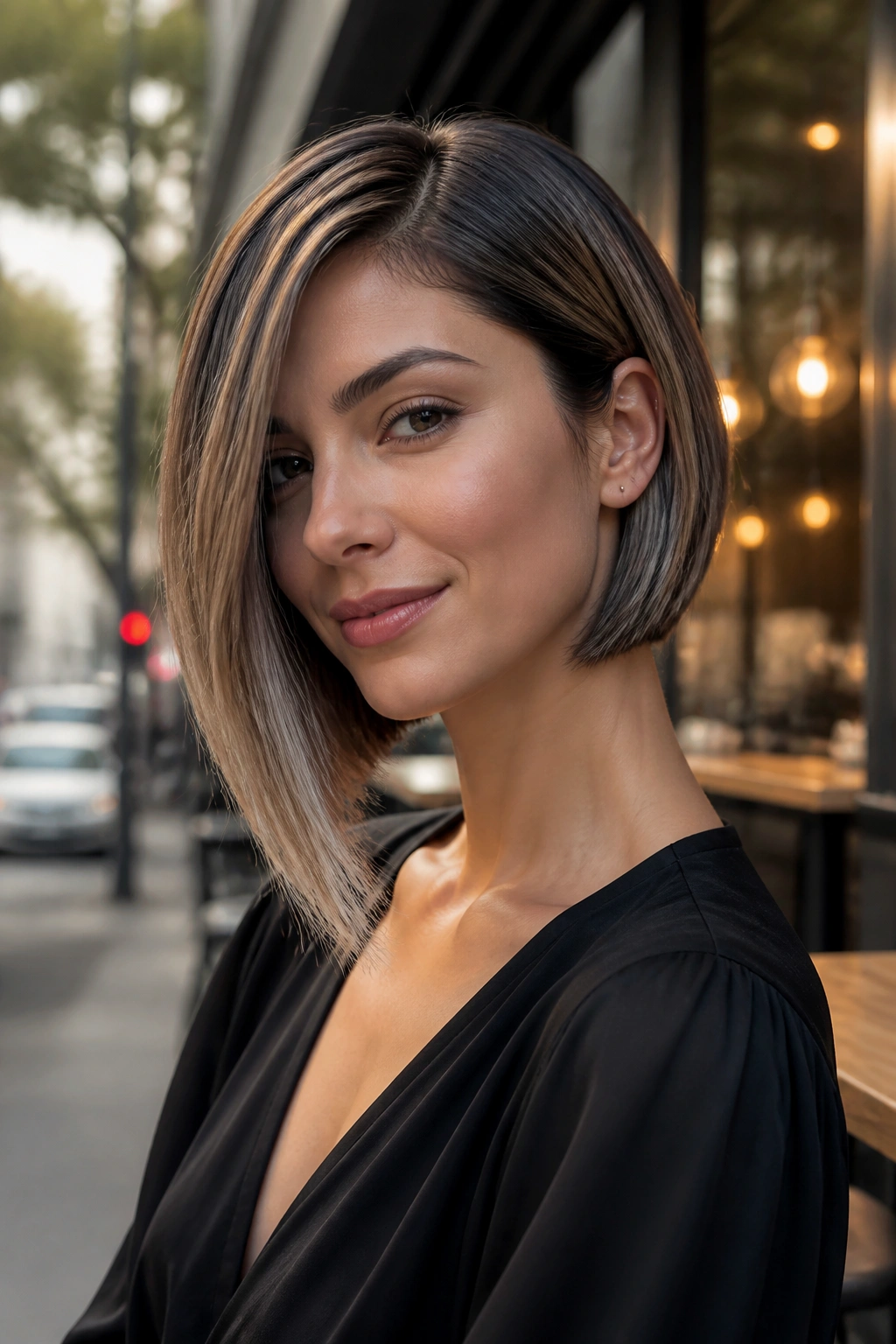
One side longer than the other sounds obvious until you see how much shape it adds. An asymmetrical angled bob turns the usual diagonal into something more intentional, and it gives the haircut a stronger sense of movement.
The trick is keeping the difference readable, not theatrical. A gap of about 1 to 2 inches between sides is usually enough for most people. Go much farther than that and the cut stops reading as a bob and starts feeling like a statement piece that needs constant styling to stay in line.
I like this version on straight hair, because the asymmetry shows immediately. Wavy hair can wear it too, but the part and the finish need more care or the longer side disappears into the texture. If your face is a little fuller at the cheeks, the longer side can help pull the eye downward and make the whole shape feel leaner.
This is not the easiest angled bob to grow out. It’s the most obvious. That’s also why people who love it tend to really love it.
6. The Blunt Angled Bob

The blunt angled bob is the cleanest version of the whole group. It keeps the diagonal shape, but the ends are cut with a firmer edge, so the line looks dense and precise instead of soft.
Why It Looks So Crisp
The secret is what happens at the perimeter. When the ends are left blunt, the hair gathers into a stronger visual line, and that makes even fine hair look fuller. If the stylist point-cuts too much into the edge, you lose that weight and the cut starts to look a little wispy at the front.
This is one of my favorites for straight or slightly wavy hair that tends to fray at the ends. It also behaves well in humid weather compared with a more feathered shape, because there’s less loose texture to puff out. A flat iron can help, but you only need to touch the last inch or so near the front. The rest should already sit in place.
Ask for a clean perimeter, minimal thinning, and just enough angle to show from the profile. Too much layering ruins the whole point.
7. The French-Inspired Short Angled Bob

A French-inspired short angled bob feels like it was cut with one eye on the mirror and one eye on the street. It’s relaxed, but not random.
This version usually sits a touch shorter through the nape and softly angles toward the front, often with a fringe or a face-framing bend that stops near the cheekbones. The ends are not over-polished. They have a little give to them, which is what makes the cut feel effortless in the right way — though honestly, that ease still comes from a good shape underneath.
I like this bob on hair that can air-dry with a bit of natural bend. If you have straight hair, a quick wave with a 1-inch iron on just a few front sections gives it the right touch. The point is not curl. It’s movement.
A soft side part, a bit of texture cream, and a tuck behind one ear are often enough. That tiny asymmetry makes the whole cut feel chic without trying too hard. Which, yes, is exactly the reason people keep asking for it.
8. The Curly Angled Bob
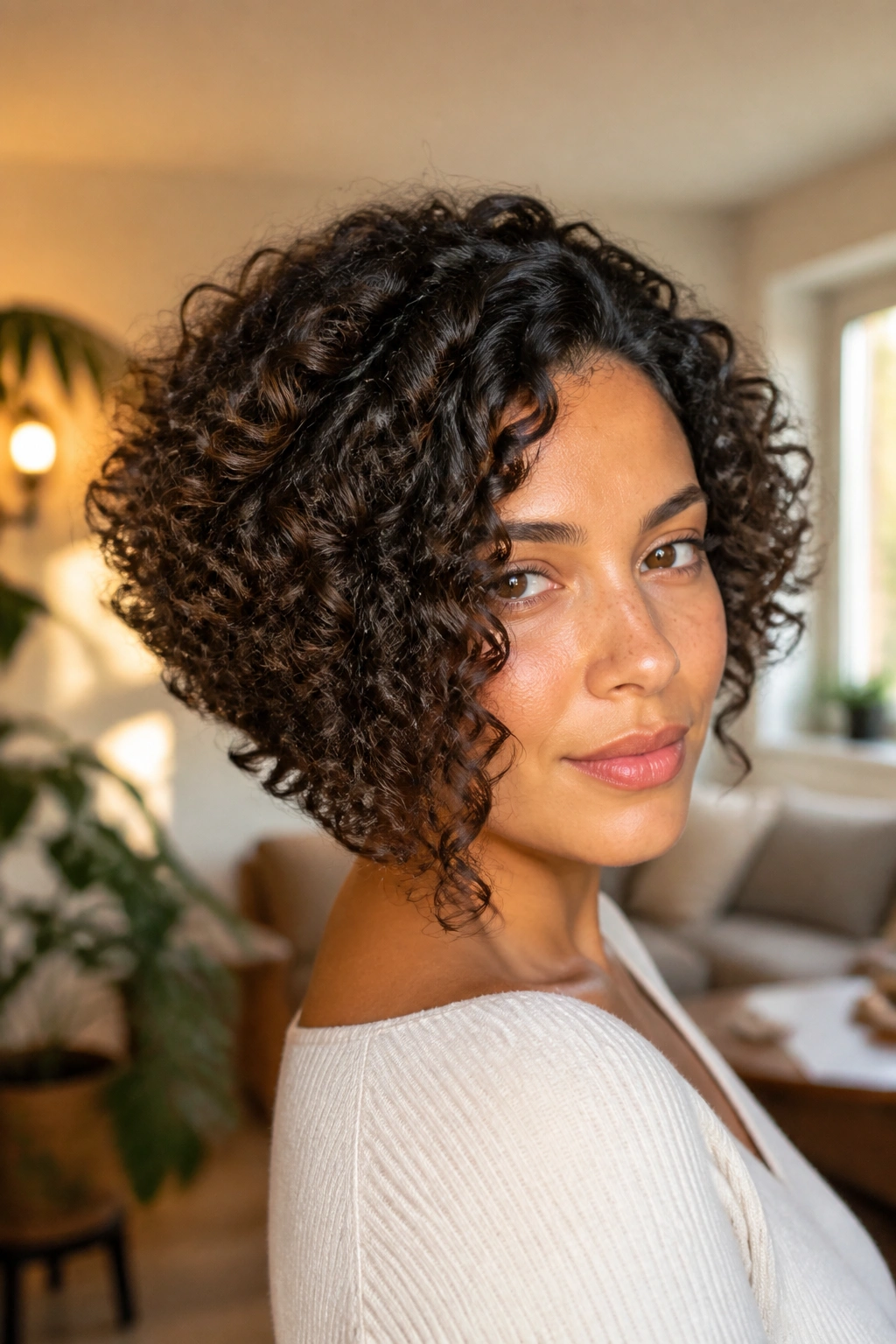
Curly hair can wear an angled bob, but only if the cut respects shrinkage. That’s the whole game.
How to Cut Curls for an Angle
The best curly angled bobs are usually shaped dry or mostly dry, because curls spring up in ways that wet cutting can hide. The front needs to be longer than you think. When the curls dry, they lift, and that front piece can land right at the cheek or chin instead of suddenly climbing up to the mouth.
- Keep the nape neat, but not chopped too high.
- Leave the longest front curl long enough to show after shrinkage.
- Remove weight in the interior, not just at the surface.
- Diffuse on low heat so the curve stays defined.
This cut gives curls a stronger outline than a rounded bob does. Instead of ballooning out, the shape slants forward and feels more sculpted. The one caution: if the stylist ignores curl pattern, you can end up with a front that looks too short by the second day. Curl pattern matters more here than any photo does.
9. The Wavy Undone Angled Bob
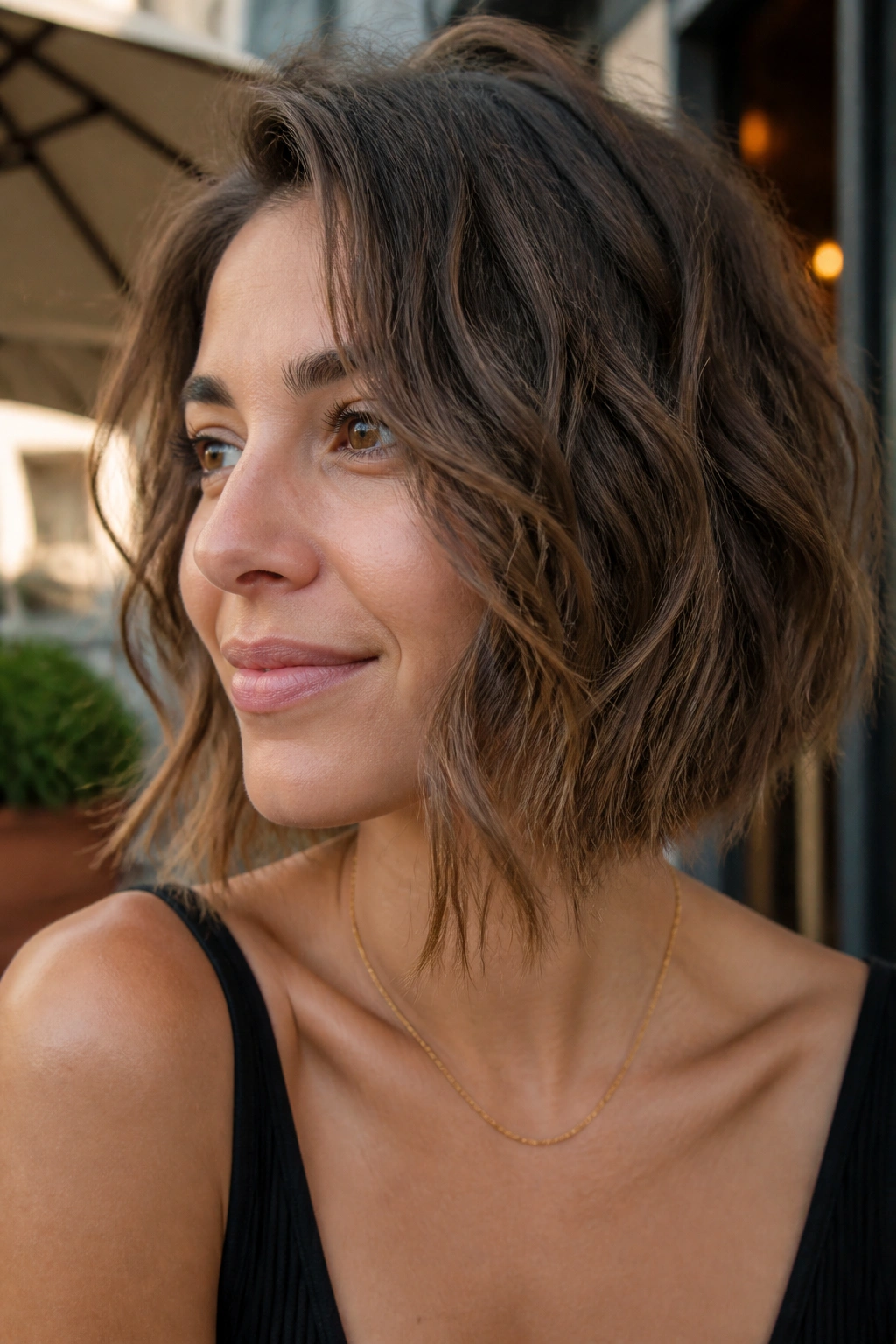
The ends should feel soft, not carved. That’s the appeal of a wavy angled bob — it keeps the shape, but lets the texture do some of the talking.
This is the version for people who do not want to spend 20 minutes making every strand obey. The angle still shows through the waves, but the finish stays loose enough to look believable. A 1-inch curling iron or even a flat iron used with a bend at the wrist can create the movement, and you do not need to curl every section the same way. Mixed directions help the wave fall more naturally.
I’d keep this one just above the shoulders through the front if you want it to feel light. A longer front piece can drag the whole cut downward once waves settle, especially on thick hair. If the hair is fine, a little root spray and a rough dry are usually enough.
The best part is how forgiving it is. Day-two texture often looks better here than the first blowout. That’s rare, and I appreciate a haircut that understands real life.
10. The Curtain Bang Angled Bob

Do curtain bangs and an angled bob fight each other? Not when the lengths are tuned properly.
The bangs should start around the cheekbone or just below the brow, then fall away from the center so they blend into the front pieces. That softness keeps the bob from feeling severe. The angle beneath the fringe gives the cut its shape, while the bangs soften the forehead and pull attention toward the eyes.
This combination works on a lot of face shapes, especially if you want the haircut to feel a little fuller around the front without adding width at the sides. The bangs can hide a high forehead, balance a narrow chin, or break up a strong jawline. They do need styling, though. A quick round-brush bend at the fringe makes a huge difference, and skipping that step usually leaves the bangs splitting in weird places.
I like this version when someone wants a short angled bob but finds a bare forehead too stark. It keeps the haircut friendly. Not soft in a boring way — just easier to live with.
11. The Micro-Bang Angled Bob
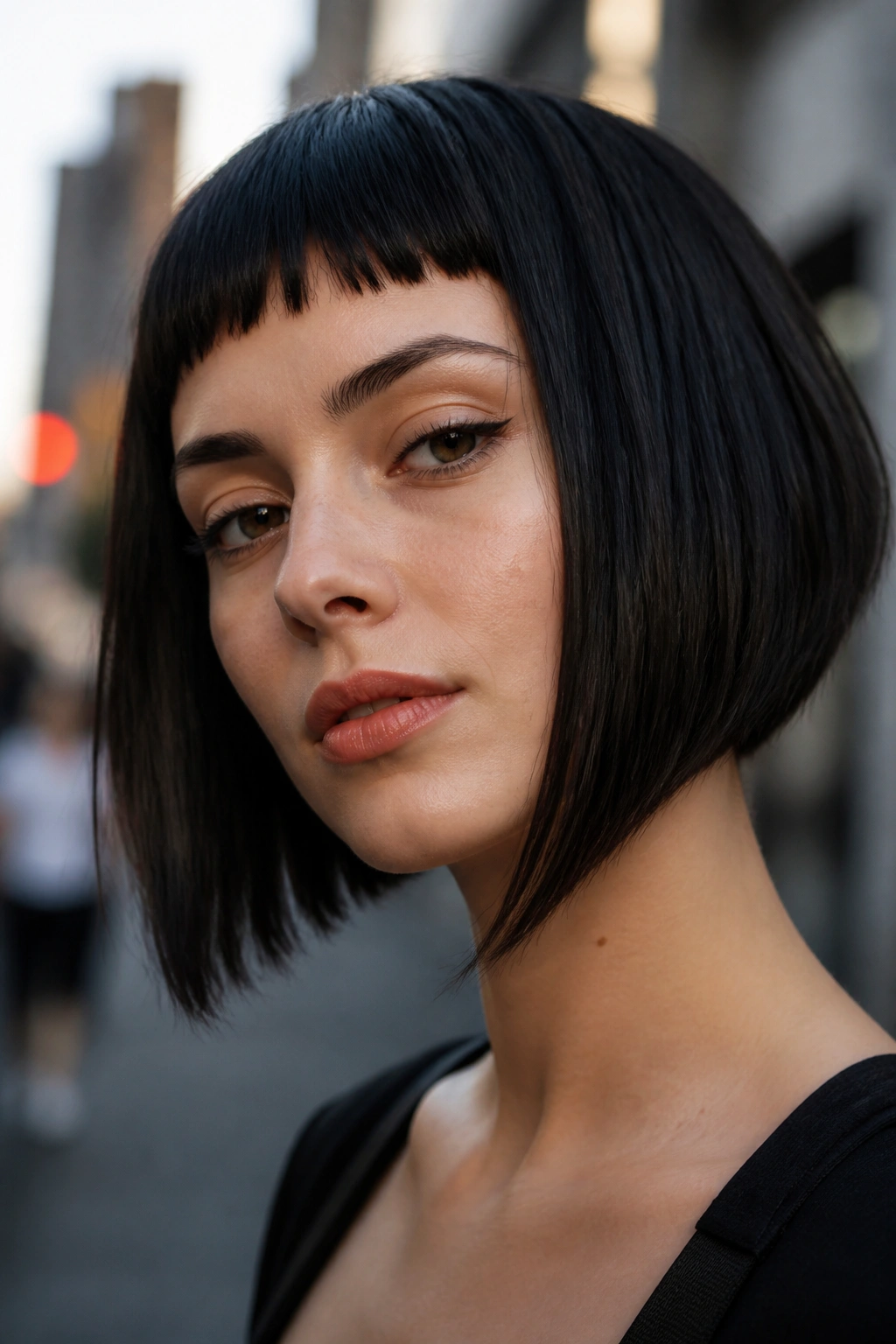
Micro bangs make a short angled bob look sharper and a little stranger, which is exactly why they work. The tiny fringe creates a hard visual line at the top, and the angled bob below it keeps the shape from feeling too boxed in.
This is not a low-maintenance choice. It looks best when the fringe is trimmed often and the bob itself stays clean through the back. The contrast between a very short bang and a forward-sloping bob can be brilliant, but only if the lengths are precise. A sloppy micro-bang cut looks accidental fast.
I’ve seen this work especially well on straight hair and on people who like strong outlines. If your hair has a cowlick at the hairline, your stylist needs to account for that before taking the fringe too short. Once micro bangs are cut, there is not much room to adjust without waiting for them to grow.
It’s a commitment.
But if you like a haircut that reads instantly in a mirror — no explanation, no fuss, no “maybe it looks better from the side” nonsense — this one is hard to ignore.
12. The Fine-Hair Volume Angled Bob
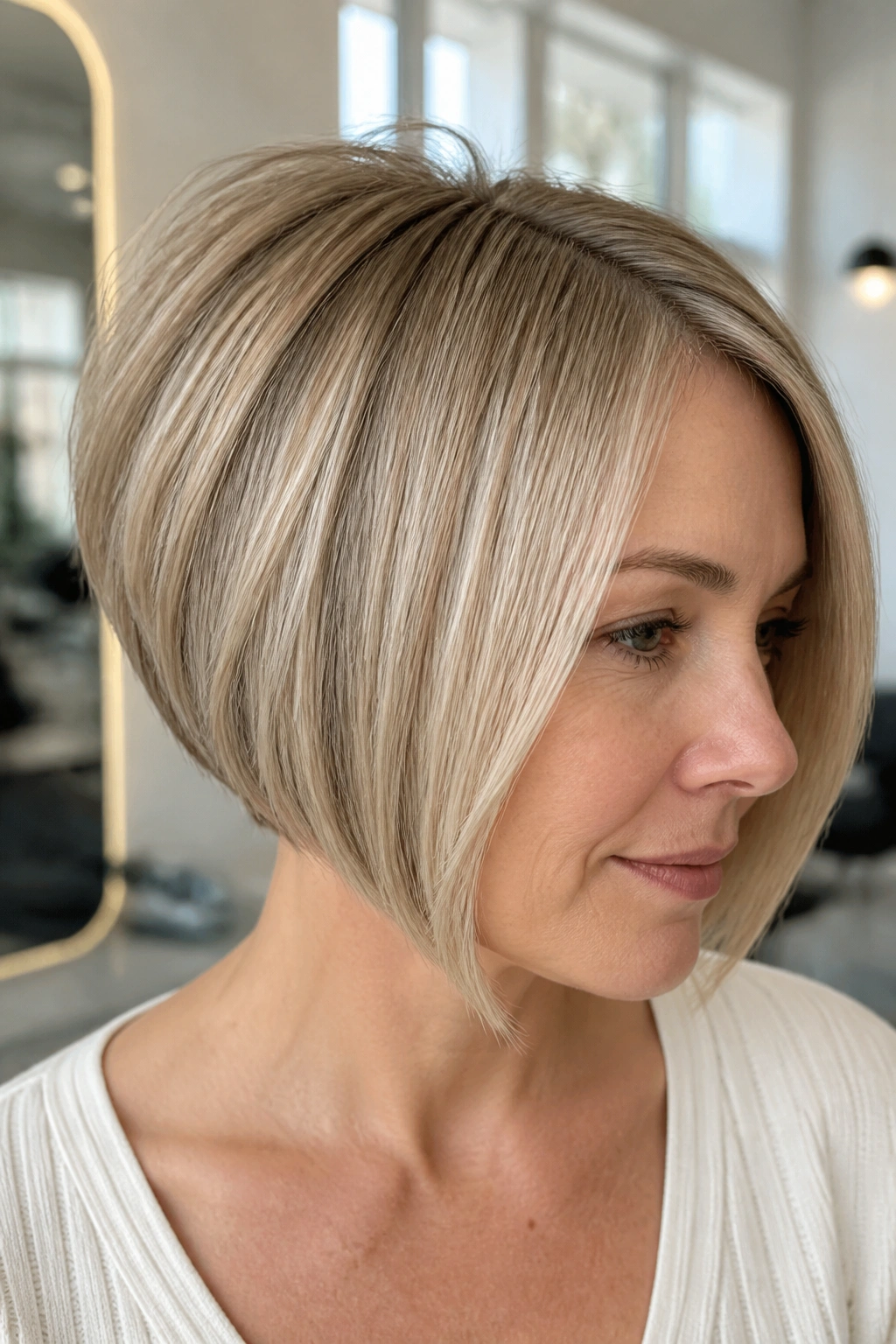
If your hair collapses into your neck by lunch, you need lift built into the cut, not more mousse.
What to Ask For at the Salon
Fine hair needs an angled bob that builds the shape from the inside out. Ask for a clean perimeter with subtle graduation near the back, then very light internal layering so the crown doesn’t go flat. The front should still hold its line. If the front gets thinned too much, the whole haircut can look flimsy within a week.
- Keep the front blunt enough to look dense.
- Add gentle lift at the crown, not all over.
- Avoid heavy thinning shears near the ends.
- Blow-dry with a root-lifting spray and a vent brush.
This style gets its power from contrast. The back supports the cut, the front shows the angle, and the edges stay full enough to make the hair look like it has more of it. I prefer this to a heavily layered fine-hair bob, which often sounds good in theory and then turns stringy at the ends.
If you have fine hair, this is the version that gives you shape without stripping away the little density you already have.
13. The Thick-Hair Angled Bob
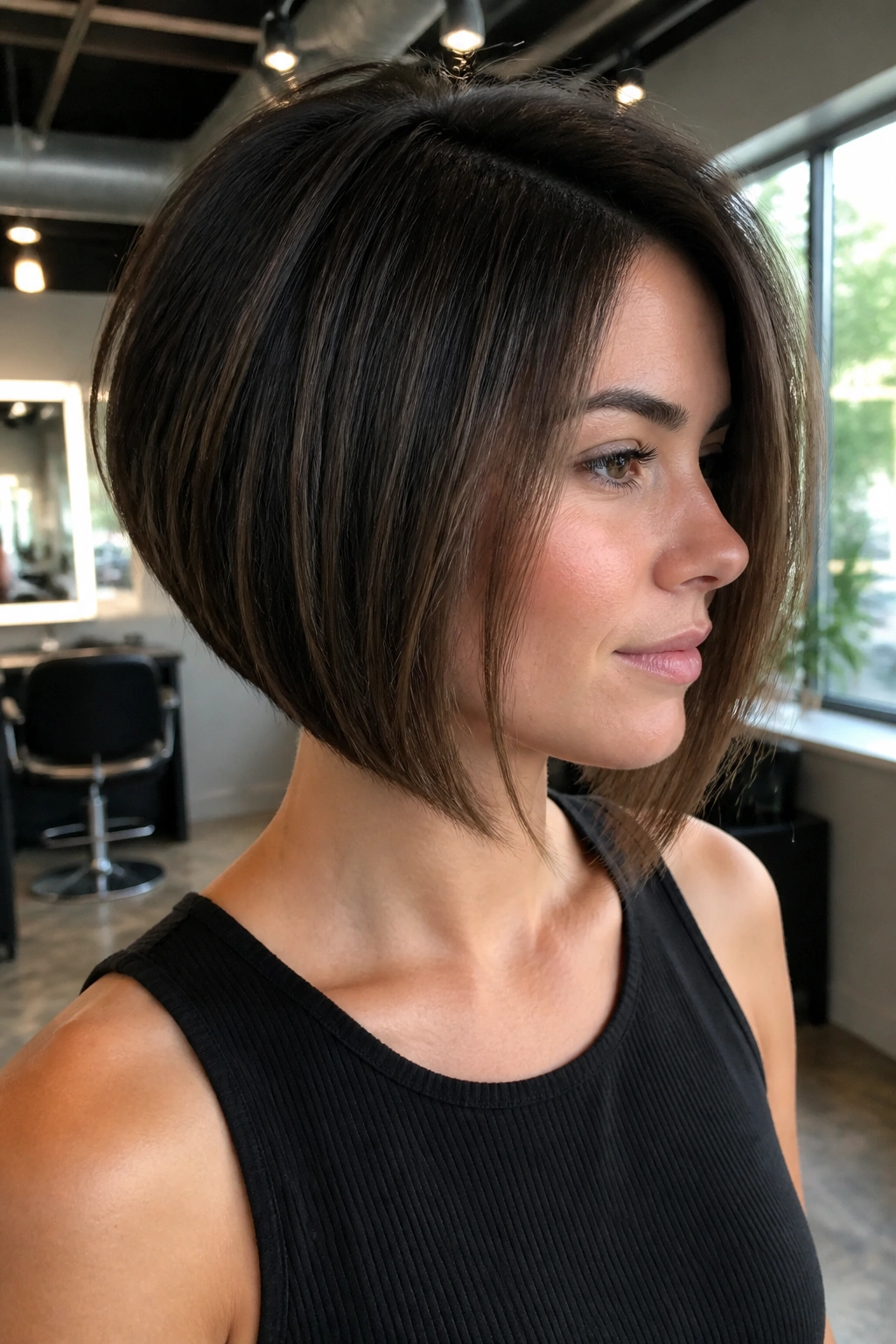
Thick hair does not need more layers everywhere. It needs smarter layers in the right places.
A thick-hair angled bob works best when the stylist keeps the bottom line strong and removes weight from the interior only where the bulk is actually sitting. If the angle is too shallow, thick hair can puff into a triangle by mid-afternoon. If the front is left too short, it can spring out and make the shape wider than it should be.
The cleanest version usually has a longer front, a controlled nape, and a bit of hidden debulking through the midsection. That lets the hair sit closer to the head without looking carved up. I’d rather see a firm edge with a little internal movement than a lot of surface layers that fray at the ends.
One-sentence warning: too much texturizing will eat the shape.
This is the cut for someone who wants their hair to feel lighter, but not thin. The goal is control. Not shrinkage. And when it’s done well, the line stays crisp even when the hair moves, which is the part most people notice first.
14. The Hidden Undercut Bob
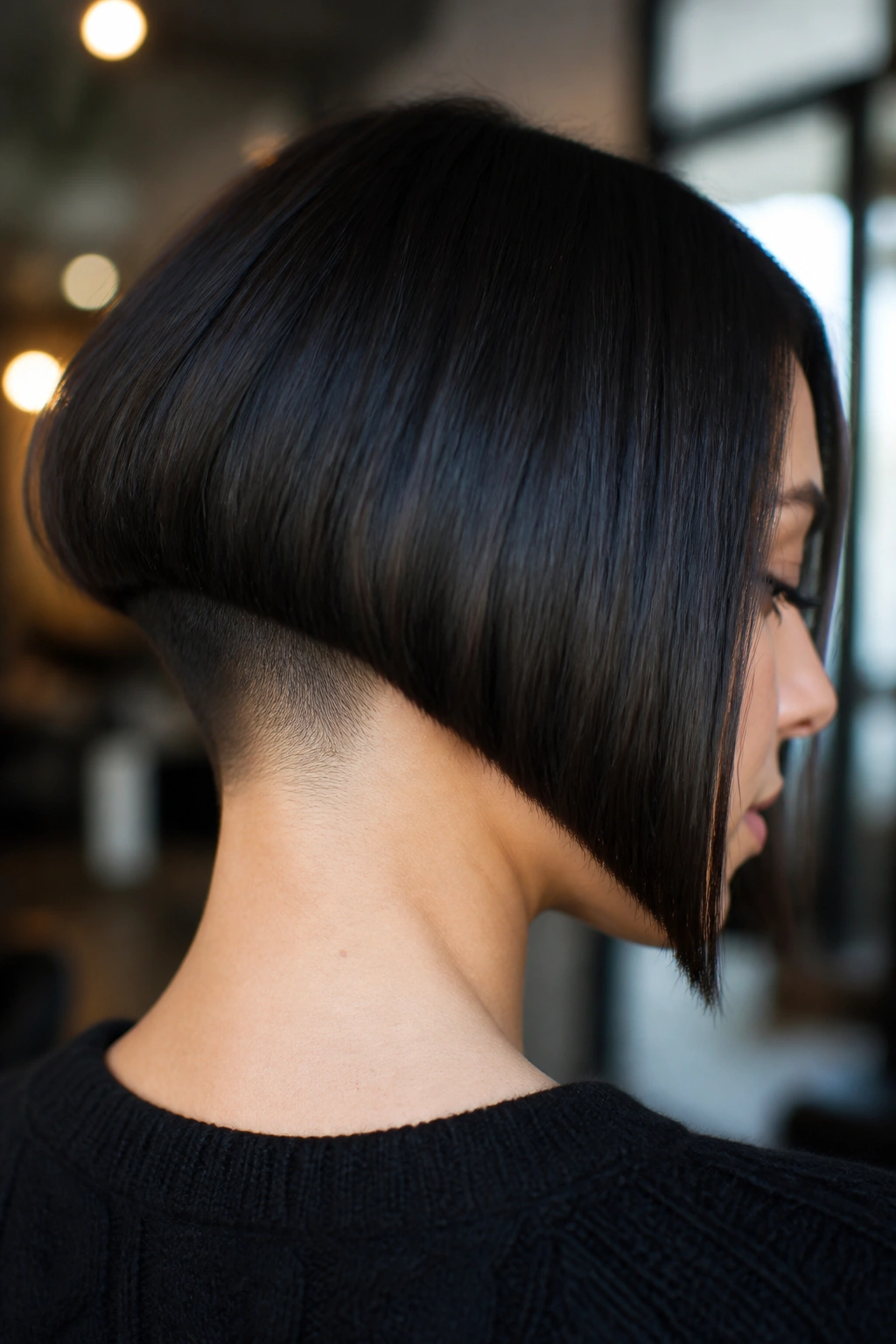
If you’ve ever asked a stylist to take weight out of the back without changing the silhouette, this is that cut.
Where the Weight Comes Off
A hidden undercut removes bulk low in the nape or just behind the ear, while the outer layer keeps its smooth angled shape. That means the haircut can look sleek from the outside and feel much lighter when you wash and blow-dry it. It’s especially useful on dense hair that balloons at the base of the neck.
- The outline stays visible.
- The underside gets lighter.
- Blow-drying takes less time.
- The shape grows out more slowly than a heavy stack.
This version is a little sharper than a regular angled bob, but not as visually obvious as a full undercut with shaved sides. That’s why some people like it. The reveal is subtle. You feel the difference more than you see it.
The one catch is maintenance. If the nape undercut grows out too far, it can start to kick and get sticky under the top layer. A trim every 4 to 6 weeks keeps that from happening. Worth it if your hair has enough bulk to justify the extra care.
15. The Highlighted Face-Frame Angled Bob
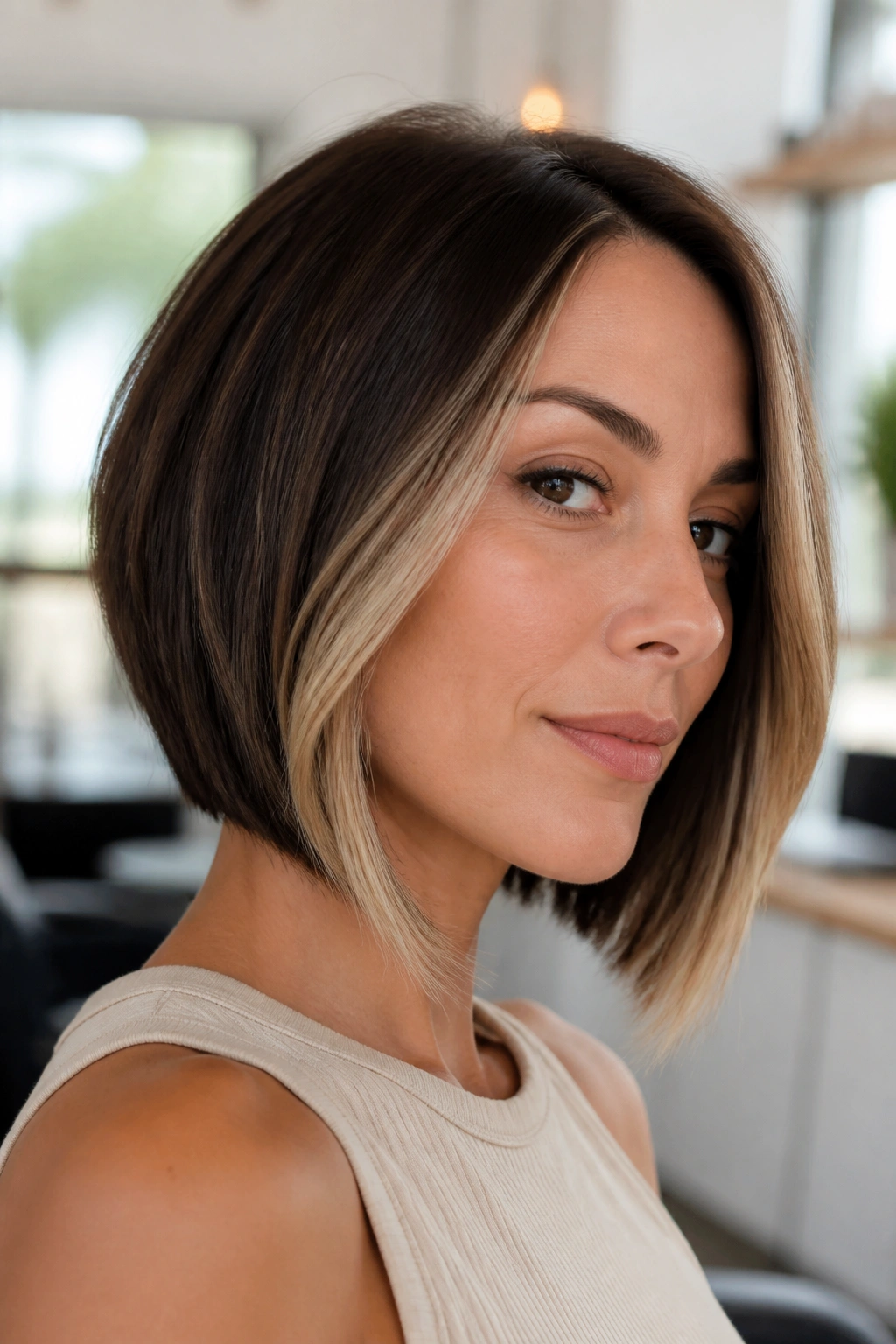
Why do some angled bobs read instantly in a mirror? Because the color draws your eye to the cut before the brain has time to wander.
A few lighter pieces around the front can make the angle look sharper, especially if the back stays deeper in tone. That contrast helps the bob show up even when the hair is tucked behind one ear or fluffed around the jaw. I like this most when the front sections are only 1 to 2 shades lighter than the base, not striped or chunky. The point is to outline the shape, not distract from it.
This works on straight, wavy, and lightly curly hair. On straight hair, the color makes the line feel polished. On waves, it catches the bend and keeps the haircut from looking flat. If you’re asking a stylist for this look, mention that you want the brightest pieces at the front edges and a softer, deeper base through the back. That keeps the diagonal visible.
It’s a smart finishing move for a short angled bob that needs a little more edge. Not more length. Just more definition. And that, to my eye, is what makes the cut feel finished instead of merely cut.
