



Curtain bangs can rescue medium hair from that awkward middle zone where the ends feel neither short nor long enough to do much. The right fringe softens the face, breaks up blunt lengths, and gives shoulder-skimming hair a little movement the second you turn your head.
The catch is that curtain bangs are not one look. On medium hair, they can be soft and airy, shaggy and undone, polished and blown out, or full and feathered. The shape changes fast depending on where the shortest point sits, how much texture your hair has, and whether you’re willing to spend five minutes with a round brush or absolutely not.
That’s why the best curtain bangs ideas for medium hair are the ones that match your actual life. A cut that looks gorgeous on a salon chair photo can be annoying if your hair bends weirdly, if you have a cowlick, or if you hate daily styling. The good news: there’s a version for all of that.
1. Cheekbone-Grazing Curtain Bangs
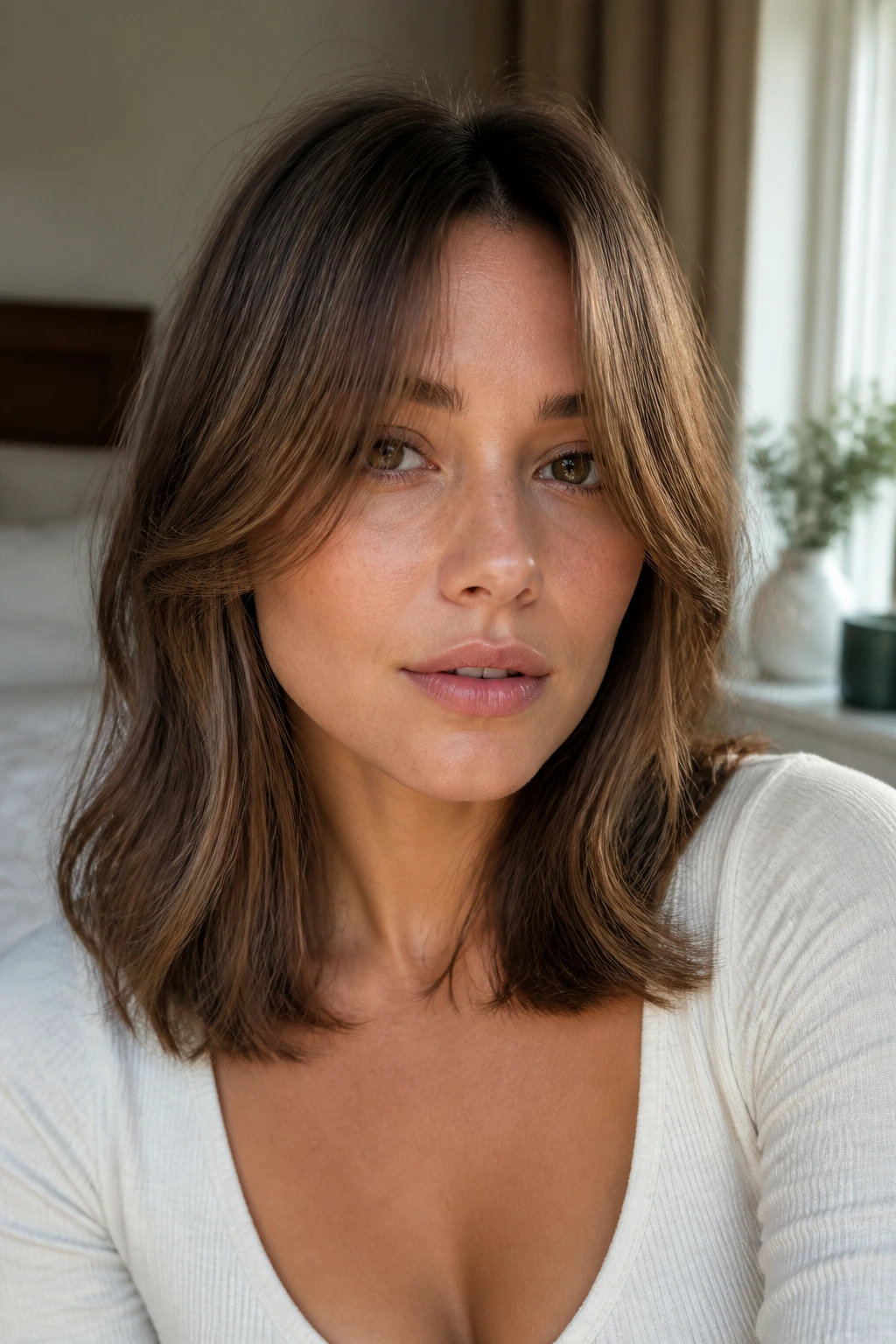
If your medium hair tends to flip out at the ends, this is the safest place to start. Cheekbone-grazing curtain bangs sit long enough to move, but not so long that they disappear into the rest of the cut. They frame the face in a way that feels soft, not fussy.
I like this shape for first-timers because it grows out gracefully. Ask for the center to start around the bridge of the nose, then let the outer corners fall to the cheekbone. That little slope matters. It keeps the fringe open instead of heavy.
- Best for hair that already has a little bend.
- Easy to style with a 1.25-inch round brush.
- Works well if you part your hair in the middle most days.
- Trims usually stay tidy for about 6 to 8 weeks.
The smart move: keep the shortest point longer than you think. A fringe that starts too high can look cute for a week and then turn needy.
2. Shaggy Curtain Bangs with Choppy Layers
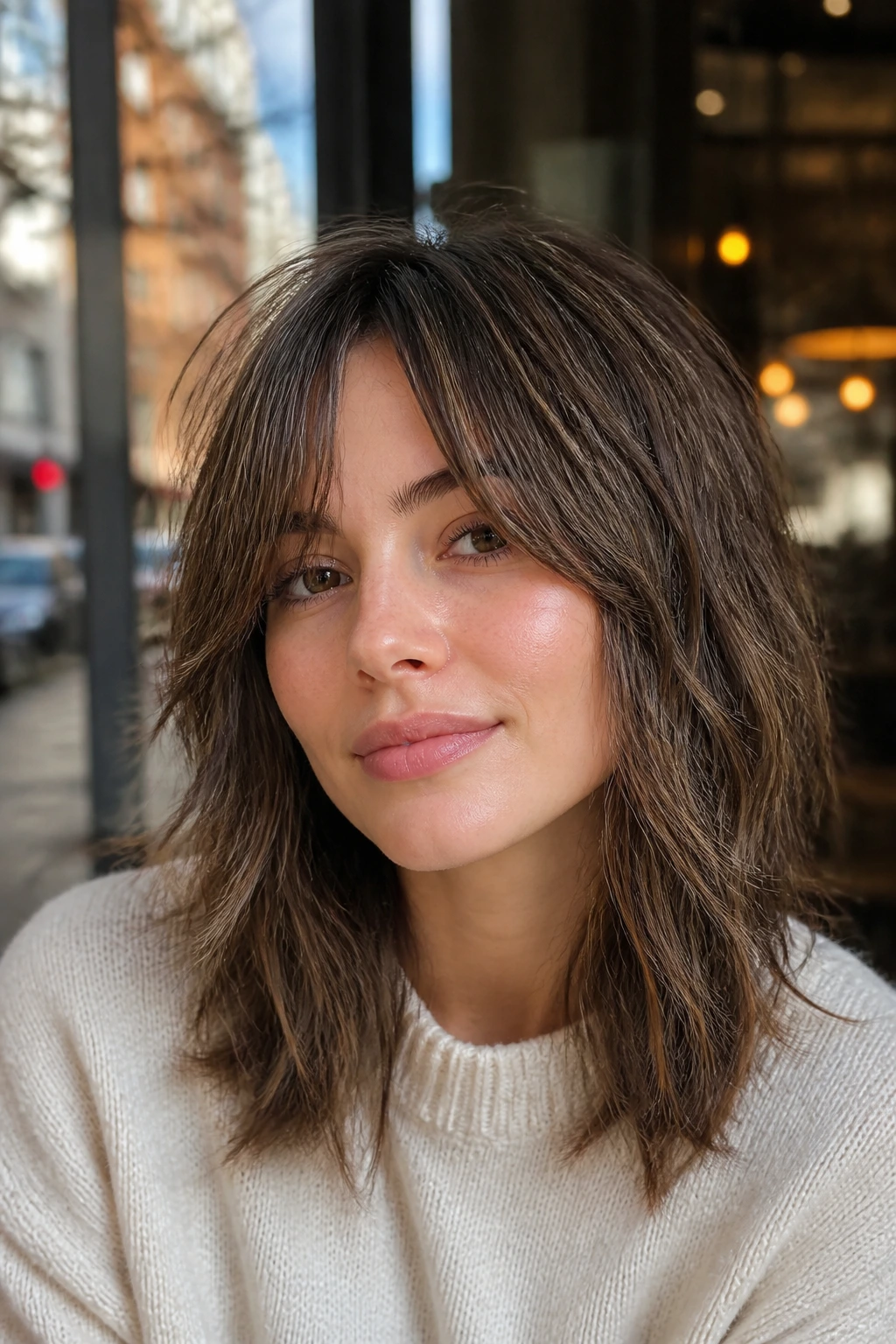
This is the one for anyone who wants movement without pretending they’re low-maintenance. Shaggy curtain bangs make medium hair look lived-in from the start, and the choppy layers keep the fringe from sitting like a neat little curtain that never moved in its life.
They work especially well if your hair gets flat at the crown. The broken-up ends catch air, so the front doesn’t fall into a heavy sheet by noon. I’d call this the easiest upgrade for someone who already likes tousled hair and doesn’t mind a little texture spray.
The cut should feel feathered, not hacked up. That difference shows up when you blow-dry it. Too much slicing can leave the ends frayed; a cleaner point-cut gives you that piecey look without turning the fringe fuzzy.
3. French Blowout Curtain Bangs
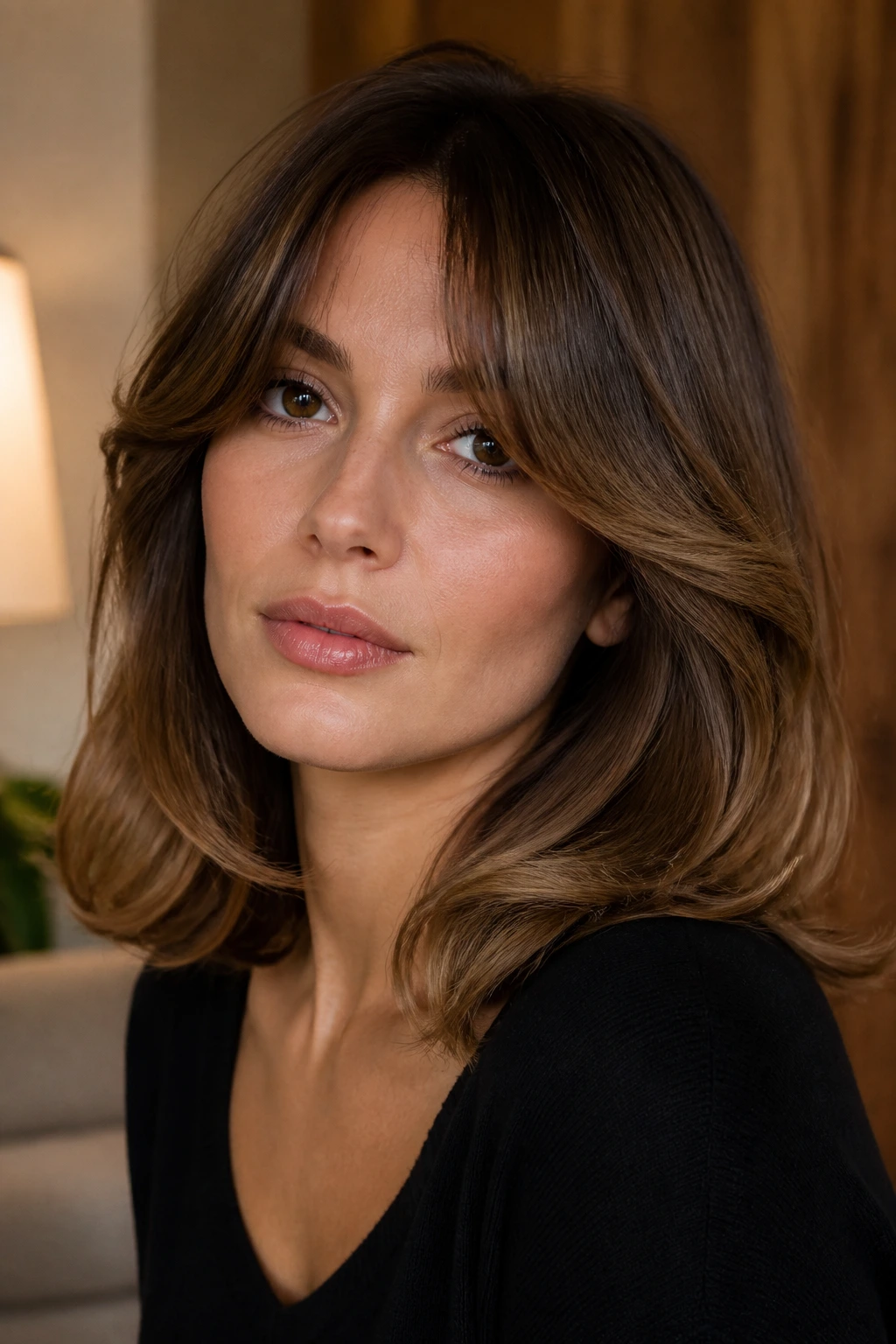
Why do French blowout curtain bangs look so polished even when the rest of the hair is simple? Because the shape is doing half the work. The fringe bends away from the face, then sits there with a smooth, soft curve that feels done but not stiff.
Medium hair is a good home for this look because the length has enough weight to hold the blowout. If the cut is too short, the bounce can get springy in a bad way. Too long, and the effect gets swallowed by the rest of the hair. Here, the middle ground is the point.
How to style it
- Blow-dry the front with a 1.5-inch round brush, rolling the bangs away from your face.
- Clip each side back for 30 to 60 seconds while it cools.
- Finish with a pea-sized amount of lightweight cream on the ends, not the roots.
- Flip the part slightly if one side sits flatter than the other.
Tiny detail, big payoff: let the bangs cool completely before touching them. Warm hair forgets shape fast.
4. Airy Curtain Bangs with a Blunt Lob

A blunt lob plus airy curtain bangs is one of my favorite contrasts on medium hair. The ends are clean and heavy, which makes the front fringe feel lighter by comparison. It’s a neat trick. Your eye reads the softness first, then notices the sharp line at the bottom.
This combination is especially good if you like your hair to look tidy even on busy days. The blunt perimeter keeps the style from going full shag, while the bangs stop the cut from feeling boxy. It’s a nice middle lane for someone who wants shape without a lot of styling drama.
The fringe should stay wispy enough to move, but not so thin that it vanishes. Think soft edges, not see-through strands. If your hair is naturally straight, a quick bend with a brush or flat iron at the front makes the whole thing land better.
5. Long Curtain Fringe on Wavy Medium Hair
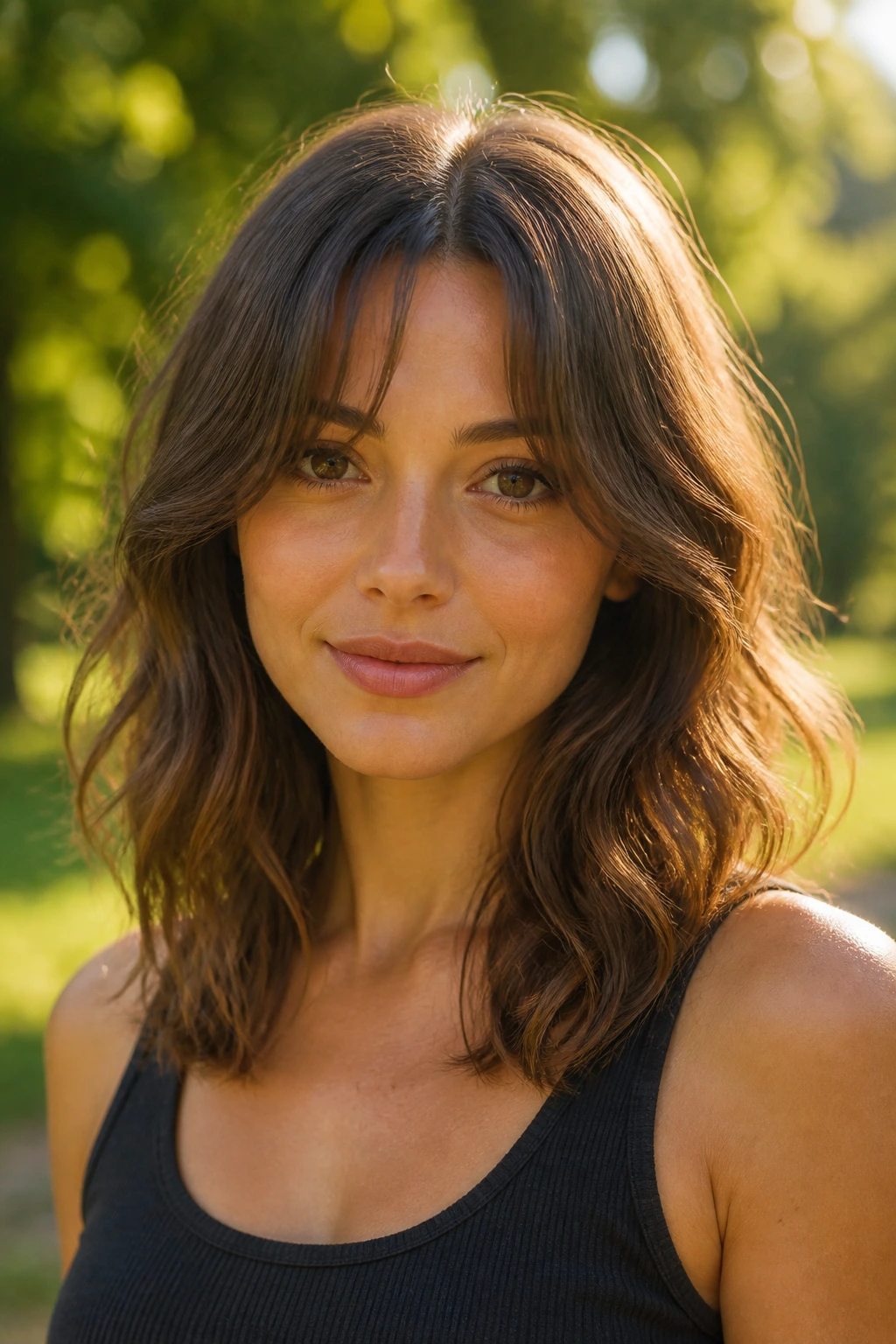
Unlike a shorter fringe that fights the wave, long curtain bangs work with it. That’s the whole appeal here. The shape opens around the face, then drops into the rest of the hair so the wave pattern looks intentional rather than accidental.
This version is best if your medium hair already has some bend and you don’t want to spend twenty minutes smoothing it every morning. A little sea-salt spray at the roots and a touch of cream through the ends usually goes a long way. The fringe should be long enough to tuck behind the cheekbone when it’s not behaving.
You’ll get the cleanest result if the bangs are cut a touch longer than the shortest point you want. Waves shrink, and they do it on their own schedule. A cut that looks perfect wet can land a full inch shorter once it dries.
6. Curtain Bangs on Pin-Straight Hair
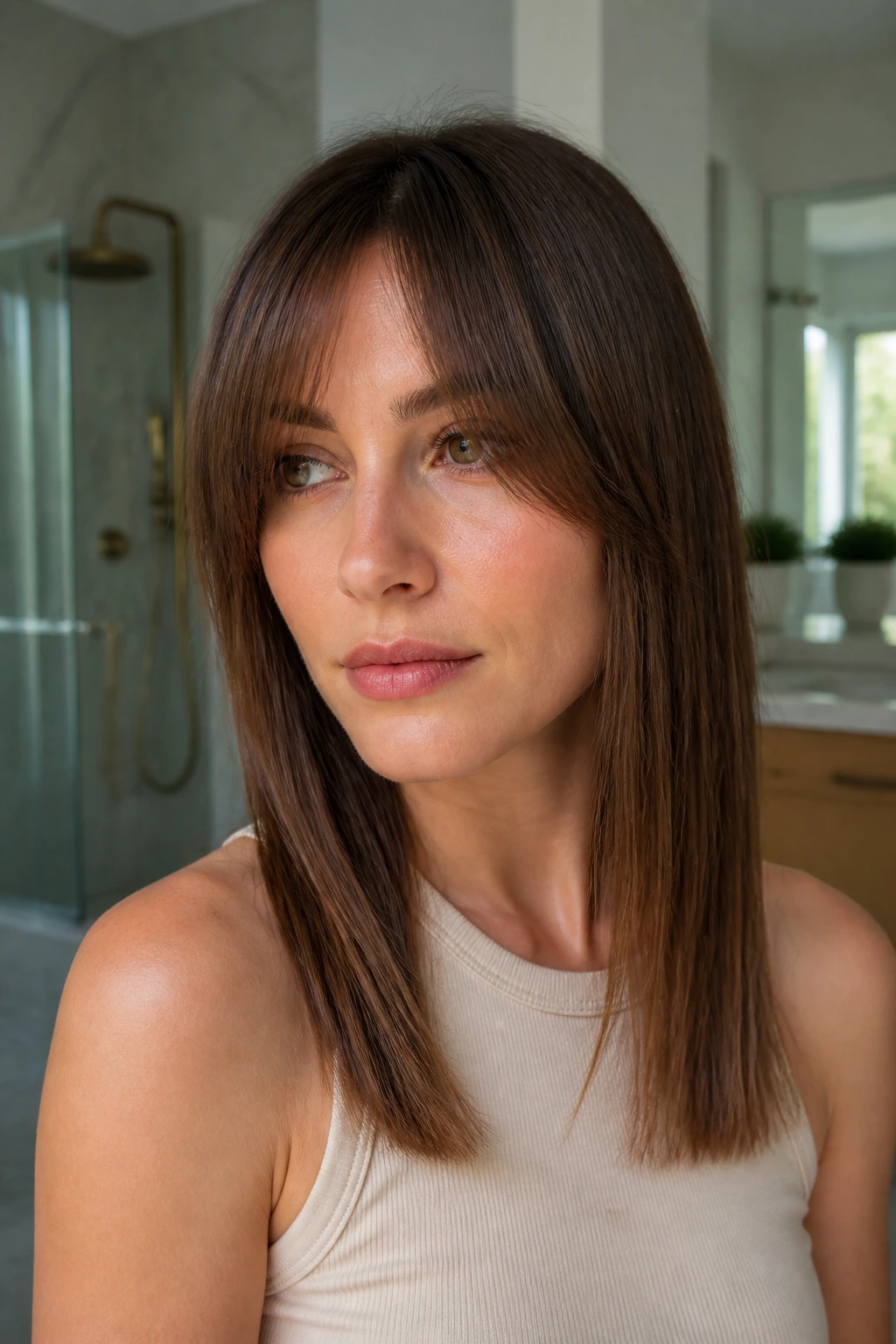
Straight hair can wear curtain bangs better than people think. The trick is not to cut them too short or too heavy, because pin-straight strands show every line. Leave enough length so the fringe can bend softly instead of sitting like a flat shelf.
What to ask for at the chair
- The shortest center point should sit around the bridge of the nose or just below it.
- The sides should angle down toward the cheekbone.
- Ask for light texturizing only at the ends, not through the whole fringe.
- If you have a stubborn cowlick, mention it before the cut starts.
This look is clean and sharp when it’s styled well. A quick pass with a round brush or a flat iron bend at the face-framing pieces is usually enough. Nothing fancy. Just enough movement so the center split doesn’t look pasted on.
My blunt take: straight hair punishes over-thinning. Keep more weight than you think you need.
7. Curly Curtain Bangs That Sit in Two Soft Arches

Curly curtain bangs are not about flattening curls into submission. They’re about giving the curl a shape that opens in the middle and arches outward on both sides. On medium hair, that can look fantastic because the rest of the length gives the fringe room to sit.
Ask for the bangs to be cut dry, or at least mostly dry, so the stylist can see how much your curls spring up. That one detail saves a lot of regret. Curls shrink, and the tighter the pattern, the more important it is to respect that shrinkage.
- Keep the center slightly longer than you think you need.
- Let the outer pieces meet the cheekbone, not the eyebrow.
- Diffuse on low heat or air-dry with a bit of curl cream.
- Avoid brushing them out once they set.
The best curly version looks soft at the root and springy at the ends. Not fluffy. Not helmet-shaped. Just shaped.
8. Face-Framing Curtain Bangs with Layered Ends
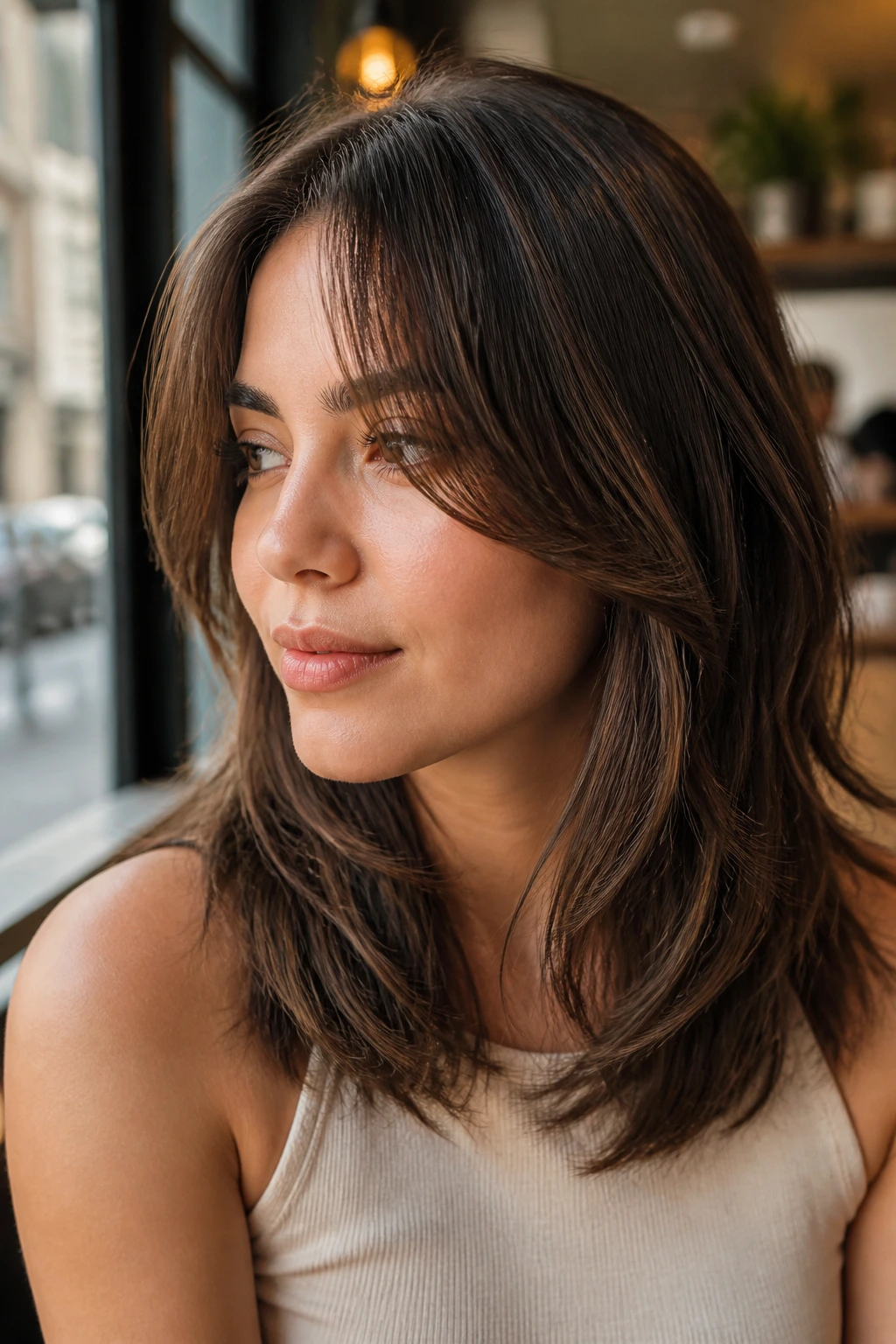
If you want bangs that disappear into the haircut instead of sitting on top of it, this is the move. Face-framing curtain bangs with layered ends blend straight into the rest of medium hair, so the whole cut feels connected. Nothing looks bolted on.
This is a smart choice for people who wear clips, half-up styles, or loose ponytails a lot. The fringe still shows when it’s down, but it doesn’t create a dramatic switch when you pull the rest of the hair back. That’s useful if your day involves both polished and messy moments.
The shortest point can be modest here. You do not need a dramatic gap in the front. A soft taper starting near the lips and melting into the collarbone often looks better than a big split that shouts for attention.
9. Bottleneck Curtain Bangs for Medium Hair
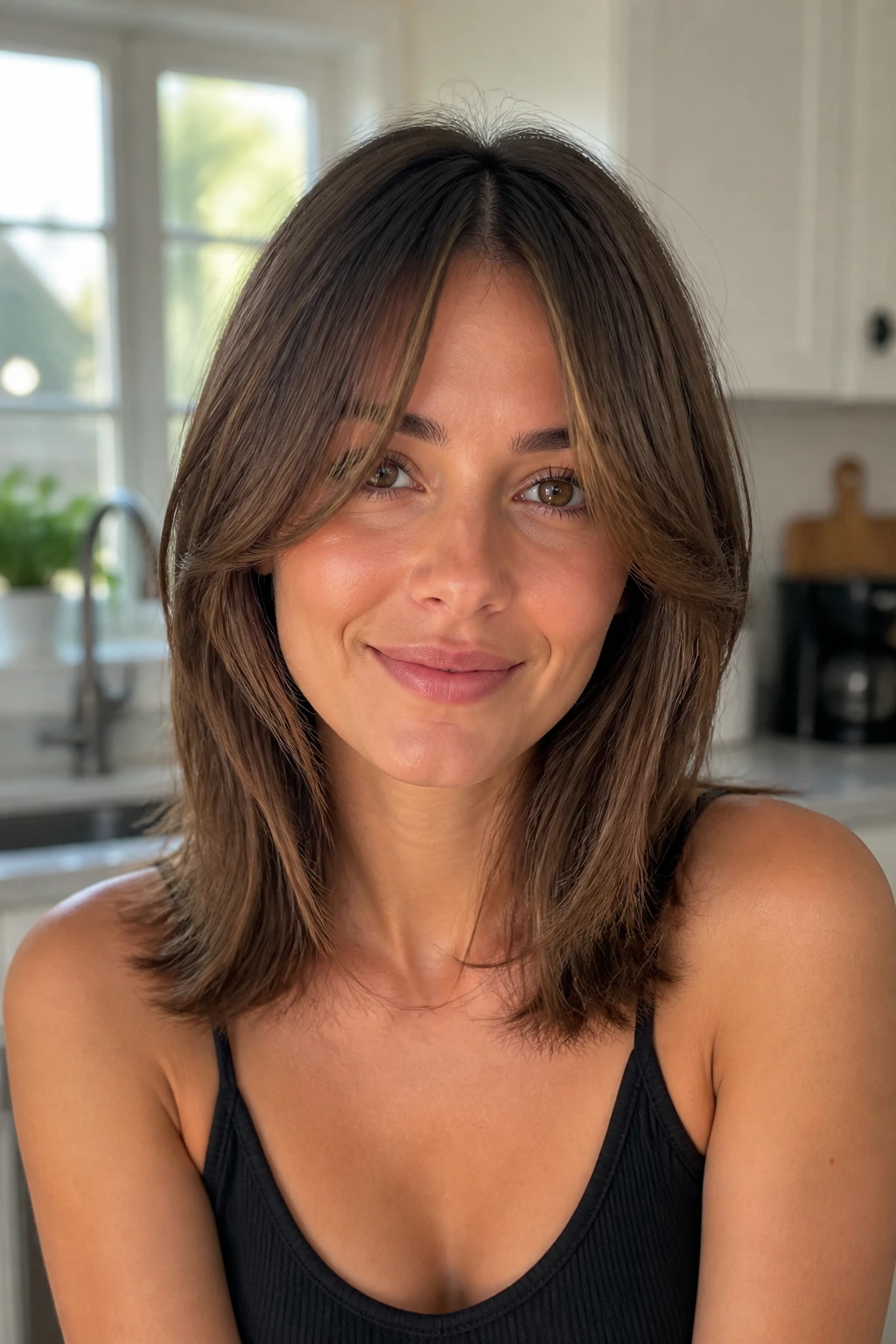
What makes bottleneck bangs different is the shape. The center stays narrow and a little shorter, then the sides widen out as they move toward the cheekbones. On medium hair, that creates a neat frame that feels less heavy than classic curtain bangs.
This shape is especially useful if you want a front section that sits close to the face without closing it off. It’s a nice middle ground between a straight fringe and a full curtain sweep. The curve at the sides softens the jaw, while the center keeps the look tidy.
How to use it
- Ask for a slimmer center section than you would with classic curtain bangs.
- Keep the side pieces longer so they can curve into the rest of the cut.
- Blow-dry the center forward first, then sweep the sides away from the face.
- Use a small round brush or even a velcro roller for extra lift.
Worth knowing: bottleneck bangs look best when the center is controlled and the sides are loose. If everything is equally fluffy, the shape gets lost.
10. Side-Swept Curtain Bangs with a Soft Center Split

Not everybody wants a dead-center part, and that’s fine. Side-swept curtain bangs with a soft center split give you the same face-framing idea, but the opening sits a little off-center so the fringe drifts naturally to one side first.
This is a good pick if your face feels more comfortable with asymmetry. It also helps if one side of your hair is stronger, flatter, or more obedient than the other. The slight shift makes the cut feel less formal, which I prefer on medium hair anyway. Middle parts can be a little bossy.
The side sweep should not turn into a deep side bang. Keep the center visible, just softened. That way the fringe still opens around the face instead of collapsing into a single swoop.
11. Collarbone Lob with Long Curtain Bangs
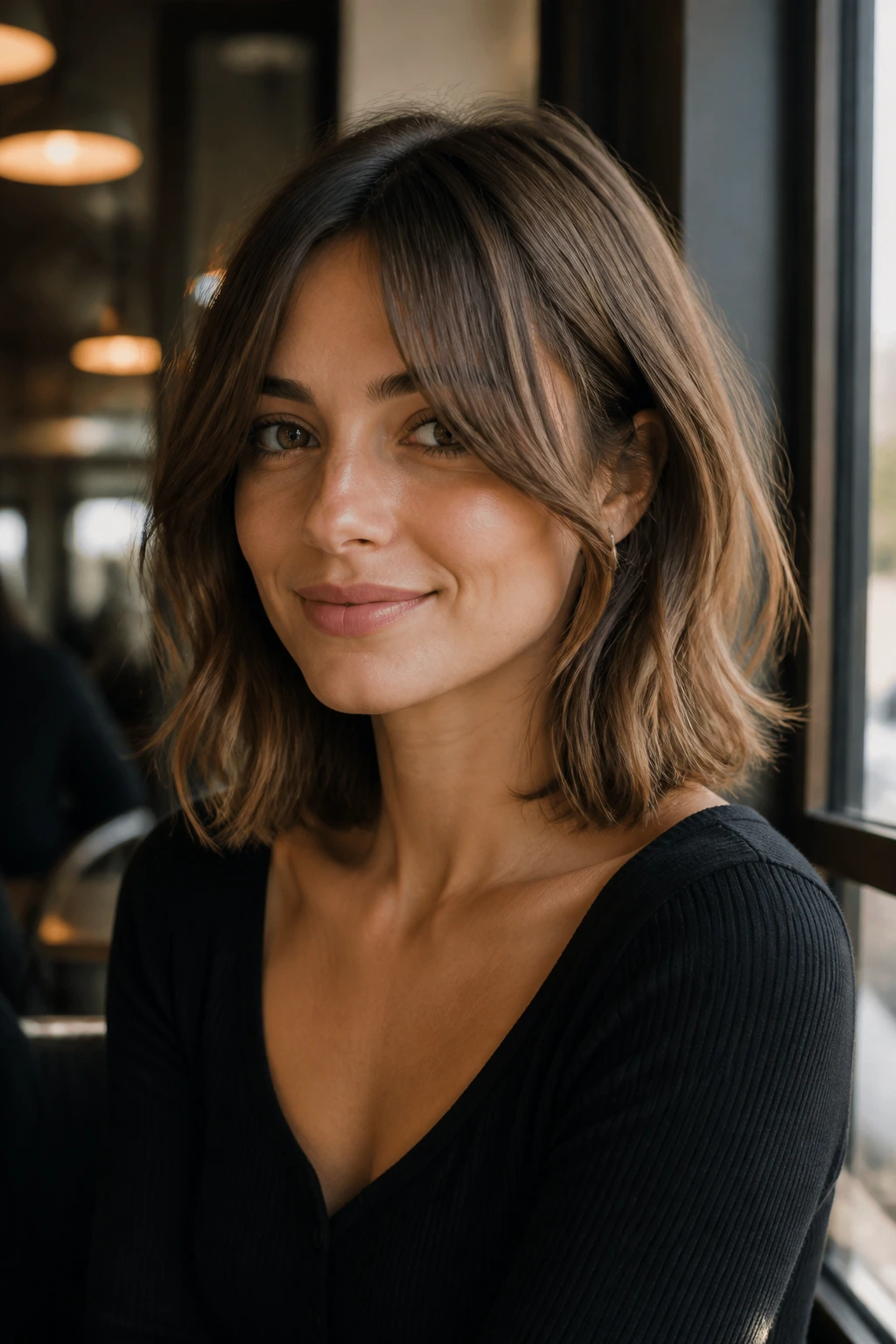
Compared with a blunt shoulder cut, a collarbone lob plus long curtain bangs feels lighter and moves more. The bangs do a lot of the lifting here, because they break up the front without taking away the nice clean line of the lob.
This version suits people who want a cut that looks polished even when they’ve only dried the roots and left the rest alone. The long fringe keeps the focus near the cheekbones, while the lob stops the style from drifting into heavy territory. It’s easy to tuck behind the ears, which matters more than most people admit.
If you want the look to stay fresh, keep the longest front pieces brushing the collarbone, not the shoulders. That tiny difference keeps the line visible and the whole shape sharper.
12. Dense, Fuller Curtain Bangs

Dense curtain bangs are for people who like the feeling of a proper fringe, not a whisper of one. On medium hair, this version can look rich and deliberate, especially if your hair is thick enough to support the weight without collapsing.
The key is fullness at the center, then a gradual open-out toward the sides. If the bangs are too sparse, they read like an afterthought. If they’re too blunt, they lose the curtain effect. You want a front panel with some presence.
What helps this look work
- Ask for the bangs to be cut with more density through the middle.
- Keep the outer edges slightly longer so they open like a frame.
- Blow-dry with a round brush straight up at the root, then out.
- Use a root-lift spray only at the base, not through the whole fringe.
My opinion: this is the one to choose if you hate the “see-through” bang trend and want hair that looks full in person, not just on camera.
13. Feathered 70s Curtain Bangs

Feathered curtain bangs bring a little retro energy without turning the haircut into costume hair. They sit softly around medium hair and flick away from the face in a way that feels warm, lifted, and a bit romantic. I’ve always liked this version more than the ultra-perfect blowout version. It has personality.
The feathering should happen through the last few inches, not all the way up to the root. That keeps the fringe from frizzing out. When it’s done well, the front looks airy and plush, almost like it was brushed with a large round brush and left to settle on its own.
A touch of mousse at the roots helps here. So does a cool shot from the dryer. The goal is movement with shape, not a stiff flip.
14. Razor-Cut Curtain Bangs

Razor-cut curtain bangs are sharper around the edges and a little more broken up through the lengths. On medium hair, that can create a cool, piecey front that feels more edge than sweetness. I’d reach for this if you like hair that looks intentionally a bit undone.
The texture works best when your hair has some natural movement already. On very frizzy hair, razor cutting can push the ends too far apart and make the fringe look ragged. On smoother hair, though, it gives you those thinner wisps that break up a heavy front beautifully.
This is the kind of bang that looks best with minimal product. A light cream or a dab of oil on the ends is enough. Too much smoothing product kills the texture and leaves you with a limp curtain.
15. Curtain Bangs with Money-Piece Highlights

A little brightness around the front can change the whole haircut. Curtain bangs with money-piece highlights draw attention to the fringe, especially on medium hair where the front pieces sit close to the face and catch the eye first.
The lightness should be controlled. If the front strips are over-bleached, the bangs can look stripey and dry. I prefer a softer lift that blends into the face-framing layers, not a harsh contrast line. That way the color makes the haircut look lighter rather than louder.
Where to place the lighter pieces
- Keep the brightest parts around the outer fringe, not only the center.
- Blend the color down into the first face-framing layer.
- Ask for a soft transition near the root if you want less upkeep.
- Use a purple or blue-toned shampoo only when brassiness shows.
The right placement makes medium hair look shinier and more open around the eyes. Done badly, it looks like stripes. Small difference. Big mood.
16. Textured Curtain Bangs with Choppy Ends

Textured curtain bangs are for people who want movement first and polish second. The choppy ends break up the front so the bangs never sit too neatly, which is a relief if your medium hair tends to go limp when it’s too controlled.
This is one of my favorite cuts for slightly messy textures. The bangs can look intentional even when the rest of the hair is just air-dried and scrunched. A dab of dry texture spray at the roots helps lift the split, and a little finger-combing keeps the ends from clumping.
The trick is to keep the texture in the lower half of the fringe. If the roots are too shredded, the whole thing can look thin. You want movement, not holes.
17. Curtain Bangs That Flatter Round Faces
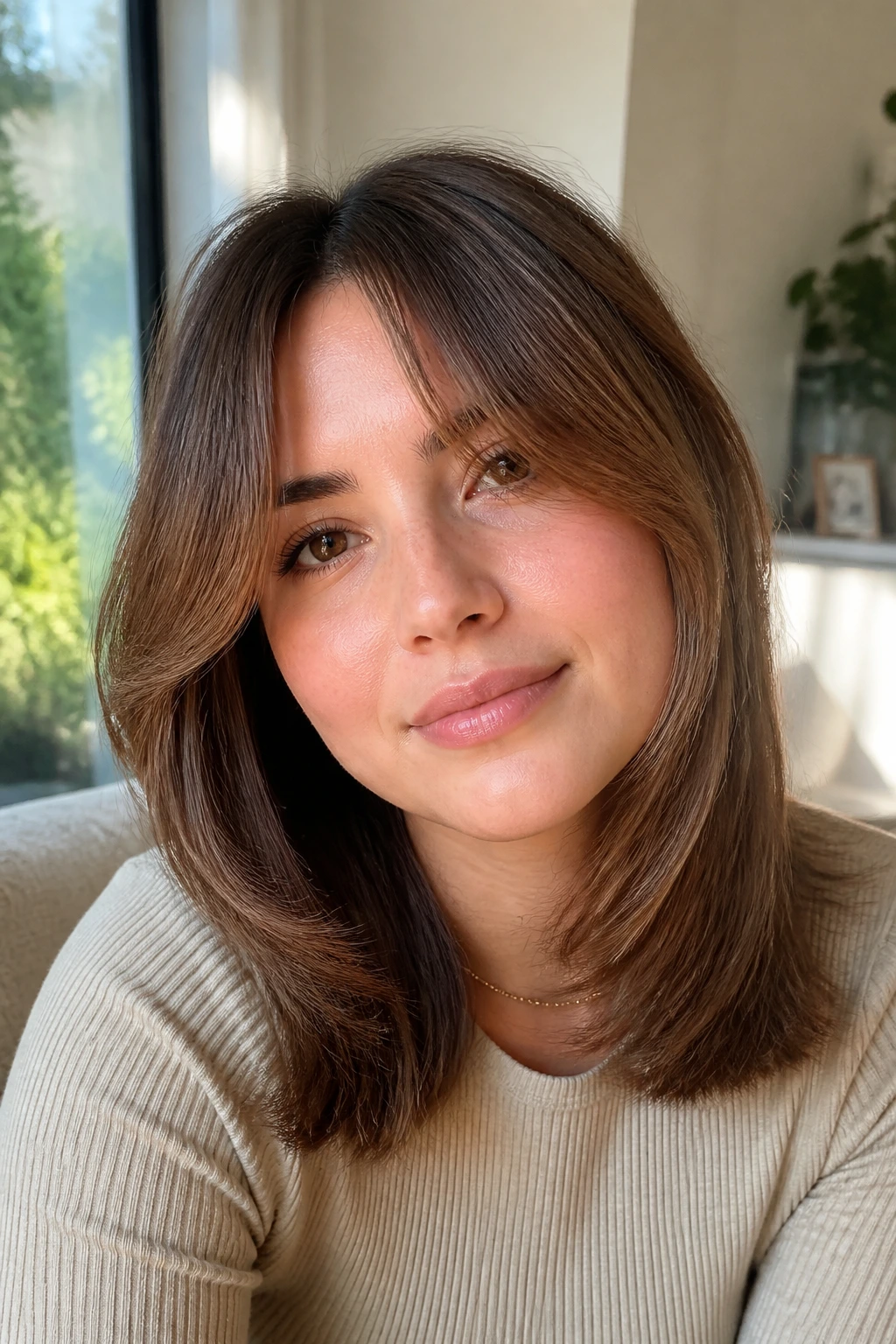
Longer curtain bangs usually work better than blunt fringe on round faces. They create two vertical lines that visually stretch the face a little, while a center split opens up the middle instead of cutting it across the widest point.
The best version usually starts below the brow and angles down past the cheekbones. That keeps the eyes open and avoids adding width where you don’t need it. Medium hair helps because the length below the fringe gives the whole style some balance.
I would skip a too-short center on round faces unless you want a very strong look. Longer, softer pieces are easier to wear and easier to grow out. The face gets room, and the haircut feels lighter.
18. Curtain Bangs That Sharpen Square Faces

Square faces often look nicest when the fringe softens the jawline instead of matching it with another hard line. That’s why curtain bangs with rounded edges are such a strong fit here. The curve of the fringe takes the edge off the front of the face without hiding it.
What to ask for
- Keep the sides longer so they skim the jaw area.
- Avoid a super blunt center section.
- Ask the stylist to soften the line with gentle point cutting.
- Style the fringe with a curve away from the face, not straight down.
There’s a nice contrast between a strong jaw and a soft, open bang. It keeps the cut from feeling severe. And if your medium hair is naturally thick, this shape can stop the front from looking boxy.
Small warning: don’t over-layer the fringe. Too much texture can make the front look fuzzy instead of soft.
19. Curtain Bangs That Open Up Oval Faces
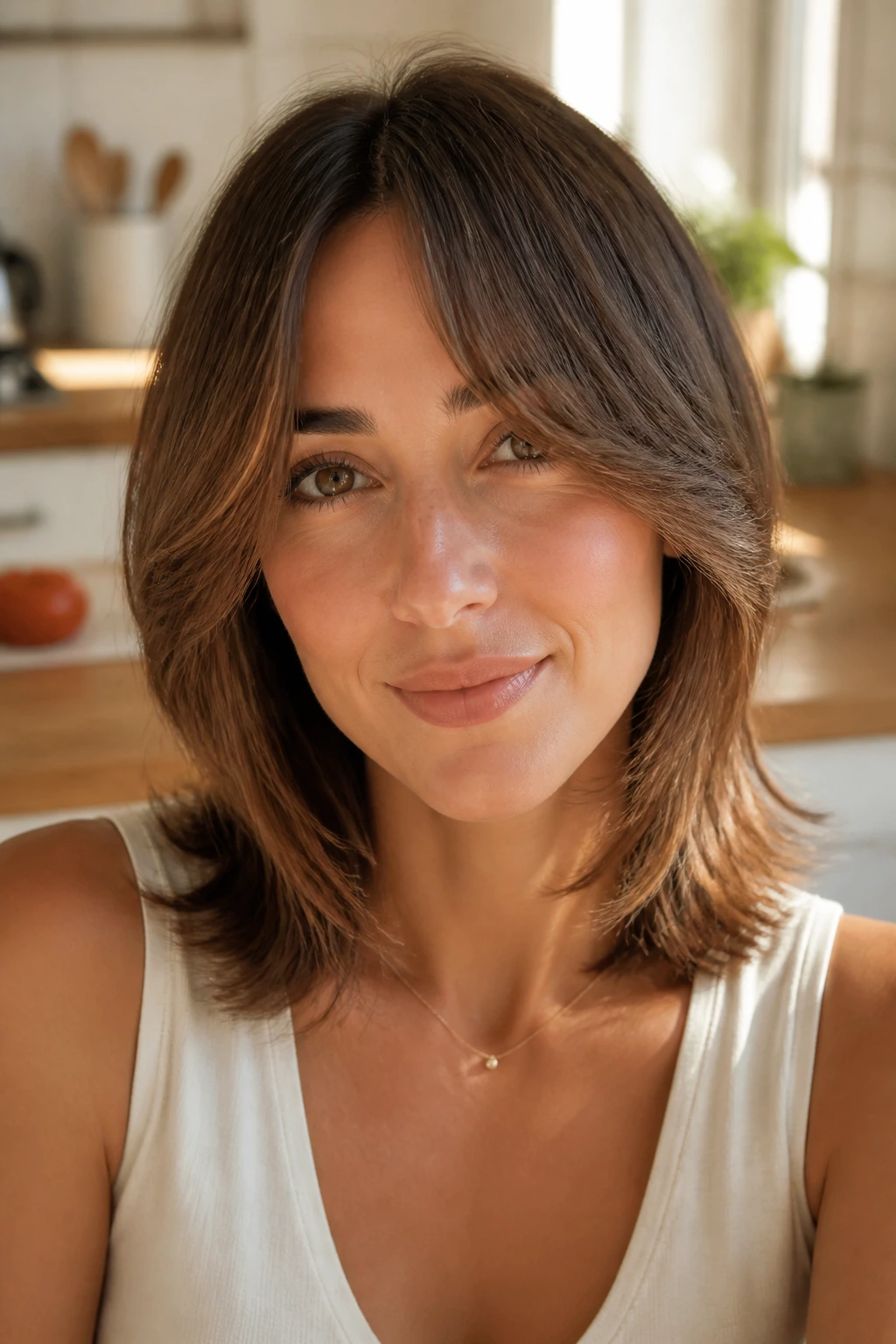
Oval faces can wear almost anything, which is a blessing and a curse. The upside is freedom. The downside is decision fatigue. Curtain bangs give oval faces a chance to pick a mood—sleek, shaggy, full, wispy—without needing to “correct” anything.
For this face shape, I’d think less about fixing and more about styling preference. Want a prettier outline around the eyes? Go cheekbone length. Want movement? Go layered. Want a little more drama? Bring the shortest point up just a touch and let the sides drape lower.
- Cheekbone length feels classic.
- Lip length feels softer and more relaxed.
- A deeper center split makes the front look narrower.
- Extra texture adds lift without changing the basic shape.
Oval faces get to be a little picky. That’s the fun part.
20. Curtain Bangs That Balance Heart-Shaped Faces

Heart-shaped faces usually need a fringe that eases the width at the forehead without crowding the eyes. Curtain bangs do that well when they’re soft at the center and a little fuller through the sides. The shape pulls attention down and outward.
A too-short bang can make the forehead feel wider, so I’d keep the center on the longer side. Let the outer pieces do the real work. They should skim the cheekbones or even brush the upper lip, especially if your medium hair has body and wants to bounce upward when dry.
This is one of those cuts where fullness matters, but only in the right place. You want the fringe to feel airy across the middle and slightly heavier at the sides. That tiny shift changes the whole balance.
21. Curtain Bangs with a Clean Center Part
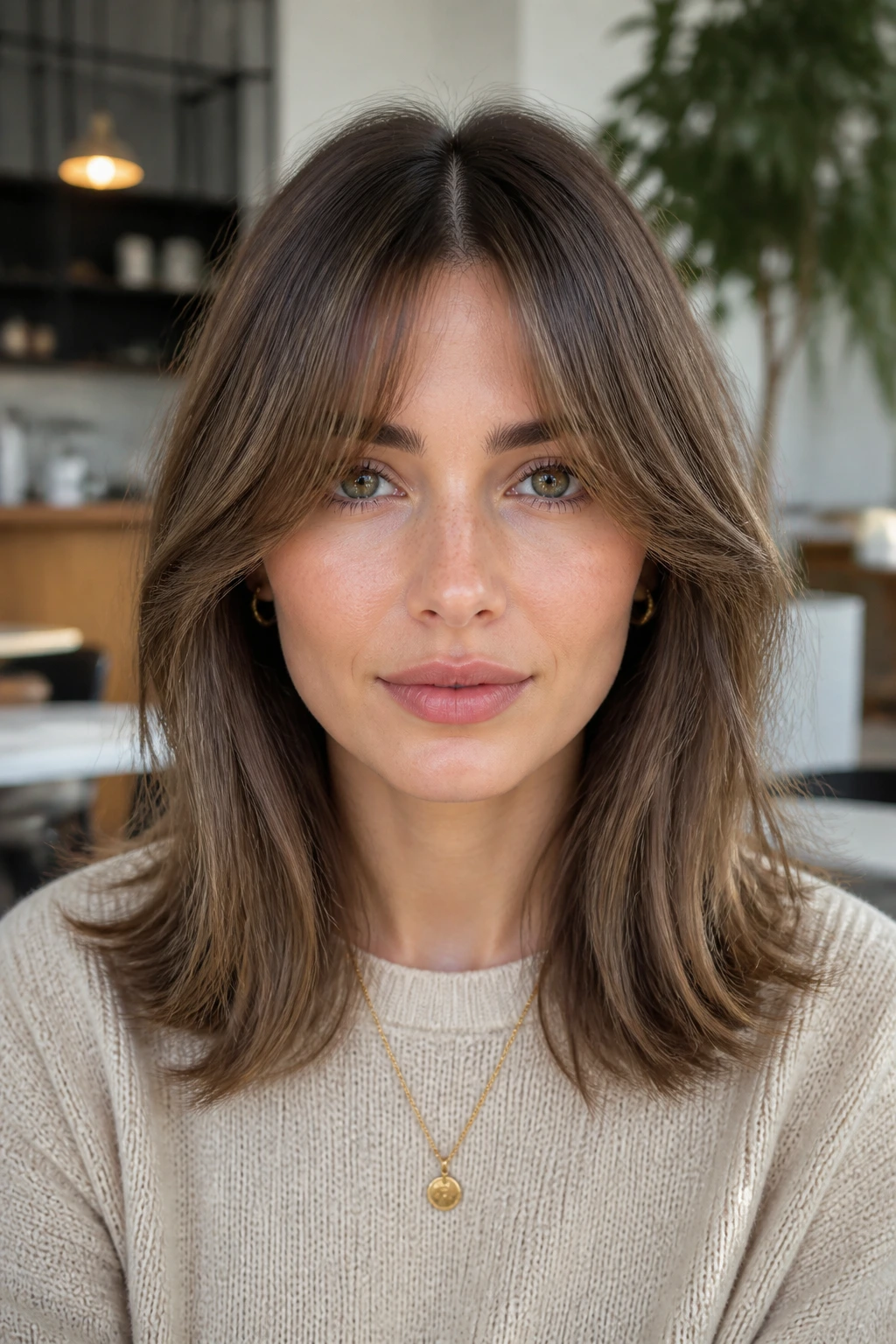
Why does a clean center part make curtain bangs feel so crisp? Because the split becomes part of the design instead of something you’re trying to hide. On medium hair, a neat middle opening can make the fringe look symmetrical and calm, which is nice if the rest of your style is already busy.
How to keep the split neat
- Dry the bangs forward first, then separate them with fingers, not a brush.
- Use a fine-tooth comb only at the root if you want a sharp line.
- Clip the two sides away from the face while they cool.
- Use a tiny amount of smoothing cream, not enough to weigh them down.
This version works best if your cowlicks are friendly. If they’re not, you can still wear it, but you may need a little root spray and a few extra minutes in the morning. That’s the tradeoff.
22. Curtain Bangs with a Deep Side Part

A deep side part changes the whole mood of curtain bangs. Instead of opening evenly, the fringe sweeps across the forehead first, then falls into the curtain shape more gradually. It gives medium hair a bit of drama without turning it into a full side-swept bang.
This is a smart choice for anyone who gets a stubborn flat spot right in the middle. Move the part over by an inch or so, and the front often starts cooperating. The off-center split also feels softer and less predictable, which is useful if you like hair that looks a little looser.
I’d keep the rest of the cut slightly layered so the side part doesn’t drag the fringe down. A deep side part with heavy ends can feel tired fast. A light lift at the roots fixes most of that.
23. Grown-Out Curtain Bangs
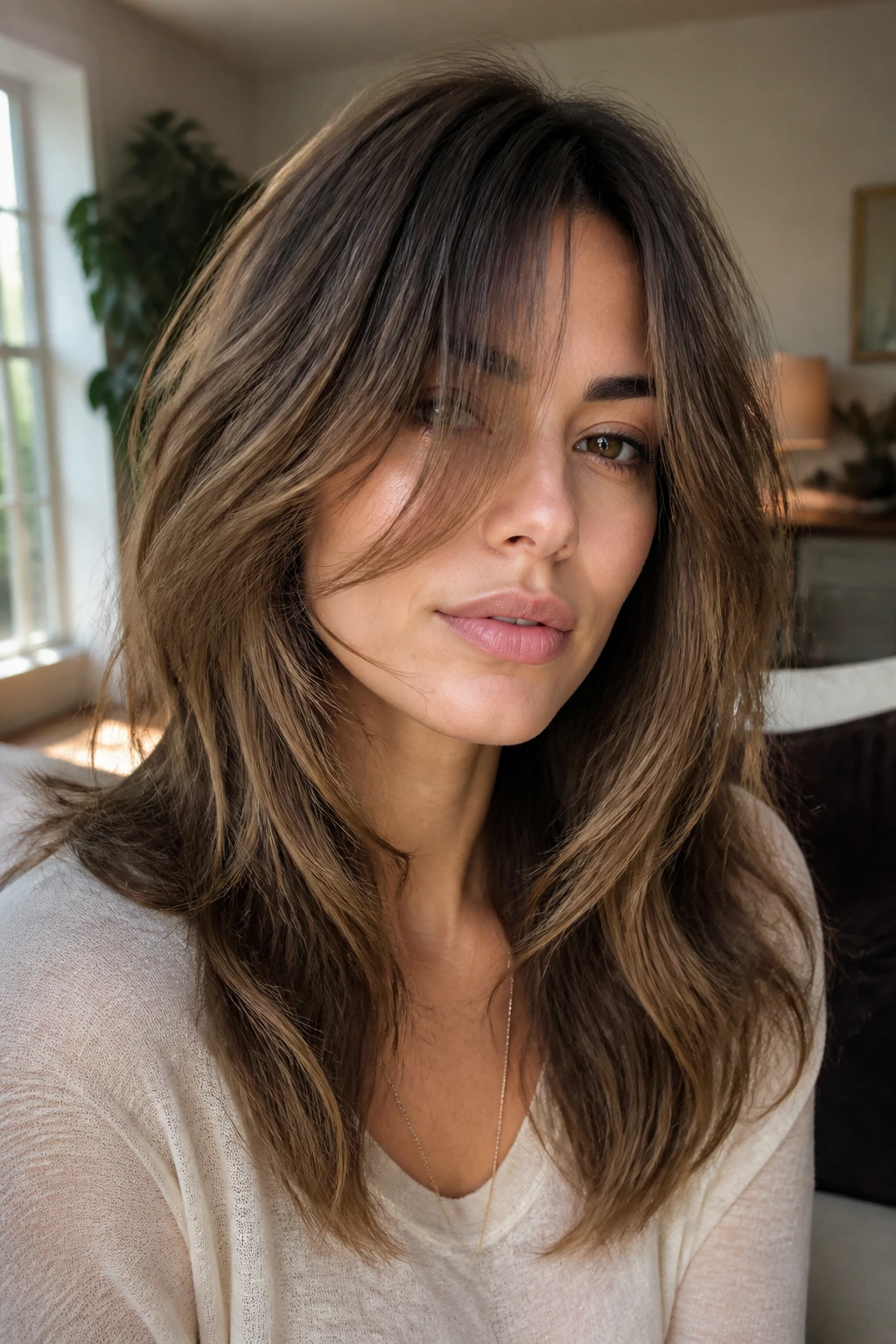
Compared with a fresh cut, grown-out curtain bangs look softer and ask less from you. That’s the appeal. The fringe has more length, so it blends into medium hair instead of sitting as a clear, separate piece in front.
This version is for people who want fringe without a strict maintenance schedule. It’s especially useful if you know you’ll skip trims or if you like to let your hair do its own thing between salon visits. The longest face-framing pieces can brush the lips or even the chin, which helps the grow-out look intentional.
The danger is letting them get too long on the sides before you refresh the center. Once that happens, the shape can drift into plain face-framing layers. Still pretty. Just less defined.
24. Heatless Curtain Bangs
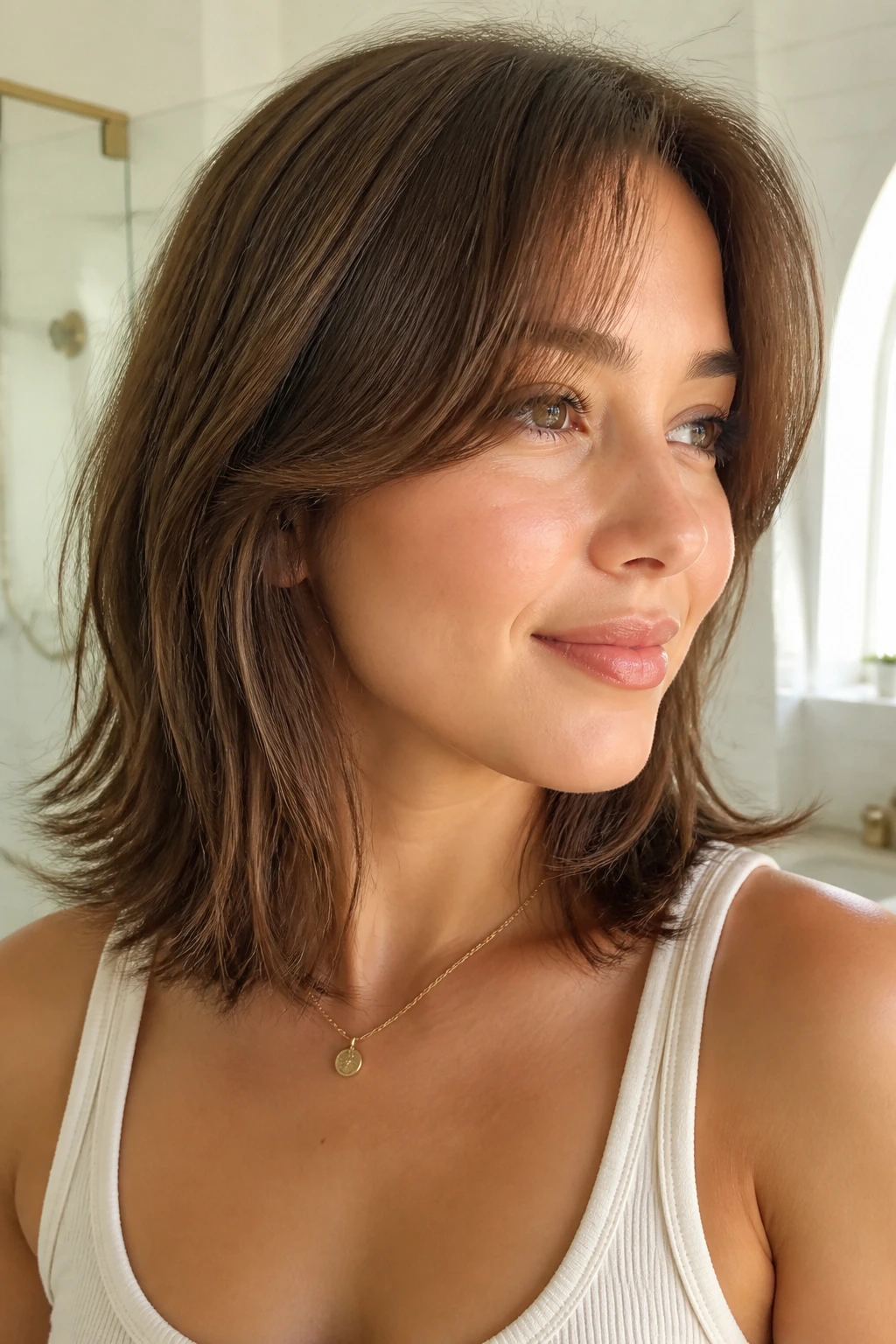
Heatless styling gives curtain bangs a softer bend and a little less polish, which can be a good thing on medium hair. Velcro rollers, large foam rollers, or a couple of flat clips can set the front while you get dressed and make coffee.
A simple heatless routine
- Roll the bangs away from your face while they’re slightly damp.
- Keep the section no wider than 2 to 3 inches on each side.
- Leave them in until the hair is fully cool and dry.
- Separate the bend with fingers, not a brush.
This works well if heat styling makes your front pieces fuzzy. It also saves time on mornings when you want shape but not a whole blowout. The result is usually softer than hot-tool styling, which I think suits medium hair nicely.
Watch this: if you remove the rollers too early, the curve falls out fast. Patience pays off here.
25. Big Blowout Curtain Bangs

This is the version I reach for when medium hair needs to look dressed up without wearing an updo. Big blowout curtain bangs have lift at the roots, bend through the mids, and a soft flip at the ends that makes the front feel lively.
The shape depends on tension. Wrap the bangs around a round brush, pull them up and away from the face, then let them cool before brushing through. A little volume powder at the roots can help if your hair goes flat fast. Too much, though, and the bangs get crunchy. No one wants crunchy bangs.
The rest of the cut can stay simple. That’s part of the charm. The fringe does the talking, and the medium-length layers just support it quietly.
26. Piecey Curtain Bangs with Lightweight Serum
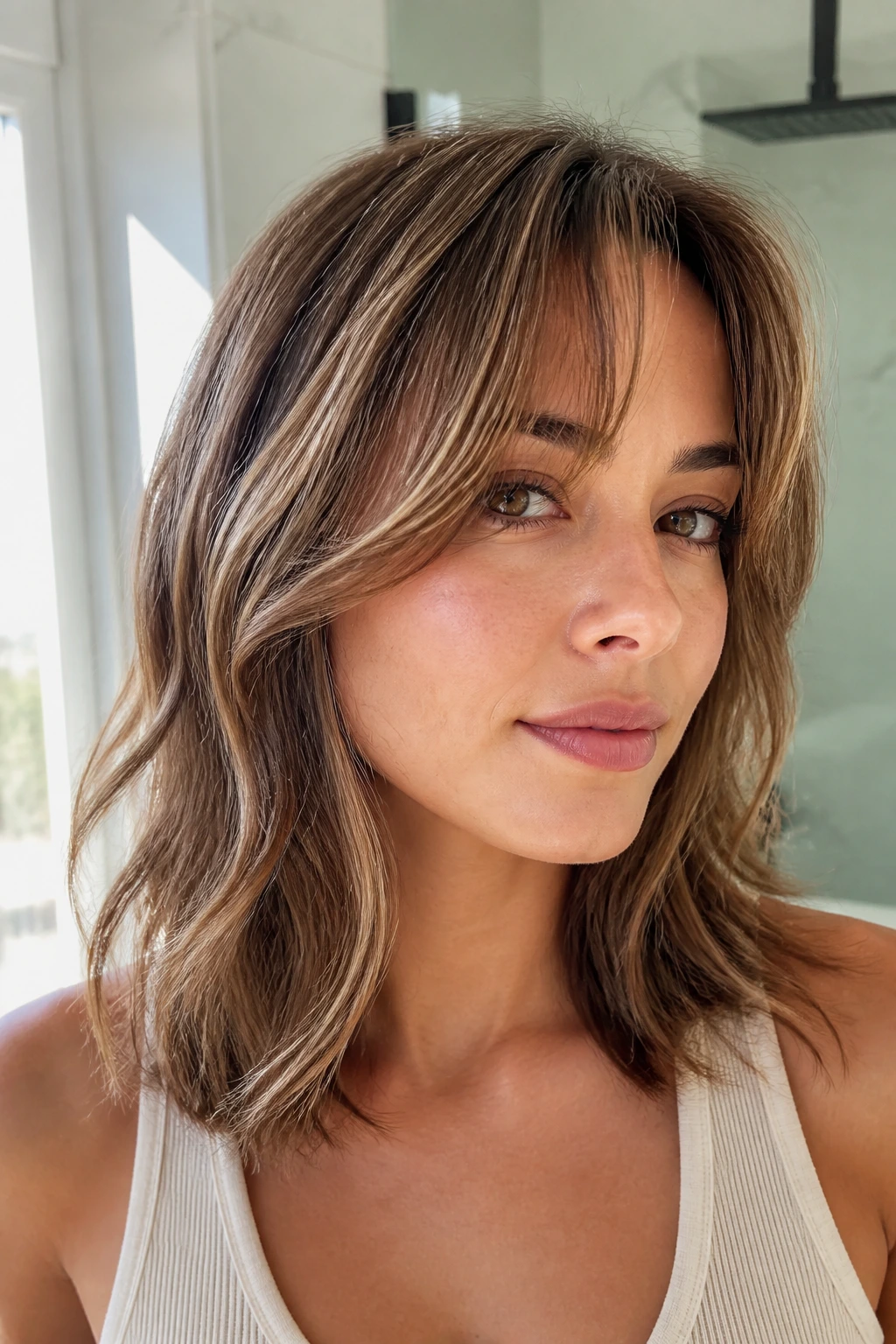
Piecey bangs are not the same thing as messy bangs. The difference is control. On medium hair, a lightweight serum can separate the strands just enough to create definition without turning the front greasy or heavy.
I like this style for hair that frizzes at the first sign of humidity. A tiny amount of serum, rubbed between your palms, can smooth the surface while leaving the ends visible. That piecey look works because you can still see the curtain shape, but each side has a little movement of its own.
Skip thick oils and heavy creams here. They usually flatten the front and make the split collapse by lunch. A light hand wins.
27. Curtain Bangs and Beach Waves
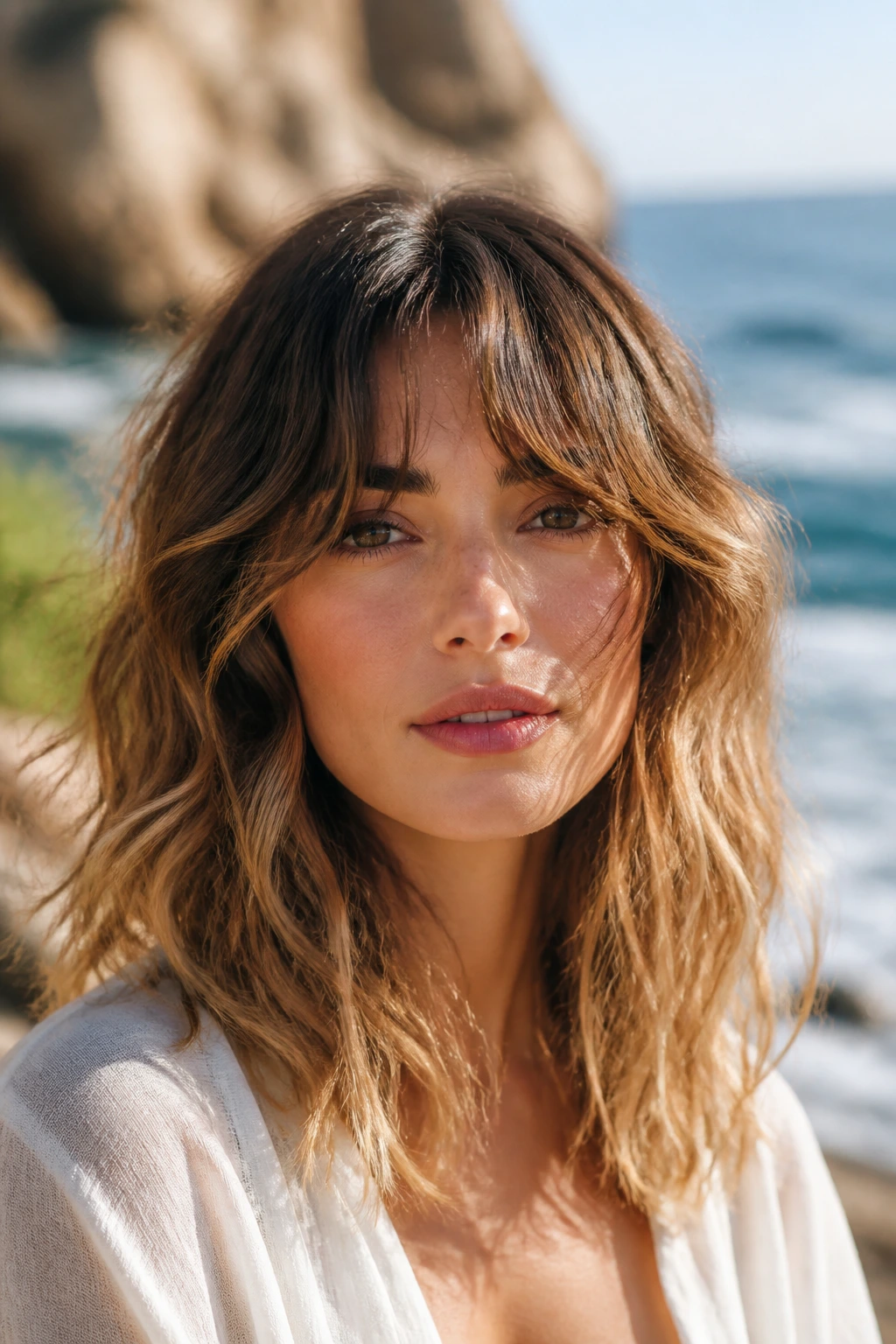
Why do curtain bangs and beach waves work so well together? Because both shapes rely on bend instead of perfect smoothness. The fringe frames the face, and the waves carry that same easy motion through the rest of medium hair.
The styling rhythm
- Wave the mid-lengths and ends first.
- Leave the bangs for last so they stay a little smoother than the rest.
- Use a smaller iron or brush on the front pieces if your wave pattern gets too loose.
- Break up the ends with fingers and a bit of dry texture spray.
The mistake I see most is over-waving the bangs. The fringe should look softer and more controlled than the body of the hair. That contrast keeps the cut from turning into one big ripple.
28. Sleek Curtain Bangs on Straight Medium Hair
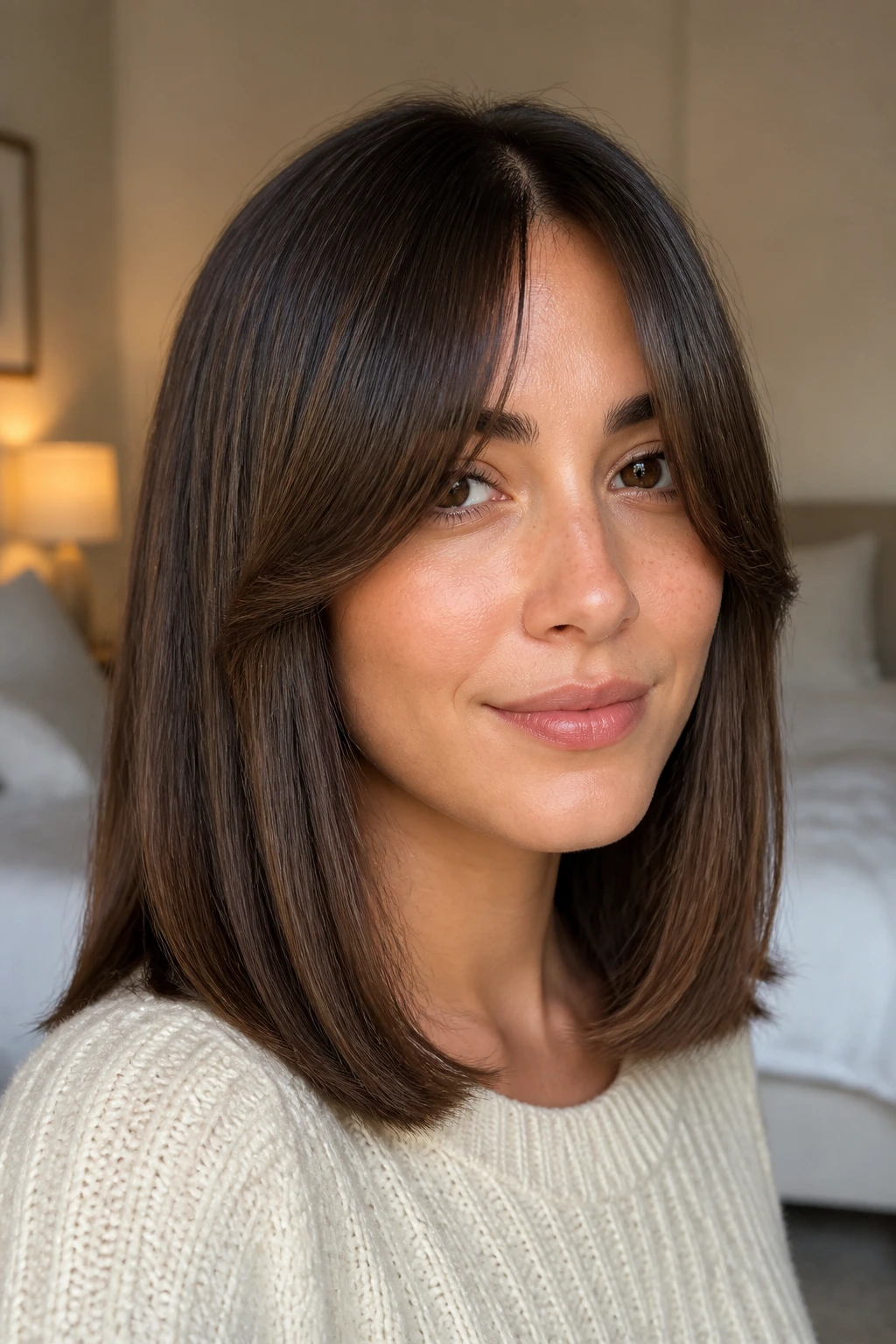
Sleek curtain bangs can look sharp, glossy, and very clean on straight medium hair. The trick is to keep them moving at the ends so they don’t sit like flat paper across the forehead. A tiny bend away from the face is enough.
This is a good choice if you like shiny hair and a more polished finish. Straight hair shows the line of the cut well, which means the bangs need to be precise. If the edges are uneven, you’ll see it right away. That can be a blessing if you like order.
A flat iron can help, but only through the last inch or so. Pressing the whole fringe bone-straight usually makes the style feel too severe. A soft curve is more flattering.
29. Collarbone-Length Layers with Curtain Bangs

A collarbone-length layered cut changes how curtain bangs sit because the rest of the hair has enough motion to echo the fringe. Compared with a one-length lob, the layered version feels lighter and easier to toss around.
This is a strong pick if your medium hair gets bulky at the ends. The layers remove some of that weight, so the bangs don’t have to do all the work. You get shape near the face and movement through the lengths, which keeps the style from feeling top-heavy.
Ask for the shortest face-framing layer to begin around the cheekbone, then let the lower layers fall toward the collarbone. That spacing keeps the cut soft without turning it into a shag.
30. Retro Pin-Curl Curtain Bangs

If you like a little old-movie polish, pin-curl curtain bangs are a fun place to go. The front gets set into a rounded bend, then released into a soft roll that sits beautifully on medium hair. It feels deliberate in a way that a plain blow-dry sometimes doesn’t.
How to set the shape
- Roll each side of the fringe away from the face in 2-inch sections.
- Secure with flat clips or velcro rollers.
- Let the hair cool fully before removing anything.
- Brush lightly at the end only if you want the curl looser.
This version works best when the rest of the cut is smooth and controlled. Too many rough layers can fight the retro front. The result is charming, but it needs a little patience.
31. Air-Dried Curtain Bangs for Natural Texture
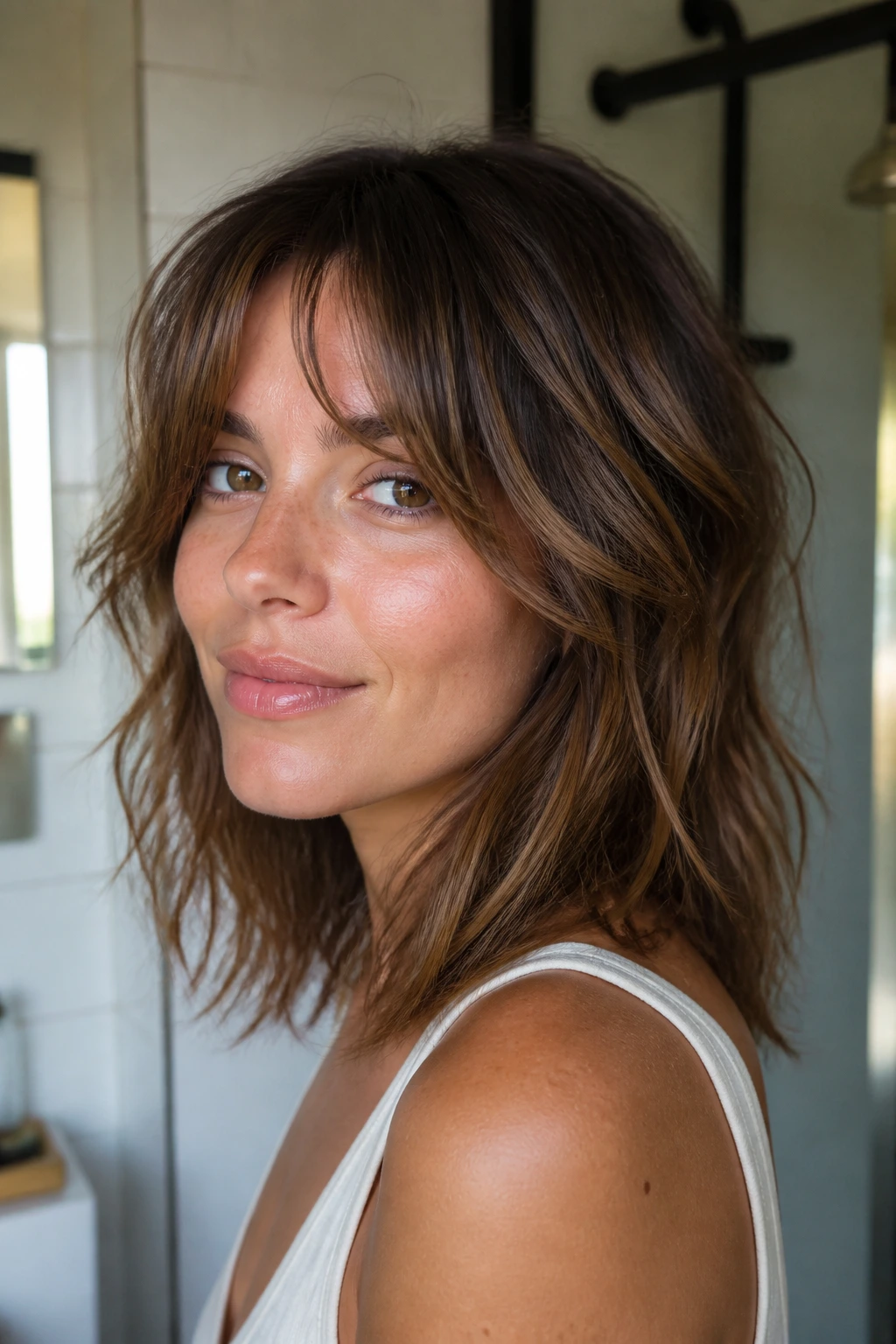
Air-dried curtain bangs are a gift if your medium hair already has bend, wave, or a soft curl pattern. The front settles on its own, which means less heat and fewer mornings spent negotiating with a brush.
The trick is to guide the hair while it’s damp. Push the bangs away from the face with your fingers, split them where you want the curtain to open, and leave them alone. A tiny bit of curl cream or leave-in conditioner helps keep the ends from puffing out.
- Scrunch only the very ends if the hair needs help.
- Avoid touching the bangs while they dry.
- If one side dries flatter, clip it back for 10 minutes.
- Finish with a mist of flexible-hold spray.
This is not the sleekest version on the list. It is, however, one of the easiest to live with.
32. Curtain Bangs with Internal Layers
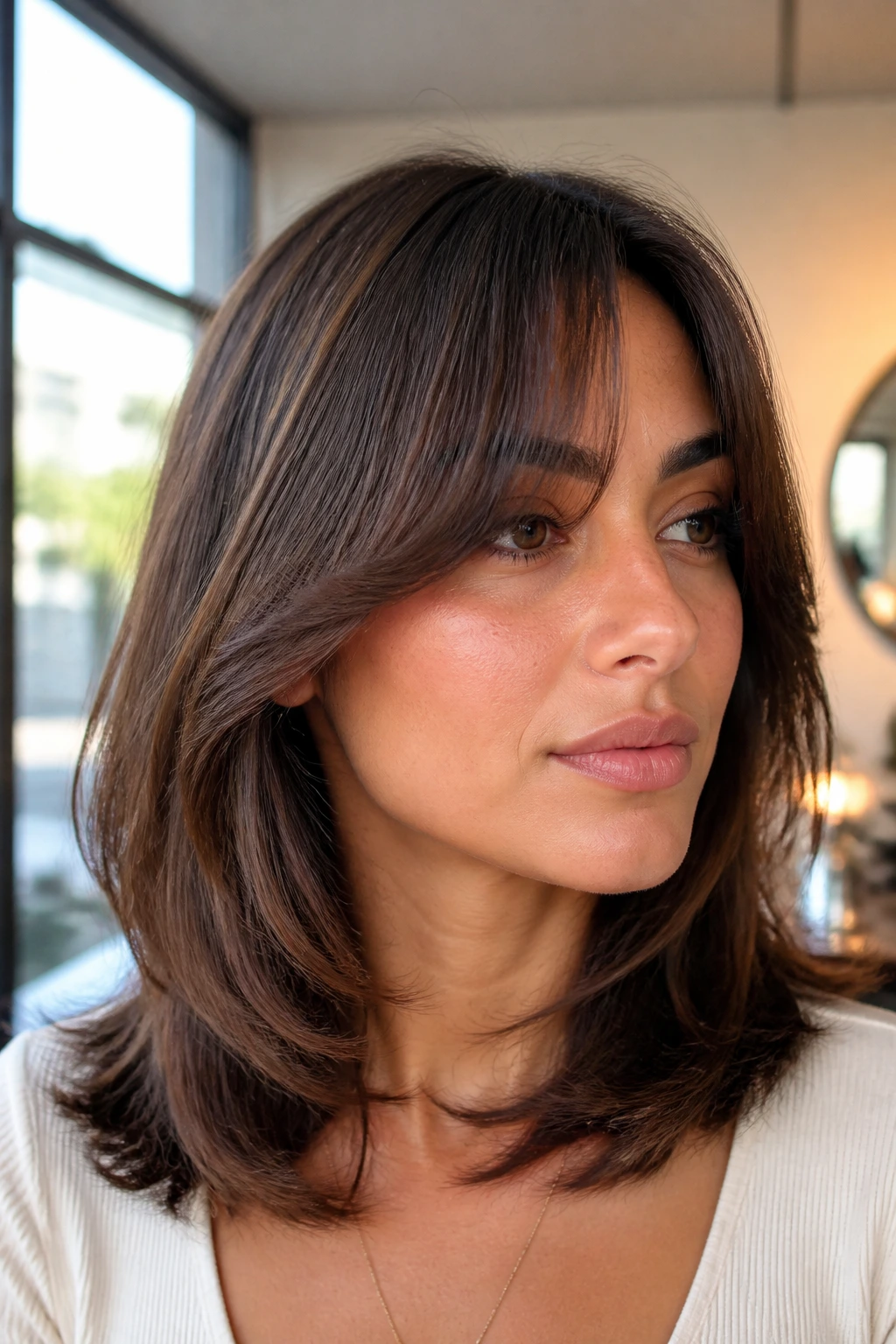
Internal layers are the sneaky part of a good haircut. You don’t always see them right away, but you feel them when the bangs sit lighter and move better. On medium hair, that hidden shaping can keep the fringe from becoming heavy or blocky.
I like this approach when the outer cut needs to stay full but the front needs a little relief. The layers live under the surface, so the silhouette still looks soft from the outside. That means you get motion without losing too much body.
This is the kind of cut that rewards a good stylist. Ask for weight removal that respects the front shape. If too much is taken out, the bangs can go wispy in a hurry. A little hidden structure goes a long way.
33. Curtain Bangs for Thick Hair
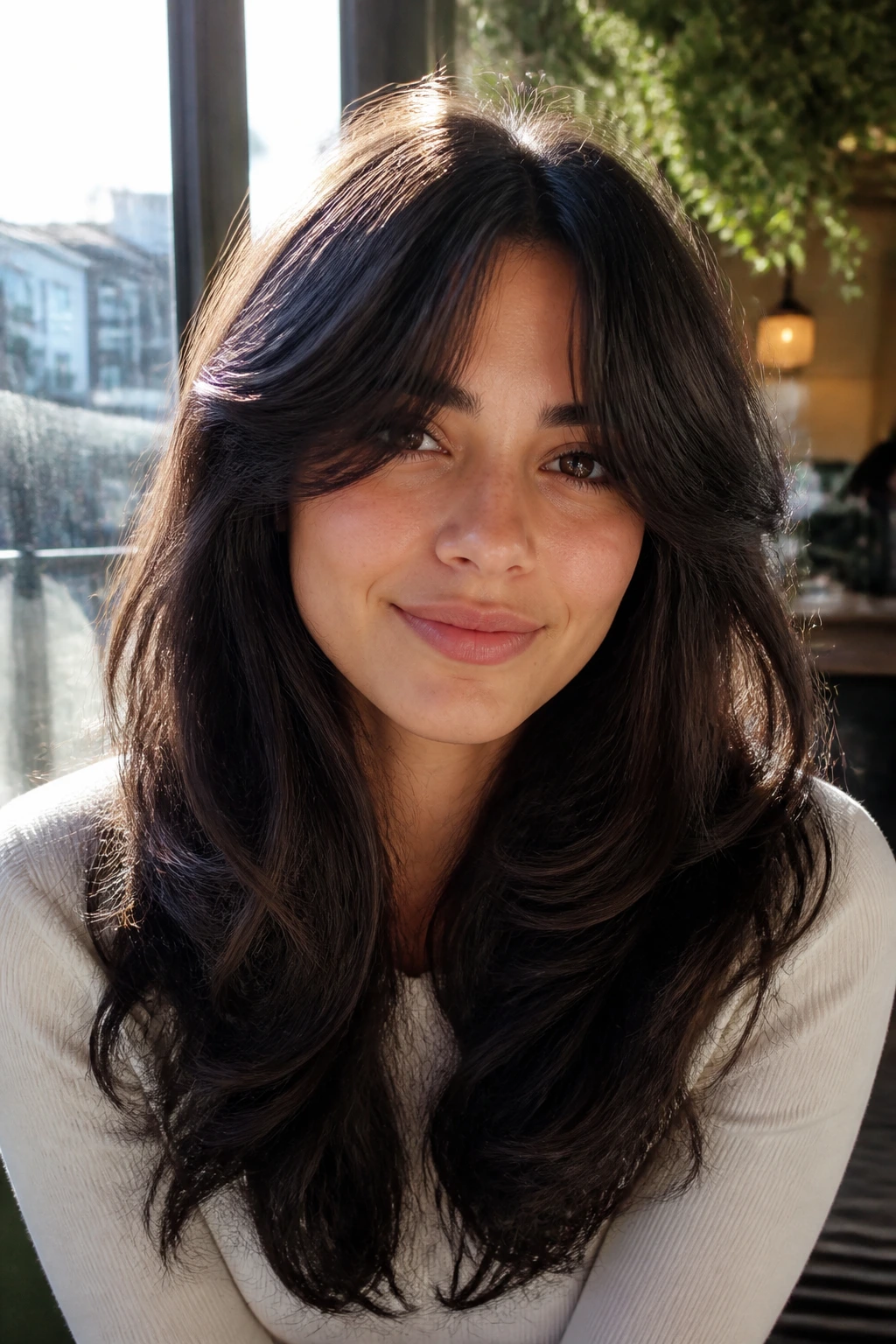
Thick hair can wear curtain bangs beautifully, but only if the bulk is controlled. Otherwise the front becomes too wide and sits like a shelf. The answer is weight removal in the right places, not thinning every strand into submission.
How to keep them light
- Ask for point cutting through the ends instead of blunt chopping.
- Remove bulk from the inside of the bang, not the surface.
- Keep the center slightly narrower than the sides.
- Use a round brush to lift the root and smooth the body.
Thick hair usually holds a curtain shape well once it’s cut properly. The bangs feel full, not flimsy. That’s the real win. You get softness around the face and enough density to keep the style from disappearing.
34. Curtain Bangs for Fine Hair
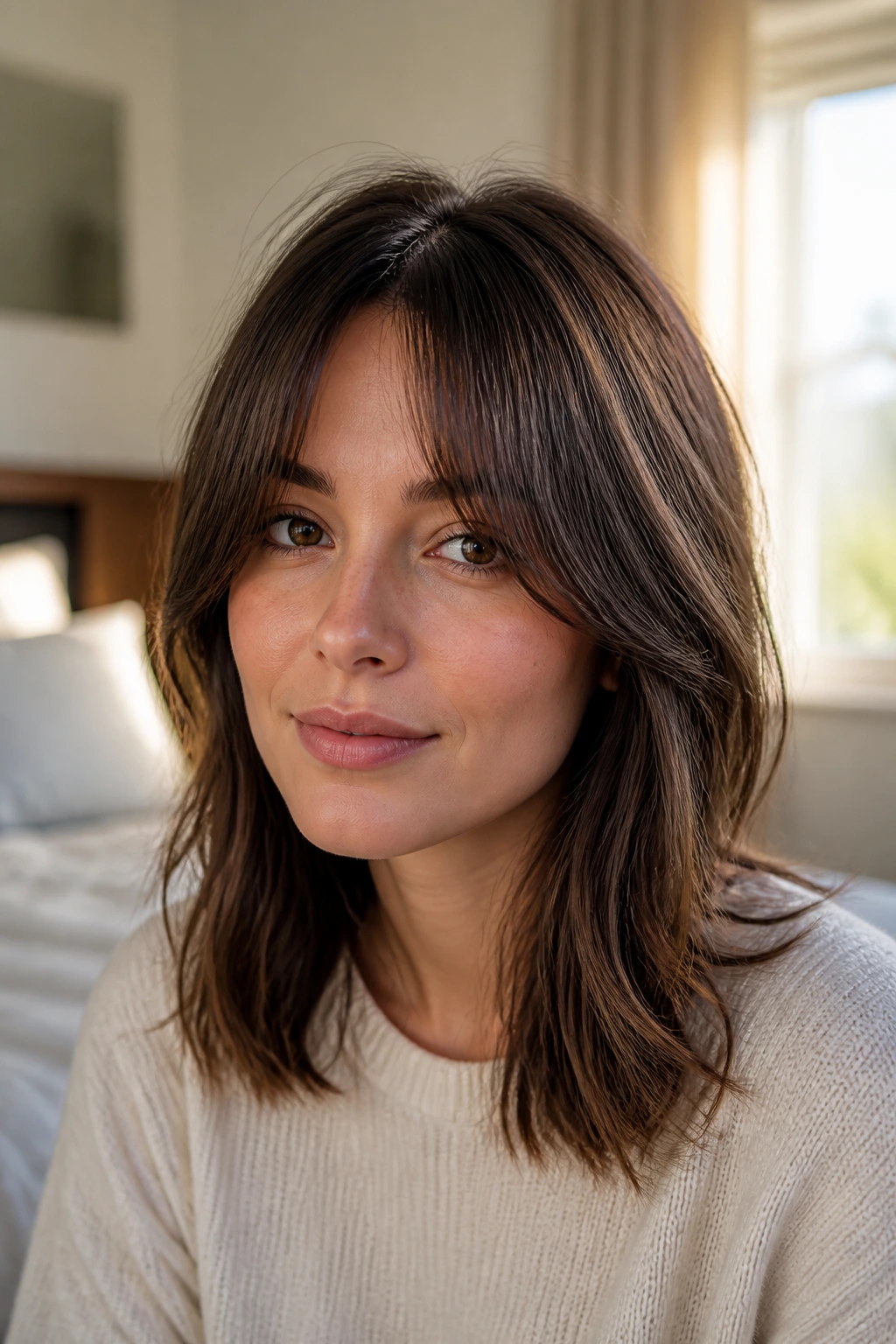
Fine hair needs a gentler version of curtain bangs. Too much thinning can make the front look sparse, so the cut should keep as much visible weight as possible. Medium hair helps here because the rest of the length gives the fringe something to sit against.
I’d keep the bangs longer and avoid over-layering them. A soft blow-dry with a root clip or a tiny round brush can create lift without making the front look overworked. A volumizing mousse at the roots helps more than heavy cream ever will.
The goal is fullness that looks natural. Not puffed up. Just enough body that the fringe opens nicely and doesn’t stick to the forehead by midday.
35. Long Curtain Bangs That Grow Out Cleanly
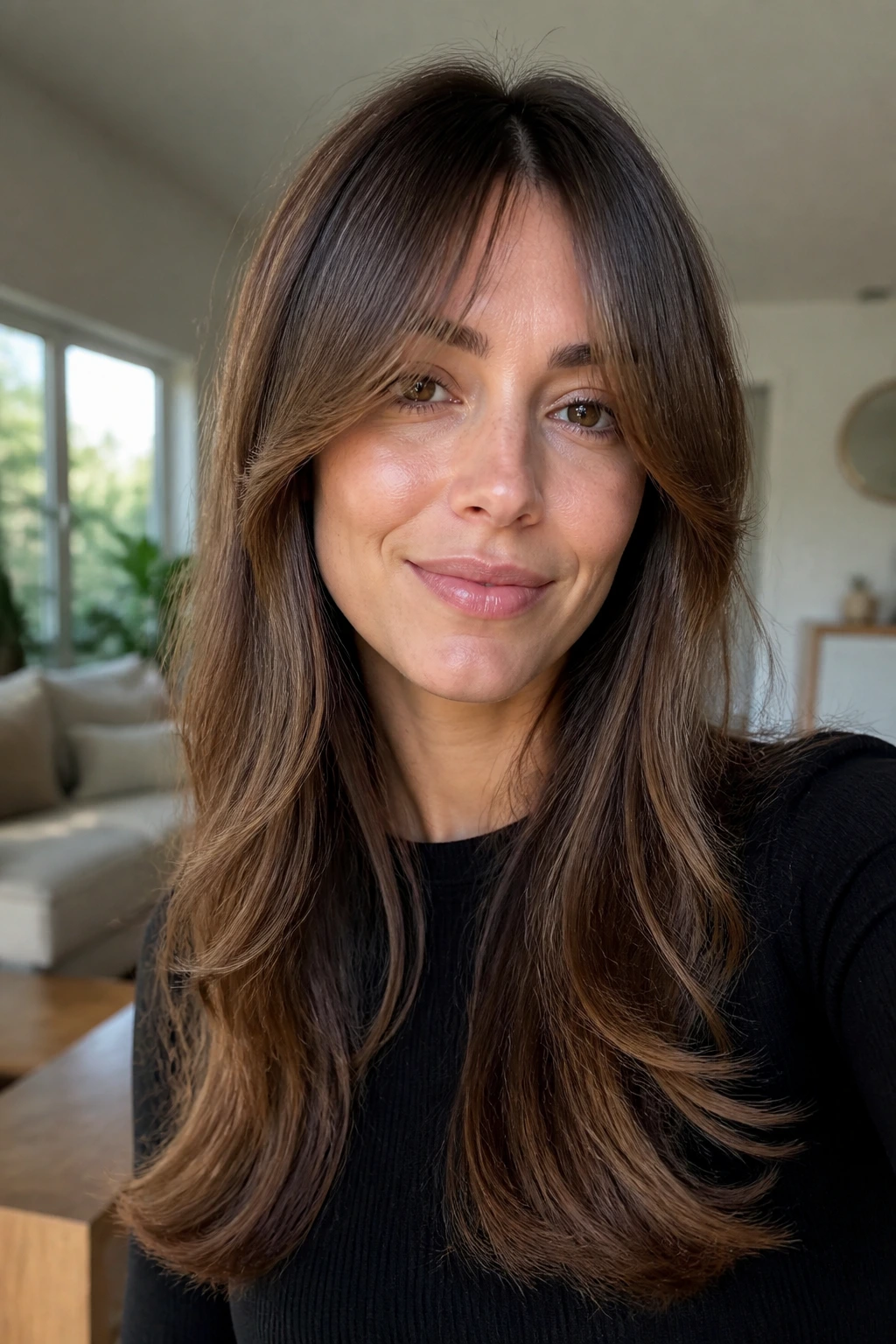
Long curtain bangs that grow out cleanly are the version I trust most for anyone who wants the look without a lot of babysitting. On medium hair, they stay useful for a long stretch because the front can drift into face-framing layers instead of turning into an obvious awkward stage.
This is the cut I’d pick for someone who wears hair up three days a week and down the other four. The fringe still gives shape when it’s styled, but it does not demand a strict routine. Keep the center long enough to tuck behind the brows, and let the sides fall toward the cheekbones. That alone buys you a lot of grace as it grows.
If you want one style from this whole list that feels forgiving, this is probably it. Long, soft, and easy to live with. That counts for more than people admit.
