



Soft bangs can change a haircut faster than a full color refresh. They soften the forehead, blur sharp angles, and make the whole style feel a little less formal without turning it into a dramatic statement.
The part people get wrong is usually density. A fringe does not have to be thick to make an impact, and heavy bangs are often the reason someone walks out of the salon feeling boxed in. A softer result usually comes from a lighter center, longer temple pieces, and ends that have been point-cut instead of chopped straight across.
I’ve always thought bangs work best when they feel like they belong to the haircut, not like they were dropped on top of it. That means thinking about the way hair moves when you turn your head, tuck it behind your ears, or let it air-dry on a messy morning. Small differences matter here. A half-inch at the brow can change the mood completely.
So if you want fringe that reads gentle rather than severe, the shape matters more than the label on the style sheet. Here are 18 ways to get that softness, each with a slightly different feel, maintenance level, and personality.
1. Wispy Curtain Bangs

Wispy curtain bangs are the ones I recommend when someone wants softness without looking like they “have bangs” all the time. The center opens naturally, the sides fall away from the face, and the whole fringe moves like it was meant to be there from the start.
Why They Feel So Light
The magic is in the density. You want a narrow center section, then longer pieces that skim the cheekbones instead of stopping bluntly at the brow. That keeps the front from looking heavy, especially if your hair is fine or slips flat fast.
A good version usually starts around the bridge of the nose and drops longer near the temples. The line is still there, but it’s broken up enough that the eye reads movement instead of a hard edge. That’s the difference between “soft” and “wispy” bangs that just look thin for no reason.
- Best for medium to long hair.
- Works well on straight, wavy, and loose-curly textures.
- Ask for point-cut ends and a soft middle part.
- Style with a round brush and a quick bend away from the face.
Best tip: blow-dry the center first, then switch to the side pieces. If you dry everything straight down, the fringe loses its shape fast.
2. Brow-Skimming See-Through Bangs

A little forehead showing can make bangs look softer, not harsher. Brow-skimming see-through bangs prove that point every time, because the lightness comes from spacing, not from taking too much hair off the front.
The idea is simple: you keep the fringe sparse enough that it doesn’t sit like a curtain wall, but full enough that it still frames the eyes. In practice, that means tiny sections, careful point-cutting, and a length that hovers right at the brow instead of covering it entirely.
This style can be a relief for anyone who likes the idea of bangs but hates feeling hidden behind them. They also play nicely with glasses, since the line stays open and doesn’t fight the frames.
Use a low-hold styling cream, not a stiff paste. You want the pieces to separate, not clump into spikes. If your hair gets oily at the roots, a puff of dry shampoo at the root area helps the fringe stay airy through the day.
3. Soft Side-Swept Bangs

Want bangs that soften the face without sitting squarely in the middle of it? Soft side-swept bangs do that better than almost any other fringe shape, and they’re easy to live with once they settle in.
The diagonal line is what makes them gentle. Instead of a full front curtain, the hair is directed across one side, which pulls attention toward the eyes and cheekbones while keeping the forehead partly open. It’s a classic move for a reason.
How to Style Them
A side-swept fringe needs a little direction or it will split wherever it wants. Blow-dry the roots first, then brush the bangs over the heavier side while the hair is still warm. That little bit of tension matters more than most people think.
If your hair likes to fall flat, clip the front section to the side for 10 minutes after drying. It sounds fussy. It works.
- Choose this if you want one side of the face to feel softly framed.
- Best on straight to wavy textures.
- Ask for a longer front edge near the cheekbone.
- Avoid a hard, straight line across the brow.
If you’re growing out bangs, this is often the easiest landing place. It buys you time without looking like an awkward halfway stage.
4. Rounded Feathered Bangs

I’ve seen this shape save more overgrown haircuts than I can count. Someone sits in the chair, points to the mirror, and says they want “something softer around the front.” Rounded feathered bangs usually get the job done.
The curve is what changes the mood. Instead of a blunt shelf, the fringe arcs gently along the forehead and then feathers into the sides. You get a soft frame without a harsh line, and the haircut feels a little more finished the moment the fringe falls into place.
This style works especially well if the rest of the haircut has layers. On a one-length cut, feathered bangs can feel a bit disconnected. With layers, though, the whole front section moves together and the shape looks intentional.
- Great for thick hair that needs removal at the ends.
- Better with a blowout than a fully air-dried finish.
- Ask for soft interior texture, not razor-thin wisps.
- Keep the center slightly shorter than the outer corners.
The result should feel cushioned, not choppy. If it looks hacked up, the cut went too far.
5. Bottleneck Bangs

Bottleneck bangs are one of my favorites because they look polished without being stiff. The center starts shorter, then the hair gradually gets longer toward the temples, which creates that gentle narrowing shape people either love right away or end up loving after one good styling session.
The beauty of this shape is how it hugs the face. It opens at the top, sits close near the brows, then softens out as it drops. That makes the fringe feel calm and balanced, not flat and heavy. If you want something a little more styled than curtain bangs but less blunt than full bangs, this is the sweet spot.
They also play nicely with growth. Even when they get a little long, the shape still reads clearly, which is a nice bonus if you don’t want a strict six-week trim schedule.
A round brush gives the cleanest finish, but a small flat brush can work too if you want a looser bend. Keep the roots lifted at the center and the sides tucked softly away from the face. That’s the whole trick.
6. Piecey Micro Curtains

Unlike classic curtain bangs, piecey micro curtains feel lighter and a bit more modern because they leave more space between the strands. The line is there, but it’s broken up on purpose, which keeps the front from looking too polished or too dense.
They’re short enough to show more brow, yet long enough to split down the middle and fall in two tiny arcs. That makes them a good fit for people who want softness with a little edge. Not sharp edge. Just enough detail to keep the cut from disappearing.
This style works best when the hair has some natural bend. If your strands are pin-straight, you’ll probably need a quick pass with a flat iron or a small round brush to create separation. A touch of texture spray on the mid-lengths helps too, especially if the bangs tend to stick together.
Who They Suit Best
- Shorter foreheads that can handle a higher opening point.
- Haircuts with choppy layers or shags.
- People who do not want a full, dense fringe.
- Anyone okay with a slightly undone finish.
I’d ask for them if you want something playful, not precious. They look best when they move a little.
7. Long Arched Bangs

What makes long arched bangs feel so soft is the curve. The center sits lower than the corners, and that gentle dip keeps the fringe from looking like a straight line that was cut and left alone.
The shape works especially well around the eyes. It draws attention inward, then lets the sides drift outward toward the temples. You can wear them with a blowout, tuck them into the rest of the hair, or let them fall loose over a middle part.
They’re also kind to people who don’t want frequent trims. Because the center is longer, the grow-out phase looks deliberate rather than messy. That’s a real advantage if you like the idea of bangs but not the upkeep.
What to Ask for at the Salon
Tell your stylist you want a soft arch that stays open at the sides and doesn’t sit bluntly across the brow. Mention whether you want the center to hit the eyebrow, lash line, or just below it. That one detail changes the whole feel.
If your hair is thick, ask for internal removal near the center so the fringe doesn’t puff up. If it’s fine, keep the cut lighter and avoid over-thinning. Thin hair can go stringy fast if the scissors get too eager.
8. Soft Blended Fringe
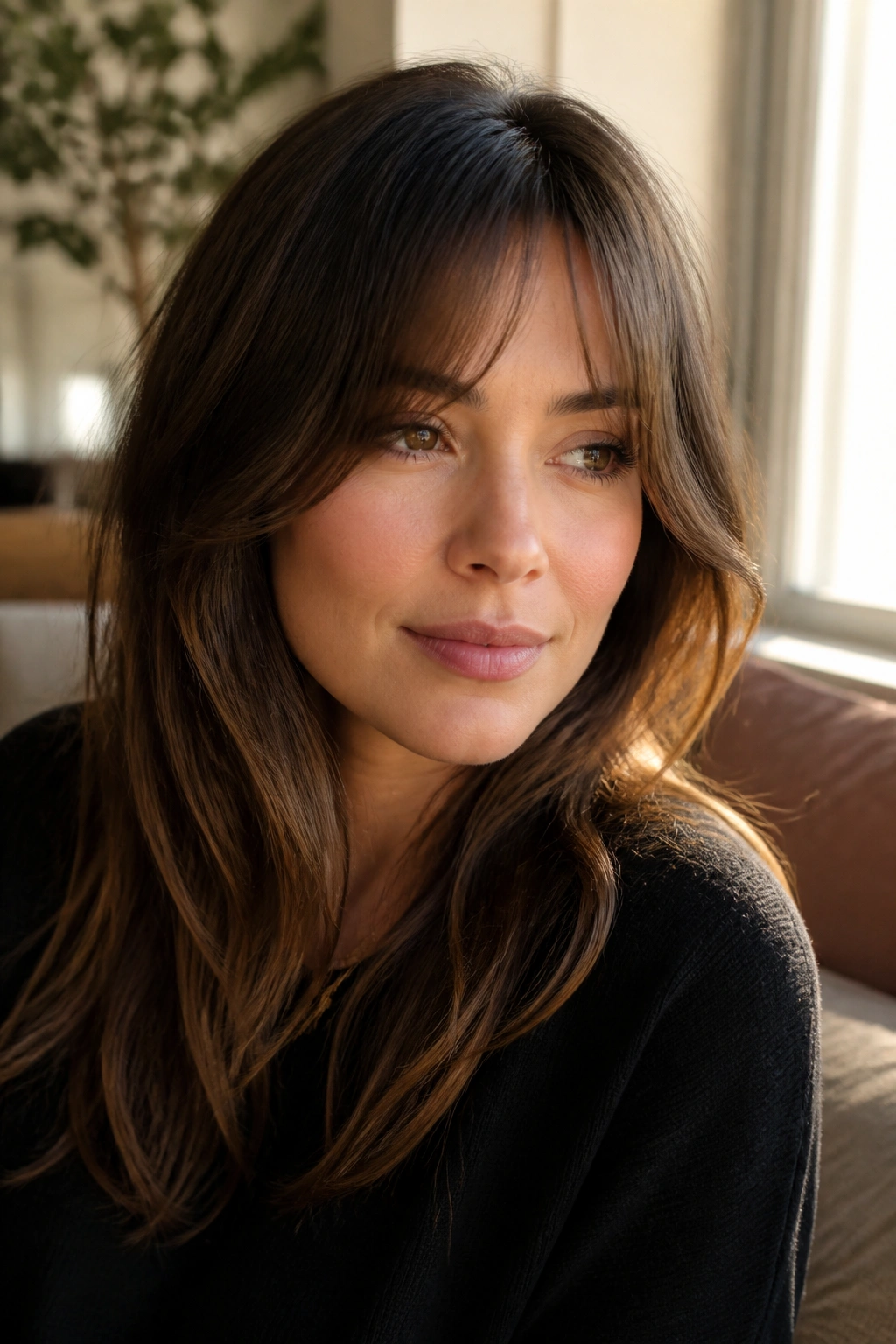
Soft blended fringe is the style I point people toward when they want bangs that disappear into the haircut instead of sitting on top of it. The front section is still there, but it melts into the side layers so smoothly that the eye reads motion first and fringe second.
That blend matters. A fringe can be soft in length and still feel harsh if the transition into the rest of the hair is too abrupt. Here, the stylist leaves extra length around the temples and cuts the interior with a lighter hand, so the whole front section behaves like one unit.
The best versions are usually worn with a bit of bend, not poker-straight. A medium round brush or a large Velcro roller can give the front enough lift to keep it from clinging to the forehead. You do not want a stiff shell. You want lift, air, and a little bit of separation at the ends.
This is a good pick if you like wearing your hair up often. The fringe still frames the face when pulled back, and it doesn’t leave a harsh grow-out line.
9. Airy French Bangs

Airy French bangs have a kind of relaxed charm that comes from restraint. They are not thick, not severe, and not trying too hard. The line usually lands around the brows or just above them, but the key is the softness in the finish.
Think of them as the fringe version of a linen shirt. A little undone. A little lived in. The ends are feathered, the center is light, and the sides graze the face instead of clamping onto it. That gives the whole haircut an easy movement that looks especially nice on wavy hair.
A lot of people go too heavy here. Don’t. If the front is loaded with too much hair, French bangs lose that open, airy feeling and start to look like a blunt fringe in a softer coat.
- Keep the cut loose through the center.
- Use a flat brush or fingers for styling.
- A mist of texture spray helps the separation.
- Works well with shoulder-length cuts and bobs.
The best version should look like you styled it in under five minutes, even if it took ten.
10. Cheekbone-Skimming Split Bangs
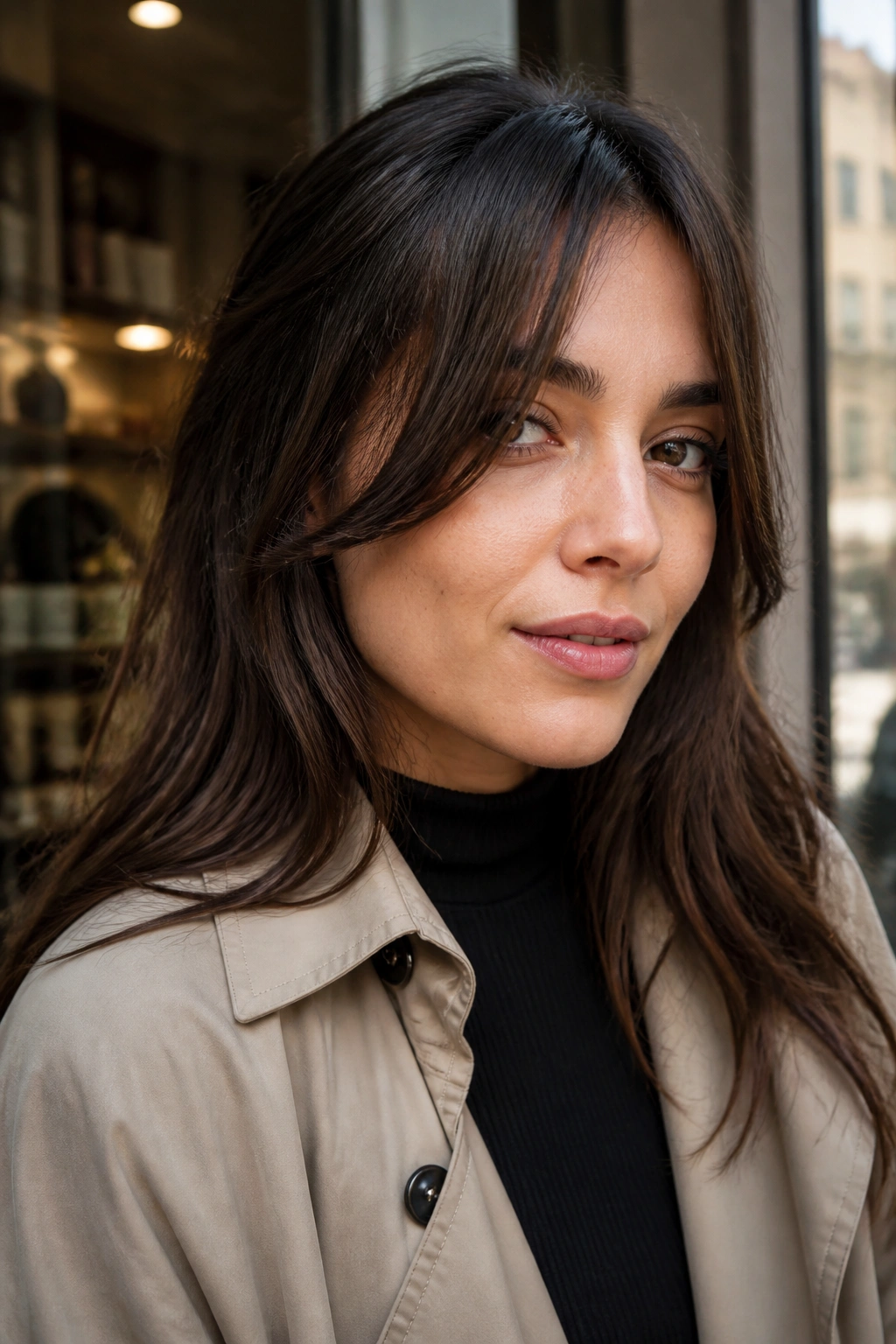
Cheekbone-skimming split bangs are a nice middle ground when you want softness near the face but don’t want much hair hanging on the forehead. The part opens early, then the two sides fall along the cheekbones, which creates a very easy frame.
Unlike blunt bangs, these do not demand attention. They guide it. That difference matters. A split fringe lets the eyes and cheeks do most of the work, while the hair just sits there and supports the shape.
This style is especially flattering if you have strong cheekbones or want to fake a little more structure at the front of the face. It also works well with sunglasses and hoop earrings, because the front stays open and balanced.
If you wear your hair tucked behind one ear a lot, this fringe can be a smart choice. The shape stays pretty even when you move it around, which makes it practical in a way some softer bangs are not.
I’d avoid making the split too wide at the start. That can make the fringe feel sparse. Keep it narrow near the crown, then let it open naturally as it falls.
11. Shaggy Layered Bangs

Do shaggy layered bangs feel too casual for some people? Maybe. But that looseness is exactly why they can look so gentle.
The style works because the fringe is not fighting the rest of the haircut. The layers, the texture, and the front pieces all live in the same family. Nothing feels carved out or overly precise, which gives the whole look a softer edge. If you already wear a shag, these bangs feel like the missing front piece.
They’re especially good on hair that has a little grit to it. Newly washed, silky hair can make them slip around more than you’d like. On day-two hair, though, the texture helps the pieces separate and sit with a bit more shape.
How to Wear Them
Scrunch in a light mousse at the roots, then rough-dry with your fingers until the front starts to bend. Finish with a tiny amount of styling cream on the ends to keep the pieces from sticking out like little antennae.
You want imperfect movement here. Not mess. Movement.
If you’re the type who hates fussing with a round brush, this is one of the easiest fringe styles to live with.
12. Soft Curved Full Bangs

Soft curved full bangs give you more coverage than wispy fringe, but the curve keeps them from feeling blunt or boxy. That’s the important part. Full does not have to mean heavy.
The shape usually follows a shallow arc across the forehead, dipping a little lower in the center and rising gently toward the outer corners. That soft curve makes the bangs sit closer to the face and gives the haircut a calm, rounded finish. On thick hair, this can be a very flattering way to control front volume without making the fringe look chopped to bits.
I like this style most on people who want a noticeable bang but still want movement when they blink or smile. The front should frame, not freeze. If the line is too straight, the whole thing gets rigid fast.
Use a blow-dryer with a concentrator nozzle and a round brush to round the fringe under just slightly. The bend should be soft, not curled. If the ends turn under too much, it starts to look dated in a hurry.
The cut works best when the stylist leaves enough length to breathe. Too short, and the curve gets severe.
13. Tapered Jawline Bangs
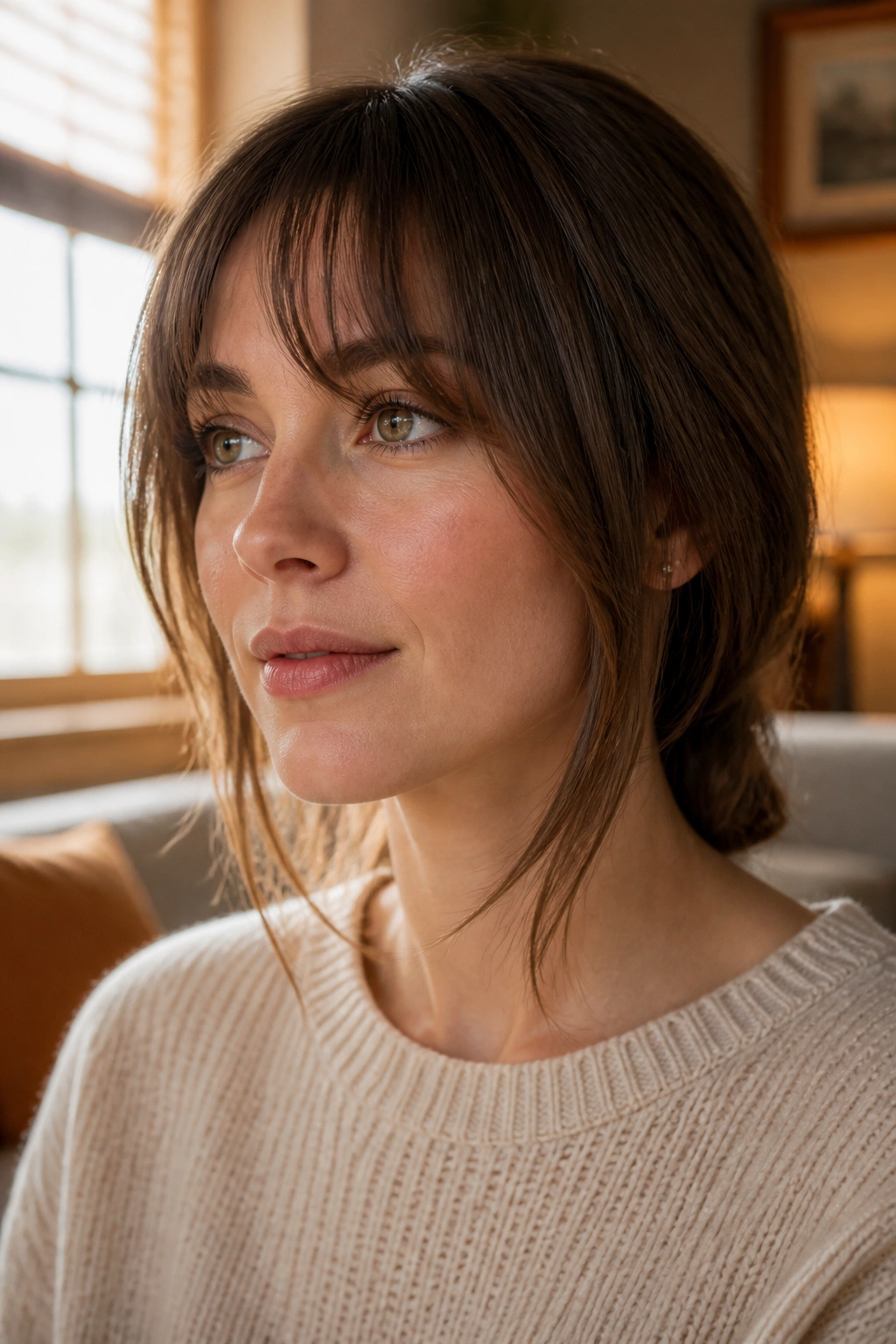
I first think of tapered jawline bangs as a quiet correction. They’re what you cut when the front of a haircut needs shape, but not more weight. The shortest pieces sit near the brows or upper cheek, then the sides taper down toward the jawline in a smooth line.
That taper is the point. It pulls attention downward in a soft arc and gives the face a little frame without crowding the forehead. The effect is easy, and it’s nicer than a lot of people expect. There’s no hard stop. No blunt line. Just a slow shift in length.
They work well on medium and long hair, especially if the rest of the haircut has layers or a soft curve at the ends. On very short cuts, the shape can feel awkward because there isn’t enough length below it to carry the taper.
- Good for wider foreheads that need a softer front.
- Best when the sides blend into face-framing layers.
- Ask for point cutting near the ends.
- Use a soft bend, not a straight ironed finish.
The style is subtle, but subtle is the whole point here.
14. Grown-Out Face-Framing Bangs
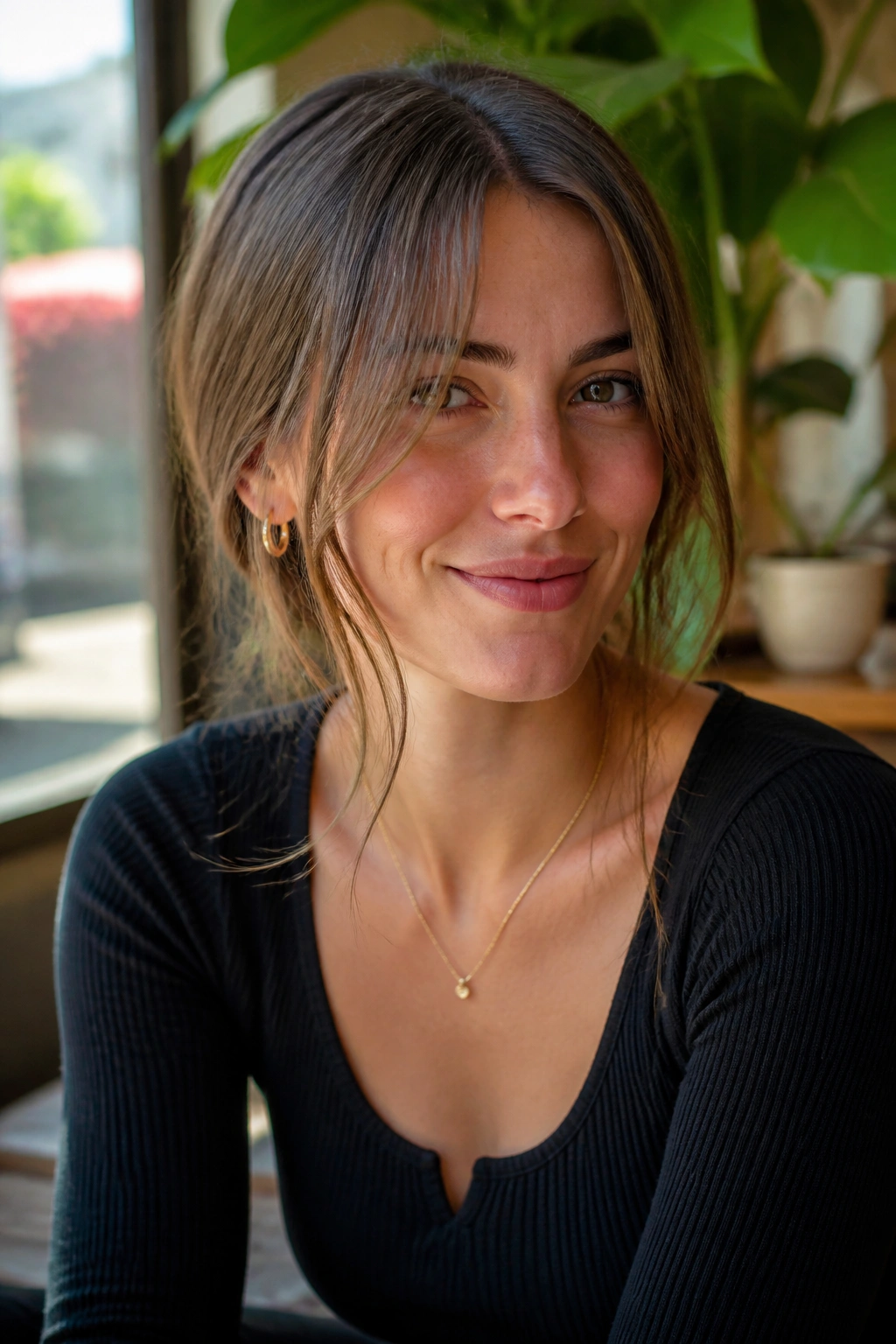
Grown-out face-framing bangs are underrated because they look like a transition, yet they often become the haircut people keep on purpose. The front is long enough to tuck, split, or sweep aside, but short enough to still shape the face.
This is where a lot of people accidentally land after a fringe grows out, then realize the length is working for them. The pieces fall around the cheeks and temples instead of hanging in the eyes, which gives a gentle outline without a strict bang line.
The beauty of this style is flexibility. You can center-part it one day, push it off to one side the next, or blend it into a ponytail without any awkward shelf at the front. That makes it one of the most practical soft bang options on the list.
It’s a good choice if you change your styling mood a lot. Some people want something they can commit to. Others want hair that lets them cheat. This is the cheat code, and I mean that kindly.
If you are asking a stylist for this, say you want the front pieces long enough to hit the cheekbones or jaw and blend into the rest of the cut without a hard perimeter.
15. Light Bottleneck Fringe
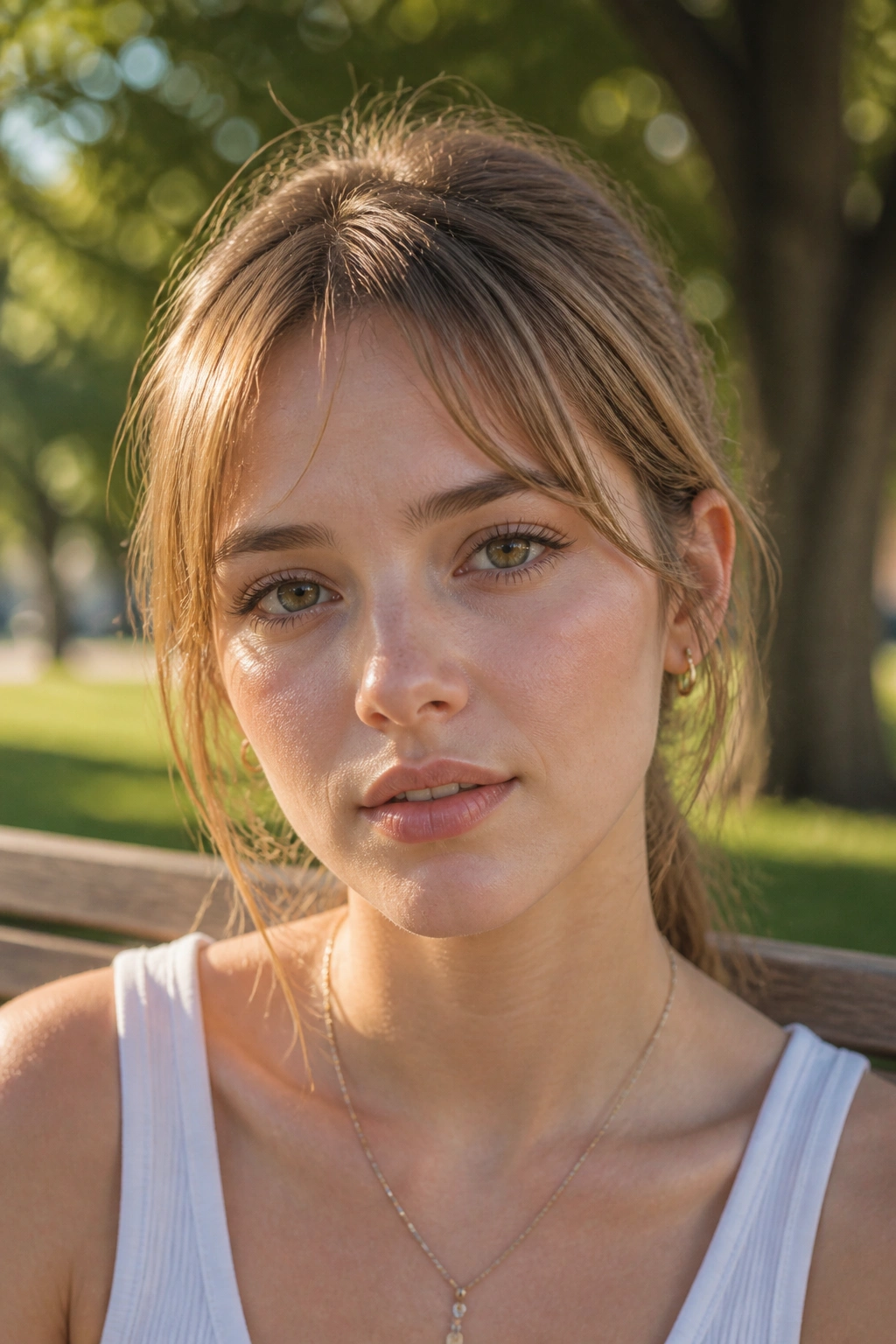
Light bottleneck fringe trims the original bottleneck shape down a touch, which makes it feel even airier around the face. The center still starts shorter, and the sides still lengthen, but the whole thing is more open and less structured.
Compared with a fuller bottleneck bang, this version leaves more forehead visible. That gives it a softer read, especially on finer hair or on faces that don’t want too much coverage. It also grows out gracefully, which I appreciate because not everybody wants to chase a trim every few weeks.
What Makes It Different
The front is narrower. The temples are softer. The result is more of a hint than a statement.
That makes it a good fit for people who want the shape of bangs without the commitment of a denser fringe. It also plays well with messy buns and loose ponytails, since the front pieces don’t overpower the rest of the style.
If you want this to stay gentle, ask for a clean but feathered outline and keep the longest side pieces below the brow line. That keeps the shape from turning into a heavy curtain the minute it starts to grow.
16. Soft Wispy Blunt Bangs

Soft wispy blunt bangs sound contradictory, and that’s why they work. You get the straight-across feel of a blunt fringe, but the ends are softened enough that the line doesn’t feel rigid or severe.
This is a smart option if you like the idea of a fuller front but worry that heavy bangs will flatten your face. The wispy finish breaks up the perimeter, so the bangs still cover the forehead while letting a little air through the ends.
They look best when the cut is precise near the brow and feathered at the bottom edge. Too much texture, and they stop reading as blunt. Too little, and they look heavy in a way that can age the face a bit.
A small round brush and a quick downward-and-under motion are usually enough. Keep the roots smooth, but don’t over-style the ends. A little softness at the tips is what saves this shape from feeling sharp.
If your hair is naturally thick, ask the stylist to remove weight internally instead of shredding the outline. That keeps the fringe neat while still lightening the feel.
17. Textured Long Fringe

Why do some long fringes feel soft while others feel like they’re just hanging there? Texture. That’s the whole answer, and it matters more than length.
Textured long fringe usually grazes the lashes or sits just below the brow, but the cut is broken up so it moves in pieces instead of one flat sheet. That gives the face a softer frame and makes the front easier to tuck, sweep, or part around.
How to Get the Most From It
A long fringe needs shape at the root and movement at the ends. Blow-dry it with a slight bend away from the face, then finger-comb it apart once it cools. If it falls into one strip, add a tiny amount of dry texture spray and rough it up at the ends.
This style is a nice match for hair that already has some wave or bend. On very straight hair, it can look too flat unless you spend a minute styling it. On curly hair, it works if the cut is done dry so the shrinkage does not shorten it too much.
It’s a practical choice for people who want softness now and flexibility later. You can wear it as a fringe, part it as it grows, or let it turn into face-framing layers without much drama.
18. Sweeping Peekaboo Bangs

Sweeping peekaboo bangs are for anyone who likes the idea of fringe but does not want it living front and center all the time. The hair sweeps across the forehead in a loose arc, then slips partly out of view, which gives the style a quiet, easy look.
The softness comes from movement and partial cover. Your forehead is never fully hidden, but the bangs still shape the face and draw the eye in. That makes the style feel less committed than a full fringe and more relaxed than a strict side bang.
This is a smart pick for someone who wears hair up a lot or moves between office-clean and weekend-messy styling. It can be brushed back, nudged forward, or tucked to one side without falling apart. That flexibility is the real appeal.
- Best when the front pieces are cut long enough to move.
- Use a light round brush bend, not a curl.
- Works well with medium-density hair.
- Ask for a soft diagonal line, not a hard sweep.
If you want bangs that feel gentle but still change the shape of your haircut, this is one of the easiest places to start.
