



A good fringe can rescue a short cut that feels flat. Modern bangs ideas for short hair are less about hiding the forehead and more about changing the whole shape of the haircut.
On short hair, half an inch matters. That tiny shift can pull the eyes upward, sharpen a jawline, soften a strong brow, or make a bob feel a little cooler and less formal. It can also go wrong fast. Short hair shows every decision, which is why bangs on a cropped cut need a little more thought than bangs on long hair.
The best versions work with your hairline, your cowlicks, and your daily routine. If you air-dry most days, a heavy blunt fringe behaves very differently from a soft curtain shape. If you blow-dry, you’ve got more room to play. Either way, short hair does not hide sloppy bang placement. Brutal, but true.
The styles below are the ones I’d actually trust on a real person, not just on a photo saved for later: crisp when they need edge, airy when they need movement, and practical enough that they won’t become a daily regret by day three.
1. Micro Bangs on a Cropped Pixie
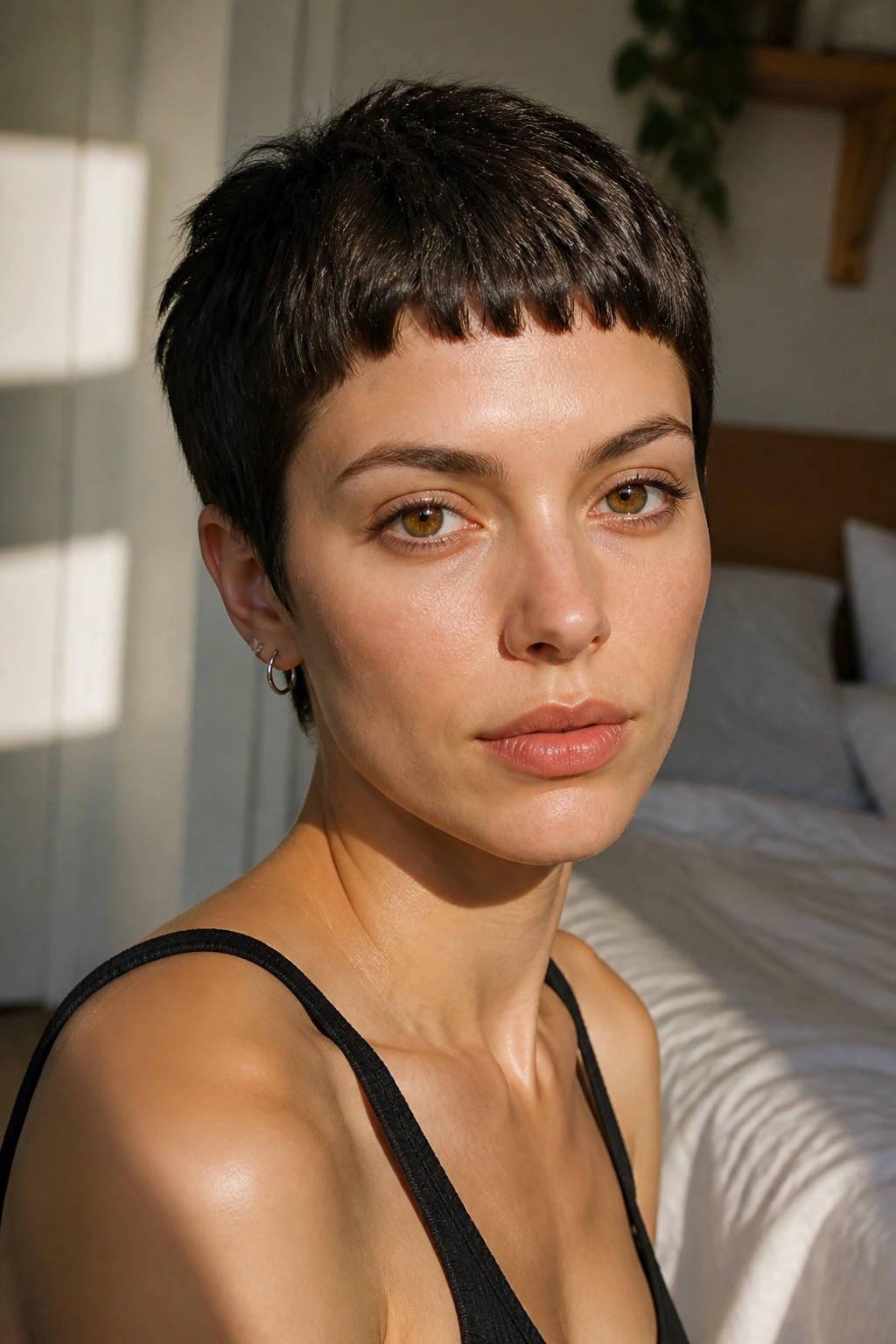
Micro bangs are not shy. They sit high on the forehead, usually somewhere between the center of the brow and well above it, and they instantly turn a plain pixie into something sharper and more intentional. If you like a little bite in a haircut, this is where the fun starts.
I’ve always liked micro bangs best when the sides are kept neat and close. That contrast matters. Without it, the fringe can look disconnected, like it belongs to a different haircut.
Why They Work
Micro bangs draw attention to the eyes and brows first. They also make cheekbones look more prominent because the forehead opening is smaller and the shape feels tighter. On very short hair, that can be a clean, almost editorial effect.
They’re happiest on straight to slightly wavy textures, though a skilled stylist can adapt them for coarser hair too. What you don’t want is too much bulk in the fringe area. That makes the whole cut feel heavy instead of sharp.
- Best for: strong brows, oval faces, and people who like a crisp outline
- Maintenance: trims every 2 to 3 weeks if you want the length to stay intentional
- Styling: a pea-sized amount of pomade or cream, warmed between the fingers
- Watch for: a front cowlick that kicks the bangs up in the middle
Pro tip: ask for the bangs to be cut dry or nearly dry if your hair shrinks or swings a lot. Wet micro bangs can surprise you in the worst way.
2. Curtain Bangs on a French Bob
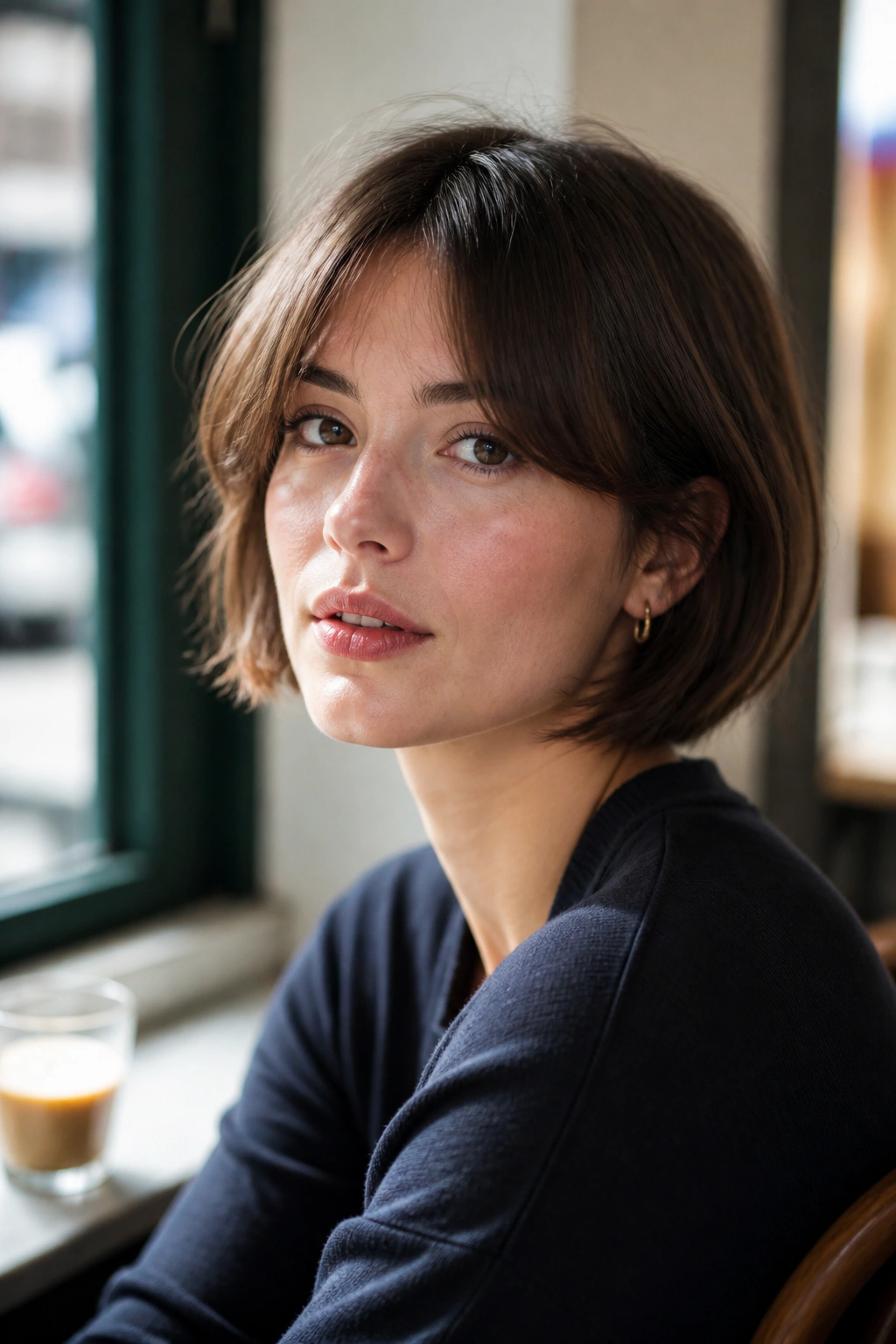
Curtain bangs on a French bob are the easiest way to keep short hair feeling soft instead of severe. The center stays shorter, then the sides drift longer and tuck into the rest of the cut, which gives the face a little frame without boxing it in.
This is one of those styles that looks casual even when it took a bit of effort to set. That’s part of the charm. A French bob already has a little attitude; the curtain fringe just loosens it up.
The trick is weight, not length. You want enough hair in the fringe to split cleanly, but not so much that it falls like a curtain rod. A 1.5-inch round brush, a fast blow-dry, and a side-to-side bend at the root usually do the job. And yes, it can be tucked behind the ear when you’re tired of it.
3. Side-Swept Bangs on a Jaw-Length Bob

What makes side-swept bangs stay relevant on short hair? They solve a real problem: you get movement near the face without committing to a full fringe that sits on your forehead all day. On a jaw-length bob, that matters a lot.
The angle is doing most of the work here. A side-swept bang can soften a square jaw, stretch a round face a bit, and make a blunt bob feel less boxy. It also gives you an escape route on days when your hair wants to do its own thing.
How to Ask for It
Tell your stylist you want the shortest point to start around the brow bone, then flow diagonally into the side of the bob. That keeps the shape connected. If the bang starts too short, it can look like a leftover piece instead of a real design choice.
What to Style With
- A light mousse at the roots for lift
- A paddle brush or medium round brush
- A quick bend away from the face, not a full curl
- A touch of dry shampoo on day two if the front gets flat
Side-swept bangs are also one of the better options if you hate daily trim anxiety. They grow out in a civilized way. Not glamorous, but civilized counts.
4. Bottleneck Bangs on a Textured Crop
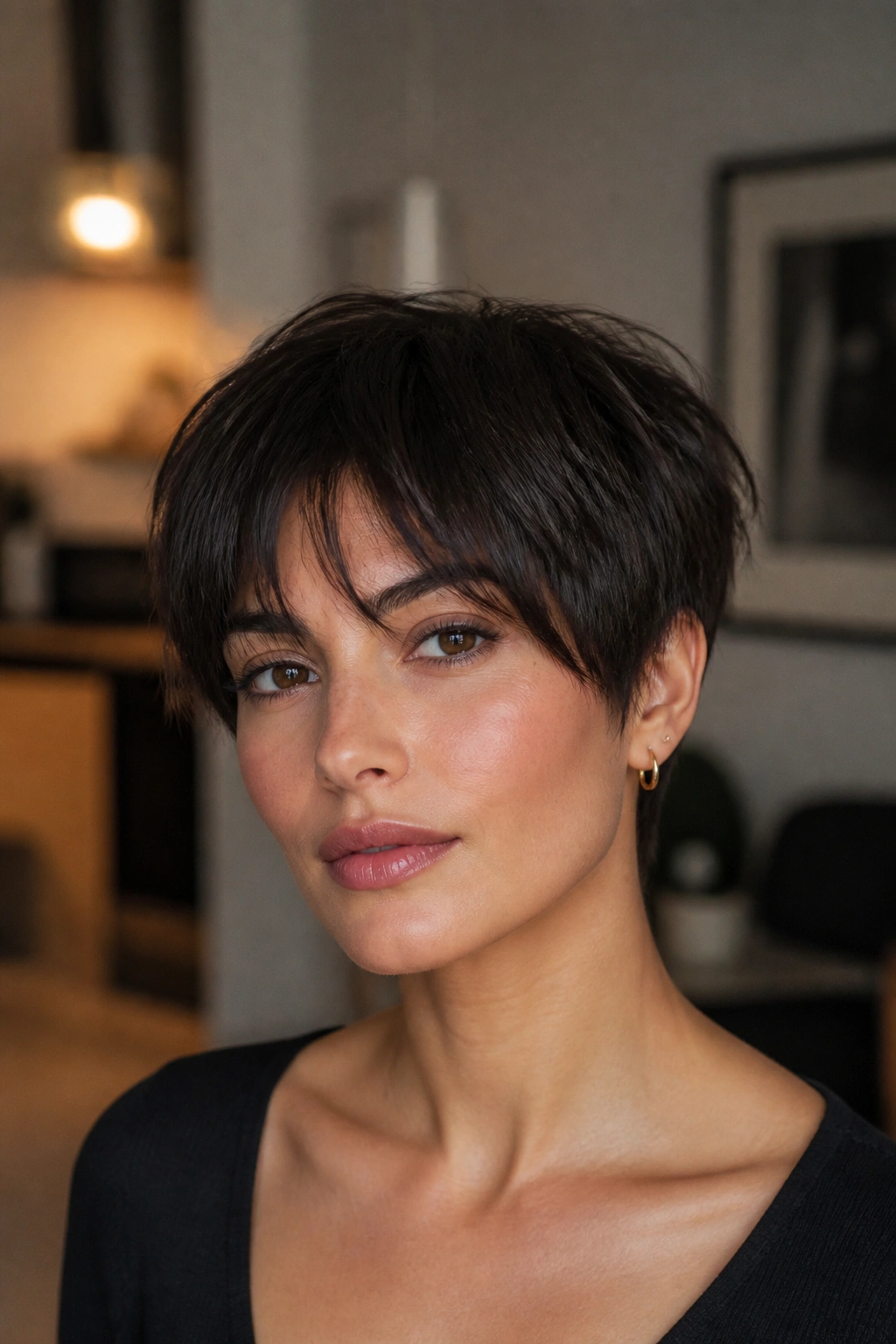
Bottleneck bangs are the smartest fringe for anyone who wants softness without losing shape. They start a little narrower in the center, then open up around the eyes and cheekbones, which gives short hair a nice, easy line.
The name sounds fussy. The haircut is not. On a textured crop, bottleneck bangs keep things light at the center so the face doesn’t feel boxed in, and the longer sides blend into choppy layers or a cropped bob with no drama.
What Makes Them Different
Unlike a full straight fringe, bottleneck bangs don’t sit in one hard line. They move. That makes them better for wavy hair, thicker textures, and people who don’t want to fight their bangs every morning.
They’re also useful if your forehead is shorter or if your hairline has a widow’s peak. The center opening prevents the fringe from splitting in a weird way, which happens more often than people like to admit.
- Cut detail: shortest point usually lands near the middle of the brow area
- Texture: works best with piece-y movement, not a glossy helmet finish
- Tools: a small round brush or fingers plus a blow-dryer nozzle
- Product: a tiny bit of texture cream, not a heavy wax
Keep the ends soft. That’s the whole game here.
5. Choppy Bangs on a Bixie Cut
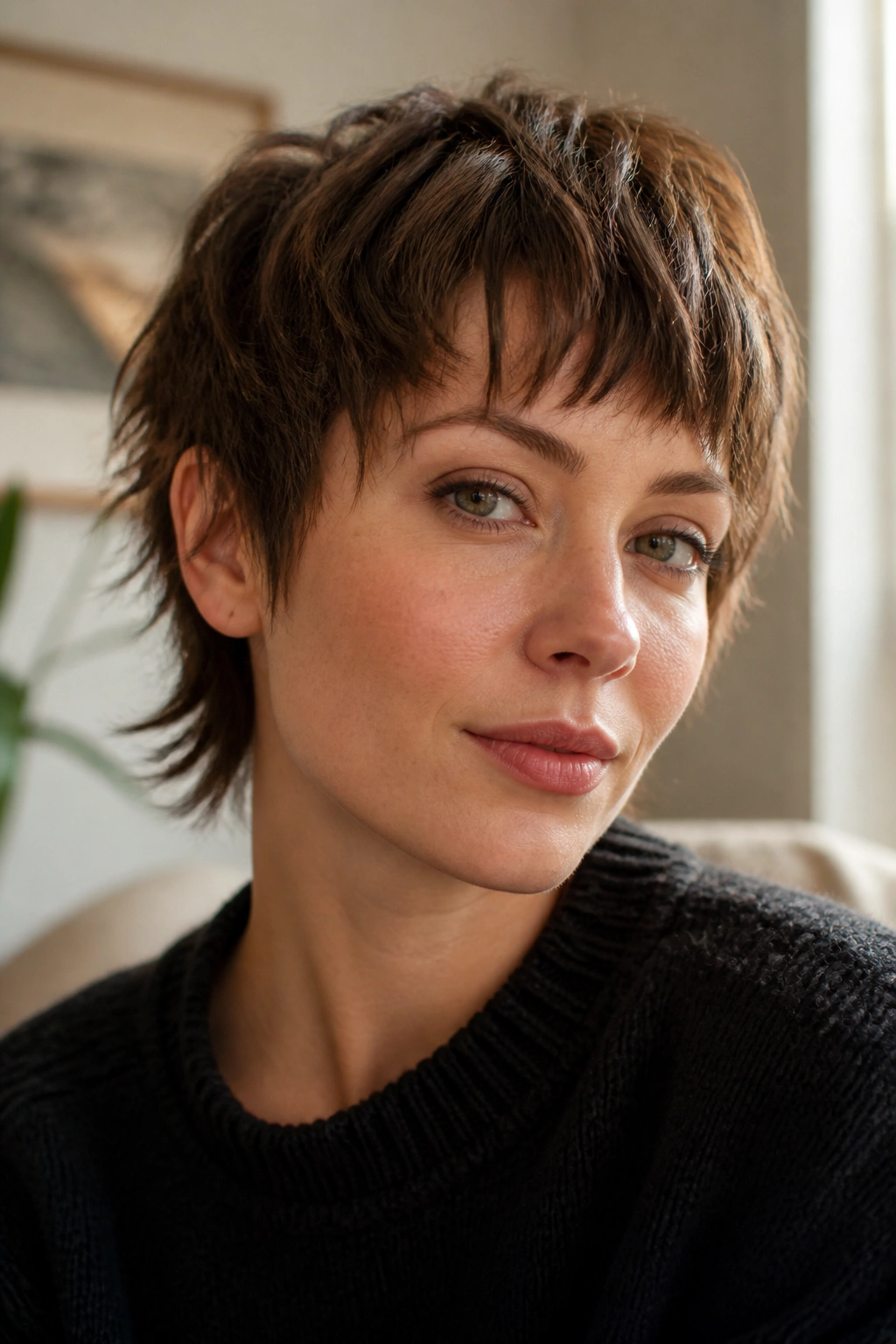
A bixie does not need polished bangs. It needs pieces that look a little broken on purpose. That’s why choppy bangs fit this cut so well. They echo the layered, in-between shape of the bixie instead of fighting it.
This style works best when the fringe is cut with point cutting or razor work, so the ends don’t sit in one flat line. You want separation. A little irregularity. If every strand behaves the same way, the look gets stiff fast.
Choppy bangs are a good choice if you wear your hair with texture spray, rough-dry it, or like that slightly rumpled finish that makes short hair feel current without trying too hard. They’re less friendly to very straight, very fine hair unless you’re willing to style the front every single morning.
One thing I like here: the bangs can be long enough to sweep sideways on lazy days, but short enough to still count as bangs. That flexibility saves you from feeling trapped by one exact shape.
6. Curly Bangs on a Short Natural Cut
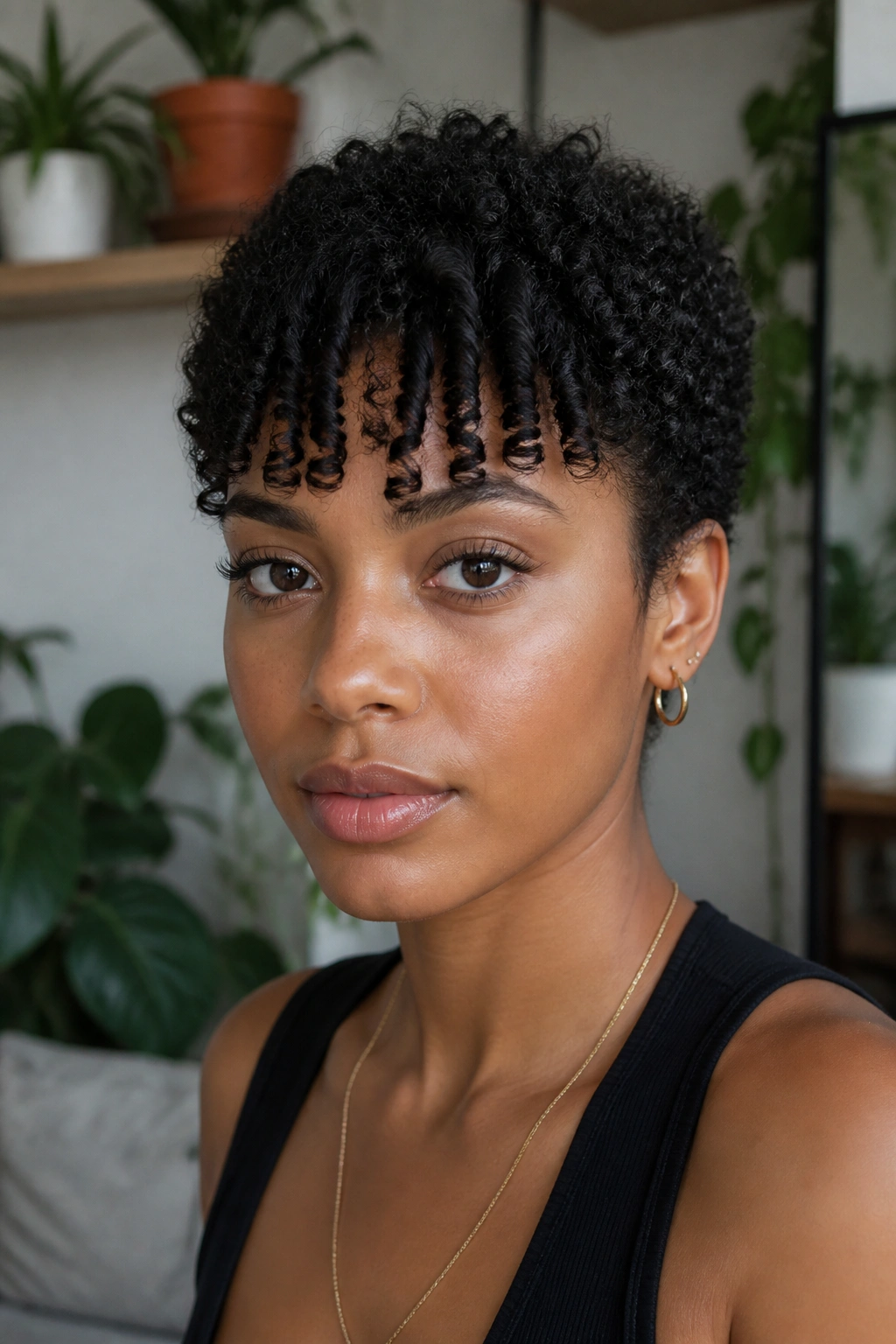
Curly bangs can be fantastic on short hair, but only if the cut respects shrinkage. That part is non-negotiable. A curly fringe that looks perfect when wet can bounce up an inch or more once it dries, and then the whole shape feels off.
The Curl Pattern Decides the Length
Tighter curls usually need more length left in the fringe so they can spring up without becoming tiny chips on the forehead. Looser curls can sit shorter, but they still need room. A dry cut, or at least a cut done with the curls in their natural state, gives a much better read than guessing from damp hair.
How to Style It
Diffuse on low heat and low speed. Scrunching helps, but too much handling can break up the curl pattern and turn the bangs fuzzy instead of defined. A light curl cream works better than a heavy butter if you want movement near the forehead.
- Ask for: a fringe that lands longer than you think you need
- Avoid: over-thinning the front, which can make curls frizz apart
- Good tools: diffuser, wide-tooth comb, small clips for sectioning
- Best finish: soft, separated curls instead of a perfect rounded shape
Curly bangs on short hair look best when they’re allowed to be curls, not a straight-haired imitation of bangs.
7. See-Through Bangs on a Wavy Bob
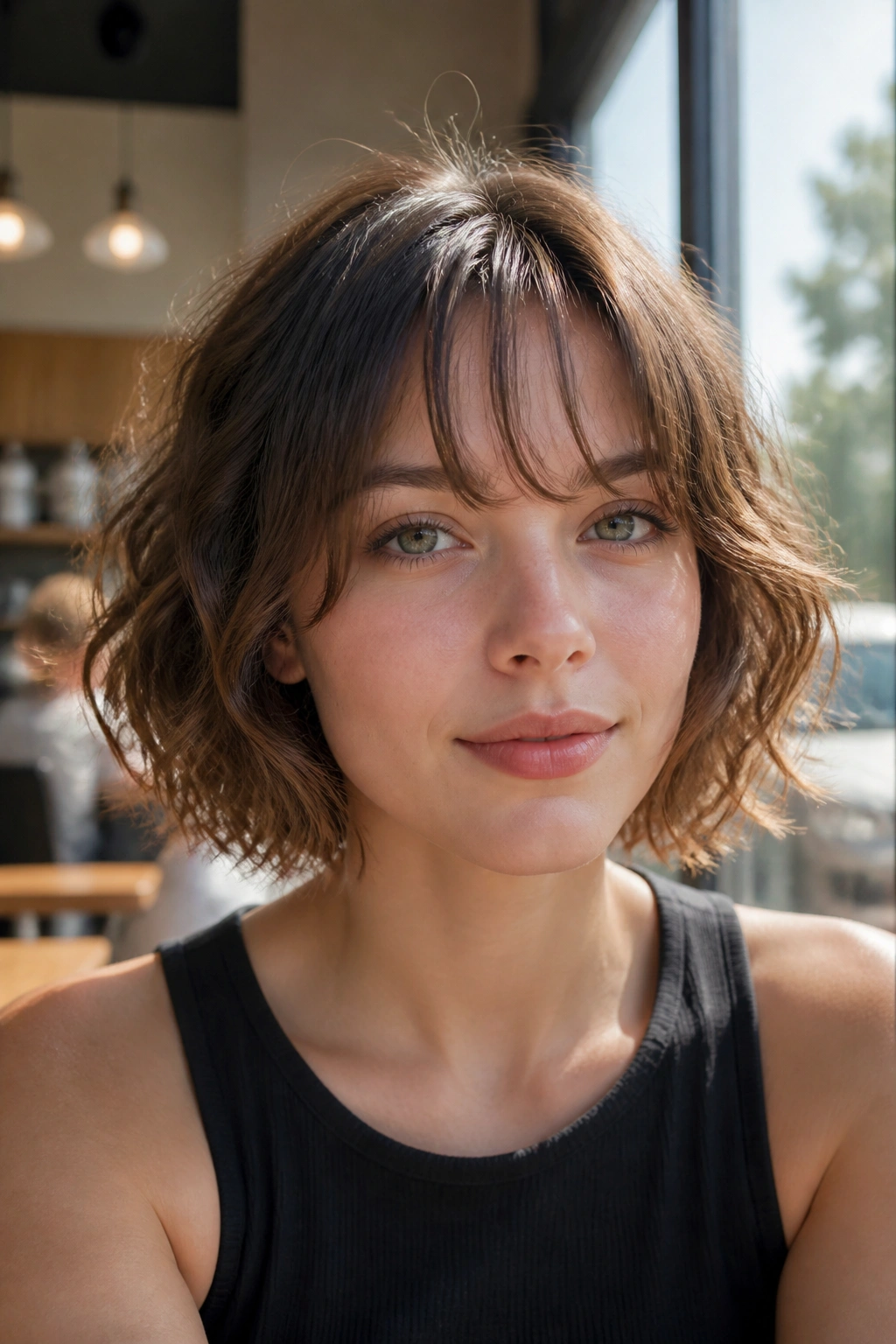
See-through bangs sound delicate, and that’s the point. They’re airy, lightly spaced, and they let bits of forehead show through so the fringe never feels heavy. On a wavy bob, that lightness is gold.
I reach for this style when someone wants bangs but hates the feeling of a full wall of hair on the forehead. It’s especially good if your waves already add volume around the sides. The fringe can stay soft while the rest of the bob does the heavy lifting.
The secret is restraint. You do not want the bangs cut so thin that they look accidental. You want enough hair to read as a bang, just with room between the strands.
A flat iron can help here, but only if you bend the ends lightly and leave the body loose. Too much polish kills the point. A few swipes of texturizing spray at the roots keep the fringe from collapsing into the eyebrows by lunchtime.
8. Blunt Baby Fringe on a Sleek Chin-Length Cut
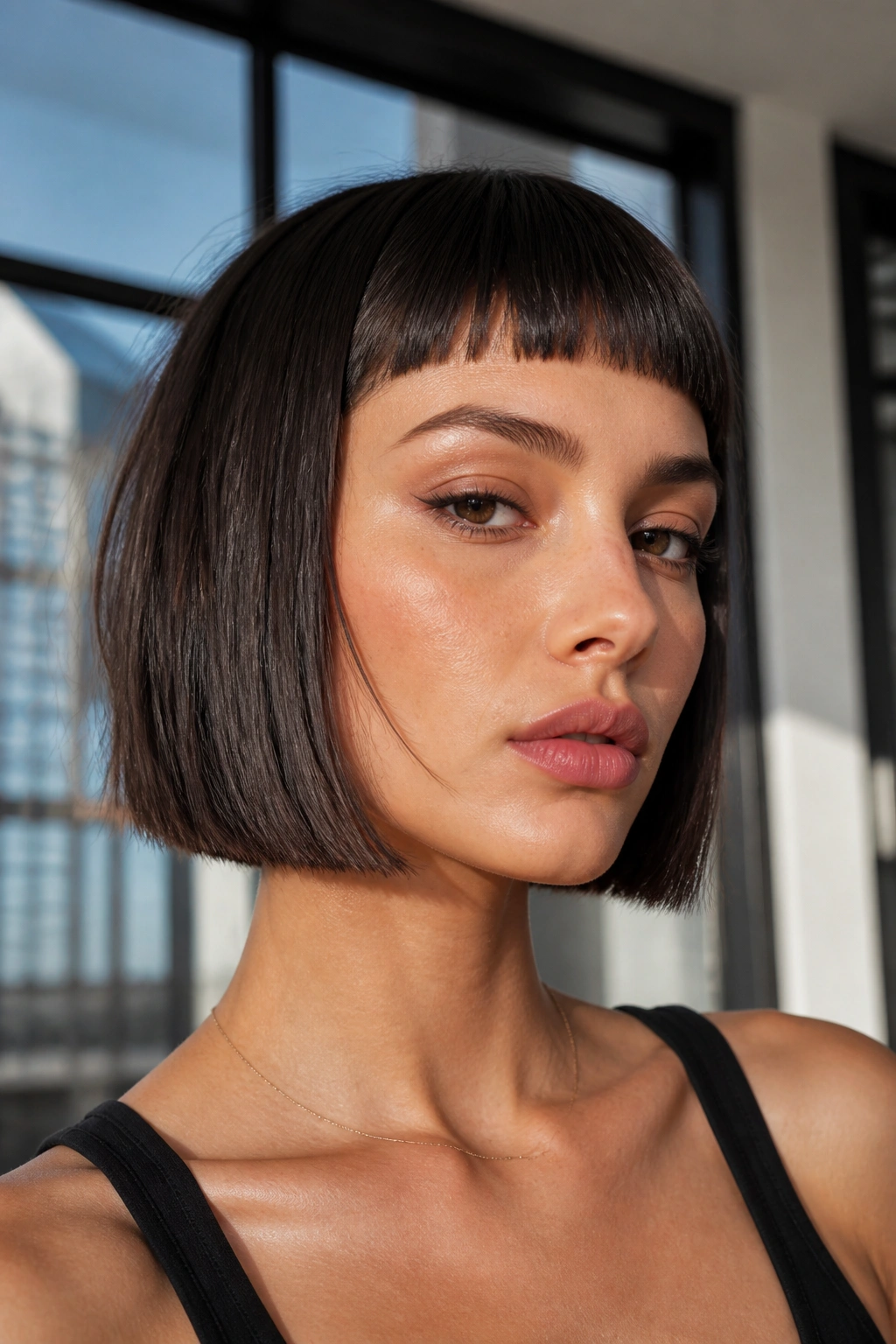
A blunt baby fringe is the opposite of polite. It’s short, graphic, and it gives a chin-length cut a hard edge that feels deliberate from across the room. If you want your hair to look like it had an opinion, this is the one.
Unlike wispy fringe, this style leans on clean lines. The cut works best when the rest of the bob is smooth and controlled, because the bangs already carry enough attitude. Too much texture everywhere and you lose the punch.
This is the fringe I’d steer toward people with strong brows, balanced features, or a taste for clothes that are simple but sharp. It also looks good with a lip color that does some work. The haircut is not timid, so the styling shouldn’t be timid either.
If you choose this one, keep the rest of the hair polished. A little shine serum through the ends can help the bob look finished without making it greasy. And yes, it grows out fast. That’s the tradeoff. Worth it, if you like the effect.
9. Arched Bangs on a Rounded Bob

What if you want bangs, but you cannot stand hair falling straight across your eyes? Arched bangs are the easy answer. They follow a soft curve, longer at the sides and a touch shorter in the middle, which keeps the forehead open enough to feel comfortable.
How to Get the Curve Right
The center should sit near the brow area, while the outer corners taper into the rounded bob. That shape matters because it keeps the fringe from looking like a block cut off the top of the face. A good arched bang should feel like it belongs to the bob, not like it was pasted on.
Why It Flatters Short Hair
Rounded bobs already have a soft outline. Arched bangs echo that shape, so the haircut feels cohesive instead of chopped into separate parts. If your face is long, the curve can shorten the look a bit. If your face is square, the rounded line tends to soften the angles.
A round brush and a medium blow-dry are enough for most people. You are not trying to build a big roll here. Just a gentle bend, nothing theatrical.
10. Feathered Fringe on a Shaggy Pixie
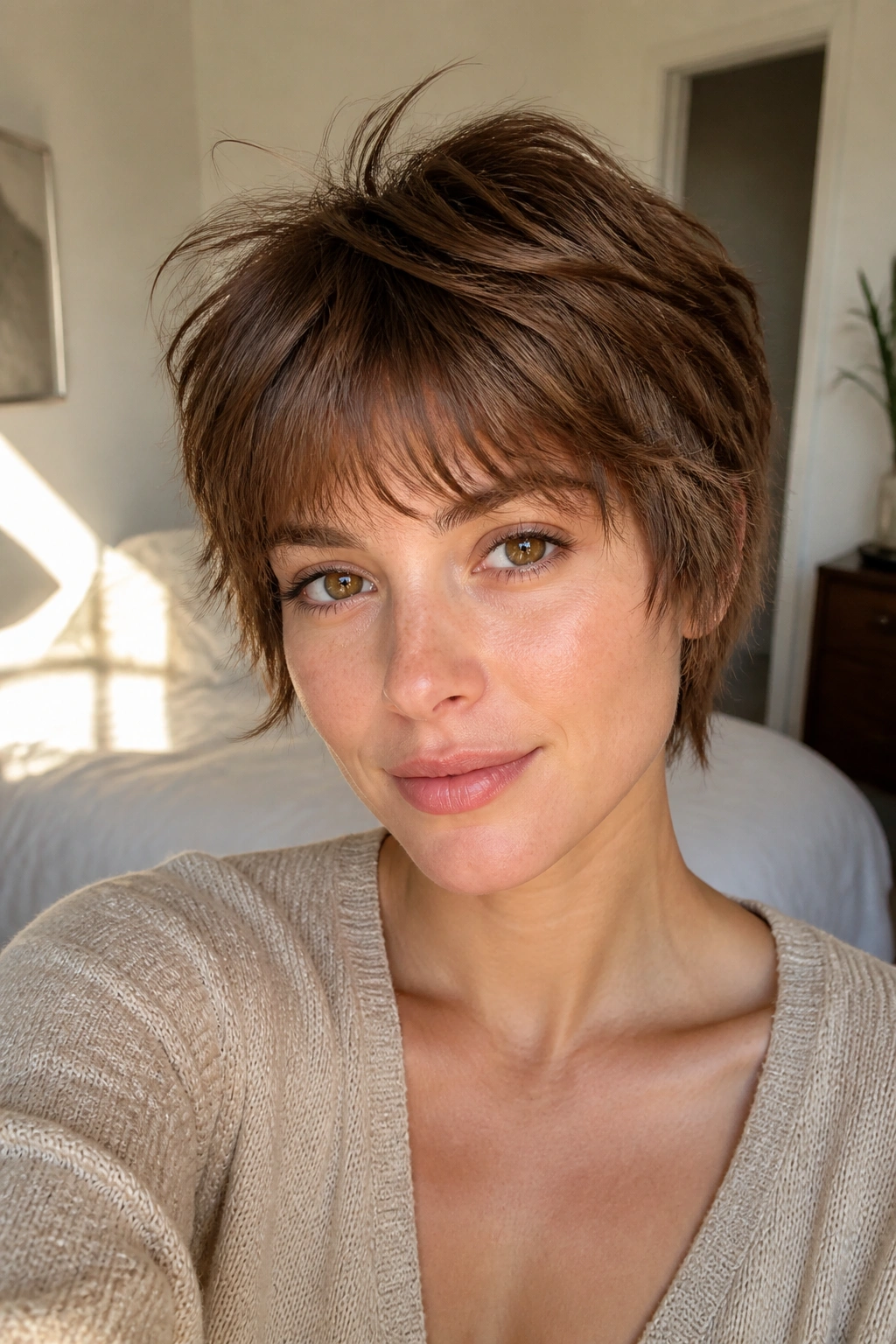
Feathered fringe is what happens when a pixie wants a little more movement and a little less bluntness. The ends are softened, the texture is broken up, and the front falls in light pieces instead of one hard block.
I like this style because it saves a shaggy pixie from feeling too boyish or too flat. The fringe gives the cut a bit of swing, especially when the crown has some height. It feels lived-in, not stiff.
The Important Details
- Feathering should happen through the ends, not all the way up the bang
- The fringe can be swept slightly to one side for flexibility
- Shorter layers near the crown help the front look connected
- A tiny bit of paste is enough; too much product weighs the pieces down
There’s a common mistake here: people ask for “feathered” and end up with hair that looks thinned out. That’s not the goal. You want softness, yes, but you still need enough density for the fringe to read as a shape.
A feathered fringe is one of the easiest bangs to live with once it grows out a bit. It gets even better if you like touching your hair and pushing it around without wrecking the cut.
11. Asymmetrical Bangs on an Undercut Bob

Asymmetry is the fastest way to make a short cut feel deliberate. One side longer, one side shorter, a clear direction at the front — it gives an undercut bob a bit of edge without needing wild color or extra length.
The point here is contrast. The undercut removes bulk where you don’t want it, and the asymmetrical fringe adds a strong line where the eye lands first. Put the two together and the haircut feels sharp, not busy.
You do need a stylist who understands balance. If the longer side is too long, it swallows the face. If it’s too short, the asymmetry looks random instead of designed. I usually like the longer side to skim the cheekbone or just below it, depending on how much skin you want to show.
This is a good one for people who side-part their hair naturally. The part gives the fringe somewhere to live, and the cut gets a built-in sense of motion. Easy? Not really. Worth it? Absolutely, if you like a little drama.
12. Full Fringe on a Tucked French Bob
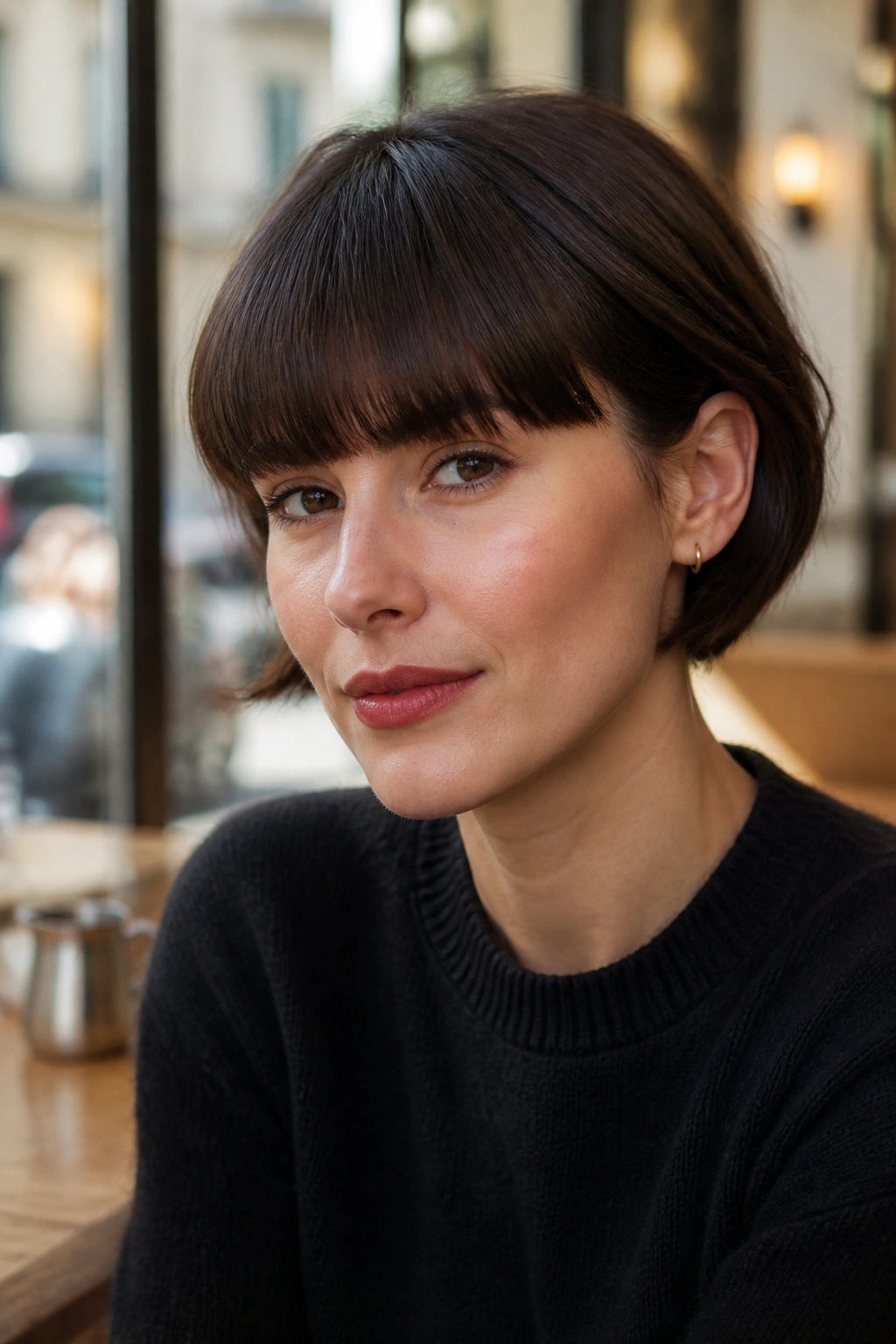
A full fringe on a tucked French bob is one of those combinations that looks simple and still manages to feel expensive in the haircut sense, not the shopping sense. The fringe sits dense enough to make a statement, while the bob itself stays short enough to tuck behind the ears and expose the jawline.
The key is keeping the fringe full without making it heavy. You want the front to be rich, not helmet-like. That means careful sectioning and, in many cases, a little internal weight removal near the edges so the bangs don’t drop like a curtain.
Styling Notes That Matter
- Blow-dry the fringe first, before the rest of the hair
- Use a small round brush to create a soft bend under
- Keep the bob ends tucked or flipped depending on your mood
- A satin scarf at night helps the fringe stay smoother
Full fringe suits glasses surprisingly well, especially when the length is adjusted so the frames don’t fight the line of the bangs. It also works beautifully on dense hair that needs a place to sit. The style has structure, but it doesn’t need to look rigid.
13. Razor-Cut Wispy Bangs on a Messy Crop
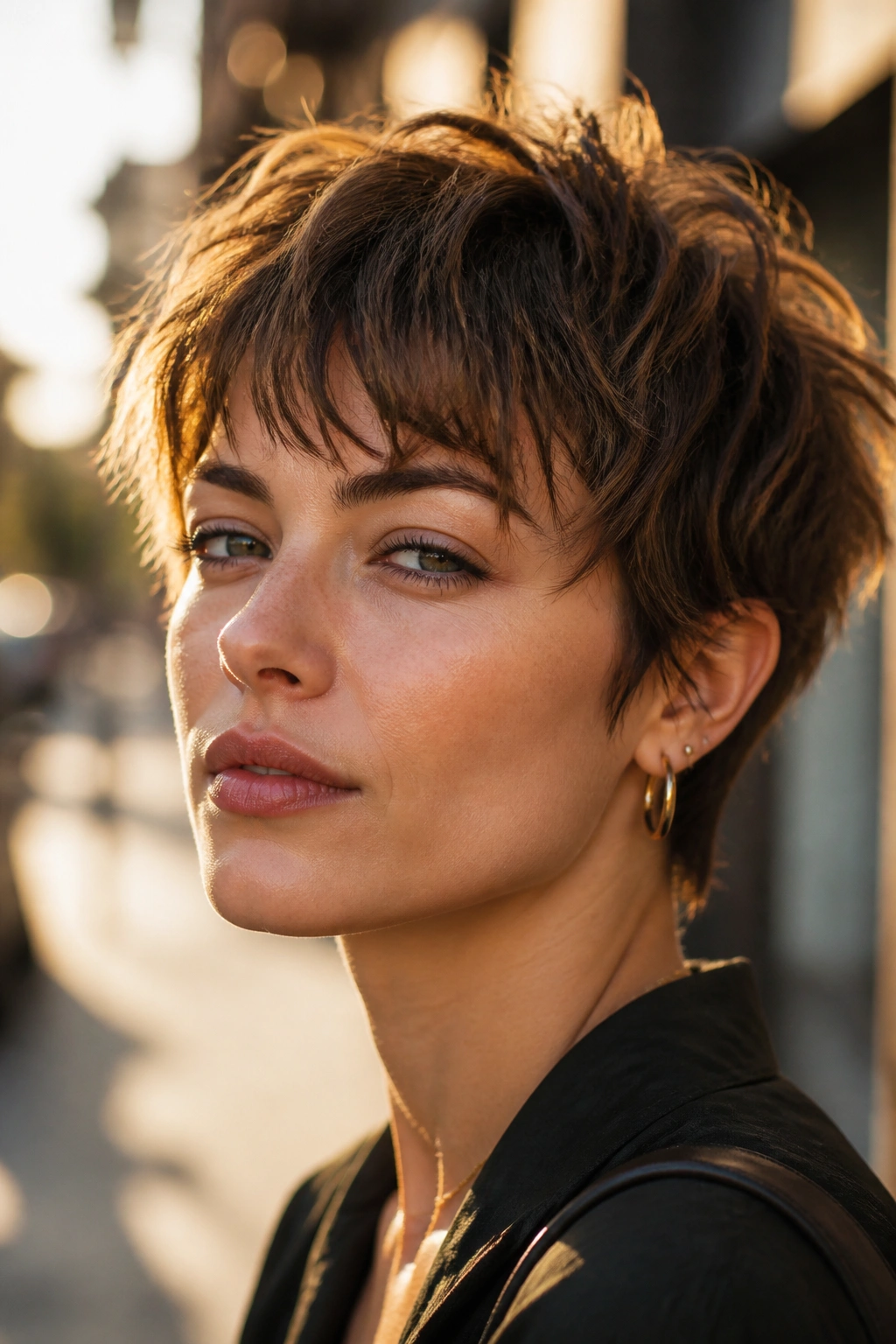
Razor-cut bangs feel softer at the ends. That’s the whole attraction. On a messy crop, they break up the front line so the haircut doesn’t look too sharp or too neat, which is exactly what a lot of short hair needs.
The feel is different from scissor-cut fringe. Razor work tends to leave the ends lighter and a little more separated, which helps if your hair is thick or slightly coarse. It can also make a crop move better when you shake it out with your fingers.
What to Watch For
Razor-cut fringe is not my first pick for hair that frizzes hard in humidity. The softer ends can puff up if the texture is already unruly. On smoother or medium-textured hair, though, the result can be easy and almost airy.
- Great with a matte paste or light cream
- Better when the front is dried with fingers, not brushed flat
- Needs a stylist who knows how to control the blade
- Can look too shredded if overdone
This style sits in that sweet spot between polished and messy. Not sleek. Not sloppy. That balance is harder than it sounds.
14. Long Flipped Bangs on a Rounded Crop

Long flipped bangs are for people who want fringe without the constant forehead commitment. They sit long enough to sweep across the face, then flip away with a brush or flat iron so they open up around the eyes. On a rounded crop, that movement feels natural.
Unlike curtain bangs, which split from the center, flipped bangs often carry more shape on one side or through a soft side part. They give you movement across the face while keeping the outline of the crop rounded and tidy.
A small round brush works well here, but a flat iron can do the job if you want a cleaner flip. Bend the ends away from the face, hold for a second, and let them cool before touching them. That tiny pause matters. If you rush it, the shape collapses fast.
This is one of my favorites for people who want options. Wear the bangs forward. Sweep them back. Push them off to one side. The haircut keeps up.
15. Mixed-Length Fringe on a Short Wolf Cut
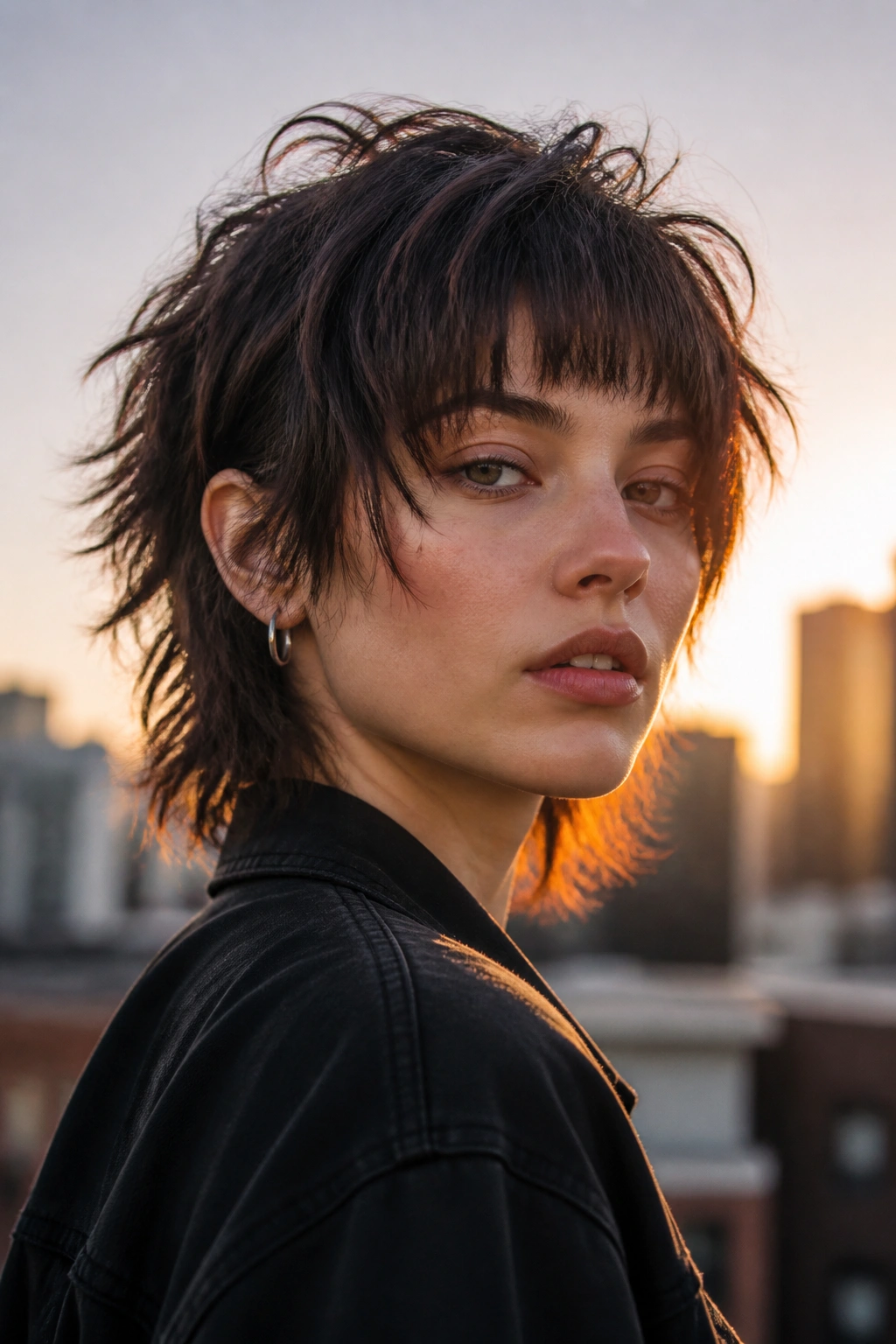
Mixed-length fringe is the right ending for a short wolf cut because the whole haircut lives on contrast. Shorter pieces near the center, longer bits falling to the sides, and layers that look purposefully uneven — it all makes sense together.
A wolf cut on short hair can go flat if the front is too tidy. Mixed-length bangs fix that. They keep the shape from feeling neat in a boring way, and they blend into the choppy layers through the crown and sides.
Why It Feels Modern
The fringe does not sit in one exact line. It shifts. That gives the cut a little movement even when the rest of your hair is not doing much. It also means the style can be worn messy without looking unfinished.
How to Ask for It
Tell your stylist you want a fringe with a shorter center and longer, broken-up pieces that connect into the side layers. Point cutting helps. So does cutting with the hair in its natural fall instead of forcing everything into a straight fringe line.
A little texture spray at the roots and a pinch of cream through the ends is often enough. Leave some roughness in it. That’s the point.
Final Thoughts
The best bangs for short hair are the ones that work with your routine, not against it. A fringe can sharpen a pixie, soften a bob, or give a crop more shape, but only if the length and texture make sense for the hair sitting on your own head.
I’m biased toward cuts that can survive a lazy morning. If you need a round brush, a flat iron, and a prayer every day, the bangs are probably too high-maintenance for the rest of your life. If you can blow them into place in three minutes and still like how they look at lunch, you’ve found the right lane.
Bring photos, yes, but bring the practical details too: how your hair dries, whether you have a cowlick at the front, how often you’ll trim, and whether you want a fringe that hides or one that shows off your face. That conversation matters more than the picture on the phone.
