



Bangs ideas for women over 60 are not about hiding anything. They’re about changing the balance of a haircut with one smart snip at the front.
That front section does a lot. It can soften a strong brow, make glasses sit better visually, give fine hair a fuller look at the hairline, or calm down a cowlick that has been bossy for decades. A fringe can also make a bob feel finished without forcing you into a huge chop. The wrong fringe can be fussy, sure. The right one looks easy.
I’ve always thought the best bangs respect the hair you actually have. Not the hair from a glossy salon photo. Real hair shifts at the temples, loses a little density in front, frizzes in one spot, and grows in patterns that make sense only to your own scalp. That’s why the smartest bang choices after 60 are usually a little softer, a little longer, and a little less precious.
1. Soft Side-Swept Bangs
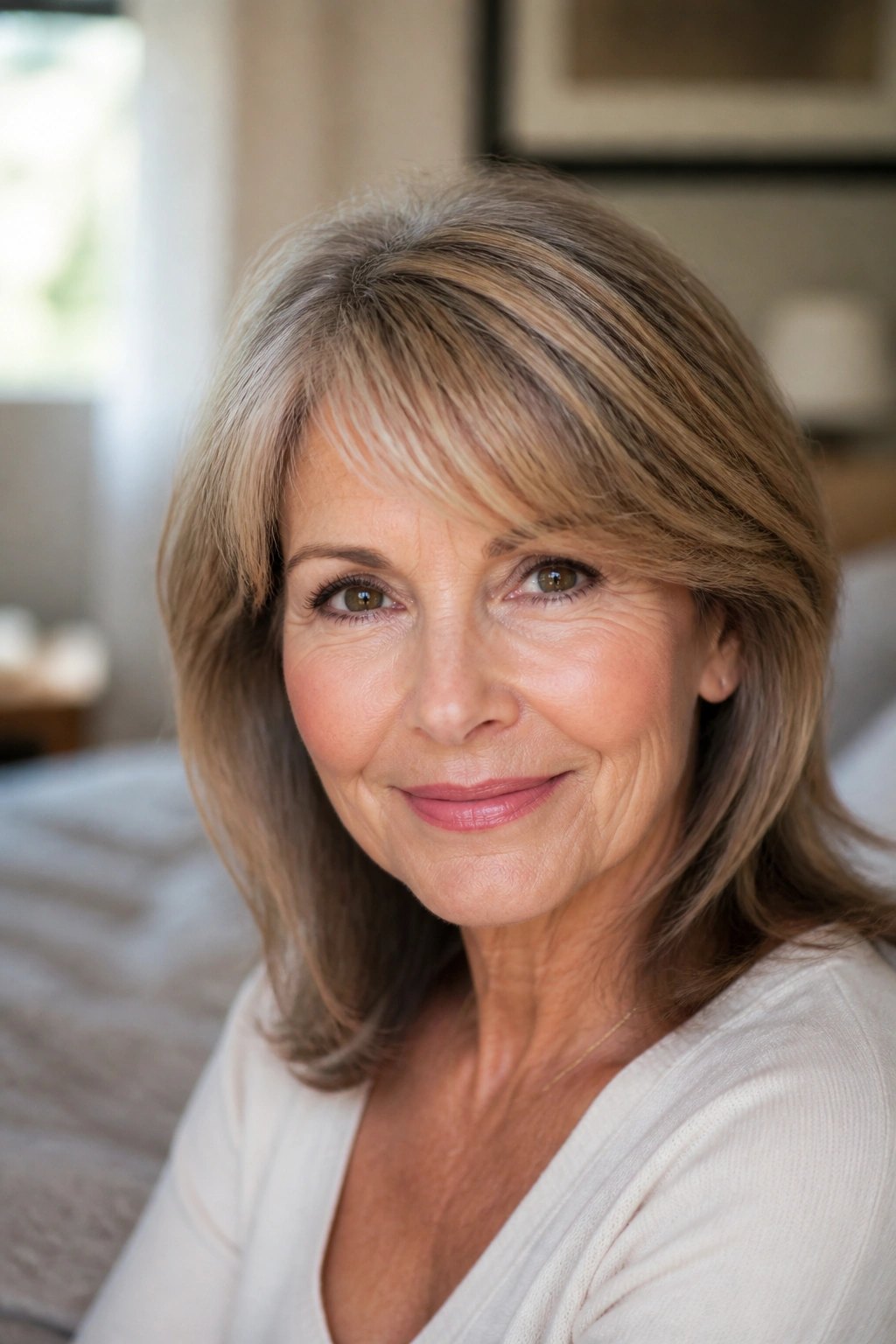
Soft side-swept bangs are the safest place to start if you want a change without a hard line across the forehead. They glide into the rest of the haircut, so they don’t feel severe, and they’re forgiving on days when your blow-dry is not cooperating.
Why they work
A side-swept fringe breaks up the face in a gentle way. It also gives you room to tuck, pin, or brush it across depending on how your hair falls that day. If your hair is fine, this shape usually looks fuller than a narrow piecey fringe.
- Ask for the longest point to land around the eyebrow or just below it.
- Keep the shortest section soft, not chopped.
- Style with a 1-inch round brush and a quick pass of cool air.
Best for: women who want movement more than a strict shape.
2. Wispy Feathered Bangs
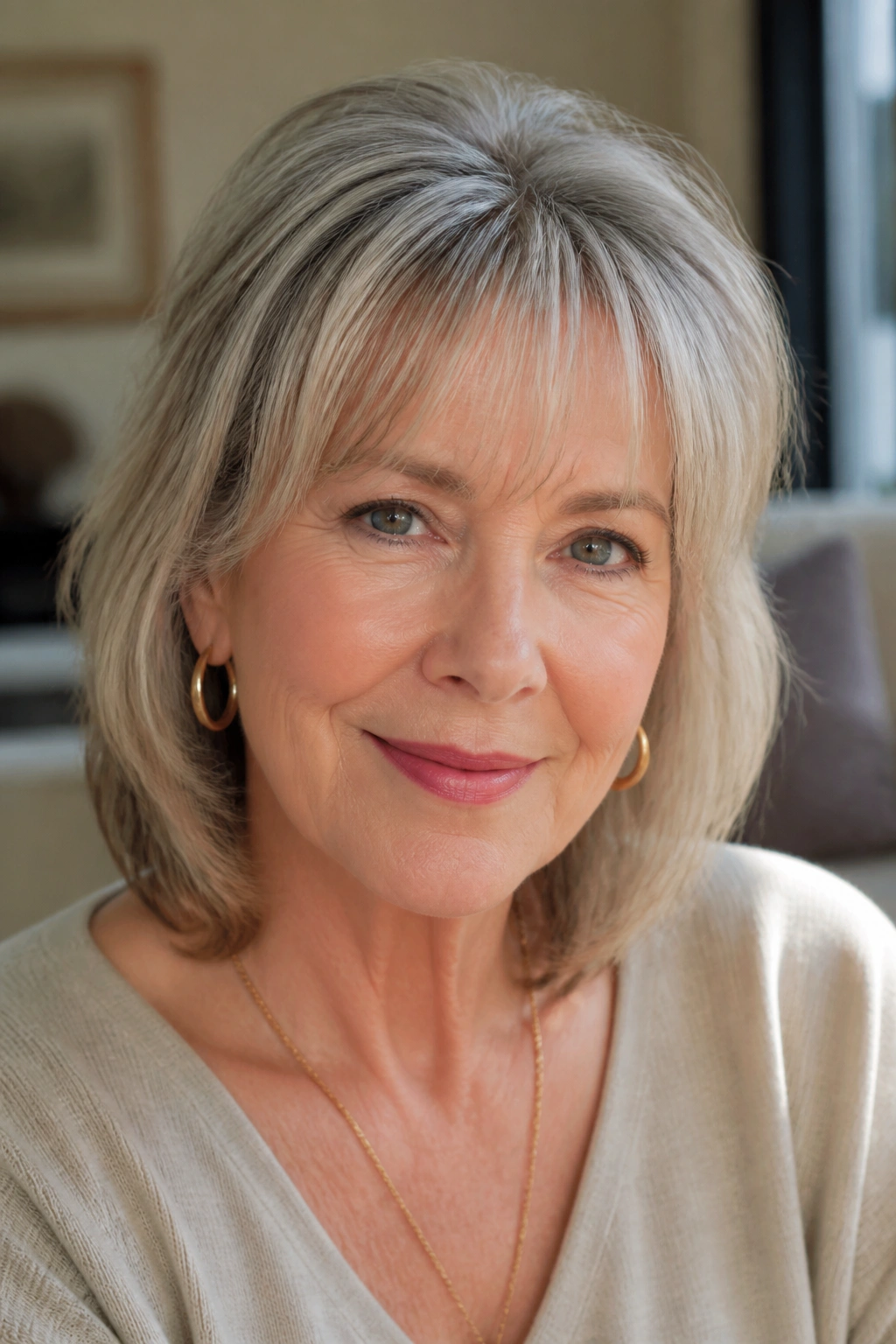
Wispy feathered bangs are the easiest way to keep the forehead open while still getting that face-softening effect. They don’t sit like a heavy curtain. They float.
That matters if your hair has become finer at the front, because a blunt line can sometimes show scalp more than you want. A feathered finish, done with point-cutting, gives the ends a little air. The fringe looks light, but not thin in a bad way. There’s a difference.
Try them with a layered bob, a shoulder-length cut, or a short shag. They can be styled with a finger twist and a dab of styling cream, which means they’re not asking for a complicated morning routine.
3. Curtain Bangs With a Center Part
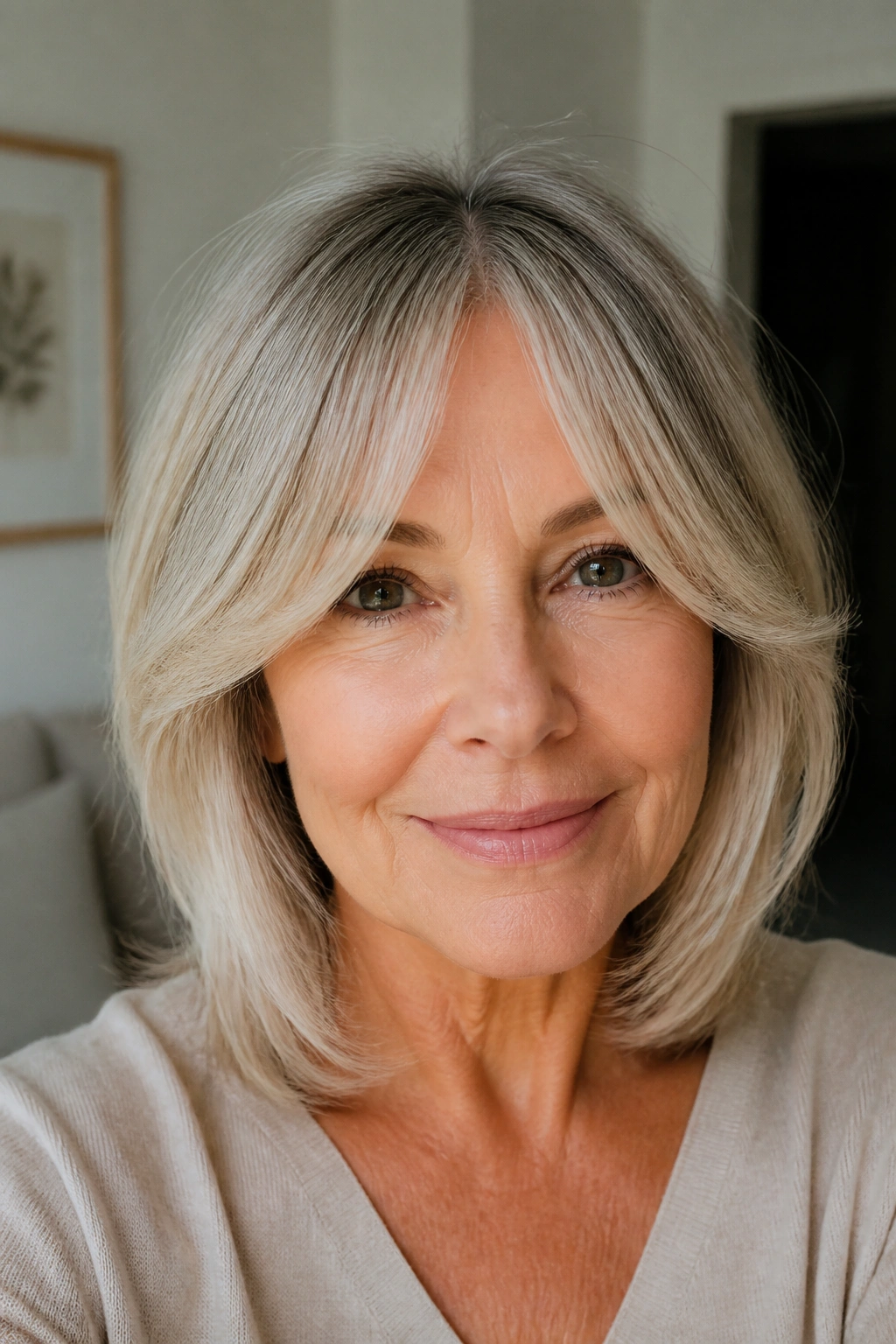
Do you want bangs without the feeling that your forehead has been covered up? Curtain bangs split the difference. They open in the middle and sweep to both sides, so they frame the face instead of sitting on top of it.
What makes them useful
Curtain bangs are forgiving if your hairline has a natural cowlick or if you wear your part off-center most days. They grow out cleanly, which is a gift. You are not trapped in an awkward phase for long.
How to wear them
- Blow-dry each side away from the face with a medium round brush.
- Keep the shortest piece near the bridge of the nose or cheekbone, not too high.
- Ask for longer side pieces that connect into your layers.
They work especially well with silver hair, because the soft split shows movement and texture instead of drawing one heavy line across the front.
4. Brow-Grazing Blunt Bangs
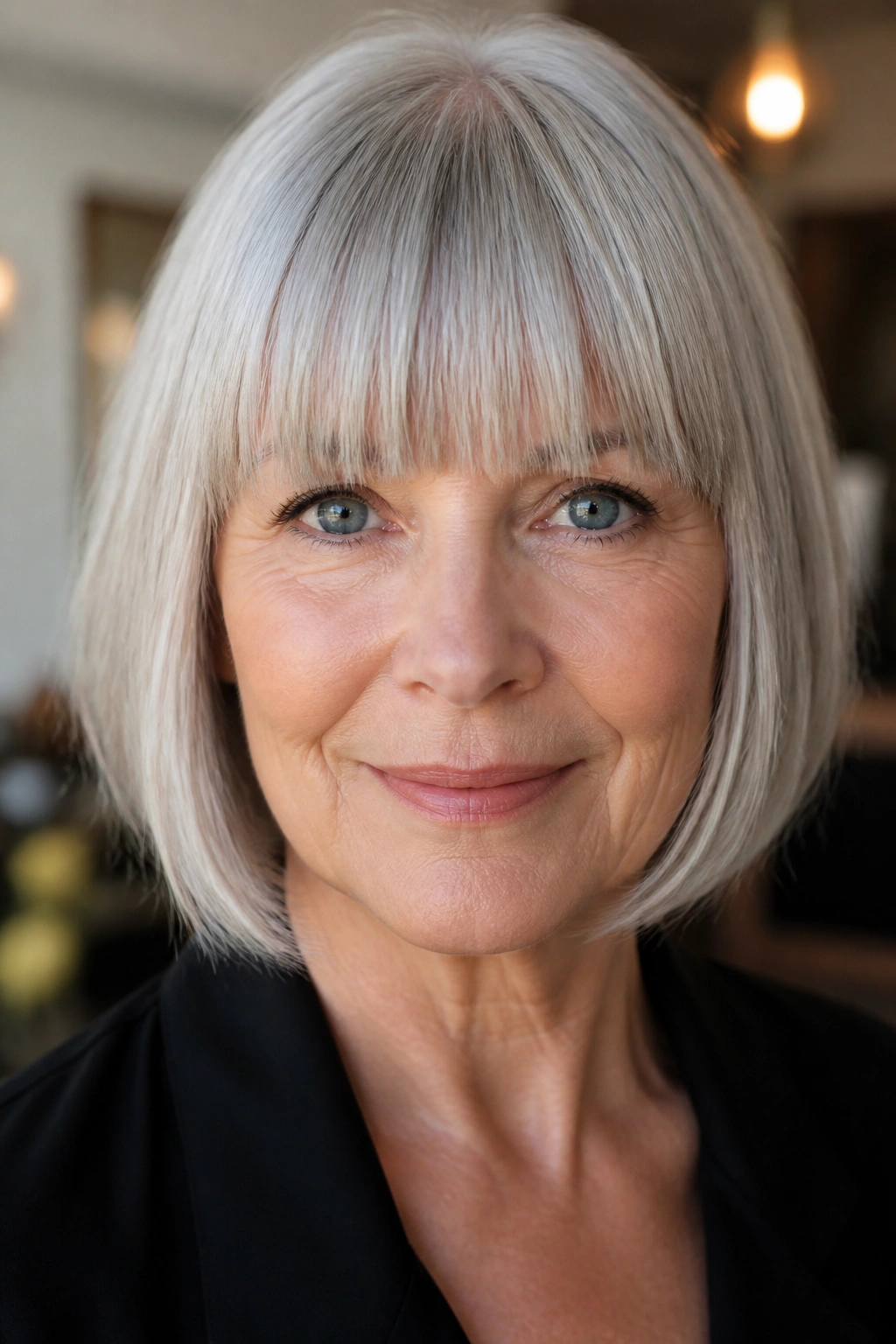
A crisp brow-grazing fringe can look fresh on straight or slightly wavy hair, and it has a clean, tailored feel that I like on women who wear simple clothes and want the haircut to do a bit of the styling for them. It is not fussy. It is direct.
The trick is length. Too short and it gets severe. Too long and it loses the point. The sweet spot is usually just at the brow or a hair below it, cut straight but softened at the ends so it does not look like a helmet edge.
- Best on medium to thick hair.
- Ask for a tiny bit of texture at the ends.
- Keep the line a touch longer at the temples for a softer frame.
5. Piecey Textured Bangs

Piecey bangs look like the hair was separated by hand, not forced into one solid sheet. That makes them a smart match for women who want something modern but not loud. They feel casual in the best way.
The shape helps when hair has lost some density because the eye reads movement first, not thickness. A stylist can create this look with a light point-cut and a little slide-cutting around the edge. At home, a touch of paste on the fingertips is enough. Too much product will make them stick together, and that ruins the point.
I like this style with short layers around the face. It keeps the forehead from looking heavy and gives the whole cut a little lift.
6. Short Micro Bangs
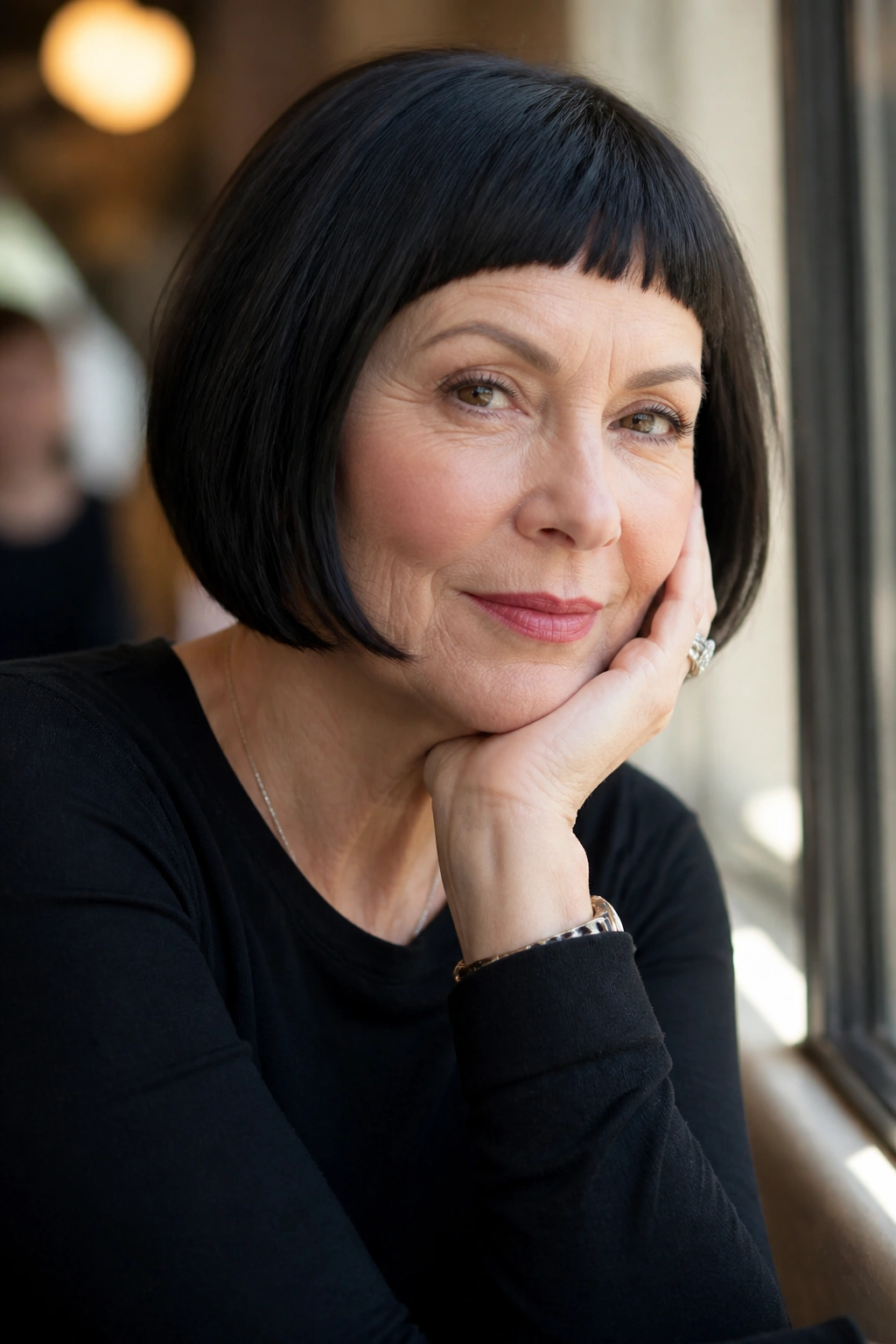
Micro bangs are a strong choice, not a cautious one. If you like a haircut with attitude, this is the fringe that says so right away.
They work best when the rest of the cut is polished enough to support them: a neat bob, a sharp crop, or a sleek silver cut with a clean neckline. They are not the pick for someone who wants to ignore their hair for three days and hope it behaves. Micro bangs need regular trims, and that is the deal.
If your forehead is very short or your hairline grows unevenly, this style can be tricky. But on the right face, with the right texture, it looks sharp and intentional.
7. Bottleneck Bangs
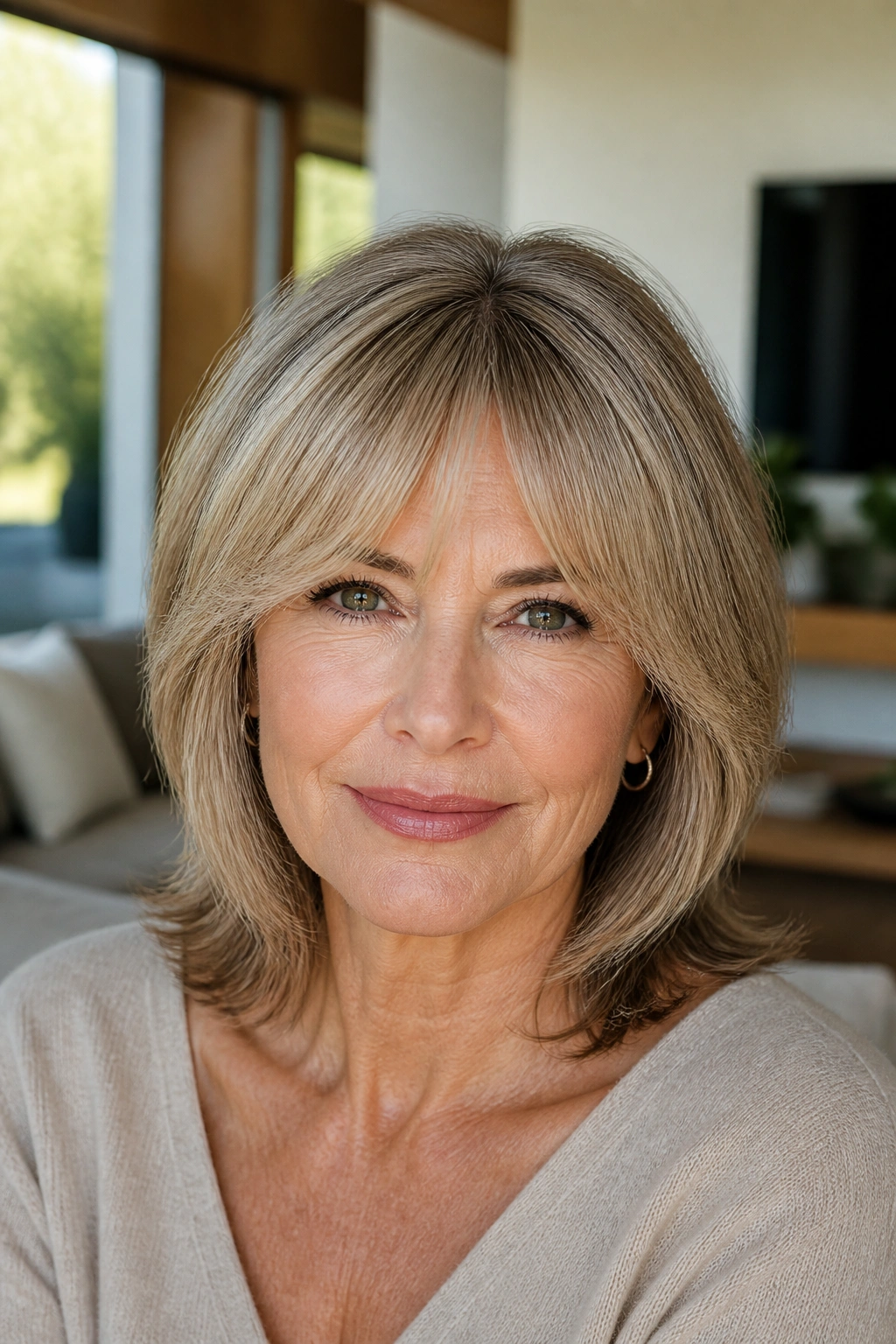

Why do bottleneck bangs keep showing up in good haircuts? Because they solve a real problem. They start narrow in the center, then open wider as they move toward the temples, which gives you coverage without a hard wall.
The shape
- Shorter in the middle.
- Slightly longer at the sides.
- Blends into face-framing layers.
Why that matters
This shape flatters a lot of faces because it draws the eye downward and outward. It also works well if you want bangs that grow out without getting weird after two weeks. If your hair has a stubborn front cowlick, this softer taper is usually easier to train than a blunt cut.
I’d call this one a practical favorite. It looks considered, but not overworked.
8. Choppy Bangs With a Pixie Bob
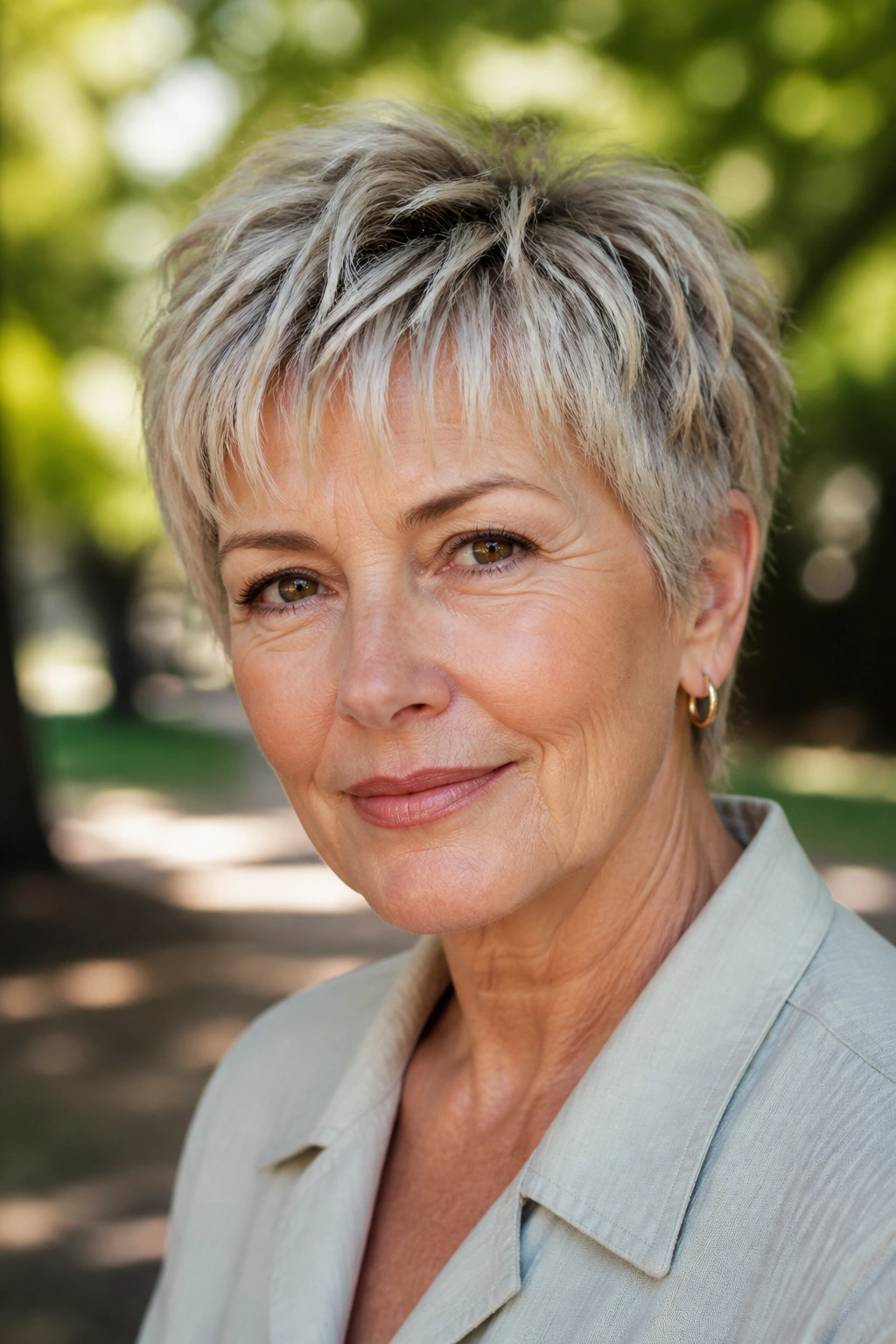
Picture a pixie bob with bangs that have a little bite to them. Not jagged. Not messy for the sake of mess. Just choppy enough to keep the front from feeling flat.
This is a good move if you want the haircut to show texture. The bangs can be cut in small, uneven sections so they separate naturally, especially when you finger-dry them. A tiny amount of mousse at the roots helps, but the shape does most of the work.
The best part is how youthful the cut feels without needing long hair. It opens the face, keeps the neck clear, and still leaves room for softness around the eyes.
9. Rounded Bangs
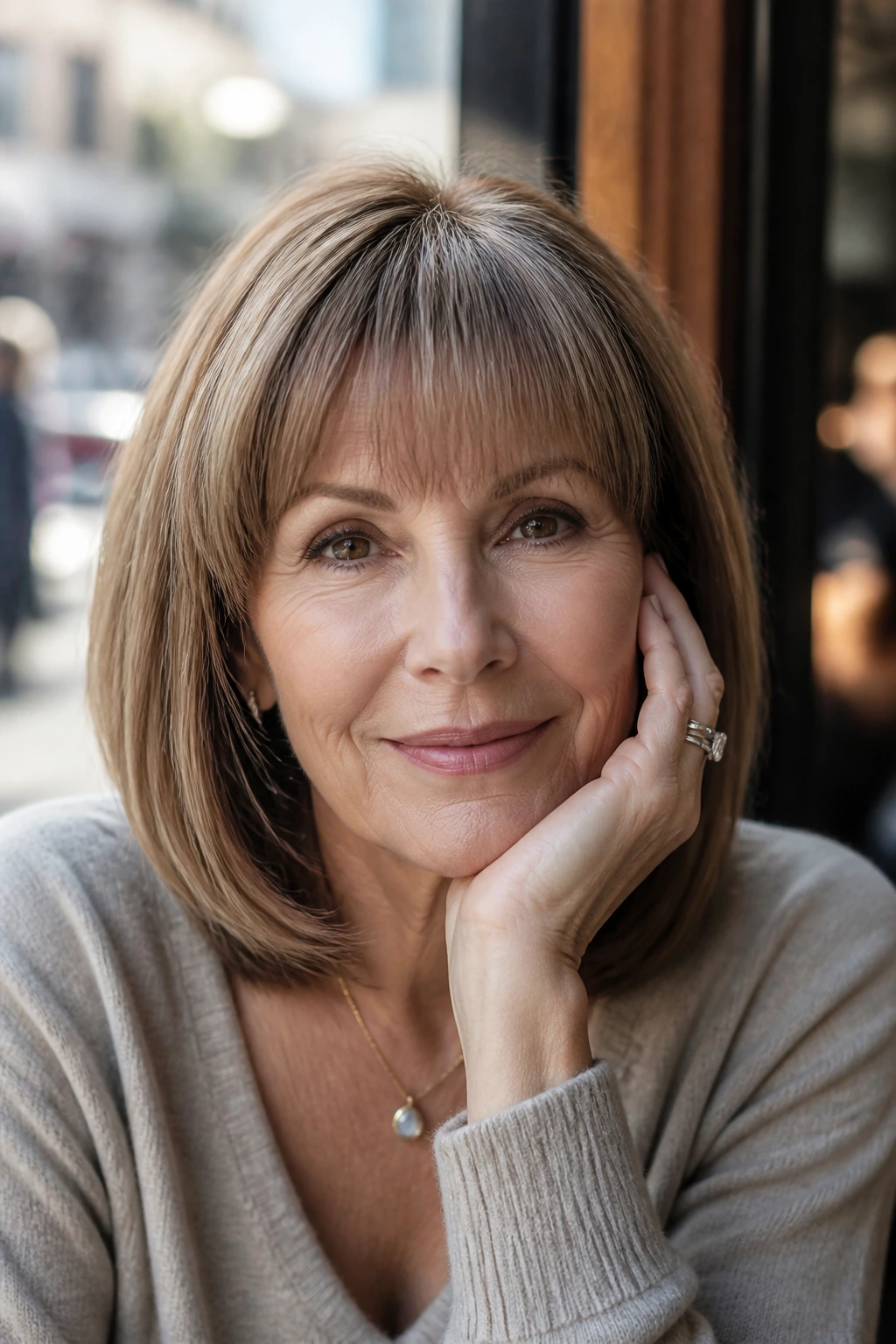
Rounded bangs follow the curve of the forehead instead of creating a straight shelf. That makes them a nice option if you want to soften a long face or balance a strong jaw.
They’re a little old-school in the best sense. Think controlled, not stiff. The middle sits slightly shorter, while the sides dip lower near the temples. That curve matters because it keeps the fringe from feeling blunt or boxy.
I like this shape on medium-density hair that holds a bend well. If your hair is pin-straight, you may need a quick round-brush pass each morning. Still worth it if you want a polished, face-framing result.
10. Barely-There Fringe
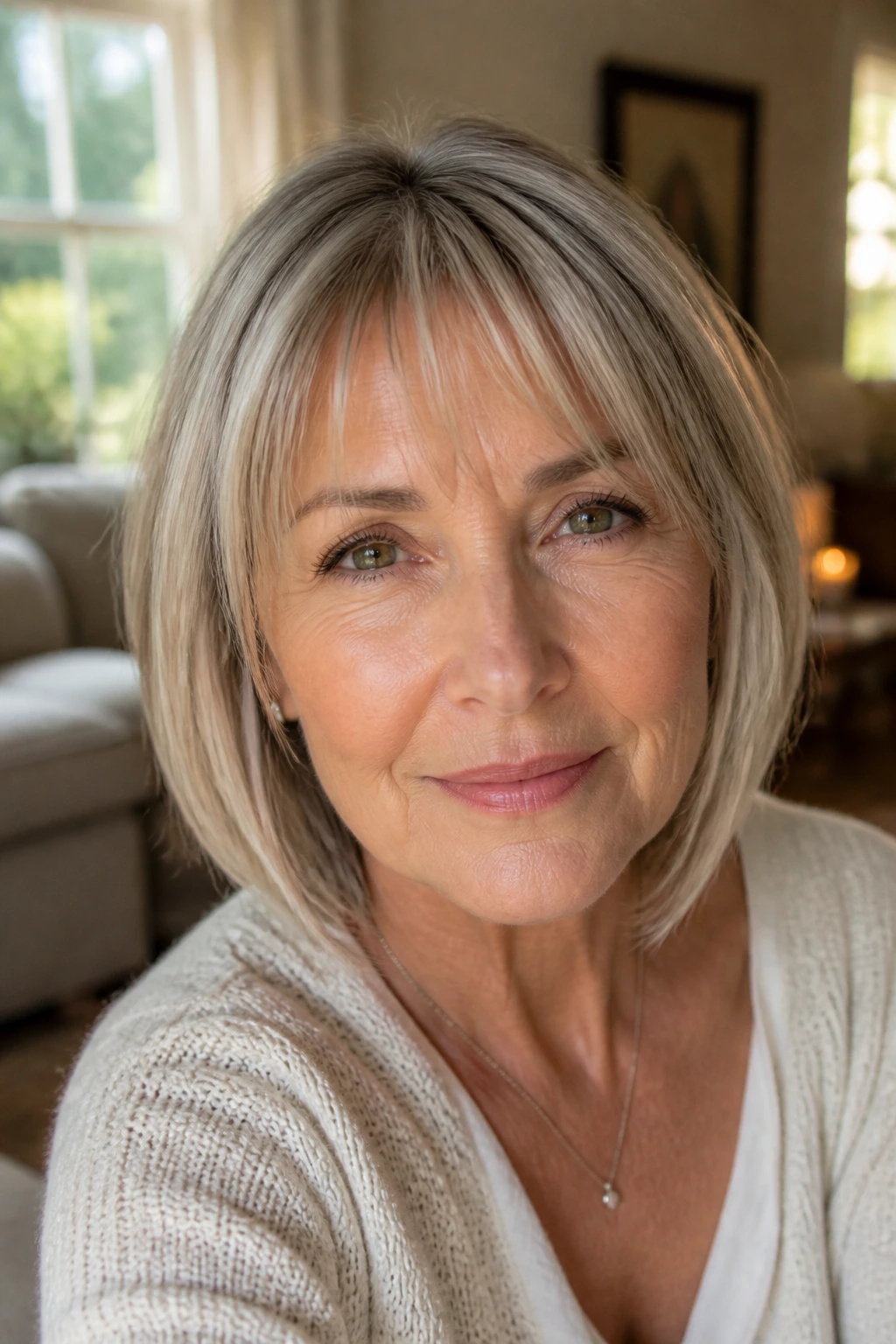
Barely-there fringe is for people who want the idea of bangs without a dramatic visual cut-off. It whispers rather than announces itself.
That softness makes it useful for women who are unsure about committing. The front pieces sit long enough to tuck aside, but short enough to change how the whole haircut falls. It’s a good bridge style. You can always go shorter later.
This works especially well with layered mid-length cuts, where the fringe blends into the face frame and barely reads as a separate feature. If you want a bang that feels light in hot weather and easy on the eyes, this one earns its place.
11. Arched Bangs

Why choose an arched fringe over a straight one? Because the arch opens space around the eyes and makes the center of the face feel brighter. It has shape without the bluntness that some women don’t like.
How to ask for it
Ask your stylist for a center that sits slightly shorter, then let the sides curve down toward the brows. The finish should look soft, not carved. A dry cut helps here, since wet hair can hide how the arch will really sit.
Arched bangs are especially nice with glasses. They avoid crowding the frame and keep the forehead from looking boxed in. They also work well if your brows are one of your favorite features and you want the haircut to show them off instead of covering them.
12. Side Bangs for a Pixie Cut
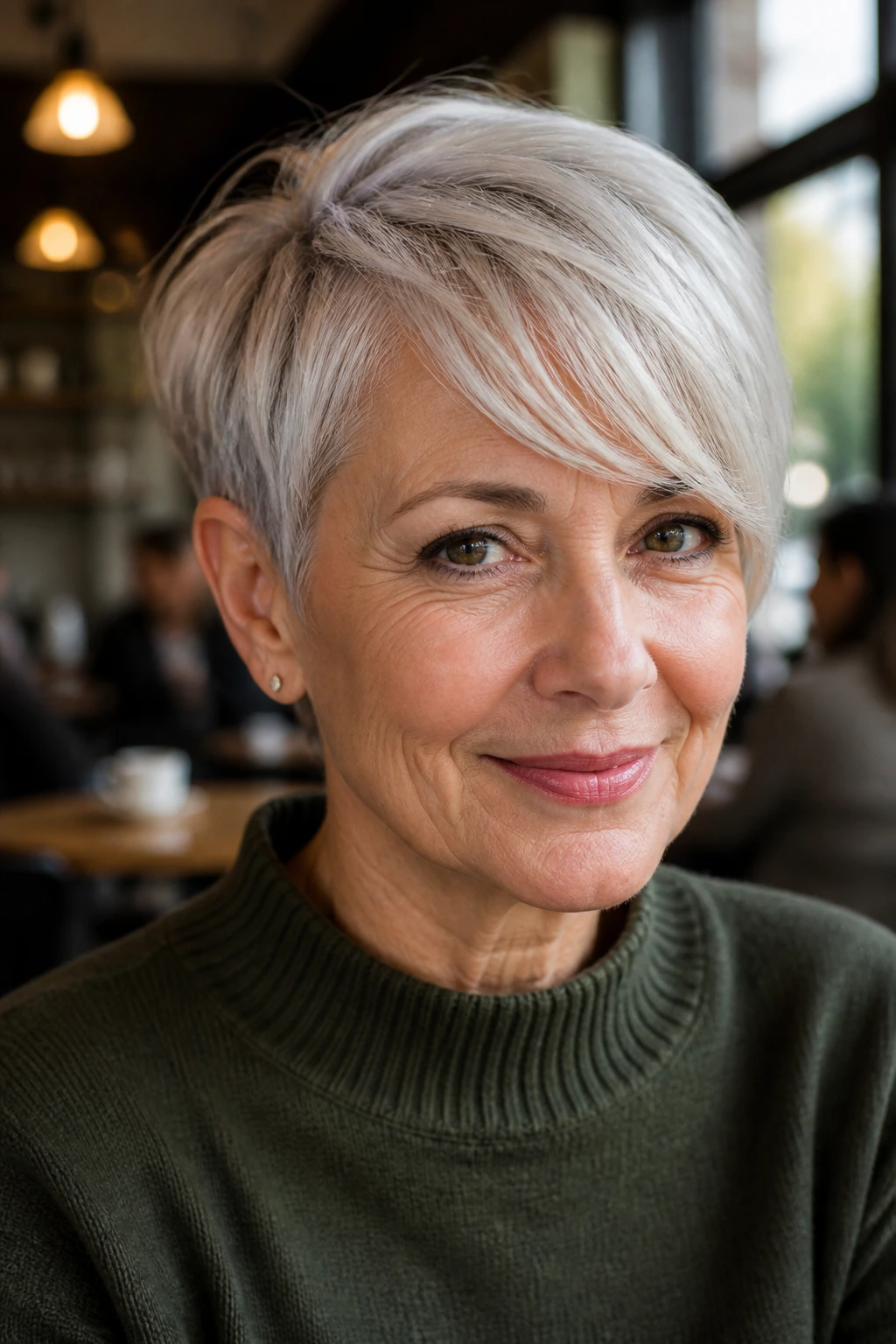
A pixie cut can look a little severe if the front is too short and flat. Side bangs fix that fast. They create movement where a crop can sometimes feel too tidy.
The neat thing about this combo is that the fringe can be long enough to sweep across the forehead, while the sides stay short and neat around the ears. That contrast gives the haircut shape. It is one of those small changes that does more than you expect.
- Good for women who like easy styling.
- Works well with earrings and glasses.
- Best if the crown has a little volume.
If your pixie is growing out, a side bang is often the part that keeps it looking deliberate.
13. Curved Bangs
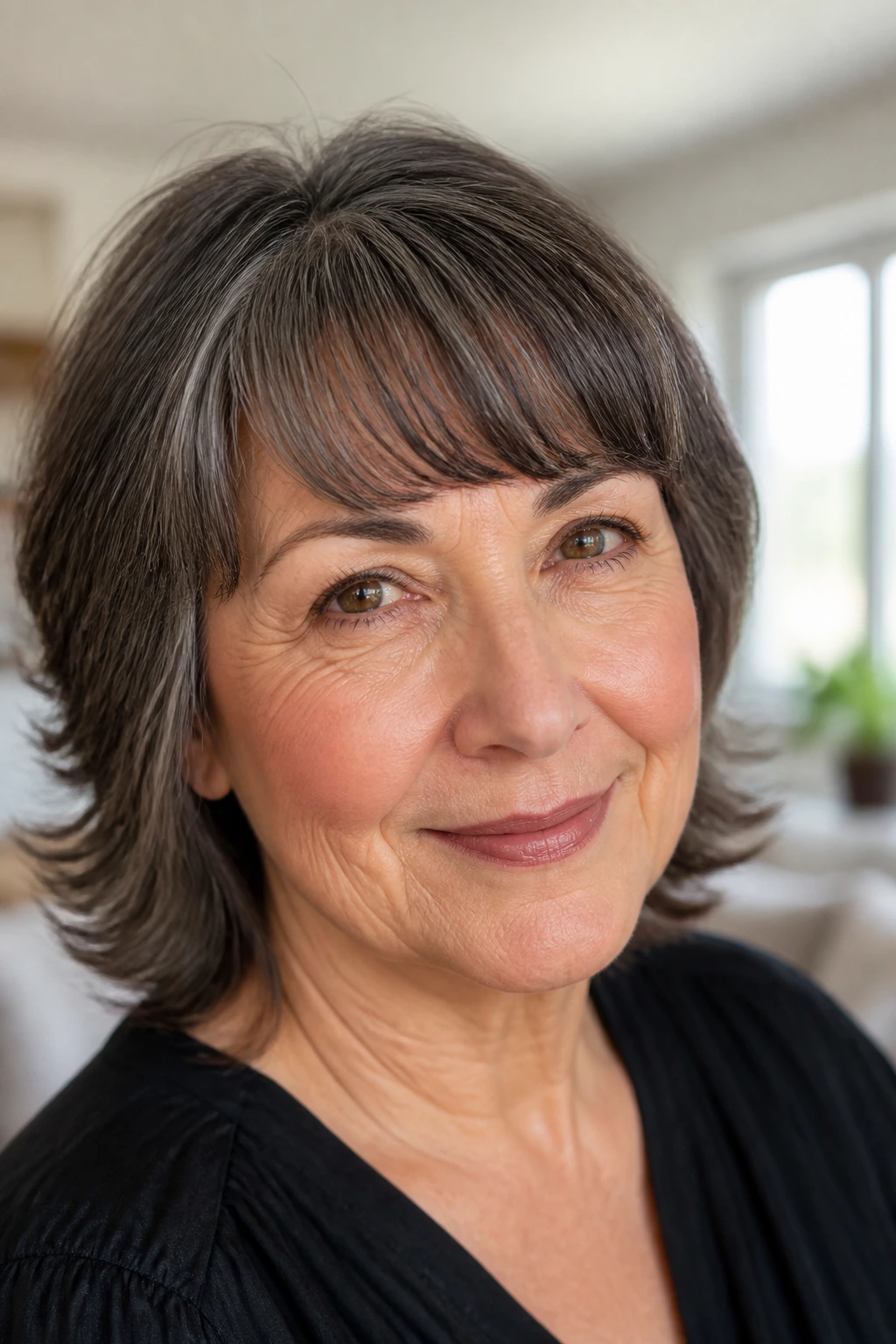
Curved bangs are close cousins to rounded bangs, but the curve is usually softer and less formal. They dip gently at the sides and blend into the haircut instead of sitting like a separate feature.
I prefer this shape when the goal is to soften the upper face and steer attention toward the eyes and cheekbones. It’s useful on straight hair that wants a bit of movement but won’t hold a dramatic wave. The curve creates that movement for you.
Compared with a blunt fringe, this version is easier to grow out. Compared with curtain bangs, it reads a little tidier. That middle ground is the whole point.
14. Grown-Out Curtain Fringe

A grown-out curtain fringe is one of the smartest bang ideas because it does not look like a mistake while it’s changing. It looks intentional even when it’s a bit longer than a fresh cut.
That is a real advantage if you dislike constant salon visits. The hair falls past the brow, splits at the center, and then folds into the sides. You can wear it with a middle part, a soft side part, or even push it back on humid days. It gives you options.
I like this look for women who want the face-softening effect of bangs but don’t want to babysit them. The grow-out phase is not awkward here. It is part of the style.
15. Textured Baby Bangs

Textured baby bangs are tiny, sharp, and not shy. They work best when you want the haircut to have personality right away.
The texture is what keeps them from looking too rigid. Instead of one hard edge, the ends are lightly broken up so the fringe moves a bit when you do. That matters a lot with short hair, because a blunt baby bang can easily look stiff on older hair that has become finer or drier.
They are not for everyone. If you want low maintenance, skip them. If you like a cut that feels editorial and you are fine with frequent trims, this is a fun place to play.
16. Layered Bangs With Shoulder-Length Hair
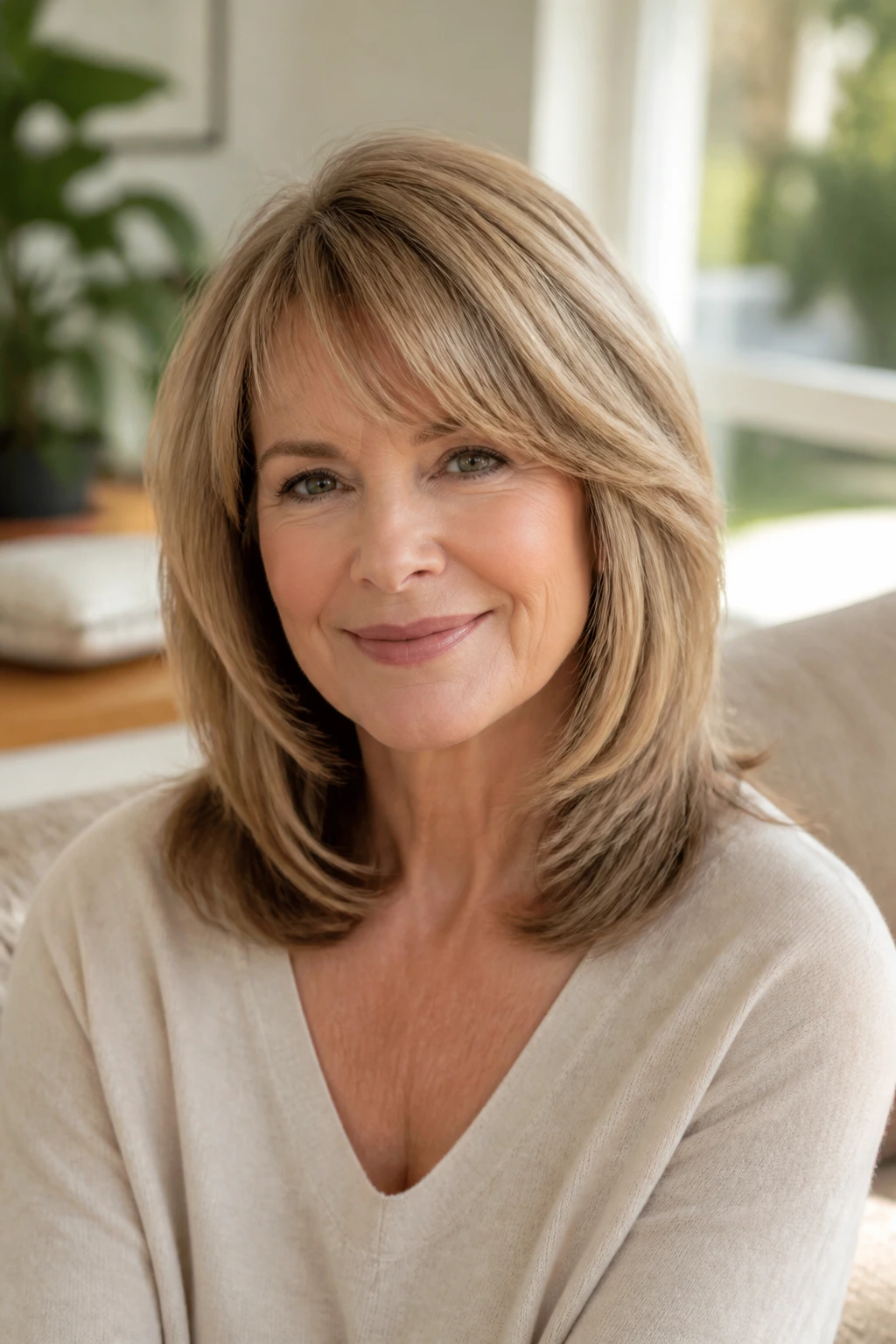
Can bangs and shoulder-length hair play nicely together? Absolutely, if the front is layered with the rest of the cut instead of being isolated. That’s where the haircut starts to feel soft rather than square.
What to ask for
Ask for the bangs to connect into the cheek and jaw layers. You want a blend, not a separate section hanging over your face. That keeps the whole shape moving when you turn your head.
Layered bangs suit women who wear their hair down most days and still want lift around the eyes. They’re also kind to hair that has a little wave, because the layers help the fringe fall in a natural way instead of sticking straight to the forehead.
17. Feathered Bangs for Fine Hair
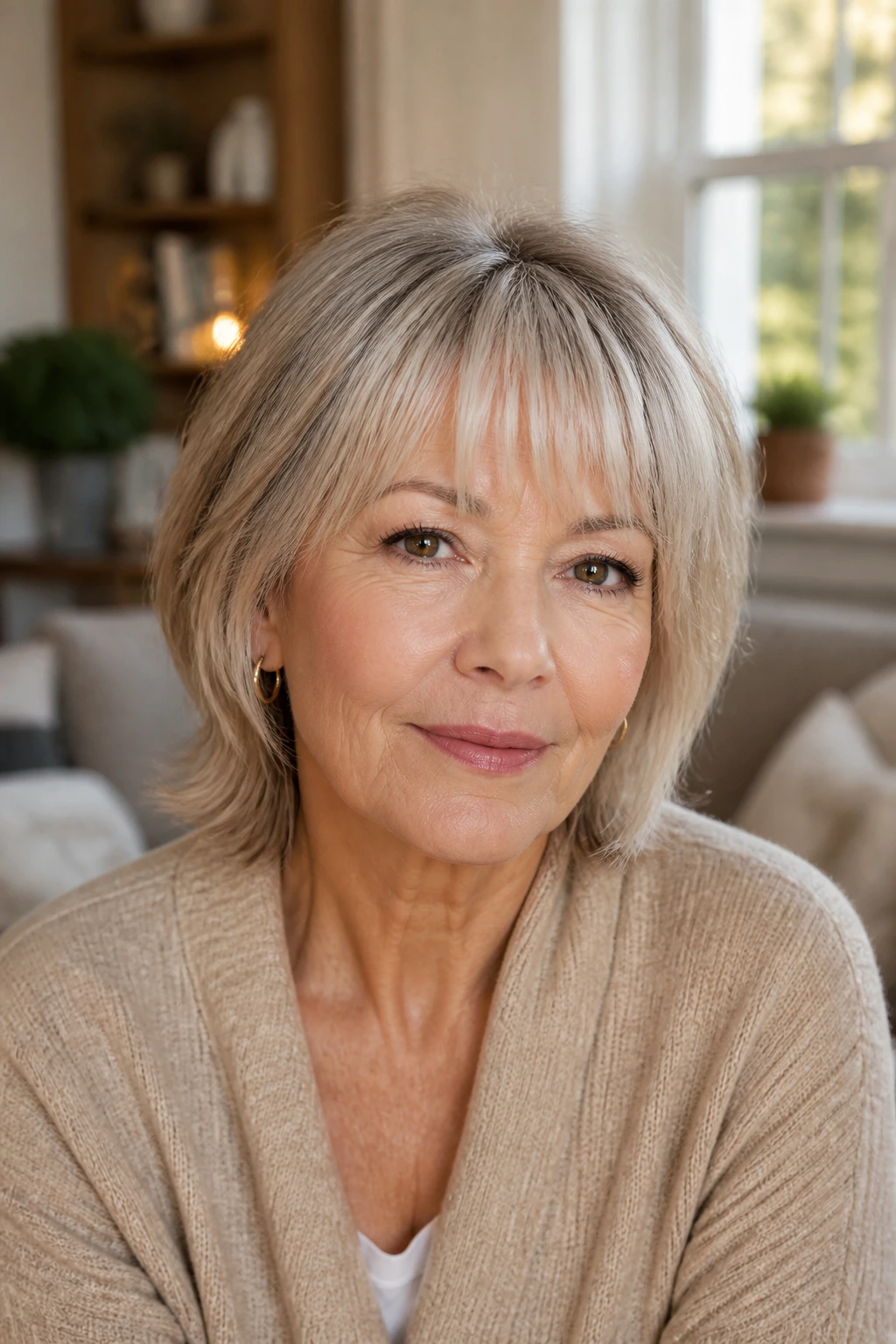
Fine hair needs shape more than weight, and feathered bangs handle that nicely. They give the front some lift without creating a solid, heavy line that exposes the ends.
A stylist can feather the fringe with light slicing at the tips, then keep the body of the cut airy too. That makes the bang blend instead of sitting on top of the hair. If your hairline is sparse, this is often more flattering than a dense fringe that fights for attention.
- Ask for a soft, broken edge.
- Keep product light; a heavy cream can flatten everything.
- Blow-dry with a small vent brush for lift at the roots.
This is one of my go-to suggestions for finer mature hair.
18. Full Fringe With Soft Ends

A full fringe does not have to look severe. Softening the ends changes the whole feel. It keeps the coverage of a fuller bang while removing the helmet effect that can make some cuts feel dated.
The key is not thinning the middle to death. That leads to separation and little see-through bits that look accidental. Instead, keep the body of the fringe intact and soften only the edge. That way you still get the frame, the density, and the clean line.
This works especially well on bob haircuts and straight layered cuts. It gives structure without stiffness, which is a combination a lot of women are after once their hair gets a little finer at the front.
19. Swept Bangs for Wavy Hair
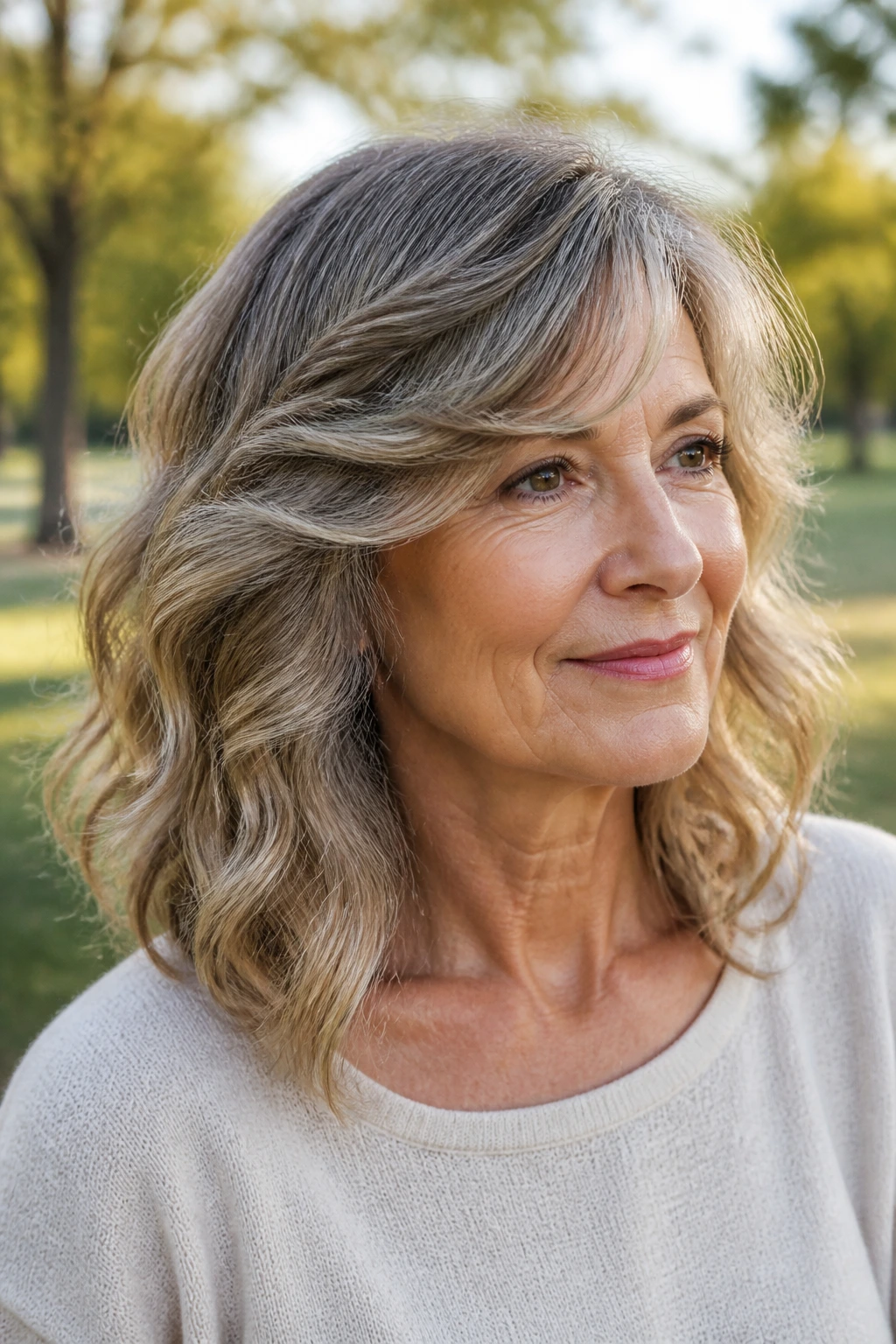
Wavy hair has a built-in advantage with bangs: it already knows how to move. A swept fringe lets that wave do the work instead of forcing it into a flat shape it does not want.
The good version of this cut follows the direction of your bend. It doesn’t fight the wave; it leans into it. That means less heat styling and fewer mornings spent trying to flatten a puff at the front.
Compared with straight bangs, this style is kinder to texture. Compared with curtain bangs, it can look a little less split and a little more relaxed. If your hair lives somewhere between smooth and tousled, this is a smart match.
20. Razor-Cut Fringe
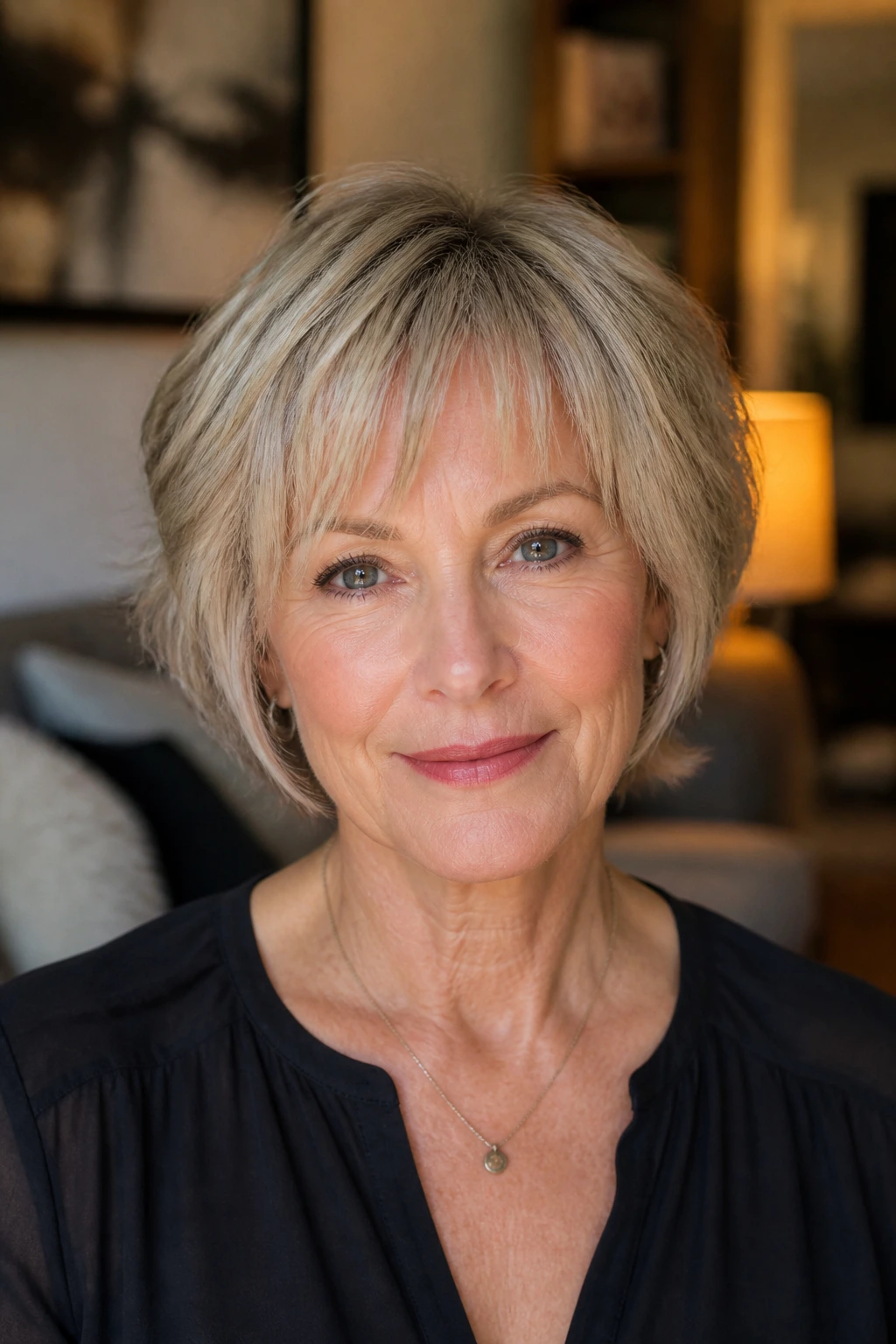
A razor-cut fringe has a softer edge than a scissor-cut fringe, and that softness can be useful on hair that feels heavy or thick at the front. The ends fall with a little broken texture instead of a blunt line.
That said, a razor cut is not magic. On very dry or frizzy hair, it can fray if the stylist gets too aggressive. So the tool matters, and so does the hand behind it. A light touch is the whole game here.
I like this style for women who want movement but do not want the fringe to look piecey in a trendy way. It can be elegant, especially when the rest of the haircut stays simple.
21. Swoopy Bangs With Crown Volume

What gives swoopy bangs their lift? The crown. If the hair is flat at the roots, the front usually falls flat too, which defeats the point.
How to style them
- Blow-dry the roots upward first.
- Use a round brush to sweep the fringe across the forehead.
- Finish with a cool shot so the bend holds.
These bangs work beautifully with layered cuts because the volume at the crown keeps the profile lively. They’re also a good fit if your face is longer and you want a little width near the top. The shape is soft, but it has enough structure to be noticed.
22. Side-Part Fringe for Glasses

A side-part fringe can make glasses look like part of the haircut instead of a separate object sitting on the face. That small detail matters more than people think.
The fringe should clear the frame comfortably, not drop right into it. When bangs brush the glasses all day, they get oily fast and lose their shape. A side part gives the hair a path around the lens and keeps the front from sticking to the bridge of the frames.
- Best when the fringe is cut a touch longer than the brow.
- Works well with medium-density hair.
- Keep a small round brush near the bathroom sink.
If you wear glasses daily, this is one of the most practical bang choices on the list.
23. Blended Face-Framing Bangs

Blended face-framing bangs are a good move when you want softness more than a bang that reads as a separate feature. The front pieces melt into the layers around the cheeks and jaw.
That blend is useful for mature hair because it avoids a harsh stop line at the forehead. The eye follows the movement down the face, which gives the haircut a smoother look. It also makes grow-out easier, since the bangs are already connected to the rest of the cut.
This shape pairs well with mid-length cuts and longer bobs. If you’ve ever looked in the mirror and thought, “I want bangs, but not that much bang,” this is probably the style you meant.
24. Curly Bangs

Can curly hair wear bangs without turning into a puffball? Yes, if the cut respects the curl pattern instead of trying to flatten it. That part matters more than the length.
A curly fringe should be cut dry, curl by curl, so the stylist can see where each piece really sits. Wet curls lie. Dry curls tell the truth. Once shaped correctly, the bang sits softly on the forehead and frames the eyes in a way straight hair can’t fake.
How to keep it neat
- Refresh with water and a little curl cream.
- Scrunch gently; do not rake through it.
- Trim only when the curl has fully settled down.
Curly bangs can look lively and elegant at the same time. That’s a rare combination.
25. Shag Bangs
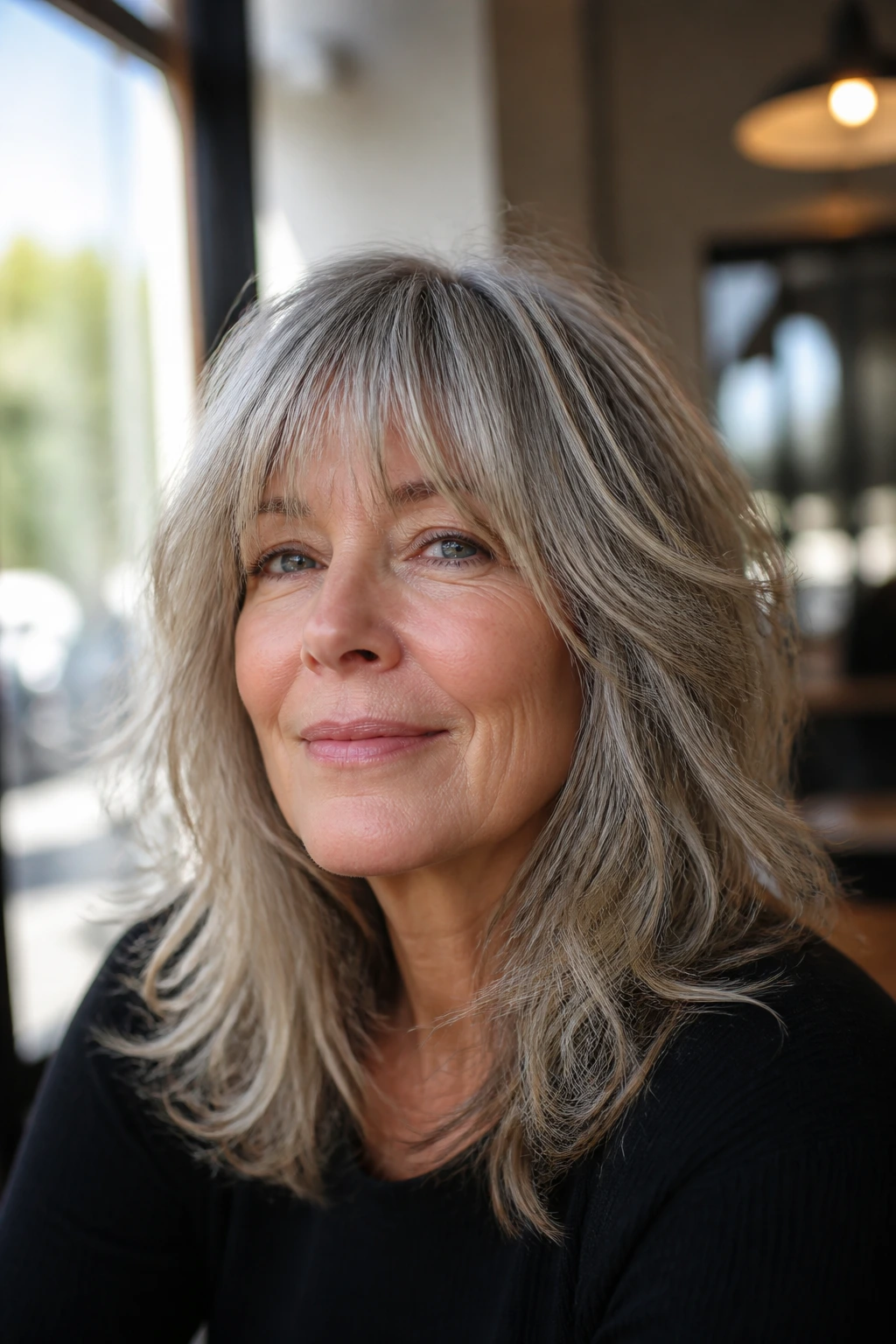
Shag bangs belong on a haircut that can handle movement. If the rest of the style is layered and a little undone, the fringe fits right in.
The bang section is usually broken into soft chunks that blend into the shag’s face-framing pieces. That means less polish, more texture, and a haircut that looks good after being finger-combed. If your hair has volume and you like a relaxed shape, this is one of the easiest styles to wear.
Compared with a neat bob fringe, a shag bang is looser and less controlled. That can be freeing. It’s also handy if you want to air-dry often and avoid daily heat.
26. Salt-and-Pepper Bangs With Soft Dimension
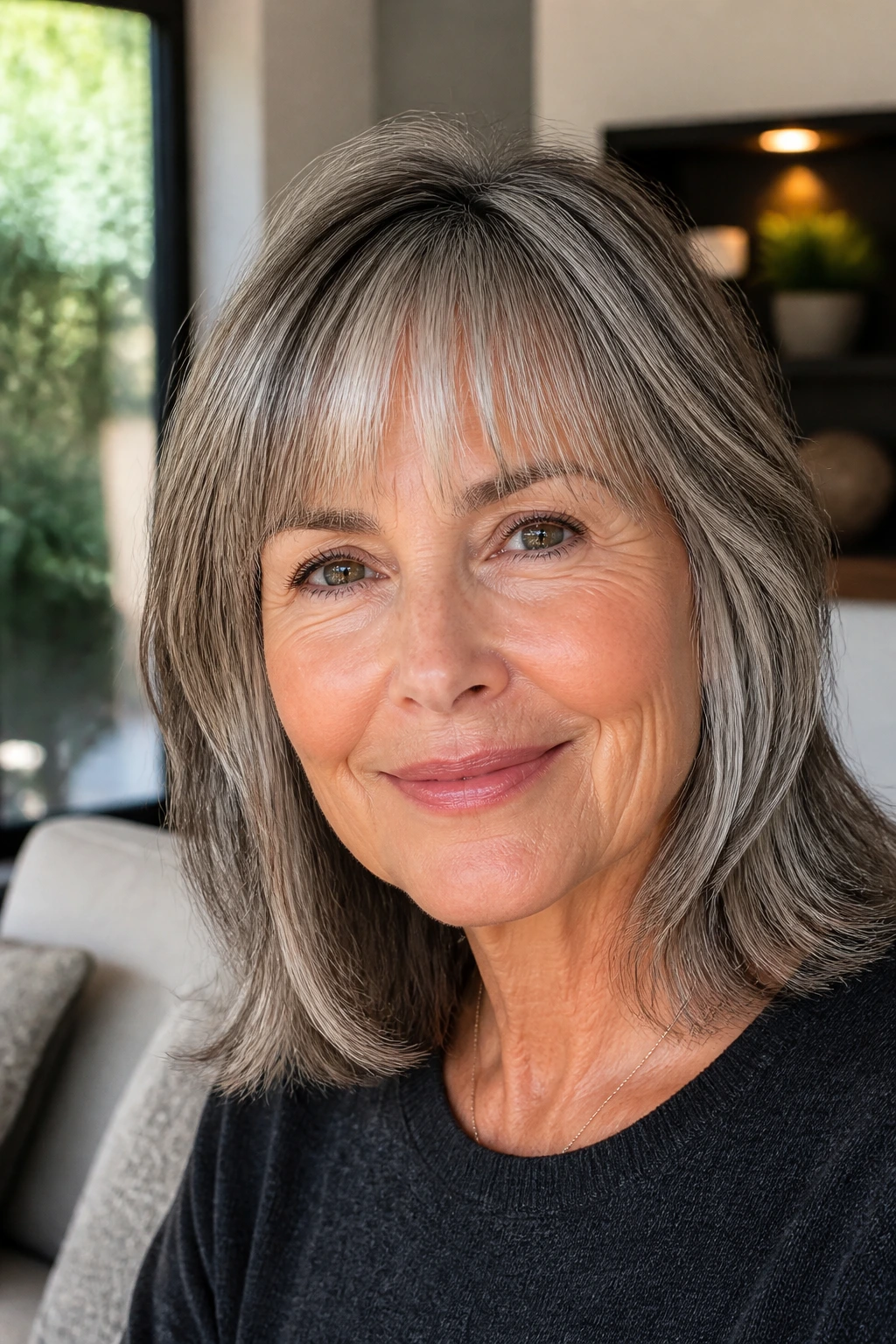
Salt-and-pepper hair has built-in depth, and bangs can show that off if the cut leaves enough texture in the front. A dense, flat fringe can hide the color mix. A softer one lets the silver and dark strands play together.
I like a slightly broken edge here, not because the hair needs to look messy, but because the light catches each strand differently. The effect is subtle. That’s what makes it good. It doesn’t yell for attention.
This style works across lengths, from a chin bob to shoulder-length layers. If your hair has a beautiful natural mix of gray and darker strands, don’t bury it under a blunt, heavy strip of fringe.
27. Tapered Bangs for Thick Hair

Thick hair can carry more shape at the front, and tapered bangs use that to your advantage. The center can stay a little fuller, while the sides soften into the rest of the haircut so the fringe does not sit like a block.
This is where a stylist’s hand matters. Too much thinning, and the bangs frizz. Too little, and they feel bulky. The taper should remove weight at the edges while leaving enough hair for the line to hold its form.
If your hair tends to puff up in humidity, this shape usually behaves better than a dense blunt fringe. It has room to breathe.
28. Bottleneck Bangs With a Lob
A lob gives bottleneck bangs a lot of room to work. The longer length around the face lets the fringe dissolve into the cut instead of ending abruptly at the brows.
That combination is useful if you like structure but hate anything that feels boxed in. The bangs are narrow in the middle, wider near the cheekbones, and then everything flows into the lob. The result is soft, but not vague.
I’d choose this for hair that has some body and a little natural bend. It looks clean when brushed smooth and still holds up when it dries with a slight wave. That flexibility is part of the appeal.
29. Softened Straight Bangs

Straight bangs can be lovely after 60, but they need a softer edge than the thick, heavy fringe people sometimes picture. A softened straight bang still gives you the line; it just takes the edge off the line.
What changes the look
- Slightly longer at the temples.
- A tiny bit of texture through the ends.
- Enough spacing to avoid a solid wall of hair.
This version works on straight hair that lies close to the head and does not need much coaxing. If your face shape is long or narrow, the straight line can shorten the face a little. If your hair is very thin, keep the line lighter so it does not show gaps.
30. Angled Bangs

Angled bangs start shorter on one side and lengthen as they move across the forehead. That diagonal line can make the face feel a little slimmer and more lifted, especially around the cheek area.
The shape is nice when you want a fringe with movement but do not want curtain bangs. It has more direction than a side sweep and more edge than a blended layer. That middle zone can be hard to find, and this is where angled bangs shine.
They also work with short haircuts that need a bit of drama at the front. If your style is simple elsewhere, the angle gives it enough interest without turning the whole cut into a project.
31. Wispy Bangs Over a Crop

A short crop can look severe until you add wispy bangs. Then the haircut suddenly feels softer, more feminine, and a lot less bare at the front.
The wisps should be irregular on purpose. Not ragged. Just light enough to let the forehead breathe. This is a great fix for women who like short hair but don’t want every feature on full display. It takes a crop from sharp to easy in one move.
Because the rest of the cut is short, these bangs need a good shape at the temples and around the ears. Otherwise the whole style can look unfinished. When it’s done well, though, it’s a strong little haircut.
32. Long Eyebrow-Grazing Bangs

Do you want bangs you can tuck away when you feel like it? Long eyebrow-grazing bangs do that job. They sit close enough to count as a fringe, but long enough to slip aside without a fight.
This length is useful when you’re testing the waters. It gives you coverage without the maintenance of a short bang. It also plays nicely with changing part lines, which helps if you do not wear your hair the same way every day.
The key is to keep the ends clean. If they’re too blunt, the bangs can fall into your eyes and feel annoying by noon. A little softness at the tips solves that.
33. Side-Swept Bangs for Round Faces
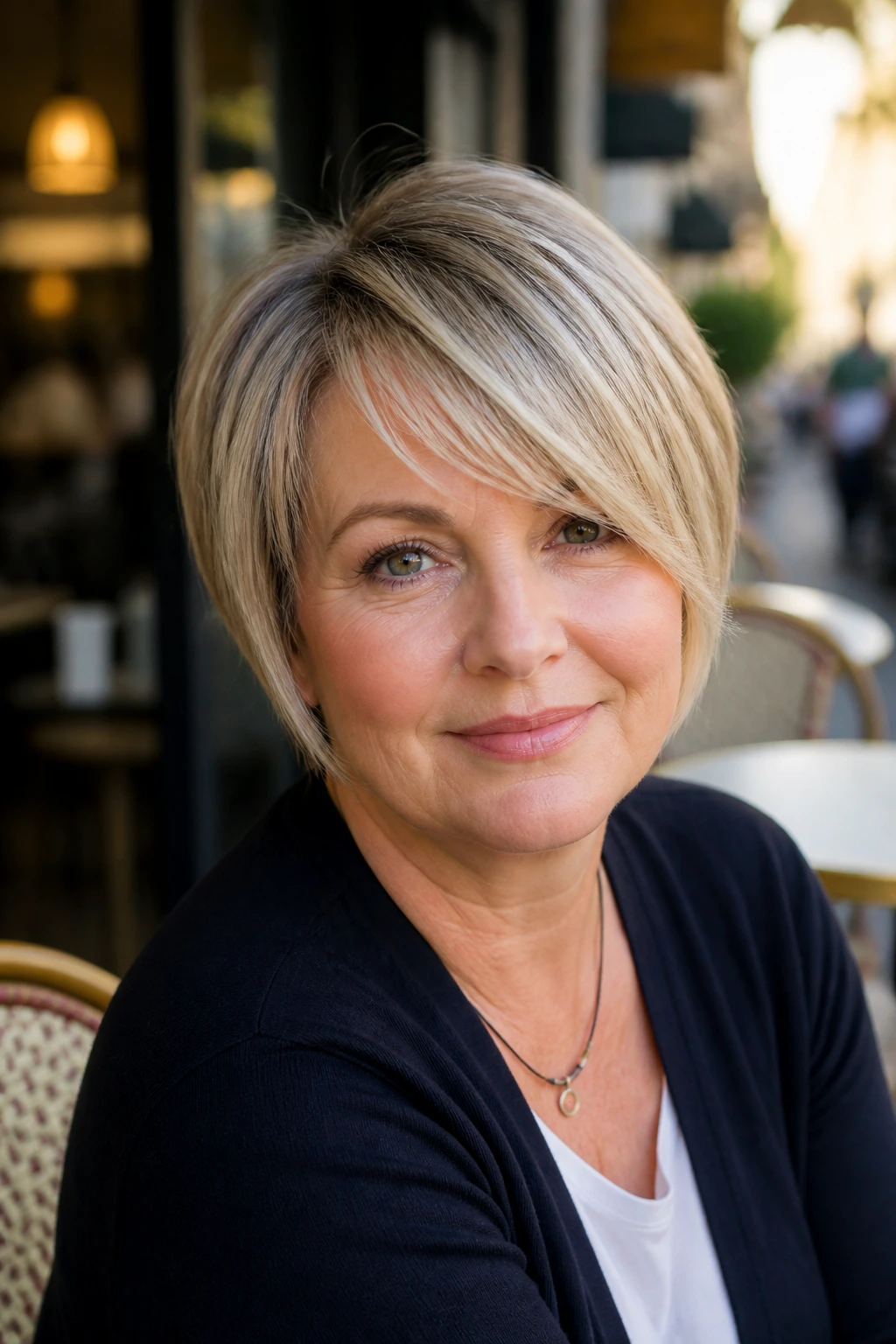
Side-swept bangs are a strong choice for round faces because they create a diagonal line instead of a wide horizontal one. That diagonal helps lengthen the face visually without pretending the face should be something else.
A longer sweep that lands near the cheekbone works better than a short piece that sits high on the forehead. The longer line gives the face room. It also lets the rest of the haircut stay soft around the jaw, which keeps things balanced.
- Keep the sweep angled, not rounded.
- Ask for a longer front section that blends into the sides.
- Use a light brush and a bit of root lift.
This is a dependable style when you want flattering without fuss.
34. Air-Dried Bangs With Natural Texture
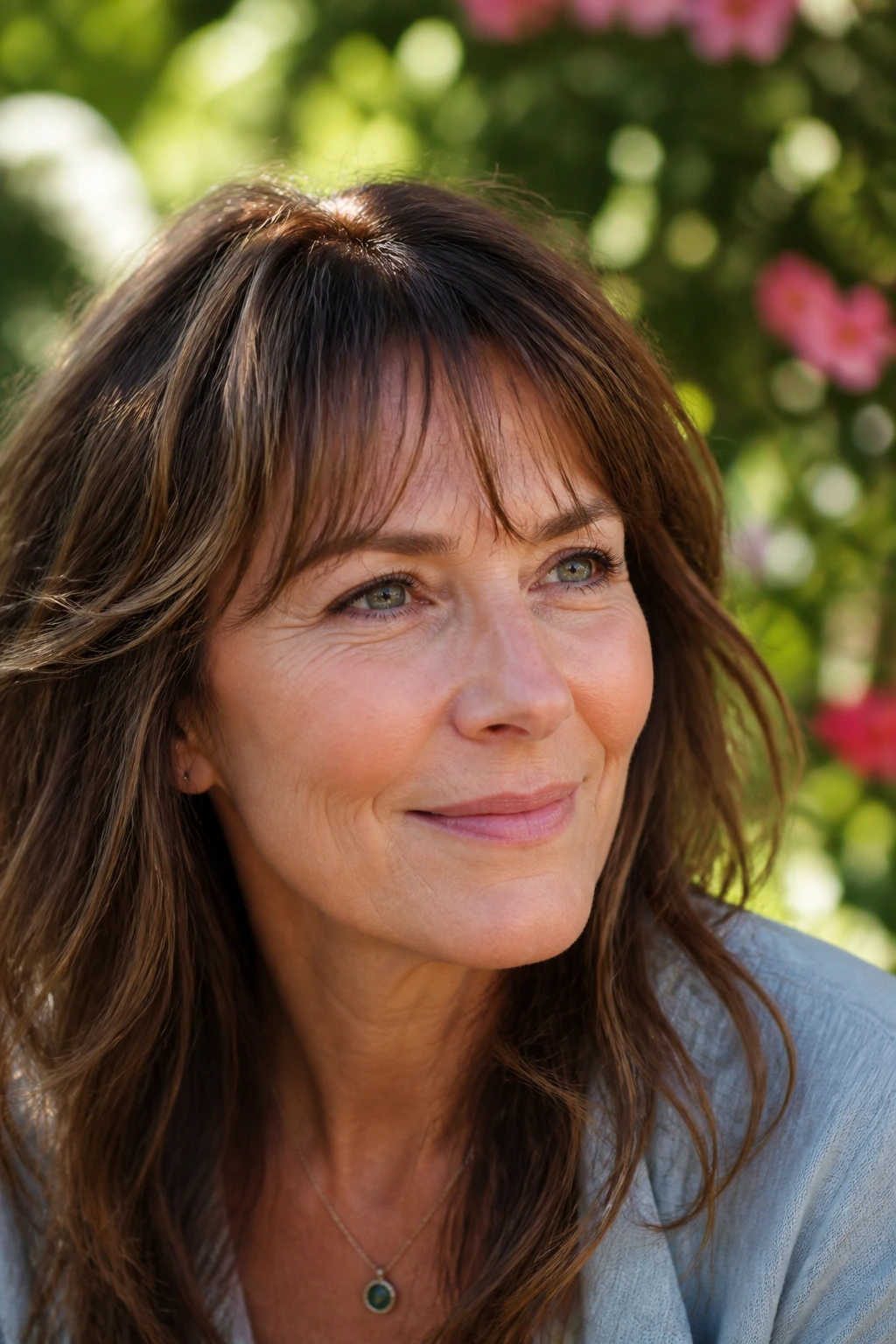
Air-dried bangs are for women who would rather work with their texture than chase it with a round brush every morning. If your hair has a natural bend, this can be one of the easiest bang ideas on the table.
The cut needs to respect how the hair behaves when it dries on its own. That means a little extra length and a little softness at the edges, because hair often springs up as it dries. A stylist who cuts only on wet hair may leave you with bangs that feel shorter than expected once they set.
A touch of leave-in cream, then hands off. That’s usually enough. If you enjoy easy hair and a little movement, this one makes sense.
35. A Grow-Out Fringe That Still Looks Intentional

A grow-out fringe is the honest answer for anyone who likes bangs but dislikes the upkeep. It starts as a real fringe, then slowly becomes a face frame without looking like you missed your trim appointment.
The trick is to ask for a shape that can live in two stages. The front should be long enough to split, sweep, or tuck, and the sides need to connect to the haircut so the grow-out feels planned. I’m a big fan of this approach for women who want freedom more than precision.
If your hair grows fast, this may be the smartest choice on the whole list. It buys you time. It also keeps the haircut useful while it changes, which is more than you can say for some sharp fringe cuts.
Final Thoughts
The best bangs after 60 are rarely the most dramatic ones on the page. They’re the ones that fit your hair density, your styling habits, and your patience level on a Monday morning.
Some women look fantastic in a clean blunt fringe. Others need a soft sweep, a curtain split, or a fringe that grows out gracefully because they would rather live their life than trim bangs every three weeks. That’s the real decision. Not age. Not rules. Just fit.
If you want the smartest result, bring a photo of the shape you like, then ask your stylist to adjust the length and density for your actual hair. That small conversation saves a lot of regret.
