



Textured bangs are one of those cuts that look better after they’ve lived a little. Fresh out of the chair, they can feel almost too tidy; after a quick shake, a bit of air-drying, and maybe a touch of dry shampoo, they start doing the thing people actually want from fringe: movement, softness, and a little swing around the eyes.
The difference between flat bangs and textured bangs is rarely length alone. It’s where the weight gets removed, how the ends are broken up, and whether the fringe can bend instead of sitting like a shelf. That’s why the best versions don’t all look the same. Some are soft and curtain-like. Some are choppy and short. Some barely whisper across the forehead, and some hold their shape with a little grit.
What makes this category fun is that it works across hair types, face shapes, and moods. You can go polished, shaggy, airy, edgy, grown-out, or deliberately messy without changing the basic idea: take the front section and give it life. The first place to start is with the most forgiving version of all — the kind that parts down the middle and falls away from the face.
1. Textured Curtain Bangs With Shattered Ends

Textured curtain bangs are the easiest entry point if you want movement without a hard line. The middle stays a little shorter, the sides stretch longer toward the cheekbones, and the ends are cut with enough softness to move when you turn your head.
Why They Work So Well
The shape opens the face instead of boxing it in. A center part gives you that easy split, while the shattered ends keep the fringe from looking heavy or blunt. It’s one of those cuts that looks good tucked behind the ears, flipped out with a round brush, or left to dry on its own.
- Ask for the shortest point to land around the brows.
- Keep the side pieces long enough to graze the cheekbones.
- Style with a 1-inch round brush and a quick bend away from the face.
- Finish by separating the ends with your fingers, not a comb.
Best tip: if the center feels too short on day one, leave it. Curtain bangs settle fast, and the shape usually looks better after one wash.
2. Wispy Brow-Skimming Fringe
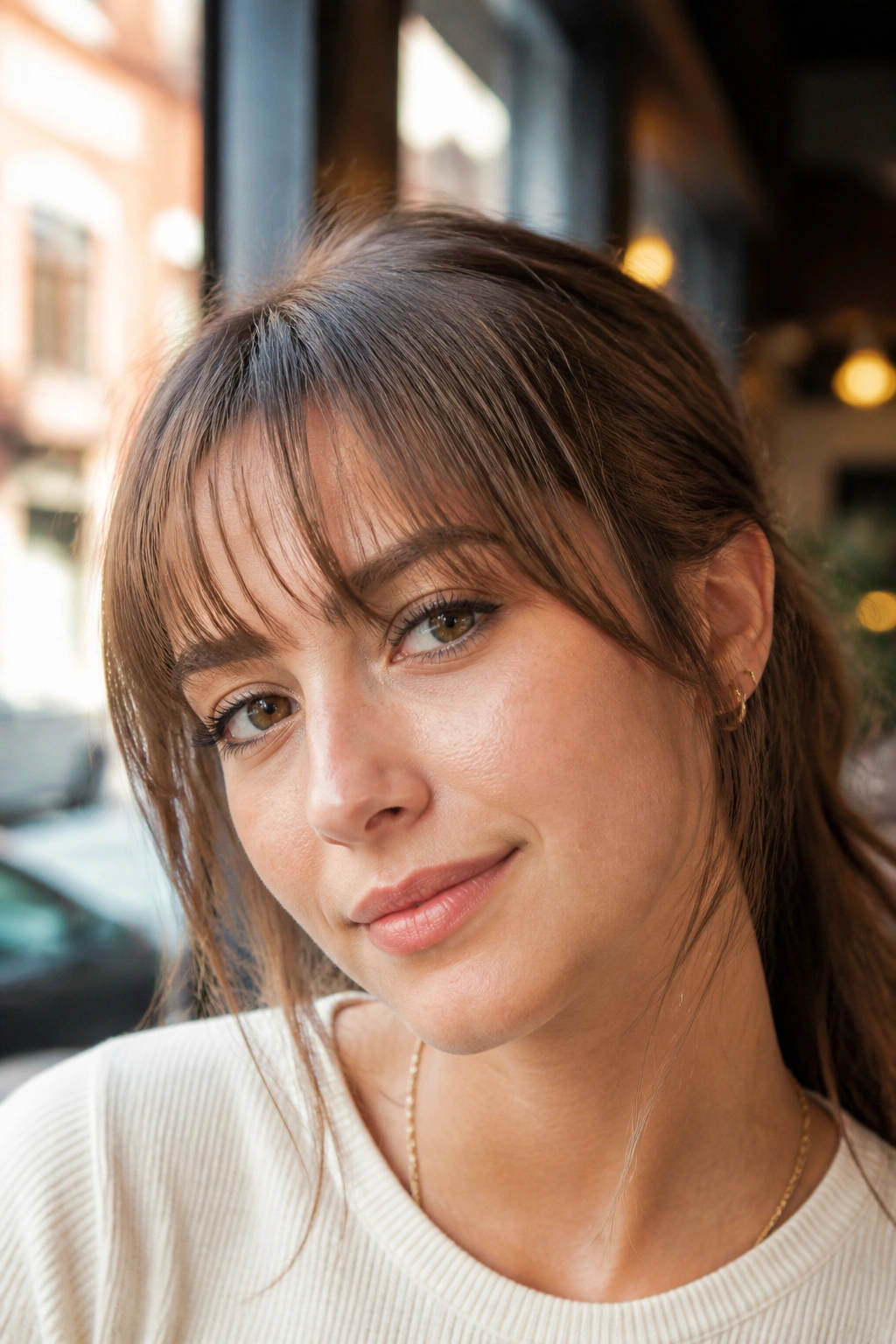
A sheer fringe can change a face faster than a heavy chop. These bangs sit right at the brows, but the texture keeps them light enough that they never look boxed in or stiff.
The trick is spacing. You want some forehead to show through, which gives the fringe that airy feel instead of a dense wall. That makes this shape especially nice for finer hair, since it does not need a ton of density to read clearly. A blow-dry with a flat brush and a tiny bit of root lift is usually enough.
I like this one when someone wants bangs but hates the feeling of hair sitting fully on the skin. It’s softer in humid air, easier to grow out, and less fussy than a full straight fringe. A pea-sized amount of lightweight cream is plenty; too much product turns wispy into stringy fast.
3. Feathered Side-Swept Bangs

What do you do when one side of your hair has a stubborn cowlick? You stop fighting it and build the fringe around it.
Feathered side-swept bangs move diagonally across the forehead, with the ends softened so they don’t land in one hard block. The style works especially well when you want the front to blend into layers rather than announce itself like a separate section. It feels easy, which is why people keep coming back to it.
How to Style the Sweep
Blow-dry the bangs in the opposite direction first, then guide them across the forehead with a round brush or paddle brush. That tiny switch gives the root enough control to hold the sweep all day. A light mist of flexible hairspray helps, but don’t freeze it in place.
- Best on medium to thick hair.
- Nice for strong side parts.
- Easy to tuck behind one ear.
- Good when you want bangs that don’t need exact symmetry.
4. Choppy Micro Fringe

Short fringe can look sharp, but choppy micro bangs have a little more attitude because the ends are broken up instead of cut into one clean line. They sit well above the brows and let the forehead stay part of the look.
This is not a shy cut. It works best when the rest of the haircut has some shape — a bob, a shag, even a pixie with texture on top. If the hair around the forehead is too smooth, the fringe can look oddly detached. The choppiness gives it context.
Maintenance matters here. Micro bangs grow out fast, and a few millimeters can change the whole feel. Plan on trims every 3 to 4 weeks if you want the shape to stay crisp. If you’re okay with a softer edge, you can stretch that longer, but the style loses some of its punch.
5. Bottleneck Bangs

Bottleneck bangs get their name from the shape: narrow at the center, wider at the sides, then tapering into face-framing pieces. It’s a smart cut because it gives you the softness of curtain bangs with a little more structure in the middle.
The center section sits higher on the forehead, which keeps the eyes open. The side pieces take over where the cheekbones start, so the whole fringe feels connected to the rest of the haircut instead of floating on top of it. That’s why stylists like this shape on oval, heart, and square faces — it gives contour without trying too hard.
This cut also handles grow-out well. A blunt fringe can get annoying fast once it starts touching the lashes. Bottleneck bangs just turn into longer face-framing layers, which is a much nicer place to land. If you like a little bend at the sides, this one delivers it without needing much daily fuss.
6. Shaggy Fringe With Cheekbone Layers
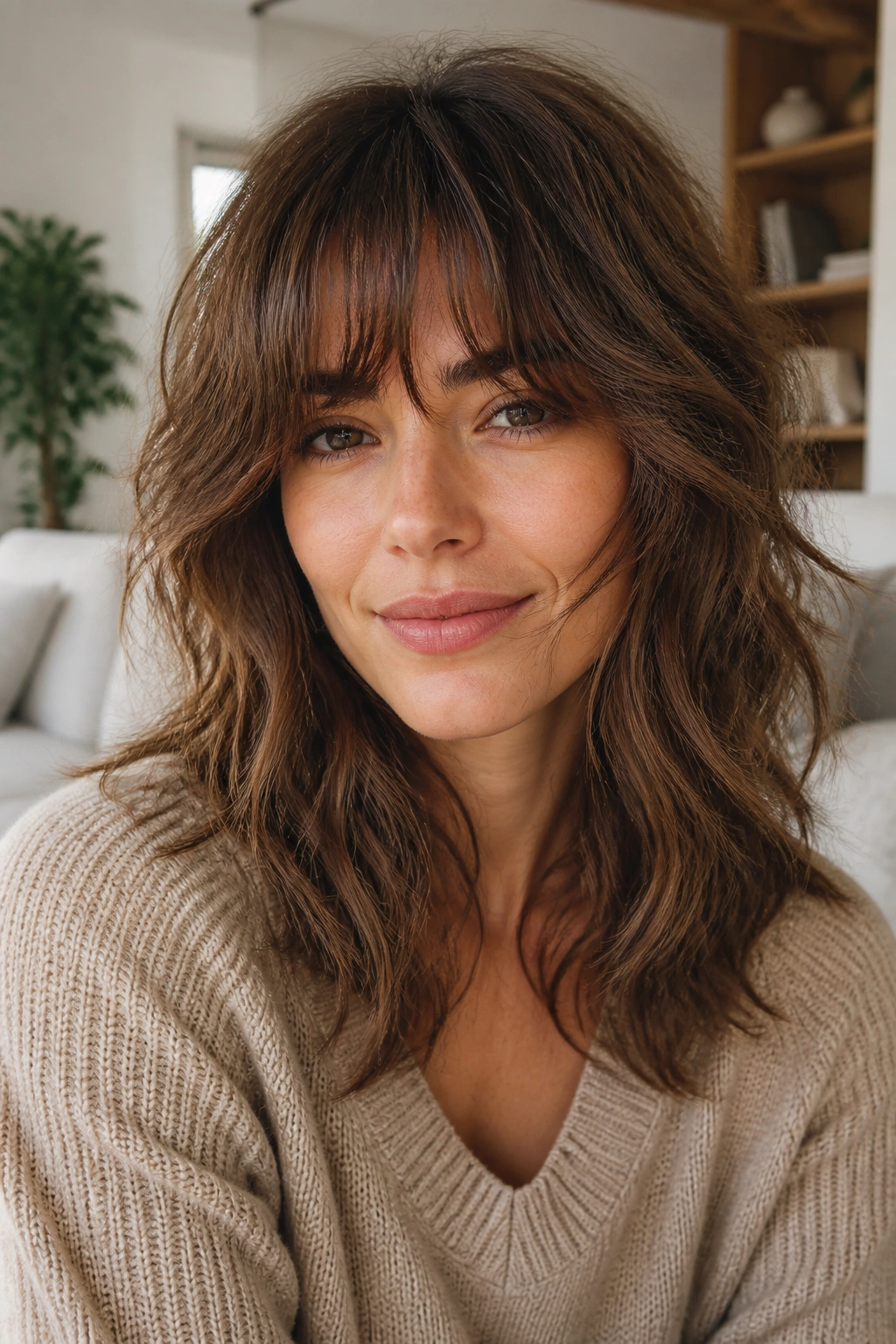
Unlike a neat curtain bang, shaggy fringe likes a bit of disorder. The front pieces are cut to mingle with the layers around the cheekbones, so the whole front of the haircut moves as one shape instead of as separate parts.
That’s why this version works so well with shags, wolf cuts, and layered lobs. The fringe doesn’t sit alone. It spills into the rest of the cut, which makes the movement feel casual and real rather than styled to death. A little texturizing spray on damp hair goes a long way here.
If your hair has a natural wave, this is one of the easiest shapes to wear. Let it dry 80 percent of the way on its own, twist a few front sections with your fingers, and stop before it gets too polished. The charm is in the unevenness. Too much smoothing kills it.
7. Curly Textured Bangs

Can curly bangs work? Absolutely — but only if the cut respects the curl pattern instead of flattening it.
A good curly fringe is cut dry, or at least mostly dry, so the stylist can see where each curl wants to spring. That matters because curls shrink differently across the forehead. One side may lift an inch, another may curl two inches. Cutting them wet without adjusting for that is how you end up with surprise micro bangs.
What to Ask For
Ask for shape, not bluntness. The fringe should sit around the brow area when dry, with enough room for shrinkage. A curl cream and a diffuser can help, but you don’t want the bangs weighed down. Keep the product light at the roots and richer on the ends.
- Dry-cutting works best.
- Leave room for shrinkage.
- Use a diffuser on low heat.
- Scrunch instead of brushing.
Best part: curly bangs bring movement by default. They don’t need to pretend to be straight.
8. Razor-Cut Fringe
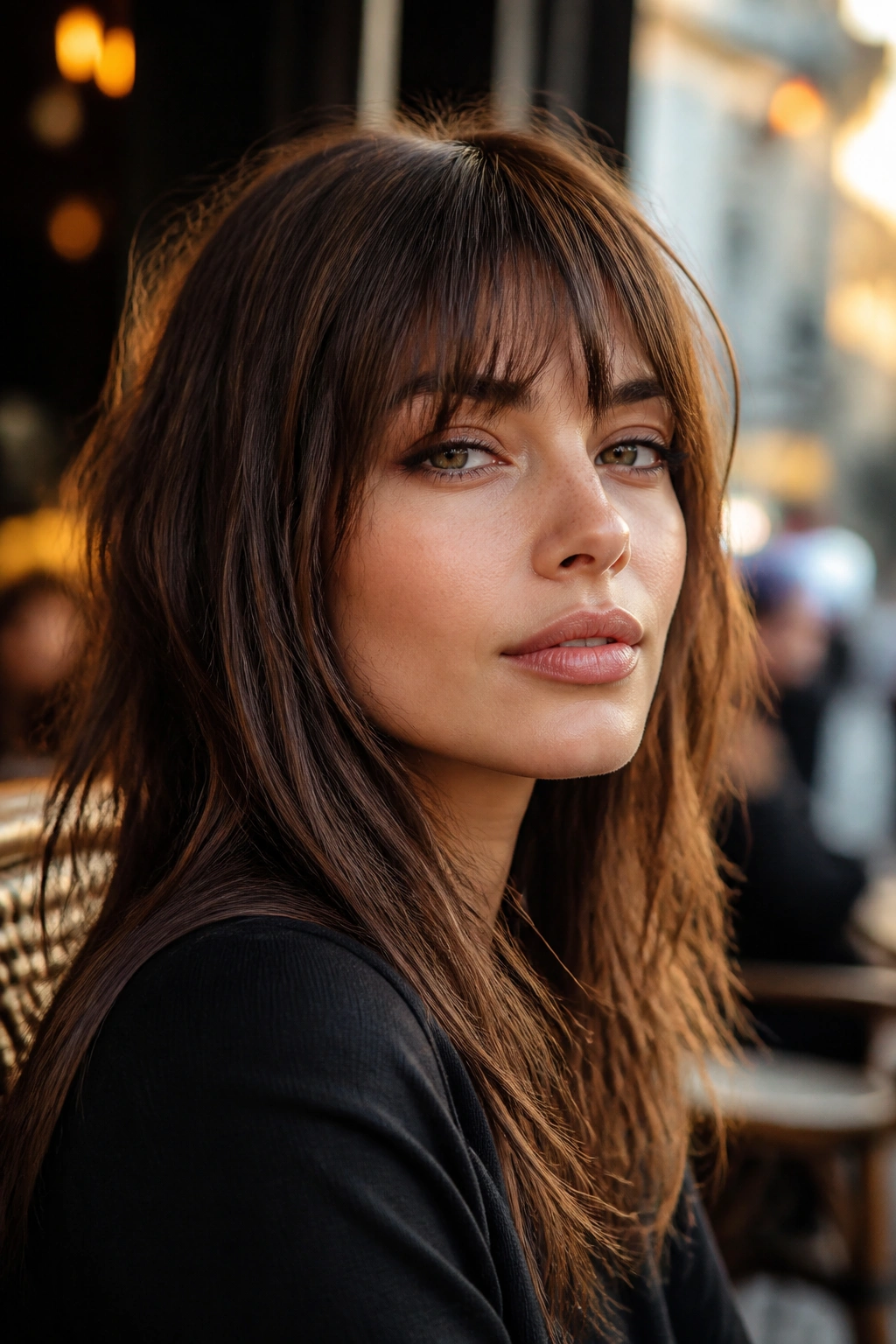
A razor gives bangs a softer edge than scissors alone, and that softness shows up right away in the way the hair moves. The fringe looks a little airier, a little more broken up, and less like one solid line across the forehead.
This style is especially useful on medium to thick straight or wavy hair. The razor removes bulk while keeping the ends feathered, which can make dense hair feel lighter around the face. But there’s a catch: if the hair is fragile, very dry, or already prone to splitting, too much razor work can leave the ends looking rough.
I prefer this cut when the goal is movement first and perfection second. It has a lived-in feel that doesn’t need much coaxing. A tiny bit of lightweight wax rubbed between the fingers is enough to separate the ends and show off the texture without making the fringe piecey in a harsh way.
9. Grown-Out Fringe With Face Framing

Some of the best textured bangs happen when the original fringe has grown past the brow and started behaving like layers. That in-between stage can be awkward if you fight it. It’s often prettier when you lean into it.
This shape gives you length at the center and soft framing pieces at the sides, which means you can tuck, sweep, or part it depending on the day. It works well for people who want bangs but do not want the maintenance of a hard fringe. The hair sits close enough to the face to matter, but not so close that it needs daily correction.
The styling is low drama. A round brush at the roots, a quick twist at the ends, and maybe a side part if the middle feels too flat. That’s enough. It’s also a nice transition if you’re growing out bangs and don’t want the process to look awkward for months on end.
10. Piecey Blunt Bangs

A blunt bang does not have to feel heavy. Break it into pieces, keep the edge controlled, and it suddenly looks modern instead of severe.
That’s the appeal of this version. You still get the clean shape across the forehead, but the interior texture keeps the fringe from reading like a solid curtain. It’s a strong look on straight hair and thick hair, especially when the cut is narrow enough to sit neatly without puffing up at the temples.
A Quick Styling Note
The trick is to dry the bangs forward first, then bend the ends slightly with a round brush or flat iron. After that, separate the lower half with a fingertip-sized bit of paste. Don’t overdo the separation. One or two visible pieces are enough.
- Best on straight or slightly wavy hair.
- Keeps its shape with a trim every 4 to 6 weeks.
- Works well with a bob or a sharp shoulder-length cut.
- Needs only a small amount of product.
11. Arched Bangs Over the Brows

Arched bangs are one of those styles that look subtle until you see the side view. The center sits a little shorter, then the fringe curves gently downward toward the temples, which gives the face a lifted shape.
The arc makes this style feel softer than a straight brow-skimming cut. It also helps if your eyebrows are part of your look — and for a lot of people, they are. The curve lets the brows show without crowding them. That makes the eyes feel more open, especially when the hair is naturally straight and wants to fall flat.
I like this fringe on heart and oval faces, but it can work on others too if the curve is adjusted. Keep the shortest point modest, not dramatic. A small round brush and a quick side-to-side blow-dry usually make the shape fall into place.
12. Split Fringe With a Center Part

Two separate bangs pieces can do more than one solid fringe ever will. A split fringe creates a little window at the center of the forehead, which makes the whole haircut feel relaxed right away.
This shape is especially handy if you wear glasses, because the bangs don’t fight with the frames. They also play nicely with sunglasses, clips, and tucked-behind-the-ear hair, which sounds minor until you live in fringe for a week and realize how often it sits in your face.
Compared with curtain bangs, a split fringe usually stays a bit shorter and lighter through the middle. That keeps the movement crisp. If your hairline has a stubborn cowlick, this can still work — but the part needs to be placed where the hair wants to separate naturally. Force it too hard and it will spend the day arguing back.
13. Airy Textured Bangs for Fine Hair
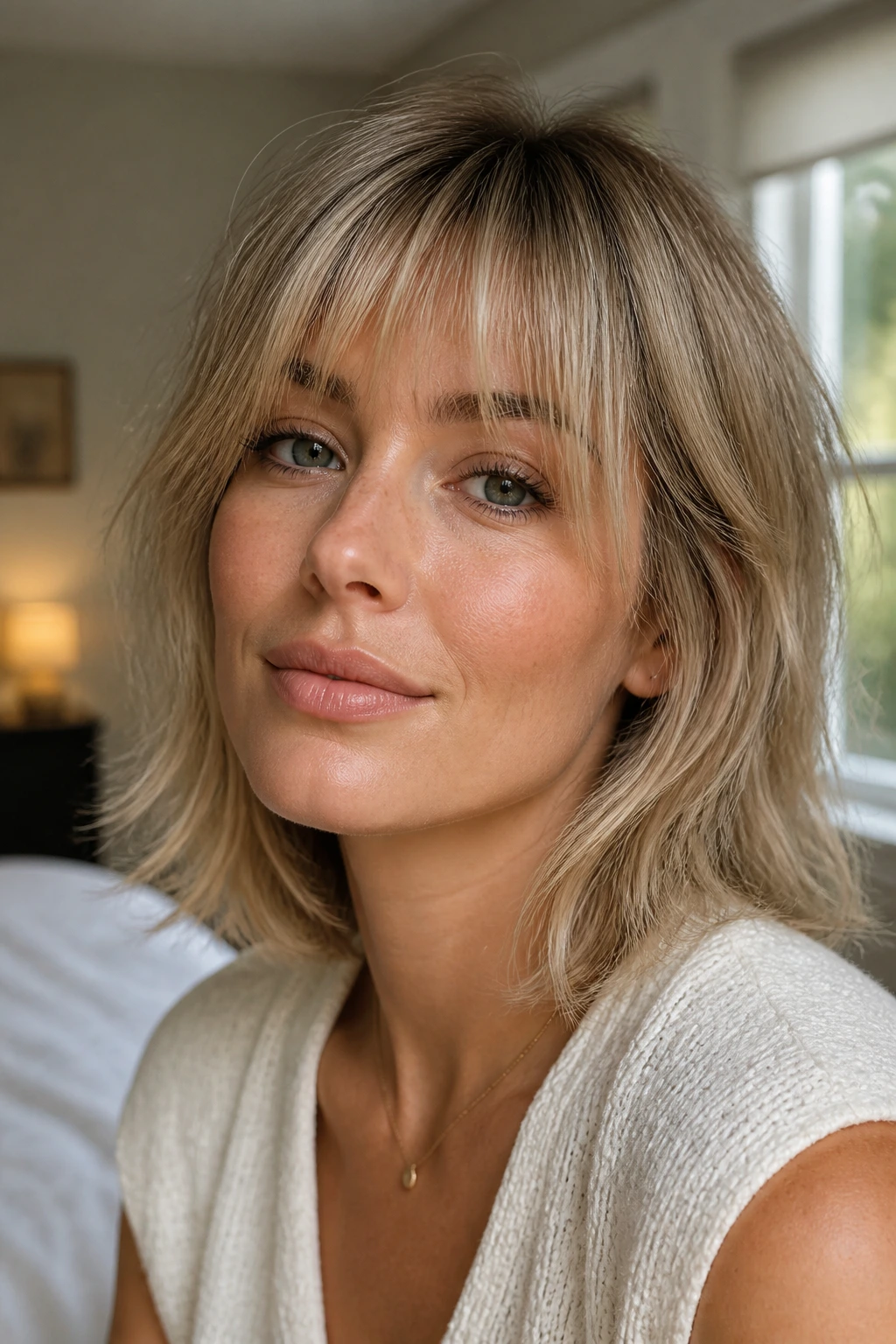
Fine hair needs a light hand, not a heavy fringe. Airy textured bangs solve that by using small, uneven sections that create the look of fullness without stacking too much weight at the forehead.
The shape is flattering because it gives the front some interest while still letting the hair move. A root-lifting spray at the base and a quick blow-dry with a vented brush are usually enough. Thick creams and rich oils are the enemy here; they make the fringe collapse before lunch.
How to Keep Them From Falling Flat
Use less product than you think you need. Seriously. Fine bangs can go from soft to greasy with one overenthusiastic squeeze of serum. Dry shampoo at the roots also helps once the fringe starts losing lift.
- Blow-dry from side to side.
- Keep the shortest pieces just below brow level.
- Skip heavy masks near the front hairline.
- Trim often so the shape stays light.
14. Dense Textured Bangs for Thick Hair
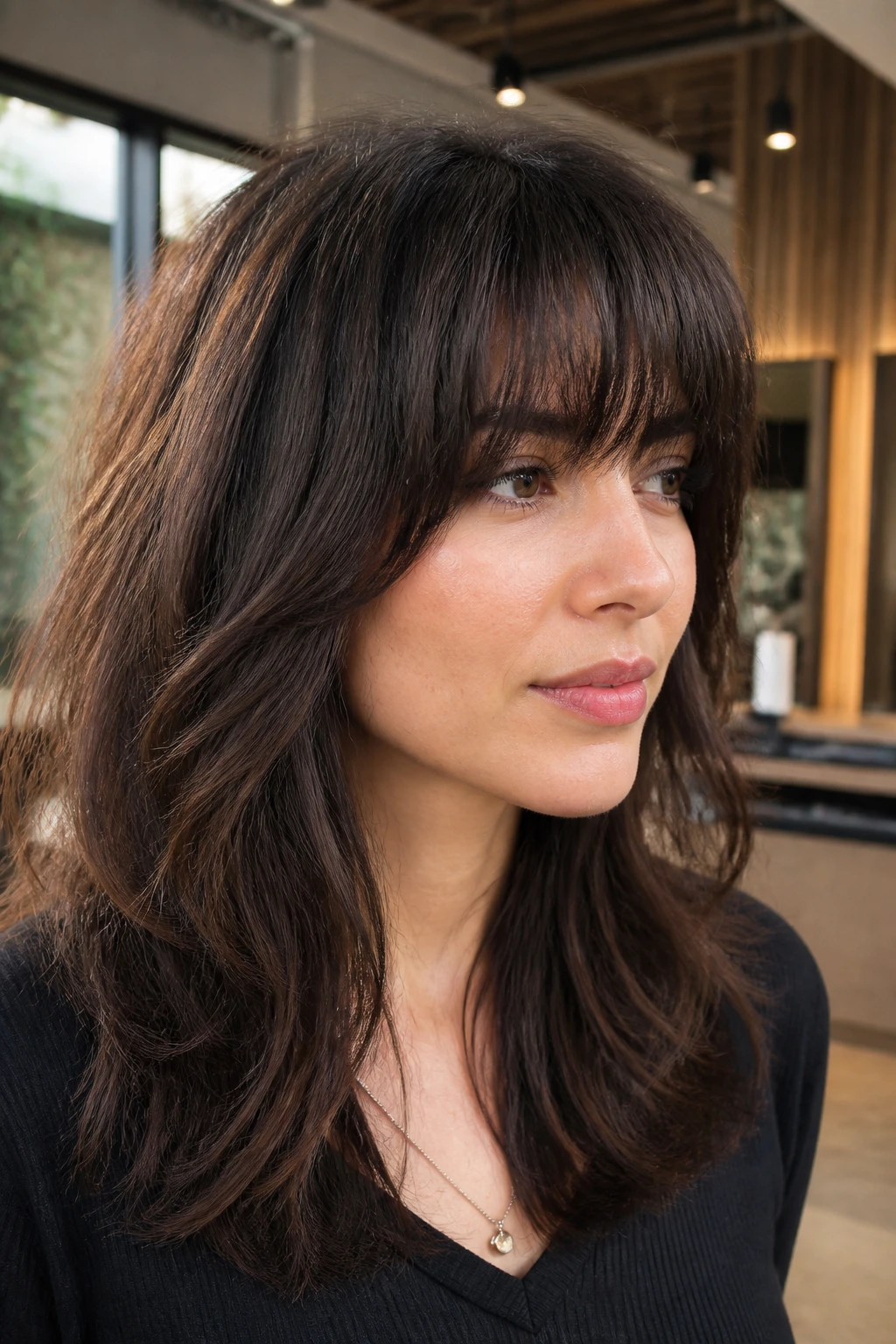
Thick hair can wear a fuller fringe, but the texture has to be handled carefully or the bangs turn into a wall. Dense textured bangs keep the shape substantial while removing enough bulk to let air move through the front.
The best version does not rely on aggressive thinning. That usually creates frayed ends that puff up at the first sign of humidity. Instead, a stylist can point-cut the ends and build internal texture so the fringe lies in layers rather than one heavy block. The result looks controlled, not bulky.
This is a strong choice if you like the idea of bangs but don’t want them to disappear into the rest of your hair. A little round-brush bend at the ends helps the fringe arc away from the forehead. Without that bend, thick bangs can sit flat and feel heavy. With it, they move.
15. French-Girl Fringe
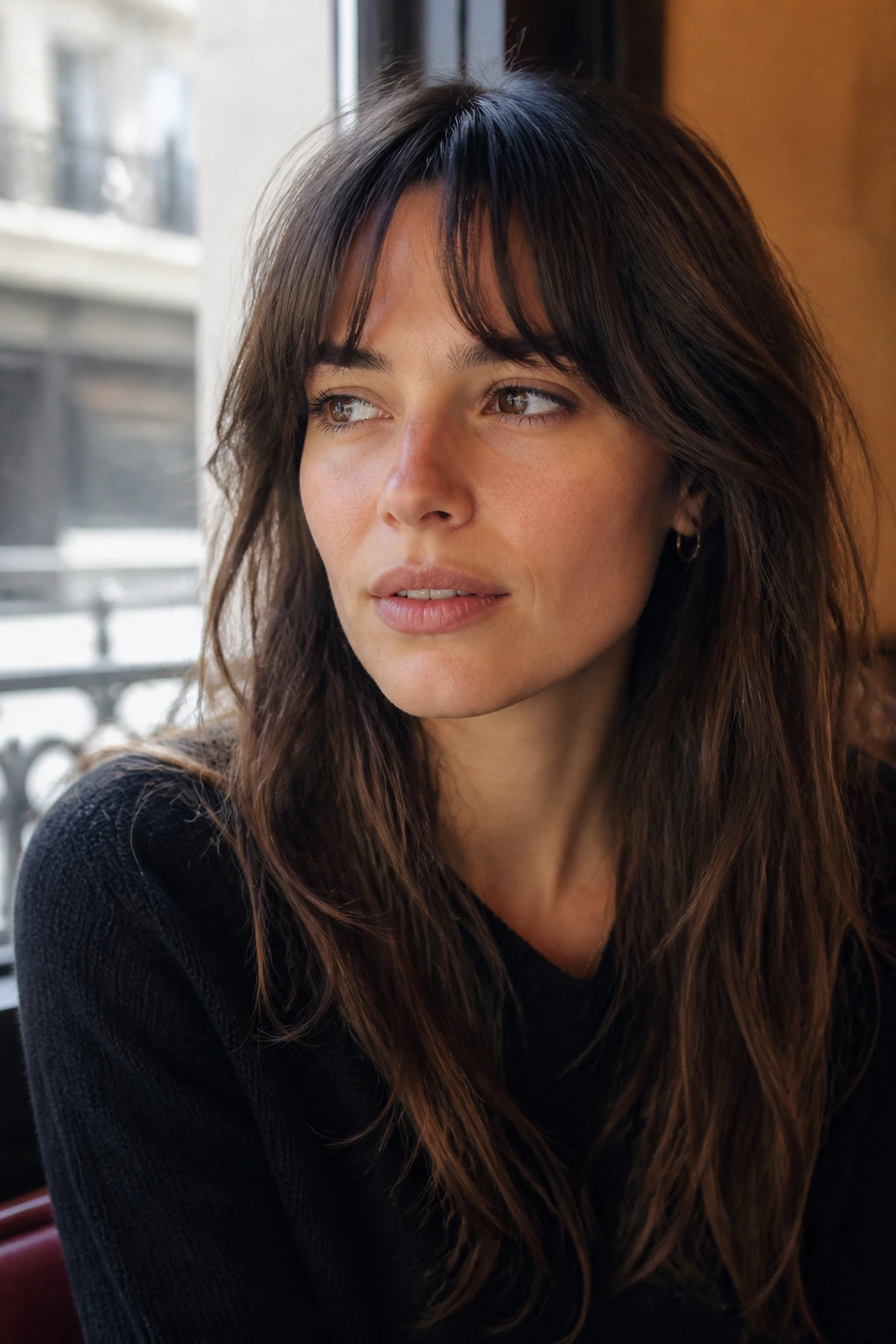
French-girl fringe gets talked about a lot, and honestly, the reason is simple: it looks undone in a way that still feels deliberate.
The cut usually sits around the brows, with a soft split or a loose center that keeps the hair from looking rigid. The texture is what matters. It should feel touchable, slightly irregular, and a little less groomed than a classic salon fringe. That’s where the movement comes from.
How to Wear It
Let it dry with your fingers rather than trying to force it into a perfect line. A small blast from a blow-dryer at the root can help, but the ends should keep some bend and irregularity. A dry texture spray can help, though one mist is enough.
- Great with air-dried hair.
- Works with a bob, lob, or shag.
- Likes a little mess.
- Looks better when it’s not too polished.
16. Wolf Cut Bangs
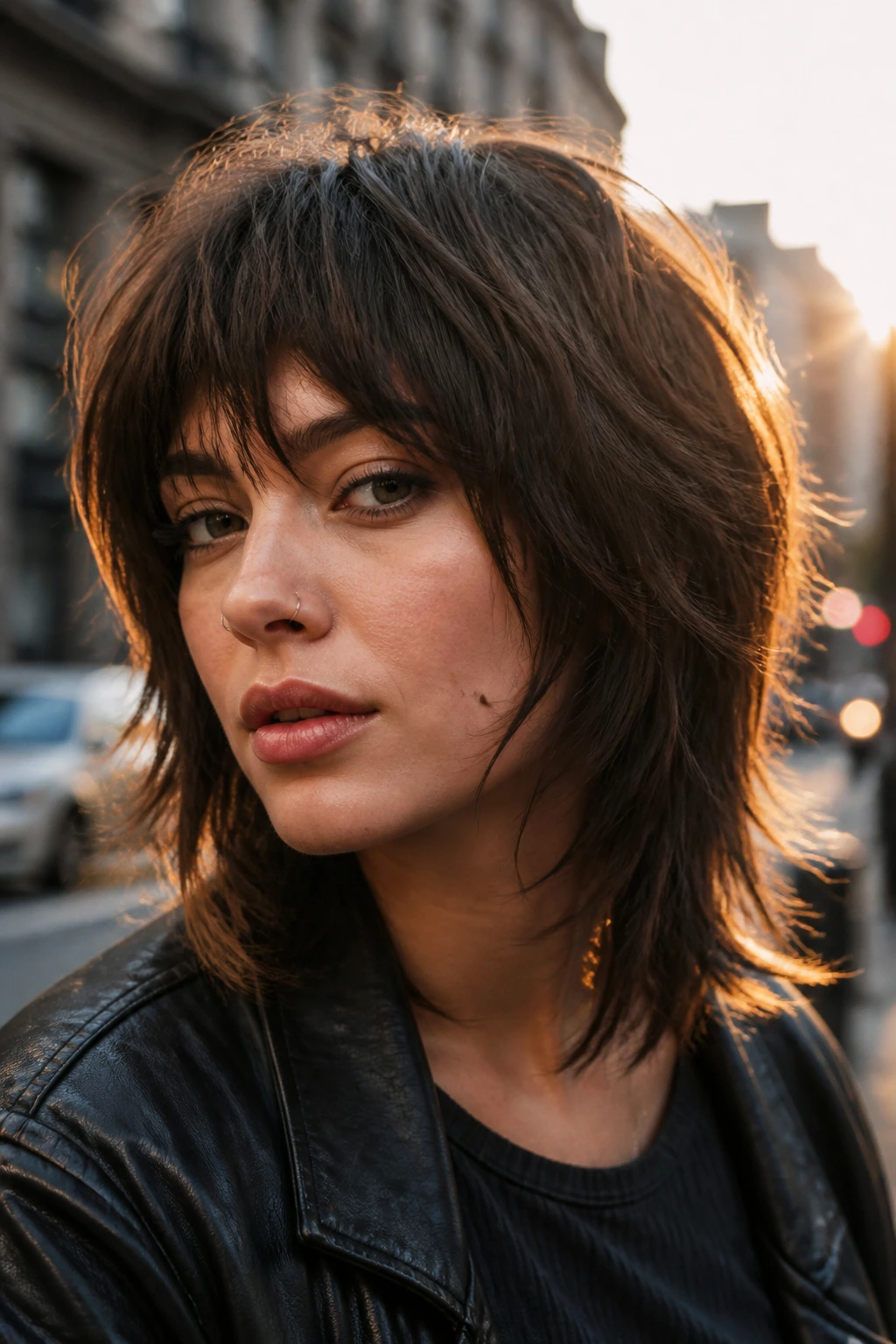
Wolf cut bangs are all about attitude. They’re choppy, layered, and connected to the rest of the haircut instead of sitting apart from it like a neat little front panel.
The fringe usually has short and long pieces mixed together, which gives it that wild, broken-up motion people want from a wolf cut. It can look rough if it’s cut without shape, so the key is keeping some direction in the pieces. The bangs should frame the eyes and cheekbones even when they look messy.
A lot of stylists dry-cut this section so they can see where the hair falls around the face. That matters because the whole cut depends on movement. If the bangs are too tidy, they lose the point. If they’re too fractured, they can look accidental. The sweet spot sits right in the middle, and it’s usually more wearable than it sounds.
17. Sliced Straight Bangs
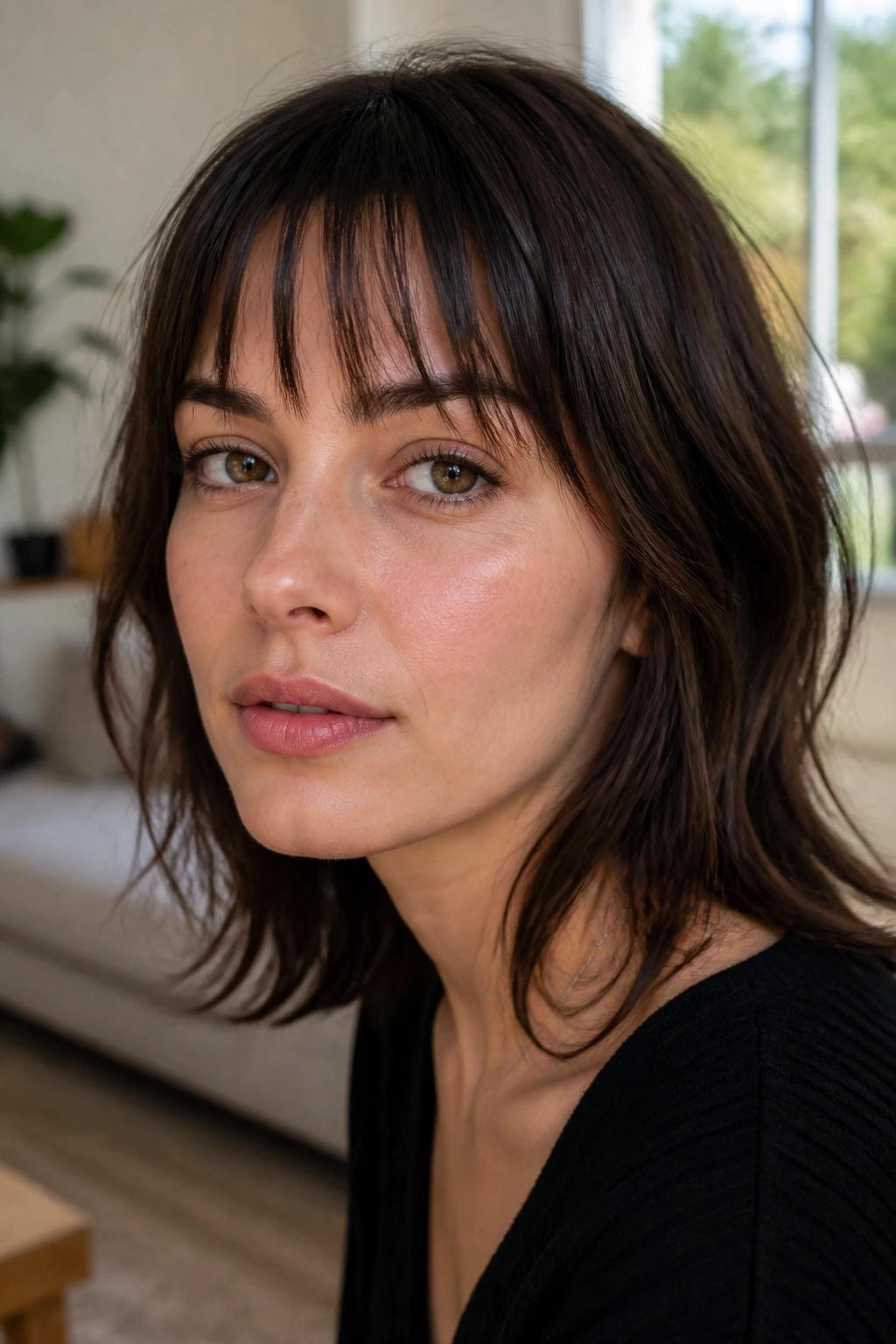
Sliced straight bangs sound severe, but the texture changes everything. Instead of a thick blunt line, the hair is cut in narrower sections so the fringe lies flatter and moves in small, separate pieces.
That makes this style a good option for straight hair that tends to fall in one solid curtain. The slices keep the line controlled while still allowing a little separation. You get shape, but not stiffness. The difference shows most when the hair moves — one side shifts, the other catches a bit of air, and the whole front feels lighter.
This cut works especially well if you like a graphic shape but hate the helmet effect. Keep the length near the brows and avoid over-styling it into a perfect sheet. A flat brush and a light finishing mist are enough. Too much heat or too much product pulls all the texture out.
18. Long Ponytail Bangs
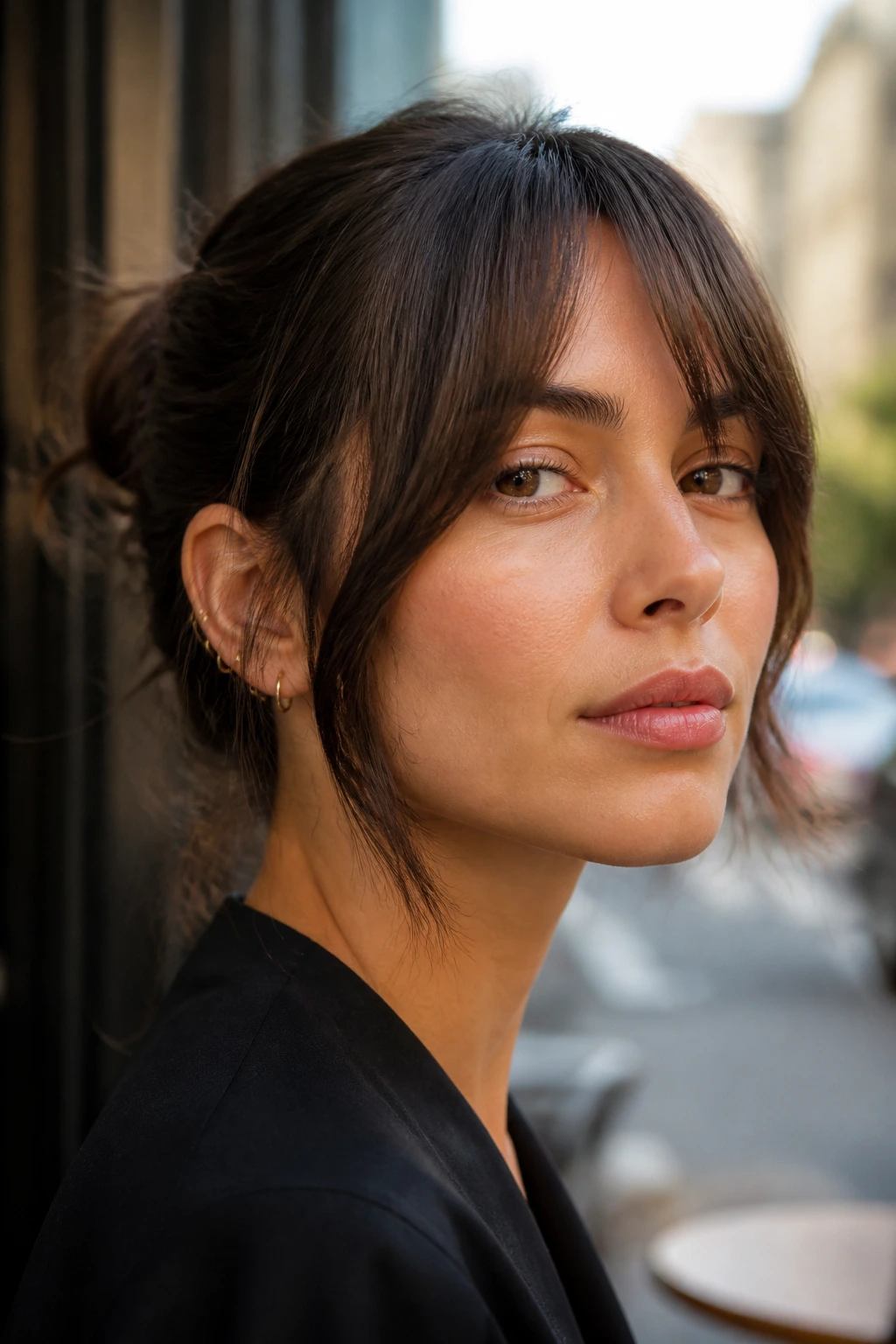
Some bangs are meant to be seen only when the hair is down. Long ponytail bangs are the opposite — they’re built to look good when the hair gets pulled back.
The length usually falls somewhere between the brows and the cheekbones, which gives you enough hair to tuck into a ponytail, bun, or half-up twist without looking like you forgot the bangs existed. That makes them practical. It also makes them flattering, because they leave a soft frame around the face when the rest of the hair is away from it.
Compared with shorter fringe, these bangs need less daily correction. They can be swept aside, pinned, or shaped with a round brush if you want polish. If you wear your hair up often, this is one of the smartest textured bang choices on the list. It moves with the style instead of fighting it.
19. Messy Cropped Fringe

Messy cropped fringe is short, airy, and a little bit rebellious. The texture keeps it from feeling too hard, even though the length stays well above the brows.
This cut suits people who like a bit of edge and don’t mind a fringe that changes character depending on how it dries. Some pieces may sit higher, some lower. That unevenness is the whole point. A tiny bit of styling paste, rubbed into dry bangs and separated with the fingertips, gives just enough hold to keep the shape from turning fluffy.
What Makes It Feel Modern
The ends are intentionally broken up, not cut into a clean shelf. That softens the look and helps the bangs move when the hair shifts. The shape is also good with strong cheekbones or a bold brow, because it leaves space on the forehead instead of covering everything.
- Shorter than a standard brow-skimmer.
- Best with texture on top of the haircut.
- Needs very little product.
- Trims stay important.
One warning: if you love a polished look, this one may feel too rough.
20. Side-Part Curtain Hybrid
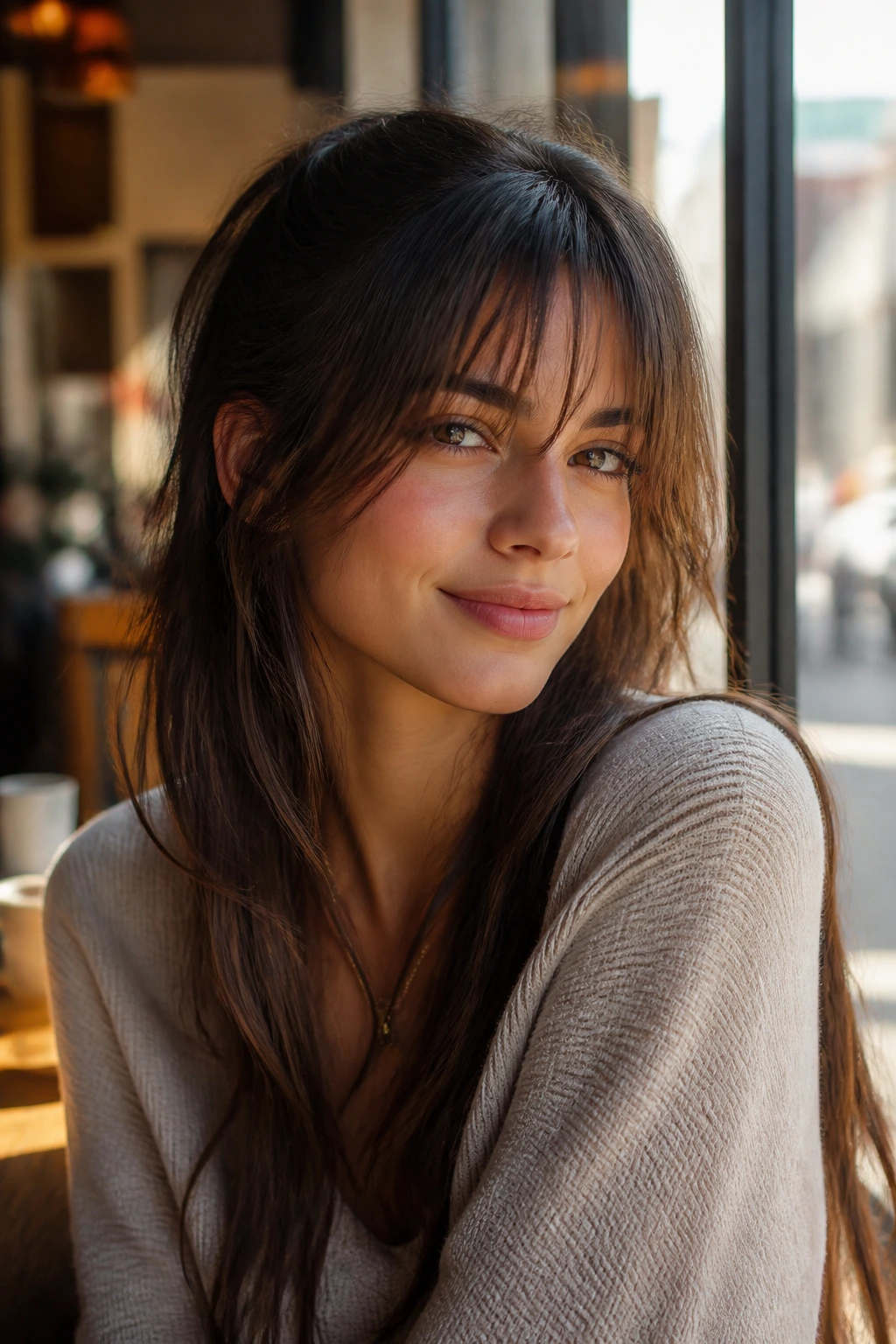
A side-part curtain hybrid gives you the face-framing feel of curtain bangs, but the part sits deeper to one side, which adds a little sweep and softness.
That asymmetry is the charm. One side drops closer to the eye, while the other opens the forehead more fully. It creates movement without needing a dramatic cut. I like it for people growing out layers or bangs, because the style adapts to what the hair is already doing instead of demanding perfection.
It also solves a common problem: not everyone likes a center part. Some foreheads look better with a side part, and some cowlicks simply prefer one. This shape respects that. Blow-dry the front in the direction you want the hair to go, then tuck one side behind the ear for a quick, easy finish.
21. Shaggy Bob Bangs

A shaggy bob can look a little flat at the front if the fringe is too neat. Add textured bangs, and the whole cut wakes up.
The bangs should swing into the cheekbones and then disappear into the bob’s outline. That keeps the hair moving as one shape, which matters more than people think. A bob without a little front softness can feel boxy. The fringe breaks that boxiness in the best way.
How to Keep the Shape Loose
Dry the bangs with your head tipped slightly forward, then lift the roots with a round brush just enough to keep them from clinging. You do not want a curl here. You want bend. A touch of texturizing spray after the hair cools helps the fringe keep its piecey finish.
This is one of those combinations that works because the haircut and fringe are doing the same job. Both are light, both move, and neither one needs to be perfect.
22. Round-Face Curtain Bangs

Round faces often get told to avoid bangs, which is lazy advice. The right shape can do the opposite: it can carve out length and give the face more angles.
Round-face curtain bangs usually start shorter in the middle and run longer toward the jaw or cheekbones. That vertical sweep helps draw the eye down instead of side to side. It’s a small detail, but it changes the whole read of the haircut.
Keep the shortest point a little off the brows so the center doesn’t become too heavy. The sides should taper smoothly, not stop suddenly. I’d also avoid cutting this fringe too thick at the corners, since that can widen the face again. A soft bend at the ends is enough. No need to overwork it.
- Best on medium-length cuts.
- Keep the middle light.
- Let the sides fall past the cheekbones.
- Works well with layers around the jaw.
23. Flipped-Out Bangs

Flipped-out bangs bring a retro feel, but they don’t have to look costume-y. The movement at the ends is the point — the hair turns away from the face instead of falling straight down.
That outward bend gives the fringe a little lift and keeps it from sticking to the forehead. It works especially well on medium hair that can hold shape without collapsing. A small round brush or a flat iron curve at the ends can create the flip, and you only need a few seconds of heat on each section.
The style looks best when the rest of the hair carries some swing too. A straight length with flipped bangs can feel disconnected. Add soft layers or a loose blowout, and the front starts to make sense. It’s a cheerful shape, honestly. A bit playful. A little less serious than a clean blunt fringe.
24. Air-Dried Wavy Fringe

If your hair already bends on its own, fighting it with hot tools is usually a waste of time. An air-dried wavy fringe lets the natural pattern do the work.
The key is cut and placement. The bangs need enough room to shrink, and the pieces should be broken up so they don’t dry into one clump. A dab of wave cream or light mousse on damp hair can help, but keep it away from the roots if your hair is fine. Then twist the front pieces once or twice with your fingers and leave them alone.
Compared with a blow-dried fringe, this one feels looser and more lived-in. It’s not trying to stay perfect. That’s why it suits shaggy layers, shoulder-length cuts, and any haircut that looks better a little undone. You can still smooth the ends later, but the point is to keep that soft bend.
25. Uneven Edgy Fringe

Not every fringe needs symmetry. An uneven edgy fringe uses staggered lengths to create movement, which gives the haircut a sharper, more editorial look.
The face-framing pieces are usually cut to different points, so the line of the bangs feels broken on purpose. That broken line is what keeps it interesting. Too much evenness can make edgy cuts look flat. Unevenness, when it’s done well, keeps your eye moving across the forehead.
How to Keep It Intentional
The shape needs a clear plan. You want asymmetry that looks designed, not a crooked accident. Ask for some sections to sit higher, others lower, and make sure the longest pieces still connect into the rest of the haircut.
- Works best with short layers or a shag.
- Needs a good stylistic point of view.
- Can be worn sleek or messy.
- Looks strongest when the ends are separated a little.
26. Easy Grow-Out Bangs

If you want bangs but fear the awkward phase, this is the smart move. Easy grow-out bangs start long enough to blend into layers later, which means they never trap you in one look.
The shape usually sits around the brows or just below, with soft side pieces that can be tucked away as needed. That makes them practical for anyone who changes their mind a lot, or anyone who simply does not want a hard maintenance schedule. You can part them in the middle, sweep them sideways, or pin them back when you’re tired of having hair on your forehead.
These bangs are especially nice if you’re testing the waters. They give you the feeling of a fringe without the constant trim appointments. Keep the ends light, not blunt. That tiny difference is what helps the style melt into the rest of the hair later on.
27. Halo Bangs
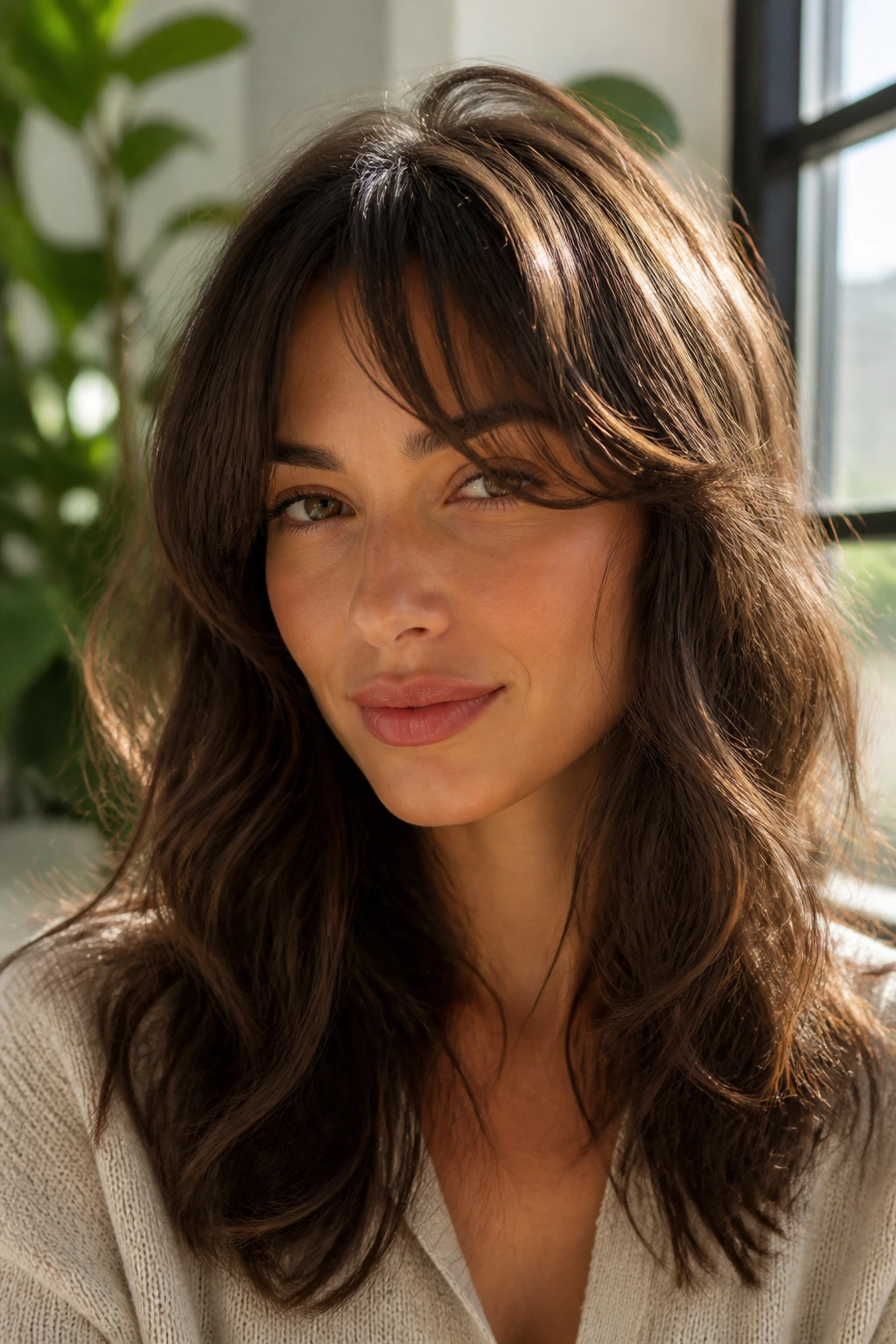
Can bangs feel lifted instead of heavy? Halo bangs do exactly that.
The front section is cut to arc around the forehead with a soft curve, while the crown has enough volume to make the whole shape feel buoyant. It’s a flattering option when you want texture that frames the face but doesn’t collapse downward. The movement comes from the curve, not from a lot of separation.
This style works best when the bangs are dried with lift at the roots. A small round brush and a quick roll away from the face are enough. Don’t press the fringe flat with product. That kills the shape. If your hair is very fine, a root spray at the top and a light mist of dry shampoo at the roots can help the curve stay visible.
It’s a pretty shape, but not a fussy one. That matters.
28. Cheekbone-Skimming Fringe
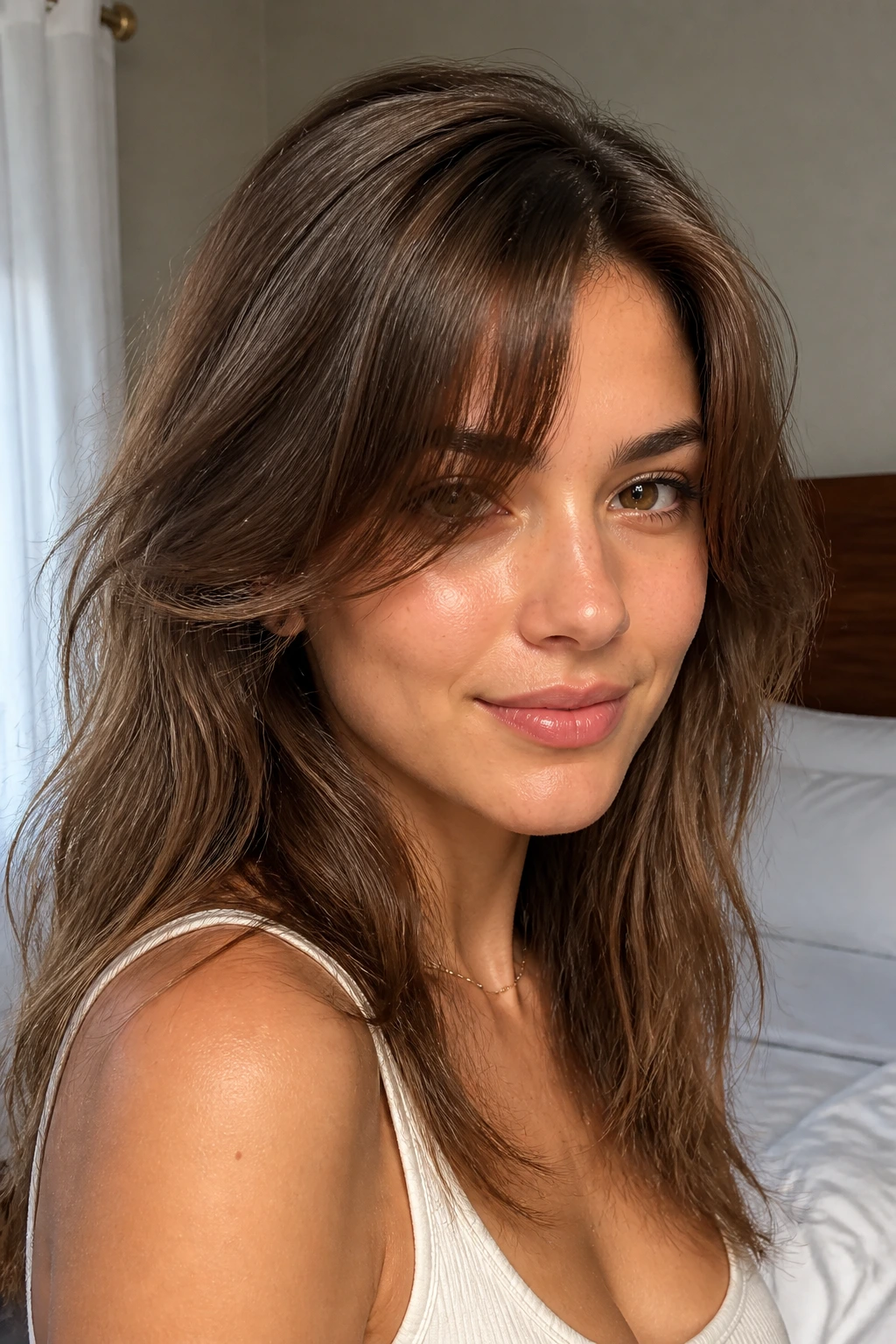
Cheekbone-skimming fringe is one of the easiest ways to fake structure around the face without going full contour. The longest pieces sit right where the cheekbones start, which naturally pulls attention upward.
The cut works because the length gives the hair somewhere to move. Short fringe can be cute, sure, but this version has more swing. When you tuck it behind the ear or let it fall loose, the shape changes in a good way. That little bit of motion is what makes the cut feel alive.
A Small Styling Habit That Helps
Direct the front pieces forward while drying, then angle them back just slightly at the ends. You’re building a bend, not a curl. That bend keeps the fringe from sticking to the face, especially when humidity shows up. A satin pillowcase can help too, because these longer front pieces are prone to getting bent overnight.
- Best for medium-length cuts.
- Nice with layers around the jaw.
- Easy to pin back.
- Works when you want movement near the eyes and cheeks.
29. Curled-Under Fringe
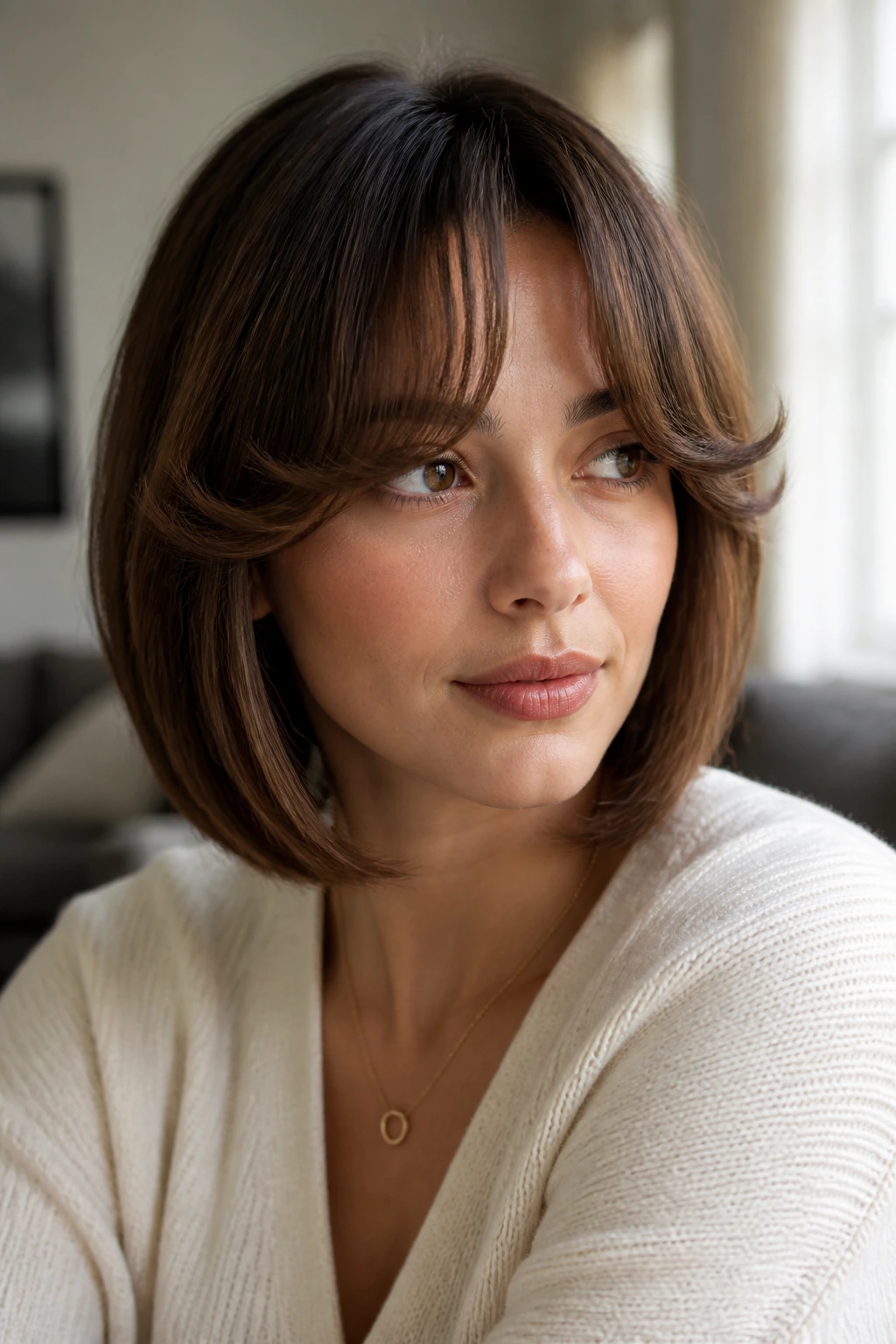
Curled-under bangs give the front a more polished finish, but the texture keeps them from feeling stiff. The ends tuck under just enough to soften the line across the forehead.
This is a good choice if you like order but still want movement. The shape is calm, not flat. A round brush or blow-dry brush can create the under-bend in one pass, and once the hair cools, the curve usually stays put without much extra work. A small amount of smoothing cream can help, though too much makes the fringe lose lift.
I like this style on shoulder-length cuts and bobs that already have a clean outline. It keeps the bangs from fighting the haircut. There’s a little bit of old-school polish here, but the texture saves it from feeling stiff or dated. Softness matters.
30. Lob Bangs

Long bobs need a fringe that knows how to swing. Lob bangs do that by sitting a little longer and moving with the length of the cut instead of against it.
The bangs are usually split or softly side-swept, with ends that blend into the face-framing layers around the jaw. That creates an easy line from forehead to cheekbone to shoulder. It’s subtle, but the whole haircut looks more considered because of it.
Compared with shorter bangs, lob bangs are far easier to style in a hurry. You can blow them out, air-dry them, or tuck them into a clip when you want them out of the way. They also wear well with a low ponytail, which is half the reason people love them. The cut gives you movement even on lazy days.
31. Brow-Grazing Airy Fringe
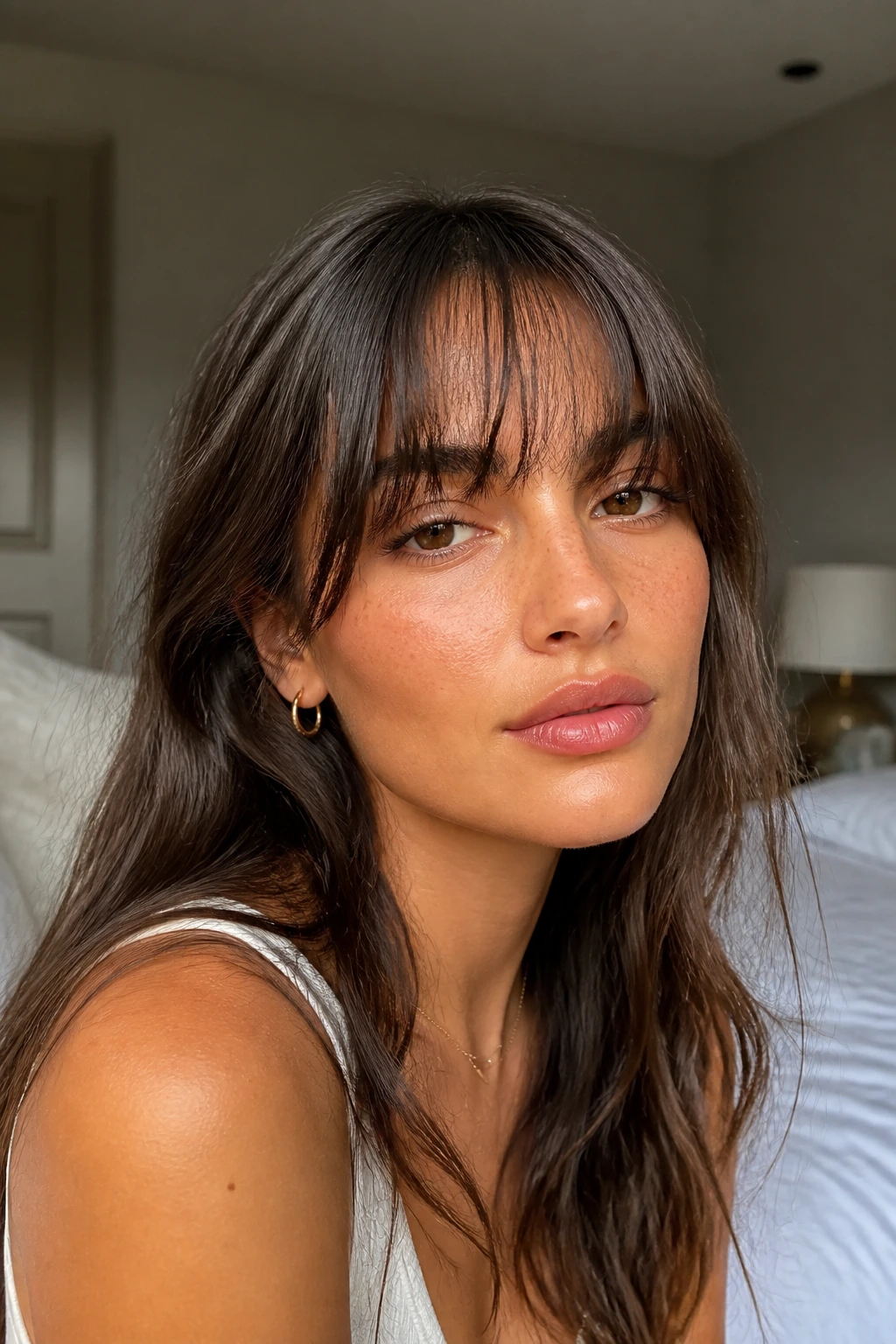
A brow-grazing airy fringe sits between wispy and full. It has enough presence to frame the eyes, but the separation keeps it from looking heavy.
That balance makes it a strong option if you want a real bang without the dense feel of a blunt fringe. The pieces should fall across the brow line, then break apart slightly at the ends. You can see little gaps of forehead through the hair, and that’s the point. It softens the shape instantly.
How to Wear It Well
Dry it forward, then use your fingers to split the lower half. Don’t brush it too much once it’s dry; the more you over-handle it, the less airy it looks. If the bangs start sticking together during the day, a tiny dusting of dry shampoo at the roots usually fixes the issue.
- Brow-level length.
- Light separation.
- Easy to wear with a middle or soft side part.
- Good for hair that needs lift more than weight.
32. Tapered Bangs

Tapered bangs are one of the cleanest ways to customize fringe. Shorter in the middle, longer at the sides, they narrow and widen in all the right places.
That taper gives the face a soft frame without building bulk near the center of the forehead. It’s a smart shape if you want movement but don’t want the front to take over your features. The cut also behaves well with layers, because the sides can slide directly into the rest of the hair.
A tapered fringe works across a lot of textures, but it especially helps hair that tends to puff up at the corners. By keeping the width controlled, you avoid that mushroom effect. A small round brush and a quick flick away from the face at the ends are enough to finish it. No elaborate routine required.
33. Broken-Up Fringe
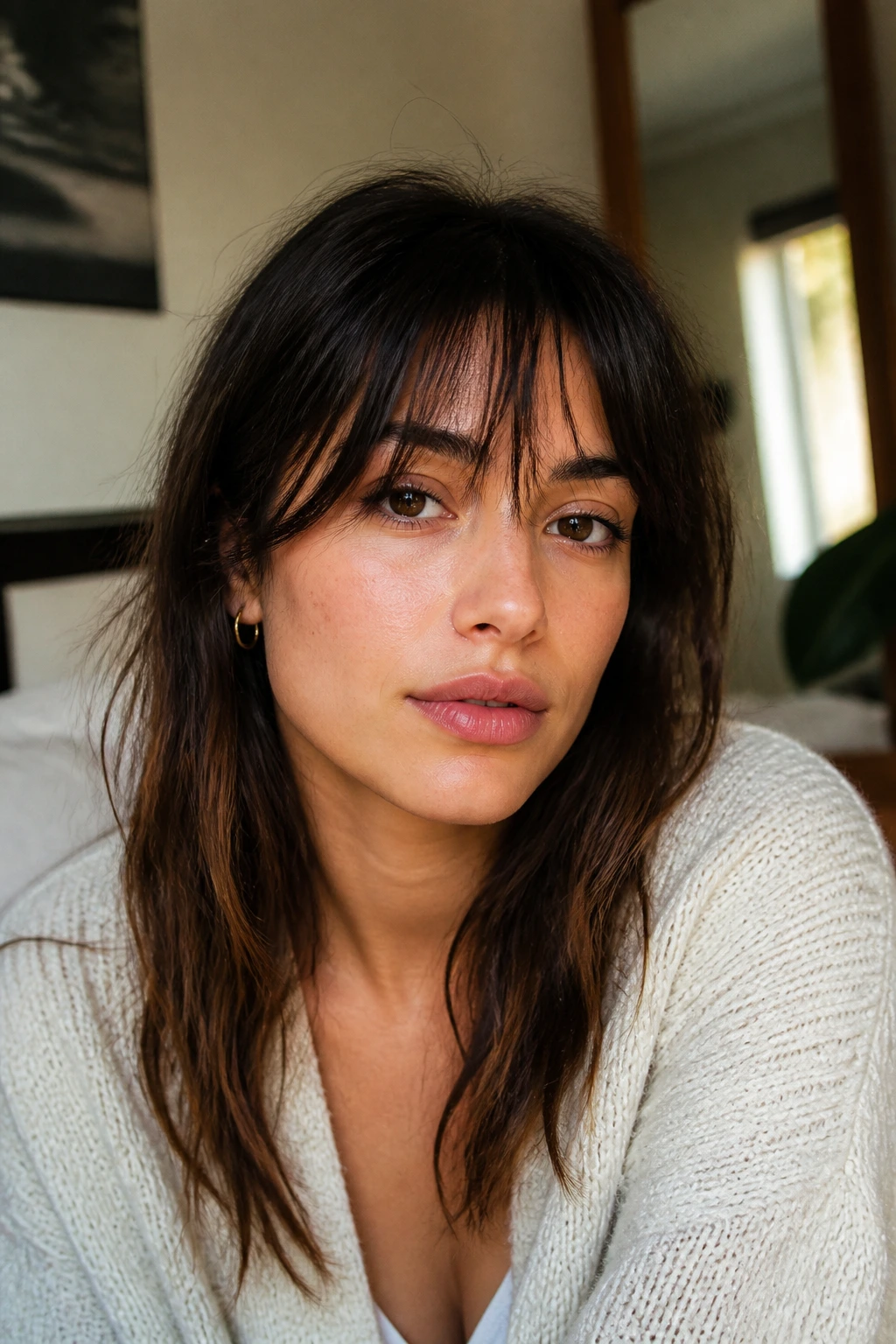
Broken-up fringe gives you texture first and neatness second. The bangs are cut with visible gaps and different lengths, so the front looks soft, irregular, and very easy to move through.
That makes this style ideal if you hate the feeling of hair sitting like a curtain on your forehead. It lets air through. It also makes the bangs easier to style on days when you don’t have time to fuss with them. A little paste, a little finger-combing, done.
This is not the fringe for someone who wants symmetry. It’s for someone who likes hair that feels a bit lived-in, maybe even a little messy on purpose. I’d pair it with shaggy layers, a bob with texture, or a cut that already has some roughness in the ends. If everything else is sleek, the fringe can feel disconnected. Keep the haircut in conversation with itself.
34. Soft Split Bangs for Sleek Ponytails
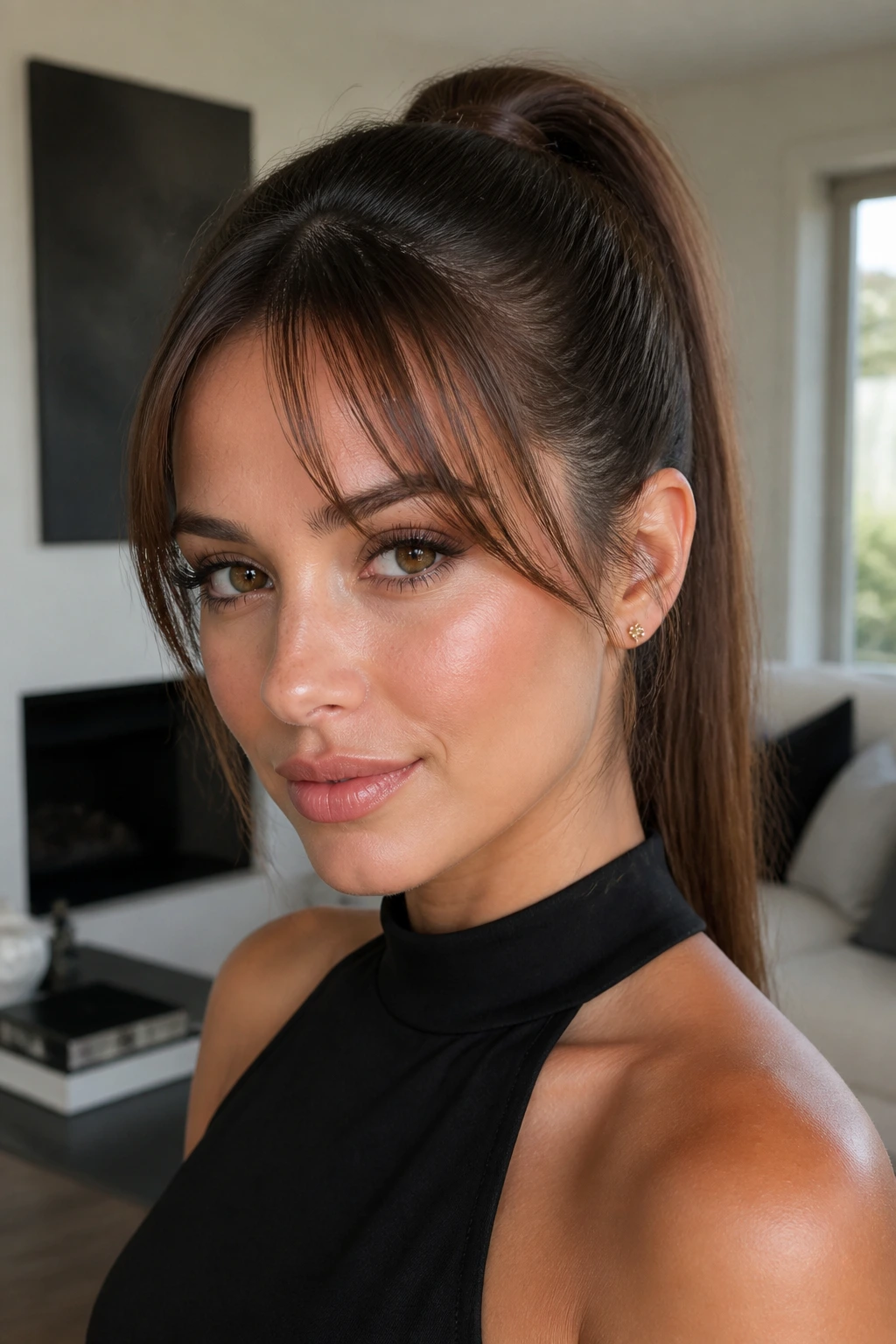
A sleek ponytail can look harsh if the front is pulled back too tightly. Soft split bangs fix that by leaving a little movement across the forehead while the rest of the hair stays controlled.
The split usually starts at the middle and opens just enough to frame the eyes. The ends are softened, not blunt, so they move when the ponytail shifts. That makes this style especially useful for people who wear their hair up a lot and still want something around the face. It keeps the look polished without making it severe.
Why It’s So Wearable
The fringe can be worn with a low bun, a high ponytail, or even a claw clip. It still holds shape. If the front pieces get too straight, a quick bend with a round brush brings them back. The style is also friendly to second-day hair, which is a nice perk when you don’t feel like starting from scratch.
- Great with sleek updos.
- Softens a strong hairline.
- Easy to pin if needed.
- Keeps the forehead from looking overly bare.
35. Movement-Heavy Layered Fringe
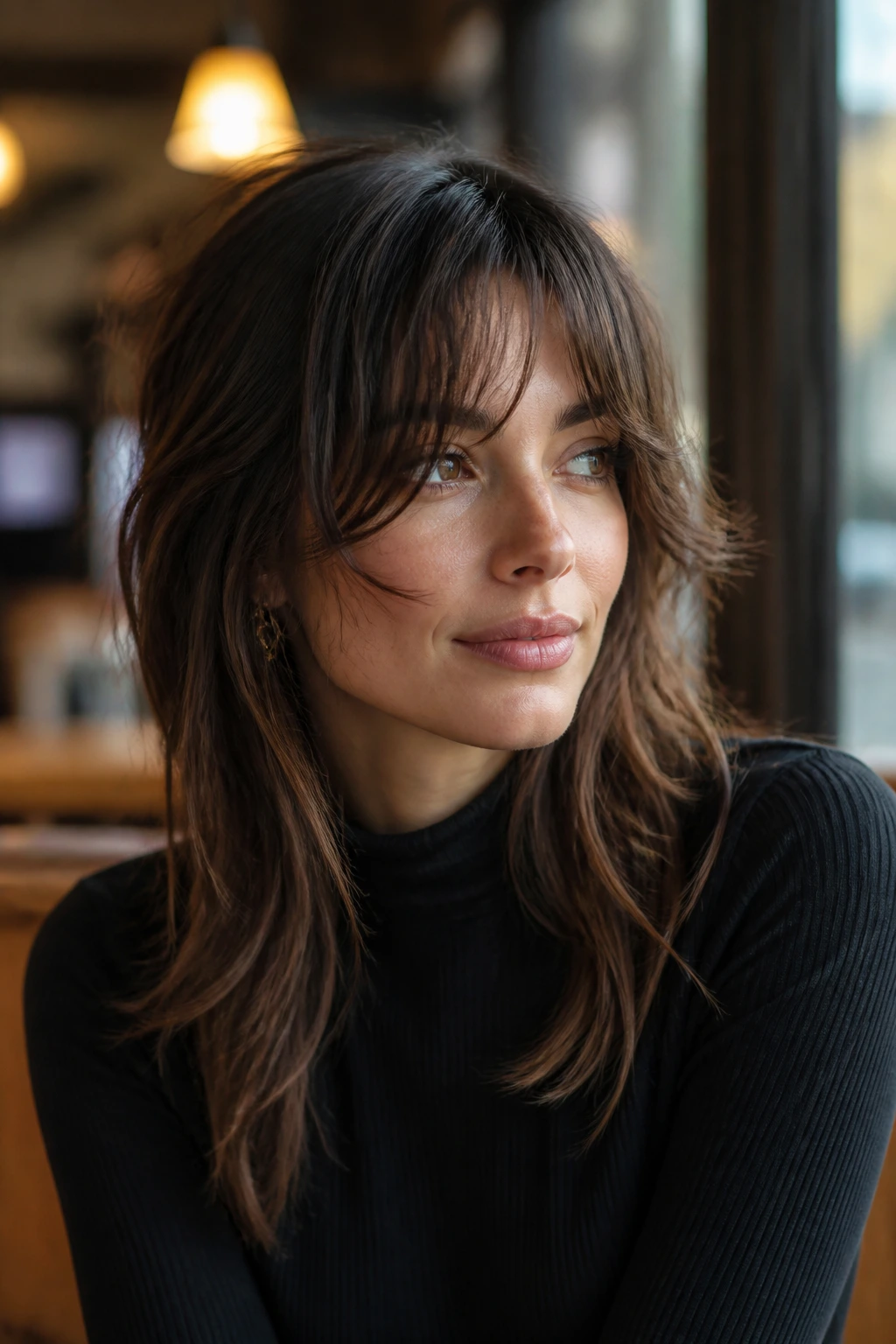
Some bangs are a haircut feature. This one is a haircut mood. Movement-heavy layered fringe sits somewhere between bangs and face-framing layers, which gives it a lot of flexibility and a lot of swing.
The front pieces are cut to fall at different lengths, so they shift when you walk, turn your head, or tuck one side behind your ear. That makes the style feel alive in a way a straight fringe can’t always match. It’s especially good if you want bangs but refuse to be locked into one forehead shape every morning.
This is the one I reach for when someone says they want “something soft, but not boring.” Fair request. Keep the shortest pieces near the eyes, let the side pieces drop toward the cheekbones, and leave enough texture that the hair can move freely. The cut does its best work when it’s not over-styled. A bit of bend, a bit of air, and it starts looking like itself.
Final Thoughts
Textured bangs work because they solve a real problem: too much hair in one straight line can make a face feel boxed in. Once you break that line up, the whole cut starts breathing. That’s the magic here — not perfection, but motion.
The best choice depends less on trends and more on how your hair behaves in the morning. If it fights flatness, ask for lift. If it puffs easily, ask for smarter weight removal. If you live in a ponytail, choose a fringe that still looks good tied back. Small decisions matter a lot at the forehead.
And if you’re torn between two styles, pick the softer one. Hair grows fast enough to adjust later, and a fringe with movement usually forgives a bad styling day far better than a stiff one ever will.
