



Round faces can wear bangs beautifully, but the wrong fringe adds width fast. Soft bangs for round faces work best when they interrupt the fullness of the face without drawing a hard horizontal line across the forehead. That’s the whole trick, and it’s why a wispy curtain piece can feel flattering while a dense, blunt block can feel off.
A good bang cut is never only about the bangs. It’s about where the first layer starts, how much weight sits at the center, whether the sides skim the cheekbones, and how the fringe behaves once it dries. If your hair springs up, bends flat, or splits at the middle on its own, the cut has to respect that instead of fighting it.
I also think people worry about bangs in the wrong way. They ask, “Will bangs make my face look bigger?” Sometimes, yes. But the better question is whether the fringe gives your features more shape, more length, and a little movement near the eyes. That’s where the flattering styles live.
Short and heavy? Usually no. Soft, broken-up, slightly longer than you first expect? Much better.
1. Long Curtain Bangs for Round Faces

Long curtain bangs are the safest place to start if you want softness without a dramatic chop. They part in the middle, fall away from the face, and create a clean vertical pull that helps a round face look a little longer. The cut matters more than the styling here. If the center sits too short or the sides stop too high, you lose the whole effect.
Why They Flatter a Round Face
The best curtain bangs don’t sit like a shelf. They open at the center and taper down toward the cheekbones or even the top of the lips. That shape breaks up width near the cheeks, which is where round faces usually carry the most fullness.
Ask for the shortest point to land just below the brows or at the upper lash line. Then let the outer corners drop farther, usually 2 to 3 inches longer. That difference in length is what gives the face more length and movement.
- Keep the center light, not dense.
- Let the side pieces blend into face-framing layers.
- Blow-dry them away from the face with a medium round brush.
- Use a dab of lightweight cream, not heavy oil.
Best tip: if your curtain bangs feel too thick, ask for a little internal removal at the center, not a shorter cut. Shorter is not always better.
2. Soft Side-Swept Bangs
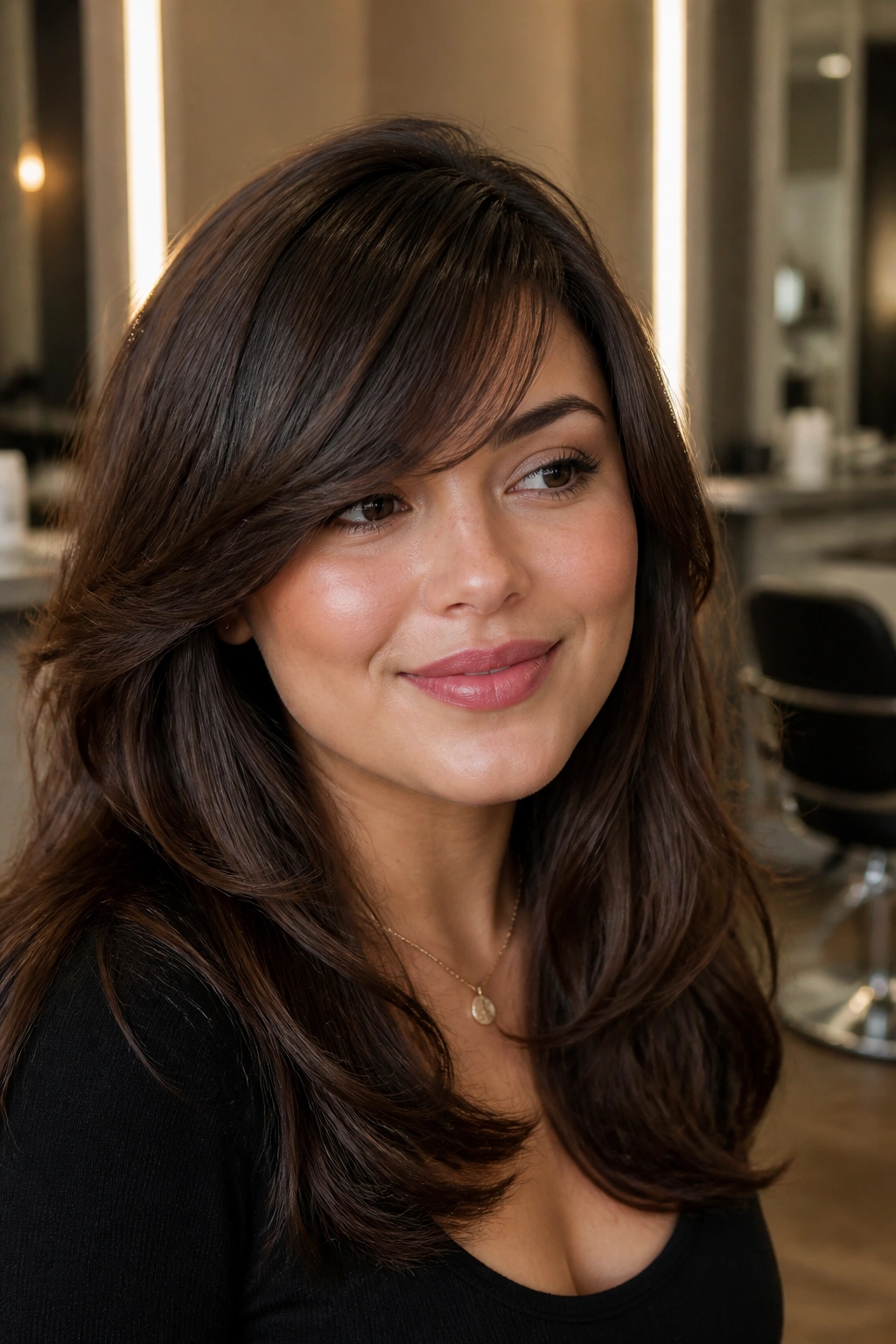
Why do side-swept bangs keep showing up in good salon chairs? Because they’re one of the easiest ways to soften a round face without bringing too much attention to the forehead. The diagonal line does the work. It pulls the eye across the face instead of stopping it dead in the middle.
These bangs also play nicely with cheekbones. When the front section starts deep on one side and sweeps across the brow, it creates a little shadow and a little lift. That combination matters more than people think. Flat side bangs can look limp. A lifted sweep with some bend in it looks intentional.
How to Style It
Blow-dry the bangs in the opposite direction of the part first. Then sweep them back across with the nozzle pointed down and a small round brush or flat brush. The little reverse-dry trick keeps the root from collapsing after 20 minutes.
- Part the hair 2 to 3 inches off center.
- Keep the shortest length near the brow, not above it.
- Let the longest piece skim the cheekbone or jaw.
- Use a light mist of flexible hairspray only at the end.
This style is especially good if you tuck one side of your hair behind your ear. It leaves the face open on one side and softly framed on the other. Clean, easy, no drama.
3. Wispy See-Through Bangs

Wispy bangs work when you want a fringe that barely interrupts the face. They let skin show through, which is a nice move on a round face because it avoids the heavy block effect that can make the face look wider. The whole style should feel feather-light, not sparse in a sad way.
I like these bangs on people who already have some natural movement in their hair. Fine hair can do this well, and so can medium-density hair if the stylist points cuts the ends instead of taking a blunt line straight across. The cut needs softness from the start. Styling cannot save a thick, heavy fringe that was cut too full.
A see-through bang is also one of the easiest styles to wear if you do not want your forehead fully covered. You get a little shape at the eyes, a little texture through the middle, and enough openness that the face still reads as balanced.
One catch. They need regular trimming. If they grow out too far, they stop looking wispy and start looking neglected. That’s a different vibe entirely.
4. Bottleneck Bangs
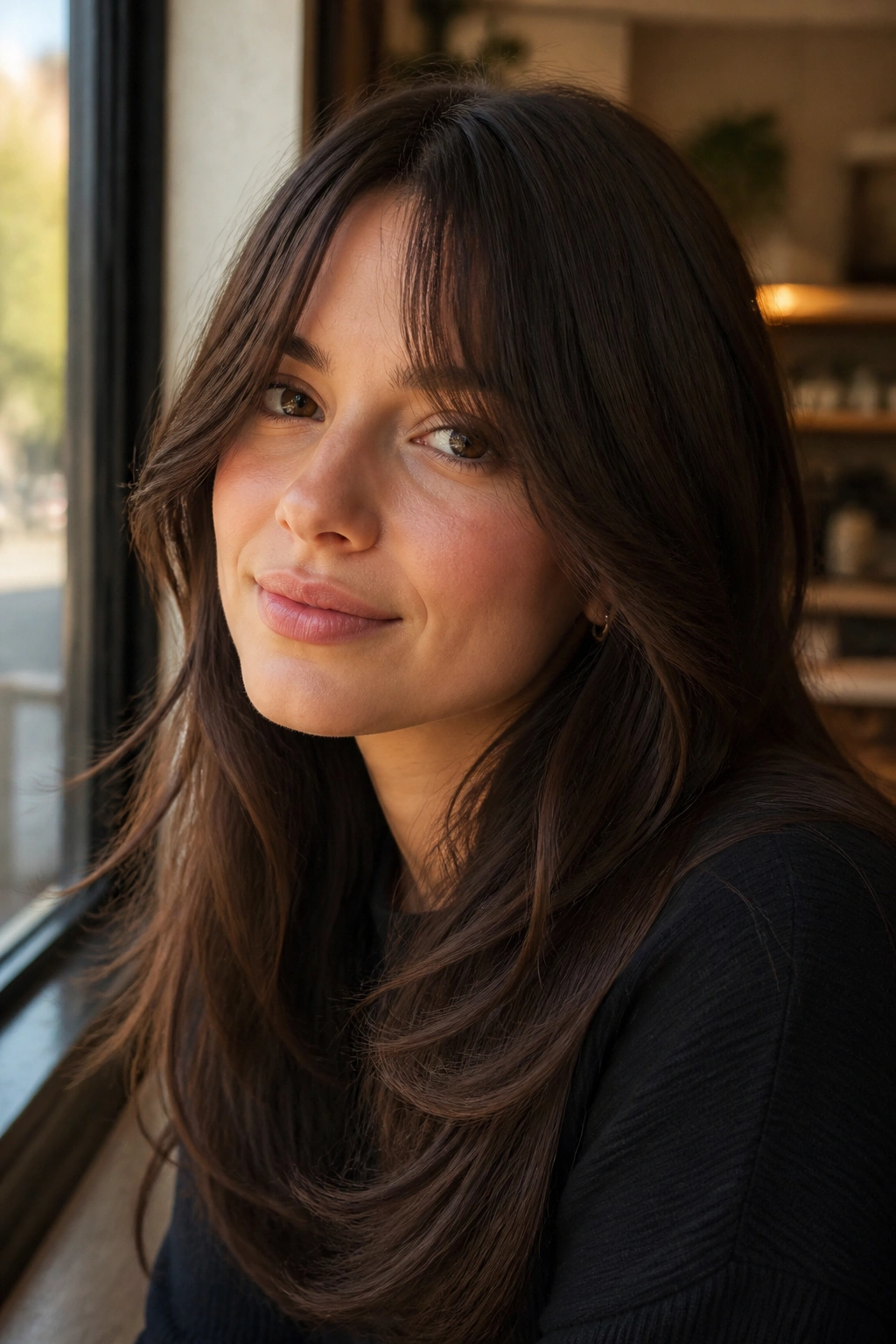
Bottleneck bangs look odd on a salon chair sketch, and then they make sense the second they’re cut right. The center is shorter and narrow, while the sides widen out and lengthen toward the cheekbones. That shape is a smart fit for round faces because it narrows the forehead area without putting a blunt wall across it.
What to Ask For
Tell your stylist you want a soft center that opens into longer side pieces. The center should sit around the brows or just under them, and the side pieces should hit somewhere between the cheekbone and the jawline. That “narrow then wide” pattern is the whole point.
- Keep the center slim, not heavy.
- Leave more length at the temples.
- Ask for texture, not a hard edge.
- Style with a round brush or bend the ends with a flat iron.
Bottleneck bangs are nice because they sit between curtain bangs and a full fringe. They give you some forehead coverage, but they don’t box the face in. On round faces, that middle ground is often where the sweet spot lives.
5. Feathered Shag Fringe
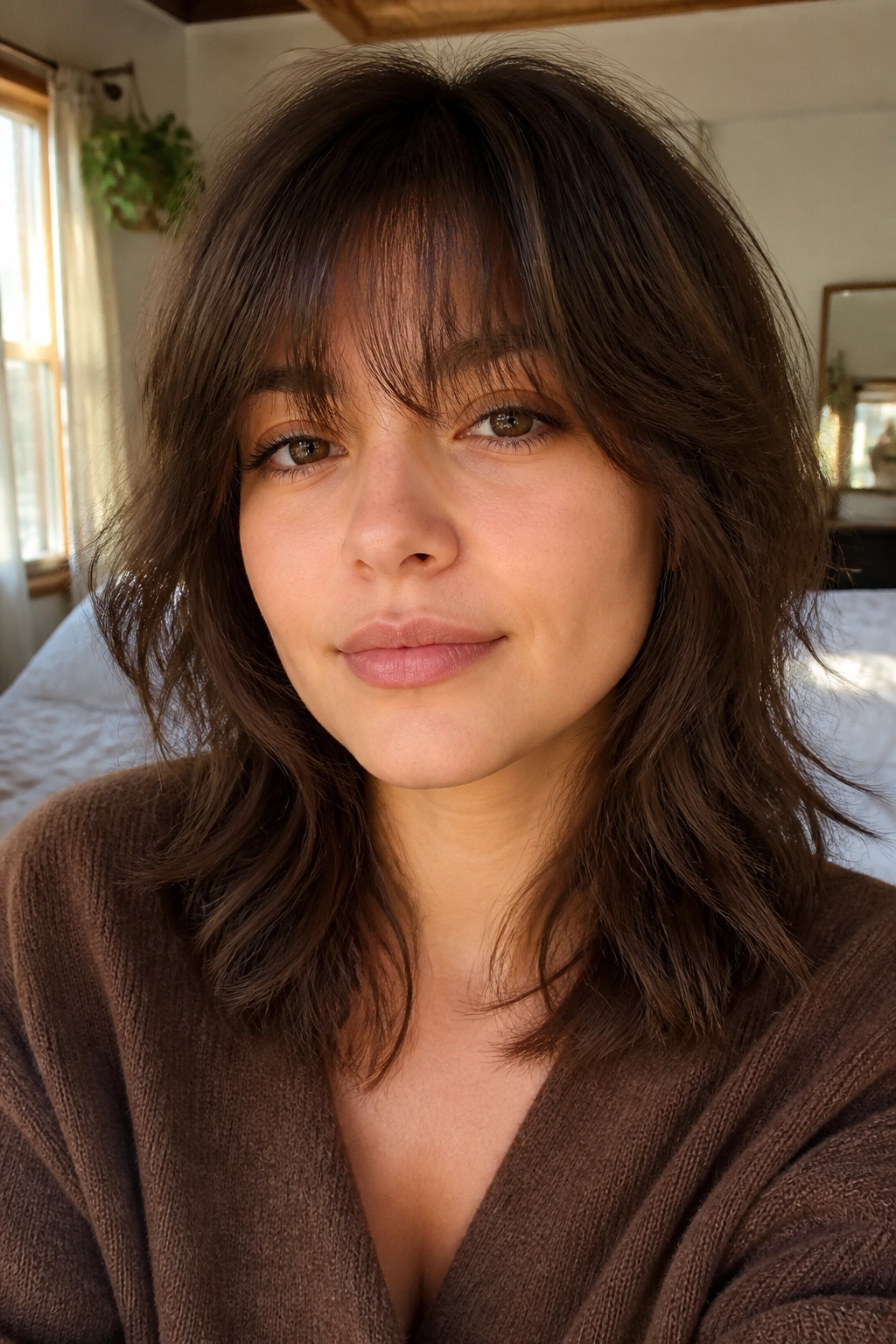
Feathered shag fringe is for people who hate hair that sits still. The texture is broken up, airy, and a little messy in the best way. On a round face, that movement matters because it keeps the fringe from drawing one solid line across the top half of the face.
This is not the style for someone who wants a neat little shell of bangs that stays in place all day. It’s looser than that. The fringe blends into the rest of the haircut, especially if the rest of the shape has layers around the cheeks and collarbone. That blur between bang and layer is what makes it flattering.
A shag fringe also hides grow-out well. That’s a gift if you are not the type to trim bangs every month. The style gets softer as it grows, which is rare and useful.
If your hair is pin-straight, you may need a bit of texturizing spray or mousse to keep it from falling flat. Wavy hair takes to this cut more naturally. Either way, the fringe should feel feathered, never chopped.
6. Cheekbone-Skimming Fringe for Round Faces
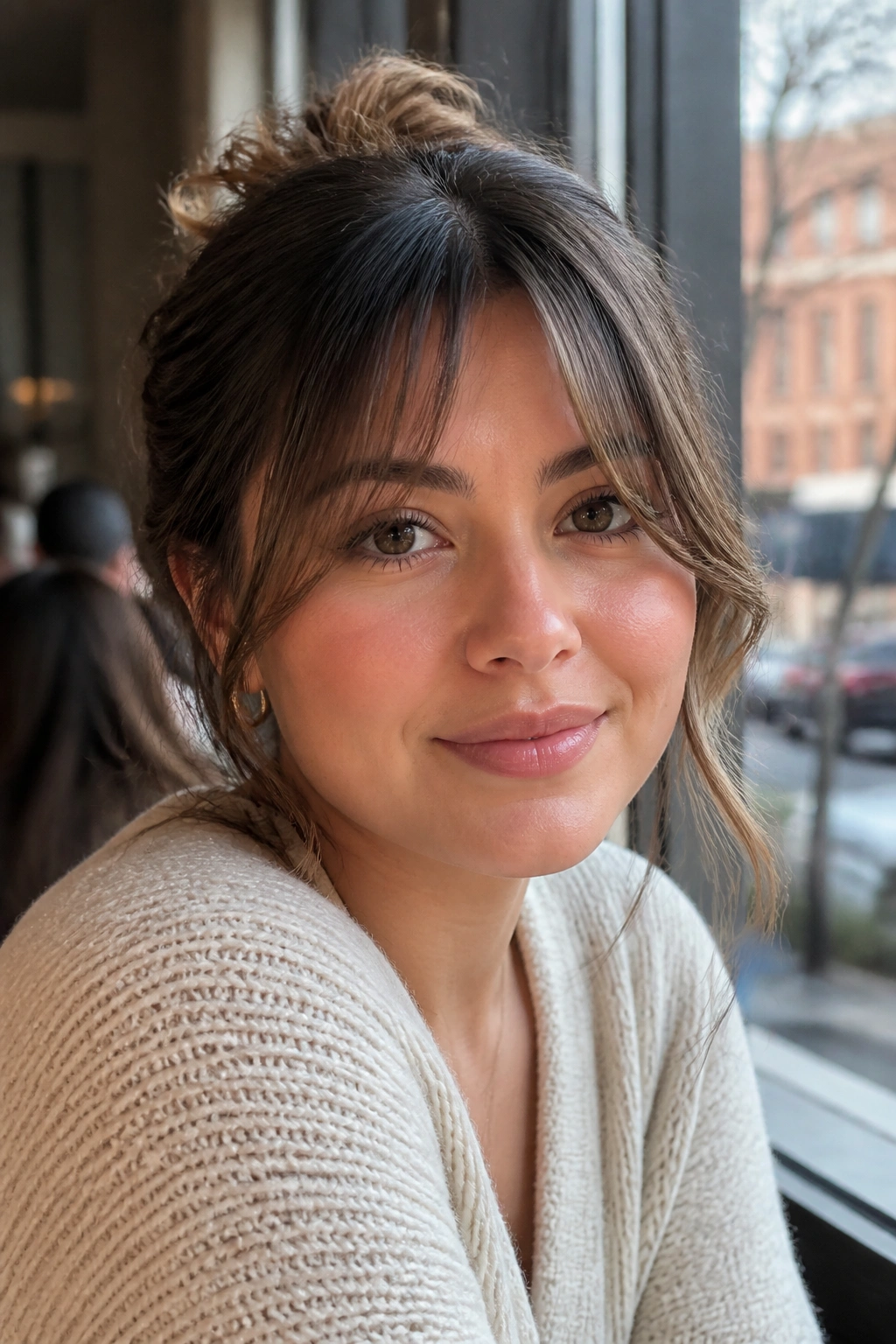
Compared with a long curtain bang, cheekbone-skimming fringe stays lighter at the center and puts more of its visual weight at the sides. That subtle shift helps a round face look less wide through the middle. It also gives the cheekbones a little extra attention, which is usually where the face has the most structure anyway.
This is the style I’d choose for someone who wants bangs but does not want to commit to a full center part. The fringe can be worn with a side part or a soft off-center part, and the longest pieces should land right where the cheekbone sticks out the most. That length is not random. It’s doing face-shaping work.
Best If You Wear Your Hair Up
A lot of people underestimate how useful this fringe is with ponytails, clips, and buns. When the hair is pulled back, those front pieces stop the hairstyle from looking severe. They soften the edges around the face in a way that feels casual, not fussy.
If you ask for this cut, mention that you want the fringe to blend into face-framing layers rather than end in one obvious bang line. That one detail changes the whole feel.
7. Piecey Middle-Part Fringe
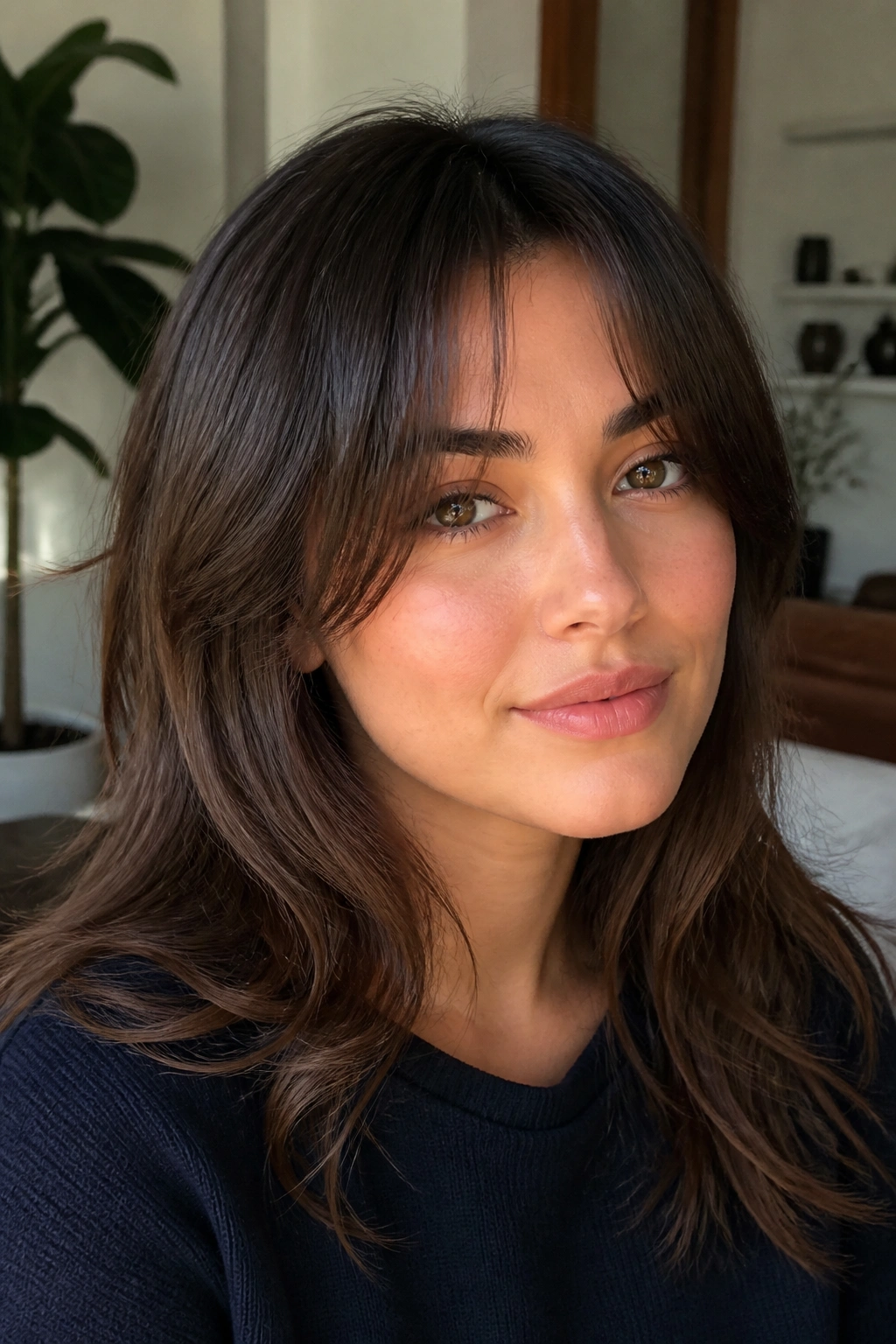
Piecey middle-part fringe works when you want the curtain-bang feel without the full curtain-bang weight. It separates into small sections instead of one continuous sweep, so the forehead stays partly open and the face doesn’t feel boxed in. On a round face, that little bit of openness goes a long way.
I think this style looks best when the hair has some texture already. Straight hair can wear it, sure, but it benefits from a tiny bit of bend or grit. A touch of dry texturizing spray near the ends is usually enough. You don’t want crunchy. You want separation.
The reason this fringe flatters round faces is simple: it breaks up the width at the center and draws the eye down through the gaps. That gives the face a softer outline without making the bangs look thin or skipped over. There’s still enough body to read as a real fringe.
Ask your stylist for tiny, separated pieces through the middle and longer pieces at the sides. If the bangs are cut too blunt, they lose the entire point. That edge has to stay broken up.
8. Arched Bangs

A soft arch across the brow sounds simple, but it’s one of the better ways to make a round face look a little longer. The curve matters. A straight line can feel heavy. A gentle arch opens space around the eyes and gives the forehead a cleaner shape.
These bangs are not meant to be dramatic or severe. The center should be a touch shorter, then the line should ease downward toward the temples. Think of a low curve, not a rainbow. That’s the mistake people make when they ask for an arched fringe and end up with something too shaped.
How to Ask for It
Tell the stylist you want the bangs to follow the brow shape softly, not sit as one hard edge. Say you want the outer corners to blend into the cheek area, because that keeps the face from looking extra wide at the sides.
- Center length: just at or slightly below the brow.
- Temple length: longer by about 1 to 2 inches.
- Edge: soft and point-cut.
- Styling: round brush with a slight bend, not a big curl.
This style is underrated. It can look polished on straight hair and gentle on wavy hair, which is not something every bang shape can say.
9. Soft Blunt Bangs With Textured Ends
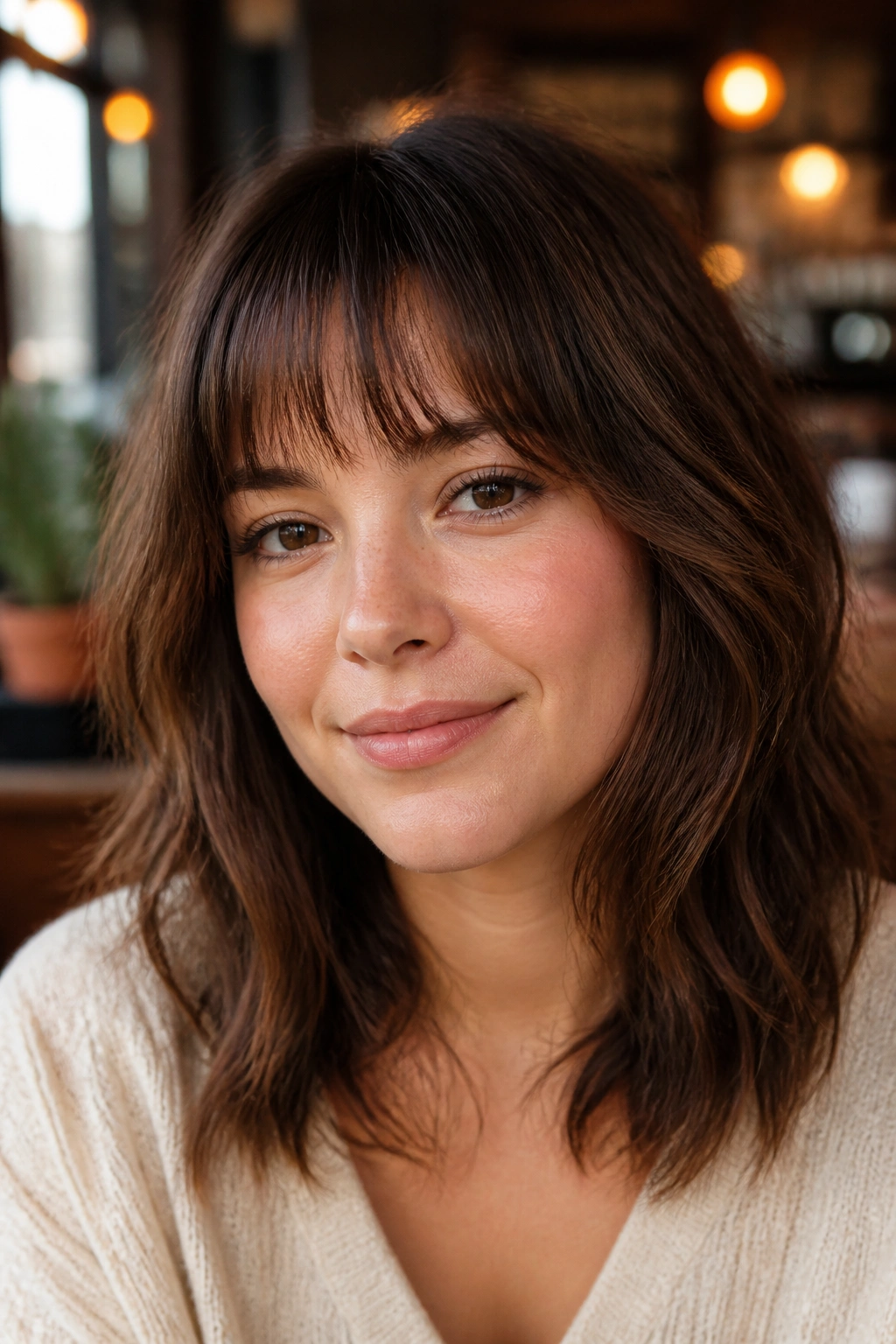
Does a blunt bang have any business near a round face? Yes—if the line is softened enough to stop it from feeling like a wall. The trick is keeping the weight controlled and the ends broken up. A heavy, boxy fringe sits badly on a round face. A soft blunt bang with texture can look sharp in a good way.
The fringe should sit around the eyebrows, maybe a touch lower, with enough density to read as bangs but enough texture that the edge is not rigid. That broken edge keeps the style from widening the face. It also makes the eyes stand out, which is usually the real goal here.
This cut works best on hair that likes to sit smoothly. If your hair flips in random directions or has a stubborn cowlick at the front, you’ll spend more time fixing it. Not impossible. Just annoying.
One clean trick: dry the bangs side to side with a brush before you set the part. That little cross-motion helps them fall flat in a better way. And do not overload them with product. Heavy serum at the front makes this style collapse fast.
10. Curly or Wavy Fringe for Round Faces
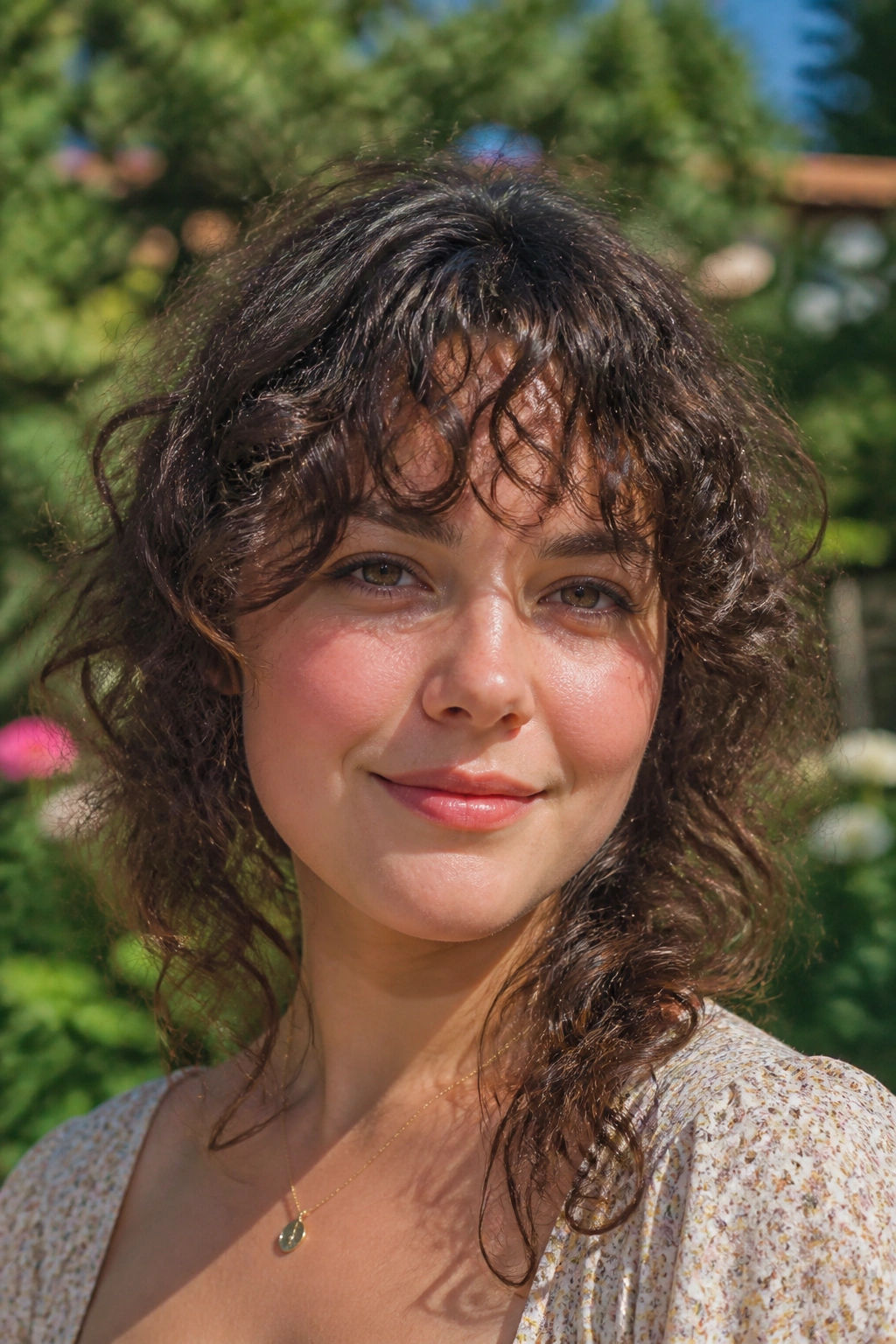
Curly and wavy hair can wear bangs, and they do not need to be the enemy of a round face. The mistake is cutting curls as if they were straight. They spring up, separate, and form their own little shape, which means the fringe needs room to move and a little extra length at the start.
A curly fringe looks best when it has lightness near the center and longer pieces around the sides. That keeps the forehead from closing in too much. It also lets the curl pattern do what it naturally wants to do instead of forcing it into one stiff line.
What to Tell the Stylist
Cut the fringe dry, or at least nearly dry. That matters. Curls lie when they’re wet, and bangs are not the place for guesswork.
- Leave the fringe longer than you think.
- Shape each curl based on its own spring.
- Use point cutting or curl-by-curl shaping.
- Ask for side pieces that fall toward the cheekbones.
Styling is simple once the shape is right. A little curl cream, a diffuser, and a hands-off drying routine usually do the job. If the curls get frizzy, a pea-sized amount of cream on the ends is better than piling on more.
11. Long Side Fringe
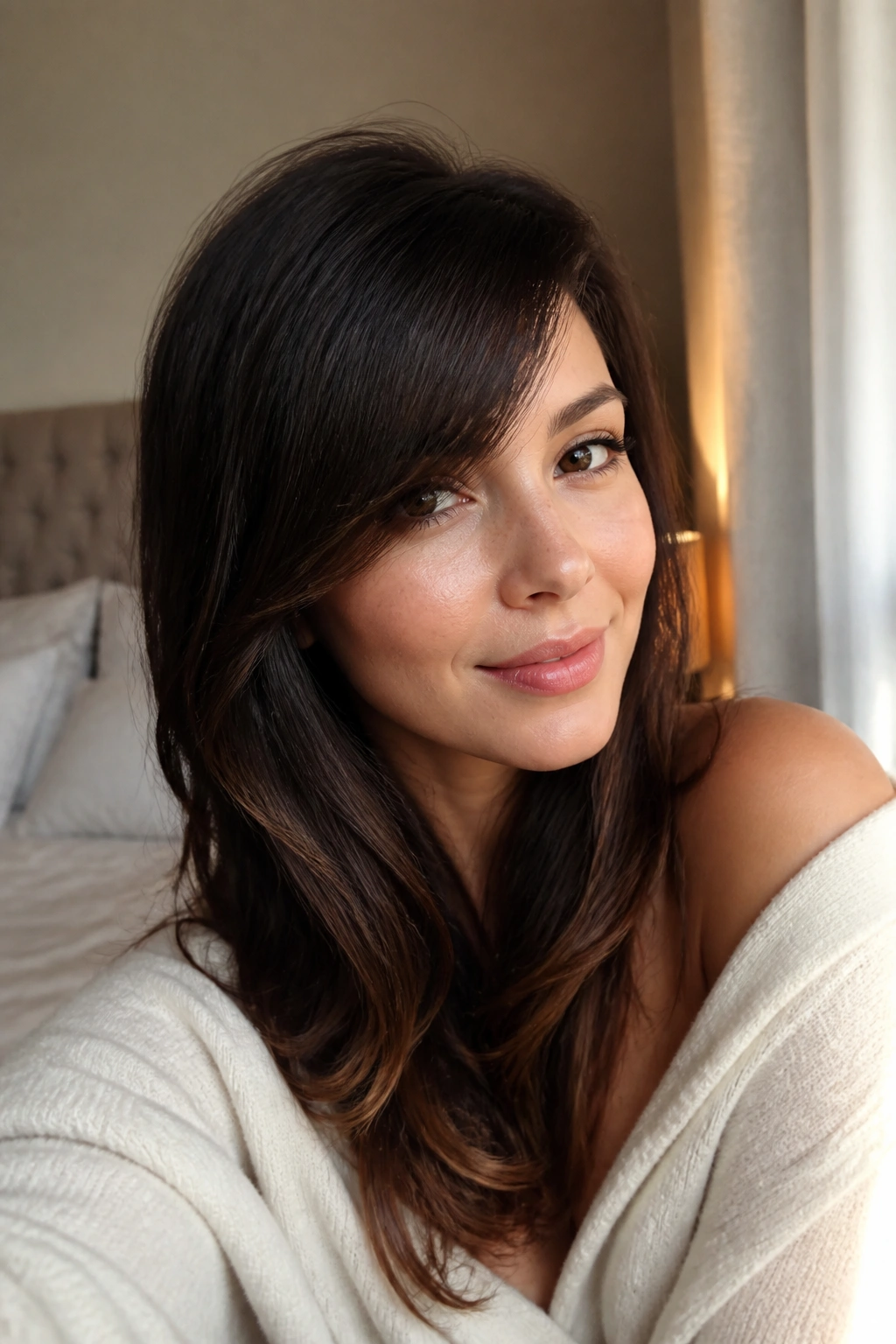
Long side fringe is the style I recommend when someone wants bangs but flinches at the word bangs. It gives you the movement and softness without making the forehead feel fully covered. On round faces, that matters because the side sweep creates a long diagonal line that trims visual width.
This fringe is especially useful if your hair naturally parts to one side. Fighting that part is a waste of time. Work with it. Let the fringe sit across the brow and fall into one side of the face, where it can blend into the rest of the cut instead of fighting for attention.
The appeal here is control. You can tuck it behind your ear, let it sweep over the eye a bit, or pin it back when you’re over it. It is not a high-maintenance bang, which I appreciate. Not every fringe needs a dramatic blowout to look decent.
If you want this style to flatter a round face, keep the longest pieces below the cheekbone. That creates a little vertical line near the jaw, which helps the face look longer and cleaner.
12. Grown-Out Bangs
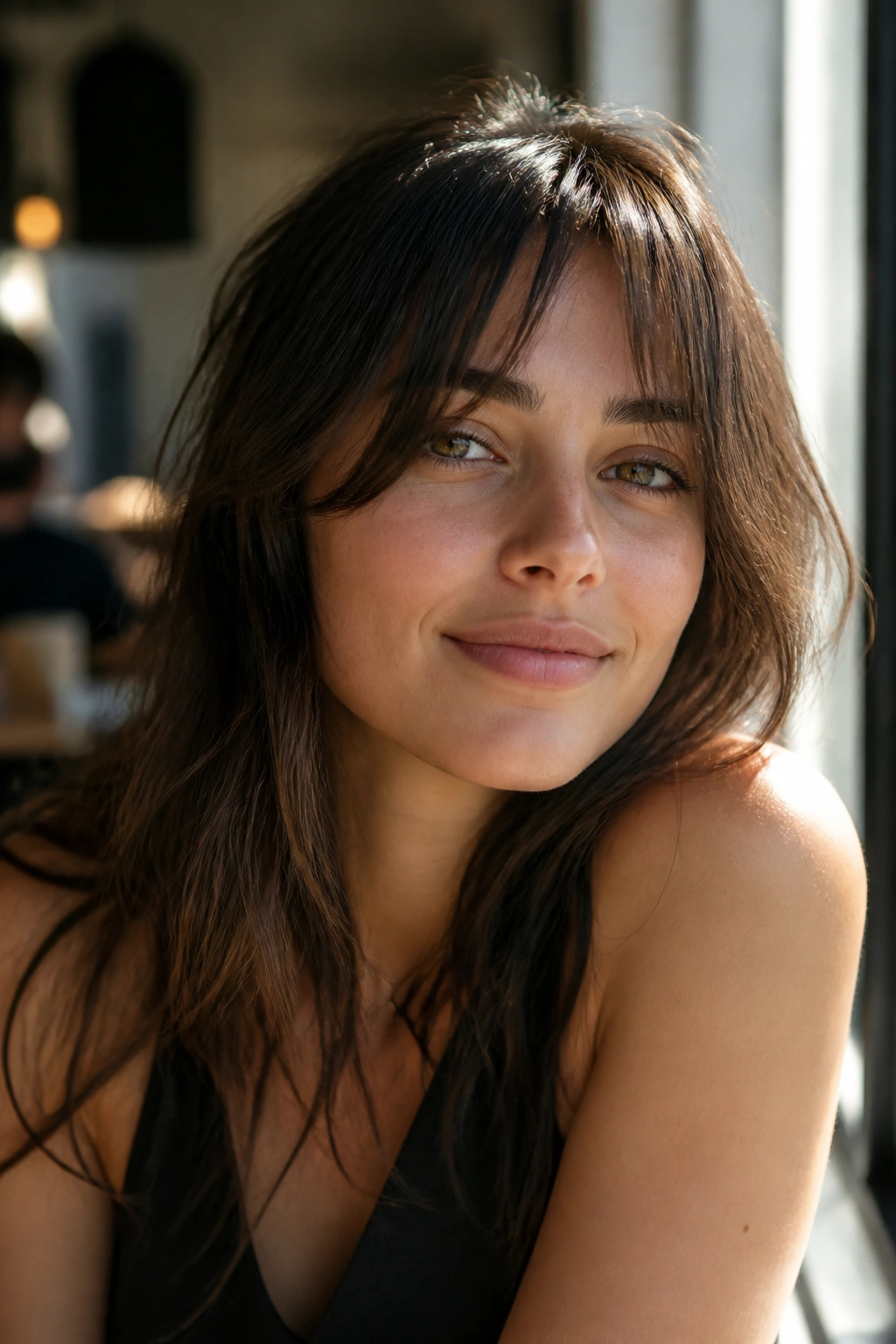
Grown-out bangs are not a compromise. Sometimes they’re the best-looking version of a fringe. The length falls between the brows and the cheekbones, and the shape usually softens enough to frame a round face without crowding it. If you’ve ever been in that awkward in-between stage and thought, “Maybe this is actually working,” you were probably right.
This style is useful because it does not commit too hard in any one direction. The bangs can part down the middle, sweep to one side, or sit loosely around the eyes. That flexibility makes it easy to wear with ponytails, messy buns, and loose waves.
Who This Suits
People who want softness but not precision tend to love this look. So do people who are growing out a shorter fringe and want the transition to feel deliberate.
- Part it slightly off center for more length through the face.
- Use a round brush only at the roots if you want lift.
- Let the ends stay loose rather than curled under too much.
- Trim the center every 6 to 8 weeks if you want the shape to stay intentional.
I like this style because it has an easy, lived-in feel. It doesn’t try too hard, and on a round face that relaxed line often looks better than a stiff, freshly cut shape.
13. Rounded Airy Fringe for Round Faces

Rounded airy fringe is the sleeper pick here. It gives you the feeling of a fuller bang, but the inside is light enough that the forehead does not disappear. The shape curves gently around the eyes and temples, which softens the top half of a round face without making it look wider.
Why It Works
The center of the bang should stay soft and slightly shorter, while the corners drift down and out. That curve helps direct the eye along the face instead of across it. A round face usually benefits from that kind of motion, especially if the cheeks are the widest point.
A lot of people think airy bangs have to look thin. They don’t. They just need space inside the fringe so the light can pass through. That’s the difference between airy and sparse.
- Ask for soft point cutting through the ends.
- Keep the density light around the temples.
- Use a round brush only at the root, not the whole bang.
- Finish with a touch of dry shampoo if the fringe goes flat.
This style is lovely with shoulder-length cuts and layered lobs. It has enough shape to feel like a real haircut, but not so much weight that it crowds the face.
14. Soft Birkin Bangs

Soft Birkin bangs sit in a narrow lane: light enough to keep a round face open, dense enough to feel like a real fringe. They usually sit around the brows, with a little separation at the ends and a textured edge that keeps them from going too heavy. When they’re cut well, they have that relaxed, slightly French look without the stiff severity that some full bangs bring.
The danger with this style is overcutting the density. If the fringe is too thick, it can close in the face fast. If it’s too thin, it stops reading as a bang at all. The sweet spot is somewhere in the middle, with enough body to frame the eyes and enough softness to avoid a hard line.
How to Ask for It
Say you want a brow-grazing fringe with feathered ends and a little separation through the center. Mention that you do not want the edge to sit perfectly straight. That tiny detail changes the whole mood.
- Keep the center at eyebrow level or a touch longer.
- Let the ends break apart slightly.
- Avoid a heavy blunt edge.
- Style with a small brush and a light mist of hairspray, not a stiff setting spray.
This is one of those cuts that looks better when it is not trying too hard. Which, honestly, is half the charm.
15. Split Fringe With Long Temple Pieces

Split fringe with long temple pieces is the one I reach for when the goal is softness without committing to a full curtain. It opens at the center, but the split is looser and the side pieces are left longer, often around the cheekbone or jawline. On a round face, that extra length at the temples helps pull the eye down and away from the widest part of the face.
This style is especially useful if you wear your hair up a lot. The long pieces keep the front of the face from looking bare when the rest of the hair is pinned back. It also works nicely with loose waves because the split fringe blends into the movement instead of sitting on top of it like a separate piece.
The look can go soft and romantic, or a little undone, depending on how much texture you leave in it. I’d avoid cutting it too symmetrical. A tiny shift in length from one side to the other often looks more natural and a little less precious.
If you want this shape to flatter a round face, ask for temple pieces that hit below the cheekbone. That one choice makes the front of the haircut feel longer and more open.
Final Thoughts
The smartest bangs for a round face are rarely the ones that sit the shortest or the heaviest. They’re the ones that bend the eye in a new direction. A little diagonal line, a bit of broken texture, and some length at the temples can change the whole balance of the haircut.
If you’re nervous, start longer than you think you need. You can always shorten a fringe at the next trim. Growing it out takes patience, a mirror, and usually one regrettable week in between.
What I would not do is chase a perfect, blunt little line because it looks neat in a photo. Round faces usually look best when the front of the haircut has some movement and a touch of air. That’s the part that keeps bangs feeling soft instead of boxy.
