



Long bangs can save a haircut that feels too blunt without taking away the length you still want to pin, braid, or tuck behind one ear. That is the whole trick.
The best long bangs ideas women are trying share one useful trait: they move with the rest of the hair instead of sitting there like a small helmet across the forehead. They soften a strong line, make a grow-out look planned, and leave room for the days when you cannot be bothered to heat-style anything.
Hair density changes the story fast. A soft curtain on fine hair can go flat if it’s cut too long, while thick hair needs the weight removed in the right places or the fringe turns into a shelf that sits on the brows. Cowlicks matter too, and anyone who has fought one knows that a good fringe is as much about direction as length.
Done well, long bangs give you shape on Monday, softness on Friday, and a decent grow-out by the time you’re bored.
1. Curtain Bangs That Open at the Cheekbones

Curtain bangs are still the easiest long-bangs move because they frame the face without boxing it in. The middle sits shorter, the sides fall longer, and the whole thing opens like a little window around the eyes. That shape is forgiving. It can be air-dried, bent with a round brush, or tucked aside when you want your forehead back.
Why this shape works
Curtain bangs are popular for a reason: they live in the space between a full fringe and face-framing layers. You get the softness of bangs without the blunt edge that can feel heavy on busy mornings.
Ask for the shortest point to sit just below the brow or right at the brow line, then let the longest pieces skim the top of the cheekbones. If your stylist cuts them too short at the sides, they lose that easy sweep and start looking chopped.
- Best for oval, heart, and square faces.
- Easier to grow out than a blunt fringe.
- Works with straight, wavy, and medium-thick hair.
- Needs a little root lift, not a lot of product.
Pro tip: Dry the center first, then roll each side away from the face with a medium round brush. Let the hair cool in that shape before you touch it again.
2. Side-Swept Long Bangs With a Deep Part

Why do side-swept bangs keep hanging around? Because they solve a real problem: they give you face framing without demanding a perfect center part every morning. A deep side part creates a long diagonal line, and that line can soften a strong jaw, balance a broad forehead, or make a blunt haircut feel less severe.
The best version is not floppy. It should start with enough weight near the part to stay in place, then taper gently as it moves across the forehead. If the ends are sliced too thin, the whole thing loses shape by lunchtime.
A side-swept bang also plays nicely with a cowlick. Hair that naturally wants to fall one way usually behaves better when you stop fighting it. That is one of those practical haircut truths people learn the hard way.
Use a paddle brush or vent brush to direct the fringe across the forehead while blow-drying. Finish with a cool shot and a tiny mist of flexible spray. Heavy creams make this style collapse fast.
3. Bottleneck Bangs That Narrow at the Center
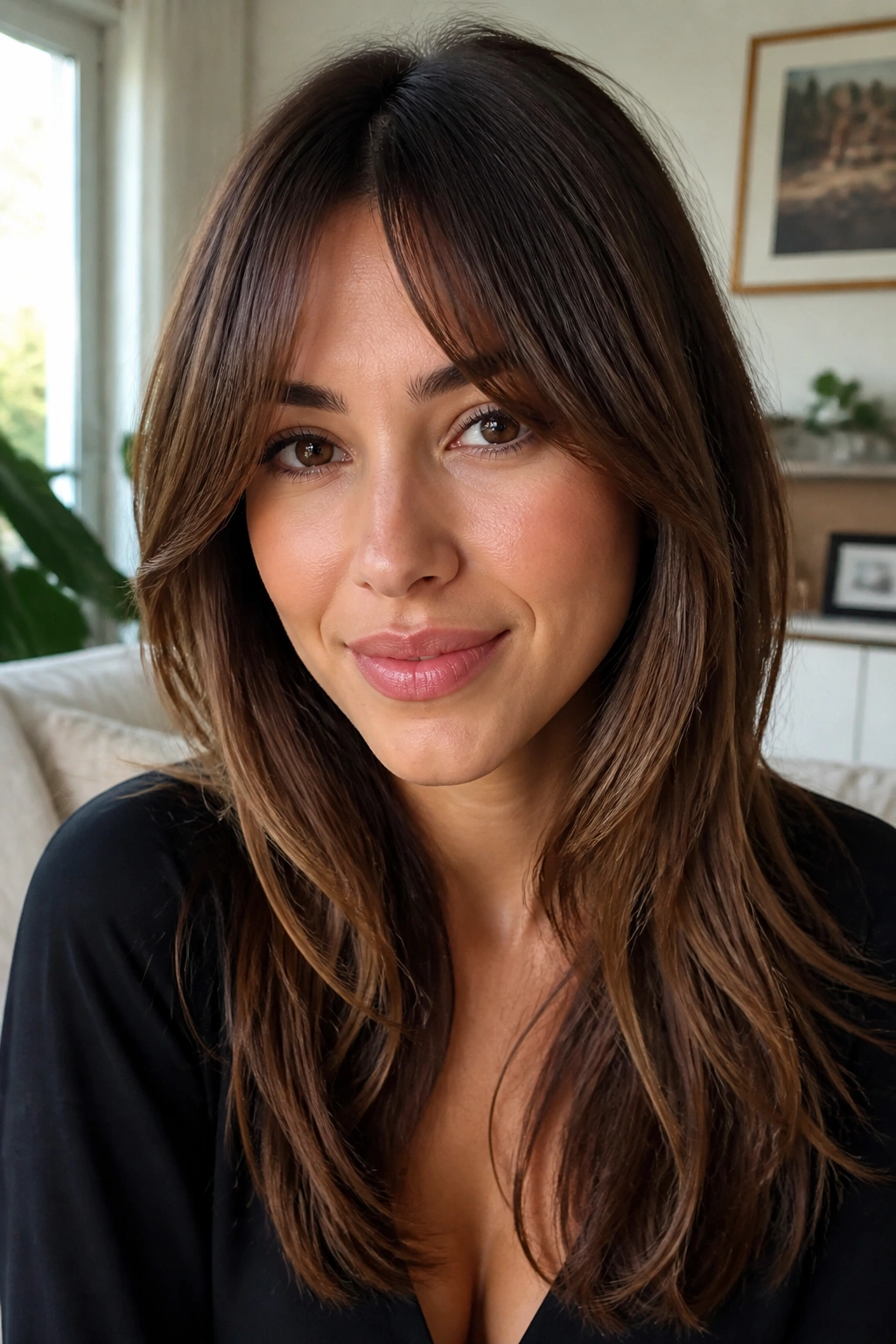
If your bangs have ever felt too heavy in the middle and too thin at the sides, bottleneck bangs are the fix. The name comes from the shape: narrow at the center, wider as they move outward. It sounds technical, but the effect is soft and flattering, with a little more structure than a standard curtain bang.
What makes the bottleneck shape different
The center should sit shorter than the rest, usually around the brow line, while the outer pieces fall longer and blend into the cheeks. That gradual change is what gives the cut its shape. It is also what keeps it from looking like two separate chunks of hair pasted on the front.
I like this version on people who want bangs but do not want to commit to a full fringe every day. It frames the eyes, but it also gives you room to sweep the sides back or split them in the middle when you want something looser.
How to wear it
- Blow-dry the center forward first.
- Bend the side pieces away from the face.
- Keep the ends softly textured, not wispy to the point of disappearing.
- Ask for the longest pieces to hit near the cheekbone, not the chin.
The best part: it grows out in a way that still looks deliberate, which is more useful than it sounds.
4. Feathered Long Bangs for Fine Hair
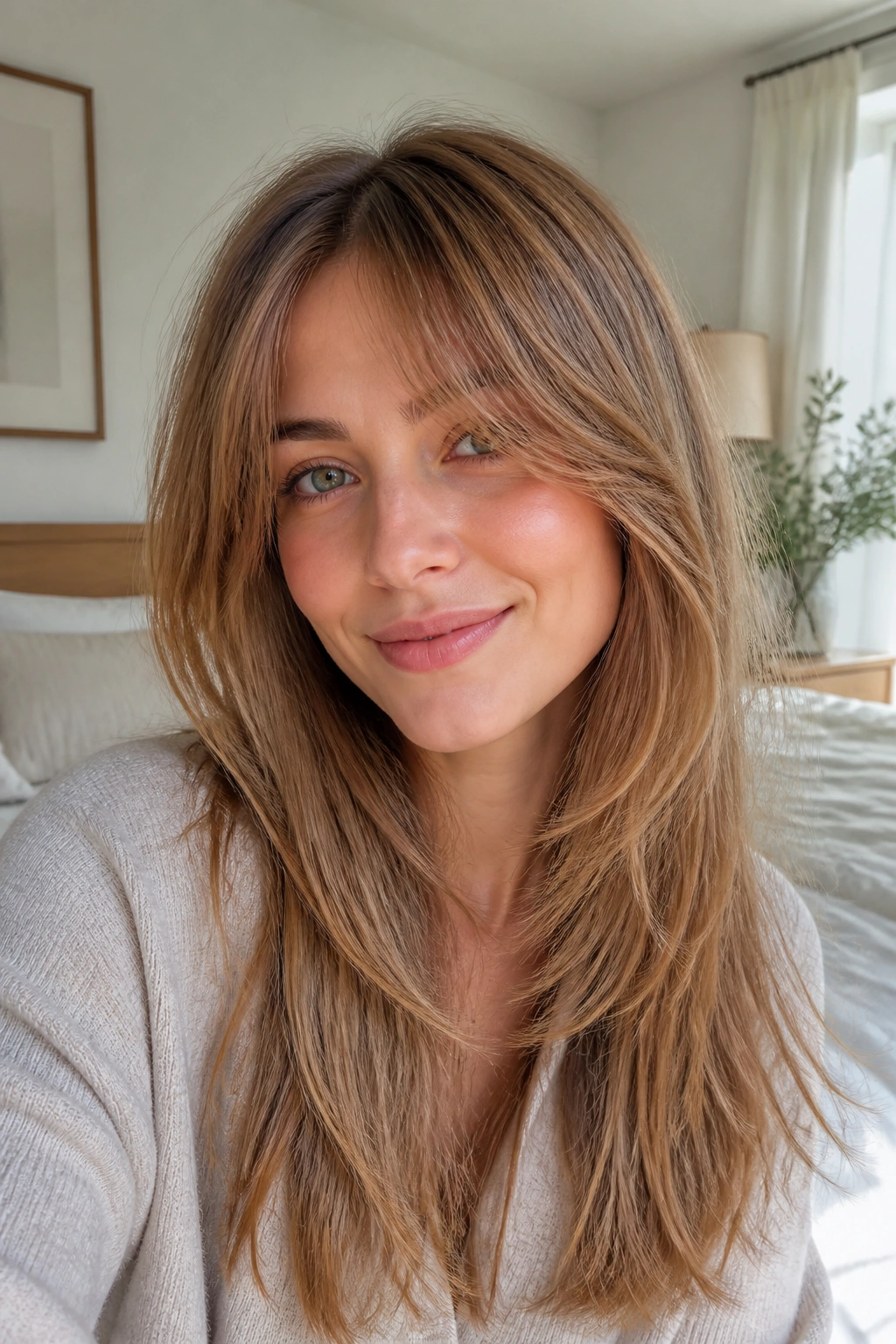
Feathered long bangs are not old-fashioned when the ends are cut with a little bite. The wrong feathering looks stringy. The right kind makes fine hair look lighter and more lifted at the front, which is exactly what many women want when the fringe starts to feel flat or too heavy.
This style depends on soft internal texture. Not too much. If the bangs are razored into dust, they separate in a sad way and the forehead starts showing through in odd patches. A better cut uses point cutting to soften the line while keeping enough density to hold a shape.
Fine hair usually does better with bangs that are long enough to bend, not short enough to pop up. That means the shortest pieces should still have some swing. The whole point is movement.
A small round brush, a dab of mousse at the roots, and a quick pass with a dryer are usually enough. Skip the heavy oil near the scalp. Feathered bangs hate that. They go limp fast.
5. Piecey Long Bangs With Separated Ends

The best piecey bangs feel light at the forehead, almost like the hair is skipping across it. They do not sit there as one solid curtain. Instead, you see little sections, little gaps, a touch of skin between the strands. That separation is the style.
This look works especially well if your hair already has some bend or wave. Straight hair can do it too, but the cut needs some texture through the ends so the pieces do not merge into one flat panel. A stylist would usually use point cutting or a very controlled texturizing pass, not a heavy thinning razor that strips out the shape.
The styling rule is simple. Less product. More hands.
Rub a pea-sized amount of lightweight cream between your palms, then press it onto the ends only. After that, separate a few front pieces with your fingers. That gives the bang a bit of grit without making it greasy or stiff. A wide-tooth comb can work, but fingers are better if you want that undone finish.
I like piecey long bangs on people who hate fussy styling. They look better when they are not trying too hard.
6. Long Blunt Bangs That Graze the Lashes
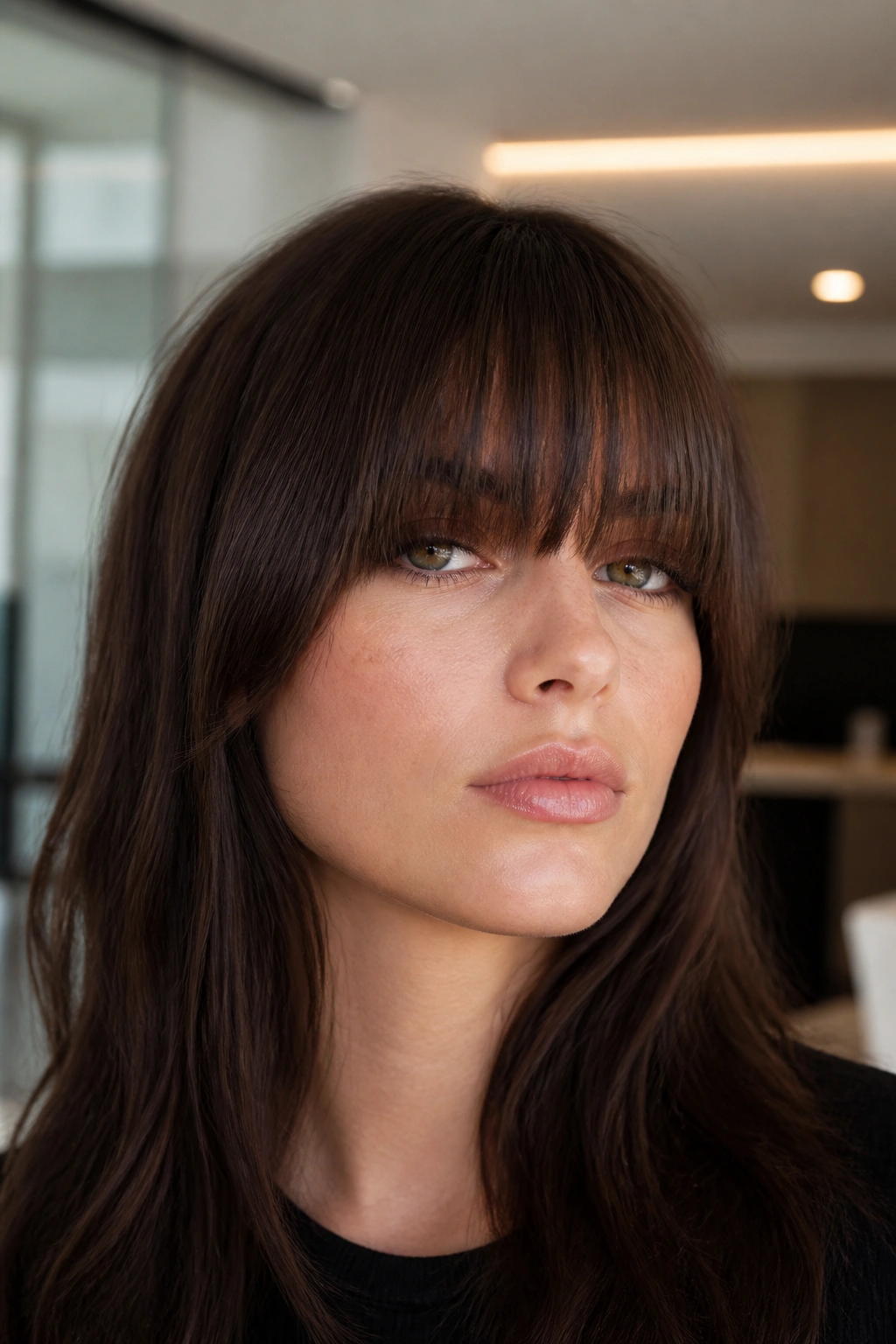
Unlike wispy fringe, long blunt bangs have a solid edge—and that edge is the whole point. They sit lower, often grazing the lashes or brushing just above them, and they give the face a sharper frame. A good blunt bang can make the eyes stand out more than almost any other fringe shape.
The catch is density. You need enough hair in the front to make the line feel full. If the section is too thin, blunt bangs become see-through in a way that looks accidental rather than chic. This style also asks for more upkeep than the softer shapes on this list. Not a disaster. Just honest.
Straight or slightly wavy hair usually takes to long blunt bangs better than very curly hair, because the line stays visible. They look especially strong with sleek bobs, shoulder-length cuts, or long layers that need a cleaner front edge.
A flat brush and a nozzle dryer help here. Pull the bangs straight down first, then give the ends a tiny curve under. If you overbend them, the line loses its calm, heavy shape. And that shape is what makes the cut work.
7. Wispy Long Bangs That Show a Little Forehead

Wispy bangs are a cheat code for people who want fringe without the weight. The hair is cut airy enough that a bit of forehead shows through, which keeps the front of the haircut from feeling crowded. They can look soft, romantic, and almost effortless if the density is right.
That said, wispy does not mean sparse. There is a difference, and it matters. True wispy bangs still have enough hair to frame the eyes. They just do it with less bulk and a lighter edge. If the section is cut too thin, the bangs vanish. If they’re cut too full, they stop being wispy and start acting like regular bangs.
This style is especially kind to fine to medium hair, or to anyone who likes the idea of bangs but does not want a heavy block on the forehead. They are also a good landing spot for someone growing out a shorter fringe.
Keep styling simple. A quick blow-dry with your fingers, a small round brush if needed, and a touch of dry texture spray at the ends is usually enough. Heavy shine products are the wrong move here. They clump the strands together and kill the airy effect.
8. Shag Bangs With Crown Volume
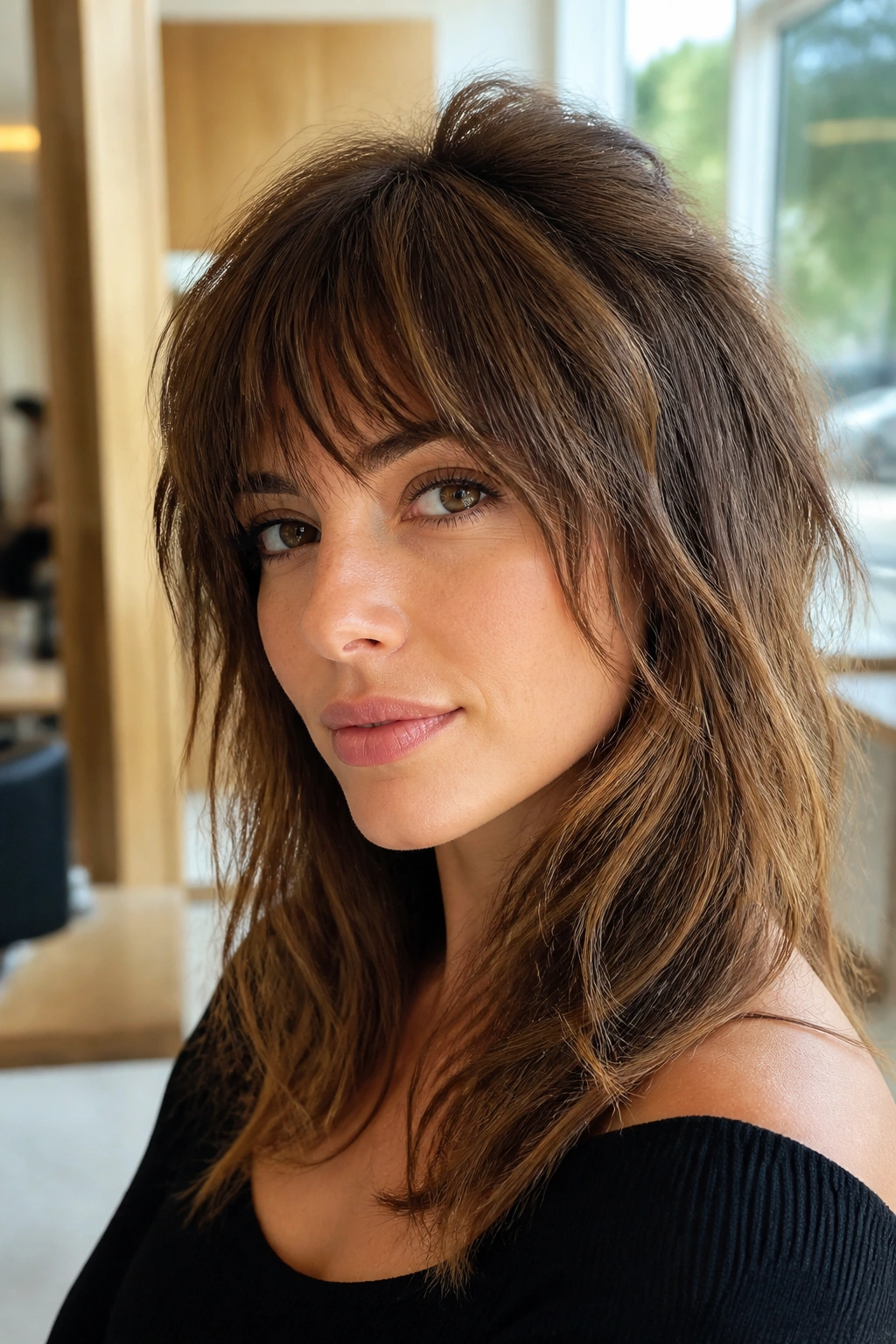
What happens when bangs meet a shag cut? You get movement, and lots of it. Shag bangs are longer through the front, broken up through the ends, and connected to layers that start at the crown. The haircut looks lived-in because the front is not trying to act alone; it belongs to the whole cut.
Why the mix works
A shag fringe works when the front pieces are slightly irregular. Not choppy for the sake of being choppy. Just uneven enough to move. That makes the bangs feel part of the haircut, not like a separate section glued to the face.
This is a strong choice for wavy or thick hair, because those textures already have lift and body. Straight hair can wear it too, but it needs more bend from a blow-dryer or diffuser to keep the shape from falling flat.
What to ask for
- Crown layers that start high enough to create lift.
- Front pieces cut a touch longer than you think you need.
- Soft, broken ends instead of a hard straight line.
- A little length at the temples so the bangs blend into the rest of the cut.
My honest take: shag bangs look best when they are allowed to be a little messy. If you want a polished, tight fringe, this is not the one.
9. Rounded Long Bangs With a Soft Arch
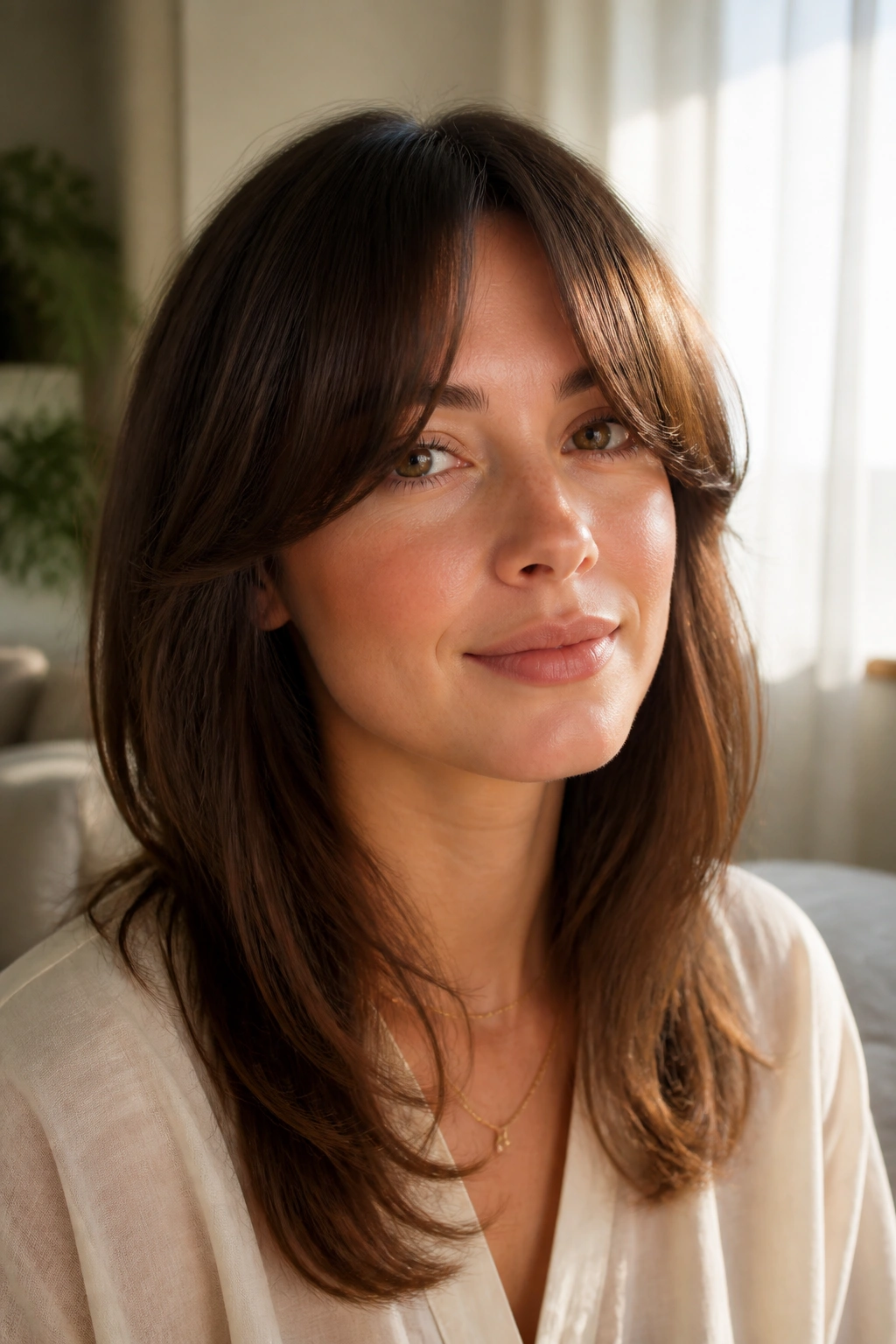
A soft arch across the forehead can be kinder than a straight line. Rounded long bangs curve gently from the center toward the temples, so the whole shape feels smoother and less severe. They are especially good when you want to soften a strong jaw or a high forehead without making the haircut feel heavy.
This style lives or dies by balance. The center should still be the shortest part, but the sides need to curve down rather than fall in a flat sheet. If the edges are too blunt, you lose the roundness. If they are too thin, the shape disappears.
I like rounded bangs on people who wear a lot of blowouts or smooth waves. The curve looks intentional when the hair has some polish. On very textured hair, the shape can work too, but it usually needs a little more styling help.
Quick shape notes
- Shortest at the middle, longer at the temples.
- The curve should echo the brow line, not fight it.
- A round brush helps set the arc.
- Too much hairspray makes the bend stiff.
The result feels softer than a straight bang, but more defined than a curtain fringe. That middle ground is why people keep coming back to it.
10. Long Bangs on Curly Hair
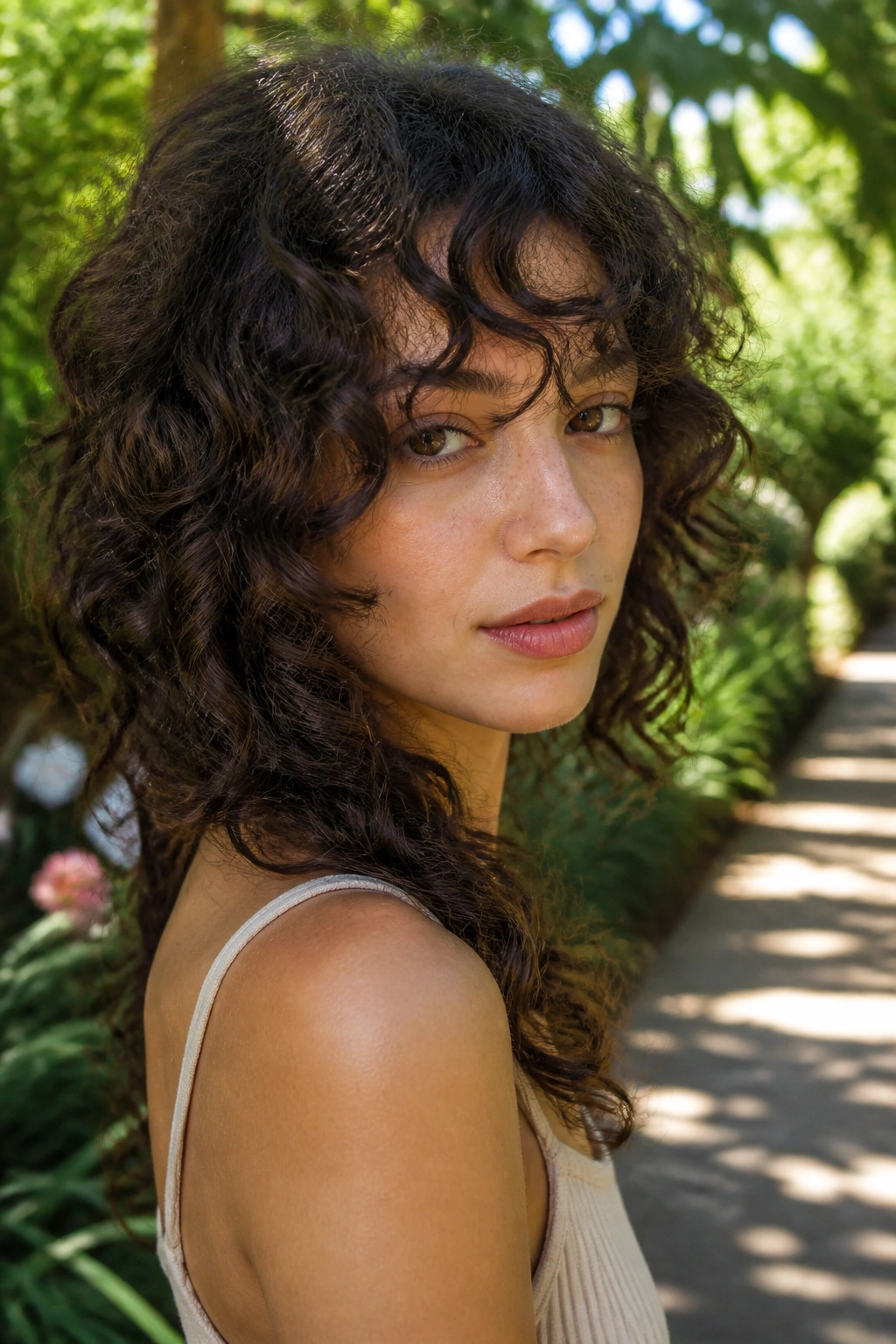
Curly bangs live or die by shrinkage. Cut them too short and they spring up like they’ve been startled. Cut them too long and they can hang in the eyes in one curl clump while the rest of the section sits somewhere else entirely. The trick is to respect the curl pattern, then leave enough length for the bounce.
This is one of those cuts that should be shaped dry, or at least with the curl pattern visible. Curly hair does not behave the same way wet and dry, and bangs show the difference fast. A stylist who understands the curl should look at where the front pieces naturally fall, then cut them longer than the final target length.
Use a curl cream that gives definition without a crunchy finish. Scrunch it in, diffuse on low heat, and leave the curls mostly alone while they dry. Pulling them apart too much can wreck the front shape. So can brushing them after they’re dry.
Curly long bangs work beautifully with layered cuts, shags, and rounded shapes, but they can also stand alone if the front is shaped with care. The result feels lively. Not fussy. Just alive.
11. Wolf Cut Fringe With a Choppy Edge

The wolf cut fringe is the rougher cousin of shag bangs. It has more edge, more separation, and more visible layers at the front. The silhouette usually feels heavier near the crown and more broken through the ends, which gives the whole haircut a little attitude.
Unlike softer curtain bangs, wolf fringe is meant to look a bit wild. That does not mean sloppy. It means the cut has an intentionally uneven finish, often with the longest front pieces dropping to the cheekbones or jawline while shorter bits sit closer to the brow. The contrast is what gives it life.
This style suits thicker hair, dense waves, and straight hair that refuses to lie flat. It can make fine hair look stringy if the layers are too aggressive, so I would not push it there unless you really like texture and you have a stylist who knows how to control weight.
How to keep it from looking overdone
- Use a matte texture spray, not a slick serum.
- Rough-dry the front and shape it with your fingers.
- Keep the ends broken up, not frayed.
- Let some pieces fall forward and some fall back.
The wolf cut fringe is not the most polished option. It is, however, one of the most interesting.
12. Face-Framing Bangs That Melt Into Layers
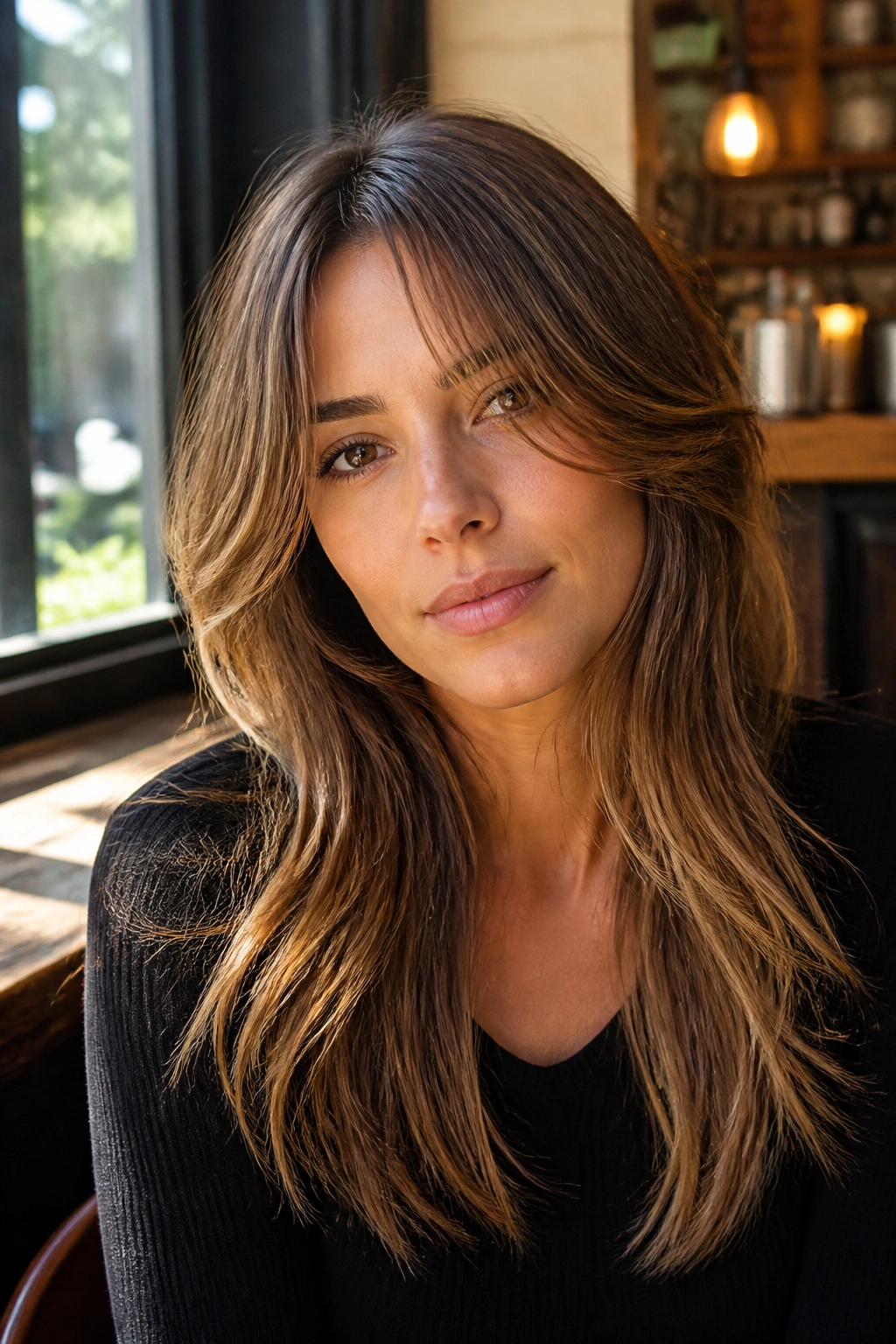
Some long bangs barely read as bangs at all, and that is the appeal. Face-framing bangs start at the front, then melt into the rest of the haircut so gradually that they feel like a natural extension of the layers. There is no hard line. No obvious break. Just a soft shift around the face.
This is a smart move if you like the idea of bangs but hate the idea of being stuck with bangs every single day. You can wear them forward, split them, tuck them behind your ears, or let them fall into the rest of your hair. They are flexible in a way blunt fringe never is.
Ask for the front layers to begin around the cheekbone or just below it, then move longer toward the jaw. The exact length depends on how much structure you want near the face. If the layers start too high, the cut can feel busy. Too low, and the bangs lose their job entirely.
I think this style works best on women who want a subtle shift rather than a dramatic one. It changes the haircut without stealing the show. Quietly useful. That’s the charm.
13. Long Bangs for Thick Hair That Need Weight Removed Correctly

Can thick hair pull off long bangs without looking blocky? Absolutely. The trick is not to thin the front until it disappears. The trick is to remove weight in the right places so the bangs can move.
What to ask your stylist
Tell them you want the front to keep enough fullness to read as bangs, but not so much bulk that it sits like a shelf. Point cutting helps soften the line. Internal debulking under the top layer helps the hair lie better. What you do not want is a heavy razor job across the visible surface, because that can leave the front looking frayed and uneven.
Thick hair often needs a little more room at the temples so the bangs do not feel boxed in. A longer side piece can help the whole front area move away from the face instead of sticking straight out.
- Best for dense straight or wavy hair.
- Needs a bit more blow-dry tension.
- Works well with a large round brush or hot brush.
- Can look bulky if cut too bluntly through the middle.
My opinion: this is one of the most underrated long-bangs ideas women are trying, because it solves the classic thick-hair problem without forcing the whole front into a heavy wall.
14. Birkin-Inspired Long Bangs With a Soft Brow Line

There is a reason this shape keeps showing up on women who like a little softness around the eyes. Birkin-inspired bangs sit near the brow line, slightly heavy, slightly undone, and just irregular enough to feel human. They are not crisp. They are not airy. They sit in that sweet spot where the fringe looks lived-in but still deliberate.
The length matters here. Too short, and the style loses its easy drape. Too long, and it stops framing the eyes. A good version usually brushes the brows, then falls a touch longer in the middle so it can be tucked, separated, or worn forward depending on the day.
This is a strong match for straight to softly wavy hair. It likes a little natural bend, but it does not need perfection. In fact, perfection can make it look too stiff. A slight irregularity around the ends keeps it from feeling costume-like.
I would not ask for a razor-heavy finish here. Clean, soft shaping is better. Let the fringe sit with a little texture, not a lot of shred. That balance is what gives the style its charm.
15. Grown-Out Bangs That Still Look Intentional

Grown-out bangs can look good if they’re still being shaped on purpose. That’s the part people miss. The moment you stop trimming the front entirely, the style turns fuzzy. But if you keep the ends cleaned up and maintain the side angles, the grow-out can read as a soft, flattering fringe.
This version is ideal for people who want low-maintenance hair without surrendering the front of the haircut. You keep the longest pieces around the cheekbone or jaw, and you let the center inch downward in tiny stages. The shape changes, but it does not disappear.
It works with ponytails, messy buns, clips, and loose waves because the bangs are never trapped in one narrow category. They can be swept open, pinned back, or left to skim the eyes on days when you want more face framing.
A light dusting trim every so often keeps the line from splitting into two unrelated chunks. If the ends start kicking out in every direction, the style needs a little cleanup, not a full reset. That is the real appeal here: you can let it grow without looking like you’ve simply forgotten about it.
Final Thoughts
Long bangs work best when they fit the way you actually wear your hair. If you live in ponytails and clips, a softer, longer fringe will be easier to handle than a blunt one. If you like big blowouts and a smooth front line, you can push the shape heavier and cleaner.
The smartest choice is usually the one that respects your hair’s habits instead of fighting them. Cowlicks, curl pattern, density, and parting all matter more than mood-board pictures do, and a good stylist will talk through those pieces before cutting anything.
Bring a reference photo if you want, but also bring your daily reality. That matters more.
