



Winter hair has a way of telling the truth. If a cut is sloppy, the coat collar catches it, the scarf bends it, and the hat flattens it into a sad little curve. Bob haircuts for winter solve that problem better than most people expect, because the shape sits close to the head, moves fast, and still looks deliberate when the weather is doing its worst.
I’ve always thought a good bob earns its keep in cold weather. It can look sharp with a wool coat, it dries quicker than longer hair, and it does not drag on your scarf every five minutes. The trick is choosing the right version for your texture, your density, and how much time you want to spend wrestling static before you walk out the door.
A winter bob should do two jobs at once. It needs enough structure to hold up under hats and hoods, and enough softness that it doesn’t feel severe when the air gets dry. That’s where the smart cuts come in—blunt edges, cheekbone-skimming layers, a little graduation in the back, or a fringe that sits cleanly instead of fighting your forehead.
Some of these cuts are polished. Some are messy in the good way. All 35 work for real life, which matters more than looking tidy for ten minutes in front of a mirror.
1. Chin-Length Blunt Bob
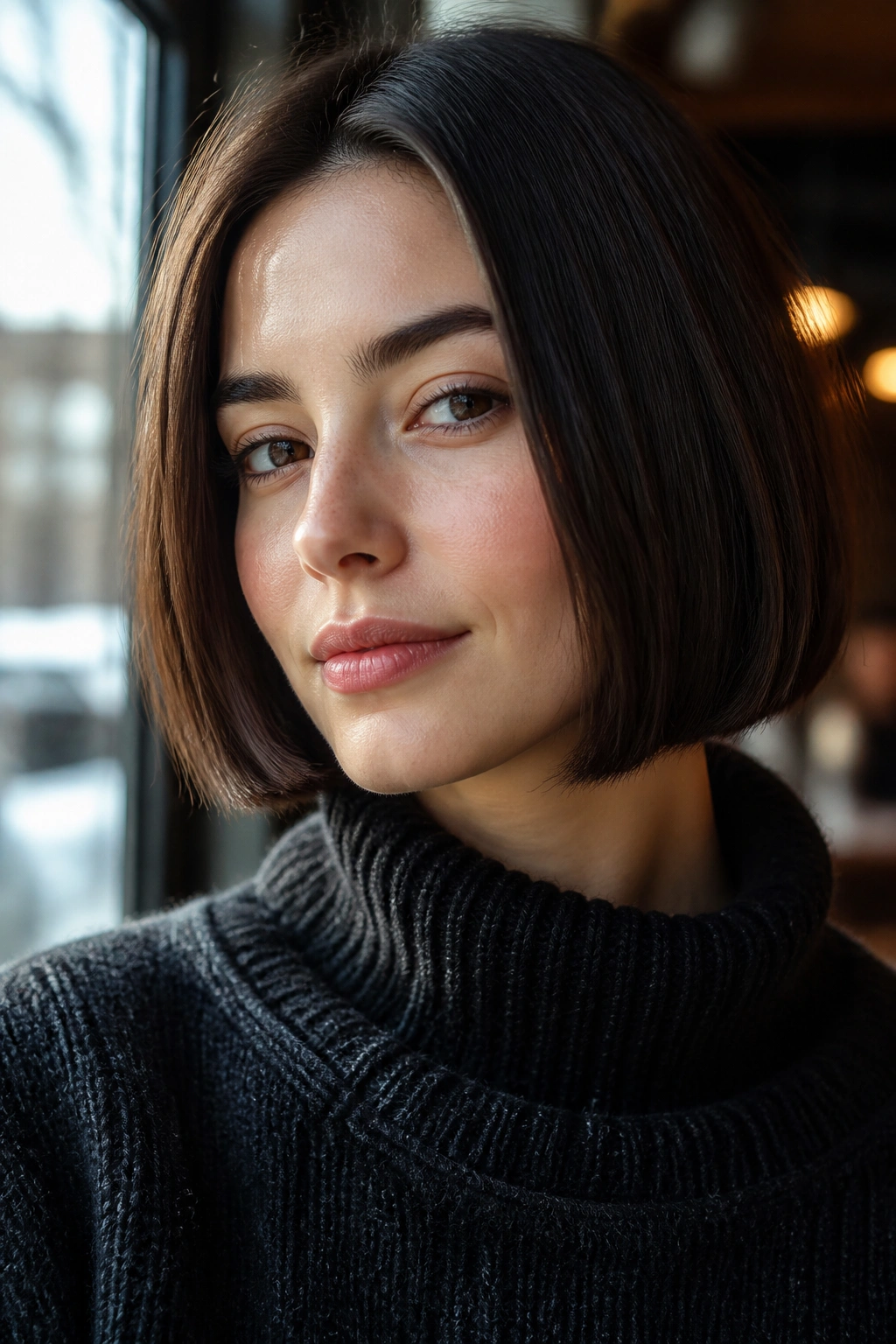
A chin-length blunt bob is the cut I’d hand to someone who wants order without fuss. The line sits right at the jaw, so it feels crisp under a coat, and the blunt edge gives fine hair a fuller look fast. No fluff. No wandering ends.
Ask for the perimeter to stay even, then keep the interior almost untouched. If your hair has a little wave, that’s fine—just don’t over-layer it or the shape loses its punch. A one-length bob is excellent in dry winter air, because it looks intentional even when the texture gets a little rough.
2. French Bob With Soft Fringe

The French bob is shorter, lighter, and a little cheekier than the blunt version. It usually sits between the lip and the chin, with a fringe that brushes the brows instead of hanging in your eyes like a curtain you need to move aside every minute.
That softness matters in winter. Hats tend to crush longer bangs, but a shorter fringe bounces back faster, especially if you round-brush the front for 2 minutes after drying. Keep a small tube of styling cream around; a pea-size amount through the ends calms static without turning the cut limp.
3. Jawline A-Line Bob

A slight A-line bob gives you shape where winter hair usually goes flat. The back stays a touch shorter, while the front falls closer to the jaw or just below it, which makes the face look longer without getting fussy about layers.
This is one of those cuts that looks good when you tuck one side behind your ear and forget the rest. It’s also useful if your hair grows out fast, because the angled front keeps the shape from turning boxy too soon. If you hate trims every month, this one buys you a little breathing room.
4. Airy Layered Bob
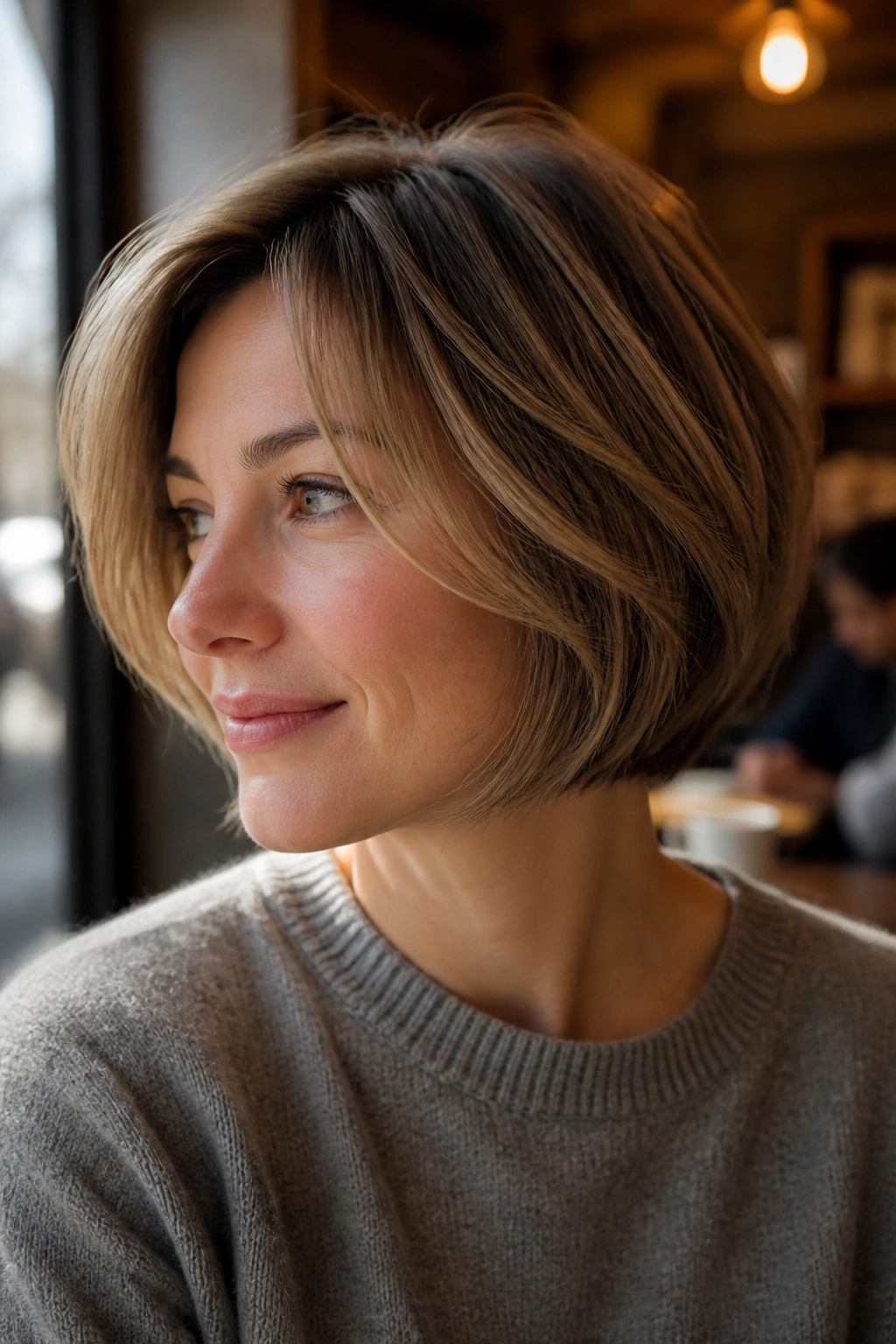
Layered bobs can go bad fast if the layers are hacked in too high. Done well, though, they lift the crown and stop the ends from hanging like wet rope once the weather turns dry.
I like this cut for medium-density hair that needs motion more than length. Ask for soft internal layers, not choppy outer layers, and keep the lowest line around the chin. A round brush and a light mousse at the roots are enough; you do not need a shelf full of products for this to work.
5. Textured Wavy Bob

A textured wavy bob feels relaxed, but not lazy. The movement breaks up the straight line just enough to keep the cut from looking stiff under scarves and sweaters, which is a small thing until you live with it every day.
The important part is restraint. Too much beach spray in dry air makes the ends crunchy. Use a dampening leave-in, scrunch a nickel-sized bit of cream through the mid-lengths, and let the wave pattern do the work. It’s a cut that likes air-drying better than constant hot-tool fussing.
6. Box Bob
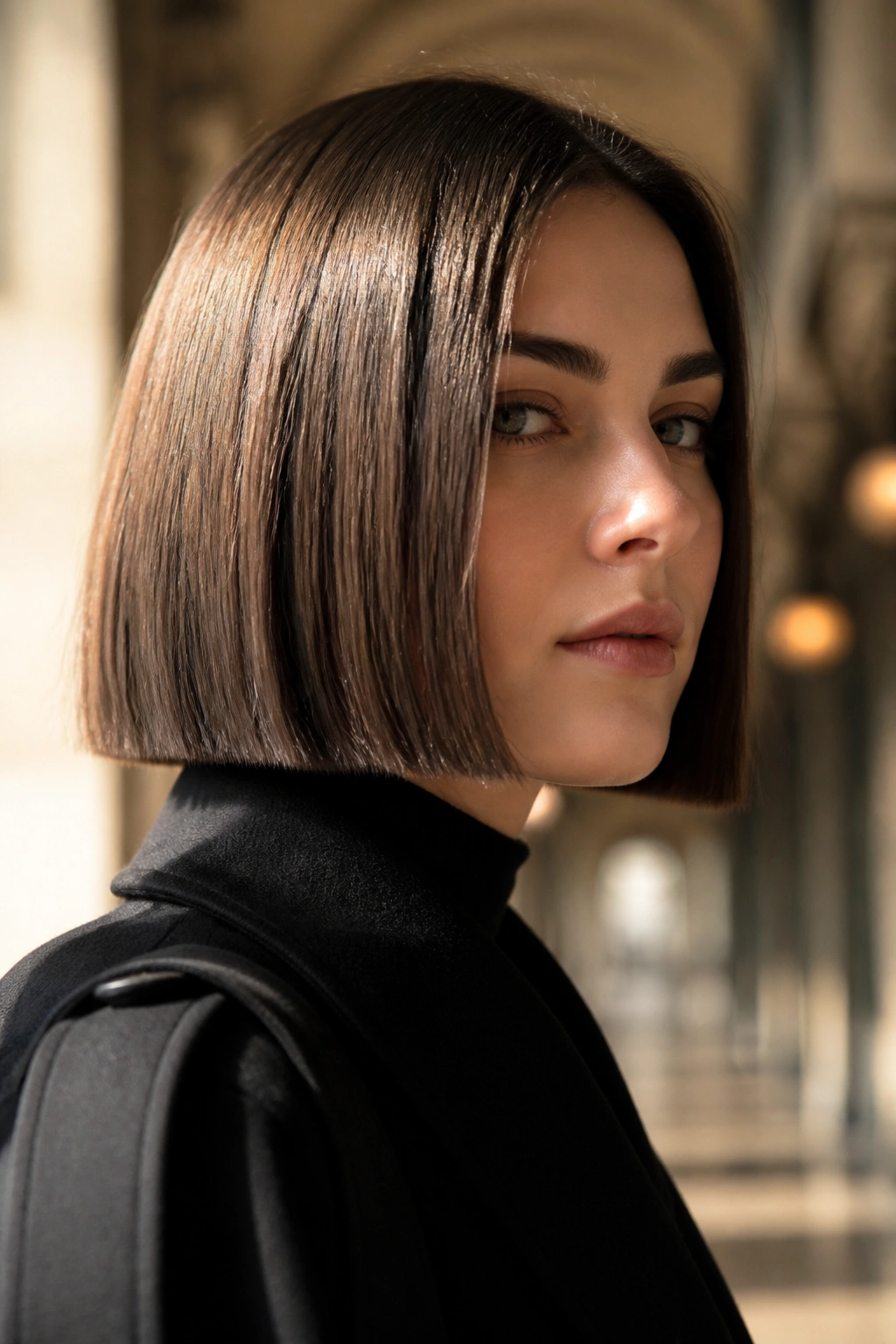
The box bob is clean, square, and blunt through the bottom. Think sharp corners, not softness. That shape gives a strong frame to the face, and it looks especially good with straight hair that usually gets swallowed by winter layers.
It’s not a cut for someone who wants movement everywhere. It’s for someone who likes a clear silhouette. If your hair is very thick, your stylist may need to remove a bit of bulk inside the shape so it doesn’t puff out at the sides. That detail matters more than most people think.
7. Stacked Nape Bob
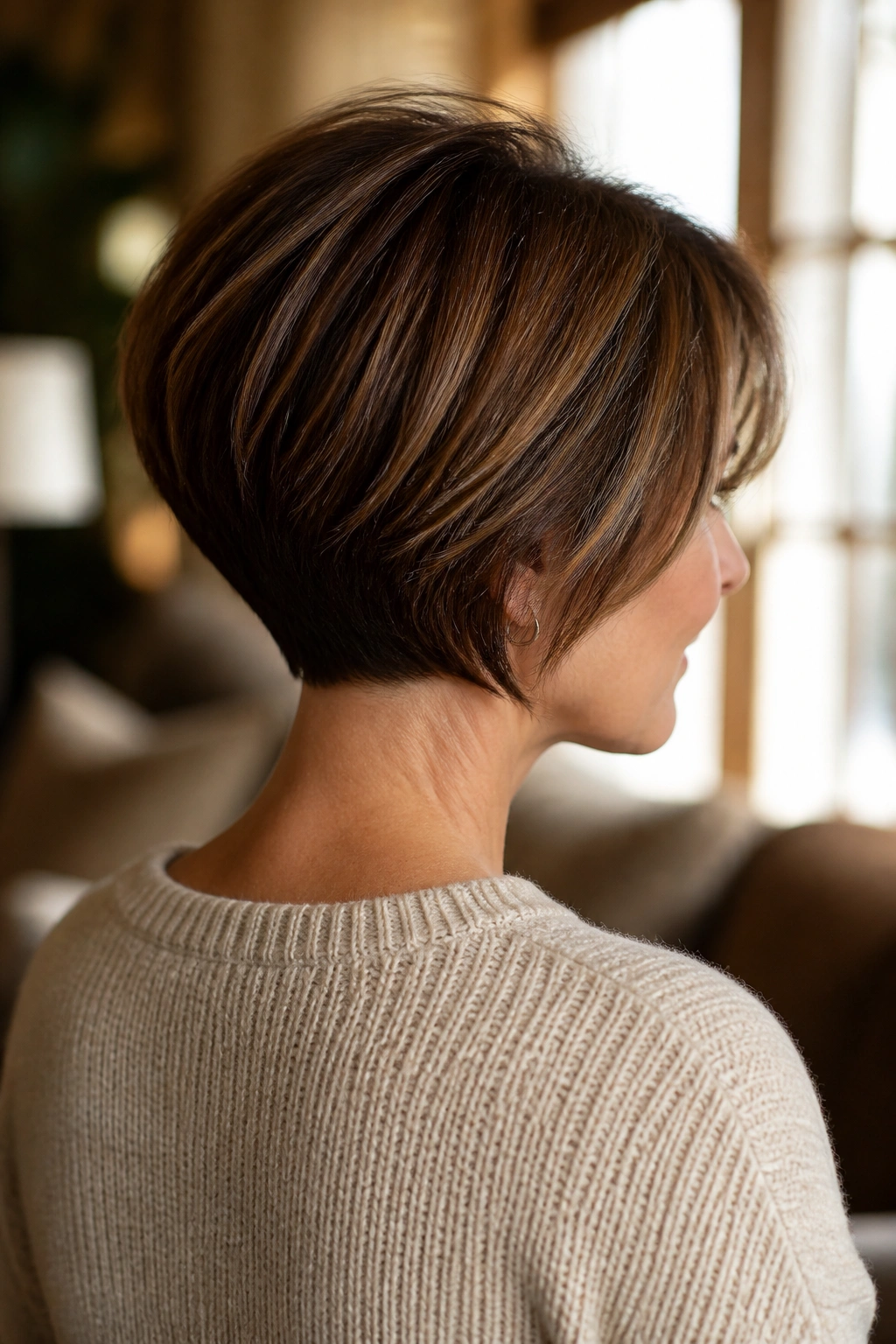
A stacked bob lifts at the back and keeps the nape neat, which is one of those small winter luxuries you only appreciate after wearing a scarf for a week straight. The shorter layers under the crown build shape without making the whole cut too airy.
This one suits hair that tends to collapse at the back. It also helps if your neckline gets annoyed by longer strands rubbing against collars. Ask for the graduation to stay controlled, not extreme. You want lift, not a helmet. There’s a difference, and it shows.
8. Collarbone Bob

A collarbone bob is longer than the classic chin cut, which makes it useful if you want some swing without giving up bob energy. It grazes the collarbone or sits just above it, so it still clears most scarves and jackets.
I like this length for people who are nervous about going short. It gives you a little extra room for ponytails on lazy days, which is practical, not glamorous, but useful. A flat iron bend at the ends or a soft blowout keeps the line from looking heavy.
9. Curly Rounded Bob
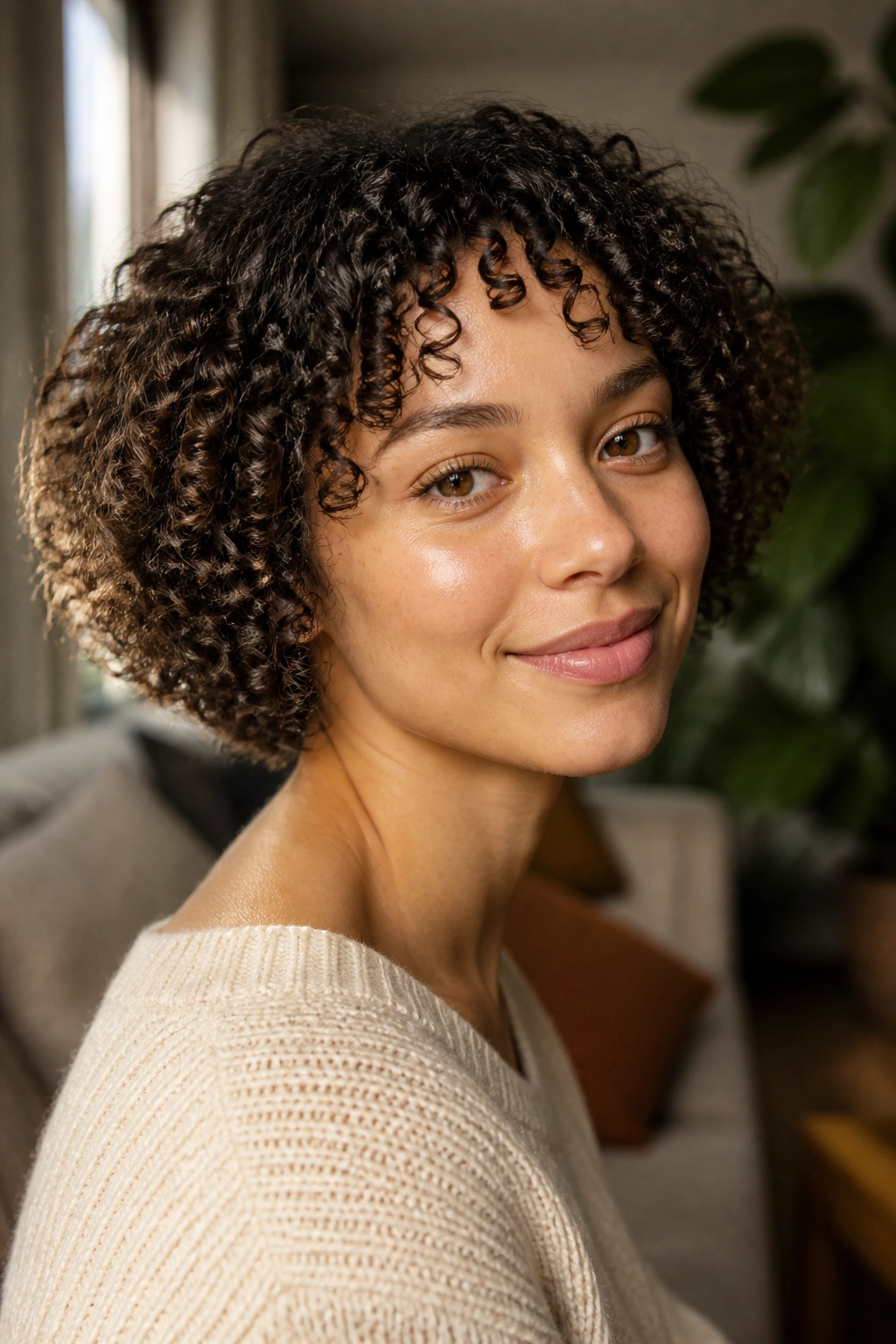
Curly hair loves a bob that respects the shape instead of fighting it. A rounded cut keeps the curls sitting evenly around the head, which stops that odd triangle effect that can happen when winter air dries the sides faster than the back.
The best version is often shorter than you expect. Shrinkage pulls curls up, so a bob that looks chin-length wet might land several inches higher dry. Ask for it to be cut curl by curl, preferably when the hair is in its natural state. That takes more time, but it saves you from surprise height.
10. Wavy Bob With Curtain Fringe

Curtain fringe adds a little softness around the face without the maintenance of full bangs. On a bob, it gives the cut movement through the front, which is handy when winter hats flatten the crown and make everything else feel too rigid.
This shape works well if your hair bends naturally but doesn’t curl tightly. The fringe can split in the middle and fall toward the cheekbones, so it grows out gracefully, too. Blow-dry the fringe forward first, then sweep it apart with your fingers. That tiny habit keeps it from sticking to the forehead.
11. Micro Bob

The micro bob is short, blunt, and unapologetic. It usually lands between the ears and jaw, and it can look almost architectural when it’s cut cleanly. Not everyone wants that much shape near the face. Fair enough.
In winter, though, it has a useful upside: it barely competes with collars, scarves, or high-neck sweaters. If your hair is fine, this cut makes the ends appear denser; if your hair is thick, it needs careful texturizing at the inside so it doesn’t puff up around the ears. Short does not mean simple.
12. Long Bob With Invisible Layers

Invisible layers are the quiet ones. They hide inside the shape, so the bob keeps its smooth outline but loses some bulk and some of the flatness that winter dryness can create.
This is a good choice if you want movement without obvious choppiness. It also plays nicely with straight hair that tends to turn limp after being tucked under hats. A quick pass with a large round brush at the crown gives the style lift, and the whole thing feels polished without trying too hard.
13. Deep Side-Part Bob

A deep side part can rescue a bob that has started to feel too neat. It pushes one side lower, gives the crown a little height, and makes the cut look fuller where you need it most.
There’s a practical bonus, too. Side parts help disguise flat spots from hats and allow the hair to dry with some direction instead of falling straight down. If your face is round or square, the diagonal line softens the outline nicely. Simple move. Big payoff.
14. Center-Part Bob

A center-part bob is stricter, cleaner, and a little cooler in feel. It works best when the haircut itself is doing the heavy lifting, because there’s nowhere to hide behind a dramatic part line.
That said, winter is actually a decent time for it. Dry air can make hair puff at the sides, and a center part keeps the balance even. If you have strong cheekbones or an oval face, the cut frames them without much effort. Use a smoothing serum only on the mid-lengths; roots get greasy fast if you overdo it.
15. Italian Bob

The Italian bob is fuller, swingier, and less fussy than the super-blunt versions. It usually sits at the jaw or a touch below, with a dense-looking perimeter and just enough movement through the ends to avoid stiffness.
I like this one because it feels expensive without being precious. It works with thick or medium hair, especially if you want body without curls or obvious waves. A big round brush, a fast blow-dry, and a little bend at the ends are usually enough. No need to force it into submission.
16. Bob With Bottleneck Bangs

Bottleneck bangs give you a narrow center and softer sides that flare toward the cheekbones. On a bob, that shape is smart because it brings attention to the eyes while staying easy to grow out when you get tired of fringe maintenance.
Winter air can make bangs separate or stick awkwardly, so this cut helps by keeping the shortest part off the lashes. The longer side pieces can tuck into the rest of the bob and behave better under hats. If you’ve wanted bangs but feared regret, this is the less risky version.
17. Deep Side-Tuck Bob

A deep side-tuck bob sounds casual, because it is. The cut itself usually has enough structure to sit on one side, then tuck neatly behind the ear on the other, which gives you a shape that can change in a minute.
This is a good winter choice for anyone who wears glasses, earrings, or scarves that crowd the sides of the face. The tucked side clears space, and the heavier side gives the style some attitude. It’s also one of the easier bobs to refresh halfway through the day. Run fingers through it, tuck, done.
18. Shaggy Bob
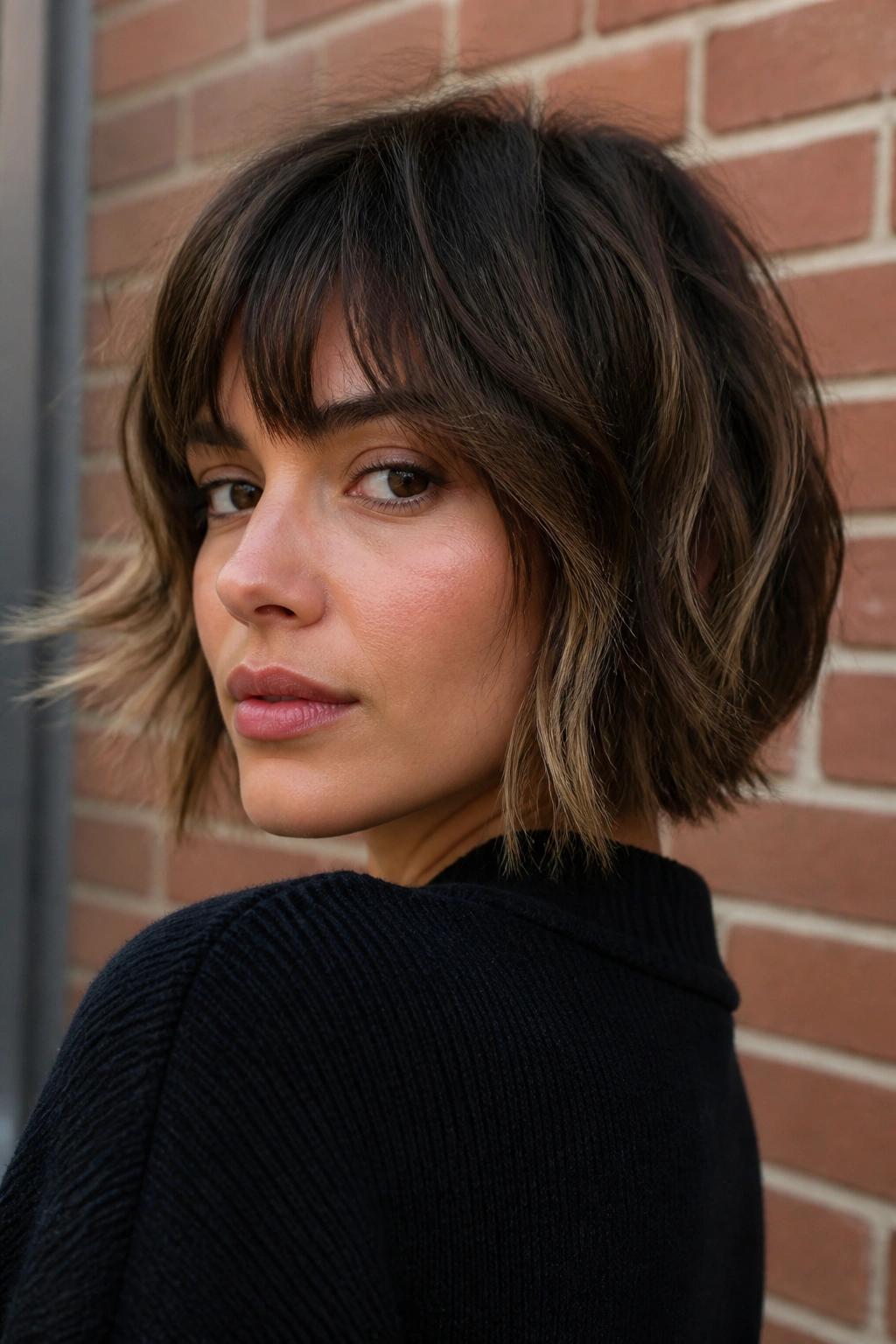
The shaggy bob has a little more edge, and it does not pretend otherwise. Choppy layers, loose ends, and a piece-y finish give it movement that feels almost built for dry winter texture.
The danger is over-texturizing. Too much and the cut turns thin at the bottom, which is the last thing you want when the air already steals moisture from the ends. Ask for soft, broken-up layers rather than a full-on shag. You want flexibility, not a mullet in disguise.
19. Glass Bob

A glass bob is for straight hair that wants shine and precision. The lines are polished, the ends are crisp, and the whole cut looks like it was pressed into place, though in reality it still needs a decent blow-dry and a flat iron pass if your texture is not naturally smooth.
It looks especially striking in winter because all that clean surface contrasts with bulky coats and knit scarves. Use heat protectant, then finish with a drop or two of serum on the mid-lengths. Skip heavy oils near the roots or the style collapses fast.
20. Tousled Salt-Spray Bob
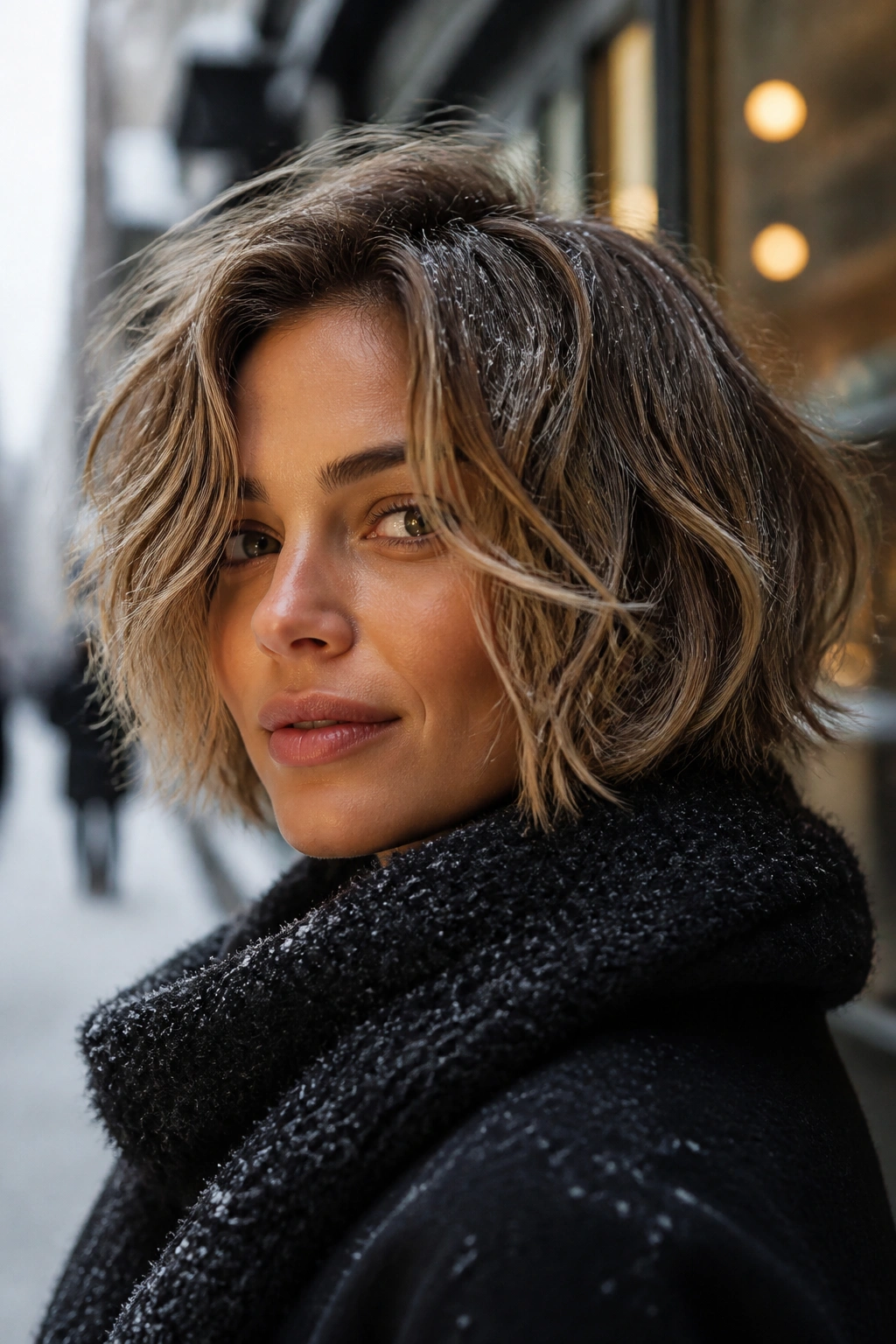
A tousled bob can look lazy in the wrong hands. In the right hands, it looks like you meant to be relaxed, which is a different thing.
This version works well if your hair holds bend but not defined curl. Mist salt spray on damp hair, scrunch lightly, then dry with a diffuser or let it air-dry partway before rough-drying the roots. The trick is not to overbuild texture. Too much product in winter air can make the ends feel sticky instead of soft.
21. Undercut Nape Bob

An undercut nape bob is a practical cut disguised as something sharper. Removing a bit of bulk at the neckline keeps thick hair from bunching under collars, and it can make the bob sit closer to the head in a cleaner way.
This is the cut I’d point at if someone says their hair gets hot, heavy, or downright annoying under winter clothes. The undercut does not have to be dramatic; sometimes a small, hidden removal is enough. You keep the shape on top, but the back behaves better. Good trade.
22. Flipped-Under Bob

A flipped-under bob brings the ends inward with a round brush or curling iron, so the silhouette looks soft and tucked rather than blunt and severe. It’s one of the most forgiving bobs for windy days, because the shape already wants to curl in on itself.
I like it for people who wear a lot of structured coats. The inward bend echoes that neat, layered look without feeling stiff. Blow-dry the ends with a 1.25-inch round brush, then let them cool before touching. That cooling step matters. Skip it, and the shape drops sooner than you’d like.
23. Asymmetrical Bob
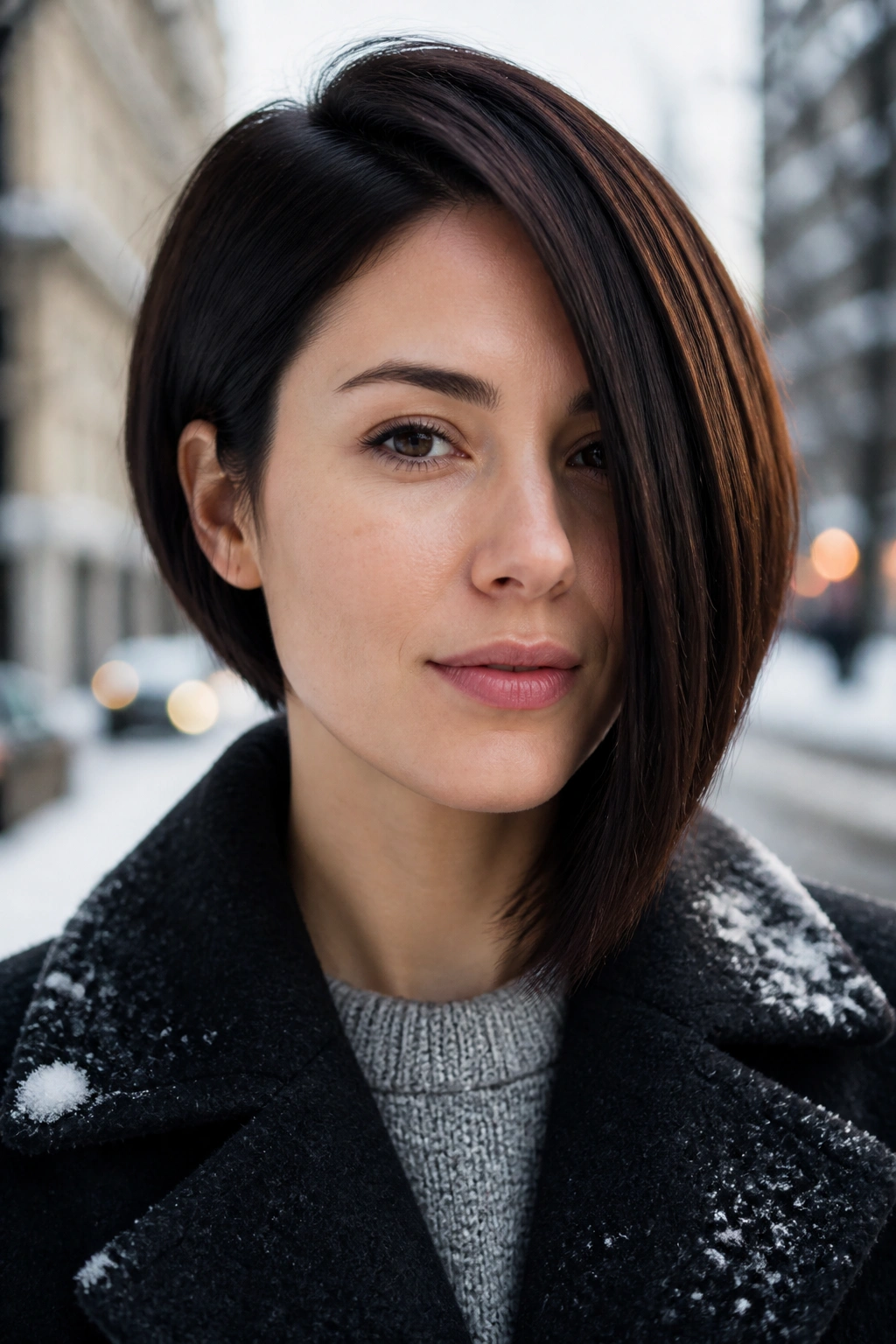
An asymmetrical bob gives you tension in the shape without needing bright color or heavy styling. One side sits a little longer than the other, and that small difference changes the whole mood of the cut.
Winter is a good season for it because the uneven line keeps the style from looking too static when it gets flattened by scarves. It also works well if one side of your hair grows faster or sits differently because of a cowlick. I’d call this a confident cut. Not loud. Just clear.
24. Face-Framing Angled Bob
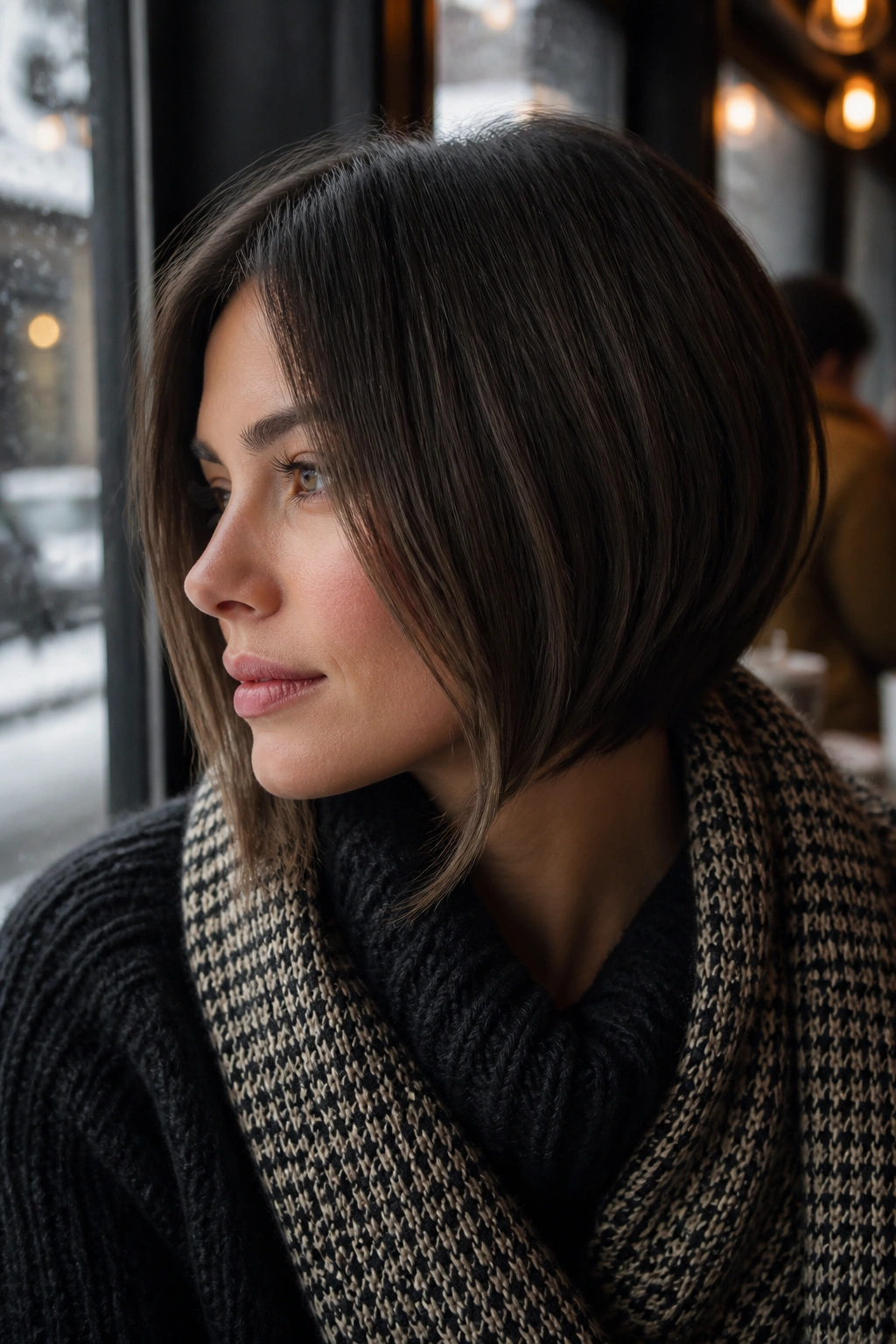
A face-framing angled bob gives you a forward sweep that softens the jaw and cheek area. The front pieces are slightly longer, then they angle back toward the nape, which creates movement without losing the bob shape.
This cut is useful if you like your hair to look styled even on low-effort days. The angled front photographs differently from every side, which is a nice bonus, but the real value is how it lifts the face when winter clothes start making everything below the neck feel bulky. That angle does a lot of quiet work.
25. Feathered Bob
Feathered layers keep a bob from feeling heavy and blocky. The ends look lighter, a little airier, and easier to move through with your fingers instead of a brush every five minutes.
This style is a good fit for medium to thick hair that tends to sit like a slab when cut bluntly. The feathering should be soft, not wispy to the point of losing shape. If your stylist starts taking out too much weight, stop them. A winter bob needs enough substance to survive dry air and thick sweaters.
26. Graduated Bob
A graduated bob builds weight in the back and taper in the front, so the shape feels controlled from every angle. It’s a classic salon cut for a reason: the stack at the nape gives lift, and the front stays long enough to frame the face.
If your hair lies flat behind the head, this cut fixes that better than most. It can also make very fine hair seem fuller without adding fluff at the sides. Ask for clean graduation, not a sharp wedge. A harsh stack dates the cut fast. A softer one lasts longer.
27. Internal-Layer Bob
Internal layers are the invisible helpers of the bob world. They remove some weight from inside the shape while keeping the outer line intact, which means the haircut keeps its clean outline but feels lighter when you move.
I reach for this idea when someone wants a bob that still looks polished with no heat styling. The ends stay neat, the crown gets less bulky, and winter static is easier to manage because the hair is not fighting itself. A leave-in conditioner and a wide-tooth comb are usually enough to keep it honest.
28. Wispy-Bang Bob
Wispy bangs are softer than blunt fringe and less demanding, which is probably why so many people end up liking them after years of avoiding bangs altogether. They skim the forehead in broken pieces, so they do not press down with the same heaviness.
That lighter feel matters in winter. When hats, hoods, and indoor heating all mess with your hair, full bangs can get annoying fast. Wispy bangs blend into the bob and recover more easily after a quick finger comb. If you want fringe without the daily battle, start here.
29. Sculpted Oval Bob
The sculpted oval bob curves a little around the face instead of staying dead straight. That rounded shape softens sharp angles and gives the cut a gentle, finished look that works especially well with thicker hair.
It’s a strong choice if you like structure but hate harshness. The oval line keeps the style from looking square under coats, and the curve means the ends sit nicely even when the weather is dry. I’d ask for slight rounding through the perimeter and minimal texturizing at the bottom. Too much thinning ruins the shape.
30. Razor-Cut Bob
A razor-cut bob has a softer edge than a straight scissors cut. The ends taper a bit, which can be useful if your hair tends to puff out in cold, dry weather and you want movement without obvious layers.
Not every texture loves a razor. Very fragile or already dry hair can fray if it’s overdone. But on hair with a bit of thickness or natural bend, the razor creates a lived-in finish that feels easier to style. I’d keep this one away from anyone who wants a hard line and zero maintenance. It is not that kind of cut.
31. Thick-Hair Bob With Weight Removal
Thick hair can make a bob look too bulky if the inside is left untouched. A good weight-removal bob solves that by reducing bulk where it hides under the top layers, so the silhouette still looks clean from the outside.
This is where technique matters more than trend. Ask for internal debulking, point cutting at the ends, and a perimeter that stays strong. If the stylist chops away too much, the hair can spring outward in winter humidity and build. You want control, not random softness. Thick hair usually needs a firmer hand.
32. Fine-Hair Blunt Bob
Fine hair usually looks best when the line is blunt and the ends stay together. A wispy, layered cut can make the hair feel thinner than it is, while a clean bob creates the illusion of density from root to tip.
This is one of the easiest bobs to live with in winter because it dries fast and does not need much product. A root-lifting spray at the crown, a quick round-brush dry, and a light mist of hairspray are often enough. Keep conditioner off the roots if your hair collapses easily. That detail matters more than people admit.
33. Side-Swept Fringe Bob
Side-swept fringe gives a bob a softer front without the commitment of full bangs. It moves across the forehead, blends into the front sections, and can be tucked away on days when you need your face clear of hair.
I like this cut for people who wear glasses or who hate having fringe touch the skin all day. The sweep also handles winter hats better than blunt bangs because it doesn’t get stuck in one harsh line. If your hair has a natural side bend, this cut will feel easy. If not, it still works, but you’ll need a quick blow-dry at the root.
34. Wash-and-Go Bob
A wash-and-go bob is built for people who want the cut to do most of the work. It usually means the shape is tailored to your natural texture, so you can wash, add a little product, and leave the house without a 20-minute styling session.
That sounds simple, but the haircut has to be precise. The right length, the right amount of layering, and the right perimeter make the difference between “easy” and “messy.” Winter is a good time for this approach because too much heat styling can leave the ends fried and brittle. A good air-dry cream or curl cream is usually enough.
35. Soft Grow-Out Bob
A soft grow-out bob is the one I recommend to people who know they don’t want to live in the salon chair every four weeks. It keeps a bob shape, but the ends are a touch softer and the length has a little more room to move as it grows.
This is smart in winter because hair tends to feel drier and more delicate, and frequent trimming is not always necessary if the cut has been designed with a gentle grow-out in mind. Ask for a perimeter that sits between the jaw and collarbone, with light face-framing pieces so it never turns into a blunt block. It stays useful long after the first trim.
A good bob in cold weather should make your routine easier, not add another problem to your morning. The right cut clears space for coats and scarves, handles static better, and still looks like you meant to wear it that way.
If you’re deciding between two lengths, go with the one that feels easiest around your neck and jaw. That tiny bit of comfort usually matters more than the photo you took in the salon mirror.
