



Straight hair is the easiest texture to overthink and the best texture to cut into a French bob. The line shows up cleanly, the ends sit where you leave them, and the whole shape can look sharp in a way wavy hair sometimes has to fight for. That’s why French bob haircuts for straight hair work so well when the cut is honest: no fuss, no over-layering, no weird compromise at the hem.
The catch is that straight hair tells the truth. If the perimeter is uneven, you’ll see it. If the bangs are too heavy, they sit there like a curtain rod. If the bob is cut without enough shape, it can go flat fast and start feeling more like a grown-out mushroom than that airy Parisian look people want.
The best French bob on straight hair usually needs one of three things: a crisp line, a soft bend at the ends, or a fringe that gives the eyes something to land on. Sometimes all three. The trick is knowing which version suits your face, your hair density, and how much styling you’ll actually do on a Tuesday morning.
1. The Classic Chin-Length French Bob for Straight Hair
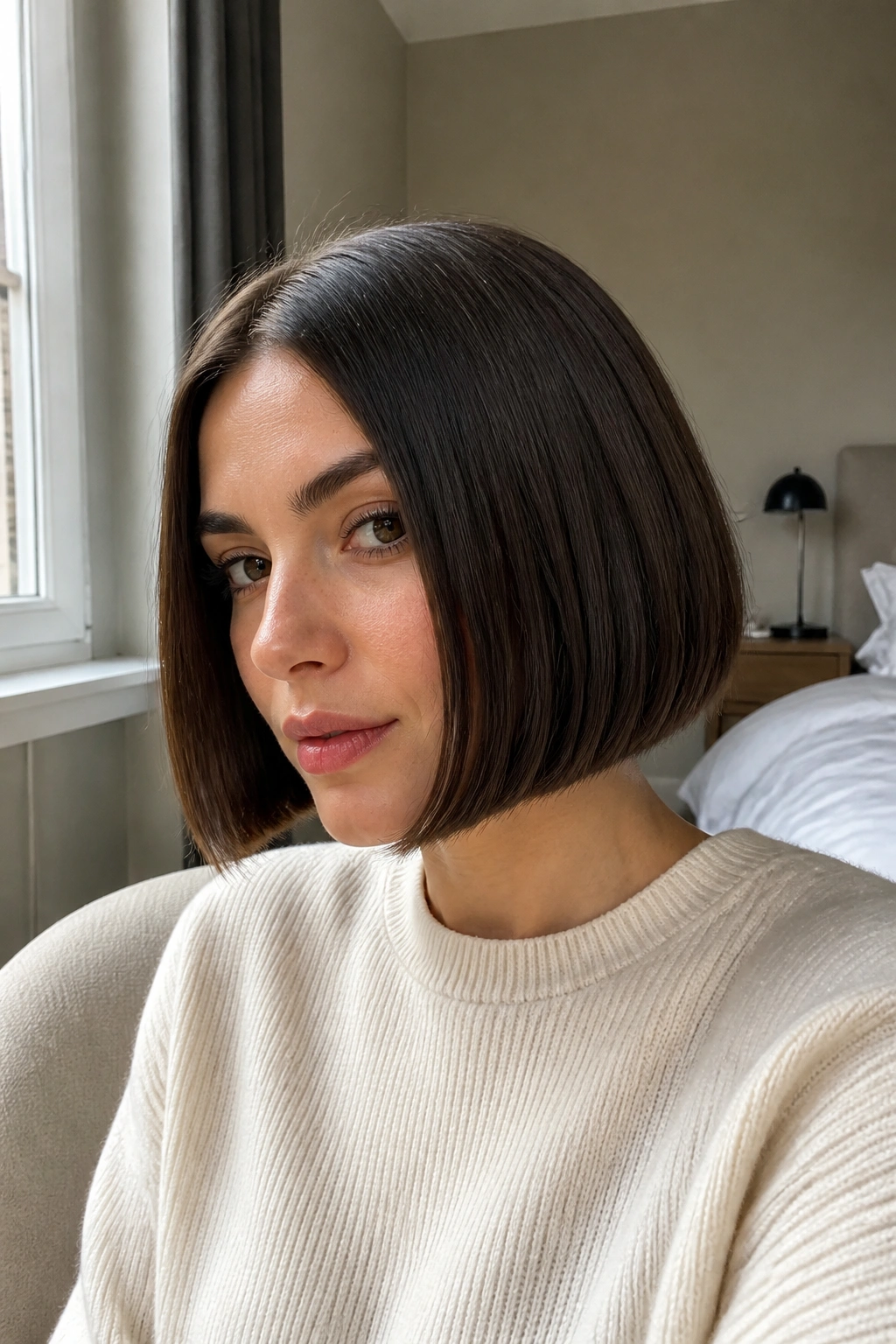
This is the version most people picture first, and for good reason. A chin-length French bob on straight hair gives you a clean perimeter that sits right where the jaw starts to do interesting things. The cut looks tidy without feeling severe, which is a hard line to walk, and straight hair makes that line look especially deliberate.
What I like here is the honesty of it. No layers fighting for attention. No messy extra movement pretending to be texture. Just a blunt edge, maybe softened by a tiny bit of point-cutting at the ends so the line doesn’t look chopped with garden shears.
Ask for the length to hit just at the chin or a hair below it. That tiny difference matters more than people think. Too short, and the bob can rise up around the cheeks; too long, and it starts reading as a regular short cut instead of a French bob.
The style works beautifully on fine straight hair because the blunt perimeter creates the look of fullness. On thicker hair, your stylist may need to remove a touch of bulk through the interior so the shape doesn’t puff out at the sides. That’s the part people miss: the outside can stay blunt while the inside gets a little relief.
2. The Jaw-Grazing French Bob With a Clean Center Part
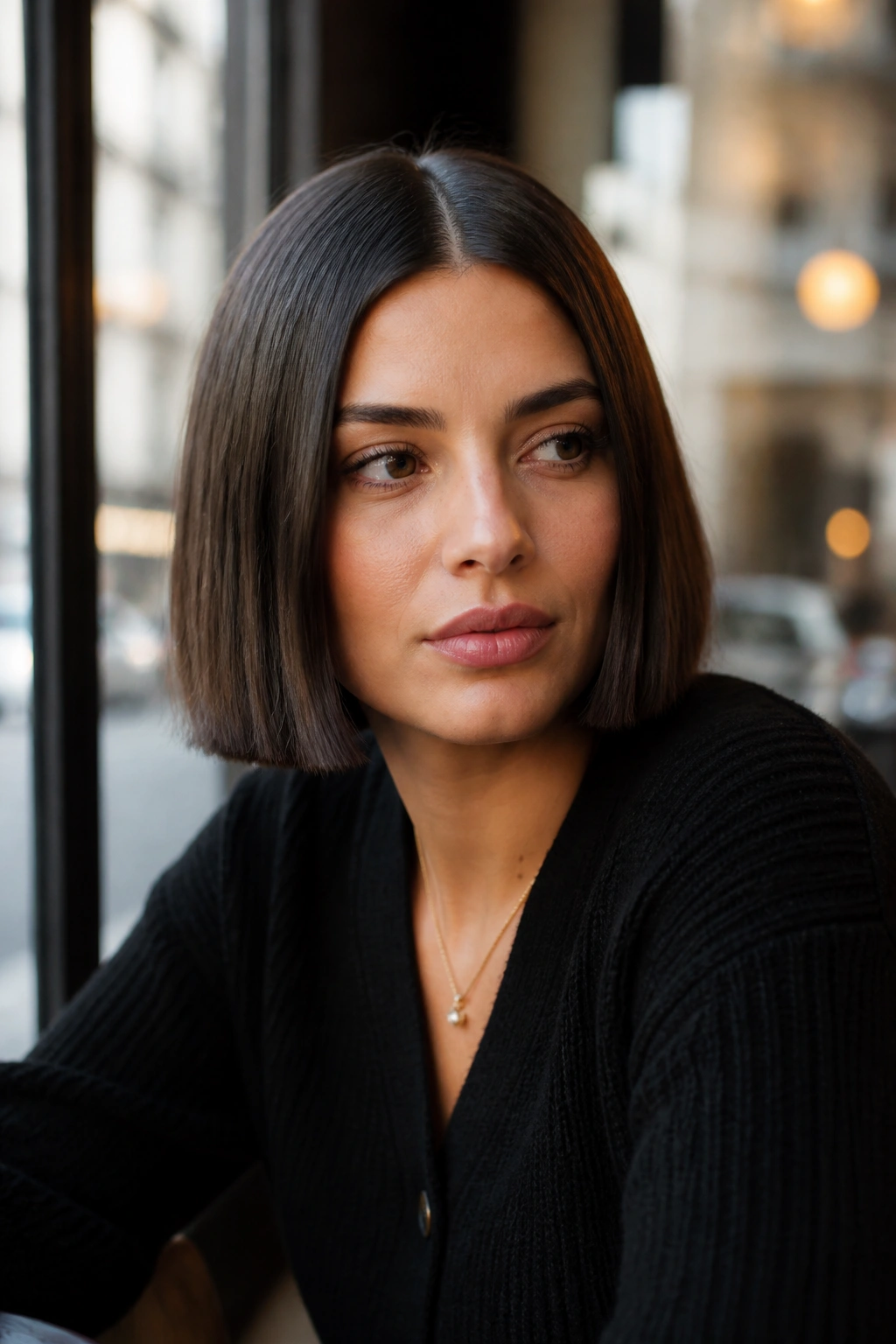
A jaw-grazing bob with a center part has a quieter kind of confidence. It doesn’t shout. It just sits there looking expensive and a little strict in the best way. On straight hair, the center part gives the cut symmetry, and that symmetry can make the jawline look longer and cleaner.
Why It Works
The center part pulls the eye down the middle of the face, which helps if you want a little elongation. The jaw-grazing length keeps the shape from feeling too severe, especially if your hair is naturally sleek and wants to lie close to the head.
This version also plays well with glasses. The hair doesn’t fight the frames. It stays out of the way, and the neat line near the jaw gives the whole face a tidy outline. If your hair is dense, ask for the ends to be lightly beveled so the line doesn’t sit like a shelf.
Who It Suits Best
- Oval faces that can handle a strong horizontal line.
- Heart-shaped faces that want a little weight around the lower half.
- Straight hair that holds a clean part without a fight.
One small tip: set the part while the hair is damp, not after it dries. A rat-tail comb and a dab of leave-in conditioner make the line stay where you want it instead of wandering off to one side.
3. The Micro-Fringe French Bob
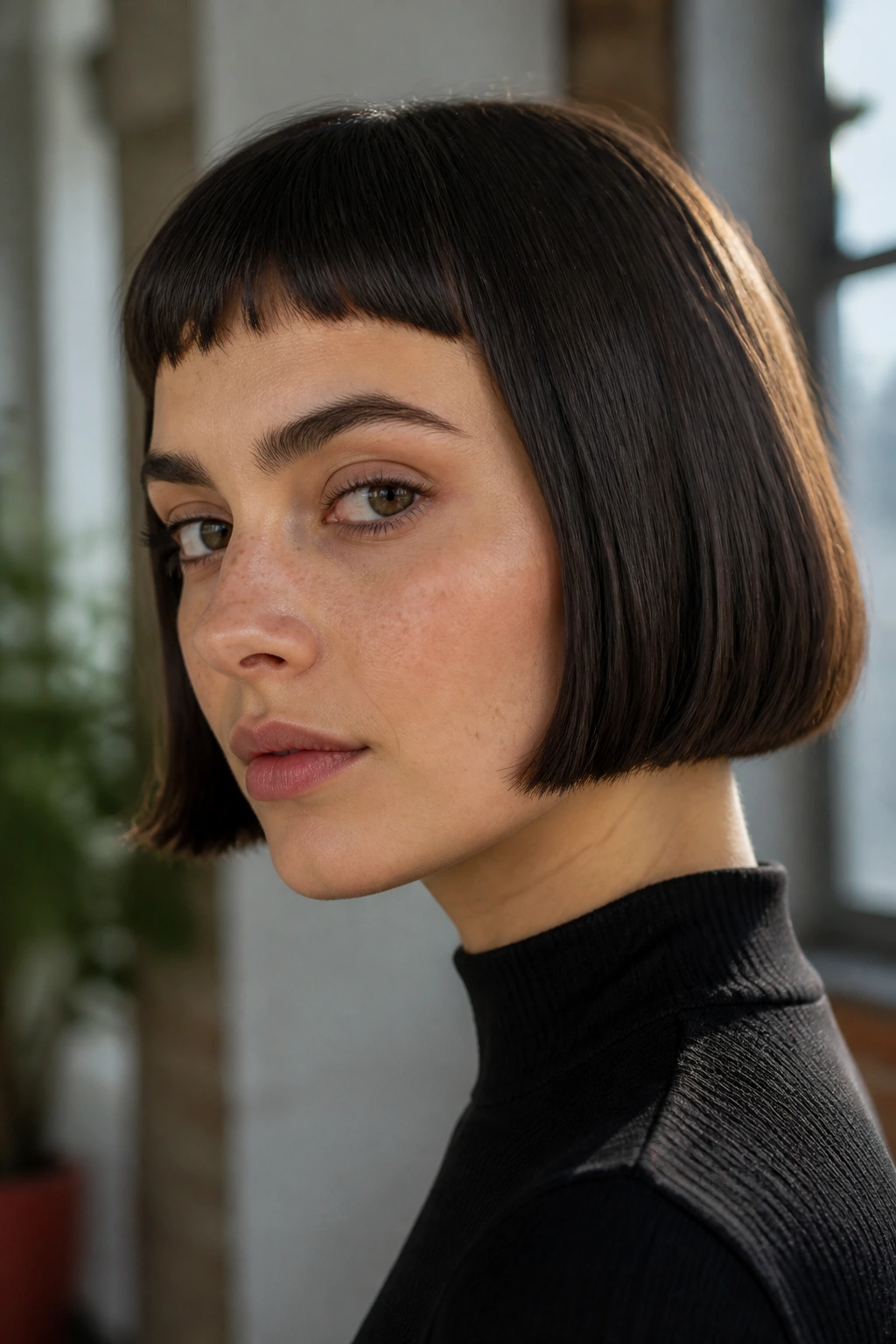
Why does a tiny fringe change the whole mood of a bob? Because it turns the haircut from neat to intentionally sharp in about two seconds. A micro-fringe French bob on straight hair has that crisp, slightly editorial feel that can look amazing when the rest of your style is simple.
Straight hair is good for this cut because the fringe lays flat and shows the shape clearly. Curly or wavy textures can blur the line a bit; straight hair keeps the bang visible, which is the whole point. The fringe should sit above the brows, but not so high that it starts looking accidental.
How to Wear It
Keep the fringe feather-light if your forehead is short. If your forehead is longer, a micro fringe can be surprisingly flattering because it shortens the face without hiding it. That’s a nice balance, and it’s one reason stylists like this cut on people who want edge without a lot of styling drama.
The rest of the bob should stay simple. No heavy layers. No complicated front pieces. Let the fringe do the talking and keep the body of the bob blunt and smooth.
A tiny warning: micro bangs demand upkeep. They grow fast in your face. Trim them often, or let them land in that in-between stage where they brush the brows and stop looking deliberate.
4. The Curtain-Bang French Bob
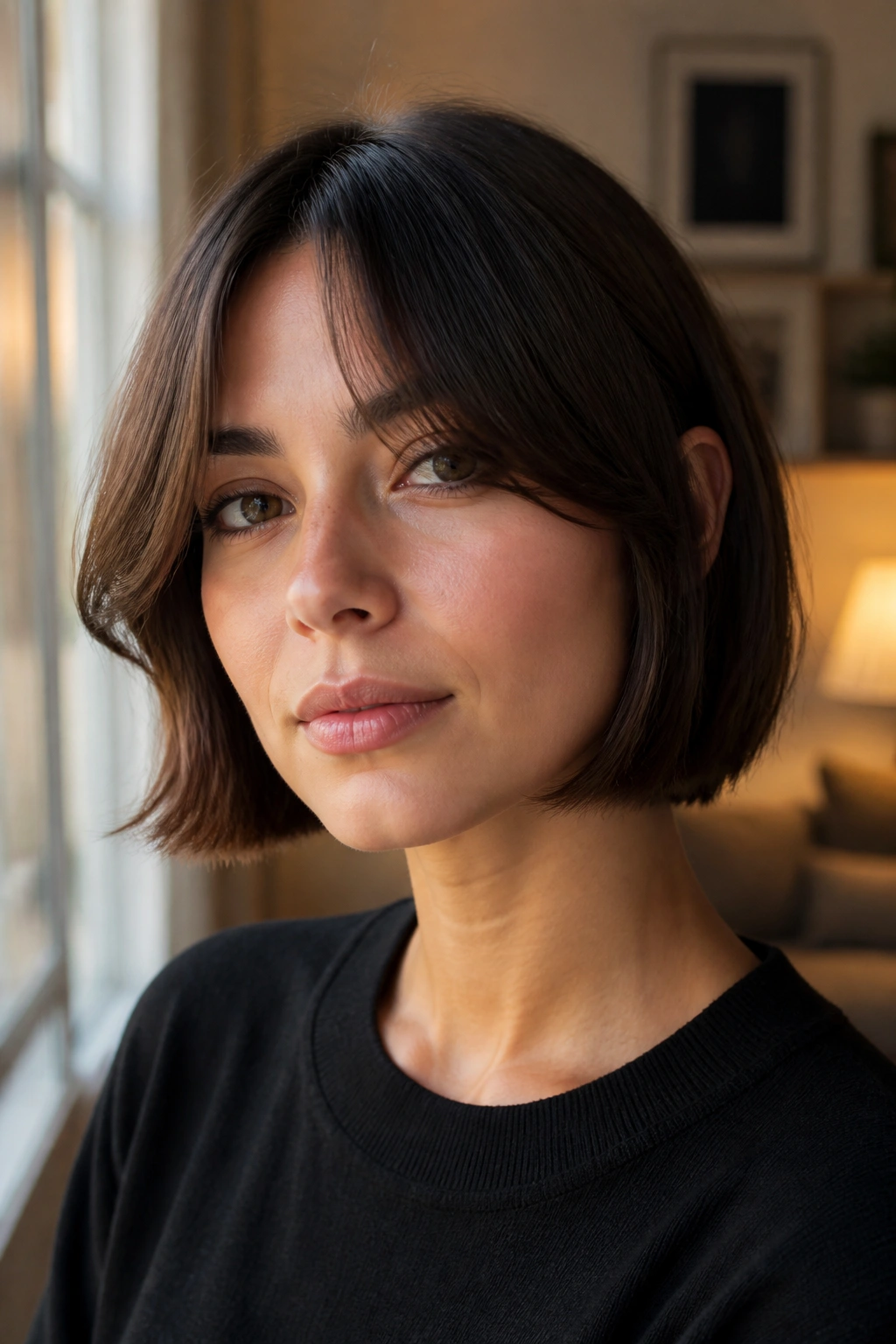
You want fringe, but not the kind you have to babysit every morning. That’s where curtain bangs come in. A French bob with curtain bangs keeps the softness of the style while giving straight hair a little movement around the face.
The middle split in the bangs opens up the face instead of covering it. That matters on straight hair, because straight strands can sometimes hang with too much seriousness. Curtain bangs break that line just enough. They also give the cut a more relaxed feel, which is useful if you don’t want the bob to look too neat all the time.
I usually like this version when the bangs start around the cheekbone and skim down toward the jaw. That range gives you flexibility. You can blow them out with a round brush for polish, or let them dry with a slight bend for a softer look.
A few practical details help here:
- Blow-dry the bangs first so they don’t dry in odd directions.
- Use a small round brush, around 1 to 1.25 inches.
- Aim the airflow down and away from the face.
- Keep the ends of the bob blunt so the fringe doesn’t compete with extra texture.
The result feels easy, but not lazy. That distinction matters.
5. The Tucked-Under French Bob With Beveled Ends
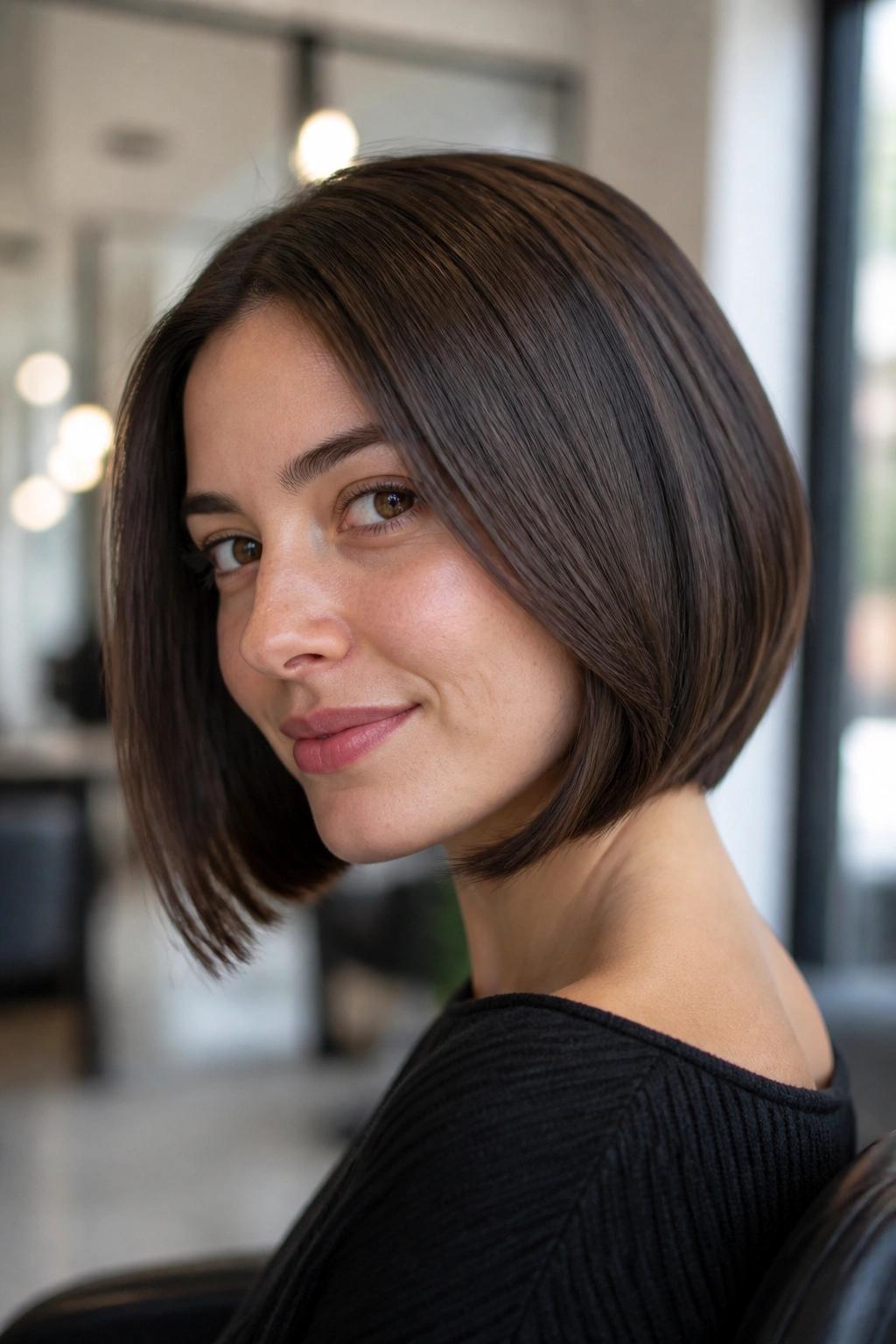
A tucked-under bob changes the silhouette fast. Instead of a flat line, the ends curve inward just enough to make the haircut look finished. On straight hair, that bevel can be the difference between “nice bob” and “that looks really intentional.”
This version is a cousin of the classic blunt cut, but it has more shape at the hem. The front often sits a touch longer than the back, though the difference should stay subtle. If the angle gets too dramatic, the cut stops reading as French and starts acting like a business bob from a different decade.
What Makes It Different
The beveled ends soften the bottom edge, which helps if your hair feels heavy or stubbornly straight. A little inward bend keeps the shape from flaring at the sides. It also helps thicker hair sit closer to the neck, which can make the whole cut feel lighter without actually taking away much length.
This is a good option if you like a polished finish but do not want something stiff. The line is still there. It just has a curve instead of a ruler edge.
My honest take: this is one of the best French bob haircuts for straight hair if you’re the kind of person who wants the cut to look good even when you haven’t done much to it. The shape carries some of the work.
6. The Sleek Paris Bob for Straight Hair
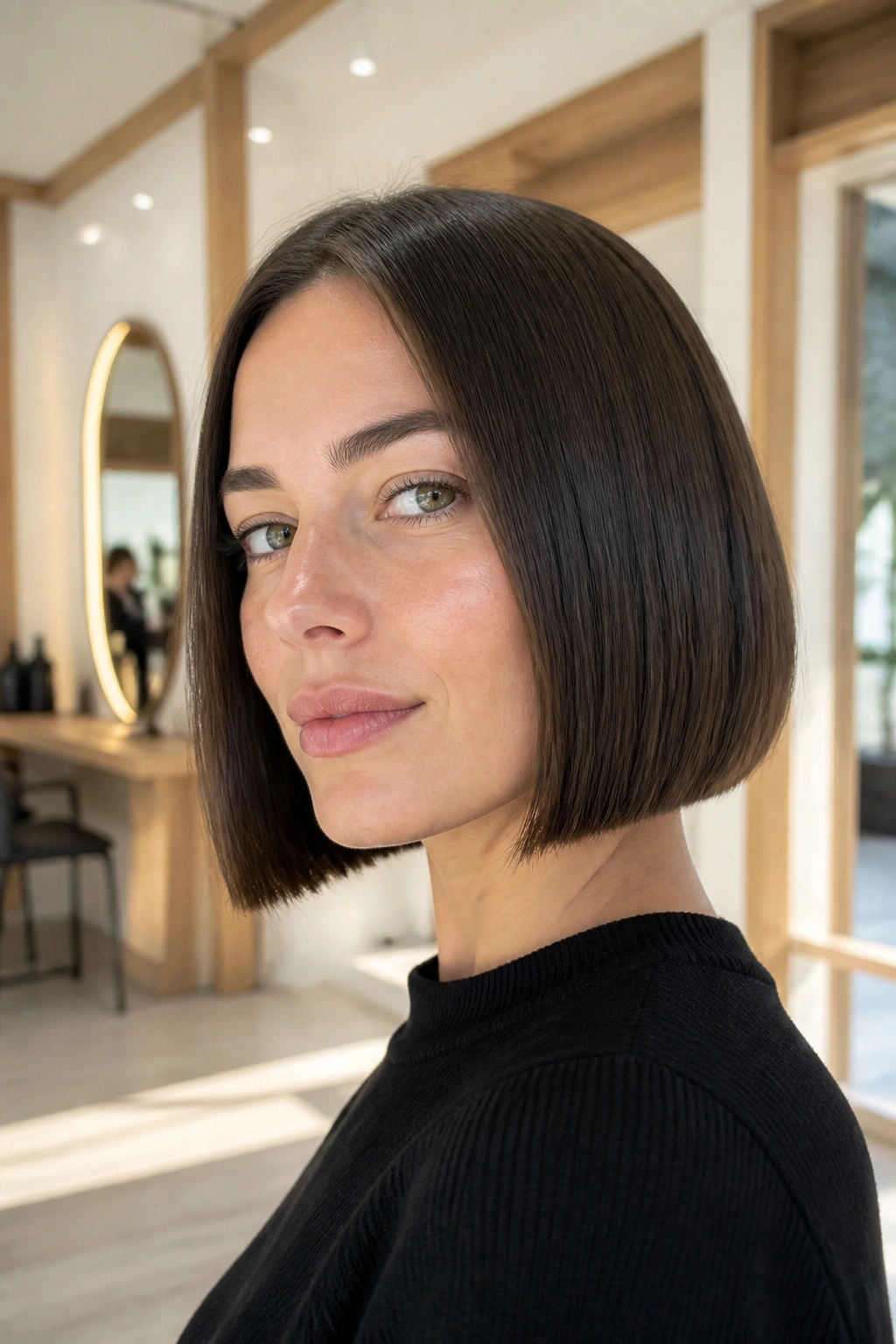
Run a comb through this one and the ends should drop in a neat line. That’s the whole appeal. A sleek Paris bob for straight hair leans into the hair’s natural smoothness instead of fighting it, and when it’s cut well, the result looks spare in a good way.
The Feel of It
This cut has almost no fluff to it. The surface lies smooth, the part is tidy, and the perimeter should look crisp from every angle. If you have fine straight hair, this can make the hair look denser than it really is. If your hair is thick, the weight has to be managed so the ends do not balloon outward.
A flat brush or paddle brush usually makes more sense here than a big round brush. You want control, not a blown-out wave. A touch of heat protectant and a light serum on the mids and ends are enough. Heavy cream is too much; it can make the style go limp by lunchtime.
What Makes It Different
- The finish is smooth, not fluffy.
- The part usually stays clean and simple.
- The length sits between the lips and the jaw, depending on your face shape.
- It works well when you want the haircut itself to be the statement.
Small warning: this look shows frizz, so if your hair gets puffy in humidity, you’ll want a smoothing product that does real work, not a shiny lotion that disappears after an hour.
7. The Side-Part French Bob With Cheekbone Sweep
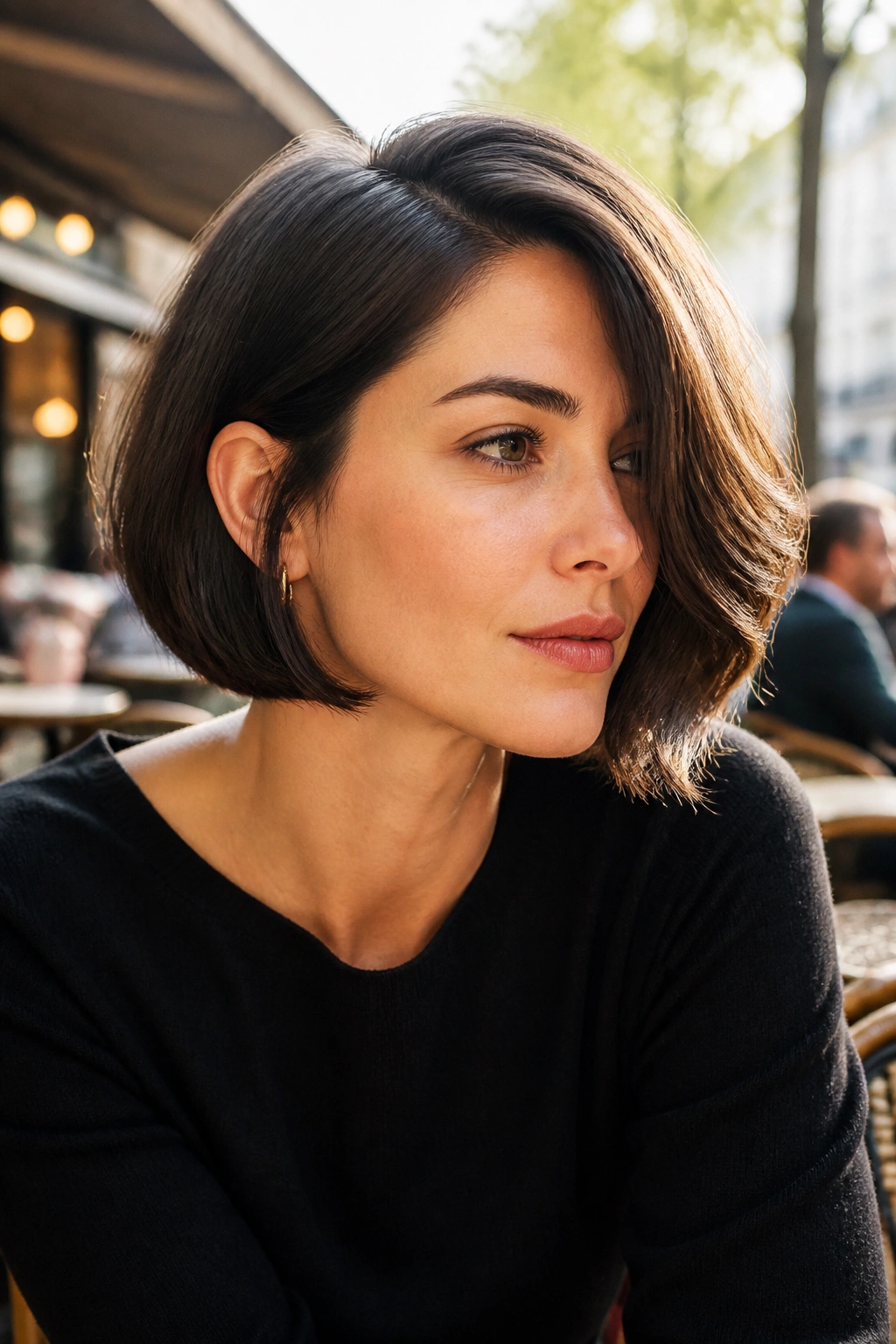
A deep side part can change the whole mood of a bob in one move. It gives straight hair lift at the crown and a little sweep across the cheekbone, which softens the shape without making it loose or messy.
Picture one side tucked behind the ear and the other falling forward in a smooth curve. That’s the charm here. The cut still has the French bob’s compact shape, but the side part gives it more motion and a slightly less formal edge.
This version is especially useful if your hair insists on lying flat at the top. A side part adds instant height where a center part can sometimes make everything collapse. It also helps if you have a cowlick that keeps ruining the middle part. Fight less. Live easier.
A few things to keep in mind:
- Start the part while the hair is damp.
- Blow-dry the roots in the opposite direction first, then flip them back.
- Keep the ends blunt so the shape stays strong.
- Tuck one side behind the ear if you want a little asymmetry.
That last move sounds small. It isn’t. It changes the whole line of the haircut.
8. The Invisible-Layer French Bob
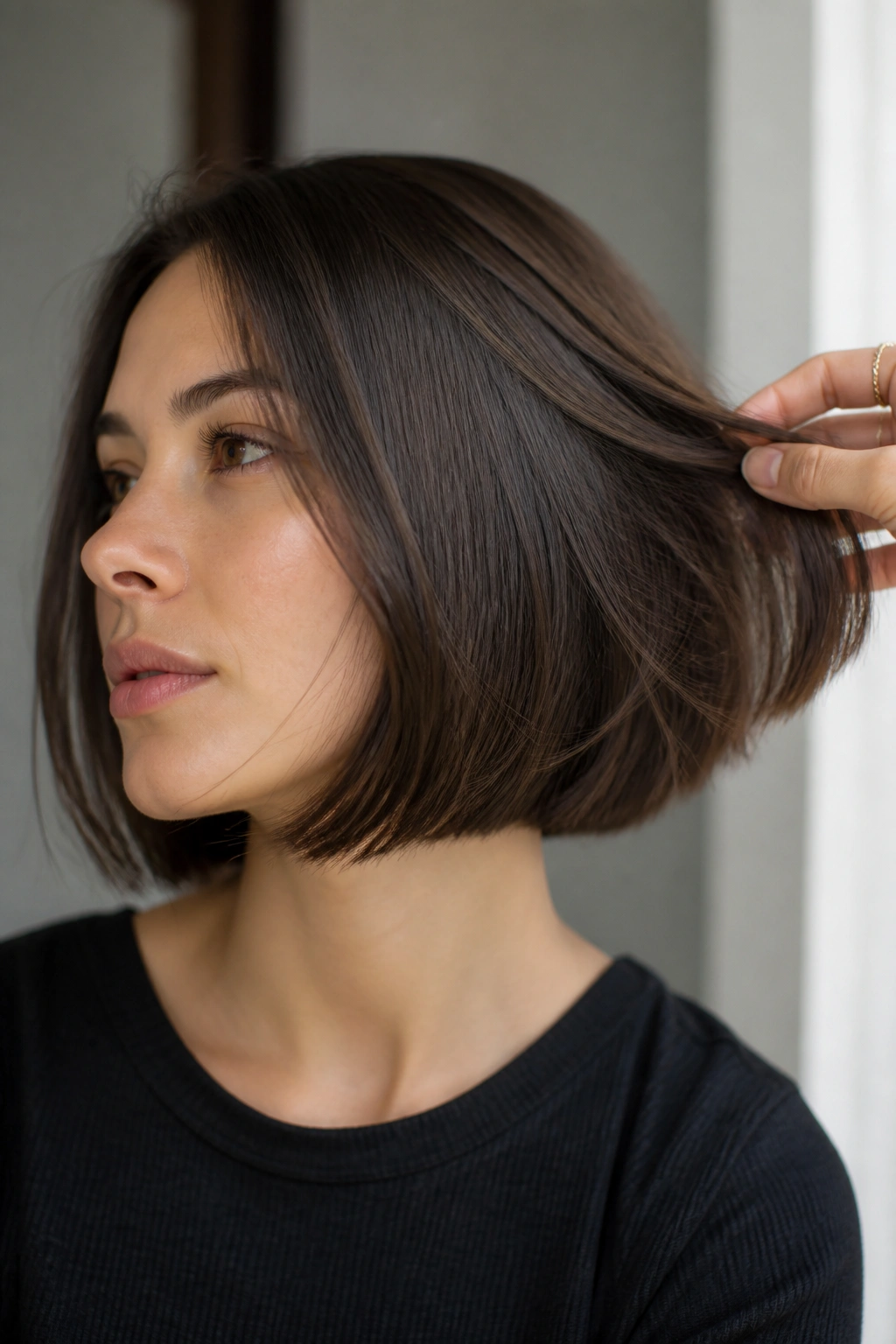
Layers can be there without shouting. That’s the trick. An invisible-layer French bob keeps the outside line solid while removing just enough bulk inside the shape to help straight hair move and fall better.
This is one of my favorite answers for thick straight hair. Thick straight hair often looks great when it’s freshly cut, then starts to puff at the sides if the interior is too heavy. Hidden layers solve that without ruining the bob’s clean perimeter. The result is a shape that sits closer to the head and still swings when you turn.
The term “invisible” matters. You are not asking for shaggy layers or obvious steps. You’re asking for internal shaping, usually with point-cutting or gentle slide-cutting inside the bob, not along the edge. If the ends are chopped up too much, the line loses its charm fast.
This version also works if you want the haircut to grow out better. The outline stays readable even when the interior gets longer. That means fewer awkward weeks between trims.
Best for: dense hair, people who hate puffy sides, and anyone who wants the bob to move a little more without looking layered.
9. The Ear-Grazing Cropped French Bob
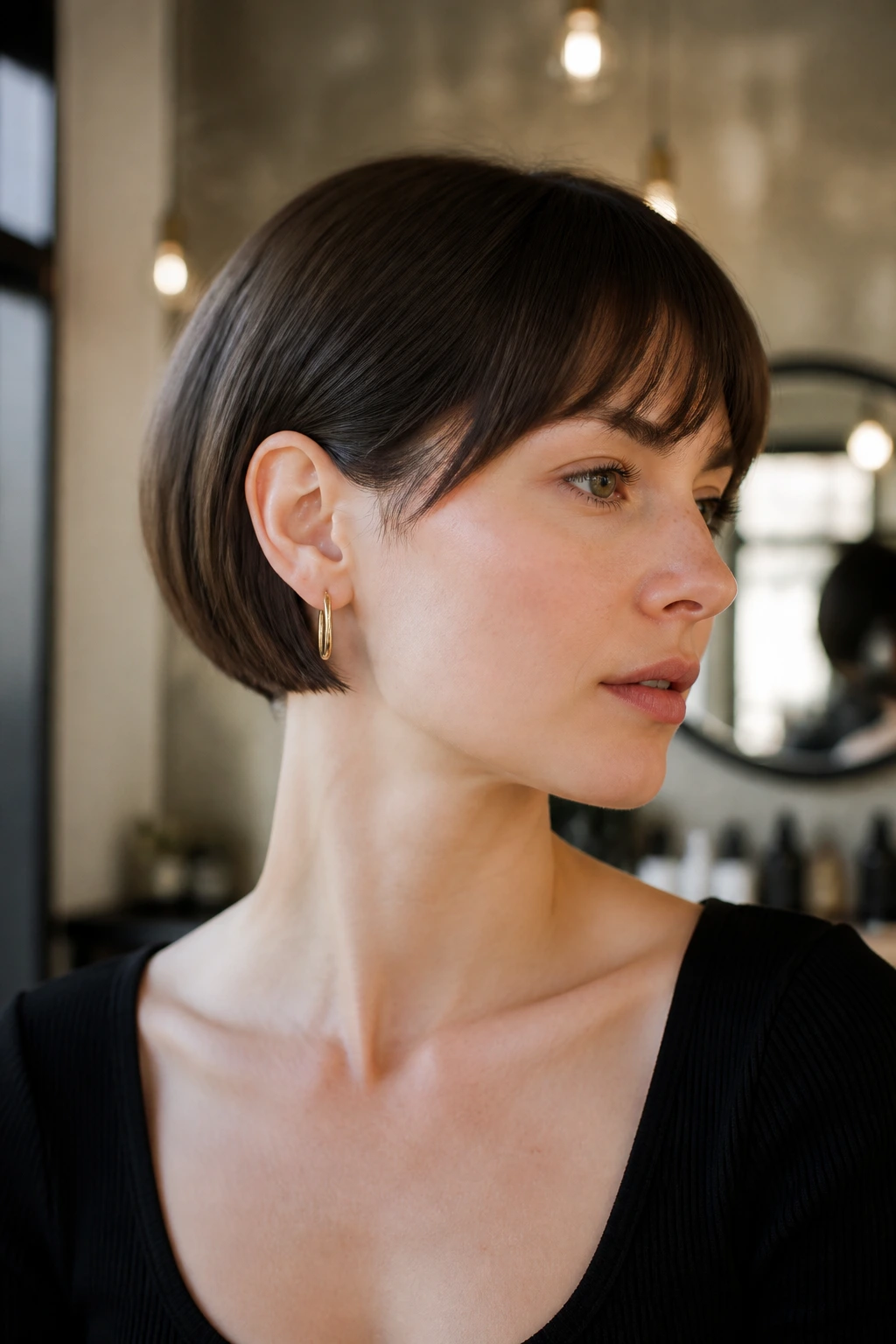
What do you get when you cut a French bob shorter and let it skim the ears? A cut with more attitude and less patience. The ear-grazing French bob is cropped, neat, and a little daring, especially on straight hair where every line shows up immediately.
This is not the safest option. It exposes the neck, the jaw, and the shape of the ears. That’s the point. It feels clean and a bit architectural, and it can make strong features look even sharper.
How to Wear It
Because the length is shorter, styling tends to be quicker. A little root lift at the crown helps keep the haircut from hugging the scalp too closely. A pea-sized amount of styling cream on the ends can stop the perimeter from sticking out in odd places, but don’t overload it.
The ear-grazing length is a smart pick if you like to wear earrings. Long hoops, small gold studs, or a tiny huggie hoop all work. The haircut gives them room to show up. It also looks good with a tucked side, especially if you want one side to feel slightly looser than the other.
One honest caveat: this is the kind of cut that asks for more confidence than effort. It’s easy to wear once you get used to it. The first day can feel a little exposed.
10. The Subtle A-Line French Bob

A tiny bit of angle can change everything. The subtle A-line French bob stays a touch longer in the front than the back, but the difference is soft, not obvious. On straight hair, that slight shift gives the cut movement without turning it into a dramatic angled bob.
That’s the part I like. You keep the French bob feel, but the front pieces frame the jaw in a more forgiving way. If your face is rounder or your neck is shorter, this small length difference can be flattering because it draws the eye down and forward.
The key is restraint. Too much angle and the bob starts looking sharp in the wrong way. Too much stacking at the back and you lose the smooth, simple outline that makes the style special. Tell your stylist you want a gentle slope, not a wedge.
This cut also works well if you wear your hair behind one ear a lot. The longer front pieces make the tucked side feel deliberate instead of unfinished.
A good rule: if you can spot the angle from across the room, it’s probably too much. The best version whispers.
11. The Piecey French Bob With Choppy Fringe

Straight hair doesn’t have to look polished all the time. Sometimes it looks better when it has a little grit. A piecey French bob with a choppy fringe brings that lived-in feel without abandoning the clean bob shape.
The trick is the ends. They’re not ragged, and they’re not heavily layered. They just have enough texture to separate into little pieces instead of lying in one flat sheet. On straight hair, that piecey quality can make the bob feel lighter and more casual.
This cut is a good fit if you hate the idea of perfect symmetry. It has a bit more movement, a bit more edge, and a fringe that can be worn messy or brushed across the forehead. Dry texture spray helps here, and so does a tiny bit of wax warmed between your fingers.
I’d keep the fringe choppy but not too sparse. If it gets too broken up, it can start to look like an accident. The same goes for the ends. You want movement, not fraying.
Best use case: weekend hair, short hair that still needs personality, and anyone who wants a French bob that doesn’t look too precious.
12. The Grown-Out French Bob at the Collarbone
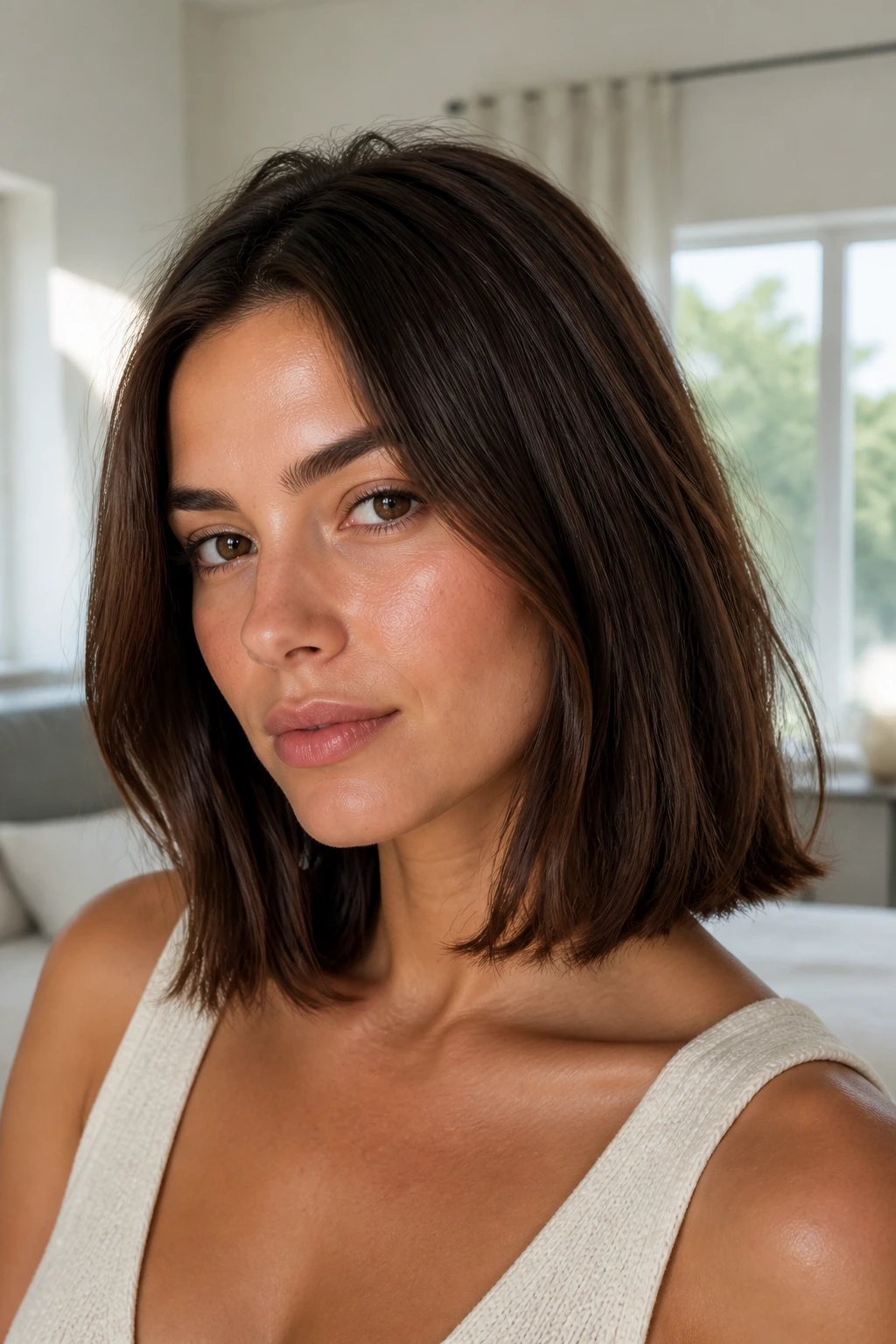
Sometimes the prettiest bob is the one that is almost not a bob anymore. The collarbone-length French bob keeps the shape readable but gives you more room to tuck, bend, or let it fall straight.
For straight hair, this length is practical. It still looks clean, and the line stays visible, but you gain flexibility that a shorter bob can’t offer. You can wear it sleek, twist it into a low knot, or let the ends brush the collar of a shirt without everything feeling too heavy.
Why It Works
- It grows out cleanly.
- It suits people who hate frequent trims.
- It can be worn down, tucked, or clipped back.
- It keeps the French bob feeling, even with a little extra length.
This is also a good bridge cut if you’re not sure whether you want to go short short. The collarbone length gives you time to adjust. If you love it, you can shorten it later. If you don’t, the grow-out is painless enough.
The only thing to watch is flatness. Straight hair at this length can lose shape if the ends are dead-straight and heavy, so a soft bend at the ends helps a lot. A large round brush or a quick pass with a flat iron is usually enough.
13. The Rounded French Bob With an Under-Curved Hem
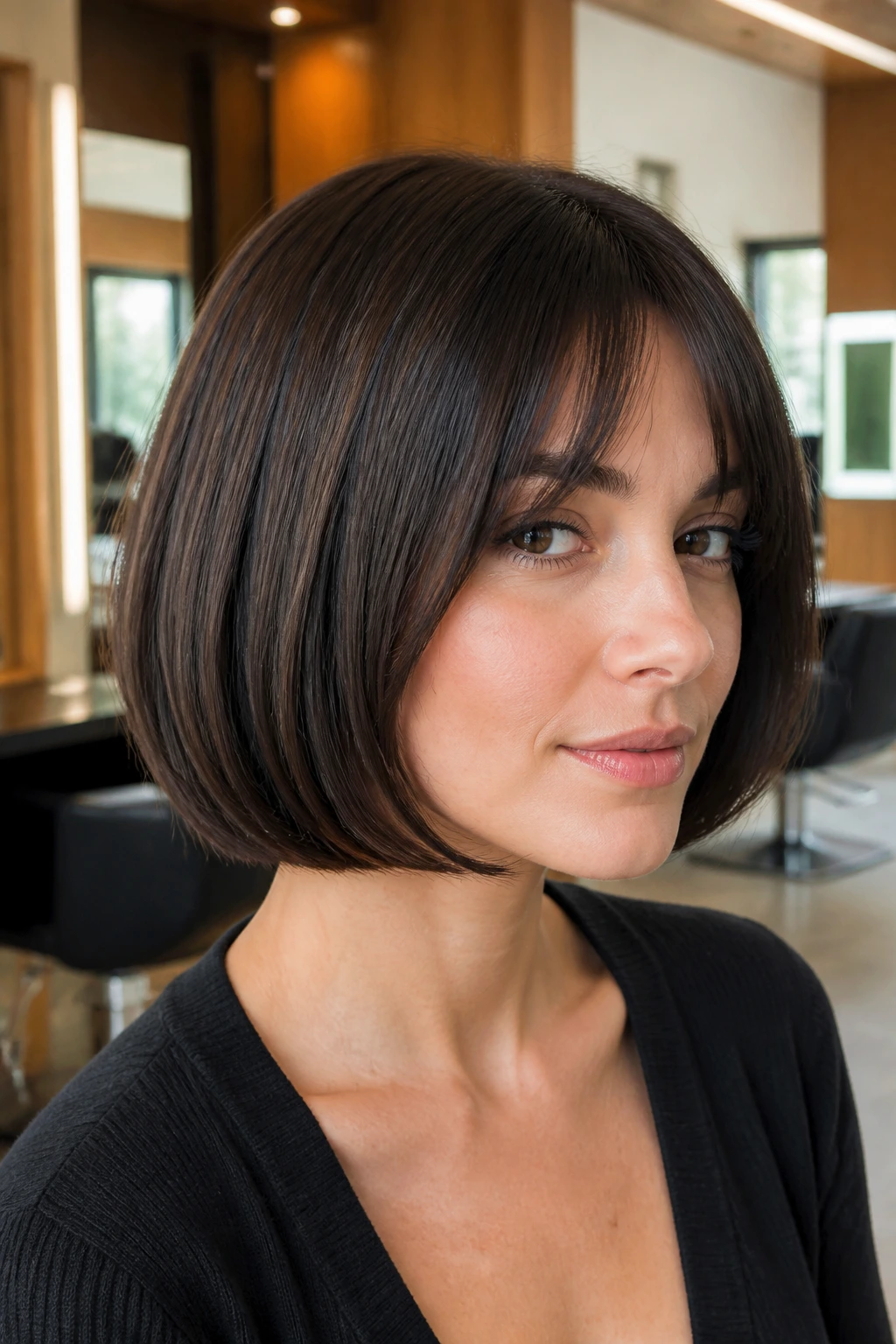
A rounded hem can make straight hair look fuller without adding bulk. That’s why the rounded French bob keeps showing up in salons. It takes the same short, tidy shape and turns the bottom edge inward just enough to create a soft frame around the face.
How to Get the Curve Without Curl
You do not want a big bouffant effect here. That would fight the whole point. Instead, ask for a rounded perimeter that follows the shape of the head and then turns slightly under at the ends. The curve should be subtle enough that the cut still looks clean from the front.
Styling matters a bit more with this version than with a blunt bob. A round brush helps, sure, but so does the cool shot from your dryer. That blast of cooler air sets the curve so it does not fall flat after ten minutes. A lightweight mousse at the roots can also help if your hair is fine and tends to collapse.
This cut is especially nice if you want your hair to feel softer around the mouth and chin. The rounded edge keeps the line from feeling too hard. It can be a little friendlier on sharper faces, too.
My preference: this is the French bob for people who want polish but don’t want the haircut to look severe in profile.
14. The Blunt No-Bang French Bob
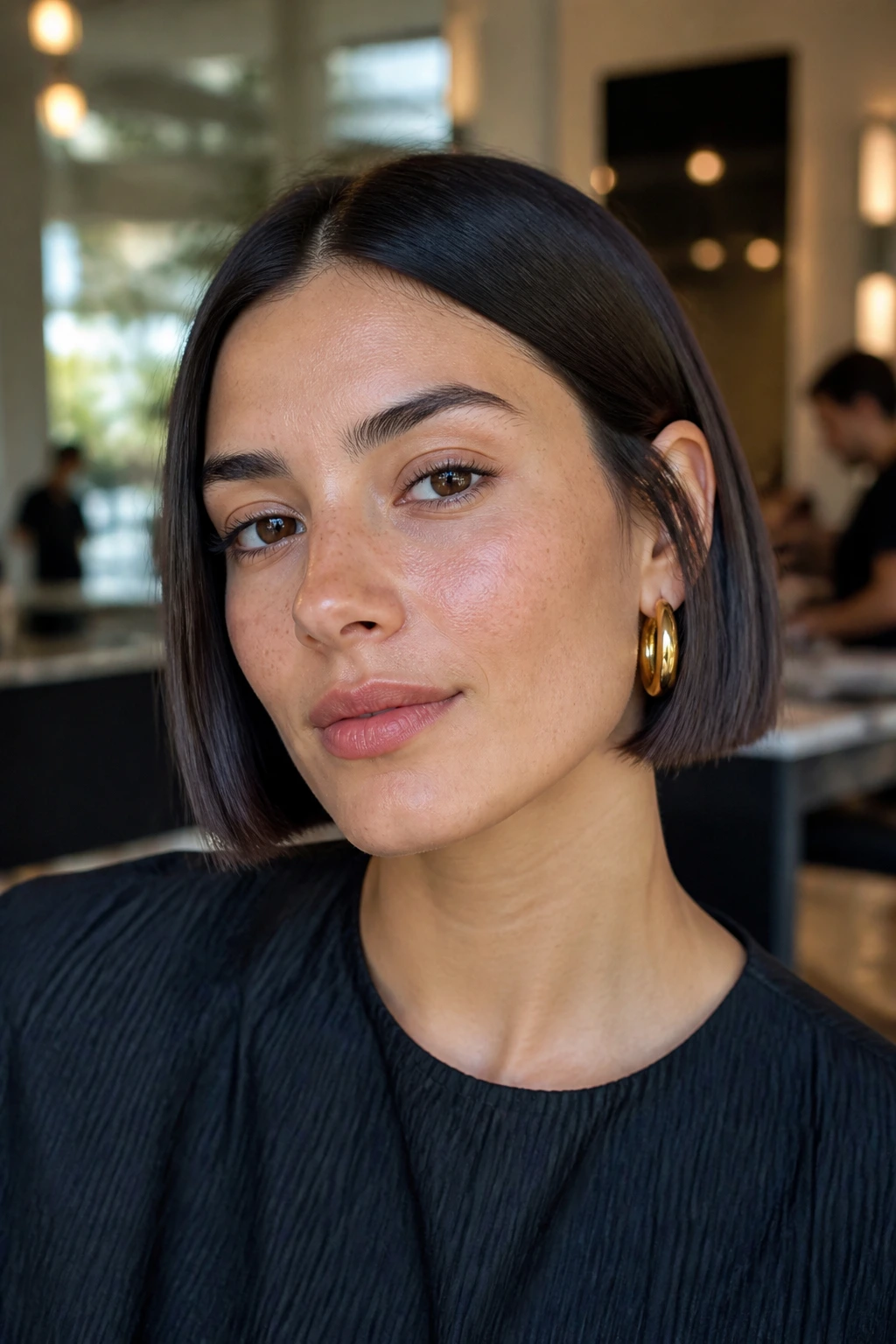
A French bob doesn’t need fringe to feel French. That’s the part people forget. A blunt no-bang French bob can look just as strong on straight hair, maybe stronger, because the eye goes straight to the line of the cut and the shape around the jaw.
Without bangs, the forehead stays open, which is useful if you wear bold glasses or have brows you actually like showing off. The cut feels more minimal, less styled, and that can be a relief if you do not want to fuss with fringe every morning.
This version works best when the ends are cut with precision. Straight hair will expose any sloppy line right away. The perimeter should be even, the side lengths balanced, and the back refined enough that it doesn’t puff out against the neck.
A middle part gives it a cool, simple mood. A side part softens it. Either way, the haircut has to carry the look on its own.
Tiny tip: if you skip bangs, pay more attention to the ends and the part. That’s where the shape lives now.
15. The Soft-Shattered French Bob for Easy Grow-Out
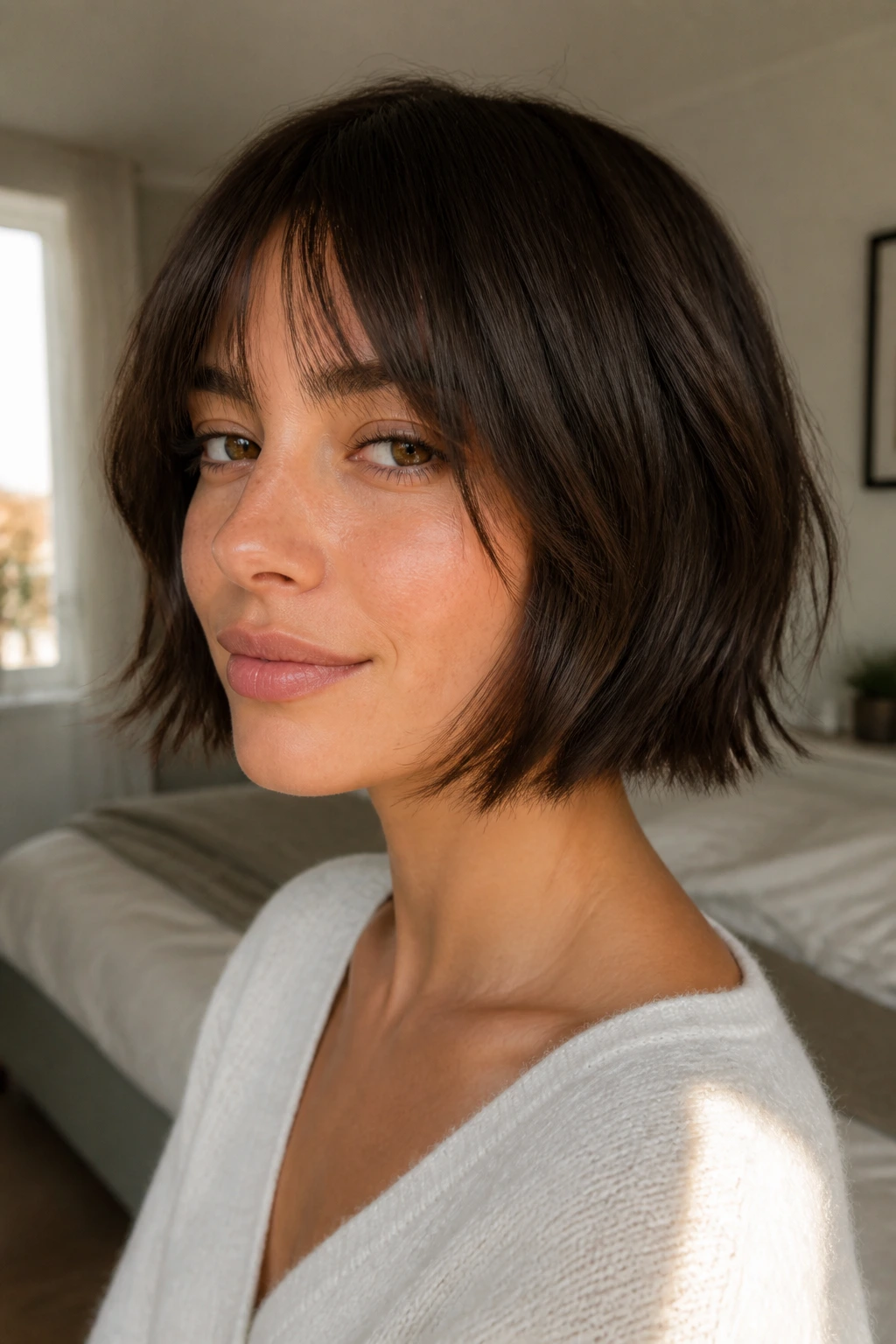
A little texture at the ends can make a bob last longer between cuts. The soft-shattered French bob keeps the outline intact but breaks the hemline just enough that straight hair grows out without turning into a block.
This is not a shag. It is not a messy bob pretending to be effortless. It is a smart version for people who want movement but still want to see a shape. The perimeter stays readable, which matters. If the line disappears completely, you lose the French bob identity and end up with something vague.
I like this version for busy people, especially if you know you won’t get a trim the second the cut starts growing. The ends can be lightly point-cut so they don’t hang like a sheet, and the interior can be cleaned up just enough to remove weight. That makes the grow-out feel softer around the edges.
A light texture spray is enough for styling. Heavy creams usually make this kind of bob look dull. If you want more polish, a quick pass with a flat iron on the bottom inch of hair will smooth the line without flattening the whole head.
Straight hair doesn’t need a lot of decoration here. It needs a clean shape, a little breathing room at the ends, and enough precision that the haircut still looks intentional when you skip the round brush.
