



A good bob gets smarter when the air turns dry.
Bob haircuts for fall make sense for a simple reason: they sit cleanly against scarves, turtlenecks, and coat collars instead of getting swallowed by them. Longer hair can turn fussy fast once sweater weather arrives. A bob keeps the shape visible, which means your cut still looks intentional when you’ve spent half the day pulling on and off a jacket.
There’s also a practical side people don’t talk about enough. Dry indoor heat, static, and a little extra friction from knitwear can make ends look ragged faster than they do in warmer months. A well-cut bob doesn’t fight that. It works with it. The right length can make hair look sharper, fuller, or softer, depending on where the line lands and how much movement you want.
What makes this haircut family so useful is how many directions it can go. Chin-length, collarbone-skimming, blunt, shaggy, rounded, tucked, stacked — each one solves a different problem. Some are better for fine hair that needs a little visual density. Some flatter stronger jawlines. Some grow out with almost no drama. Start with the shape that fits your face, your texture, and the amount of styling you’re willing to do on a weekday morning.
1. The Chin-Grazing Classic Bob
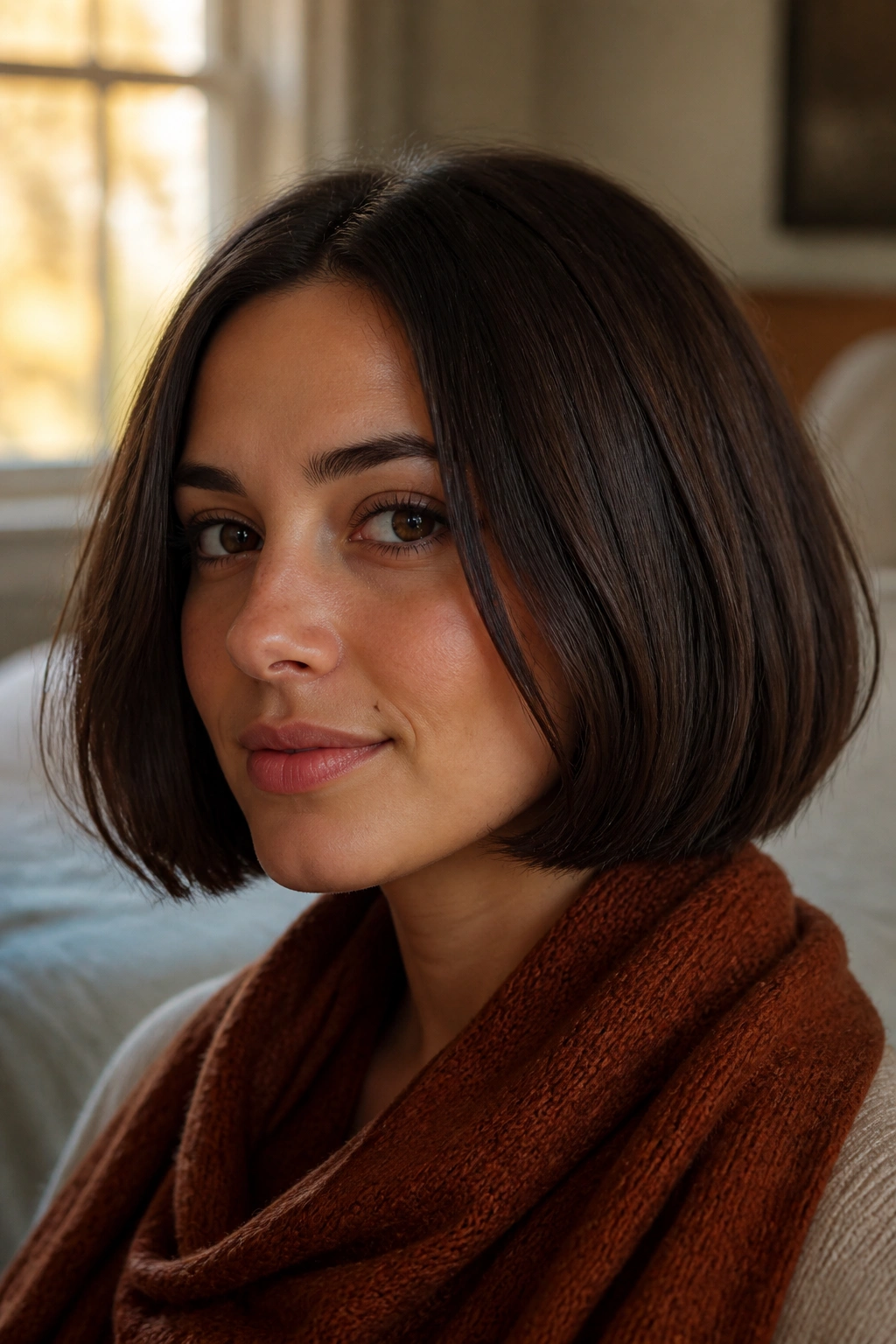
A chin-grazing bob is the haircut I think about when someone wants a clean break without going too short. It lands right where the face starts to narrow, which gives the whole cut a neat, tidy edge. In fall, that matters more than people expect. A bob that sits at the chin doesn’t disappear under chunky knits.
Why It Works in Cooler Weather
The line is the whole point. A blunt or softly beveled chin bob keeps the ends visible, so the haircut still reads clearly when you wrap a scarf around your neck or zip a high collar. It also gives fine hair a little more presence, since the weight stays in one compact place.
If your hair tends to flip outward at the ends, this length can help or hurt depending on the cut. Ask for a soft underbend at the perimeter instead of a choppy edge. That gives you a smoother finish and keeps the shape from looking like it was hacked off in a rush.
- Best for straight to softly wavy hair.
- Ask for the front to hit at the chin, not the jawline below it.
- Style with a 1-inch round brush for a slight inward bend.
- Trim every 6 to 8 weeks if you want the line to stay crisp.
My favorite part: it looks polished even when you do very little to it.
2. The French Bob with a Soft Fringe

This one has attitude, but not the annoying kind. The French bob sits shorter and looser than a classic one-length bob, and the soft fringe makes the whole cut feel airy instead of severe. It’s one of those styles that looks especially good when the rest of your wardrobe gets heavier.
The fringe is the detail that changes everything. Kept at eyebrow length or just below, it softens the forehead and draws attention to the eyes without feeling blunt. On windy days or under a beanie, that shorter length can look far more deliberate than longer bangs that keep getting pushed around.
What I like here is the looseness around the face. You do not need every strand trained into place. A little bend, a little separation, and a matte paste at the ends are often enough. If your hair is naturally flat, a root-lift spray at the crown keeps the style from collapsing by noon.
This is the cut for someone who wants charm, not perfection. That’s the whole appeal.
3. The Blunt Bob That Looks Sharp at the Ends

A blunt bob is the blunt bob because it refuses to pretend. One length, clean edge, and ends that land in the same visual line. That’s it. And honestly, that simplicity is what makes it so strong when the weather turns colder and hair starts looking tired faster.
Unlike layered cuts, a blunt bob gives the illusion of density. Fine hair looks fuller because the perimeter is solid, not feathered out into wisps. If you have medium-thick hair, the same shape can feel sleek and expensive without needing much styling beyond a smooth blow-dry.
The catch is maintenance. If the cut grows out even half an inch too much, the line gets softer and a little less striking. I’d keep the trim schedule tight and use a flat brush or paddle brush when you dry it. A drop of serum on the last 2 inches helps the ends stay glossy instead of frayed.
If you like a haircut that looks like it has opinions, this is the one.
4. The Layered Bob with Airy Movement

A layered bob is what happens when you want the neatness of a bob but not the weight of a solid block of hair. Done well, it falls with movement around the mouth, cheeks, and collarbone. Done badly, it can look choppy in all the wrong places. There’s a difference, and it’s not subtle.
What Makes the Layers Worth It
The best layered bob removes bulk from the interior, not the perimeter. That keeps the outline visible while letting the hair move when you turn your head. It’s especially useful if your hair puffs out at the sides or gets too round when it dries naturally.
Ask for layers that start below the cheekbone if you want shape without a lot of short pieces. If the layers start too high, you can end up with a triangle effect that feels dated fast. A good stylist will keep the longest layer long enough to tuck behind the ear and still let the body swing.
- Strong choice for thick or medium-thick hair.
- Works well with a medium round brush and a little mousse.
- Looks better when the ends are slightly separated, not stick-straight.
- Good if you want movement but hate heavy bulk around the neck.
Tiny detail, big payoff: keep the very bottom edge soft, not razor-thin.
5. The Rounded Bob That Curves In at the Jaw

The rounded bob is the one people forget about, which is a shame, because it can be one of the nicest shapes for cooler weather. It curves inward around the jaw and nape, so the hair follows the face instead of sitting out in a square block. The result feels polished without being stiff.
I like this cut on thicker hair, especially when the ends tend to flare. The rounded shape keeps the silhouette controlled, which matters when you’re wearing scarves, high collars, or anything that rubs against the neckline. It also plays nicely with natural bend. If your hair already wants to arc inward, this cut works with that pattern instead of forcing it flat.
The styling is a little old-school, in a good way. A round brush, a dryer nozzle, and a small amount of smoothing cream can make the ends curve just enough. Skip heavy oils on the crown. They drag the shape down and erase the lift at the top, which is the one thing this bob needs to stay lively.
Not flashy. Just solid.
6. The Collarbone Bob That Grows Out Cleanly
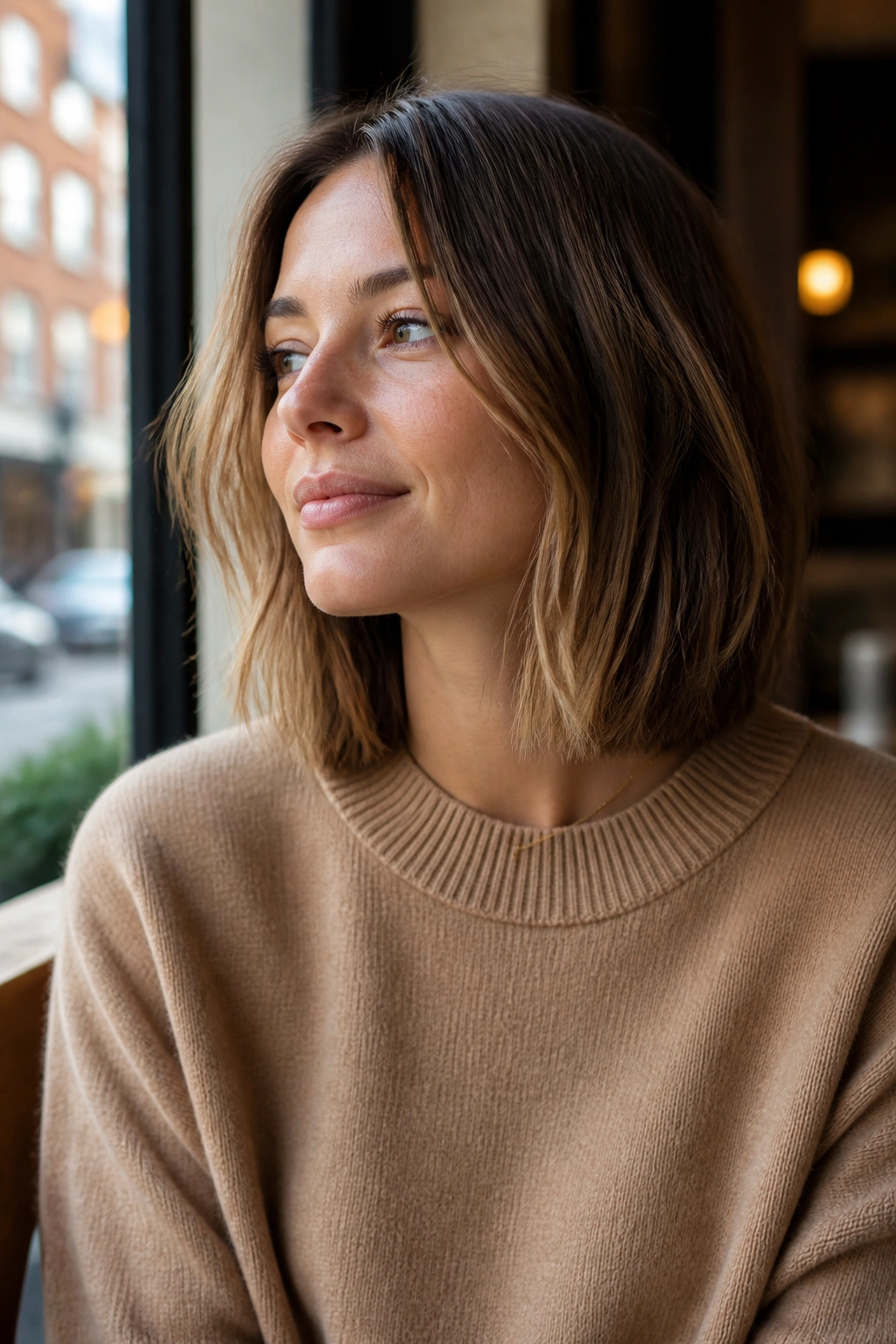
Why does a collarbone bob feel easier to wear than a shorter cut? Because it gives you breathing room. The ends sit just long enough to brush the shoulders, which means you can tuck it, clip it, or let it swing loose without the haircut losing shape the second it grows.
That extra inch or two matters more than people think. A collarbone length bob is less likely to kick out at the ends under a coat, and it usually survives awkward grow-out stages better than chin-length cuts. If you’re nervous about going short, this is the safest place to start.
How to Ask for It
Tell your stylist you want the hair to hit at the collarbone with a soft, blunt edge. If you want movement, ask for a few internal layers only through the mid-lengths. Keep the face-framing pieces long enough to sweep into the rest of the cut, not chop into bangs by accident.
This is the cut I’d recommend to anyone who likes a low-drama schedule. You can air-dry it, curl the ends, or put it into a half-up style when the day gets messy. That flexibility is the point.
7. The Italian Bob with Soft Volume

The Italian bob is fuller, richer, and a little more plush than a standard bob. It usually sits somewhere between the jaw and the neck, with enough body to look expensive even when it’s not freshly blown out. If hair had fabric weights, this one would be wool, not silk.
The shape works because it keeps the sides thick and the ends slightly rounded, so the hair doesn’t collapse into a flat sheet. That makes it a strong choice for people who want some drama without obvious layering. It can look especially good under fall outerwear because the volume stays in the cut instead of disappearing under a collar.
You do not need a ton of product here. A little volumizing mousse at the roots and a medium round brush are usually enough. Overloading it with oils or creams kills the body fast, and that is the one thing this bob is built on. If your hair is fine, this style can still work, but the blow-dry matters more than it does on thicker textures.
It’s a polished cut, yes. But not a stiff one.
8. The Curly Bob That Respects Shrinkage

Curly hair and bob lengths can be wonderful together, but only if the cut respects the curl pattern. A curly bob should be shaped for shrinkage, not cut as though every curl lands in the same place. That mistake is how people end up with one side bouncing up near the ear while the other side hangs lower. Annoying. Easy to avoid.
If your curls are loose, the bob can sit at the chin or just below it. Tighter curls often need a longer visual length because the hair springs up as it dries. A dry cut can help, since it lets the stylist see where the curls actually fall instead of guessing from wet hair that behaves differently.
- Ask for shaping based on your curl pattern, not a straight-line template.
- Use a diffuser on low heat to keep definition.
- Leave some length around the front so the cut doesn’t puff out too much.
- Refresh with water and a little curl cream instead of piling on extra gel every day.
This is the kind of bob that looks best when it moves. Don’t fight that.
9. The Asymmetrical Bob with a Longer Side

An asymmetrical bob gives a regular bob a little edge without turning it into a full-on statement haircut. One side is kept longer than the other, often by about 1 to 1.5 inches, which is enough to change the line without making the cut feel costume-y. That slight angle can sharpen the face in a way a straight line never quite does.
What to Watch For
The difference between stylish and awkward is small here. Too much length gap, and the haircut starts to feel lopsided. Too little, and the asymmetry disappears the second you tuck one side behind your ear. I think the sweet spot is a soft angle that you can see from the front but that still feels wearable from every side.
A deep side part makes this cut even better because it lets the longer side fall forward naturally. If your hair has one flatter side or a stubborn cowlick at the crown, this shape can help redirect the eye. It also pairs well with earrings, which is one reason I keep coming back to it for fall. A strong neckline and a little asymmetry go together.
Best tip: keep the ends clean. Choppy and asymmetrical is a bad argument.
10. The Wavy Shag Bob That Feels Easy

A wavy shag bob is what you reach for when you want your hair to look lived-in without looking sloppy. The layers are softer and more broken up than a classic bob, so the shape moves with the wave pattern instead of sitting like a helmet. That matters a lot once sweater season hits and hair starts fighting with fabric.
I like this cut on medium hair that already has a little bend. The shape creates a loose frame around the face, and the ends can be left piecey rather than polished. A salt spray or light texture cream helps, but you don’t want to drown it in product. The cut itself should do most of the work.
The trick is keeping the layers controlled. If they’re too short, the haircut can puff out in odd places, especially around the cheeks. If they’re too long, the shag effect disappears. A good version sits in the middle: textured enough to feel cool, tidy enough to wear to work without looking like you forgot to brush your hair.
Not neat. Not messy. Right in between.
11. The Deep Side-Part Bob for Instant Lift

A deep side-part bob changes the whole face with almost no actual haircut drama. Shift the part a few inches off center and the crown lifts, the cheekbones get more attention, and the style gains shape fast. It’s the easiest trick on this list, which is part of why I keep recommending it.
Unlike a middle part, a deep side part gives the roots a chance to bend up instead of lying flat against the scalp. That small lift helps finer hair look fuller at the top, and it makes a blunt or rounded bob feel less severe. On days when the hair feels a little sleepy, this is the move that wakes it up.
It also works well with fall hair accessories. A clip, a barrette, or even a small tuck behind one ear can reinforce the side part and keep the look from slipping back to center. If your hair resists, blow-dry the roots in the opposite direction first, then flip the part back. Old trick. Still useful.
If you want more shape without cutting more hair, start here.
12. The Sleek Tucked Bob

Why does a tucked bob look so sharp? Because it uses the ear line as part of the style. The front pieces are kept smooth and close to the face, then one side — or both, if you want symmetry — gets tucked behind the ear to show the jaw and neckline. It sounds simple. It is simple. That’s the beauty of it.
The cut itself usually works best when the ends are blunt or only lightly layered. Too many short pieces at the front and the tuck turns fuzzy fast. A smoothing cream on damp hair, followed by a flat brush blow-dry, gives the front the control it needs. If you live somewhere windy or dry, a touch of anti-static spray helps more than people admit.
How to Wear It Without Fuss
Use a small clip if your hair slips. A flat tuck can fall out by lunch if the strands are silky or freshly cut. Keep the part clean, keep the surface smooth, and let the ear do part of the work. That little gesture gives the haircut a cleaner outline under scarves and collars, which is exactly why it belongs in fall.
It’s a neat cut. Not boring.
13. The Box Bob with a Square Edge
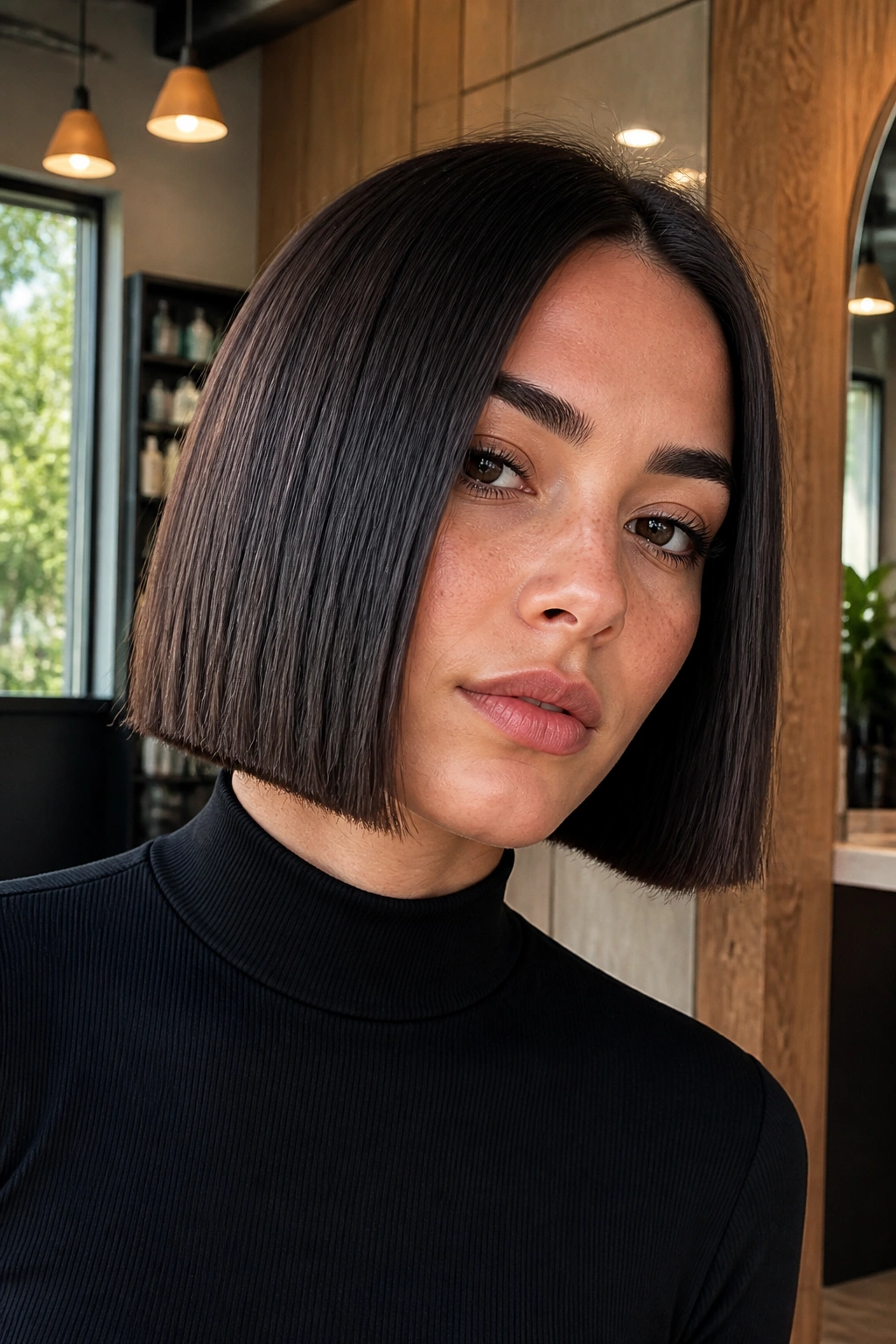
A box bob has a hard, square outline that feels modern in the same way a tailored coat feels modern. The shape stays wide through the sides and straight at the bottom, so the haircut looks graphic from the front. If you like crisp lines, this one has presence.
It works best when the hair is straight or only slightly wavy. Thick hair can hold the shape well, though it may need a little internal weight removal so the sides don’t balloon. Fine hair can look denser here because the ends all sit in one visible plane. That’s the part I like most about it.
The downside is obvious: it asks for upkeep. If you ignore it for too long, the square edge softens and the whole thing loses its bite. But if you’re someone who likes structure, that trade-off is worth it. Pair it with a smooth blowout, a center or deep side part, and a coat with a clean collar. It looks deliberate fast.
Sharp. Clean. No extra noise.
14. The Graduated Bob with Lift at the Nape
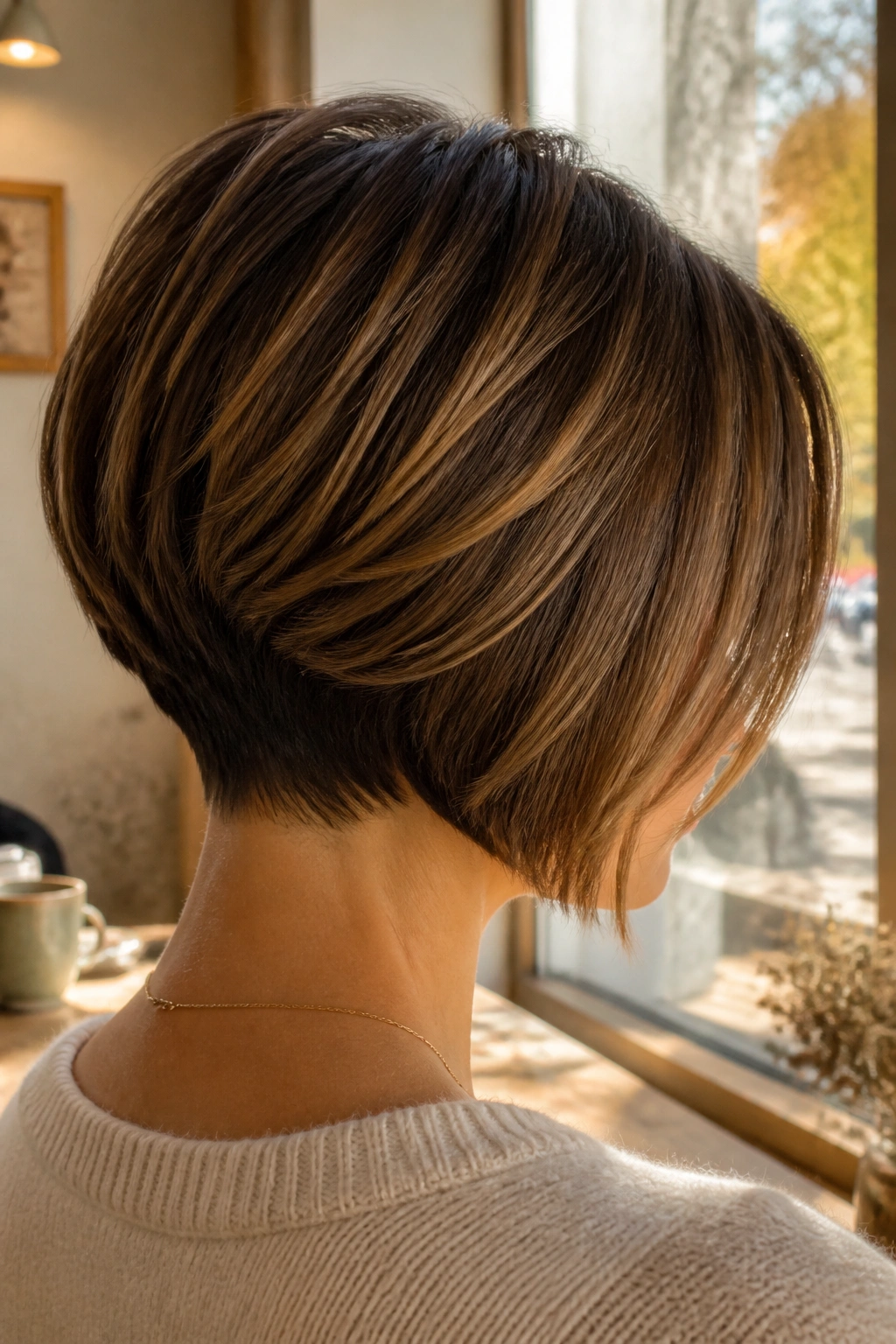
A graduated bob is built on subtle stacking in the back, where the hair is shorter at the nape and gradually gets longer toward the front. That short-to-long shift creates lift at the back of the head, which can be a gift if your hair tends to lie flat against the neck. Fall weather makes that even more useful, because collar friction can flatten a softer cut in minutes.
The Shape Underneath
The best version isn’t bulky. It’s controlled. The back should rise enough to create shape, but not so much that the haircut feels old-school or overbuilt. Think of it as a quiet lift, not a spiky one. When done right, the cut gives the crown a little extra height and keeps the neckline neat.
- Good for fine to medium hair that needs support at the back.
- Keeps the nape tidy under coats and high necks.
- Works well with a round brush and a root-lift mousse.
- Needs regular trims if you want the stacked shape to stay visible.
I’d choose this if your hair gets limp easily. It solves that problem without making the cut look loud.
15. The Textured Bob with Piecey Ends

A textured bob is the haircut people reach for when they want movement more than polish. The ends are softened and broken up so the style can separate a little when it dries, which gives it that piecey look without much effort. In colder weather, that looseness can be a relief. Not every cut needs to sit at attention.
Why It Feels Different
Compared with a blunt bob, this one has more air between the strands. That means it looks a little less formal, but also a little more forgiving when you sleep badly or skip a full blow-dry. If your hair naturally forms a bend, the texture makes that bend look intentional instead of accidental.
I’d keep the layers subtle and the ends irregular, but not ragged. There’s a fine line there. Too much texturizing can make the outline look thin, especially around the neckline. The better approach is to leave enough length for the perimeter to read as a bob, then add detail only where the hair needs movement.
Best styling move: work a pea-sized amount of paste through the ends, not the roots.
16. The Micro Bob That Sits Close to the Face

The micro bob is short enough to make people glance twice. It usually lands around the ear or just below it, which means the neck is exposed and the jawline gets a lot of attention. That can be a good thing. It can also be a little much if you want a haircut that hides behind your clothes. This one does not hide.
I like a micro bob on straight or slightly wavy hair that holds a shape well. It can look chic with a clean center part, or softer with a small side part and a bit of bend at the ends. Because the length is so compact, it doesn’t need much styling to read as finished. A round brush, a touch of gloss cream, and maybe a flat iron pass on the front pieces are often enough.
There’s no pretending here. If you want coverage around the cheeks or neckline, skip it. If you want earrings, strong makeup, and a cut that clears the collar completely, it’s a strong choice. It also grows into a more wearable bob without an ugly middle stage, which helps.
Small cut. Big personality.
17. The A-Line Bob That Lengthens the Face

An A-line bob is shorter in the back and longer in the front, creating a gentle diagonal that pulls the eye forward. It’s one of the easiest ways to add shape without adding volume everywhere. That diagonal line can make the face look a little longer and the jaw a little cleaner, especially when the front pieces graze the chin.
Unlike a round bob, this cut has a visible angle. That’s what makes it useful. The back stays neat against collars and scarves, while the front still gives you enough length to tuck behind the ear or curl under at the ends. It works especially well if you want something in between a classic bob and a longer lob, because it keeps the style structured without feeling heavy.
Ask for the front to be only slightly longer, not dramatically sloped, unless you want a sharper edge. Too much angle can start to look dated. A softer version is easier to wear and easier to grow out. If you’re unsure, err on the subtle side. It ages better.
Clean angle. Easy life.
18. The Softly Tapered Bob
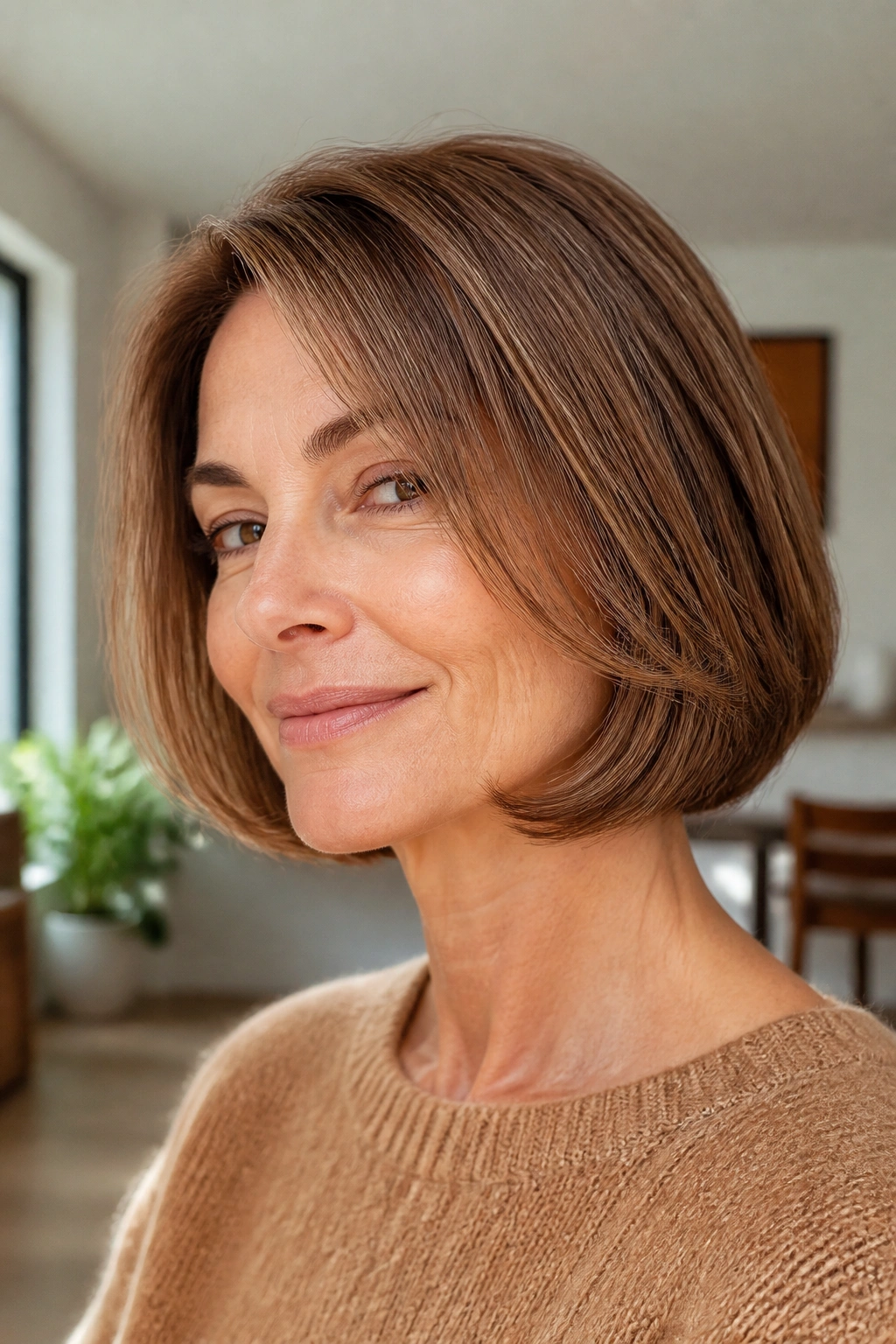
What makes a softly tapered bob worth considering is that it trims the bulk without showing off the haircut mechanics. The perimeter still looks like a bob, but the weight narrows slightly toward the nape, so the shape feels lighter and less boxy. That makes it a smart choice for anyone who wants movement without obvious layers.
This cut is especially good when hair starts getting frizzy from indoor heat or when the neckline needs to stay neat under coats. The taper helps the back sit close to the head, while the front keeps enough length to frame the face. It’s one of the few bobs that can look tidy on a workday and relaxed on a weekend without a big styling ritual.
I’d ask for the taper to stay subtle. Too much narrowing and the shape can veer toward a stacked bob, which is a different mood entirely. If your hair is wavy, this version keeps the silhouette from puffing out. If your hair is straight, it adds just enough contour to keep the cut from reading flat. That’s the appeal: controlled, not rigid.
For anyone picking one bob to carry through cooler months, this is the quiet, sensible choice. And sometimes that’s the smartest cut in the room.
