



A choppy bob can do a lot of quiet work for you. Layered choppy bob haircuts for women fix flat roots, heavy ends, and that awkward triangle shape thick hair gets when nobody cuts the inside of it.
The trick is not random texture. Good layers change where the weight sits, how the hair bends at the jaw, and how much swing you get when you turn your head. That is why a blunt bob and a layered choppy bob can feel like different haircuts even when the length barely changes.
Short hair needs lift.
Some versions sit at the chin and open the face. Others skim the collarbone and move with a little softness. A few are crisp enough for straight hair that needs control; others lean shaggy and loose for waves that want room to breathe.
The 20 cuts below cover fine hair, thick hair, curls, air-dry routines, polished days, and the kind of grow-out that does not send you running back to the salon in panic. Start with the one that matches your texture, not the one that looks best on a perfect blowout.
1. Chin-Length Choppy Bob With Airy Crown Layers
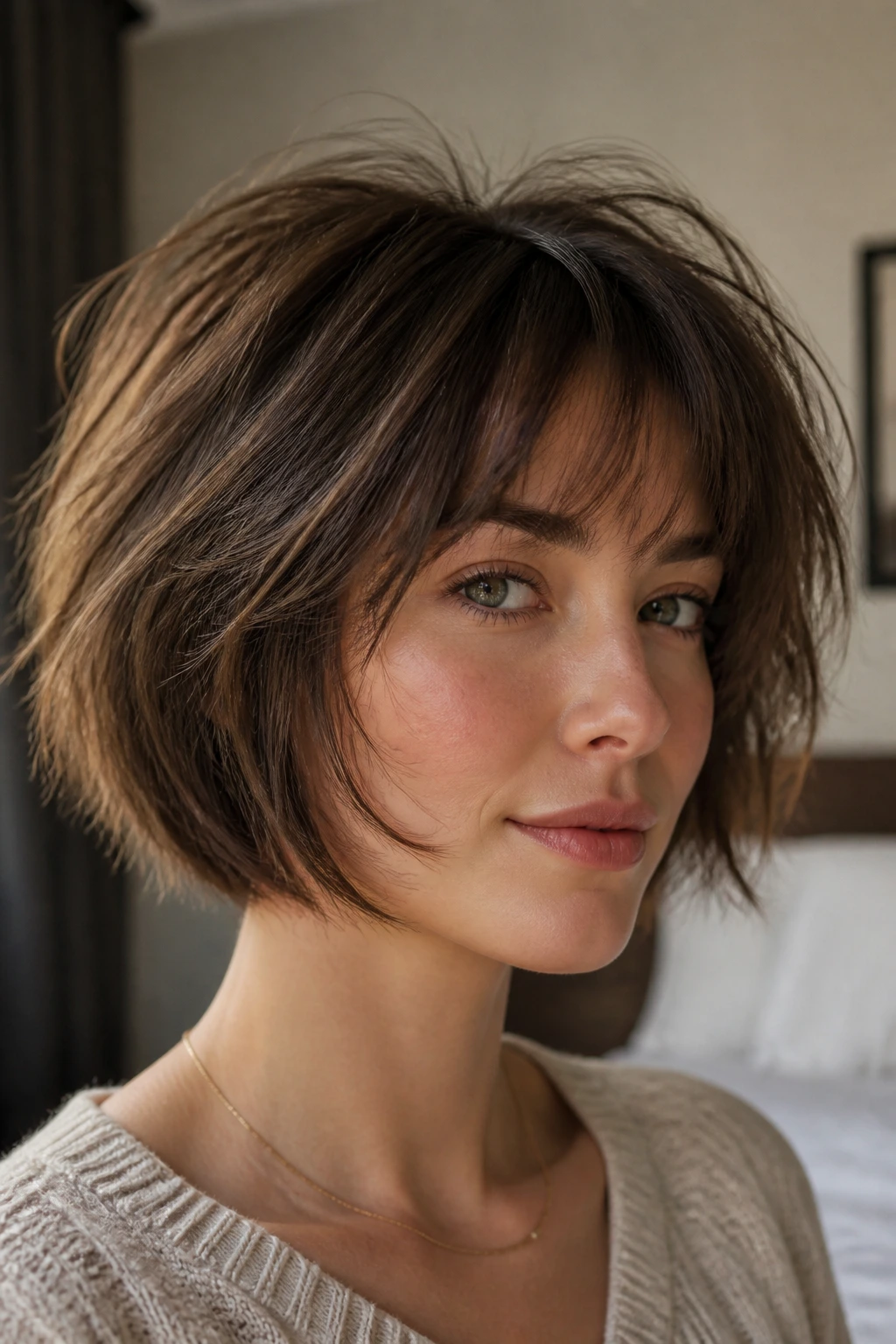
If your hair goes flat the second you leave the salon, this is the cleanest fix. A chin-length shape puts the visual weight right where the face can use it, and the airy crown layers keep the top from sitting like a helmet.
What I like about this version is the balance. The outline stays short and neat, but the top is sliced enough to move when you run your fingers through it. That little bit of lift changes the whole mood of the cut.
What to ask for
- Keep the perimeter right around the chin.
- Add short, point-cut layers through the crown.
- Leave the front pieces a half-inch longer than the back.
- Skip blunt ends if your hair is fine or straight.
The best styling trick is simple: rough-dry the roots first, then lift the crown with a small round brush or your fingertips. If you want the haircut to look fuller, do not flatten the top with too much product. A pea-sized amount of mousse is enough for most hair.
This cut is a strong pick for women who want their bob to look light, not bulky.
2. Collarbone Choppy Bob With Razored Ends
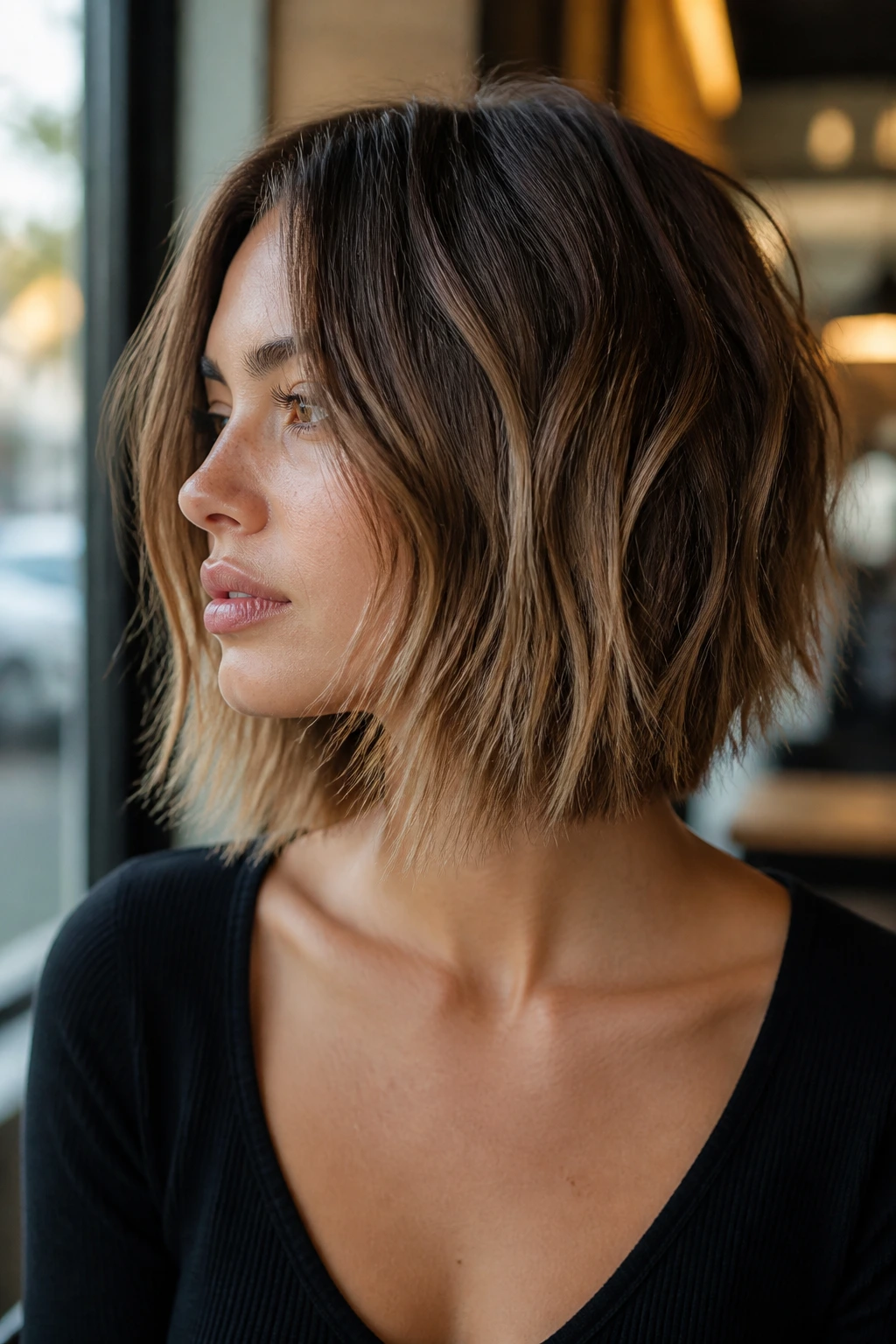
Why does some hair swing and some hair just hang there? Usually it comes down to the ends. A collarbone-length bob with razored ends moves because the weight line is broken up, so the finish looks less blocky and more lived-in.
The collarbone length is the sweet spot for a lot of women who are nervous about going short. It still reads as a bob, but the longer front gives you a little more styling room and a little less commitment. I also like it on thicker hair because the razor work can remove some of that dense, blunt heaviness without making the cut look thin.
Heavy ends are the enemy.
Best for
- Straight hair that needs movement
- Wavy hair that bends but does not curl
- Thick hair that feels too solid at one length
- Anyone growing out a shorter bob
What to watch for
Razoring is not the same as thinning. Too much can leave the ends wispy and tired-looking, especially if the hair is already dry or color-treated. You want softness, not shred.
A quick bend with a flat iron or a large curling wand can make the razored ends separate in a nice way. Keep the wave loose. Tight curls fight the shape.
3. Jawline Bob With Soft, Face-Skimming Layers
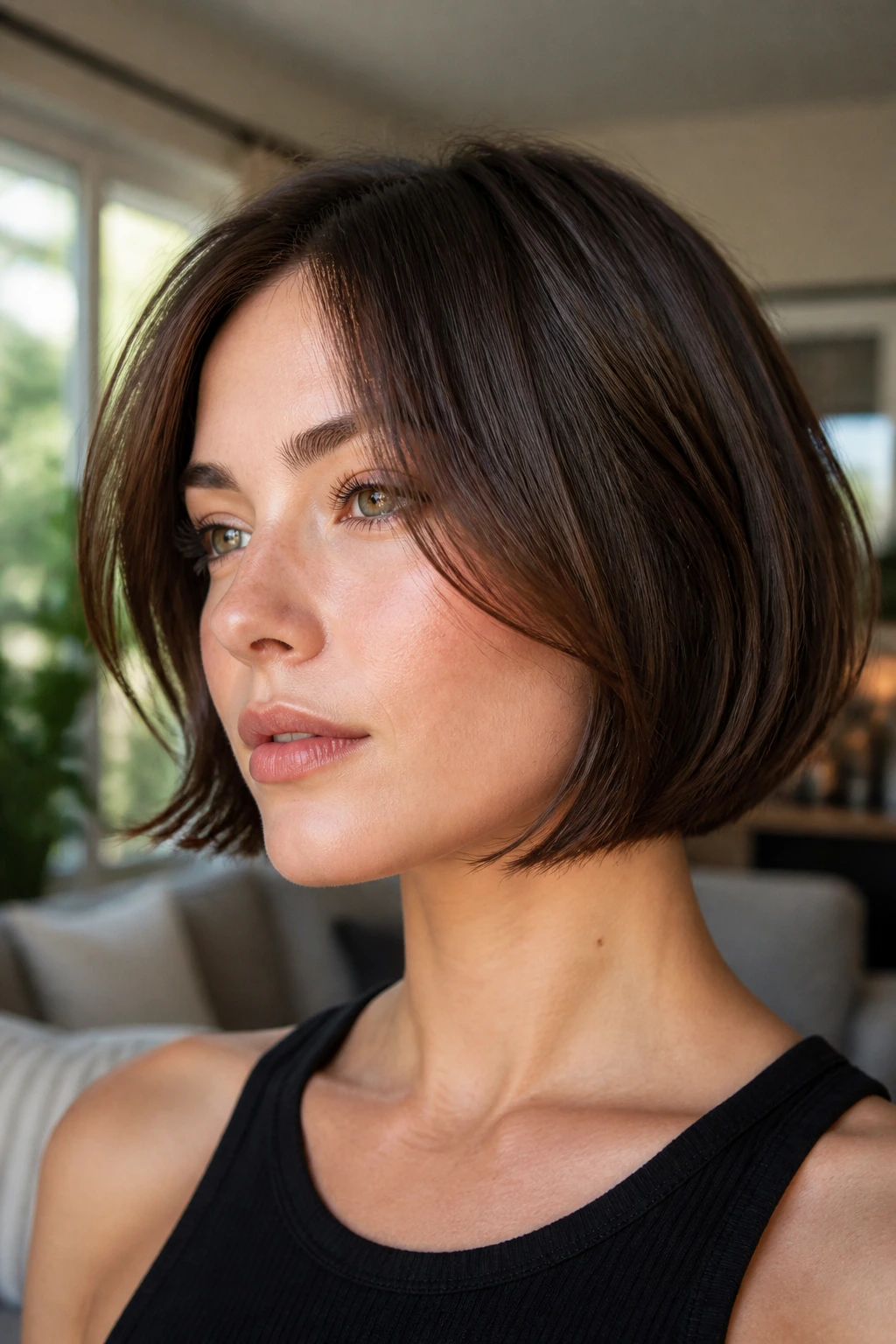
A jawline bob gives you structure on the days your face feels puffy or tired. The cut lands right where the jaw curves, so the hair becomes part of the line of the face instead of floating below it.
I like this one because it looks polished without trying too hard. The layers are soft enough to skim the cheekbones, not cut through them in a harsh way, and that matters if you wear glasses or have a stronger jaw that you want to soften a little.
Think of it as a clean frame. Not a cage.
If you tell your stylist anything, say you want the front pieces to move toward the cheekbones and the perimeter to stay tidy. That mix keeps the haircut from turning frilly. It also grows out better than a super-short blunt bob, which can start to look boxy after a few weeks.
This one flatters straight and slightly wavy hair most easily, though a good blowout can make almost any texture behave.
4. Wavy Shag Bob With Choppy Fringe
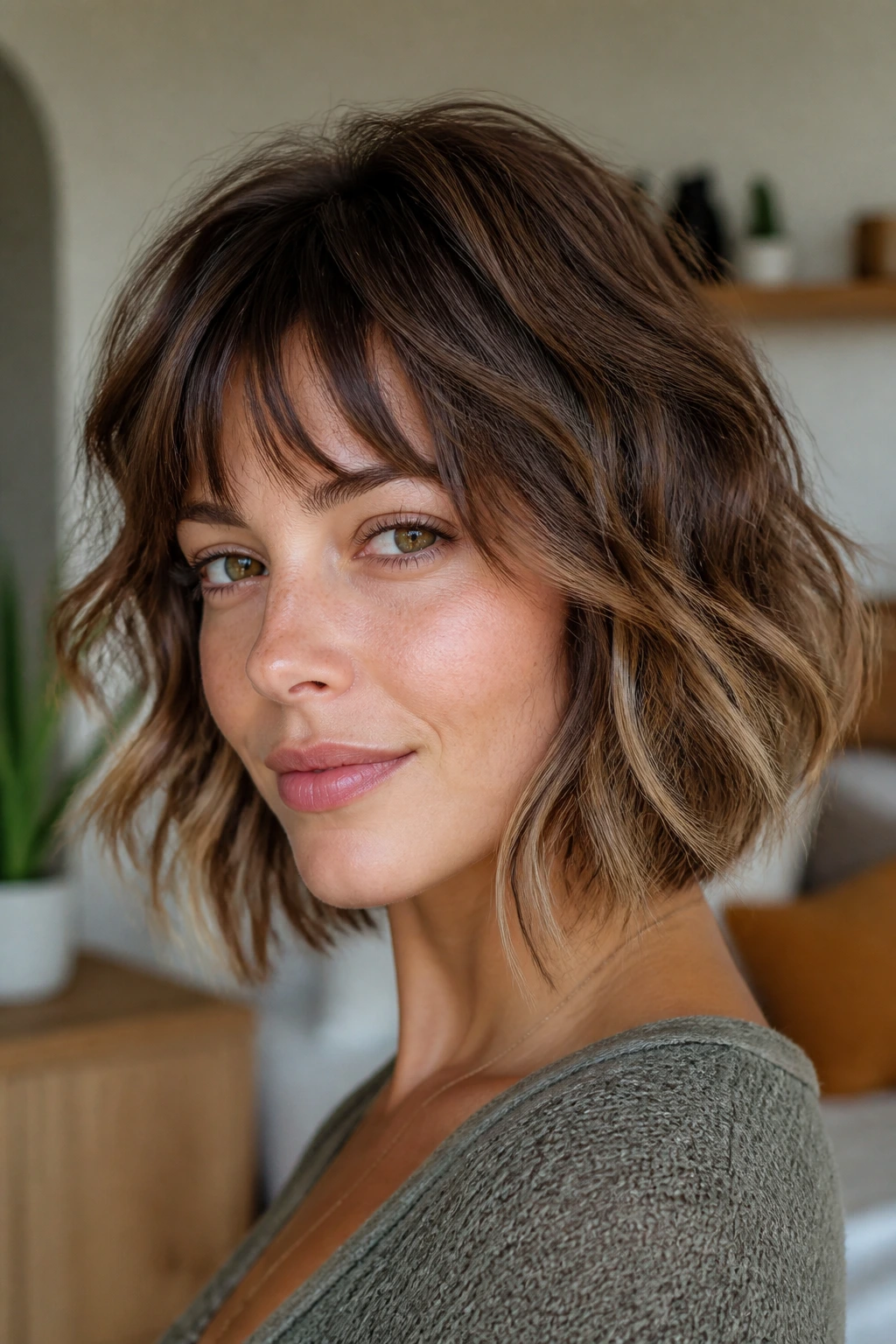
A bob does not need clean lines to look finished. That’s the whole point of this one. A wavy shag bob with a choppy fringe leans into movement, and the fringe keeps the front from feeling too plain.
The choppy fringe matters more than people think. It breaks up the forehead area, pulls attention to the eyes, and gives the cut a little attitude without turning it into a full-on shag. If your hair has a natural bend, this shape tends to cooperate instead of fighting you all day.
How to style the fringe
- Apply a light mousse to damp roots.
- Scrunch the front pieces with your fingers, not a brush.
- Dry with low heat or let it air-dry halfway.
- Finish with a small amount of texturizing spray on the ends.
I would not choose this if you want a sleek, tucked-under finish every morning. It wants a bit of mess. A good kind, though — the kind that looks better after you’ve lived in it for an hour.
5. Inverted Bob With Feathered Layers
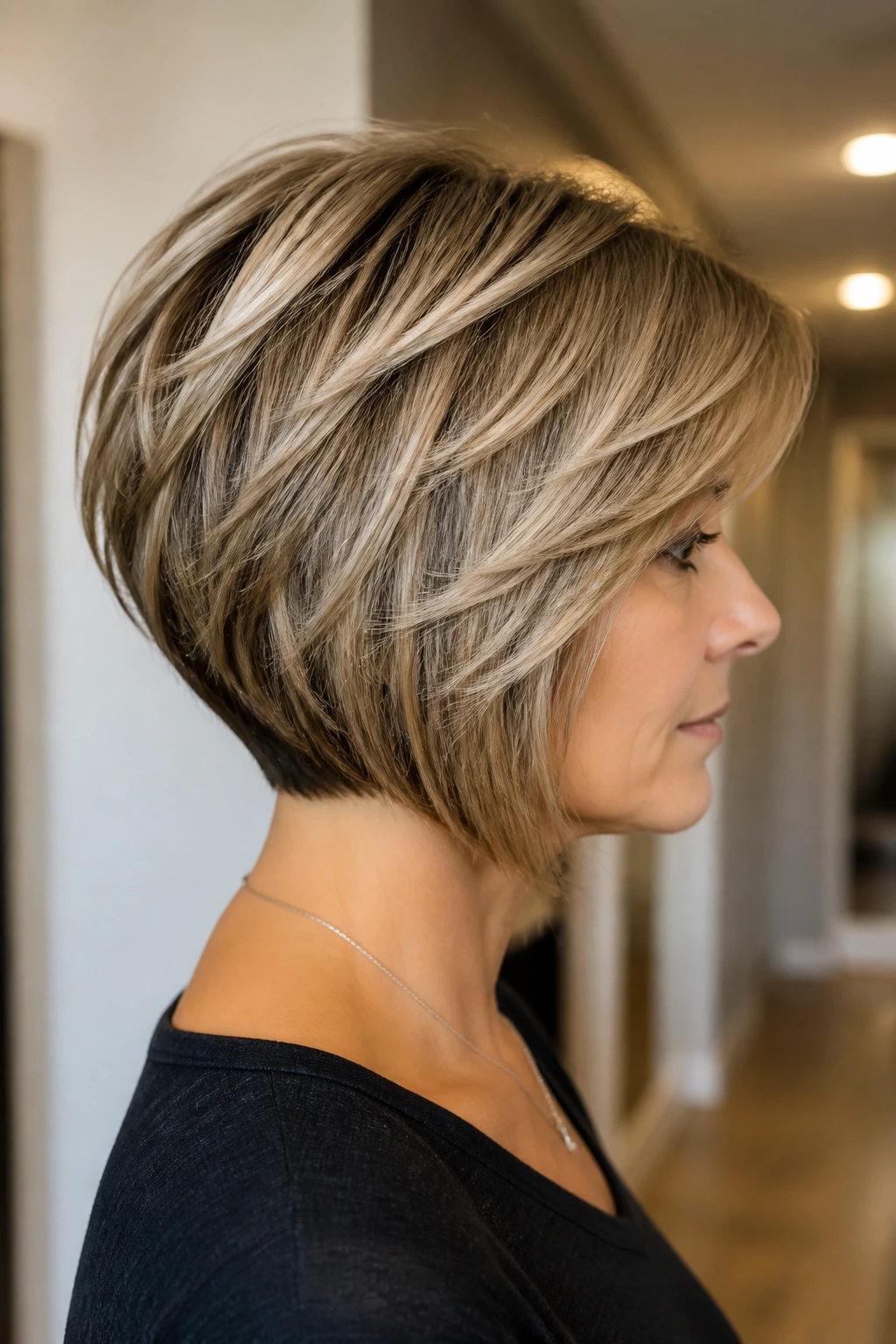
The back sits close to the neck; the front slides forward. That’s the whole shape, and it still works because the feathered layers stop the cut from feeling stiff or old-fashioned.
An inverted bob can go too hard if the angle is dramatic and the nape is stacked too sharply. Feathering softens that line. It gives the ends a lighter edge and makes the front pieces fall with more movement instead of hanging like cut paper. That matters if your hair is medium to thick and likes to puff at the sides.
This is one of those cuts that looks best from the side. You get that clean angle, then the layers blur the edges just enough to keep it from feeling severe. A little side part helps, too.
It suits women who like a structured bob but don’t want the blunt, square finish. It also grows out in a fairly graceful way, which saves you from awkward in-between weeks.
6. Boxy Bob With Broken Texture

This is the bob for thick hair that refuses to behave. A boxy bob with broken texture keeps a strong outline, but the inside is softened so the shape does not sit like a block on the shoulders.
The trick is restraint. You want the bulk removed in the right spots — under the surface, around the crown, and through the interior — not hacked away everywhere. Too much texturizing turns the ends frizzy and short pieces stick out in strange ways. Too little and the haircut sits heavy.
Why it works on dense hair
- The square outline keeps the style looking intentional.
- Broken texture stops the ends from ballooning outward.
- Interior layers take weight out without killing fullness.
- A center or slight off-center part both work here.
That little contrast between boxy shape and broken finish is what makes the cut interesting. It has edge, but it does not feel brittle.
If your hair is very thick, ask for the texture to be built in with scissors rather than aggressive thinning shears. The difference shows up on day three, when the ends still need to move instead of fraying.
7. Side-Part Choppy Bob For Fine Hair

If your part collapses by lunchtime, move it an inch. That small shift can make this cut feel much fuller without adding a single extra layer.
A side-part choppy bob works because the heavier side lifts at the root, while the longer front piece creates a line that looks fuller than a center-parted version. Fine hair often needs a bit of asymmetry to fake volume, and this bob does that without making a big statement about it.
I like this shape for women who want a bob that feels easy to style but not boring. The layers should stay light around the temples and the ends should be cut with a soft point, not a blunt shelf. That keeps the hair from splitting into thin strands that cling to the head.
A round brush at the roots helps, but you do not need a salon blowout every day. A quick lift with a root spray and a side part can do more than people expect.
8. Curly Layered Bob With Tapered Ends

Can curls and a bob get along? Absolutely, if the layers follow the curl pattern instead of fighting it.
A curly layered bob with tapered ends keeps the shape from turning into a triangle. The taper helps the lower half of the haircut sit lighter, while the layers let the curls stack without building too much width around the cheeks. That matters because curls shrink, and a cut that looks chin-length wet can land much higher once it dries.
How to style it
- Cut and shape it with the hair dry, or nearly dry, if possible.
- Use a leave-in conditioner first.
- Work in a curl cream about the size of a walnut.
- Scrunch with a microfiber towel, then leave the curls alone.
Do not brush this haircut once it dries. That’s the fast route to puffiness. If a curl needs refreshing, wet the section, smooth in a little more cream, and twist it back into place with your fingers.
This bob is one of the easiest ways to make curls look intentional instead of bulky.
9. Stacked Choppy Bob With Hidden Short Layers
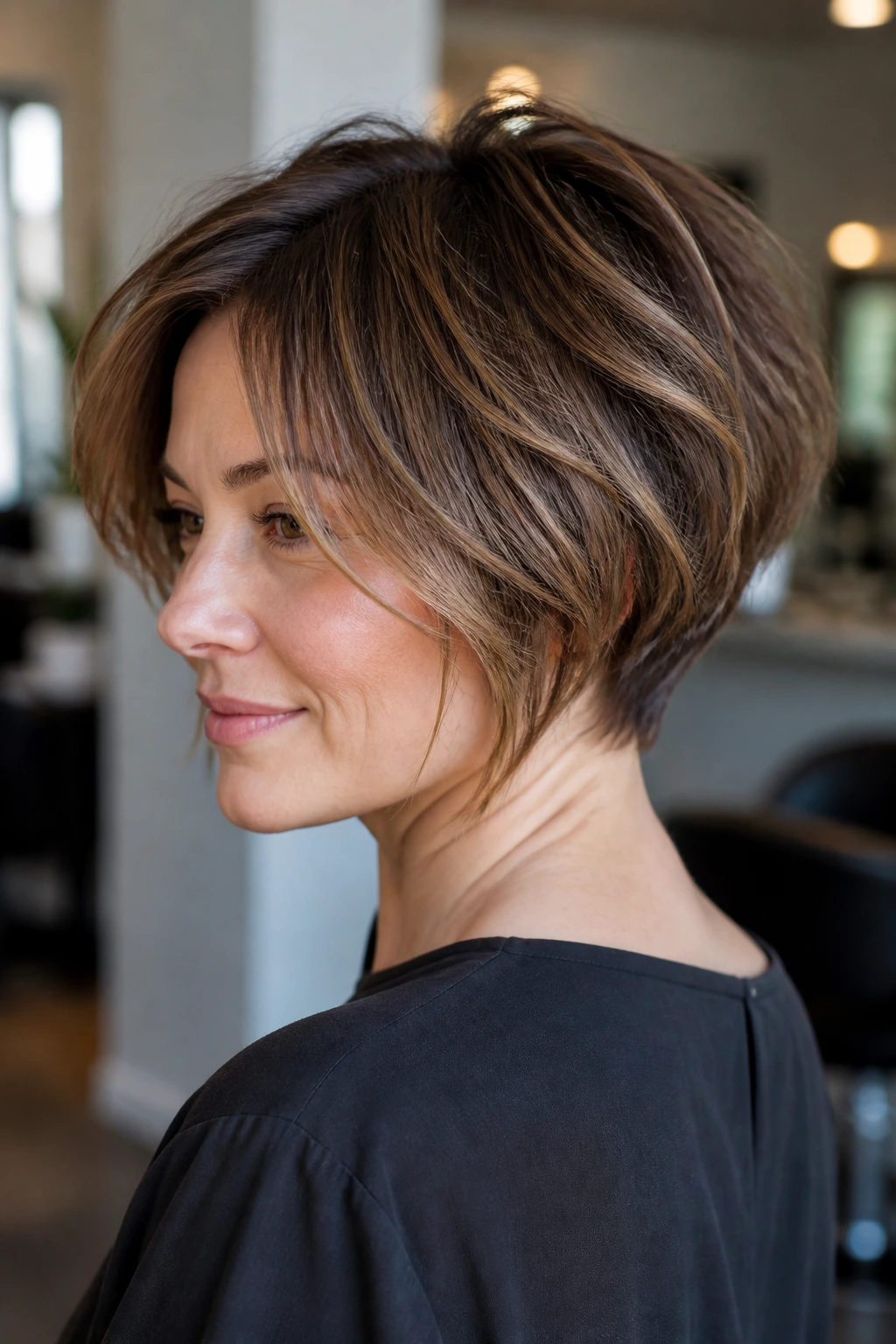
Unlike a severe stacked bob, this one keeps the back soft. The short layers are tucked inside the shape, so the crown gets lift without the haircut looking hard from across the room.
That hidden structure is the whole appeal. The nape stays neat, the back gets height, and the front can still fall with a little swing. It works especially well on hair that lies flat at the back of the head or grows in a way that makes the outline collapse unless someone cuts the interior properly.
A hidden stack also gives the cut a better grow-out. Since the visible line is not too extreme, the style holds its shape longer between trims. That is useful if you do not want a haircut that asks for constant attention.
I’d choose this for straight or slightly wavy hair that needs help standing up at the crown but still wants softness through the sides. It is tidy, but not stiff. Good distinction.
10. Wet-Look Bob With Micro Layers

Some cuts want movement. This one wants shine and separation. A wet-look bob with micro layers is one of the sharpest ways to wear a layered choppy bob haircut if you like a modern finish and do not mind styling product.
The micro layers sit close to the surface, so they create piecey detail without destroying the outline. That’s important. If the layers get too long or too deep, the wet look turns stringy instead of sleek. Here, the shape is controlled; the texture is what changes.
The styling is straightforward: work gel through damp hair, comb it into place, then pinch a few ends once it starts to set. If you want a cleaner finish, tuck one side behind the ear and keep the other side loose. That little asymmetry keeps the style from looking too staged.
This cut suits straight hair best. On wavy hair, the texture can fight the slick surface unless you’re willing to spend time smoothing the length.
11. Shoulder-Skimming Bob With Face-Framing Pieces

A lob can feel long. This version keeps the collarbone length but trims enough to show the neckline and sharpen the shape around the face.
What changes everything here are the face-framing pieces. They start shorter, usually around the cheekbone or lip line, then flow back into the longer length. That makes the haircut feel lighter even if the overall length still touches the shoulders. It also gives you more ways to wear it — tucked behind the ear, half-up, or curved forward for softness.
This cut is a smart choice if you’re in that awkward place between short bob and medium length. You still get some hair to work with, but the choppy layers stop it from drooping like a flat curtain. For women who want a haircut that can go casual or polished without a full reset, this one lands in a good spot.
A little bend at the front is enough. You do not need to curl every piece.
12. Asymmetrical Choppy Bob
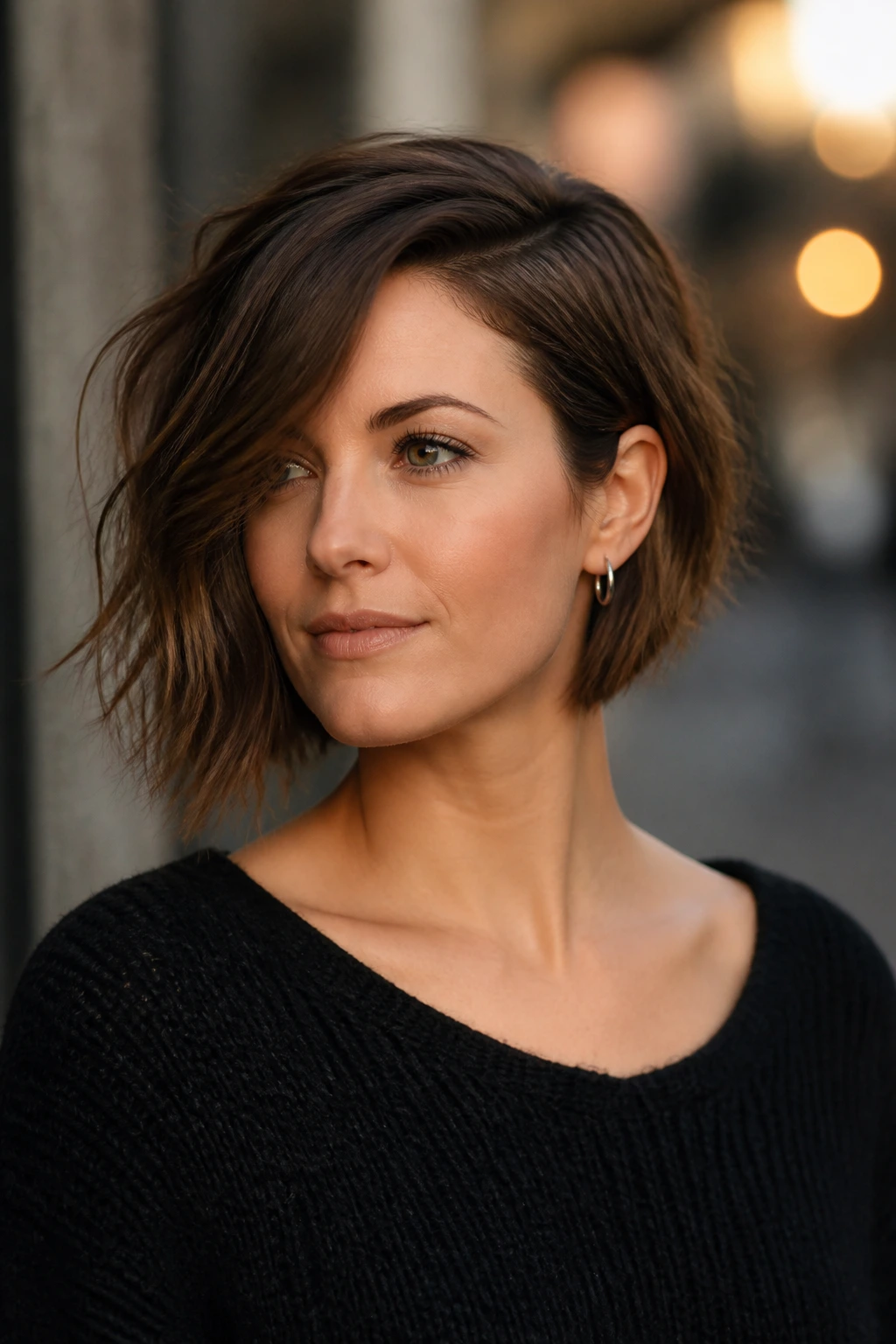
A small length difference can do more than extra layers ever will. That is why an asymmetrical choppy bob still feels fresh even when the styling is plain.
One side sits a little shorter, the other side hangs a touch longer, and the whole cut suddenly has movement built into the outline. The choppy layers keep the asymmetry from looking too sharp or graphic. They soften the transition so the haircut reads as deliberate, not accidental.
This is one of my favorite options for women who are tired of a same-length bob but do not want a dramatic undercut or a wild shape. It has personality. Enough to notice, not enough to scare off a conservative dress code.
Tuck the shorter side behind your ear and let the longer side swing forward. That simple move shows off the cut better than complicated styling ever will.
13. Blunt Bob With Internal Layers
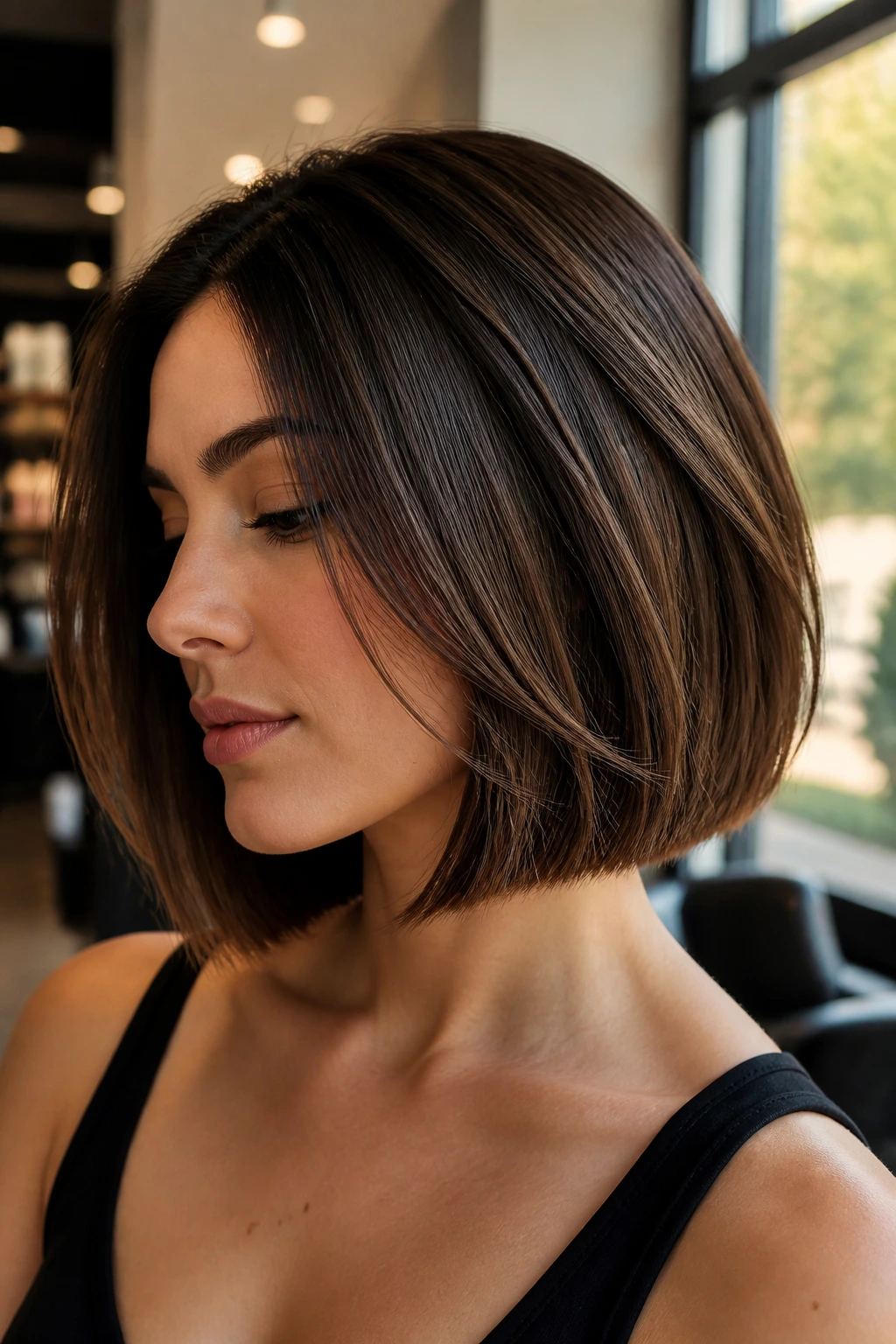
How can a blunt bob still look choppy? Easy. The perimeter stays clean, and the texture lives inside the haircut.
That hidden layering is the point. From the outside, the bob still looks sharp and neat. Inside, though, the hair has been carved so it bends more easily and does not sit like a single solid sheet. It is a good compromise for women who like a polished outline but hate how a fully blunt bob can feel too heavy.
This cut works well on hair that is straight or slightly wavy and needs just a little movement without losing its shape. It also pairs nicely with a strong side part or a center part, depending on how much softness you want around the face.
One thing to avoid: over-thinning the interior. The goal is motion, not see-through ends. If the hair starts to look stringy in daylight, the layers went too far.
14. Shattered Bob With Curtain Bangs
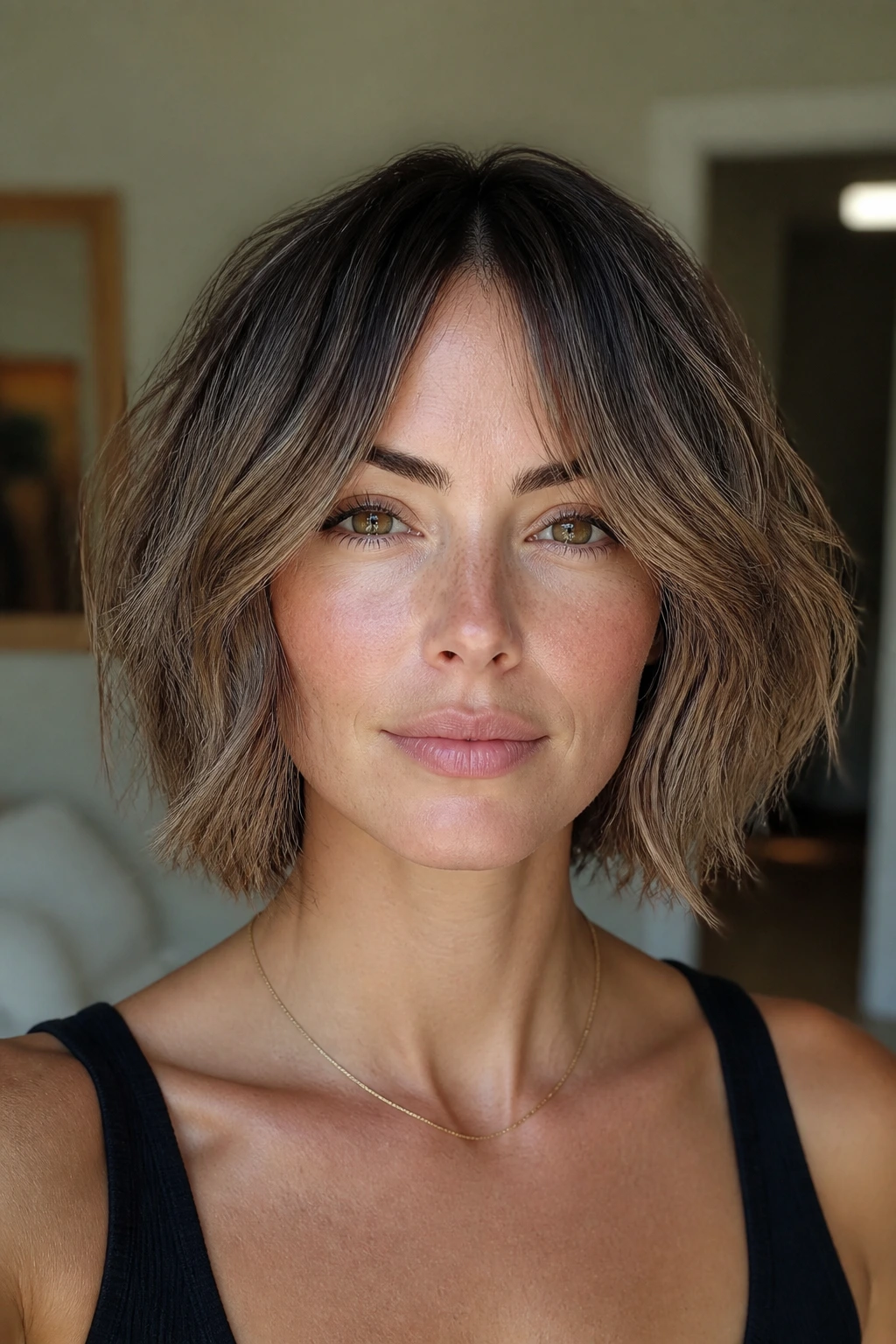
The ends look broken up in a good way, like they were cut for movement instead of a photo. That is the appeal of a shattered bob with curtain bangs.
Curtain bangs soften the front and make the whole haircut feel less blunt at the face. They part in the middle, sweep out toward the cheekbones, and let the rest of the bob stay choppy without looking harsh. I think this version works especially well when you want the face to open up a bit but you do not want full bangs sitting on the forehead all day.
What the fringe changes
- It draws attention to the eyes.
- It hides a wide forehead without closing off the face.
- It gives the bob a softer grow-out than straight-across bangs.
- It lets the layers blend into the front instead of ending in a hard line.
A round brush on the fringe is enough for most people. Curl it under for softness or out for a more relaxed finish. The rest of the cut can stay rough and piecey.
This is a flattering option, but it does ask for some styling. Curtain bangs always do.
15. Tousled Bob For Thick Hair
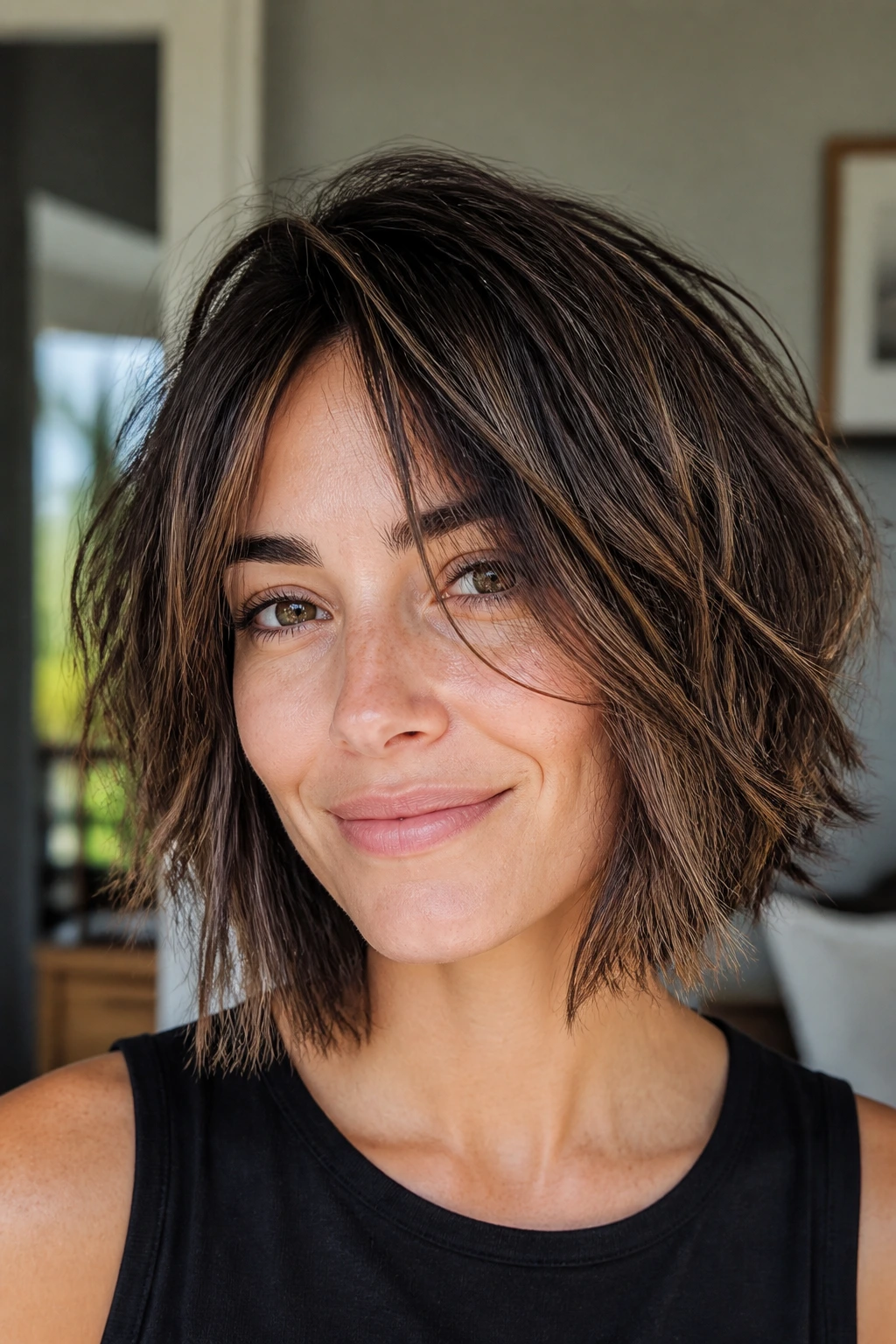
Thick hair can swallow a cute bob in one haircut. A tousled bob fixes that by taking out weight in the right places and leaving enough texture so the style does not puff into a pyramid.
The key is shape, not just thinning. A good tousled bob has long enough top layers to move over the bulk underneath. The ends are chipped or point-cut so they separate a little when dry. That separation is what keeps the haircut from looking too solid or too heavy around the jaw.
What makes this cut worth it
- It removes density without making the hair flimsy.
- It keeps the outline soft around the chin and neck.
- It works with a quick bend from a curling wand or brush.
- It grows out better than a heavy one-length cut.
I like this one for thick hair that has good body but too much of it in one place. You still get fullness, just not the mushroom effect that makes people reach for a ponytail by day two.
16. Air-Dried Choppy Bob For Natural Waves
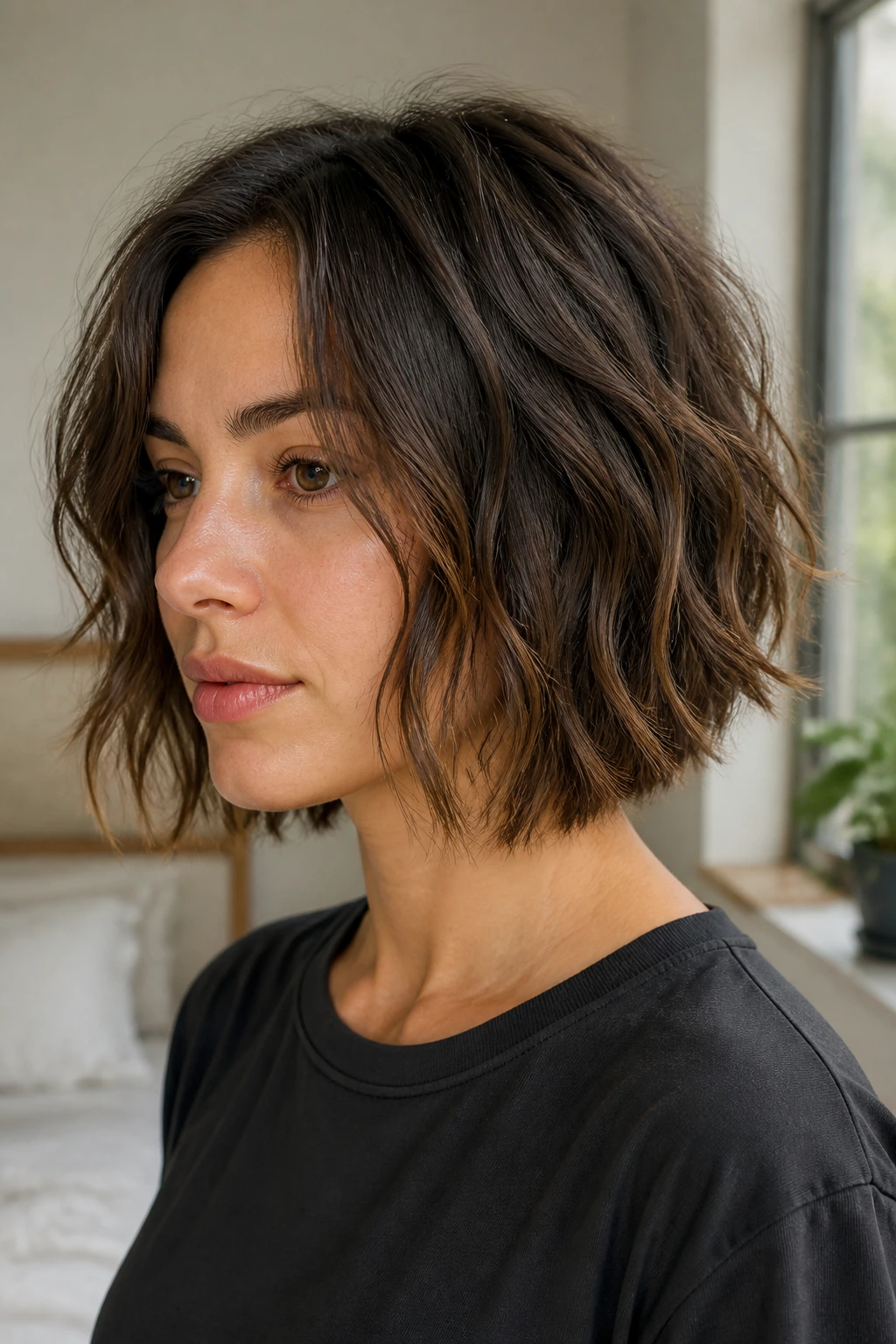
If you hate blow-drying, this is one of the most forgiving options. An air-dried choppy bob for natural waves is built to settle into texture instead of fighting it.
The cut should have enough internal layering to stop the waves from stacking in a heavy line, but not so much that the shape frays. That balance matters. Too few layers and the waves sit like a block. Too many and the ends puff into a fuzzy halo.
A simple air-dry routine is enough:
- Start with leave-in conditioner on damp hair.
- Add a light cream or wave balm through the mid-lengths.
- Scrunch the hair upward with your hands.
- Let it dry without touching it too much.
- Break up the cast, if there is one, with a drop of oil on the ends.
The magic here is not perfection. It is that slight mismatch between smooth roots and piecey ends. That gives the haircut character without demanding a long morning routine.
17. Neck-Length Bob With Piecey Ends

Why does neck-length feel easier? Because it gets out of the way, dries faster, and still gives you enough length to tuck behind the ears when you want a break.
A neck-length bob with piecey ends is a practical cut for women who want movement without all the maintenance that comes with shoulder-length hair. The ends are cut so they separate a little, which keeps the shape from looking too neat or too flat. That piecey finish matters because neck-length hair can turn into a hard shelf if the ends are left blunt.
This cut is also surprisingly good with scarves, collars, and jewelry. It sits above the neckline instead of fighting it. That means the haircut still shows when you wear a coat or a high collar, which sounds like a small thing until cold weather makes every style feel hidden.
Ask for a soft perimeter and a few longer face-framing pieces. That gives the cut some swing without making it hard to grow out.
18. Razor Bob With A Soft Undercut
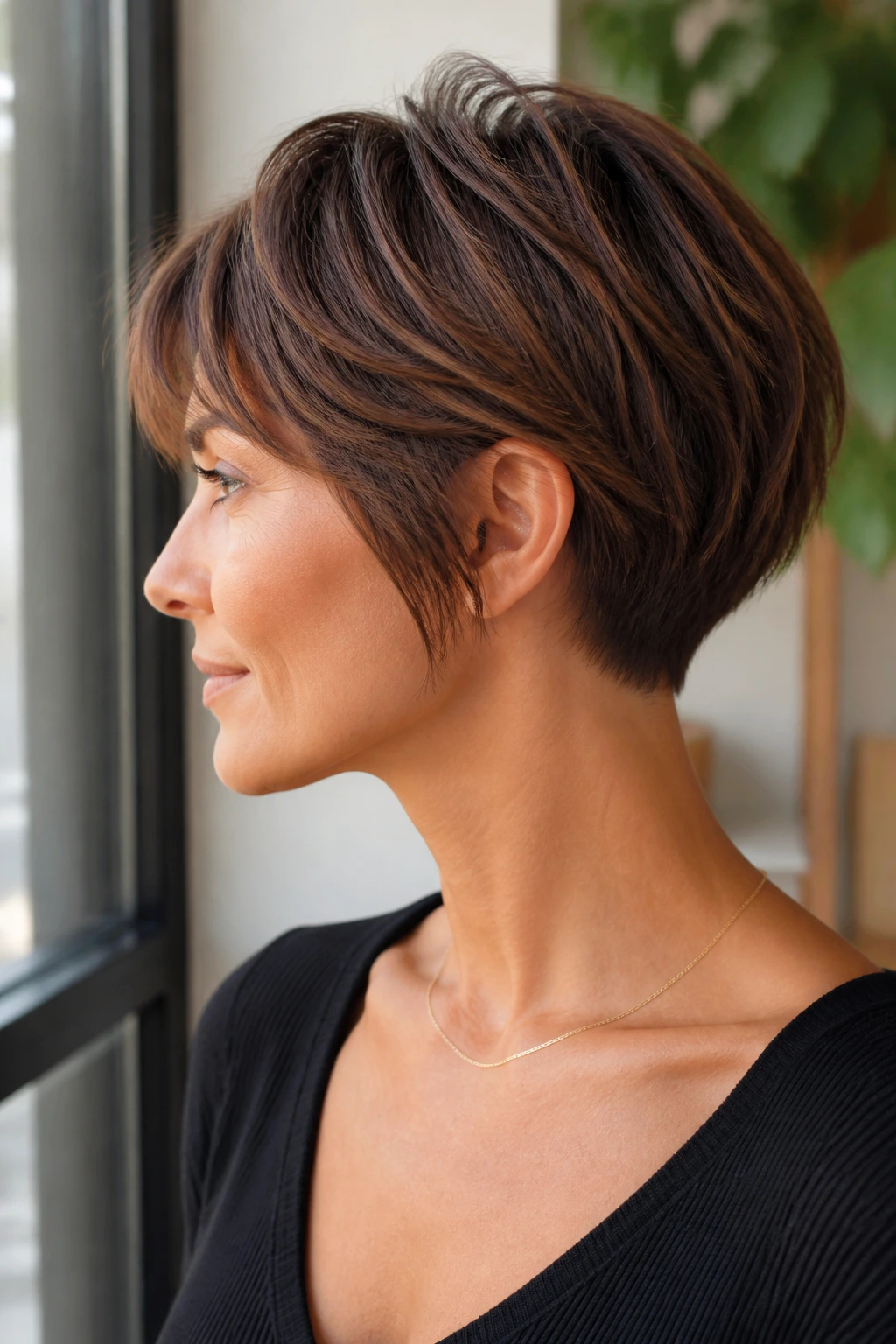
When hair is heavy at the nape, the shape starts to puff. A soft undercut solves that without turning the haircut into something dramatic or edgy for the sake of it.
This version uses a razor to soften the upper layers and a subtle undercut underneath to remove bulk where nobody sees it. The result is a bob that lies closer to the head and feels lighter through the back. It is especially useful on dense hair that grows outward instead of down.
The part most people miss
The undercut does not need to be exposed. It can sit hidden under the top layer, which keeps the haircut wearable for work or anywhere else you do not want a severe look. That hidden removal of weight is what makes the top layer move.
- Good for very thick, straight hair
- Helpful if the nape bulges out
- Easier to style with a round brush or flat brush
- Needs regular neck cleanups if the undercut grows fast
This is not a low-effort cut in the sense of zero upkeep, but it can save you a lot of daily frustration. Sometimes the best fix is hidden where the eye never sees it.
19. Polished Choppy Bob For Workday Styling

Choppy does not have to mean messy. A polished choppy bob for workday styling keeps the broken-up ends and layer movement, then smooths the surface so the whole cut reads clean and controlled.
That polish starts with the blow-dry. Use a round brush or a flat brush to smooth the top section, then bend the ends just a little so they do not sit too straight. The interior layers still do their job — they keep the bob from feeling heavy — but the finish is more refined than tousled.
I like this for women who want a haircut that can sit under a blazer without looking too casual. It can still loosen up after a few hours, which is fine. Hair should be allowed to live. The point is that it starts the day with shape, not chaos.
A tiny amount of serum on the ends is enough. Too much and the choppy detail disappears. Too little and the surface can look dry, which is not the same thing as textured.
20. Low-Maintenance Bob With Grow-Out Shape

The smartest bob is the one that still looks intentional after six weeks. A low-maintenance bob with grow-out shape keeps the line soft, the layers long enough to blend, and the front pieces just loose enough to stay flattering as they settle.
This is the cut I’d point to for anyone who wants a layered choppy bob haircut but does not want to babysit it. The perimeter should be gentle rather than severe, and the interior layers should fall in a way that still makes sense once they grow past the fresh-salon stage. That means less panic, fewer emergency trims, and a shape that can survive real life.
Why it lasts
- The longest face-framing pieces keep moving as they grow.
- The interior layers stay hidden, so the outline does not collapse.
- The ends are broken up enough to avoid a heavy shelf.
- It works with natural texture instead of demanding a perfect finish.
If you’re deciding between two versions, pick the one that still looks good when you skip a wash. That is the haircut that earns its place. And honestly, that is usually the one you keep coming back to.
