



A blunt bob can look ruthless in the best way.
The cut lives or dies on the edge. A soft bob can blur. A blunt bob haircuts lineup, though, is all about that crisp perimeter — the kind of line that makes hair look denser, cleaner, and a little more expensive even when the styling is plain and simple.
That’s why these cuts keep hanging around. They work on fine hair that needs weight. They work on thick hair that needs shape. They work on straight hair that wants polish, and on wavy or curly hair when the shape is handled with enough care that the ends still feel intentional instead of puffed up and fuzzy.
The tricky part is choosing the right version. A chin-length chop and a collarbone-skimming bob can look like cousins on a mood board, but in real life they behave very differently once you wash them, air-dry them, and try to leave the house on a Tuesday. Some versions feel sharp and architectural. Others feel softer but still clean. Same family. Different attitude.
1. Chin-Grazing Blunt Bob
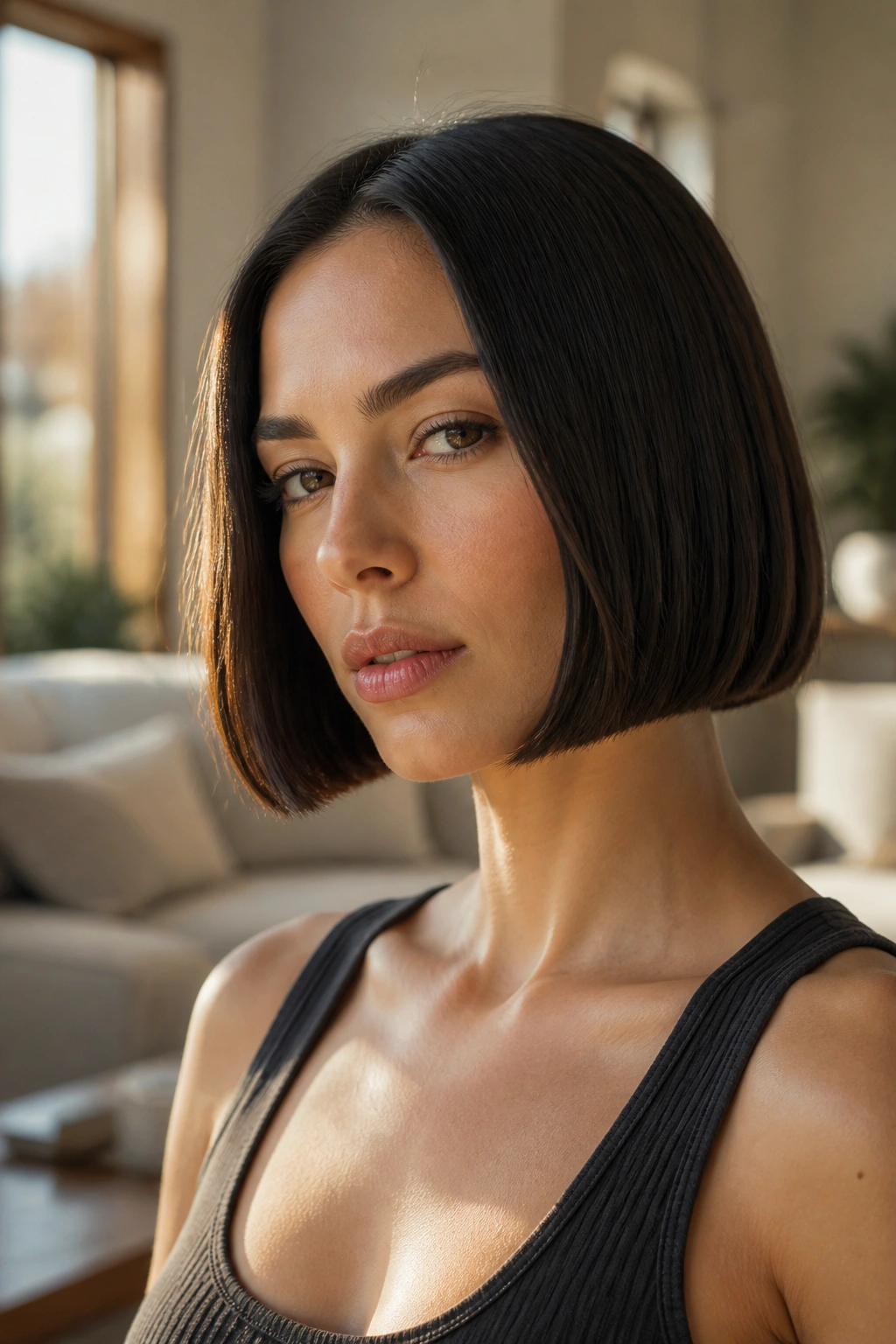
This is the cut that says, without raising its voice, that you know exactly what you want.
A chin-grazing blunt bob draws a hard line right where the jaw starts to do its work. That makes the face look more defined, and it gives straight hair a heavy, glossy finish that holds its shape instead of floating away. If you want a bob that looks deliberate from the front and the side, this is the one that does the job with almost no drama.
Why the Length Works
The chin is a useful stopping point because it sits close enough to the face to frame it, but not so high that the haircut feels tiny. The line stays visible even when the hair moves. That matters.
Best for: people who like a crisp shape, anyone with fine to medium hair, and anyone who wants the jawline to look cleaner.
Styling note: blow-dry with a nozzle attachment and a flat brush, then smooth the ends with a 1-inch iron if they kick outward. A tiny bit of serum on the last inch is enough.
Tell your stylist: one length, no hidden layers, and a straight baseline that hits right around the chin.
Watch for: if your hair grows a stubborn wave at the nape, this length will expose it fast. That is not a problem, exactly. It just means trims matter.
2. Collarbone Blunt Bob
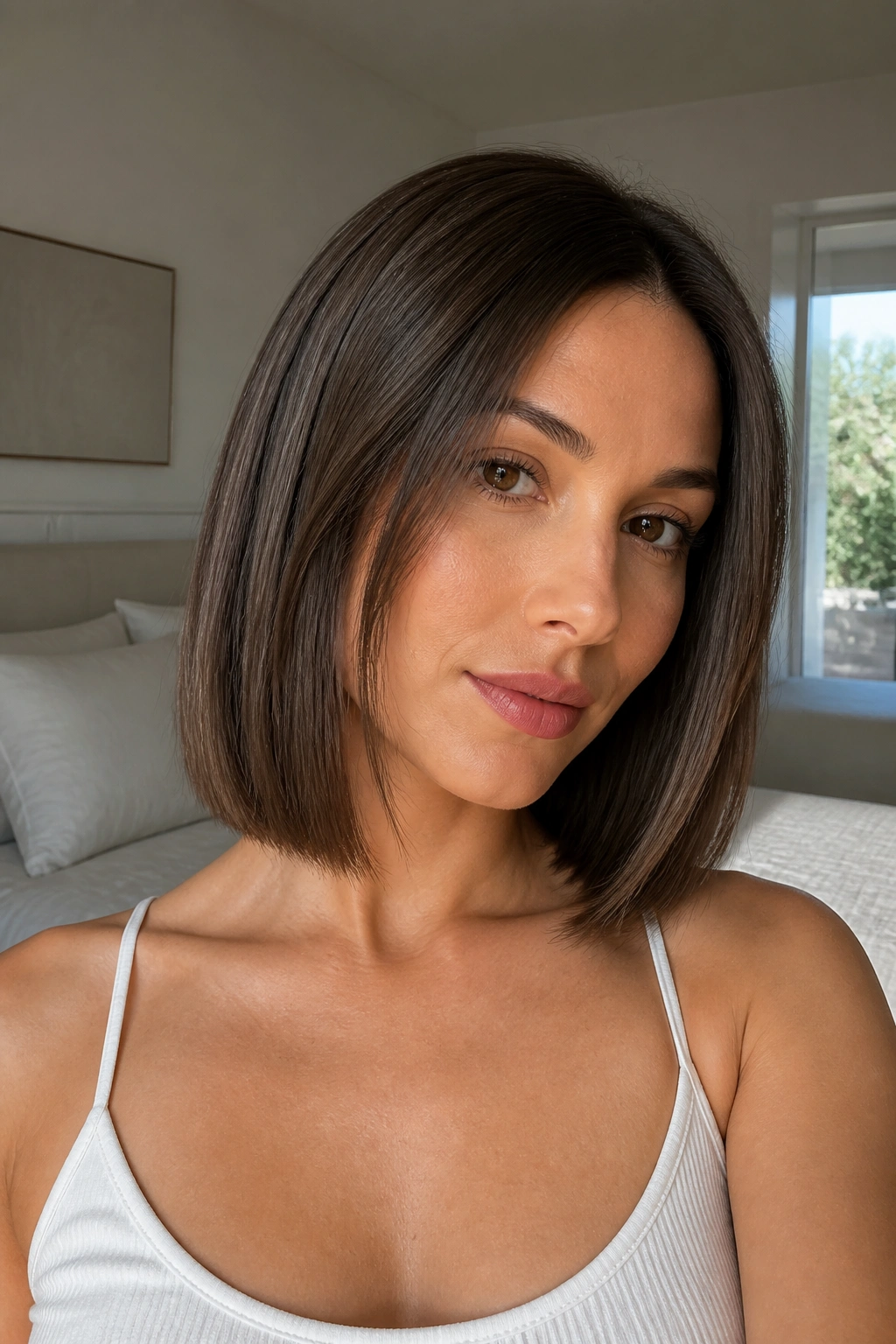
Do you want a blunt bob that feels less severe on day one and more forgiving by day ten? Go longer.
The collarbone blunt bob keeps the same clean outline, but it lands just low enough to feel easy. It brushes the collarbone, which gives the cut a little movement without turning it into a shaggy lob. You still get the density at the ends. You just get more styling room.
This version is especially useful if you are nervous about short hair. It grows out well, tucks behind the ears without looking awkward, and works with a center part or a side part. On days when you do not want to fuss, you can air-dry it with a smoothing cream and leave it alone. That kind of low-maintenance honesty is a big part of the appeal.
How to Wear It
- Keep the ends blunt, not chipped.
- Ask for the length to fall just above or just below the collarbone, depending on how much shoulder contact you want.
- Use a lightweight blowout cream if your hair gets frizzy.
- Skip heavy oils near the roots; they flatten the shape fast.
It is a calm haircut. Not boring. Just calm.
3. Center-Part Glassy Blunt Bob

A center part changes everything. Suddenly the same blunt bob looks more exact, more symmetrical, and a little more serious.
This cut works because the clean line at the bottom gets paired with a clean line at the top. The eyes go straight down the middle first, then land on the sharp edge at the ends. If your hair is naturally straight or only slightly wavy, the result can look almost mirror-like after a good blow-dry.
The version I like best sits between the jaw and the collarbone. Shorter than that, the center part can start to feel severe in a way that reads more costume than chic. Longer than that, the effect softens too much. The sweet spot is the length where the line still looks bold but your head does not feel chopped in half.
What Makes It Work
- A middle part keeps both sides balanced.
- A smooth finish shows off the blunt edge.
- A slight inward bend at the ends keeps it from looking flat and stringy.
- A light shine spray makes the line read cleaner in daylight.
If you like structure, this is a good bet. If you like a little mess, keep moving.
4. Deep Side-Part Blunt Bob
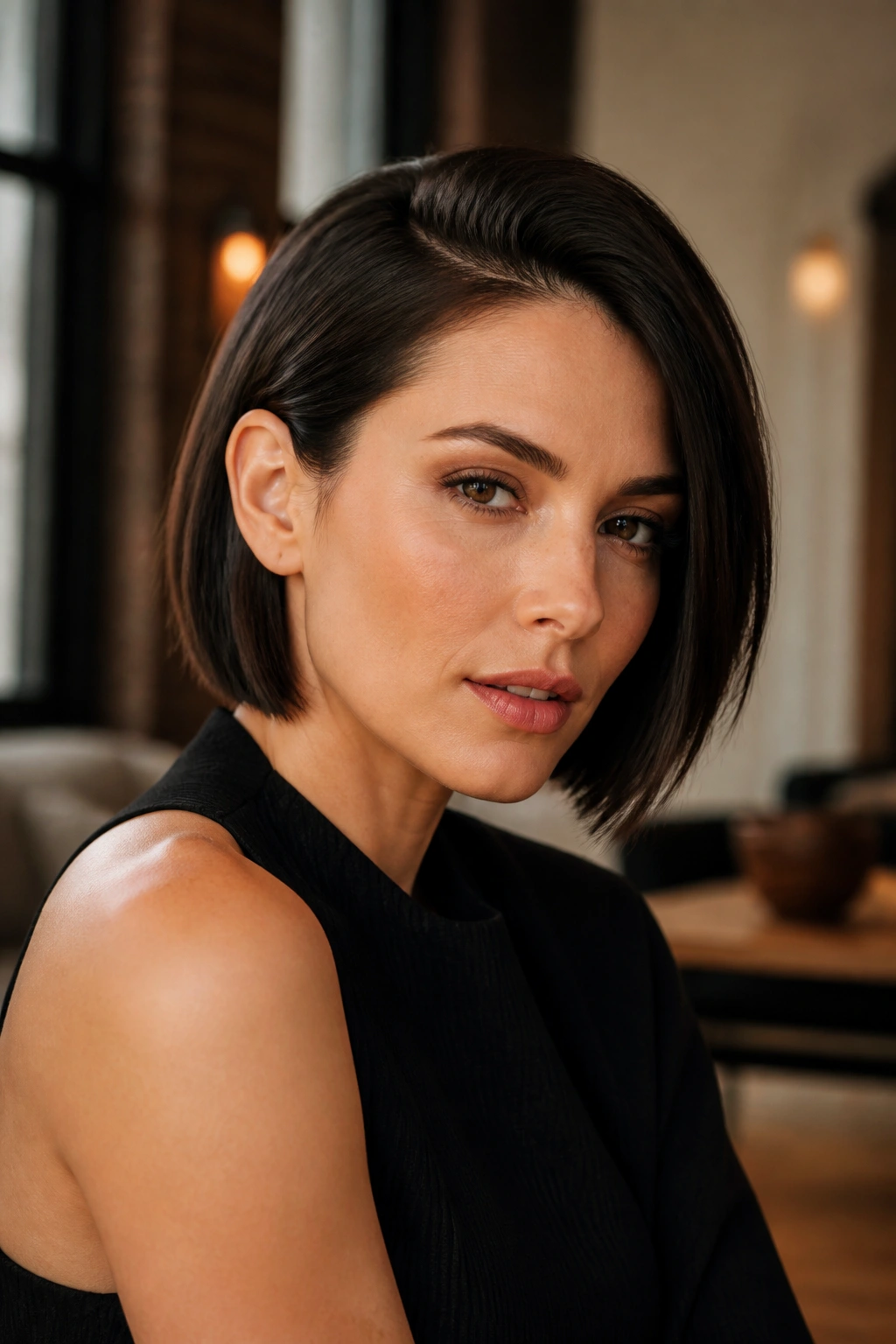
A side part does something sneaky. It softens the bluntness without weakening the cut.
That sounds contradictory, but it works. The bottom edge stays sharp, yet the asymmetry at the roots gives you lift on one side and a little sweep across the forehead. People with flatter crowns usually get a boost from this shape because the part creates height where the hair needs it most.
This is also the blunt bob for anyone who thinks a center part makes their face look too long or too plain. A deep side part can bring back some curve around the brow and cheekbone. It also gives the cut a more relaxed feel, which matters if you wear it with soft makeup, hoop earrings, or anything that looks better with a bit of movement.
A quick blow-dry trick helps a lot here. Dry the hair in the opposite direction of the part first, then flip it over once it is about 80 percent dry. That roots-up move gives you lift without making the ends puff.
Short hair, but not stiff. That is the point.
5. Micro Blunt Bob

The micro bob is for people who are tired of pretending they want “just a trim.”
It sits high, usually around the cheekbone or just below the ear, and it makes the neck look longer by comparison. The line is so short that every millimeter matters. You cannot hide behind layers here. You either like the shape or you do not. That honesty is what makes it so sharp.
I find this version works best when the hair is dense enough to hold a solid edge. If the hair is very fine, the cut can look airy rather than sleek unless the stylist leaves enough weight at the ends. A flat iron helps, but too much volume fights the whole point. Keep it close to the head.
The Trade-Offs
This is not a lazy haircut.
You will want trims every 4 to 6 weeks if you want the shape to stay crisp. You may also want to pay a little more attention to the nape, because short bobs reveal cowlicks fast. Still, when the fit is right, the result has real presence. It looks clean from the front, hard-edged from the side, and a little defiant in the best way.
6. French Blunt Bob With Full Fringe

A full fringe changes the mood from polished to a little mysterious, and I mean that in a good way.
The French blunt bob usually sits around the jaw and comes with a thick brow-skimming fringe. The combination gives the haircut more weight at the front, which can make the eyes stand out and keep the face from looking too open. It has a lived-in quality, but the perimeter stays blunt enough that it never drifts into bohemian mess.
What to Ask For
- A blunt bob that lands near the jawline.
- A fringe that sits just above the lashes when dry.
- Soft edges on the bangs, not a hard shelf unless that is your thing.
- Enough weight through the ends to keep the bob from flipping out.
The best thing about this cut is the way it frames the face without needing perfect styling. A quick blast with a round brush at the fringe and a little smoothing cream through the lengths often does enough. If you wear glasses, this is worth trying. The fringe and frames can work together in a way that feels intentional rather than busy.
It does ask for maintenance. Bangs always do. Still, if you enjoy a haircut with character, this one delivers.
7. Blunt Bob With Curtain Bangs

Can a blunt bob be soft? Absolutely. Curtain bangs are the reason.
The fringe opens at the center and falls away from the face, so you keep the clean perimeter of the bob while taking some pressure off the forehead and cheekbones. That makes the cut useful for people who want structure but do not want the whole haircut to feel boxed in. It is a good middle path.
The trick is keeping the bang area loose while the rest of the bob stays crisp. If the fringe gets too heavy, the style starts to feel dated. If it gets too wispy, it loses the contrast that makes the cut interesting. The best version has a gentle bend and enough length to tuck behind the ears on a lazy day.
How to Style It
Use a round brush or a large roller to push the bangs away from the face while drying. Then smooth the body of the bob with a paddle brush so the ends stay straight. A tiny bit of mousse at the roots helps the fringe keep its shape without getting sticky.
This cut is a nice fit for people who want movement near the face but still like a straight, clean line underneath.
8. Curly Blunt Bob
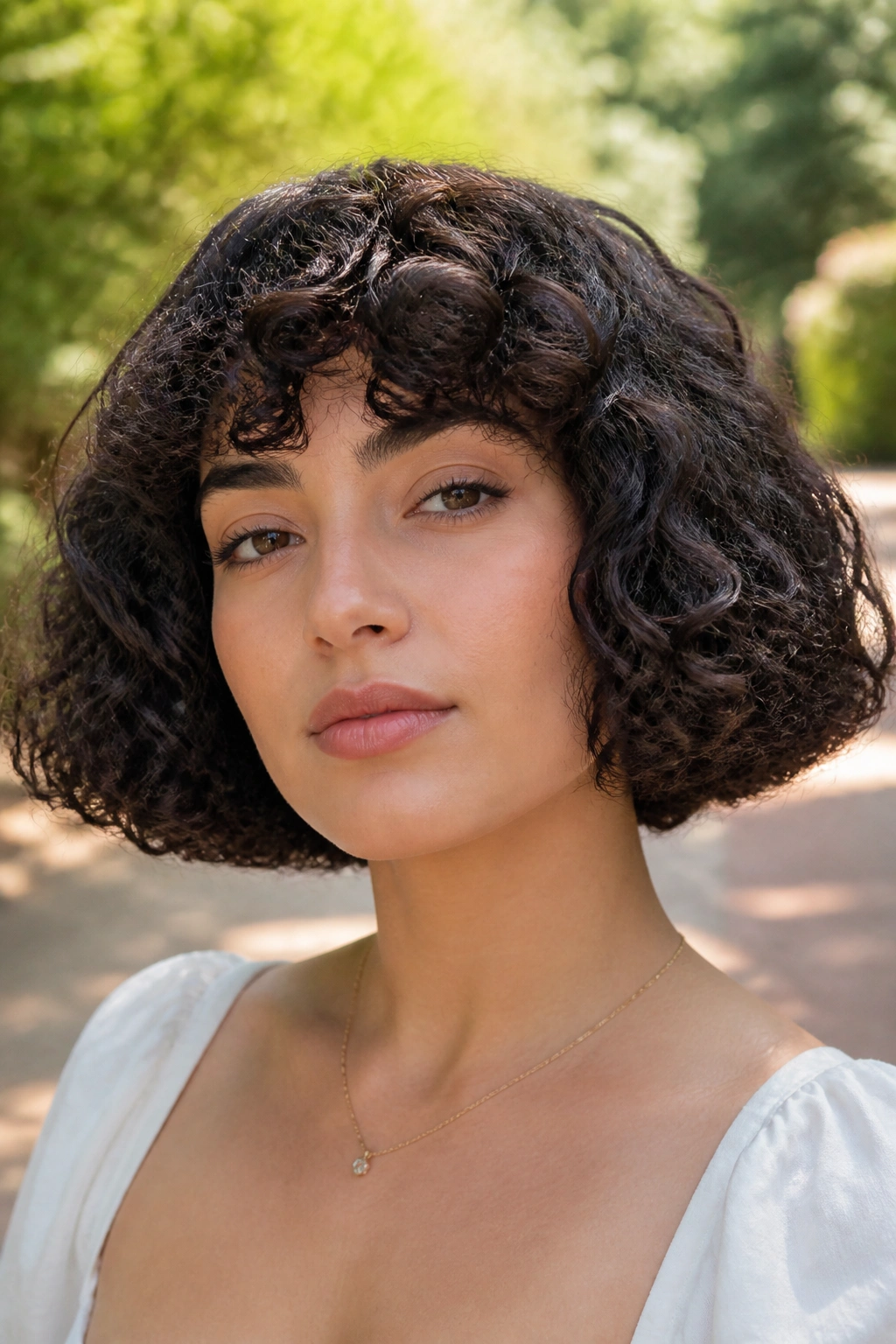
Yes, curly hair can wear a blunt bob. It just needs a different kind of respect.
The cut should usually be done on dry hair or on hair that has been shaped in its natural curl pattern. If someone cuts curls wet and assumes they will all spring back the same way, the line can end up crooked once the curls dry. That is the part people get wrong. The perimeter needs to be planned around shrinkage, not against it.
When it works, a curly blunt bob looks dense, rounded, and full of life at the bottom. The blunt edge gives the curls a place to stop, so the shape looks intentional instead of frayed. A leave-in conditioner and diffuser help, but the haircut itself does most of the heavy lifting.
What to Watch For
- Ask for a curl-by-curl shape check.
- Leave enough length to account for shrinkage.
- Avoid thinning shears near the ends.
- Use a diffuser on low heat and low speed.
The result is not sleek in the straight-hair sense. It is sleek in the sense that the silhouette reads clean. That difference matters.
9. Wavy Blunt Bob
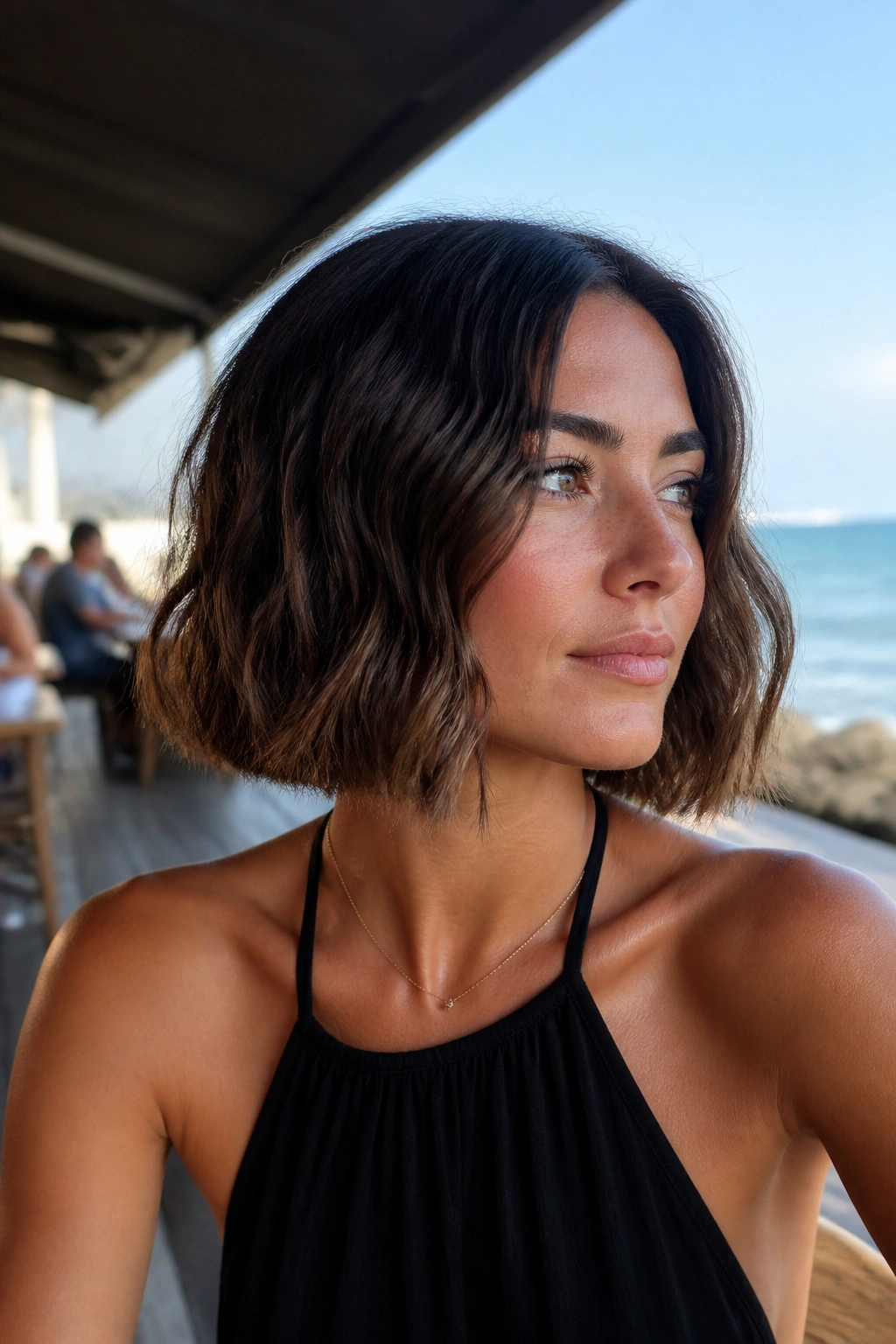
Waves and blunt ends are a good pairing when the cut keeps its shape.
A wavy blunt bob is what I recommend to people who want movement but still hate the look of shredded ends. The wave gives texture. The blunt line keeps the whole thing from turning fluffy. You get the softer effect at the mid-lengths and the cleaner effect at the bottom, which is a nice balance if your hair lives somewhere between straight and curly.
The main mistake is over-styling it. A lot of people try to force beachy waves through the entire head and end up losing the sharp edge that makes the bob worth having. A better move is to keep most of the wave in the middle and let the ends stay fairly straight. That way the cut still looks deliberate.
This version is good for hair that bends a bit on its own, especially if you want a haircut that can go from polished to casual without changing shape. A 1-inch curling iron, wrapped only from cheek to jaw, is often enough. Leave the last inch out. That little gap keeps the line clean.
Some bobs want perfection. This one wants restraint.
10. Angled Blunt Bob

An angled blunt bob gives you a clean line with a little forward motion.
The back sits a touch shorter, while the front stays longer and drops toward the jaw or collarbone. The angle can be subtle or bold, but the ends remain blunt, which keeps the haircut from losing its edge. If a straight one-length bob feels too boxy on you, this is the shape to try.
The angle helps lengthen the neck and sharpen the profile. It also keeps hair from flipping under too heavily at the back, which can happen with dense straight hair. That makes it a smart option for anyone who wants shape without a pile of volume at the nape.
The Shape Breakdown
Back
Shorter and closer to the head, so the bob does not feel bulky.
Sides
Slightly longer, which gives the cut forward swing.
Ends
Kept blunt, not feathered, so the line still looks exact.
This cut does ask for a steady hand from the stylist. A sloppy angle looks accidental fast. When done well, though, it has that crisp, architectural feel that makes people turn their head to check the shape again.
11. Box Bob for Thick Hair
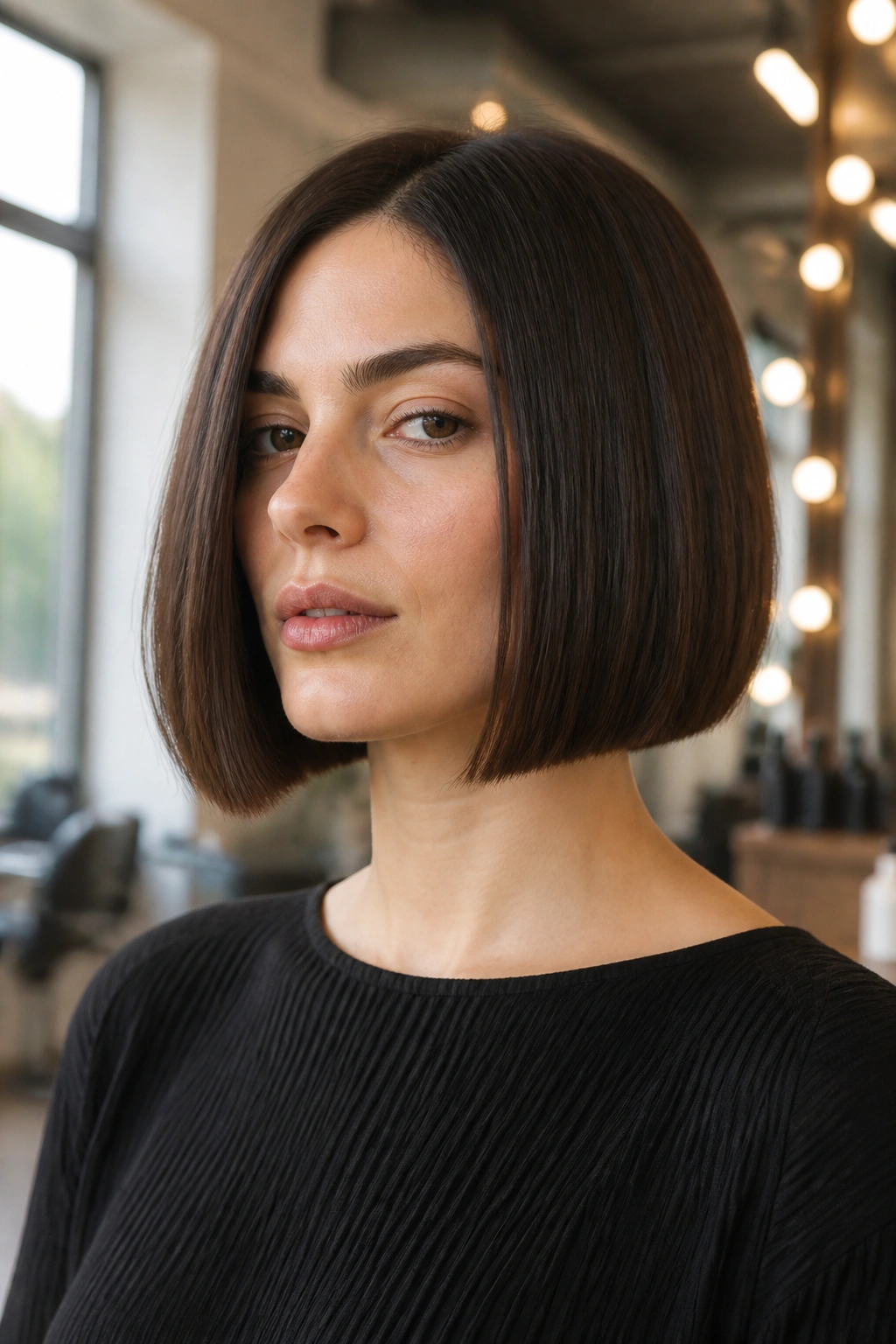
Thick hair needs a different kind of blunt bob. It needs discipline.
A box bob keeps the perimeter heavy and the outline squared off, which is great when the hair has too much body to behave in a wispy way. Instead of fighting the density, the cut uses it. The result looks bold and full, not puffy, because the shape stops the hair from spreading outward in every direction.
This is one of those cuts where the last half-inch matters more than most people think. If the ends are chipped or over-textured, the whole haircut starts to fray. With thick hair, that fringe at the bottom turns into a triangle fast. A true blunt line avoids that problem and gives the hair a more expensive look, even when you air-dry it.
The stylist may still remove bulk inside the shape, and that is fine. The perimeter should stay blunt. That is the part you see.
Best styling tools: a paddle brush, a blow-dryer with a nozzle, and a serum that is light enough not to collapse the shape. Heavy creams can make thick hair swell at the sides. Skip them unless your hair is dry as straw.
12. Fine-Hair Blunt Bob
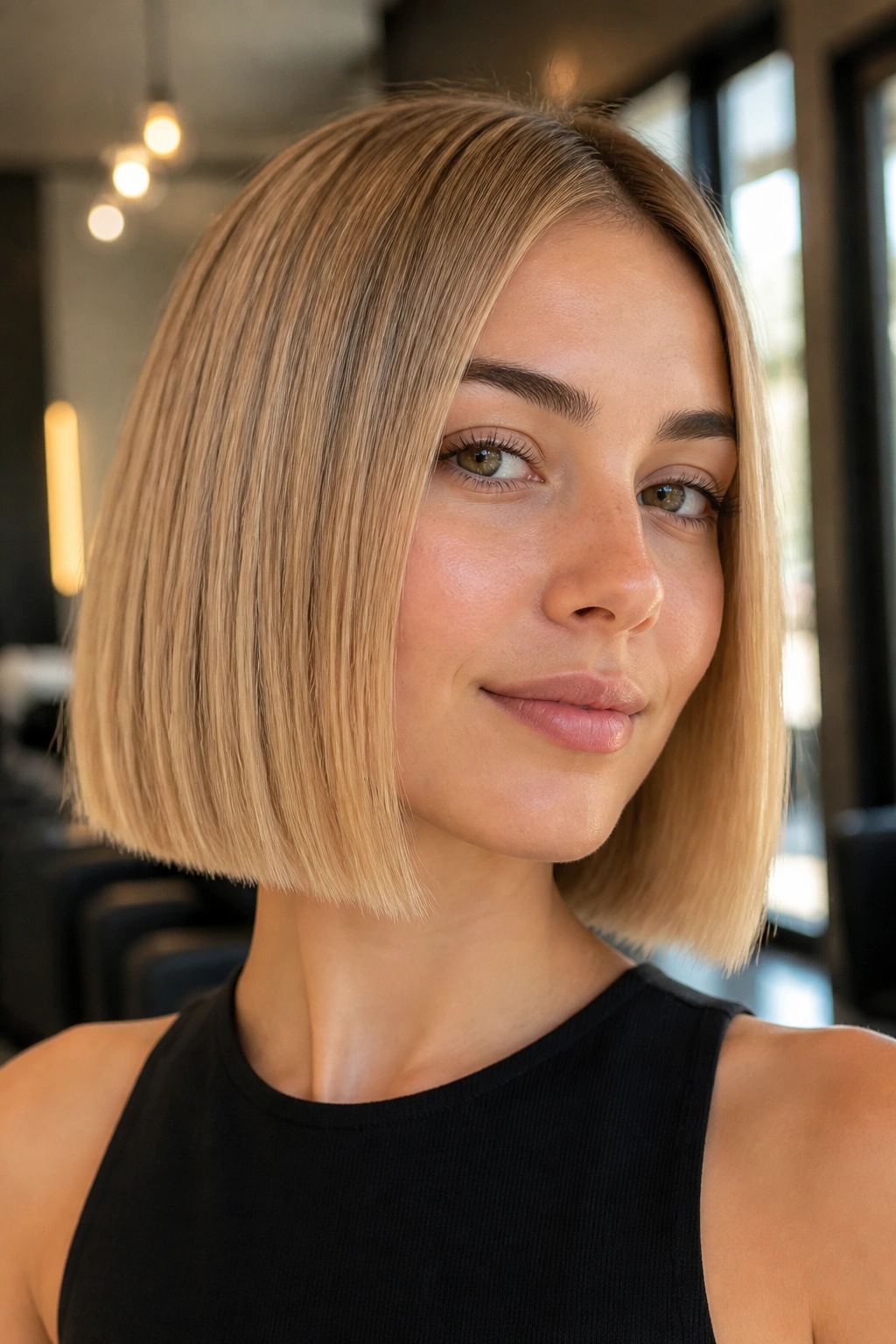
Fine hair and blunt bobs get along because the cut keeps every strand in the same conversation.
A blunt edge gives fine hair more visual weight. That is the whole trick. Instead of wispy ends that disappear, you get a line that reads fuller from a few feet away. If your hair tends to look thin at the tips, this cut can help a lot without needing heavy layering or a ton of product.
The smartest length is usually between the chin and the top of the shoulder. Go too long and the ends may start looking stringy. Go too short and you can lose the little bit of weight that keeps the style looking dense. I like a bob that sits right where the hair still feels solid when you gather it in your hands.
Simple Styling Rules
- Use a root-lifting spray at the crown.
- Blow-dry with a medium round brush, not a giant one.
- Keep conditioner off the last inch of hair if it gets limp fast.
- Avoid aggressive thinning.
Fine hair does not need more texture. It needs better shape. That is a much easier fix.
13. Tucked-Behind-Ears Blunt Bob
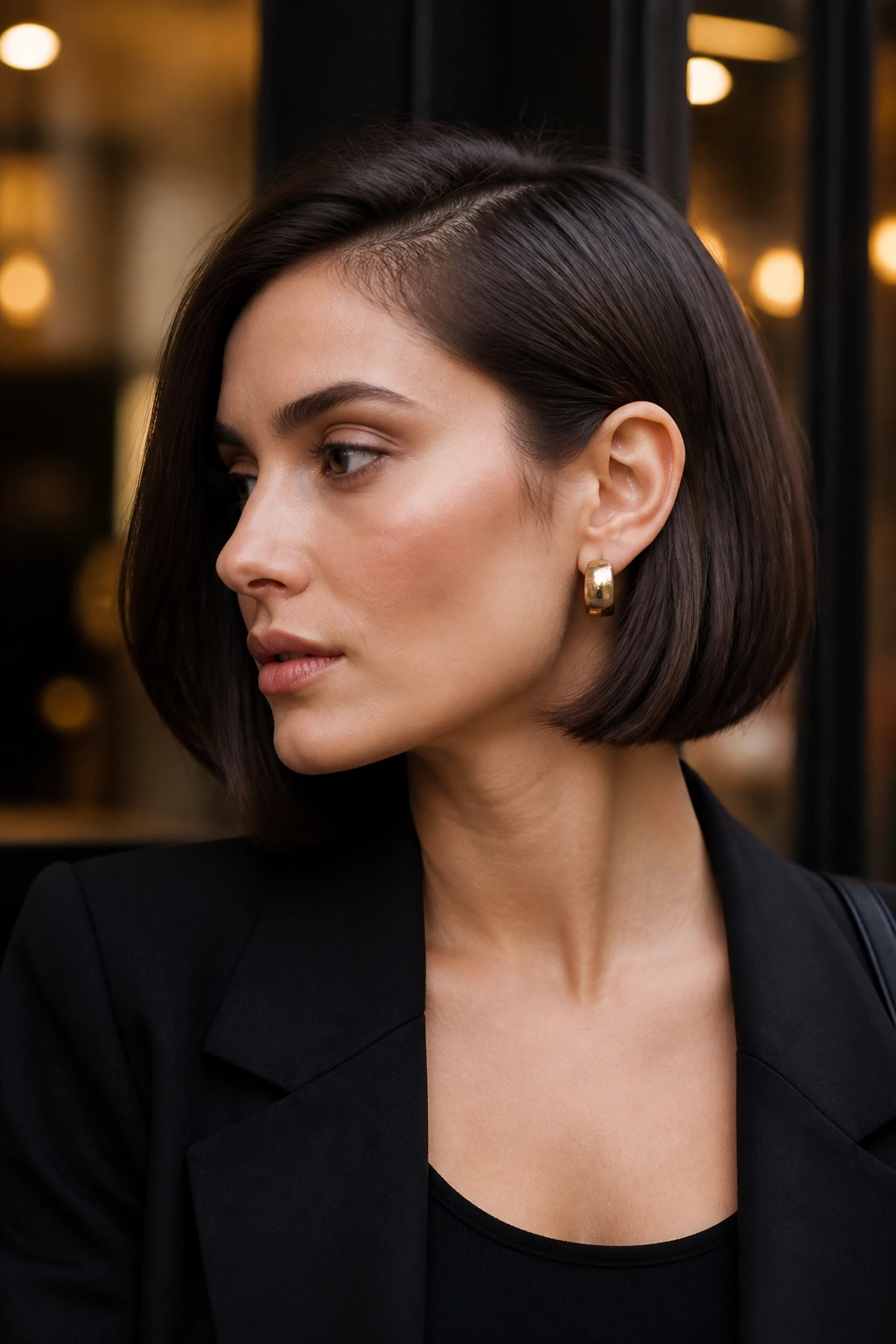
Sometimes the cut is only half the story. The tuck is the other half.
A blunt bob that gets tucked behind the ears has a sharper, more open look than the same cut worn loose. The face comes forward, the cheekbones show more, and the line of the bob becomes a frame instead of a curtain. It is a small shift, but it changes the whole mood.
This works especially well with a side part or a softly off-center part. The tuck on one side gives you asymmetry, while the blunt bottom keeps the haircut clean. Earrings matter here, too. A small hoop or a flat stud can finish the shape without stealing attention from it.
Why It Sticks
A tuck works because the hairline at the jaw gets exposed. That means the blunt edge can sit against skin, glasses, earrings, and collars instead of floating away. The result feels crisp, almost tailored, without asking the cut to do any extra work.
If your hair slips out of tucks by lunch, a light mist of texture spray at the roots near the ear helps. Not too much. Just enough grip to keep the side in place.
14. Wet-Look Blunt Bob

A wet-look bob is not subtle. That is the point.
The style leans into shine, separation, and a smooth finish that makes the blunt line look even sharper than usual. It is especially good for evening events, short hair that needs a little drama, or straight hair that wants to look more editorial without being restyled into curls. The haircut does most of the talking; the product just gives it a microphone.
The main move is to keep the product distribution even. Gel at the roots, a touch of shine cream through the mid-lengths, and no big blobs near the ends. Comb it through while it is still damp so the hair lays flat in the direction you want. Once it sets, the whole shape looks sleek and deliberate.
This is one of those styles that can go wrong if you overdo it. Too much product and the hair looks greasy. Too little and it loses the point. The sweet spot is a glossy surface with clean separation, not a helmet.
A blunt bob gets especially strong in this finish because there is nowhere for the eye to wander. It lands on the line and stays there.
15. Shoulder-Skimming Blunt Bob
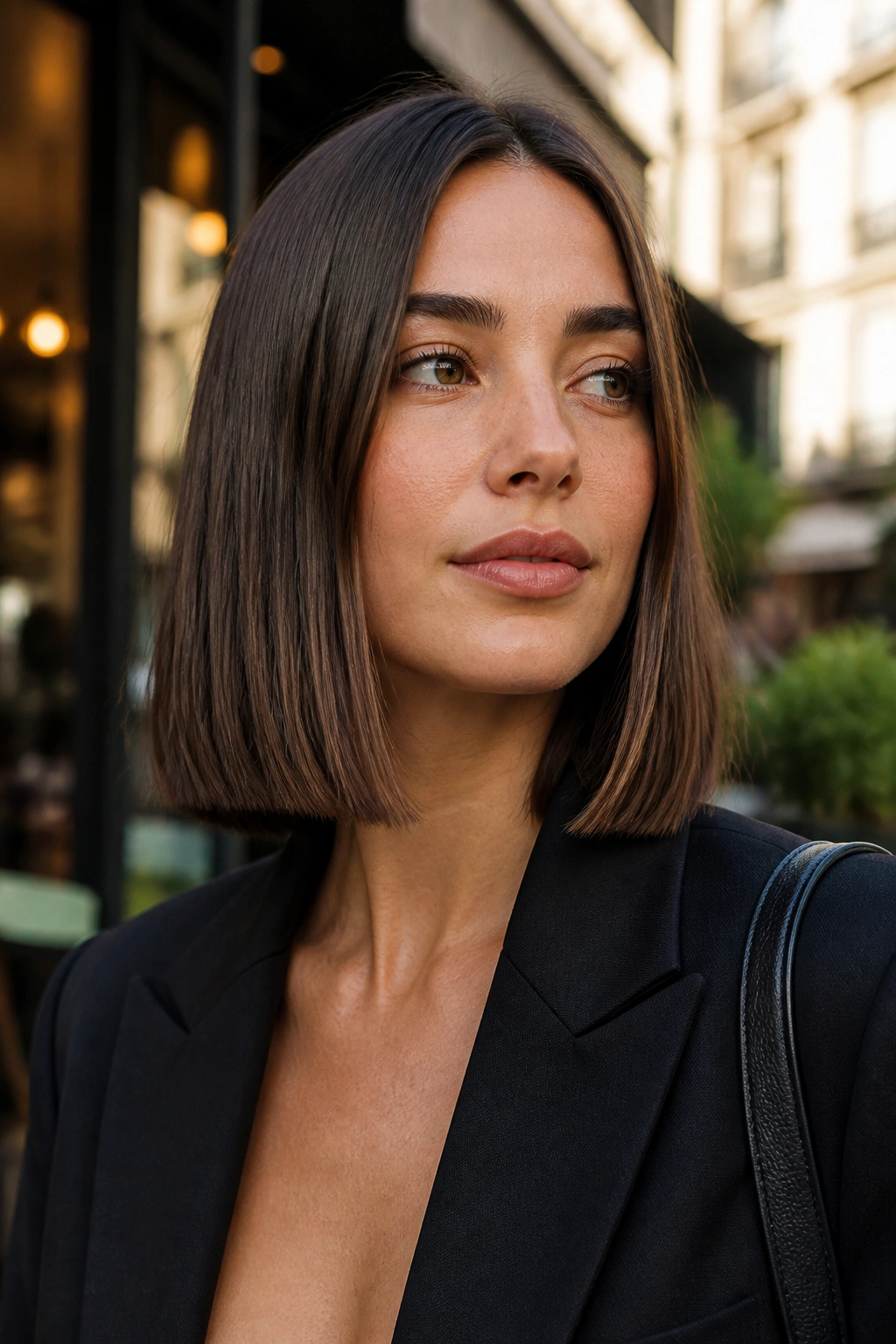
A shoulder-skimming blunt bob is the gentlest version in the bunch, and that is why people keep coming back to it.
The length sits close enough to the shoulders to feel easy, but the ends are still blunt enough to look clean. It’s a good option if you want to move away from long hair without leaping straight to chin length. The shape also grows out in a flattering way, which saves you from the awkward in-between stage that shorter bobs can throw at you.
This cut works well on straight hair, but it can also suit wavy hair if the ends are kept crisp and the body has a little bend. The shoulders will sometimes flip the hair outward, so a slight under-bend at the ends helps. Nothing fancy. Just enough direction that the line stays tidy.
The honest appeal here is practicality. You can wear it down, clip half of it back, tuck it into a coat collar, or smooth it into a low bend for work. It does not fight you much. That is rare.
16. Jaw-Length Blunt Bob
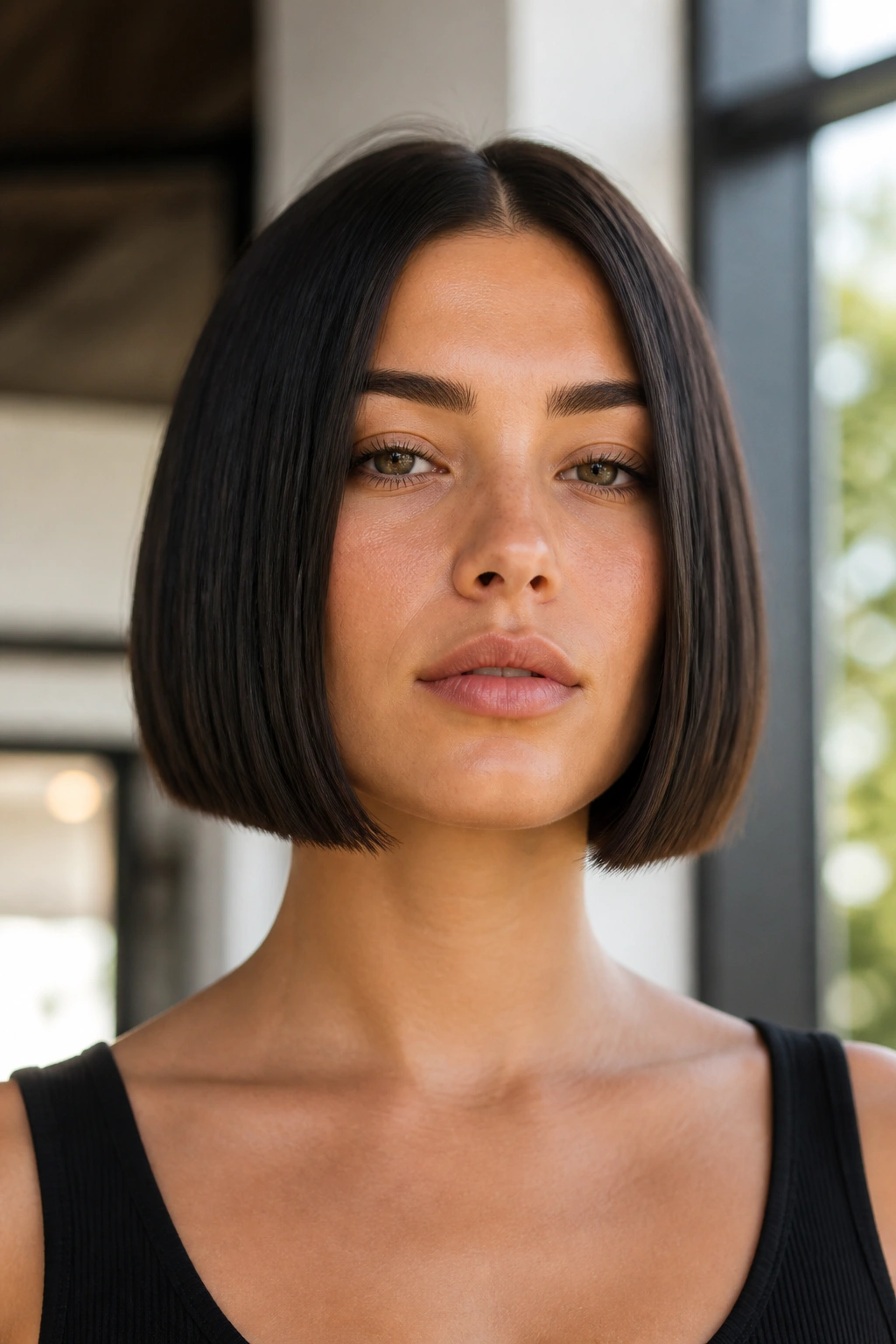
Want the haircut to hit the face like a clean line drawing? Go jaw-length.
This length is direct. It puts the ends exactly where the jaw begins and gives the whole face a more structured look. If the chin-grazing bob feels a touch longer and softer, the jaw-length version feels firmer. It is the kind of cut that photographs with strong shape from the front and a hard edge from the side.
What It Does Well
- Sharpens the lower face.
- Makes straight hair look denser.
- Keeps the neck open and visible.
- Works well with glasses because the line sits above the frames or right beside them.
The trade-off is maintenance. This cut loses its precision quickly if it grows out too much, especially on hair that bends or flicks at the ends. That means trims matter more than they do with a longer bob. If you hate regular salon visits, keep that in mind.
Still, when the fit is right, the cut has a clean, almost graphic quality. It does not need decoration. The outline is the whole point.
17. Soft-Bend Blunt Bob
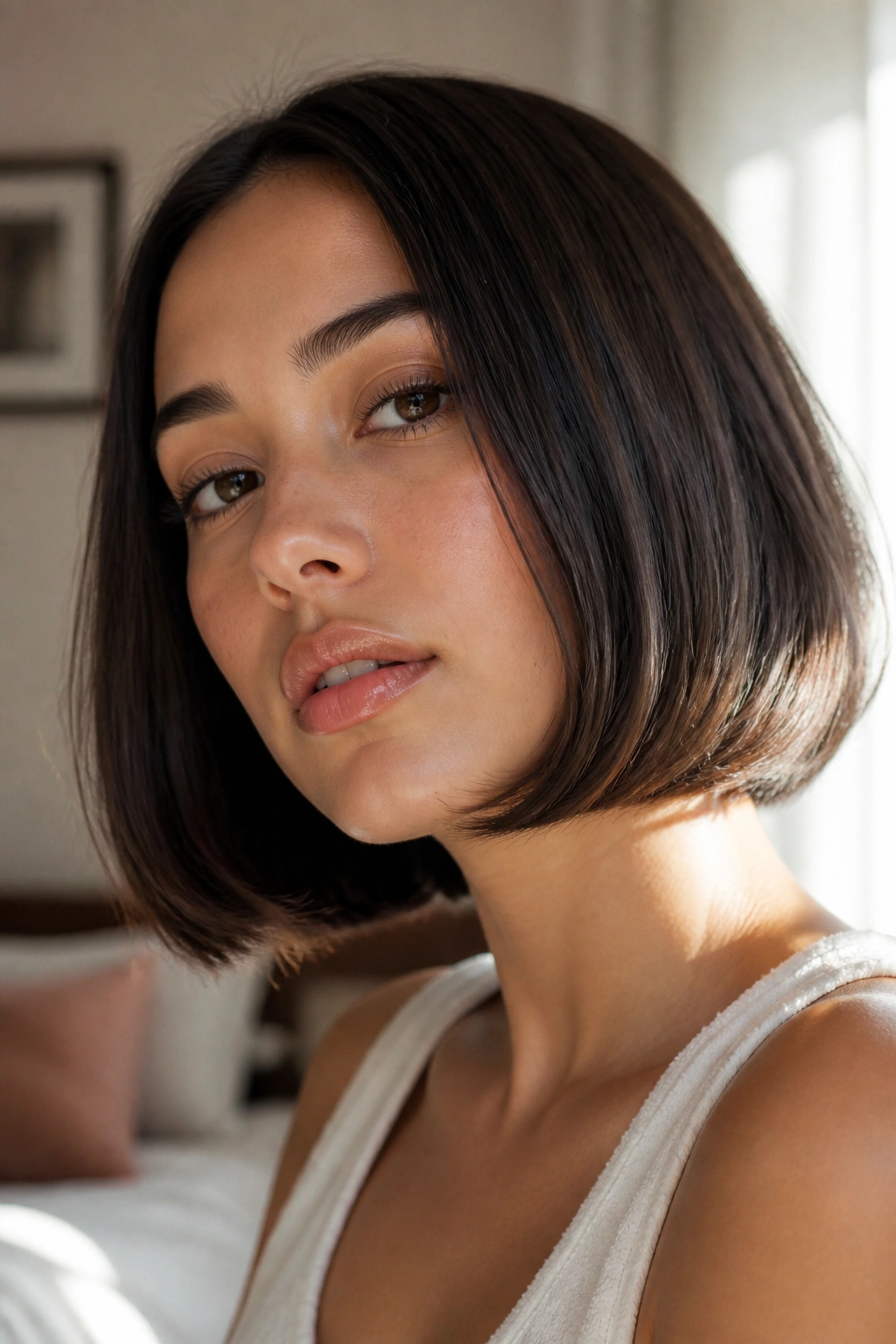
A soft bend can save a blunt bob from looking too rigid.
This version keeps the perimeter straight but lets the last inch or two curve just enough to catch the light and move with your head. It is not a curl. Not really. More like a small nod at the ends. That tiny bend gives the haircut some air while leaving the line intact.
I like this approach for people who want a polished bob but do not want to spend every morning ironing every strand flat. A quick wrap with a flat iron or a pass with a round brush is often enough. The bend should feel casual, not curled under in a fake way. If the ends all point the same direction with too much force, the hair starts looking dated.
The trick is to keep the crown and sides calm. Too much root lift turns the style from sleek into puffy. You want the movement only at the edge.
This is the closest thing to an easy blunt bob. It still looks finished, but it does not demand perfection.
18. The Classic No-Layers Blunt Bob
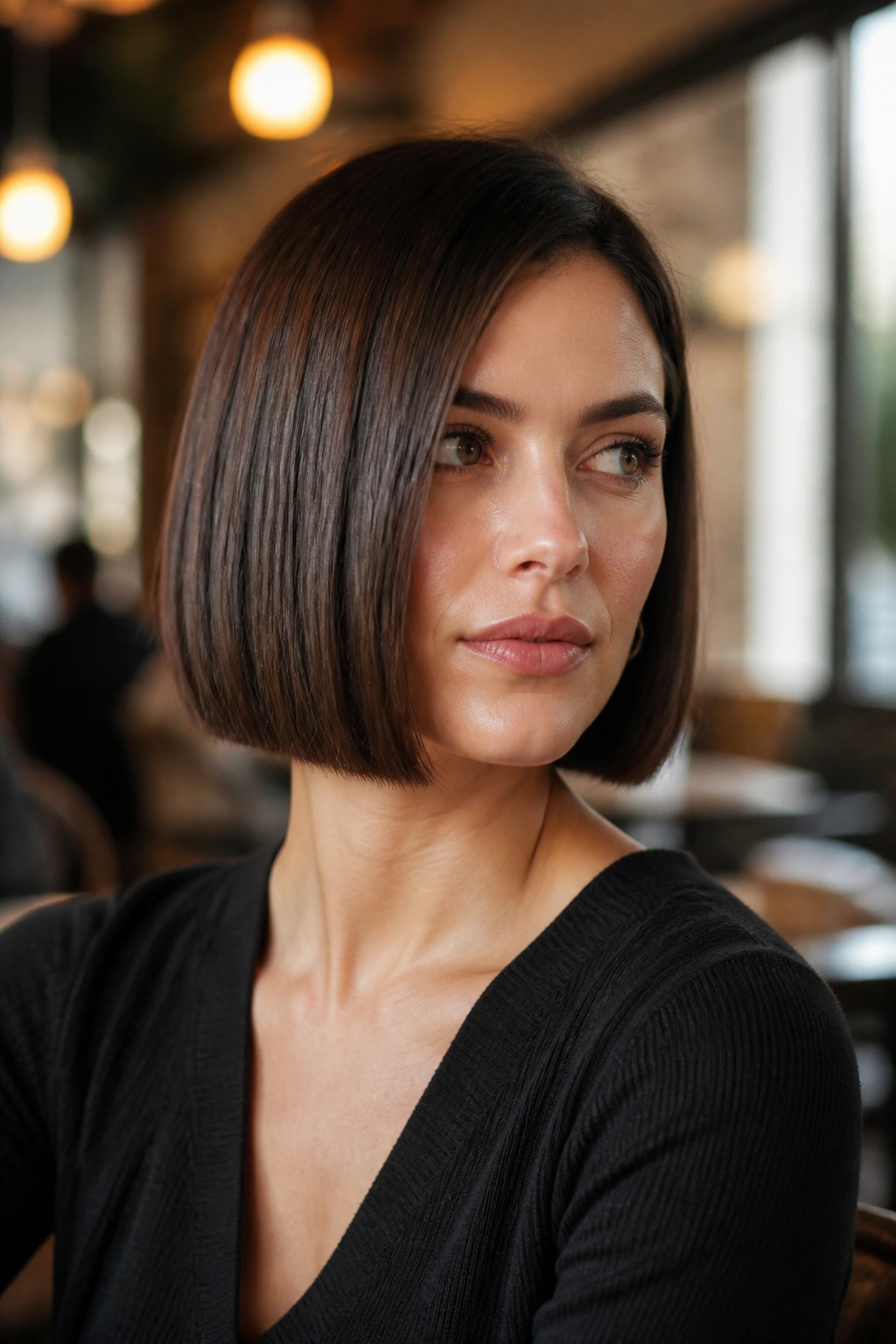
When people say they want a blunt bob, this is usually the version they mean.
No layers. No feathering. No sneaky texturizing at the bottom that makes the outline go soft two days later. A true one-length bob depends on weight, and weight is what gives the cut that clean, almost graphic finish. It can sit at the chin, jaw, or collarbone, but the real rule is the same: the perimeter stays even.
This is the safest choice if you want the haircut to look expensive without a lot of styling. It also gives you the most room to change your part, switch from sleek to slightly tousled, or tuck one side behind the ear and leave the other loose. The shape does not get in the way. That matters more than people admit.
A few honest notes help here. Bring photos that show the side view, not just the front. Ask your stylist to check the line when the hair is dry, because a bob can look straight while wet and drift once it settles. And if your hair has a stubborn cowlick, say so early. No need to pretend it will behave.
Sharp bob cuts age well because the shape is honest. Clean edges, solid weight, and a length that suits your face do most of the work. The rest is just maintenance, and frankly, that is the part that keeps a blunt bob looking like a decision instead of a compromise.
