



A French bob has a nasty little trick: it makes hair look edited, not overworked. The cut sits somewhere between a chin-length crop and a neat jaw-skimmer, and that small difference changes everything. It can look crisp, airy, sharp, soft, or a little undone — which is exactly why people keep coming back to it.
The shape matters more than most people think. A French bob is not just “short hair with a fringe.” The best versions have weight in the right place, a clean line around the mouth or jaw, and enough movement to keep the cut from feeling stiff. If the ends flip out too much, it can look fussy. If the line is too blunt and too heavy, it can start to feel boxy. The sweet spot is in that in-between space.
That’s also why the cut works across so many hair types. Fine hair can look fuller. Thick hair can look lighter without turning poofy. Straight hair gets a better shape. Waves get a little attitude. And if you’ve ever wanted a haircut that looks like you made an effort without looking like you tried too hard, this one earns its keep fast.
1. The Classic Jaw-Length French Bob
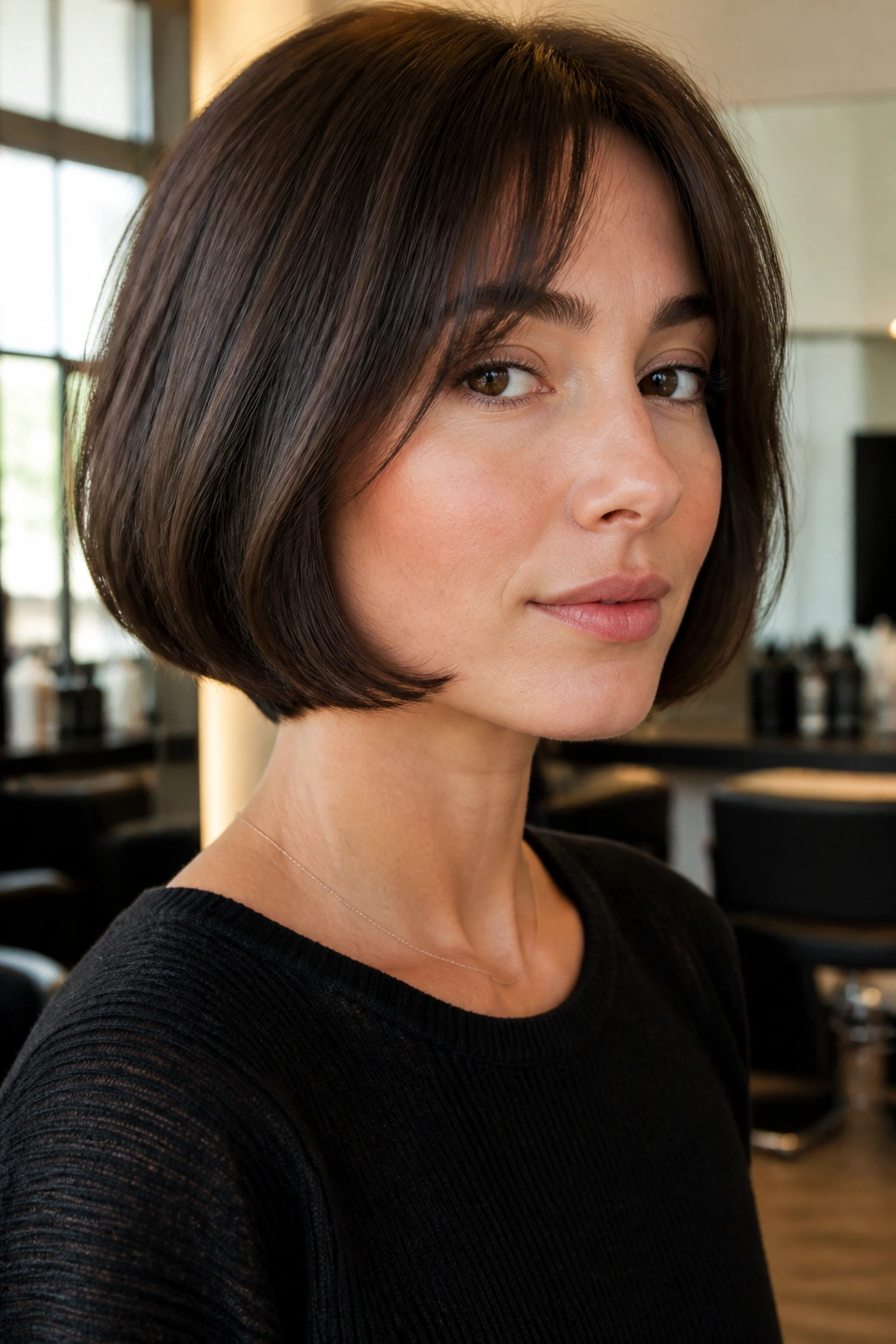
The classic jaw-length French bob is the version people picture first, and for good reason. It sits right at the jaw or a touch below it, with ends that are soft enough to move but clean enough to hold a line. There’s a little old-world confidence in it. Not stiff. Not precious.
Why It Works
This cut frames the face instead of hiding it. The jawline gets a cleaner outline, the neck looks longer, and the whole shape feels tidy without turning severe.
- Ask for the length to hit just at or slightly below the jawbone.
- Keep the perimeter soft, not razor-sharp.
- Style with a light bend at the ends, not full curls.
- Best on hair that can hold a shape for 2 to 6 weeks between trims.
Best tip: tuck one side behind the ear and leave the other loose. It breaks up the line in the nicest way.
2. The French Bob With Blunt Micro Bangs
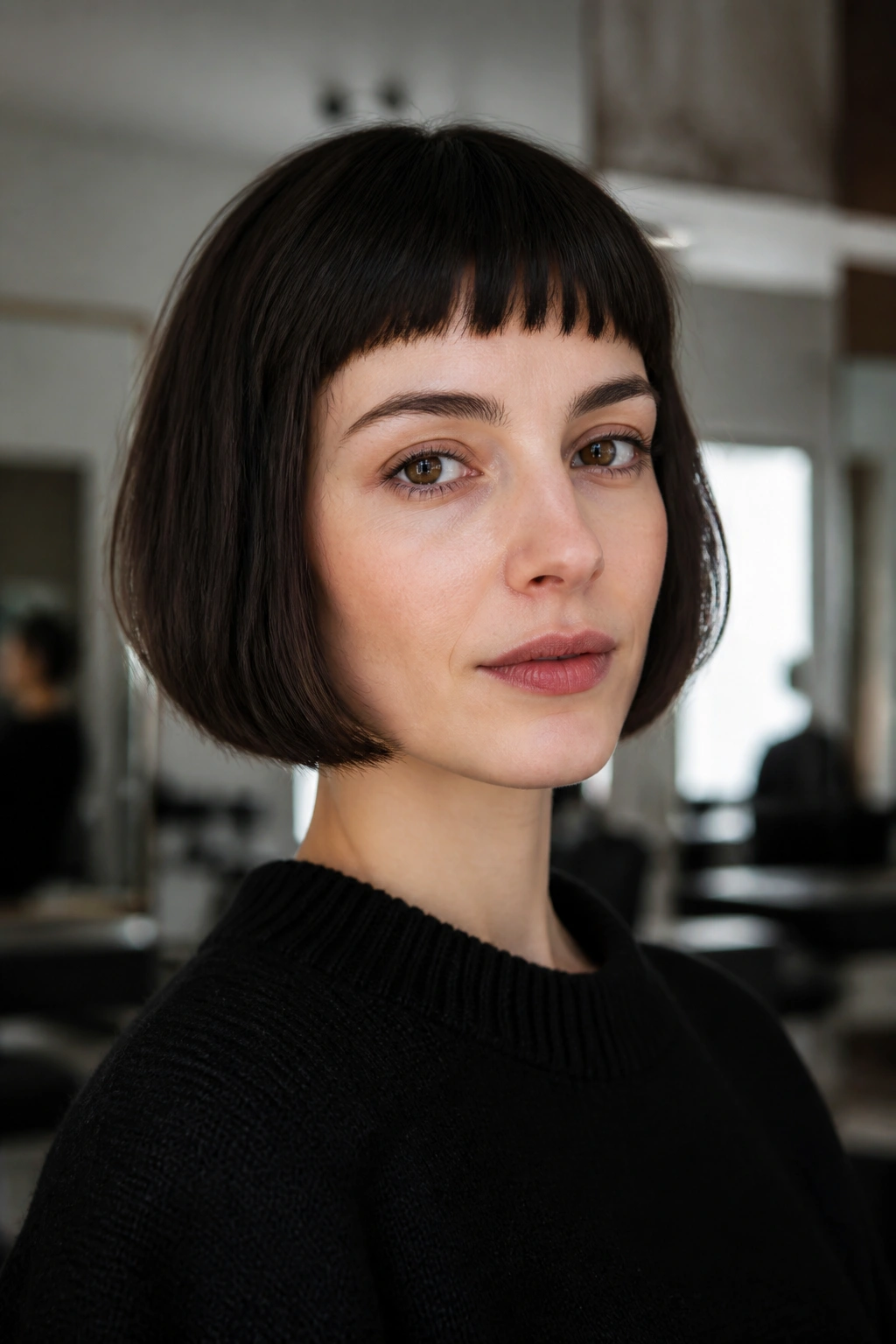
Micro bangs change the mood fast. Pair them with a French bob and the whole cut feels bolder, cleaner, and a little more fashion-forward without losing that Parisian edge. The trick is keeping the bob itself simple so the bangs can do the talking.
Short fringe works best when the bob underneath stays controlled. If both parts fight for attention, the cut can feel busy. If the fringe is the sharp note and the bob is the calm one, the whole thing makes sense.
This version suits people who like strong lines and don’t mind a bit of upkeep. Micro bangs need trims more often than the bob does, and that’s the tradeoff. Worth it, if you like a haircut that reads instantly.
3. The French Bob With Curtain Bangs
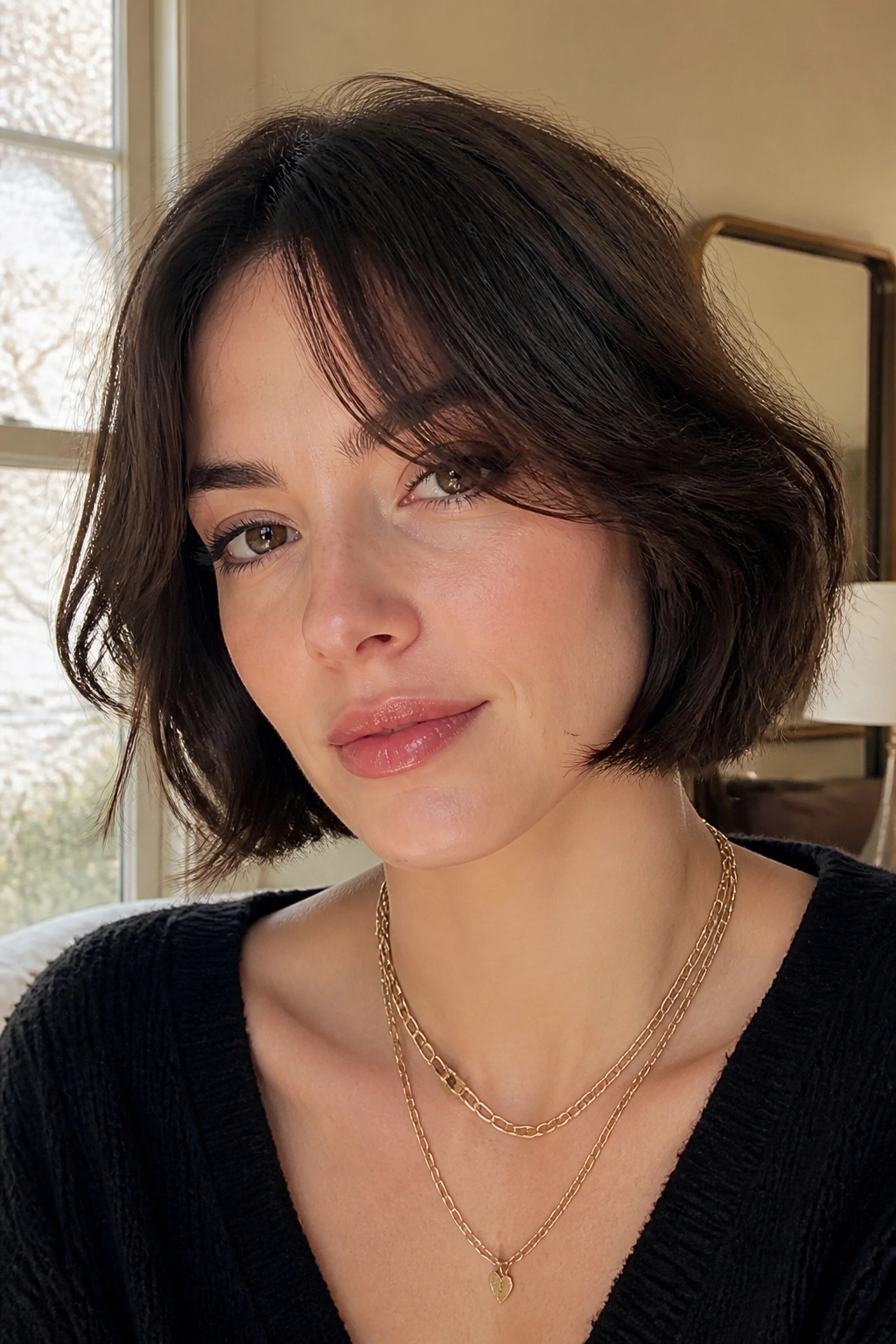
Want softness without losing shape? Curtain bangs are the easy answer. They split the difference between a fringe and no fringe at all, and they let the French bob breathe around the face instead of boxing it in.
How to Wear It
Curtain bangs work especially well when they graze the cheekbones and taper into the sides. That keeps the bob from looking chopped off in one block.
A few things make this version sing:
- Ask for the bangs to start slightly shorter in the center and lengthen toward the temples.
- Keep the bob at chin to jaw length so the fringe has room to fall.
- Blow-dry the bangs forward first, then sweep them apart with your fingers.
- Use a round brush only at the roots if you want a little lift.
This is the version I’d hand to anyone who wants movement but hates a heavy forehead fringe.
4. The Wavy French Bob With Air-Dried Texture

If your hair already bends a little when it dries, this one is a gift. The wavy French bob doesn’t fight your texture; it works with it, and that’s why it looks so easy in real life.
A slight bend through the mids keeps the cut from sitting flat against the head. The ends should still look deliberate, though. You want loose, not messy. That difference matters more than people admit.
A salt spray or lightweight cream is usually enough. Scrunch, let it dry, then twist a few front pieces around your fingers while they’re still damp. No need to overthink it. The charm is in the unevenness.
5. The Sleek French Bob With a Clean Center Part
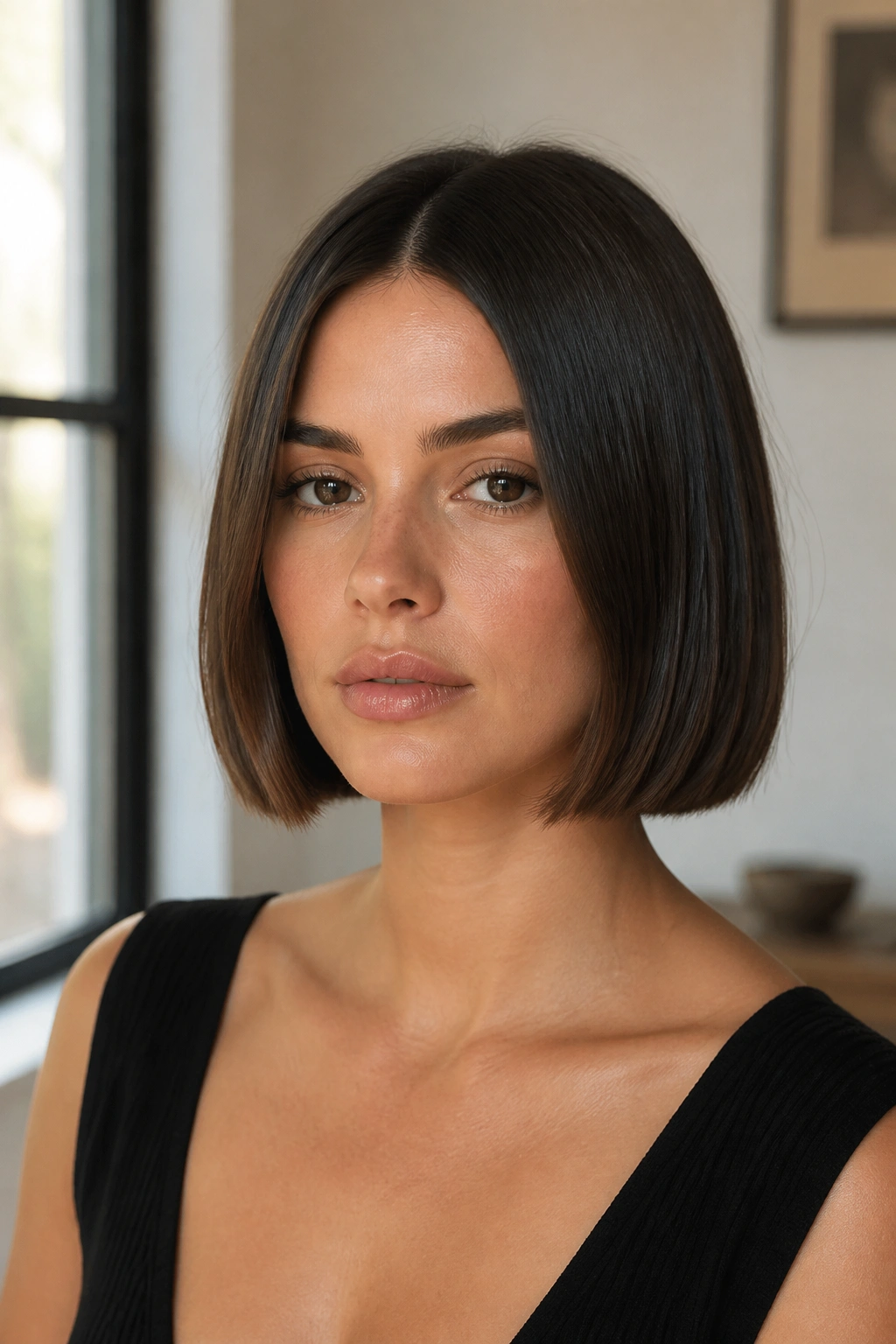
A sleek French bob looks expensive before you even add product. That’s the appeal. The center part makes the shape feel modern, and the polished finish gives the cut a sharper outline than the softer, air-dried versions.
The key is keeping the ends blunt enough to read as intentional, but not so blunt that the bob feels helmet-like. A little bevel under the jaw makes all the difference. Flat iron only the outer layer if you want a smoother surface without losing all movement.
This cut is especially good if your hair naturally falls straight or only has a small wave. It can also make thin hair look denser because the clean line gives the illusion of more body.
6. The Chin-Length French Bob for Fine Hair
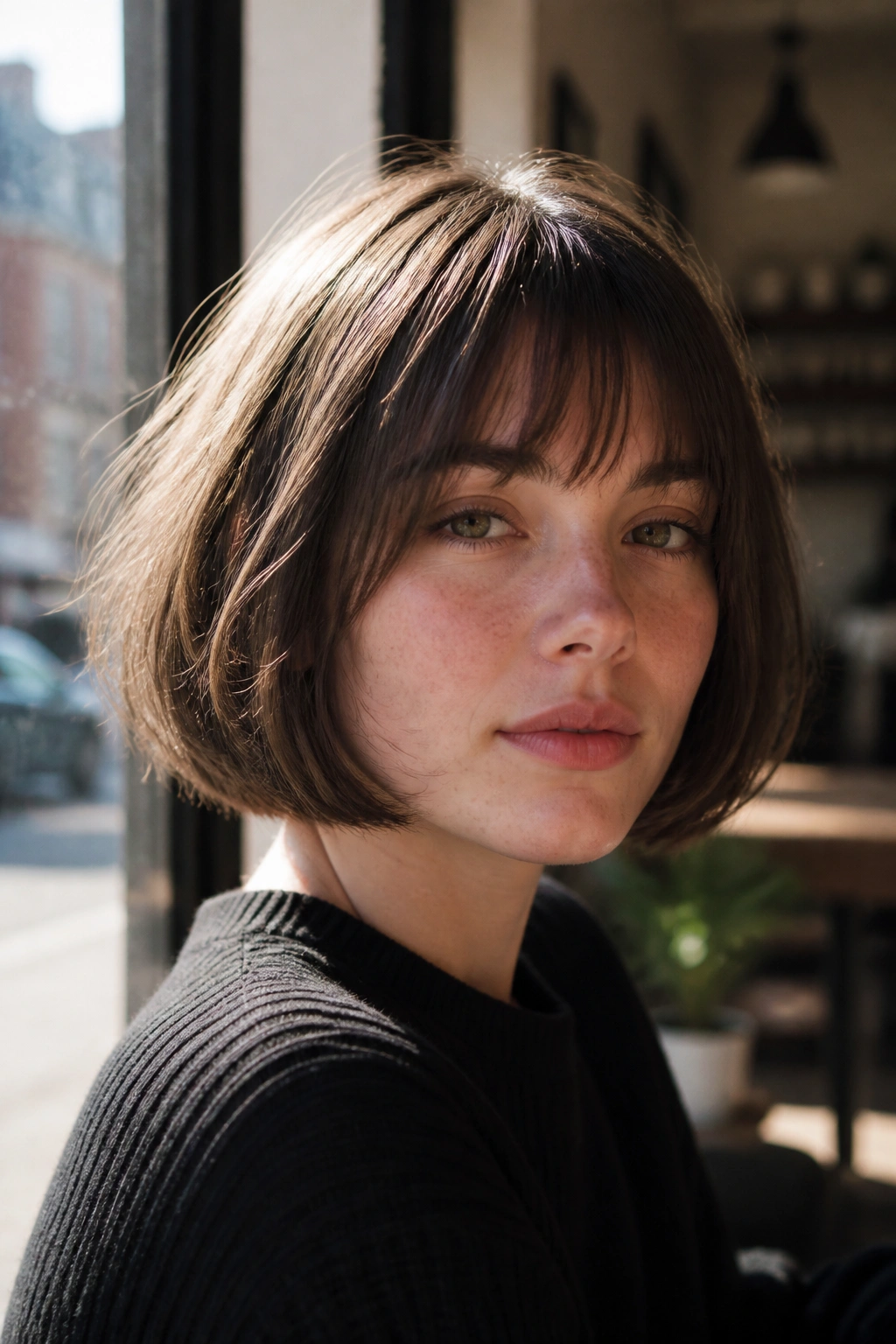
Fine hair can collapse fast in a longer bob. A chin-length French bob keeps the ends from looking wispy and gives the cut a firmer outline. It’s one of those deceptively simple choices that solves a practical problem.
Unlike a layered lob, this version leans on one strong perimeter. That means less frizz at the bottom and more visible shape around the face. The hair looks fuller because the eye reads the line first.
Ask your stylist to avoid too much thinning at the ends. That’s the mistake. Fine hair usually needs a little weight left in place, not stripped away. A tiny bit of root lift from a blow-dry spray can help, but the shape itself does most of the work.
7. The French Bob With Soft Internal Layers
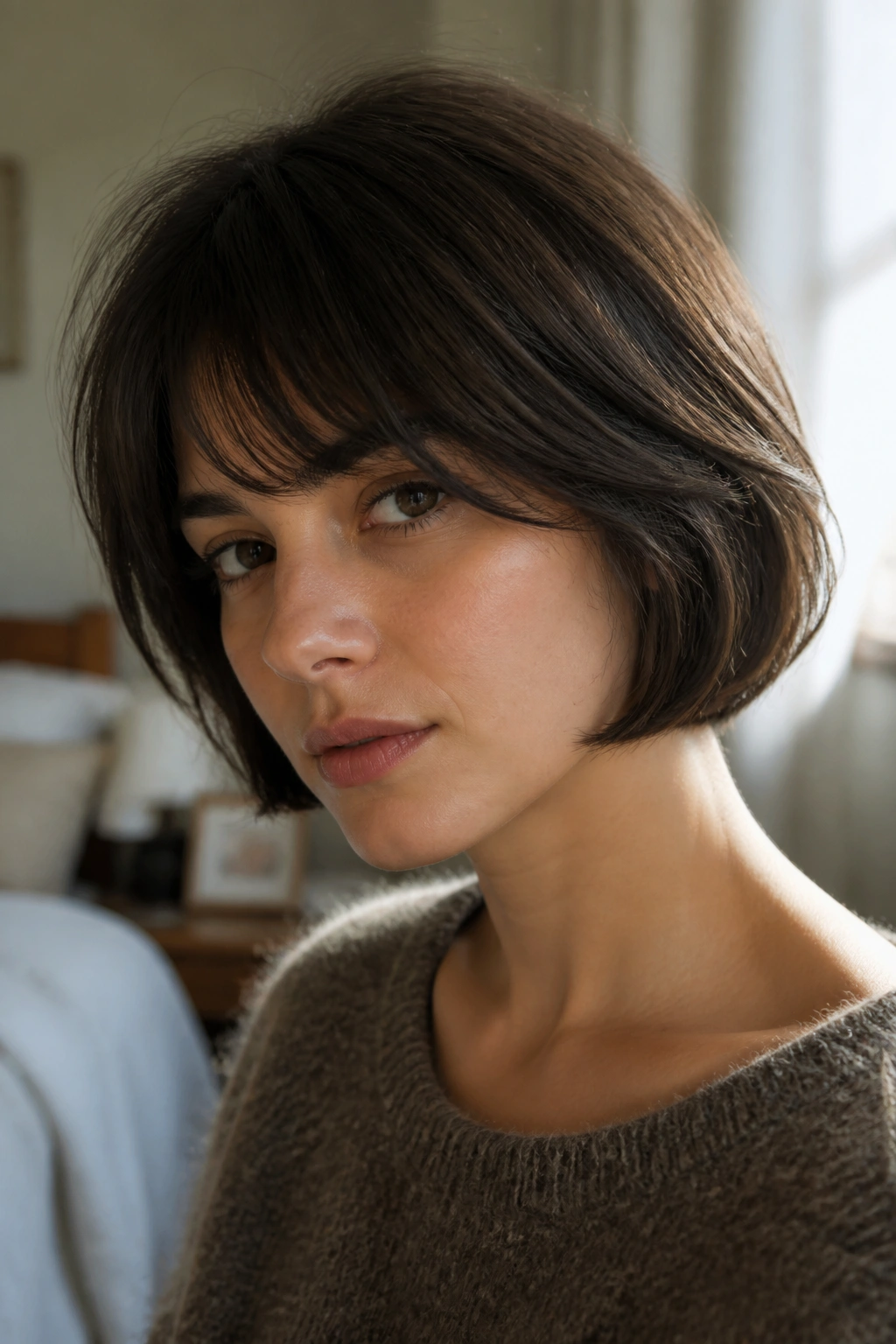
Internal layers are the secret weapon when you want movement without obvious choppiness. The outside still looks like a neat French bob, but the inside has a little give, so the hair sways instead of sitting like a block.
What Makes It Different
The layers are hidden inside the haircut, which keeps the perimeter clean. That means you get body without losing the polished outline that makes a French bob look so good.
This version helps if your hair feels heavy around the cheeks or if it flips out at the ends in a way you do not like. Hidden layers can calm that down while still keeping the cut light enough to move.
- Ask for internal weight removal only, not short surface layers.
- Keep the front pieces slightly longer if your face is round.
- Blow-dry with a medium round brush for a soft curve.
- Works well on hair that sits between fine and medium density.
8. The Rounded French Bob That Curves In
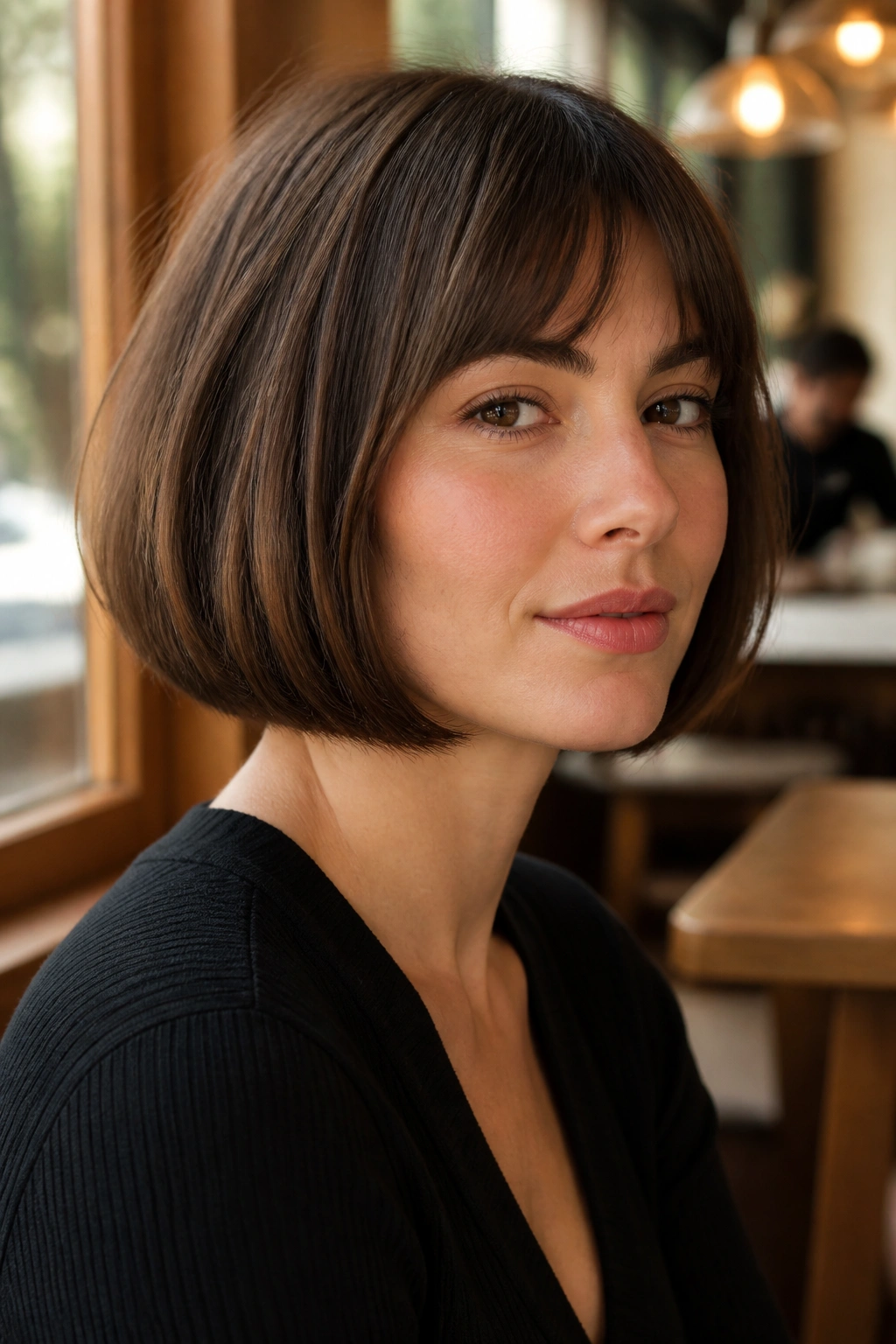
A rounded French bob has a very specific charm. The ends curve inward gently, almost hugging the jaw, which creates a neat little frame around the face. It feels more classic than severe, and a little sweeter than the razor-edged versions.
That inward curve usually comes from cutting the perimeter with a slight bevel and then drying the hair with tension. The result is not a curl. It’s a bend. And that bend gives the style its polished look.
This is a smart pick if your hair tends to kick out at the ends. Instead of fighting the natural swing, this shape controls it. A smoothing cream and a 1.5-inch round brush are usually enough to get the effect without making it too perfect.
9. The A-Line French Bob With a Slight Forward Angle
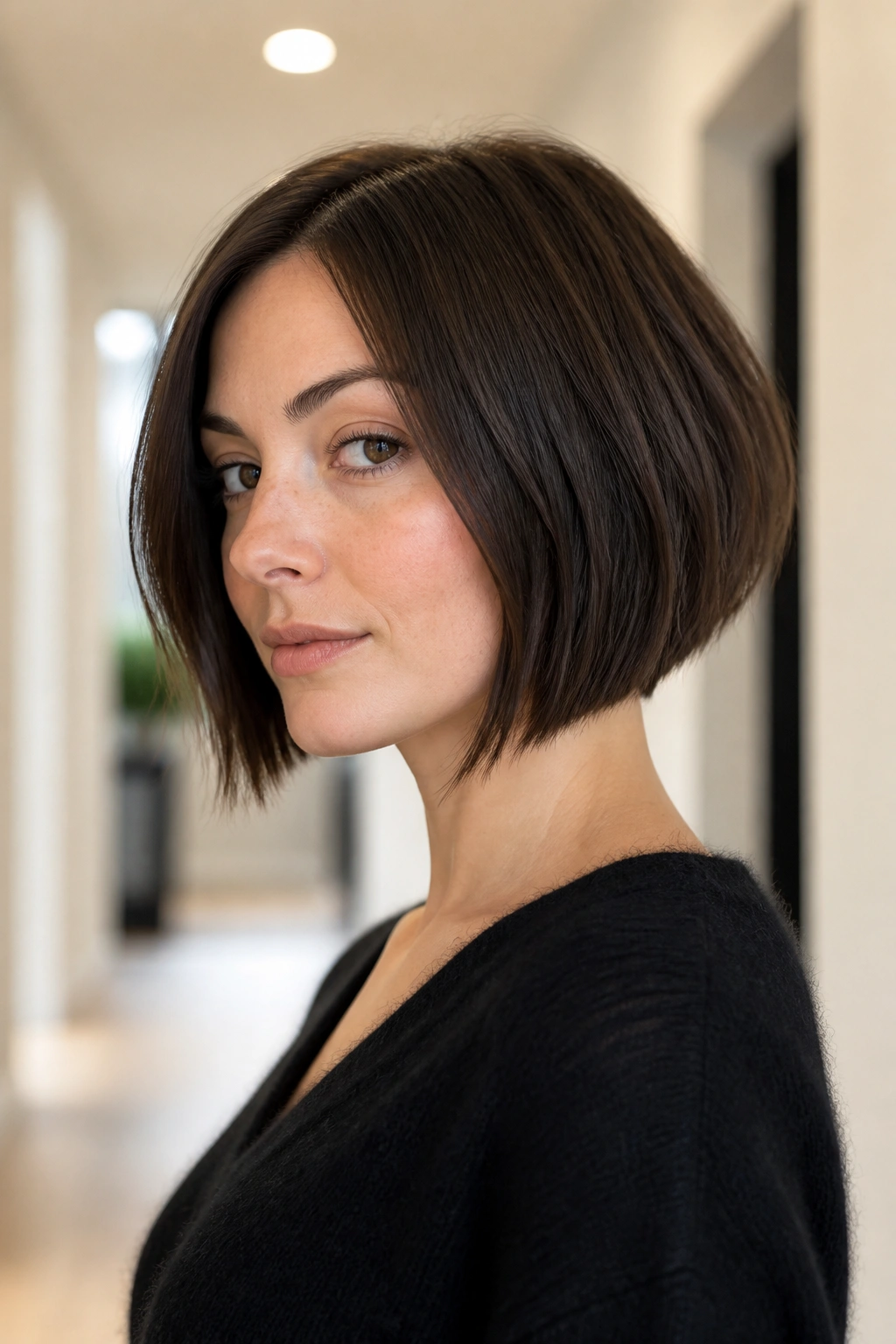
An A-line French bob is for anyone who wants a little edge. The back sits a touch shorter, and the front drops forward just enough to make the jawline look longer and sharper. It is subtle. That’s the point.
The angle should not be dramatic. If the front hangs far lower than the back, you lose the easy French-bob feel and drift into a different haircut entirely. Keep the line slight, and the shape stays wearable.
This cut works especially well on straight or lightly wavy hair. The angle shows up clearly, and the bob gets that tucked-in, tailored look that feels clean from every side.
10. The Tousled French Bob With Piecey Ends
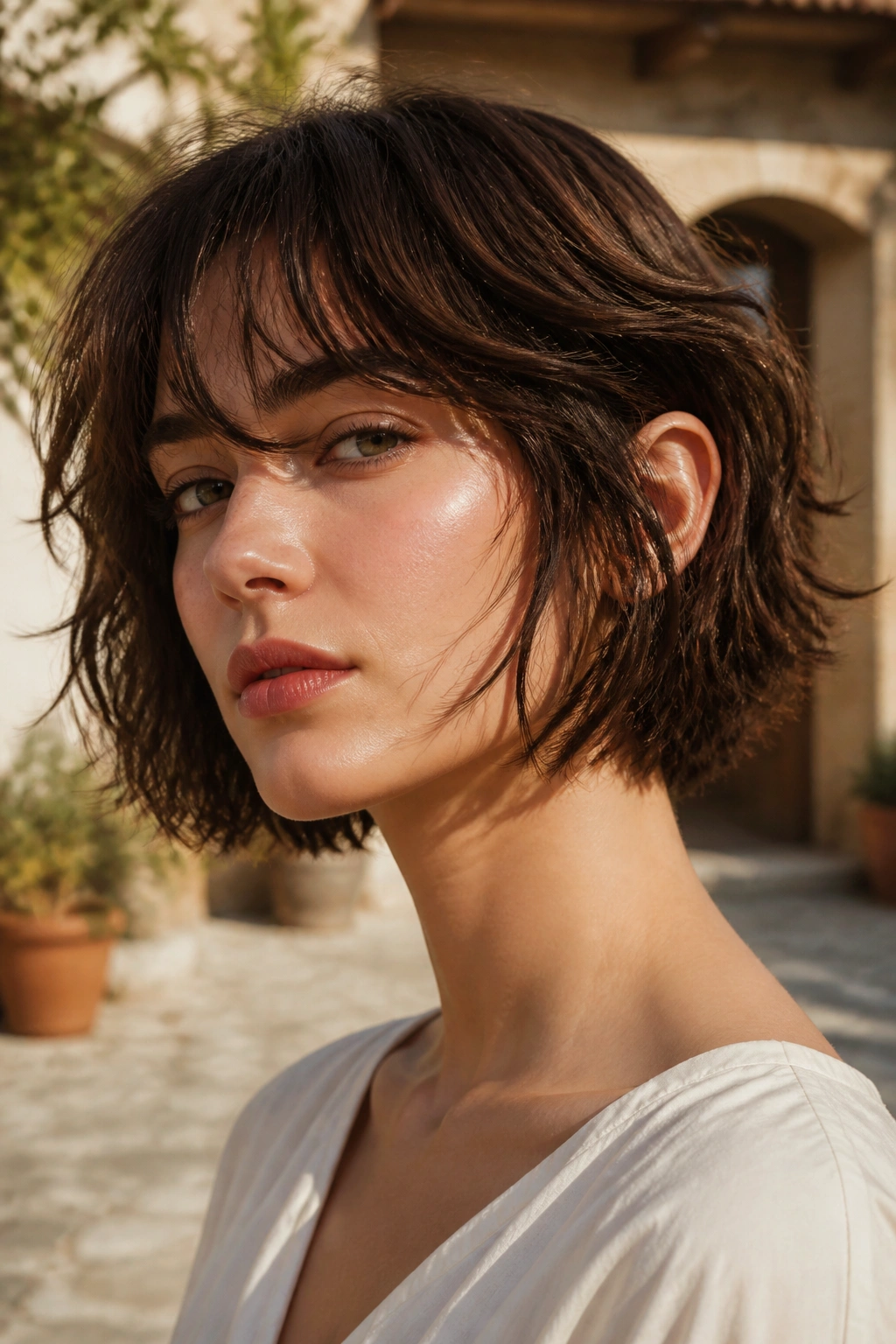
A tousled French bob has a little grit in it, and I mean that in the best way. The ends separate into soft pieces instead of lying in one smooth sheet, which gives the haircut more life.
This is the one to choose if you hate anything too neat. It still needs shape — a bob with no line is just grown-out hair — but the finish can be looser. A matte styling cream, a tiny bit of wax on the ends, and finger-drying are usually enough.
The danger here is going too messy. Keep the crown controlled, keep the silhouette visible, and let the texture live mostly from the mid-lengths down. That balance is what keeps it chic.
11. The French Bob for Naturally Curly Hair
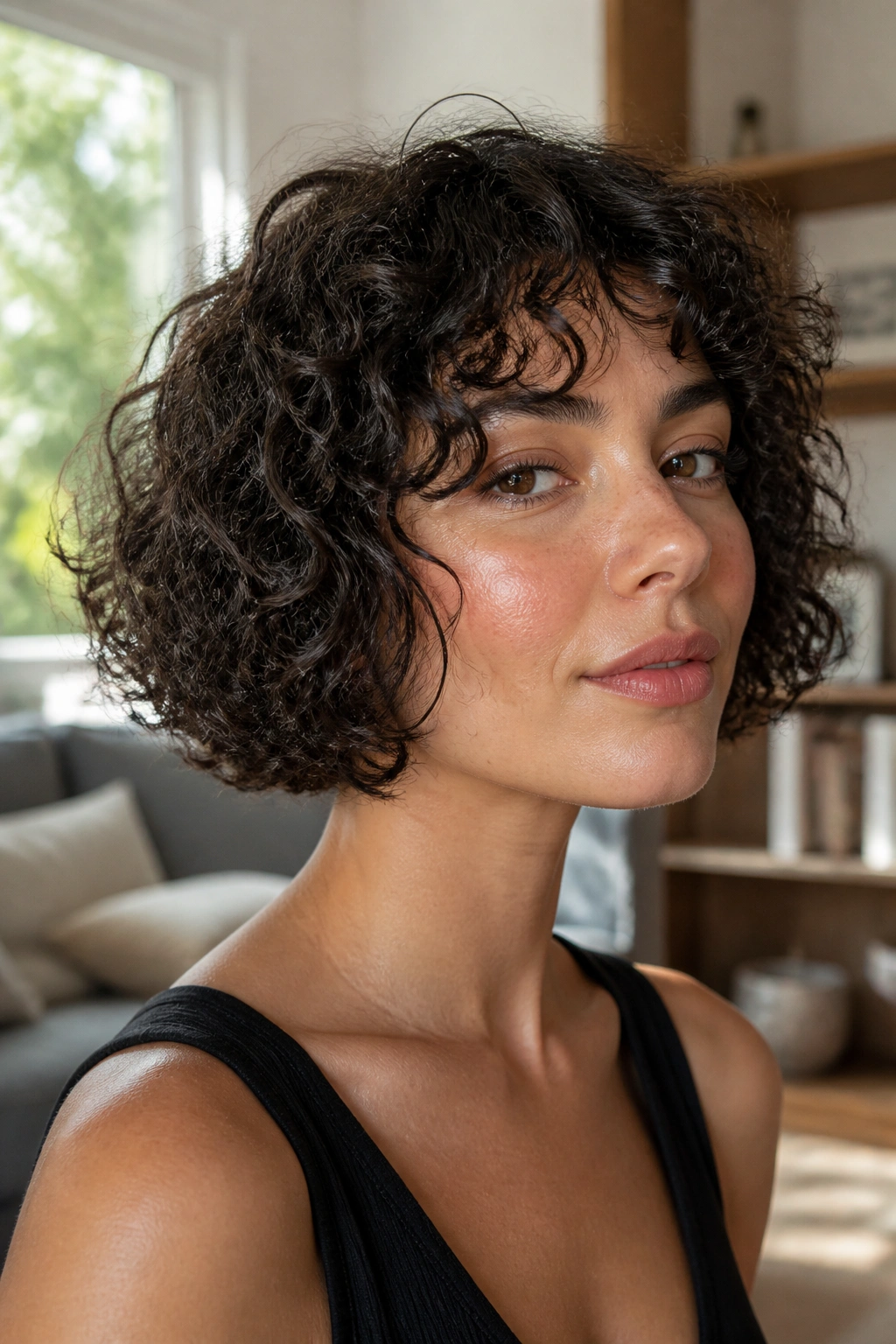
Curly hair can make a French bob look rich and full, but the cut has to respect shrinkage. If the length is too short, it can bounce up higher than expected and lose the jaw-skimming shape that makes the style work.
The best curly version usually lands a little longer than you think. That gives the curls room to spring up without turning the cut into a halo of ends. A stylist who cuts curly hair dry, or at least checks the shape dry, is worth seeking out.
This bob looks especially good when the curls are defined but not crunchy. Leave-in conditioner, a light gel, and a soft scrunch are enough. The goal is shape first, bounce second.
12. The French Bob for Coily Hair
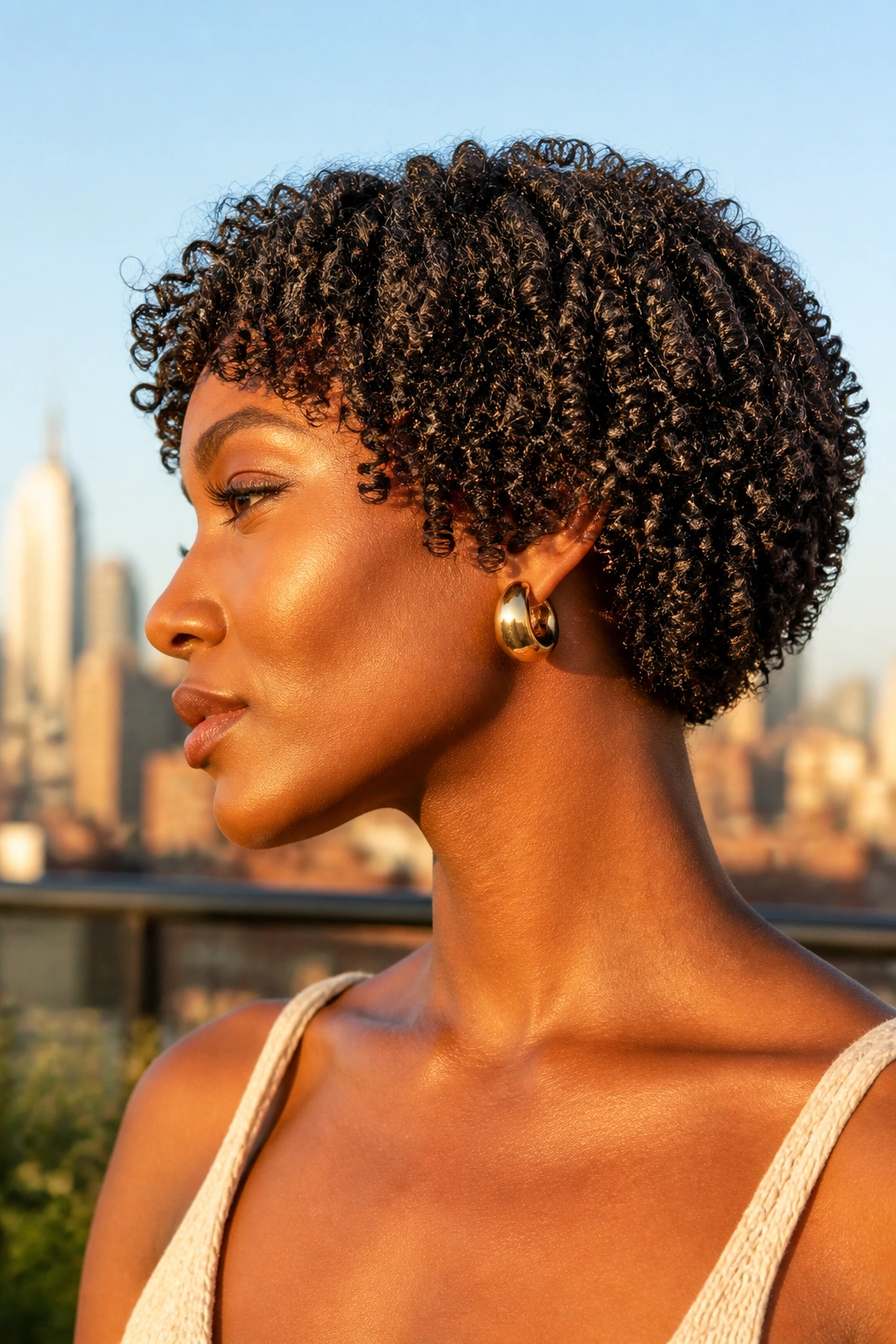
Coily hair brings a different kind of polish to the French bob. The outline can be round, crisp, or softly tapered, but the best versions leave room for the natural spring in the hair instead of fighting it.
A lot of people worry that a short bob on coily hair will puff out too much. It will, if the shape is not controlled. The fix is in the cut: a clean perimeter, careful shaping around the nape, and enough length to keep the silhouette intentional.
This version also looks sharp with a side part or a small fringe. The face-framing shape matters here, because it keeps the cut from feeling all one length. Moisture matters too. Dry coils can lose the shape fast.
13. The Side-Part French Bob
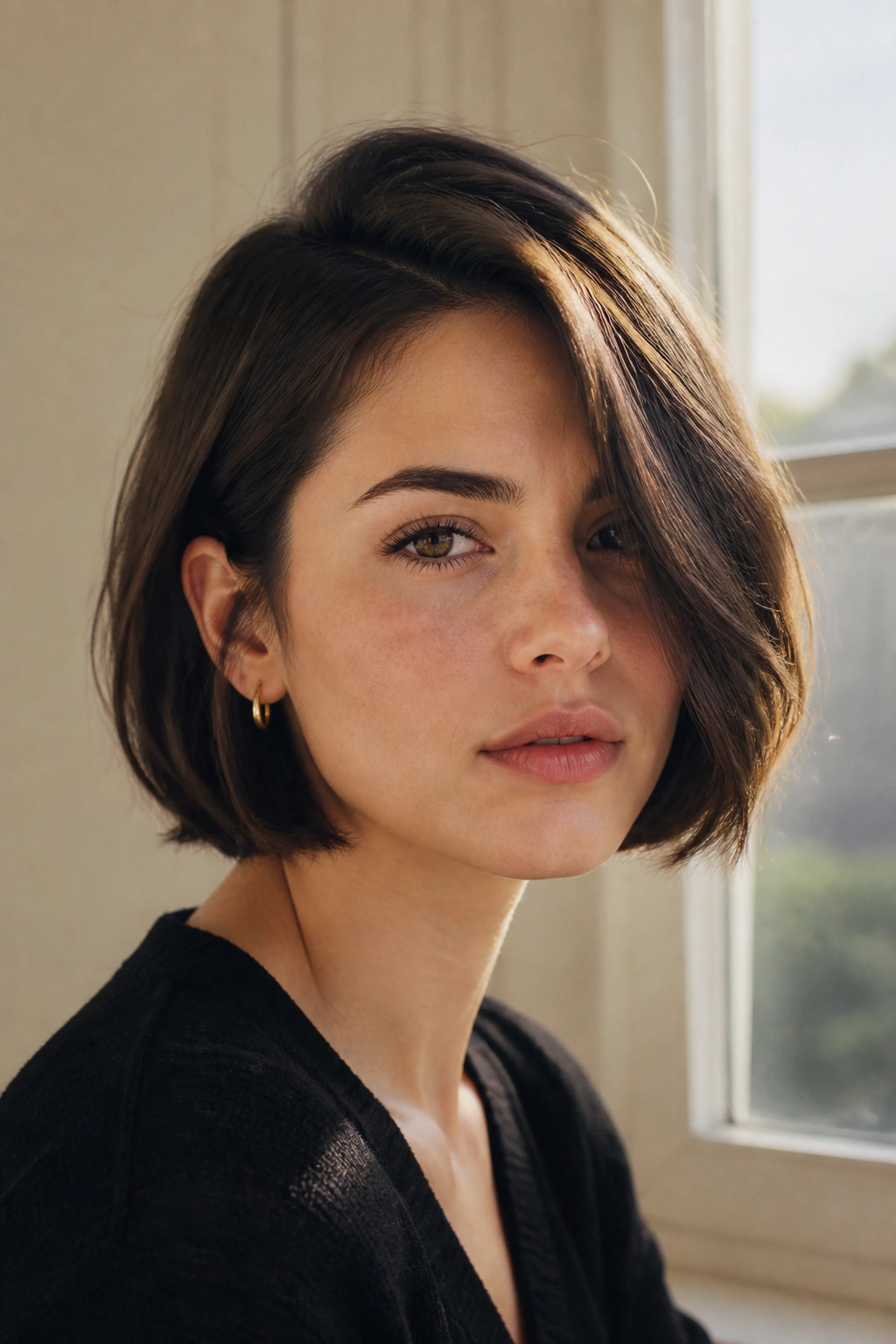
A side part changes the whole read of a French bob. It shifts the weight, brings a little drama to the front, and softens the symmetry that a middle part can create. One small move. Big payoff.
The side-part version works well if one side of your hair naturally falls flatter than the other. Instead of fighting that, the cut uses it. The heavier side can sweep over the cheekbone while the other side stays tucked or shorter.
I like this one on people who want the bob to feel less strict. It can also help fine hair lift a bit at the roots, especially if you blow-dry against the part before setting it back into place.
14. The Middle-Part French Bob
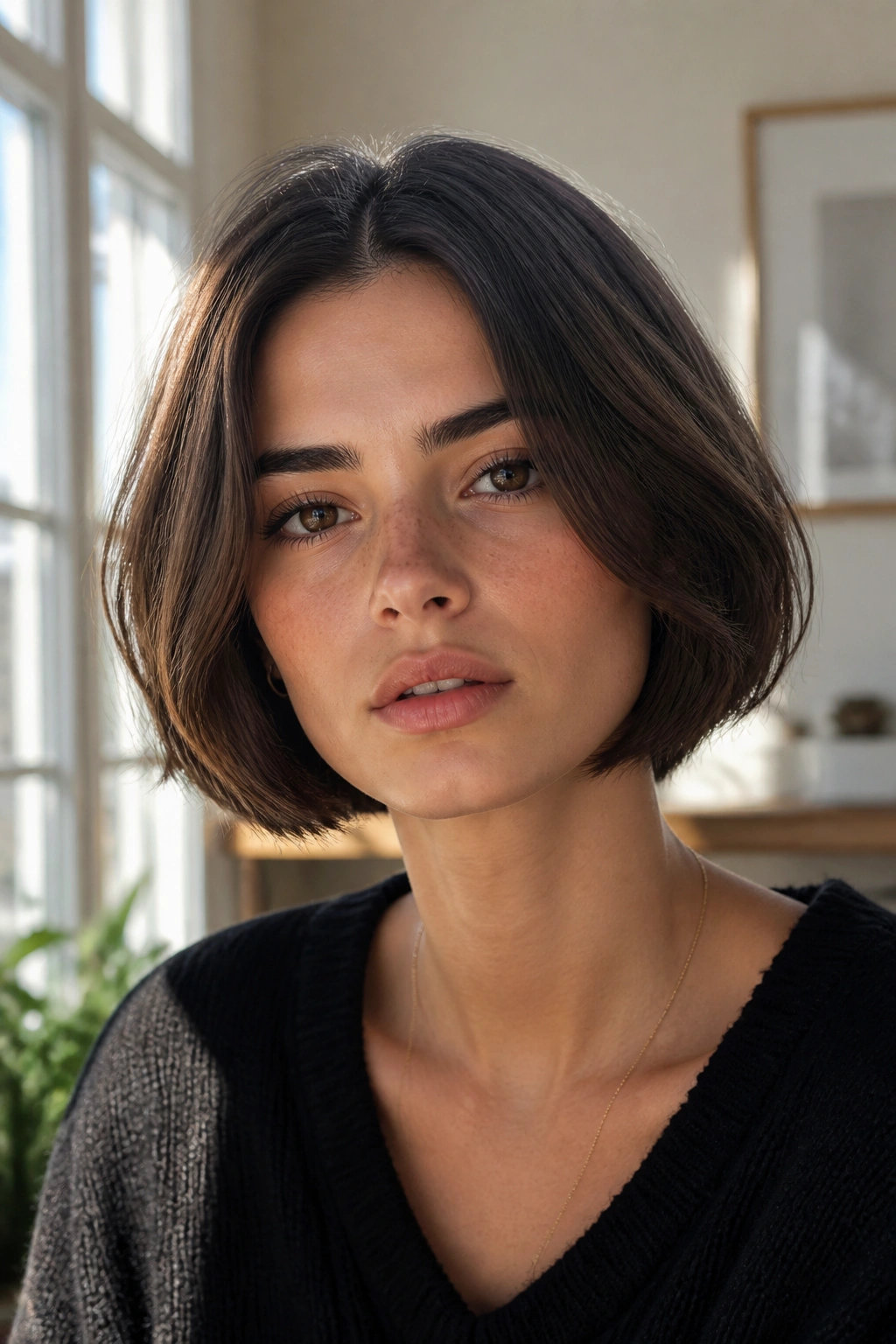
A center part makes a French bob look cleaner and a little more deliberate. It draws the eye straight down the face, which can be useful if you want the haircut to frame your features without leaning on bangs.
This version is especially nice when the bob is cut with a slight bevel and the ends sit right at the jaw. The center part balances the shape, so the line doesn’t drift too far to one side. It can feel very quiet in the best way.
If your face is longer, keep some softness around the front. If your face is rounder, leave the front just a bit longer than the back. Tiny shifts like that matter more than people think.
15. The French Bob With a Tucked Nape
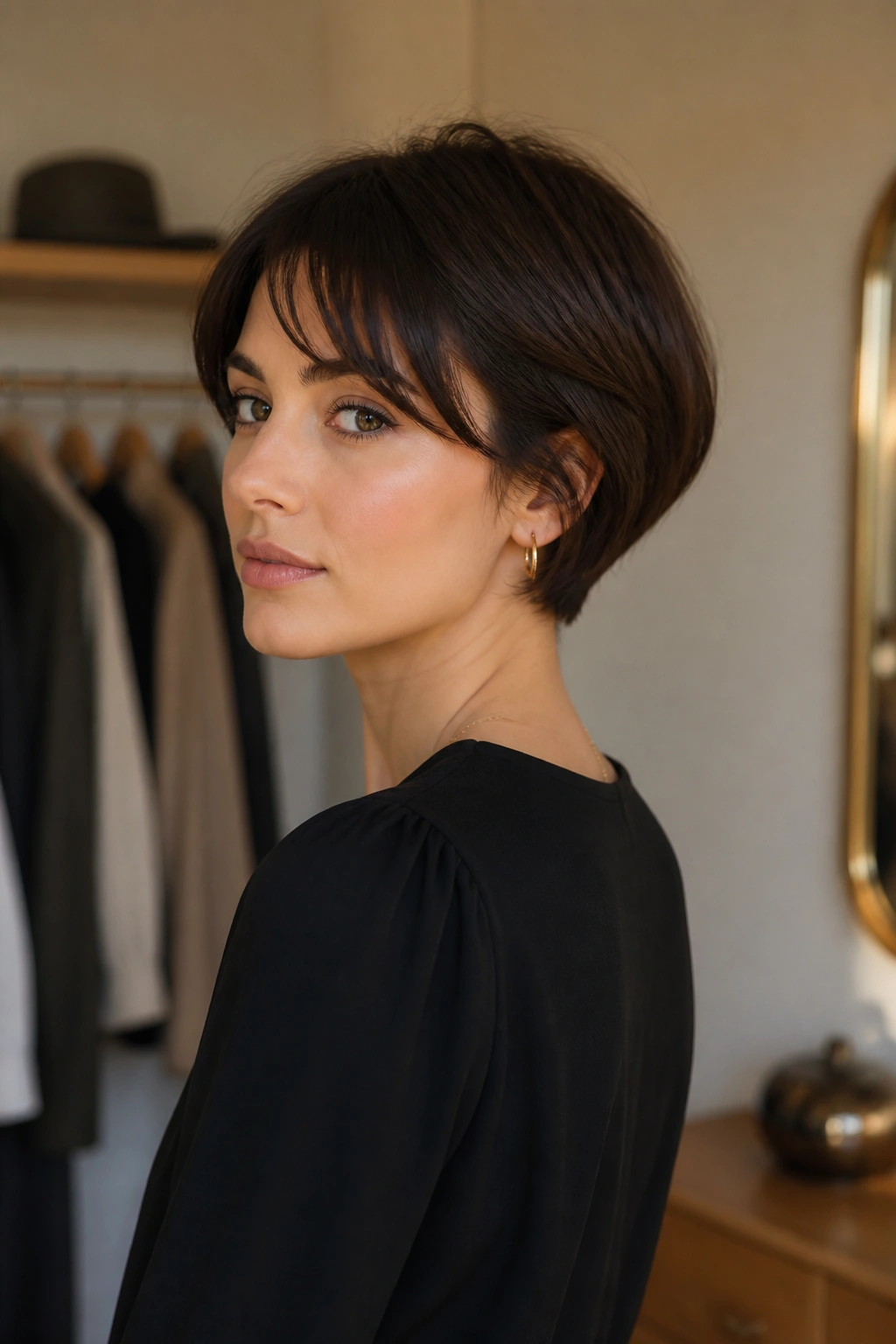
A tucked nape gives the French bob a neat little finish at the back. The neckline is cleaned up, the hair hugs the head a bit more closely, and the whole style looks sharper from behind.
This cut is a quiet fix for bulky hair. If the nape tends to stick out or fluff out, a careful underlayer can keep the shape under control. The result is polished without looking overworked.
It also plays well with earrings and collars. That sounds small, but it matters. A bob that sits neatly at the neck changes how the whole outfit reads, especially with higher necklines or structured jackets.
16. The Cropped French Bob That Skims the Cheekbones
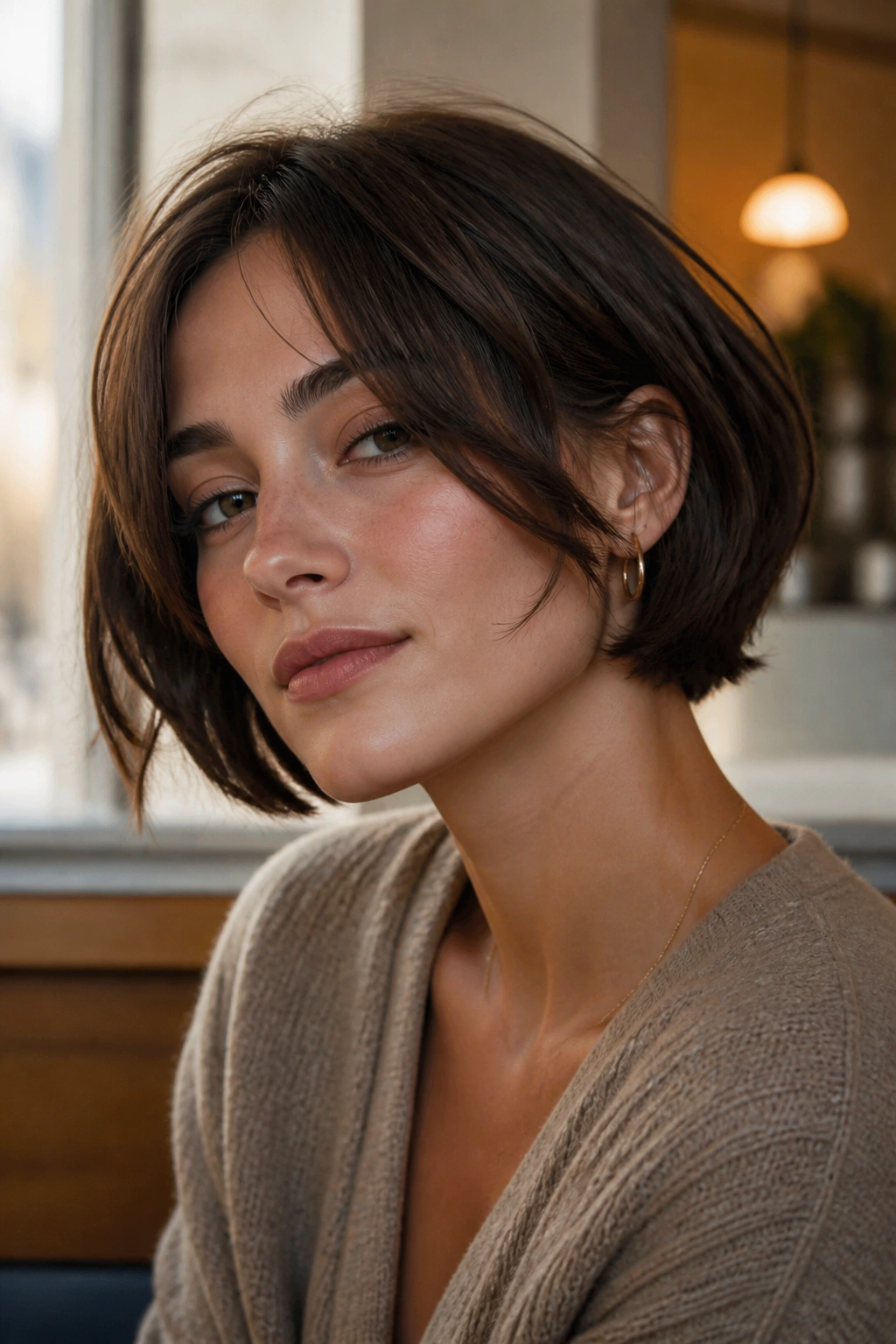
This is the shorter, cheekbone-grazing version that feels a little bolder than the classic jaw-length cut. It opens up the face and puts the attention right where the bone structure sits strongest.
Shorter bobs need cleaner cutting because there is less hair to hide behind. Every line shows. That is why this version looks best when the perimeter is crisp and the front pieces are left just long enough to sweep across the face.
A cropped French bob can be gorgeous on smaller features, but it also works on stronger ones if you want contrast. It’s neat, fast to style, and not as fussy as people assume. A little serum on the ends is usually enough.
17. The French Bob With a Sharp Blunt Edge
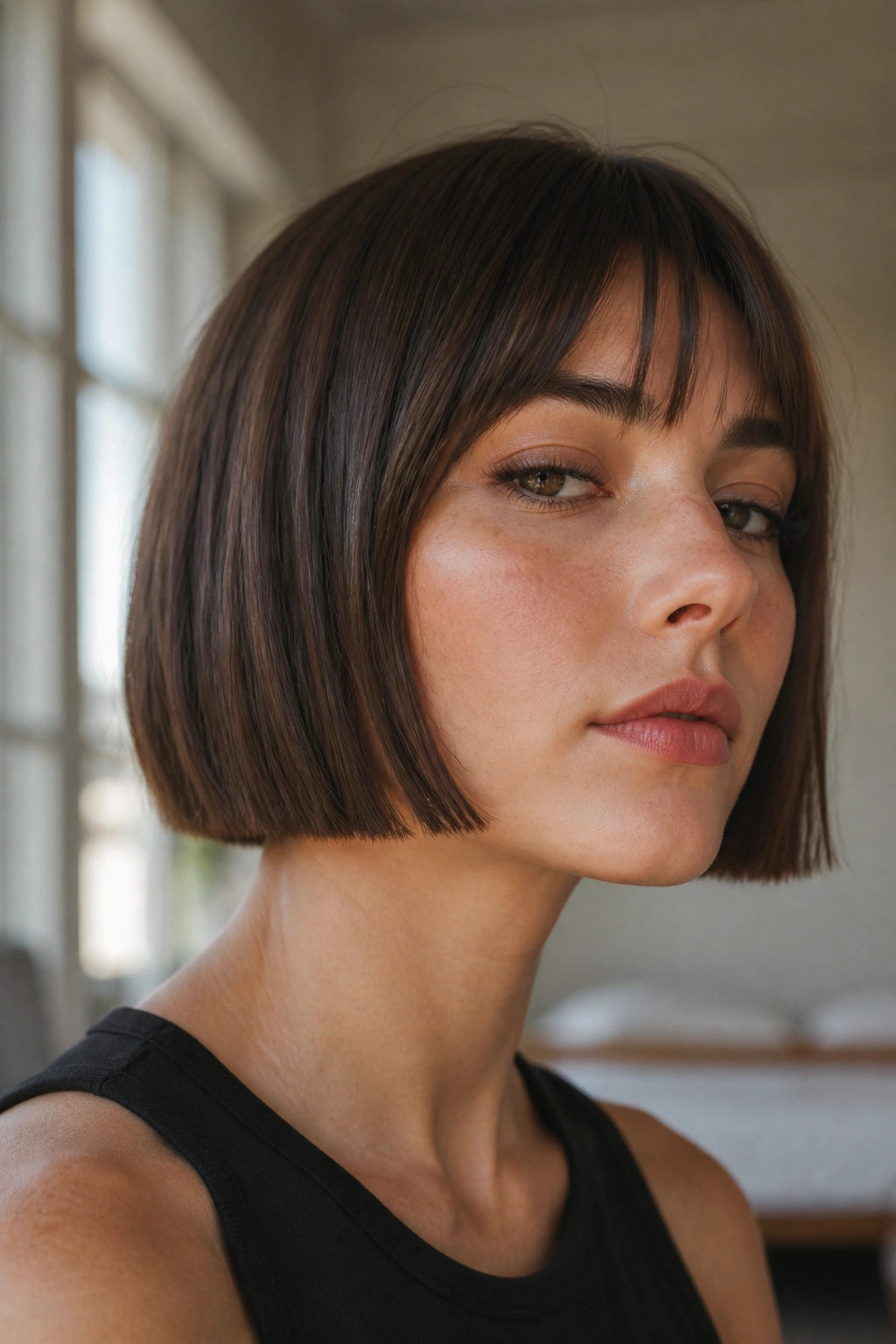
A sharp blunt edge brings a serious mood to the French bob. The line is cleaner, the outline is stronger, and the haircut looks like it has been cut with purpose. No fluff. No wandering ends.
This is the version for anyone who likes structure. It can make fine hair appear denser and give thick hair a more controlled finish. The tradeoff is that blunt edges show every uneven strand, so trims matter.
To style it well, keep the surface smooth and the part simple. A paddle brush blow-dry or a quick pass with a flat iron is enough. If you add too much texture, you soften away the thing that makes this cut strong.
18. The Grown-Out French Bob
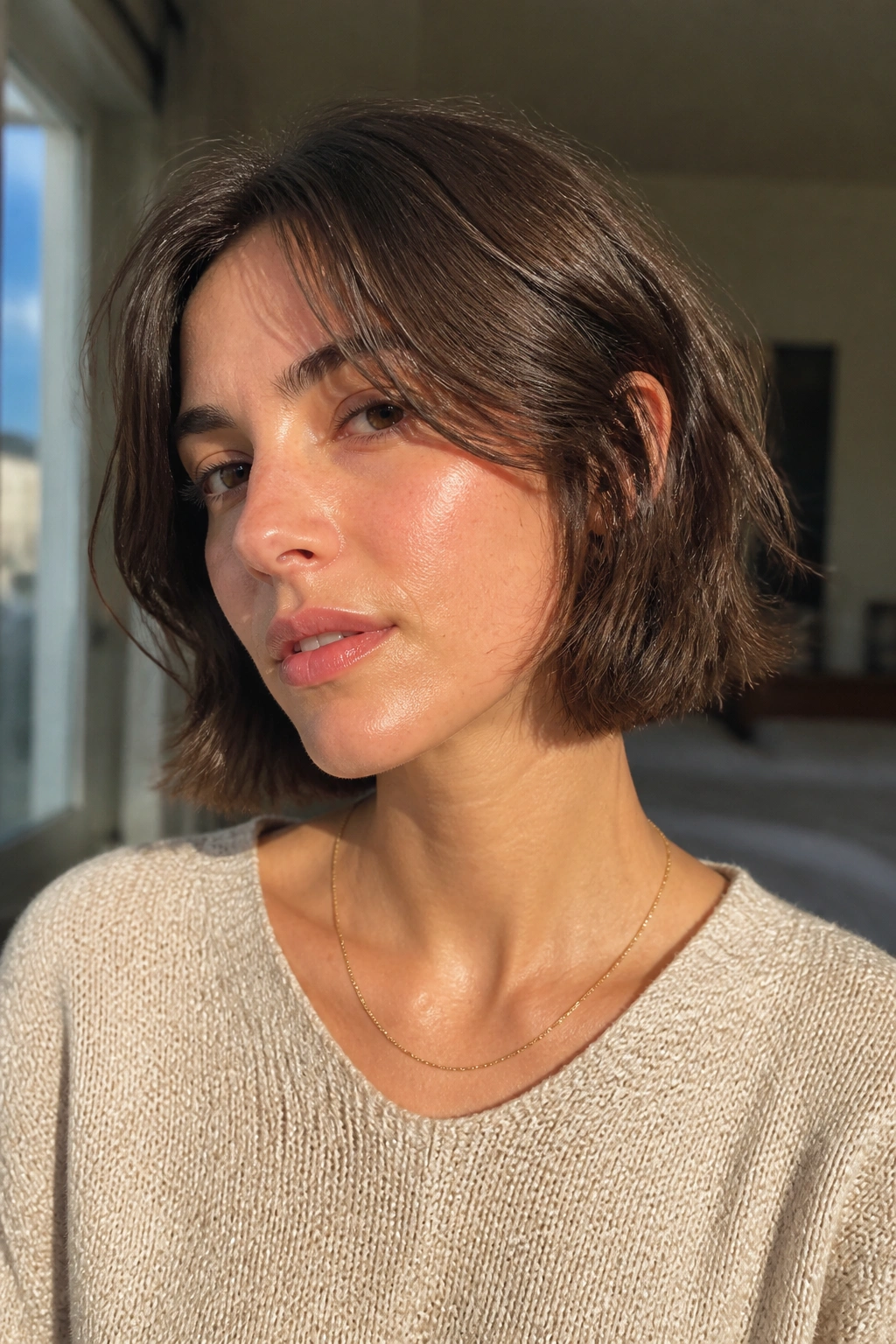
A grown-out French bob can look better than the freshly cut version if the shape is still there. A little extra length through the sides makes the style feel easier, almost like the haircut has relaxed into itself.
This is useful if you do not want a strict maintenance schedule. The trick is to let it grow without losing the jawline frame. If the front starts to hit the collarbone, the bob stops reading as a bob and starts reading as an in-between cut.
There’s a nice freedom in this version. You can tuck it, clip it, wave it, or smooth it back, and it still holds enough shape to look intentional. That flexibility is half the appeal.
19. The Salt-and-Pepper French Bob
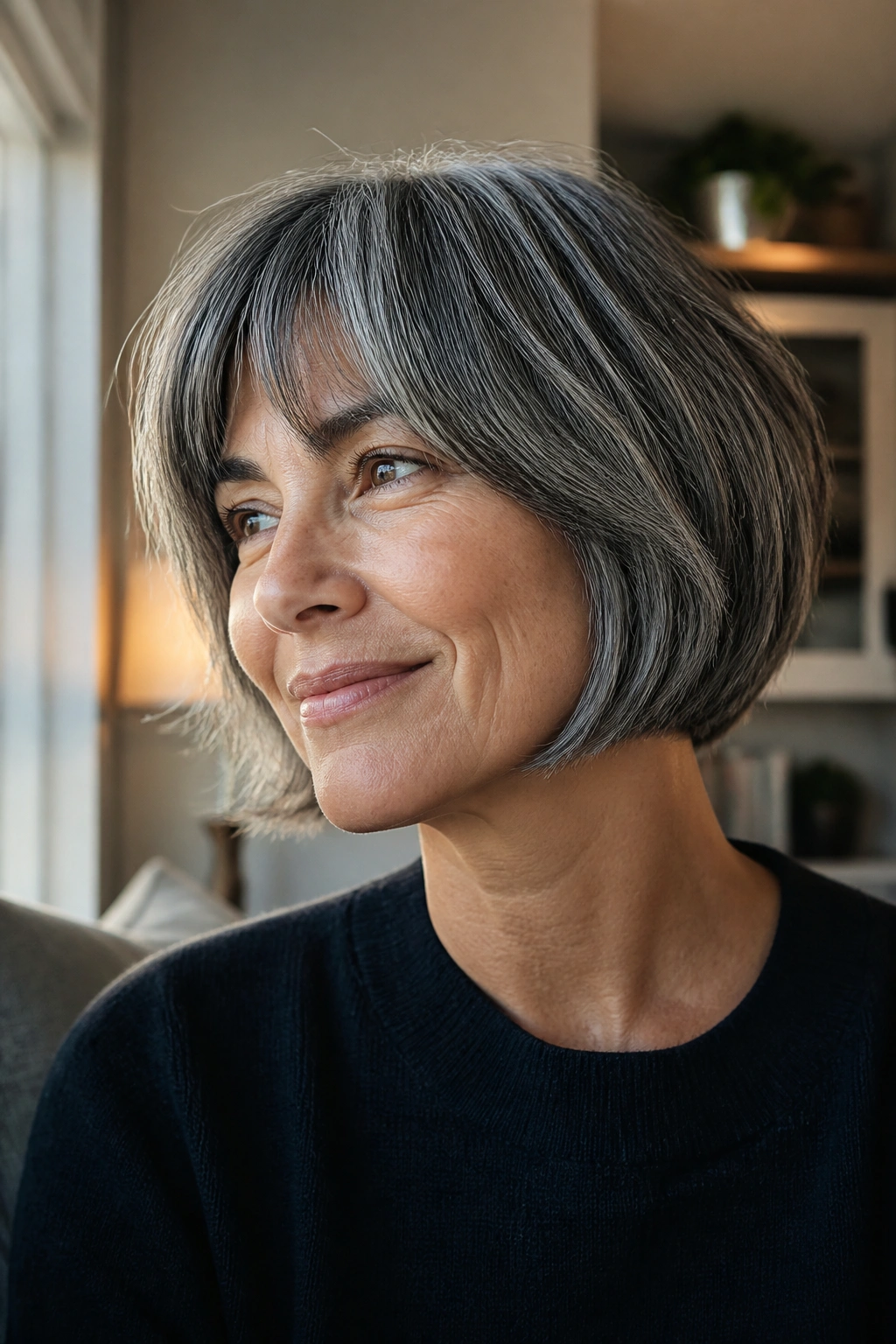
Salt-and-pepper hair gives a French bob real character. The lighter strands pick up the texture in the cut, and the darker strands keep the outline grounded. It looks lived-in in a very smart way.
This haircut works especially well with a crisp perimeter and a soft fringe. The mix of tones makes every bend visible, so even small movement reads clearly. That means you do not need a lot of styling to get a strong effect.
If your hair is starting to gray in patches or streaks, a French bob can make that transition look deliberate. The shape does some of the visual work, which is handy when you want the color pattern to feel part of the style instead of something to hide.
20. The Brunette French Bob With Depth at the Roots

Dark hair and a French bob have an easy relationship. The line looks stronger, the shape reads faster, and depth at the roots can make the cut seem richer without any extra styling.
This version benefits from a bit of gloss. Brunette hair can look flat if the surface is dry, so a light shine cream or serum helps bring out the cut line. You do not need much. A pea-sized amount through the ends is enough.
The best part is how forgiving this version can be. The haircut still looks neat even on a low-effort day, and that is not true of every short cut. A clean neckline and a slightly longer front usually keep it feeling polished.
21. The Blonde French Bob With Soft Dimension
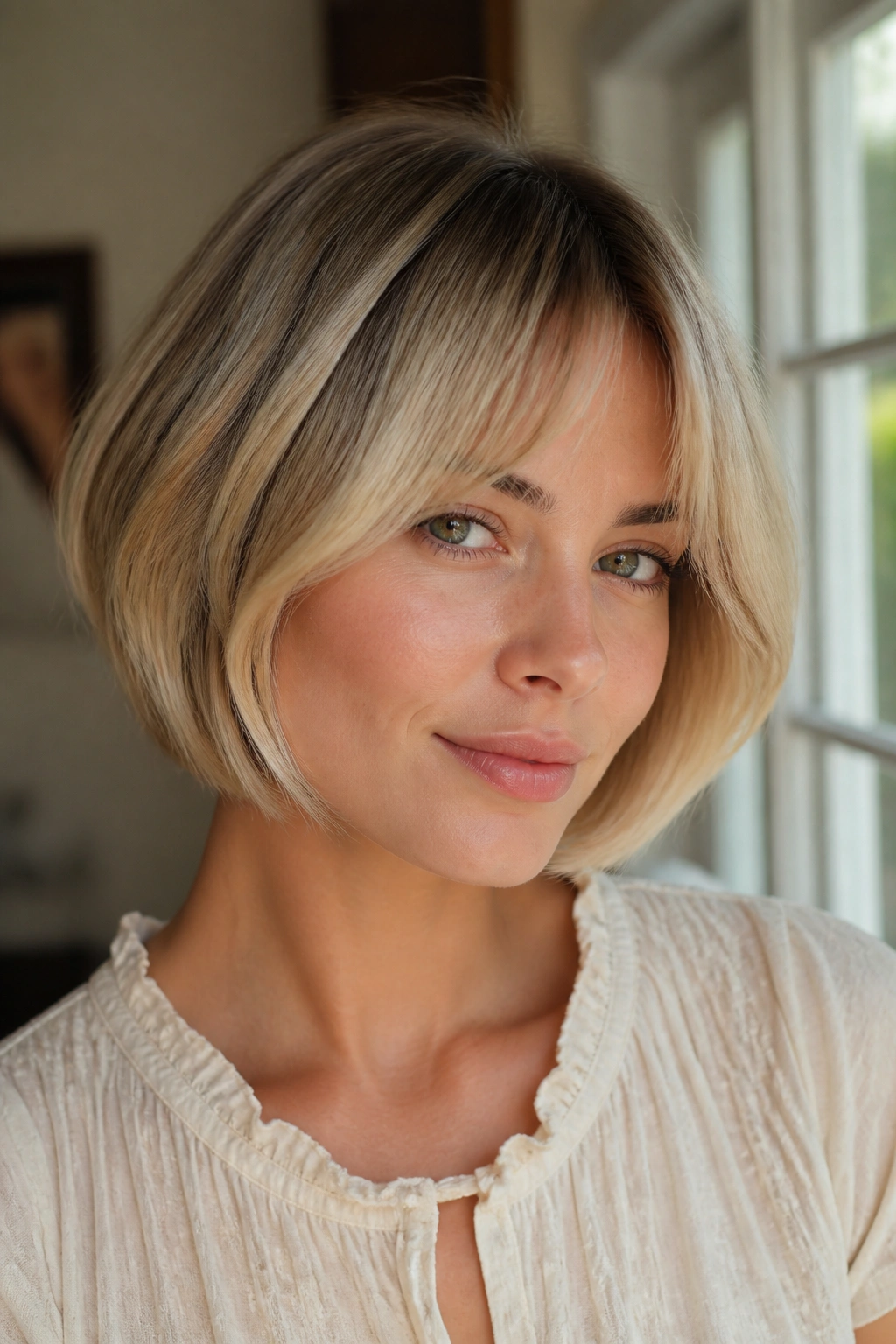
Blonde hair can make a French bob look airy, but only if the cut avoids puffiness. Too many short layers can make it fray out at the ends. Keep the shape controlled and let the color do some of the lightness work.
Soft dimension matters here. A few darker lowlights or a root shadow can keep the haircut from looking washed out, especially if the bob is very short. That depth makes the shape easier to read.
This is a good choice if you want the cut to feel bright without going too severe. A rounded brush and a bit of smoothing cream will help the ends sit in place, but the color does half the styling for you.
22. The Copper French Bob With Warmth

Copper and French bob is a sharp pair. The warm tone makes the clean line feel richer, and the haircut gets a little extra glow around the face without needing much else.
The shape should stay simple when the color is this strong. If you add too many layers, the look can start to feel busy. A clean jawline, a soft fringe, or a slight bevel is usually enough.
Copper shades look especially good when the bob catches movement at the ends. A tiny turn under the jaw keeps the hair from reading as flat. This is one of those cuts where the color and shape should not compete. Let them work together.
23. The Shaggy French Bob
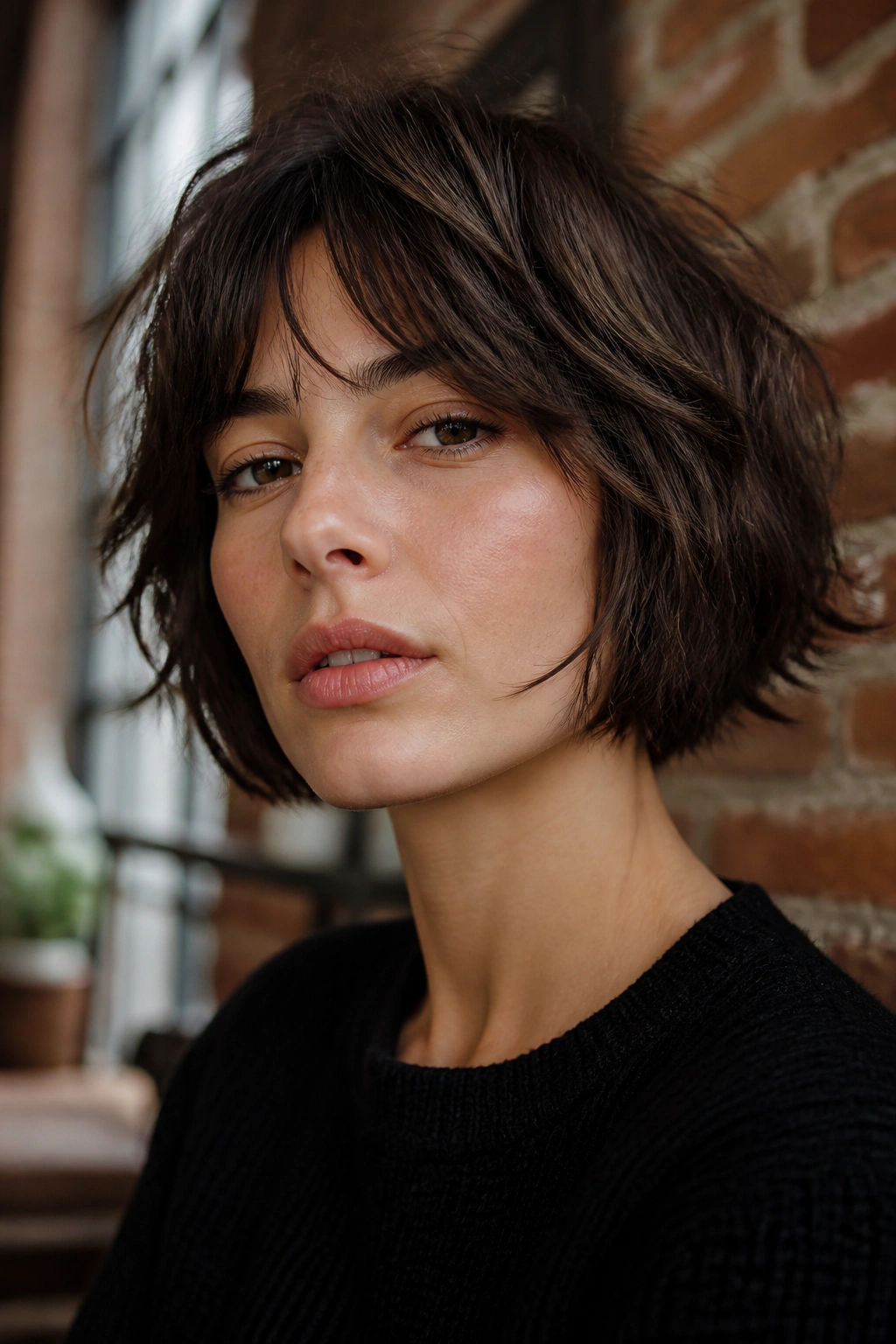
A shaggy French bob has more edge than polish, but not in a sloppy way. The texture is broken up, the ends are a little freer, and the whole cut feels like it has air in it.
This is not the cut for someone who wants a crisp outline every morning. It is for people who like a bit of softness and do not mind some separation through the ends. A dry texture spray can help hold the piecey look without making the hair stiff.
If you want a shaggy version that still feels like a French bob, keep the shape around the jaw. That anchor point matters. Otherwise the haircut can drift too far into shag territory and lose the clean frame that makes it special.
24. The Polished French Bob for Workwear

This is the neatest version on the list, and I mean that as a compliment. The polished French bob sits smoothly, curves gently under the jaw, and looks right with a blazer, a crisp shirt, or a plain knit sweater.
The cut should be tidy at the neckline and clean around the sides. A little root volume helps, but the surface should stay smooth. If you have a morning routine you want to keep short, this is a smart choice because it can be dried quickly and still look finished.
A side part or center part both work here. The real test is whether the shape still looks tidy after a long day. If it does, you’ve got the right version.
25. The Soft French Bob With Face-Framing Pieces
Face-framing pieces can take the edge off a French bob without turning it into a layered mess. They soften the front, make the haircut more forgiving, and give you a little shape around the cheekbones.
The key is restraint. Two longer pieces are enough in most cases. You do not need a cascade. You need a small change in length that guides the eye inward toward the face.
This version is especially useful if you want a bob that works with glasses, strong brows, or a longer face shape. The pieces can be tucked behind the ear, curled lightly away from the face, or left loose. Easy. Practical. Clean.
26. The French Bob With Barely-There Layers
Barely-there layers are the answer when you want movement but hate the chopped-up look that some short cuts can get. The silhouette stays intact, yet the hair swings a little more freely.
This is one of the best options for people with medium-density hair. It removes just enough bulk to keep the bob from ballooning out, especially at the sides. The haircut still looks like one shape, not a stack of pieces.
Ask for the layers to be hidden inside the haircut, not obvious on the surface. That keeps the French bob polished. If you can see the layers from across the room, they are probably too short.
27. The Glossy French Bob With a Slight Bend
A slight bend is often prettier than a full curl. It gives the bob a soft turn at the ends and keeps the shape from looking overly styled. Add gloss, and the cut suddenly feels expensive without trying to be flashy.
How to Style It
Start with damp hair and use a blow-dry cream or light mousse. Then wrap the ends around a round brush or a blow-dry brush for just a few seconds each side. You are aiming for a gentle curve, not a ringlet.
The finish should look smooth at the top and softly turned under at the bottom. That contrast is what makes it work.
- Use low to medium heat so the hair stays sleek.
- Focus the brush on the last 2 to 3 inches of hair.
- Finish with one drop of shine serum through the ends only.
- Best for hair that already leans straight or slightly wavy.
28. The Airy French Bob for Thick Hair
Thick hair needs room to move, and this version gives it that. An airy French bob removes enough bulk to keep the sides from puffing out while still holding a strong outline.
The haircut should not be over-thinned. That is the trap. If you remove too much weight, the ends can fray and the bob loses its body. A better move is careful shaping through the interior and a clean edge around the perimeter.
This cut works well when the hair is blown forward and then turned under slightly. The result feels light, but not wispy. Thick hair can carry a bob beautifully when the shape is disciplined.
29. The French Bob for Straight Hair That Needs Movement
Straight hair can make a French bob look elegant, but it can also make it look flat if the cut is too blunt and too long. A bit of movement around the edges keeps it from feeling like a block.
The answer is usually in the ends. A slight bevel, a soft side part, or a few face-framing pieces can stop straight hair from sitting too rigidly. You still want the outline to read cleanly, though. Too much layering and the cut loses its French feel.
I like this version on hair that falls naturally flat at the crown. A little root spray and a quick blow-dry at the top can make the whole cut look more alive without changing the structure.
30. The French Bob With a Baby Fringe
A baby fringe is bolder than curtain bangs and softer than micro bangs. It sits short, but not severe, and it gives the French bob a bit of unexpected shape right above the eyes.
This cut only works if the rest of the bob stays calm. The fringe should be the interesting part, not one piece of a fight for attention. Keep the bob at jaw length and avoid too much texture around the crown.
It suits people who like a haircut with a little personality. Not everyone does, and that is fine. A baby fringe asks for confidence and regular trims, but the payoff is a bob that looks memorable without being loud.
31. The Minimal French Bob With No Bangs
No bangs, no problem. A minimal French bob can look just as stylish when the focus stays on the line of the cut and the way it falls around the face.
This is a good pick if you want fewer moving parts. The shape needs to be clean, though. Without fringe, the haircut depends more heavily on the jawline and side profile, so the length has to be placed with care.
A center part gives it a spare, calm look. A soft side part makes it more relaxed. Either way, this version works best when the ends are neat and the hair looks healthy. A little polish goes a long way here.
32. The French Bob With Volume at the Crown
Volume at the crown changes the silhouette in a noticeable way. The haircut gets a lift at the top, which helps balance stronger jawlines or flatter hair textures. It also keeps the bob from sticking to the head.
The crown lift should be soft, not poufy. You want a little height at the roots and movement through the top layer, not a cone shape. A round brush, a root-lifting spray, and a quick blast of heat can handle most of it.
This version is useful if your face shape benefits from a bit more vertical length. It also gives the French bob a fresher, more editorial finish without losing the easy feel that makes the cut so wearable.
33. The Uneven French Bob With a Subtle Off-Balance Feel
An uneven French bob sounds risky, but done lightly, it can look relaxed and deliberate. One side may sit a touch longer, or the front may angle in a way that feels slightly off-center without being obviously asymmetrical.
That tiny imbalance adds interest. It keeps the haircut from feeling too symmetrical, which can matter if you like a style that looks less rehearsed. The key word is subtle. If the difference is too strong, the bob stops feeling like a French bob and starts feeling like a different statement entirely.
This one is best for people who like a haircut with movement even when it is not styled. It has a bit of personality built in.
34. The Evening-Ready French Bob
A French bob can look dressed up fast with the right finish. Smooth the surface, tuck one side back, and let the lines stay clean. Suddenly the haircut feels made for dinner, a party, or anything where you want your hair to look considered.
A little shine product helps here. So does a barely-there bend at the ends. Keep the shape neat and avoid anything too fluffy at the crown. The look is stronger when it feels controlled.
Jewelry matters more than people think with this cut. A bob opens up the neck and ears, which gives you a chance to wear a strong earring or a simple bare neckline. That small change can make the whole thing feel sharper.
35. The French Bob That Grows Out Gracefully
Some haircuts look tired the minute they lose their line. The French bob is kinder than that, especially when the cut starts with a soft perimeter and a little room around the jaw. It can grow for a while before it stops looking intentional.
That matters if you do not want constant trim appointments. A graceful grow-out means the front can drift a little longer, the nape can soften, and the style still looks like a bob rather than a mid-stage problem. Hair that bends easily does especially well here, because the shape can relax without collapsing.
If you want the easiest version to live with, this may be the one. Keep the ends healthy, keep the outline visible, and let the haircut settle into itself. That is the quiet charm of a good French bob — even when it gets a little longer, it still knows what it is.
