



Fine hair can look thinner than it really is the minute a cut loses its edge.
Short bob cuts for fine hair work because they keep the perimeter strong. That blunt line gives the eye a fuller shape to read, and it stops the ends from dragging downward into a wispy little triangle that no blow-dry can fully rescue. Fine hair is about strand thickness, not how much hair you own, so the right bob can change the whole feel of your hair without adding a single strand.
Not every bob pulls that off. Heavy layers can eat the outline, and too much texturizing can leave the ends looking see-through even when the top has a nice bit of lift. The best cuts for fine hair usually do three things at once: hold a clean shape, leave some movement, and avoid overworking the bottom line.
These 15 short bob ideas cover the clean, the soft, the sleek, and the slightly messy. Some are polished. Some have a little bend. All of them are built to make fine hair look denser, not stretched out.
1. Blunt Chin-Length Bob
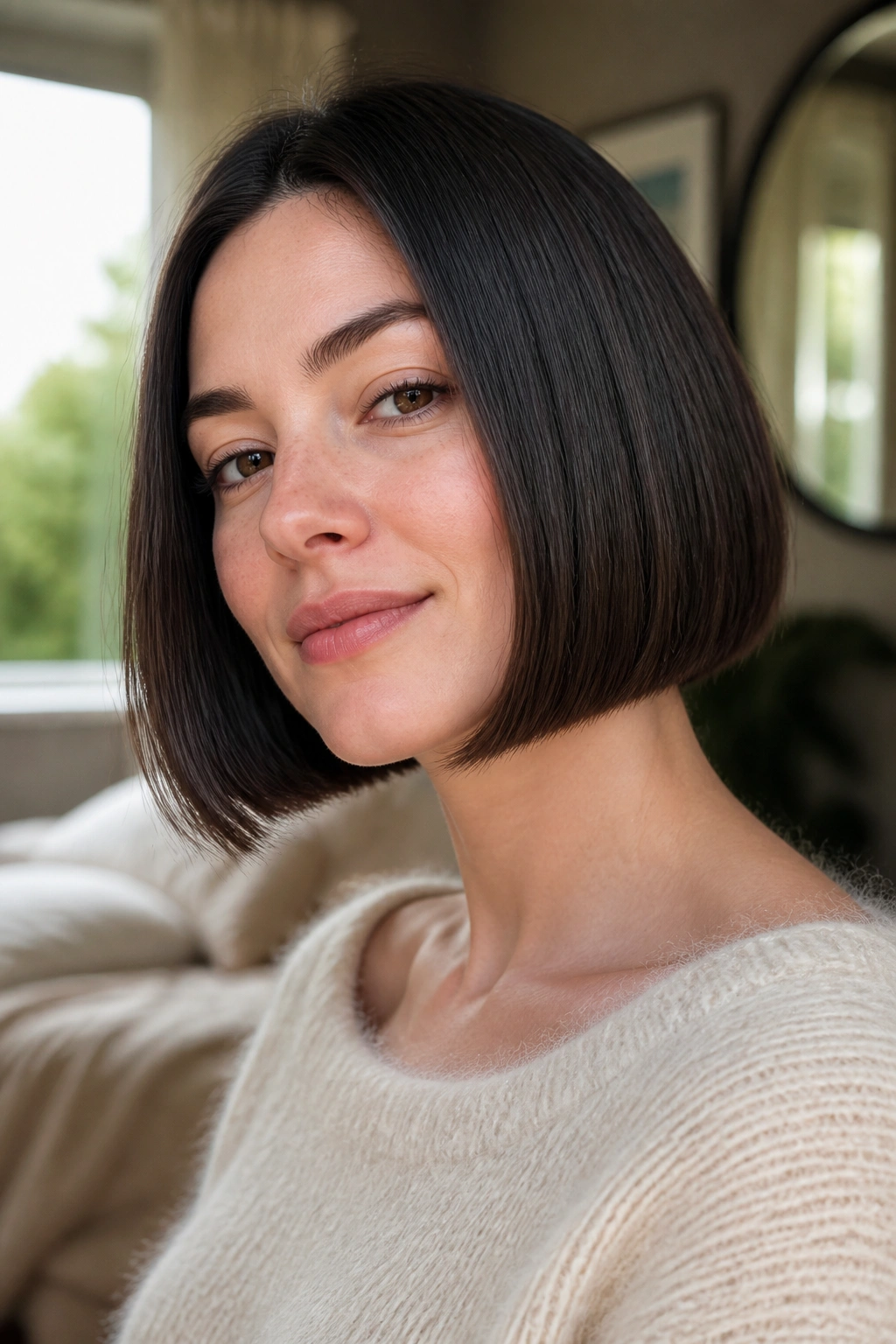
If you want the fastest route to fuller-looking fine hair, a blunt chin-length bob is hard to beat. The line is clean, the ends sit on one level, and the whole shape reads as denser because there is no ragged edge for the eye to skip over.
Why It Works
Fine hair often looks sparse when the perimeter gets chipped away too much. A blunt line keeps the weight at the bottom, which is exactly where weak-looking ends need help. Chin length gives you enough surface area for a bend, a tuck, or a clean air-dry without dragging the shape down.
- Ask for the cut to hit right at the chin or just below it.
- Keep layers minimal; if any are added, they should stay low and subtle.
- A slight off-center part adds lift without making the style fussy.
- Blow-dry with a small round brush or a paddle brush and flip the ends under about half an inch.
A little root mousse goes a long way here. Work a walnut-size amount through damp hair, then rough-dry the roots first so the cut keeps its clean outline instead of collapsing while it dries. That part matters more than people think.
2. French Bob with Brow-Grazing Bangs

Can a short bob still feel soft? Yes, and the French bob proves it. This version sits a touch shorter, usually around the cheekbone or jaw, and the bangs skim the brows instead of hanging heavy across the forehead.
What Makes It Different
The charm here is in the shape. A French bob looks a little undone in the best way, which helps fine hair avoid that stiff, over-styled look some blunt cuts can get. The fringe also pulls attention upward, which is handy if the ends of your hair are the part that tends to flatten first.
How to Wear It
Keep the bangs airy, not packed. Fine hair can support a fringe, but it needs movement and space between the strands. If the bangs are too thick, they can swallow the face; if they’re too thin, they just disappear.
A quick styling trick helps a lot: blow-dry the bangs from side to side with a small brush, then finish with a cool shot so they sit with a bit of bend. The rest of the bob can air-dry with a light cream on the ends. Skip heavy oils at the roots. They flatten this cut fast.
3. Italian Bob with Soft Ends

The Italian bob is not about layers everywhere, and that’s the point. It’s plush, a little rounded, and just soft enough around the edges to feel expensive without looking overdone.
Fine hair likes this cut because it keeps the outline intact while still giving you a little movement through the bottom few inches. The ends usually curve inward or sit with a gentle bevel, which makes the hair look fuller than a razor-sharp cut can in some cases. That softness also helps if your hair dries with a slight bend on its own.
Unlike the French bob, which can read a touch cheeky and cropped, the Italian bob feels more grown-up and smooth. It suits straight fine hair especially well, but a mild wave works too. Ask for soft internal shaping rather than short choppy layers. That distinction matters. Choppy layers on fine hair can turn into gaps.
A medium round brush, a light heat protectant, and one pass of the dryer usually get this shape into place. Nothing fancy. It’s a clean cut, and it likes clean styling.
4. Soft Layered Bob
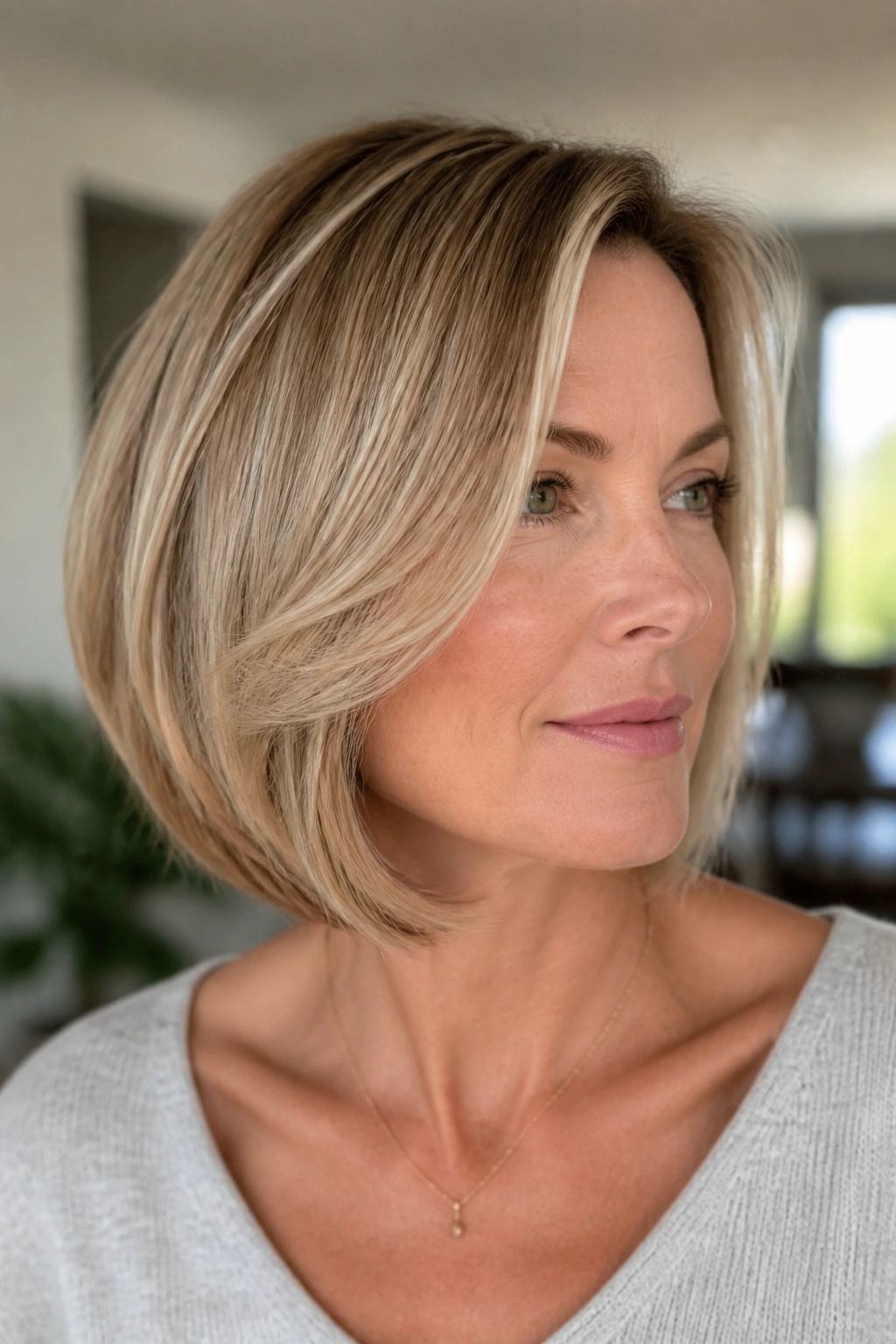
How much layering is too much on fine hair? Less than most salons want to cut, honestly. A soft layered bob gives you movement without sacrificing the bottom line, which is the whole battle with fine strands.
Where the Layers Should Sit
The best layers on fine hair are usually long enough to blend instead of announce themselves. Think below the cheekbone, not up near the crown. When the top gets too short, the cut loses its weight and the ends can look stringy. That’s the bit people miss when they ask for “more volume.”
A soft layered bob works well if your hair is fine but fairly plentiful. If your density is low and the strands are fine, you need even more caution. In that case, a stronger perimeter with only a few internal pieces is safer.
What to Ask For
- Long, blended layers instead of short, choppy ones.
- A perimeter that stays full at the bottom.
- Light face-framing pieces that start around the jaw.
- Minimal thinning at the ends.
This is the bob for people who want movement they can see, not texture that gets in the way. A spritz of volumizing spray at the roots and a quick blow-dry with a round brush will keep it lively. Let it get too air-dried and it can slip flat at the sides.
5. A-Line Bob with a Longer Front

If your hair looks flat from the side, a gentle A-line bob solves a lot with one simple shift in shape. The back sits shorter, the front stays a little longer, and that slant gives the cut motion without making the ends look thin.
The longer front pieces are useful on fine hair because they create a sense of length and framing without making the whole cut feel heavy. A slight A-line can also sharpen the jaw and cheek area, which is useful if your face needs a bit of structure. Keep the angle soft, though. A dramatic tilt can start to look dated or too severe.
You can ask for the back to sit about 1 to 1.5 inches shorter than the front, not more. That’s enough to create the line without exposing the neck too much. If the contrast is too big, the front can start to look stringy by comparison.
This cut likes a smooth blowout. Pull the front sections forward while drying them, then tuck the ends inward just a touch. That little bend keeps the angle visible and prevents the cut from reading as boxy.
6. Stacked Bob with Built-In Lift
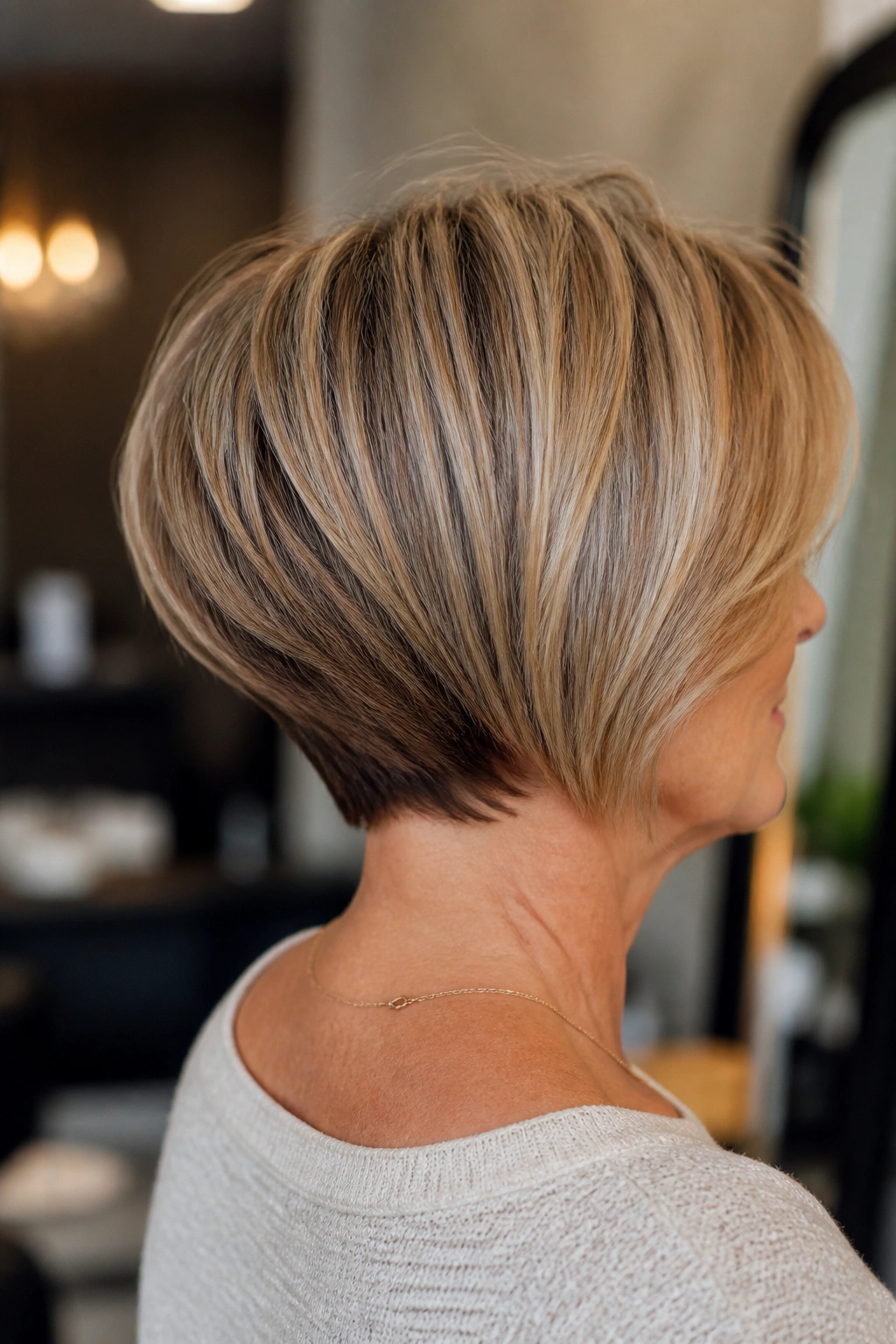
A stacked bob is one of the best short bob cuts for fine hair when the back keeps collapsing. The graduation in the nape creates lift where fine hair often goes limp, and the shape builds itself instead of asking the hair to do all the work.
Why It Helps
A stacked bob uses shorter layers underneath to push the upper sections out a little. That creates the look of thickness at the back of the head, which is a good trick for hair that sits close to the scalp. The key is restraint. Too much stacking can puff out like a helmet, and that is the exact opposite of what most people want.
What to Watch For
- Keep the stacking gentle, not extreme.
- Ask for volume at the nape, not a bubble at the crown.
- Leave the top layers long enough to fall smoothly.
- Use a light mousse or root spray instead of a heavy cream.
This is a strong choice if your hairline at the back is fine and soft. It’s less friendly if you want to air-dry and go, because the shape benefits from a bit of directional blow-drying. A round brush helps, but a medium paddle brush can work if you pull the hair up and back as it dries. The result is neat, tidy, and a little more lifted than most fine hair gets on its own.
7. Side-Part Bob with a Deep Sweep

Why does a side part change a bob so much? Because it moves the weight off the center line and gives the roots a place to rise. Fine hair often lies too flat through the crown, and a deep side part breaks that pattern fast.
A bob like this can be any length from jaw to just below the chin. The real trick is the parting. When the hair is pushed over to one side, the opposite side gets instant lift, and the front looks fuller because the hair isn’t hanging in a straight middle curtain. It feels small, but the effect is not small.
A deep side part also helps if your hair falls in the same direction every day and seems to have quit trying. Blow-dry the roots in the opposite direction first, then flip the part into place. That one move gives you a bit of hidden support at the scalp.
Quick Styling Moves
- Mist the roots with volumizing spray.
- Dry the hair the wrong way first.
- Set the part with a tail comb.
- Finish with a dab of texture spray at the crown.
This is one of those styles that looks intentional even on a regular Tuesday. No drama. Just a better shape.
8. Rounded Bob with Tucked-In Ends

You know the bob that looks neat after a windy walk and still behaves after lunch? That’s usually a rounded bob. It curves softly toward the jaw and tucks inward at the ends, which gives fine hair a more finished shape.
Rounded bobs are useful because they create the illusion of density through contour. Instead of hanging straight, the hair hugs the head a little more closely and curves where it matters. That shape can be kinder to very straight fine hair, which often needs help avoiding that flat, separated look at the tips.
The cut works best when the stylist keeps the curve subtle. Too much roundness and the head starts to look too sculpted. Too little and the shape loses its point. You want enough bend to make the hair feel controlled, not so much that it feels rigid.
A 1.25-inch round brush and a low-heat blow-dry usually do the job. Aim the airflow downward at the top, then roll the ends under at the bottom. A cool shot at the end helps the curve hold. It’s a boring step. It works.
9. Micro Bob That Sits at the Jaw

Shorter can look thicker. That’s the whole case for the micro bob, which sits right at or just above the jawline and removes the weight that can drag fine hair down.
This cut is sharp, compact, and a little fearless. It shows off the neck and jaw, so it’s a good choice if you like clean lines and don’t mind a style that’s clearly a style. On fine hair, the shorter length makes the strands appear less stretched out, which can be a welcome change if your ends usually look thin at shoulder length.
The micro bob is not the easiest cut if you rely on tying your hair back often. It also asks for regular trims because the shape can lose its crispness fast. Still, when it’s kept neat, it looks polished with very little effort. That’s the appeal.
Who Should Skip It
- People who need a ponytail most days.
- Anyone who hates seeing the jawline emphasized.
- Hair that kicks out wildly at the ends unless heat-styled.
- Very coarse waves that resist a short shape.
If your hair is fine, straight, and fairly obedient, this can be one of the best ways to make it look fuller without piling on layers.
10. Asymmetrical Bob for a Sharper Line
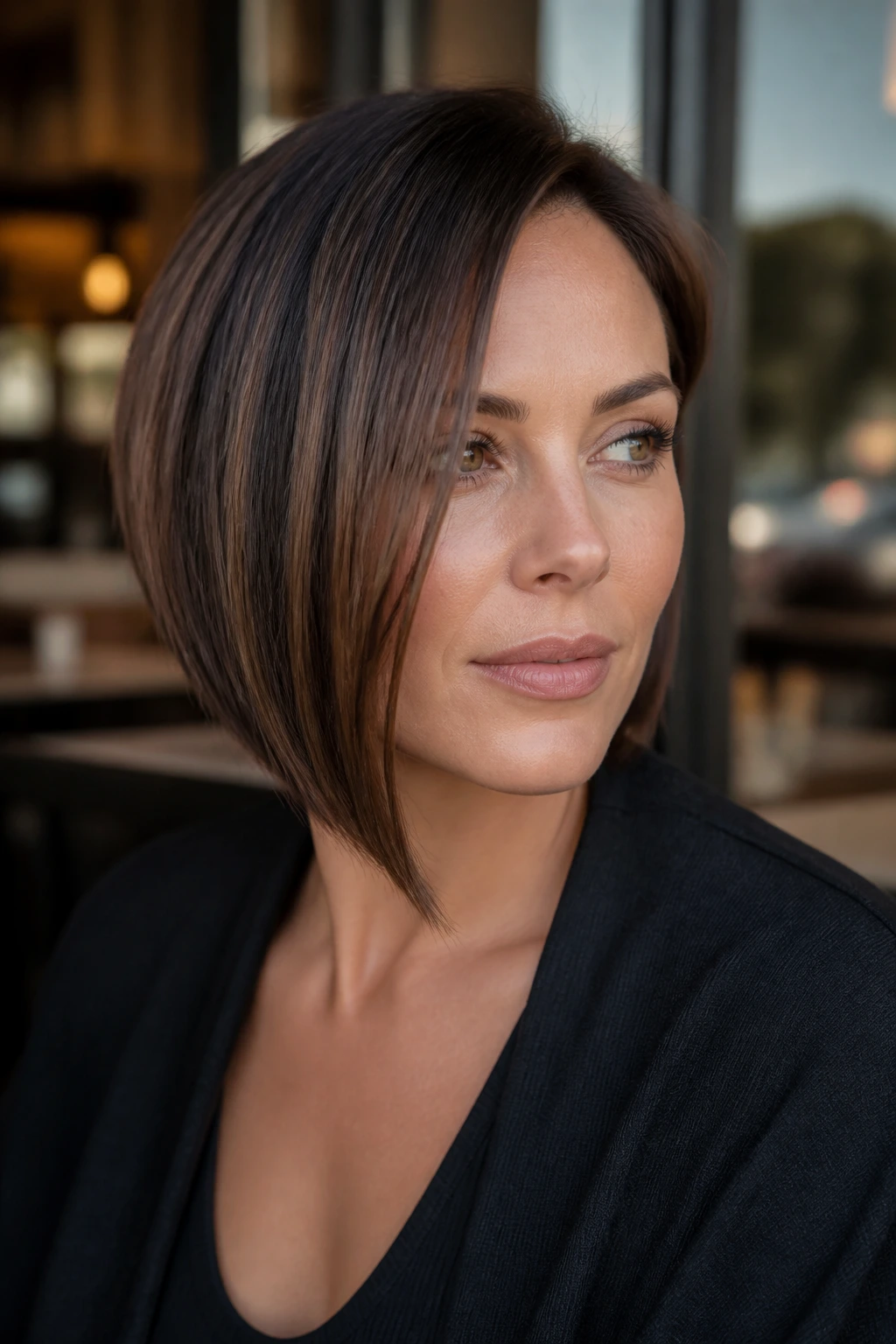
A subtle asymmetrical bob gives fine hair movement without scattering the silhouette. One side sits slightly longer than the other, which creates a visible line and keeps the cut from feeling too neat or too flat.
The trick is to keep the difference small. A dramatic asymmetrical cut can start to feel costume-like, and that is not where fine hair usually looks its best. A soft difference of about half an inch to 1 inch is often enough. That little shift is enough to make the cut feel modern while still keeping the ends full.
Unlike an A-line bob, which angles forward in a steady slope, the asymmetrical version plays with imbalance on purpose. That makes it good for anyone who wants shape with a bit of personality. It also helps break up the look of hair that sits too evenly on both sides of the face.
This style works well with a side part and a bit of bend through the front. A flat iron used only on the last inch of the hair can keep the ends clean while leaving the body soft. Do not over-curl it. The point is line, not ringlets.
11. Feathered Bob with Wispy Layers

A feathered bob can save fine hair that feels too hard in a blunt shape. The ends are softened with light, airy pieces that move away from the face and keep the cut from looking boxy.
The Right Kind of Feathering
On fine hair, feathering has to stay controlled. You want soft tapering at the perimeter, not aggressive slicing through the middle of the head. If the layers get too short, the hair can separate and look sparse. That’s the trap.
This cut works well when the hair has a little natural movement already. A slight wave makes it easier, but straight hair can do it too. The key is that the feathering should feel like a light finish, not the main event.
A light texturizing spray at the ends helps the shape show up. So does a quick bend with a flat iron, just one turn of the wrist at the bottom two inches. That gives the feathered pieces some separation without making them frizzy.
Ask for This
- Soft, tapered ends.
- Long layers that don’t start too high.
- No heavy razoring through the crown.
- A perimeter that still reads as full.
Feathered bobs are a good pick when you want softness around the face and a little swing through the ends, but you still need the haircut to hold its shape.
12. Curved Bob with Face-Framing Bend

A curved bob is one of those cuts that looks styled even when you did not spend an hour on it. The hair follows the shape of the head, then bends inward around the face so the whole cut feels smooth and easy.
This is a smart choice for fine hair because it makes the movement look deliberate. The bend creates width where the hair needs it, especially around the cheeks and jaw, and that can make the ends look fuller than a perfectly straight cut. It also flatters straight hair that tends to hang without much personality.
The face-framing bend should be soft. Think a curve, not a curl. You want the front pieces to lift away from the face a little, then tuck back in at the bottom. That shape opens the features without making the haircut feel bulky.
How to Style the Curve
- Blow-dry with a medium round brush.
- Wrap only the last 1 to 2 inches of hair around the brush.
- Finish each section with a cool blast.
- Add a tiny bit of shine spray to the ends.
If your hair tends to flip in strange directions, this cut can tame that too. The curve gives the hair a path to follow, and fine hair usually appreciates a path.
13. Box Bob with a Clean Outline

The box bob is for people who like shape with some bite. It has a straighter, squarer outline than a soft rounded bob, and that clean edge can make fine hair look thicker because the eye reads the whole perimeter at once.
Unlike the Italian bob, which leans plush and softly curved, the box bob keeps its sides more structured. That makes it a little bolder. It also works best when the hair has enough density to support the shape, even if the strands themselves are fine. If the density is low, the square line can start to look sparse at the corners.
This is a strong choice if you wear your hair straight most of the time. It also works well when you want a strong silhouette under a coat collar or a high neckline. The cut has presence, plain and simple.
A flat iron pass through the ends keeps the line crisp, and a tiny bit of smoothing cream on the mid-lengths helps the cut stay glossy. Keep product away from the roots or the structure goes soft fast. That would defeat the whole point.
14. Shaggy Bob with Barely-There Texture
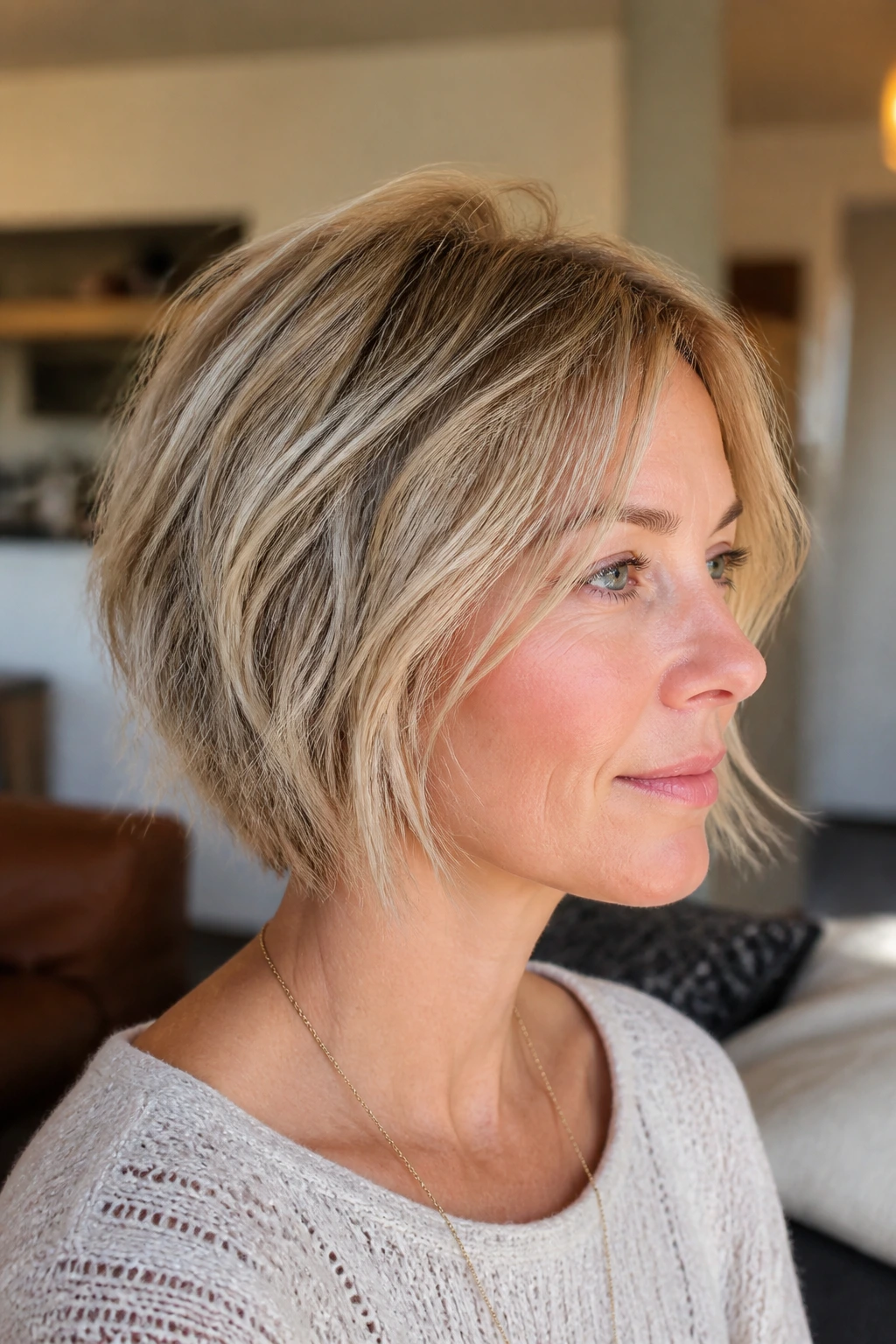
Can a shaggy bob work on fine hair? Yes, but only if the texture stays light. A lot of shaggy cuts are cut too aggressively for fine strands, and then the hair ends up wispy instead of airy.
The right version keeps the bob shape in place and uses long, loose pieces to add movement around the face and crown. Think of it as a bob with a little attitude, not a full shag with tons of broken-up layers. Fine hair needs enough structure to hold onto, or the whole thing starts looking thin.
A shaggy bob is a good fit if you prefer a lived-in look and don’t mind a bit of styling product. A texture spray or a light mousse through damp hair can give the shape some grip. Scrunching with your hands helps, but only a little. Overdoing it will rough up the surface and make the hair look frayed.
What to Avoid
- Short, choppy layers at the crown.
- Heavy thinning shears through the ends.
- Too much texture spray on day one.
- Letting the cut drift past its trim window.
This cut looks best when the perimeter still feels present. Messy is fine. Sparse is not.
15. Sleek One-Length Bob

If your fine hair is straight and you like a clean finish, a sleek one-length bob is one of the smartest cuts on the list. No layers. No fuss. Just a crisp line that makes the hair look tidy, dense, and deliberate.
The beauty of this cut is how little it asks from your hair. Because the length sits evenly all the way around, the ends support each other instead of spreading out into thinner pieces. That gives the whole bob a thicker read, especially when the hair is tucked neatly behind the ears or worn with a slight bend at the tips.
This cut is a good match for people who want polish without a lot of styling effort. A quick blow-dry with a paddle brush, a flat iron pass on the bottom inch, and a drop of smoothing serum on the ends is usually enough. If your hair gets oily fast, use serum only where the light hits the mid-lengths and tips. Roots should stay clean and light.
Trims matter more here than they do on softer cuts. A one-length bob loses its edge when it grows out, and fine hair shows that faster than thicker hair does. Keep the line fresh, keep the surface smooth, and don’t ask the cut to do more than it was built to do. That honesty is part of why it works.
