



A good protective hairstyle for natural hair should make your week easier, not start a feud with your hairline.
That sounds blunt, but the distinction matters. People use the phrase protective hairstyles for natural hair loosely, and not every style that looks neat on day one deserves the label. If the braids are too tight, the added hair is too heavy, or the ends are left out to rub against collars and pillowcases, the style is doing the opposite of what it promises.
The styles that actually earn their keep tend to do three things well: they keep the ends tucked, they spread tension out instead of concentrating it at the temples, and they cut down on daily handling. That’s the real prize. Less combing, less detangling, less breakage around the edges where hair is most fragile.
And because natural hair doesn’t all behave the same way, the best choice is rarely the fanciest one. It’s the one you can wear without wincing when you turn your head. Simple. Honest. Useful. The first style on this list is still popular for a reason.
1. Box Braids

Box braids are the dependable classic, the one people come back to when they want length, neatness, and a style that can take a little weather without falling apart. The shape is clean, the parts are easy to read, and the finished look can go from casual to polished fast.
Why Box Braids Still Work
The braid pattern keeps your own hair folded away, which helps cut down on friction from clothes, hats, and your own hands. Medium-size braids usually give the best balance between weight and coverage. Tiny braids can take forever to install, and very large ones can tug more than people expect.
- Best for: medium to long natural hair
- Maintenance: scalp oiling every few days, light misting if needed
- Watch for: heavy extensions that pull at the front
- Extra win: easy to style into buns, ponytails, and half-up looks
Best tip: if your edges feel tender after the first day, the braid is too tight. Don’t “wait and see.”
2. Knotless Box Braids

If you hate that stiff, heavy feeling at the scalp, knotless box braids are the better move. They start with your own hair first, then the extension hair gets fed in gradually, so the base sits flatter and feels lighter.
The difference is small on a photo. Up close, it matters a lot. The style moves better, and it usually puts less pressure on the hairline, which is why so many people with finer edges or tender scalps prefer it. It still gives you the same long-braided look, just without that hard little knot at the root.
I’d pick knotless braids for anyone who wants to wear a style for weeks without thinking about it every single morning. They are also kinder if you are new to braids and nervous about the first install being too much. Less tension, less drama.
3. Fulani Braids

Why do Fulani braids keep showing up in natural-hair conversations? Because they do a lot at once. You get a center braid or central part, side braids, and often beads or small accents that make the style feel finished instead of plain.
The shape frames the face nicely, but the style only works well when the braids are not overloaded with heavy decorations. A few beads are fine. A dozen chunky ones hanging off thin braids can turn into a headache by day two. That’s the part people skip over when they fall in love with the look on social media.
How to Wear Them Well
Keep the braid size medium if you want movement. If your hairline is delicate, ask for softer tension around the temples and nape. The style should sit close, not clamp down.
A light oil on the scalp and a satin scarf at night go a long way. So does restraint. You do not need every row decorated.
4. Feed-In Cornrows
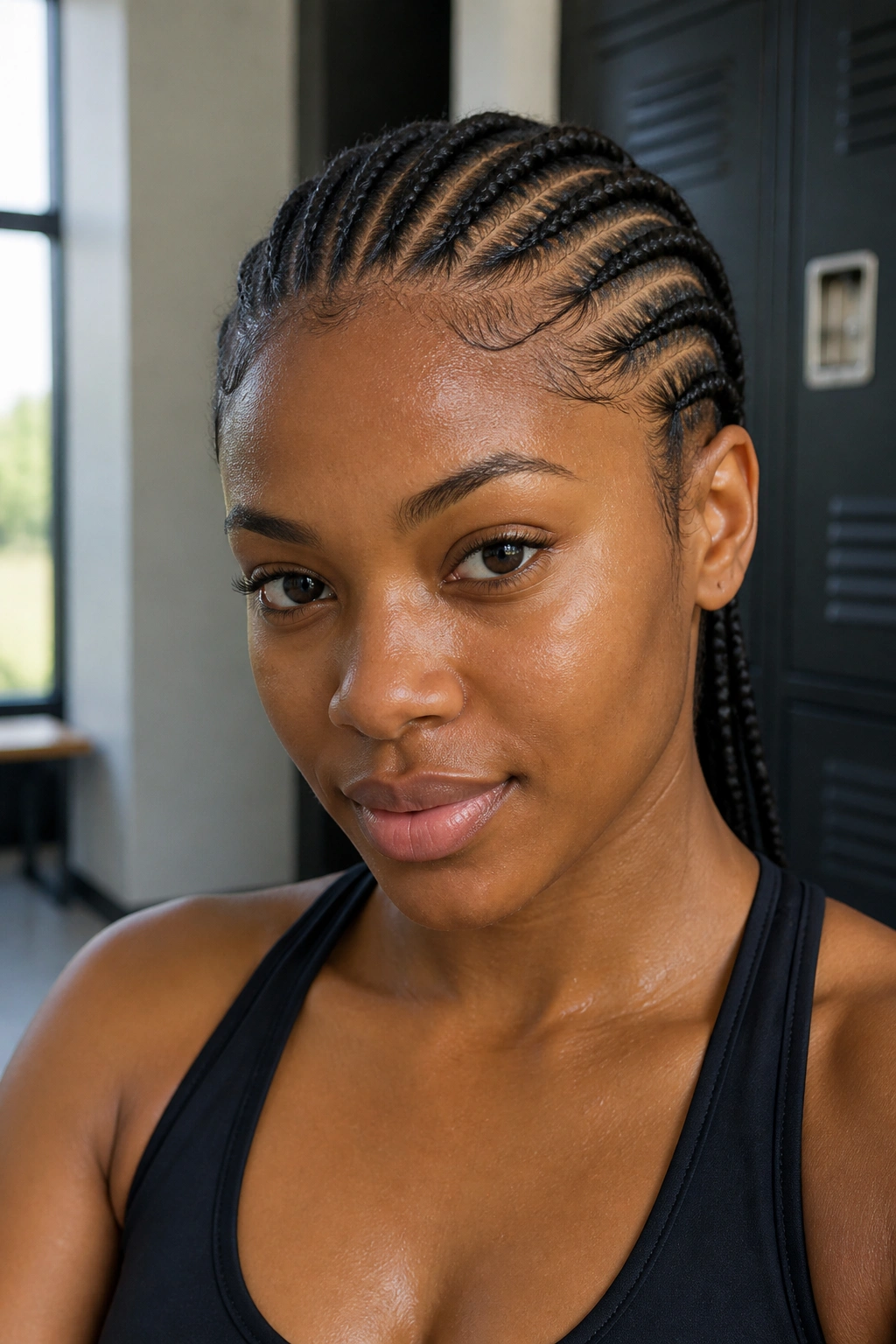
Feed-in cornrows are the style I think of when someone needs something neat, sporty, and low-fuss without a lot of extra bulk. Instead of adding all the extension hair at once, the braider feeds it in gradually, which makes the braid look smoother at the base.
Picture this: you want a style that can handle work, errands, a gym visit, and one too many calendar meetings. Feed-in cornrows fit that life better than styles that need constant fluffing. They lie flat, keep the ends contained, and pair well with ponytails or buns if you want to change the silhouette midweek.
- Good for: sleek installs and scalp access
- Looks best with: clean parts and even tension
- Less ideal for: anyone who wants lots of volume
- Useful note: the scalp can still breathe better when the rows are not packed too tight
5. Lemonade Braids

Lemonade braids have a side-swept shape that gives the whole style a little attitude. That’s part of the appeal. The braids angle across the head instead of running straight back, which changes the whole mood without changing the basic protective structure.
They work especially well when you want the hair off your face but still want movement around the crown and sides. The braid pattern can be slim and sleek or a little thicker and more dramatic. What you do not want is too much tension on the front rows, because side-swept braids can put pressure in places you do not notice until the third day.
The style shines when the parts are neat and the ends are sealed cleanly. It’s one of those looks that can feel fresh for a long stretch, but only if the install respects your scalp instead of just chasing a sharp photo.
6. Ghana Braids
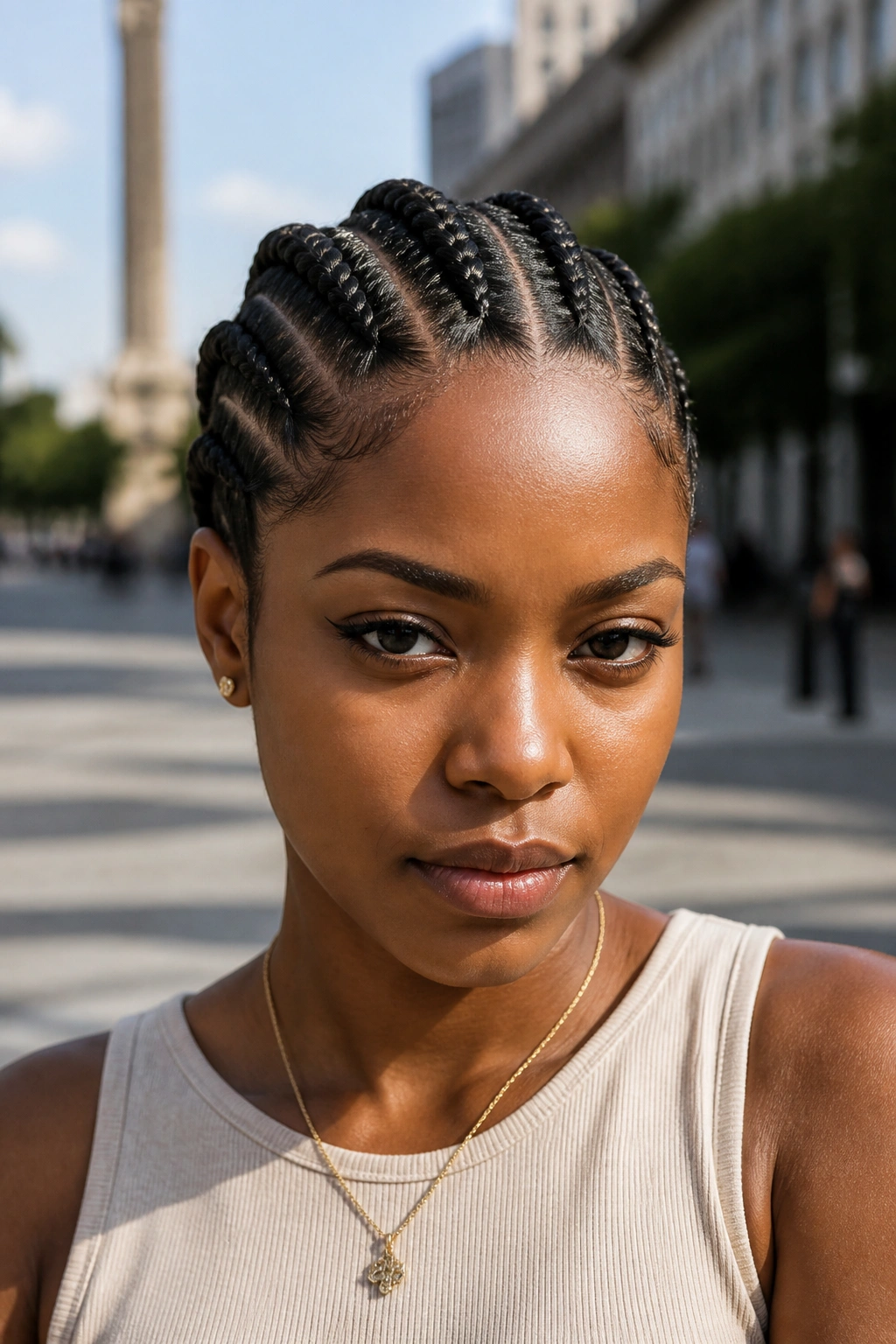
Ghana braids are thicker, raised cornrow-style braids that sit close to the scalp and give you a fuller look with fewer rows. Compared with smaller braids, they usually install faster and can feel less fussy to wear once they’re in place.
The tradeoff is simple: fewer braids means each braid carries more visual weight, so the sectioning has to be clean. Messy part lines show fast. If the stylist rushes the feed-in, the braid can look lumpy instead of smooth, and that ruins the whole point.
They are a solid choice if you like a style that looks bold without a pile of tiny parts everywhere. I also like them for people who are tired of styles that take forever to finish. Fast does not always mean lazy here. Sometimes it just means smarter.
7. Stitch Braids

Stitch braids are all about those crisp, segmented part lines. The effect is sharp and deliberate, almost like the hair was measured with a ruler. That can sound severe, but when it’s done well, it looks clean without feeling overworked.
What Makes Them Different
The “stitch” effect comes from little horizontal sections built into the braid path, which makes the cornrow look patterned instead of smooth. The result is especially strong on straight-back styles and ponytail bases. You can wear them plain or stack them into a bun, but the real charm is that line-by-line detail.
A light hand matters. Too much gel leaves the hair sticky and can flake later, which is annoying on dark hair and even worse on a fresh install. Sharp does not have to mean crunchy.
8. Two-Strand Twists

Two-strand twists are the style I recommend when someone wants something gentle, flexible, and easy to refresh at home. They are low-pressure on the scalp, and you can wear them in a down style, a puff, a bun, or pinned up for work.
Unlike braids, twists are built from two sections wrapping around each other, which gives them a softer, more relaxed look. That softness is nice, but it also means they can frizz sooner if your hair is dry or if you keep touching them. Leave them alone more than you think you should.
They are a smart pick for natural hair that does not love constant tension. They also work well as a base for later styling, which makes them a good bridge style when you want rest without looking unfinished.
9. Mini Twists

Mini twists are tiny enough to look tidy for a long time, but they ask for patience up front. A lot of patience. The install takes longer than many people expect, and the sections have to be even if you want the finished look to stay neat instead of stringy.
Why do people keep choosing them anyway? Because they hold the shape of the hair well, especially on dense natural textures, and they can give you days or weeks of easy styling with very little daily fuss. They also let your scalp breathe more than a tightly packed braid set if the parts are not overdone.
How to Wear Them
Use enough product to smooth the section, but not so much that the twists stay wet for hours. That is a fast track to limp roots and a dull finish. Smaller twists look best when the hair is fully dry before you start moving them around.
10. Flat Twists

Flat twists sit close to the scalp the way cornrows do, but they’re easier for some people to do by hand because you are working with two strands instead of three. That makes them a nice option when you want a protective look without a braiding marathon.
I like flat twists for midweek life. They can be tucked into a bun, worn along the hairline, or used to set curls under a scarf. They also tend to feel lighter than thicker braided styles, which is a relief if your head gets sore easily.
- Good for: shorter to medium natural hair
- Style range: updos, side sweeps, tucked ends
- Maintenance: light oil at the scalp, satin bonnet at night
- Catch: unraveling is easier if the ends are left loose
A flat twist only stays protective if the ends are secured and the roots are not being pulled apart every morning.
11. Senegalese Twists

Senegalese twists have a smooth, rope-like look that feels a little sleeker than many other twist styles. They are usually made with extension hair, and that extra hair gives them length and swing right away.
The style reads polished because the strands look even from root to tip. That said, the extensions can add weight fast if the twists are made too long or too thick. Heavy twists are a problem around the front, where hair is already more delicate than the rest.
I’d call this a strong choice for people who want a style that looks finished from day one and keeps that neat profile for a while. They are not the most casual-looking twists on the table. That’s the point.
12. Marley Twists

Marley twists have a softer, more matte texture than Senegalese twists, and that texture matters. They blend nicely with coarser natural hair and give the style a fuller, slightly more organic finish that feels less slick.
Compared with smoother twists, Marley twists tend to look a little thicker and more relaxed. That makes them a favorite if you want volume without going full puff. They are also forgiving when the twists start to age, because the texture hides minor frizz better than a shiny finish does.
Best case, the style moves with your hair instead of sitting on top of it. That’s what I like here. Not every protective style needs to look laser-clean for the entire wear period.
13. Passion Twists

Passion twists are soft, airy, and a little undone in the best way. The curl pattern gives them movement, and that movement keeps the style from looking too stiff or too formal.
Why People Reach for Them
They feel lighter than some loc-inspired styles and less rigid than tight twists. The loose curl ends give you that touch of texture without making the hair look rough. I also like them on people who want a romantic, slightly messy finish that still keeps their own strands tucked away.
- Best for: shoulder-length to long natural hair
- Texture: soft curl with bounce
- Maintenance: mousse for frizz control, scarf at night
- Watch for: over-manipulation, which makes them fuzzy fast
A little fuzz is part of the charm. A tangled nest at the root is not.
14. Spring Twists
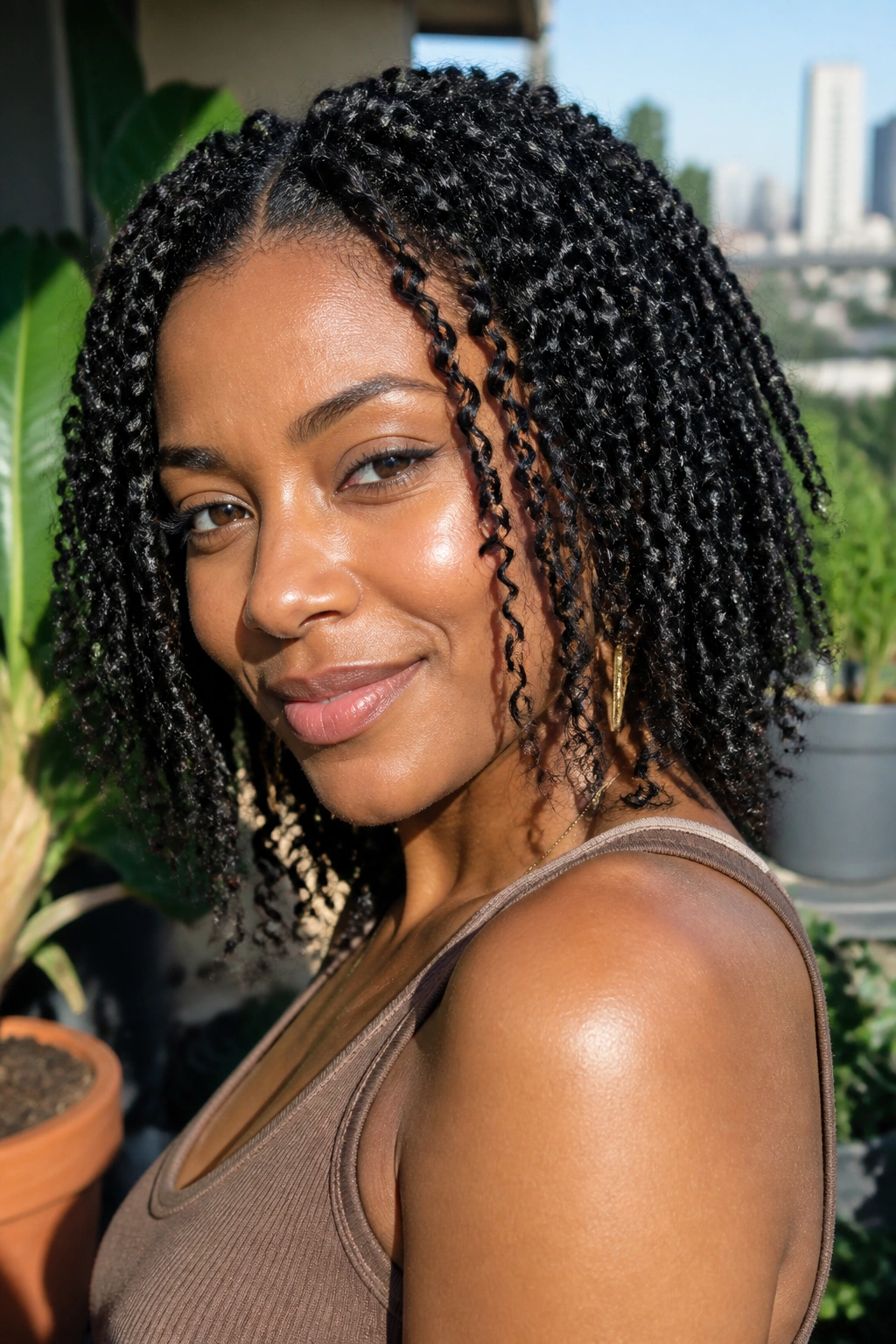
Spring twists are lighter and more springy than many people expect, which is why they feel so easy to wear once installed. The curls hold a tighter coil pattern, so the whole style keeps a lively shape without needing a lot of daily fixing.
If Passion Twists are soft and drapey, spring twists are a bit more structured. That makes them a nice pick when you want movement but don’t want the loose ends to look too wild by the end of the week. They can still frizz, sure. Every curly extension style does eventually.
The best installs keep the sections clean and the added hair light enough that the roots do not sag. That part matters more than people admit. A style can have all the right texture and still feel off if it hangs too heavy.
15. Faux Locs

Faux locs give you the look of locs without the long-term commitment, and that’s exactly why they remain a favorite. The hair is wrapped or crocheted over a braid or twist base, which creates the locked look while still letting you remove the style later.
Why does that appeal so much? Because locs are beautiful, but not everyone wants the commitment or the transition period. Faux locs let you try the shape, the length, and the vibe without changing your hair permanently.
Installation Notes
The base needs to be secure, but not crushed flat. If the locs are too heavy or the wrapping is too tight, the style can drag on the scalp and feel rough at the front. Keep the roots clean during wear, because loc styles can hide buildup until it becomes obvious.
16. Goddess Locs

Goddess locs soften the harder look of faux locs by leaving curly pieces throughout the style. Those loose strands give the locs a more lived-in feel, less rigid and a little more forgiving around the face.
I tend to think of goddess locs as the dressier cousin in the loc family. They still keep the hair tucked away, but the added curls make the style look less severe and more textured. That can be flattering if you want movement near the cheeks and temples.
The loose pieces do need care, though. They tangle faster than the wrapped sections and can get fuzzy if you sleep on them without a scarf. Pretty is not the same as low-maintenance. Sometimes it is close, but not here.
17. Crochet Braids
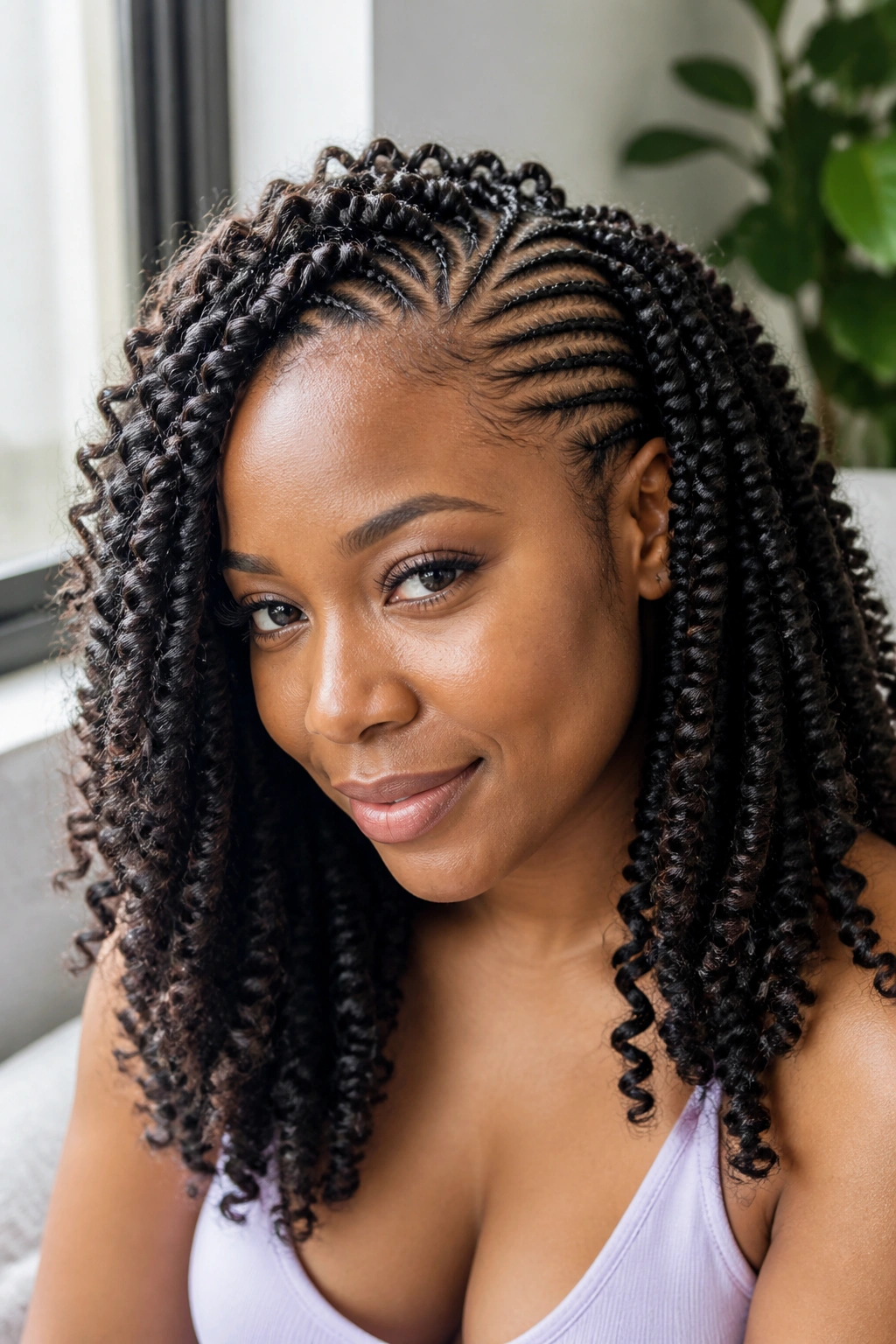
Crochet braids are one of the fastest ways to get a protective look with a lot of visual payoff. The natural hair is braided into a cornrow base, and then pre-made hair gets looped in with a crochet tool. That keeps the style efficient while still letting you wear almost any texture you like.
The big draw is flexibility. Curly, wavy, straight, coily, long, short — the crochet method can carry a lot of different looks without forcing your own hair to do all the work. I also like that the base stays tucked, which helps keep the daily handling down to a minimum.
Do not ignore the braid foundation, though. If the cornrows underneath are bulky or uneven, the whole style sits funny. A neat base is the difference between “this works” and “why does my head feel lopsided?”
18. Crochet Locs

Crochet locs are for people who want the shape and ease of loc-inspired styling without sitting through a long wrapping session. They’re installed over a braided base, and once they’re in, they tend to stay put with very little daily fuss.
Compared with crochet braids, this style usually reads more structured and uniform. That makes it a smart pick if you like a cleaner silhouette and don’t want loose curls or extra fluff around the ends. It’s a calmer look, and I mean that in a good way.
The main thing to manage is buildup at the roots. Crochet styles can hide it for a while, which is handy, but it also means you should clean the scalp carefully and not rely on the hair itself to tell you when it needs attention.
19. Bantu Knots

Bantu knots are one of those styles that do more than people give them credit for. They look bold, but they also keep the ends tightly tucked, which is the whole point of a protective style in the first place.
Why They Stay Protective
Each knot coils the hair into a little wrapped bun, so the ends are not rubbing against clothing or drying out as fast. The style works especially well on short to medium natural hair, though longer hair can still be set into larger knots. The parting pattern matters here, because uneven sectioning makes the knots sit oddly.
- Best for: defined sections and tucked ends
- Wear time: short to medium, depending on hair length
- Night care: satin bonnet or scarf
- Watch for: knots that are too tight at the base
They’re not always the simplest style to sleep on, but they do the job.
20. Braided Bun

A braided bun can be wonderfully practical when it’s built on a clean base and not pulled into a tiny knot that yanks at the scalp. That is the part people get wrong. A bun should gather the hair, not trap it in a vice grip.
The style is useful because it keeps the length controlled and the ends away from friction. It also works in a lot of settings — office, errands, church, dinner, whatever. The braid base keeps everything stable, and the bun keeps the silhouette neat.
I like this style most when the bun sits low or mid-level rather than perched high and tight. High buns can look chic, but they can also load the front hairline with too much stress. Pretty, yes. Relaxing, not always.
21. Low Twisted Bun

A low twisted bun is one of the easiest protective styles to wear when you want your hair tucked and your routine calm. It’s neat, it sits near the nape, and it doesn’t have to look severe if you leave a little softness around the crown.
Why is it such a useful style? Because it works with natural hair textures that need a break from constant combing, and it can be dressed up or down without much effort. You can pin it flat for a cleaner profile or let it sit a little looser for more movement.
How to Pin It Without Strain
Use pins to secure the twist, not to clamp down on the scalp. If the first pin already hurts, remove it and shift the placement. The style should feel held, not pinned into submission.
22. Halo Braid
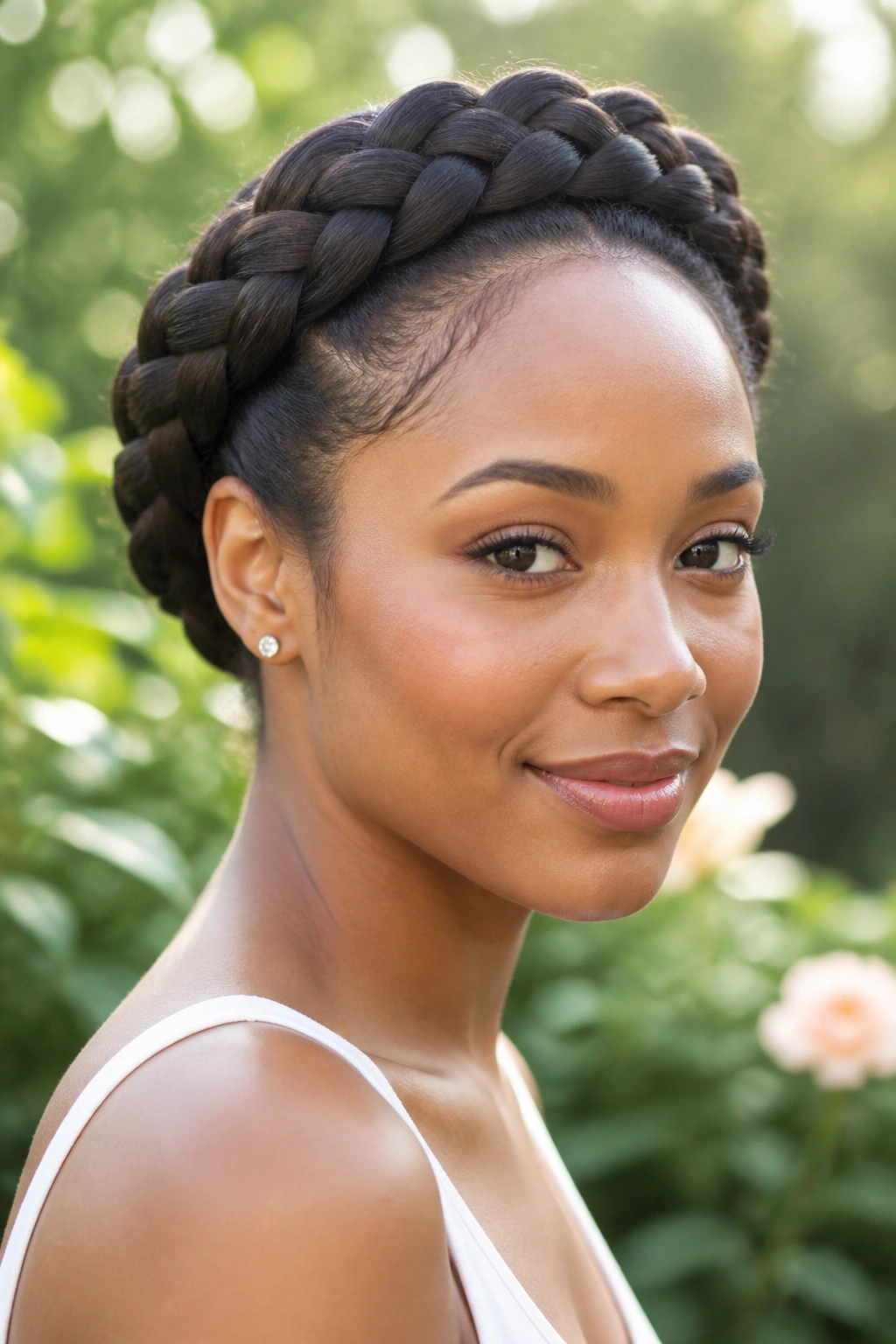
Halo braids wrap around the head like a crown, which sounds fancy, but the real value is practical: the ends stay tucked, and the whole style keeps the hair off your shoulders. That is a nice break when you are tired of refreshing curls every morning.
The look works especially well on medium to long hair because there is enough length to wrap cleanly around the scalp. On shorter hair, you may need to pin the braid a little more carefully so the shape stays smooth. Loose pieces can ruin the illusion fast.
A halo braid is one of those styles that feels polished without asking for much from you during the week. One braid, a few pins, and some satin at night. That’s a fair deal.
23. Braided Ponytail

A braided ponytail gives you height, length, and a clean finish, but only if the base is secure without being over-tight. That balance matters. Pull too hard at the crown and you’ve turned a simple protective style into a headache.
The advantage is easy styling. You can wear the ponytail sleek, wrap a small section around the base, or let the braid hang straight down. It’s a good option when you want your face completely clear and your hair off your neck.
I’m cautious with very long braided ponytails because the extra length can feel heavy by the end of the day. If the ponytail swings like a weight every time you turn your head, it’s too much. Shorter and lighter often wins here.
24. Braided Crown Updo
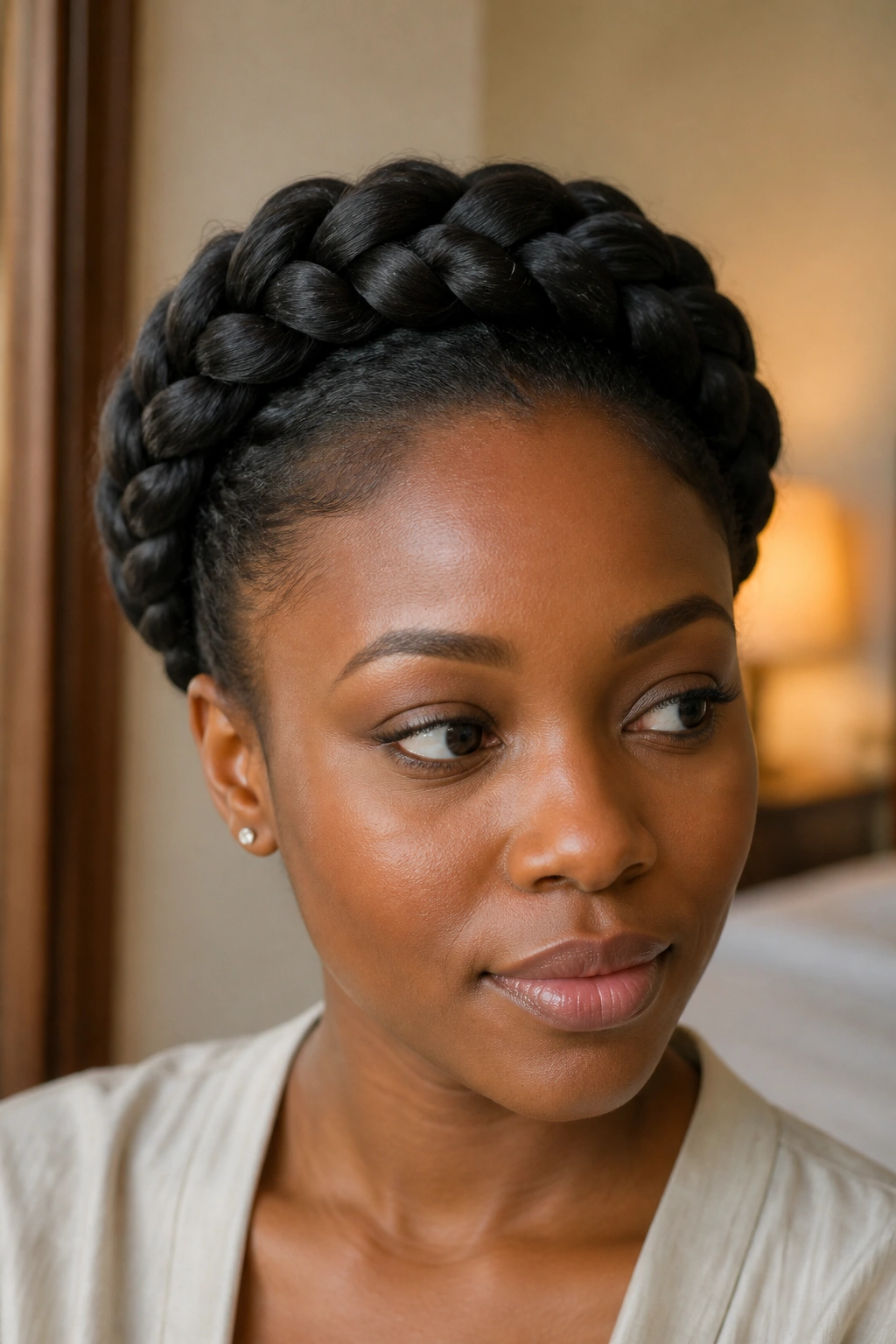
A braided crown updo takes the halo idea and makes it feel more formal, more sculpted, and a little more locked in place. The braids are arranged into a crown-like shape, then pinned or tucked so the whole style sits as a finished updo.
Compared with a simple halo braid, this version gives you more structure and usually more room to play with shape. That makes it a nice choice for events, photos, or days when you want the hair completely out of the way without defaulting to a plain bun.
The style depends on neat sectioning and good pin placement. If the pins are fighting the braid, they’ll show. If they disappear into the structure, the whole thing looks smooth and deliberate.
25. Wig with a Braided Foundation

A wig only counts as protective if the hair underneath is handled with some care. That means a clean braided foundation, enough moisture on the natural hair, and a wig cap that does not squeeze the scalp like a bad hat.
Why the Base Matters
The style is popular because it lets you change your look fast while leaving your own hair tucked away. But the real work happens underneath. If the braids are too bulky, the wig sits high. If they are too tight, you feel it every time you blink. Neither is the point.
- Best for: quick styling changes
- Foundation: flat, even braids
- Must-have: breathable cap and nighttime removal
- Watch for: friction at the hairline from poor cap fit
A wig can be a break for your hair. It can also be a problem if the base is sloppy.
26. Sew-In with Braided Base

A sew-in with a braided base can be protective when the natural hair is tucked well and the extensions are not stitched on so tightly that your scalp starts complaining. That last part is non-negotiable. A sew-in should anchor the hair, not pinch it.
The style works because most of your own hair stays underneath and out of daily reach. You are not brushing your strands every morning, and that alone can reduce breakage. The best versions leave enough access to care for the scalp and avoid building up oil or product under the tracks.
I like sew-ins for people who want a longer-wear option and don’t mind the install taking time. They are not low-effort on the front end. They’re just easier to live with once they’re in place.
27. Headwrap Style

A headwrap style is protective when the hair is tucked, moisturized, and not crammed under a rough fabric that rubs all day. The wrap itself is part of the look, but it also serves as a barrier between your hair and the outside world.
Why reach for it? On days when your hair needs a rest and you need to look pulled together fast, a good wrap can solve both problems. It is also one of the few styles that can work across lengths without needing a full install.
Choosing the Fabric
Soft cotton, satin-lined wraps, or a smooth scarf layered over a satin cap are easier on the hair than scratchy fabrics. Keep the wrap snug enough to stay put, but not so tight that your temples ache after an hour. That line is thinner than people think.
28. Threaded Wraps
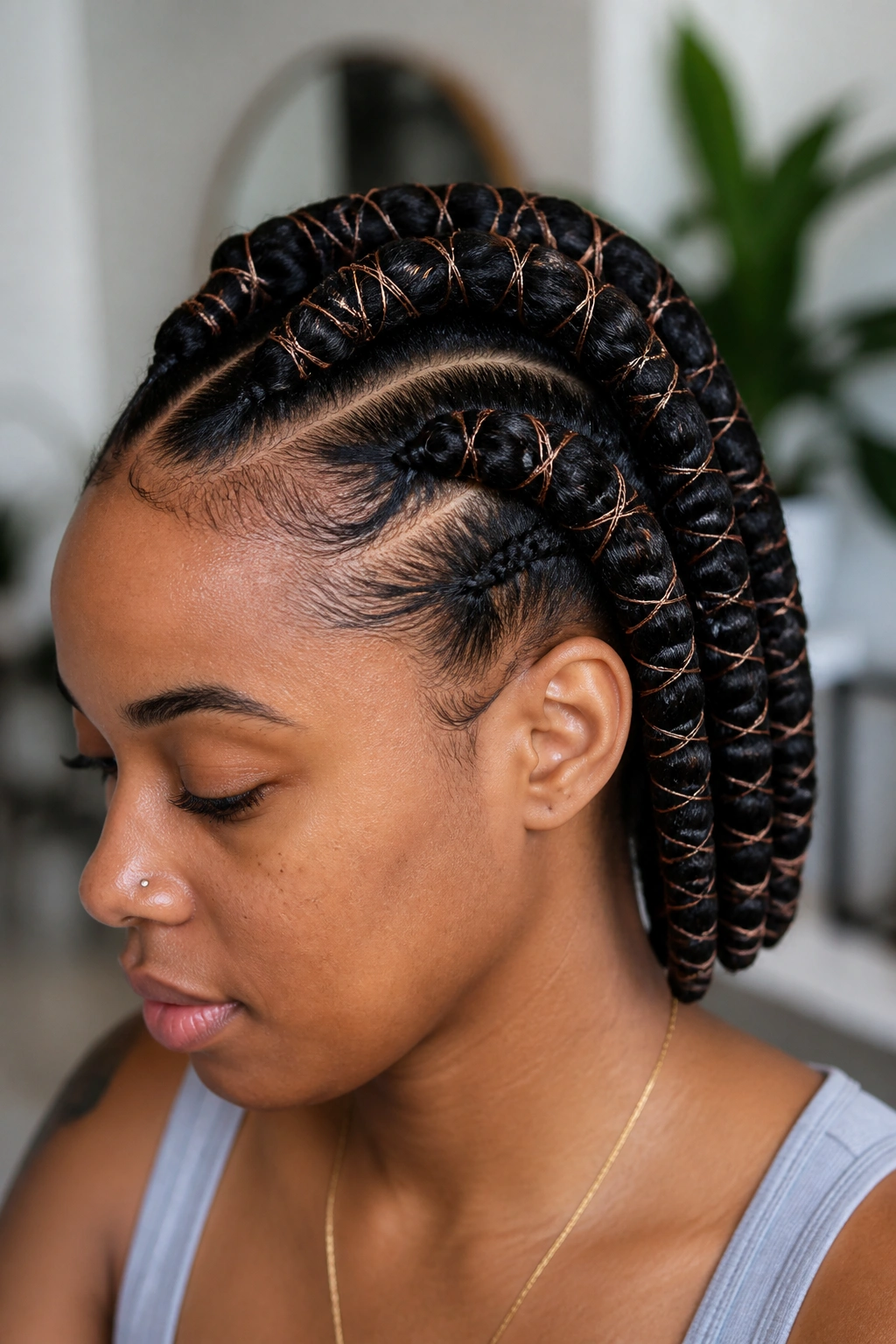
Threaded wraps are one of those old-school techniques that deserves more respect. Sections of hair get wrapped with thread, yarn, or similar material to hold the hair compact and tucked away, which can create a striking sculptural shape.
The style is protective in a very direct way: the hair is secured, the ends are enclosed, and daily handling drops way down. What makes it tricky is the material choice. Rough thread can snag. Tight wrapping can snap fragile strands. So the tension and the finish both matter.
- Good for: decorative protection and shape control
- Material choice: smooth, soft thread over scratchy fibers
- Keep in mind: removal should be slow and careful
- Bonus: it can look dramatic without extra hair added
It’s a style with personality. It also asks for patience.
29. Flat-Twist Updo
A flat-twist updo is one of my favorite low-drama protective looks for shorter or medium natural hair. The twists stay close to the head, then get tucked into a bun, roll, or pin-up shape so the ends disappear.
The strength of the style is that it gives you structure without the bulk of heavy extensions. That makes it useful when you want your hair secured but don’t want added weight on your scalp. It also works nicely under hats, helmets, or scarves because the shape sits close.
The trick is keeping the twist pattern smooth before you tuck it. If the front is bumpy, the finished updo will always look a little off. Clean lines matter here more than fancy accessories do. Good pins help, too. Cheap ones slide.
30. Tucked Ends Updo
A tucked ends updo is the kind of style that doesn’t shout, and that is part of its charm. The hair gets rolled, pinned, or folded so the ends stay out of sight, which gives your strands a break from the usual wear and tear.
Compared with loose styles, this one is kinder to the hair because there’s less rubbing and less chance of the ends catching on collars or bags. It also works when you need something plain, neat, and sturdy for a full day. No extra drama. No constant fixing.
If I had to make one broad recommendation, it would be this: keep the style clean, keep the tension low, and keep the ends hidden whenever you can. The styles people wear best are rarely the most complicated ones. They’re the ones that let hair rest without making it look neglected.
