



Short box braid styles can look sharper than most people expect. A chin-length braid bob can read clean and crisp; a shoulder-grazing set can feel softer and easier to wear. The trick is not the braid alone — it’s the shape you give it after the install.
The best short braids do two jobs at once. They protect your hair and behave like a haircut. That means the parting, the length, the way the ends sit, and even where you tuck a few pieces behind your ears all start to matter in a big way.
I keep coming back to short lengths because they’re forgiving in one sense and fussy in another. They dry faster, tug less, and are usually lighter on the scalp, but the shape is exposed. There’s nowhere to hide a crooked part or a bulky end.
That is also the fun part. Short braids can look neat, playful, polished, or a little sharp depending on how you wear them, and the styles below lean into all of that. Start with the shortest shapes first — that’s where the range is bigger than people assume.
1. Chin-Length Box Braid Bob
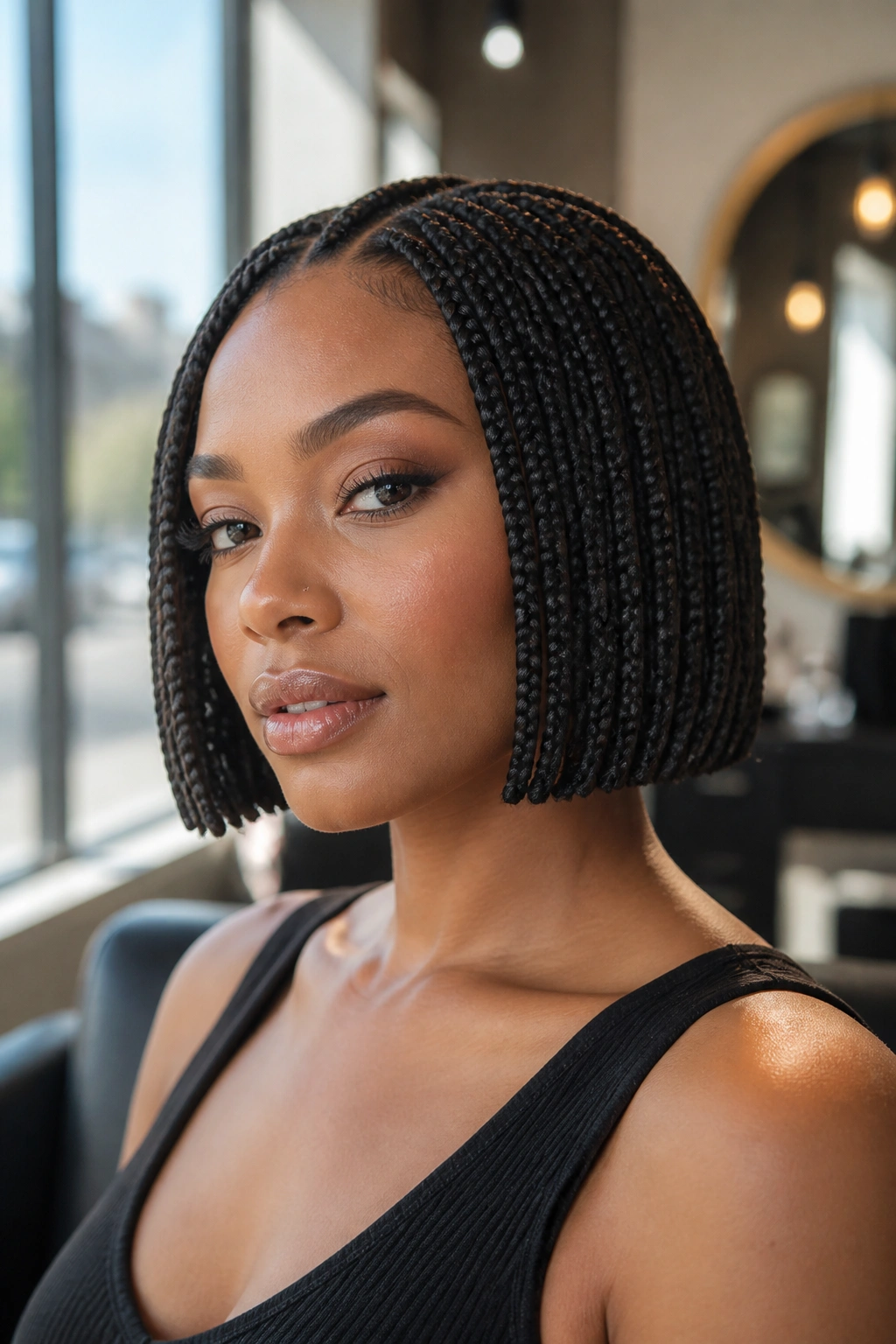
A chin-length braid bob is the cleanest place to start if you want short box braid styles that look intentional right away. The line sits near the jaw, so the style feels structured even when the braids themselves are tiny or medium-sized.
Why the shape works
The bob shape gives you a built-in frame around the face. That matters more than people think. When the ends stop around the chin or just below it, the eye goes straight to the jawline and cheekbones, which makes the whole style feel polished without a lot of extra work.
This is also one of the easier short braid looks to keep neat through the week. There’s less length to snag on collars, seat belts, or bag straps. Less dragging. Less frizz at the ends.
- Best length: 6 to 8 inches of braided length
- Best parting: middle part or soft side part
- Best for: anyone who wants a tidy, haircut-like finish
- Watch for: braids that are too chunky at the bottom, because they can flare out
Tip: Ask for the ends to be cut or sealed evenly so the bob lands as a shape, not a bunch of random lengths.
2. Shoulder-Grazing Side Part
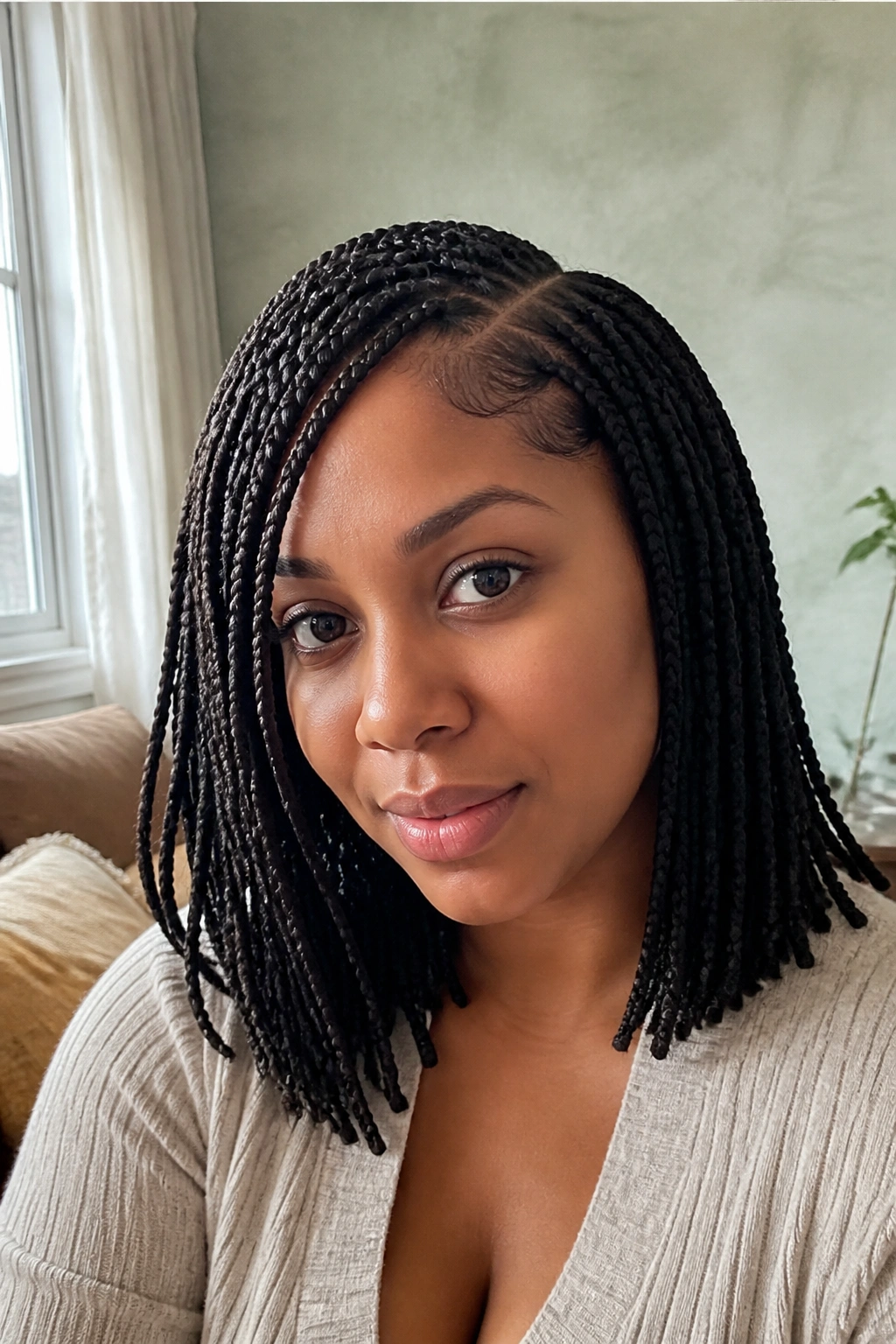
A shoulder-grazing side part has a different energy. It feels a little looser, a little more lived-in, and honestly a little easier to wear if you do not want your braids sitting rigidly around your face.
The side part shifts the weight off the center of the head, which softens the whole look. On short to medium-short braids, that small change makes a huge visual difference. One side falls forward. The other stays a little more tucked back. Simple. Effective.
You also get more movement when you walk or turn your head. That matters because short braids can sometimes look too static if the parting is too perfect. A side part gives them some swing without turning the style into a full updo.
If your face is round, square, or broad through the forehead, this shape can be a very nice way to break up straight lines. If your hairline is delicate, keep the part a little off-center instead of diving deep into the side.
3. Deep Side-Swept Braids
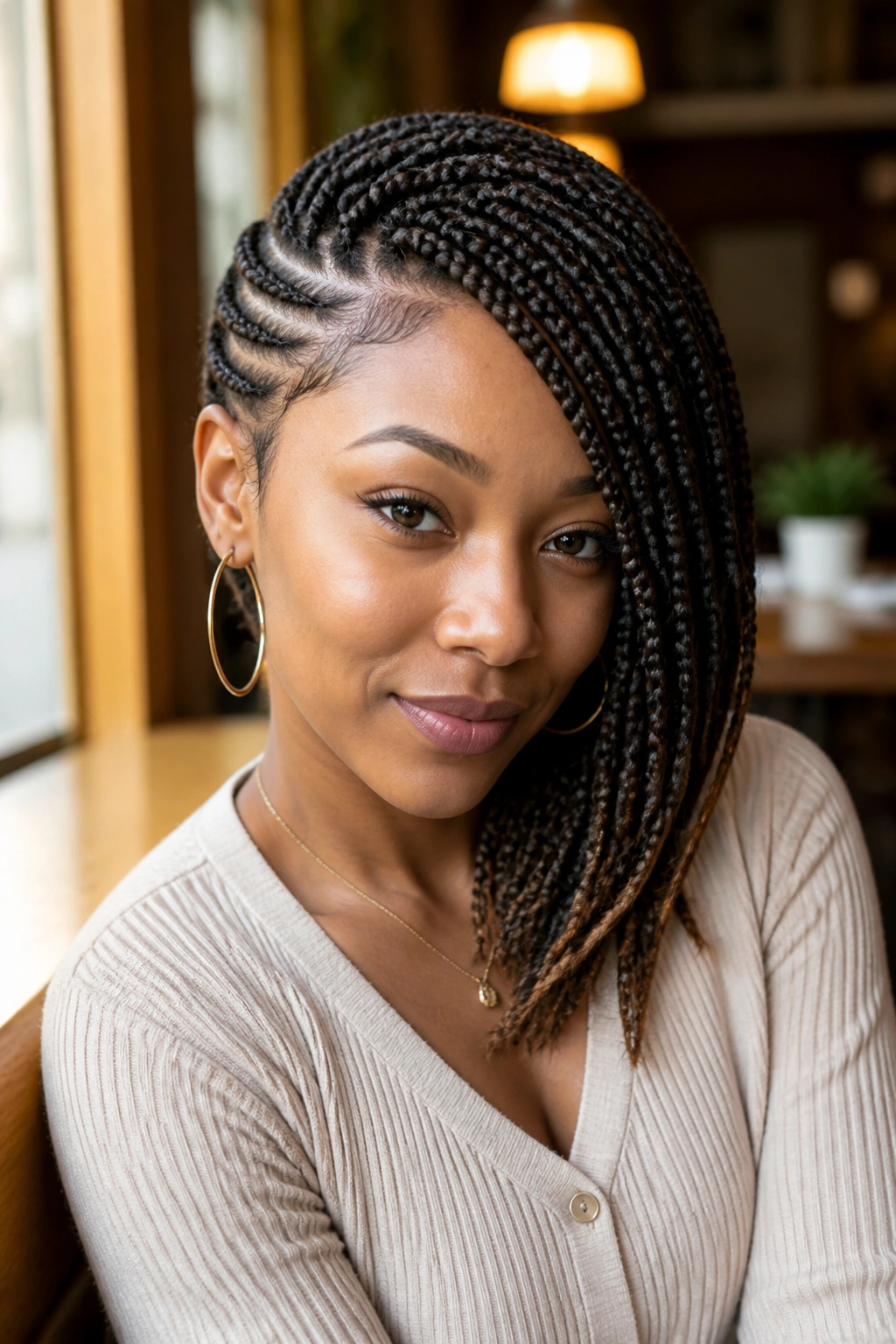
Picture braids that start close to one temple and sweep across the forehead before dropping toward the opposite shoulder. That’s the whole appeal here. It feels dramatic, but not loud.
The deep side-swept look works best when the braids are short enough to stay light and long enough to drape. Around shoulder length is the sweet spot. Anything much shorter and the sweep can look stiff; anything much longer and it starts behaving like a different style.
What to ask for
- A clean deep side part
- Braids that are slightly longer around the front
- A little extra length at the side with more volume
- Lightweight pins if you want to secure the sweep
The practical advantage is face framing. The front section can soften a high forehead, balance strong brows, or pull attention toward earrings. It also covers a lot of the forehead on days when you want less scalp visible. Good for dry scalp days, too. You know the ones.
4. Classic Middle-Part Mini Braids

A middle part with short mini braids is the kind of style that looks plain in theory and quietly expensive in real life. It depends on clean parting, even tension, and braids that sit flat at the root. Mess up one of those pieces and the whole thing feels off.
There’s a nice calmness to this look. Both sides mirror each other, so the style reads neat even when the braids are tiny and dense. If you like symmetry and you want your short box braid styles to work with hoop earrings, glasses, or a sharp neckline, this is a strong choice.
The other reason I like it is that it wears well in ordinary life. It fits under scarves. It works with a blazer. It also looks fine with a sweatshirt, which is not nothing. Some styles only look good when you have dressed up for them. This one behaves.
Keep the center part straight from forehead to crown, and make sure the braids on both sides are the same density. If one side gets heavier, the whole shape starts leaning.
5. Triangle-Part Box Braids
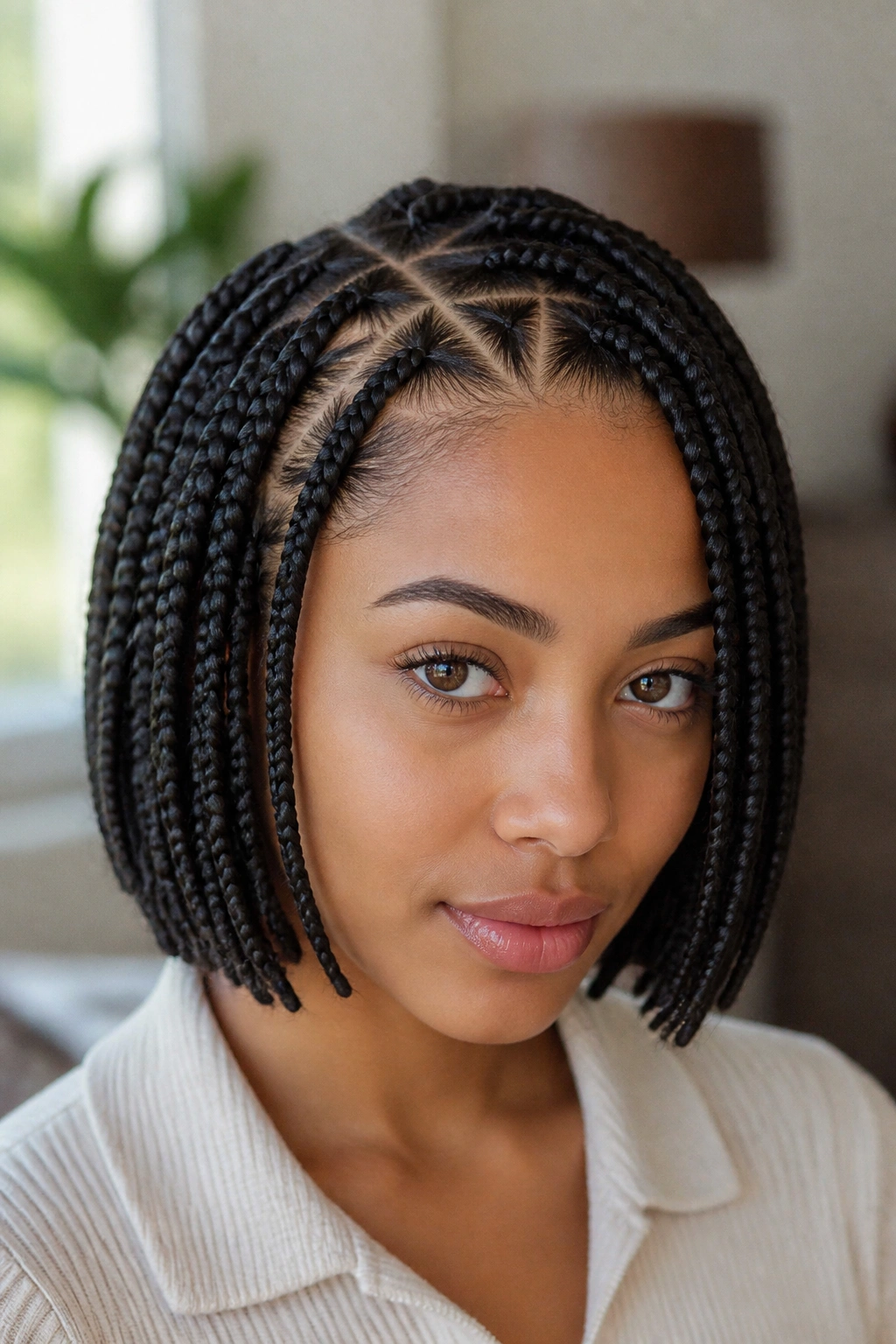
Triangle parts change the mood fast. Same braid length, same basic install, completely different finish. Instead of square sections, you get sharp little triangles at the scalp, and that shape gives the style a graphic edge right away.
This is one of my favorite picks when someone wants short braids to feel less traditional and a bit more deliberate. Triangle parts show up especially well on short lengths because there is less hair competing for attention. You see the parting. You notice the geometry. That is the point.
What makes it different
Triangle parts look strongest when the braids are medium-thin or medium-sized. If the braids are too big, the triangle pattern can get buried. If they’re tiny, the parting starts to look intricate in a good way.
They also photograph cleanly from the top and from the side. No, that is not a fluffy detail. A good triangle-part install can make a simple bob look like the braid work took twice as long, even when the styling afterward stays easy.
- Best on: chin-length to shoulder-length braids
- Best with: a center part or a deep side part
- Style mood: crisp, graphic, a little edgy
- Maintenance note: keep the part lines clean with a soft brush and a tiny bit of scalp oil
6. Box Braids with Beaded Ends

Beads change the sound of your braids as much as the look. You feel them before you even see them. A small cluster at the ends gives short box braid styles a bit of movement and some personality, especially if the braids hit the collarbone or jaw.
The key is restraint. Too many beads and the style starts pulling downward in a way that looks clunky. A few well-placed beads near the tips or at the front pieces can be enough. I like them most on shorter braids because the weight sits low, not all the way down the braid shaft.
A practical note: choose bead sizes that can slide on without forcing the braid ends into a knot. If the hole is too small, you end up fraying the tips while trying to thread them through. Not worth it.
Dark beads give a quieter finish. Clear, wooden, or gold-toned beads read more decorative. Either way, keep the braid ends neat so the accessories look intentional instead of random.
7. Curled-End Box Braids

Can short box braids have soft ends? Absolutely. That little bend at the bottom changes the whole vibe. Curling the ends makes the style feel lighter and less rigid, which is helpful when the braids themselves are only chin to shoulder length.
How to use it
Wrap the last inch or two of each braid around a flexi rod, perm rod, or small roller. Set the ends with hot water if the hair you used can handle it, then let them cool completely before taking them down. The ends should hold a soft bend, not a tight spiral unless that is the look you want.
This works especially well on fresh installs that feel a little stiff. The curl breaks up the straight line at the bottom and stops the style from looking boxy in the wrong way. It also looks good when the rest of the braid stack is neat and uniform.
If you want the curls to last, do not overload the ends with heavy creams before setting them. Too much product weighs them down fast.
8. Half-Up Top Knot
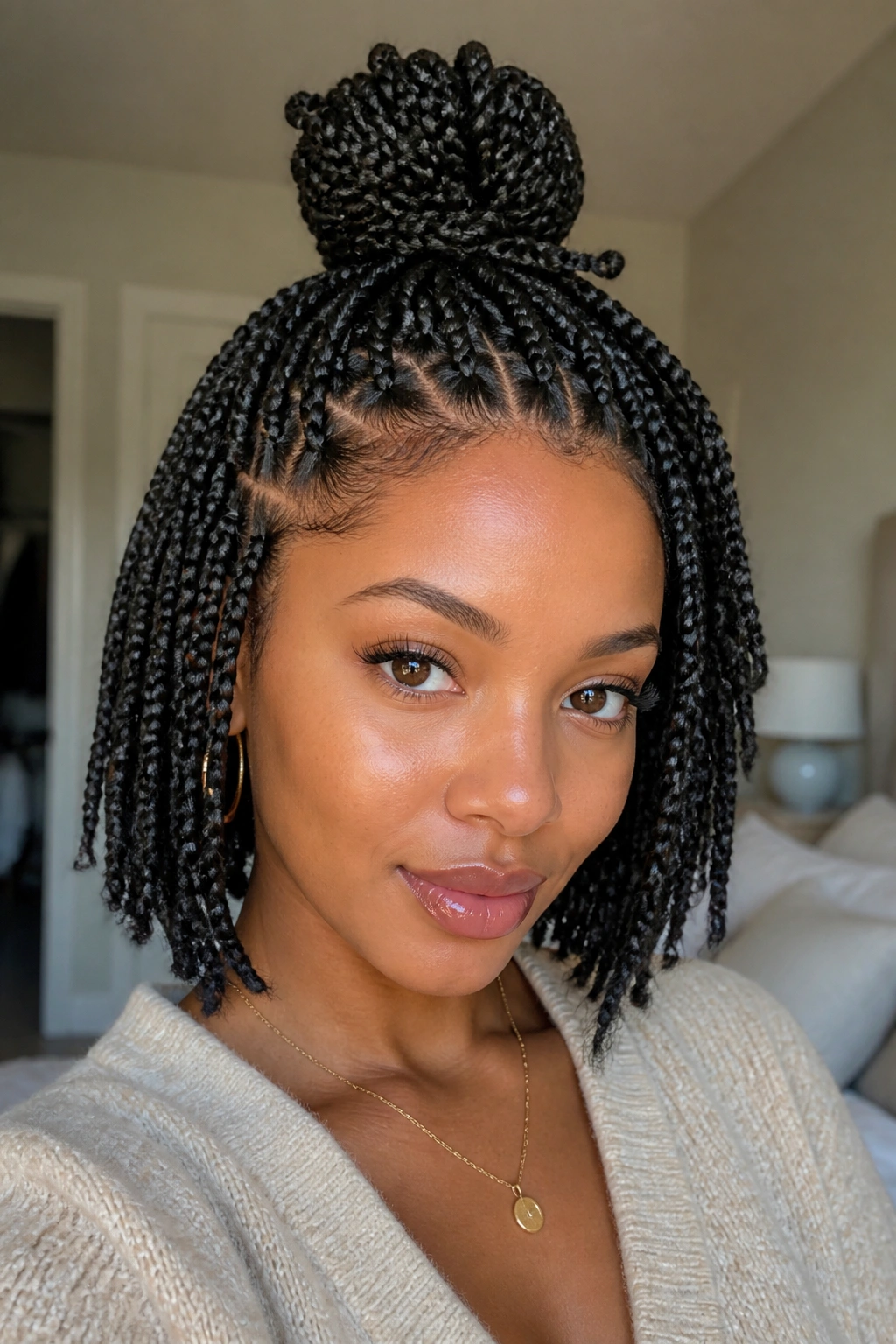
The half-up top knot is one of those styles that solves a real problem: short braids in your face when you do not want them there. Pull the top section up, wrap it into a knot, and leave the rest to fall. Done.
It works on more lengths than people assume. Chin-length braids make a tiny, cute knot. Shoulder-length braids make a fuller one. In both cases, the style creates height at the crown and clears the face without forcing everything into a full bun.
I like this one on days when the braids feel too heavy around the temples. The knot lifts the weight a little, which can make a big difference by late afternoon. If you use a satin scrunchie or a snag-free elastic, the shape stays cleaner.
Keep the knot slightly loose if you want softness. Make it tight if you want a sharper look. Both are fine. The point is balance, not perfection.
9. Low Braided Bun

A low bun with short braids can look almost severe in the best way. It sits at the nape, keeps the neck clear, and gives the style a neat finish that works for work, dinner, or anything that needs a clean shape.
The trick with short braids is tucking the ends without creating a bulky lump. If the braids are shoulder length, fold them under and pin them in a circle. If they’re chin length, you may need to gather them a little higher before pinning them down flat.
This style looks better when the front is tidy. A soft side part or a clean middle part makes the bun feel deliberate. A messy root area can make the whole thing read unfinished.
Use U-pins or strong bobby pins, and cross them instead of jamming them in straight. The crossed placement grips better and usually holds through the day without that little slow slide some pins develop.
10. Braided Crown Pin-Back

This is the style for days when you want the front of your braids off your face but you do not want a full updo. Pin the front braids back along the hairline, let the rest fall, and you get that crown-like shape without much fuss.
The look is quietly useful. It opens up the face, shows off earrings, and keeps the front sections from getting sweaty or frizzy. On short box braids, that matters because the front pieces are often the first to puff up.
If you want the crown effect to read clearly, cross a few front braids over each other before pinning them. That gives the style a woven look instead of a random tuck. You do not need a lot of pins, but the ones you use should be flat and hidden.
A satin scarf overnight helps keep the pinned section from getting lumpy. Otherwise you can wake up with one side trying to escape, which is annoying and oddly common.
11. Face-Framing Loose Front Braids

Some styles are strong because they hold things back. This one works because it leaves a few pieces out. A couple of loose front braids can soften a short set instantly, especially if the rest of the braids are pulled into a low bun, half-up knot, or just tucked behind the shoulders.
This is a good shape if you like softness around the cheekbones. The loose pieces can narrow the face visually and keep the look from feeling too severe. They also make short braids feel a little more relaxed, which is useful if the install itself is very neat.
The only real trap is leaving too many front braids out. Then the style loses structure and starts looking unfinished. Two to four front pieces is usually enough.
If the braids are shoulder length or longer, you can curl the loose front pieces slightly at the ends for a gentler fall. If they are chin length, keep them straight and let the shape do the work.
12. Ombré Short Box Braids
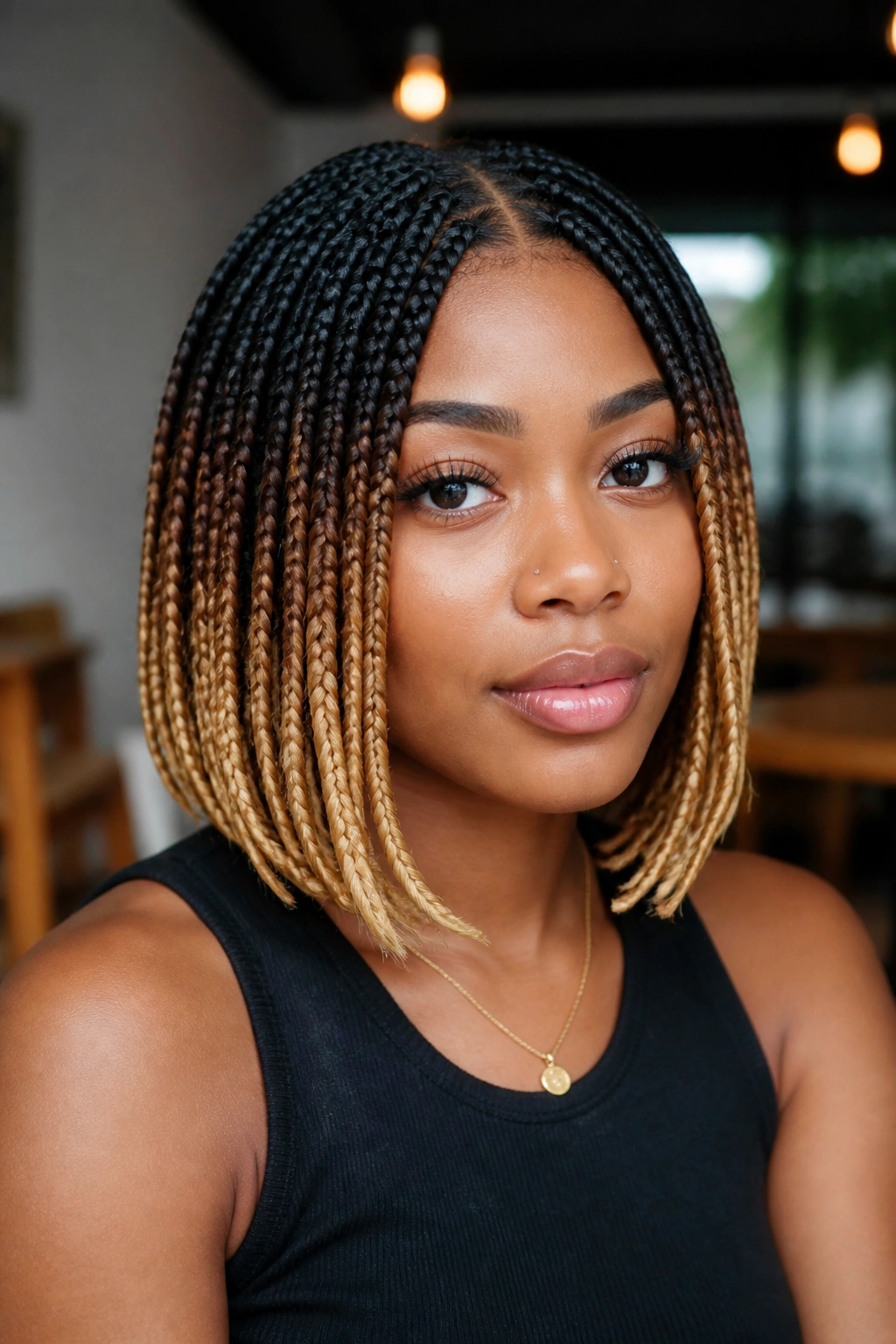
Color does a lot of heavy lifting on short braids. An ombré braid set — dark at the roots, lighter toward the ends, or the reverse if you like a bolder finish — gives the whole style more depth without needing extra accessories.
How to keep the gradient clean
The best ombré effect looks gradual, not striped. Blend the synthetic hair in sections so the color shift happens over a few inches instead of all at once. On short lengths, that transition becomes more visible because there is less braid to soften it.
- Best on: bob-length or lob-length braids
- Best colors: black to honey brown, black to burgundy, dark brown to auburn
- Best styling move: wear the hair down first, then tuck one side if you want the color band to show
- Watch for: harsh color lines at the ends
I like ombré on short braids because it keeps the style from feeling flat. Even a small change in shade makes the braid pattern stand out. And if you are trying a bob for the first time, color is one of the easiest ways to make it feel less plain.
13. Gold Cuffs and Rings

Gold cuffs are one of the quickest ways to make short box braid styles look finished. A few cuffs placed near the front or at the mid-lengths can change the whole read of the style without adding any real work.
Why gold? It shows up. That is the plain answer. Against black, brown, or auburn braids, a small metallic accent catches the eye without needing a big accessory stack. It also holds up nicely on short braids because there is less braid length for the cuffs to compete with.
What to watch for
Pick cuffs with a secure opening. Loose ones slide. Tiny ones can pinch the braid and make removal messy. I prefer putting cuffs where they can be seen from the front and one or two on the side, not scattered everywhere.
- Use 3 to 7 cuffs on a short set
- Keep heavier rings away from the roots
- Mix matte and shiny metal only if you want a busier look
- Place them where the braid naturally falls, not where you have to fight the shape
It is a small detail, but it saves a plain install from looking unfinished.
14. Asymmetrical Braided Lob

An asymmetrical braided lob is for anyone who likes a cut with some attitude. One side sits slightly longer than the other, so the whole style leans instead of mirroring itself. It feels modern in the plain-English sense of the word — sharp, a little unexpected, and very obviously deliberate.
The reason it works so well with short box braids is that the asymmetry is easy to see. With long braids, the difference can get lost in the weight. On a lob, a few extra inches on one side change the whole silhouette.
This shape also gives you options. You can tuck the shorter side behind the ear, pin one side back, or let the longer side hang forward for a diagonal line across the chest. That line matters. It pulls the eye down in a way that can make the face look longer.
If you want the finish to stay clean, have the longest side cut evenly at the same point, not feathered all over the place.
15. Tucked-Under Faux Bob

A tucked-under faux bob is the style I recommend when someone has shoulder-length braids but wants them to behave like a shorter cut for a night out. You fold the ends under, pin them in place, and create the illusion of a blunt bob.
It is a little sneaky, and I mean that in a good way. The front still gives you the movement of braids, but the back sits close to the neck. The shape looks more polished than a loose down style and less formal than a tight bun.
This works best when the braids are not too thick. Heavy braids can fight the tuck and slide out. Medium or small braids usually stay put more easily, especially if you use a few crossed pins and a satin-wrapped base elastic.
A side part makes the faux bob feel softer. A center part makes it more graphic. Either way, the illusion is the point.
16. Low Ponytail with Wrapped Base
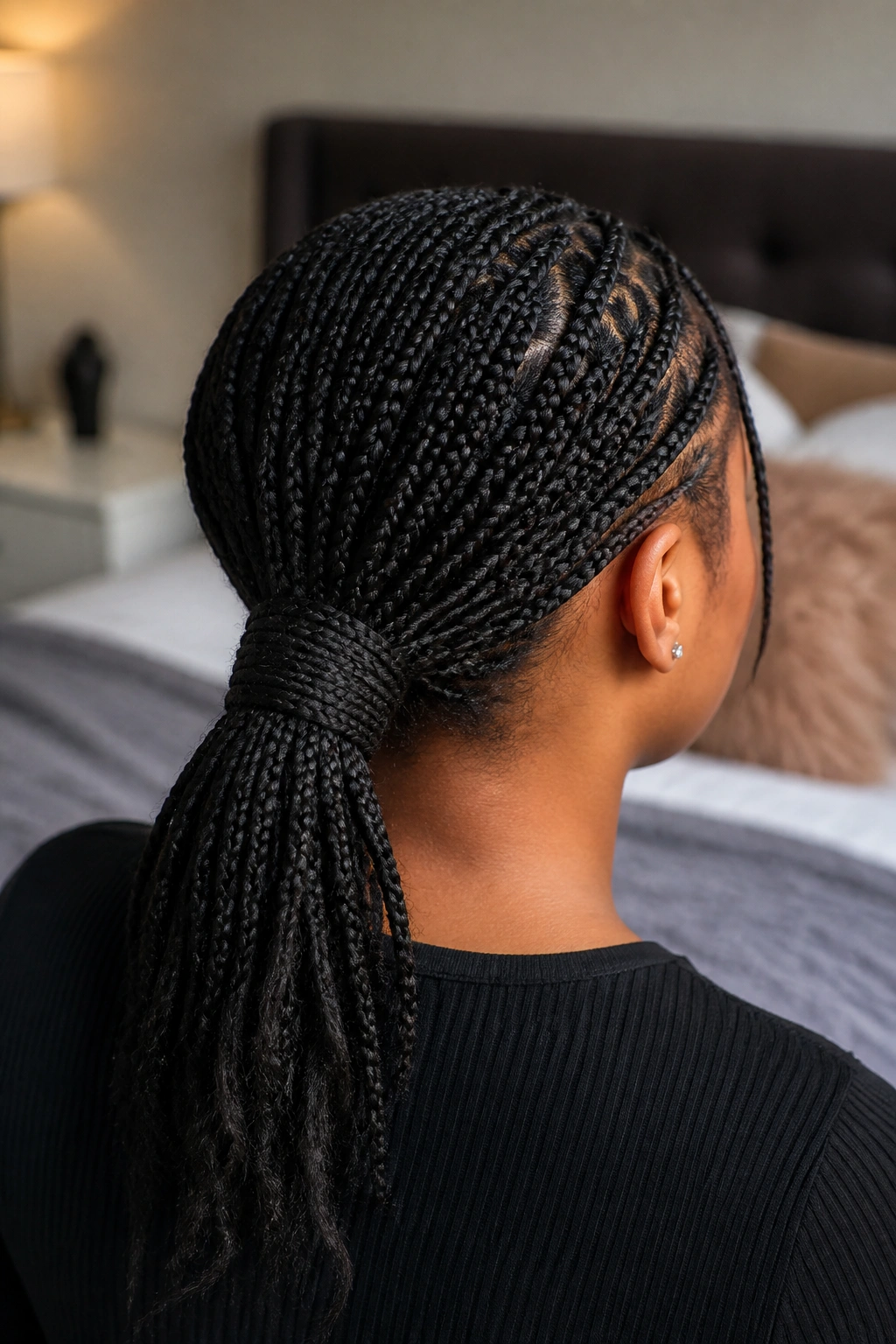
A low ponytail is often overlooked because it sounds plain, but with short braids it can look very clean. Gather the braids at the nape, wrap a small section around the base, and let the ends fall neatly over the back.
This is a good answer when you want the braids off your face but you do not want the bulk of a bun. It gives the neck room to breathe and keeps the style from feeling too spread out on the shoulders.
The wrapped base is what makes it look polished. Use one braid or a short section of braid hair to hide the elastic. That little move changes the whole finish. Without it, the ponytail can look rushed.
If the braids are chin length, the ponytail may sit a little higher than you expect. That is fine. Shorter braids do not always drop as low, and forcing them too low can create tension at the nape.
17. Double Space Buns

Space buns make short braids feel playful without turning them into a costume. Split the hair into two sections, twist each side into a bun, and leave the rest tucked close to the scalp.
This style works especially well on chin-length and shoulder-length braids because the shorter length gives the buns enough lift without making them huge. If the braids were much longer, the buns would start looking heavy and the balance would shift.
I like this look when the braids are fresh and the parting is clean. The symmetry does a lot of work here. If the parts are uneven, the buns can look lopsided fast. Not charming lopsided. Just off.
You can keep the buns high and obvious or place them a little lower for a softer shape. Either way, use pins underneath the bun, not just an elastic, so the style does not sag by midday.
18. Side-Part Braids with Ear Tuck

A side part becomes more interesting when one side gets tucked behind the ear. That tiny move opens one half of the face and lets the braid lengths swing free on the other side.
Why this one works
It is one of the easiest ways to make short box braid styles feel less heavy. Braids can sit close around the cheeks, and sometimes that is flattering. Sometimes it is not. A tidy ear tuck solves that problem fast.
The style also creates room for earrings, glasses, or a visible brow line. That matters if you like your hair to stay in the background while your face takes the lead.
- Best on shoulder-grazing braids
- Works well with medium parts and soft side parts
- Good for showing off hoop earrings or cuffs
- Keep the tucked side loose so it does not leave a hard dent
A dab of edge control near the temple can help the tuck stay smooth, but do not plaster the hair down. A little movement is what keeps it from looking rigid.
19. Shell-Decorated Braids
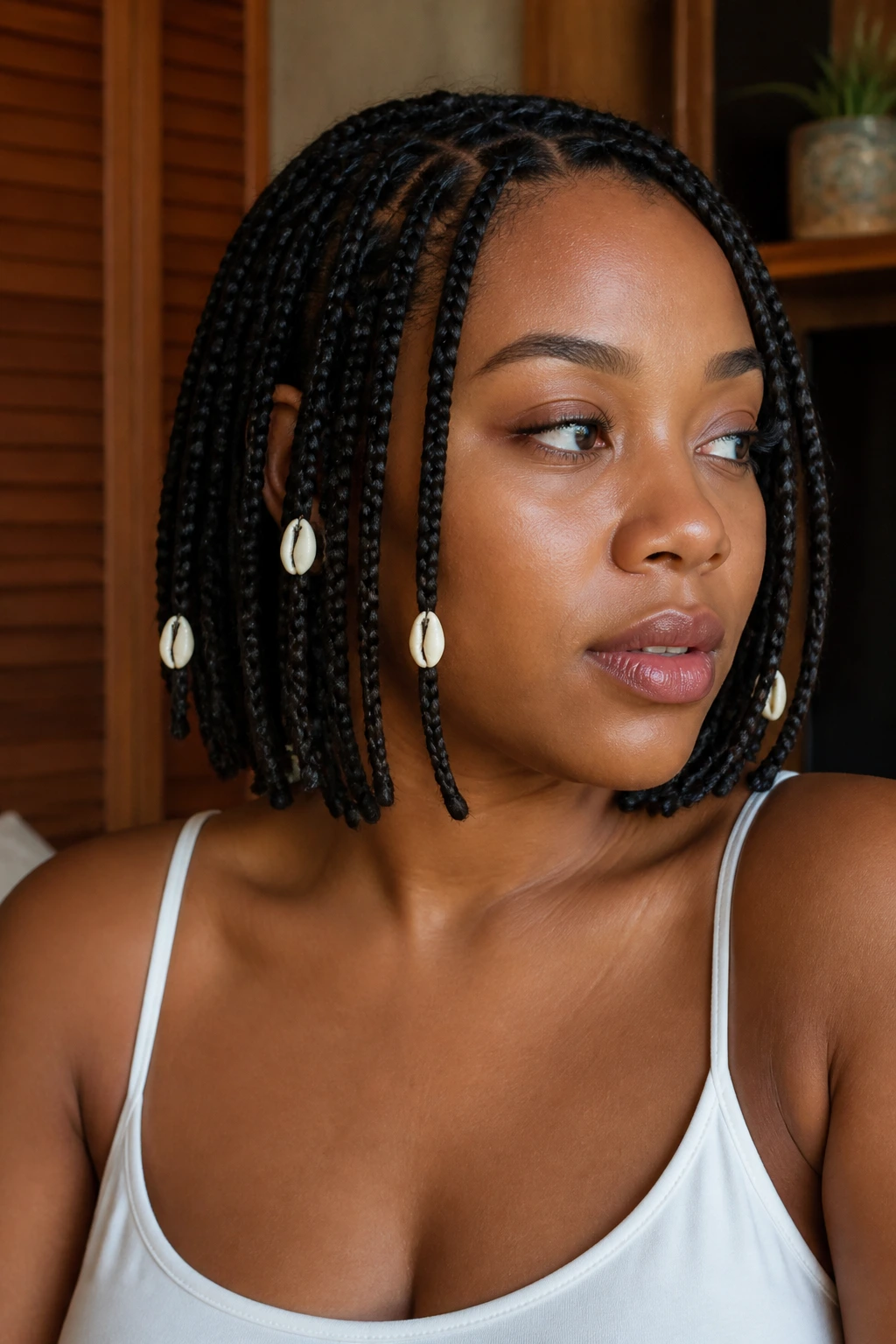
Shells give short braids a little rhythm. They add texture, sound, and a visible point of interest near the ends or along the outer layers. I like them best when they are used sparingly, because too many shells can overwhelm a shorter braid set.
The science behind the look
Short braids have less length to carry decoration, which means each accessory matters more. One cowrie shell or a small cluster near the front can read as a choice. Twelve of them can read as clutter.
A good shell placement follows the shape of the braid. Put them where the hair naturally falls and where the shell can rotate a little without yanking at the braid.
- Best on bob-length or collarbone-length braids
- Use light shells with smooth edges
- Keep them away from the very root if your scalp is tender
- Pair with a center part or a half-up style for balance
This style has a travel-friendly feel, but you do not need a beach mindset to wear it. It works just as well with a tank top and gold hoops as it does with a dress.
20. Chunky Short Box Braids

Chunky short box braids make a blunt statement. Fewer parts, bigger sections, more visible texture. If you like a braid style that reads full and bold, this is it.
The nice thing about chunky braids is that they install faster than tiny ones and usually feel a little less fussy afterward. On short lengths, the thickness gives the style weight without requiring extra length. That balance matters if your hair is dense or if you want the braids to show from across the room.
The downside is obvious. Bigger braids can feel heavier at the roots if the tension is too tight. Ask for neat parting and low tension, especially around the front and crown. A chunky braid should feel secure, not pulled tight like a drum.
This is also a strong choice if you want the ends to sit in a blunt bob shape. Thick braids naturally make that outline look firmer.
21. Micro Box Braids
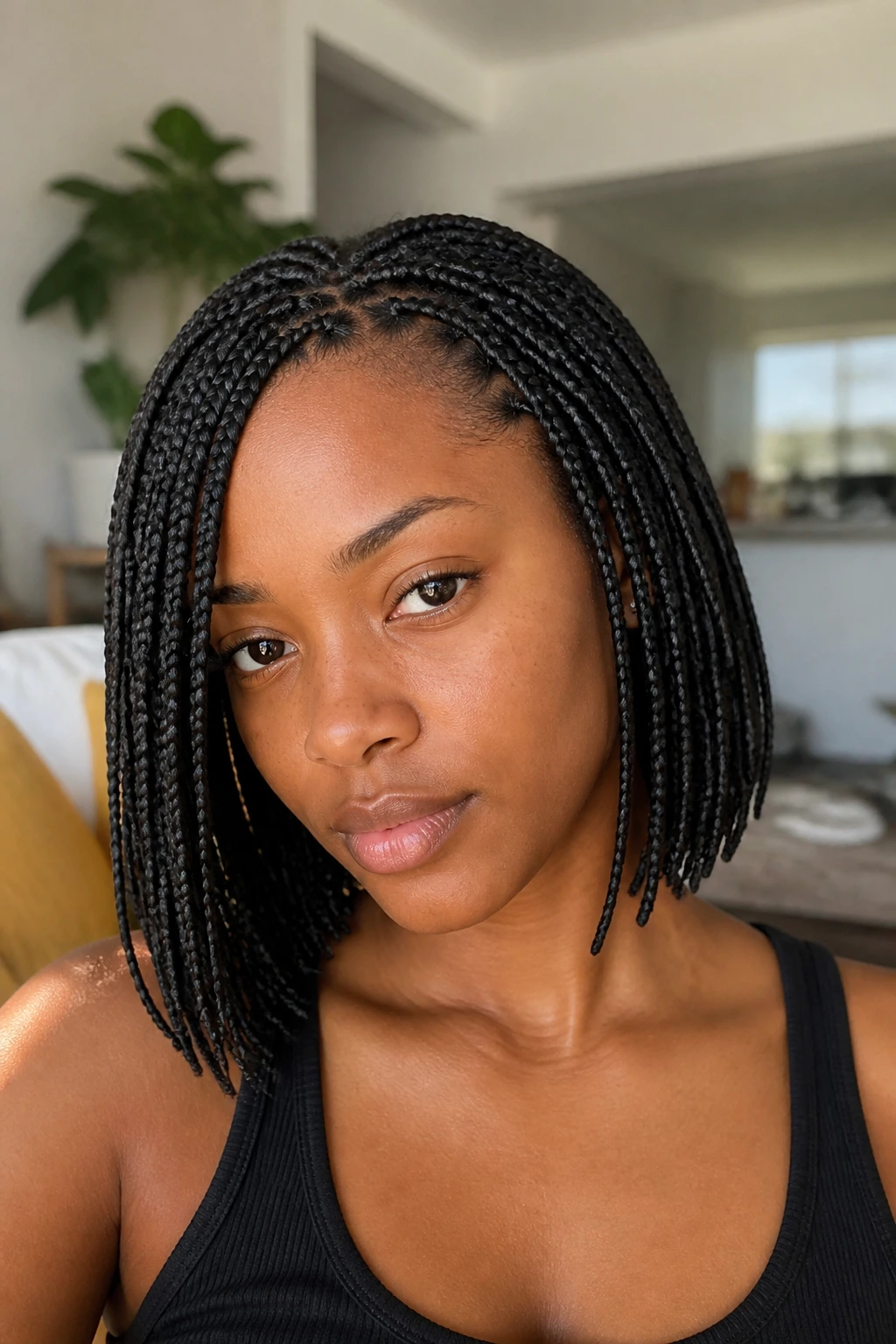
Micro braids on short lengths are not a lazy choice. They take time, and they ask for patience. What you get in return is a very flexible style that can be worn down, tucked, pinned, or wrapped in smaller shapes than chunkier braids allow.
The visual effect is softer and denser at the same time. Because each braid is small, the overall look can move like fabric instead of rope. That is the part people often underestimate. Micro box braids do not scream for attention; they whisper it.
They do ask for good scalp care. Small braids can mean more tension points if the install is rushed, and the tiny parts show buildup faster. Wash the scalp carefully and keep product light near the roots.
If you want maximum styling range on short hair, this is one of the best bets. The braid count gives you options, which is the real point.
22. Layered Mixed-Length Braids
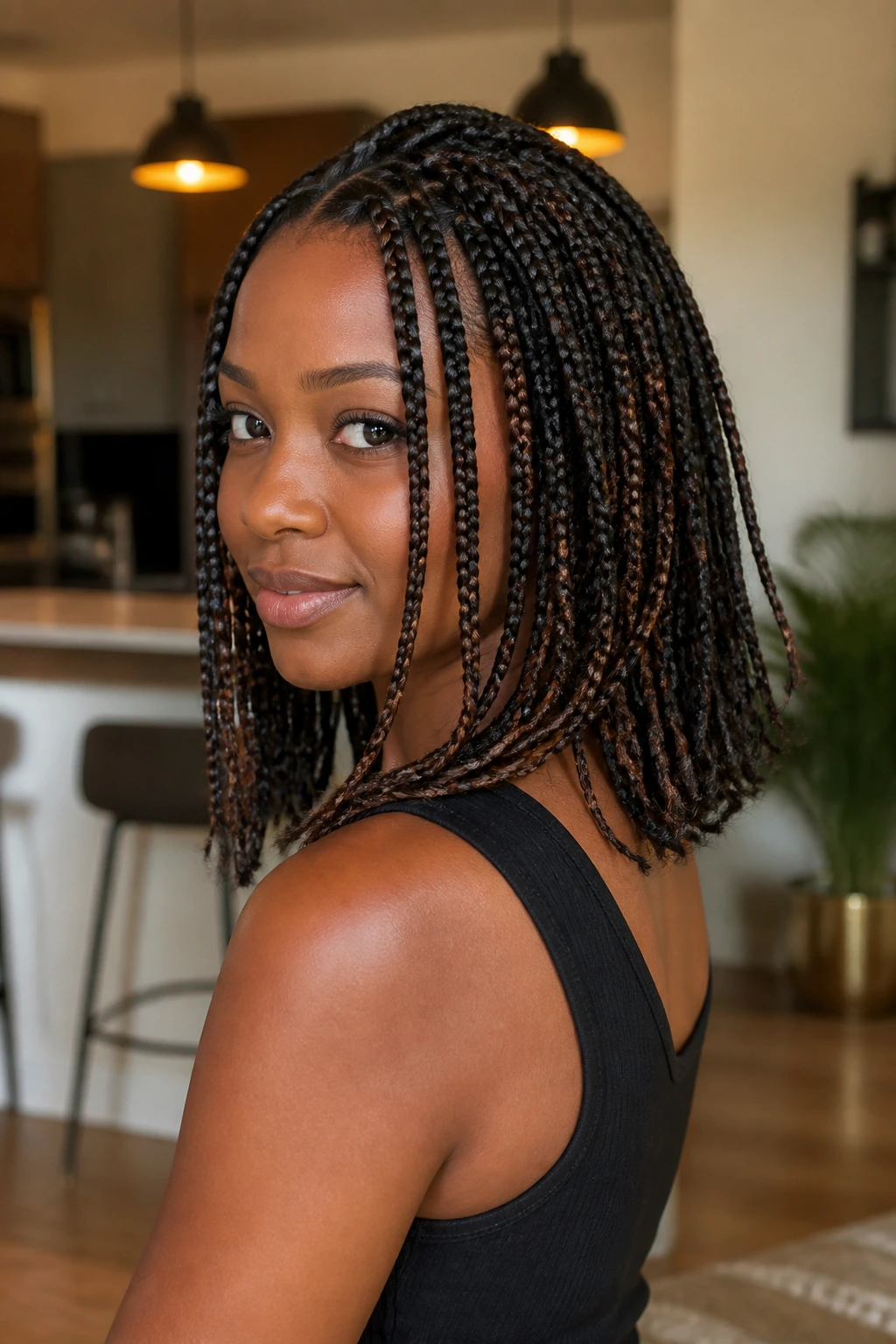
Layered braids are a smart answer when you want short box braid styles that move like a haircut. Keep some braids a little longer in the front, let others land shorter in the back, and you get a shape that looks built rather than flat.
The layered effect is especially nice on shoulder-length installs. That extra bit of variation keeps the ends from forming one hard line, and hard lines are not always flattering in braids. A little staggered length makes the style breathe.
I also like this shape for people who wear the same braids several ways. Down, half-up, pinned back — layered lengths keep each version from looking identical. That matters if you get bored quickly.
The one thing to avoid is random layering. It has to look planned. If the lengths are too uneven, the style turns messy instead of dimensional. Ask for deliberate stacking, not accidental chopping.
23. Faux Hawk Braids
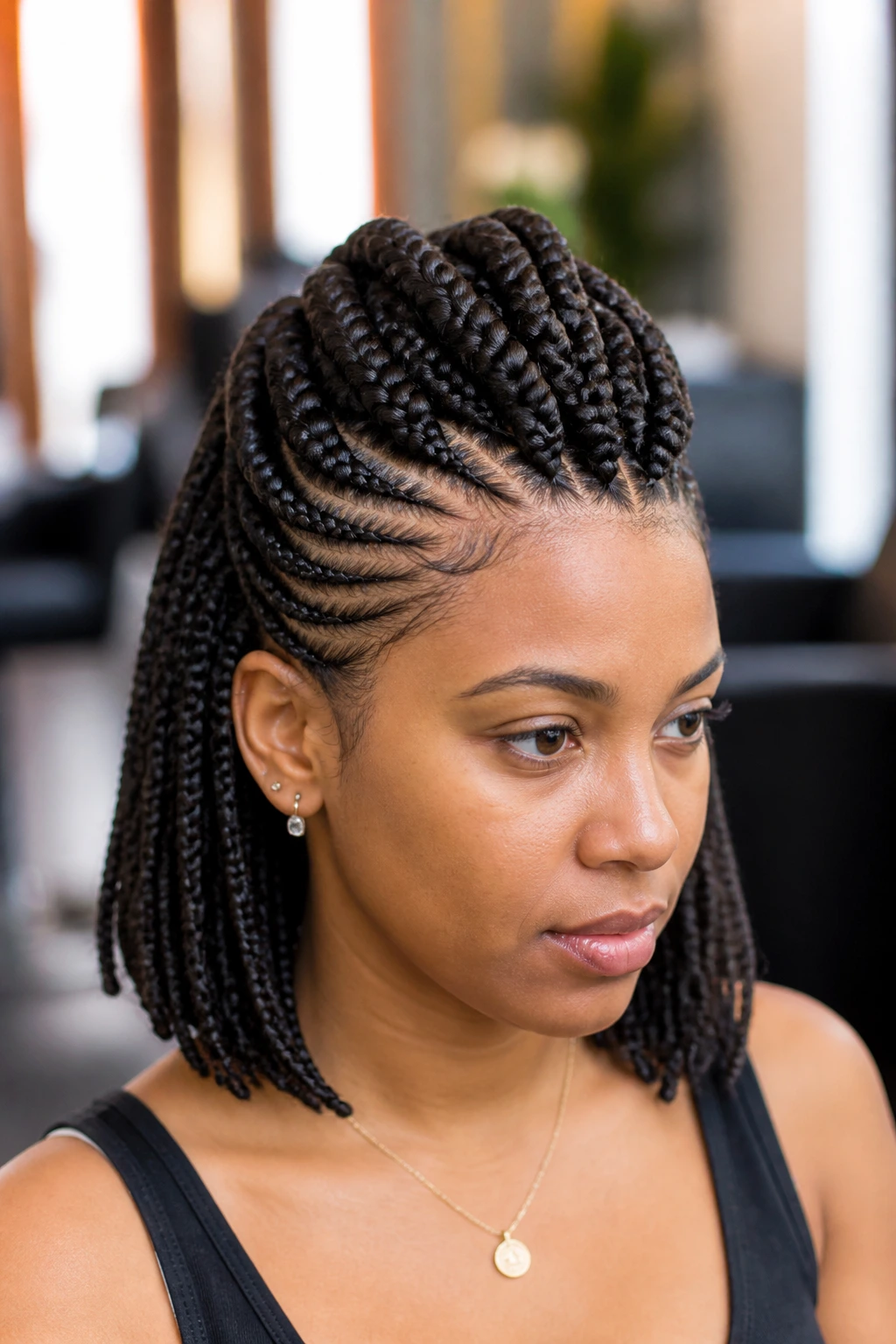
A faux hawk in braids is a good answer when you want short hair with some edge but do not want to shave anything. Pin the sides close, keep the center section higher, and let the braids run down the middle like a ridge.
What makes it different
The shape creates height at the crown and narrows the sides, which can make the face look longer. It also shows off short braids in a way a basic down style does not. You see the structure right away.
This is one of those styles that looks more complicated than it is. A few strong pins, a little tension at the sides, and a clean center line do most of the work. The trick is keeping the center section full enough to hold the shape without making the sides too flat.
- Best on chin-length to shoulder-length braids
- Use extra pins at the temple area
- Keep the crown section slightly loose for volume
- Great for events, nights out, or when you want a sharper outline
If you like braids with some bite, this one delivers.
24. Sleek Edges and Baby Hair Focus

Edges can make short braids look finished, but there is a fine line between neat and overdone. I prefer baby hair styling that supports the braid shape instead of fighting it. Small swoops near the temples, a soft curve at the front, and that is enough.
The reason this matters so much on short box braids is simple: the face is close to the style. There is no long curtain of hair to soften the hairline. Everything shows. A clean edge pattern can make the braid install look fresher for longer, especially in photos or under bright light.
Use a light edge control and a small brush. Press, do not scrape. If the hairline gets too stiff, it starts looking shiny in the wrong way and can flake later. Nobody wants that.
This style works on every short braid length, which is rare. Chin-length, shoulder-length, micro braids, chunky braids — the edge work just changes scale. Small braids need smaller swoops. Bigger braids can handle a slightly bolder curve.
25. Rolled-Up Pin-Up Braids
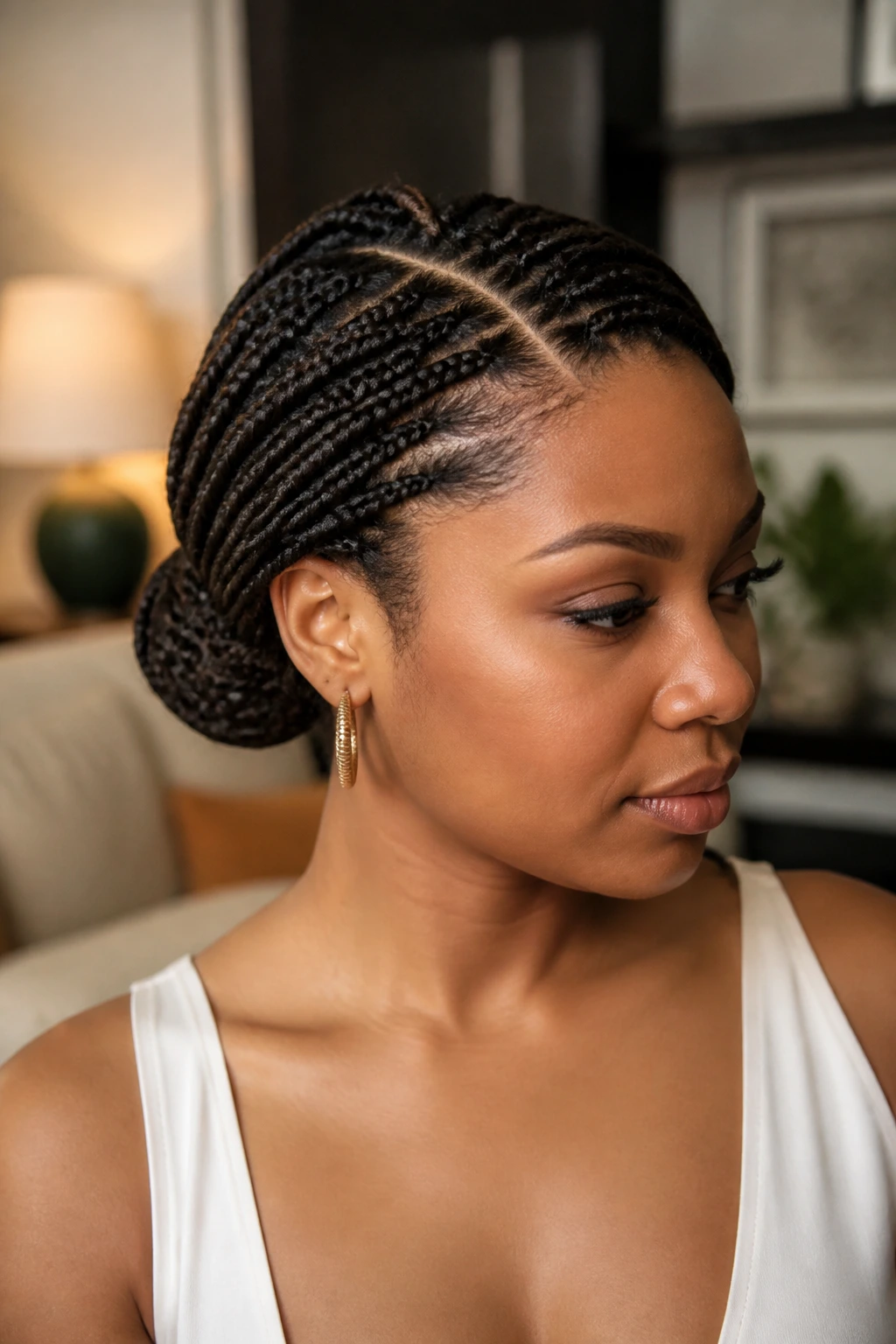
Rolled-up pin-up braids are what I reach for when short braids need to look dressed up without turning into a formal helmet. You roll the ends inward toward the crown or nape, pin them flat, and shape the braids into a soft vintage roll.
It works because the style uses the braid length instead of fighting it. Short braids tuck neatly. Shoulder-length braids give you a fuller roll. Either way, the result is tidy and a little polished, which makes it good for dinners, photos, and any day you want the braids off your neck.
A side part gives the roll a softer line. A center part makes it more sculpted. If you want a little extra lift, pinch the roll gently after pinning so it doesn’t sit too flat against the head.
Use strong bobby pins and cross them. That detail matters more than people admit. A soft roll that slips halfway down your head is not the look.
Short braids have a lot more range than people give them credit for. The length may be small, but the styling options are not. Once you start treating the braid set like a haircut — a shape with edges, weight, and direction — the whole thing opens up.
And that is the real advantage here. You do not need extra inches to get a finished look. You need a clear shape, a few smart pins, and enough restraint to stop before the accessories take over.
