



A good braid can save your edges and your morning routine.
Natural braid styles for Black women do that rare thing: they look polished while still giving your hair a break from daily manipulation. The catch is that not every braid style treats the scalp the same way. A style can look neat on day one and still be a bad choice if it pulls at the temples, sits too heavy, or turns into a frizzy mess after one humid week.
What usually matters is not the name alone. Part size, tension, added hair, and the way the braids are anchored decide whether a style feels light, lasts well, and stays comfortable enough to keep wearing. That is why the same head of hair can look gorgeous in knotless box braids and miserable in a too-tight braid ponytail.
And yes, the old warning still holds: if your scalp hurts, the style is too tight. Pain is not a styling requirement.
Some braid styles work best with your own hair. Others use extension hair and still stay gentle when they’re installed well. The sweet spot is the one that fits your life, your hair density, and how long you’re willing to sit in a chair without losing your mind. That part matters more than a lot of people admit.
1. Knotless Box Braids with a Light, Flat Base

Knotless box braids are the easiest long braid style to live in. The whole point is the feed-in start: instead of locking a heavy knot right at the scalp, the stylist adds small pieces of braiding hair gradually. That gives the root a flatter feel and usually a softer look around the hairline.
I like knotless braids for people who hate that first-day tug. They move better, they sit flatter under scarves and hats, and they usually feel less bulky when you tie them back. That does not mean they are weightless — long knotless braids still add drag — but the base is kinder.
Why the base feels lighter
The small feed-in start spreads the tension over more of your natural hair. That can make a big difference if your edges are fine or if your scalp gets tender fast. It also gives the braids a more natural fall, which is why so many people reach for them when they want length without that stiff, boxed-in look.
- Best for medium to long wear, usually around 4 to 8 weeks
- Works well if you want a flatter root and less bulk at the scalp
- Can be done waist-length, mid-back, or shoulder-length
- Usually feels better for people who get headaches from heavy installs
One smart move: ask for the front sections to stay small and controlled. That tiny detail saves a lot of grief later.
2. Classic Box Braids with Clean, Crisp Parting

Classic box braids are the workhorse. They have that familiar square part, a firm root, and a look that reads neat even when the braids start getting a little older. Some people call them basic, but I think that misses the point. Basic is often what lasts.
These braids have a bit more grip at the root than knotless braids, which is why some people love the crisp start. The shape feels tidy. Structured. If you like a braid style that looks intentional from every angle, classic box braids still hold up.
They also give you room to play with size. Small braids can look sleek and detailed. Medium braids are the sweet spot for many people because they cut down install time without getting too heavy. Jumbo versions are bolder, but the classic pattern still shows through.
The one thing I would watch is tension at the hairline. A neat part is not worth a sore scalp. If the first row is pulling before you even leave the salon, speak up. Braids should settle, not throb.
3. Feed-In Cornrows That Start Small and Stay Smooth
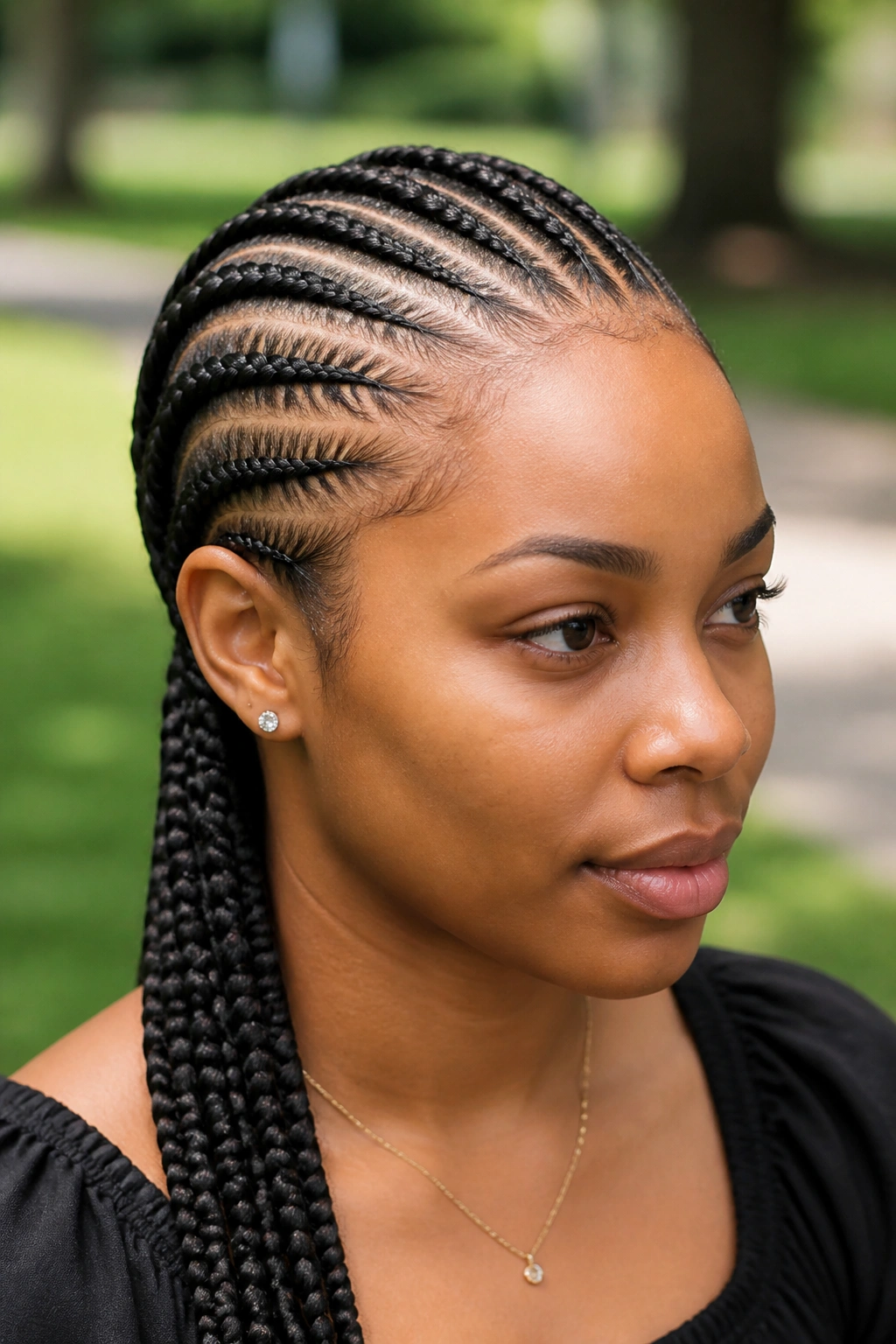
Why do feed-in cornrows look so smooth at the front? Because the braid starts tiny and grows in little by little. That gradual build gives the root a sleek finish and keeps the front from looking bulky.
Feed-in cornrows are one of the most useful natural braid styles for Black women because they can stay simple or turn into a whole design. You can wear two rows, six rows, or a curved pattern that follows the shape of your head. They work with natural hair alone, but they also play well with added hair when you want length.
How to keep the parting clean
A rat-tail comb helps, but the real trick is patience. If the parts are too wide or uneven, the style starts looking messy fast. Feed-in braids are one of those styles where the start matters more than people think.
- Good for gym days and busy weeks
- Easy to pin into a bun or ponytail
- Can sit close to the scalp for a flatter profile
- Often lasts 2 to 4 weeks, sometimes longer with careful care
Use a light braid mousse at night. Heavy cream at the scalp can leave flakes and make the roots look dusty.
4. Fulani Braids with Center Parts and Side Details

You know the look: a braid in the middle, side cornrows, maybe a few hanging braids, maybe beads at the ends. That is the Fulani braid family, and it has a presence that a plain straight-back style just doesn’t match.
Fulani braids stand out because the design is doing more than one job. The center part opens the face. The side braids give structure. The hanging pieces soften the whole thing so it doesn’t feel too severe. When done well, the style has movement, and that movement is half the charm.
Beads can be lovely here, but they should feel deliberate, not dumped on. Heavy beads can pull on the ends and make the whole style swing too hard when you walk. Lighter accents — a few cuffs, small shells, or a short row of beads near the ends — usually feel better.
I also think this style shines when the braider respects balance. If the sides are too crowded, the center part loses its purpose. If the hanging braids are too long and too thick, the face-framing effect gets buried. The good version feels open and smart.
5. Goddess Braids with Thick, Sculpted Rows

Goddess braids are cornrows with a little more drama in the thickness. That’s the short version. The longer version is that they give you a sculpted, raised look that can be worn straight back, swept to the side, or gathered into a low bun without losing shape.
What I like most is the mix of polish and ease. Goddess braids look intentional enough for work or an event, but they don’t have the delicate, fussy feel of tiny plaits. They are sturdy. They can handle daily life. And they sit well on natural hair that has a little fullness.
They also do a nice job of framing the head without making the style feel heavy. If you have medium to thick hair, this can be a sweet spot. You get the visual impact of a larger braid without turning the install into a brick on your scalp.
Patience still matters. Thick rows can feel gorgeous and oppressive at the same time if they’re too tight near the temples. A good goddess braid should feel secure. Not strained.
6. Lemonade Braids Swept to One Side

Lemonade braids are for the days when you want your braids to make a point. The side-swept pattern pulls everything over to one side, which gives the face room and creates that long diagonal line across the head. It’s sharp without being stiff.
The style works because it understands asymmetry. One side gets the full focus, the other side stays clean and close. That shape is flattering on a lot of face shapes, especially if you like a braid style that shows off your cheekbones or earrings. It also helps that the style can be sleek or a little fuller, depending on part size.
I’d pick lemonade braids when you want a strong silhouette. They photograph well in real life too — not in a fake, overworked way, but because the direction of the braids gives the eye somewhere to go. That matters more than people think.
They are also a smart choice if you don’t love hair hanging directly in your face. The sweep keeps the front open. Easy. Clean. A little dramatic, which is the whole appeal.
7. Straight-Back Cornrows for a Neat Everyday Style
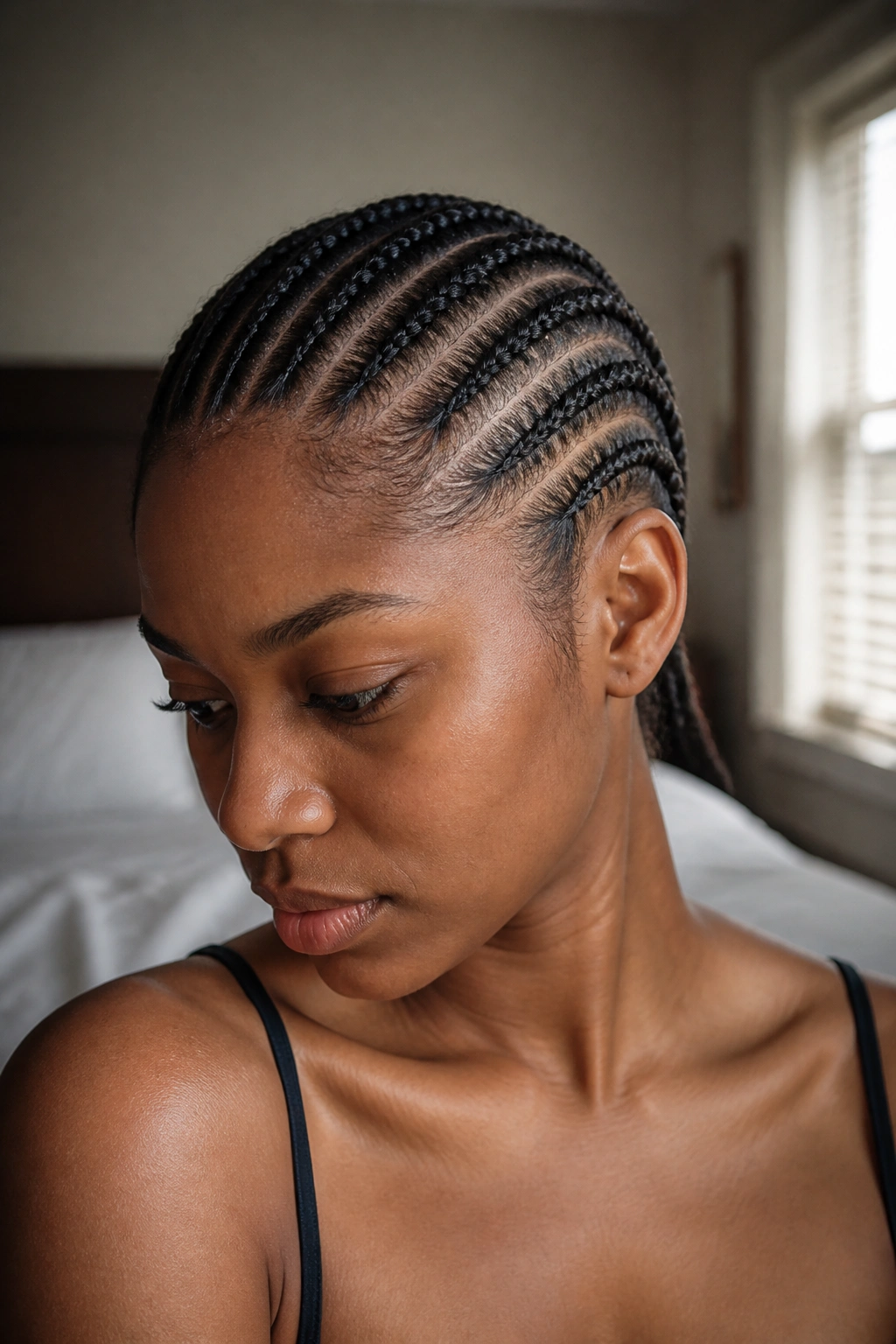
Straight-back cornrows are the utility player of braid styles. They’re fast, practical, and easy to live with. If you need something that can handle scarves, helmets, workouts, and long workdays, this is one of the first styles I’d suggest.
Why they never leave rotation
The braid pattern is simple, but that simplicity is the point. Straight-back rows keep the hair flat, the scalp visible for easy cleansing, and the overall look tidy. When the parts are even, the style reads as crisp without looking precious.
What to ask for
- Rows that are neither too wide nor too tiny
- A parting pattern that follows your head shape
- Light tension at the front and nape
- Ends that can be left loose, braided down, or tucked
Some people like straight-backs because they’re one of the easiest braids to refresh between full installs. I like them because they make wash day less annoying. You can get straight to the scalp, clean it properly, and keep moving. That matters if your schedule is already full.
8. Stitch Braids with Sharp, Clean Lines

Stitch braids are about precision, not size. The style gets its name from the parting technique, which creates those sharp little “stitch” lines along the scalp. The result is a braid that looks almost drawn on, in the best possible way.
They can be worn in straight rows, curved rows, ponytail styles, or more detailed designs. The parting is the star here. If the lines are clean, the whole style looks polished. If the parts are rough, the illusion falls apart fast.
What makes stitch braids appealing is the control. They let you show off a crisp hairline without needing a giant install. They also work well when you want something sleek for a special occasion or when you just want your hair to look extra neat for a stretch.
The caution is simple: sharp parting does not mean aggressive tension. A style can be exact and still be kind to the scalp. It should feel secure, not like the braider is trying to etch the shape into your skull. Small difference. Big deal.
9. Ghana Braids with Built-In Thickness
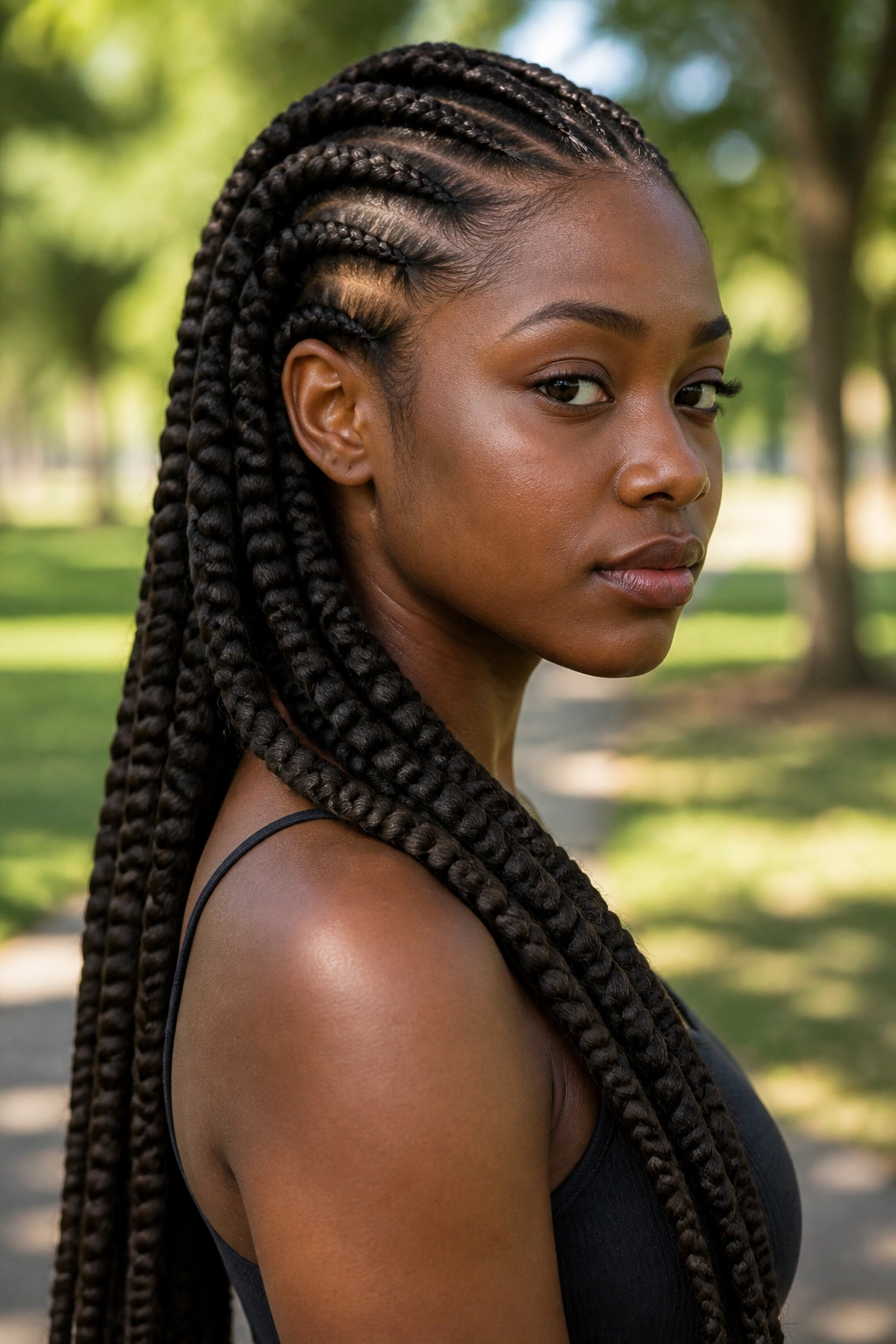
What makes Ghana braids different from standard cornrows? The thickness builds as the braid travels back. That feed-in shape gives the style a rope-like look that feels bold without needing a huge amount of extra hair.
Ghana braids are good when you want something more dramatic than basic cornrows but not as loose as hanging box braids. They can be worn in rows, curved patterns, or pulled into a bun. The size can be adjusted too. Some people wear them thick and chunky, others keep them slim enough to stay close to the head.
The thickness should change on purpose
That gradual increase is the point. If the sections jump too fast from thin to thick, the braid can look clumsy. A good Ghana braid feels smooth where the hair is fed in and balanced where the braid settles.
The style works especially well if you like a strong profile from the side. It has shape. It has presence. And it tends to hold up well when you need something that can survive a long day without sagging into your face.
10. Tribal Braids with Beads and Mixed Patterns
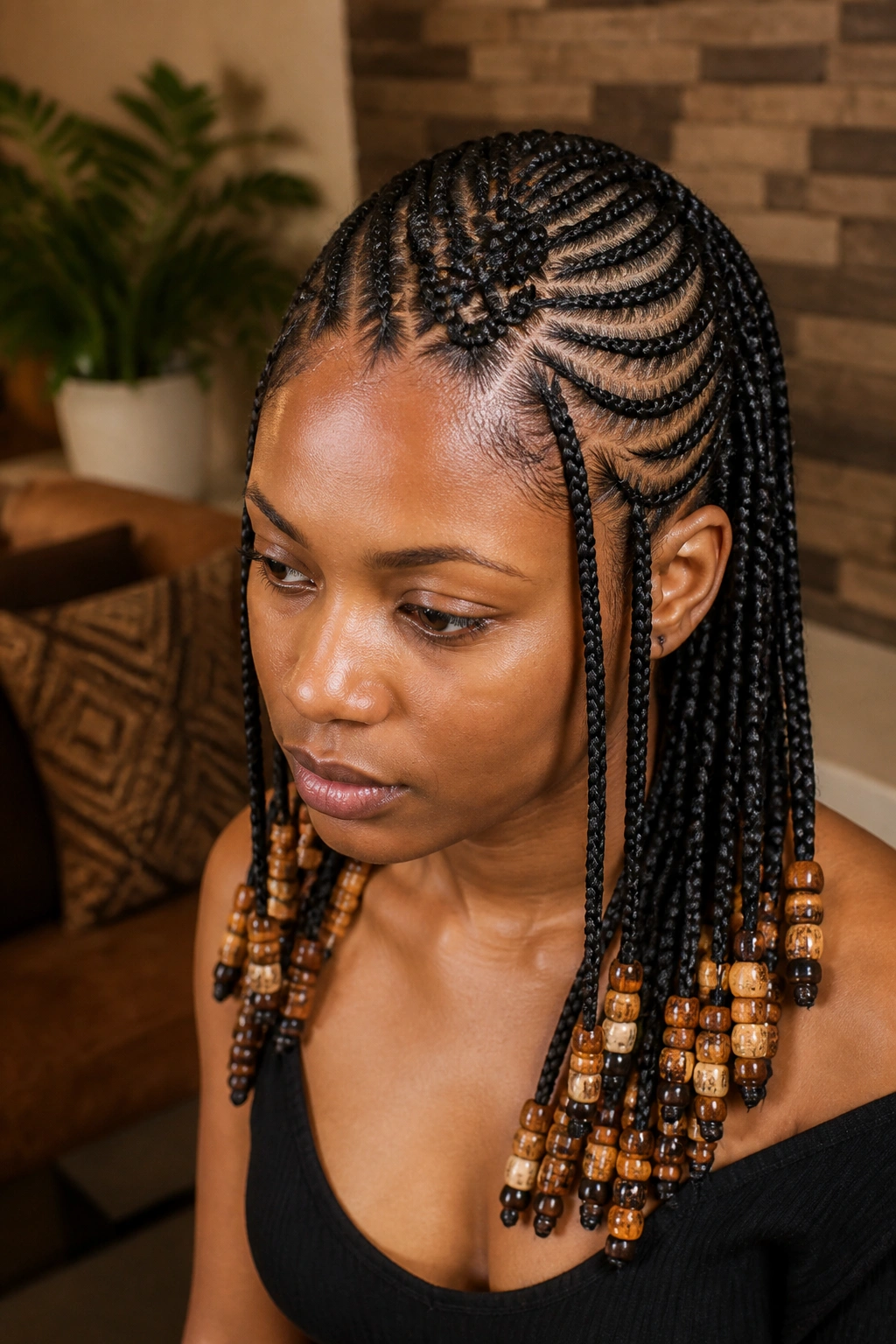
Tribal braids are one of those styles that can be playful, elegant, or both at once. The defining feature is the mix: a central pattern, side braids, hanging sections, and often beads or cuffs to finish the ends. No two versions look exactly the same, which is part of the fun.
A good tribal braid style usually balances the scalp pattern with the loose length. Too much happening at the top and the face gets crowded. Too little detail and it just becomes another braid style with a fancy name. The middle ground is where it sings.
I also like tribal braids because they make room for personality. Some people keep the design spare and add one or two beads. Others go for a fuller accessory look. Both can work, but the trick is to keep the braid base clean so the extras don’t feel random.
- Central braid or parting detail
- Side rows that frame the face
- Hanging braids with or without curls
- Beads, cuffs, or shells used as accents
Pick one focal point and let it lead. That rule saves you from overdecorating the whole head.
11. Micro Braids for Long Wear and Tiny Sections

Micro braids are tiny, and that’s the whole story and not the whole story. They can look delicate and elegant, but they also take patience to install and patience to remove. If you want a low-key style that can last, this is one of the more serious options.
The fine sections mean more braid movement and a more natural hang. They also mean more time in the chair. A full head of micro braids is not a quick afternoon style. It can take a long stretch, and you need a stylist who knows how to keep the tension even all the way through.
I’d be careful with extra length here. Tiny braids that are too long can get heavy fast, especially once they’re full of product or water. They also need careful detangling at take-down. Ripping through them is a bad idea. Slow and patient works better.
Patience matters here.
Micro braids reward people who like a fine, detailed look and can commit to maintenance. If you want something that feels lighter on the eye and doesn’t scream for attention, they’re worth a hard look. Just don’t rush the removal. That’s where people get into trouble.
12. Jumbo Braids That Cut Down Install Time
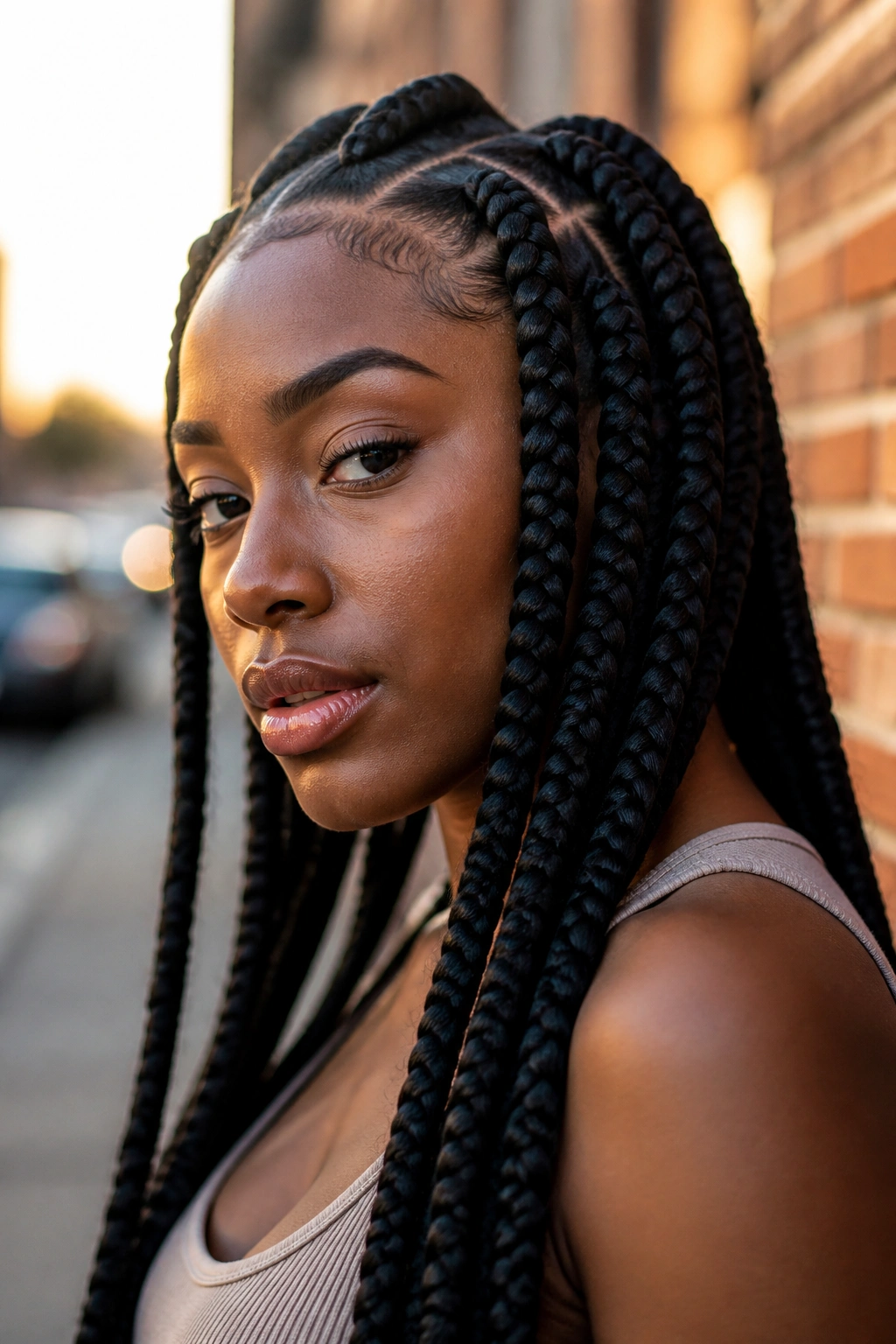
If micro braids are a marathon, jumbo braids are the shortcut. Bigger sections mean faster install, fewer parts to manage, and a bolder look from the start. They can be box braids, plaits, or feed-in styles, but the size is what changes the feel.
I like jumbo braids for busy weeks because they don’t ask for the kind of time that tiny braids do. You still need a skilled hand. Bigger parts can look sloppy if the sections aren’t even. But when they’re done right, the style has a clean, easy confidence to it.
They do have a trade-off. Heavy jumbo braids can tug if the added hair is too long or if the roots are packed too tightly. That is where people get tempted to chase the look and ignore the comfort. Bad move. A style that gives you a headache isn’t worth the photo.
Best when you want:
- Faster install than small braids
- A bold shape with fewer sections
- A style that doesn’t disappear into your hair
- Less time spent on detangling during take-down
For me, jumbo braids are a strong choice when you want maximum impact with less sitting. That alone sells it.
13. Braided Bob for Shorter, Swingy Length

A braided bob hits that sweet spot between neat and low-fuss. The length usually lands around the chin, jaw, or shoulders, which keeps the style from feeling heavy. It also makes the whole look bounce a little more when you move.
This is one of the best braid styles for Black women who want protection without dragging a ton of hair around their back. Shorter braids can feel easier to sleep in, quicker to wash, and less annoying under a coat or scarf. That sounds small. It isn’t.
The bob also shifts the mood of the style. Long braids can feel dramatic and formal. A bob feels fresher, a little lighter, sometimes almost cheeky. If you want braids but don’t want to be buried in length, this is where I’d look.
It works with box braids, knotless braids, and even some feed-in patterns. A clean line at the ends makes the shape look intentional. If the cut is uneven, though, the whole thing goes sloppy. So ask for the bob to be shaped, not hacked off.
14. Braided Ponytail That Pulls Everything Up
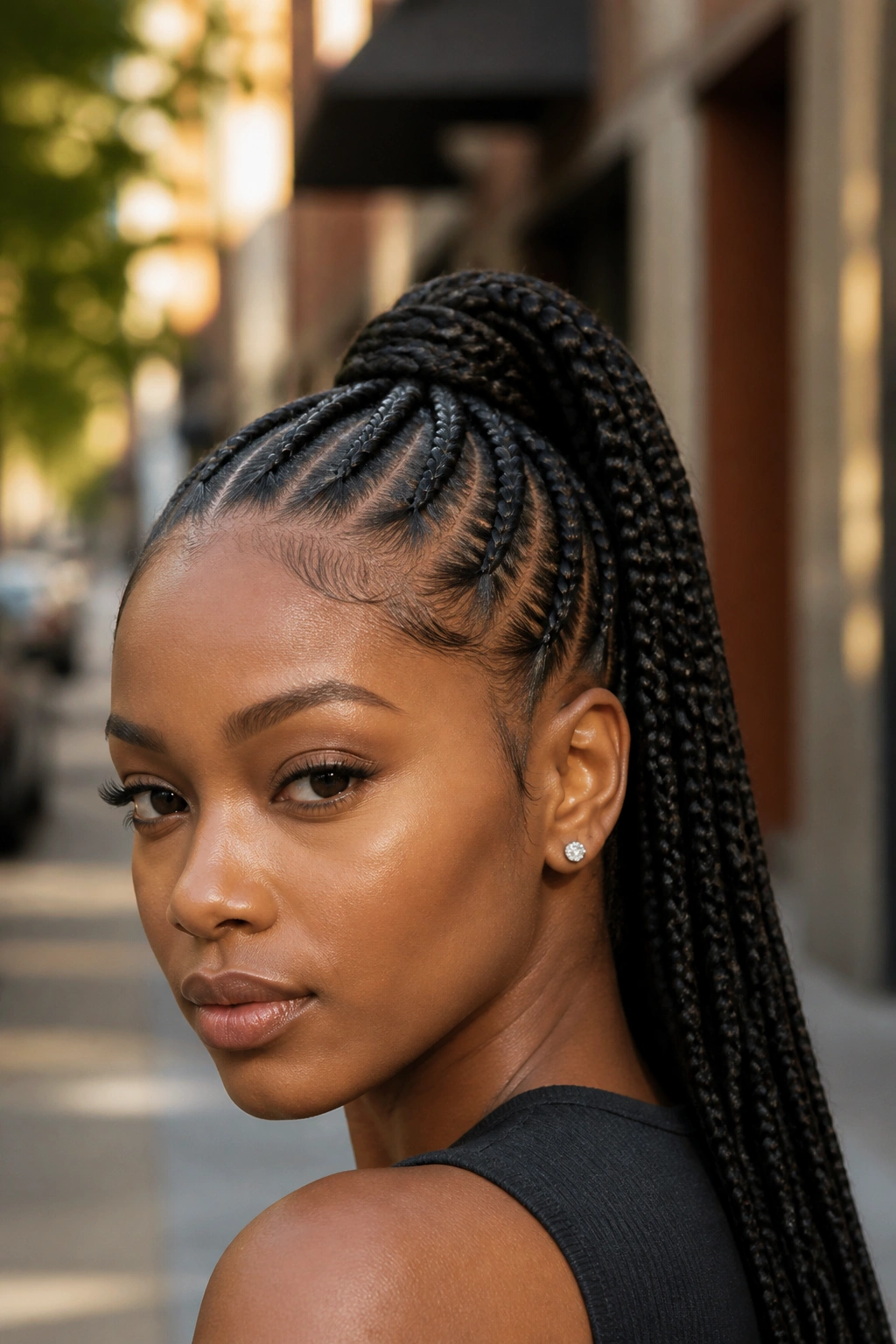
A braided ponytail is the quickest way to make braids feel dressy. Pulling the style up changes the whole attitude. It lifts the face, clears the neck, and gives you that neat, pulled-together look that works for work, errands, or a night out.
There are two main choices: high or low. A high ponytail looks more energetic and shows off the braid length. A low ponytail feels calmer and often sits a little easier on the scalp. Either way, the base should be secure without yanking the hairline. That part is nonnegotiable.
I also like braided ponytails because they let you see the braid pattern. A feed-in ponytail can look sleek from the front and dramatic from the side. A box braid ponytail can feel fuller and more playful. The shape is doing a lot of the work here.
If your edges are tender, ask for a soft base and avoid an elastic that has to be pulled around too many times. The ponytail should feel held, not strangled. Small detail. Big difference.
15. Halo Crown Braid Wrapped Around the Head
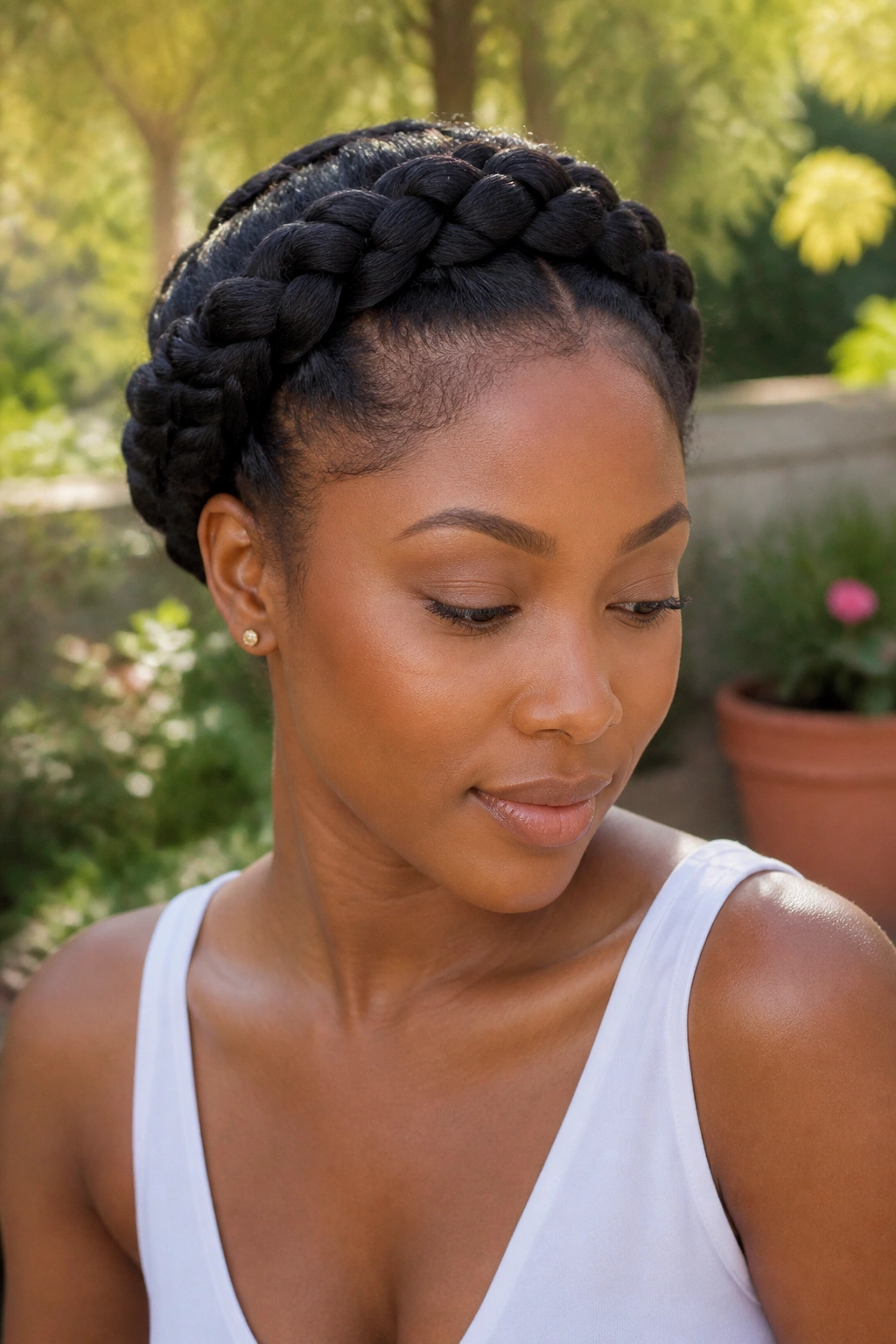
Need a style that stays off the neck and still looks polished? A halo crown braid does exactly that. It wraps around the head like a frame, which makes it useful when you want your hair secured but do not want a bun sitting at the back.
This style works best when the braids are placed evenly and pinned neatly underneath the crown. Some versions use your own hair. Others use added braid hair to make the wrap fuller and more visible. Either way, the shape is what gives it character.
How it changes the face shape
A halo braid draws the eye around the head instead of straight down. That can soften sharper features or balance a style if you like symmetry. It also keeps the front clean, which I appreciate on days when I don’t want hair falling into my face every ten seconds.
The only real issue is fit. If the braid is too tight at the crown, you’ll feel it fast. If it’s too loose, it slips and gets annoying. The style lives or dies on that middle ground. Secure. Comfortable. Neat enough to stay put.
16. Braided Bun Updo for Dressy Days

There’s a reason braided buns show up at weddings, graduations, interviews, and any event where you want your hair to stay calm. They feel composed. A little formal, yes, but not stiff when they’re done well.
The shape can be high, low, or tucked to one side. A low braided bun tends to look softer and is easier on the scalp. A high bun gives more lift and can feel more dramatic. The braid base can be cornrows, box braids, or feed-ins, depending on how much fullness you want before everything gets gathered.
I like this style because it solves a lot of small problems at once. Hair off the neck. Ends tucked away. Less worry about wind. Less worry about your braids brushing your face while you’re trying to eat. That matters in real life, not just in photos.
- Best for formal events or long workdays
- Works with added hair or natural braids
- Can be sleek or softly textured
- Needs pins placed where the bun won’t sag
Ask for the bun to sit where your head naturally balances. Too high can feel top-heavy. Too low can feel sleepy.
17. Side-Swept Braids That Frame the Face
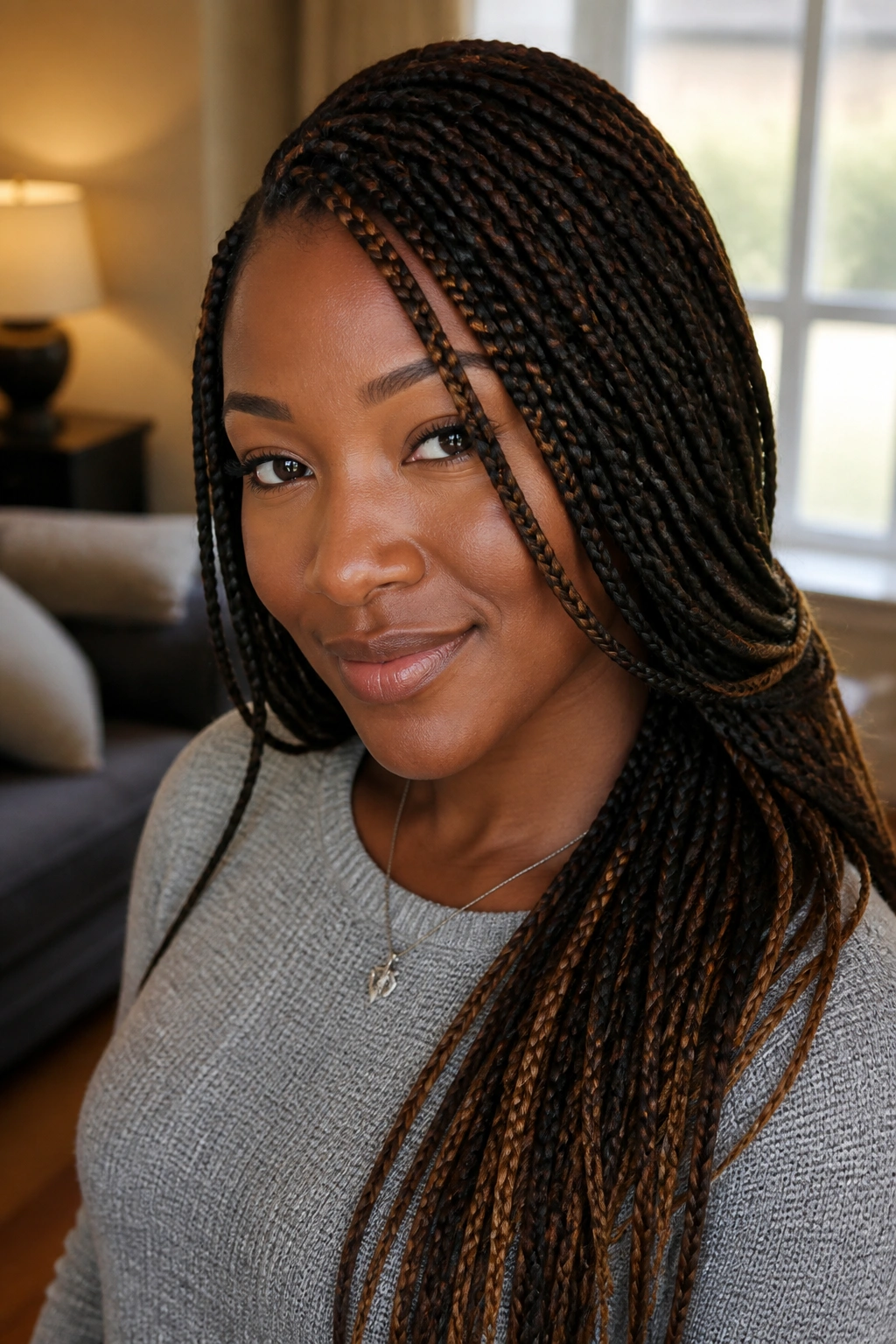
Side-swept braids are for people who want movement without losing structure. The braids fall or direct toward one side, which gives the style a softer line than a center-part look. It’s subtle, but that change does a lot.
The face-framing part is the real draw. A side sweep leaves room on one side and creates a little asymmetry, which can make the whole style feel more relaxed. It also lets earrings and makeup show up instead of getting buried under hair.
A lot of people think side-swept braids only work for dressy moments. I don’t buy that. They can be casual, too, especially if you keep the braid size moderate and let the front sit lightly against the hairline. The key is balance. If the sweep is too heavy, the style starts sliding into your face. If it’s too thin, you lose the shape.
What to look for
- A part that supports the direction of the sweep
- Enough length for the braids to fall cleanly
- Front sections that stay soft, not cramped
- A finish that keeps the side tucked or secured well
They’re a nice choice when you want the comfort of braids with a little more shape around the face.
18. Triangle-Part Braids for a Different Parting Pattern

Triangle parts change the whole mood of braid styles. The braid itself might be classic box braids or knotless braids, but the triangle base makes the install look fresher right away. It is one of those small details that people notice even if they can’t name it.
Why does it work? Because the parting breaks up the grid. Square parts are familiar. Triangle parts add a little movement before the braid even starts. That means the scalp design carries some of the visual weight, which is useful if you want your braids to feel a little less predictable.
Triangle-part braids look especially good when the sections are even and the points are clean. If one triangle is stretched out and the next one is tiny, the pattern gets messy fast. This is not the place to rush. The parting is the show.
They work with short, medium, or long lengths, and they can be paired with beads, cuffs, or curly ends. If you already like box braids but want a small change that makes a big difference, triangle parts are a smart switch.
19. Heart-Part Braids with a Playful Center Detail

Are heart parts worth the extra effort? If you like a braid style with a little personality at the crown, yes. The heart shape sits right where people can see it, which makes it more of a focal point than a hidden detail.
Heart-part braids work best when the actual braid size gives the shape room to read. If the sections are too tiny, the heart gets lost. If they’re too large, the shape can turn awkward instead of cute. The middle zone is usually the sweet spot.
I also like this style because it lets the parting do some of the talking. You do not need wild accessories or a complicated braid pattern to make it interesting. The heart already gives the style a point of view.
Keep the shape simple
A clean heart part is stronger than an overworked one. If the curve is too sharp or the lines are uneven, the whole thing starts looking forced. The best versions feel neat, balanced, and slightly playful without becoming childish.
This is one of those styles I’d pick when someone wants braids but also wants a little detail that feels personal. Not loud. Just memorable.
20. Boho Braids with Curly Ends and Loose Texture
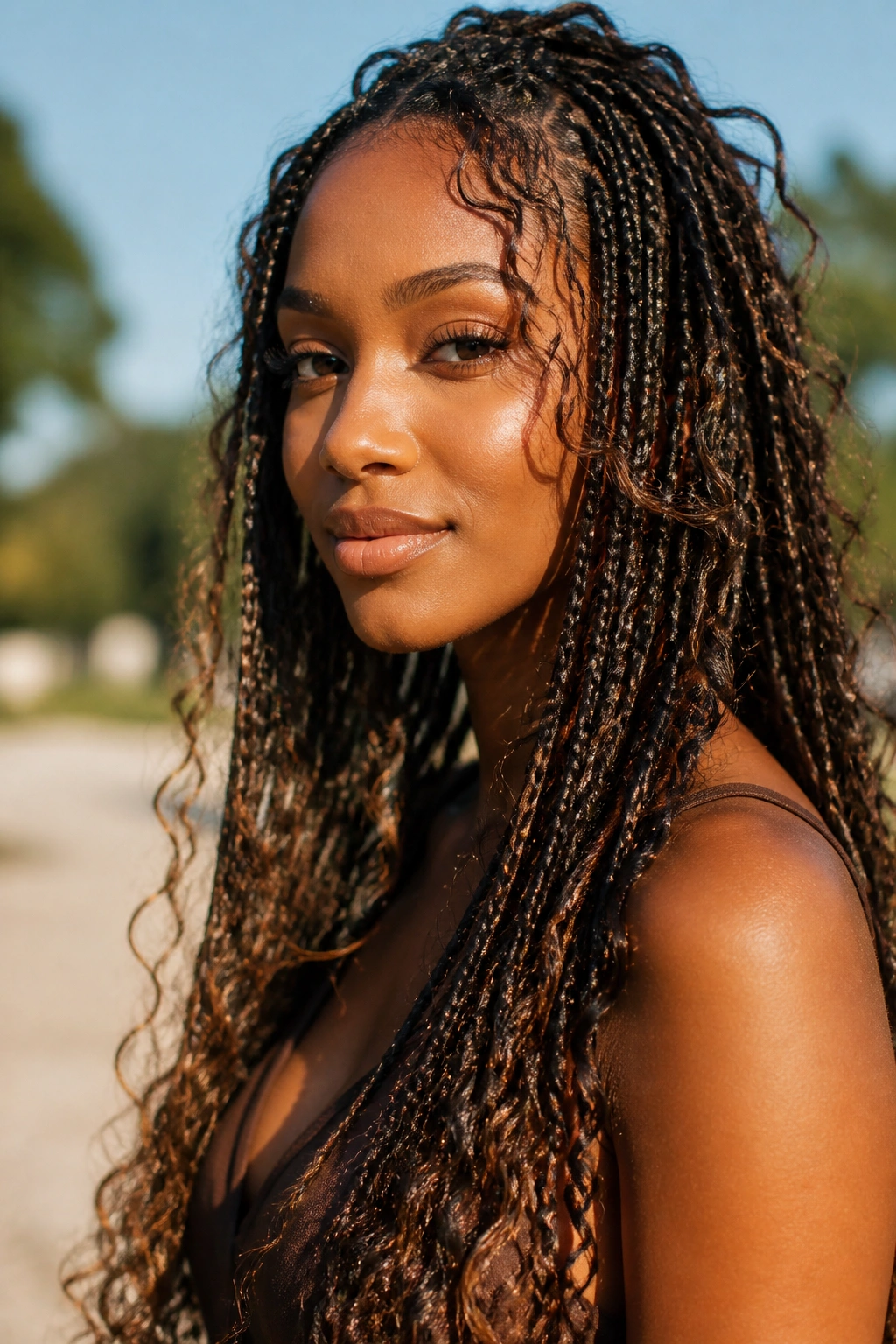
Sleek braids have their place, but boho braids bring a softer finish. The loose curls at the ends — and sometimes along the length — change the whole feel of the style. It goes from structured to airy in a way that a straight braid cannot match.
These braids are usually knotless or box braids with added curly pieces worked in for texture. That loose look can be beautiful, but it needs more care. The curls frizz if they’re ignored, and the ends can tangle if you rough them up at night. A satin scarf helps. So does a bonnet with room for the length.
I think boho braids are best when you want movement. They soften strong lines around the face and give long braids a little lift. They also work well if you like your styles to look a touch less severe. That loose texture makes the braids feel lived-in from the start.
They do ask for more upkeep than a slick cornrow style. The curls need refreshing, and the roots need to stay neat so the contrast doesn’t get muddy. Still, if you want braids that feel relaxed without looking unfinished, this is a strong finish.
Long braids, short braids, clean rows, swept sides — the real trick is choosing a style you can keep wearing without hating it by week two. That is where a good braid earns its keep.
