



Round faces can wear a pixie mullet better than most people expect.
The trick is not to make the face look smaller in some abstract way. Crown height, narrow sides, and a bit of movement at the nape do the real work. When those three things show up together, the cut stops reading as “short hair” and starts reading as shape. That matters a lot with a round face, where the widest point usually sits around the cheeks.
A lot of bad short hair advice leans on bluntness. Don’t do that here. A heavy fringe that lands straight across the forehead, or sides that puff out at the temple, can make the whole cut feel wider than it is. A pixie mullet wants the opposite: a little lift, a little diagonal movement, and enough length in the back to keep the eye traveling downward.
I like the versions that keep the sides lean and the top a touch messy. Clean can work. Too clean usually looks stiff. The strongest pixie mullet hairstyles for round faces give you edge without turning your head into a perfect circle, and the first few cuts below show exactly how that balance plays out.
1. Feathered Crown Pixie Mullet
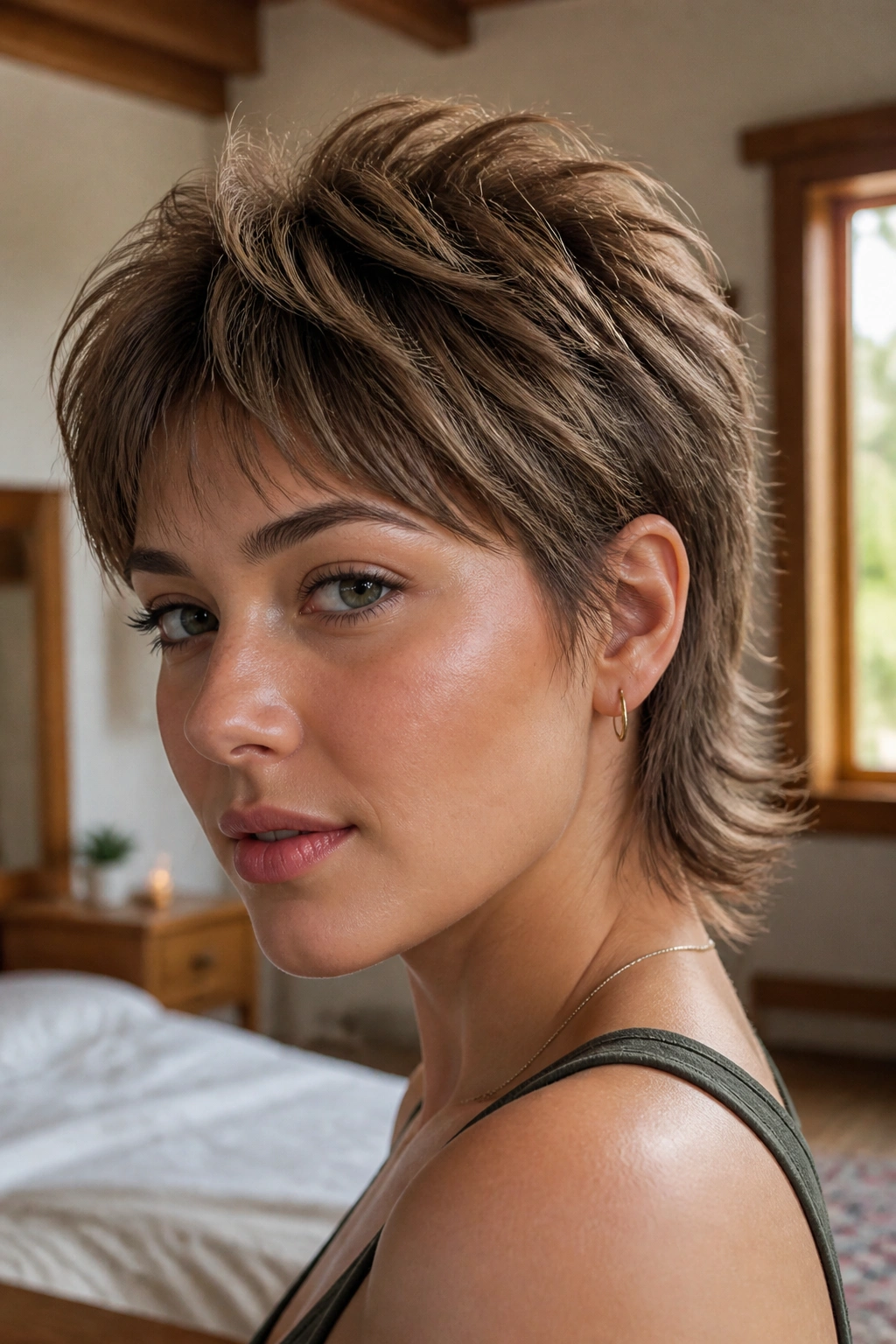
This is the safest starting point if you want the pixie mullet shape without making the cut feel severe. The feathered crown gives you lift right where a round face needs it, while the soft ends keep the whole style from turning boxy. It’s the kind of cut that looks easy, but the shape is doing real work.
Ask for short, feathered layers at the crown, slightly longer pieces around the temples, and a wispy nape that lands below the occipital bone. That little bit of height at the top changes the whole silhouette. Flat roots would flatten the face, and that is the one thing you do not want here.
The best part is how forgiving it is. Fine hair gets a bit of airy volume, and thicker hair loses some of that helmet-like bulk that can happen with short cuts. A root-lifting mousse and a quick blow-dry with your fingers are enough most mornings.
Flat roots kill the shape.
I’d call this the easiest cut to wear if you want something flattering without needing a full styling routine. It works because it keeps the top lively and the sides light, not because it chases drama.
2. Side-Swept Fringe Pixie Mullet
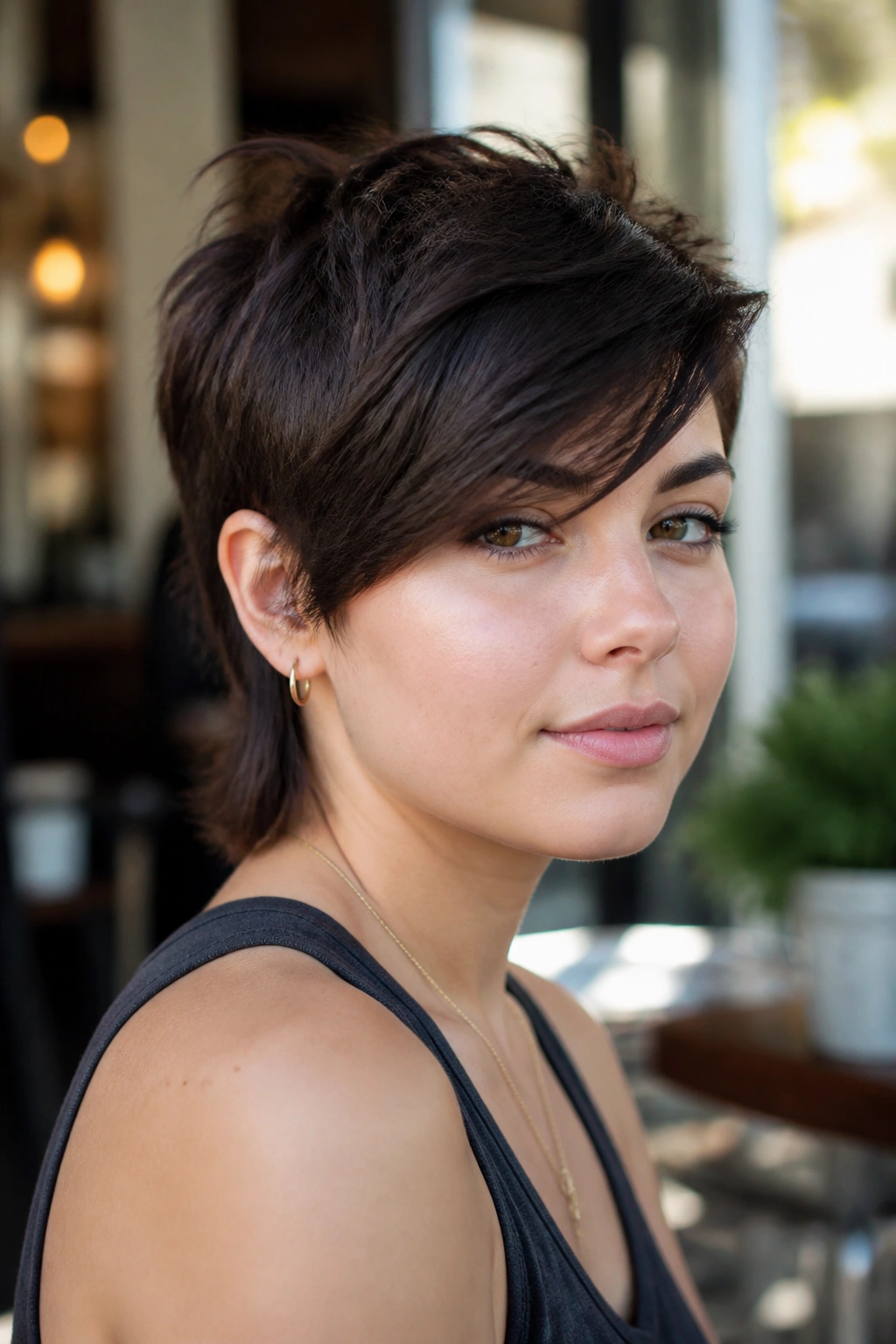
What if you want a fringe, but you do not want your face cut in half? A side-swept fringe solves that problem fast. It gives the front of the cut some softness, then drags the eye diagonally instead of straight across the widest part of the face.
Why the Fringe Changes the Silhouette
A deep side part does more than change the mood of the haircut. It creates a line that feels longer than a center part and a lot softer than blunt bangs. On a round face, that diagonal is gold. It pulls attention toward the eyes and cheekbone instead of letting the eye settle on width.
Keep the shortest part of the fringe a little above one eyebrow, and let the longer piece skim the cheekbone or jaw angle. If the fringe ends right at the fullest part of the cheek, it can puff the face back out. A small round brush helps here, but a flat iron on low heat works too if your hair fights back.
- Ask for the fringe to start off-center, not dead center.
- Keep the temple area lightly layered so the fringe blends, not wedges in.
- Blow-dry the fringe away from the face, then let it fall naturally.
- Use a light cream, not heavy wax, or the front will collapse by lunchtime.
A side-swept fringe is one of those shapes that looks polished even when it is a little messy. That’s a rare thing.
3. Curly Pixie Mullet with Tapered Nape
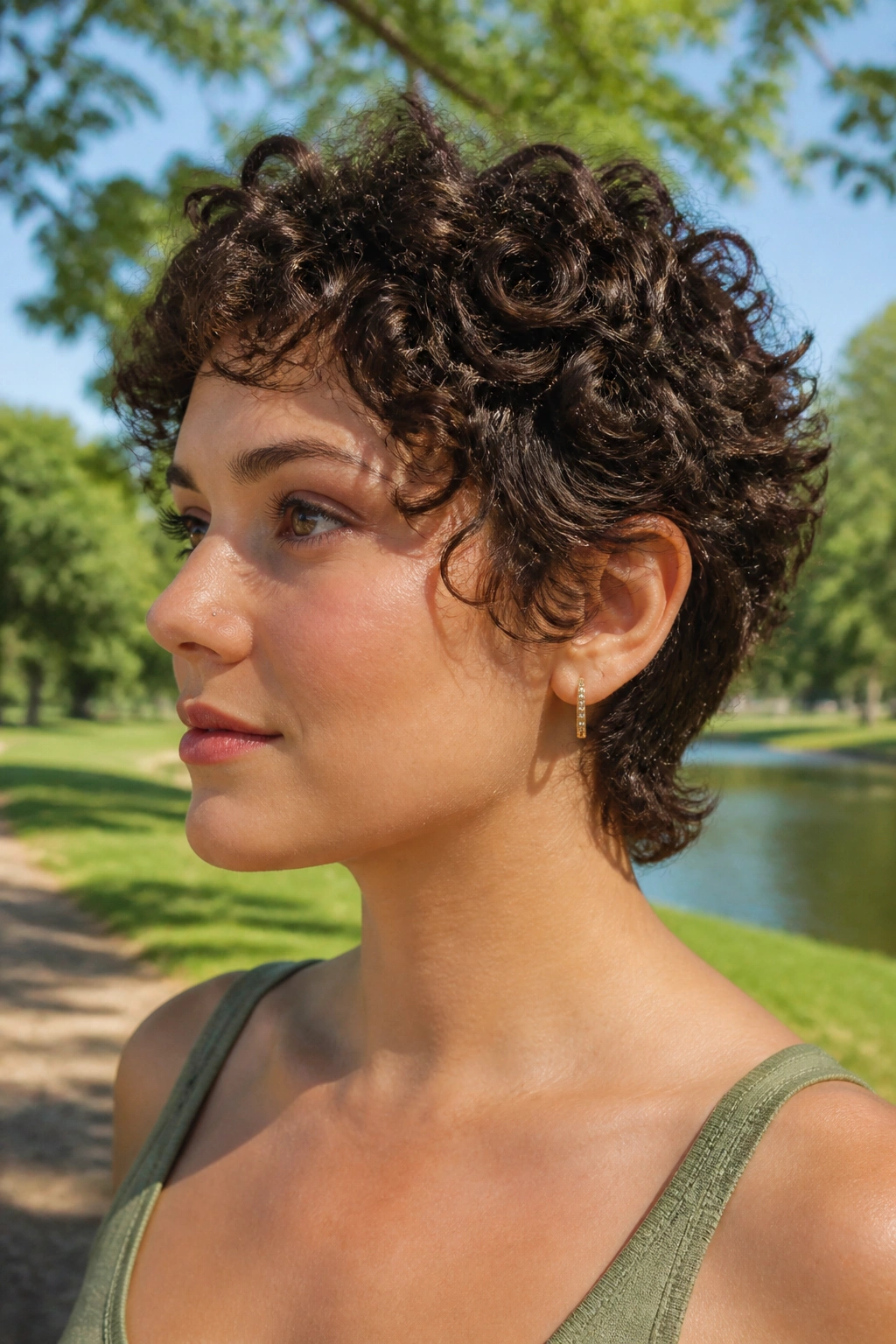
If your curls spring up fast and spread sideways just as fast, the tapered nape is what keeps the cut under control. Curly hair already brings texture, so the real question is where that texture sits. On a round face, you want the curl pattern stacked a little higher and narrower, not flaring out at the cheeks.
Picture short curls through the crown, a tapered back that sits close to the neck, and enough length on top to let the curl form instead of frizzing out. That shape keeps the face open while still giving you softness. Too much bulk at the temples can turn into a puffball, and that is where people get frustrated with curly pixies.
The cut should also respect shrinkage. A curl that looks chin-length when wet might sit much shorter once it dries. So if your stylist cuts it too tight, the whole style can end up sitting higher than planned. That is one reason I like a slightly longer top on curly pixie mullets for round faces. You need room for the curl to land.
A curl cream, a diffuser, and five to eight minutes of hands-off drying can be enough. Do not over-blast it. Curls need shape, not a battle.
4. Choppy Razor-Cut Pixie Mullet
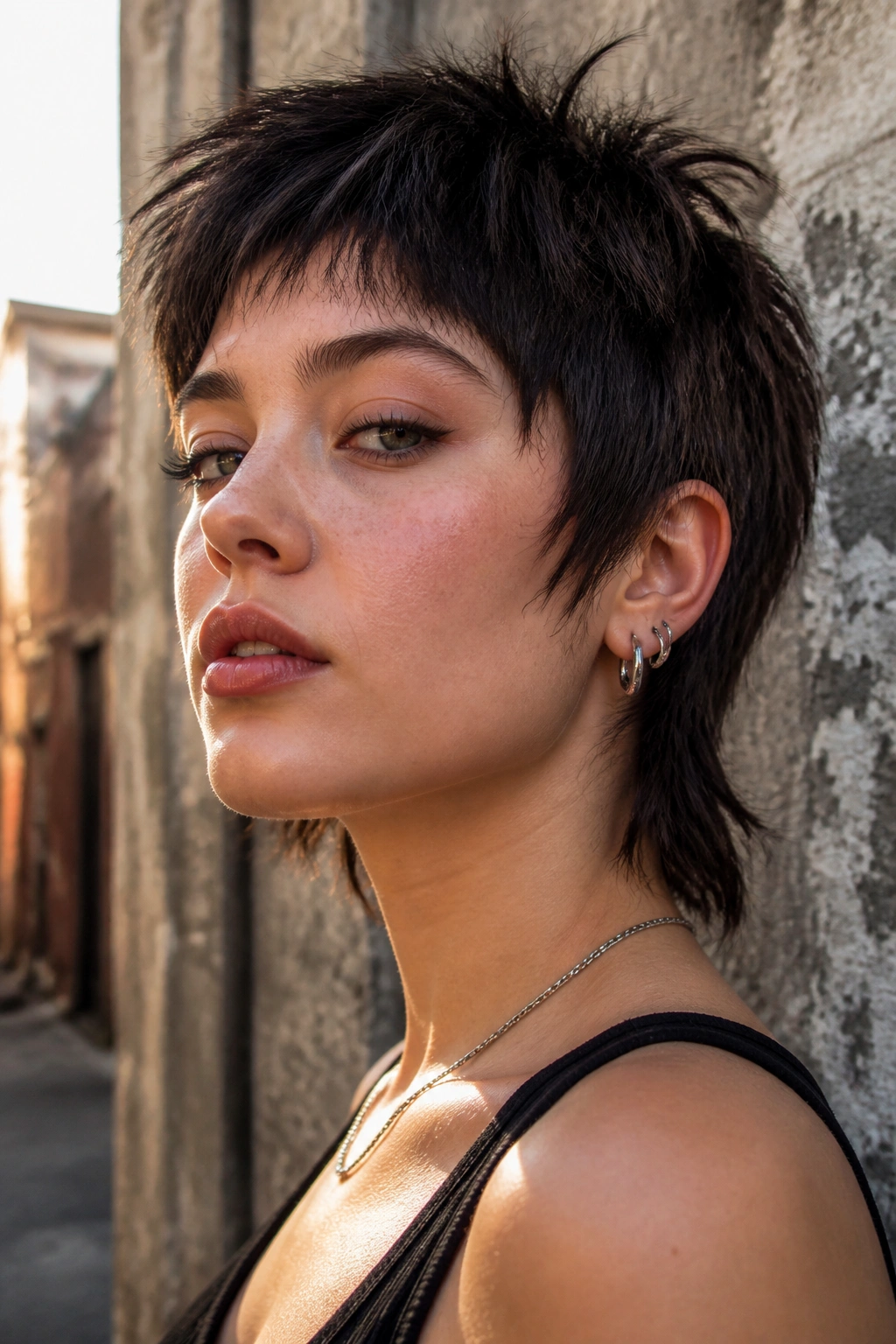
A razor-cut pixie mullet makes roundness look deliberate. That sounds blunt, but I mean it. The broken edges take away the neat, bubble-like outline that can make short cuts feel wider than they are. Instead of one smooth line, you get little changes in length, and those changes keep the eye moving.
This works especially well if your hair is straight or thick and tends to sit in one solid shape. A razor or point-cutting technique softens the ends, so the cut doesn’t sit like a solid block around the face. The result is piecey, not puffy. And piecey is your friend here.
Use a matte paste or texture cream in tiny amounts, warmed between your palms first. Then pinch the ends, especially around the crown and the back. A little disorder makes this cut look alive. Too much product, though, and the whole thing goes greasy and flat.
Clean lines are not the point. The point is movement. If you want a pixie mullet that feels a bit tougher, a bit more editorial, and a lot less sweet, this is one of the strongest options.
5. Micro-Bang Pixie Mullet
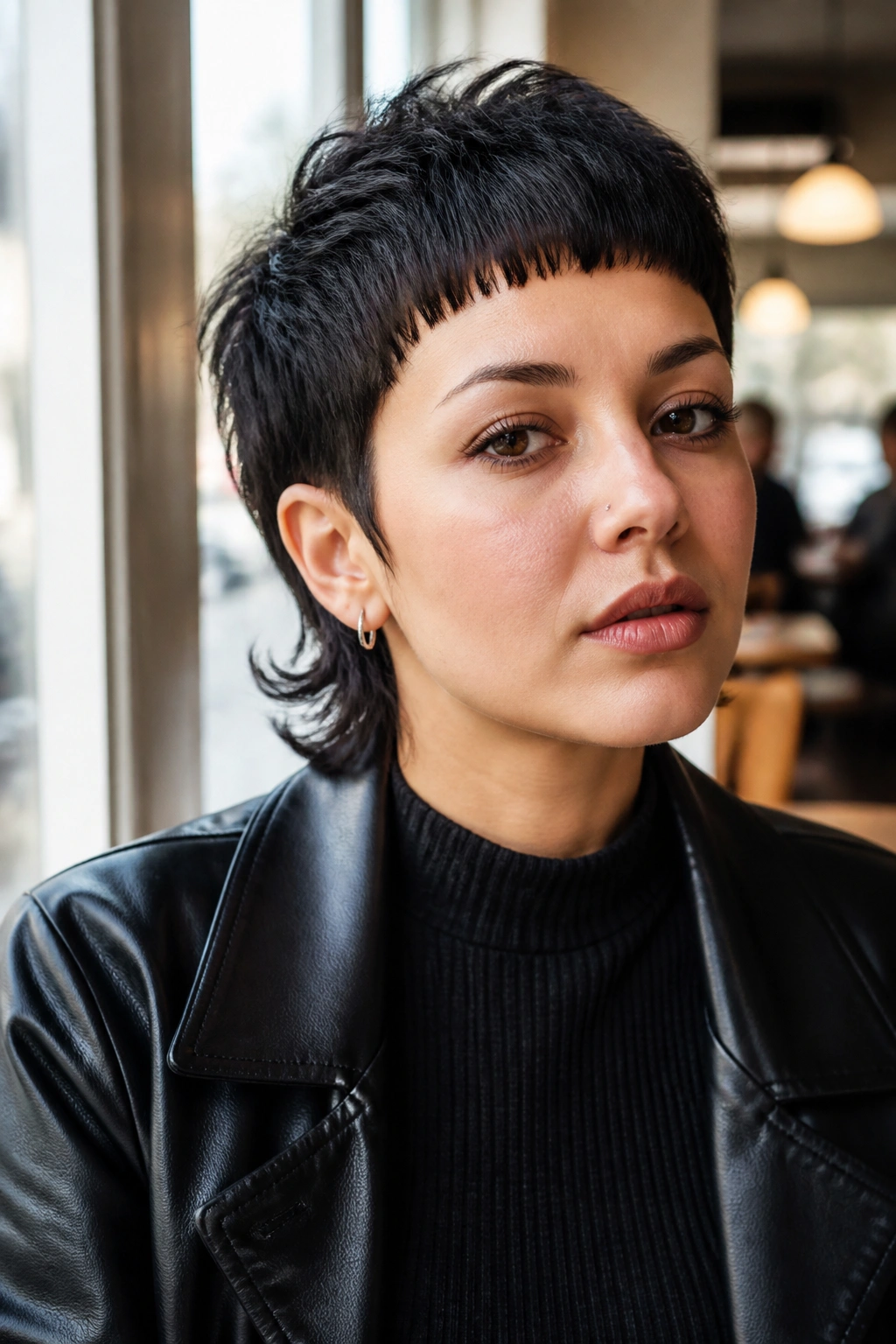
Micro bangs are not shy. That is the whole appeal. On a round face, they work when the rest of the cut stays light and lifted, because the short fringe creates a strong visual break up top while the sides and back keep the shape from widening.
The cut lands best when the bangs sit above the brow line and the crown has enough texture to avoid looking flat. If the top is too compressed, micro bangs can look severe. If the sides are too full, they can make the face feel crowded. So the balance has to be a little fussy. Worth it, though.
I like this style on people who have sharp eyes, a strong brow, or a face that can carry a little attitude. It does not need to be punk or theatrical, either. A soft, slightly uneven micro fringe with a tapered back can look clean and current without feeling costume-like. The face stays open; the haircut just has a sharper front edge.
This one asks for confidence. If you want low-stress hair, keep moving. If you want a cut that feels graphic and memorable, micro bangs with a pixie mullet can hit hard in the best way.
6. Soft Shag Pixie Mullet
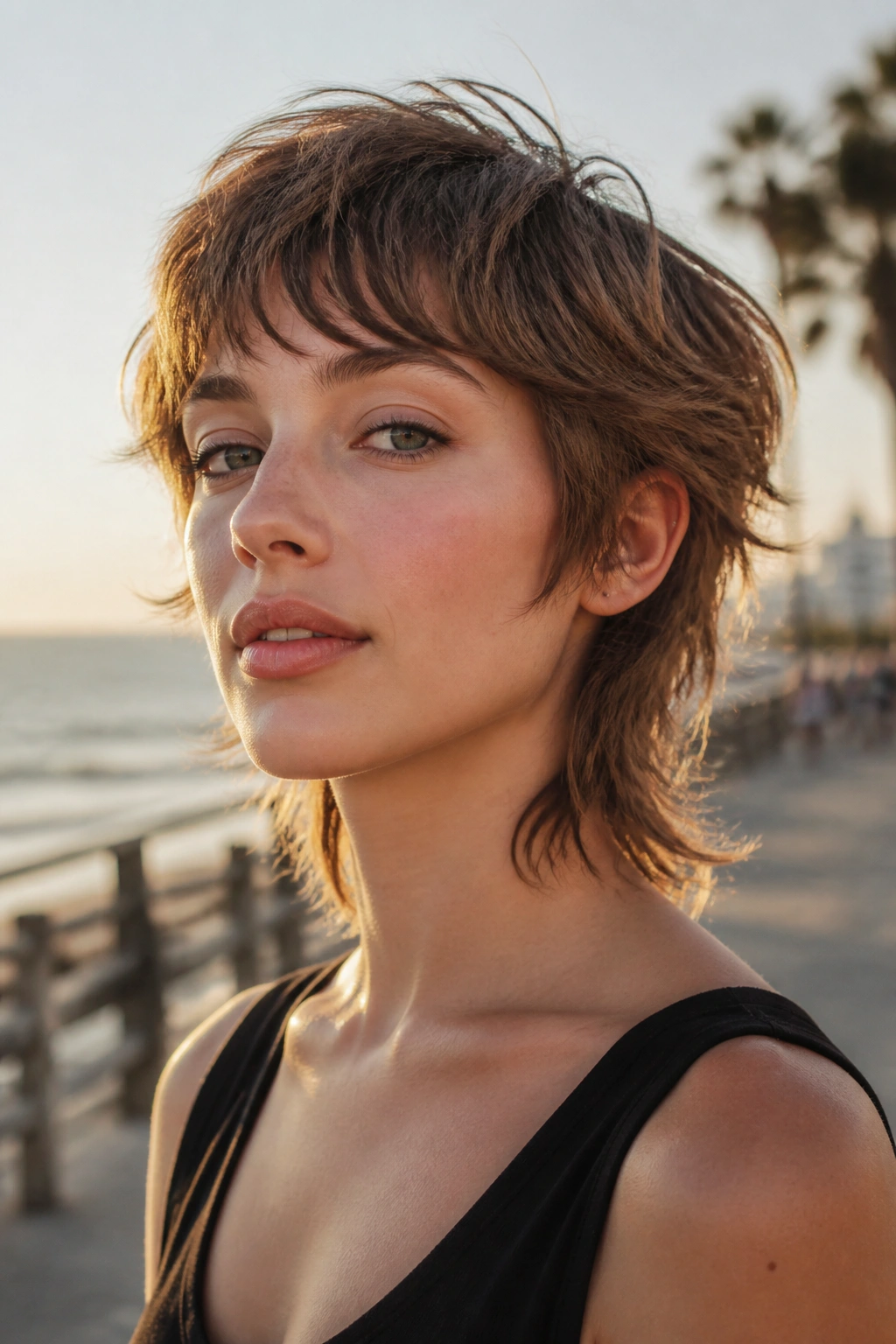
Unlike a harder mullet, the soft shag version blurs the edges. That matters on a round face, because a blurred edge reads as movement instead of width. The crown still has lift, the nape still carries a little length, but the in-between layers are feathered enough to keep the whole cut airy.
This is the version I reach for when someone wants a pixie mullet but does not want people to notice the haircut before the person. It blends the cheek area gently, which is useful if your face gets fuller when you smile. Short layers around the top and slightly longer, wispy pieces near the ears keep the shape from getting blocky.
It’s also one of the easier cuts to grow out. That is not a small thing. Some pixie mullets look great for three weeks and then turn awkward. A soft shag keeps a decent shape longer because the layers are already broken up.
A sea salt spray or light mousse is enough here. Scrunch, air-dry, or diffuse depending on your texture. The charm is in the movement, not in perfection.
7. Undercut Pixie Mullet
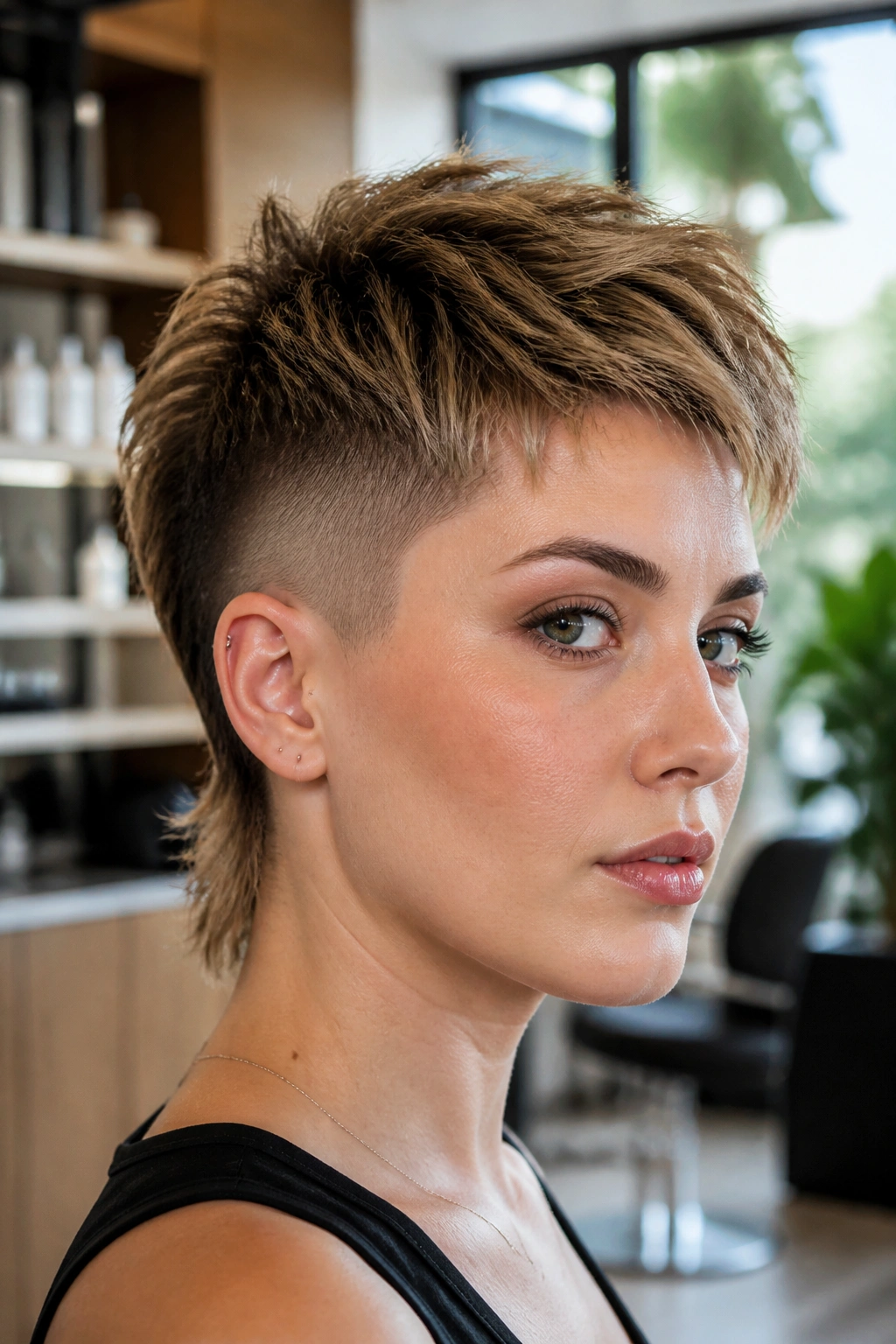
A neat undercut can be the fastest way to cut width from a round face. Short sides and a longer top create instant contrast, and contrast is what keeps the face from reading as broad. The nape can stay a little longer, which gives you that mullet note without loading too much volume around the jaw.
What to Ask for at the Chair
- Keep the undercut low enough that it does not bite into the temple area too high.
- Leave at least 2.5 to 4 inches on top so the crown can rise.
- Ask for a soft blend near the top edge instead of a hard shelf.
- Let the nape stay longer than the sides so the back still reads as a mullet.
That last point matters. If the entire back gets chopped too short, you lose the shape that makes a pixie mullet feel like a pixie mullet at all. The long-back, short-side contrast is the point.
This cut can feel a little severe if the fade is too tight. Not around the ears. Not around the temples. Keep some softness in the transition and the whole thing becomes much easier to wear.
8. Asymmetrical Pixie Mullet
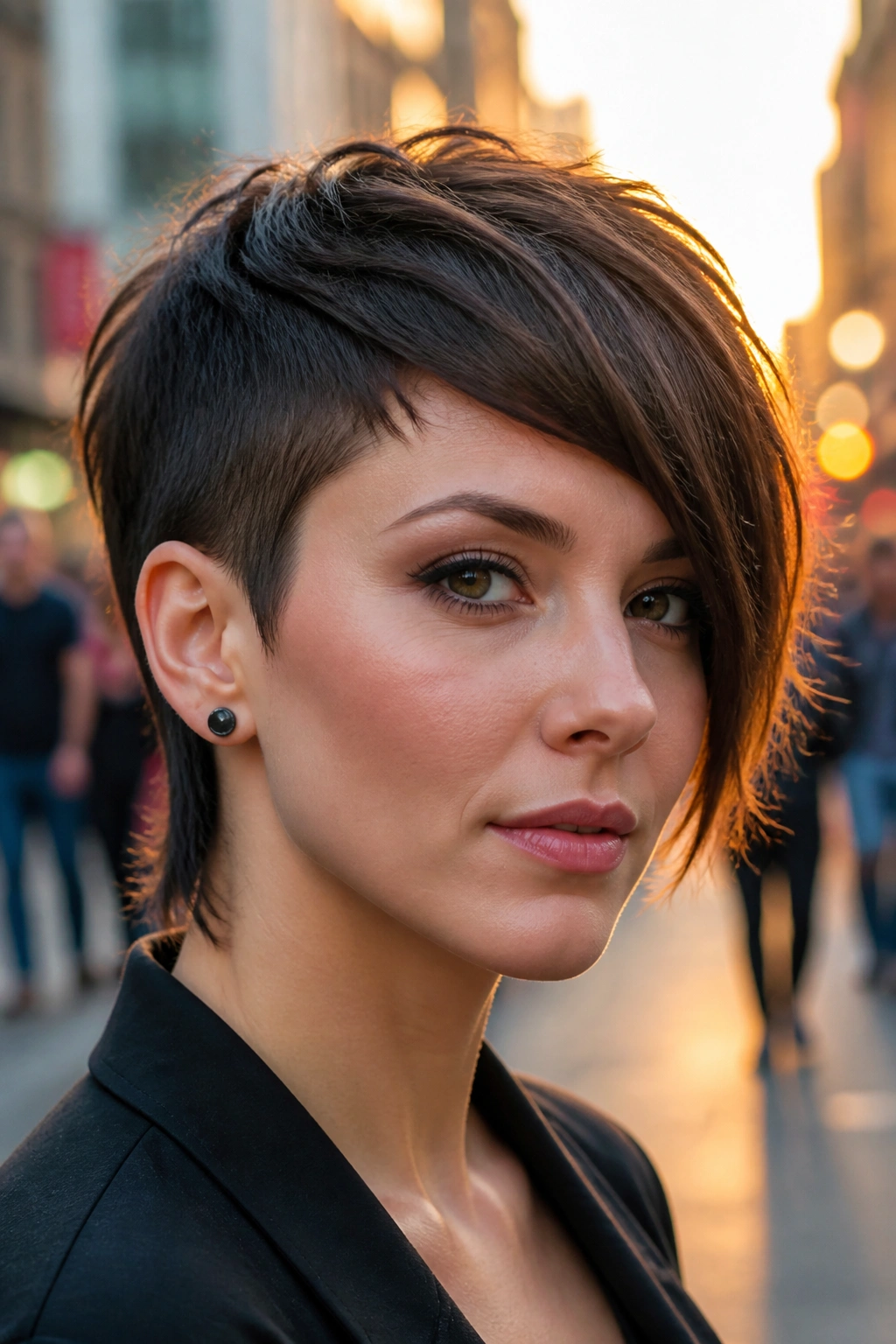
A round face loves a diagonal line. Asymmetry gives you exactly that. One side staying shorter while the other falls longer breaks the circular outline in a way that feels modern, not forced.
Think of it as a haircut with a built-in lean. One temple stays close, the other sweeps across the cheek, and the back trails slightly longer so the shape keeps moving. That imbalance draws the eye from top to bottom instead of letting it stay parked on the widest part of the face.
I’ve always thought this cut looks best when the longer side lands somewhere between the cheekbone and the jaw angle. Too short, and you miss the effect. Too long, and it starts to behave like a bob with attitude instead of a pixie mullet. The middle ground is where it works.
- Part it deeply to one side.
- Keep the shorter side snug near the ear.
- Let the longer side graze the cheek, then taper toward the back.
- Finish with a light texturizing spray so the asymmetry stays soft, not stiff.
The eye follows the line. That’s the whole trick. The face does not have to change; the direction around it does.
9. Slicked-Back Pixie Mullet
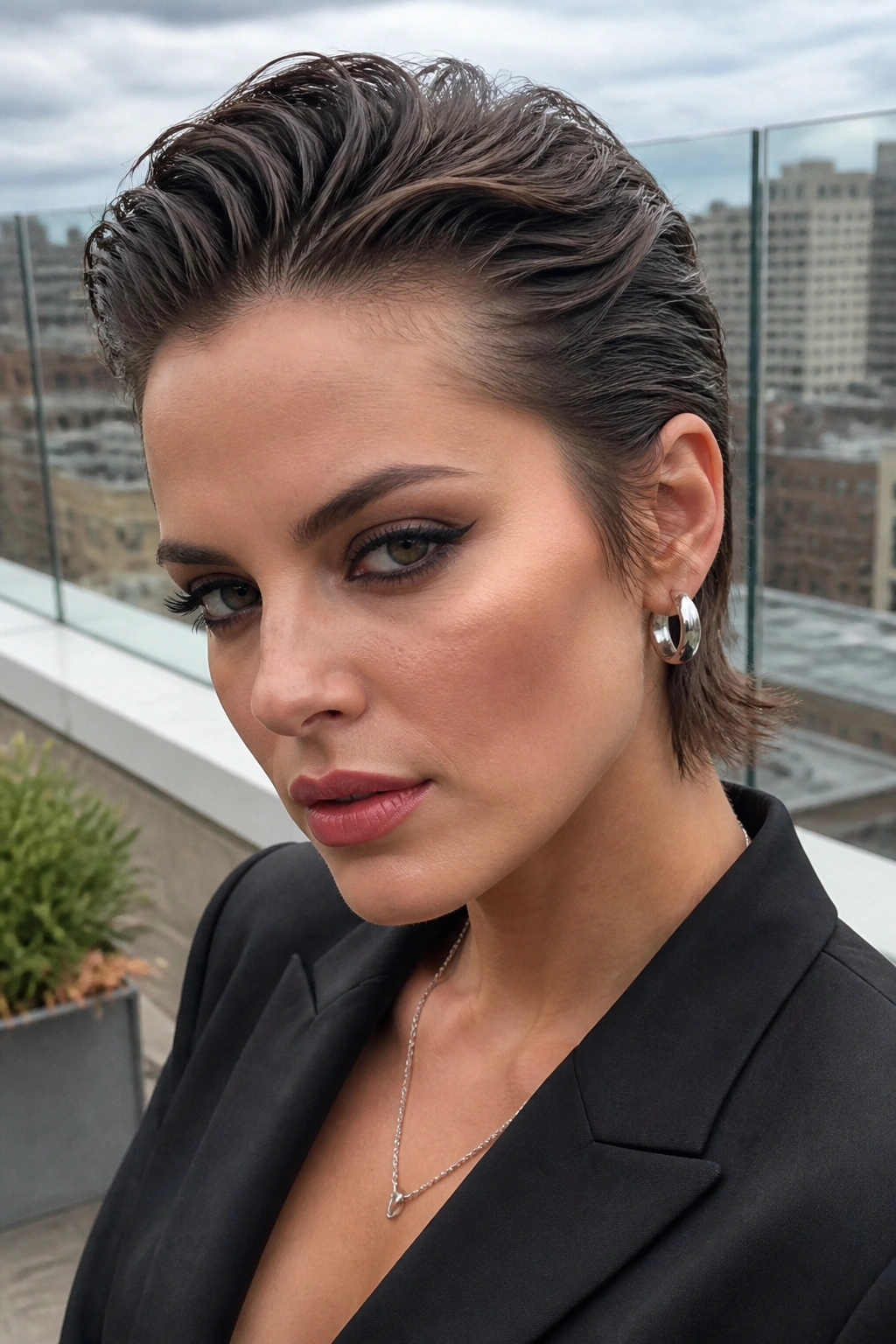
Can a slicked-back cut flatter a round face? Yes, if the top has enough length to build height before it gets smoothed back. If you flatten every strand from the hairline to the crown, the face can look broader. If you keep a little lift at the roots, the style becomes long and clean instead.
This version works best with medium-density hair and a bit of natural bend. Start with damp hair, work in a small amount of gel or styling cream, and comb the front back with your fingers instead of a hard-bristle brush. That keeps the crown from collapsing. The back can stay loose and slightly shaggy, which prevents the whole style from looking too polished.
How to Style It Fast
- Use a pea-sized amount of gel for short hair; more than that gets tacky fast.
- Push the hair up and back at the roots before smoothing the surface.
- Leave the nape soft and touchable.
- If the front is very short, let a few pieces fall forward for balance.
This is a sharper look, sure. But sharp does not mean harsh. The secret is height first, smoothness second.
10. Taper Fade Pixie Mullet
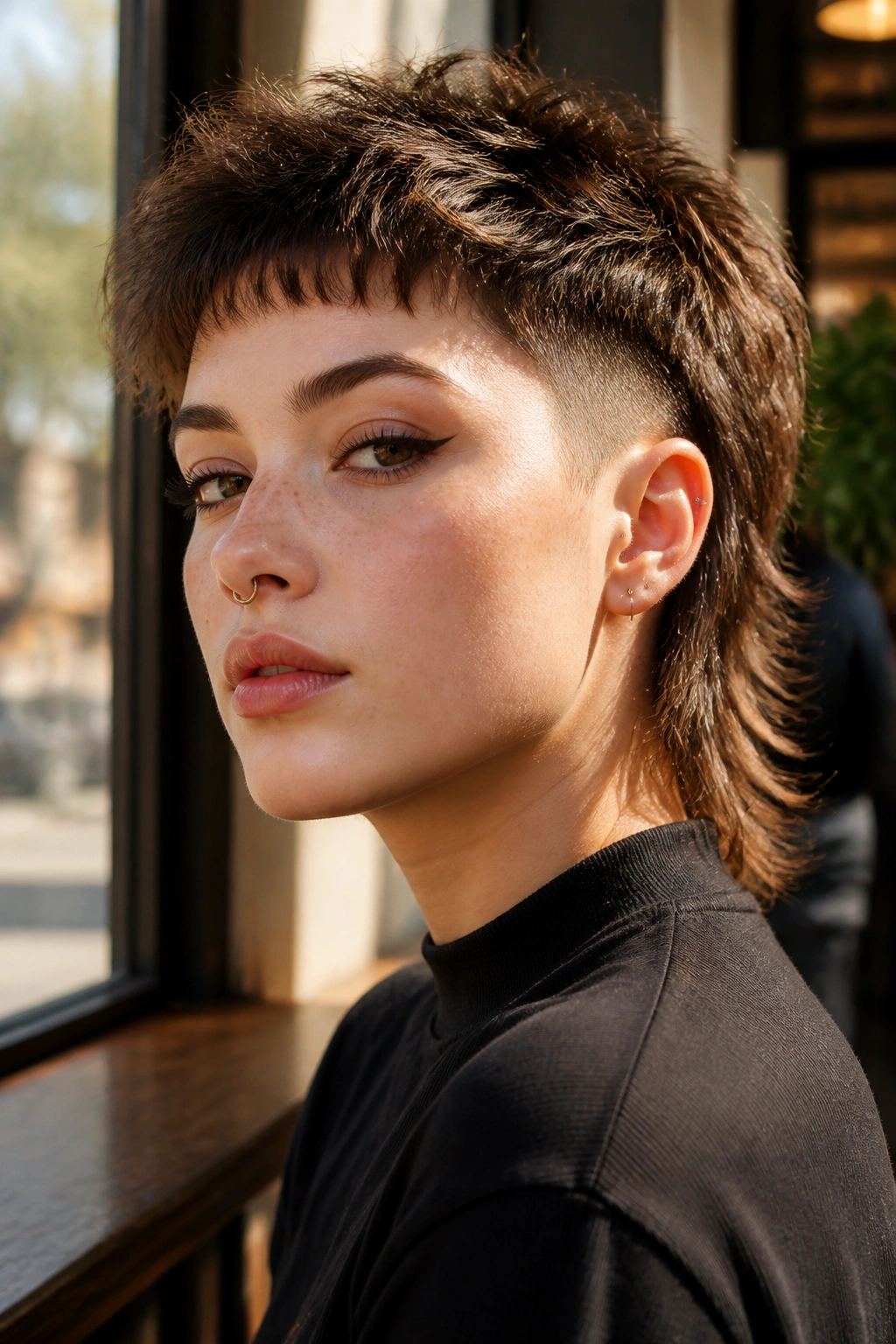
The taper fade is the cleanest fix for bulky sides. On a round face, that matters because the sides are where extra width tends to show up first. A low or mid taper pulls weight away from the cheeks and jaw, then lets the top and back carry the personality.
This cut suits thick hair especially well. Thick hair can balloon out at the sides if it is not controlled, and that balloon effect is what makes short cuts feel rounder. A taper fade tightens the perimeter without stripping away the character of the pixie mullet. You still get the short crop on top and the longer tail in back, just with less side bulk.
Maintenance is the catch. A taper fade looks crisp when it’s fresh, and it grows out faster than a softer cut. Most people who wear this shape end up touching it up every 3 to 4 weeks if they want the fade to stay clean. That is a fair trade if you like a sharper outline.
- Best for thick or coarse hair.
- Good if you like a low-maintenance morning routine.
- Works well with matte paste or light pomade.
- Less ideal if you want a fluffy, soft silhouette.
Crisp at the sides, loose on top. That formula works.
11. Wispy Curtain Fringe Pixie Mullet
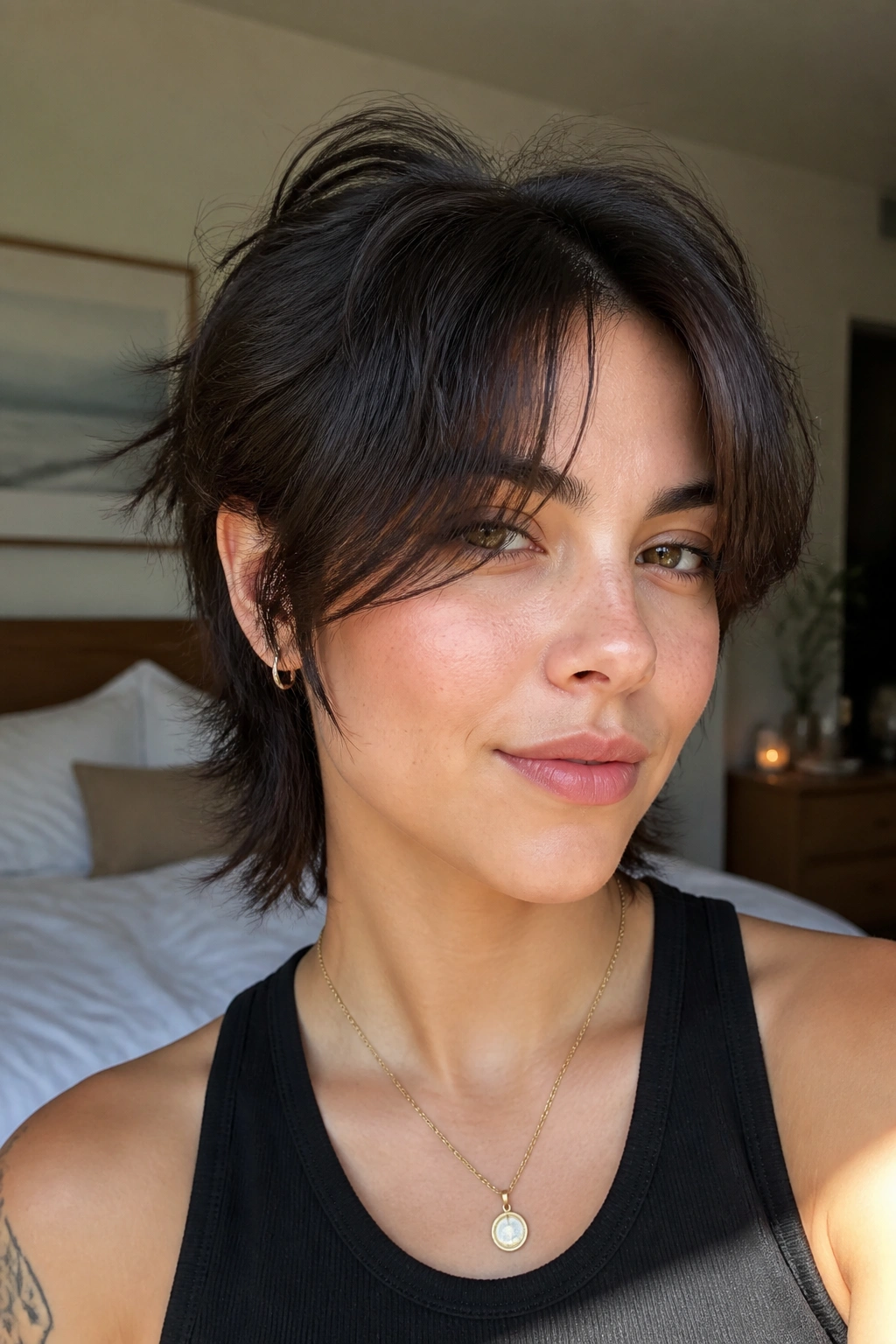
A curtain fringe on a pixie mullet gives round faces one of the easiest softening effects. The split front opens the middle of the face while the longer pieces frame the cheeks without sitting dead on the widest spot. It sounds simple because it is, and simple often wears better than a dramatic cut that needs constant fixing.
The fringe should start around the brow line, then fall away from the center toward the temples. That angle makes the face look a little longer and a little narrower. If the pieces are too blunt or too heavy, the fringe loses that light touch and starts acting like a curtain that closes the face off. That’s the line you do not want to cross.
I also like this cut because it works with a bit of growth. When curtain pieces get a little longer, they usually still look intentional. On a round face, that means fewer awkward weeks between appointments. A soft blow-dry with a round brush helps the front bend away from the face, and a cool shot at the end keeps it from falling flat.
Center part is not mandatory. Slightly off-center often looks better anyway, especially if you have a cowlick in the front.
12. Spiky Textured Pixie Mullet
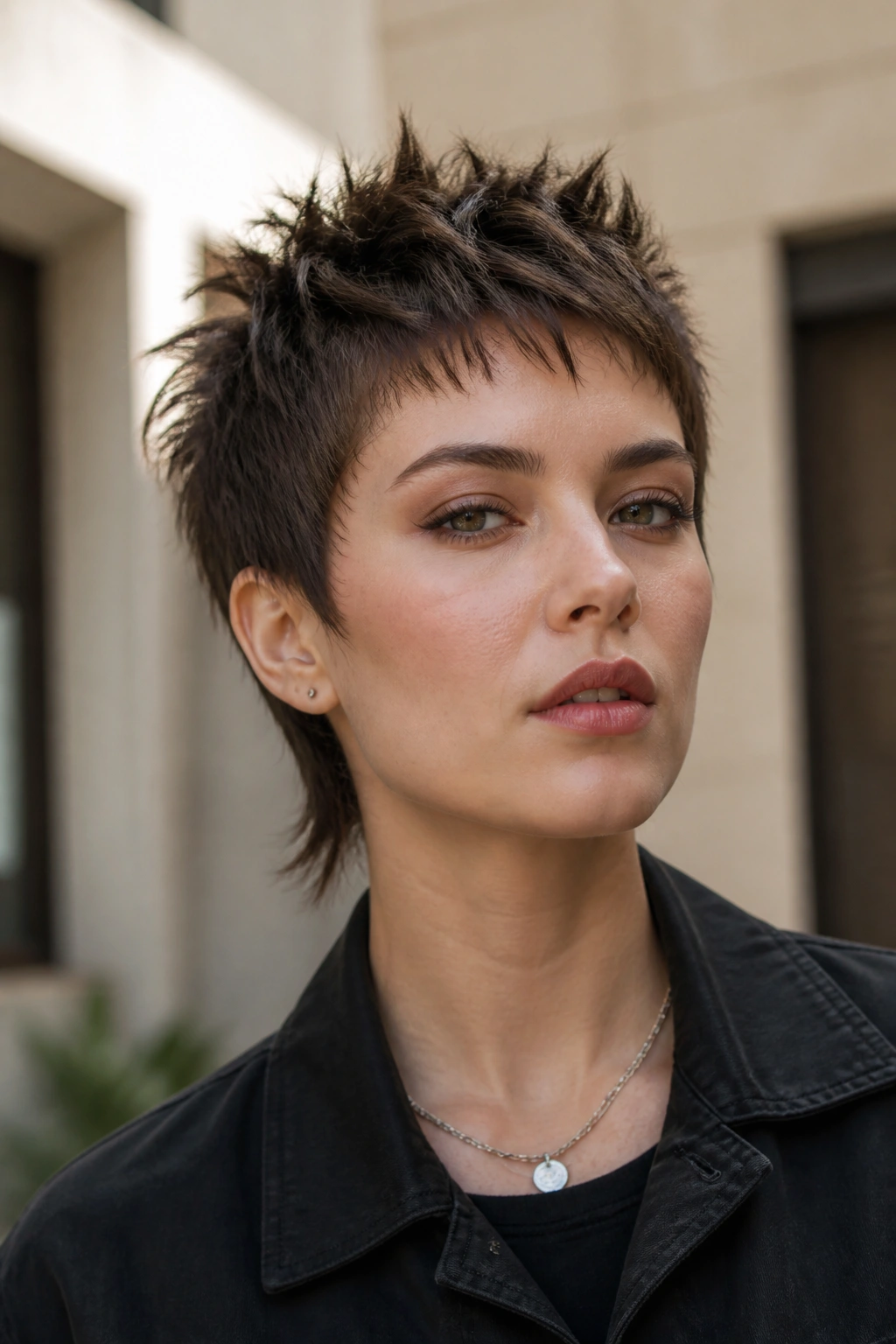
Unlike a soft crop, this cut is built on separation. The top stands up in little points, the sides stay narrow, and the nape keeps a hint of length so the style doesn’t turn into a plain spiky pixie. On a round face, those upward shapes matter because they add height without adding width.
This style makes the most sense if your hair is straight or only slightly wavy. Fine hair can take a bit of root lift and look lively fast. Coarse hair can also work, but it needs careful shaping so the spikes don’t become bulky clumps. The goal is piecey, not stiff. If every strand stands in the same direction, the cut starts to feel dated. Uneven texture is what keeps it fresh.
Use a matte clay or paste and apply it in two passes. First, warm the product in your hands and press it into the roots. Then pinch the top pieces to separate them. A tiny bit around the crown goes a long way.
A little mess is the point. If you like hair that feels awake and a bit rebellious, this cut gives you that without losing the face-lengthening effect.
13. Rounded-Top, Longer-Nape Pixie Mullet
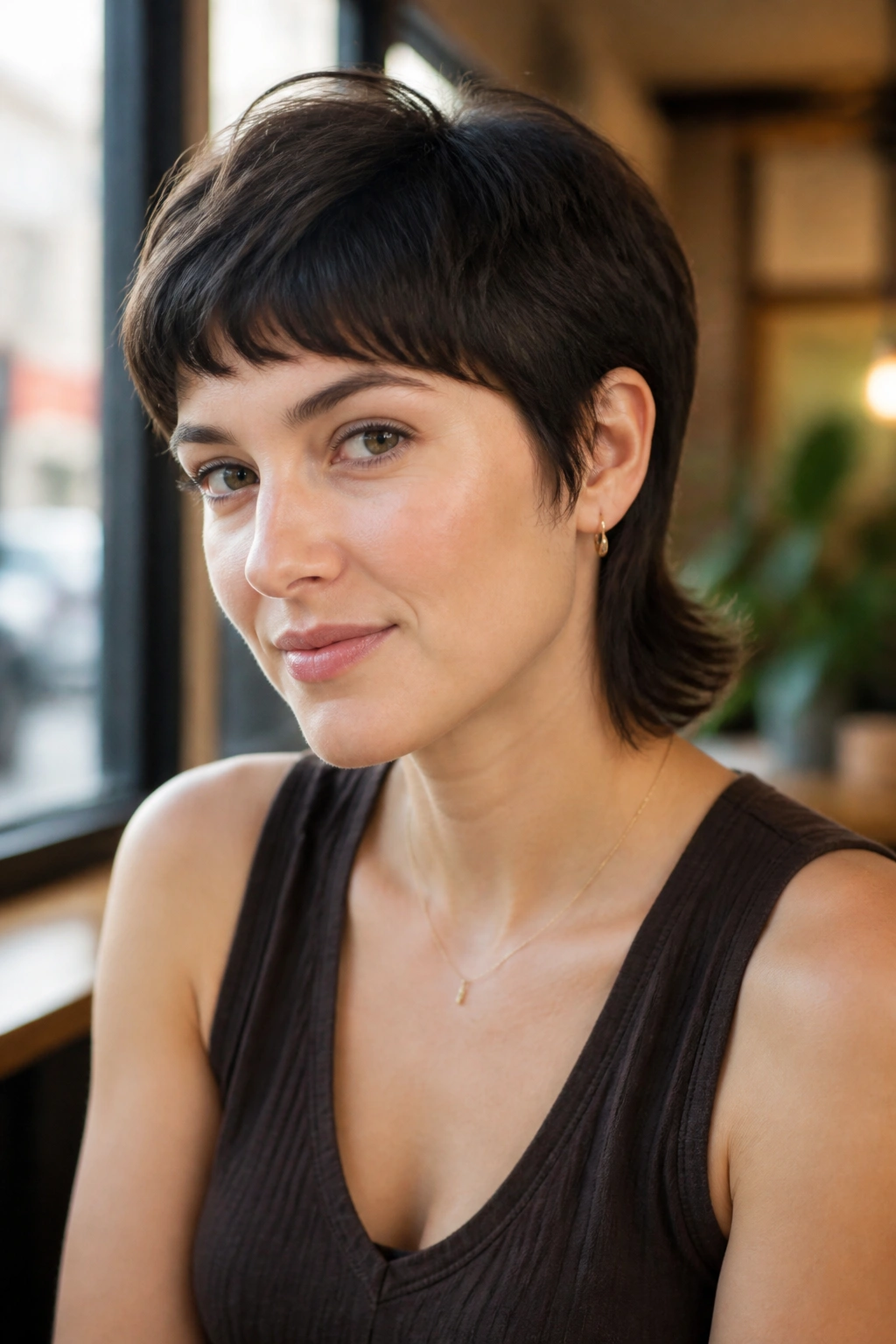
A rounder top can work on a round face. There, I said it.
The reason is simple: not all round shapes are the same. If the top stays soft but narrow at the sides, and the nape extends just enough to give the back direction, the cut reads as movement instead of a bubble. The danger is fullness at the temples. That’s what turns the silhouette wide. Keep the crown fluffy, keep the sides tucked in, and let the back trail a little longer.
Where the Shape Has to Stay Tight
- Keep volume centered at the crown, not at the temples.
- Ask for internal layers that remove bulk without making holes.
- Let the nape extend below the hairline by at least an inch or two.
- Avoid a blunt outline around the ears.
This is one of the softer-looking pixie mullets on the list, and that softness is the selling point. It suits people who want shape without edge, especially if they are nervous about jumping straight into a hard mullet.
Soft does not mean shapeless. If the corners are controlled, the curve can be flattering.
14. Face-Framing Long Sideburn Pixie Mullet
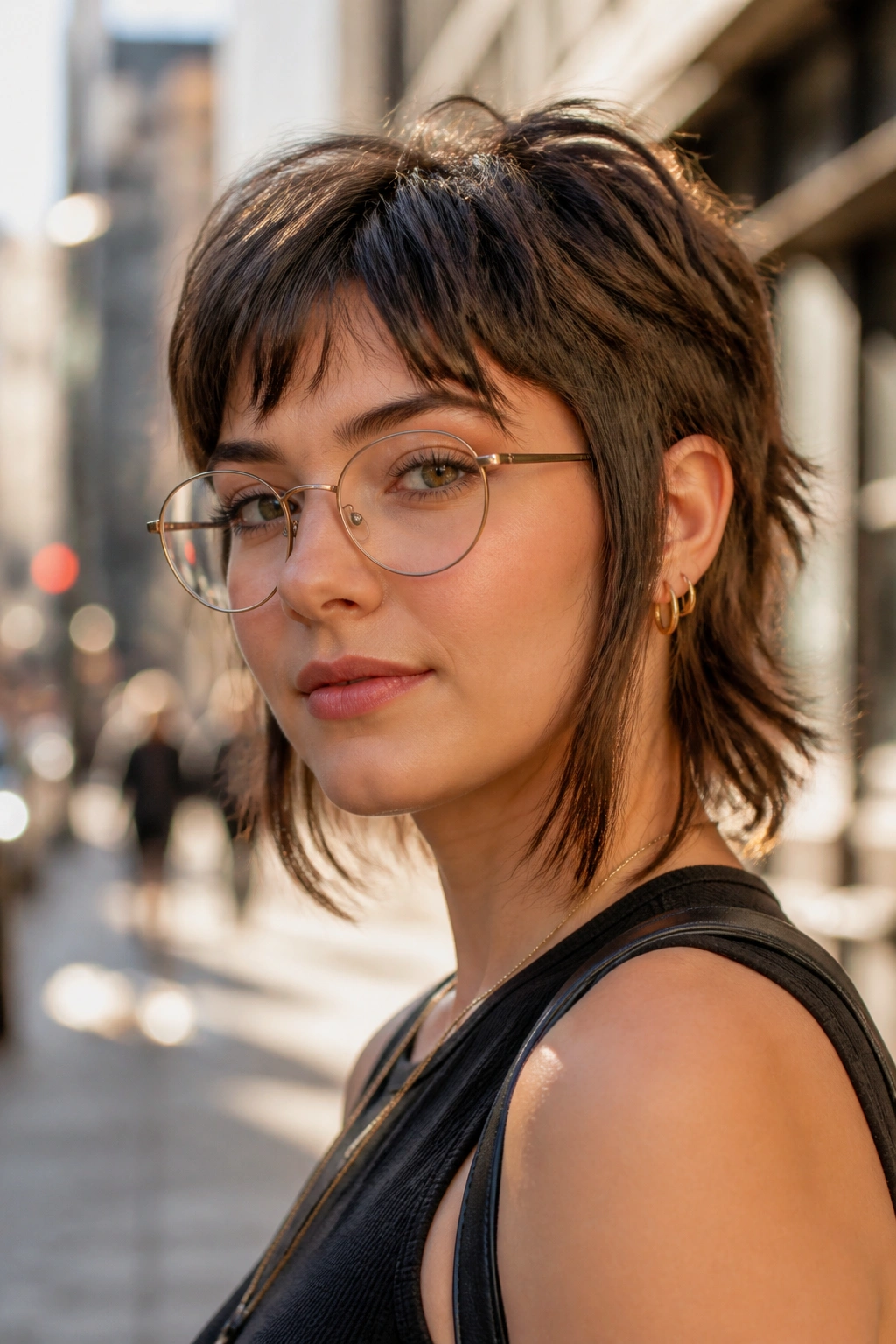
Long sideburns do more than people think. They carve a vertical line beside the face, which is exactly what a round face can use. The effect is subtle in the mirror and obvious in photos. Your cheeks still exist, of course. The cut just stops them from being the first thing the eye locks onto.
Why the Sideburns Do the Heavy Lifting
A sideburn that lands near the jaw angle gives the face a stronger outline. If it ends too high, the line breaks too soon. If it gets blunt, it can look like a chopped strip instead of a soft frame. Feathered ends work better because they blur into the rest of the cut.
This style is especially nice if you wear glasses, because the sideburns help balance the frame arms and keep the sides from feeling too exposed. It also works for anyone who likes to tuck hair behind one ear without losing the overall shape. You get freedom without losing structure.
- Keep the sideburns a little longer than the temple hair.
- Ask for a soft taper at the end.
- Match the longest piece to the jawline, not the cheekbone.
- Pair it with a light fringe or airy top so the face doesn’t feel crowded.
Those little face-framing strips matter. They are small, but they change the read of the whole haircut.
15. Tucked-Behind-Ear Pixie Mullet
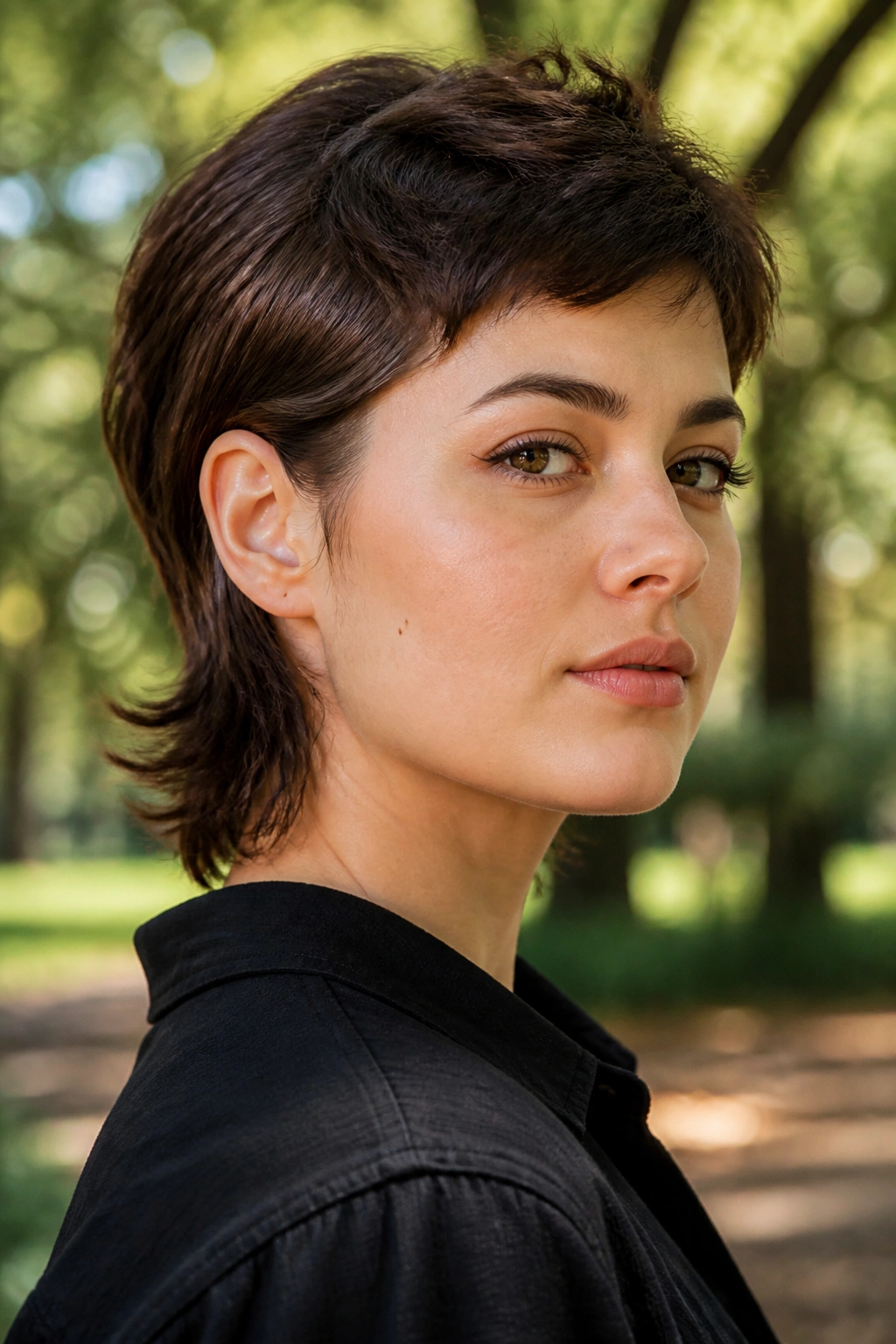
This is the low-drama version, and I mean that as a compliment. A tucked-behind-ear pixie mullet gives you shape without making you fight your hair all day. One side can stay tucked to open the cheek, while the other side falls loose enough to keep the cut from looking too neat.
It works especially well if you like earrings, glasses, or just a bit of face showing. The tuck creates a clean line at the side of the head, which helps a round face feel longer. Meanwhile, the nape and crown still carry the mullet and pixie texture, so the haircut does not lose its personality.
The trick is not to force the tuck with heavy product. A light cream or tiny bit of wax is enough to guide the hair behind the ear. Heavy product makes the tucked side look greasy, and then the whole thing feels older than it should. Keep the finish soft, not shellacked.
This is also a smart choice if you are growing out a shorter pixie into a mullet shape. It buys you time. And sometimes that’s all a haircut needs to do.
Final Thoughts
The best pixie mullet hairstyles for round faces all do the same basic job in slightly different ways: they add height, narrow the sides, and keep the eye moving. That can happen through feathering, a side-swept fringe, a fade, or a softer shaggy shape. The label matters less than the silhouette.
If you want the least fussy place to start, the feathered crown, side-swept fringe, and soft shag versions are the easiest to live with. If you want more edge, the undercut, taper fade, or choppy razor-cut versions bring it fast. Sharp or soft, the cut should still leave some air around the cheeks.
Bring photos, sure. But also bring a plain sentence about your face shape and what bothers you most in short cuts. That conversation usually gets you closer to the right result than any trend name ever will.
