



Undercut shag hairstyles work because they take weight out of the back and sides while keeping the messy, layered shape that makes a shag feel alive. The haircut has a backbone.
If you’ve ever had a shag collapse into a triangle, or watched a mullet turn into a puffy cloud around the neck, you already know why this shape matters. An undercut changes the whole balance. It gives thick hair room to move, lets wavy hair break up instead of sitting like one heavy block, and makes fine hair look a little more deliberate when the layers are cut with care.
The best part is the range. You can go hidden and keep things subtle, or push the undercut higher and let the whole cut feel sharper, louder, and more personal. Some versions look soft from the front and fierce from the back. Others do the opposite. A good stylist pays attention to where the weight sits, how your hair falls at the nape, and whether your fringe should float or land with a bit of bite.
That shape-shifting quality is exactly why this cut keeps hanging around. It isn’t one look. It’s a whole family of looks, and the details matter more than people think. Start with the version that fits your hair texture and how much edge you actually want, because the first cut on the list is often the one that makes the rest make sense.
1. Hidden Undercut Shag With Soft Layers
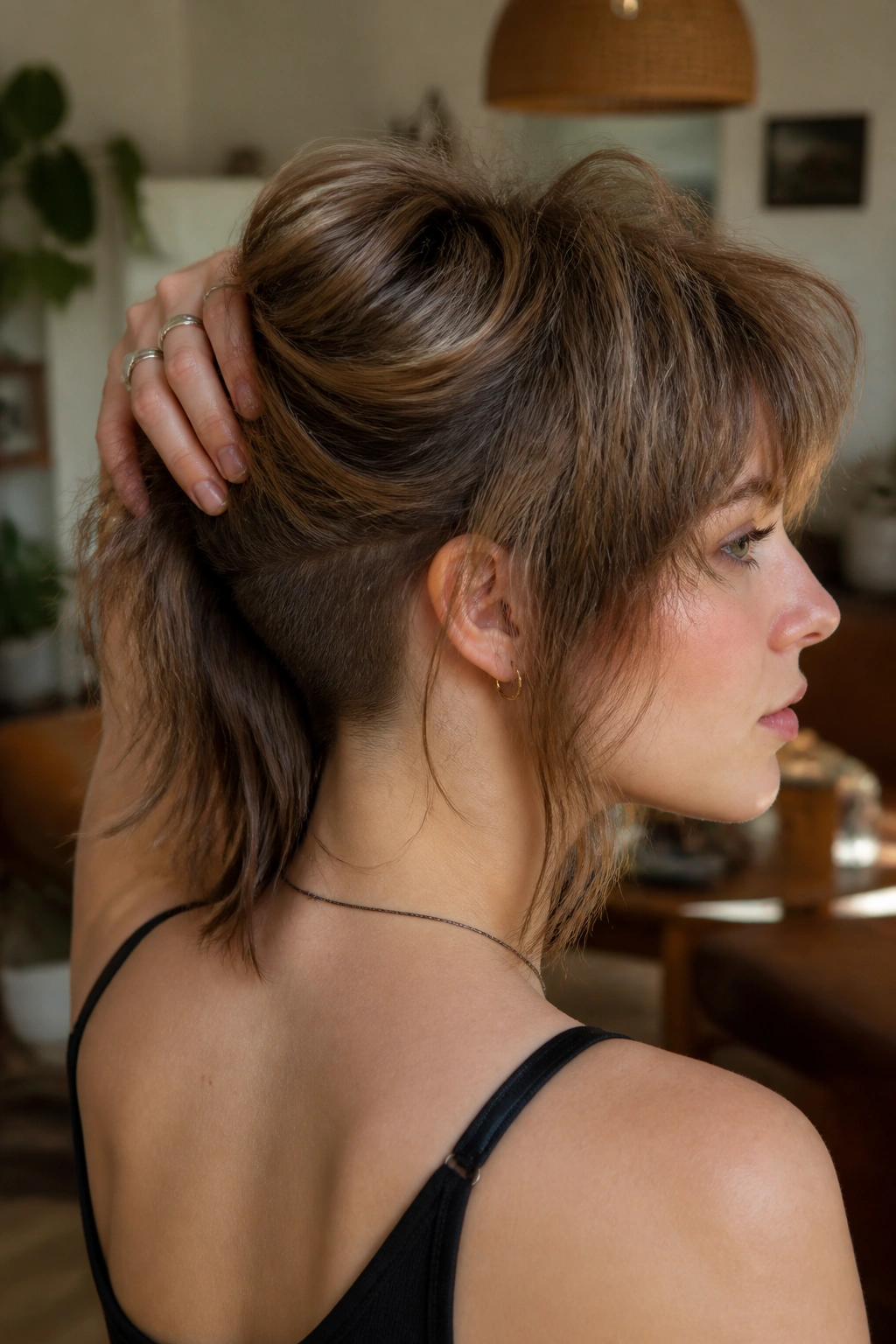
The hidden undercut shag is the smartest place to start if you want edge without broadcasting it from across the room. From the front, it still reads like a shag: feathered layers, movement through the crown, a little swing at the ends. The surprise sits underneath, where the bulk gets removed near the nape and sometimes just behind the ears.
That hidden strip changes the whole feel of the haircut. Thick hair stops ballooning at the bottom. Wavy hair gets more lift. Even straight hair can sit closer to the head without turning flat on top, which is the problem with a lot of “textured” cuts that look good only on a single hair type.
Why It Works
The shape stays soft because the undercut is doing the quiet work. You get the lightness where you need it and the length where you want it. That means the cut can grow out a bit more gracefully than a fully shaved look, which is nice if you hate constant upkeep.
Ask for the undercut to stay low and narrow if you want maximum flexibility. A clean line around the nape is enough for most people.
Styling Note
- Blow-dry the top layers with a small round brush if you want a little bend at the ends.
- Use sea salt spray on damp hair for grip, then scrunch with your hands.
- Keep the underside clean every 4 to 6 weeks if the bulk starts sneaking back.
Best for: thick, wavy, or slightly coarse hair that needs weight removed without losing its shape.
2. Wolf-Cut Undercut Shag With Heavy Curtain Fringe
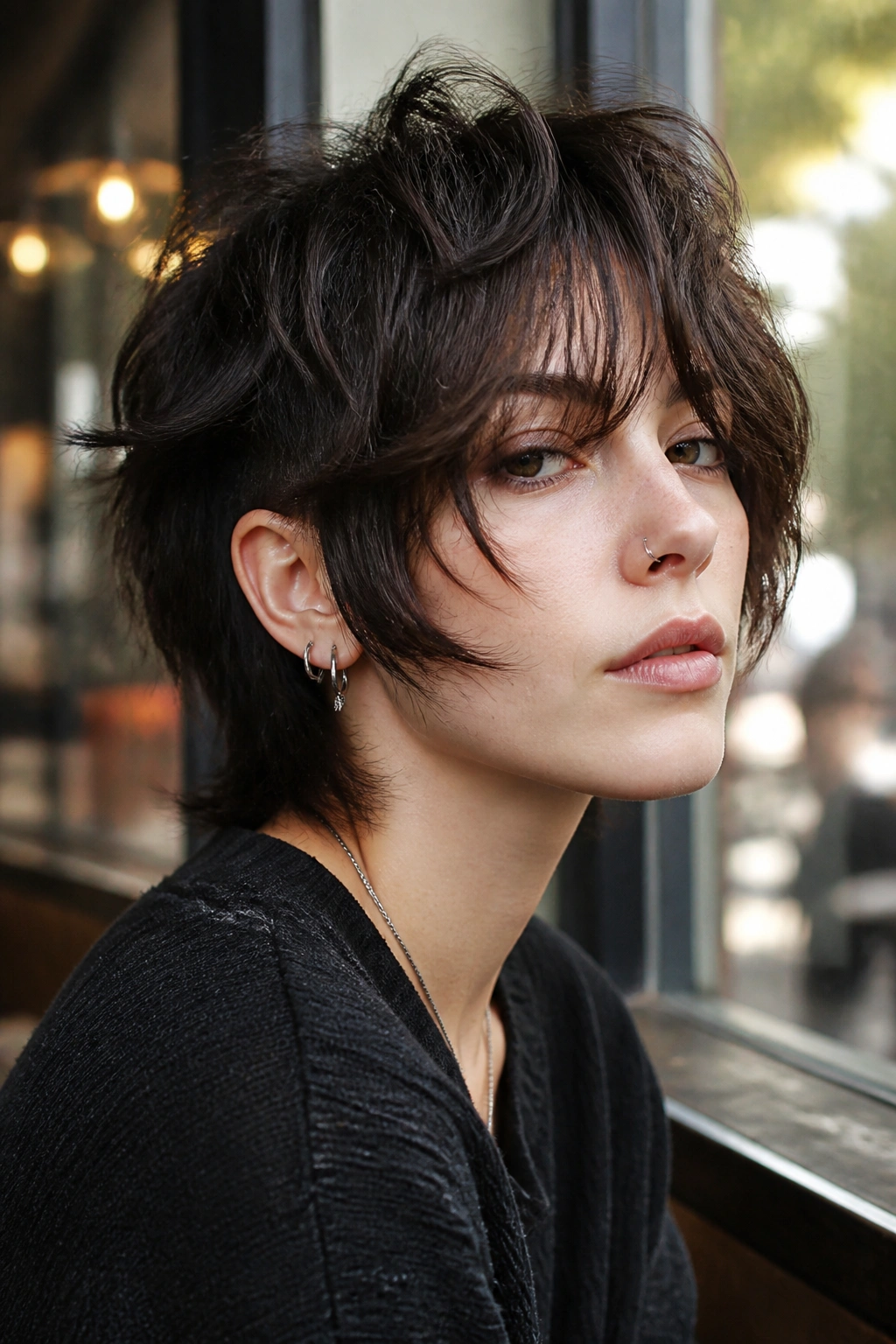
Why does this one hit so hard? Because it steals the best parts of a wolf cut and a shag, then leaves out the boring bits. The top stays choppy, the fringe drops heavy around the eyes, and the undercut keeps the back from puffing out like a bell.
This version has a little drama built in. The curtain fringe softens the face, but the undercut gives the cut a harder edge when you tuck the hair behind the ear or pin it half up. That contrast is the whole point. You’re not choosing between soft and sharp. You’re getting both.
The trick is balance. If the fringe is too dense and the undercut too high, the cut can tip into mullet territory fast. That’s not a bad thing if you want it. If you don’t, keep the fringe long enough to split at the cheekbones and keep the undercut confined to the lower back and sides.
What to Ask For
- Choppy crown layers with some length left in the front
- A curtain fringe that starts around the cheekbones
- A low undercut that removes bulk near the nape only
- Razor detailing on the ends if your hair likes to puff
Styling tip: dry the fringe away from the face first, then break it up with a tiny bit of matte paste on the fingertips. Too much product kills the movement.
3. Curly Undercut Shag That Keeps the Crown Lifted
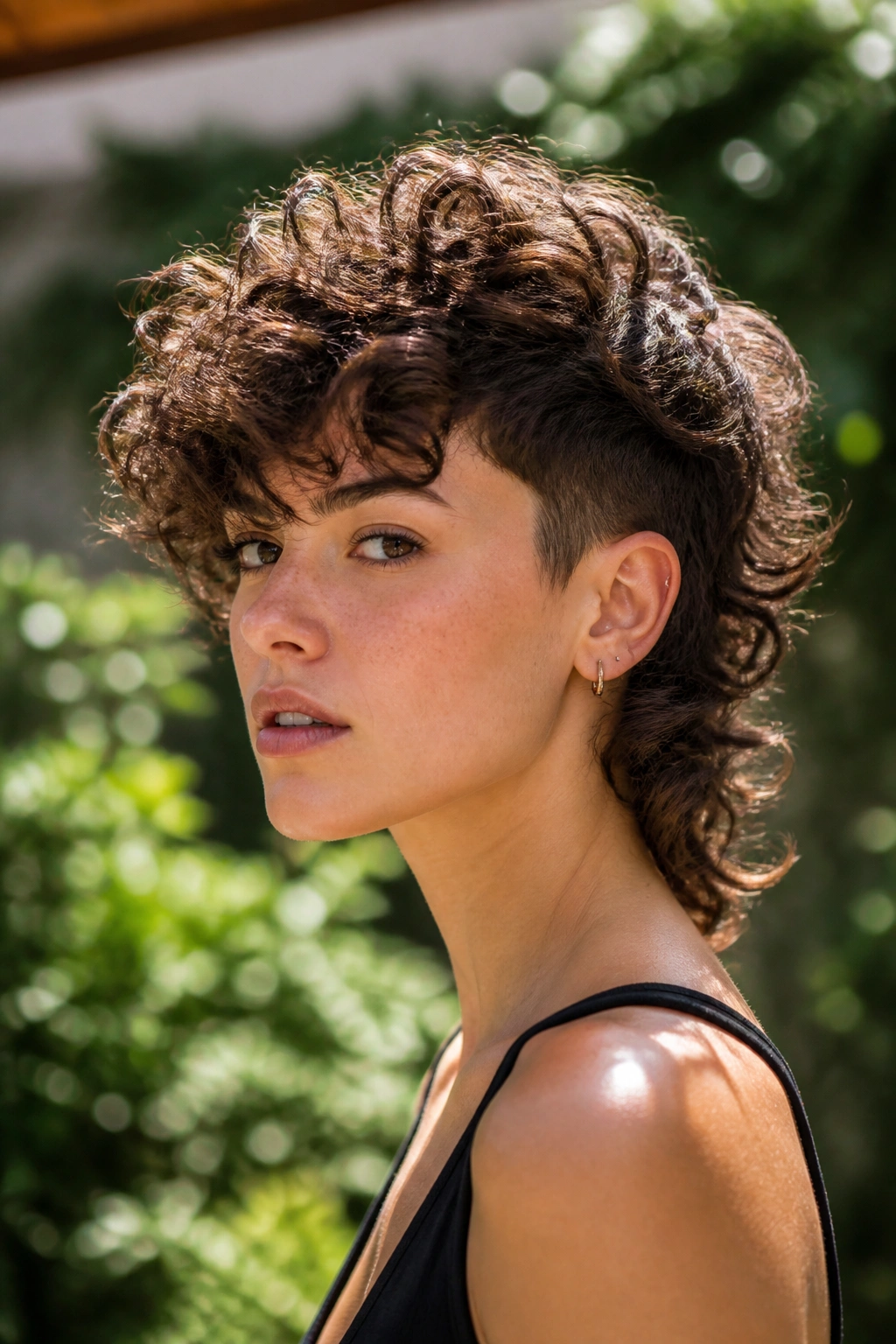
Curly hair and undercuts get along better than people expect. When the underneath is cleaned out, the curls on top stop stacking into a heavy dome. The silhouette gets taller, lighter, and a little more wild in the best way.
The crown is the part that usually wins here. A shag already wants to bring attention upward, and curls only make that stronger. If you cut the undercut too high, though, you can lose too much mass and end up with a shape that feels too narrow. That’s the catch. Leave enough support in the middle back so the curls still have a base.
The Best Version for Curl Patterns
- Loose waves: keep the undercut low and let the layers wander
- Medium curls: ask for rounded crown layers and a soft nape cleanout
- Tighter curls: leave more length at the sides so the shape doesn’t collapse
A diffuser helps, but not if you blast the hair until it frizzes. Use a curl cream first, then cup sections into the diffuser on low heat. Stop when the curls are about 80 percent dry and let the rest air-dry. That keeps the ends from getting crunchy.
If your curls shrink a lot, tell your stylist how the hair behaves when it’s dry. That detail saves you from getting a cut that looks perfect only in the chair.
4. Razor-Cut Shag With Shaved Sides and Bright Color
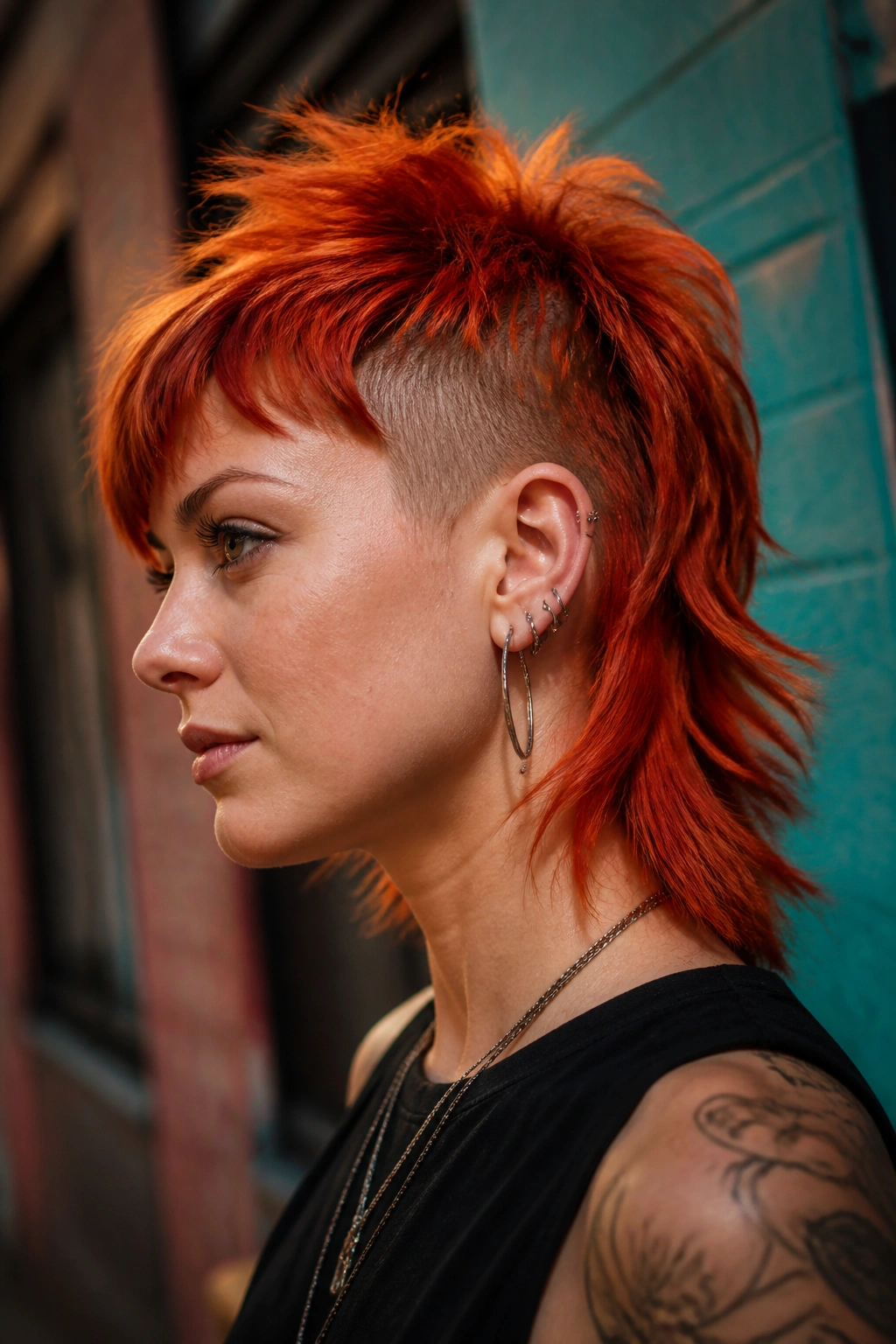
Blunt is not the point here. Jagged is.
A razor-cut shag with shaved sides leans hard into contrast, which is exactly why it looks so sharp. The top stays long enough to flip, piece out, or sweep forward, while the sides get cropped close so the whole style reads graphic instead of soft. Add a bright color — copper, silver, plum, icy blonde, even a black-and-neon split — and the cut suddenly feels like it has its own attitude.
This is not a low-drama haircut. It announces itself. The shaved sides make earrings, sunglasses, and jawline all matter more, and the razor detailing keeps the ends looking broken up rather than blunt. That broken edge is what gives shag cuts their movement anyway, so this version just turns the volume up.
You do need a little upkeep. The sides grow fast, and once the clean line disappears, the whole cut starts losing its punch. If you like crisp outlines, book trims before the regrowth gets fuzzy.
A good styling combo here is heat protectant, a light mousse, and a flat iron used only on the outer layers. You’re not trying to make everything smooth. You’re trying to make the top sit in sharp little sections while the undercut stays neat underneath.
5. Shoulder-Length Shag With a Clean Nape Undercut

This is the haircut for someone who wants shape without giving up length. The shoulders still get that easy, lived-in shag movement, but the nape gets cleaned out so the back doesn’t hang like a wet towel.
It looks especially good when the hair has some natural bend. The top layers move. The bottom line doesn’t drag. That little bit of contrast makes the whole cut feel intentional, even if you did almost nothing to style it that morning.
There’s also a practical side people ignore. Shoulder-length hair can get bulky fast at the neckline, especially if you wear collars, jackets, or scarves that push the hair inward. A nape undercut solves that. The cut sits better under clothes and tangles less at the bottom.
Good Signs to Tell Your Stylist
- You want the length to stay near the shoulders
- You want less puff at the neck
- You wear your hair up part of the time
- You prefer movement over blunt edges
Keep the layers soft around the front so the cut doesn’t feel boxy. A few face-framing pieces around the chin can keep the whole thing from looking too heavy.
6. Micro-Banged Undercut Shag for a Sharp Front Line
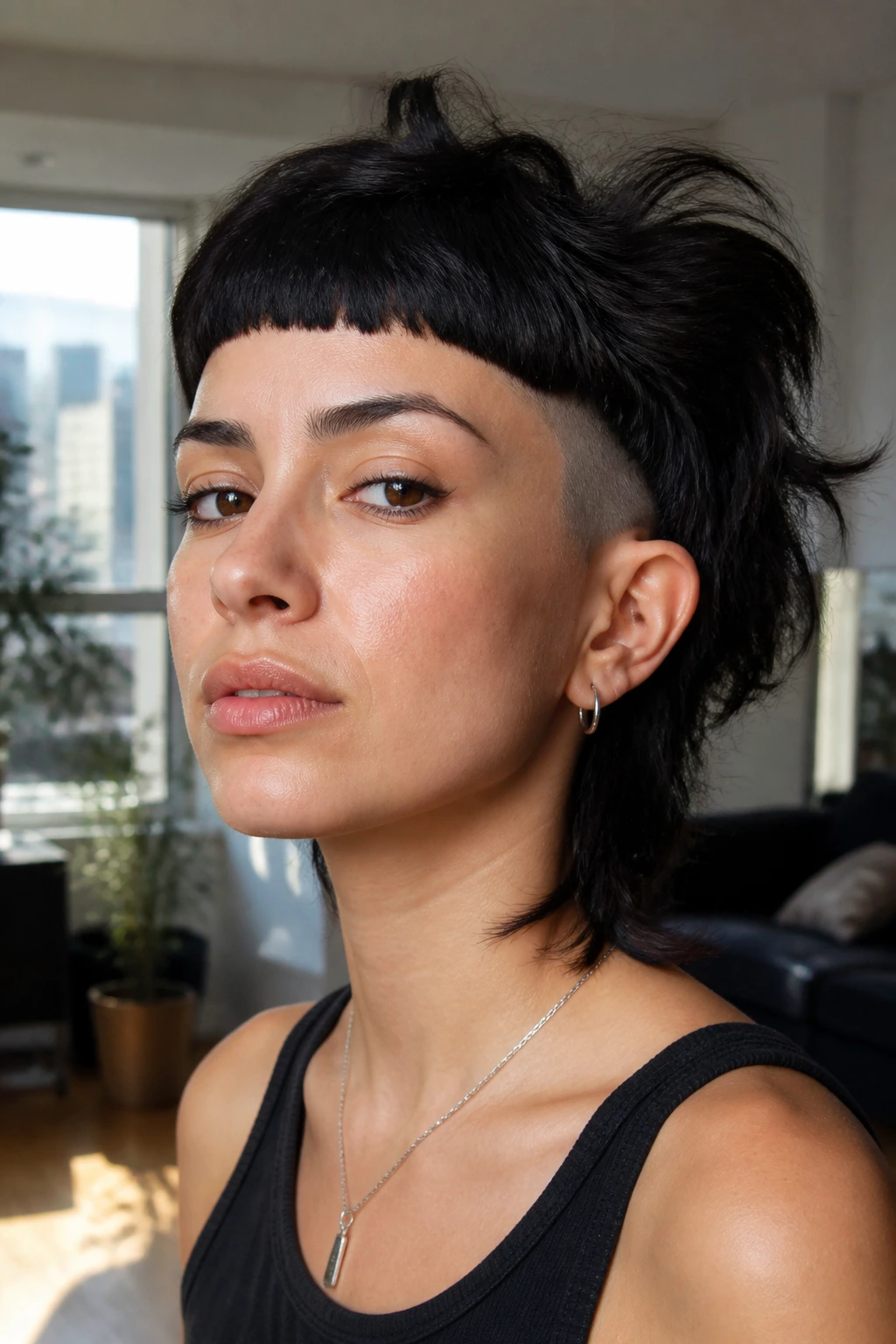
Can a tiny fringe make a shag feel harder? Absolutely. Micro bangs turn the front into a statement, and the undercut keeps the rest from looking too busy. The result is crisp, a little art-school, and much less precious than a full fringe that tries too hard.
The key is contrast in length. Short bangs, chopped crown layers, and a clean undercut at the back create three different zones in one haircut. That sounds chaotic on paper. On the head, it works because each part has a job. The bangs frame the eyes, the top keeps movement, and the undercut stops the bottom from ballooning.
How to Wear It
- Keep the bangs dry-styled first, before touching the rest
- Use a pea-sized amount of styling cream on the ends, not the roots
- Let the undercut stay neat; this cut loses shape fast if the base gets fuzzy
Micro bangs ask for confidence and a decent trim schedule. They grow out fast, and once they drop into the eyes, the whole vibe changes. If you like a cut that looks a little sharper every time you walk past a mirror, this is a good one.
I like this style most on straight to slightly wavy hair. On curls, it can work, but the fringe needs a careful hand.
7. Split-Dye Undercut Shag With Piecey Texture
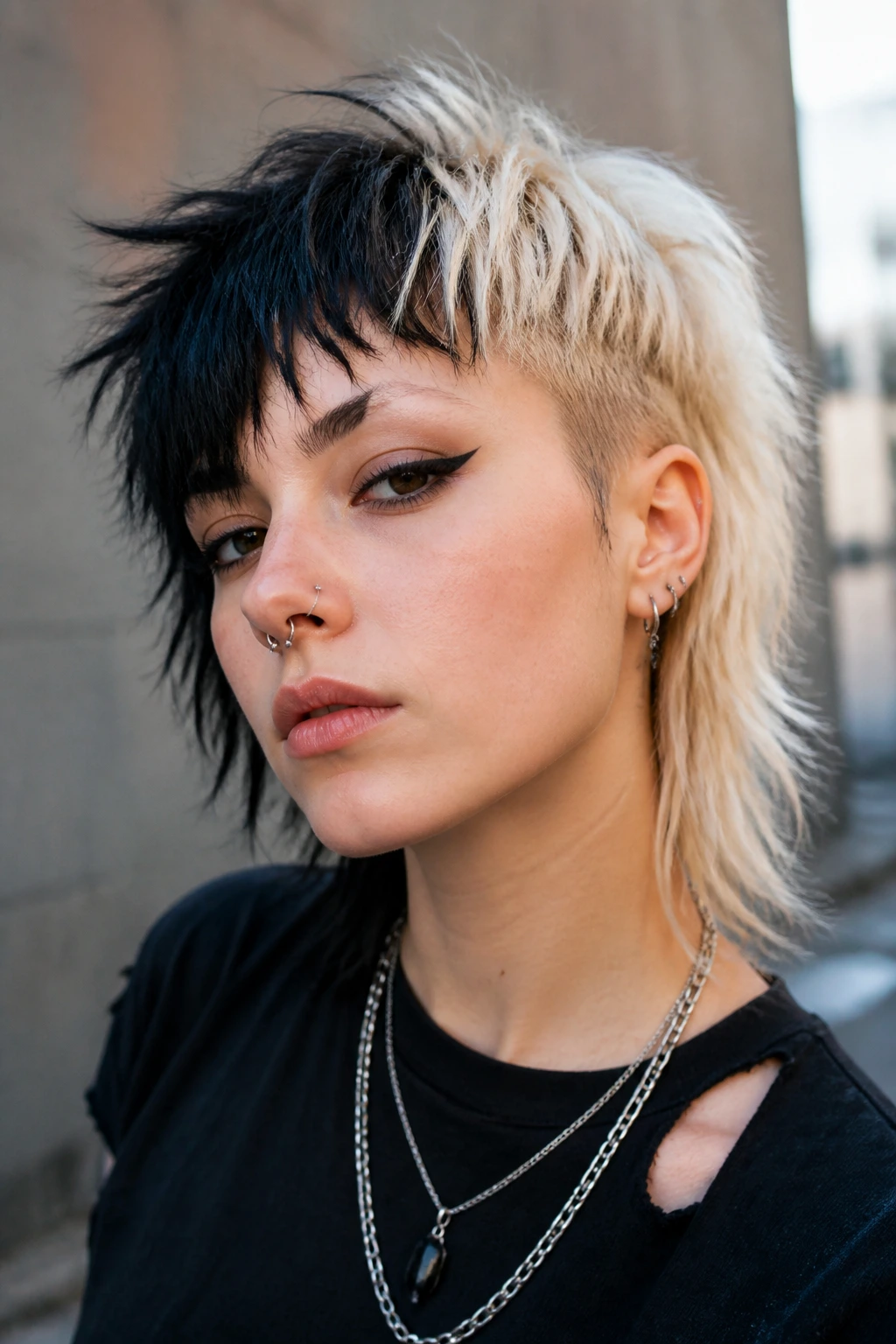
Color and cut should talk to each other. Here, they do.
A split-dye undercut shag uses the undercut as part of the visual joke. One side can be darker, the other lighter; the layers can reveal color only when the hair swings; the underside can stay hidden until you tuck the hair behind one ear. That makes the haircut feel alive in motion, which is where shag cuts usually look best anyway.
The piecey texture matters more than perfect blending. If every strand falls the same way, the color looks flat. When the layers are broken up with a little grit, the split line and the haircut start working together instead of fighting each other.
This one loves a matte finish. Too much shine makes the color separation feel muddy. A dry texturizing spray, used lightly at the roots and through the mid-lengths, helps each section stand on its own. A little goes a long way.
Good pairings for this cut:
- Black and silver
- Blonde and copper
- Wine red and cherry
- Deep brown with face-framing blonde panels
The undercut keeps the back from getting bulky, which matters when color already gives the style a lot to look at. You want shape, not noise.
8. Long Undercut Shag With Temple Cutouts

The long shag with temple cutouts is for people who want the length but don’t want the weight. From the front, it can still read soft and almost romantic. Then you turn the head, tuck the hair back, and the temple area shows a tighter, more deliberate edge.
That placement makes a difference. A temple undercut removes bulk where the hair often sticks out around the cheek and ear, which can ruin the line of a long shag. It also lets the front layers fall closer to the face without the sides getting wide and boxy.
Who Should Consider It
- Thick-haired people who still want length
- Anyone who wears half-up styles a lot
- People who want an undercut that can stay hidden on workdays
- Anyone tired of the mushroom effect at the sides
The cut works best when the longest layers fall below the collarbone. That gives the top enough room to move while the undercut quietly fixes the shape underneath. If the cut is too short overall, the temple detail can start to look severe instead of sleek.
A soft wave spray and a quick bend with a large barrel iron keep this one from feeling too polished. It should move.
9. Mullet-Inspired Undercut Shag With Extra Length in Back
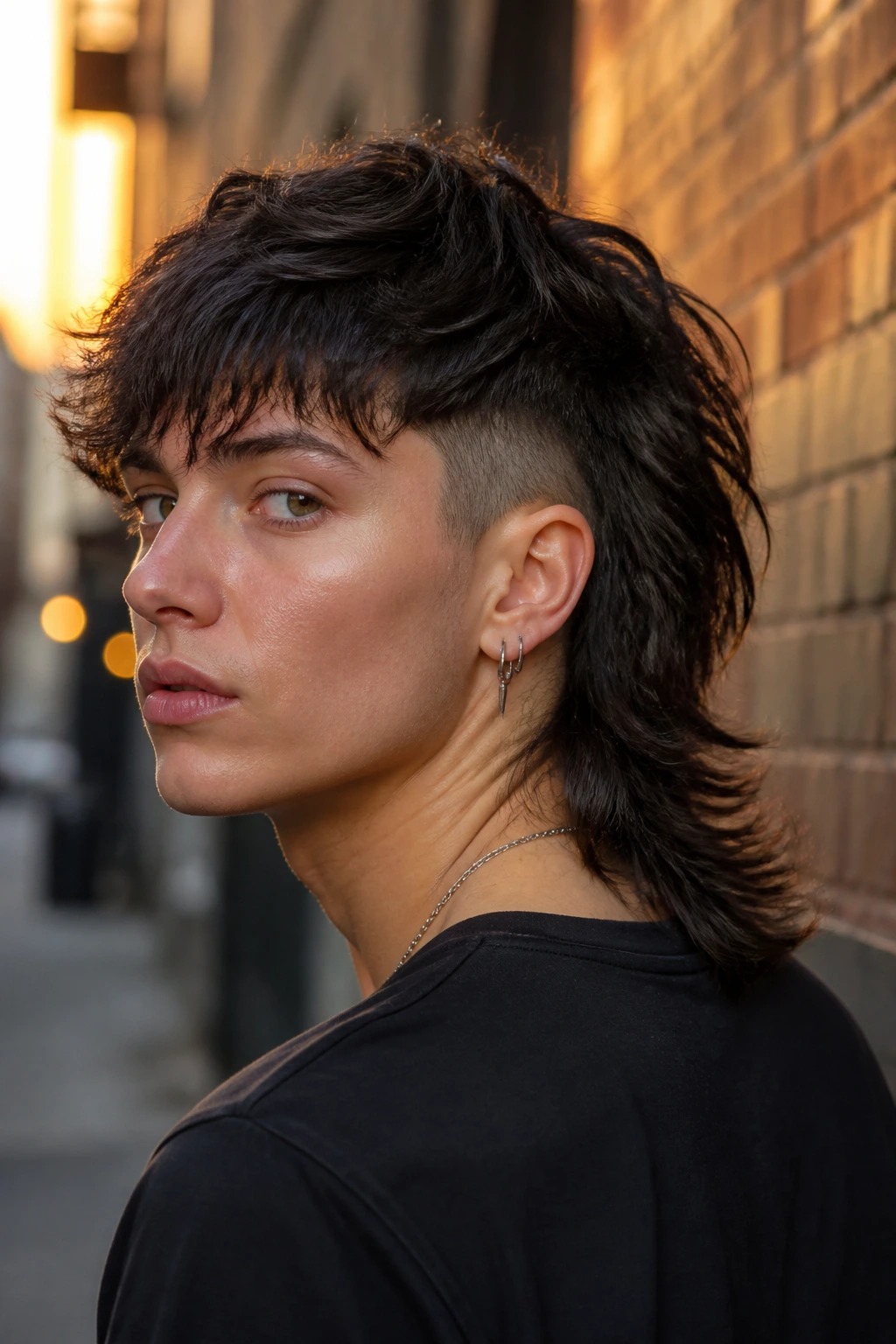
The back isn’t the problem. The shape is.
That’s why the mullet-leaning undercut shag keeps showing up in better and better forms. The front and sides stay shaggy and choppy, the crown gets texture, and the back hangs longer in a way that feels deliberate rather than accidental. The undercut stops all that length from turning into a heavy curtain.
This version works because it understands proportion. The back can be longer if the sides are held tighter. The longer length gives the haircut its attitude; the undercut keeps it from sinking. That balance is what separates a cool mullet-inspired shag from a haircut that just grew out badly.
If you want the back to stay sharp, ask for the lower layers to be point-cut or razor-cut. Straight lines make the tail look too blunt. A bit of irregularity helps the ends move when you walk.
Styling Product Short List
- Mousse at the crown for lift
- Texturizing spray through the back layers
- A small amount of pomade only on the ends if you want more separation
This cut can go punk, soft, or somewhere in between. It depends on how hard you push the fringe and how tight the undercut sits at the neck.
10. Soft Undercut Shag With Side-Swept Bangs
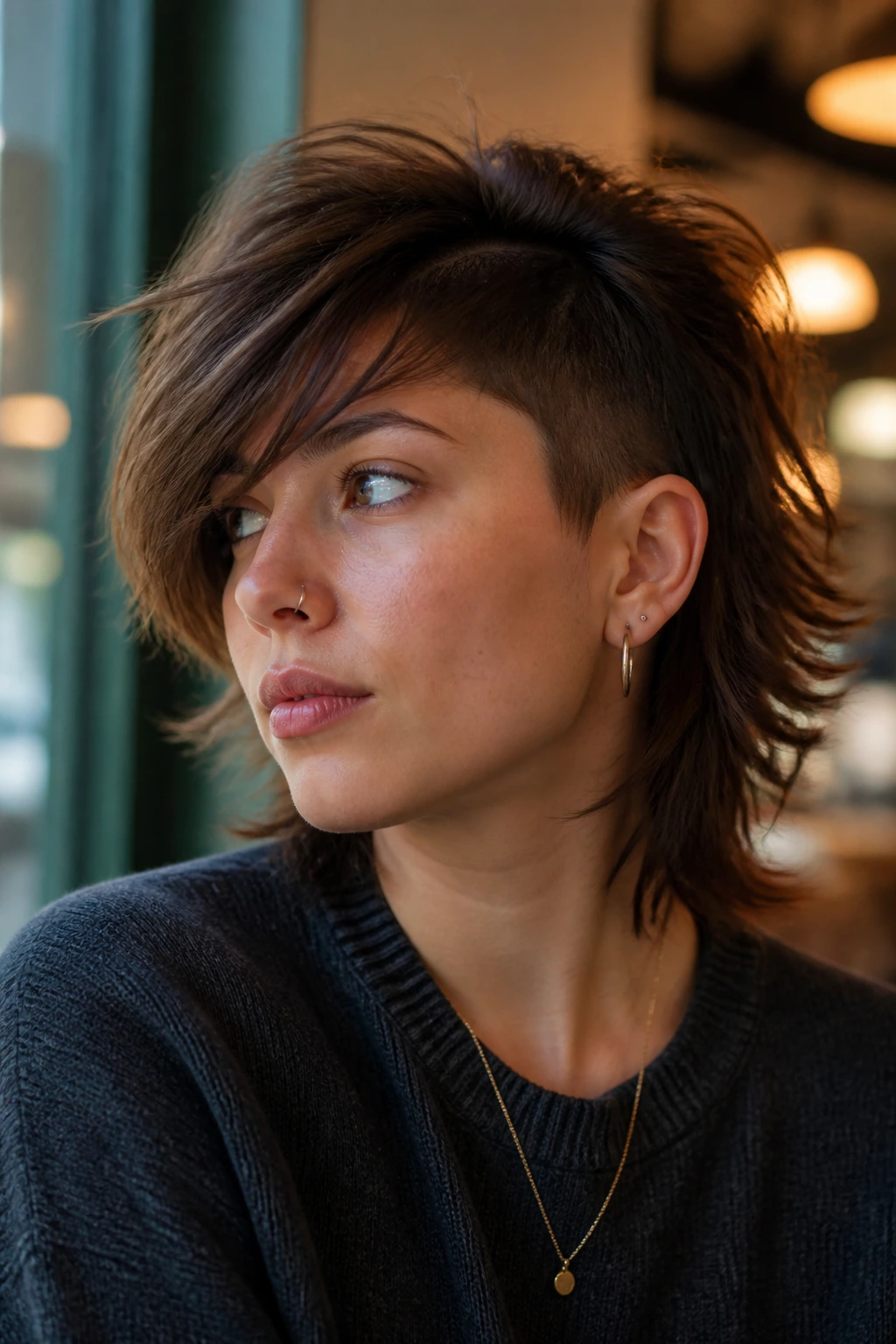
What if you want edge, but you still want your hair to feel easy to wear? Side-swept bangs are the answer more often than people admit. They soften the face, blur the forehead, and let the undercut do its work underneath without making the whole style feel aggressive.
This cut has a gentler mood than some of the others on the list. The layers still break up the shape, and the undercut still removes bulk, but the bang direction keeps everything from reading too severe. That makes it a good bridge haircut for someone testing the waters.
The best side-swept versions have a long front piece that falls past the eyebrow and a shorter back section that opens up the cheekbone. If the bangs are too short, the look starts to fight itself. Too long, and the cut loses its lift.
A round brush helps, but so does a cheap trick: blow-dry the bangs in the opposite direction first, then swing them over. That gives a little root lift and stops the front from lying flat against the forehead.
This one is good if you want your haircut to look good on a normal day, not just in a styled photo. That matters.
11. Chin-Length Undercut Shag With Choppy Ends

Chin-length hair can get boxy fast. The undercut fixes that.
When the cut lands around the jaw, every line matters. A shallow undercut at the nape and lower sides takes away the triangle shape that short hair likes to make, while the choppy ends keep the perimeter from feeling too neat. The result is a shag that has bite but still frames the face in a flattering way.
This is one of my favorite lengths for people who want something short but not fussy. It exposes the neck a little, leaves room for earrings, and dries faster than longer shags. That alone is enough reason for plenty of people to pick it.
What Makes It Work
- The ends should look broken up, not sliced straight
- The crown needs a little lift, or the cut can sink
- The nape undercut should stay low so the shape doesn’t get too exposed
A pea-sized amount of cream or lightweight wax is enough here. If you pile on product, the choppy ends clump and the texture disappears. Keep your hands moving. Scrunch, shake, leave it alone.
This length suits blunt features and soft features alike. The cut does the work either way.
12. Wet-Look Undercut Shag With Cropped Sides
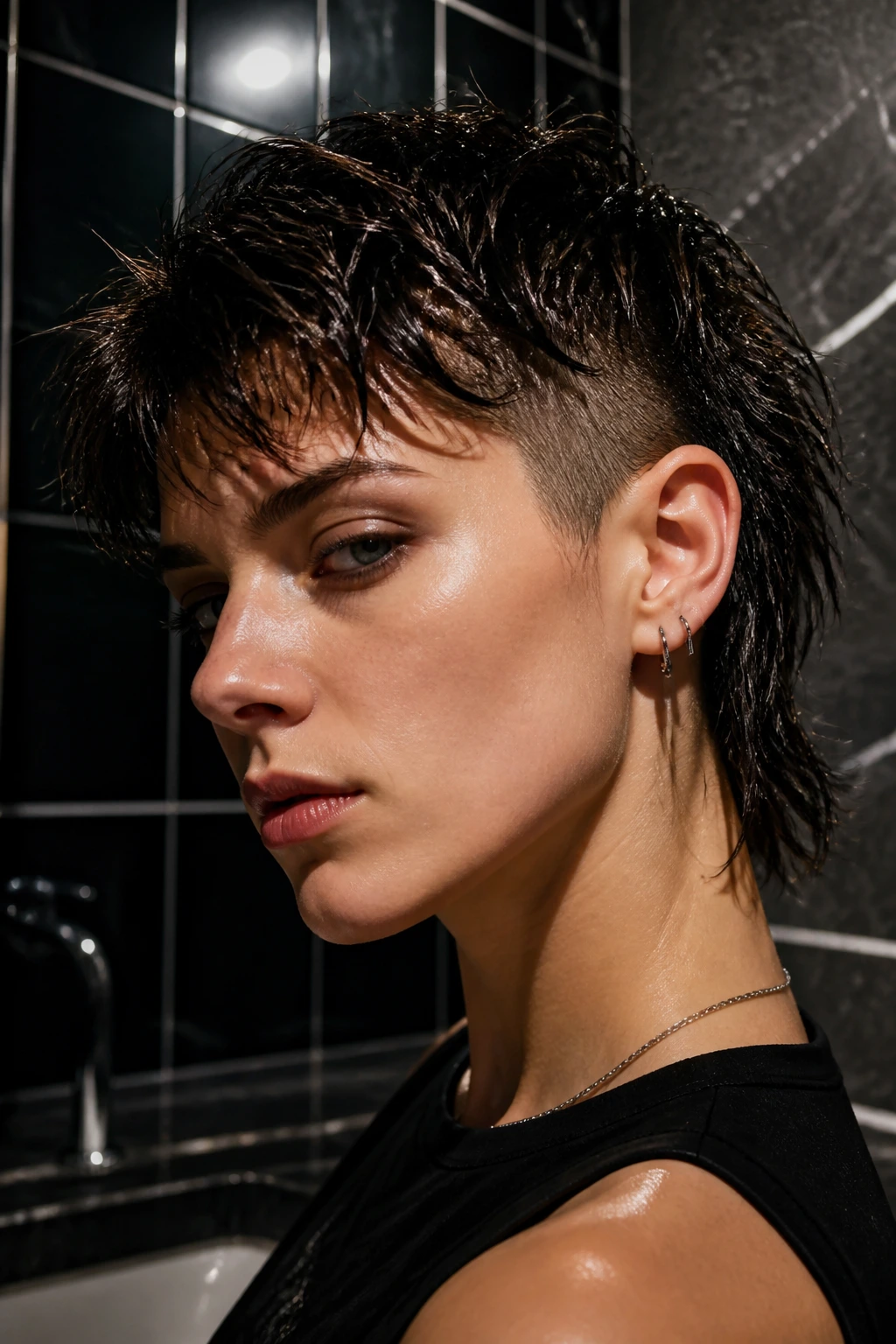
A wet look can make a shag feel tougher than a flat iron ever will. The hair stays separated, the layers stay visible, and the cropped sides make the whole style look even cleaner around the head. It’s sleek, but not delicate.
The undercut matters here because wet styling tends to show every bit of bulk. If the base is too heavy, the hair looks swollen instead of controlled. A close-cropped undercut gives the product a better surface to work with, so the finish lies closer to the scalp and the layers can stand out on top.
How to Build the Finish
- Start with towel-dried hair, not dripping wet.
- Work in a lightweight gel or strong-hold mousse from roots to ends.
- Comb the front where you want direction, then stop touching it.
- Let the back stay a little irregular so the cut doesn’t turn helmet-like.
That last part matters. Too much smoothing kills the edge. The charm is in the unevenness — a few separated pieces at the crown, a clean line under them, and a little shine without looking greasy.
This is a good style for nights out, sure, but it also works when you need your haircut to look purposeful with almost no fuss.
13. Fine-Hair Undercut Shag That Removes Bulk Without Losing Shape
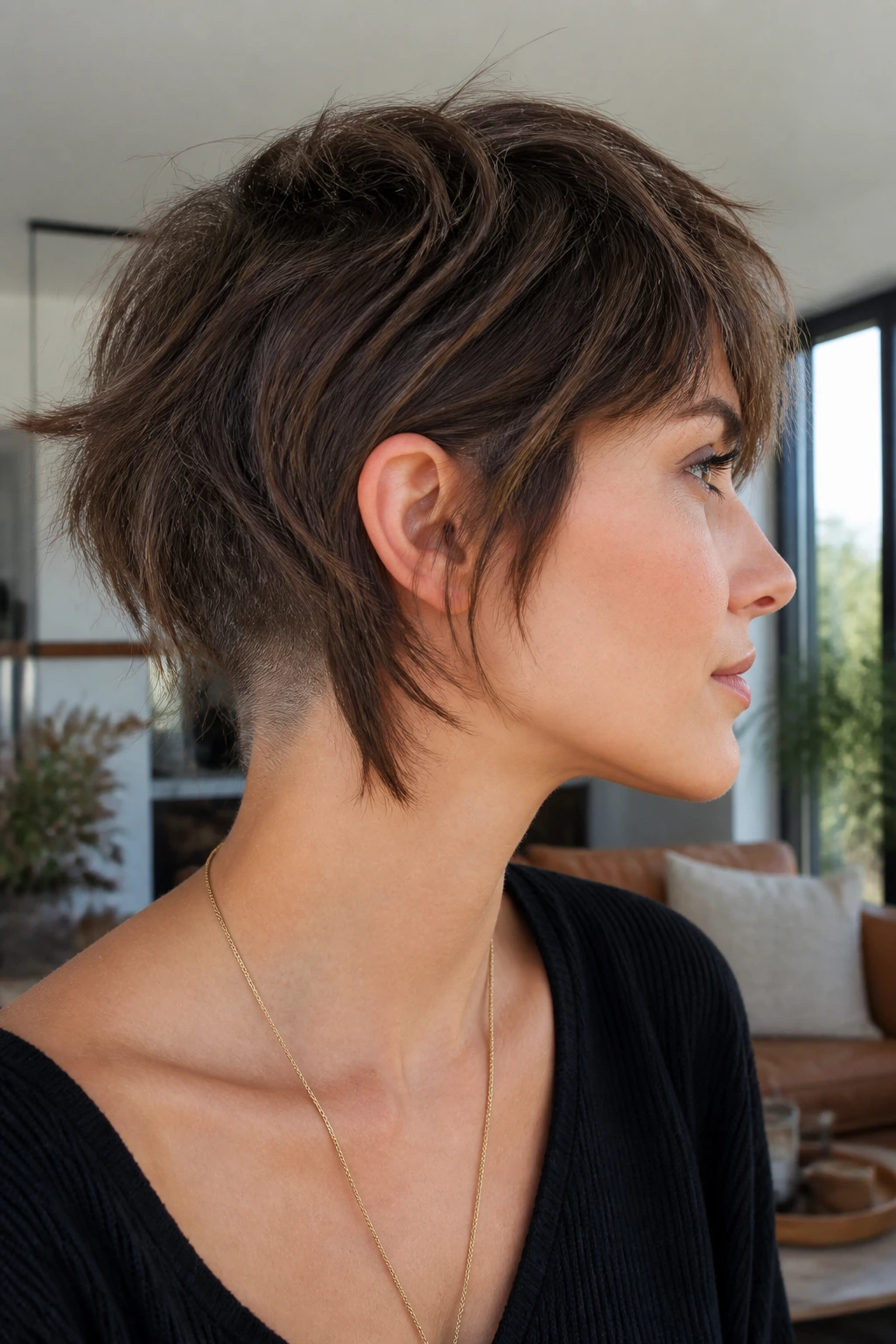
Fine hair can wear an undercut shag, but the cut has to be handled with care. Go too high with the undercut and you can end up with a top layer that looks sparse and sleepy. Keep it low, though, and the haircut gains lift where it usually needs it most.
The reason this works is simple. Fine hair often lies flat at the roots and gets stringy at the ends. A small undercut removes just enough weight to let the top layers sit a little higher, while the shag layers create the illusion of fullness through movement rather than density.
Ask Your Stylist For
- A shallow undercut at the nape only
- Soft internal layers instead of aggressive thinning
- Length left in the top crown section
- A fringe that blends, not one that gets chopped too short
That last part is where many fine-haired people get burned. A fringe that’s too short can expose every gap. Longer, wispy pieces often look better because they move with the rest of the hair.
Use a root spray or a light mousse before blow-drying. Flip the hair upside down for the first minute, then smooth the top lightly with your fingers. That gives a little lift without collapsing the shape.
Fine hair doesn’t need to look thick to look good. It needs shape.
14. Curtain-Bang Undercut Shag That Flatters Rounder Faces

Does a center-part fringe always work on round faces? No. But when the curtain bangs are long enough and the undercut takes away side bulk, the shape can be very flattering.
The trick is vertical movement. Curtain bangs draw the eye down and out, while the undercut keeps the sides from widening the face. That combination helps the haircut sit closer to the head at the cheeks and fuller at the crown, which changes the proportions in a useful way.
You want the fringe to start low enough that it opens around the cheekbones, not the middle of the forehead. Too short, and the face can feel wider. Too long, and the bangs vanish into the rest of the hair. There’s a sweet spot, and it sits around nose to cheekbone length for many people.
What to Keep in Mind
- Leave the fringe soft through the ends
- Keep the undercut low on the sides
- Add a little crown lift so the top doesn’t flatten
- Use a middle or slightly off-center part, not a hard side flip
I like this version because it wears well tucked behind the ears or tossed forward. It’s the kind of cut that can look calm one day and sharper the next, depending on how much you style the front.
15. Pixie-Shag Undercut With a High-Contrast Finish
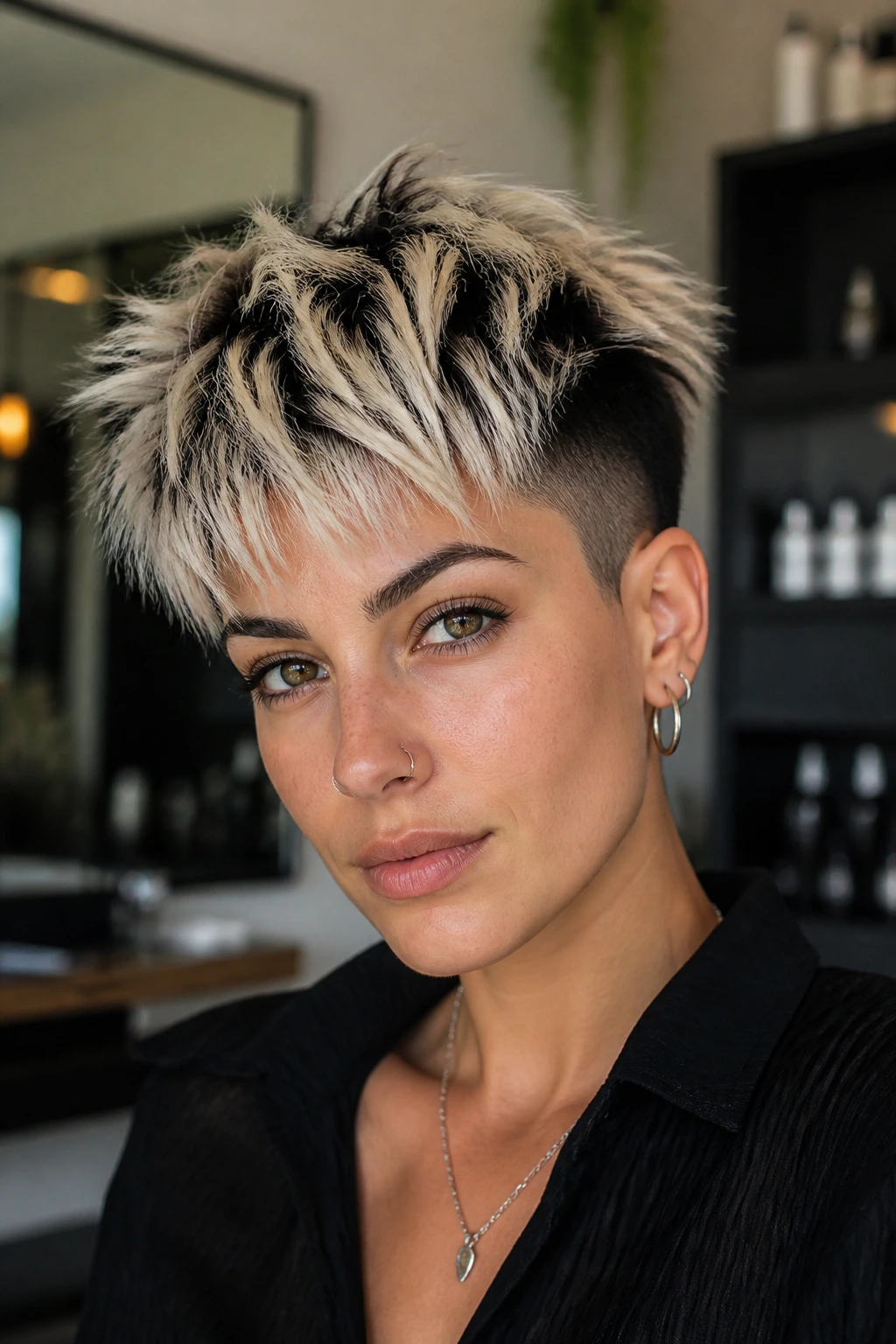
Tiny hair, big attitude.
The pixie-shag undercut is the boldest cut on this list because it strips the shape down to its bones. The sides and back are short, the top stays choppy enough to fluff, and the shag texture keeps it from feeling like a plain pixie. It has a little punk energy, a little softness, and a lot of room for personality.
What makes it different from a standard pixie is the texture at the top. A plain pixie often relies on neat shaping. This one wants irregular pieces, razor work, and enough length on top that you can push it forward, up, or slightly to the side. The undercut gives the silhouette its crisp line.
This cut looks best when the top is styled with fingers, not brushed into submission. A tiny bit of paste, rubbed between the palms, is enough to separate the ends. If the product shines too much, the texture disappears and the cut loses its bite.
It’s also a cut that grows out with a bit of personality. The soft edges become a mini shag, which means you can stretch the time between trims if you don’t mind the shape shifting a little.
Final Thoughts
The strongest undercut shag hairstyles do one thing well: they control bulk without killing movement. That’s the whole magic trick. You get shape at the base, chaos on top, and enough flexibility to make the cut feel personal instead of copied from a salon menu.
If you’re choosing between styles, think about the part you want to show first. Want the edge hidden most days? Go low and tucked. Want the haircut to announce itself? Push the undercut higher, sharpen the fringe, and keep the layers piecey.
Bring photos from the front, side, and back. Haircuts like this live or die on the angle you don’t see in a mirror. And if your stylist talks only about the top layers without mentioning where the weight comes off underneath, I’d keep asking questions. That underside is doing more work than people give it credit for.
