



A good curly shag modern wolf cut looks a little unruly on purpose. That’s the point. The best versions keep the curl pattern alive, build shape where the hair needs it, and leave enough softness that the cut moves instead of sitting there like a helmet.
What makes this haircut tricky is shrinkage. A line that feels collarbone-length in the chair can bounce up to the cheekbone once it dries, and bangs can jump even higher. A stylist who knows curls will work with that, not against it — usually by leaving the front pieces a touch longer, carving out internal layers, and trimming in a way that respects the way your curls clump.
Curly shag modern wolf cuts also aren’t one-note. Some are airy and face-framing. Some are heavy at the crown with a tapered nape. Some lean shaggy and soft, while others lean into that mullet edge a little harder. The cut you pick changes how your curls land, how much styling you need, and how often you’ll want a cleanup.
The right one is out there. The fun part is finding the version that looks like you meant it.
1. Soft Shoulder-Length Curly Shag Wolf Cut
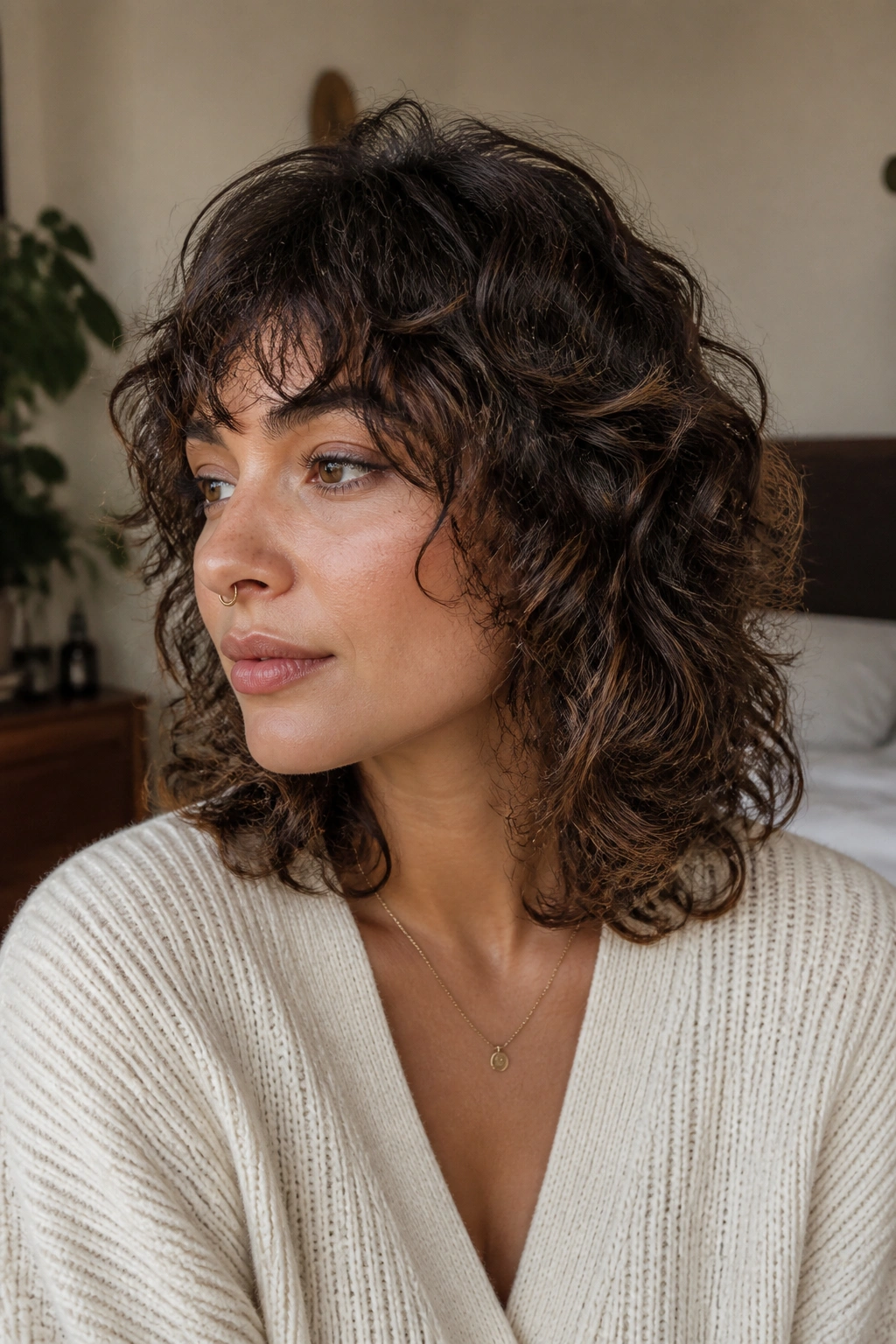
This is the easiest place to start if you want the wolf cut shape without going too sharp. Shoulder-length gives curls room to spring while still keeping enough weight to avoid that triangle shape nobody asks for.
The layers sit in a sweet spot: shorter around the crown, longer through the sides, and softly shattered at the ends. That makes the hair look full, but not bulky. On 2C to 3B curls, it gives you movement without making the top collapse by noon.
Best for:
- Medium-density curls that need shape, not drama
- People who air-dry most days
- Anyone who wants bangs but not a heavy fringe
Styling note: a diffuser on low heat keeps the crown from puffing out too fast.
This one works because it leaves enough length for the curl pattern to show itself. No weird tricks. Just good shape.
2. Curly Wolf Cut with Curtain Bangs
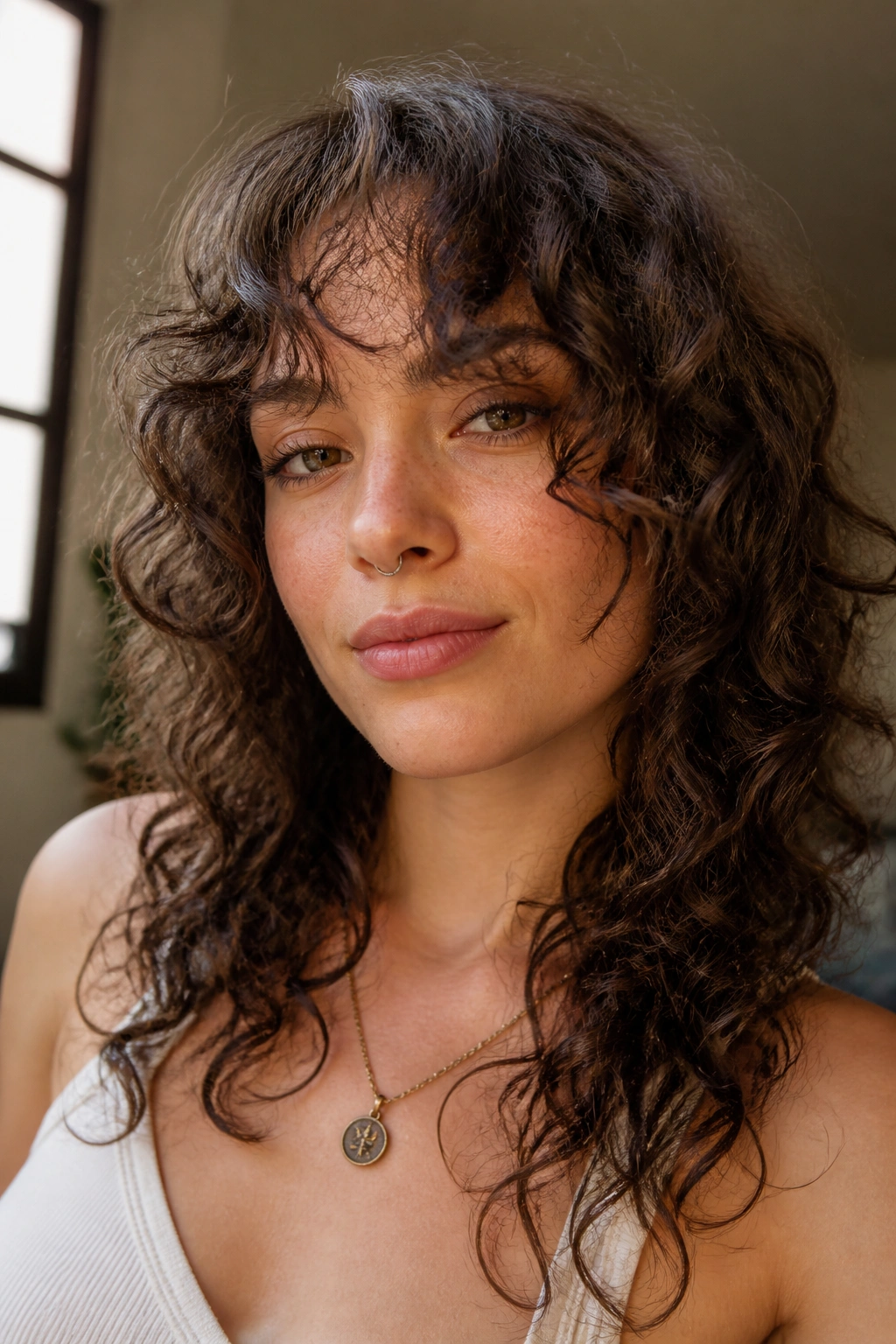
Can curtain bangs work on curls? Absolutely — if they’re cut with enough length to account for shrinkage. Short curtain bangs on curly hair can turn into a surprise fringe, and not always the cute kind.
The version I like best starts around the cheekbone and falls into longer face-framing pieces. That way the front opens up the face without cutting the curl pattern into two awkward halves. The rest of the cut can stay shaggy and loose, which keeps the style from looking too polished or too round.
How to wear it: let the bangs dry where they want first, then tuck or pin the shorter side if one piece gets bossy. That happens more than people admit.
This cut is especially good if you want your curls to feel lighter around the eyes and temples. It softens a strong jaw, narrows a broad forehead, and works with glasses better than a blunt front does. And yes, it grows out well, which matters because curly bangs can be a commitment.
3. Short Curly Shag Mullet with Choppy Crown Layers
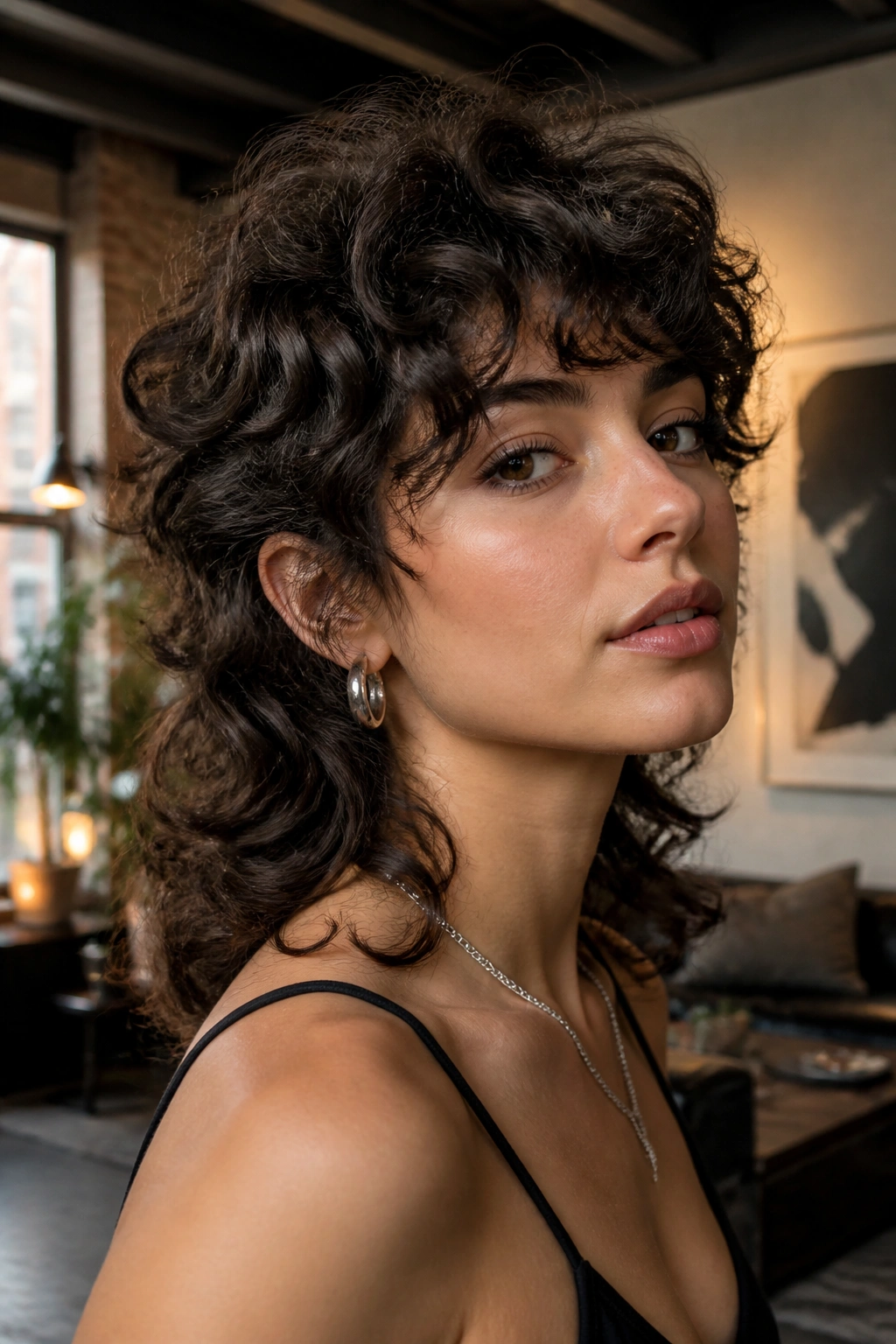
Short and punchy. That’s the vibe.
A short curly shag mullet leans harder into the wolf cut side of the family, with a cropped crown, lots of texture, and a little extra length left in the back. On tight 3B or 3C curls, it can look bold without feeling stiff, because the curls keep the edges soft even when the cut is intentionally uneven.
Why this shape works
The crown layers keep the top from getting too square, while the longer back gives the whole cut a bit of swing. You get lift where it counts and a clean taper through the nape, which makes the neckline look sharp instead of heavy. It’s a smart cut for anyone whose hair grows wide before it grows down.
A few things matter here:
- The shortest pieces should sit where the head curves, not randomly at the temples.
- The back should be left long enough to curl, not just stick out.
- The finish should look broken up, not chopped in obvious chunks.
If you like texture spray and don’t mind a little attitude, this one has real personality. It’s not shy.
4. Long Curly Wolf Cut with Airy Ends
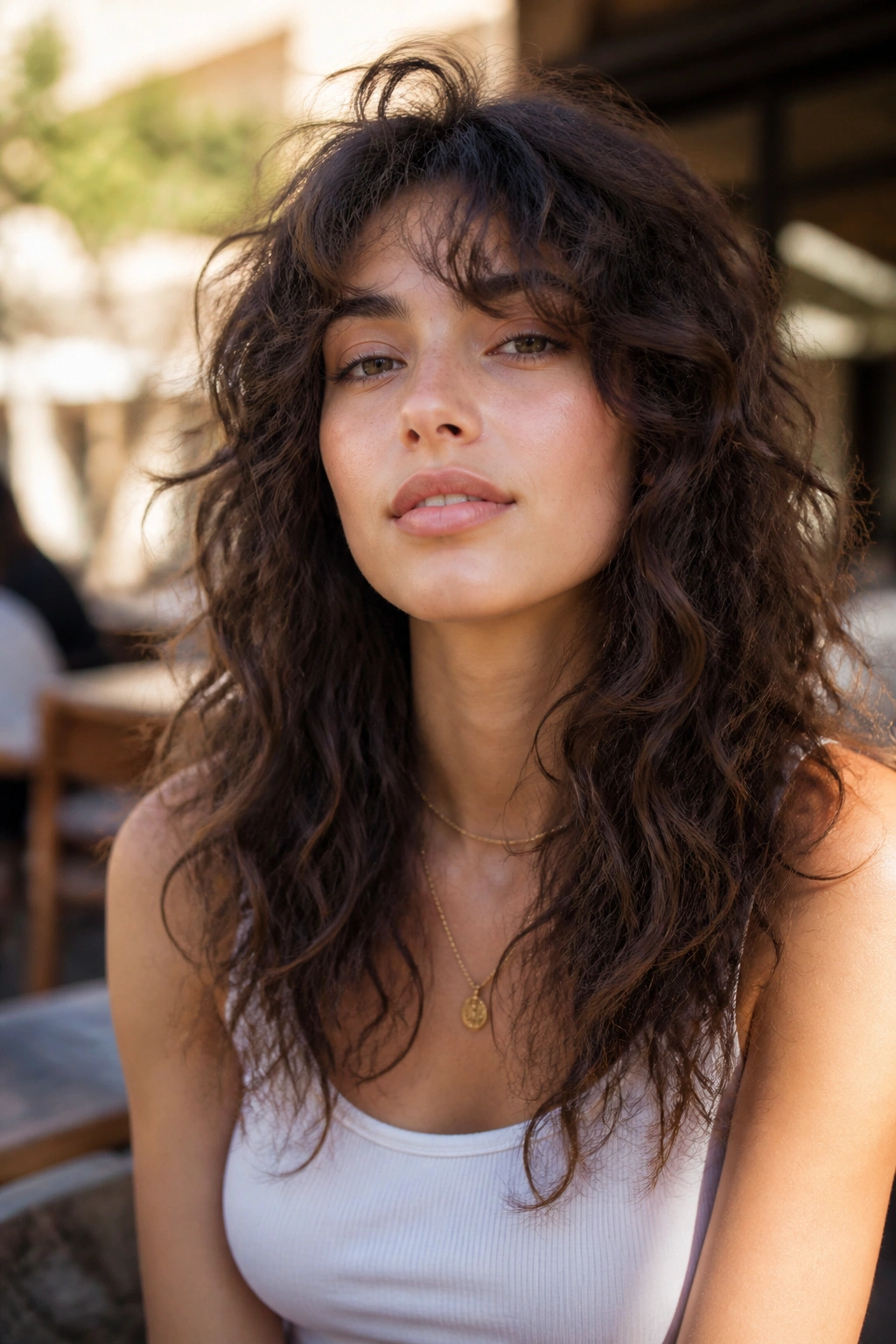
Long curls and wolf layers get along better than most people expect. The trick is keeping the ends light without taking so much weight out that the hair starts frizzing at the bottom like a broom.
This version keeps length past the shoulders and adds layers that start high enough to create movement through the midsection. The ends are point-cut or softly razored, so the curls fall into uneven ribbons instead of one blunt curtain. That matters a lot if your hair is thick, because long curly hair can turn bottom-heavy fast.
Picture it after a fresh wash. The crown has lift, the sides tuck in a little, and the lengths move when you turn your head. Not stiff. Not overworked.
This cut suits 3A to 3C hair that wants shape but still wants to look long. If you’re attached to your length and hate the idea of losing it, this is the one to keep on your mood board. Ask for long internal layers, not a chopped-up silhouette.
5. Curly Shag with Micro Fringe

Micro fringe on curly hair is a choice. A strong one.
The cut looks best when the fringe sits above the brows but not so high that it feels accidental. On curls, that means your stylist needs to think in terms of shrinkage and spring. A micro fringe that looks neat wet can bounce up a lot once it dries, so it usually needs to be left longer than you’d think.
What to watch for
The rest of the shag should stay soft and full around the face. If the layers are too aggressive, the fringe starts looking disconnected instead of cool. That’s the line you want to avoid. The whole point is a cheeky, editorial feel — not a haircut that only works in one lighting setup.
A micro fringe works best on people who don’t mind styling the front every day. Tiny curls around the brow can flatten in sleep, then spring up at odd angles after a hoodie or hat. A quick mist of water, a dab of curl cream, and a few finger twists usually fix it.
This is not the lazy option. It is the fun one.
6. Rounded Wolf Cut for Dense Curls
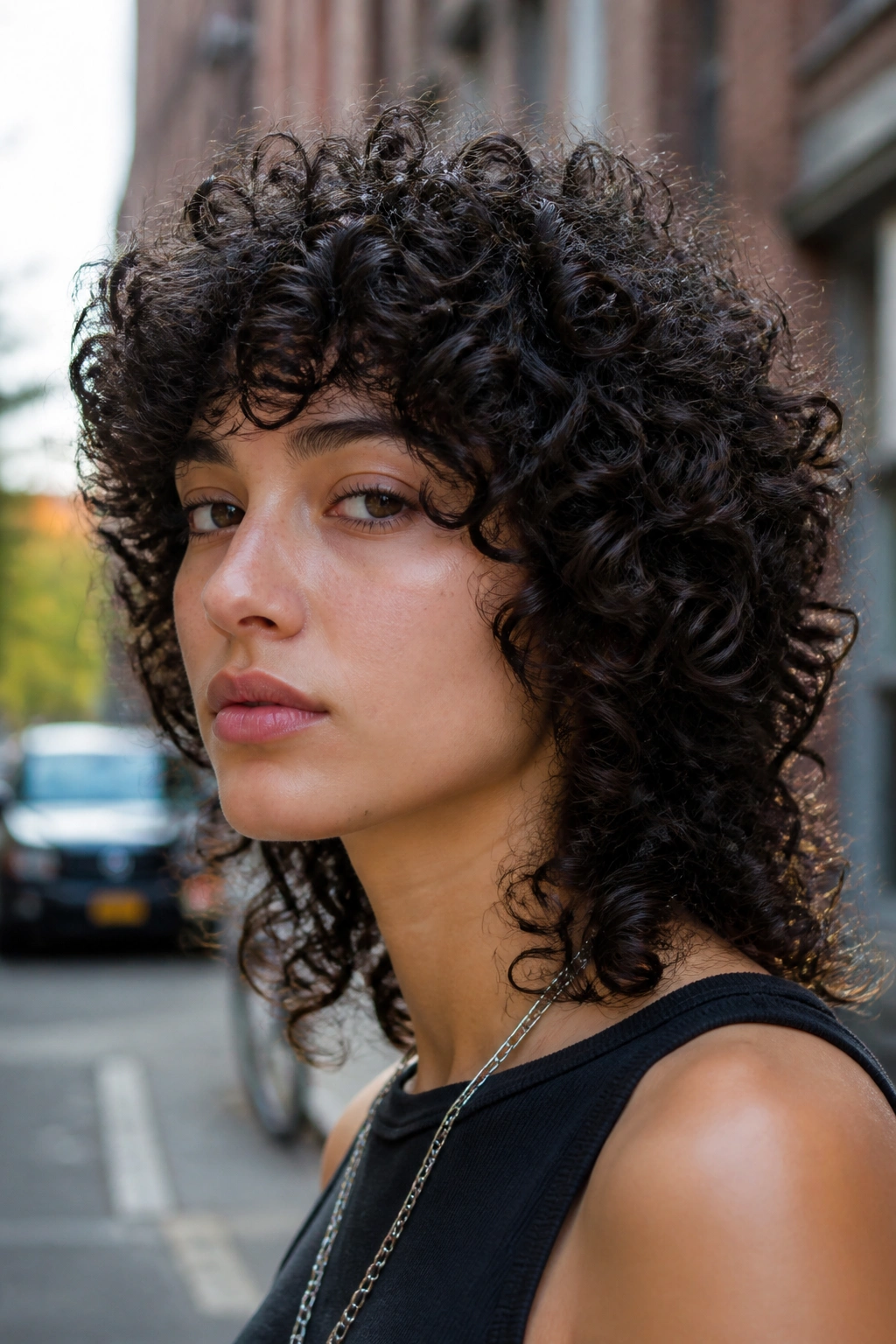
Dense curls need shape more than they need length. If you leave too much bulk in the crown and sides, the whole cut can balloon outward and lose its outline.
A rounded wolf cut solves that by building a soft dome through the top and then tapering the lower layers so the silhouette stays clean. The shape feels a little like a halo when it’s done right. The curls stack, but they don’t fight each other.
What I like here is the balance. You still get the wolf cut’s edge, but the rounded outline keeps it wearable for everyday life. On thick 3B and 3C hair, this cut can make mornings easier because the hair already has a roadmap. You’re not trying to wrestle it into shape from scratch.
If you’ve been told your curls are “too much” for short layers, this style says otherwise. You just need the right geometry. That’s the boring part nobody talks about, and it’s also the part that makes or breaks the haircut.
7. High-Volume Crown Shag Wolf Cut
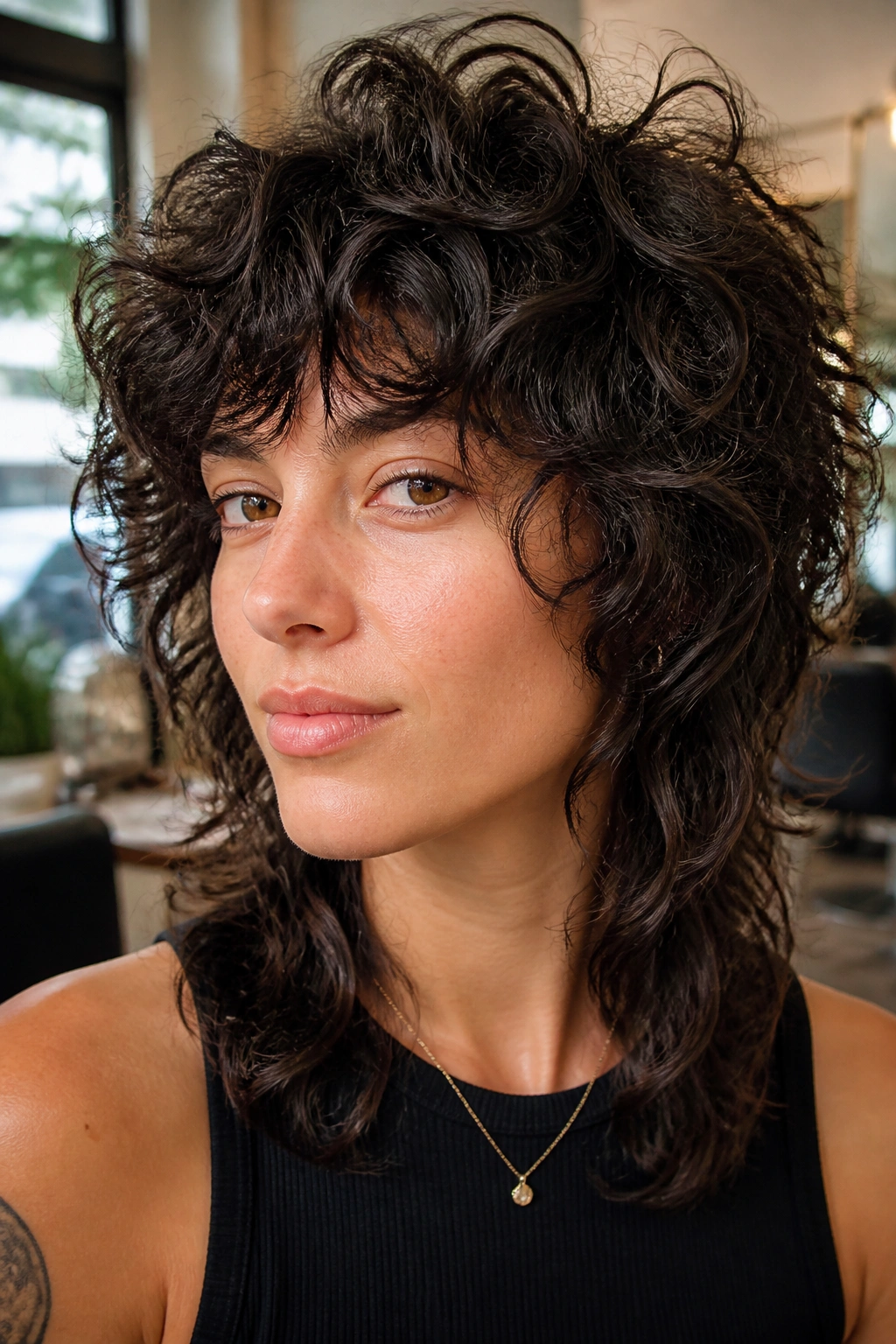
Some curls want to live high. Let them.
A high-volume crown shag wolf cut puts the shortest layers near the top of the head, then lets the sides and back flow out underneath. The result is big lift at the roots and a softer outline below, which is a nice fix for hair that falls flat at the crown but puffs out around the jaw.
How it behaves
This cut is at its best when the roots are diffused or clipped at the top for lift, then left alone through the ends. You do not want to over-smooth it. The whole shape depends on a little lift and a little mess.
- Strong crown layers create height without teasing.
- Longer outer layers stop the cut from turning into a mushroom.
- Soft ends keep the volume from feeling dense and blocky.
It’s a great choice if your face looks best with a bit of height on top — round, square, or heart-shaped faces can all wear it well. And if you live in a place where humidity likes to mess with your hair, this shape tends to recover better than a blunt cut because the layers give the curls somewhere to go.
8. Grown-Out Curly Mullet with Face-Framing Layers
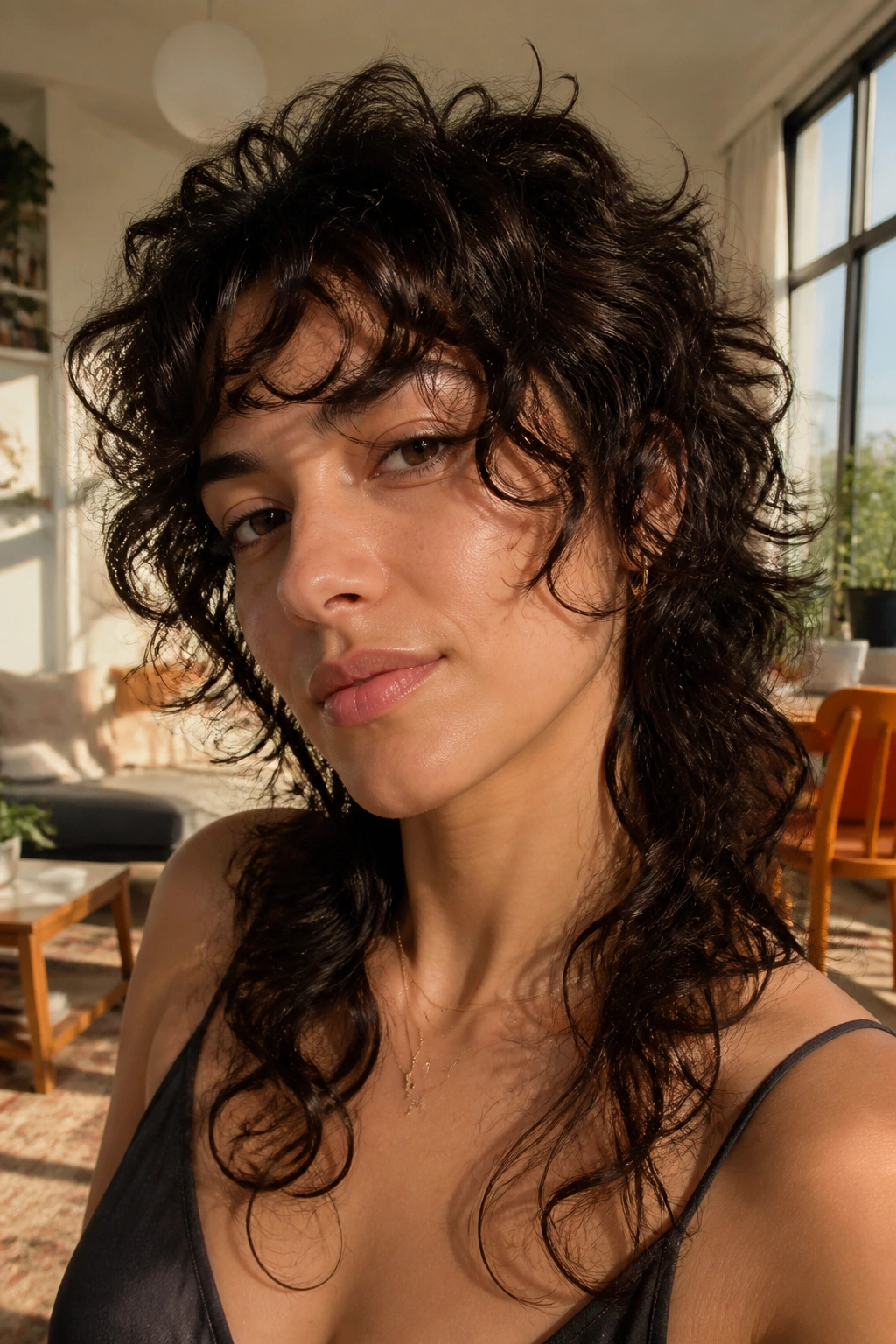
A grown-out mullet can sound rough on paper. In real life, it often looks cool in the most low-key way.
This version keeps the front and sides layered around the cheekbones, then lets the back keep enough length to show off the curl pattern. It’s less severe than a traditional mullet and more relaxed than a full shag. Think of it as the in-between haircut for someone who likes edge but still wants softness around the face.
I’ve always liked this shape on curls that clump well. The longer back gives those coils room to separate into defined sections, while the front pieces stay light and open. The face-framing layers stop the style from feeling flat from the front, which is where many curly cuts fail.
A small caution: the neckline matters here. If the back is cut too blunt, the whole thing loses its swing. If it’s too thinned out, it frizzes. The sweet spot sits right between those two.
This one has a little swagger. Not much. Enough.
9. Shoulder-Grazing Wolf Cut with Tapered Ends
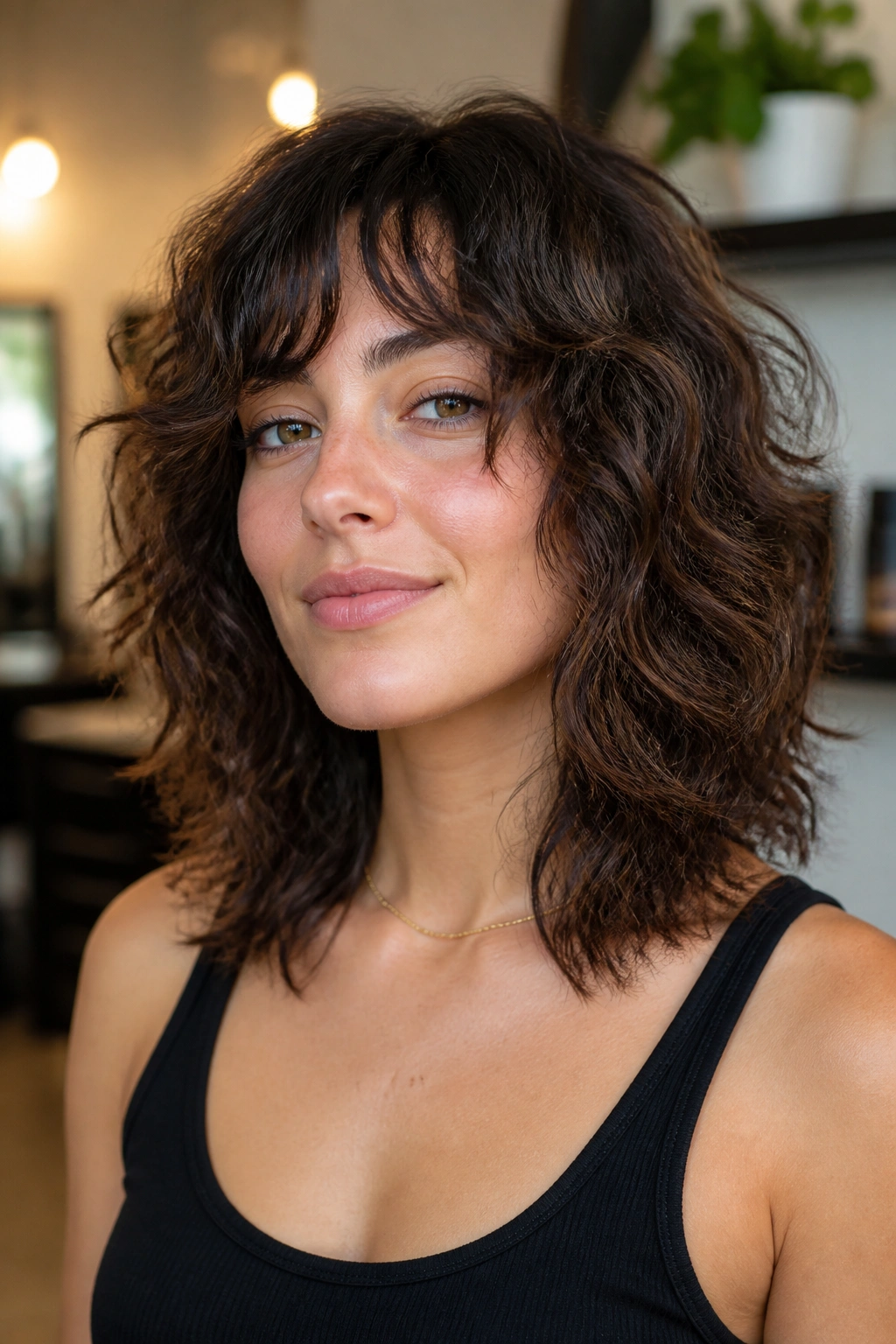
Why do shoulder-grazing cuts work so well on curls? Because the length gives you shape you can see.
A tapered-end wolf cut hits around the shoulders and narrows gradually through the bottom, which keeps thick curls from spreading into a triangle. The shoulders act like a visual anchor, and the taper keeps the ends from looking heavy. On 2C, 3A, and looser 3B curls, that combination looks easy in the best way.
The cut is especially useful if your curls flatten at the roots but bulk up near the ends. The taper takes weight out of the lower half, while the top layers add lift. That makes the silhouette feel lighter without making the hair look thin.
Ask for:
- Longer front pieces that skim the cheekbone
- Soft internal layers through the top
- Tapered ends, not razor-thin ends
The styling is straightforward. Scrunch in a light cream, diffuse until the roots feel set, then leave the ends alone. Too much hand-touching makes the taper lose its clean line.
10. Curly Bob-Wolf Hybrid

A bob and a wolf cut sound like opposites until you put them together.
The bob shape gives structure. The wolf cut gives movement. Put those two ideas into curly hair, and you get a cut that sits around the jaw or just below it, but still has enough layering to avoid the blocky bob problem. It’s a smart choice if you want short hair that doesn’t look too round or too neat.
This one is especially good for curls that spring upward when dried. You can keep the length controlled while still getting a lively outline. The front can be cut a little longer than the back, which softens the transition and keeps the style from feeling too “done.”
For fine curls, this hybrid can create the illusion of more body because the layers aren’t too heavy. For dense hair, it removes enough bulk to make the shape move. That’s the kind of cut I keep coming back to, because it solves more than one problem at once.
It’s tidy. It’s shaggy. It does both.
11. Big Spiral Shag with Side Bangs
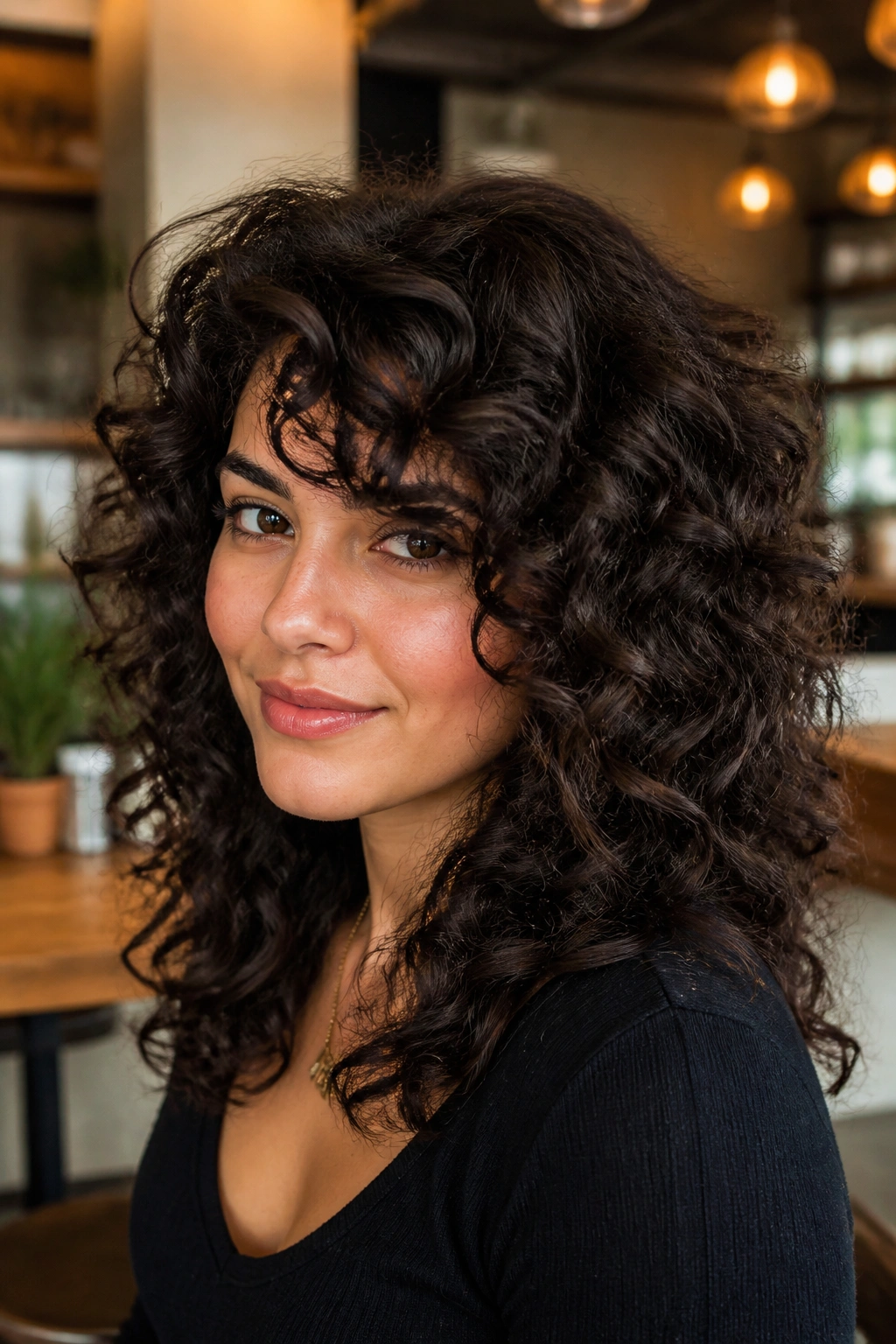
Big spiral curls love a side bang because the angle gives them a place to fall. Straight down, those curls can feel heavy. Swept over, they get motion.
This shag leans into volume on purpose. The layers are cut to encourage the spirals to separate, not merge into one huge block. The side fringe softens the forehead and gives the cut a little old-school energy without making it feel costume-y. That balance is harder to get than people think.
Why it’s useful
Side bangs can be easier to live with than straight-across bangs if your curls are springy. They grow out more gracefully, and you can flip them from side to side when one section behaves better than the other. That happens. A lot.
The rest of the cut should stay light around the temples and fuller at the crown. If the sides are too short, the spirals spring out and make the head look wide. If they’re too long, the style loses its shape. That middle range is where the good stuff happens.
This one looks best when the curls are defined enough to show off the spiral pattern. If your curls clump in a neat, springy way, this cut will show it off without much coaxing.
12. Loose Wave Shag with a Softer Wolf Shape
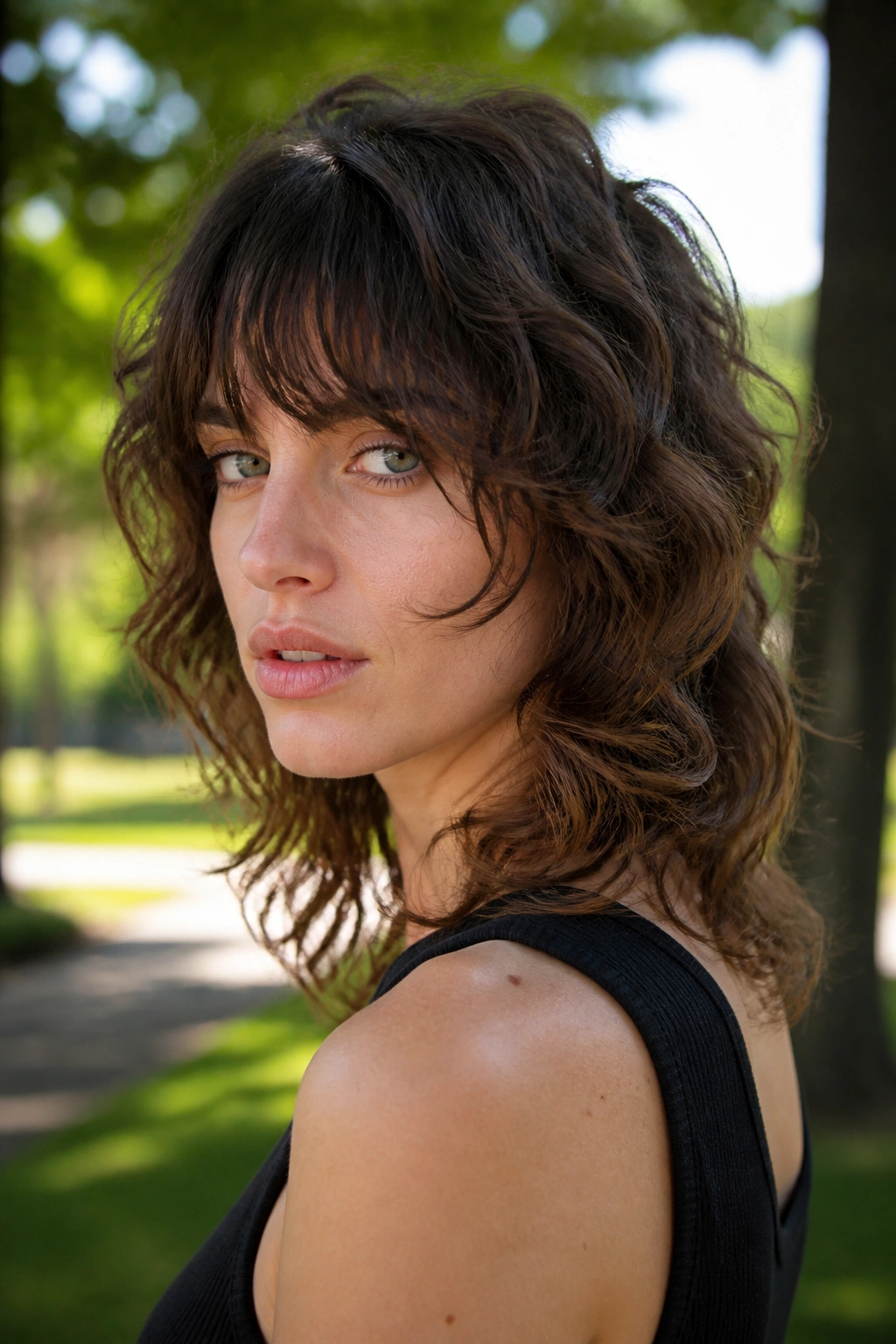
Not every wolf cut has to shout. Some can murmur.
A softer wolf shape works especially well on loose waves and hybrid curl patterns that sit between 2B and 2C. The layers are still there, but the contrast between the top and bottom is gentler. You get movement and lift without the harder mullet edge.
What makes this version appealing is how easy it is to live with. Air-dry it, clip the roots for twenty minutes, shake it out, and you’re basically there. The cut doesn’t need perfect styling to look intentional, which is a relief if your hair has a mind of its own before noon.
This is also a smart option if you’re easing into shag territory and don’t want the first cut to feel too extreme. The softer shape keeps the haircut flattering from every angle, which is useful when your hair gets tucked behind your ears, pinned up, or thrown into a half-up knot.
A little messy. Not sloppy. There’s a difference.
13. Coily Wolf Cut with Longer Nape Layers
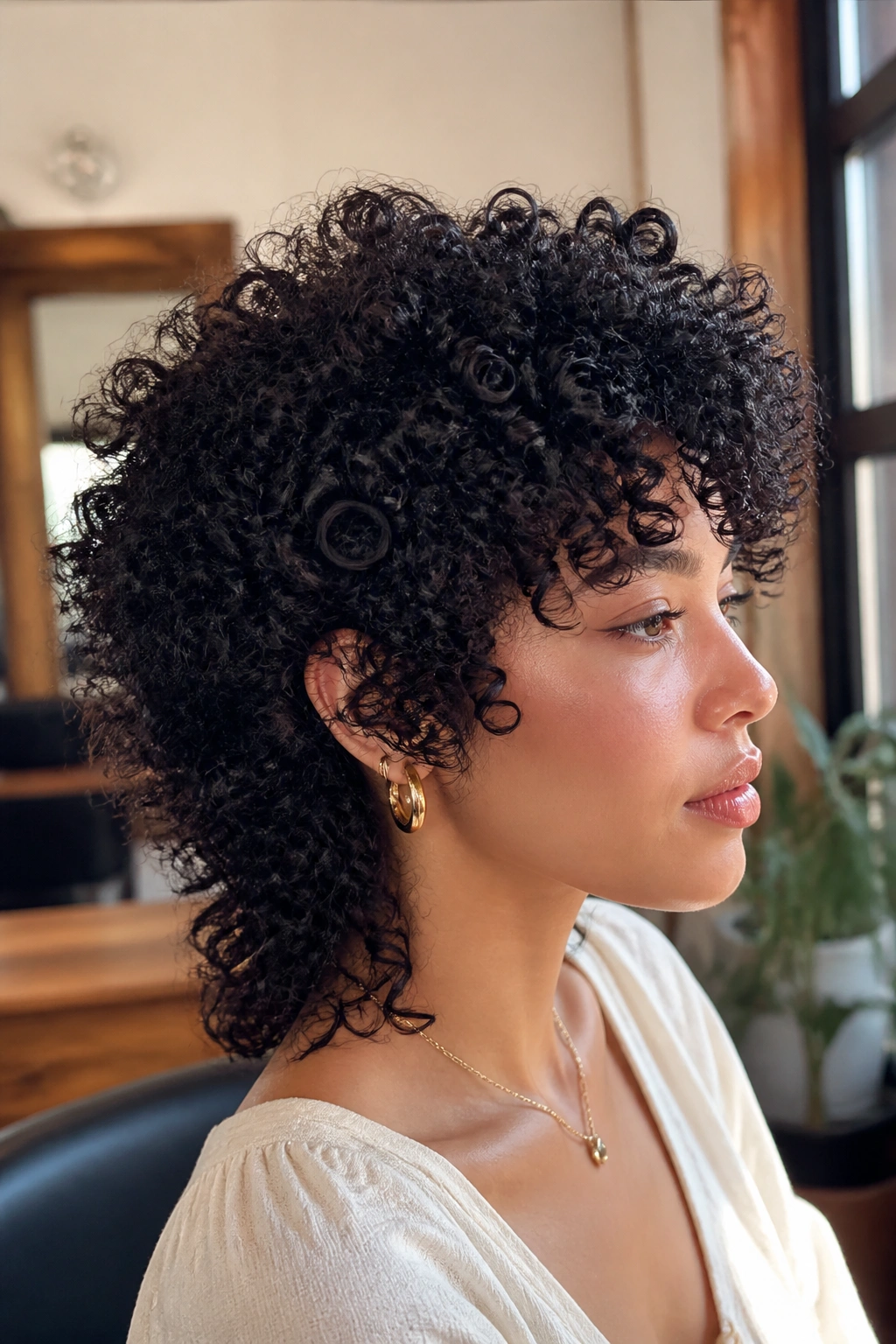
Can coily hair wear a wolf cut? Yes, and the longer nape is the trick.
On 3C and 4A curls, a wolf cut works best when the shape respects shrinkage instead of fighting it. The crown can be layered enough to remove bulk, but the back should keep some length so the coils can stack cleanly. If the nape is cut too short, it tends to rise and lose its line fast.
The longer nape gives the silhouette somewhere to land. It also helps the haircut keep its shape between trims, which matters more on tight curls because growth changes the outline faster than you’d expect. The face framing can still be dramatic, just not boxy.
Styling note: use a leave-in that gives slip, then define in sections. Smaller sections help the cut show off the layers instead of turning into one uniform puff.
This is one of those cuts that looks better from the side than people expect. The profile reveals the shape. And once you see it, it’s hard to unsee.
14. Low-Maintenance Air-Dry Curly Shag
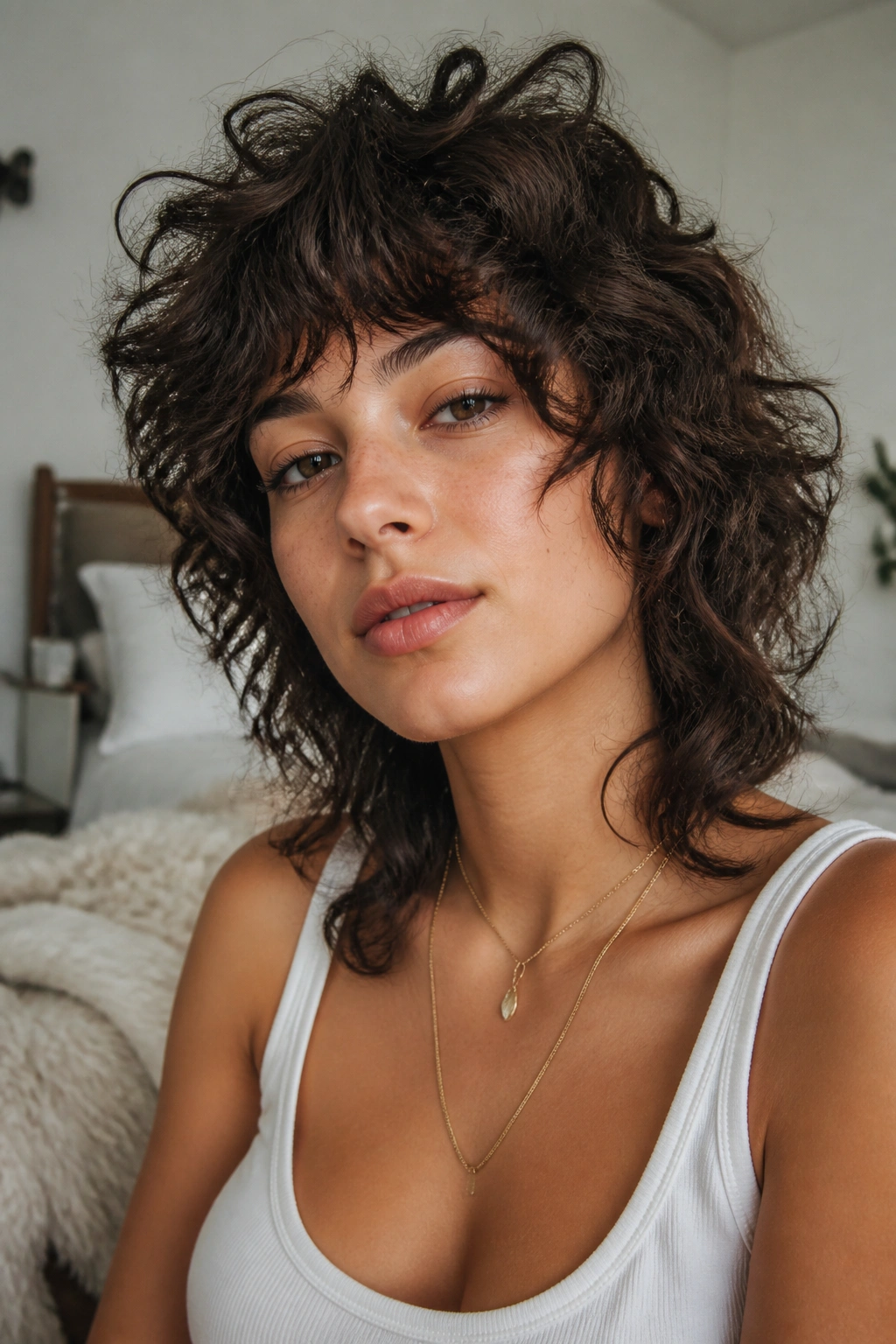
If you want a cut that plays nice with air-drying, keep the layers soft and the ends a little piecey.
This version is less about drama and more about routine. You wash, blot with a T-shirt or microfiber towel, add curl cream, and leave it alone. The haircut does the shaping for you. That’s the appeal. On busy weeks, that matters more than having a photo-ready blowout shape.
A few practical details
- Ask for layers that start below the crown if your hair frizzes easily.
- Keep the perimeter soft so the cut doesn’t look chopped when it dries.
- Use a wide-tooth comb in the shower, not after.
The cut works because it doesn’t rely on polished styling to make sense. A good air-dry shag should look even better on day two, when the curls settle and the texture gets a little more lived-in. If your hair hates hot tools, this is a nice place to land.
I’m partial to cuts that respect a lazy morning. This is one of them.
15. Razor-Soft Curly Shag with Broken-Up Ends
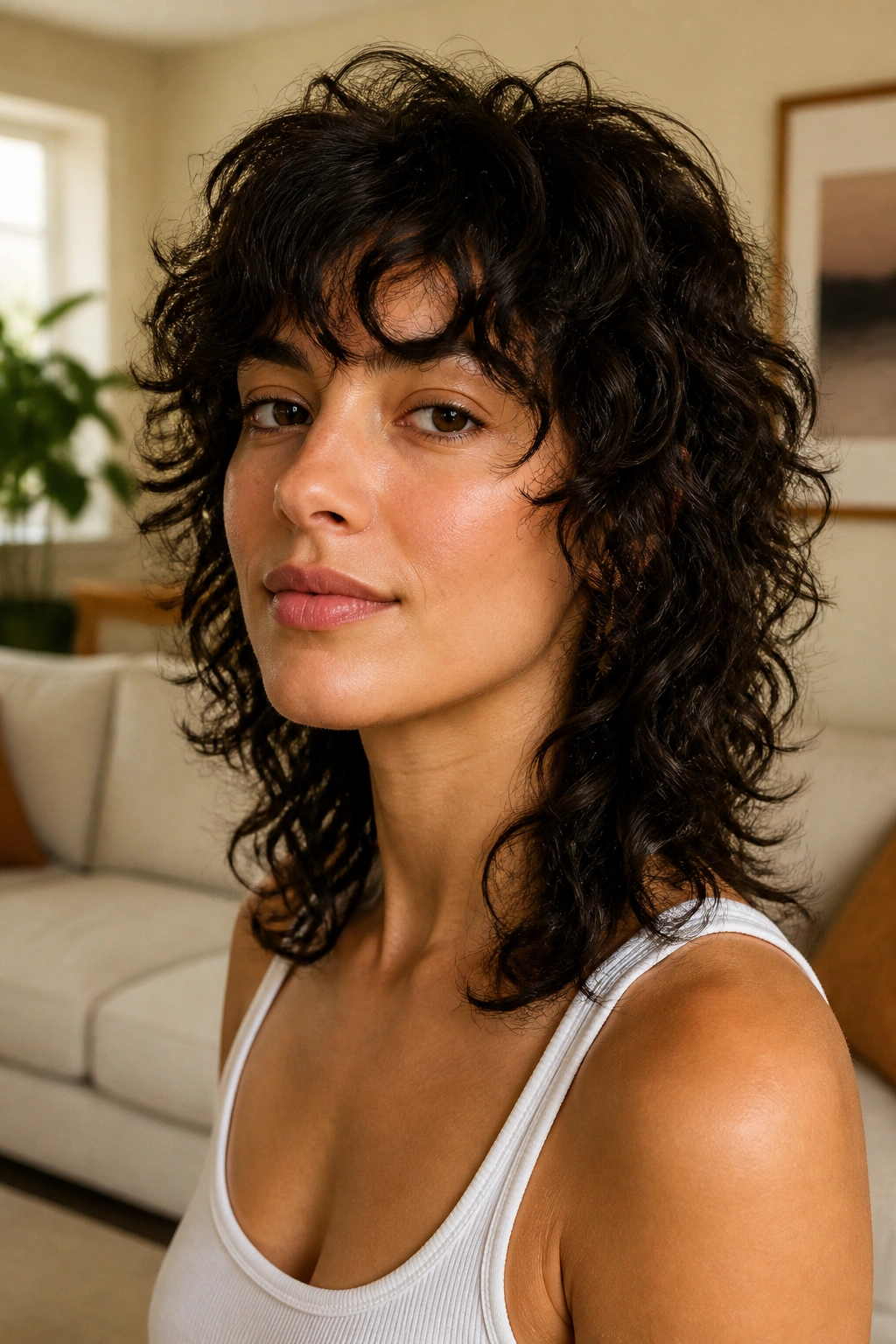
The name sounds edgy, but the feel is actually soft.
A razor-soft shag uses feathered ends to break up the bottom line so the curls don’t sit in one heavy shelf. On the right head of hair, it can make thick curls swing instead of puff. The trick is restraint. Too much razor work and the ends start to fray; too little and the shape stays too solid.
This cut is best when your hair has enough density to handle softness without going wispy. It loves 3A to 3B curls that naturally separate into clumps. The broken-up ends help those clumps stay visible, which gives the whole haircut a more textured look.
The only real caution is dryness. If your ends already feel fragile, a heavy razor pass can make them look thirsty fast. That’s not the look. A skilled stylist will use the razor like a detail tool, not a chainsaw.
This is the kind of cut that looks especially good when the curls dry with a little movement at the edges. Not crisp. Not overfinished. Just alive.
16. Face-Framing Wolf Cut for Thick Hair
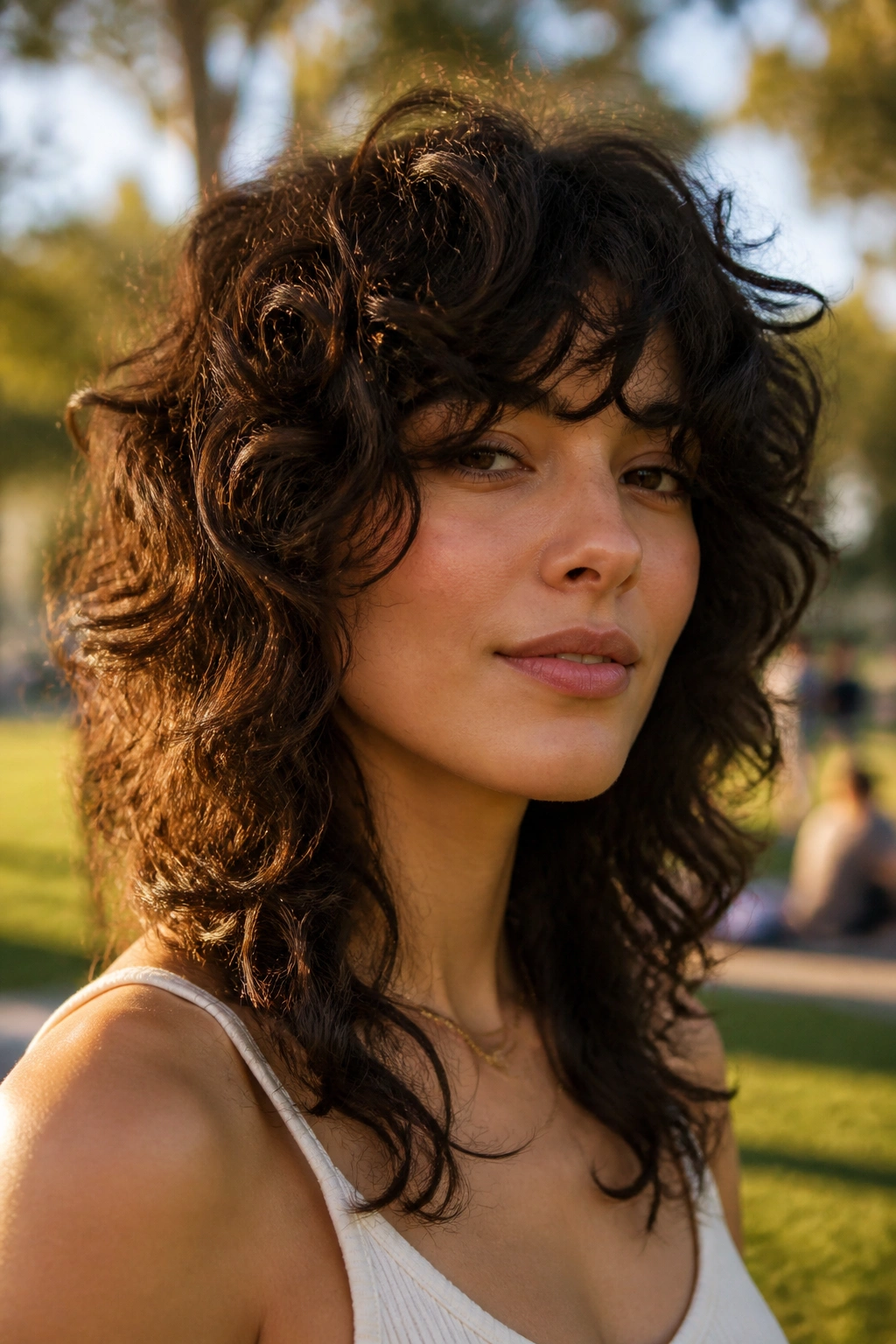
Thick hair can swallow a haircut whole if the layers aren’t placed with intent.
A face-framing wolf cut gives the eye somewhere to land right away. The front pieces start around the cheekbone or jaw, then move into longer layers through the sides and back. That keeps the density from taking over your whole head, which is a common issue with thick curly hair.
The face frame also changes the mood of the cut. Without it, thick curls can look heavy and a little severe. With it, they look softer and more deliberate. It’s a small shift, but it changes the whole read of the style.
What to ask for
- Internal debulking, not aggressive thinning
- Layers that connect around the cheeks
- Enough length at the bottom to keep the silhouette controlled
A lot of people with thick curls ask for “less hair” when they really want “better shape.” Those are not the same thing. This cut is about the second one. And once it’s done well, you stop noticing the weight in the wrong places.
17. Lightweight Wolf Cut for Fine Curls
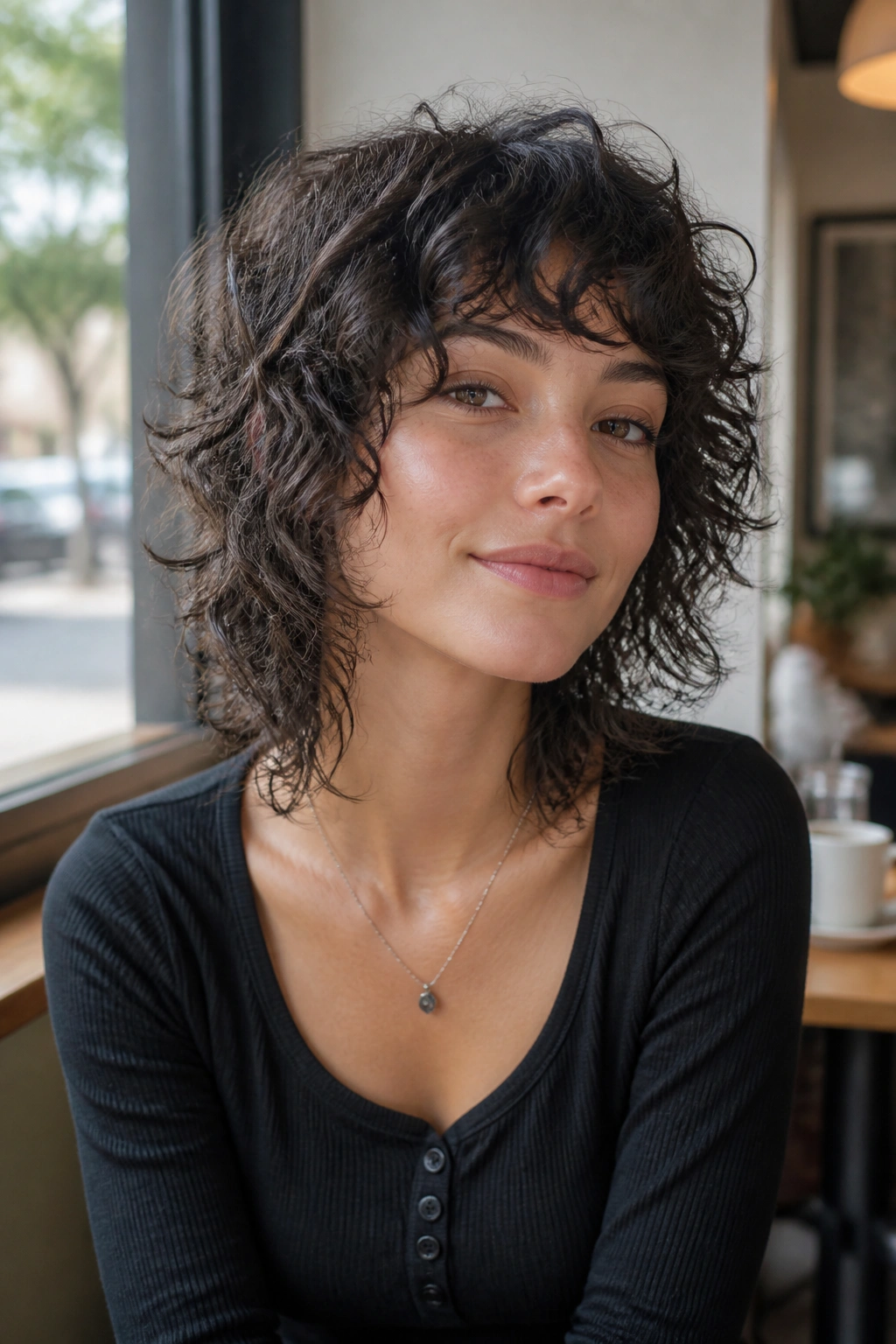
Fine curls do not need to be buried under heavy layers. They need air.
This version keeps the cut light enough that the curl pattern can still stack and expand, but it avoids over-layering, which can make fine hair look stringy at the ends. The wolf shape comes from placement, not from taking out chunks everywhere. That distinction matters more than people think.
The best fine-hair wolf cuts usually keep the perimeter slightly fuller and concentrate the shorter layers near the crown and around the face. That gives the illusion of body without robbing the ends of too much density. If you’ve had a shag that looked thin after two washes, this is the fix.
No heavy texturizing. That’s the warning.
Fine curls can look crisp and airy when the cut is balanced, but they can also look sparse if the stylist goes too far with thinning shears or a razor. I’d rather see less drama in the cut and more life in the curl pattern. That usually wins.
18. Disconnected Curly Shag with Long Nape
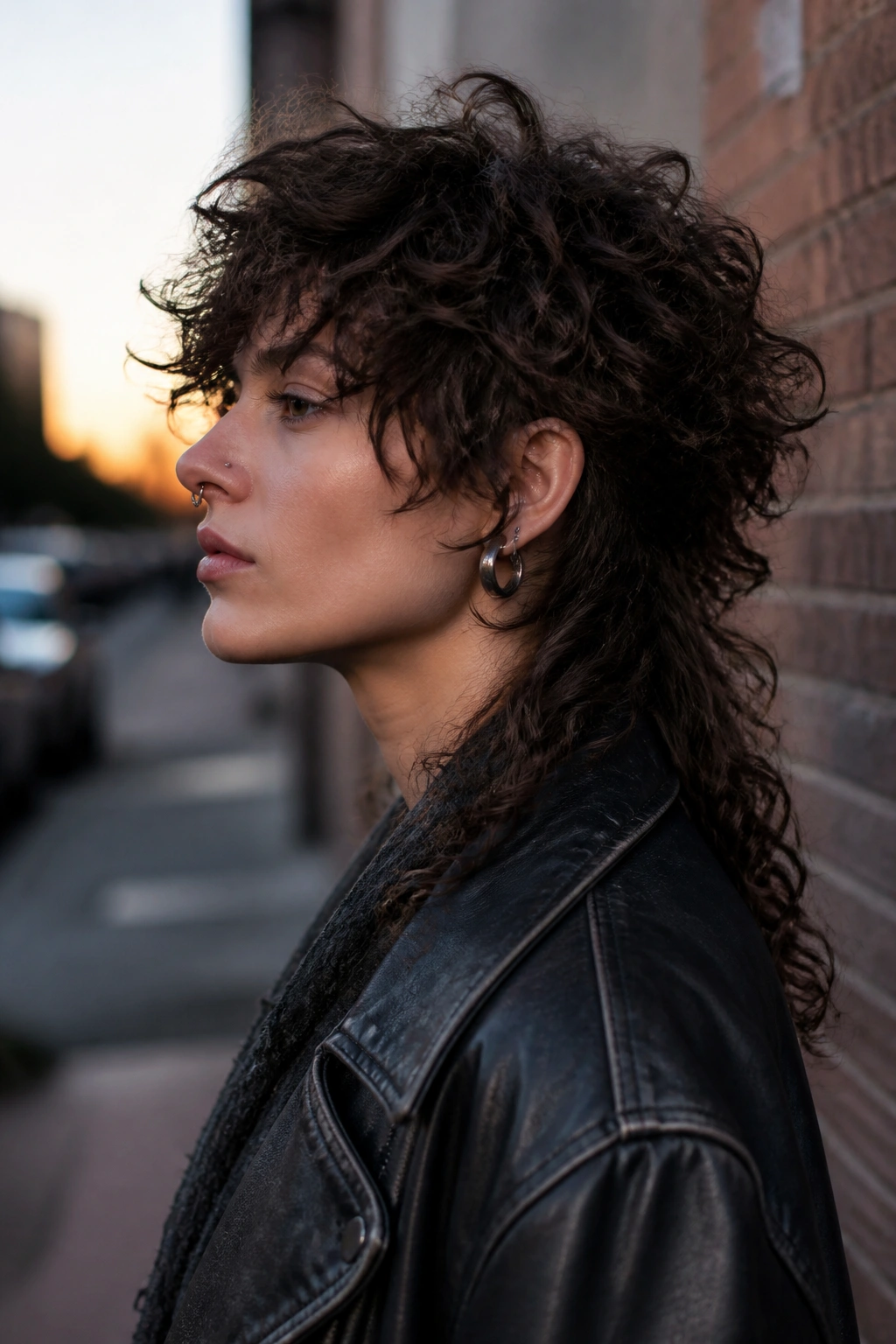
This one has edge, but it’s controlled edge.
A disconnected shag leaves a visible difference between the shorter top layers and the longer lower sections. On curls, that creates a strong silhouette without making the shape hard or boxy. The long nape keeps the back grounded, while the crown and sides stay lively.
It’s the kind of cut that works well when you want people to notice the shape before they notice the length. The line moves when you walk. It has a little swing. Not in a flashy way — more like the haircut has its own rhythm.
This style needs a decent curl pattern to show its separation. If your curls are very loose and tend to blend together, the disconnect can disappear. Tight or medium curls usually show it better because the layers hold their own. That makes the cut feel more deliberate.
If you’re tired of “soft and safe,” this is a solid step in the other direction. Not reckless. Just sharper.
19. Retro-Inspired Curly Shag Wolf Cut
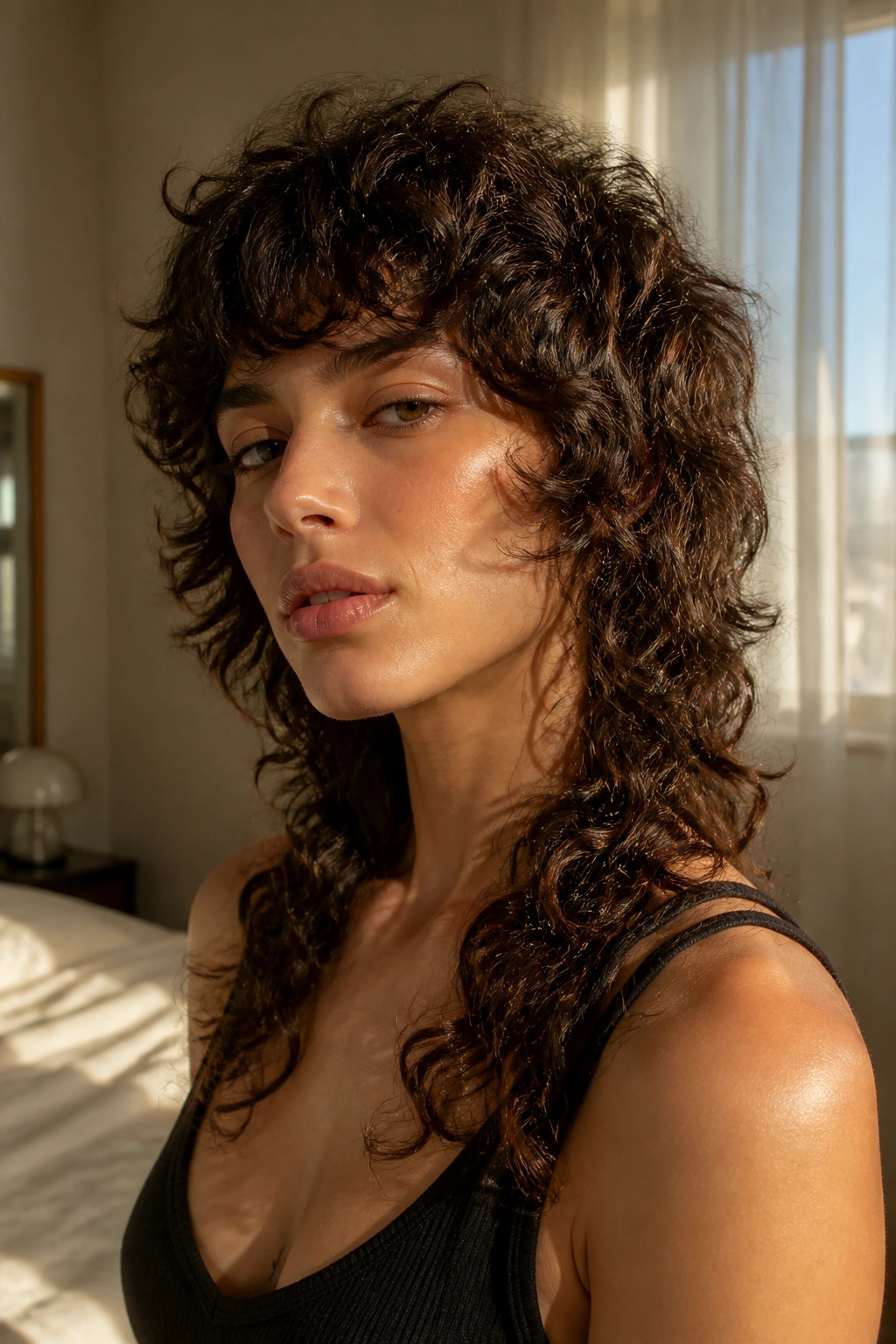
The ’70s are still hanging around hair, and honestly, that’s fine with me.
A retro-inspired curly shag wolf cut brings back the feathered front, the longer back, and the loose, breezy layers that make hair feel a little cinematic. The modern part is in the softness. Instead of a stiff retro shape, the curls get room to fall naturally and make the haircut feel current without losing the nod to the past.
What makes it different
The front usually opens around the cheekbones instead of the chin, which helps keep the cut light. The crown still has lift, but the layers aren’t carved so hard that the hair loses its plush feel. That keeps the look from sliding into costume territory.
- Best on medium to thick curls
- Looks strong with a center or slightly off-center part
- Needs curl definition more than straightening
This one has a lot of personality, and it photographs the way curly hair should: a little imperfect, a little wild, and very much alive. If you like a haircut with some attitude but not a hard finish, this is a good place to land.
20. Consultation-First Custom Curl Wolf Cut
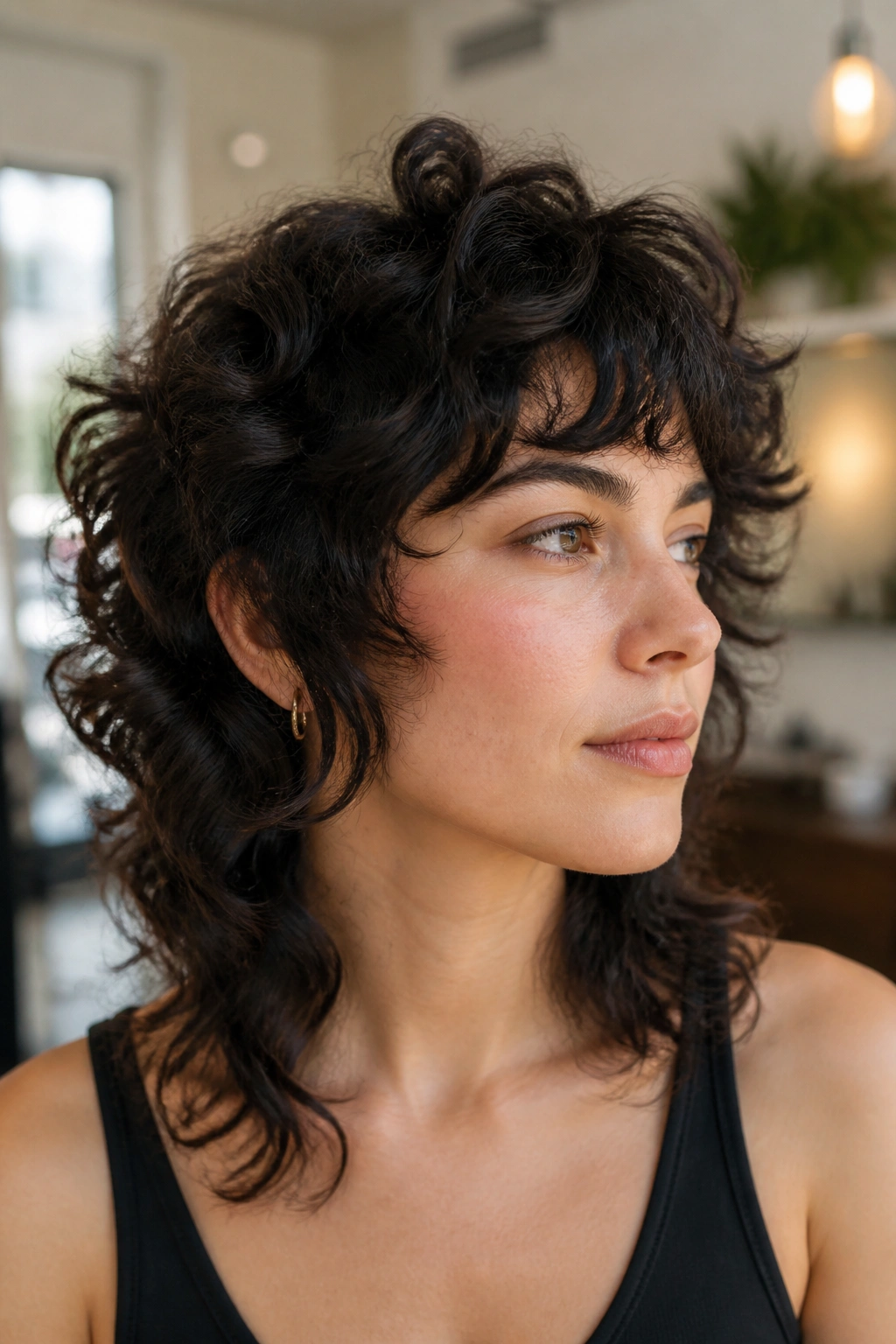
Bringing a photo is useful. Bringing two or three photos is better.
A custom curly shag wolf cut starts with your curl pattern, your density, and the way your hair actually dries on your head — not the way it looks in a reel with perfect lighting. Some people need shorter crown layers. Some need a longer face frame. Some need barely any layering at all, just smart shape. That’s why the consultation matters more than the label.
Ask for a cut that accounts for shrinkage, parting, and how much styling you realistically want to do. If you diffuse, say so. If you air-dry, say that too. If one side of your hair is always flatter than the other, mention it before the scissors come out. That part saves heartbreak.
The best modern wolf cuts on curls are never copy-paste jobs. They look better when they fit the curl pattern instead of trying to force it into a trend box. And if you get the shape right once, it changes the whole relationship you have with wash day.
