



Very short wolf cuts have a sneaky advantage: they keep the messy edge and layered movement people want, but they stop before the shape turns floppy. If you’ve ever liked a shag on someone else and then watched it collapse on your own head, you already know why length matters so much here.
The sweet spot usually sits somewhere between a cropped pixie and a tiny mullet. Enough length on top to bend, enough choppiness around the crown to look lived-in, and enough taper at the nape that the whole cut doesn’t spread out like a triangle by noon. That last part gets ignored in a lot of photos. The front sells the cut. The back decides whether it works.
Short wolf cuts also behave differently depending on texture. Fine hair needs lighter internal layers so it doesn’t go flat. Thick hair needs bulk removed in the right places or the shape turns boxy. Curly hair needs a hand that understands shrinkage, because a one-inch cut on wet curls can turn into half that once it dries. That is why the very short versions are so fun — and so easy to get wrong if someone copies the shape without thinking.
These styles cover the range that matters: edgy, soft, shaggy, cropped, and the in-between cuts that grow out cleanly instead of turning into a helmet. Some are sharp. Some lean punk. Some are almost sweet, which is not a word most people use for wolf cuts, but it fits certain versions surprisingly well.
Tiny cuts need discipline.
1. Micro Wolf Cut With a Piecey Crown
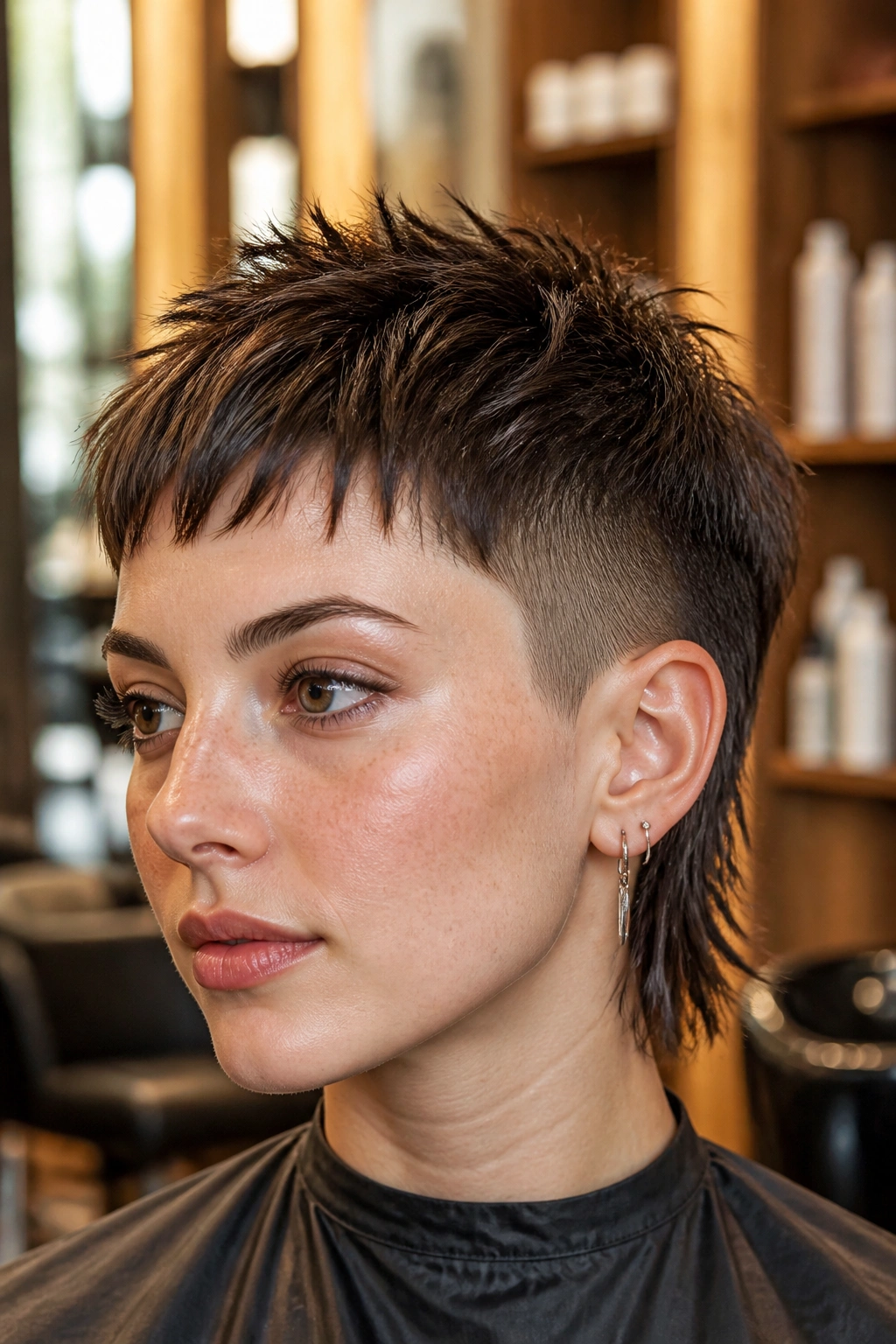
This is the shortest wolf cut that still reads like a wolf cut. Once you take the sides down close to the head and leave the crown a little longer and choppier, the whole haircut starts looking sharp instead of fluffy. It has the attitude of a cropped shag, but it does not need the length that a classic wolf cut usually carries.
The key is balance. Keep the top around 2 to 3 inches if you want movement, then let the nape and sides taper in tighter so the shape hugs the head. If the perimeter gets too wide, the cut loses its bite and starts looking like an unfinished pixie. Nobody wants that.
- Ask for point-cut ends on the top so the layers don’t sit in one hard line.
- Keep the side panels soft, not blunt.
- Use a pea-size matte paste and work it through dry hair with your fingertips.
- Let one or two pieces fall forward around the forehead. That tiny bit of mess helps the cut feel intentional.
Best for: straight hair, fine hair, and anyone who wants a short wolf cut that stays easy in the morning.
What to watch for: if the crown is thinned too much, the style can go limp fast. You want texture, not holes.
2. Short Wolf Cut With a Curved Curtain Fringe

Want the wolf cut to feel a little softer? A curved curtain fringe does the job without turning the cut into something fussy. The fringe opens away from the face, which gives the short length some breathing room and stops the whole shape from sitting too close to the head.
Why the Fringe Matters
A curtain fringe on a short wolf cut should land somewhere between the eyebrow and the cheekbone, depending on how much forehead you want to show. Shorter than that, and it can feel blunt. Longer than that, and it starts fighting the rest of the cut. The sweet spot is a fringe that bends instead of hangs.
The rest of the haircut should stay choppy through the crown and slightly cleaner around the ears. That contrast is what makes the fringe shine. Without it, the front just looks like bangs with layers, and that’s a different thing entirely.
How to Style It
Blow-dry the fringe with a small round brush or wrap it around two fingers while it’s damp. Push the ends away from the face, then let them cool before touching them again. That little cooling step matters.
If your hair likes to split in the middle, this cut is forgiving. If your hair resists any bend at all, ask for a softer fringe line and a little extra length at the sides so you can tuck or flip it as needed.
3. Tapered Wolf Cut With an Exposed Nape
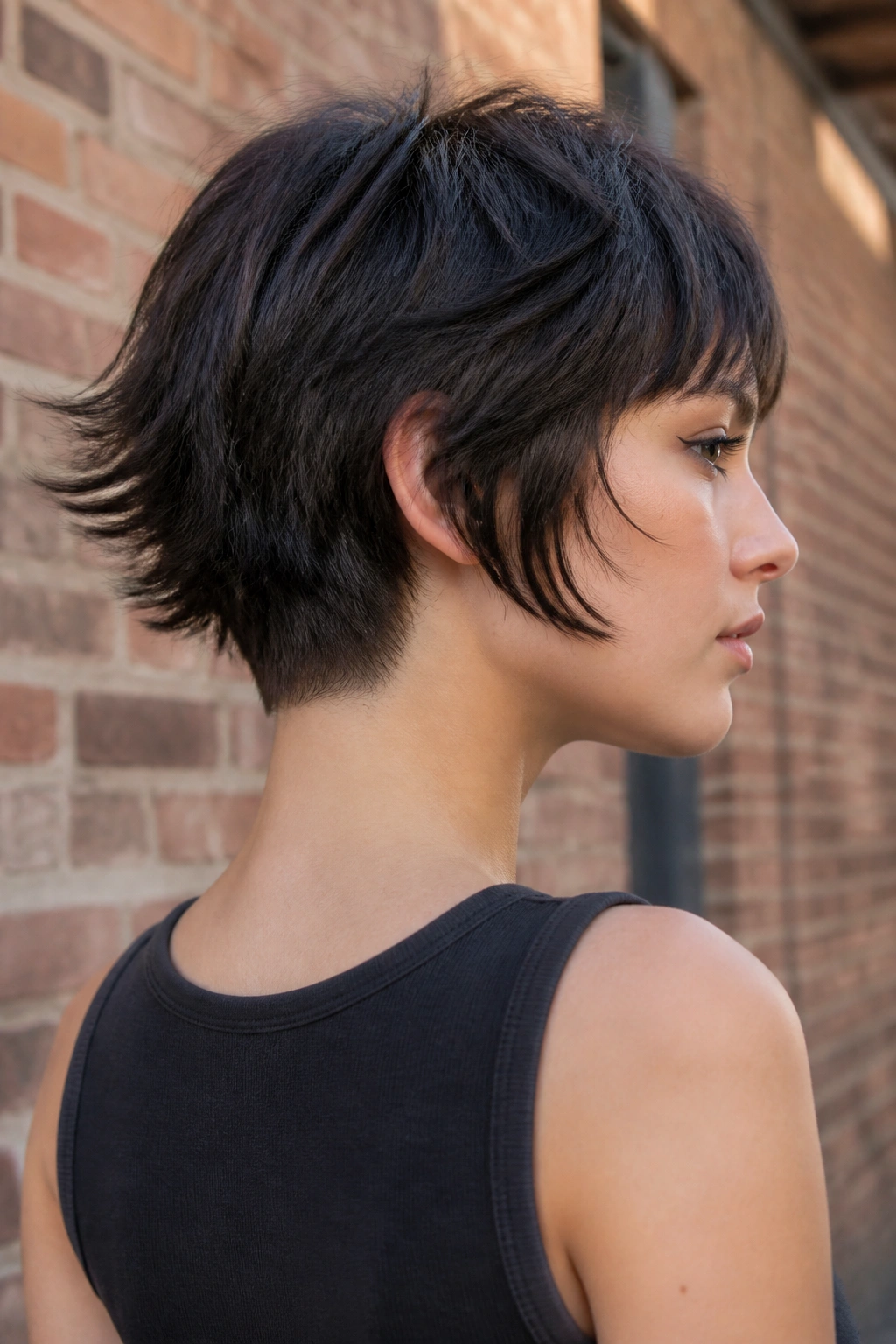
This one is for people who hate bulk at the neck. A tapered nape makes a short wolf cut feel cleaner and cooler, both visually and physically. The back sits tighter, the neckline stays open, and the crown gets to do the noisy, shaggy work.
I’ve always thought this version looks best when the back is cut in a clear shape, not just “shorter.” That means the nape should be visibly tapered, with the shortest hair hugging the hairline and the upper back layers stepping out gradually. If the back is left too round, the haircut can puff out in the wrong place.
- Keep the nape close, roughly a half inch to 1 inch in the shortest area.
- Leave a little more weight at the upper back so the shape doesn’t disappear.
- Ask your stylist to check the cut from the side, not just the front.
- Pair it with small hoops or studs if you like seeing the neckline.
Best for: thick hair, hot climates, and people who want the mullet energy without the full drama.
Worth knowing: this cut grows out in a decent way. The nape will soften first, which usually looks better than a blunt grow-out.
4. Short Wolf Cut for Fine Hair That Still Has Lift
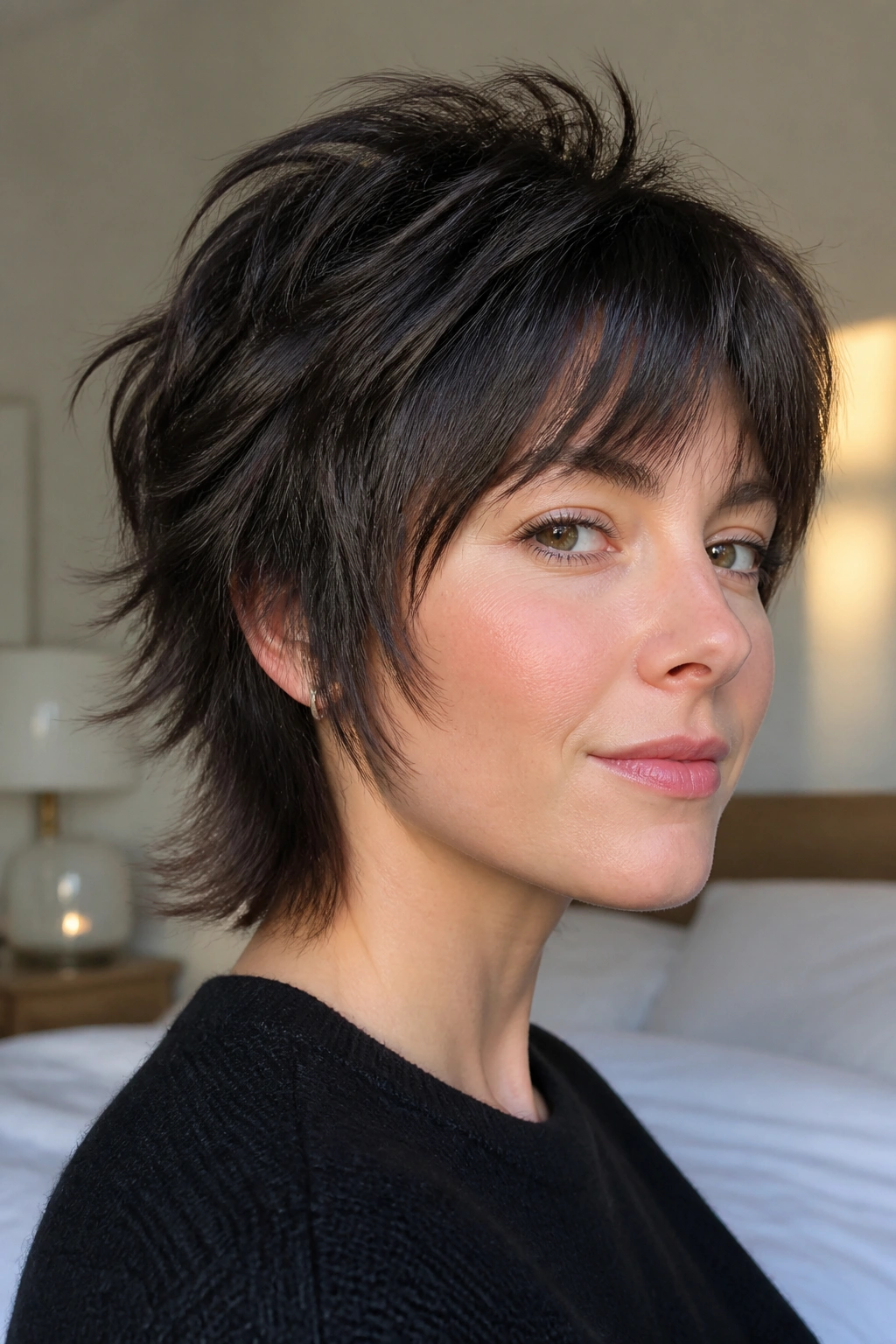
Fine hair can wear a short wolf cut beautifully, but only if the layers are handled with some restraint. Too much texturizing and the ends get wispy. Too little, and the cut sits flat. The best versions keep a little weight at the perimeter so the shape has something to stand on.
That’s the part many people miss. Fine hair does not need to be shredded to look airy. It needs a smart cut. Keep the crown layered enough to move, but leave enough density through the sides and back to stop the style from collapsing by lunch. A short wolf cut on fine hair should look touchable, not see-through.
A light blow-dry with a root-lifting spray works better than a heavy mousse here. Mousse can be great, but if your hair is very fine, a golf-ball-sized blob of foam can turn into helmet hair fast. Use less than you think you need. Then add a dry texture spray only at the top, where the lift matters most.
The other thing I like here is a soft side part. It gives the top some direction and keeps the cut from lying dead straight against the scalp. Tiny change, big payoff.
5. Short Curly Wolf Cut With Soft Layers
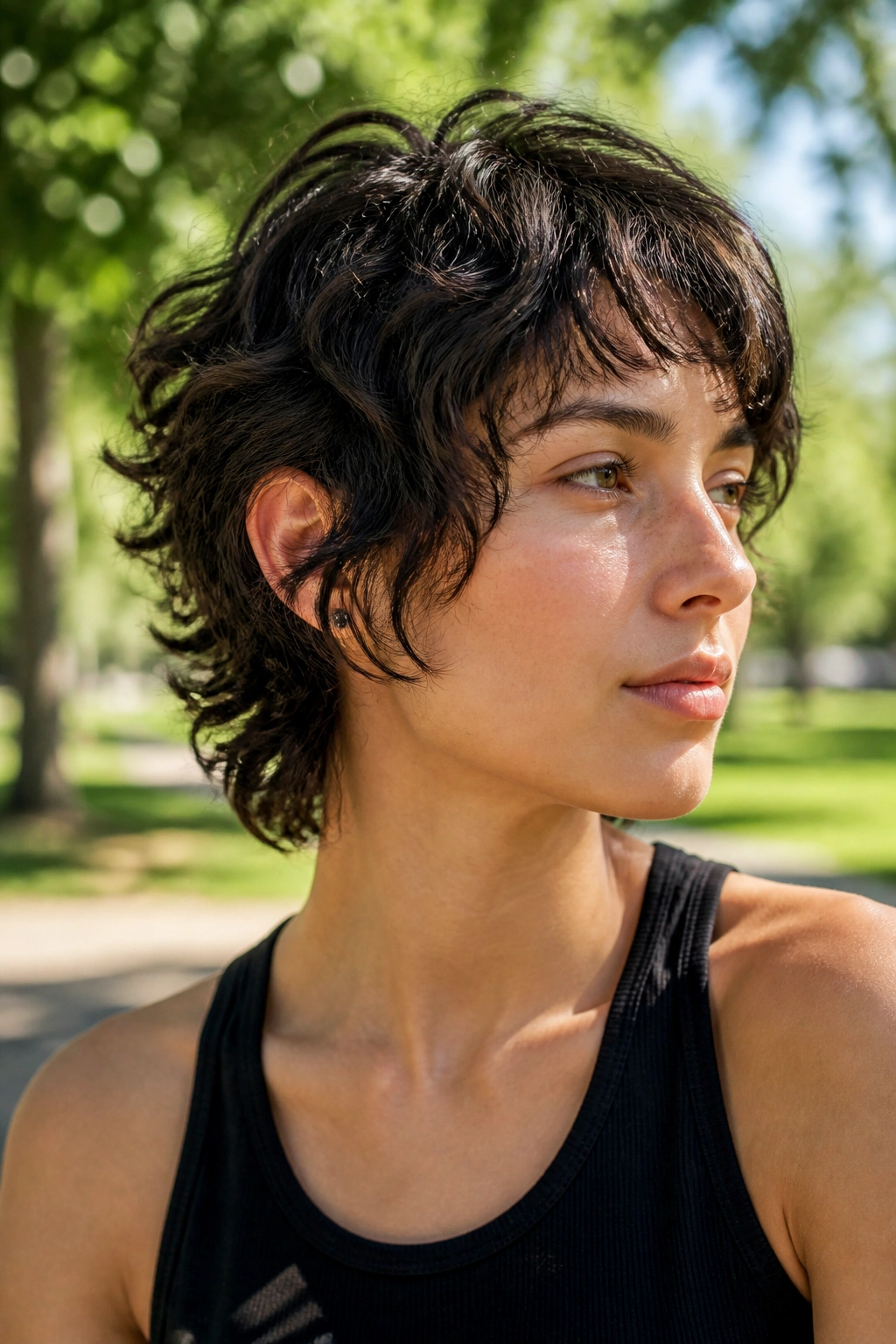
Curly hair and wolf cuts are a natural pair, but short length changes the rules. The cut should follow the curl pattern, not fight it. If the stylist cuts it like straight hair, the final shape usually ends up uneven in the wrong way.
The Dry-Cut Rule
A lot of curl specialists prefer cutting curls dry or at least partly dry, and that makes sense here. Curls shrink. Some shrink a little, some shrink a lot, and the shorter the haircut, the more obvious that shrinkage becomes. A short wolf cut should be shaped where the curls actually sit, not where they pretend to sit when wet.
The top can stay a touch longer so the crown does not spring up too high. The sides should be layered enough to avoid bulk, but not so chopped that the curls separate into stringy little bits. Softness matters. So does patience.
Best Curl Types for This Shape
- Loose waves that bend into curls with a bit of product.
- Medium curls that hold shape but still move.
- Tighter curls, if the top is left longer than the sides.
- Coils, only if you want a more sculpted, rounded silhouette.
A curl cream with slip usually works better than a crunchy gel for this cut. You want definition, not a shell.
6. Wolf Cut With Baby Bangs

Baby bangs change the mood fast. On a very short wolf cut, they pull the whole look forward and make it feel sharper, younger, and a bit more defiant. If curtain fringe is the soft version, baby bangs are the one that walks into the room first.
Unlike longer fringe, baby bangs leave the brow line visible. That means your eyes, brows, and cheekbones do more of the talking. The haircut gets less soft, more graphic. I like that look on people who already dress with some edge, because it feels honest instead of costume-y.
The trick is not to let the bangs get too blunt. Even a short fringe should have tiny irregular ends so it doesn’t sit like a solid bar. Ask for them to be textured and slightly uneven at the tips. That tiny bit of roughness keeps them from looking stiff.
Best for: smaller foreheads, strong brows, and people who do not mind a haircut that gets noticed.
Skip it if: your forehead tends to get cowlicks in the front. You can still wear it, but you’ll spend more time fighting the shape than styling the rest of the cut.
7. Short Wolf Cut for Thick Hair
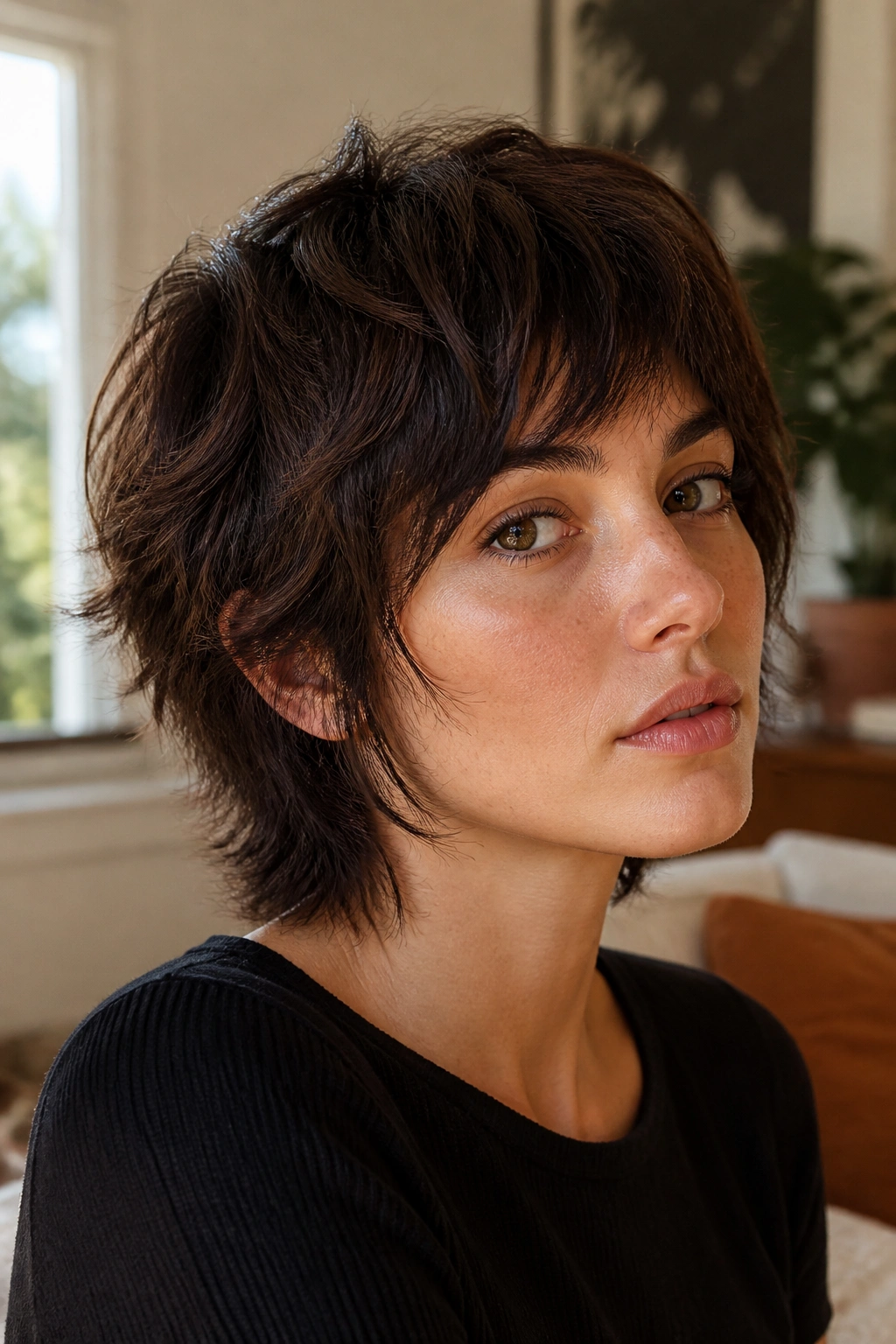
Thick hair makes a short wolf cut look rich and full, but it can also go bulky in a hurry. The style works when the weight is removed in the right zones, not when the whole head is aggressively thinned out. Those are not the same thing. Not even close.
A good version keeps the crown light enough to move while protecting the outer shape. If the stylist takes too much from the ends, the haircut can puff outward and create a helmet effect. If they leave too much weight in the lower back, the neck area gets heavy and square. The fix is a controlled reduction of bulk, especially through the internal layers.
What Helps Most
- Internal layering near the crown.
- Softer sides around the cheek and jaw.
- A clean nape so the back does not balloon.
- A styling cream with a little grip, not a glossy serum.
This cut is one of my favorites for thick hair because it gives you shape without asking you to straighten everything first. Air-dry it with a little product, scrunch the ends, and let the layers do their thing. Easy. Not lazy. Different thing.
8. Razor-Cut Wolf Shag
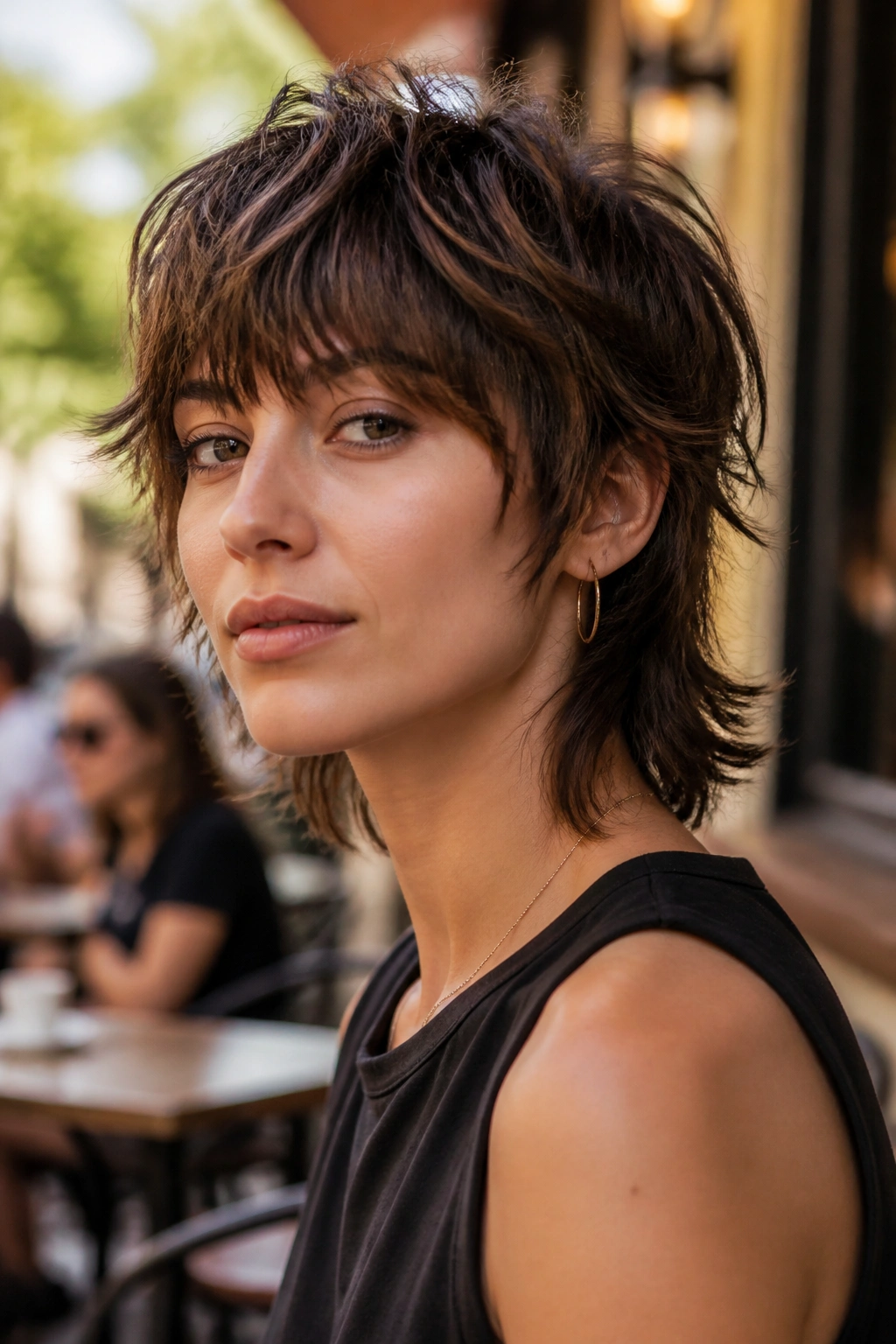
Why does a razor cut change the whole feel? Because it removes hair with a feathered edge instead of a hard line. On a short wolf cut, that edge makes the layers look airy and a little wild, which is exactly the point when you want a shaggy finish.
What the Razor Actually Does
A razor creates softer ends, especially on straight to wavy hair. The haircut moves more when you turn your head, and the layers separate with less effort. That can be a gift. It can also create frizz if the hair is already dry, brittle, or overprocessed, so this is not the cut to demand from somebody who reaches for a razor on everything.
I like razor cuts best when the top stays textured and the sides stay controlled. If the whole head gets too feathery, the style can drift into fuzz. You want edge, not fuzz.
How to Keep It Looking Sharp
Use a lightweight balm or a small dab of cream on damp hair, then rough-dry with your fingers. Once it’s dry, break up the ends with a tiny bit of paste. If you use too much product, the feathering disappears and the cut loses its point.
This is the version for people who want movement first and polish second.
9. Pixie Mullet Wolf Cut
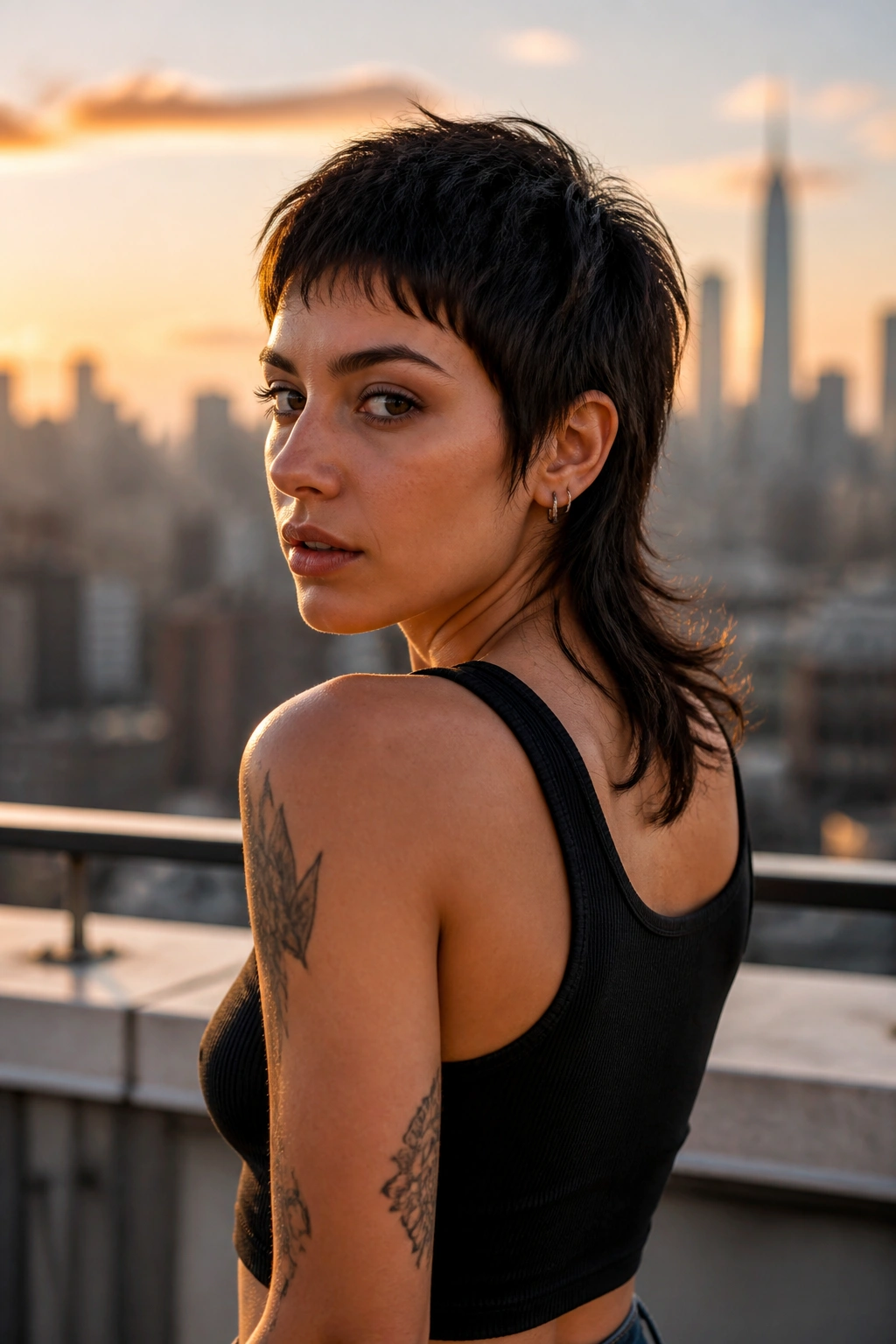
A pixie mullet is the short wolf cut’s wild cousin. The front and sides stay close like a pixie, while the back hangs on to enough length to keep the mullet shape alive. It sounds dramatic, and sometimes it is, but the right cut can look surprisingly wearable.
The trick is keeping the transition smooth. You don’t want a hard step from short front to long back. You want a gradual shift so the whole cut feels connected. The crown usually carries the most texture, which helps the style bridge the gap between cropped and shaggy. If the crown is too flat, the cut loses its personality.
This version works especially well when you like short hair but still want a bit of movement near the neck. It also grows out with some grace. As the back softens, it starts looking like a tiny shag instead of a cut that has simply grown out too far. That matters more than people admit.
One more thing: a pixie mullet looks best when the neckline is clean. If the nape gets fuzzy, the shape stops reading on purpose.
10. Asymmetrical Wolf Cut
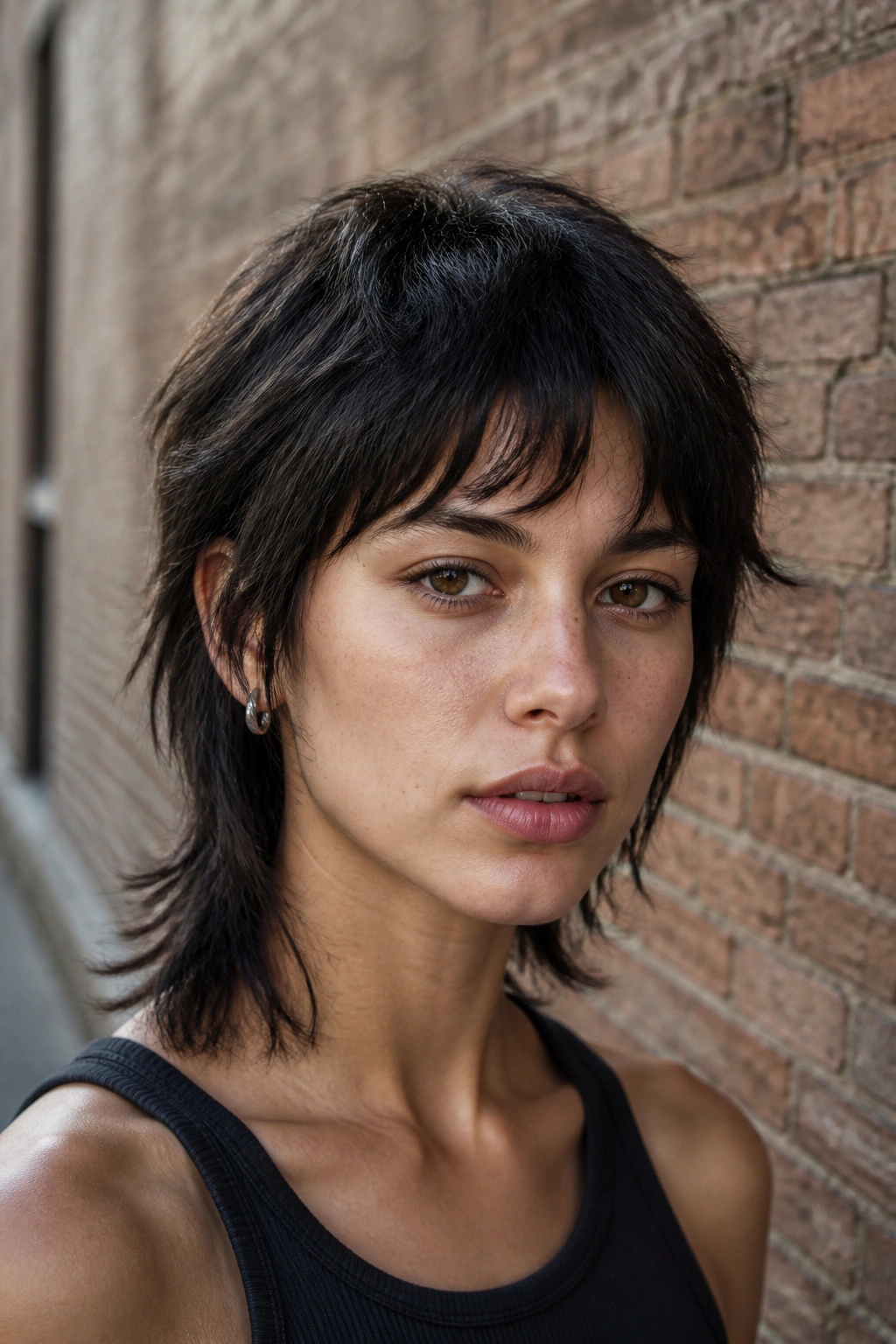
Symmetry can make a short wolf cut feel a little stiff. An asymmetrical version loosens it up fast. One side might sit a touch longer than the other, or the fringe might sweep heavier to one side, and that tiny imbalance creates movement even when the hair is still.
I prefer this when the haircut needs personality without volume. A one-sided bend through the front can soften a square jaw, pull attention to the eyes, and keep the cut from looking too even. It is a small detail, but short hair lives on small details.
Do not overdo the imbalance. If one side is inches longer than the other, the cut stops feeling like a wolf cut and starts feeling like a fashion experiment. Keep the difference subtle, maybe a half inch to 1 inch at most, unless you want the asymmetry to be the whole story.
This style likes a side part and a little finger styling. You can tuck the shorter side behind the ear or let the longer side fall across the cheek. Both work. That flexibility is the point.
11. Air-Dried Wolf Cut for Wavy Hair
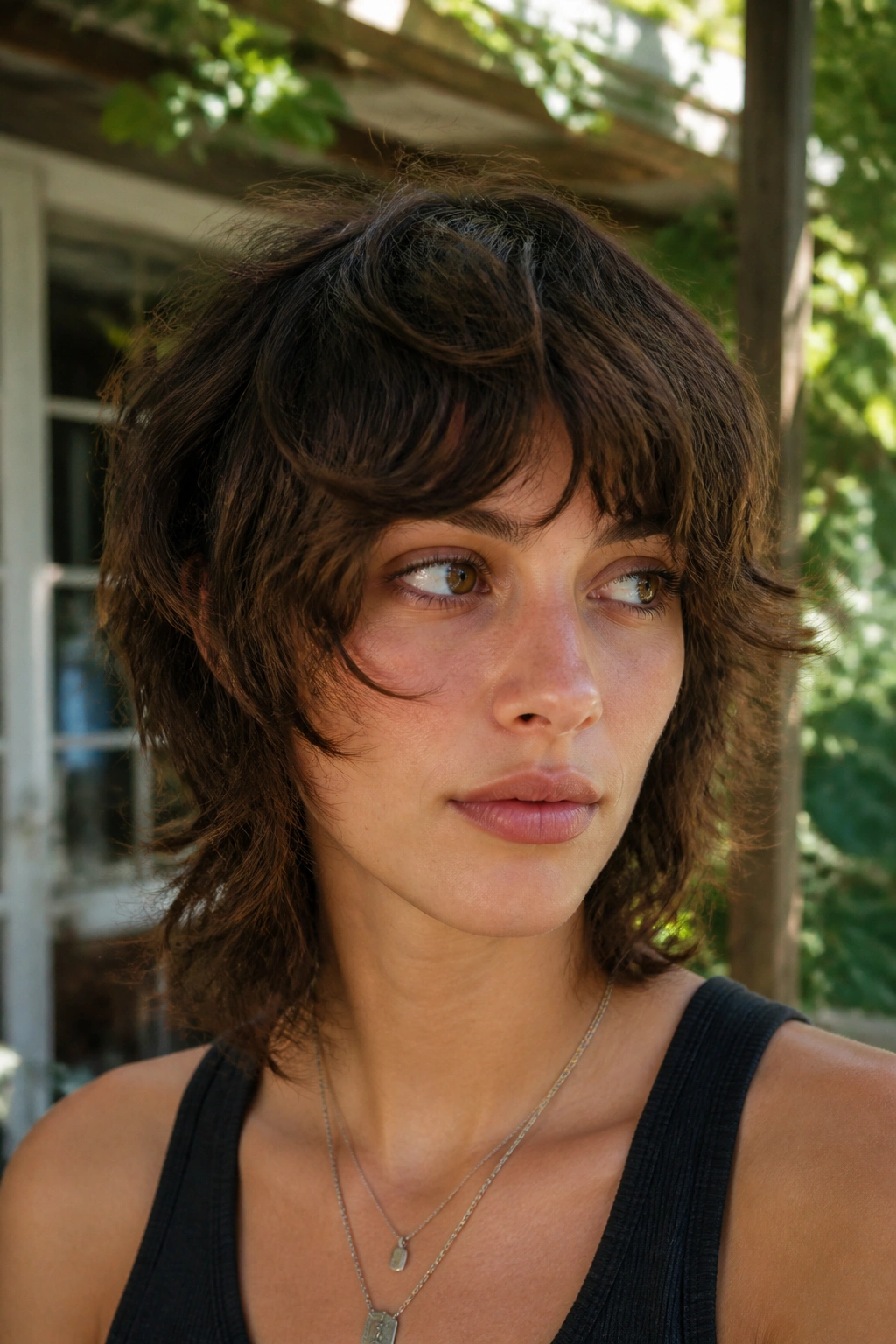
Wavy hair may be the easiest texture for a very short wolf cut. The bends give the layers somewhere to go, so the haircut doesn’t need much help to look alive. If you’ve got natural wave, this is the version that can save you a lot of blow-drying.
The important part is not to brush the wave out once it’s dry. That sounds obvious, but people do it all the time and then wonder why the haircut turns fuzzy and weird. Scrunch in a lightweight cream, let the hair air-dry, and separate only the pieces that need it. The wave should look loose and piecey, not polished.
What to Use
- A light curl cream or wave lotion.
- A texturizing mist on the crown.
- A microfiber towel or soft T-shirt for blotting.
- Fingers, not a brush, once the hair starts to set.
This cut works especially well for 2A to 2C waves. If your hair is a little straighter, you can still get the look with a salt spray and a quick twist through the top sections. If it’s more wavy than that, keep the layers softer so the shape doesn’t balloon.
The appeal is simple. It looks like you meant to wear it that way, even when you barely touched it.
12. Undercut Wolf Cut
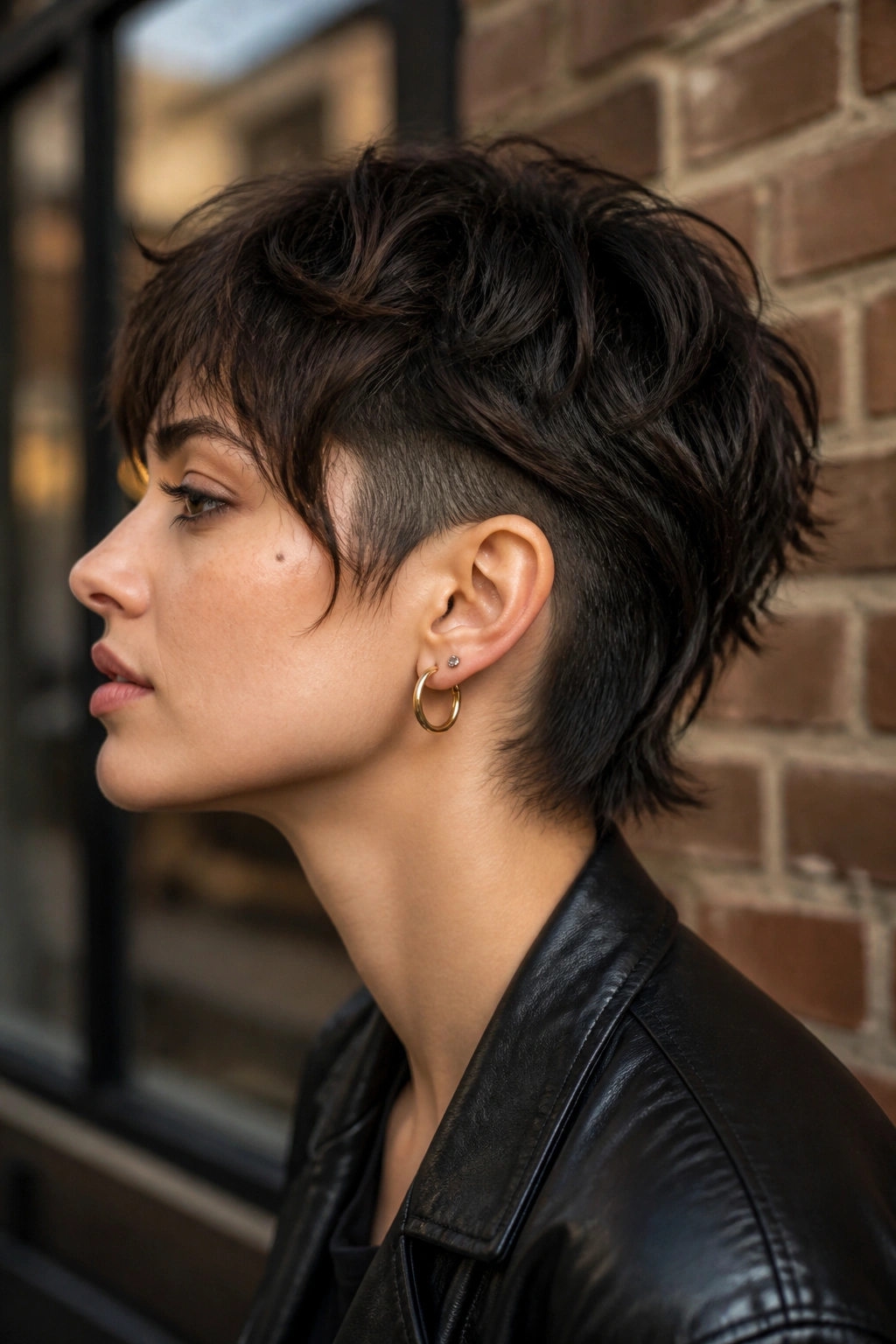
If bulk is the problem, an undercut solves it faster than endless thinning. That’s why this version makes so much sense on very short wolf cuts, especially when the hair is dense at the sides or nape. A hidden undercut removes the puff without changing the whole outer shape too much.
Hidden vs Visible Undercut
A hidden undercut sits underneath the top layers, so you only see it when the hair moves. It’s the quieter option. A visible undercut is more obvious and can look sharper, especially if you want contrast between the shaggy top and the clipped sides. Both work. They just say different things.
What to Ask For
- Keep the top long enough to cover the undercut when you want.
- Ask for the shaved or clipped area to stay clean around the ears and neck.
- If you want a softer grow-out, keep the undercut narrow.
- If you want more edge, widen it slightly through the lower sides.
This is one of the smartest options for thick, stubborn hair because it removes bulk where bulk actually sits. Not everywhere. Just where it causes problems. That makes the rest of the cut easier to wear and easier to style.
13. Face-Framing Wolf Cut With Cheekbone Pieces
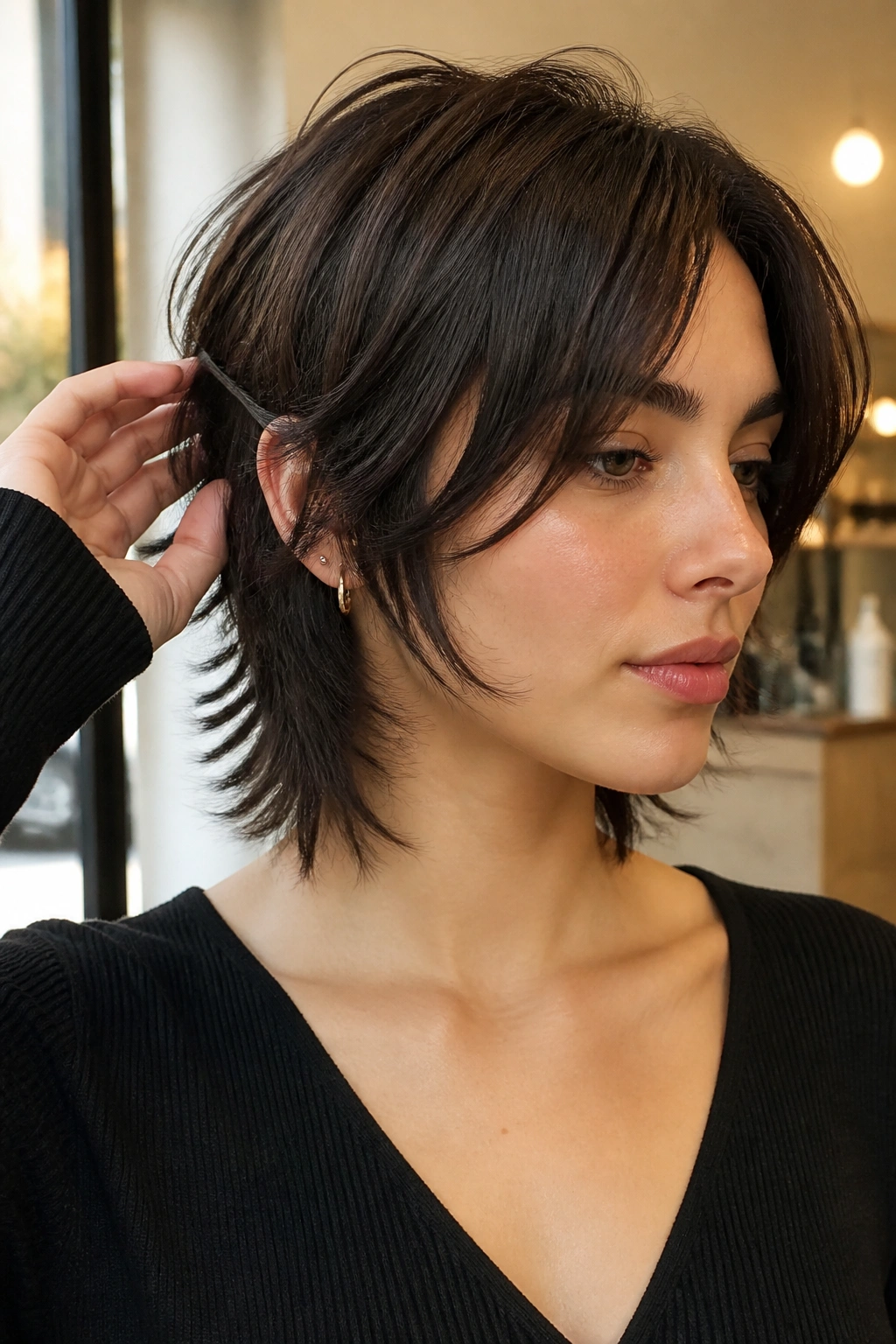
Sometimes the front of a short wolf cut does all the heavy lifting. That’s the case here. The back stays short and choppy, while the front keeps a few longer pieces that hit around the cheekbones and jaw. Those face-framing bits soften the whole haircut fast.
I like this version on people who want a short cut but do not want to lose all softness around the face. The longer front pieces can narrow a round face a little, skim over a square jaw, or add shape to a flatter profile. The effect is subtle, but it’s one of those details that makes a haircut feel expensive even when it’s a fairly simple cut.
The front pieces should not be identical. One side can sit a touch longer, and the ends should be textured so they move when you tuck the hair behind your ear. That movement matters more than perfect symmetry.
This is the cut I’d suggest to someone who says, “I want it short, but not too short.” The answer is usually in the front. Leave enough there to frame the face, and the rest of the haircut can stay lean.
14. Grunge Wolf Cut With Piecey Layers

Want it to look a little rough? Good. This version should look a little rough. A grunge wolf cut is about separation, texture, and that slightly slept-in feel that refuses to look too neat.
Texture That Actually Works
The best styling products here are the ones that give grip, not shine. Think matte clay, dry paste, or a salt spray layered under a small amount of cream. You want the ends to break apart in little pieces, not clump into a wet-looking sheet.
If the cut is too clean, it loses its grunge edge. If it’s too shaggy, it just looks unstyled. The sweet spot sits in the middle: chipped ends, choppy crown layers, and a fringe that falls in uneven bits across the forehead or cheek. That unevenness is the whole point.
How to Keep the Edge Without Making It Messy Messy
- Start with a rough blow-dry or air-dry.
- Add product only after the hair is about 80% dry.
- Pinch small sections with your fingers and twist them once.
- Stop before the shape starts looking sticky.
This is not the haircut for people who like every strand in line. It’s for people who like texture that looks a little lived-in and a little deliberate.
15. Grown-Out Pixie Wolf Cut
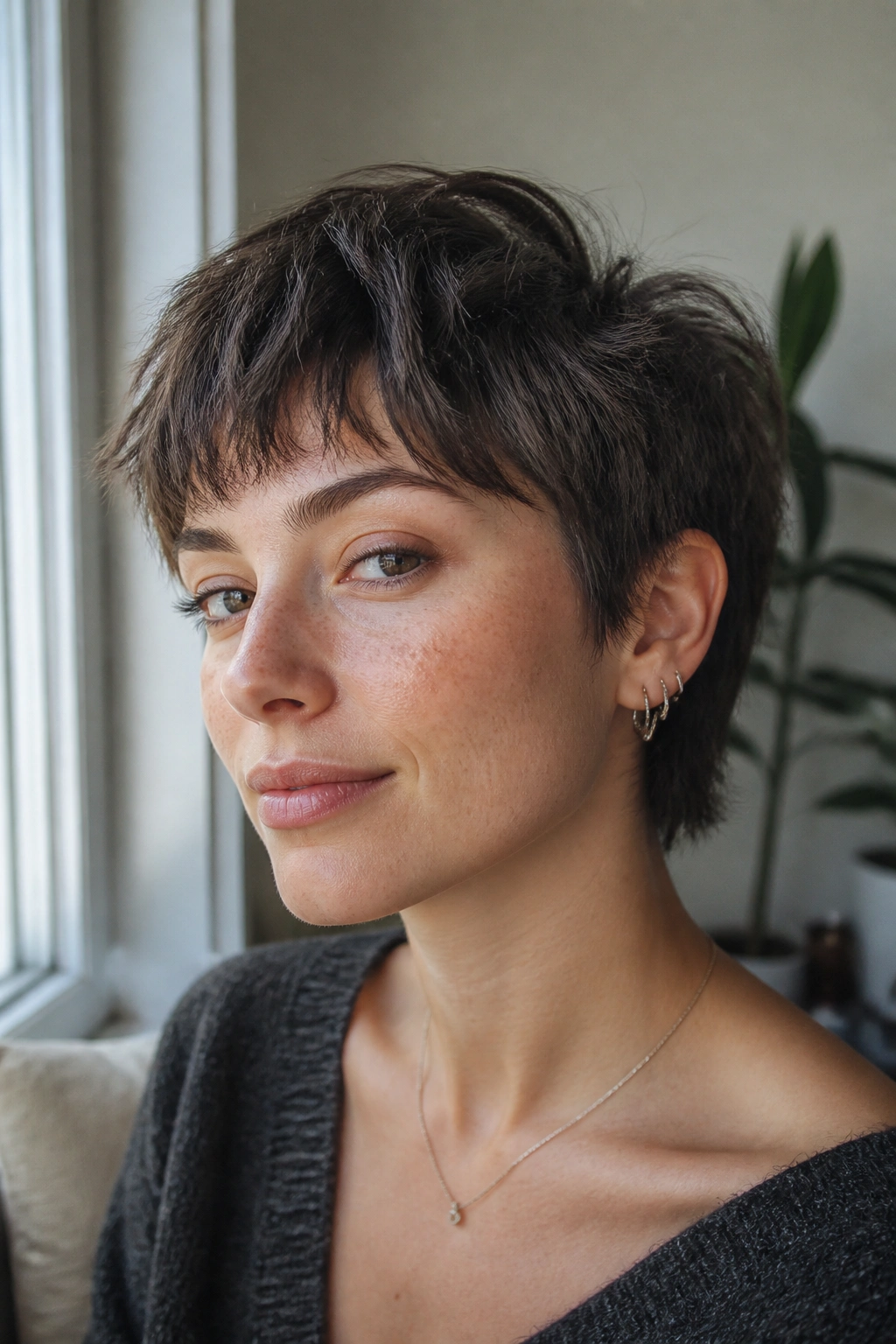
A grown-out pixie wolf cut is one of the best bridges between two hard-to-handle lengths. If your hair is past the pixie stage but not long enough for a bob, this shape makes the awkward zone look intentional instead of stuck.
The top should stay long enough to flip, bend, or piece out with product, while the sides remain tighter so the shape doesn’t widen too much. The back can graze the neckline or sit a bit higher, depending on how much mullet energy you want. Either way, the cut should feel like it’s moving toward something, not sitting in limbo.
This version is great for people who hate frequent trims but still want a shape with a little personality. It grows out into a soft shag more gracefully than a blunt crop does. That’s a real advantage if you are not keen on living in a salon chair every few weeks.
Ask your stylist to keep the outline clean around the ears and neck, then leave the top with enough length to style forward, sideways, or back. That flexibility buys you time. And time is what most grow-out cuts are really after.
Final Thoughts
Very short wolf cuts work when the shape is clear. Not vague. Clear. The crown needs texture, the nape needs some thought, and the front needs enough detail to keep the cut from reading flat or accidental.
The best version for you is usually the one that matches your hair texture instead of fighting it. Fine hair needs careful layering. Thick hair wants bulk removed in the right zones. Curly hair needs the cut shaped around shrinkage, not wishful thinking. That part never changes, even if the mood of the cut does.
Bring a reference photo, sure, but bring one from the side and back too. That’s where the truth lives.
